Question bank

Q&A: practice questions with answers

Search questions on any topic. Filter by exam category, exam, subject and topic, try the question, then open the answer and explanation.

Courses – airGurukul

5,000 questions found.

Directions (Qs. 19-23): Read the following passage carefully and answer the questions that follow.

Gold-plated accessories have been a popular alternative for fashion enthusiasts for decades, valued for their luxurious appearance and cost-effectiveness. In many social circles, wearing these pieces is not just a style choice but is also seen as a practical way to accessorize without the high risk of theft associated with solid gold. Some designers suggest that gold plating can offer the brilliance of precious metal while maintaining the durability of the stronger base metals underneath.

However, the longevity of these items is often debated. Low-quality plating over reactive alloys may cause the surface to tarnish quickly or lead to skin discoloration for those with sensitivities. Additionally, the frequent use of chemical cleaners on plated jewellery can sometimes cause the gold layer to wear off prematurely, especially for those who wear these pieces daily.

Therefore, while plated ornaments can elevate a person's wardrobe and offer a high-end look at a fraction of the cost, it is vital to check the base metal and wear them in moderation. Choosing pieces with thicker plating and avoiding contact with harsh chemicals can help owners preserve the luster of their jewellery without causing damage to the finish.
Q621.
Which word from the passage means 'mixtures of different metals used as a base?
  1. APure
  2. BAlloy
  3. CPolished
  4. Dplated
Show answer

Concept: Locate the word in the passage that means 'mixtures of metals'.

Solution:

  1. Para 2: 'Low-quality plating over reactive alloys …'.
  2. Alloy = metal made by mixing two or more metals; here it is the base under the gold.
  3. Pure = unmixed (opposite); polished/plated describe surfaces.

Yaad rakhein: Brass (copper + zinc) and bronze (copper + tin) are common alloys.

Answer: (B) Alloy

अवधारणा: गद्यांश में वह शब्द खोजें जिसका अर्थ 'धातुओं का मिश्रण' हो।

हल:

  1. दूसरे पैराग्राफ में: 'reactive alloys'।
  2. Alloy = मिश्रधातु, दो या अधिक धातुओं का मिश्रण; यहाँ यह सोने के नीचे की धातु है।
  3. Pure = शुद्ध (उल्टा अर्थ)।

याद रखें: पीतल (तांबा + जस्ता) और कांसा (तांबा + टिन) प्रमुख मिश्रधातुएँ हैं।

उत्तर: (B) Alloy
SSC CHSLEnglish LanguagePassage vocabulary – alloySSC CHSL 2025 · 28 Nov Shift 3 →
Directions (Qs. 19-23): Read the following passage carefully and answer the questions that follow.

Gold-plated accessories have been a popular alternative for fashion enthusiasts for decades, valued for their luxurious appearance and cost-effectiveness. In many social circles, wearing these pieces is not just a style choice but is also seen as a practical way to accessorize without the high risk of theft associated with solid gold. Some designers suggest that gold plating can offer the brilliance of precious metal while maintaining the durability of the stronger base metals underneath.

However, the longevity of these items is often debated. Low-quality plating over reactive alloys may cause the surface to tarnish quickly or lead to skin discoloration for those with sensitivities. Additionally, the frequent use of chemical cleaners on plated jewellery can sometimes cause the gold layer to wear off prematurely, especially for those who wear these pieces daily.

Therefore, while plated ornaments can elevate a person's wardrobe and offer a high-end look at a fraction of the cost, it is vital to check the base metal and wear them in moderation. Choosing pieces with thicker plating and avoiding contact with harsh chemicals can help owners preserve the luster of their jewellery without causing damage to the finish.
Q622.
Which word from the passage means 'balanced and limited use' ?
  1. AFrequent
  2. BModeration
  3. CDaily
  4. DAvoiding
Show answer

Concept: Find the word meaning 'balanced and limited use'.

Solution:

  1. Para 3: '… wear them in moderation'.
  2. Moderation = avoiding excess; using within limits.
  3. Frequent and daily mean the opposite (too often); avoiding = not using at all.

Yaad rakhein: Moderation ↔ excess; 'moderate' = not too much, not too little.

Answer: (B) Moderation

अवधारणा: 'संतुलित और सीमित उपयोग' वाला शब्द खोजें।

हल:

  1. तीसरे पैराग्राफ में: 'wear them in moderation'।
  2. Moderation = संयम, सीमा में रहकर उपयोग।
  3. Frequent/Daily = बार-बार (उल्टा); Avoiding = बिल्कुल न करना।

याद रखें: Moderation का विलोम excess (अति) है।

उत्तर: (B) Moderation

SSC CHSLEnglish LanguagePassage vocabulary – moderationSSC CHSL 2025 · 28 Nov Shift 3 →
Directions (Qs. 19-23): Read the following passage carefully and answer the questions that follow.

Gold-plated accessories have been a popular alternative for fashion enthusiasts for decades, valued for their luxurious appearance and cost-effectiveness. In many social circles, wearing these pieces is not just a style choice but is also seen as a practical way to accessorize without the high risk of theft associated with solid gold. Some designers suggest that gold plating can offer the brilliance of precious metal while maintaining the durability of the stronger base metals underneath.

However, the longevity of these items is often debated. Low-quality plating over reactive alloys may cause the surface to tarnish quickly or lead to skin discoloration for those with sensitivities. Additionally, the frequent use of chemical cleaners on plated jewellery can sometimes cause the gold layer to wear off prematurely, especially for those who wear these pieces daily.

Therefore, while plated ornaments can elevate a person's wardrobe and offer a high-end look at a fraction of the cost, it is vital to check the base metal and wear them in moderation. Choosing pieces with thicker plating and avoiding contact with harsh chemicals can help owners preserve the luster of their jewellery without causing damage to the finish.
Q623.
What is the main idea of the passage?
  1. AGold-plated accessories are superior to solid gold.
  2. BPlated jewellery should be avoided due to skin allergies.
  3. CPlated ornaments have benefits but require careful use and quality checks.
  4. DOnly high-quality alloys should be used in fashion.
Show answer

Concept: The main idea must sum up all paragraphs, not one detail.

Solution:

  1. Para 1: benefits (rich look, low cost, safer from theft).
  2. Para 2: problems (tarnish, skin reaction, layer wearing off).
  3. Para 3: advice – check base metal, use with care.
  4. Only C combines benefits + careful use.

Trick: Reject extreme words: 'superior' (A), 'should be avoided' (B), 'only' (D) – the passage is balanced.

Answer: (C) Plated ornaments have benefits but require careful use and quality checks.

अवधारणा: मुख्य विचार पूरे गद्यांश को समेटे, सिर्फ एक हिस्से को नहीं।

हल:

  1. पैरा 1: लाभ (सुंदर रूप, कम कीमत, चोरी का कम खतरा)।
  2. पैरा 2: कमियाँ (रंग उड़ना, त्वचा पर असर)।
  3. पैरा 3: सलाह – धातु जाँचें, संभलकर पहनें। यह सब C में है।

ट्रिक: अतिवादी शब्द ('superior', 'avoided', 'only') वाले विकल्प हटाएँ।

उत्तर: (C) Plated ornaments have benefits but require careful use and quality checks.

SSC CHSLEnglish LanguagePassage – main ideaSSC CHSL 2025 · 28 Nov Shift 3 →
Q624.
What is the antonym of 'Ordinary'?
  1. ACourteous
  2. BNormal
  3. CQuaint
  4. DGust
Show answer

Concept: Ordinary = common, usual, nothing special. Need a word meaning unusual.

Solution:

  1. Quaint = attractively unusual or old-fashioned → opposite of ordinary.
  2. Normal = synonym; Courteous = polite; Gust = a sudden rush of wind.

Trick: Eliminate the synonym (Normal) and the unrelated words – the one left is the answer.

Answer: (C) Quaint

अवधारणा: Ordinary = साधारण, सामान्य। विलोम में 'असामान्य/अनोखा' भाव चाहिए।

हल:

  1. Quaint = आकर्षक रूप से अनोखा/पुराने ढंग का → ordinary का विलोम।
  2. Normal = समानार्थी; Courteous = विनम्र; Gust = हवा का झोंका।

ट्रिक: समानार्थी (Normal) और असंबंधित शब्द हटाएँ – जो बचे वही उत्तर।

उत्तर: (C) Quaint

SSC CHSLEnglish LanguageAntonym – ordinarySSC CHSL 2025 · 28 Nov Shift 3 →
Q625.
What is the antonym of "Criticise"?
  1. ACensure
  2. BPraise
  3. CObloquy
  4. DCondemnation
Show answer

Concept: Criticise = find fault; its opposite shows approval.

Solution:

  1. Praise = express approval or admiration → antonym.
  2. Censure, Obloquy (strong public blame) and Condemnation all mean disapproval → synonyms.

Trick: Three options share one meaning (blame) – the odd one out is the antonym.

Answer: (B) Praise

अवधारणा: Criticise = दोष निकालना, आलोचना करना; विलोम में प्रशंसा का भाव।

हल:

  1. Praise = प्रशंसा करना → विलोम।
  2. Censure, Obloquy (बदनामी/निंदा), Condemnation – सब निंदा के अर्थ में, यानी समानार्थी।

ट्रिक: तीन विकल्प एक जैसे अर्थ (निंदा) के हैं – अलग वाला ही विलोम है।

उत्तर: (B) Praise

SSC CHSLEnglish LanguageAntonym – criticiseSSC CHSL 2025 · 28 Nov Shift 3 →
Q626.
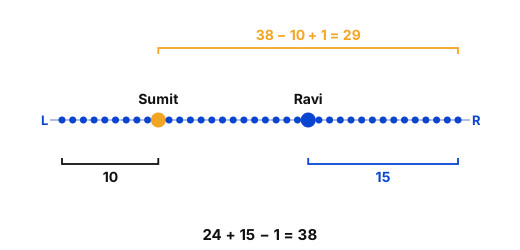
In a row of students, Ravi is 10th from the left and Sumit is 15th from the right. If they exchange their positions, Ravi becomes 24th from the left. What will be the position of Sumit from the right ?
विद्यार्थियों की एक पंक्ति में रवि बाएँ से 10वें स्थान पर तथा सुमित दाएँ से 15वें स्थान पर है। यदि वे अपने स्थान आपस में बदल लेते हैं, तो रवि बाएँ से 24वें स्थान पर आ जाता है। दाएँ से सुमित का स्थान क्या होगा ?
  1. A28th28वाँ
  2. B29th29वाँ
  3. C30th30वाँ
  4. D31st31वाँ
Show answer

Concept: On exchange, each person takes the other's exact seat; Total = left rank + right rank − 1.

Solution:

  1. Ravi's new seat (24th from left) = Sumit's old seat, which is 15th from right.
  2. Total students = 24 + 15 − 1 = 38.
  3. Sumit now sits at Ravi's old seat = 10th from left → from right = 38 − 10 + 1 = 29th.

Trick: The seat that has both a left rank and a right rank gives the total in one line.

Answer: (B) 29th

अवधारणा: अदला-बदली में दोनों एक-दूसरे की जगह ले लेते हैं; कुल = बाएँ से स्थान + दाएँ से स्थान − 1।

हल:

  1. रवि की नई जगह (बाएँ से 24वाँ) = सुमित की पुरानी जगह (दाएँ से 15वाँ)।
  2. कुल छात्र = 24 + 15 − 1 = 38।
  3. सुमित अब बाएँ से 10वें स्थान पर → दाएँ से = 38 − 10 + 1 = 29वाँ।

ट्रिक: जिस सीट के दोनों ओर के स्थान पता हों, उसी से कुल संख्या निकालें।

उत्तर: (B) 29वाँ

SSC CHSLGeneral IntelligenceRanking – positions after exchangeSSC CHSL 2025 · 28 Nov Shift 3 →
Q627.
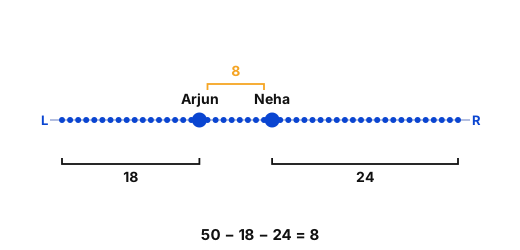
In a row of 50 students, Arjun is 18th from the left and Neha is 24th from the right. How many students are between Arjun and Neha ?
50 विद्यार्थियों की एक पंक्ति में अर्जुन बाएँ से 18वें तथा नेहा दाएँ से 24वें स्थान पर है। अर्जुन और नेहा के बीच कितने विद्यार्थी हैं ?
  1. A6
  2. B7
  3. C8
  4. D9
Show answer

Concept: Convert both ranks to the same end, then between = difference − 1.

Solution:

  1. Neha from left = 50 − 24 + 1 = 27th.
  2. Arjun = 18th from left.
  3. Between them = 27 − 18 − 1 = 8.

Trick: Quick check: 18 + 24 = 42 < 50, so they do not overlap → between = 50 − 42 = 8.

Answer: (C) 8

अवधारणा: दोनों स्थानों को एक ही सिरे से बदलें; बीच में = अंतर − 1।

हल:

  1. नेहा बाएँ से = 50 − 24 + 1 = 27वीं।
  2. अर्जुन बाएँ से 18वाँ।
  3. बीच में = 27 − 18 − 1 = 8।

ट्रिक: 18 + 24 = 42 < 50 (आपस में नहीं कटते) → बीच में = 50 − 42 = 8।

उत्तर: (C) 8

SSC CHSLGeneral IntelligenceRanking – persons between twoSSC CHSL 2025 · 28 Nov Shift 3 →
Q628.
If 56$20=18 and 74$30=22,
then what is the value of 63$18 ?
यदि 56$20=18 तथा 74$30=22 है,
तो 63$18 का मान क्या होगा ?
  1. A20.5
  2. B21.5
  3. C22.5
  4. D23.5
Show answer

Concept: Find a rule that fits both given examples, then apply it.

Solution:

  1. 56 $ 20: (56−20)÷2=36÷2=18 ✔
  2. 74 $ 30: (74−30)÷2=44÷2=22 ✔
  3. 63 $ 18: (63−18)÷2=45÷2= 22.5

Trick: Results are much smaller than the numbers → try subtraction first; decimal options hint at ÷ 2.

Answer: (C) 22.5

अवधारणा: दोनों उदाहरणों पर लागू होने वाला नियम खोजें, फिर प्रयोग करें।

हल:

  1. (56−20)÷2=18 ✔, (74−30)÷2=22 ✔
  2. (63−18)÷2=45÷2= 22.5

ट्रिक: उत्तर संख्याओं से बहुत छोटे हों तो पहले घटाव आज़माएँ; दशमलव विकल्प ÷ 2 का संकेत हैं।

उत्तर: (C) 22.5

SSC CHSLGeneral IntelligenceSymbol operation – half the differenceSSC CHSL 2025 · 28 Nov Shift 3 →
Q629.
If 12;20=720 and 15;20=900, then what is the value of 6 ; 25 ?
यदि 12;20=720 तथा 15;20=900 है, तो 6 ; 25 का मान क्या होगा ?
  1. A440
  2. B450
  3. C460
  4. D480
Show answer

Concept: Test the pattern on the given pairs.

Solution:

  1. 12×20=240 and 720=3×240 ✔
  2. 15×20=300 and 900=3×300 ✔
  3. 6×25=150 → 3×150= 450

Trick: 720÷240=3 instantly shows the multiplier; answer must be a multiple of 3 and 150 → 450.

Answer: (B) 450

अवधारणा: दिए गए युग्मों पर नियम जाँचें।

हल:

  1. 12×20=240, 240×3=720 ✔; 15×20=300, 300×3=900 ✔
  2. 6×25=150 → 150×3= 450

ट्रिक: 720÷240=3 से गुणक तुरंत मिलता है।

उत्तर: (B) 450

SSC CHSLGeneral IntelligenceSymbol operation – 3 × productSSC CHSL 2025 · 28 Nov Shift 3 →
Q630.
Find the next element that replaces the ? Logically
19, 28, 39, 52, ?
? के स्थान पर तार्किक रूप से आने वाला अगला पद ज्ञात कीजिए
19, 28, 39, 52, ?
  1. A65
  2. B67
  3. C70
  4. D57
Show answer

Concept: Check the gaps between terms.

Solution:

  1. Gaps: 9, 11, 13 → increase by 2.
  2. Next gap = 15 → 52+15 = 67.

Trick: Terms = n2+3 for n = 4, 5, 6, 7, 8 → 82+3=67.

Answer: (B) 67

अवधारणा: पदों के बीच का अंतर देखें।

हल:

  1. अंतर: 9, 11, 13 → हर बार 2 बढ़ रहा है।
  2. अगला अंतर 15 → 52+15 = 67।

ट्रिक: पद = n2+3 (n = 4 से 8) → 82+3=67।

उत्तर: (B) 67

SSC CHSLGeneral IntelligenceNumber series – odd differencesSSC CHSL 2025 · 28 Nov Shift 3 →
Q631.
Find the next element that replaces the ? Logically
11, 18, 27, 38, ?
? के स्थान पर तार्किक रूप से आने वाला अगला पद ज्ञात कीजिए
11, 18, 27, 38, ?
  1. A45
  2. B42
  3. C53
  4. D51
Show answer

Concept: Check the gaps between terms.

Solution:

  1. Gaps: 7, 9, 11 → increase by 2.
  2. Next gap = 13 → 38+13 = 51.

Trick: Terms = n2+2 for n = 3, 4, 5, 6, 7 → 72+2=51.

Answer: (D) 51

अवधारणा: पदों के बीच का अंतर देखें।

हल:

  1. अंतर: 7, 9, 11 → हर बार 2 अधिक।
  2. अगला अंतर 13 → 38+13 = 51।

ट्रिक: पद = n2+2 (n = 3 से 7) → 72+2=51।

उत्तर: (D) 51

SSC CHSLGeneral IntelligenceNumber series – odd differencesSSC CHSL 2025 · 28 Nov Shift 3 →
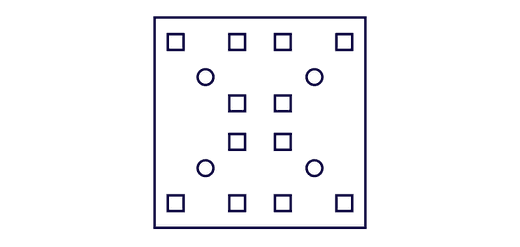
Q632.
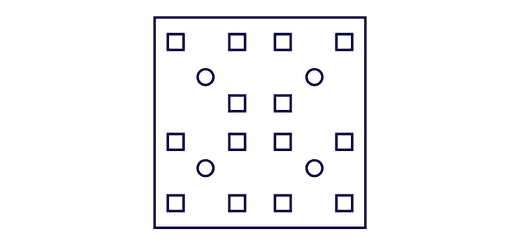
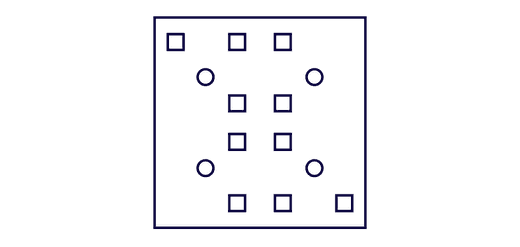
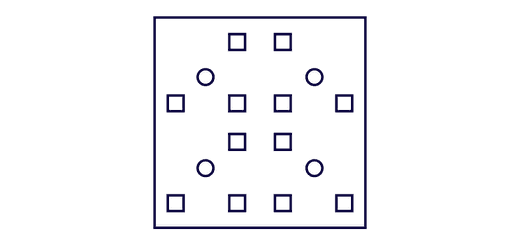
A piece of paper is folded and punched as shown below in the question figures. From the given option figures, indicate how it will appear when opened.
figure
एक कागज़ के टुकड़े को नीचे प्रश्न-आकृतियों में दर्शाए अनुसार मोड़ा और पंच किया गया है। दी गई विकल्प-आकृतियों में से बताइए कि खोलने पर वह कैसा दिखाई देगा।
figure
  1. Afigure
  2. Bfigure
  3. Cfigure
  4. Dfigure
Show answer

Concept: Unfold in reverse order; every unfolding mirrors the holes across that fold line.

Solution:

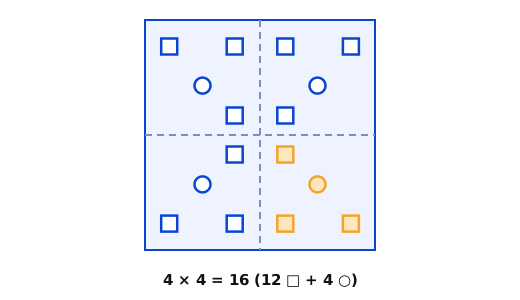
  1. Fold 1 (left onto right) + Fold 2 (top onto bottom) leave only the bottom-right quarter.
  2. That quarter has 3 square holes and 1 circle.
  3. Two unfoldings → each hole appears 4 times: 12 squares and 4 circles, symmetric about both centre lines.

Trick: Holes after opening=holes punched×2number of folds=4×22=16; pick the option with full left-right and top-bottom symmetry.

Answer: (D) Option D

अवधारणा: मोड़ उल्टे क्रम में खोलें; हर बार छेद उस मोड़-रेखा के सापेक्ष दर्पण-प्रतिबिंब बनाते हैं।

हल:

  1. दो मोड़ों के बाद केवल नीचे-दाएँ का चौथाई भाग बचता है।
  2. उस पर 3 वर्गाकार छेद और 1 वृत्त है।
  3. दो बार खोलने पर हर छेद 4 बार → 12 वर्ग और 4 वृत्त, दोनों केंद्र-रेखाओं के सापेक्ष सममित।

ट्रिक: कुल छेद=पंच किए छेद×2मोड़ों की संख्या=4×4=16।

उत्तर: (D) विकल्प D

SSC CHSLGeneral IntelligencePaper folding – two folds, quarter punchSSC CHSL 2025 · 28 Nov Shift 3 →
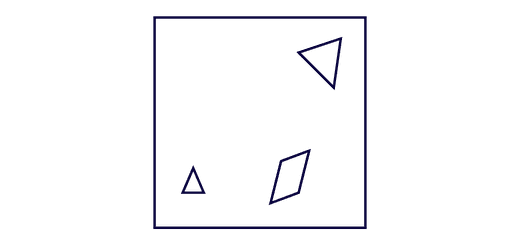
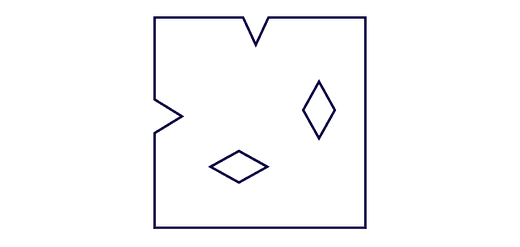
Q633.
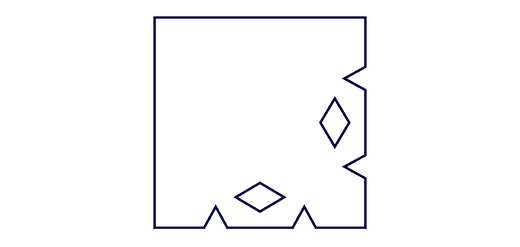
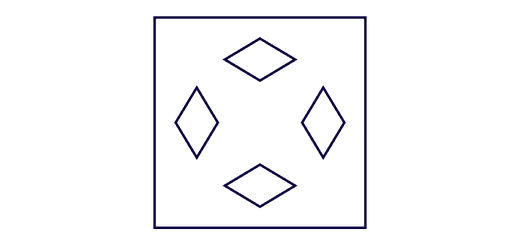
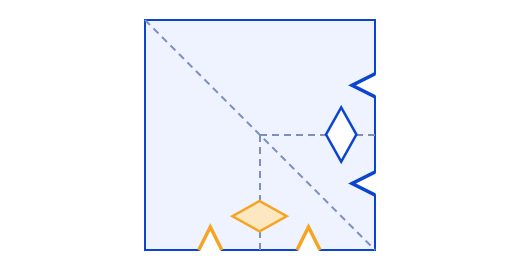
A piece of paper is folded and punched as shown below in the question figures. From the given option figures, indicate how it will appear when opened.
figure
एक कागज़ के टुकड़े को नीचे प्रश्न-आकृतियों में दर्शाए अनुसार मोड़ा और पंच किया गया है। दी गई विकल्प-आकृतियों में से बताइए कि खोलने पर वह कैसा दिखाई देगा।
figure
  1. Afigure
  2. Bfigure
  3. Cfigure
  4. Dfigure
Show answer

Concept: A cut on a fold line becomes a full hole; a cut on a free edge becomes a notch copied across each fold.

Solution:

  1. Fold 1 is along the main diagonal; fold 2 is a vertical fold of the triangle.
  2. Cut on the folded edge → a diamond hole after opening fold 2; cut on the bottom edge → two symmetric notches.
  3. Opening the diagonal fold copies this bottom pattern onto the right edge.

Trick: Diagonal fold acts like a mirror that swaps 'bottom edge' with 'right edge' – look for the option with identical patterns on these two edges.

Answer: (C) Option C

अवधारणा: मोड़-रेखा पर कटा भाग पूरा छेद बनता है; खुले किनारे का कटाव हर मोड़ पर नकल होता है।

हल:

  1. पहला मोड़ विकर्ण पर, दूसरा त्रिभुज को ऊर्ध्व रूप से मोड़ता है।
  2. मोड़ वाले किनारे का कट खुलकर हीरे (diamond) जैसा छेद, निचले किनारे पर दो सममित खाँचे।
  3. विकर्ण मोड़ खोलने पर यही पैटर्न दाएँ किनारे पर भी बनता है।

ट्रिक: विकर्ण मोड़ = दर्पण, जो नीचे वाले किनारे को दाएँ किनारे से बदल देता है।

उत्तर: (C) विकल्प C

SSC CHSLGeneral IntelligencePaper folding – diagonal then vertical foldSSC CHSL 2025 · 28 Nov Shift 3 →
Q634.
In the following question, select the number which can be placed at the sign of question mark (?) from the given alternatives.
निम्नलिखित प्रश्न में, दिए गए विकल्पों में से वह संख्या चुनिए जिसे प्रश्नवाचक चिह्न (?) के स्थान पर रखा जा सकता है।
  1. A22
  2. B25
  3. C12
  4. D21
Show answer

Concept: Bottom number of each column=(sum of the three numbers above)2.

Solution:

  1. Column 1: 11+5+3=19,192=361 ✔; Column 2: 17+3+7=27,272=729 ✔
  2. Column 3: 1225=352, so 8+15+?=35
  3. ?=35−23 = 12

Trick: When the bottom row has big numbers like 361, 729, 1225, think of perfect squares first.

Answer: (C) 12

अवधारणा: हर स्तंभ की नीचे वाली संख्या = ऊपर की तीनों संख्याओं के योग का वर्ग।

हल:

  1. 11+5+3=19 → 361 ✔; 17+3+7=27 → 729 ✔
  2. 1225=352 → 8+15+?=35
  3. ? = 12

ट्रिक: 361, 729, 1225 जैसी संख्याएँ दिखें तो पूर्ण वर्ग सोचें।

उत्तर: (C) 12

SSC CHSLGeneral IntelligenceMissing number – square of column sumSSC CHSL 2025 · 28 Nov Shift 3 →
Q635.
In the following question, select the number which can be placed at the sign of question mark (?) from the given alternatives.
निम्नलिखित प्रश्न में, दिए गए विकल्पों में से वह संख्या चुनिए जिसे प्रश्नवाचक चिह्न (?) के स्थान पर रखा जा सकता है।
  1. A2
  2. B4
  3. C1
  4. D6
Show answer

Concept: In each figure: (top-left×top-right)+bottom-right=bottom-left.

Solution:

  1. Figure 1: 4×7+2=30 ✔; Figure 3: 3×5+4=19 ✔
  2. Figure 2: 4×5+?=22 → ?=22−20 = 2

Trick: Bigger number in one corner usually comes from multiplying the two smaller ones; the leftover is the missing value.

Answer: (A) 2

अवधारणा: हर आकृति में: (ऊपर की दो संख्याओं का गुणनफल)+नीचे-दाईं संख्या=नीचे-बाईं संख्या।

हल:

  1. 4×7+2=30 ✔; 3×5+4=19 ✔
  2. 4×5+?=22 → ? = 2

ट्रिक: बड़ी संख्या अक्सर बाकी दो के गुणनफल से बनती है; बचा अंतर ही उत्तर।

उत्तर: (A) 2

SSC CHSLGeneral IntelligenceMissing number – product plus a numberSSC CHSL 2025 · 28 Nov Shift 3 →
Q636.
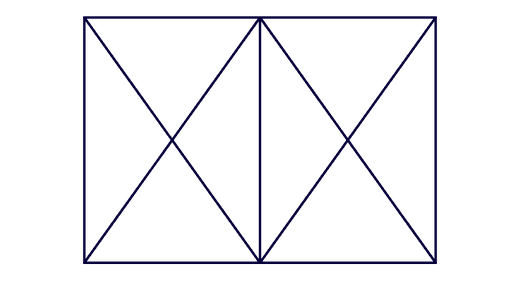
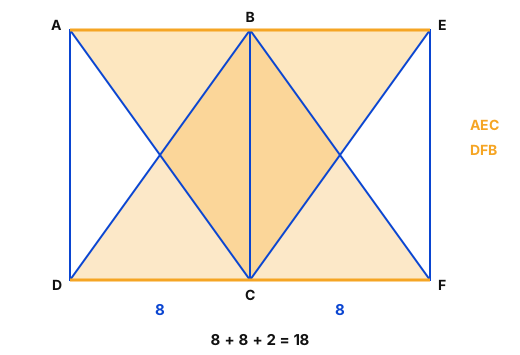
How many triangles are there in the given figure?
figure
दी गई आकृति में कितने त्रिभुज हैं?
figure
  1. A19
  2. B20
  3. C18
  4. D22
Show answer

Concept: A rectangle with both diagonals has 8 triangles; then count triangles spanning both halves.

Solution:

  1. Left half: 4 small + 4 half-rectangle triangles = 8; right half: 8.
  2. Spanning triangles: top edge with apex at bottom-middle, and bottom edge with apex at top-middle = 2.
  3. Total = 8 + 8 + 2 = 18.

Trick: Memorise: a rectangle/square with both diagonals = 8 triangles.

Answer: (C) 18

अवधारणा: दोनों विकर्णों वाले आयत में 8 त्रिभुज होते हैं; फिर दोनों भागों को मिलाकर बनने वाले गिनें।

हल:

  1. बायाँ भाग 8 + दायाँ भाग 8 = 16।
  2. पूरी ऊपरी भुजा + नीचे के मध्य-बिंदु तथा पूरी निचली भुजा + ऊपर के मध्य-बिंदु से 2 बड़े त्रिभुज।
  3. कुल = 16 + 2 = 18।

ट्रिक: विकर्णों सहित एक आयत/वर्ग = 8 त्रिभुज – याद रखें।

उत्तर: (C) 18

SSC CHSLGeneral IntelligenceCounting triangles – two crossed rectanglesSSC CHSL 2025 · 28 Nov Shift 3 →
Q637.
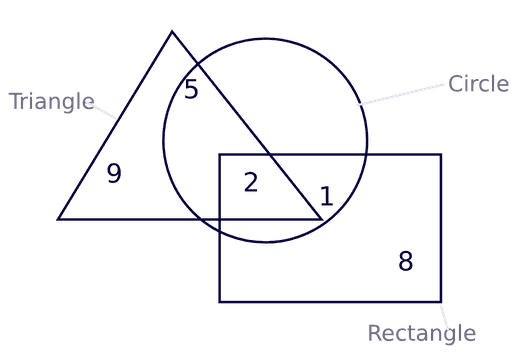
In the figure given below, the triangle represents bags, the circle represents leather, and the rectangle represents brown.
The number written in each region shows the number of items belonging to that particular area.
figure
Which of the following statements is/are correct?
I. The number of leather items which are not brown is 14 .
II. The number of brown items which are only bags is 4.
नीचे दी गई आकृति में त्रिभुज बैगों को, वृत्त चमड़े को तथा आयत भूरे रंग को दर्शाता है।
प्रत्येक क्षेत्र में लिखी संख्या उस विशेष क्षेत्र से संबंधित वस्तुओं की संख्या दर्शाती है।
figure
निम्नलिखित में से कौन-सा/से कथन सही है/हैं?
I. चमड़े की ऐसी वस्तुओं की संख्या जो भूरी नहीं हैं, 14 है।
II. भूरी वस्तुओं में केवल बैग वाली वस्तुओं की संख्या 4 है।
  1. AOnly Iकेवल I
  2. BOnly IIकेवल II
  3. CBoth I and III और II दोनों
  4. DNeither I nor IIन तो I और न ही II
Show answer

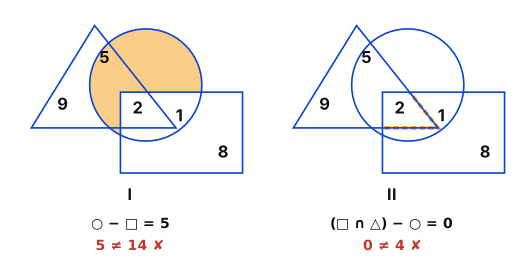
Concept: Triangle = bags, circle = leather, rectangle = brown. Take only regions that satisfy every condition.

Solution:

  1. Statement I: inside circle, outside rectangle → only the region with 5 → 5 items, not 14 ✘.
  2. Statement II: inside rectangle and triangle but outside circle → no such numbered region → 0, not 4 ✘.
  3. Both statements are false.

Trick: 'Not X' means stay completely outside the X-shape – the 2 and 1 sit inside the rectangle, so they are excluded in I.

Answer: (D) Neither I nor II

अवधारणा: त्रिभुज = बैग, वृत्त = चमड़ा, आयत = भूरा। केवल वही क्षेत्र लें जो हर शर्त पूरी करे।

हल:

  1. कथन I: वृत्त के अंदर, आयत के बाहर → केवल 5 → 14 नहीं ✘।
  2. कथन II: आयत व त्रिभुज के अंदर, वृत्त के बाहर → ऐसा कोई संख्या वाला क्षेत्र नहीं → 0 ✘।

ट्रिक: 'Not X' का अर्थ है X की आकृति से पूरी तरह बाहर।

उत्तर: (D) न तो I और न ही II

SSC CHSLGeneral IntelligenceVenn diagram – reading regionsSSC CHSL 2025 · 28 Nov Shift 3 →
Q638.
Marks of 5 students P, Q, R, S, and T are compared. Marks of no two students are the same. Marks of Q are less than only P. Marks of S are less than R but more than T. Marks of how many students are less than the marks of R ?
5 विद्यार्थियों P, Q, R, S और T के अंकों की तुलना की जाती है। किन्हीं दो विद्यार्थियों के अंक समान नहीं हैं। Q के अंक केवल P से कम हैं। S के अंक R से कम परंतु T से अधिक हैं। कितने विद्यार्थियों के अंक R के अंकों से कम हैं ?
  1. A1
  2. B2
  3. C3
  4. D0
Show answer

Concept: Convert each clue into an inequality chain.

Solution:

  1. Q is less than only P → P first, Q second.
  2. R > S > T.
  3. Order: P > Q > R > S > T → below R are S and T = 2.

Trick: 'Less than only X' = rank 2 directly; fill the rest below it.

Answer: (B) 2

अवधारणा: हर सूचना को असमिका श्रृंखला में बदलें।

हल:

  1. Q केवल P से कम → P पहला, Q दूसरा।
  2. R > S > T।
  3. क्रम: P > Q > R > S > T → R से कम: S, T = 2।

ट्रिक: 'केवल X से कम' = सीधे दूसरा स्थान।

उत्तर: (B) 2

SSC CHSLGeneral IntelligenceOrdering – marks comparisonSSC CHSL 2025 · 28 Nov Shift 3 →
Q639.
The weight of 6 friends U,V,W,X, Y , and Z is compared. No two persons have the same weight. The weight of V is the second highest. The weight of Z is more than X and Y but less than W and U . The weight of U is not the maximum. The weight of how many persons is less than U?
6 मित्रों U,V,W,X, Y तथा Z के भार की तुलना की जाती है। किन्हीं दो व्यक्तियों का भार समान नहीं है। V का भार दूसरा सर्वाधिक है। Z का भार X और Y से अधिक परंतु W और U से कम है। U का भार अधिकतम नहीं है। कितने व्यक्तियों का भार U से कम है?
  1. A1
  2. B2
  3. C3
  4. D0
Show answer

Concept: Fix the top position first using 'second highest' and 'not maximum'.

Solution:

  1. W, U > Z > X, Y. V is 2nd and U is not 1st → W must be the heaviest.
  2. So W > V > U > Z > X/Y.
  3. Lighter than U: Z, X, Y = 3.

Trick: With 6 people, if U is 3rd, people below U = 6 − 3 = 3.

Answer: (C) 3

अवधारणा: पहले 'दूसरा सबसे भारी' और 'अधिकतम नहीं' से ऊपर का स्थान तय करें।

हल:

  1. W, U > Z > X, Y; V दूसरा और U पहला नहीं → सबसे भारी W।
  2. क्रम: W > V > U > Z > X/Y।
  3. U से हल्के: Z, X, Y = 3।

ट्रिक: 6 लोगों में U तीसरा हो तो नीचे = 6 − 3 = 3।

उत्तर: (C) 3

SSC CHSLGeneral IntelligenceOrdering – weight comparisonSSC CHSL 2025 · 28 Nov Shift 3 →
Q640.
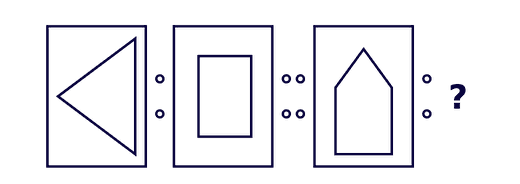
Two figures given on the left side of (:) are related with some logic/rule/relation. Select the missing figure on the right side of (::) from the given alternatives based on the same logic/rule/relation.
figure
(:) के बाईं ओर दी गई दो आकृतियाँ किसी तर्क/नियम/संबंध से संबंधित हैं। उसी तर्क/नियम/संबंध के आधार पर दिए गए विकल्पों में से (::) के दाईं ओर आने वाली लुप्त आकृति चुनिए।
figure
  1. Afigure
  2. Bfigure
  3. Cfigure
  4. Dfigure
Show answer

Concept: Count the sides of each figure.

Solution:

  1. Triangle (3 sides) → rectangle (4 sides): +1 side.
  2. Third figure: house shape = pentagon (5 sides).
  3. Answer must have 6 sides → hexagon.

Trick: In shape analogies, counting sides/lines is the first test to try.

Answer: (B) Option B (hexagon)

अवधारणा: हर आकृति की भुजाएँ गिनें।

हल:

  1. त्रिभुज (3) → आयत (4): एक भुजा अधिक।
  2. तीसरी आकृति: घर जैसी पंचभुज (5 भुजाएँ)।
  3. उत्तर में 6 भुजाएँ → षट्भुज।

ट्रिक: आकृति सादृश्य में सबसे पहले भुजाएँ/रेखाएँ गिनें।

उत्तर: (B) विकल्प B (षट्भुज)

SSC CHSLGeneral IntelligenceFigure analogy – sides increase by oneSSC CHSL 2025 · 28 Nov Shift 3 →