Question bank

Q&A: practice questions with answers

Search questions on any topic. Filter by exam category, exam, subject and topic, try the question, then open the answer and explanation.

Courses – airGurukul

5,000 questions found.

Q1021.
Rearrange the following sentences to form a meaningful and grammatically correct paragraph:
P. As a result, they were able to harvest fruits that would nourish the growing population.
Q. The ancient farmers built raised beds on the steep hillsides to prevent soil erosion.
R. Where there had previously been unusable slopes, these raised beds created fertile land.
S. Their community's prosperity and food security were largely due to their innovative farming techniques.
  1. AQ, R, P, S
  2. BS, R, P, Q
  3. CR, Q, P, S
  4. DP, R, Q, S
Show answer

Concept: Use pointer words ('these', 'As a result') to chain sentences.

  1. Q introduces the farmers and raised beds → opener.
  2. R says 'these raised beds' → must come after Q.
  3. P 'As a result … harvest' follows R's fertile land; S sums up prosperity → Q R P S.

Trick: 'These/this/such' refers back; 'As a result' needs a cause just before it.

Answer: (A) Q, R, P, S

अवधारणा: 'these', 'As a result' जैसे संकेत शब्दों से वाक्य जोड़ें।

  1. Q किसानों और raised beds का परिचय देता है → पहला वाक्य।
  2. R में 'these raised beds' → Q के बाद।
  3. P 'As a result' R के उपजाऊ ज़मीन के बाद; S निष्कर्ष → Q R P S।

ट्रिक: 'these/this' पिछली बात की ओर इशारा करते हैं; 'As a result' से पहले कारण होना चाहिए।

उत्तर: (A) Q, R, P, S
SSC CHSLEnglish LanguageSentence rearrangement – linkersSSC CHSL 2025 · 27 Nov Shift 2 →
Q1022.
What is the antonym of Permanent?
  1. AEternal
  2. BForever
  3. CLong-lasting
  4. DEphemeral
Show answer

Concept: Opposite of 'Permanent' (lasting forever).

  1. Permanent = lasting indefinitely.
  2. Ephemeral = lasting a very short time.
  3. Eternal, Forever, Long-lasting all mean 'lasting' → synonyms.

Trick: Three options carry the same meaning as the word – the odd one is the antonym.

Answer: (D) Ephemeral

अवधारणा: 'Permanent' (स्थायी) का विलोम।

  1. Permanent = स्थायी, सदा रहने वाला।
  2. Ephemeral = क्षणिक, बहुत थोड़े समय का।
  3. Eternal, Forever, Long-lasting – सब 'स्थायी' अर्थ → पर्यायवाची।

ट्रिक: Ephemeral – जैसे 'ephemera' (एक दिन जीने वाला कीट) – क्षणभंगुर।

उत्तर: (D) Ephemeral

SSC CHSLEnglish LanguageAntonym – PermanentSSC CHSL 2025 · 27 Nov Shift 2 →
Q1023.
What is the antonym of "Murky" ?
  1. ABright
  2. BTenebrous
  3. CSombre
  4. DGloomy
Show answer

Concept: Opposite of 'Murky' (dark, cloudy, unclear).

  1. Murky = dark and not clear (murky water).
  2. Bright = full of light, clear – opposite.
  3. Tenebrous, Sombre, Gloomy = dark/dull → synonyms of murky.

Trick: All three wrong options are 'dark' words – the only light word wins.

Answer: (A) Bright

अवधारणा: 'Murky' (धुँधला, गंदला) का विलोम।

  1. Murky = अँधेरा/गंदला, साफ़ नहीं।
  2. Bright = उजला, चमकीला – विपरीत।
  3. Tenebrous, Sombre, Gloomy = अँधेरा/उदास → murky के पर्यायवाची।

ट्रिक: तीनों गलत विकल्प 'अँधेरे' वाले हैं – अकेला 'उजाला' शब्द उत्तर है।

उत्तर: (A) Bright

SSC CHSLEnglish LanguageAntonym – MurkySSC CHSL 2025 · 27 Nov Shift 2 →
Q1024.
Select the incorrectly spelt word.
  1. AApocriphal
  2. BHistorian
  3. CMainstream
  4. DScholar
Show answer

Concept: Spot the misspelt word.

  1. Correct: Apocryphal (with 'y') = of doubtful truth, widely told but unverified.
  2. Given 'Apocriphal' uses 'i' instead of 'y'.
  3. Historian, Mainstream, Scholar are correct.

Trick: Apo-CRYPH-al – same 'cryph' as in 'cryptic' (hidden).

Answer: (A) Apocriphal

अवधारणा: गलत वर्तनी वाला शब्द पहचानें।

  1. सही: Apocryphal ('y' के साथ) = संदिग्ध सत्यता वाला (कही-सुनी बात)।
  2. 'Apocriphal' में 'y' की जगह 'i' है।
  3. Historian, Mainstream, Scholar सही हैं।

ट्रिक: Apo-CRYPH-al – 'cryptic' (छिपा हुआ) वाला 'cryph'।

उत्तर: (A) Apocriphal

SSC CHSLEnglish LanguageSpelling – ApocryphalSSC CHSL 2025 · 27 Nov Shift 2 →
Q1025.
Which word describes the action of making amends for a wrong or injury ?
  1. APenitence
  2. BAtonement
  3. CAcquittal
  4. DSalvation
Show answer

Concept: Word for 'making amends for a wrong or injury'.

  1. Atonement = act of repairing/compensating for a wrong.
  2. Penitence = feeling of regret only (no action).
  3. Acquittal = declared not guilty; Salvation = deliverance from sin.

Trick: At-one-ment: setting things 'at one' again after a wrong.

Answer: (B) Atonement

अवधारणा: 'किसी गलती/क्षति की भरपाई करना' के लिए एक शब्द।

  1. Atonement = प्रायश्चित, गलती की भरपाई का कार्य।
  2. Penitence = केवल पछतावे का भाव।
  3. Acquittal = दोषमुक्ति; Salvation = मोक्ष/उद्धार।

ट्रिक: At-one-ment = गलती के बाद संबंध फिर 'एक' करना।

उत्तर: (B) Atonement

SSC CHSLEnglish LanguageOne-word substitution – AtonementSSC CHSL 2025 · 27 Nov Shift 2 →
Q1026.
In a class, among the passed students, A is 14th from the top and 19nd from the bottom. If 9 students failed, what is the total number of students in the class?
एक कक्षा में, उत्तीर्ण विद्यार्थियों में A का स्थान ऊपर से 14वाँ और नीचे से 19वाँ है। यदि 9 विद्यार्थी अनुत्तीर्ण हो गए, तो कक्षा में विद्यार्थियों की कुल संख्या कितनी है?
  1. A41
  2. B42
  3. C43
  4. D44
Show answer

Concept: Rank from top + rank from bottom − 1 = total in that group.

  1. Passed students = 14 + 19 − 1 = 32.
  2. Add the failed ones: 32 + 9 = 41.
  3. So the class has 41 students.

Trick: Both-end ranks: add and subtract 1 (A is counted twice); then add the outsiders.

Answer: (A) 41

अवधारणा: ऊपर से स्थान + नीचे से स्थान − 1 = उस समूह की कुल संख्या।

  1. उत्तीर्ण विद्यार्थी = 14 + 19 − 1 = 32।
  2. अनुत्तीर्ण जोड़ें: 32 + 9 = 41।
  3. कक्षा में कुल 41 विद्यार्थी।

ट्रिक: दोनों ओर का स्थान जोड़ो, 1 घटाओ (A दो बार गिना गया); फिर बाहर वाले जोड़ो।

उत्तर: (A) 41

SSC CHSLGeneral IntelligenceRanking – total with failed studentsSSC CHSL 2025 · 27 Nov Shift 2 →
Q1027.
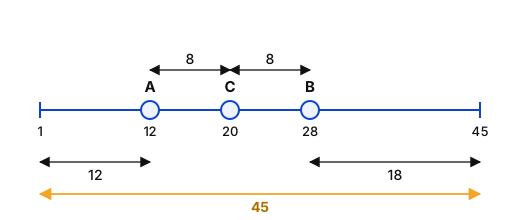
In a row of children, A is 12 th from the left and B is 18 th from the right. If C is 8th to the right of A and is exactly in the middle of A and B, what is the total number of children in the row?
बच्चों की एक पंक्ति में, A बाएँ से 12वाँ है और B दाएँ से 18वाँ है। यदि C, A के दाएँ 8वाँ है तथा A और B के ठीक बीच में है, तो पंक्ति में बच्चों की कुल संख्या कितनी है?
  1. A46
  2. B43
  3. C44
  4. D45
Show answer

Concept: If C is exactly midway, the gap A→C equals the gap C→B.

  1. C from left = 12+8=20.
  2. B is another 8 places right of C → B from left = 28.
  3. Total=28+18−1=45.

Trick: B's left-rank = A's rank + 2 × gap = 12+16=28 in one step.

Answer: (D) 45

अवधारणा: C ठीक बीच में है तो A से C की दूरी = C से B की दूरी।

  1. C बाएँ से = 12+8=20वाँ।
  2. B, C से 8 स्थान दाएँ → बाएँ से 28वाँ।
  3. कुल=28+18−1=45।

ट्रिक: B का बाएँ से स्थान = 12+2×8=28, सीधे।

उत्तर: (D) 45

SSC CHSLGeneral IntelligenceRanking – middle person in a rowSSC CHSL 2025 · 27 Nov Shift 2 →
Q1028.
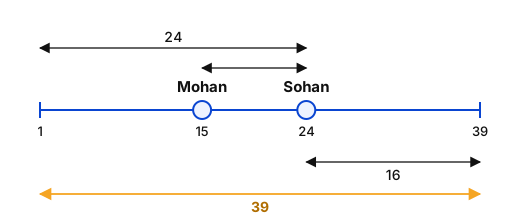
In a row of students, Mohan is 15th from the left and Sohan is 16th from the right. If they interchange their positions, Mohan becomes 24th from the left. How many students are there in the row?
विद्यार्थियों की एक पंक्ति में, मोहन बाएँ से 15वाँ है और सोहन दाएँ से 16वाँ है। यदि वे अपने स्थान आपस में बदल लेते हैं, तो मोहन बाएँ से 24वाँ हो जाता है। पंक्ति में कुल कितने विद्यार्थी हैं?
  1. A41
  2. B40
  3. C39
  4. D38
Show answer

Concept: After swapping, a person takes the other's old rank.

  1. Mohan's new rank (24th from left) = Sohan's old rank from left.
  2. Sohan: 24th from left and 16th from right.
  3. Total = 24 + 16 − 1 = 39.

Trick: Use the new rank of one with the old rank (other side) of the other – the first given rank (15th) is a distractor.

Answer: (C) 39

अवधारणा: स्थान बदलने पर व्यक्ति दूसरे का पुराना स्थान ले लेता है।

  1. मोहन का नया स्थान (बाएँ से 24वाँ) = सोहन का पुराना स्थान।
  2. सोहन: बाएँ से 24वाँ, दाएँ से 16वाँ।
  3. कुल = 24 + 16 − 1 = 39।

ट्रिक: नया स्थान + दूसरे का दूसरी ओर का स्थान − 1; 15वाँ वाली जानकारी फालतू है।

उत्तर: (C) 39

SSC CHSLGeneral IntelligenceRanking – interchange of positionsSSC CHSL 2025 · 27 Nov Shift 2 →
Q1029.
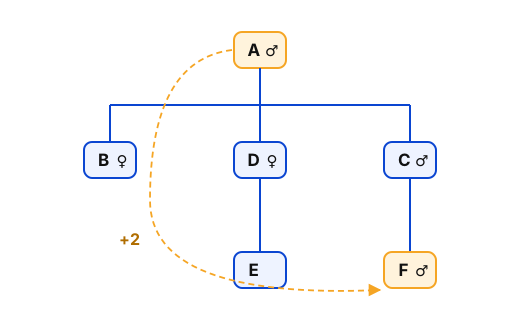
A family consists of seven persons A, B, C, D, E, F, G.
1. B is the daughter of A.
2. F is the son of C.
3. C is the brother of D.
4. D is the mother of E.
5. G is the sister-in-law of F .
6. A is the father of D.
How is A related to F?
एक परिवार में सात व्यक्ति A, B, C, D, E, F, G हैं।
1. B, A की पुत्री है।
2. F, C का पुत्र है।
3. C, D का भाई है।
4. D, E की माता है।
5. G, F की भाभी है।
6. A, D का पिता है।
A का F से क्या संबंध है?
  1. AFatherपिता
  2. BGrandfatherदादा
  3. CUncleचाचा
  4. DSonपुत्र
Show answer

Concept: Trace the generation link from A down to F.

  1. A is father of D; C is D's brother → A is C's father too.
  2. F is C's son → F is one generation below C.
  3. A (male) is two generations above F → grandfather.

Trick: Count generations: +2 with a male = grandfather (paternal here, as C is A's son).

Answer: (B) Grandfather

अवधारणा: A से F तक पीढ़ी का संबंध खोजें।

  1. A, D का पिता; C, D का भाई → A, C का भी पिता।
  2. F, C का पुत्र → C से एक पीढ़ी नीचे।
  3. A (पुरुष) F से दो पीढ़ी ऊपर → दादा।

ट्रिक: दो पीढ़ी ऊपर + पुरुष = दादा।

उत्तर: (B) दादा

SSC CHSLGeneral IntelligenceBlood relation – grandfatherSSC CHSL 2025 · 27 Nov Shift 2 →
Q1030.
Read the following statement carefully and identify the conclusion that follows.
Statement:
No flower is a tree.
All trees are tall.
Conclusions:
I. No flower is tall.
II. Some tall things are not flowers.
निम्नलिखित कथन को ध्यानपूर्वक पढ़िए और उस निष्कर्ष की पहचान कीजिए जो अनुसरण करता है।
कथन:
कोई भी फूल वृक्ष नहीं है।
सभी वृक्ष लंबे हैं।
निष्कर्ष:
I. कोई भी फूल लंबा नहीं है।
II. कुछ लंबी वस्तुएँ फूल नहीं हैं।
  1. AOnly conclusion I follows.केवल निष्कर्ष I अनुसरण करता है।
  2. BOnly conclusion II follows.केवल निष्कर्ष II अनुसरण करता है।
  3. CBoth conclusions I and II follow.निष्कर्ष I और II दोनों अनुसरण करते हैं।
  4. DNeither conclusion I nor II follows.न तो निष्कर्ष I और न ही निष्कर्ष II अनुसरण करता है।
Show answer

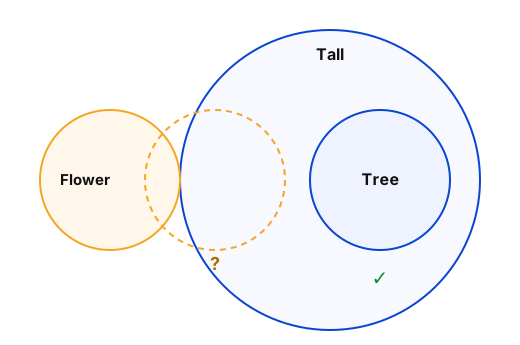
Concept: 'No A is B' + 'All B are C' → 'Some C are not A' is definite.

  1. Tall circle contains all trees; flowers lie outside trees.
  2. I: flowers may still overlap the tall circle outside trees → not certain.
  3. II: the tall things that are trees can never be flowers → follows.

Trick: No-A-B + All-B-C always gives 'Some C are not A' (standard result).

Answer: (B) Only conclusion II follows.

अवधारणा: 'कोई A, B नहीं' + 'सभी B, C हैं' → 'कुछ C, A नहीं हैं' निश्चित है।

  1. लंबी वस्तुओं के घेरे में सभी वृक्ष; फूल वृक्षों से बाहर।
  2. I: फूल वृक्षों के बाहर वाले 'लंबे' भाग में हो सकते हैं → निश्चित नहीं।
  3. II: जो लंबी वस्तुएँ वृक्ष हैं वे फूल नहीं हो सकतीं → अनुसरण करता है।

ट्रिक: No + All से हमेशा 'कुछ C, A नहीं' बनता है।

उत्तर: (B) केवल निष्कर्ष II अनुसरण करता है।

SSC CHSLGeneral IntelligenceSyllogism – no / allSSC CHSL 2025 · 27 Nov Shift 2 →
Q1031.
A series is given with one term missing. Select the correct alternative from the given ones that will complete the series.
7, 25, 104, 316, ?, 3808, 15236, 45712
एक शृंखला दी गई है जिसमें एक पद लुप्त है। दिए गए विकल्पों में से वह सही विकल्प चुनिए जो शृंखला को पूरा करेगा।
7, 25, 104, 316, ?, 3808, 15236, 45712
  1. A1264
  2. B1268
  3. C1260
  4. D1256
Show answer

Concept: Alternate multipliers 3 and 4, plus a constant 4.

  1. Pattern: 25=7×3+4, 104=25×4+4, 316=104×3+4.
  2. Next uses ×4: 1264+4=1268.
  3. Check: 1268×3=3804, +4=3808 ✓

Trick: Terms grow ~3–4 times each step → test '×3/×4 + small number'.

Answer: (B) 1268

अवधारणा: गुणक 3 और 4 बारी-बारी, साथ में +4।

  1. पैटर्न: 25=7×3+4, 104=25×4+4, 316=104×3+4।
  2. अब ×4 की बारी: 1264+4=1268।
  3. जाँच: 1268×3=3804, +4=3808 ✓

ट्रिक: पद लगभग 3–4 गुना बढ़ें तो '×3/×4 + छोटी संख्या' जाँचें।

उत्तर: (B) 1268

SSC CHSLGeneral IntelligenceNumber series – ×3, ×4 then +4SSC CHSL 2025 · 27 Nov Shift 2 →
Q1032.
A series is given with one term wrong. Select the wrong term from the given alternatives.
-319, -330, -342, -355, -368, -384, -400, -417
एक शृंखला दी गई है जिसमें एक पद गलत है। दिए गए विकल्पों में से गलत पद चुनिए।
-319, -330, -342, -355, -368, -384, -400, -417
  1. A-368
  2. B-330
  3. C-319
  4. D-400
Show answer

Concept: Differences rise by 1 each step (11, 12, 13, …).

  1. 319 → 330 → 342 → 355: gaps 11, 12, 13.
  2. Next gap 14 → 355 + 14 = 369, but −368 is given.
  3. Then 369+15 = 384, +16 = 400, +17 = 417 ✓

Trick: Check gaps left to right; the first gap that breaks the pattern points to the wrong term.

Answer: (A) -368

अवधारणा: अंतर हर बार 1 बढ़ता है (11, 12, 13, …)।

  1. 319 → 330 → 342 → 355: अंतर 11, 12, 13।
  2. अगला अंतर 14 → 369 होना चाहिए, पर −368 दिया है।
  3. आगे 369+15 = 384, +16 = 400, +17 = 417 ✓

ट्रिक: बाएँ से अंतर देखें; जहाँ पैटर्न टूटे वही गलत पद।

उत्तर: (A) -368

SSC CHSLGeneral IntelligenceWrong term – increasing differenceSSC CHSL 2025 · 27 Nov Shift 2 →
Q1033.
A series is given with one term missing. Select the correct alternative from the given ones that will complete the series.
4, 17, ?, 224, 901, 2708, 10837, 32516
एक शृंखला दी गई है जिसमें एक पद लुप्त है। दिए गए विकल्पों में से वह सही विकल्प चुनिए जो शृंखला को पूरा करेगा।
4, 17, ?, 224, 901, 2708, 10837, 32516
  1. A168
  2. B73
  3. C275
  4. D182
Show answer

Concept: Alternate ×3 and ×4, each followed by +5.

  1. 4×3+5=17.
  2. Missing = 17×4+5=73.
  3. Check: 73×3+5=224; 224×4+5=901 ✓

Trick: Verify with the term right after the blank – it confirms the answer instantly.

Answer: (B) 73

अवधारणा: बारी-बारी ×3 और ×4, फिर +5।

  1. 4×3+5=17।
  2. लुप्त पद = 17×4+5=73।
  3. जाँच: 73×3+5=224; 224×4+5=901 ✓

ट्रिक: रिक्त के बाद वाले पद से जाँच कर लें – उत्तर तुरंत पक्का।

उत्तर: (B) 73

SSC CHSLGeneral IntelligenceNumber series – ×3, ×4 then +5SSC CHSL 2025 · 27 Nov Shift 2 →
Q1034.
Few of the letters are given followed by a question mark (?) these letters are following a specific pattern you have to give the correct option which can replace question mark.
Complete the series: E, I, L, N, ?
कुछ अक्षर दिए गए हैं जिनके बाद एक प्रश्नवाचक चिह्न (?) है; ये अक्षर एक विशिष्ट पैटर्न का अनुसरण कर रहे हैं। आपको वह सही विकल्प चुनना है जो प्रश्नवाचक चिह्न के स्थान पर आ सके।
शृंखला पूरी कीजिए: E, I, L, N, ?
  1. AO
  2. BP
  3. CQ
  4. DR
Show answer

Concept: Convert letters to positions and check gaps.

  1. E=5, I=9, L=12, N=14.
  2. Gaps: +4, +3, +2 → next +1.
  3. 14 + 1 = 15 = O.

Trick: EJOTY positions 5,10,15,20,25 – O = 15 is an anchor.

Answer: (A) O

अवधारणा: अक्षरों को स्थान-संख्या में बदलें और अंतर देखें।

  1. E=5, I=9, L=12, N=14।
  2. अंतर: +4, +3, +2 → अगला +1।
  3. 14 + 1 = 15 = O।

ट्रिक: EJOTY = 5,10,15,20,25 – O = 15 याद रखें।

उत्तर: (A) O

SSC CHSLGeneral IntelligenceLetter series – decreasing gapsSSC CHSL 2025 · 27 Nov Shift 2 →
Q1035.
If 15 # 20 = 1200 and 5 # 40=800, then what is the value of 25 # 30?
यदि 15 # 20 = 1200 और 5 # 40=800, तो 25 # 30 का मान क्या है?
  1. A3000
  2. B3200
  3. C2800
  4. D3400
Show answer

Concept: Find the hidden rule from the given examples.

  1. 15×20=300 → 300×4=1200 ✓; 5×40=200 → ×4 = 800 ✓
  2. Rule: a # b = 4ab.
  3. 25 # 30 = 750×4=3000.

Trick: Result ÷ product = same number (4) in both → rule found.

Answer: (A) 3000

अवधारणा: दिए उदाहरणों से छिपा नियम निकालें।

  1. 15×20=300 → ×4 = 1200 ✓; 5×40=200 → ×4 = 800 ✓
  2. नियम: a # b = 4ab।
  3. 25 # 30 = 750×4=3000।

ट्रिक: परिणाम ÷ गुणनफल दोनों में 4 → नियम मिल गया।

उत्तर: (A) 3000

SSC CHSLGeneral IntelligenceSymbol operation – product × 4SSC CHSL 2025 · 27 Nov Shift 2 →
Q1036.
If 650 & 5$12=590 and 820 & 35 $25=−55, then what is the value of 945 & 6 $ 8?
यदि 650 & 5$12=590 और 820 & 35 $25=−55, तो 945 & 6 $ 8 का मान क्या है?
  1. A890
  2. B897
  3. C900
  4. D905
Show answer

Concept: Rule: first number minus product of the other two.

  1. 5×12=60 and 650 − 60 gives 590 ✓
  2. 35×25=875; subtracting from 820 gives −55 ✓
  3. 6×8=48; 945−48=897.

Trick: A negative result (−55) hints that something big is subtracted – try a−bc.

Answer: (B) 897

अवधारणा: नियम: पहली संख्या − बाकी दो का गुणनफल।

  1. 5×12=60, और 650 में से घटाने पर 590 ✓
  2. 35×25=875; 820 में से घटाने पर −55 ✓
  3. 6×8=48; 945−48=897।

ट्रिक: ऋणात्मक परिणाम (−55) बताता है कि बड़ी संख्या घटाई गई – a−bc आज़माएँ।

उत्तर: (B) 897

SSC CHSLGeneral IntelligenceSymbol operation – a − b×cSSC CHSL 2025 · 27 Nov Shift 2 →
Q1037.
In the questions given below, there are three statements followed by two conclusions I and II. You have to take the three given statements to be true even if they seem to be at variance from commonly known facts. Read all the conclusions and then decide which of the given conclusions logically follows from the three statements disregarding commonly known facts.
Statements:
Only some engineers are scientists
Some scientists are artists
All artists are intelligent.
Conclusion:
I. Some engineers are not intelligent.
II. Some intelligent are scientists.
नीचे दिए गए प्रश्नों में तीन कथन दिए गए हैं जिनके बाद दो निष्कर्ष I और II दिए गए हैं। आपको तीनों दिए गए कथनों को सत्य मानना है, भले ही वे सर्वज्ञात तथ्यों से भिन्न प्रतीत हों। सभी निष्कर्षों को पढ़िए और फिर निर्णय कीजिए कि सर्वज्ञात तथ्यों की उपेक्षा करते हुए दिए गए निष्कर्षों में से कौन-सा निष्कर्ष तीनों कथनों का तार्किक रूप से अनुसरण करता है।
कथन:
केवल कुछ इंजीनियर वैज्ञानिक हैं कुछ वैज्ञानिक कलाकार हैं सभी कलाकार बुद्धिमान हैं।
निष्कर्ष:
I. कुछ इंजीनियर बुद्धिमान नहीं हैं।
II. कुछ बुद्धिमान वैज्ञानिक हैं।
  1. ABoth conclusions I and II followनिष्कर्ष I और II दोनों अनुसरण करते हैं
  2. BOnly conclusion I followsकेवल निष्कर्ष I अनुसरण करता है
  3. COnly conclusion II followsकेवल निष्कर्ष II अनुसरण करता है
  4. DNeither conclusion I nor II followsन तो निष्कर्ष I और न ही निष्कर्ष II अनुसरण करता है
Show answer

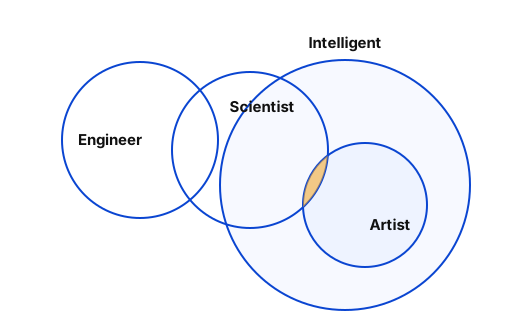
Concept: 'Only some A are B' = some A are B AND some A are not B.

  1. Scientists–artists overlap, and all artists are intelligent → some scientists are intelligent → 'Some intelligent are scientists' follows (II).
  2. Non-scientist engineers may or may not be intelligent → I is only a possibility.
  3. So only II follows.

Trick: Some + All → Some (conclusion converts: some scientists are intelligent = some intelligent are scientists).

Answer: (C) Only conclusion II follows

अवधारणा: 'Only some A are B' = कुछ A, B हैं और कुछ A, B नहीं हैं।

  1. कुछ वैज्ञानिक कलाकार हैं, सभी कलाकार बुद्धिमान → कुछ वैज्ञानिक बुद्धिमान → II सही।
  2. जो इंजीनियर वैज्ञानिक नहीं, वे बुद्धिमान हों या न हों – I केवल संभावना।
  3. अतः केवल II।

ट्रिक: Some + All = Some; 'कुछ X, Y हैं' उलटकर 'कुछ Y, X हैं' भी सही।

उत्तर: (C) केवल निष्कर्ष II अनुसरण करता है

SSC CHSLGeneral IntelligenceSyllogism – only someSSC CHSL 2025 · 27 Nov Shift 2 →
Q1038.
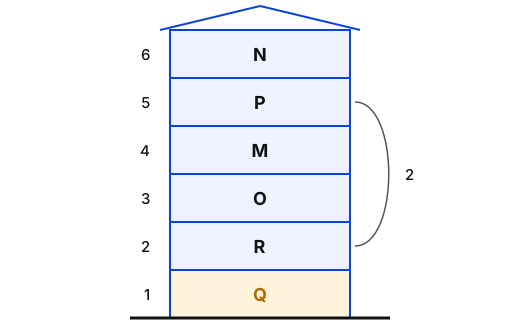
Six persons M, N, O, P, Q and R lived in a building with 6 floors. Only one person lived on each floor. N lived just above P. 2 persons lived between P and R. P lived on one of the floors above R. M lived just above 0 who did not live on a floor second from the bottom. How many persons lived below Q ?
छह व्यक्ति M, N, O, P, Q और R एक इमारत में रहते हैं जिसमें 6 मंज़िलें हैं। प्रत्येक मंज़िल पर केवल एक ही व्यक्ति रहता है। N, P के ठीक ऊपर रहता है। P और R के बीच 2 व्यक्ति रहते हैं। P, R के ऊपर की किसी एक मंज़िल पर रहता है। M, 0 के ठीक ऊपर रहता है, जो नीचे से दूसरी मंज़िल पर नहीं रहता। Q के नीचे कितने व्यक्ति रहते हैं?
  1. ANoneकोई नहीं
  2. BOneएक
  3. CTwoदो
  4. DThreeतीन
Show answer

Concept: Fix the P–R gap first, then place pairs.

  1. P is 3 floors above R and N is just above P → (R1, P4, N5) or (R2, P5, N6).
  2. Case R1: only O2–M3 fits for M just above O, but O can't be on floor 2 → rejected.
  3. Case R2: P5, N6; M–O must be O3, M4 → Q on floor 1. Nobody lives below Q.

Trick: Floor 1 person always has 'none' below – once Q lands on 1, stop.

Answer: (A) None

अवधारणा: पहले P–R का अंतर तय करें, फिर जोड़ियाँ रखें।

  1. P, R से 3 मंज़िल ऊपर और N, P के ठीक ऊपर → (R1, P4, N5) या (R2, P5, N6)।
  2. R1 वाले केस में O2–M3 ही बचता, पर O दूसरी मंज़िल पर नहीं → गलत।
  3. R2: P5, N6; O3, M4 → Q पहली मंज़िल पर; उसके नीचे कोई नहीं।

ट्रिक: सबसे निचली मंज़िल वाले के नीचे कोई नहीं होता।

उत्तर: (A) कोई नहीं

SSC CHSLGeneral IntelligenceFloor puzzle – six floorsSSC CHSL 2025 · 27 Nov Shift 2 →
Q1039.
Price of 5 cups A, B, C, D and E is compared. Price of no two cups is same. Price of D is more than E but less than B and C . Price of A is highest. If the price of B is less than C, then the price of how many cups is more than B ?
5 कपों A, B, C, D और E के मूल्यों की तुलना की जाती है। किन्हीं दो कपों का मूल्य समान नहीं है। D का मूल्य E से अधिक किंतु B और C से कम है। A का मूल्य सबसे अधिक है। यदि B का मूल्य C से कम है, तो कितने कपों का मूल्य B से अधिक है?
  1. A2
  2. B3
  3. C1
  4. D0
Show answer

Concept: Combine inequalities into one chain.

  1. E < D < B and D < C; A is the highest.
  2. B < C → A > C > B > D > E.
  3. Cups costlier than B: A and C = 2.

Trick: Write a single chain left to right (high→low) and just count.

Answer: (A) 2

अवधारणा: सभी असमानताओं को एक श्रृंखला में जोड़ें।

  1. E < D < B और D < C; A सबसे महँगा।
  2. B < C → A > C > B > D > E।
  3. B से महँगे: A और C = 2।

ट्रिक: ऊँचे से नीचे एक ही पंक्ति लिखें और गिन लें।

उत्तर: (A) 2

SSC CHSLGeneral IntelligenceOrdering – pricesSSC CHSL 2025 · 27 Nov Shift 2 →
Q1040.
Six players P, Q, R, S, T, and U are compared on the basis of their heights. No two players have the same height. P's height is the second tallest. U's height is greater than that of R and Q but less than that of S and T. T's height is not the maximum. Which player has the maximum height?
छह खिलाड़ियों P, Q, R, S, T और U की तुलना उनकी लंबाई के आधार पर की जाती है। किन्हीं दो खिलाड़ियों की लंबाई समान नहीं है। P की लंबाई दूसरे स्थान पर सबसे अधिक है। U की लंबाई R और Q से अधिक है किंतु S और T से कम है। T की लंबाई सर्वाधिक नहीं है। किस खिलाड़ी की लंबाई सर्वाधिक है?
  1. AP
  2. BS
  3. CQ
  4. DT
Show answer

Concept: Eliminate who cannot be first.

  1. S and T are taller than U; U > R, Q → tallest is S or T (or P).
  2. P holds 2nd place and T is ruled out for 1st.
  3. Only S remains for the top: S > P > T > U > (R, Q).

Trick: Strike out each name ruled out for the top spot – one remains.

Answer: (B) S

अवधारणा: जो सबसे लंबा नहीं हो सकता, उसे हटाते जाएँ।

  1. S और T, U से लंबे; U, R और Q से लंबा।
  2. P दूसरे स्थान पर, T सबसे लंबा नहीं।
  3. अतः S सबसे लंबा: S > P > T > U > (R, Q)।

ट्रिक: शीर्ष स्थान से नाम काटते जाएँ – जो बचे वही उत्तर।

उत्तर: (B) S

SSC CHSLGeneral IntelligenceOrdering – heightsSSC CHSL 2025 · 27 Nov Shift 2 →