Question bank

Q&A: practice questions with answers

Search questions on any topic. Filter by exam category, exam, subject and topic, try the question, then open the answer and explanation.

Courses – airGurukul

5,000 questions found.

Q1421.
Rearrange the following sentence parts to form a meaningful and grammatically correct paragraph:
P. It is a mind that sees the world as a finished product, something that has happened and is over.
Q. There are two types of mind in this world, and they differ profoundly in their outlook.
R. It is the legal and conservative type of mind, which looks back toward the past for its guidance and its authority.
S. The first type of mind I will call the retrospective or submissive mind.
  1. AQSRP
  2. BQSPR
  3. CSQRP
  4. DQSPR
Show answer

Concept: Start with the general statement, then define, then describe.

  1. Q opens: there are two types of mind.
  2. S names the first type: the retrospective/submissive mind.
  3. R describes it as legal and conservative, looking to the past; P adds that it sees the world as finished and over.

Trick: Q must start (general intro) and S must follow ('The first type') – only Q S _ _ options remain; R explains 'looks back to the past', P extends it.

Answer: (A) QSRP

अवधारणा: पहले सामान्य कथन, फिर परिभाषा, फिर विवरण।

  1. Q: दुनिया में दो तरह के मन हैं — शुरुआत।
  2. S: पहला प्रकार — retrospective/submissive mind।
  3. R: यह legal और conservative है, अतीत की ओर देखता है; P: यह दुनिया को पूरी हो चुकी चीज़ मानता है।

ट्रिक: Q शुरुआत और S उसके बाद तय है; फिर R (अतीत) और उसके बाद P।

उत्तर: (A) QSRP
SSC CHSLEnglish LanguagePara jumble – two types of mindSSC CHSL 2025 · 26 Nov Shift 1 →
Q1422.
Rearrange the following sentence parts to form a meaningful and grammatically correct paragraph:
P. She organized her ideas into a clear draft, typing steadily on her laptop.
Q. She carefully entered the complete contact address of the recipient in the address bar.
R. A brief subject line clearly conveyed the purpose of the message.
S. She felt relieved after clicking the submit button and watching the message get delivered.
  1. AQ, R, P, S
  2. BP, Q, S, R
  3. CS, Q, P, R
  4. DQ, S, R, P
Show answer

Concept: Arrange the actions in their natural time order.

  1. Q: enter the recipient's address first.
  2. R: add the subject line.
  3. P: write the body/draft; S: click submit and feel relieved (end).

Trick: S (final relief) must be last – only option A ends with S.

Answer: (A) Q, R, P, S

अवधारणा: काम जिस क्रम में होते हैं उसी क्रम में लगाएँ।

  1. Q: पहले प्राप्तकर्ता का पता डालना।
  2. R: फिर subject line।
  3. P: संदेश लिखना; S: submit दबाकर राहत — अंत।

ट्रिक: S (अंतिम राहत) आख़िर में ही होगा — केवल विकल्प A में S आख़िर में है।

उत्तर: (A) Q, R, P, S

SSC CHSLEnglish LanguagePara jumble – sending an emailSSC CHSL 2025 · 26 Nov Shift 1 →
Q1423.
Rearrange the following sentences to form a meaningful and grammatically correct paragraph:
P. He completed the move smoothly, holding his balance firmly at the end.
Q. He leapt into the air, rotating swiftly before preparing for the landing.
R. He sprinted down the track to build momentum for the jump.
S. After an impressive display, he acknowledged the officials and spectators with a confident nod,
  1. AR, Q, P, S
  2. BQ, R, P, S
  3. CR, P, Q, S
  4. DS, Q, P, R
Show answer

Concept: Follow the physical order of an athletic jump.

  1. R: sprint to build momentum.
  2. Q: leap and rotate in the air.
  3. P: land smoothly; S: acknowledge officials after the display.

Trick: Run → jump → land → bow. Only option A begins with the run (R) and keeps Q before P.

Answer: (A) R, Q, P, S

अवधारणा: खेल-छलाँग के वास्तविक क्रम का पालन करें।

  1. R: गति के लिए दौड़ना।
  2. Q: हवा में छलाँग और घूमना।
  3. P: संतुलित लैंडिंग; S: अंत में अधिकारियों का अभिवादन।

ट्रिक: दौड़ → छलाँग → लैंडिंग → अभिवादन। केवल A में R से शुरुआत और Q, P से पहले है।

उत्तर: (A) R, Q, P, S

SSC CHSLEnglish LanguagePara jumble – sequence of a jumpSSC CHSL 2025 · 26 Nov Shift 1 →
Q1424.
Which of the following pairs of homophones can be used to fill in the blanks most suitably?
'The explorer realized that his long journey would be for ____ if he did ____ find the hidden valley before the winter snows arrived."
  1. Acouncil, counsel
  2. Bdiscrete, discreet
  3. Cnaught, not
  4. Dweather, whether
Show answer

Concept: Homophones sound alike but differ in meaning; fit each to its blank.

  1. 'be for naught' = be in vain, achieve nothing.
  2. 'if he did not find' – negative needed.
  3. Other pairs (council/counsel, discrete/discreet, weather/whether) do not fit either blank.

Trick: The second blank is 'did ___ find' – only 'not' fits there, so pick the pair containing 'not'.

Answer: (C) naught, not

अवधारणा: Homophones की आवाज़ एक, अर्थ अलग; हर खाली जगह में अर्थ जाँचें।

  1. 'for naught' = व्यर्थ, बेकार।
  2. 'did not find' — निषेध चाहिए।
  3. बाकी जोड़े किसी भी खाली जगह में फिट नहीं होते।

ट्रिक: दूसरी खाली जगह 'did ___ find' में सिर्फ़ 'not' बैठता है — वही जोड़ा चुनें।

उत्तर: (C) naught, not

SSC CHSLEnglish LanguageHomophones – naught / notSSC CHSL 2025 · 26 Nov Shift 1 →
Q1425.
Which of the following words refers to the act of inventing false information in order to deceive someone.
  1. AFabrication
  2. BVilification
  3. CDesecration
  4. DBlasphemy
Show answer

Concept: Word for making up false information to deceive.

  1. Fabrication = inventing a false story or facts.
  2. Vilification = abusive criticism to damage reputation.
  3. Desecration = disrespecting a sacred thing; blasphemy = insulting God/religion.

Trick: 'Fabricate' also means 'to make/build' – fabricating a lie = building a false story.

Answer: (A) Fabrication

अवधारणा: धोखा देने के लिए झूठी जानकारी गढ़ने का शब्द।

  1. Fabrication = झूठी कहानी/तथ्य गढ़ना।
  2. Vilification = किसी को बदनाम करना।
  3. Desecration = पवित्र वस्तु का अपमान; blasphemy = ईश्वर/धर्म का अपमान।

ट्रिक: 'Fabricate' का अर्थ 'बनाना' भी है — झूठ बनाना = fabrication।

उत्तर: (A) Fabrication

SSC CHSLEnglish LanguageOne-word substitution – inventing liesSSC CHSL 2025 · 26 Nov Shift 1 →
Q1426.
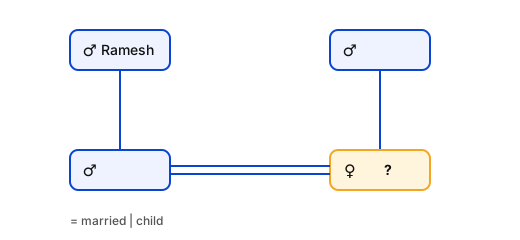
Ramesh said, "She is the only daughter of my son's father-in-law." How is 'she' related to Ramesh ?
रमेश ने कहा, "वह मेरे पुत्र के ससुर की इकलौती पुत्री है।" 'वह' रमेश से किस प्रकार संबंधित है ?
  1. ADaughter-in-lawपुत्रवधू
  2. BGranddaughterपोती
  3. CSister-in-lawभाभी
  4. DDaughterपुत्री
Show answer

Concept: Decode the relation from the innermost phrase outward.

  1. Son's father-in-law = father of the son's wife.
  2. His only daughter = the son's wife herself.
  3. Son's wife = Ramesh's daughter-in-law.

Trick: 'Only daughter of X's father-in-law' always = X's wife.

Answer: (A) Daughter-in-law

अवधारणा: संबंध को अंदर वाले हिस्से से बाहर की ओर खोलें।

  1. बेटे के ससुर = बेटे की पत्नी के पिता।
  2. उनकी इकलौती बेटी = बेटे की पत्नी।
  3. बेटे की पत्नी = Ramesh की बहू।

ट्रिक: 'X के ससुर की इकलौती बेटी' = हमेशा X की पत्नी।

उत्तर: (A) पुत्रवधू

SSC CHSLGeneral IntelligenceBlood relation – son's father-in-lawSSC CHSL 2025 · 26 Nov Shift 1 →
Q1427.
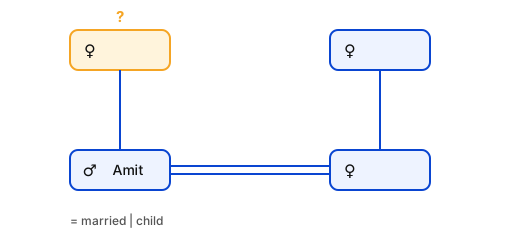
Amit said, "The woman is the mother of the husband of the only daughter of my wife's mother." How is the woman related to Amit ?
अमित ने कहा, "वह महिला मेरी पत्नी की माता की इकलौती पुत्री के पति की माता है।" वह महिला अमित से किस प्रकार संबंधित है ?
  1. AMotherमाता
  2. BMother-in-lawसास
  3. CSister-in-lawभाभी
  4. DCo-mother-in-lawसमधिन
Show answer

Concept: Simplify the chain step by step.

  1. Only daughter of Amit's wife's mother = Amit's wife.
  2. Husband of Amit's wife = Amit.
  3. Mother of Amit = Amit's mother.

Trick: The chain loops back to the speaker himself – so the woman is simply 'mother of Amit'.

Answer: (A) Mother

अवधारणा: रिश्ते को एक-एक कदम सरल करें।

  1. Amit की सास की इकलौती बेटी = Amit की पत्नी।
  2. उस पत्नी का पति = Amit स्वयं।
  3. Amit की माँ = Mother।

ट्रिक: पूरी श्रृंखला वापस Amit पर आती है — इसलिए महिला Amit की माँ है।

उत्तर: (A) माता

SSC CHSLGeneral IntelligenceBlood relation – wife's mother's only daughterSSC CHSL 2025 · 26 Nov Shift 1 →
Q1428.
In a secret message system, each vowel in a word is replaced with the letter that comes three places after it in the alphabet, while each consonant is replaced with the one that comes just before it. After applying this logic to the word CHAMPION, what will be the final coded form?
एक गुप्त संदेश प्रणाली में, किसी शब्द के प्रत्येक स्वर (vowel) को वर्णमाला में उससे तीन स्थान बाद आने वाले अक्षर से बदल दिया जाता है, जबकि प्रत्येक व्यंजन (consonant) को उससे ठीक पहले आने वाले अक्षर से बदल दिया जाता है। इस तर्क को शब्द CHAMPION पर लागू करने के बाद अंतिम कूट रूप क्या होगा?
  1. ABGDLPLRM
  2. BBGDLOLRM
  3. CAFDLOLRMAFDLOLRM (d) BGDLOKRM
  4. DBGDLOKRM
Show answer

Concept: Apply two separate rules: vowels move 3 forward, consonants 1 back.

  1. C→B, H→G, A→D, M→L
  2. P→O, I→L, O→R, N→M
  3. Code: BGDLOLRM

Trick: Check only the 5th letter: P−1 = O. That removes A (P) ; then 6th letter I+3 = L removes D (K). Answer in 10 seconds.

Answer: (B) BGDLOLRM

अवधारणा: दो नियम: स्वर 3 आगे, व्यंजन 1 पीछे।

  1. C→B, H→G, A→D, M→L
  2. P→O, I→L, O→R, N→M
  3. कोड: BGDLOLRM

ट्रिक: 5वाँ अक्षर P−1 = O देखकर A हटाएँ; 6वाँ I+3 = L देखकर D हटाएँ; पहला C−1 = B से C हटेगा।

उत्तर: (B) BGDLOLRM

SSC CHSLGeneral IntelligenceCoding – vowels +3, consonants −1SSC CHSL 2025 · 26 Nov Shift 1 →
Q1429.
You are a team leader. Your team members are upset because you changed the way of working without taking their opinion. What should you do to maintain trust and cooperation in this situation?
आप एक टीम लीडर हैं। आपकी टीम के सदस्य इसलिए नाराज़ हैं क्योंकि आपने उनकी राय लिए बिना कार्य करने का तरीका बदल दिया। इस स्थिति में विश्वास और सहयोग बनाए रखने के लिए आपको क्या करना चाहिए?
  1. AIgnore their complaintsउनकी शिकायतों की अनदेखी करें
  2. BBlame the entire teamपूरी टीम को दोष दें
  3. CTalk to them, explain your reasons, and involve them in future decisionsउनसे बात करें, अपने कारण समझाएँ और भविष्य के निर्णयों में उन्हें शामिल करें
  4. DReplace the team membersटीम के सदस्यों को बदल दें
Show answer

Concept: The best response fixes the root cause while keeping the team together.

  1. The real complaint: members were not consulted.
  2. Talking to them, explaining reasons and involving them later repairs trust.
  3. Ignoring, blaming or replacing them worsens the conflict.

Trick: In leadership questions, pick the option with communication + participation; reject anything extreme.

Answer: (C) Talk to them, explain your reasons, and involve them in future decisions

अवधारणा: सबसे अच्छा कदम वह है जो मूल कारण सुधारे और टीम को जोड़े रखे।

  1. असली शिकायत: उनसे राय नहीं ली गई।
  2. बात करना, कारण समझाना और आगे शामिल करना भरोसा लौटाता है।
  3. नज़रअंदाज़ करना, दोष देना या बदल देना स्थिति बिगाड़ता है।

ट्रिक: Leadership प्रश्नों में संवाद + भागीदारी वाला विकल्प चुनें; अतिवादी विकल्प हटाएँ।

उत्तर: (C) उनसे बात करें, अपने कारण समझाएँ और भविष्य के निर्णयों में उन्हें शामिल करें

SSC CHSLGeneral IntelligenceSituational judgement – team trustSSC CHSL 2025 · 26 Nov Shift 1 →
Q1430.
Read the following statement carefully and identify the conclusion that follows.
Statement:
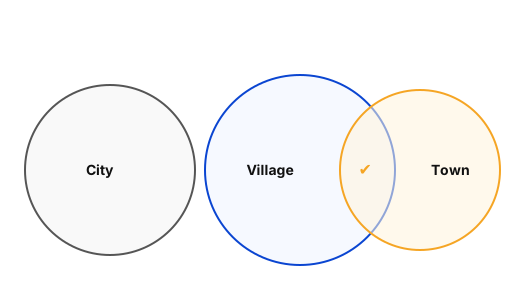
No city is a village.
Some villages are towns.
Conclusions:
I. Some towns are not cities.
II. No town is a village.
निम्नलिखित कथनों को ध्यानपूर्वक पढ़िए और उस निष्कर्ष की पहचान कीजिए जो इनका अनुसरण करता है।
कथन:
कोई भी शहर गाँव नहीं है।
कुछ गाँव कस्बे हैं।
निष्कर्ष:
I. कुछ कस्बे शहर नहीं हैं।
II. कोई भी कस्बा गाँव नहीं है।
  1. AOnly conclusion I follows.केवल निष्कर्ष I अनुसरण करता है।
  2. BOnly conclusion II follows.केवल निष्कर्ष II अनुसरण करता है।
  3. CEither conclusion I or II follows.या तो निष्कर्ष I या निष्कर्ष II अनुसरण करता है।
  4. DNeither conclusion I nor II follows.न तो निष्कर्ष I और न ही निष्कर्ष II अनुसरण करता है।
Show answer

Concept: Draw the minimal Venn diagram and test each conclusion.

  1. City and Village circles are separate.
  2. Some villages are towns → the town part inside Village can never be a city → some towns are not cities (I follows).
  3. II 'No town is a village' contradicts 'Some villages are towns' → false.

Trick: 'No A is B' + 'Some B are C' ⇒ always 'Some C are not A'.

Answer: (A) Only conclusion I follows.

अवधारणा: सबसे सरल Venn diagram बनाकर हर निष्कर्ष जाँचें।

  1. City और Village के घेरे अलग हैं।
  2. कुछ Village = Town → वह Town भाग City नहीं हो सकता → कुछ towns, cities नहीं हैं (I सही)।
  3. II सीधे कथन 2 के विरुद्ध है → गलत।

ट्रिक: 'कोई A, B नहीं' + 'कुछ B, C हैं' ⇒ हमेशा 'कुछ C, A नहीं हैं'।

उत्तर: (A) केवल निष्कर्ष I अनुसरण करता है।

SSC CHSLGeneral IntelligenceSyllogism – No / SomeSSC CHSL 2025 · 26 Nov Shift 1 →
Q1431.
Statements:
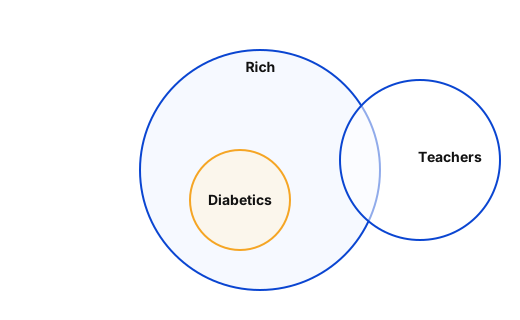
Some teachers are rich.
All diabetics are rich.
Conclusions:
1. Some diabetics are teachers.
2. Some rich people are diabetic.
कथन:
कुछ शिक्षक अमीर हैं।
सभी मधुमेह रोगी अमीर हैं।
निष्कर्ष:
1. कुछ मधुमेह रोगी शिक्षक हैं।
2. कुछ अमीर लोग मधुमेह रोगी हैं।
  1. ANeither 1 nor 2 can be drawnन तो 1 और न ही 2 निकाला जा सकता है
  2. BOnly conclusion 1 can be drawnकेवल निष्कर्ष 1 निकाला जा सकता है
  3. CBoth 1 and 2 can be drawn1 और 2 दोनों निकाले जा सकते हैं
  4. DOnly conclusion 2 can be drawnकेवल निष्कर्ष 2 निकाला जा सकता है
Show answer

Concept: Only what is certain in every diagram is a valid conclusion.

  1. All diabetics ⊂ Rich; Teachers only partly overlap Rich.
  2. Diabetics may or may not touch Teachers → conclusion 1 is only possible, not certain.
  3. All diabetics are rich ⇒ some rich are diabetic (conversion) → conclusion 2 follows.

Trick: 'All A are B' always gives 'Some B are A'.

Answer: (D) Only conclusion 2 can be drawn

अवधारणा: जो हर diagram में पक्का हो, वही निष्कर्ष है।

  1. सभी diabetics, Rich के अंदर; Teachers का Rich से केवल कुछ मेल।
  2. Diabetics और Teachers का मिलना ज़रूरी नहीं → निष्कर्ष 1 केवल संभावना है।
  3. सभी diabetics अमीर ⇒ कुछ अमीर diabetic हैं → निष्कर्ष 2 सही।

ट्रिक: 'All A are B' से हमेशा 'Some B are A' निकलता है।

उत्तर: (D) केवल निष्कर्ष 2 निकाला जा सकता है

SSC CHSLGeneral IntelligenceSyllogism – All / SomeSSC CHSL 2025 · 26 Nov Shift 1 →
Q1432.
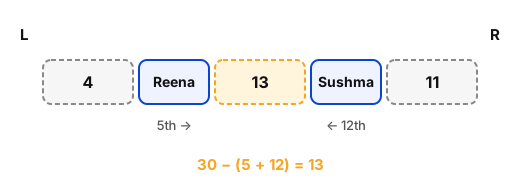
There are 30 students in a class room arranged in a row. Reena is 5th from the left and Sushma is 12th from the right. Find the number of students between Reena and Sushma.
एक कक्षा में 30 विद्यार्थी एक पंक्ति में व्यवस्थित हैं। रीना बाएँ से 5वें स्थान पर है और सुषमा दाएँ से 12वें स्थान पर है। रीना और सुषमा के बीच विद्यार्थियों की संख्या ज्ञात कीजिए।
  1. A12
  2. B13
  3. C14
  4. D15
Show answer

Concept: Convert both positions to the same end, then subtract.

  1. Sushma from left = 30 − 12 + 1 = 19.
  2. Reena from left = 5.
  3. Between = 19 − 5 − 1 = 13.

Trick: Between = Total − (left rank + right rank) = 30 − (5 + 12) = 13 (when they don't overlap).

Answer: (B) 13

अवधारणा: दोनों स्थान एक ही छोर से लाएँ, फिर घटाएँ।

  1. Sushma बाएँ से = 30 − 12 + 1 = 19।
  2. Reena बाएँ से = 5।
  3. बीच में = 19 − 5 − 1 = 13।

ट्रिक: बीच में = कुल − (बाएँ स्थान + दाएँ स्थान) = 30 − 17 = 13।

उत्तर: (B) 13

SSC CHSLGeneral IntelligenceRanking – persons between twoSSC CHSL 2025 · 26 Nov Shift 1 →
Q1433.
₹1200 is to be divided among X, Y, and Z in the ratio 3 : 4 : 5. How much will Y receive?
₹1200 को X, Y और Z के बीच 3 : 4 : 5 के अनुपात में बाँटा जाना है। Y को कितनी राशि मिलेगी?
  1. A₹400
  2. B₹450
  3. C₹480
  4. D₹500
Show answer

Concept: Share=its ratio partsum of parts×total.

  1. Sum of parts = 3+4+5=12.
  2. Y=412×1200=13×1200.
  3. Y = ₹400.

Trick: Y's part 4 out of 12 = exactly one-third of the total.

Answer: (A) ₹400

अवधारणा: हिस्सा=उसका अनुपातकुल अनुपात×कुल राशि।

  1. कुल भाग = 3+4+5=12।
  2. Y=412×1200=13×1200।
  3. Y = ₹400।

ट्रिक: 12 में से 4 = कुल का ठीक एक-तिहाई।

उत्तर: (A) ₹400

SSC CHSLGeneral IntelligenceRatio – sharing an amountSSC CHSL 2025 · 26 Nov Shift 1 →
Q1434.
In the following questions some issues are provided to you. you have to mark the appropriate answer logically that can be taken in such circumstances. You are a project manager. Due to a faulty project plan, your team lost an opportunity. What would be an emotionally intelligent response?
निम्नलिखित प्रश्नों में आपके समक्ष कुछ स्थितियाँ प्रस्तुत की गई हैं। आपको तार्किक रूप से उस उपयुक्त उत्तर को चिह्नित करना है जो ऐसी परिस्थितियों में अपनाया जा सकता है। आप एक परियोजना प्रबंधक हैं। एक त्रुटिपूर्ण परियोजना योजना के कारण आपकी टीम ने एक अवसर खो दिया। भावनात्मक रूप से बुद्धिमत्तापूर्ण प्रतिक्रिया क्या होगी?
  1. ABlame the team membersटीम के सदस्यों को दोष देना
  2. BAccept your mistake and plan for improvementअपनी गलती स्वीकार करना और सुधार की योजना बनाना
  3. CIgnore the problem and move onसमस्या की अनदेखी करके आगे बढ़ जाना
  4. DApologize repeatedly to everyoneसभी से बार-बार क्षमा माँगते रहना
Show answer

Concept: Emotional intelligence = self-awareness + responsible action.

  1. The faulty plan was the manager's responsibility.
  2. Accepting it and planning improvements rebuilds trust and prevents repeats.
  3. Blaming others, ignoring, or endless apologies achieve nothing.

Trick: Best EI answers combine 'accept' + 'improve'.

Answer: (B) Accept your mistake and plan for improvement

अवधारणा: भावनात्मक बुद्धिमत्ता = आत्म-जागरूकता + ज़िम्मेदार कदम।

  1. गलत योजना manager की ज़िम्मेदारी थी।
  2. गलती मानकर सुधार की योजना बनाना भरोसा लौटाता है।
  3. दूसरों पर दोष, अनदेखी या बार-बार माफ़ी — कोई हल नहीं।

ट्रिक: EI प्रश्नों में 'स्वीकार + सुधार' वाला विकल्प ही सही होता है।

उत्तर: (B) अपनी गलती स्वीकार करना और सुधार की योजना बनाना

SSC CHSLGeneral IntelligenceEmotional intelligence – owning a mistakeSSC CHSL 2025 · 26 Nov Shift 1 →
Q1435.
In this question some of the words sequence is given which follows some logical pattern of word find the next word that can be logically replace the ? in each sequence. Knowledge, Comprehension, Application, ?
इस प्रश्न में शब्दों का एक अनुक्रम दिया गया है जो किसी तार्किक प्रतिरूप का अनुसरण करता है। उस अगले शब्द को ज्ञात कीजिए जो प्रत्येक अनुक्रम में ? के स्थान पर तार्किक रूप से आ सकता है। Knowledge, Comprehension, Application, ?
  1. AMemory
  2. BAnalysis
  3. CSensation
  4. DInformation
Show answer

Concept: The words are the levels of Bloom's taxonomy in order.

  1. Order: Knowledge → Comprehension → Application → Analysis → Synthesis/Evaluation.
  2. Memory, sensation and information are not levels in this hierarchy.

Trick: Bloom's order mnemonic: K C A A S E – 'Kids Can Always Ask Smart Explanations'.

Answer: (B) Analysis

अवधारणा: ये शब्द Bloom's taxonomy के स्तर क्रम से हैं।

  1. क्रम: Knowledge → Comprehension → Application → Analysis → Synthesis/Evaluation।
  2. Memory, sensation, information इस क्रम के स्तर नहीं हैं।

ट्रिक: क्रम याद करें: K C A A S E।

उत्तर: (B) Analysis

SSC CHSLGeneral IntelligenceWord series – Bloom's taxonomySSC CHSL 2025 · 26 Nov Shift 1 →
Q1436.
One of your colleagues takes full credit for the work you did in a team meeting. What would be the most socially intelligent way to respond?
टीम की एक बैठक में आपका एक सहकर्मी आपके द्वारा किए गए कार्य का पूरा श्रेय ले लेता है। प्रतिक्रिया देने का सबसे अधिक सामाजिक रूप से बुद्धिमत्तापूर्ण तरीका क्या होगा?
  1. AShout at them in the meeting and prove them wrong.बैठक में उन पर चिल्लाएँ और उन्हें गलत सिद्ध करें।
  2. BSecretly complain to senior authorities and stop talking to them.गुप्त रूप से वरिष्ठ अधिकारियों से शिकायत करें और उनसे बात करना बंद कर दें।
  3. CTalk to the colleague privately, clarify your contribution, and agree on ways to share credit in the future.सहकर्मी से निजी तौर पर बात करें, अपने योगदान को स्पष्ट करें और भविष्य में श्रेय साझा करने के तरीकों पर सहमति बनाएँ।
  4. DIgnore it and completely stop working with them in the future.इसे अनदेखा करें और भविष्य में उनके साथ काम करना पूरी तरह बंद कर दें।
Show answer

Concept: A mature response settles the issue without public conflict.

  1. A private talk lets you clarify your contribution politely.
  2. Agreeing on shared credit prevents a repeat.
  3. Shouting, secret complaints or cutting off work damage the relationship.

Trick: Prefer 'private + clear + future-focused' options in workplace questions.

Answer: (C) Talk to the colleague privately, clarify your contribution, and agree on ways to share credit in the future.

अवधारणा: परिपक्व व्यवहार बिना सार्वजनिक झगड़े के मसला सुलझाता है।

  1. अकेले में बात करके अपना योगदान विनम्रता से स्पष्ट करें।
  2. आगे श्रेय बाँटने पर सहमति बनाएँ।
  3. चिल्लाना, चुपके से शिकायत या संबंध तोड़ना नुकसानदेह है।

ट्रिक: कार्यस्थल प्रश्नों में 'निजी बातचीत + स्पष्टता + भविष्य की व्यवस्था' वाला विकल्प चुनें।

उत्तर: (C) सहकर्मी से निजी तौर पर बात करें, अपने योगदान को स्पष्ट करें और भविष्य में श्रेय साझा करने के तरीकों पर सहमति बनाएँ।

SSC CHSLGeneral IntelligenceSocial intelligence – credit taken by colleagueSSC CHSL 2025 · 26 Nov Shift 1 →
Q1437.
Find out the wrong number in the following series.
997, 726, 509, 350, 213, 122, 61
निम्नलिखित शृंखला में गलत संख्या ज्ञात कीजिए।
997, 726, 509, 350, 213, 122, 61
  1. A726
  2. B509
  3. C350
  4. D122
Show answer

Concept: Terms are cubes minus 3: n3−3 for n = 10, 9, 8, …

  1. 103−3=997, 93−3=726, 83−3=509
  2. 73−3=343−3= 340, but 350 is given.
  3. 63−3=213, 53−3=122, 43−3=61 ✓

Trick: 997≈1000, 726≈729 → spot cubes at once; then check only the options.

Answer: (C) 350

अवधारणा: पद = घन − 3, यानी n3−3 (n = 10, 9, 8 …)।

  1. 103−3=997, 93−3=726, 83−3=509
  2. 73−3=343−3= 340, पर 350 दिया है।
  3. 63−3=213, 53−3=122, 43−3=61 ✓

ट्रिक: 997≈1000, 726≈729 देखते ही घन पहचानें।

उत्तर: (C) 350

SSC CHSLGeneral IntelligenceWrong number – n³ − 3SSC CHSL 2025 · 26 Nov Shift 1 →
Q1438.
Pick the Odd one out from the given alternatives-
दिए गए विकल्पों में से विषम का चयन कीजिए-
  1. ANest - Cave - Tigerघोंसला - गुफा - बाघ
  2. BBurrow - Kennel - Stableबिल - कुत्ता-घर - अस्तबल
  3. CHole - Igloo - Hutछेद - इग्लू - झोपड़ी
  4. DAquarium - Anthill - Kennelमछलीघर - बाँबी - कुत्ता-घर
Show answer

Concept: Each set should contain only places where living beings stay.

  1. Burrow, kennel, stable – all homes.
  2. Hole, igloo, hut and aquarium, anthill, kennel – all homes.
  3. Nest, cave, tiger – tiger is an animal, not a dwelling.

Trick: Look for the set containing a word of a different category (animal vs place).

Answer: (A) Nest - Cave - Tiger

अवधारणा: हर समूह में केवल रहने के स्थान होने चाहिए।

  1. Burrow, kennel, stable — सभी आवास।
  2. Hole, igloo, hut तथा aquarium, anthill, kennel — सभी आवास।
  3. Nest, cave, tiger — tiger जानवर है, आवास नहीं।

ट्रिक: जिस समूह में अलग श्रेणी का शब्द (जानवर बनाम स्थान) हो, वही विषम।

उत्तर: (A) घोंसला - गुफा - बाघ

SSC CHSLGeneral IntelligenceOdd one out – dwellingsSSC CHSL 2025 · 26 Nov Shift 1 →
Q1439.
Choose the set where the pattern of vowels and consonants differs.
उस समुच्चय का चयन कीजिए जिसमें स्वरों और व्यंजनों का प्रतिरूप भिन्न है।
  1. AHAND
  2. BSING
  3. CCOLD
  4. DSEED
Show answer

Concept: Write each word as a C/V pattern.

  1. HAND, SING, COLD = C V C C.
  2. SEED = C V V C (two vowels together).
  3. So SEED differs.

Trick: Count vowels: HAND, SING, COLD have one vowel each; SEED has two.

Answer: (D) SEED

अवधारणा: हर शब्द को C (व्यंजन)/V (स्वर) क्रम में लिखें।

  1. HAND, SING, COLD = C V C C।
  2. SEED = C V V C (दो स्वर साथ)।
  3. इसलिए SEED अलग है।

ट्रिक: स्वर गिनें: बाकी में 1 स्वर, SEED में 2।

उत्तर: (D) SEED

SSC CHSLGeneral IntelligenceOdd one out – vowel/consonant patternSSC CHSL 2025 · 26 Nov Shift 1 →
Q1440.
A staff member finds a wallet in the office. He returns the wallet to its owner. What does this action indicate?
एक कर्मचारी को कार्यालय में एक बटुआ मिलता है। वह बटुआ उसके मालिक को लौटा देता है। यह कार्य क्या दर्शाता है?
  1. AHe is completely honestवह पूर्णतः ईमानदार है
  2. BHe is completely dishonestवह पूर्णतः बेईमान है
  3. CHe has shown partial honestyउसने आंशिक ईमानदारी दिखाई है
  4. DHe deserves appreciationवह प्रशंसा का पात्र है
Show answer

Concept: The act shows what quality the person has, not what reward he should get.

  1. He could have kept the wallet unnoticed but returned it fully.
  2. That is complete honesty; 'partial' or 'dishonest' do not fit.
  3. 'Deserves appreciation' is an opinion about him, not what the action indicates.

Trick: Read the question stem: 'what does this action indicate' → a trait, not a reward.

Answer: (A) He is completely honest

अवधारणा: प्रश्न पूछता है कि कार्य से कौन-सा गुण दिखता है, इनाम नहीं।

  1. वह बटुआ रख सकता था, फिर भी पूरा लौटाया।
  2. यह पूर्ण ईमानदारी है; 'आंशिक' या 'बेईमान' गलत।
  3. 'Appreciation' एक राय है, गुण नहीं।

ट्रिक: 'What does this action indicate' → गुण चुनें, पुरस्कार नहीं।

उत्तर: (A) वह पूर्णतः ईमानदार है

SSC CHSLGeneral IntelligenceEthics – returning a lost walletSSC CHSL 2025 · 26 Nov Shift 1 →