Question bank

Q&A: practice questions with answers

Search questions on any topic. Filter by exam category, exam, subject and topic, try the question, then open the answer and explanation.

Courses – airGurukul

5,000 questions found.

Q1441.
You are a Head of Department (HOD) and one of your close friends in the company has leaked data. There is solid evidence. What is the most principled decision?
आप एक विभागाध्यक्ष (HOD) हैं और कंपनी में आपके एक निकट मित्र ने डेटा लीक किया है। इसके ठोस प्रमाण उपलब्ध हैं। सबसे सिद्धांतनिष्ठ निर्णय क्या होगा?
  1. AIgnore for friendship's sakeमित्रता के कारण अनदेखा कर देना
  2. BFire the friend privatelyमित्र को निजी तौर पर नौकरी से निकाल देना
  3. CTake transparent disciplinary actionपारदर्शी अनुशासनात्मक कार्रवाई करना
  4. DTransfer the friend to another departmentमित्र का दूसरे विभाग में स्थानांतरण कर देना
Show answer

Concept: Rules apply equally, even to friends; process must be fair and open.

  1. Evidence is solid, so action is required.
  2. Transparent disciplinary action is fair to everyone and defensible.
  3. Ignoring = favouritism; private firing = no due process; transfer = shifts the risk.

Trick: In integrity questions, choose 'transparent / as per rules'; reject secret or soft options.

Answer: (C) Take transparent disciplinary action

अवधारणा: नियम सबके लिए समान हैं, मित्र के लिए भी; प्रक्रिया पारदर्शी हो।

  1. पक्का सबूत है, इसलिए कार्रवाई ज़रूरी।
  2. पारदर्शी अनुशासनात्मक कार्रवाई निष्पक्ष है।
  3. अनदेखी = पक्षपात; चुपके से निकालना = उचित प्रक्रिया नहीं; transfer = समस्या टालना।

ट्रिक: ईमानदारी वाले प्रश्नों में 'पारदर्शी / नियमानुसार' विकल्प चुनें।

उत्तर: (C) पारदर्शी अनुशासनात्मक कार्रवाई करना
SSC CHSLGeneral IntelligenceEthics – conflict of interestSSC CHSL 2025 · 26 Nov Shift 1 →
Q1442.
Choose the related word from the given alternatives
Boxing : ? :: Tennis : Court
दिए गए विकल्पों में से संबंधित शब्द का चयन कीजिए।
Boxing (मुक्केबाज़ी) : ? :: Tennis (टेनिस) : Court (कोर्ट)
  1. ARingरिंग (Ring)
  2. BPitchपिच (Pitch)
  3. CArenaअखाड़ा (Arena)
  4. DTrackट्रैक (Track)
Show answer

Concept: Tennis is played on a court; find where boxing is played.

  1. Boxing takes place in a ring.
  2. Pitch – cricket/football; track – athletics; arena – general venue.

Trick: Yaad: Wrestling/Boxing – Ring, Cricket – Pitch, Golf – Course, Skating – Rink.

Answer: (A) Ring

अवधारणा: Tennis court पर खेला जाता है; boxing कहाँ होती है?

  1. Boxing ring में होती है।
  2. Pitch — cricket/football; track — athletics; arena — सामान्य स्थान।

ट्रिक: याद: Boxing – Ring, Cricket – Pitch, Golf – Course, Skating – Rink।

उत्तर: (A) रिंग (Ring)

SSC CHSLGeneral IntelligenceAnalogy – sport and venueSSC CHSL 2025 · 26 Nov Shift 1 →
Q1443.
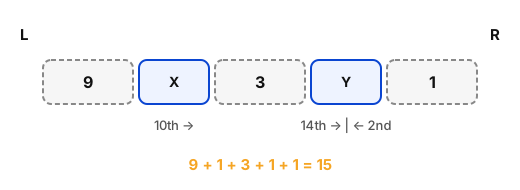
A certain number of persons are standing in a row facing south (not necessarily in the same order). X is 10th person from left end. Three people stand between X and Y,Y is second person from one of the end. How many persons are standing in the row?
कुछ व्यक्ति दक्षिण की ओर मुख करके एक पंक्ति में खड़े हैं (आवश्यक नहीं कि इसी क्रम में हों)। X बाएँ छोर से 10वाँ व्यक्ति है। X और Y,Y के बीच तीन व्यक्ति खड़े हैं, जो किसी एक छोर से दूसरा व्यक्ति है। पंक्ति में कुल कितने व्यक्ति खड़े हैं?
  1. A14
  2. B15
  3. C16
  4. D17
Show answer

Concept: Total = position from left + position from right − 1.

  1. Y = 10 + 3 + 1 = 14th from left (Y must be right of X, else he'd be 6th, not 2nd from an end).
  2. Y is 2nd from an end → 2nd from right.
  3. Total = 14 + 2 − 1 = 15.

Trick: If Y were left of X he'd be 6th from left – not 2nd from any end unless total = 7, which is impossible (X is 10th).

Answer: (B) 15

अवधारणा: कुल = बाएँ से स्थान + दाएँ से स्थान − 1।

  1. Y = 10 + 3 + 1 = बाएँ से 14वाँ (बाईं ओर होता तो 6वाँ, जो किसी छोर से दूसरा नहीं)।
  2. Y किसी छोर से दूसरा → दाएँ से दूसरा।
  3. कुल = 14 + 2 − 1 = 15।

ट्रिक: X बाएँ से 10वाँ है, इसलिए कुल कम से कम 10 — Y का 6वाँ स्थान संभव नहीं।

उत्तर: (B) 15

SSC CHSLGeneral IntelligenceRanking – total in a rowSSC CHSL 2025 · 26 Nov Shift 1 →
Q1444.
Some conditional data is provided to you in form of statement you have to check which of the following statement are logically inference from given statement.
A shop owner noticed that in the last two days, the sale of warm clothes has increased by 250%, while the sale of cold drinks and ice cream has suddenly declined. What logical inference can you make?
आपको कथन के रूप में कुछ सशर्त जानकारी दी गई है; आपको यह जाँचना है कि निम्नलिखित में से कौन-सा कथन दिए गए कथन से तार्किक रूप से निकलता है।
एक दुकानदार ने देखा कि पिछले दो दिनों में गर्म कपड़ों की बिक्री 250% बढ़ गई है, जबकि ठंडे पेय और आइसक्रीम की बिक्री अचानक घट गई है। आप क्या तार्किक निष्कर्ष निकाल सकते हैं?
  1. AThe shop is offering discounts on warm clothesदुकान गर्म कपड़ों पर छूट दे रही है
  2. BThe weather has suddenly turned coldमौसम अचानक ठंडा हो गया है
  3. CThe summer season has startedग्रीष्म ऋतु आरंभ हो गई है
  4. DCustomers prefer warm clothes over cold drinksग्राहक ठंडे पेय की तुलना में गर्म कपड़े अधिक पसंद करते हैं
Show answer

Concept: Choose the single cause that explains all the observed changes.

  1. Warm clothes up 250% and cold items down – both in just two days.
  2. A sudden cold spell explains both together.
  3. Discount explains only one change; summer would do the opposite; preferences don't change in two days.

Trick: Pick the inference that explains every fact in the statement, not just one of them.

Answer: (B) The weather has suddenly turned cold

अवधारणा: ऐसा एक कारण चुनें जो सभी बदलावों को समझाए।

  1. गर्म कपड़े 250% बढ़े और ठंडी चीज़ें घटीं — सिर्फ़ दो दिन में।
  2. अचानक ठंड पड़ना दोनों को समझाता है।
  3. छूट सिर्फ़ एक बदलाव समझाती है; गर्मी उल्टा असर करती।

ट्रिक: वह अनुमान चुनें जो कथन के हर तथ्य को समझाए।

उत्तर: (B) मौसम अचानक ठंडा हो गया है

SSC CHSLGeneral IntelligenceLogical inference – sales patternSSC CHSL 2025 · 26 Nov Shift 1 →
Q1445.
Some conditional data is provided to you in form of statement you have to check which of the following statement are logically inference from given statement.
An organizational study reported the following: "Employees who were given immediate appreciation during team meetings showed higher stress levels, hesitation in work, and reduced productivity in subsequent tasks, which was contrary to expectations." The researchers also noted that the appreciation was given in front of senior officials. What logical inference can you make?
आपको कथन के रूप में कुछ सशर्त जानकारी दी गई है; आपको यह जाँचना है कि निम्नलिखित में से कौन-सा कथन दिए गए कथन से तार्किक रूप से निकलता है।
एक संगठनात्मक अध्ययन में यह बताया गया: "जिन कर्मचारियों की टीम बैठकों में तत्काल प्रशंसा की गई, उनमें तनाव का स्तर अधिक पाया गया, कार्य में झिझक दिखी तथा बाद के कार्यों में उत्पादकता घट गई, जो अपेक्षाओं के विपरीत था।" शोधकर्ताओं ने यह भी नोट किया कि प्रशंसा वरिष्ठ अधिकारियों के सामने की गई थी। आप क्या तार्किक निष्कर्ष निकाल सकते हैं?
  1. AAppreciation always harms employees' performanceप्रशंसा सदैव कर्मचारियों के प्रदर्शन को हानि पहुँचाती है
  2. BPublic appreciation may create pressure and performance anxiety, reducing its benefitsसार्वजनिक प्रशंसा दबाव और प्रदर्शन-चिंता उत्पन्न कर सकती है, जिससे उसके लाभ कम हो जाते हैं
  3. CThe data used in the study were incorrectअध्ययन में प्रयुक्त आँकड़े गलत थे
  4. DEmployees lied about their stress levelsकर्मचारियों ने अपने तनाव-स्तर के बारे में झूठ बोला
Show answer

Concept: A valid inference must be supported by the data and not over-generalised.

  1. Key detail: praise was given in front of senior officials.
  2. Public praise can raise expectations → stress, hesitation, lower output.
  3. 'Always harms' is too broad; saying the data or employees are wrong rejects the study.

Trick: Words like 'always', 'all', 'never' usually make an inference invalid; 'may' is safer.

Answer: (B) Public appreciation may create pressure and performance anxiety, reducing its benefits

अवधारणा: सही अनुमान आँकड़ों पर आधारित हो और अति-सामान्यीकरण न करे।

  1. मुख्य बात: प्रशंसा वरिष्ठ अधिकारियों के सामने हुई।
  2. सबके सामने प्रशंसा से अपेक्षा बढ़ती है → तनाव, झिझक, कम उत्पादकता।
  3. 'Always' बहुत व्यापक है; डेटा या कर्मचारियों को गलत कहना अध्ययन को नकारना है।

ट्रिक: 'Always/all/never' वाले विकल्प अक्सर गलत; 'may' वाला सुरक्षित।

उत्तर: (B) सार्वजनिक प्रशंसा दबाव और प्रदर्शन-चिंता उत्पन्न कर सकती है, जिससे उसके लाभ कम हो जाते हैं

SSC CHSLGeneral IntelligenceLogical inference – public appreciationSSC CHSL 2025 · 26 Nov Shift 1 →
Q1446.
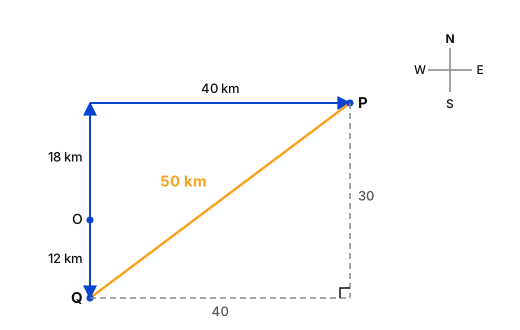
P and Q started walking from a same point. P walks 18 km towards north. Q walks 12 km towards south, P turns right and walks 40 km. How far (in km ) and in which direction is P now from the Q ?
P और Q ने एक ही बिंदु से चलना आरंभ किया। P उत्तर की ओर 18 km चलता है। Q दक्षिण की ओर 12 km चलता है, P दाएँ मुड़ता है और 40 km चलता है। अब P, Q से कितनी दूर (km में) और किस दिशा में है?
  1. A50, South-west50, दक्षिण-पश्चिम
  2. B70, South-west70, दक्षिण-पश्चिम
  3. C40, North-west40, उत्तर-पश्चिम
  4. D50, North-east50, उत्तर-पूर्व
Show answer

Concept: Find north–south and east–west gaps, then use Pythagoras.

  1. N–S gap = 18 (P north) + 12 (Q south) = 30 km.
  2. Facing north, right turn = east → P goes 40 km east.
  3. Distance = 302+402=2500=50 km; P is north and east of Q → North-east.

Trick: 30 : 40 : 50 is the 3 : 4 : 5 triplet × 10.

Answer: (D) 50, North-east

अवधारणा: उत्तर-दक्षिण और पूर्व-पश्चिम अंतर निकालें, फिर पाइथागोरस।

  1. उत्तर-दक्षिण अंतर = 18 + 12 = 30 km।
  2. उत्तर की ओर मुँह, दाएँ मुड़ना = पूर्व → P 40 km पूर्व।
  3. दूरी = 302+402=50 km; P, Q से उत्तर-पूर्व में।

ट्रिक: 30 : 40 : 50 = 3 : 4 : 5 त्रिक × 10।

उत्तर: (D) 50, उत्तर-पूर्व

SSC CHSLGeneral IntelligenceDirection & distance – PythagorasSSC CHSL 2025 · 26 Nov Shift 1 →
Q1447.
Three out of the following four are alike in a particular pattern and hence form a group. Find the one which does not belong to that group.
Walking, strolling, walking slowly, running
निम्नलिखित चार में से तीन एक निश्चित पैटर्न में समान हैं और इस प्रकार एक समूह बनाते हैं। उस एक का चयन कीजिए जो उस समूह से संबंधित नहीं है।
Walking (चलना), strolling (टहलना), walking slowly (धीरे-धीरे चलना), running (दौड़ना)
  1. AWalkingWalking (चलना)
  2. BStrollingStrolling (टहलना)
  3. CWalking slowlyWalking slowly (धीरे-धीरे चलना)
  4. DRunningRunning (दौड़ना)
Show answer

Concept: Group words by the speed they describe.

  1. Walking, strolling, walking slowly – slow or normal pace on foot.
  2. Running – fast movement.
  3. So running is the odd one.

Trick: Three options are near-synonyms of 'walk'; the different action stands out.

Answer: (D) Running

अवधारणा: शब्दों को गति के आधार पर बाँटें।

  1. Walking, strolling, walking slowly — धीमी/सामान्य चाल।
  2. Running — तेज़ चाल।
  3. इसलिए running अलग है।

ट्रिक: तीन विकल्प 'चलना' के ही रूप हैं; अलग क्रिया ही उत्तर।

उत्तर: (D) Running (दौड़ना)

SSC CHSLGeneral IntelligenceOdd one out – speed of movementSSC CHSL 2025 · 26 Nov Shift 1 →
Q1448.
Select the option that is related to the fourth number in the same way as the first number is related to the second number and fifth number is related to sixth number.
(NOTE: Operations should be performed on the whole numbers, without breaking down the numbers into its constituent digits. E.g. 13 - Operations on 13 such as adding /subtracting /multiplying etc. to 13 can be performed. Breaking down 13 into 1 and 3 and then performing mathematical operations on 1 and 3 is not allowed)
412 : 2067 :: ? : 42 :: 125 : 632
उस विकल्प का चयन कीजिए जो चौथी संख्या से उसी प्रकार संबंधित है, जिस प्रकार पहली संख्या दूसरी संख्या से तथा पाँचवीं संख्या छठी संख्या से संबंधित है।
(नोट: संक्रियाएँ पूर्ण संख्याओं पर की जानी चाहिए, संख्याओं को उनके अंकों में तोड़े बिना। जैसे 13 — 13 पर जोड़ने/घटाने/गुणा करने आदि की संक्रियाएँ की जा सकती हैं। 13 को 1 और 3 में तोड़कर 1 और 3 पर गणितीय संक्रियाएँ करने की अनुमति नहीं है।)
412 : 2067 :: ? : 42 :: 125 : 632
  1. A9
  2. B7
  3. C8
  4. D6
Show answer

Concept: Find the rule from complete pairs and apply it in reverse.

  1. 412×5+7=2060+7=2067 ✓
  2. 125×5+7=625+7=632 ✓
  3. 5n+7=42⇒5n=35⇒n=7

Trick: Reverse quickly: (42−7)÷5=7.

Answer: (B) 7

अवधारणा: पूरे जोड़ों से नियम निकालें और उल्टा लगाएँ।

  1. 412×5+7=2067 ✓
  2. 125×5+7=632 ✓
  3. 5n+7=42⇒n=7

ट्रिक: उल्टा करें: (42−7)÷5=7।

उत्तर: (B) 7

SSC CHSLGeneral IntelligenceNumber analogy – ×5 + 7SSC CHSL 2025 · 26 Nov Shift 1 →
Q1449.
Few of the letters are given followed by a question mark (?) these letters are following a specific pattern you have to give the correct option which can replace question mark.
Which letter comes next in the series: B , F, K, Q, ?
कुछ अक्षर दिए गए हैं जिनके बाद एक प्रश्नवाचक चिह्न (?) है; ये अक्षर एक विशेष पैटर्न का अनुसरण करते हैं। आपको वह सही विकल्प चुनना है जो प्रश्नवाचक चिह्न के स्थान पर आ सकता है।
शृंखला में अगला अक्षर कौन-सा आएगा: B , F, K, Q, ?
  1. AX
  2. BW
  3. CV
  4. DY
Show answer

Concept: Convert letters to positions and look at the gaps.

  1. B=2, F=6, K=11, Q=17 → gaps +4, +5, +6.
  2. Next gap +7 → 17 + 7 = 24.
  3. 24th letter = X.

Trick: EJOTY positions: E5 J10 O15 T20 Y25 → X is just before Y = 24.

Answer: (A) X

अवधारणा: अक्षरों को स्थान संख्या में बदलें और अंतर देखें।

  1. B=2, F=6, K=11, Q=17 → अंतर +4, +5, +6।
  2. अगला +7 → 24।
  3. 24वाँ अक्षर = X।

ट्रिक: EJOTY: E5 J10 O15 T20 Y25 → 24 = X।

उत्तर: (A) X

SSC CHSLGeneral IntelligenceLetter series – increasing gapsSSC CHSL 2025 · 26 Nov Shift 1 →
Q1450.
In a certain coded language 'BRAVE' is coded as 'ZQVNX' and 'STUDY' is coded as 'TYPPO'. How will 'PHONE' be coded in the same code language?
एक निश्चित कूट भाषा में 'BRAVE' को 'ZQVNX' तथा 'STUDY' को 'TYPPO' लिखा जाता है। उसी कूट भाषा में 'PHONE' को किस प्रकार लिखा जाएगा?
  1. AYHICK
  2. BZIKDM
  3. CZIJDL
  4. DAHJDL
Show answer

Concept: Reverse the word, then shift letters −5, −5, −5, −4, −4 (cyclic).

  1. BRAVE → EVARB → Z Q V N X ✓; STUDY → YDUTS → T Y P P O ✓
  2. PHONE → ENOHP
  3. E→Z, N→I, O→J (each back 5); H→D, P→L (each back 4) → ZIJDL

Trick: First letter of PHONE's code = E−5 = Z; third = O−5 = J → only option C has Z_J.

Answer: (C) ZIJDL

अवधारणा: शब्द उलटें, फिर अक्षरों को −5, −5, −5, −4, −4 खिसकाएँ (चक्रीय)।

  1. BRAVE → EVARB → ZQVNX ✓; STUDY → YDUTS → TYPPO ✓
  2. PHONE → ENOHP
  3. E→Z, N→I, O→J (5 पीछे); H→D, P→L (4 पीछे) → ZIJDL

ट्रिक: पहला अक्षर Z और तीसरा J — केवल विकल्प C में।

उत्तर: (C) ZIJDL

SSC CHSLGeneral IntelligenceCoding – reverse and shiftSSC CHSL 2025 · 26 Nov Shift 1 →
Q1451.
A factory hired 10 workers and found that their average productivity per day was 43.75 unit. Later, 3 more workers were hired. The average productivity of all 13 workers then became 46.5 units. However, one of the new 3 workers made 50.2 unit daily, and another made 46.4 unit daily. What is the daily productivity of the third new worker?
एक कारखाने ने 10 श्रमिकों को नियुक्त किया और पाया कि उनकी प्रतिदिन औसत उत्पादकता 43.75 यूनिट थी। बाद में 3 और श्रमिक नियुक्त किए गए। तब सभी 13 श्रमिकों की औसत उत्पादकता 46.5 यूनिट हो गई। तथापि, 3 नए श्रमिकों में से एक प्रतिदिन 50.2 यूनिट तथा दूसरा प्रतिदिन 46.4 यूनिट उत्पादन करता था। तीसरे नए श्रमिक की दैनिक उत्पादकता कितनी है?
  1. A80.35
  2. B60.65
  3. C70.40
  4. D60.25
Show answer

Concept: Total=average×number; the missing value = new total − known totals.

  1. Old total = 10×43.75=437.5
  2. New total = 13×46.5=604.5 → 3 new workers = 167
  3. Third worker = 167−(50.2+46.4)=167−96.6=70.4

Trick: Deviation method: average rose by 2.75 for 13 people → 35.75 extra over 43.75. 3 new = 3×43.75+35.75=167.

Answer: (C) 70.40

अवधारणा: कुल योग=औसत×संख्या; लुप्त मान = नया योग − ज्ञात योग।

  1. पुराना योग = 10×43.75=437.5
  2. नया योग = 13×46.5=604.5 → 3 नए = 167
  3. तीसरा = 167−96.6=70.4

ट्रिक: विचलन विधि: 13 लोगों का औसत 2.75 बढ़ा → 35.75 अतिरिक्त; 3 नए = 3×43.75+35.75=167।

उत्तर: (C) 70.40

SSC CHSLQuantitative AptitudeAverage – finding a missing valueSSC CHSL 2025 · 26 Nov Shift 1 →
Q1452.
If sin⁡(3x+60)∘=cos⁡(3y−60)∘, such that 0∘<x+y<90∘, then find the value of cot⁡(x+y).
यदि sin⁡(3x+60)∘=cos⁡(3y−60)∘ इस प्रकार है कि 0∘<x+y<90∘, तो cot⁡(x+y) का मान ज्ञात कीजिए।
  1. A3
  2. B0
  3. C1
  4. D3
Show answer

Concept: If sinA=cosB (acute angles), then A+B=90∘.

  1. (3x+60)+(3y−60)=90
  2. 3x+3y=90⇒x+y=30∘
  3. cot30∘=3

Trick: The +60 and −60 cancel immediately – just divide 90 by 3.

Answer: (A) 3

अवधारणा: यदि sinA=cosB (न्यून कोण), तो A+B=90∘।

  1. (3x+60)+(3y−60)=90
  2. 3(x+y)=90⇒x+y=30∘
  3. cot30∘=3

ट्रिक: +60 और −60 तुरंत कट जाते हैं — सीधे 90÷3।

उत्तर: (A) 3

SSC CHSLQuantitative AptitudeTrigonometry – sin A = cos BSSC CHSL 2025 · 26 Nov Shift 1 →
Q1453.
Alloy A contains metals l and m in the ratio 5:3, while alloy B contains them in the ratio 4 : 5.Alloy C is prepared by mixing alloys A and B in the ratio 4 : 3. Find the percentage of l in alloy C .
मिश्रधातु A में धातुएँ l और m 5:3 के अनुपात में हैं, जबकि मिश्रधातु B में ये 4 : 5 के अनुपात में हैं। मिश्रधातु A और B को 4 : 3 के अनुपात में मिलाकर मिश्रधातु C तैयार की जाती है। मिश्रधातु C में l का प्रतिशत ज्ञात कीजिए।
  1. A51.75%
  2. B55.67%
  3. C51.46%
  4. D54.76%
Show answer

Concept: Take a convenient total weight of each alloy (LCM-based) and add the amounts of metal l.

  1. A : B = 4 : 3 by weight. Take A = 24 kg, B = 18 kg (total 42 kg).
  2. l in A = 58×24=15 kg; l in B = 49×18=8 kg.
  3. l in C = 15 + 8 = 23 kg out of 42 kg → 2342×100=54.76%.

Trick: Choose weights that are multiples of 8 (A's ratio total) and 9 (B's ratio total) in the mixing ratio – no fractions appear.

Answer: (D) 54.76%

अवधारणा: हर मिश्रधातु का सुविधाजनक कुल वज़न (LCM के आधार पर) लेकर धातु l की मात्राएँ जोड़ें।

हल:

  1. A : B = 4 : 3 (वज़न से)। A = 24 kg, B = 18 kg लें (कुल 42 kg)।
  2. A में l = 58×24=15 kg; B में l = 49×18=8 kg।
  3. C में l = 23 kg (42 kg में से) → 2342×100=54.76%।

याद रखें: मिश्रण-अनुपात में ऐसे वज़न चुनें जो 8 और 9 (अनुपात-योग) के गुणज हों – भिन्न नहीं आएँगी।

उत्तर: (D) 54.76%

SSC CHSLQuantitative AptitudeAlloys – mixing two ratiosSSC CHSL 2025 · 26 Nov Shift 1 →
Q1454.
If AB is a chord of a circle with center O, and angle AOB=45∘, then the length of the arc AB (radius =r ) is:
यदि AB केंद्र O वाले वृत्त की एक जीवा है और कोण AOB=45∘ है, तो चाप AB (त्रिज्या =r) की लंबाई है:
  1. Aπr
  2. Bπr4
  3. Cπr3
  4. Dπr2
Show answer

Concept: Arc length=θ360∘×2πr.

  1. θ=45∘ → 45360=18
  2. Arc=18×2πr=πr4

Trick: 45° is 18 of a full turn → arc is 18 of the circumference.

Answer: (B) πr4

अवधारणा: चाप की लंबाई=θ360∘×2πr।

  1. θ=45∘ → 45360=18
  2. चाप=18×2πr=πr4

ट्रिक: 45° पूरे चक्कर का 18 है → चाप भी परिधि का 18।

उत्तर: (B) πr4

SSC CHSLQuantitative AptitudeMensuration – arc lengthSSC CHSL 2025 · 26 Nov Shift 1 →
Q1455.
A train takes 40 seconds to pass a man walking at 3m/s in the same direction and 50 seconds to cross a platform whose length is 50% more than the train. A 40-metre-long tractor is coming from the opposite direction at 2 m/s. Find the time taken by the train to completely cross the tractor. (in approx.)
एक ट्रेन उसी दिशा में 3m/s की चाल से चल रहे एक व्यक्ति को पार करने में 40 सेकंड लेती है तथा एक ऐसे प्लेटफ़ॉर्म को पार करने में 50 सेकंड लेती है जिसकी लंबाई ट्रेन की लंबाई से 50% अधिक है। 40 मीटर लंबा एक ट्रैक्टर विपरीत दिशा से 2 m/s की चाल से आ रहा है। ट्रेन को उस ट्रैक्टर को पूरी तरह पार करने में लगने वाला समय ज्ञात कीजिए। (लगभग)
  1. A20 seconds20 सेकंड
  2. B10 seconds10 सेकंड
  3. C18 seconds18 सेकंड
  4. D19 seconds19 सेकंड
Show answer

Concept: Same direction: subtract speeds; opposite: add. Distance = sum of lengths.

  1. Man: L=40(v−3). Platform (1.5L): 2.5L=50v⇒L=20v
  2. 20v=40v−120⇒v=6 m/s, L = 120 m
  3. Tractor: (120+40)÷(6+2)=160÷8=20 s

Trick: From L=20v, try v = 6 → L = 120 and 120÷(6−3)=40 ✓ – verified in seconds.

Answer: (A) 20 seconds

अवधारणा: एक दिशा: चाल घटाएँ; विपरीत: जोड़ें। दूरी = लंबाइयों का योग।

  1. आदमी: L=40(v−3)। प्लेटफ़ॉर्म (1.5L): 2.5L=50v⇒L=20v
  2. 20v=40v−120⇒v=6 m/s, L = 120 m
  3. ट्रैक्टर: 160÷8=20 सेकंड

ट्रिक: L=20v से v = 6 रखें → L = 120, और 120÷3=40 ✓।

उत्तर: (A) 20 सेकंड

SSC CHSLQuantitative AptitudeTrains – relative speedSSC CHSL 2025 · 26 Nov Shift 1 →
Q1456.
A trader sells an article to A at 40% profit. A then sells to B at 20% loss. B sells to C at 10% profit. If C pays ₹3,388, what was the original cost price of the article (the trader's CP) ?
एक व्यापारी एक वस्तु A को 40% लाभ पर बेचता है। फिर A उसे B को 20% हानि पर बेचता है। B उसे C को 10% लाभ पर बेचता है। यदि C ₹3,388 का भुगतान करता है, तो वस्तु का मूल क्रय मूल्य (व्यापारी का क्रय मूल्य) क्या था?
  1. ACP = Rs 2000क्रय मूल्य = ₹2000
  2. BCP = Rs 2500क्रय मूल्य = ₹2500
  3. CCP = Rs 2750क्रय मूल्य = ₹2750
  4. DCP = Rs 3000क्रय मूल्य = ₹3000
Show answer

Concept: Successive % changes multiply: final price = CP × product of factors.

  1. Factor=1.4×0.8×1.1=1.232
  2. CP×1.232=3388
  3. CP = 3388÷1.232=2750 (₹)

Trick: Check options: 2750×1.4=3850 → ×0.8=3080 → ×1.1=3388 ✓.

Answer: (C) CP = Rs 2750

अवधारणा: क्रमिक % बदलाव गुणा होते हैं।

  1. गुणक = 1.4×0.8×1.1=1.232
  2. CP×1.232=3388
  3. CP = ₹2,750

ट्रिक: विकल्प जाँचें: 2750 → 3850 → 3080 → 3388 ✓।

उत्तर: (C) क्रय मूल्य = ₹2750

SSC CHSLQuantitative AptitudeProfit & loss – successive salesSSC CHSL 2025 · 26 Nov Shift 1 →
Q1457.
If the total simple interest on a sum of Rs. 1400 for 4 years at rate of interest x% p.a. and on the same sum for two years at the same rate, is Rs. 672, then the value of x is:
यदि Rs. 1400 की राशि पर 4 वर्षों के लिए x% वार्षिक ब्याज दर से तथा उसी राशि पर उसी दर से दो वर्षों के लिए कुल साधारण ब्याज Rs. 672 है, तो x का मान है:
  1. A9%
  2. B8%
  3. C6%
  4. D10%
Show answer

Concept: SI=P×R×T100; same P and R → add the times.

  1. Total time = 4+2=6 years
  2. 672=1400×x×6100=84x
  3. x=672÷84=8%

Trick: 1% of 1400 for 6 years = 84; 672÷84=8.

Answer: (B) 8%

अवधारणा: SI=P×R×T100; P और R समान हों तो समय जोड़ें।

  1. कुल समय = 4+2=6 वर्ष
  2. 672=1400×x×6100=84x
  3. x=8%

ट्रिक: 1400 पर 6 वर्ष का 1% = 84; 672÷84=8।

उत्तर: (B) 8%

SSC CHSLQuantitative AptitudeSimple interest – find rateSSC CHSL 2025 · 26 Nov Shift 1 →
Q1458.
Three partners P,Q,R invest in a business. Q's capital is five times R's capital and one third of P's capital equals the capital of Q . If the total profit is Rs . 42000 , find P's share in the profit.
तीन साझेदार P,Q,R एक व्यवसाय में निवेश करते हैं। Q की पूँजी R की पूँजी की पाँच गुनी है तथा P की पूँजी का एक-तिहाई भाग Q की पूँजी के बराबर है। यदि कुल लाभ Rs. 42000 है, तो लाभ में P का हिस्सा ज्ञात कीजिए।
  1. A₹ 40000
  2. B₹ 20000
  3. C₹ 30000
  4. D₹ 10000
Show answer

Concept: With equal time, profit is shared in the ratio of capitals.

  1. Let R = 1 → Q = 5 → P=3×5=15
  2. P : Q : R = 15 : 5 : 1 (total 21)
  3. P=1521×42000=30000 (₹)

Trick: 42000÷21=2000 per part → P=15×2000.

Answer: (C) ₹ 30000

अवधारणा: समान समय हो तो लाभ पूँजी के अनुपात में बँटता है।

  1. R = 1 → Q = 5 → P = 15
  2. P : Q : R = 15 : 5 : 1 (कुल 21)
  3. P=1521×42000=30000 (₹)

ट्रिक: 42000÷21=2000 प्रति भाग → P=15×2000।

उत्तर: (C) ₹ 30000

SSC CHSLQuantitative AptitudePartnership – profit shareSSC CHSL 2025 · 26 Nov Shift 1 →
Q1459.
Rs. 1,300 is divided among A, B, and C such that A receives one third as much as B , and B one third as much as C. What is B's share?
Rs. 1,300 को A, B और C में इस प्रकार बाँटा जाता है कि A को B के हिस्से का एक-तिहाई मिलता है तथा B को C के हिस्से का एक-तिहाई मिलता है। B का हिस्सा कितना है?
  1. A₹400
  2. B₹300
  3. C₹900
  4. D₹100
Show answer

Concept: Express all shares through the smallest one.

  1. A = 1 part → B = 3 → C = 9
  2. Total = 13 parts = 1300 → 1 part = 100
  3. B=3×100=300 (₹)

Trick: A : B : C = 1 : 3 : 9 – 1300÷13=100 at a glance.

Answer: (B) ₹300

अवधारणा: सभी हिस्सों को सबसे छोटे हिस्से के रूप में लिखें।

  1. A = 1 भाग → B = 3 → C = 9
  2. 13 भाग = 1300 → 1 भाग = 100
  3. B = ₹300

ट्रिक: A : B : C = 1 : 3 : 9 → 1300÷13=100।

उत्तर: (B) ₹300

SSC CHSLQuantitative AptitudeRatio – chained fractionsSSC CHSL 2025 · 26 Nov Shift 1 →
Q1460.
A retailer sells a product for ₹X, incurring a loss of 20%. During a sale, he marks up the product by 35% on the cost price and provides a flat discount of 30% on the marked price. What is the percentage profit or loss for the retailer during the sale?
एक फुटकर विक्रेता एक उत्पाद ₹X में बेचता है, जिस पर उसे 20% की हानि होती है। सेल के दौरान वह उस उत्पाद का अंकित मूल्य क्रय मूल्य से 35% अधिक रखता है और अंकित मूल्य पर 30% की सीधी छूट देता है। सेल के दौरान फुटकर विक्रेता को कितने प्रतिशत लाभ या हानि हुई?
  1. A5.5% loss5.5% हानि
  2. B6.5% profit6.5% लाभ
  3. C4.5% loss4.5% हानि
  4. D5.5% profit5.5% लाभ
Show answer

Concept: Net effect of +a% and −b% = a−b−ab100.

  1. Take CP = 100 → MP = 135
  2. SP=135×70%=94.5
  3. Loss = 5.5 on 100 = 5.5% (the earlier ₹X data is not needed)

Trick: 35−30−35×30100=5−10.5=−5.5 → 5.5% loss.

Answer: (A) 5.5% loss

अवधारणा: +a% और −b% का शुद्ध प्रभाव = a−b−ab100।

  1. CP = 100 → MP = 135
  2. SP=135×70%=94.5
  3. हानि = 5.5% (₹X वाली जानकारी अनावश्यक)

ट्रिक: 35−30−10.5=−5.5 → 5.5% हानि।

उत्तर: (A) 5.5% हानि

SSC CHSLQuantitative AptitudeMark-up and discountSSC CHSL 2025 · 26 Nov Shift 1 →