Question bank

Q&A: practice questions with answers

Search questions on any topic. Filter by exam category, exam, subject and topic, try the question, then open the answer and explanation.

Courses – airGurukul

5,000 questions found.

Q1461.
A jar holds red and blue marbles in a ratio of 7:5. After removing 12 blue marbles, the ratio of red to blue marbles changes to 7 : 4 . How many red marbles are there in the jar ?
एक जार में लाल और नीले कंचे 7:5 के अनुपात में हैं। 12 नीले कंचे निकाल लेने के बाद लाल और नीले कंचों का अनुपात 7 : 4 हो जाता है। जार में लाल कंचे कितने हैं ?
  1. A84
  2. B96
  3. C74
  4. D36
Show answer

Concept: If one quantity is unchanged, keep its ratio term equal in both ratios.

  1. Red 7 : Blue 5 → after removal 7 : 4 (red term already same)
  2. Blue drops 5 → 4, i.e. 1 part = 12
  3. Red = 7×12=84

Trick: Red is a multiple of 7 – among options only 84 is (84=7×12).

Answer: (A) 84

अवधारणा: जो मात्रा न बदले, उसका अनुपात-पद दोनों में समान रखें।

  1. लाल 7 : नीला 5 → बाद में 7 : 4
  2. नीला 1 भाग घटा = 12
  3. लाल = 7×12=84

ट्रिक: लाल 7 का गुणज होगा — विकल्पों में केवल 84।

उत्तर: (A) 84
SSC CHSLQuantitative AptitudeRatio – change after removalSSC CHSL 2025 · 26 Nov Shift 1 →
Q1462.
An amount of ₹12,000 is invested at 12% compound interest. What will be the amount after 3 years?
₹12,000 की राशि 12% चक्रवृद्धि ब्याज पर निवेश की जाती है। 3 वर्ष बाद मिश्रधन कितना होगा?
  1. A₹26,159.13
  2. B₹16,859.13
  3. C₹36,255
  4. D₹24,859
Show answer

Concept: A=P(1+R100)n.

  1. A=12000×(1.12)3
  2. (1.12)3=1.2544×1.12=1.404928
  3. A=12000×1.404928≈16859.13 (₹)

Trick: Estimate: SI for 3 years = 4320 → amount just above 16,320; only ₹16,859 is near.

Answer: (B) ₹16,859.13

अवधारणा: A=P(1+R100)n।

  1. A=12000×(1.12)3
  2. (1.12)3=1.404928
  3. A ≈ ₹16,859.13

ट्रिक: अनुमान: 3 वर्ष का SI = 4320 → राशि 16,320 से थोड़ी अधिक; केवल ₹16,859 पास है।

उत्तर: (B) ₹16,859.13

SSC CHSLQuantitative AptitudeCompound interest – amountSSC CHSL 2025 · 26 Nov Shift 1 →
Q1463.
The savings of Arjun and Karan are in the ratio 5 : 4. If both save ₹6,000 more, the ratio changes to 7:6. What is Karan's saving?
अर्जुन और करण की बचत का अनुपात 5 : 4 है। यदि दोनों ₹6,000 और बचाते हैं, तो यह अनुपात 7:6 हो जाता है। करण की बचत कितनी है?
  1. A₹19,000
  2. B₹12,000
  3. C₹16,000
  4. D₹17,000
Show answer

Concept: Adding the same amount keeps the difference unchanged.

  1. 5 : 4 (difference 1) and 7 : 6 (difference 1) → parts match directly.
  2. 5x+6000=7x⇒2x=6000⇒x=3000
  3. Karan = 4×3000=12000 (₹)

Trick: Difference same → 7−5=2 parts = 6000.

Answer: (B) ₹12,000

अवधारणा: दोनों में बराबर जोड़ने से अंतर नहीं बदलता।

  1. 5 : 4 और 7 : 6 दोनों में अंतर 1 → भाग सीधे मिलते हैं।
  2. 2 भाग = 6000 → 1 भाग = 3000
  3. Karan = 4×3000=12000 (₹)

ट्रिक: अंतर समान → 7−5=2 भाग = 6000।

उत्तर: (B) ₹12,000

SSC CHSLQuantitative AptitudeRatio – equal additionSSC CHSL 2025 · 26 Nov Shift 1 →
Q1464.
Which of the following is the least number that is divisible by each of the numbers 15,20 , and 25 is:
निम्नलिखित में से वह न्यूनतम संख्या कौन-सी है जो 15, 20 और 25 में से प्रत्येक संख्या से विभाज्य है:
  1. A1500
  2. B3000
  3. C6400
  4. D12500
Show answer

Concept: Any number divisible by all = multiple of their LCM.

  1. 15=3×5, 20=22×5, 25=52
  2. LCM=22×3×52=300
  3. Among options, the smallest multiple of 300 is 1500.

Trick: 6400 and 12500 fail divisibility by 3 (digit sum); then pick the smaller of 1500 and 3000.

Answer: (A) 1500

अवधारणा: सबसे विभाज्य संख्या = उनके LCM का गुणज।

  1. 15=3×5, 20=22×5, 25=52
  2. LCM = 300
  3. विकल्पों में 300 का सबसे छोटा गुणज = 1500।

ट्रिक: 6400 और 12500, 3 से विभाज्य नहीं; बचे में छोटा 1500।

उत्तर: (A) 1500

SSC CHSLQuantitative AptitudeLCM – common multipleSSC CHSL 2025 · 26 Nov Shift 1 →
Q1465.
A man travels 80 km at 20km/h and returns the same distance at 16 km/h. What is his average speed for the whole journey?
एक व्यक्ति 80 km की दूरी 20km/h की चाल से तय करता है और उतनी ही दूरी वापसी में 16 km/h की चाल से तय करता है। पूरी यात्रा के लिए उसकी औसत चाल कितनी है?
  1. A15.4km/h
  2. B27.6km/h
  3. C17.7km/h
  4. D37km/h
Show answer

Concept: For equal distances, average speed = 2xyx+y.

  1. =2×20×1620+16
  2. =64036=17.78 km/h ≈ 17.7

Trick: Average must lie between 16 and 20 – only 17.7 qualifies.

Answer: (C) 17.7km/h

अवधारणा: समान दूरी के लिए औसत चाल = 2xyx+y।

  1. =2×20×1636
  2. =64036≈17.7 km/h

ट्रिक: औसत 16 और 20 के बीच होगा — केवल 17.7।

उत्तर: (C) 17.7km/h

SSC CHSLQuantitative AptitudeAverage speed – equal distancesSSC CHSL 2025 · 26 Nov Shift 1 →
Q1466.
Find the smallest number which when divided by 8, 12 and 20 leaves remainders 3, 7 and 15 respectively.
वह न्यूनतम संख्या ज्ञात कीजिए जिसे 8, 12 और 20 से विभाजित करने पर क्रमशः 3, 7 और 15 शेष बचे।
  1. A394
  2. B115
  3. C205
  4. D225
Show answer

Concept: If (divisor − remainder) is the same k for all, number=LCM×n−k.

  1. 8−3=12−7=20−15=5
  2. LCM(8, 12, 20) = 120
  3. Smallest = 120−5=115

Trick: Check: 115÷20 leaves 15 ✓ – the other options fail this single test.

Answer: (B) 115

अवधारणा: यदि (भाजक − शेष) सबके लिए समान k हो, संख्या=LCM×n−k।

  1. 8−3=12−7=20−15=5
  2. LCM = 120
  3. सबसे छोटी = 120−5=115

ट्रिक: जाँच: 115÷20 का शेष 15 ✓।

उत्तर: (B) 115

SSC CHSLQuantitative AptitudeLCM – constant difference in remaindersSSC CHSL 2025 · 26 Nov Shift 1 →
Q1467.
The average of 15 numbers is 30 . If 5 is added to 40% of the numbers and 3 is subtracted from the remaining 60% of the numbers, what will be the new average?
15 संख्याओं का औसत 30 है। यदि 40% संख्याओं में 5 जोड़ दिया जाए और शेष 60% संख्याओं में से 3 घटा दिया जाए, तो नया औसत क्या होगा?
  1. A24.2
  2. B26.4
  3. C30.2
  4. D27.6
Show answer

Concept: New average = old average + (net change in total ÷ count).

  1. 40% of 15 = 6 numbers → +5 each = +30
  2. 60% = 9 numbers → −3 each = −27
  3. Net +3 → new average = 30+315=30.2

Trick: Only net change matters: 0.4×5−0.6×3=2−1.8=+0.2.

Answer: (C) 30.2

अवधारणा: नया औसत = पुराना + (कुल बदलाव ÷ संख्या)।

  1. 15 का 40% = 6 → +30
  2. 60% = 9 → −27
  3. शुद्ध +3 → नया औसत = 30+0.2=30.2

ट्रिक: सीधे: 0.4×5−0.6×3=+0.2।

उत्तर: (C) 30.2

SSC CHSLQuantitative AptitudeAverage – partial changesSSC CHSL 2025 · 26 Nov Shift 1 →
Q1468.
Two cars, one from City M and another from City N, which are 550 km apart, start moving towards each other. The first car travels at a speed of 65 km/h, and the second car travels at a speed of 45km/h. If they start at the same time, how far from City M will they meet?
दो कारें, एक शहर M से और दूसरी शहर N से, जो 550 km की दूरी पर हैं, एक-दूसरे की ओर चलना आरंभ करती हैं। पहली कार की चाल 65 km/h है और दूसरी कार की चाल 45km/h है। यदि वे एक ही समय पर चलना आरंभ करती हैं, तो वे शहर M से कितनी दूर मिलेंगी?
  1. A350 km
  2. B410 km
  3. C325 km
  4. D260 km
Show answer

Concept: Moving towards each other, distances are in the ratio of speeds.

  1. Speeds 65 : 45 = 13 : 9 (total 22)
  2. Distance from M = 1322×550
  3. =13×25=325 km

Trick: Time = 550÷110=5 h → 65×5=325.

Answer: (C) 325 km

अवधारणा: आमने-सामने चलने पर दूरी चाल के अनुपात में बँटती है।

  1. चाल 65 : 45 = 13 : 9 (कुल 22)
  2. M से दूरी = 1322×550
  3. = 325 km

ट्रिक: समय = 550÷110=5 घंटे → 65×5=325।

उत्तर: (C) 325 km

SSC CHSLQuantitative AptitudeSpeed – meeting pointSSC CHSL 2025 · 26 Nov Shift 1 →
Q1469.
A and B can complete a work in 28 days, B and C can complete the same work in 20 days. A, B, and C together can complete the work in 10 days. How long will it take for A and C together to complete the work?
A और B किसी कार्य को 28 दिनों में पूरा कर सकते हैं, B और C उसी कार्य को 20 दिनों में पूरा कर सकते हैं। A, B और C मिलकर उस कार्य को 10 दिनों में पूरा कर सकते हैं। A और C मिलकर उस कार्य को कितने समय में पूरा करेंगे?
  1. A154 days154 दिन
  2. B834 days834 दिन
  3. C974 days974 दिन
  4. D1814 days1814 दिन
Show answer

Concept: Use total work = LCM and find individual daily rates.

  1. Work = 140; A+B=5, B+C=7, A+B+C=14 per day
  2. C=14−5=9, A=14−7=7 → A+C=16
  3. Time = 140÷16=8.75=834 days

Trick: A+C=2(A+B+C)−(A+B)−(B+C)=28−12=16 units/day.

Answer: (B) 834 days

अवधारणा: कुल कार्य = LCM लेकर दैनिक दर निकालें।

  1. कार्य = 140; A+B=5, B+C=7, A+B+C=14
  2. C = 9, A = 7 → A+C=16
  3. समय = 140÷16=834 दिन

ट्रिक: A+C=2×14−5−7=16।

उत्तर: (B) 834 दिन

SSC CHSLQuantitative AptitudeTime & work – pair ratesSSC CHSL 2025 · 26 Nov Shift 1 →
Q1470.
A can do a work in 20 days and B in 30 days. They work together for 3 days, then A leaves. In how many more days will B finish the work?
A किसी कार्य को 20 दिनों में और B उसे 30 दिनों में कर सकता है। वे 3 दिन तक साथ मिलकर कार्य करते हैं, फिर A कार्य छोड़ देता है। शेष कार्य पूरा करने में B को और कितने दिन लगेंगे?
  1. A24 days24 दिन
  2. B1623 days1623 दिन
  3. C1849 days1849 दिन
  4. D22.5 days22.5 दिन
Show answer

Concept: Work done together first; remaining work by the one who stays.

  1. Work = 60; A = 3/day, B = 2/day
  2. 3 days together = 3×5=15 → left 45
  3. B: 45÷2=22.5 days

Trick: Together 112 per day → 3 days = 14 done; B does 34×30=22.5.

Answer: (D) 22.5 days

अवधारणा: पहले साथ में किया काम घटाएँ, बचा काम रुकने वाला करेगा।

  1. कार्य = 60; A = 3, B = 2 प्रति दिन
  2. 3 दिन साथ = 15 → बचा 45
  3. B: 45÷2=22.5 दिन

ट्रिक: साथ में 112 प्रति दिन → 3 दिन में 14; B: 34×30=22.5।

उत्तर: (D) 22.5 दिन

SSC CHSLQuantitative AptitudeTime & work – one leavesSSC CHSL 2025 · 26 Nov Shift 1 →
Q1471.
A microwave oven has a marked price of ₹9,000. It sells for ₹7,200 during the sale season. What is the offered percentage discount?
एक माइक्रोवेव ओवन का अंकित मूल्य ₹9,000 है। सेल के मौसम में यह ₹7,200 में बिकता है। दी गई छूट का प्रतिशत कितना है?
  1. A22%
  2. B25%
  3. C30%
  4. D20%
Show answer

Concept: Discount%=MP−SPMP×100.

  1. Discount = 9000−7200=1800 (₹)
  2. %=18009000×100=20%

Trick: SPMP=72009000=0.8 → 20% off.

Answer: (D) 20%

अवधारणा: छूट%=MP−SPMP×100।

  1. छूट = 9000−7200=1800 (₹)
  2. %=18009000×100=20%

ट्रिक: SPMP=0.8 → 20% छूट।

उत्तर: (D) 20%

SSC CHSLQuantitative AptitudeDiscount percentageSSC CHSL 2025 · 26 Nov Shift 1 →
Q1472.
The simple interest on a certain sum of money for 3 years at 8% per annum is ₹4,800. What is the sum of money?
किसी धनराशि पर 3 वर्षों के लिए 8% वार्षिक की दर से साधारण ब्याज ₹4,800 है। वह धनराशि कितनी है?
  1. A₹26,000
  2. B₹22,000
  3. C₹24,000
  4. D₹20,000
Show answer

Concept: P=SI×100R×T.

  1. R×T=8×3=24%
  2. P=4800×10024
  3. P = ₹20,000

Trick: 24% of P = 4800 → 1% = 200 → P = 20,000.

Answer: (D) ₹20,000

अवधारणा: P=SI×100R×T।

  1. R×T=24%
  2. P=4800×10024
  3. P = ₹20,000

ट्रिक: P का 24% = 4800 → 1% = 200 → P = 20,000।

उत्तर: (D) ₹20,000

SSC CHSLQuantitative AptitudeSimple interest – find principalSSC CHSL 2025 · 26 Nov Shift 1 →
Q1473.
If the sum of money amounts to ₹3000 at the end of 3 years and ₹3500 at the end of 5 years at simple interest, what is the rate of interest?
यदि कोई धनराशि साधारण ब्याज पर 3 वर्ष के अंत में ₹3000 और 5 वर्ष के अंत में ₹3500 हो जाती है, तो ब्याज की दर क्या है?
  1. A14.28%
  2. B1119%
  3. C9111%
  4. D10%
Show answer

Concept: Difference of amounts = SI for the difference of years.

  1. SI for 2 years = 3500−3000=500 → 250/year
  2. P=3000−3×250=2250
  3. R=2502250×100=1009=1119%

Trick: 2502250=19 → 19=11.11%.

Answer: (B) 1119%

अवधारणा: मिश्रधनों का अंतर = वर्षों के अंतर का SI।

  1. 2 वर्ष का SI = 500 → 250 प्रति वर्ष
  2. P=3000−750=2250
  3. R=2502250×100=1119%

ट्रिक: 2502250=19=11.11%।

उत्तर: (B) 1119%

SSC CHSLQuantitative AptitudeSimple interest – two amountsSSC CHSL 2025 · 26 Nov Shift 1 →
Q1474.
A vessel contains 50 liters of milk-water mixture in the ratio 3 : 2. From this, 10 liters of mixture is taken out and 10 liters of pure water is added. What will be the new ratio?
एक बर्तन में 50 लीटर दूध-पानी का मिश्रण 3 : 2 के अनुपात में है। इसमें से 10 लीटर मिश्रण निकाल लिया जाता है और 10 लीटर शुद्ध पानी मिला दिया जाता है। नया अनुपात क्या होगा?
  1. A13:14
  2. B12 : 13
  3. C17 : 15
  4. D12 : 17
Show answer

Concept: Removed mixture carries both liquids in the same ratio.

  1. Milk 30 L, water 20 L
  2. Remove 10 L (6 milk, 4 water) → 24 : 16
  3. Add 10 L water → 24 : 26 = 12 : 13

Trick: Milk = 30×4050=24 directly; water = 50−24=26.

Answer: (B) 12 : 13

अवधारणा: निकाला गया मिश्रण दोनों द्रवों को उसी अनुपात में ले जाता है।

  1. दूध 30 L, पानी 20 L
  2. 10 L निकालें (6 दूध, 4 पानी) → 24 : 16
  3. 10 L पानी मिलाएँ → 24 : 26 = 12 : 13

ट्रिक: दूध = 30×4050=24; पानी = 50−24=26।

उत्तर: (B) 12 : 13

SSC CHSLQuantitative AptitudeMixture – removal and replacementSSC CHSL 2025 · 26 Nov Shift 1 →
Q1475.
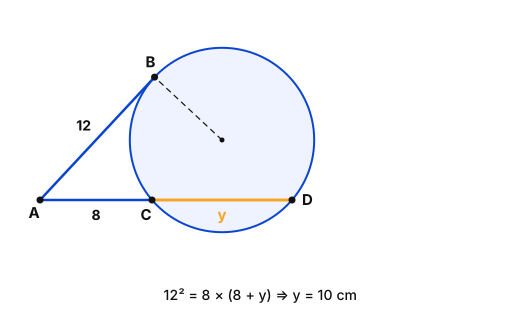
From an external point A to a circle, a tangent AB and a secant ACD are drawn such that AB=12cm,AC=8cm, and CD=ycm. Given that point C lies between points A and D, find the value of y such that the secant intersects the circle at points C and D .
किसी वृत्त के बाहर स्थित बिंदु A से एक स्पर्श रेखा AB तथा एक छेदक रेखा ACD इस प्रकार खींची जाती है कि AB=12cm,AC=8cm तथा CD=ycm है। दिया गया है कि बिंदु C, बिंदुओं A और D के बीच स्थित है; y का वह मान ज्ञात कीजिए जिसके लिए छेदक रेखा वृत्त को बिंदुओं C और D पर काटती है।
  1. A10 cm
  2. B15 cm
  3. C18 cm
  4. D20 cm
Show answer

Concept: Tangent2=external part×whole secant: AB2=AC×AD.

  1. 122=8×AD⇒144=8AD
  2. AD = 18 cm
  3. y=CD=18−8=10 cm

Trick: 8(8+y)=144⇒8+y=18⇒y=10.

Answer: (A) 10 cm

अवधारणा: स्पर्शरेखा2=बाहरी भाग×पूरा छेदक: AB2=AC×AD।

  1. 144=8×AD
  2. AD = 18 cm
  3. y=18−8=10 cm

ट्रिक: 8(8+y)=144⇒y=10।

उत्तर: (A) 10 cm

SSC CHSLQuantitative AptitudeCircles – tangent–secant theoremSSC CHSL 2025 · 26 Nov Shift 1 →
Q1476.
Which ruler of the Delhi Sultanate is renowned for introducing comprehensive market control measures?
दिल्ली सल्तनत का कौन-सा शासक व्यापक बाज़ार नियंत्रण उपाय लागू करने के लिए प्रसिद्ध है?
  1. ABalbanबलबन
  2. BIltutmishइल्तुतमिश
  3. CAlauddin Khaljiअलाउद्दीन खलजी
  4. DMuhammad bin Tughlaqमुहम्मद बिन तुगलक
Show answer

Concept: Price/market control in the Delhi Sultanate is linked with Alauddin Khalji.

  1. Alauddin Khalji (1296–1316) fixed prices of grain, cloth, horses etc. to maintain a large army on low cash salaries.
  2. Officers like the Shahna-i-Mandi supervised markets; hoarding and short-weighing were punished.
  3. Balban – 'blood and iron'; Iltutmish – iqta and silver tanka; Muhammad bin Tughlaq – token currency.

Yaad rakhein: Alauddin also introduced the Dagh (branding horses) and Chehra (descriptive roll of soldiers) systems.

Answer: (C) Alauddin Khalji

अवधारणा: दिल्ली सल्तनत में बाज़ार/मूल्य नियंत्रण अलाउद्दीन खिलजी से जुड़ा है।

  1. अलाउद्दीन खिलजी (1296–1316) ने बड़ी सेना को कम वेतन पर रखने हेतु अनाज, कपड़ा, घोड़ों आदि के दाम तय किए।
  2. शहना-ए-मंडी जैसे अधिकारी बाज़ार की निगरानी करते थे।
  3. बलबन – 'लौह और रक्त' नीति; इल्तुतमिश – इक्ता, चाँदी का टंका; मुहम्मद बिन तुगलक – सांकेतिक मुद्रा।

याद रखें: अलाउद्दीन ने दाग (घोड़ों पर निशान) और हुलिया/चेहरा (सैनिकों का विवरण) प्रथा भी शुरू की।

उत्तर: (C) अलाउद्दीन खलजी

SSC CHSLGeneral AwarenessMedieval India – Alauddin Khalji's market reformsSSC CHSL 2025 · 26 Nov Shift 1 →
Q1477.
Which provision of the Indian Constitution was influenced by the Canadian system?
भारतीय संविधान का कौन-सा प्रावधान कनाडा की प्रणाली से प्रभावित है?
  1. ARule of lawविधि का शासन
  2. BFundamental dutiesमूल कर्तव्य
  3. CAdvisory jurisdiction of the Supreme Courtउच्चतम न्यायालय का परामर्शदात्री क्षेत्राधिकार
  4. DFederal structureसंघीय ढाँचा
Show answer

Concept: The Indian Constitution borrowed several features from foreign constitutions.

  1. From Canada: advisory jurisdiction of the Supreme Court (Art. 143), federation with a strong Centre, residuary powers with the Centre, Governor appointed by the Centre.
  2. Rule of law – Britain; Fundamental Duties – USSR.
  3. Federal structure as such is drawn mainly from the Government of India Act, 1935.

Yaad rakhein: Art. 143 – the President may seek the Supreme Court's opinion; the advice is not binding.

Answer: (C) Advisory jurisdiction of the Supreme Court

अवधारणा: भारतीय संविधान ने कई प्रावधान विदेशी संविधानों से लिए।

  1. कनाडा से: सर्वोच्च न्यायालय का सलाहकारी क्षेत्राधिकार (अनु. 143), मज़बूत केंद्र वाला संघ, अवशिष्ट शक्तियाँ केंद्र को, राज्यपाल की केंद्र द्वारा नियुक्ति।
  2. विधि का शासन – ब्रिटेन; मौलिक कर्तव्य – पूर्व USSR।
  3. संघीय ढाँचा मुख्यतः भारत शासन अधिनियम, 1935 से।

याद रखें: अनु. 143 – राष्ट्रपति सुप्रीम कोर्ट से राय ले सकते हैं; यह राय बाध्यकारी नहीं।

उत्तर: (C) उच्चतम न्यायालय का परामर्शदात्री क्षेत्राधिकार

SSC CHSLGeneral AwarenessPolity – borrowed features (Canada)SSC CHSL 2025 · 26 Nov Shift 1 →
Q1478.
Which right is not included under Article 25 of the Indian Constitution?
भारतीय संविधान के अनुच्छेद 25 के अंतर्गत कौन-सा अधिकार सम्मिलित नहीं है?
  1. AFreedom of conscienceअंतःकरण की स्वतंत्रता
  2. BRight to profess, practice, and propagate religionधर्म को मानने, आचरण करने और प्रचार करने का अधिकार
  3. CRight to religious conversionधर्म परिवर्तन कराने का अधिकार
  4. DProtection of religious institutionsधार्मिक संस्थाओं का संरक्षण
Show answer

Concept: Article 25 guarantees freedom of conscience and the right to profess, practise and propagate religion.

  1. 'Propagate' means spreading one's faith, not converting others.
  2. Supreme Court (Rev. Stainislaus case, 1977): there is no fundamental right to convert another person.
  3. So 'right to religious conversion' is not part of Article 25.

Yaad rakhein: Articles 25–28 = Right to Freedom of Religion; Art. 26 covers managing religious affairs/institutions.

Answer: (C) Right to religious conversion

अवधारणा: अनुच्छेद 25 अंतःकरण की स्वतंत्रता और धर्म को मानने, आचरण व प्रचार का अधिकार देता है।

  1. 'Propagate' = अपने धर्म का प्रचार, दूसरों का धर्म बदलवाना नहीं।
  2. सुप्रीम कोर्ट (रेव. स्टैनिस्लॉस मामला, 1977): किसी का धर्मांतरण करवाने का मौलिक अधिकार नहीं।
  3. इसलिए 'धर्मांतरण का अधिकार' अनुच्छेद 25 में शामिल नहीं।

याद रखें: अनु. 25–28 = धार्मिक स्वतंत्रता का अधिकार; अनु. 26 धार्मिक मामलों/संस्थाओं के प्रबंधन से जुड़ा है।

उत्तर: (C) धर्म परिवर्तन कराने का अधिकार

SSC CHSLGeneral AwarenessPolity – Article 25 and conversionSSC CHSL 2025 · 26 Nov Shift 1 →
Q1479.
The headquarters of the Asian Infrastructure Investment Bank (AIIB) is located in which city?
एशियन इन्फ्रास्ट्रक्चर इन्वेस्टमेंट बैंक (AIIB) का मुख्यालय किस शहर में स्थित है?
  1. ABeijingबीजिंग
  2. BSeoulसियोल
  3. CJakartaजकार्ता
  4. DSingaporeसिंगापुर
Show answer

Concept: AIIB is a China-led multilateral development bank.

  1. Headquarters: Beijing, China; operational since January 2016.
  2. India is a founding member and the second-largest shareholder after China.

Yaad rakhein: Asian Development Bank (ADB) HQ – Manila; New Development Bank (BRICS) HQ – Shanghai.

Answer: (A) Beijing

अवधारणा: AIIB चीन के नेतृत्व वाला बहुपक्षीय विकास बैंक है।

  1. मुख्यालय: बीजिंग, चीन; जनवरी 2016 से कार्यरत।
  2. भारत संस्थापक सदस्य और चीन के बाद दूसरा सबसे बड़ा शेयरधारक है।

याद रखें: ADB का मुख्यालय – मनीला; New Development Bank (BRICS) – शंघाई।

उत्तर: (A) बीजिंग

SSC CHSLGeneral AwarenessInternational organisations – AIIBSSC CHSL 2025 · 26 Nov Shift 1 →
Q1480.
In which year did India and Japan sign an agreement for cooperation in the peaceful use of nuclear energy ?
भारत और जापान ने परमाणु ऊर्जा के शांतिपूर्ण उपयोग में सहयोग के लिए किस वर्ष समझौते पर हस्ताक्षर किए ?
  1. A2009
  2. B2013
  3. C2016
  4. D2019
Show answer

Concept: India and Japan signed a civil nuclear cooperation pact during PM Modi's 2016 Tokyo visit.

  1. Signed on 11 November 2016; came into force in July 2017.
  2. It was Japan's first such deal with a country outside the NPT.

Yaad rakhein: India–US civil nuclear deal (123 Agreement) was finalised in 2008.

Answer: (C) 2016

अवधारणा: PM मोदी की 2016 की टोक्यो यात्रा में भारत–जापान असैन्य परमाणु समझौता हुआ।

  1. 11 नवंबर 2016 को हस्ताक्षर; जुलाई 2017 से लागू।
  2. यह किसी गैर-NPT देश के साथ जापान का पहला ऐसा समझौता था।

याद रखें: भारत–अमेरिका असैन्य परमाणु समझौता (123 Agreement) 2008 में हुआ।

उत्तर: (C) 2016

SSC CHSLGeneral AwarenessIndia–Japan civil nuclear agreementSSC CHSL 2025 · 26 Nov Shift 1 →