Question bank

Q&A: practice questions with answers

Search questions on any topic. Filter by exam category, exam, subject and topic, try the question, then open the answer and explanation.

Courses – airGurukul

5,000 questions found.

Q1741.
A person is walking towards the North. After taking 15 Right turns and 13 Left turns, in which direction is he moving now?
एक व्यक्ति उत्तर दिशा की ओर चल रहा है। 15 बार दाएँ मुड़ने और 13 बार बाएँ मुड़ने के बाद वह अब किस दिशा में चल रहा है?
  1. AEastपूर्व
  2. BWestपश्चिम
  3. CNorthउत्तर
  4. DSouthदक्षिण
Show answer

Concept: A right and a left turn cancel; only the net turns count.

  1. Net = 15 R − 13 L = 2 right turns.
  2. 2 right turns = 180°.
  3. North + 180° → South.

Trick: Net turns: 1 → 90°, 2 → reverse direction, 4 → same direction.

Answer: (D) South

अवधारणा: एक दायाँ और एक बायाँ मोड़ एक-दूसरे को काटते हैं; केवल शुद्ध मोड़ गिनें।

  1. शुद्ध = 15 दाएँ − 13 बाएँ = 2 दाएँ मोड़।
  2. 2 दाएँ मोड़ = 180°।
  3. उत्तर + 180° → दक्षिण।

ट्रिक: 2 शुद्ध मोड़ = दिशा उलट; 4 मोड़ = वही दिशा।

उत्तर: (D) दक्षिण
SSC CHSLGeneral IntelligenceDirection – net turnsSSC CHSL 2025 · 25 Nov Shift 1 →
Q1742.
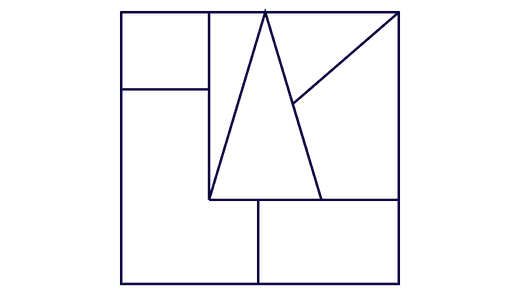
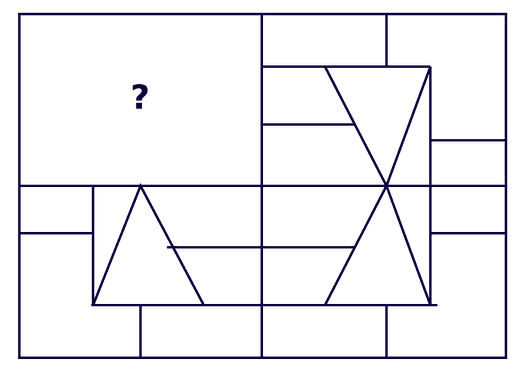
Which option figure will complete the pattern in the question figure?
(Rotation is not allowed)
figure
कौन-सी विकल्प आकृति प्रश्न आकृति के पैटर्न को पूरा करेगी?
(घुमाने की अनुमति नहीं है)
figure
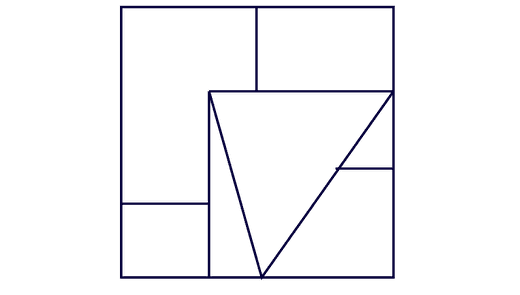
  1. Afigure
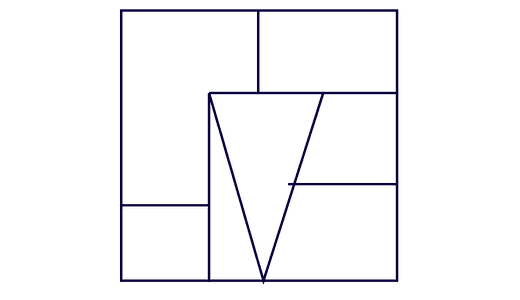
  2. Bfigure
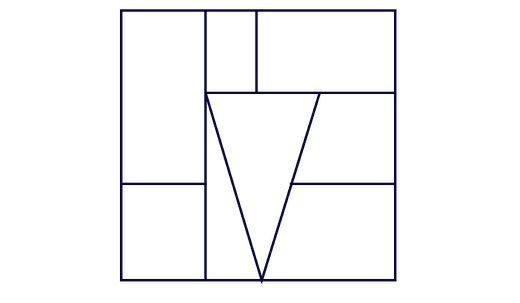
  3. Cfigure
  4. Dfigure
Show answer

Concept: The figure is symmetric about its vertical centre line.

  1. The bottom-left quarter mirrors the bottom-right (triangle, horizontals).
  2. So the missing top-left must be the left–right mirror of the top-right quarter.
  3. Mirror the top-right lines (stub from top edge, horizontal, tall vertical, downward triangle) → option (c).

Trick: Complete-the-figure: first find the axis of symmetry from the given half, then mirror.

Answer: (C) Option (c) figure

अवधारणा: आकृति अपनी ऊर्ध्वाधर मध्य रेखा के सापेक्ष सममित है।

  1. नीचे का बायाँ भाग नीचे के दाएँ भाग का दर्पण-प्रतिबिंब है।
  2. इसलिए ऊपर का बायाँ भाग = ऊपर के दाएँ भाग का बाएँ-दाएँ प्रतिबिंब।
  3. ऊपरी-दाएँ की रेखाएँ (छोटी खड़ी रेखा, क्षैतिज, लंबी ऊर्ध्वाधर, नीचे की ओर त्रिभुज) उलटें → विकल्प (c)।

ट्रिक: पहले दिए गए भाग से सममिति अक्ष पहचानें, फिर प्रतिबिंब बनाएँ।

उत्तर: (C) विकल्प (c) की आकृति

SSC CHSLGeneral IntelligenceFigure completion – mirror symmetrySSC CHSL 2025 · 25 Nov Shift 1 →
Q1743.
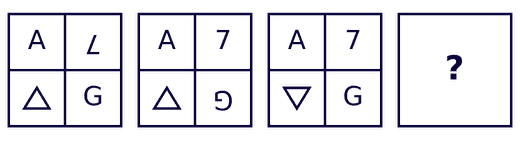
In the following figure series, select the figure which can be placed at the sign of question mark (?) from the given alternatives.
figure
निम्नलिखित आकृति शृंखला में, दिए गए विकल्पों में से उस आकृति का चयन कीजिए जिसे प्रश्नवाचक चिह्न (?) के स्थान पर रखा जा सकता है।
figure
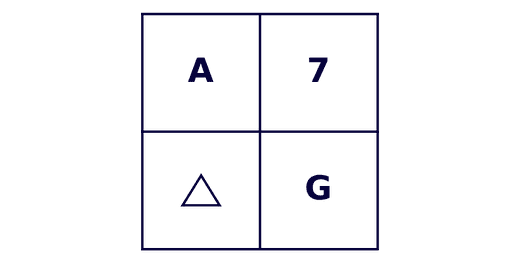
  1. Afigure
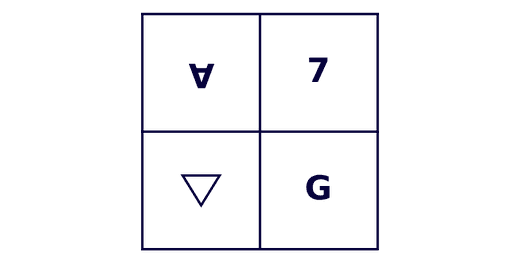
  2. Bfigure
  3. Cfigure
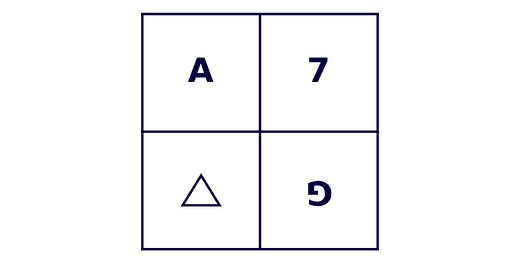
  4. Dfigure
Show answer

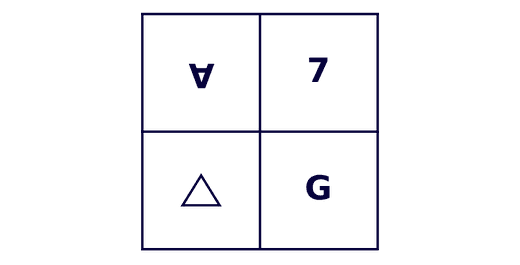
Concept: Same 4 symbols stay in place; one symbol is turned upside down and that cell moves clockwise.

  1. Fig 1: '7' (top-right) inverted.
  2. Fig 2: 'G' (bottom-right); Fig 3: triangle (bottom-left).
  3. Next clockwise cell = top-left → 'A' upside down, others normal.

Trick: Track only 'which cell is odd' – it walks clockwise around the square.

Answer: (D) Option (d) figure

अवधारणा: चारों चिह्न अपनी जगह रहते हैं; हर आकृति में एक चिह्न उल्टा होता है और वह खाना घड़ी की दिशा में खिसकता है।

  1. आकृति 1: '7' (ऊपर-दायाँ) उल्टा।
  2. आकृति 2: 'G' (नीचे-दायाँ); आकृति 3: त्रिभुज (नीचे-बायाँ)।
  3. अगला खाना = ऊपर-बायाँ → 'A' उल्टा, बाकी सीधे।

ट्रिक: सिर्फ़ 'कौन-सा खाना अलग है' देखें – वह घड़ी की दिशा में घूमता है।

उत्तर: (D) विकल्प (d) की आकृति

SSC CHSLGeneral IntelligenceFigure series – rotating cellSSC CHSL 2025 · 25 Nov Shift 1 →
Q1744.
In the following figure series, select the figure which can be placed at the sign of question mark (?) from the given alternatives.
figure
निम्नलिखित आकृति शृंखला में, दिए गए विकल्पों में से उस आकृति का चयन कीजिए जिसे प्रश्नवाचक चिह्न (?) के स्थान पर रखा जा सकता है।
figure
  1. Afigure
  2. Bfigure
  3. Cfigure
  4. Dfigure
Show answer

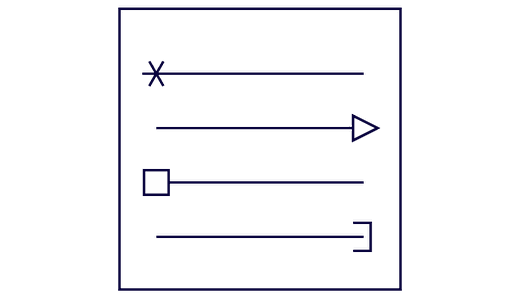
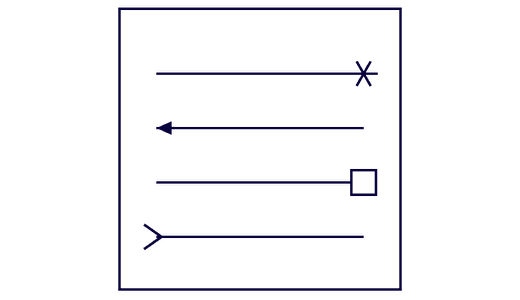
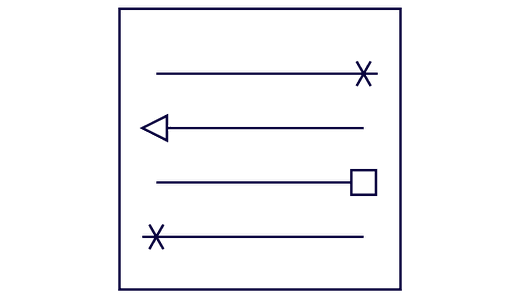
Concept: Each step every symbol shifts up one line; a new symbol enters at the bottom.

  1. Symbols sit at right, left, right, left ends (rows 1–4) in every figure.
  2. Fig 5 rows 2–4 (star, hollow triangle, hollow square) move to rows 1–3.
  3. Row 1 star at right, row 2 triangle at left, row 3 square at right, new symbol in row 4 at left → option (c).

Trick: Match the top row of the answer with row 2 of the last figure – eliminates most options.

Answer: (C) Option (c) figure

अवधारणा: हर चरण में सभी चिह्न एक पंक्ति ऊपर जाते हैं और नीचे नया चिह्न आता है।

  1. हर आकृति में चिह्न क्रमशः दाएँ, बाएँ, दाएँ, बाएँ सिरे पर होते हैं।
  2. आकृति 5 की पंक्ति 2–4 (तारा, खोखला त्रिभुज, खोखला वर्ग) पंक्ति 1–3 में आएँगे।
  3. तारा दाएँ, त्रिभुज बाएँ, वर्ग दाएँ, नया चिह्न नीचे बाएँ → विकल्प (c)।

ट्रिक: उत्तर की पहली पंक्ति = पिछली आकृति की दूसरी पंक्ति – इससे ज़्यादातर विकल्प कट जाते हैं।

उत्तर: (C) विकल्प (c) की आकृति

SSC CHSLGeneral IntelligenceFigure series – symbols moving upSSC CHSL 2025 · 25 Nov Shift 1 →
Q1745.
If ' + ' means ' ∵ ' ∵ means ' x ', ' x ' means ′÷ ' and ′÷ ' means ′+ ', then 20×5÷ 16+4−2= ?
यदि ' + ' का अर्थ ' ∵ ' है, ∵ का अर्थ ' x ' है, ' x ' का अर्थ ′÷ ' है और ′÷ ' का अर्थ ′+ ' है, तो 20×5÷ 16+4−2= ?
  1. A10
  2. B12
  3. C14
  4. D16
Show answer

Concept: Rewrite with the true signs, then BODMAS.

  1. Mapping: + → −, − → ×, × → ÷, ÷ → +.
  2. 20×5÷16+4−2 becomes 20÷5+16−4×2.
  3. =4+16−8= 12.

Trick: Rewrite the whole expression on one line first – most errors come from converting signs mid-calculation.

Answer: (B) 12

अवधारणा: असली चिह्न लगाकर BODMAS से हल करें।

  1. बदलाव: + → −, − → ×, × → ÷, ÷ → +।
  2. 20×5÷16+4−2→20÷5+16−4×2।
  3. =4+16−8= 12।

ट्रिक: पूरा व्यंजक पहले एक पंक्ति में बदलकर लिखें, फिर हल करें।

उत्तर: (B) 12

SSC CHSLGeneral IntelligenceSymbol interchange – BODMASSSC CHSL 2025 · 25 Nov Shift 1 →
Q1746.
If ' P ' means '+', ' Q ' means ' - , ' R ' means ' ÷ ' and ' S ' means ' × ', then which of the following equations is correct?
I. 24 R 6 S 5 P 10 Q 8=22
II. 50 Q 20 R 4 S 3 P 5 = 45
यदि ' P ' का अर्थ '+' है, ' Q ' का अर्थ ' - है, ' R ' का अर्थ ' ÷ ' है और ' S ' का अर्थ ' × ' है, तो निम्नलिखित में से कौन-सा समीकरण सही है?
I. 24 R 6 S 5 P 10 Q 8=22
II. 50 Q 20 R 4 S 3 P 5 = 45
  1. AOnly Iकेवल I
  2. BOnly IIकेवल II
  3. CBoth I and III और II दोनों
  4. DNeither I nor IIन तो I और न ही II
Show answer

Concept: Substitute letters, apply BODMAS, compare with RHS.

  1. I: 24÷6×5+10−8=20+10−8=22 ✓.
  2. II: 50−20÷4×3+5=50−15+5=40≠45 ✗.
  3. Only I is correct.

Trick: Check the simpler statement first; if one fails, half the options go.

Answer: (A) Only I

अवधारणा: अक्षरों की जगह चिह्न रखें, BODMAS लगाएँ, दाएँ पक्ष से मिलाएँ।

  1. I: 24÷6×5+10−8=20+10−8=22 ✓।
  2. II: 50−20÷4×3+5=50−15+5=40≠45 ✗।
  3. केवल I सही।

ट्रिक: एक कथन गलत निकलते ही आधे विकल्प हट जाते हैं।

उत्तर: (A) केवल I

SSC CHSLGeneral IntelligenceSymbol substitution – checking equationsSSC CHSL 2025 · 25 Nov Shift 1 →
Q1747.
In a certain coded language 'JUMP' is coded as 'MXPS' and 'WIND' is coded as 'ZLQG'. How will 'COAL' be coded in the same code language?
एक निश्चित कूट भाषा में 'JUMP' को 'MXPS' तथा 'WIND' को 'ZLQG' के रूप में कूटबद्ध किया जाता है। उसी कूट भाषा में 'COAL' को किस प्रकार कूटबद्ध किया जाएगा?
  1. AFRDO
  2. BEQCP
  3. CFPDO
  4. DERDP
Show answer

Concept: Each letter moves a fixed number of places.

  1. J→M, U→X, M→P, P→S: every letter +3 (WIND → ZLQG confirms).
  2. COAL: C+3 = F, O+3 = R, A+3 = D, L+3 = O.
  3. Code: FRDO.

Trick: Find the first letter (C+3 = F) and the second (O+3 = R) – only (a) has 'FR'.

Answer: (A) FRDO

अवधारणा: हर अक्षर निश्चित स्थान आगे बढ़ता है।

  1. J→M, U→X, M→P, P→S: हर अक्षर +3 (WIND → ZLQG भी)।
  2. COAL: C→F, O→R, A→D, L→O।
  3. कोड: FRDO।

ट्रिक: C+3 = F, O+3 = R – 'FR' वाला केवल (a)।

उत्तर: (A) FRDO

SSC CHSLGeneral IntelligenceCoding – +3 shiftSSC CHSL 2025 · 25 Nov Shift 1 →
Q1748.
In a certain code language, 'PACK' is coded as '62', 'BACK' is coded as '34'. How will 'SEND' be coded in that code language?
एक निश्चित कूट भाषा में 'PACK' को '62' तथा 'BACK' को '34' के रूप में कूटबद्ध किया जाता है। उसी कूट भाषा में 'SEND' को किस प्रकार कूटबद्ध किया जाएगा?
  1. A80
  2. B42
  3. C84
  4. D76
Show answer

Concept: Code =2×(sum of alphabet positions).

  1. PACK: 16+1+3+11=31 → 62 ✓; BACK: 2+1+3+11=17 → 34 ✓.
  2. SEND: 19+5+14+4=42.
  3. Code =42×2= 84.

Trick: PACK and BACK differ only in the first letter (P−B = 14) and codes differ by 28=2×14 → the multiplier is 2.

Answer: (C) 84

अवधारणा: कोड =2×(अक्षरों के स्थान मान का योग)।

  1. PACK: 16+1+3+11=31 → 62 ✓; BACK: 17 → 34 ✓।
  2. SEND: 19+5+14+4=42।
  3. कोड =42×2= 84।

ट्रिक: PACK–BACK में केवल पहला अक्षर अलग (अंतर 14) और कोड में अंतर 28 → गुणक 2।

उत्तर: (C) 84

SSC CHSLGeneral IntelligenceCoding – sum of positions × 2SSC CHSL 2025 · 25 Nov Shift 1 →
Q1749.
From the given alternatives, select the word that CANNOT be formed by using the letters of the given word. CONSTRUCTION
दिए गए विकल्पों में से उस शब्द का चयन कीजिए जिसे दिए गए शब्द के अक्षरों का प्रयोग करके नहीं बनाया जा सकता। CONSTRUCTION
  1. ASUCTION
  2. BCOINS
  3. CCAUTION
  4. DSTRICT
Show answer

Concept: A word can be formed only if every letter (and its count) is available.

  1. CONSTRUCTION letters: C, O, N, S, T, R, U, I (C, O, N, T twice).
  2. SUCTION, COINS, STRICT – all letters available.
  3. CAUTION needs 'A' – not present.

Trick: Look for a letter in the options that is missing from the main word – here 'A'.

Answer: (C) CAUTION

अवधारणा: शब्द तभी बनेगा जब हर अक्षर (उतनी बार) मुख्य शब्द में हो।

  1. CONSTRUCTION के अक्षर: C, O, N, S, T, R, U, I (C, O, N, T दो-दो बार)।
  2. SUCTION, COINS, STRICT बन जाते हैं।
  3. CAUTION में 'A' चाहिए – मौजूद नहीं।

ट्रिक: विकल्पों में वह अक्षर ढूँढें जो मुख्य शब्द में है ही नहीं – यहाँ 'A'।

उत्तर: (C) CAUTION

SSC CHSLGeneral IntelligenceWord formationSSC CHSL 2025 · 25 Nov Shift 1 →
Q1750.
From the given alternatives, select the word that CANNOT be formed by using the letters of the given word. ESTABLISHMENT
दिए गए विकल्पों में से उस शब्द का चयन कीजिए जिसे दिए गए शब्द के अक्षरों का प्रयोग करके नहीं बनाया जा सकता। ESTABLISHMENT
  1. ATABLE
  2. BTENTS
  3. CSHEET
  4. DBLUNT
Show answer

Concept: Check each letter of the option against the given word.

  1. ESTABLISHMENT: E, S, T (×2 each), A, B, L, I, H, M, N.
  2. TABLE, TENTS (2 T), SHEET (2 E) – possible.
  3. BLUNT needs 'U' – not present.

Trick: Vowel check first: the given word has only A, E, I – any option with O or U is out.

Answer: (D) BLUNT

अवधारणा: विकल्प के हर अक्षर को मुख्य शब्द से मिलाएँ।

  1. ESTABLISHMENT: E, S, T (दो-दो), A, B, L, I, H, M, N।
  2. TABLE, TENTS, SHEET बन जाते हैं।
  3. BLUNT में 'U' चाहिए – नहीं है।

ट्रिक: पहले स्वर जाँचें: मुख्य शब्द में केवल A, E, I हैं – O या U वाला विकल्प बाहर।

उत्तर: (D) BLUNT

SSC CHSLGeneral IntelligenceWord formationSSC CHSL 2025 · 25 Nov Shift 1 →
Q1751.
A product marked Rs. 8,400 is sold at 15% discount. Find the selling price.
Rs. 8,400 अंकित मूल्य वाली एक वस्तु 15% छूट पर बेची जाती है। विक्रय मूल्य ज्ञात कीजिए।
  1. ARs. 7,040
  2. BRs. 7,140
  3. CRs. 7,240
  4. DRs. 6,940
Show answer

Concept: SP=MP×100−discount%100.

  1. After 15% off, the buyer pays 85% of ₹8,400.
  2. SP=8400×85100=84×85= ₹7,140.

Trick: 10% of 8400 = 840, 5% = 420 → 15% = 1260; 8400−1260=7140.

Answer: (B) Rs. 7,140

अवधारणा: विक्रय मूल्य=अंकित मूल्य×100−छूट%100।

  1. 15% छूट के बाद 85% देना होगा।
  2. SP=8400×85100=84×85= ₹7,140।

ट्रिक: 10% = 840, 5% = 420 → 15% = 1260; 8400−1260=7140।

उत्तर: (B) Rs. 7,140

SSC CHSLQuantitative AptitudeDiscount – selling priceSSC CHSL 2025 · 25 Nov Shift 1 →
Q1752.
A person travels from Point A to Point B at a speed of 20km/h and returns from Point B to Point A at a speed of 30km/h. Find the average speed for the whole journey.
एक व्यक्ति बिंदु A से बिंदु B तक 20km/h की चाल से यात्रा करता है और बिंदु B से बिंदु A तक 30km/h की चाल से लौटता है। पूरी यात्रा की औसत चाल ज्ञात कीजिए।
  1. A24 km/h
  2. B25km/h
  3. C26km/h
  4. D28 km/h
Show answer

Concept: For equal distances: average speed =2xyx+y.

  1. x=20, y=30.
  2. Average =2×20×3050=120050= 24 km/h.

Trick: Average speed for equal distances is always a bit less than the simple mean (25) → only 24 fits.

Answer: (A) 24 km/h

अवधारणा: समान दूरी के लिए औसत चाल =2xyx+y।

  1. x=20, y=30।
  2. औसत =2×20×3050=120050= 24 km/h।

ट्रिक: औसत चाल साधारण औसत (25) से हमेशा थोड़ी कम होती है → 24।

उत्तर: (A) 24 km/h

SSC CHSLQuantitative AptitudeAverage speed – equal distancesSSC CHSL 2025 · 25 Nov Shift 1 →
Q1753.
A conical tent has a base radius of 7 m and a slant height of 10 m . If 20 such tents are to be erected, how much canvas is required in total (assuming no waste and no floor)?
एक शंक्वाकार तंबू के आधार की त्रिज्या 7 m तथा तिर्यक ऊँचाई 10 m है। यदि ऐसे 20 तंबू खड़े करने हैं, तो कुल कितने कैनवास की आवश्यकता होगी (यह मानते हुए कि कोई अपव्यय नहीं है और फर्श नहीं है)?
  1. A2200m2
  2. B4400m2
  3. C4800m2
  4. D1540m2
Show answer

Concept: Tent without floor = curved surface area =πrl.

  1. One tent: 227×7×10=220m2.
  2. 20 tents: 220×20= 4400 m².

Trick: r=7 makes π=227 cancel neatly: πrl=22×l.

Answer: (B) 4400m2

अवधारणा: फ़र्श नहीं → केवल वक्र पृष्ठ =πrl।

  1. एक तंबू: 227×7×10=220m2।
  2. 20 तंबू: 220×20= 4400 m²।

ट्रिक: r=7 होने पर πrl=22×l सीधे।

उत्तर: (B) 4400m2

SSC CHSLQuantitative AptitudeCone – curved surface (canvas)SSC CHSL 2025 · 25 Nov Shift 1 →
Q1754.
A shopkeeper bought 100 shirts. He bought 40 shirts at Rs. 500 each and the rest at Rs. 800 each. He had to pay a transportation charge of 5% on the total purchase price. He sold 30 of the cheaper shirts at a 20% profit and the remaining cheaper ones at a 10% loss. All the expensive shirts were sold at a 10% profit. What is his approximate overall profit percentage?
एक दुकानदार ने 100 कमीज़ें खरीदीं। उसने 40 कमीज़ें Rs. 500 प्रति की दर से तथा शेष Rs. 800 प्रति की दर से खरीदीं। उसे कुल क्रय मूल्य पर 5% परिवहन शुल्क देना पड़ा। उसने सस्ती कमीज़ों में से 30 को 20% लाभ पर तथा शेष सस्ती कमीज़ों को 10% हानि पर बेचा। सभी महँगी कमीज़ें 10% लाभ पर बेची गईं। उसका अनुमानित कुल लाभ प्रतिशत क्या है?
  1. A4.7%
  2. B6.2%
  3. C5.5%
  4. D3.8%
Show answer

Concept: Overhead (transport) is added to CP; profit%=profittotal CP×100.

  1. Purchase =40×500+60×800=20000+48000=68000; +5% = 3400 → CP=71400.
  2. SP =30×600+10×450+60×880=18000+4500+52800=75300.
  3. Profit = 3900; %=390071400×100≈ 5.46% ≈ 5.5%.

Trick: Profit is gained only on items: 3000−500+4800=7300; minus transport 3400 = 3900.

Answer: (C) 5.5%

अवधारणा: ढुलाई खर्च क्रय मूल्य में जुड़ता है; लाभ%=लाभकुल CP×100।

  1. खरीद =20000+48000=68000; 5% ढुलाई = 3400 → CP=71400।
  2. SP =30×600+10×450+60×880=75300।
  3. लाभ = 3900; %=390071400×100≈ 5.5%।

ट्रिक: सीधे लाभ जोड़ें: +3000−500+4800=7300; ढुलाई 3400 घटाएँ = 3900।

उत्तर: (C) 5.5%

SSC CHSLQuantitative AptitudeProfit & loss – mixed sales with extra costSSC CHSL 2025 · 25 Nov Shift 1 →
Q1755.
Each edge of a cube is decreased by 20%. What is the percentage decrease in the volume of the cube?
एक घन की प्रत्येक भुजा 20% घटा दी जाती है। घन के आयतन में कितने प्रतिशत की कमी होगी?
  1. A20%
  2. B36%
  3. C48.8%
  4. D51.2%
Show answer

Concept: Volume∝edge3, so apply the factor three times.

  1. New edge =0.8a→ new volume =0.83=0.512 of original.
  2. Decrease =1−0.512=0.488 → 48.8%.

Trick: Successive change formula twice: −20, −20 → −36; then −36, −20 → −36−20+7.2=−48.8%.

Answer: (C) 48.8%

अवधारणा: आयतन∝भुजा3, इसलिए गुणक तीन बार लगाएँ।

  1. नई भुजा =0.8a→ नया आयतन =0.83=0.512 गुना।
  2. कमी =1−0.512=0.488 → 48.8%।

ट्रिक: क्रमिक प्रतिशत: −20, −20 → −36; फिर −36, −20 → −48.8%।

उत्तर: (C) 48.8%

SSC CHSLQuantitative AptitudeCube – % change in volumeSSC CHSL 2025 · 25 Nov Shift 1 →
Q1756.
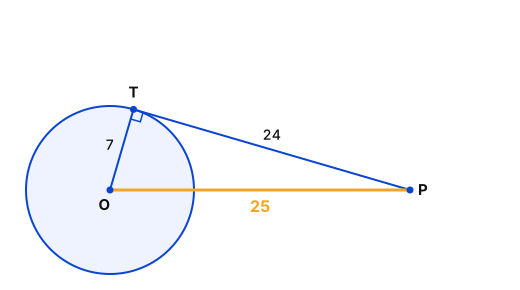
From a point outside a circular field, a tangent of length 24 m is drawn. If the radius of the field is 7 m , find the distance from the point to the center.
एक वृत्ताकार मैदान के बाहर स्थित एक बिंदु से 24 m लंबाई की एक स्पर्श रेखा खींची जाती है। यदि मैदान की त्रिज्या 7 m है, तो उस बिंदु से केंद्र की दूरी ज्ञात कीजिए।
  1. A25 m
  2. B26 m
  3. C31 m
  4. D22 m
Show answer

Concept: Radius ⊥ tangent → right triangle: d2=r2+t2.

  1. d2=72+242=49+576=625.
  2. d= 25 m.

Trick: 7-24-25 is a Pythagorean triplet.

Answer: (A) 25 m

अवधारणा: त्रिज्या ⊥ स्पर्श रेखा → समकोण त्रिभुज: d2=r2+t2।

  1. d2=49+576=625।
  2. d= 25 m।

ट्रिक: 7-24-25 पाइथागोरस त्रिक है।

उत्तर: (A) 25 m

SSC CHSLQuantitative AptitudeTangent length – distance from centreSSC CHSL 2025 · 25 Nov Shift 1 →
Q1757.
X and Y together can complete a piece of work in 12 days. If X alone can complete the same work in 20 days, in how many days can Y alone complete it?
X तथा Y मिलकर एक कार्य को 12 दिनों में पूरा कर सकते हैं। यदि X अकेला उसी कार्य को 20 दिनों में पूरा कर सकता है, तो Y अकेला उसे कितने दिनों में पूरा कर सकता है?
  1. A24 days24 दिन
  2. B30 days30 दिन
  3. C32 days32 दिन
  4. D40 days40 दिन
Show answer

Concept: Take total work = LCM of days and use efficiencies.

  1. Work = LCM(12,20)=60 units.
  2. X + Y = 5/day, X = 3/day → Y = 2/day.
  3. Y alone =602= 30 days.

Trick: Y=12×2020−12=2408=30.

Answer: (B) 30 days

अवधारणा: कुल कार्य = दिनों का LCM; दक्षता से हल करें।

  1. कार्य = LCM(12,20)=60 इकाई।
  2. X + Y = 5/दिन, X = 3/दिन → Y = 2/दिन।
  3. Y अकेले =602= 30 दिन।

ट्रिक: Y=12×2020−12=30।

उत्तर: (B) 30 दिन

SSC CHSLQuantitative AptitudeTime & work – one person's timeSSC CHSL 2025 · 25 Nov Shift 1 →
Q1758.
If sin⁡x=725 and x lies in (0∘,90∘), then find the value of:
((1+cos⁡x)(1−cos⁡x))
यदि sin⁡x=725 है तथा x (0∘,90∘) में स्थित है, तो निम्नलिखित का मान ज्ञात कीजिए:
((1+cos⁡x)(1−cos⁡x))
  1. A7
  2. B50
  3. C25
  4. D49
Show answer

Concept: sinx=725 → use triplet 7-24-25 to get cosx.

  1. cosx=2425 (x acute).
  2. 1+cosx=4925; 1−cosx=125.
  3. Ratio =4925÷125= 49.

Trick: 1+cosx1−cosx=H+BH−B=25+2425−24=49.

Answer: (D) 49

अवधारणा: sinx=725 → 7-24-25 त्रिक से cosx निकालें।

  1. cosx=2425 (x न्यून कोण)।
  2. 1+cosx=4925; 1−cosx=125।
  3. अनुपात = 49।

ट्रिक: 1+cosx1−cosx=H+BH−B=491।

उत्तर: (D) 49

SSC CHSLQuantitative AptitudeTrigonometry – using a tripletSSC CHSL 2025 · 25 Nov Shift 1 →
Q1759.
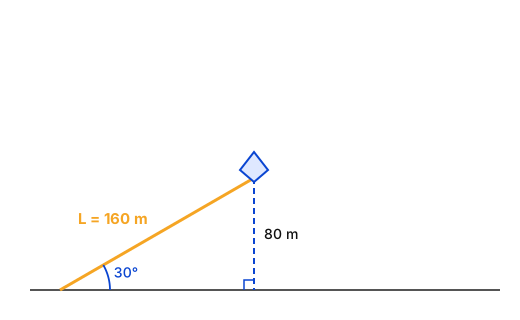
A kite is flying at a height of 80 meters above the ground. The string attached to it makes an angle of 30∘ with the ground. Assuming there is no slack in the string, what is the length of the string?
एक पतंग भूमि से 80 मीटर की ऊँचाई पर उड़ रही है। उससे जुड़ी डोरी भूमि के साथ 30∘ का कोण बनाती है। यह मानते हुए कि डोरी में कोई ढील नहीं है, डोरी की लंबाई कितनी है?
  1. A120 metres120 मीटर
  2. B140 metres140 मीटर
  3. C160 metres160 मीटर
  4. D100 metres100 मीटर
Show answer

Concept: String = hypotenuse; height is opposite the 30° angle → use sin.

  1. sin30∘=heightstring→12=80L.
  2. L = 160 m.

Trick: At 30°, hypotenuse=2×opposite side→2×80=160.

Answer: (C) 160 metres

अवधारणा: डोर = कर्ण; ऊँचाई 30° कोण के सामने → sin लगाएँ।

  1. sin30∘=ऊँचाईडोर→12=80L।
  2. L = 160 m।

ट्रिक: 30° पर कर्ण=2×सामने की भुजा=160।

उत्तर: (C) 160 मीटर

SSC CHSLQuantitative AptitudeHeights & distances – kite stringSSC CHSL 2025 · 25 Nov Shift 1 →
Q1760.
In what ratio must tea worth Rs. 240 per kg be mixed with tea worth Rs. 300 per kg so that the mixture is worth Rs. 280 per kg ?
Rs. 240 प्रति kg मूल्य वाली चाय को Rs. 300 प्रति kg मूल्य वाली चाय के साथ किस अनुपात में मिलाया जाए कि मिश्रण का मूल्य Rs. 280 प्रति kg हो जाए?
  1. A1 : 3
  2. B2 : 3
  3. C1 : 2
  4. D3 : 4
Show answer

Concept: Cheaper : Dearer = (Dearer − Mean) : (Mean − Cheaper).

  1. (300 − 280) : (280 − 240) = 20 : 40.
  2. = 1 : 2.

Trick: Mean 280 is nearer to 300, so more of the ₹300 tea is needed → ratio favours dearer.

Answer: (C) 1 : 2

अवधारणा: सस्ती : महँगी = (महँगी − औसत) : (औसत − सस्ती)।

  1. (300 − 280) : (280 − 240) = 20 : 40।
  2. = 1 : 2।

ट्रिक: औसत 280, 300 के ज़्यादा पास है – इसलिए महँगी चाय ज़्यादा लगेगी।

उत्तर: (C) 1 : 2

SSC CHSLQuantitative AptitudeAlligation – mixing teaSSC CHSL 2025 · 25 Nov Shift 1 →