Question bank

Q&A: practice questions with answers

Search questions on any topic. Filter by exam category, exam, subject and topic, try the question, then open the answer and explanation.

Courses – airGurukul

5,000 questions found.

Q1861.
The least number which is divisible by each of the numbers 7,11 , and 13 is:
वह न्यूनतम संख्या कौन-सी है जो 7,11 , और 13 में से प्रत्येक से विभाज्य है:
  1. A1100
  2. B1000
  3. C1001
  4. D1002
Show answer

Concept: Least number divisible by each = LCM; for primes, LCM = product.

  1. 7, 11, 13 are primes.
  2. LCM=7×11×13= 1001

Yaad rakhein: 7×11×13=1001 is a classic – it also explains why abcabc is always divisible by 7, 11 and 13.

Answer: (C) 1001

अवधारणा: प्रत्येक से विभाज्य सबसे छोटी संख्या = LCM; अभाज्य संख्याओं का LCM = गुणनफल।

  1. 7, 11, 13 अभाज्य हैं।
  2. LCM=7×11×13= 1001

याद रखें: 7×11×13=1001 – इसीलिए abcabc जैसी संख्या 7, 11, 13 से सदा विभाज्य होती है।

उत्तर: (C) 1001
SSC CHSLQuantitative AptitudeLCM of primesSSC CHSL 2025 · 24 Nov Shift 3 →
Q1862.
In a college, there are 800 faculty members, out of which 60% are females. The average height of males is 150cm, and the average height of females is 170 cm . What is the average height of the entire faculty ?
एक महाविद्यालय में 800 संकाय सदस्य हैं, जिनमें से 60% महिलाएँ हैं। पुरुषों की औसत ऊँचाई 150cm है और महिलाओं की औसत ऊँचाई 170 cm है। सम्पूर्ण संकाय की औसत ऊँचाई कितनी है ?
  1. A164 cm
  2. B166 cm
  3. C169 cm
  4. D162 cm
Show answer

Concept: Group average = Σ(share×average) when shares are known.

  1. Females 60%, males 40%.
  2. Average =0.4×150+0.6×170=60+102
  3. = 162 cm

Trick: Start from 150 and add 60% of the gap (20): 150+12=162. Total 800 is not needed.

Answer: (D) 162 cm

अवधारणा: भार (प्रतिशत) ज्ञात हों तो औसत = Σ(हिस्सा×औसत)।

  1. महिलाएँ 60%, पुरुष 40%।
  2. औसत =0.4×150+0.6×170=60+102
  3. = 162 cm

ट्रिक: 150 से शुरू करें और अंतर (20) का 60% जोड़ें: 150+12=162। कुल 800 की ज़रूरत नहीं।

उत्तर: (D) 162 cm

SSC CHSLQuantitative AptitudeWeighted averageSSC CHSL 2025 · 24 Nov Shift 3 →
Q1863.
Two buses start from two different cities that are 600 km apart and travel towards each other. The first bus's speed is 40km/h, and the second bus's speed is 80km/h. What is the time taken for them to meet?
दो बसें दो अलग-अलग शहरों से चलना प्रारंभ करती हैं, जो 600 km की दूरी पर हैं, और एक-दूसरे की ओर चलती हैं। पहली बस की चाल 40km/h है और दूसरी बस की चाल 80km/h है। उनके मिलने में कितना समय लगेगा?
  1. A4 hours4 घंटे
  2. B5 hours5 घंटे
  3. C6 hours6 घंटे
  4. D7 hours7 घंटे
Show answer

Concept: Moving towards each other, relative speed = sum of speeds.

  1. Relative speed =40+80=120 km/h
  2. Time =600120= 5 hours

Trick: Towards each other → add speeds; same direction → subtract.

Answer: (B) 5 hours

अवधारणा: एक-दूसरे की ओर चलें तो सापेक्ष चाल = चालों का योग।

  1. सापेक्ष चाल =40+80=120 km/h
  2. समय =600120= 5 घंटे

ट्रिक: आमने-सामने → चालें जोड़ें; एक ही दिशा → घटाएँ।

उत्तर: (B) 5 घंटे

SSC CHSLQuantitative AptitudeRelative speed – opposite directionsSSC CHSL 2025 · 24 Nov Shift 3 →
Q1864.
Three friends start a mobile app company. Arjun invests 1,50,000, Beena invests 80,000 , and Charu invests 1,20,000. After one year, they earn a profit of 105,000. What will Beena's share of the profit be ?
तीन मित्र मिलकर एक मोबाइल ऐप कंपनी प्रारंभ करते हैं। अर्जुन 1,50,000 निवेश करता है, बीना 80,000 निवेश करती है और चारु 1,20,000 निवेश करती है। एक वर्ष बाद उन्हें 105,000 का लाभ प्राप्त होता है। लाभ में बीना का हिस्सा कितना होगा ?
  1. A18,000
  2. B21,000
  3. C24,000
  4. D27,000
Show answer

Concept: Same time period → profit is shared in the ratio of investments.

  1. 1,50,000:80,000:1,20,000=15:8:12 (total 35)
  2. Beena =835×1,05,000=8×3,000
  3. = 24,000

Trick: 1,05,000÷35=3,000 per part – then multiply by Beena's 8 parts.

Answer: (C) 24,000

अवधारणा: समान अवधि हो तो लाभ निवेश के अनुपात में बँटता है।

  1. 1,50,000:80,000:1,20,000=15:8:12 (योग 35)
  2. बीना =835×1,05,000=8×3,000
  3. = 24,000

ट्रिक: 1,05,000÷35=3,000 प्रति भाग – फिर बीना के 8 भाग से गुणा करें।

उत्तर: (C) 24,000

SSC CHSLQuantitative AptitudePartnership – profit shareSSC CHSL 2025 · 24 Nov Shift 3 →
Q1865.
What is the square root of 8464 ?
8464 का वर्गमूल क्या है ?
  1. A90
  2. B91
  3. C94
  4. D92
Show answer

Concept: Use the unit digit and nearby squares to locate the root.

  1. Unit digit 4 → root ends in 2 or 8.
  2. 8464 is between 902 (8100) and 952 (9025) → root is 92.
  3. Check: 922=8464 ✓ → 92

Trick: Options 90, 91, 94 give unit digits 0, 1, 6 when squared – only 92 gives 4.

Answer: (D) 92

अवधारणा: इकाई अंक और पास के वर्गों से वर्गमूल पहचानें।

  1. इकाई अंक 4 → वर्गमूल का अंत 2 या 8।
  2. 8464, 902 (8100) और 952 (9025) के बीच है → वर्गमूल 92।
  3. जाँच: 922=8464 ✓ → 92

ट्रिक: 90, 91, 94 के वर्ग का इकाई अंक 0, 1, 6 होगा – केवल 92 से 4 आता है।

उत्तर: (D) 92

SSC CHSLQuantitative AptitudeSquare root – perfect squareSSC CHSL 2025 · 24 Nov Shift 3 →
Q1866.
A 80 litre container holds a mixture of milk and water in the ratio 7 : 3. If 16 litres of this mixture is taken out and replaced with 16 litres of pure milk, what is the new ratio of milk to water ?
80 लीटर के एक पात्र में दूध और पानी का मिश्रण 7 : 3 के अनुपात में है। यदि इस मिश्रण में से 16 लीटर निकालकर उसके स्थान पर 16 लीटर शुद्ध दूध मिला दिया जाए, तो दूध और पानी का नया अनुपात क्या होगा ?
  1. A19 : 6
  2. B17:5
  3. C15:4
  4. D13:3
Show answer

Concept: Removing part of a mixture keeps the ratio; then add the new milk.

  1. Milk = 56 L, water = 24 L.
  2. 16 L removed (15) → milk 44.8 L, water 19.2 L.
  3. Add 16 L milk → 60.8 : 19.2 = 19 : 6

Trick: Only water stays fixed: water left =24×45=19.2; milk =80−19.2=60.8 (total stays 80).

Answer: (A) 19 : 6

अवधारणा: मिश्रण का हिस्सा निकालने पर अनुपात वही रहता है; फिर नया दूध जोड़ें।

  1. दूध = 56 L, पानी = 24 L।
  2. 16 L (15) निकाला → दूध 44.8 L, पानी 19.2 L।
  3. 16 L दूध मिलाया → 60.8 : 19.2 = 19 : 6

ट्रिक: केवल पानी देखें: बचा पानी =24×45=19.2; कुल 80 ही रहता है, तो दूध = 60.8।

उत्तर: (A) 19 : 6

SSC CHSLQuantitative AptitudeMixture – removal and replacementSSC CHSL 2025 · 24 Nov Shift 3 →
Q1867.
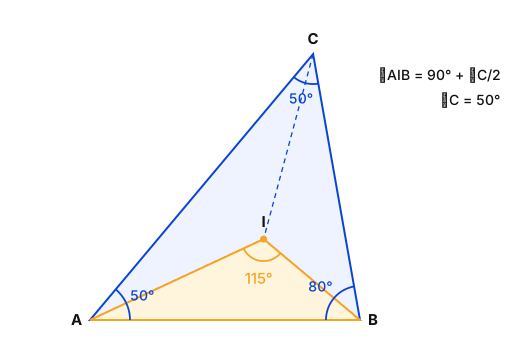
In △ABC, the angle bisectors intersect at the incenter I . If ∠A=50∘ and ∠B=80∘, what is the measure of ∠AIB ?
△ABC में, कोण समद्विभाजक अंतःकेंद्र I पर प्रतिच्छेद करते हैं। यदि ∠A=50∘ और ∠B=80∘ है, तो ∠AIB की माप क्या है ?
  1. A105°
  2. B110∘
  3. C115°
  4. D120°
Show answer

Concept: At the incentre I, ∠AIB=90∘+∠C2.

  1. ∠C=180∘−50∘−80∘=50∘
  2. ∠AIB=90∘+25∘= 115°

Trick: Incentre: 90° + half the opposite angle; excentre: 90° − half.

Answer: (C) 115°

अवधारणा: अंतःकेंद्र I पर ∠AIB=90∘+∠C2।

  1. ∠C=180∘−50∘−80∘=50∘
  2. ∠AIB=90∘+25∘= 115°

ट्रिक: अंतःकेंद्र: 90° + सामने वाले कोण का आधा; बहिःकेंद्र: 90° − आधा।

उत्तर: (C) 115°

SSC CHSLQuantitative AptitudeIncentre – angle AIBSSC CHSL 2025 · 24 Nov Shift 3 →
Q1868.
Which of the following represents a line perpendicular to the line 3x+4y= 16?
निम्नलिखित में से कौन-सा, रेखा 3x+4y= 16 पर लंब रेखा को निरूपित करता है?
  1. A3x−4y=8
  2. B3x+5y=12
  3. Cy=4x3−3
  4. Dy=3x4+1
Show answer

Concept: Perpendicular lines: m1×m2=−1.

  1. 3x+4y=16→slope=−34.
  2. Required slope =43.
  3. Only y=4x3−3 has slope 43.

Trick: For ax+by=c, a perpendicular line is bx−ay=k – swap the coefficients and change one sign (4x−3y=k⇔y=4x3…).

Answer: (C) y=4x3−3

अवधारणा: लंबवत रेखाएँ: m1×m2=−1।

  1. 3x+4y=16→ढाल=−34।
  2. अपेक्षित ढाल =43।
  3. केवल y=4x3−3 की ढाल 43 है।

ट्रिक: ax+by=c की लंब रेखा bx−ay=k होती है – गुणांक बदलें और एक चिह्न उलटें।

उत्तर: (C) y=4x3−3

SSC CHSLQuantitative AptitudeCoordinate geometry – perpendicular slopeSSC CHSL 2025 · 24 Nov Shift 3 →
Q1869.
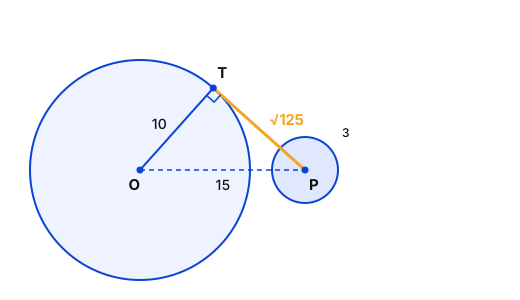
Two circles with radii 10 cm and 3 cm are separated by a distance of 15 cm between their centers. From the center of the smaller circle, a tangent is drawn to the larger circle. What is the length of this tangent segment ?
10 cm और 3 cm त्रिज्या वाले दो वृत्तों के केंद्रों के बीच की दूरी 15 cm है। छोटे वृत्त के केंद्र से बड़े वृत्त पर एक स्पर्श रेखा खींची जाती है। इस स्पर्श रेखा खंड की लंबाई क्या है ?
  1. A115cm
  2. B120cm
  3. C125cm
  4. D135cm
Show answer

Concept: Tangent from external point = d2−r2, d = distance to centre.

  1. Point = centre of small circle, d=15, r=10.
  2. Length =225−100= 125 cm (=55).
  3. Small circle's radius 3 cm is not used.

Trick: Ignore data not on the right triangle – here only 15 and 10 form the triangle with the tangent.

Answer: (C) 125cm

अवधारणा: बाहरी बिंदु से स्पर्श रेखा = d2−r2, d = केंद्र से दूरी।

  1. बिंदु = छोटे वृत्त का केंद्र, d=15, r=10।
  2. लंबाई =225−100= 125 cm (=55)।
  3. छोटे वृत्त की त्रिज्या 3 cm काम नहीं आती।

ट्रिक: जो आँकड़ा समकोण त्रिभुज में नहीं आता, उसे छोड़ दें – यहाँ केवल 15 और 10।

उत्तर: (C) 125cm

SSC CHSLQuantitative AptitudeTangent length – from external pointSSC CHSL 2025 · 24 Nov Shift 3 →
Q1870.
The sum of X and Y is 100 percent more than the sum of P and Q.P is 20 percent more than Q . If X is 200 percent more than Y and Q=500, then what is the value of A ?
X और Y का योग, P और Q.P के योग से 100 प्रतिशत अधिक है तथा यह Q से 20 प्रतिशत अधिक है। यदि X, Y से 200 प्रतिशत अधिक है और Q=500 है, तो A का मान क्या है ?
  1. A1200
  2. B1650
  3. C1700
  4. D1450
Show answer

Concept: 'k% more than' means multiply by 100+k100.

  1. P=1.2×500=600→P+Q=1100
  2. X+Y=2×1100=2200 (100% more = double)
  3. X=3Y (200% more) →4Y=2200→Y=550, X= 1650

Trick: 200% more = 3 times, 100% more = 2 times – convert to multipliers first. ('A' in the question means X.)

Answer: (B) 1650

अवधारणा: 'k% अधिक' का अर्थ 100+k100 से गुणा।

  1. P=1.2×500=600→P+Q=1100
  2. X+Y=2×1100=2200 (100% अधिक = दोगुना)
  3. X=3Y (200% अधिक) →4Y=2200→Y=550, X= 1650

ट्रिक: 200% अधिक = 3 गुना, 100% अधिक = 2 गुना – पहले गुणक बनाएँ। (प्रश्न में 'A' का अर्थ X है।)

उत्तर: (B) 1650

SSC CHSLQuantitative AptitudePercentage relationsSSC CHSL 2025 · 24 Nov Shift 3 →
Q1871.
The amount received on a certain sum at the same annual rate of interest after 2 years and 4 years on compound interest (compounding annually) is Rs. 10648 and Rs. 12884.08 respectively. What is that sum ?
एक निश्चित धनराशि पर समान वार्षिक ब्याज दर से चक्रवृद्धि ब्याज (वार्षिक संयोजन) पर 2 वर्ष और 4 वर्ष बाद प्राप्त मिश्रधन क्रमशः Rs. 10648 और Rs. 12884.08 है। वह धनराशि कितनी है ?
  1. ARs. 10000
  2. BRs. 12000
  3. CRs. 8800
  4. DRs. 9000
Show answer

Concept: A4÷A2=(1+r100)2, which removes P.

  1. 12884.08÷10648=1.21→(1+r100)=1.1→r=10%
  2. P×1.21=10648
  3. P= ₹8800

Trick: 10648=223 and 1.21=1.12 → P=106481.21=8800 quickly.

Answer: (C) Rs. 8800

अवधारणा: A4÷A2=(1+r100)2, इससे P हट जाता है।

  1. 12884.08÷10648=1.21→(1+r100)=1.1→r=10%
  2. P×1.21=10648
  3. P= ₹8800

ट्रिक: 10648=223 और 1.21=1.12 → P=106481.21=8800।

उत्तर: (C) Rs. 8800

SSC CHSLQuantitative AptitudeCompound interest – amounts after 2 and 4 yearsSSC CHSL 2025 · 24 Nov Shift 3 →
Q1872.
The difference between simple interest on a certain sum at the annual rate of 10 percent for 8 years and 12 years is Rs. 80. What is the sum ?
एक निश्चित धनराशि पर 10 प्रतिशत की वार्षिक दर से 8 वर्ष और 12 वर्ष के साधारण ब्याज का अंतर Rs. 80 है। वह धनराशि कितनी है ?
  1. ARs. 200
  2. BRs. 160
  3. CRs. 180
  4. DRs. 150
Show answer

Concept: SI difference for 12 and 8 years = SI for 4 years.

  1. P×10×4100=80
  2. 0.4P=80→P= ₹200

Trick: 4 years at 10% = 40% of P = 80 → P=80×10040=200.

Answer: (A) Rs. 200

अवधारणा: 12 और 8 वर्ष के SI का अंतर = 4 वर्ष का SI।

  1. P×10×4100=80
  2. 0.4P=80→P= ₹200

ट्रिक: 4 वर्ष×10%=P का 40%=80→P=200।

उत्तर: (A) Rs. 200

SSC CHSLQuantitative AptitudeSimple interest – difference of periodsSSC CHSL 2025 · 24 Nov Shift 3 →
Q1873.
Selling price of an article is 150 percent more than the value of discount. Selling price is what percent of the marked price ?
किसी वस्तु का विक्रय मूल्य, छूट के मान से 150 प्रतिशत अधिक है। विक्रय मूल्य, अंकित मूल्य का कितने प्रतिशत है ?
  1. A71.42 percent71.42 प्रतिशत
  2. B71.58 percent71.58 प्रतिशत
  3. C71.50 percent71.50 प्रतिशत
  4. D70.75 percent70.75 प्रतिशत
Show answer

Concept: Take discount = 100; MP=SP+discount.

  1. SP=100+150% of 100=250
  2. MP=250+100=350
  3. SPMP=250350×100=5007≈ 71.42%

Trick: SP : D = 5 : 2 → SPMP=57=71.42% (17=14.28%).

Answer: (A) 71.42 percent

अवधारणा: छूट = 100 मानें; अंकित मूल्य=SP+छूट।

  1. SP=100+100 का 150%=250
  2. MP=250+100=350
  3. SPMP=250350×100=5007≈ 71.42%

ट्रिक: SP : छूट = 5 : 2 → SPMP=57=71.42% (17=14.28%)।

उत्तर: (A) 71.42 प्रतिशत

SSC CHSLQuantitative AptitudeDiscount – SP as % of MPSSC CHSL 2025 · 24 Nov Shift 3 →
Q1874.
A and B together can complete a work in 24 days. They started the work together but after 8 days A left the work. Remaining work is completed by B in 20 more days. A alone can complete this entire work in how many days ?
A और B मिलकर एक कार्य को 24 दिनों में पूरा कर सकते हैं। उन्होंने कार्य साथ मिलकर प्रारंभ किया, परंतु 8 दिनों बाद A ने कार्य छोड़ दिया। शेष कार्य B ने 20 और दिनों में पूरा किया। A अकेला इस सम्पूर्ण कार्य को कितने दिनों में पूरा कर सकता है ?
  1. A110
  2. B120
  3. C130
  4. D100
Show answer

Concept: Use total work = LCM-type units and find each one's daily rate.

  1. Work = 24 units; A + B = 1 unit/day. In 8 days → 8 units.
  2. B does remaining 16 units in 20 days → 0.8 unit/day.
  3. A=1−0.8=0.2 unit/day →240.2= 120 days

Trick: B alone would take 240.8=30 days; then 1A=124−130=1120.

Answer: (B) 120

अवधारणा: कुल कार्य को इकाइयों में लें और प्रत्येक की दैनिक दर निकालें।

  1. कार्य = 24 इकाई; A + B = 1 इकाई/दिन। 8 दिन में 8 इकाई।
  2. शेष 16 इकाई B ने 20 दिन में → 0.8 इकाई/दिन।
  3. A=1−0.8=0.2 इकाई/दिन →240.2= 120 दिन

ट्रिक: B अकेला 240.8=30 दिन लेगा; 1A=124−130=1120।

उत्तर: (B) 120

SSC CHSLQuantitative AptitudeTime and work – one leavesSSC CHSL 2025 · 24 Nov Shift 3 →
Q1875.
P and Q working alone can complete a work in 24 days and 48 days respectively. They work on alternate days one at a time. P works on the first day. In how many days the whole work will be completed?
P और Q अकेले कार्य करते हुए एक कार्य को क्रमशः 24 दिनों और 48 दिनों में पूरा कर सकते हैं। वे एक-एक करके एकांतर दिनों में कार्य करते हैं। पहले दिन P कार्य करता है। सम्पूर्ण कार्य कितने दिनों में पूरा होगा?
  1. A40
  2. B32
  3. C20
  4. D42
Show answer

Concept: Find work done in one 2-day cycle, then count cycles.

  1. Work = 48 units; P = 2/day, Q = 1/day.
  2. One cycle (P then Q) = 3 units in 2 days.
  3. 48÷3=16 cycles →16×2= 32 days

Trick: If total ÷ cycle-work is exact, days=cycles×2; otherwise check the leftover on the next P-day.

Answer: (B) 32

अवधारणा: 2 दिन के एक चक्र का कार्य निकालें, फिर चक्र गिनें।

  1. कार्य = 48 इकाई; P = 2/दिन, Q = 1/दिन।
  2. एक चक्र (पहले P फिर Q) = 2 दिन में 3 इकाई।
  3. 48÷3=16 चक्र →16×2= 32 दिन

ट्रिक: कुल ÷ चक्र-कार्य पूरा बँट जाए तो दिन=चक्र×2; वरना बचा कार्य अगले P-दिन पर देखें।

उत्तर: (B) 32

SSC CHSLQuantitative AptitudeTime and work – alternate daysSSC CHSL 2025 · 24 Nov Shift 3 →
Q1876.
During Emperor Akbar's reign, the Zabt revenue system could not be implemented in which regions because accurate land measurement was difficult?
सम्राट अकबर के शासनकाल में, सटीक भूमि मापन कठिन होने के कारण ज़ब्त राजस्व प्रणाली किन क्षेत्रों में लागू नहीं की जा सकी?
  1. AAgra and Allahabadआगरा और इलाहाबाद
  2. BBengal and Gujaratबंगाल और गुजरात
  3. CMalwa and Ajmerमालवा और अजमेर
  4. DDelhi and Lahoreदिल्ली और लाहौर
Show answer

Concept: Zabt (Dahsala) needed accurate land measurement to fix a cash rate per crop.

  1. Developed under Akbar with Raja Todar Mal; land was measured with the jarib and revenue based on 10-year average produce and prices.
  2. Where measurement was impractical – Bengal and Gujarat – Zabt was not applied and older methods continued.
  3. Agra, Allahabad, Delhi, Lahore, Malwa and Ajmer were core Zabt provinces.

Yaad rakhein: Zabt = measurement-based; Batai/Ghallabakhshi = crop-sharing; Kankut = estimate of standing crop.

Answer: (B) Bengal and Gujarat

अवधारणा: ज़ब्त (दहसाला) प्रणाली में हर फसल की नकद दर तय करने के लिए भूमि की सटीक माप ज़रूरी थी।

  1. अकबर के समय राजा टोडरमल ने इसे विकसित किया; जरीब से भूमि मापी जाती और 10 वर्ष की औसत उपज व मूल्य पर लगान तय होता।
  2. जहाँ माप संभव नहीं था – बंगाल और गुजरात – वहाँ ज़ब्त लागू नहीं हुई।
  3. आगरा, इलाहाबाद, दिल्ली, लाहौर, मालवा, अजमेर में यह प्रणाली लागू थी।

याद रखें: ज़ब्त = माप आधारित; बटाई/ग़ल्लाबख़्शी = फसल का बँटवारा; कनकूत = खड़ी फसल का अनुमान।

उत्तर: (B) बंगाल और गुजरात

SSC CHSLGeneral AwarenessAkbar's Zabt system – excluded regionsSSC CHSL 2025 · 24 Nov Shift 3 →
Q1877.
The Seventh Schedule of the Indian Constitution is related to which of the following subjects?
भारतीय संविधान की सातवीं अनुसूची निम्नलिखित में से किस विषय से संबंधित है?
  1. ADistribution of financial resources between Centre and Statesकेंद्र और राज्यों के बीच वित्तीय संसाधनों का वितरण
  2. BUnion, State, and Concurrent Listsसंघ, राज्य और समवर्ती सूचियाँ
  3. COrganization of local self-government institutionsस्थानीय स्वशासन संस्थाओं का गठन
  4. DProvisions related to emergency powersआपातकालीन शक्तियों से संबंधित प्रावधान
Show answer

Concept: The Seventh Schedule (with Article 246) divides law-making subjects between Centre and States.

  1. It has three lists: Union, State and Concurrent.
  2. Financial relations are in Articles 268–293; local bodies in the 11th and 12th Schedules; emergency in Part XVIII.

Yaad rakhein: Schedules to remember: 7th – three lists, 8th – languages (22), 10th – anti-defection, 11th – Panchayats, 12th – Municipalities.

Answer: (B) Union, State, and Concurrent Lists

अवधारणा: सातवीं अनुसूची (अनुच्छेद 246 के साथ) केंद्र और राज्यों के बीच कानून बनाने के विषय बाँटती है।

  1. इसमें तीन सूचियाँ हैं: संघ, राज्य और समवर्ती।
  2. वित्तीय संबंध अनुच्छेद 268–293 में; स्थानीय निकाय 11वीं-12वीं अनुसूची में; आपातकाल भाग XVIII में।

याद रखें: 7वीं – तीन सूचियाँ, 8वीं – भाषाएँ (22), 10वीं – दल-बदल, 11वीं – पंचायत, 12वीं – नगरपालिका।

उत्तर: (B) संघ, राज्य और समवर्ती सूचियाँ

SSC CHSLGeneral AwarenessSeventh Schedule – legislative listsSSC CHSL 2025 · 24 Nov Shift 3 →
Q1878.
Which Constitutional Amendment substituted the expression "internal disturbance" with "armed rebellion" as a ground for declaring a National Emergency in India ?
भारत में राष्ट्रीय आपातकाल की घोषणा के आधार के रूप में "आंतरिक अशांति" शब्द के स्थान पर "सशस्त्र विद्रोह" शब्द किस संविधान संशोधन द्वारा प्रतिस्थापित किया गया ?
  1. A42nd Constitutional Amendment Act, 197642वाँ संविधान संशोधन अधिनियम, 1976
  2. B44th Constitutional Amendment Act, 197844वाँ संविधान संशोधन अधिनियम, 1978
  3. C43rd Constitutional Amendment Act, 197743वाँ संविधान संशोधन अधिनियम, 1977
  4. D45th Constitutional Amendment Act, 198045वाँ संविधान संशोधन अधिनियम, 1980
Show answer

Concept: The 44th Amendment (1978) replaced 'internal disturbance' with 'armed rebellion' in Article 352.

  1. It was passed after the 1975–77 Emergency to prevent misuse.
  2. It also required the Cabinet's written advice to the President and kept Articles 20 and 21 enforceable during emergency.
  3. The 42nd Amendment (1976) had instead widened Centre's powers.

Yaad rakhein: Grounds of Article 352 today: war, external aggression, armed rebellion.

Answer: (B) 44th Constitutional Amendment Act, 1978

अवधारणा: 44वें संशोधन (1978) ने अनुच्छेद 352 में 'आंतरिक अशांति' की जगह 'सशस्त्र विद्रोह' लिखा।

  1. यह 1975–77 के आपातकाल के बाद दुरुपयोग रोकने के लिए किया गया।
  2. इसमें मंत्रिमंडल की लिखित सलाह ज़रूरी की गई और अनुच्छेद 20, 21 आपातकाल में भी निलंबित नहीं होते।
  3. 42वें संशोधन (1976) ने उल्टा केंद्र की शक्तियाँ बढ़ाई थीं।

याद रखें: अनुच्छेद 352 के आधार अब: युद्ध, बाहरी आक्रमण, सशस्त्र विद्रोह।

उत्तर: (B) 44वाँ संविधान संशोधन अधिनियम, 1978

SSC CHSLGeneral AwarenessNational Emergency – 44th AmendmentSSC CHSL 2025 · 24 Nov Shift 3 →
Q1879.
With reference to the Council of Ministers (COM) of the Indian Ocean Rim Association (IORA), consider the following statements:
I. It functions as the supreme decision-making authority of the association.
II. It is composed exclusively of the Finance Ministers of all member countries.
Which of the statements given above is/are correct?
हिंद महासागर रिम एसोसिएशन (IORA) की मंत्रिपरिषद (COM) के संदर्भ में, निम्नलिखित कथनों पर विचार कीजिए:
I. यह एसोसिएशन के सर्वोच्च निर्णय लेने वाले प्राधिकरण के रूप में कार्य करती है।
II. यह विशेष रूप से सभी सदस्य देशों के वित्त मंत्रियों से मिलकर बनी होती है।
उपर्युक्त कथनों में से कौन-सा/से सही है/हैं?
  1. AStatement I onlyकेवल कथन I
  2. BStatement II onlyकेवल कथन II
  3. CBoth Statement I and Statement IIकथन I और कथन II दोनों
  4. DNeither Statement I nor Statement IIन तो कथन I और न ही कथन II
Show answer

Concept: IORA's Council of Ministers is its apex decision-making body.

  1. Statement I is correct – the COM is the highest organ and meets annually.
  2. Statement II is wrong – it consists of Foreign Ministers (or designated ministers), not Finance Ministers.
  3. IORA: founded 1997, Secretariat in Mauritius.

Yaad rakhein: 'Exclusively' in a statement is a red flag – absolute words are often the error.

Answer: (A) Statement I only

अवधारणा: IORA की मंत्रिपरिषद (COM) इसका सर्वोच्च निर्णय लेने वाला अंग है।

  1. कथन I सही – COM सर्वोच्च संस्था है और वर्ष में एक बार मिलती है।
  2. कथन II गलत – इसमें विदेश मंत्री (या नामित मंत्री) होते हैं, केवल वित्त मंत्री नहीं।
  3. IORA: स्थापना 1997, सचिवालय मॉरीशस में।

ट्रिक: कथन में 'exclusively/केवल' जैसे पूर्ण शब्द अक्सर गलती का संकेत होते हैं।

उत्तर: (A) केवल कथन I

SSC CHSLGeneral AwarenessIORA – Council of MinistersSSC CHSL 2025 · 24 Nov Shift 3 →
Q1880.
The Association of Southeast Asian Nations (ASEAN) was formally founded at which location?
दक्षिण-पूर्व एशियाई राष्ट्र संघ (ASEAN) की औपचारिक स्थापना किस स्थान पर हुई थी?
  1. AJakartaजकार्ता
  2. BBangkokबैंकॉक
  3. CPhnom Penhनोम पेन्ह
  4. DManilaमनीला
Show answer

Concept: ASEAN was founded at Bangkok on 8 August 1967 through the Bangkok Declaration.

  1. Founders: Indonesia, Malaysia, Philippines, Singapore, Thailand.
  2. Jakarta is the trap – it is the Secretariat's seat, not the founding place.

Yaad rakhein: Founded in Bangkok, headquartered in Jakarta – keep the two apart.

Answer: (B) Bangkok

अवधारणा: आसियान की स्थापना 8 अगस्त 1967 को बैंकॉक में 'बैंकॉक घोषणा' से हुई।

  1. संस्थापक: इंडोनेशिया, मलेशिया, फ़िलीपींस, सिंगापुर, थाईलैंड।
  2. जकार्ता जाल है – वहाँ सचिवालय है, स्थापना नहीं हुई।

याद रखें: स्थापना बैंकॉक में, मुख्यालय जकार्ता में – दोनों को अलग याद रखें।

उत्तर: (B) बैंकॉक

SSC CHSLGeneral AwarenessASEAN – place of foundingSSC CHSL 2025 · 24 Nov Shift 3 →