Question bank

Q&A: practice questions with answers

Search questions on any topic. Filter by exam category, exam, subject and topic, try the question, then open the answer and explanation.

Courses – airGurukul

6,600 questions found.

Q3001.
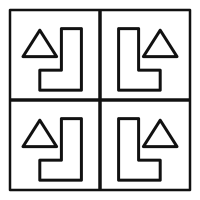
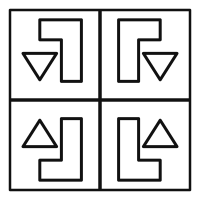
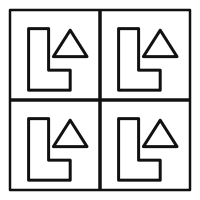
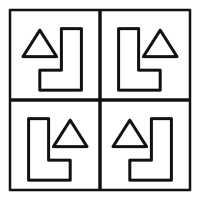
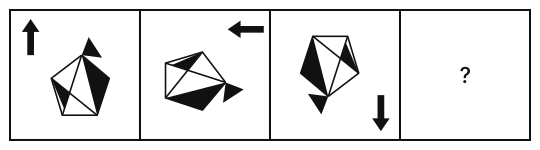
Select the figure that will replace the question mark (?) in the following figure series.
निम्नलिखित आकृति श्रृंखला में प्रश्न चिह्न (?) के स्थान पर आने वाली आकृति का चयन कीजिए।
  1. A
  2. B
  3. C
  4. D
Show answer

Concept: Each figure is the previous one rotated 90∘ anticlockwise; the arrow and the pentagon design turn together.
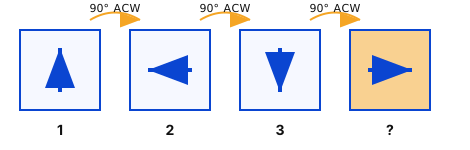
  1. Arrow: up → left → down, i.e. 90∘ anticlockwise each step, so the next arrow points right.
  2. The pentagon with its black triangles also turns 90∘ anticlockwise each time; the 4th figure is the 2nd figure turned 180∘.
  3. Only option (B) has a right-pointing arrow with the pentagon in this position; (C) and (D) show the pentagon wrongly oriented, (A) has the arrow to the left.

Trick: Track the simplest element (the arrow) first; it eliminates most options at once.

Answer: (B) the 2nd figure

अवधारणा: हर आकृति पिछली आकृति को 90∘ वामावर्त (anticlockwise) घुमाने से बनती है; तीर और पंचभुज साथ-साथ घूमते हैं।

  1. तीर: ऊपर → बाएँ → नीचे, यानी हर बार 90∘ वामावर्त; अगला तीर दाईं ओर होगा।
  2. काले त्रिभुजों वाला पंचभुज भी हर बार 90∘ वामावर्त घूमता है; चौथी आकृति दूसरी आकृति का 180∘ घूमा रूप है।
  3. केवल विकल्प (B) में तीर दाईं ओर और पंचभुज सही स्थिति में है; (C), (D) में पंचभुज गलत दिशा में, (A) में तीर बाईं ओर है।

ट्रिक: पहले सबसे सरल हिस्सा (तीर) देखें — अधिकतर विकल्प तुरंत हट जाते हैं।

उत्तर: (B) दूसरी आकृति
SSC CPO Paper IGeneral Intelligence and ReasoningFigure seriesSSC CPO Paper I 2022 · 11 Nov Shift 3 →
Q3002.
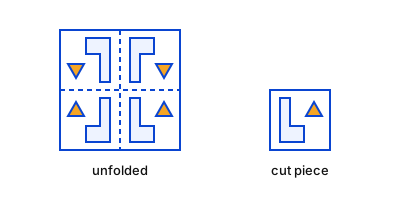
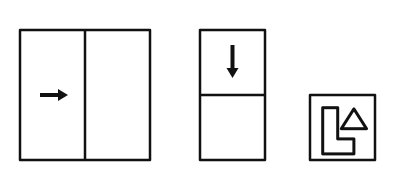
The sequence of folding a piece of paper and the manner in which the folded paper has been cut is shown in the following figures. How would this paper look when unfolded?
एक कागज़ के टुकड़े को मोड़ने का क्रम और मुड़े हुए कागज़ को काटने का तरीका निम्नलिखित आकृतियों में दर्शाया गया है। खोलने पर यह कागज़ कैसा दिखाई देगा?
  1. A
  2. B
  3. C
  4. D
Show answer

Concept: When a folded paper is opened, every cut is reflected across each fold line (mirror image on the other side of the crease).

  1. Fold 1: left half onto right half (vertical crease). Fold 2: top onto bottom (horizontal crease). The cut piece is the bottom-right quarter.
  2. Opening fold 2: the top-right quarter gets the design flipped upside down (triangle points down).
  3. Opening fold 1: the left quarters get left–right mirror images of the right quarters.
  4. So: bottom-right = original, bottom-left = mirrored, top row = upside-down copies of the bottom row — exactly option (B).

Trick: Unfold in reverse order: last fold first; each unfolding = reflection across that crease.

Answer: (B) the 2nd figure

अवधारणा: मुड़े कागज़ को खोलने पर हर कटिंग, मोड़ रेखा (crease) के दूसरी ओर दर्पण-प्रतिबिम्ब की तरह बनती है।

  1. पहला मोड़: बायाँ आधा दाएँ पर (ऊर्ध्वाधर मोड़)। दूसरा मोड़: ऊपर का भाग नीचे पर। काटा गया टुकड़ा नीचे-दायाँ चौथाई है।
  2. दूसरा मोड़ खोलने पर ऊपर-दाएँ चौथाई में डिज़ाइन उल्टा (त्रिभुज नीचे की ओर) बनेगा।
  3. पहला मोड़ खोलने पर बाएँ भागों में दाएँ भागों का बाएँ-दाएँ दर्पण-प्रतिबिम्ब बनेगा।
  4. नीचे-दायाँ मूल, नीचे-बायाँ उल्टा-सीधा (mirror), ऊपर की पंक्ति नीचे की पंक्ति का उल्टा रूप — यही विकल्प (B) है।

ट्रिक: उल्टे क्रम में खोलें — आख़िरी मोड़ पहले; हर बार मोड़ रेखा पर परावर्तन।

उत्तर: (B) दूसरी आकृति
SSC CPO Paper IGeneral Intelligence and ReasoningPaper folding and cuttingSSC CPO Paper I 2022 · 11 Nov Shift 3 →
Q3003.
A # B means ‘A is the father of B’.
A @ B means ‘A is the daughter of B’.
A & B means ‘A is the sister of B’.
A % B means ‘A is the wife of B’.
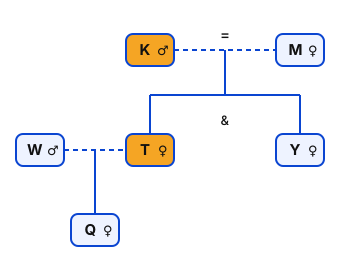
If W # Q @ T & Y @ M % K, then how is K related to T?
A # B का अर्थ है ‘A, B का पिता है’।
A @ B का अर्थ है ‘A, B की पुत्री है’।
A & B का अर्थ है ‘A, B की बहन है’।
A % B का अर्थ है ‘A, B की पत्नी है’।
यदि W # Q @ T & Y @ M % K है, तो K का T से क्या संबंध है?
  1. AFather-in-lawससुर
  2. BFatherपिता
  3. CBrother-in-lawसाला/जीजा
  4. DBrotherभाई
Show answer

Concept: Decode each symbol one link at a time and build the family tree.

  1. W # Q: W is the father of Q. Q @ T: Q is the daughter of T, so T is Q's mother (W's wife).
  2. T & Y: T is the sister of Y. Y @ M: Y is the daughter of M.
  3. M % K: M is the wife of K, so K is the father of Y — and of Y's sister T.

Trick: Read the chain left to right and note genders as you go (daughter, sister, wife → female).

Answer: (B) Father

अवधारणा: हर चिह्न को एक-एक करके खोलें और परिवार वृक्ष (family tree) बनाएँ।

  1. W # Q: W, Q का पिता है। Q @ T: Q, T की बेटी है, अतः T, Q की माँ (W की पत्नी) है।
  2. T & Y: T, Y की बहन है। Y @ M: Y, M की बेटी है।
  3. M % K: M, K की पत्नी है, अतः K, Y का पिता है — और Y की बहन T का भी।

ट्रिक: श्रृंखला बाएँ से दाएँ पढ़ें और साथ-साथ लिंग (daughter, sister, wife → स्त्री) लिखते जाएँ।

उत्तर: (B) Father (पिता)

SSC CPO Paper IGeneral Intelligence and ReasoningBlood relation (coded)SSC CPO Paper I 2022 · 11 Nov Shift 3 →
Q3004.
Three of the following four letter-clusters are alike in a certain way and one is different. Pick the odd one out.
निम्नलिखित चार अक्षर-समूहों में से तीन किसी निश्चित प्रकार से एक समान हैं और एक उनसे भिन्न है। असंगत अक्षर-समूह का चयन कीजिए।
  1. AJPN
  2. BMSQ
  3. CCJI
  4. DQWU
Show answer

Concept: Compare the gaps between the alphabet positions of the letters.

  1. JPN: 10→16→14 i.e. +6,−2. MSQ: 13→19→17 i.e. +6,−2.
  2. QWU: 17→23→21 i.e. +6,−2.
  3. CJI: 3→10→9 i.e. +7,−1 — different.

Trick: Write position numbers (EJOTY = 5, 10, 15, 20, 25) to find gaps fast.

Answer: (C) CJI

अवधारणा: अक्षरों के वर्णमाला स्थानों का अंतर देखें।

  1. JPN: 10→16→14 अर्थात +6,−2। MSQ: 13→19→17 अर्थात +6,−2।
  2. QWU: 17→23→21 अर्थात +6,−2।
  3. CJI: 3→10→9 अर्थात +7,−1 — अलग।

ट्रिक: EJOTY = 5, 10, 15, 20, 25 याद रखें, अंतर जल्दी निकलेगा।

उत्तर: (C) CJI

SSC CPO Paper IGeneral Intelligence and ReasoningOdd one out (letters)SSC CPO Paper I 2022 · 11 Nov Shift 3 →
Q3005.
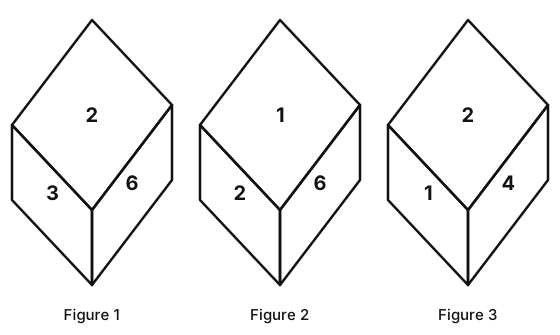
Three different positions of the same dice are shown. Find the number on the face opposite the face showing ‘1’.
एक ही पासे की तीन अलग-अलग स्थितियाँ दर्शाई गई हैं। ‘1’ दर्शाने वाले फलक के विपरीत फलक पर कौन-सी संख्या है, ज्ञात कीजिए।
  1. A2
  2. B6
  3. C3
  4. D5
Show answer

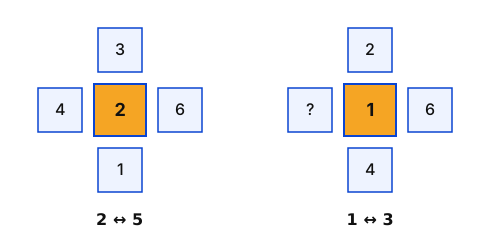
Concept: A face can never be opposite a face that is seen next to it; the face not adjacent is the opposite one.

  1. Faces seen with 2: 3, 6 (Fig 1), 1, 6 (Fig 2), 1, 4 (Fig 3). So 2 touches 1, 3, 4, 6 ⇒ 2 is opposite 5.
  2. Faces seen with 1: 2, 6 (Fig 2) and 2, 4 (Fig 3).
  3. Left for 1: 3 or 5. 5 is already opposite 2, so 1 is opposite 3.

Trick: List every neighbour of a face; the one missing number is its opposite.

Answer: (C) 3

अवधारणा: जो फलक किसी फलक के साथ दिखता है वह उसका विपरीत नहीं हो सकता; जो पड़ोसी नहीं है वही विपरीत है।

  1. 2 के साथ दिखे: 3, 6 (चित्र 1), 1, 6 (चित्र 2), 1, 4 (चित्र 3)। अतः 2 के पड़ोसी 1, 3, 4, 6 ⇒ 2 के विपरीत 5।
  2. 1 के साथ दिखे: 2, 6 (चित्र 2) और 2, 4 (चित्र 3)।
  3. 1 के लिए बचे: 3 या 5। 5 तो 2 के विपरीत है, अतः 1 के विपरीत 3।

ट्रिक: किसी फलक के सभी पड़ोसी लिखें; जो संख्या छूट जाए वही विपरीत है।

उत्तर: (C) 3

SSC CPO Paper IGeneral Intelligence and ReasoningDice (opposite faces)SSC CPO Paper I 2022 · 11 Nov Shift 3 →
Q3006.
Which of the following numbers will replace the question mark (?) in the given series? 30, 39, 55, 76, ?
निम्नलिखित में से कौन-सी संख्या दी गई श्रृंखला में प्रश्न चिह्न (?) के स्थान पर आएगी? 30, 39, 55, 76, ?
  1. A97
  2. B100
  3. C87
  4. D91
Show answer

Concept: Check the differences, then the differences of the differences.

  1. Differences: 39−30=9,55−39=16,76−55=21.
  2. Second differences: 16−9=7,21−16=5 — decreasing odd numbers, next is 3.
  3. Next difference =21+3=24, so the term =76+24=100.

Trick: If first differences look random, go one level deeper.

Answer: (B) 100

अवधारणा: पहले अंतर देखें, फिर अंतरों का अंतर।

  1. अंतर: 39−30=9,55−39=16,76−55=21।
  2. दूसरा अंतर: 16−9=7,21−16=5 — घटती विषम संख्याएँ, अगला 3।
  3. अगला अंतर =21+3=24, अतः पद =76+24=100।

ट्रिक: पहले स्तर के अंतर में पैटर्न न दिखे तो दूसरे स्तर पर जाएँ।

उत्तर: (B) 100

SSC CPO Paper IGeneral Intelligence and ReasoningNumber seriesSSC CPO Paper I 2022 · 11 Nov Shift 3 →
Q3007.
In a certain code language, LUCKNOW is written as 6 and PATANA is written as 5. How will RAJASTHAN be written in that language?
एक निश्चित कूट भाषा में, LUCKNOW को 6 और PATANA को 5 लिखा जाता है। उसी भाषा में RAJASTHAN को कैसे लिखा जाएगा?
  1. A8
  2. B7
  3. C9
  4. D6
Show answer

Concept: The code is the number of letters in the word minus one.

  1. LUCKNOW has 7 letters → 7−1=6 ✓.
  2. PATANA has 6 letters → 6−1=5 ✓.
  3. RAJASTHAN has 9 letters → 9−1=8.

Trick: When a whole word becomes a single small number, first try counting letters.

Answer: (A) 8

अवधारणा: कोड = शब्द के अक्षरों की संख्या −1।

  1. LUCKNOW में 7 अक्षर → 7−1=6 ✓।
  2. PATANA में 6 अक्षर → 6−1=5 ✓।
  3. RAJASTHAN में 9 अक्षर → 9−1=8।

ट्रिक: पूरा शब्द एक छोटी संख्या बने तो पहले अक्षर गिनें।

उत्तर: (A) 8

SSC CPO Paper IGeneral Intelligence and ReasoningCoding-decoding (letter count)SSC CPO Paper I 2022 · 11 Nov Shift 3 →
Q3008.
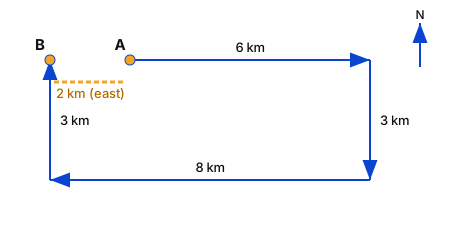
Prince drives 6 km towards east from point A and takes a right turn and drives 3 km. He again takes a right turn and drives 8 km. He takes one more right turn and drives 3 km to reach point B. How far and towards which direction should he drive in order to reach point A again?
प्रिंस बिंदु A से पूर्व की ओर 6 km गाड़ी चलाता है और दाएँ मुड़कर 3 km गाड़ी चलाता है। वह फिर से दाएँ मुड़ता है और 8 km गाड़ी चलाता है। वह एक बार और दाएँ मुड़ता है और बिंदु B पर पहुँचने के लिए 3 km गाड़ी चलाता है। फिर से बिंदु A पर पहुँचने के लिए उसे कितनी दूरी तक और किस दिशा में गाड़ी चलानी चाहिए?
  1. A4 km towards westपश्चिम की ओर 4 km
  2. B2 km towards northउत्तर की ओर 2 km
  3. C2 km towards eastपूर्व की ओर 2 km
  4. D4 km towards southदक्षिण की ओर 4 km
Show answer

Concept: Track the position on a grid; a right turn from east is south, from south is west, from west is north.

  1. A at (0,0). 6 km east → (6,0).
  2. Right turn (south) 3 km → (6,−3); right (west) 8 km → (−2,−3); right (north) 3 km → B (−2,0).
  3. B is 2 km west of A, so Prince must drive 2 km towards east.

Trick: East–west total: 6−8=−2; north–south total: −3+3=0 ⇒ only 2 km, back east.

Answer: (C) 2 km towards east

अवधारणा: स्थिति को ग्रिड पर ट्रैक करें; पूर्व से दाएँ मुड़ें तो दक्षिण, दक्षिण से दाएँ तो पश्चिम, पश्चिम से दाएँ तो उत्तर।

  1. A (0,0) पर। 6 km पूर्व → (6,0)।
  2. दाएँ (दक्षिण) 3 km → (6,−3); दाएँ (पश्चिम) 8 km → (−2,−3); दाएँ (उत्तर) 3 km → B (−2,0)।
  3. B, A से 2 km पश्चिम है, अतः वापस A पहुँचने के लिए 2 km पूर्व की ओर जाना होगा।

ट्रिक: पूर्व–पश्चिम कुल: 6−8=−2; उत्तर–दक्षिण कुल: −3+3=0 ⇒ सिर्फ 2 km पूर्व।

उत्तर: (C) 2 km towards east (पूर्व की ओर)

SSC CPO Paper IGeneral Intelligence and ReasoningDirection and distanceSSC CPO Paper I 2022 · 11 Nov Shift 3 →
Q3009.
Select the option that represents the letters that, when sequentially placed from left to right in the blanks, will complete the letter series.
R _ S _ _ _ S G R T _ G _ T S _
उस विकल्प का चयन कीजिए जो उन अक्षरों को दर्शाता है, जिन्हें रिक्त स्थानों में बाएँ से दाएँ क्रमिक रूप से रखने पर अक्षर श्रृंखला पूर्ण हो जाएगी।
R _ S _ _ _ S G R T _ G _ T S _
  1. AG T R T S G R
  2. BR G T R S R G
  3. CT G R S T R G
  4. DT G R T S R G
Show answer

Concept: The series is a repeating block of four letters.

  1. Visible part 'S G R T … G … T S' suggests the block RTSG.
  2. Writing RTSG four times: RTSGRTSGRTSGRTSG.
  3. Blanks in order: T, G, R, T, S, R, G.

Trick: Count the total letters (16) — usually 4 blocks of 4; fill one block and copy.

Answer: (D) T G R T S R G

अवधारणा: श्रृंखला चार अक्षरों के एक दोहराए जाने वाले समूह से बनी है।

  1. दिखे हुए अक्षर 'S G R T … G … T S' से समूह RTSG बनता है।
  2. RTSG चार बार: RTSGRTSGRTSGRTSG।
  3. रिक्त स्थान क्रम से: T, G, R, T, S, R, G।

ट्रिक: कुल अक्षर (16) गिनें — प्रायः 4-4 के 4 समूह होते हैं।

उत्तर: (D) T G R T S R G

SSC CPO Paper IGeneral Intelligence and ReasoningLetter series (missing letters)SSC CPO Paper I 2022 · 11 Nov Shift 3 →
Q3010.
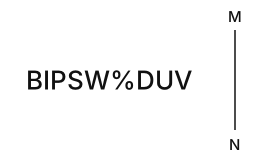
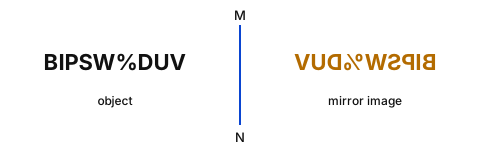
Select the correct mirror image of the given figure when the mirror is placed at MN as shown.
जब दर्पण को दर्शाए अनुसार MN पर रखा जाता है, तो दी गई आकृति के सही दर्पण प्रतिबिंब का चयन कीजिए।
  1. A
  2. B
  3. C
  4. D
Show answer

Concept: With the mirror on the right (vertical line MN), left and right are interchanged; top and bottom stay the same.

  1. The order of characters reverses: the last character V comes first.
  2. Every character is also flipped left–right: B, P, S, D, % appear reversed, while I, U, V, W look the same.
  3. Option (C) shows 'VUD%WSPIB' with each character laterally inverted and upright — correct. (A) keeps the original order, (B) is upside down, (D) changes V into W.

Trick: Vertical mirror: reverse the order and flip each letter sideways — never turn it upside down.

Answer: (C) the 3rd figure

अवधारणा: दर्पण दाईं ओर (ऊर्ध्वाधर रेखा MN) होने पर बायाँ-दायाँ बदलता है; ऊपर-नीचे वही रहता है।

  1. अक्षरों का क्रम उल्टा हो जाता है: अंतिम अक्षर V सबसे पहले आता है।
  2. हर अक्षर भी बाएँ-दाएँ पलटता है: S, P, D, %, B उल्टे दिखते हैं; I, U, V, W जैसे दिखते हैं वैसे ही रहते हैं।
  3. विकल्प (C) में 'VUD%WSPIB' हर अक्षर पार्श्व-उल्टा और सीधा खड़ा है — सही। (A) में क्रम मूल वाला, (B) उल्टा-नीचे, (D) में V की जगह W है।

ट्रिक: ऊर्ध्वाधर दर्पण: क्रम उल्टा करें और हर अक्षर बगल से पलटें — ऊपर-नीचे नहीं।

उत्तर: (C) तीसरी आकृति

SSC CPO Paper IGeneral Intelligence and ReasoningMirror imageSSC CPO Paper I 2022 · 11 Nov Shift 3 →
Q3011.
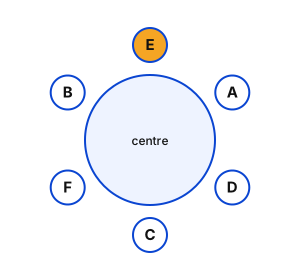
Six students are sitting around a circular table facing the centre. A is an immediate neighbour of D and E. C is an immediate neighbour of D and F. F is an immediate
neighbour of C and B. Who is the immediate neighbour of both A and B?
छह विद्यार्थी एक वृत्ताकार मेज़ के चारों ओर केंद्र की ओर मुख करके बैठे हैं। A, D और E का निकटतम पड़ोसी है। C, D और F का निकटतम पड़ोसी है। F, C और B का निकटतम
पड़ोसी है। A और B दोनों का निकटतम पड़ोसी कौन है?
  1. AF
  2. BD
  3. CE
  4. DC
Show answer

Concept: Join the neighbour pairs into one chain round the table.

  1. A sits between D and E: E–A–D.
  2. C is next to D and F: E–A–D–C–F.
  3. F is next to C and B: E–A–D–C–F–B; the circle closes, so B sits next to E.
  4. Neighbours of A: D, E; neighbours of B: F, E ⇒ common neighbour is E.

Trick: With 6 people, build the chain; the two ends are neighbours of each other.

Answer: (C) E

अवधारणा: पड़ोसी जोड़ों को जोड़कर मेज़ के चारों ओर एक श्रृंखला बनाएँ।

  1. A, D और E के बीच है: E–A–D।
  2. C, D और F के पास है: E–A–D–C–F।
  3. F, C और B के पास है: E–A–D–C–F–B; वृत्त बंद होता है, अतः B, E के पास है।
  4. A के पड़ोसी: D, E; B के पड़ोसी: F, E ⇒ दोनों का साझा पड़ोसी E है।

ट्रिक: 6 लोगों में श्रृंखला बनाएँ; दोनों सिरे आपस में पड़ोसी होते हैं।

उत्तर: (C) E

SSC CPO Paper IGeneral Intelligence and ReasoningCircular seating arrangementSSC CPO Paper I 2022 · 11 Nov Shift 3 →
Q3012.
If A denotes ‘+’, B denotes ‘×’, C denotes ‘-’, and D denotes ‘÷’, then what will come in place of ‘?’ in the following equation?
94 A 16 B 3 C 86 A 14 D 7 = ?
यदि A का अर्थ ‘+’, B का अर्थ ‘×’, C का अर्थ ‘-’ और D का अर्थ ‘÷’ है, तो निम्नलिखित समीकरण में ‘?’ के स्थान पर क्या आएगा?
94 A 16 B 3 C 86 A 14 D 7 = ?
  1. A48
  2. B58
  3. C62
  4. D51
Show answer

Concept: Replace the letters by signs, then apply BODMAS.

  1. Expression: 94+16×3−86+14÷7.
  2. 16×3=48 and 14÷7=2.
  3. 94+48−86+2=58.

Trick: Do × and ÷ first, then add all positives and subtract negatives in one go: (94+48+2)−86.

Answer: (B) 58

अवधारणा: अक्षरों को चिह्नों से बदलें, फिर BODMAS लगाएँ।

  1. व्यंजक: 94+16×3−86+14÷7।
  2. 16×3=48 और 14÷7=2।
  3. 94+48−86+2=58।

ट्रिक: पहले × और ÷, फिर सारे धन जोड़कर ऋण घटाएँ: (94+48+2)−86।

उत्तर: (B) 58

SSC CPO Paper IGeneral Intelligence and ReasoningMathematical operations (symbol substitution)SSC CPO Paper I 2022 · 11 Nov Shift 3 →
Q3013.
Two Statements are given followed by two conclusions numbered I and II. Assuming the statements to be true, even if they seem to be at variance with commonly known facts, decide which of the conclusions logically follow(s) from the statements.
Statements:
All queens are kings.
Some kings are aces.
Conclusions:
I. Some kings are queens.
II. All queens are aces.
दो कथन दिए गए हैं, जिनके बाद दो निष्कर्ष I और II दिए गए हैं। कथनों को सत्य मानते हुए, भले ही वे सामान्य रूप से ज्ञात तथ्यों से भिन्न प्रतीत होते हों, निर्णय कीजिए कि कौन-सा/से निष्कर्ष तार्किक रूप से कथनों का अनुसरण करता है/करते हैं।
कथन:
सभी रानियाँ, राजा हैं।
कुछ राजा, इक्के हैं।
निष्कर्ष:
I. कुछ राजा, रानियाँ हैं।
II. सभी रानियाँ, इक्के हैं।
  1. AOnly conclusion II follows.केवल निष्कर्ष II अनुसरण करता है।
  2. BNeither conclusion I nor II followsन तो निष्कर्ष I और न ही II अनुसरण करता है
  3. COnly conclusion I follows.केवल निष्कर्ष I अनुसरण करता है।
  4. DBoth conclusions I and II follow.निष्कर्ष I और II दोनों अनुसरण करते हैं।
Show answer

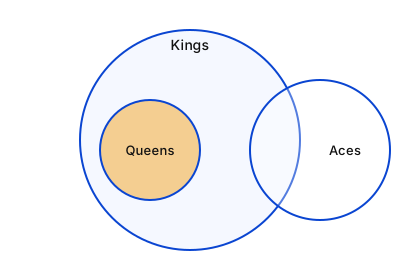
Concept: 'All A are B' always gives 'Some B are A' (conversion); an 'Some' statement cannot give an 'All' conclusion.

  1. All queens are kings ⇒ some kings are queens: I follows.
  2. Aces only partly meet kings; in the diagram the queens may lie outside aces, so 'All queens are aces' is not certain: II does not follow.

Trick: From 'All' and 'Some' you can never get an 'All' conclusion about the third class.

Answer: (C) Only conclusion I follows.

अवधारणा: 'सभी A, B हैं' से हमेशा 'कुछ B, A हैं' निकलता है; 'कुछ' वाले कथन से 'सभी' वाला निष्कर्ष नहीं निकलता।

  1. सभी queens, kings हैं ⇒ कुछ kings, queens हैं: I अनुसरण करता है।
  2. Aces, kings से केवल आंशिक रूप से मिलते हैं; चित्र में queens, aces के बाहर हो सकती हैं, अतः 'All queens are aces' निश्चित नहीं: II अनुसरण नहीं करता।

ट्रिक: 'सभी' + 'कुछ' से तीसरे वर्ग के बारे में 'सभी' वाला निष्कर्ष कभी नहीं निकलता।

उत्तर: (C) केवल निष्कर्ष I अनुसरण करता है।

SSC CPO Paper IGeneral Intelligence and ReasoningSyllogismSSC CPO Paper I 2022 · 11 Nov Shift 3 →
Q3014.
Two Statements are given followed by two conclusions numbered I and II. Assuming the statements to be true, even if they seem to be at variance with commonly known facts, decide which of the conclusions logically follow(s) from the statements.
Statements:
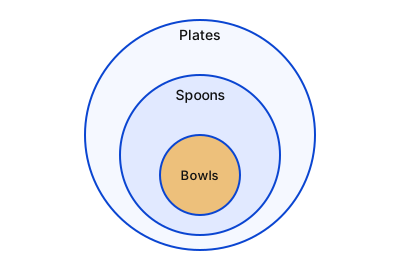
All bowls are spoons.
All spoons are plates.
Conclusions:
I. Some plates are bowls.
II. Some plates are spoons.
दो कथन दिए गए हैं, जिनके बाद दो निष्कर्ष I और II दिए गए हैं। कथनों को सत्य मानते हुए, भले ही वे सामान्य रूप से ज्ञात तथ्यों से भिन्न प्रतीत होते हों, निर्णय कीजिए कि कौन-सा/से निष्कर्ष तार्किक रूप से कथनों का अनुसरण करता है/करते हैं।
कथन:
सभी कटोरे, चम्मच हैं।
सभी चम्मच, प्लेटें हैं।
निष्कर्ष:
I. कुछ प्लेटें, कटोरे हैं।
II. कुछ प्लेटें, चम्मच हैं।
  1. ANeither conclusion I nor II follows.न तो निष्कर्ष I और न ही II अनुसरण करता है।
  2. BBoth conclusions I and II follow.निष्कर्ष I और II दोनों अनुसरण करते हैं।
  3. COnly conclusion II follows.केवल निष्कर्ष II अनुसरण करता है।
  4. DOnly conclusion I follows.केवल निष्कर्ष I अनुसरण करता है।
Show answer

Concept: All + All gives a chain: bowls ⊂ spoons ⊂ plates.

  1. Bowls lie inside plates ⇒ some plates are bowls: I follows.
  2. Spoons lie inside plates ⇒ some plates are spoons: II follows.

Trick: 'All A are B' ⇒ 'Some B are A' is always true (conversion).

Answer: (B) Both conclusions I and II follow.

अवधारणा: सभी + सभी से श्रृंखला बनती है: bowls ⊂ spoons ⊂ plates।

  1. Bowls, plates के अंदर हैं ⇒ कुछ plates, bowls हैं: I अनुसरण करता है।
  2. Spoons, plates के अंदर हैं ⇒ कुछ plates, spoons हैं: II अनुसरण करता है।

ट्रिक: 'सभी A, B हैं' ⇒ 'कुछ B, A हैं' हमेशा सत्य (conversion)।

उत्तर: (B) I और II दोनों अनुसरण करते हैं।

SSC CPO Paper IGeneral Intelligence and ReasoningSyllogismSSC CPO Paper I 2022 · 11 Nov Shift 3 →
Q3015.
Based on the position in the English alphabetical order, three of the following letter- clusters are alike in some manner and one is different. Select the odd letter-cluster.
अंग्रेज़ी वर्णमाला क्रम में स्थिति के आधार पर, निम्नलिखित में से तीन अक्षर-समूह किसी प्रकार से एक समान हैं और एक उनसे भिन्न है। असंगत अक्षर-समूह का चयन कीजिए।
  1. ATRNH
  2. BOMIC
  3. CRPLF
  4. DWTPK
Show answer

Concept: Find the gaps between the alphabet positions.

  1. TRNH: 20,18,14,8 → −2,−4,−6. OMIC: 15,13,9,3 → −2,−4,−6.
  2. RPLF: 18,16,12,6 → −2,−4,−6.
  3. WTPK: 23,20,16,11 → −3,−4,−5 — different.

Trick: Use reverse positions or EJOTY anchors to get the numbers quickly.

Answer: (D) WTPK

अवधारणा: वर्णमाला स्थानों के बीच के अंतर देखें।

  1. TRNH: 20,18,14,8 → −2,−4,−6। OMIC: 15,13,9,3 → −2,−4,−6।
  2. RPLF: 18,16,12,6 → −2,−4,−6।
  3. WTPK: 23,20,16,11 → −3,−4,−5 — अलग।

ट्रिक: EJOTY (5, 10, 15, 20, 25) से स्थान जल्दी निकालें।

उत्तर: (D) WTPK

SSC CPO Paper IGeneral Intelligence and ReasoningOdd one out (letters)SSC CPO Paper I 2022 · 11 Nov Shift 3 →
Q3016.
In a code language, 'sky is blue' is written as 'mud pot sum', 'i like blue' is written as 'mud man log', and 'I am sky' is written as 'man red pot'.What is the code for the word 'is' in this language?
एक कूट भाषा में, 'sky is blue' को 'mud pot sum' लिखा जाता है, 'i like blue' को 'mud man log' लिखा जाता है, और 'I am sky' को 'man red pot' लिखा जाता है। इस भाषा में शब्द 'is' का कूट क्या है?
  1. Asum
  2. Bmud
  3. Cred
  4. Dman
Show answer

Concept: A word common to two sentences takes the code common to those two sentences.

  1. 'blue' is in sentences 1 and 2; common code 'mud' ⇒ blue = mud.
  2. 'sky' is in sentences 1 and 3; common code 'pot' ⇒ sky = pot.
  3. Sentence 1 'sky is blue' = 'mud pot sum' ⇒ is = sum.

Trick: Remove known codes from a sentence; what is left belongs to the remaining word.

Answer: (A) sum

अवधारणा: दो वाक्यों में साझा शब्द का कोड उन दोनों वाक्यों का साझा कोड होता है।

  1. 'blue' वाक्य 1 व 2 में; साझा कोड 'mud' ⇒ blue = mud।
  2. 'sky' वाक्य 1 व 3 में; साझा कोड 'pot' ⇒ sky = pot।
  3. वाक्य 1 'sky is blue' = 'mud pot sum' ⇒ is = sum।

ट्रिक: ज्ञात कोड हटाएँ; जो बचे वह शेष शब्द का कोड है।

उत्तर: (A) sum

SSC CPO Paper IGeneral Intelligence and ReasoningCoding-decoding (word codes)SSC CPO Paper I 2022 · 11 Nov Shift 3 →
Q3017.
Which of the following numbers will replace the question mark (?) in the given series? 118, 93, 76, 67, 62, ?
निम्नलिखित में से कौन-सी संख्या दी गई श्रृंखला में प्रश्न चिह्न (?) के स्थान पर आएगी? 118, 93, 76, 67, 62, ?
  1. A59
  2. B60
  3. C61
  4. D58
Show answer

Concept: The differences are squares, alternately plus 1.

  1. 118−93=25=52, 93−76=17=42+1, 76−67=9=32, 67−62=5=22+1.
  2. Next difference =12=1.
  3. Next term =62−1=61.

Trick: Differences 25, 17, 9, 5 — think of nearby squares 25, 16, 9, 4, 1.

Answer: (C) 61

अवधारणा: अंतर वर्ग संख्याएँ हैं, एक-एक छोड़कर +1 के साथ।

  1. 118−93=25=52, 93−76=17=42+1, 76−67=9=32, 67−62=5=22+1।
  2. अगला अंतर =12=1।
  3. अगला पद =62−1=61।

ट्रिक: अंतर 25, 17, 9, 5 — पास के वर्ग 25, 16, 9, 4, 1 सोचें।

उत्तर: (C) 61

SSC CPO Paper IGeneral Intelligence and ReasoningNumber seriesSSC CPO Paper I 2022 · 11 Nov Shift 3 →
Q3018.
Select the option that represents the letters which when sequentially placed from left to right in the blanks below will complete the letter series.
S _ G _ M _ A G E _ S _ _ E O S A G _ _
उस विकल्प का चयन कीजिए जो उन अक्षरों को दर्शाता है, जिन्हें नीचे दिए गए रिक्त स्थानों में बाएँ से दाएँ क्रमिक रूप से रखने पर अक्षर श्रृंखला पूर्ण हो जाएगी।
S _ G _ M _ A G E _ S _ _ E O S A G _ _
  1. AA E T N A G E P
  2. BA F T N A H F P
  3. CA F T N A H E P
  4. DA E S N A G E P
Show answer

Concept: The block 'SAGE' repeats, each time followed by the next letter M, N, O, P.

  1. Complete series: SAGEM SAGEN SAGEO SAGEP.
  2. Filling: SAGEMSAGENSAGEOSAGEP.
  3. Blanks: A, E, S, N, A, G, E, P.

Trick: Spot the fixed letters (G … E … S) first; they reveal the repeating word.

Answer: (D) A E S N A G E P

अवधारणा: समूह 'SAGE' दोहराया जाता है और हर बार उसके बाद अगला अक्षर M, N, O, P आता है।

  1. पूर्ण श्रृंखला: SAGEM SAGEN SAGEO SAGEP।
  2. भरने पर: SAGEMSAGENSAGEOSAGEP।
  3. रिक्त स्थान: A, E, S, N, A, G, E, P।

ट्रिक: पहले स्थिर अक्षर (G … E … S) देखें; दोहराने वाला शब्द दिख जाता है।

उत्तर: (D) A E S N A G E P

SSC CPO Paper IGeneral Intelligence and ReasoningLetter series (missing letters)SSC CPO Paper I 2022 · 11 Nov Shift 3 →
Q3019.
In a code language, 'PARENT' is written as ‘11, 26, 9, 22, 13, 7’ and ‘DUMPSTER’ is
written as ‘23, 6, 14, 11, 8, 7, 22, 9’. How will ‘FLASK’ be written in that language?
एक कूट भाषा में, 'PARENT' को ‘11, 26, 9, 22, 13, 7’ लिखा जाता है और ‘DUMPSTER’ को
‘23, 6, 14, 11, 8, 7, 22, 9’ लिखा जाता है। उसी भाषा में ‘FLASK’ को कैसे लिखा जाएगा?
  1. A16, 8, 26, 15, 21
  2. B21, 15, 8, 26, 16
  3. C16, 8, 15, 26, 21
  4. D21, 15, 26, 8, 16
Show answer

Concept: Each letter is coded by its reverse alphabet position: code =27−position.

  1. PARENT: P(16)→11, A(1)→26, R(18)→9, E(5)→22, N(14)→13, T(20)→7 ✓.
  2. FLASK: F(6)→21, L(12)→15, A(1)→26, S(19)→8, K(11)→16.
  3. Code: 21, 15, 26, 8, 16.

Trick: Letter + reverse value =27 (e.g. A = 1 ↔ 26).

Answer: (D) 21, 15, 26, 8, 16

अवधारणा: हर अक्षर का कोड उसका उल्टा वर्णमाला स्थान है: कोड =27−स्थान।

  1. PARENT: P(16)→11, A(1)→26, R(18)→9, E(5)→22, N(14)→13, T(20)→7 ✓।
  2. FLASK: F(6)→21, L(12)→15, A(1)→26, S(19)→8, K(11)→16।
  3. कोड: 21, 15, 26, 8, 16।

ट्रिक: अक्षर का स्थान + उल्टा स्थान =27 (जैसे A = 1 ↔ 26)।

उत्तर: (D) 21, 15, 26, 8, 16

SSC CPO Paper IGeneral Intelligence and ReasoningCoding-decoding (reverse positions)SSC CPO Paper I 2022 · 11 Nov Shift 3 →
Q3020.
Select the set in which the numbers are related in the same way as are the numbers of the following sets.
(NOTE : Operations should be performed on the whole numbers, without breaking
down the numbers into its constituent digits. E.g. 13- Operations on 13 such as adding /subtracting /multiplying etc. to 13 can be performed. Breaking down 13 into 1 and 3 and then performing mathematical operations on 1 and 3 is not allowed.)
(112, 210, 308)
(84, 182, 280)
उस समुच्चय का चयन कीजिए जिसमें संख्याएँ उसी प्रकार संबंधित हैं, जिस प्रकार निम्नलिखित समुच्चयों की संख्याएँ संबंधित हैं।
(ध्यान दें: संख्याओं को उसके घटक अंकों में विभाजित किए बिना, संक्रियाएँ पूर्ण संख्याओं
पर की जानी चाहिए। उदाहरण के लिए 13- 13 पर संक्रियाएँ जैसे 13 में जोड़ना/घटाना/गुणा करना आदि किया जा सकता है। 13 को 1 और 3 में विभाजित करना और फिर 1 और 3 पर गणितीय संक्रियाएँ करना वर्जित है।)
(112, 210, 308)
(84, 182, 280)
  1. A(313, 411, 512)
  2. B(112, 212, 300)
  3. C(424, 536, 638)
  4. D(236, 334, 432)
Show answer

Concept: In each set the numbers increase by a constant 98.

  1. 112+98=210,210+98=308.
  2. 84+98=182,182+98=280.
  3. Option (D): 236+98=334,334+98=432 ✓. Others: 313→411→512 (+98,+101), 112→212 (+100), 424→536 (+112).

Trick: Subtract the first number from the second in each option — the only 98 is the answer.

Answer: (D) (236, 334, 432)

अवधारणा: हर समूह में संख्याएँ स्थिर 98 से बढ़ती हैं।

  1. 112+98=210,210+98=308।
  2. 84+98=182,182+98=280।
  3. विकल्प (D): 236+98=334,334+98=432 ✓। अन्य: 313→411→512 (+98,+101), 112→212 (+100), 424→536 (+112)।

ट्रिक: हर विकल्प में दूसरी − पहली संख्या करें; जहाँ 98 मिले वही उत्तर।

उत्तर: (D) (236, 334, 432)

SSC CPO Paper IGeneral Intelligence and ReasoningNumber set analogySSC CPO Paper I 2022 · 11 Nov Shift 3 →