Question bank

Q&A: practice questions with answers

Search questions on any topic. Filter by exam category, exam, subject and topic, try the question, then open the answer and explanation.

Courses – airGurukul

6,600 questions found.

Q4421.
Which letter-cluster will replace the question mark (?) to complete the given series? KRPD, ?, QNRL, TLSP, WJTT
दी गई श्रृंखला को पूरा करने के लिए कौन-सा अक्षर-समूह प्रश्न चिह्न (?) के स्थान पर आएगा? KRPD, ?, QNRL, TLSP, WJTT
  1. ANQRH
  2. BNQRG
  3. CNPSG
  4. DNPQH
Show answer

Concept: Check each letter position of the clusters separately.

  1. 1st letters: K, ?, Q, T, W (+3) ⇒ N.
  2. 2nd letters: R, ?, N, L, J (−2) ⇒ P.
  3. 3rd letters: P, ?, R, S, T (+1) ⇒ Q; 4th letters: D, ?, L, P, T (+4) ⇒ H.

Trick: Different positions can follow different steps – write them in columns.

Answer: (D) NPQH

अवधारणा: समूहों के हर स्थान का अक्षर अलग से देखें।

  1. पहला: K, ?, Q, T, W (+3) ⇒ N।
  2. दूसरा: R, ?, N, L, J (−2) ⇒ P।
  3. तीसरा: P, ?, R, S, T (+1) ⇒ Q; चौथा: D, ?, L, P, T (+4) ⇒ H।

ट्रिक: हर स्थान का अलग नियम हो सकता है – स्तंभों (columns) में लिखें।

उत्तर: (D) NPQH
SSC CPO Paper IGeneral Intelligence and ReasoningLetter-cluster seriesSSC CPO Paper I 2022 · 9 Nov Shift 2 →
Q4422.
In a certain code language, ‘CRUDE’ is written as ‘5421183’ and ‘BOSTON’ is written as ‘14152019152’. How will ‘DOCKET’ be written in that language?
एक निश्चित कूट भाषा में, ‘CRUDE’ को ‘5421183’ और ‘BOSTON’ को ‘14152019152’ लिखा जाता है। उसी भाषा में ‘DOCKET’ को किस प्रकार लिखा जाएगा?
  1. A815611520
  2. B401022630
  3. C169251202
  4. D205113154
Show answer

Concept: Write the word in reverse and replace every letter by its place value (A = 1 … Z = 26).

  1. CRUDE reversed = E D U R C = 5, 4, 21, 18, 3 ⇒ 5421183.
  2. BOSTON reversed = N O T S O B = 14, 15, 20, 19, 15, 2 ⇒ 14152019152.
  3. DOCKET reversed = T E K C O D = 20, 5, 11, 3, 15, 4 ⇒ 205113154.

Trick: The code starts with the value of the last letter (T = 20) – only option (D) starts with 20.

Answer: (D) 205113154

अवधारणा: शब्द को उल्टा लिखें और हर अक्षर को उसके स्थानीय मान (A = 1 … Z = 26) से बदलें।

  1. CRUDE उल्टा = E D U R C = 5, 4, 21, 18, 3 ⇒ 5421183।
  2. BOSTON उल्टा = N O T S O B = 14, 15, 20, 19, 15, 2 ⇒ 14152019152।
  3. DOCKET उल्टा = T E K C O D = 20, 5, 11, 3, 15, 4 ⇒ 205113154।

ट्रिक: कोड अंतिम अक्षर T = 20 से शुरू होगा – केवल (D) 20 से शुरू होता है।

उत्तर: (D) 205113154

SSC CPO Paper IGeneral Intelligence and ReasoningCoding-decoding (letter positions)SSC CPO Paper I 2022 · 9 Nov Shift 2 →
Q4423.
Select the set in which the numbers are related in the same way as are the numbers of the given sets.
(NOTE : Operations should be performed on the whole numbers, without breaking
down the numbers into its constituent digits. E.g. 13 – Operations on 13 such as
adding /subtracting /multiplying etc. to 13 can be performed. Breaking down 13 into 1 and 3 and then performing mathematical operations on 1 and 3 is NOT allowed)
(67, 63, 64)
(24, 17, 343)
उस समुच्चय का चयन कीजिए जिसमें संख्याएँ उसी प्रकार संबंधित हैं जिस प्रकार दिए गए समुच्चयों की संख्याएँ संबंधित हैं।
(ध्यान दें: संक्रियाएँ संख्याओं को उनके घटक अंकों में तोड़े बिना, पूर्ण संख्याओं पर की जानी चाहिए। उदाहरण के लिए 13 – 13 पर संक्रियाएँ, जैसे 13 में जोड़ना/घटाना/गुणा करना आदि किया जा सकता है। 13 को 1 और 3 में तोड़ना और फिर 1 और 3 पर गणितीय संक्रियाएँ करना वर्जित है।)
(67, 63, 64)
(24, 17, 343)
  1. A(75, 69, 216)
  2. B(27, 22, 120)
  3. C(46, 41, 40)
  4. D(97, 88, 81)
Show answer

Concept: Third number = (first − second) cubed.

  1. (67−63)3=43=64.
  2. (24−17)3=73=343.
  3. (75−69)3=63=216 ✓; others: 53=125≠120, 53≠40, 93=729≠81.

Trick: Third numbers 64 and 343 are perfect cubes – that is the hint.

Answer: (A) (75, 69, 216)

अवधारणा: तीसरी संख्या = (पहली − दूसरी) का घन (cube)।

  1. (67−63)3=43=64।
  2. (24−17)3=73=343।
  3. (75−69)3=63=216 ✓; बाकी: 53=125≠120, 53≠40, 93=729≠81।

ट्रिक: 64 और 343 पूर्ण घन हैं – यही संकेत है।

उत्तर: (A) (75, 69, 216)

SSC CPO Paper IGeneral Intelligence and ReasoningNumber set relationSSC CPO Paper I 2022 · 9 Nov Shift 2 →
Q4424.
Which of the following numbers will replace the question mark (?) in the given series? 148, 269, 413, ?, 778
निम्नलिखित में से कौन-सी संख्या दी गई श्रृंखला में प्रश्न चिह्न (?) के स्थान पर आएगी? 148, 269, 413, ?, 778
  1. A548
  2. B512
  3. C582
  4. D614
Show answer

Concept: Differences are consecutive perfect squares.

  1. 269−148=121=112, 413−269=144=122.
  2. Next difference 132=169: 413+169=582.
  3. Check: 582+142=582+196=778 ✓.

Trick: Differences 121, 144 are squares of 11, 12 – continue with 132, 142.

Answer: (C) 582

अवधारणा: अंतर क्रमागत पूर्ण वर्ग हैं।

  1. 269−148=121=112, 413−269=144=122।
  2. अगला अंतर 132=169: 413+169=582।
  3. जाँच: 582+142=582+196=778 ✓।

ट्रिक: अंतर 121, 144 क्रमशः 11 और 12 के वर्ग हैं – आगे 132, 142।

उत्तर: (C) 582

SSC CPO Paper IGeneral Intelligence and ReasoningNumber seriesSSC CPO Paper I 2022 · 9 Nov Shift 2 →
Q4425.
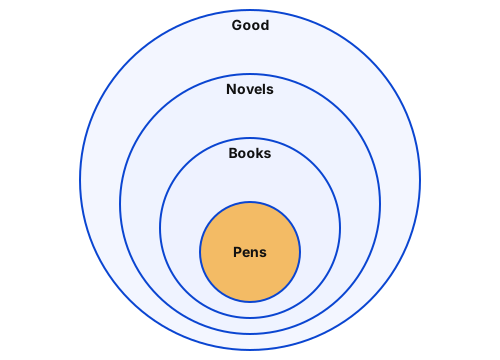
In this question, three statements are given, followed by two conclusions numbered I and II. Assuming the statements to be true, even if they seem to be at variance with commonly known facts, decide which of the conclusions logically follows/follow from the statements.
Statements:
All pens are books.
All books are novels.
All novels are good.
Conclusions:
I. Some novels are pens.
II. All books are good.
इस प्रश्न में तीन कथन दिए गए हैं, जिनके बाद I और II से संख्यांकित दो निष्कर्ष दिए गए हैं। कथनों को सत्य मानते हुए, भले ही वे सामान्यतः ज्ञात तथ्यों से भिन्न प्रतीत होते हों, निर्णय लीजिए कि कौन-सा/कौन-से निष्कर्ष तार्किक रूप से कथनों का अनुसरण करता है/करते हैं।
कथन:
सभी पेन, किताबें हैं।
सभी किताबें, उपन्यास हैं।
सभी उपन्यास, अच्छे हैं।
निष्कर्ष:
I. कुछ उपन्यास, पेन हैं।
II. सभी किताबें, अच्छी हैं।
  1. ABoth conclusions I and II follow.निष्कर्ष I और II दोनों अनुसरण करते हैं।
  2. BNeither conclusion I nor II follows.न तो निष्कर्ष I और न ही II अनुसरण करता है।
  3. COnly conclusion I follows.केवल निष्कर्ष I अनुसरण करता है।
  4. DOnly conclusion II follows.केवल निष्कर्ष II अनुसरण करता है।
Show answer

Concept: Draw the statements as nested circles: Pens ⊂ Books ⊂ Novels ⊂ Good.

  1. All pens are novels, so some novels are surely pens ⇒ I follows.
  2. All books are novels and all novels are good ⇒ all books are good ⇒ II follows.

Yaad rakhein: "All A are B" always gives "Some B are A" (conversion).

Answer: (A) Both conclusions I and II follow.

अवधारणा: कथनों को एक-दूसरे के अंदर वृत्तों से दिखाएँ: Pens ⊂ Books ⊂ Novels ⊂ Good।

  1. सभी pens, novels हैं, इसलिए कुछ novels निश्चित ही pens हैं ⇒ I अनुसरण करता है।
  2. सभी books, novels हैं और सभी novels, good हैं ⇒ सभी books, good हैं ⇒ II अनुसरण करता है।

याद रखें: "All A are B" से हमेशा "Some B are A" निकलता है (conversion)।

उत्तर: (A) Both conclusions I and II follow.

SSC CPO Paper IGeneral Intelligence and ReasoningSyllogismSSC CPO Paper I 2022 · 9 Nov Shift 2 →
Q4426.
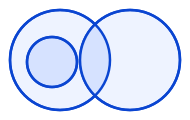
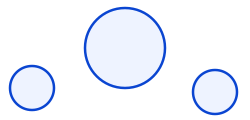
Select the Venn diagram that best illustrates the relationship between the following classes.
Hawa Mahal, Jaipur, Rajasthan
उस वेन आरेख का चयन कीजिए जो निम्नलिखित वर्गों के बीच संबंध को सबसे अच्छा दर्शाता है।
हवा महल, जयपुर, राजस्थान
  1. A
  2. B
  3. C
  4. D
Show answer

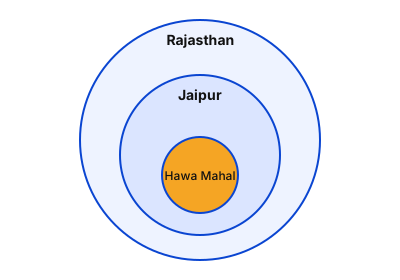
Concept: Hawa Mahal is a monument in Jaipur, and Jaipur is a city in Rajasthan.

  1. Hawa Mahal ⊂ Jaipur ⊂ Rajasthan.
  2. So three circles, one inside the other.

Yaad rakhein: Place → city → state: always concentric circles.

Answer: (A) Three concentric (nested) circles

अवधारणा: हवा महल जयपुर में स्थित स्मारक है और जयपुर राजस्थान का शहर है।

  1. Hawa Mahal ⊂ Jaipur ⊂ Rajasthan।
  2. अतः तीन वृत्त, एक के अंदर दूसरा।

याद रखें: स्थान → शहर → राज्य: हमेशा एक-के-अंदर-एक वृत्त।

उत्तर: (A) तीन एक-के-अंदर-एक वृत्त

SSC CPO Paper IGeneral Intelligence and ReasoningVenn diagramSSC CPO Paper I 2022 · 9 Nov Shift 2 →
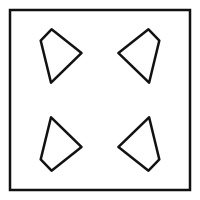
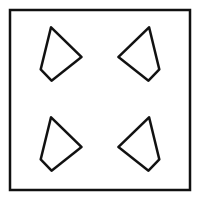
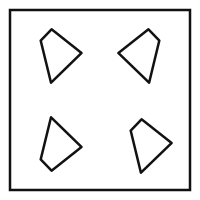
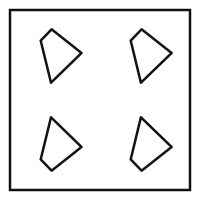
Q4427.
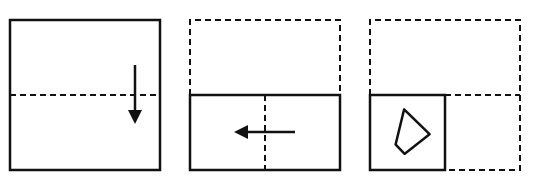
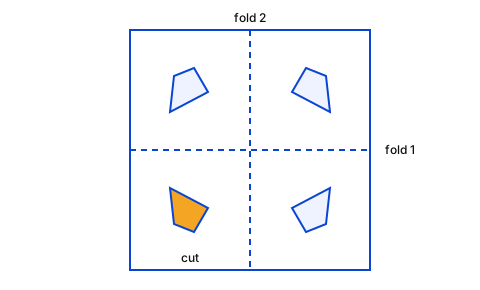
The sequence of folding a piece of paper and the manner in which the folded paper has been cut is shown below. Choose the figure that would most closely resemble the unfolded form of the paper.
नीचे एक कागज़ के टुकड़े को मोड़ने का क्रम और मोड़े गए कागज़ को काटने का तरीका दर्शाया गया है। उस आकृति का चयन कीजिए जो कागज़ को खोलने पर उसके स्वरूप से सर्वाधिक मिलती-जुलती होगी।
  1. A
  2. B
  3. C
  4. D
Show answer

Concept: Unfold in reverse order; each unfolding makes a mirror image across the fold line.

  1. The paper is folded top-to-bottom, then right-to-left; the cut is in the lower-left quarter.
  2. Opening the 2nd fold copies the cut into the lower-right quarter as a left–right mirror image.
  3. Opening the 1st fold copies both into the top half as up–down mirror images ⇒ 4 cuts.
  4. In option (A) the right column is the mirror of the left column, and the top row mirrors the bottom row.

Trick: Number of holes = 2folds (here 4); then check the mirror direction.

Answer: (A) Figure (A)

अवधारणा: उल्टे क्रम में खोलें; हर बार खोलने पर मोड़-रेखा के सापेक्ष दर्पण प्रतिबिंब बनता है।

  1. कागज़ पहले ऊपर से नीचे, फिर दाएँ से बाएँ मोड़ा गया; कट नीचे-बाएँ भाग में है।
  2. दूसरा मोड़ खोलने पर कट नीचे-दाएँ भाग में बाएँ-दाएँ उल्टा बनता है।
  3. पहला मोड़ खोलने पर दोनों ऊपर के आधे भाग में ऊपर-नीचे उल्टे बनते हैं ⇒ 4 कट।
  4. विकल्प (A) में दायाँ स्तंभ बाएँ का और ऊपरी पंक्ति निचली का दर्पण प्रतिबिंब है।

ट्रिक: छेदों की संख्या = 2folds (यहाँ 4); फिर दर्पण दिशा जाँचें।

उत्तर: (A) आकृति (A)

SSC CPO Paper IGeneral Intelligence and ReasoningPaper folding and cuttingSSC CPO Paper I 2022 · 9 Nov Shift 2 →
Q4428.
Which of the following interchanges of signs would make the given equation correct? 5 - 4 ÷ 2 + 7 × 3 = 14
चिह्नों के निम्नलिखित में से किस परस्पर परिवर्तन से दिया गया समीकरण सही हो जाएगा? 5 - 4 ÷ 2 + 7 × 3 = 14
  1. A÷ and +÷ और +
  2. B× and −× और −
  3. C− and ÷− और ÷
  4. D+ and ×+ और ×
Show answer

Concept: Swap the two signs in each option and evaluate with BODMAS.

  1. Option (B): interchange × and − ⇒ 5×4÷2+7−3.
  2. =20÷2+7−3=10+7−3=14 ✓.
  3. Option (A) for comparison: 5−4+2÷7×3 is not even an integer.

Trick: Try first the option that creates a large product (here 5 × 4) because the target 14 is bigger than the original value.

Answer: (B) × and −

अवधारणा: हर विकल्प के दो चिह्न आपस में बदलें और BODMAS से हल करें।

  1. विकल्प (B): × और − बदलें ⇒ 5×4÷2+7−3।
  2. =20÷2+7−3=10+7−3=14 ✓।
  3. तुलना के लिए (A): 5−4+2÷7×3 पूर्णांक भी नहीं है।

ट्रिक: लक्ष्य 14 बड़ा है, इसलिए पहले वह विकल्प आज़माएँ जो बड़ा गुणनफल (5 × 4) बनाता है।

उत्तर: (B) × और −

SSC CPO Paper IGeneral Intelligence and ReasoningInterchange of signsSSC CPO Paper I 2022 · 9 Nov Shift 2 →
Q4429.
‘R = S’ means ‘R is the mother of S’.
‘R @ S’ means ‘R is the father of S’.
‘R × S’ means ‘R is the father’s sister of S’.
‘R # S’ means ‘R is the sister of S’.
‘R $ S’ means ‘R is the daughter of S’.
‘R * S’ means ‘R is the brother of S’.
How is Z related to Y in the following expression?
V × Y $ X @ W * A $ Z
‘R = S’ का अर्थ है ‘R, S की माता है’।
‘R @ S’ का अर्थ है ‘R, S का पिता है’।
‘R × S’ का अर्थ है ‘R, S की बुआ है’।
‘R # S’ का अर्थ है ‘R, S की बहन है’।
‘R $ S’ का अर्थ है ‘R, S की पुत्री है’।
‘R * S’ का अर्थ है ‘R, S का भाई है’।
निम्नलिखित व्यंजक में Z, Y से किस प्रकार संबंधित है?
V × Y $ X @ W * A $ Z
  1. ASisterबहन
  2. BMotherमाता
  3. CFather’s sisterबुआ
  4. DMother’s sisterमौसी
Show answer

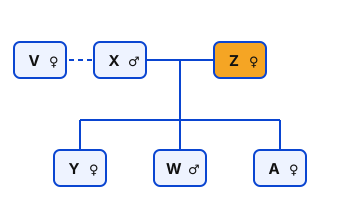
Concept: Decode each symbol from left to right and draw the family tree.

  1. V × Y: V is the father's sister of Y; Y $ X: Y is the daughter of X.
  2. X @ W: X is the father of W; W * A: W is the brother of A.
  3. A $ Z: A is the daughter of Z. So Y, W, A are children of X and Z.
  4. X is the father, so Z is the mother of Y.

Trick: Siblings share parents – once A's parent Z is found, Z is Y's parent too.

Answer: (B) Mother

अवधारणा: बाएँ से दाएँ हर चिह्न का अर्थ निकालें और वंश-वृक्ष (family tree) बनाएँ।

  1. V × Y: V, Y की बुआ (father's sister) है; Y $ X: Y, X की बेटी है।
  2. X @ W: X, W का पिता है; W * A: W, A का भाई है।
  3. A $ Z: A, Z की बेटी है। अतः Y, W, A तीनों X और Z की संतान हैं।
  4. X पिता है, इसलिए Z, Y की माता (Mother) है।

ट्रिक: भाई-बहनों के माता-पिता समान होते हैं – A का अभिभावक Z मिला तो वही Y का भी है।

उत्तर: (B) Mother

SSC CPO Paper IGeneral Intelligence and ReasoningCoded blood relationsSSC CPO Paper I 2022 · 9 Nov Shift 2 →
Q4430.
Select the option that is related to the third term in the same way as the second term is related to the first term and sixth term is related to fifth term.
2 : 8 :: 10 : ? :: 5 : 50
उस विकल्प का चयन कीजिए जो तीसरे पद से उसी प्रकार संबंधित है जिस प्रकार दूसरा पद पहले पद से संबंधित है और छठा पद पाँचवें पद से संबंधित है।
2 : 8 :: 10 : ? :: 5 : 50
  1. A1000
  2. B40
  3. C100
  4. D200
Show answer

Concept: Rule: second number =2×(first)2.

  1. 2→2×22=8.
  2. 5→2×52=50.
  3. 10→2×102=200.

Trick: Check the rule on both given pairs before applying it.

Answer: (D) 200

अवधारणा: नियम: दूसरी संख्या =2×(पहली)2।

  1. 2→2×22=8।
  2. 5→2×52=50।
  3. 10→2×102=200।

ट्रिक: नियम को दोनों दिए गए जोड़ों पर जाँचकर ही लगाएँ।

उत्तर: (D) 200

SSC CPO Paper IGeneral Intelligence and ReasoningNumber analogySSC CPO Paper I 2022 · 9 Nov Shift 2 →
Q4431.
Based on the position in the English alphabetical order, three of the following letter- clusters are alike in some manner and one is different. Select the odd letter-cluster.
अंग्रेज़ी वर्णमाला क्रम में स्थिति के आधार पर, निम्नलिखित चार अक्षर-समूहों में से तीन किसी प्रकार से एकसमान हैं और एक उनसे असंगत है। असंगत अक्षर-समूह का चयन कीजिए।
  1. AXUSO
  2. BNKHE
  3. CMJGD
  4. DWTQN
Show answer

Concept: Write the place values and check the gaps.

  1. NKHE: 14, 11, 8, 5 (−3 each).
  2. MJGD: 13, 10, 7, 4 (−3); WTQN: 23, 20, 17, 14 (−3).
  3. XUSO: 24, 21, 19, 15 ⇒ gaps −3, −2, −4 – not uniform.

Trick: Check the gaps from the first letter; XU is −3 but US is only −2.

Answer: (A) XUSO

अवधारणा: स्थानीय मान लिखें और अंतर देखें।

  1. NKHE: 14, 11, 8, 5 (हर बार −3)।
  2. MJGD: 13, 10, 7, 4 (−3); WTQN: 23, 20, 17, 14 (−3)।
  3. XUSO: 24, 21, 19, 15 ⇒ अंतर −3, −2, −4 – समान नहीं।

ट्रिक: XU में −3 है पर US में केवल −2 – यहीं अंतर मिलता है।

उत्तर: (A) XUSO

SSC CPO Paper IGeneral Intelligence and ReasoningOdd one out (letter clusters)SSC CPO Paper I 2022 · 9 Nov Shift 2 →
Q4432.
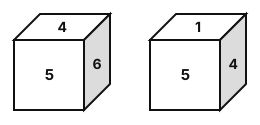
Two different positions of the same dice are shown, the six faces of which are numbered from 1 to 6. Select the number that will be on the face opposite to the one showing ‘6’.
एक ही पासे की दो भिन्न स्थितियाँ दर्शाई गई हैं, जिसके छह फलकों पर 1 से 6 तक की संख्याएँ अंकित हैं। ‘6’ दर्शाने वाले फलक के विपरीत फलक पर आने वाली संख्या का चयन कीजिए।
  1. A1
  2. B2
  3. C4
  4. D3
Show answer

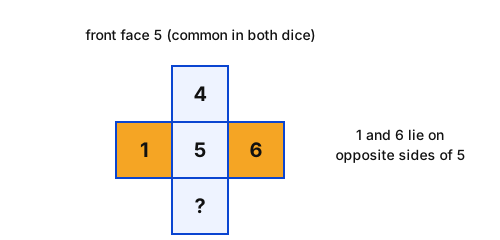
Concept: Rotate one view so that the common face (5) is in the same place, then compare its neighbours.

  1. Die 1 (5 in front): top 4, right 6.
  2. Die 2 (5 in front): top 1, right 4. Turning it so that 4 comes on top puts 1 on the left.
  3. Around face 5 we get: top 4, right 6, left 1 ⇒ 1 and 6 lie on opposite sides.

Trick: When two views share a face, line up that face; numbers on opposite sides of it are opposite faces.

Answer: (A) 1

अवधारणा: एक दृश्य को घुमाकर साझा फलक (5) को एक ही स्थान पर लाएँ, फिर उसके पड़ोसी देखें।

  1. पासा 1 (5 सामने): ऊपर 4, दाएँ 6।
  2. पासा 2 (5 सामने): ऊपर 1, दाएँ 4; इसे घुमाकर 4 ऊपर लाएँ तो 1 बाएँ आता है।
  3. 5 के चारों ओर: ऊपर 4, दाएँ 6, बाएँ 1 ⇒ 1 और 6 एक-दूसरे के विपरीत।

ट्रिक: दोनों दृश्यों में साझा फलक मिलाएँ; उसके दोनों ओर वाली संख्याएँ विपरीत होती हैं।

उत्तर: (A) 1

SSC CPO Paper IGeneral Intelligence and ReasoningDiceSSC CPO Paper I 2022 · 9 Nov Shift 2 →
Q4433.
If A denotes ‘+’, B denotes ‘×’, C denotes ‘−’, and D denotes ‘÷’, then what will be the value of the following expression?
54 C 34 A 24 D 8 B 2
यदि A का अर्थ ‘+’, B का अर्थ ‘×’, C का अर्थ ‘−’ और D का अर्थ ‘÷’ है, तो निम्नलिखित व्यंजक का मान क्या होगा?
54 C 34 A 24 D 8 B 2
  1. A29
  2. B23
  3. C26
  4. D21
Show answer

Concept: Replace letters by signs and apply BODMAS.

  1. A = +, B = ×, C = −, D = ÷.
  2. 54−34+24÷8×2.
  3. =54−34+3×2=54−34+6=26.

Trick: ÷ and × are done left to right: 24÷8=3, then 3×2=6.

Answer: (C) 26

अवधारणा: अक्षरों को चिह्नों से बदलें और BODMAS लगाएँ।

  1. A = +, B = ×, C = −, D = ÷।
  2. 54−34+24÷8×2।
  3. =54−34+3×2=54−34+6=26।

ट्रिक: ÷ और × बाएँ से दाएँ: 24÷8=3, फिर 3×2=6।

उत्तर: (C) 26

SSC CPO Paper IGeneral Intelligence and ReasoningMathematical operations (symbol substitution)SSC CPO Paper I 2022 · 9 Nov Shift 2 →
Q4434.
Select the option that represents the letters that, when sequentially placed from left to right in the blanks, will complete the letter series.
_ v p _ _ l h s _ _ k l _ h s v _ k l l _
उस विकल्प का चयन कीजिए जो उन अक्षरों को दर्शाता है जिन्हें दिए गए रिक्त स्थानों में बाएँ से दाएँ क्रमिक रूप से रखने पर अक्षर श्रृंखला पूरी हो जाएगी।
_ v p _ _ l h s _ _ k l _ h s v _ k l l _
  1. As k l v p l l h
  2. Bs k l v p l p h
  3. Cs l k v p k p h
  4. Ds k l p v l p h
Show answer

Concept: Find the repeating block of letters.

  1. Fill the blanks with s, k, l, v, p, l, p, h.
  2. Series: svpkllh | svpkllh | svpkllh.
  3. The 7-letter block "svpkllh" repeats.

Trick: 21 letters ⇒ three blocks of 7; compare letters 7 places apart.

Answer: (B) s k l v p l p h

अवधारणा: अक्षरों का दोहराने वाला समूह खोजें।

  1. रिक्त स्थानों में s, k, l, v, p, l, p, h भरें।
  2. श्रृंखला: svpkllh | svpkllh | svpkllh।
  3. 7 अक्षरों का समूह "svpkllh" दोहराता है।

ट्रिक: 21 अक्षर ⇒ 7-7 के तीन समूह; 7 स्थान दूर के अक्षर समान होंगे।

उत्तर: (B) s k l v p l p h

SSC CPO Paper IGeneral Intelligence and ReasoningLetter series (blanks)SSC CPO Paper I 2022 · 9 Nov Shift 2 →
Q4435.
In a certain code language, ‘MOUNTAIN’ is written as ‘MNIATNUO’ and ‘SENTENCE’ is written as ‘SECNETNE’. How will ‘BIRTHDAY’ be written in that language?
एक निश्चित कूट भाषा में, ‘MOUNTAIN’ को ‘MNIATNUO’ और ‘SENTENCE’ को ‘SECNETNE’ लिखा जाता है। उसी भाषा में ‘BIRTHDAY’ को किस प्रकार लिखा जाएगा?
  1. ABYADHTRI
  2. BBIYDHATR
  3. CYADHTRIB
  4. DYBIRHTDA
Show answer

Concept: Keep the first letter and write the remaining letters in reverse order.

  1. MOUNTAIN: M + reverse(OUNTAIN) = M + NIATNUO ⇒ MNIATNUO.
  2. SENTENCE: S + reverse(ENTENCE) = S + ECNETNE ⇒ SECNETNE.
  3. BIRTHDAY: B + reverse(IRTHDAY) = B + YADHTRI ⇒ BYADHTRI.

Trick: The code ends with the 2nd letter of the word (I) – BYADHTRI starts with B and ends with I.

Answer: (A) BYADHTRI

अवधारणा: पहला अक्षर वहीं रखें और बाकी अक्षरों को उल्टे क्रम में लिखें।

  1. MOUNTAIN: M + NIATNUO ⇒ MNIATNUO।
  2. SENTENCE: S + ECNETNE ⇒ SECNETNE।
  3. BIRTHDAY: B + YADHTRI ⇒ BYADHTRI।

ट्रिक: कोड B से शुरू होकर शब्द के दूसरे अक्षर I पर खत्म होगा।

उत्तर: (A) BYADHTRI

SSC CPO Paper IGeneral Intelligence and ReasoningCoding-decoding (rearrangement)SSC CPO Paper I 2022 · 9 Nov Shift 2 →
Q4436.
If M denotes ‘−’, N denotes ‘÷’, O denotes ‘×’, and P denotes ‘+’, then what will come in place of ‘?’ in the following equation?
162 N 6 M 7293 O 4 P 126= ?
यदि M का अर्थ ‘−’, N का अर्थ ‘÷’, O का अर्थ ‘×’ और P का अर्थ ‘+’ है, तो निम्नलिखित समीकरण में ‘?’ के स्थान पर क्या आएगा?
162 N 6 M 7293 O 4 P 126= ?
  1. A117
  2. B125
  3. C121
  4. D112
Show answer

Concept: Replace letters by signs, find the cube root, then apply BODMAS.

  1. M = −, N = ÷, O = ×, P = +; 7293=9.
  2. 162÷6−9×4+126.
  3. =27−36+126=117.

Trick: 93=729 – remember cubes up to 15.

Answer: (A) 117

अवधारणा: अक्षरों को चिह्नों से बदलें, घनमूल निकालें, फिर BODMAS लगाएँ।

  1. M = −, N = ÷, O = ×, P = +; 7293=9।
  2. 162÷6−9×4+126।
  3. =27−36+126=117।

ट्रिक: 93=729 – 15 तक के घन याद रखें।

उत्तर: (A) 117

SSC CPO Paper IGeneral Intelligence and ReasoningMathematical operations (symbol substitution)SSC CPO Paper I 2022 · 9 Nov Shift 2 →
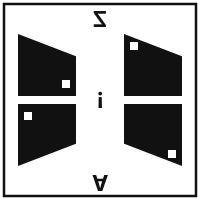
Q4437.
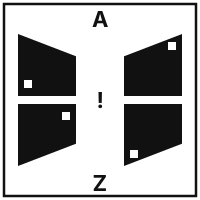
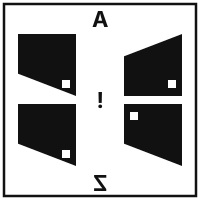
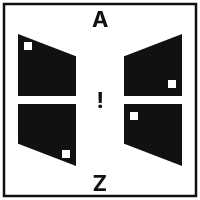
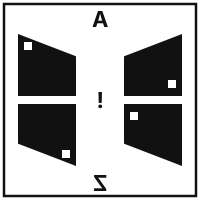
Which of the option figures is the exact mirror image of the given problem figure when the mirror is held at the right side?

Problem figure:
जब दर्पण को दाईं ओर रखा जाए, तो कौन-सी विकल्प आकृति दी गई प्रश्न आकृति का सटीक दर्पण प्रतिबिंब है?

प्रश्न आकृति:
  1. A
  2. B
  3. C
  4. D
Show answer

Concept: A mirror on the right side swaps left and right; top and bottom stay the same.

  1. The left shapes go to the right and vice versa, each one flipped sideways.
  2. "A" and "!" are symmetric, so they look unchanged; "Z" becomes a reversed Z.
  3. Option (C) shows the swapped shapes with a reversed Z; (B) keeps a normal Z and (D) is upside down.

Trick: For a vertical mirror, check an asymmetric letter (here Z) – it must appear reversed.

Answer: (C) Figure (C)

अवधारणा: दाईं ओर रखा दर्पण बाएँ-दाएँ को उलट देता है; ऊपर-नीचे वैसे ही रहते हैं।

  1. बाईं आकृतियाँ दाईं ओर और दाईं बाईं ओर, बग़ल से उलटी होकर जाती हैं।
  2. "A" और "!" सममित हैं, वैसे ही दिखते हैं; "Z" उल्टा Z बन जाता है।
  3. विकल्प (C) में आकृतियाँ बदली हुई और Z उल्टा है; (B) में Z सीधा है, (D) ऊपर-नीचे उलटा है।

ट्रिक: ऊर्ध्वाधर दर्पण में असममित अक्षर (यहाँ Z) अवश्य उल्टा दिखना चाहिए।

उत्तर: (C) आकृति (C)

SSC CPO Paper IGeneral Intelligence and ReasoningMirror imageSSC CPO Paper I 2022 · 9 Nov Shift 2 →
Q4438.
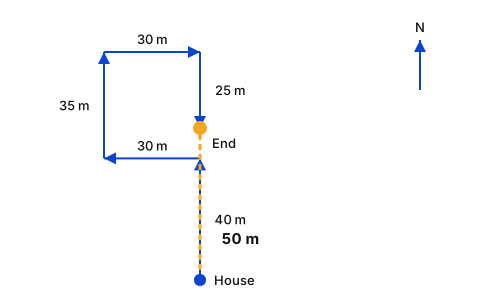
Ahmet’s house faces north. He came out of his house and walked straight for 40 m, turned left and walked for 30 m. He then turned right and walked for 35 m. Finally, he took another two successive right turns and covered 30 m and 25 m, respectively, to reach his final destination. How far and in which direction is he from his house now?
अहमत के घर का मुख उत्तर की ओर है। वह अपने घर से बाहर निकला और 40 m सीधा चला, बाएँ मुड़ा और 30 m चला। फिर वह दाएँ मुड़ा और 35 m चला। अंत में, वह लगातार दो बार दाएँ मुड़ा और क्रमशः 30 m और 25 m की दूरी तय करके अपने अंतिम गंतव्य पर पहुँचा। अब वह अपने घर से कितनी दूरी पर और किस दिशा में है?
  1. A25 m due southठीक दक्षिण में 25 m
  2. B50 m due northठीक उत्तर में 50 m
  3. C15 m due northठीक उत्तर में 15 m
  4. D25 m due eastठीक पूर्व में 25 m
Show answer

Concept: Trace the walk on a grid and find the net displacement.

  1. North 40 m; left ⇒ west 30 m; right ⇒ north 35 m.
  2. Right ⇒ east 30 m; right ⇒ south 25 m.
  3. East–west: −30+30=0; north–south: 40+35−25=50.
  4. He is 50 m due north of his house.

Trick: Add all north/south moves and all east/west moves separately.

Answer: (B) 50 m due north

अवधारणा: चलने का रास्ता खींचें और कुल विस्थापन (displacement) निकालें।

  1. उत्तर 40 m; बाएँ ⇒ पश्चिम 30 m; दाएँ ⇒ उत्तर 35 m।
  2. दाएँ ⇒ पूर्व 30 m; दाएँ ⇒ दक्षिण 25 m।
  3. पूर्व-पश्चिम: −30+30=0; उत्तर-दक्षिण: 40+35−25=50।
  4. वह घर से 50 m उत्तर में है।

ट्रिक: उत्तर/दक्षिण और पूर्व/पश्चिम की दूरियाँ अलग-अलग जोड़ें।

उत्तर: (B) 50 m due north

SSC CPO Paper IGeneral Intelligence and ReasoningDirection and distanceSSC CPO Paper I 2022 · 9 Nov Shift 2 →
Q4439.
Three Statements are given followed by three conclusions numbered I, II and III.
Assuming the statements to be true, even if they seem to be at variance with
commonly known facts, decide which of the conclusions logically follow(s) from the statements.
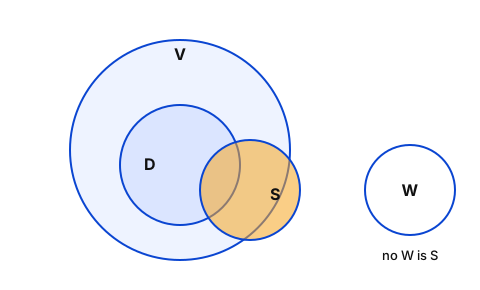
Statements:
All D are V.
Some S are D.
No W is a S.
Conclusions:
I. Some W are not D.
II. Some V are S.
III. Some D are S.
तीन कथन दिए गए हैं, जिनके बाद I, II और III से संख्यांकित तीन निष्कर्ष दिए गए हैं।
कथनों को सत्य मानते हुए, भले ही वे सामान्यतः ज्ञात तथ्यों से भिन्न प्रतीत होते हों, निर्णय लीजिए कि कौन-सा/कौन-से निष्कर्ष तार्किक रूप से कथनों का अनुसरण करता है/करते हैं।
कथन:
सभी D, V हैं।
कुछ S, D हैं।
कोई W, S नहीं है।
निष्कर्ष:
I. कुछ W, D नहीं हैं।
II. कुछ V, S हैं।
III. कुछ D, S हैं।
  1. AOnly Conclusion III follows.केवल निष्कर्ष III अनुसरण करता है।
  2. BConclusions I, II and III follow.निष्कर्ष I, II और III अनुसरण करते हैं।
  3. CBoth Conclusions II and III follow.निष्कर्ष II और III दोनों अनुसरण करते हैं।
  4. DOnly Conclusion I follows.केवल निष्कर्ष I अनुसरण करता है।
Show answer

Concept: Draw D inside V, S overlapping D, and W kept away from S.

  1. III: Some S are D ⇒ Some D are S (conversion) ✓.
  2. II: those S that are D are also V ⇒ Some V are S ✓.
  3. I: W is only separated from S; W may lie wholly inside D, so "Some W are not D" is not certain ✗.

Yaad rakhein: "No W is S" says nothing about W and D – a third class link is needed.

Answer: (C) Both Conclusions II and III follow.

अवधारणा: D को V के अंदर, S को D से आंशिक मिलता हुआ, और W को S से अलग बनाएँ।

  1. III: Some S are D ⇒ Some D are S (conversion) ✓।
  2. II: जो S, D हैं वे V भी हैं ⇒ Some V are S ✓।
  3. I: W केवल S से अलग है; W पूरा D के अंदर भी हो सकता है, अतः "Some W are not D" निश्चित नहीं ✗।

याद रखें: "No W is S" से W और D के बारे में कुछ तय नहीं होता।

उत्तर: (C) Both Conclusions II and III follow.

SSC CPO Paper IGeneral Intelligence and ReasoningSyllogismSSC CPO Paper I 2022 · 9 Nov Shift 2 →
Q4440.
Select the correct option that indicates the arrangement of the following words in a logical and meaningful order.
1. Satellite
2. Galaxy
3. Universe
4. Planet
5. Sun
उस सही विकल्प का चयन कीजिए जो निम्नलिखित शब्दों की तार्किक और सार्थक क्रम में व्यवस्था को दर्शाता है।
1. उपग्रह
2. आकाशगंगा
3. ब्रह्मांड
4. ग्रह
5. सूर्य
  1. A1, 3, 5, 4, 2
  2. B3, 2, 5, 4, 1
  3. C1, 2, 3, 4, 5
  4. D3, 4, 5, 1, 2
Show answer

Concept: Arrange from the largest to the smallest celestial body.

  1. Universe contains galaxies.
  2. A galaxy contains stars such as the Sun.
  3. The Sun has planets, and a planet has satellites.

Yaad rakhein: Universe → Galaxy → Sun → Planet → Satellite (big to small).

Answer: (B) 3, 2, 5, 4, 1

अवधारणा: सबसे बड़े से सबसे छोटे खगोलीय पिंड के क्रम में लगाएँ।

  1. ब्रह्मांड (Universe) में आकाशगंगाएँ (Galaxy) हैं।
  2. आकाशगंगा में सूर्य (Sun) जैसे तारे हैं।
  3. सूर्य के ग्रह (Planet) हैं और ग्रह के उपग्रह (Satellite)।

याद रखें: Universe → Galaxy → Sun → Planet → Satellite (बड़े से छोटा)।

उत्तर: (B) 3, 2, 5, 4, 1

SSC CPO Paper IGeneral Intelligence and ReasoningLogical order of wordsSSC CPO Paper I 2022 · 9 Nov Shift 2 →