Question bank

Q&A: practice questions with answers

Search questions on any topic. Filter by exam category, exam, subject and topic, try the question, then open the answer and explanation.

Courses – airGurukul

6,600 questions found.

Q5421.
In a certain code language, “GBTA” is coded as “24” and “ZWQVI” is coded as “30”. How will “DLUCPR” be coded in that language?
किसी निश्चित कूट भाषा में, “GBTA” को “24” के रूप में कूटबद्ध किया जाता है और “ZWQVI” को “30” के रूप में कूटबद्ध किया जाता है। उसी भाषा में “DLUCPR” को किस प्रकार कूटबद्ध किया जाएगा?
  1. A30
  2. B28
  3. C24
  4. D36
Show answer

Concept: Code =6×(number of letters).

  1. GBTA: 4 letters → 6×4=24 ✓.
  2. ZWQVI: 5 letters → 6×5=30 ✓.
  3. DLUCPR: 6 letters → 6×6=36.

Trick: When unrelated letters give round numbers, try word length.

Answer: (D) 36

अवधारणा: कोड =6×(अक्षरों की संख्या)।

  1. GBTA: 4 अक्षर → 6×4=24 ✓।
  2. ZWQVI: 5 अक्षर → 6×5=30 ✓।
  3. DLUCPR: 6 अक्षर → 6×6=36।

ट्रिक: बेमेल अक्षरों से गोल संख्या बने तो शब्द की लंबाई देखें।

उत्तर: (D) 36
SSC CPO Paper IGeneral Intelligence and ReasoningCoding-Decoding (Numbers)SSC CPO Paper I 2023 · 4 Oct Shift 3 →
Q5422.
In this question, three statements are given, followed by two conclusions numbered I and II. Assuming the statements to be true, even if they seem to be at variance with commonly known facts, decide which of the conclusions logically follows/follow from the statements.
Statements:
I. Some rooms are cages.
II. Some cages are enclosures.
III. All enclosures are houses.
Conclusions:
I. Some houses are cages.
II. All rooms are enclosures.
इस प्रश्न में तीन कथन दिए गए हैं, जिनके बाद I और II क्रमांकित दो निष्कर्ष दिए गए हैं। कथनों को सत्य मानते हुए, भले ही वे सर्वज्ञात तथ्यों से भिन्न प्रतीत होते हों, निर्णय कीजिए कि कौन-सा/से निष्कर्ष तार्किक रूप से कथनों का अनुसरण करता है/करते हैं।
कथन:
I. कुछ कमरे, पिंजरे हैं।
II. कुछ पिंजरे, बाड़े हैं।
III. सभी बाड़े, घर हैं।
निष्कर्ष:
I. कुछ घर, पिंजरे हैं।
II. सभी कमरे, बाड़े हैं।
  1. ABoth conclusions I and II followनिष्कर्ष I और II दोनों अनुसरण करते हैं
  2. BOnly conclusion I followsकेवल निष्कर्ष I अनुसरण करता है
  3. CNeither conclusion I nor II followsन तो निष्कर्ष I और न ही II अनुसरण करता है
  4. DOnly conclusion II followsकेवल निष्कर्ष II अनुसरण करता है
Show answer

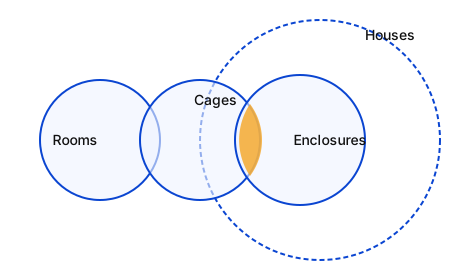
Concept: Use the least-overlap Venn diagram.

  1. The Cages that are Enclosures are also Houses (all Enclosures are Houses).
  2. So some Houses are Cages → I follows (highlighted part).
  3. Rooms only partly overlap Cages; nothing makes all Rooms Enclosures → II does not follow.

Trick: "Some + All" gives a "Some" conclusion; "Some + Some" never gives "All".

Answer: (B) Only conclusion I follows

अवधारणा: न्यूनतम ओवरलैप वाला वेन आरेख लें।

  1. जो Cages, Enclosures हैं वे Houses भी हैं (सभी Enclosures, Houses हैं)।
  2. अतः कुछ Houses, Cages हैं → I सही (हाइलाइट भाग)।
  3. Rooms और Cages का केवल आंशिक मेल; सभी Rooms को Enclosures कहने का आधार नहीं → II गलत।

ट्रिक: "Some + All" से "Some" निष्कर्ष; "Some + Some" से कभी "All" नहीं।

उत्तर: (B) केवल निष्कर्ष I अनुसरण करता है

SSC CPO Paper IGeneral Intelligence and ReasoningSyllogismSSC CPO Paper I 2023 · 4 Oct Shift 3 →
Q5423.
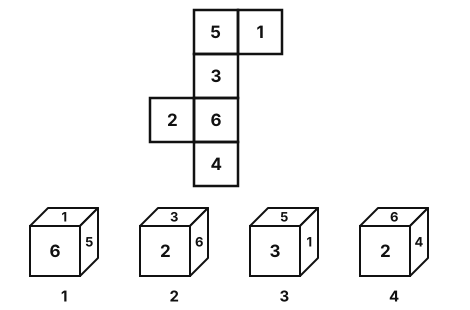
If the given sheet is folded to form a cube, which of the given figures are possible?
(The numbers are shown to indicate the sides only.)
यदि दी गई शीट को मोड़कर एक घन बनाया जाए, तो दी गई आकृतियों में से कौन-सी संभव हैं?
(संख्याएँ केवल भुजाओं को इंगित करने के लिए दर्शाई गई हैं।)
  1. AAll 1, 2, 3 and 41, 2, 3 और 4 सभी
  2. BOnly 2 and 3केवल 2 और 3
  3. COnly 1, 2 and 3केवल 1, 2 और 3
  4. DOnly 2, 3 and 4केवल 2, 3 और 4
Show answer

Concept: In a net, faces in the same line separated by one face are opposite; opposite faces never appear together on a cube.

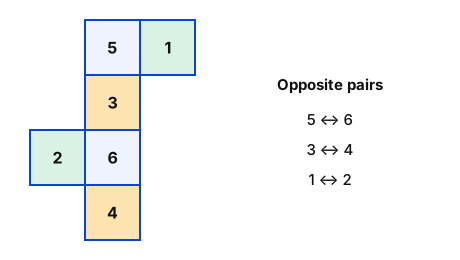
  1. Column 5–3–6–4: 5↔6 and 3↔4.
  2. 1 (beside 5) and 2 (beside 6) are opposite: 1↔2.
  3. Figure 1 shows 5 and 6 together → impossible. Figures 2 (3, 2, 6), 3 (5, 1, 3) and 4 (6, 2, 4) have no opposite pair → possible.

Trick: First write the three opposite pairs; reject any cube showing a pair.

Answer: (D) Only 2, 3 and 4

अवधारणा: नेट में एक ही पंक्ति में एक फलक छोड़कर आने वाले फलक विपरीत होते हैं; विपरीत फलक घन पर एक साथ नहीं दिखते।

  1. कॉलम 5–3–6–4: 5↔6 और 3↔4।
  2. 1 (5 के पास) और 2 (6 के पास) विपरीत: 1↔2।
  3. आकृति 1 में 5 और 6 साथ → असंभव। आकृति 2 (3, 2, 6), 3 (5, 1, 3), 4 (6, 2, 4) में कोई विपरीत जोड़ा नहीं → संभव।

ट्रिक: पहले तीनों विपरीत जोड़े लिखें; जिस घन पर जोड़ा दिखे उसे हटा दें।

उत्तर: (D) केवल 2, 3 और 4

SSC CPO Paper IGeneral Intelligence and ReasoningCube and Dice (Net)SSC CPO Paper I 2023 · 4 Oct Shift 3 →
Q5424.
If ‘+’ means ‘–’, ‘–’ means ‘×’, ‘×’ means ‘÷’, ‘÷’ means ‘+’, then what will come in place of the question mark (?) in the following equation?
14 – 7 ÷ 42 × 6 + 33 = ?
यदि ‘+’ का अर्थ ‘–’, ‘–’ का अर्थ ‘×’, ‘×’ का अर्थ ‘÷’, ‘÷’ का अर्थ ‘+’ है, तो निम्नलिखित समीकरण में प्रश्न चिह्न (?) के स्थान पर क्या आएगा?
14 – 7 ÷ 42 × 6 + 33 = ?
  1. A72
  2. B84
  3. C68
  4. D56
Show answer

Concept: Replace each sign as given, then use BODMAS.

  1. After replacing: 14×7+42÷6−33.
  2. =98+7−33
  3. =72

Trick: Rewrite the whole expression first, then solve — never solve with the old signs.

Answer: (A) 72

अवधारणा: दिए अनुसार चिह्न बदलें, फिर BODMAS लगाएँ।

  1. चिह्न बदलने पर: 14×7+42÷6−33।
  2. =98+7−33
  3. =72

ट्रिक: पहले पूरा व्यंजक नए चिह्नों में लिखें, फिर हल करें।

उत्तर: (A) 72

SSC CPO Paper IGeneral Intelligence and ReasoningMathematical OperationsSSC CPO Paper I 2023 · 4 Oct Shift 3 →
Q5425.
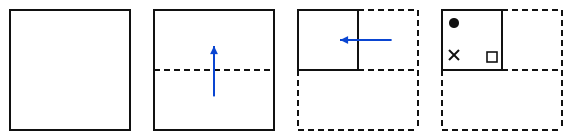
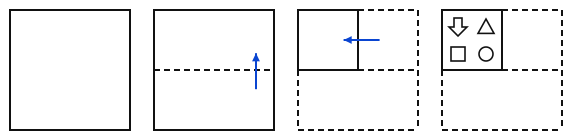
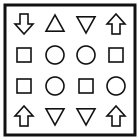
A paper is folded and cut as shown below. How will it appear when unfolded?
एक कागज़ को नीचे दर्शाए अनुसार मोड़ा और काटा जाता है। खोलने पर यह कैसा दिखाई देगा?
  1. A
  2. B
  3. C
  4. D
Show answer

Concept: Unfold in reverse order, mirroring every cut across each fold line.

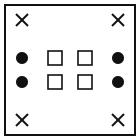
  1. Folds: bottom-to-top, then right-to-left; the cuts (dot at the top corner, cross below it, square near the vertical fold) are in the top-left quarter.
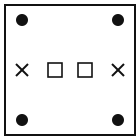
  2. Opening the right fold: dots and crosses at both outer edges, two squares side by side in the middle.
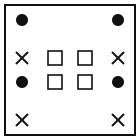
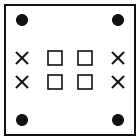
  3. Opening the bottom fold: dots at the four corners, crosses in two rows near the middle on both edges, and a 2×2 block of squares in the centre.

Trick: A cut close to both fold lines becomes a block of 4.

Answer: (C) Option (C) figure

अवधारणा: उल्टे क्रम में खोलें; हर कट हर मोड़-रेखा के सापेक्ष प्रतिबिंबित होता है।

  1. मोड़: नीचे से ऊपर, फिर दाएँ से बाएँ; कट (ऊपरी कोने पर dot, उसके नीचे cross, खड़ी मोड़-रेखा के पास square) ऊपरी-बाएँ चौथाई में।
  2. दायाँ मोड़ खोलने पर: dot और cross दोनों किनारों पर, बीच में दो square साथ-साथ।
  3. नीचे का मोड़ खोलने पर: चारों कोनों पर dot, दोनों किनारों पर बीच के पास दो पंक्तियों में cross, केंद्र में 2×2 square।

ट्रिक: दोनों मोड़-रेखाओं के पास वाला कट 4 का समूह बनता है।

उत्तर: (C) विकल्प (C) की आकृति

SSC CPO Paper IGeneral Intelligence and ReasoningPaper Folding and CuttingSSC CPO Paper I 2023 · 4 Oct Shift 3 →
Q5426.
Two statements are given, followed by two conclusions numbered I and II. Assuming the statements to be true, even if they seem to be at variance with commonly known facts, decide which of the conclusions logically follow(s) from the statements.
Statements:
All kids are small.
Some funny are kids.
Conclusions:
I) Some funny are small.
II) Some small are kids.
दो कथन दिए गए हैं, जिनके बाद I और II क्रमांकित दो निष्कर्ष दिए गए हैं। कथनों को सत्य मानते हुए, भले ही वे सर्वज्ञात तथ्यों से भिन्न प्रतीत होते हों, निर्णय कीजिए कि कौन-सा/से निष्कर्ष तार्किक रूप से कथनों का अनुसरण करता है/करते हैं।
कथन:
सभी बच्चे, छोटे हैं।
कुछ मज़ाकिया, बच्चे हैं।
निष्कर्ष:
I) कुछ मज़ाकिया, छोटे हैं।
II) कुछ छोटे, बच्चे हैं।
  1. AOnly Conclusion I followsकेवल निष्कर्ष I अनुसरण करता है
  2. BBoth Conclusions I and II follow.निष्कर्ष I और II दोनों अनुसरण करते हैं।
  3. COnly Conclusion II follows.केवल निष्कर्ष II अनुसरण करता है।
  4. DNeither Conclusion I nor II follows.न तो निष्कर्ष I और न ही II अनुसरण करता है।
Show answer

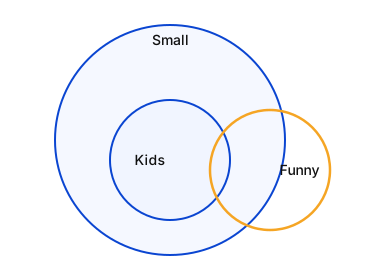
Concept: All Kids lie inside Small; Funny overlaps Kids.

  1. The Funny who are Kids are also Small → "Some funny are small" follows (I).
  2. All kids are small → some small are kids (conversion of "All") → II follows.
  3. Both are definite.

Trick: "All A are B" always gives "Some B are A".

Answer: (B) Both Conclusions I and II follow.

अवधारणा: सभी Kids, Small के अंदर; Funny, Kids से आंशिक रूप से मिलता है।

  1. जो Funny, Kids हैं वे Small भी हैं → "Some funny are small" (I) सही।
  2. All kids are small → some small are kids (रूपांतरण) → II सही।
  3. दोनों निश्चित हैं।

ट्रिक: "All A are B" से हमेशा "Some B are A" निकलता है।

उत्तर: (B) निष्कर्ष I और II दोनों अनुसरण करते हैं।

SSC CPO Paper IGeneral Intelligence and ReasoningSyllogismSSC CPO Paper I 2023 · 4 Oct Shift 3 →
Q5427.
Select the option that represents the correct order of the given words as they would appear in an English dictionary?
1.Puritan
2.Purpose
3.Purge
4.Purgatory
5.Purify
उस विकल्प का चयन कीजिए जो दिए गए शब्दों के उस सही क्रम को दर्शाता है, जिस क्रम में वे अंग्रेज़ी शब्दकोश में आएँगे।
1.Puritan
2.Purpose
3.Purge
4.Purgatory
5.Purify
  1. A3, 4, 5, 1, 2
  2. B5, 4, 3, 1, 2
  3. C4, 5, 3, 1, 2
  4. D4, 3, 5, 1, 2
Show answer

Concept: Compare letter by letter after the common part "Pur".

  1. Purg-: Purgatory (purga) comes before Purge (purge) since a < e.
  2. Then Purify (puri-f), Puritan (puri-t) — f before t.
  3. Purpose (purp) comes last.
  4. Order: Purgatory, Purge, Purify, Puritan, Purpose → 4, 3, 5, 1, 2.

Trick: Group by the 4th letter first (g, i, p), then break ties.

Answer: (D) 4, 3, 5, 1, 2

अवधारणा: साझा भाग "Pur" के बाद अक्षर-दर-अक्षर तुलना करें।

  1. Purg-: Purgatory (purga), Purge (purge) से पहले क्योंकि a, e से पहले।
  2. फिर Purify (puri-f), Puritan (puri-t) — f, t से पहले।
  3. Purpose (purp) अंत में।
  4. क्रम: Purgatory, Purge, Purify, Puritan, Purpose → 4, 3, 5, 1, 2।

ट्रिक: पहले चौथे अक्षर (g, i, p) से समूह बनाएँ, फिर बराबरी तोड़ें।

उत्तर: (D) 4, 3, 5, 1, 2
SSC CPO Paper IGeneral Intelligence and ReasoningDictionary OrderSSC CPO Paper I 2023 · 4 Oct Shift 3 →
Q5428.
The sequence of folding a piece of paper and the manner in which the folded paper is cut is shown in the following figures. How would this paper look when unfolded?
निम्नलिखित आकृतियों में एक कागज़ के टुकड़े को मोड़ने का क्रम और मोड़े गए कागज़ को काटने का तरीका दर्शाया गया है। खोलने पर यह कागज़ कैसा दिखाई देगा?
  1. A
  2. B
  3. C
  4. D
Show answer

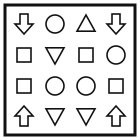
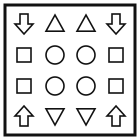
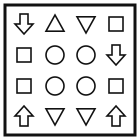
Concept: Each unfolding creates a mirror image of the cut pattern across the fold line.

  1. The folded quarter (top-left) has: down-arrow, triangle (top row); square, circle (second row).
  2. Opening the right fold gives rows: ⇩ △ △ ⇩ and □ ○ ○ □.
  3. Opening the bottom fold flips these upside down below: □ ○ ○ □ and ⇧ ▽ ▽ ⇧.

Trick: Mirror across a horizontal fold turns ⇩ into ⇧ and △ into ▽.

Answer: (B) Option (B) figure

अवधारणा: हर बार खोलने पर कट का पैटर्न मोड़-रेखा के सापेक्ष दर्पण-प्रतिबिंब बनाता है।

  1. मुड़े चौथाई (ऊपर-बाएँ) में: ⇩, △ (पहली पंक्ति); □, ○ (दूसरी पंक्ति)।
  2. दायाँ मोड़ खोलने पर: ⇩ △ △ ⇩ और □ ○ ○ □।
  3. नीचे का मोड़ खोलने पर नीचे उल्टा प्रतिबिंब: □ ○ ○ □ और ⇧ ▽ ▽ ⇧।

ट्रिक: क्षैतिज मोड़ पर ⇩, ⇧ बन जाता है और △, ▽ बन जाता है।

उत्तर: (B) विकल्प (B) की आकृति

SSC CPO Paper IGeneral Intelligence and ReasoningPaper Folding and CuttingSSC CPO Paper I 2023 · 4 Oct Shift 3 →
Q5429.
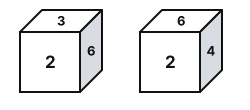
Two different positions of the same dice are shown, the six faces of which are numbered from 1 to 6. Select the number that will be on the face opposite to the one showing ‘4’.
एक ही पासे की दो अलग-अलग स्थितियाँ दर्शाई गई हैं, जिसके छह फलकों पर 1 से 6 तक की संख्याएँ अंकित हैं। उस संख्या का चयन कीजिए जो ‘4’ दर्शाने वाले फलक के विपरीत फलक पर होगी।
  1. A5
  2. B1
  3. C3
  4. D6
Show answer

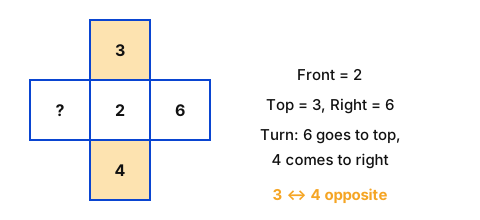
Concept: Keep the common face (2) in front and rotate the die to compare the two views.

  1. View 1: front 2, top 3, right 6.
  2. View 2: front 2, top 6, right 4 — the die has turned so that the right face (6) went to the top.
  3. In that turn the bottom face moves to the right, so 4 was at the bottom, opposite to top 3.

Trick: With a common face in the same place, the faces around it go in the same rotational order: 3 → 6 → 4.

Answer: (C) 3

अवधारणा: साझा फलक (2) को सामने रखें और दोनों दृश्यों की तुलना के लिए पासे को घुमाएँ।

  1. दृश्य 1: सामने 2, ऊपर 3, दाएँ 6।
  2. दृश्य 2: सामने 2, ऊपर 6, दाएँ 4 — दाएँ वाला 6 ऊपर चला गया।
  3. इस घुमाव में नीचे वाला फलक दाएँ आता है, अतः 4 नीचे था, ऊपर वाले 3 के विपरीत।

ट्रिक: साझा फलक के चारों ओर फलक एक ही घूर्णन क्रम में रहते हैं: 3 → 6 → 4।

उत्तर: (C) 3

SSC CPO Paper IGeneral Intelligence and ReasoningCube and DiceSSC CPO Paper I 2023 · 4 Oct Shift 3 →
Q5430.
Select the option that is related to the third word in the same way as the second word is related to the first word. (The words must be considered as meaningful English words and must not be related to each other based on the number of letters/number of consonants/vowels in the word.)
Whale : Mammal :: Crocodile : ?
उस विकल्प का चयन कीजिए जो तीसरे शब्द से उसी प्रकार संबंधित है, जिस प्रकार दूसरा शब्द पहले शब्द से संबंधित है। (शब्दों को अर्थपूर्ण अंग्रेज़ी शब्द माना जाना चाहिए और उन्हें शब्द में अक्षरों की संख्या/व्यंजनों/स्वरों की संख्या के आधार पर एक-दूसरे से संबंधित नहीं किया जाना चाहिए।)
व्हेल : स्तनधारी :: मगरमच्छ : ?
  1. ARodentकृंतक
  2. BAmphibianउभयचर
  3. CSeaसमुद्र
  4. DReptileसरीसृप
Show answer

Concept: Animal : the class (group) it belongs to.

  1. A whale belongs to the class Mammal.
  2. A crocodile belongs to the class Reptile.
  3. It is not an amphibian or rodent; "sea" is a habitat, not a class.

Trick: Whale is a mammal even though it lives in water; crocodile is a reptile.

Answer: (D) Reptile

अवधारणा: जीव : उसका वर्ग (class)।

  1. Whale (व्हेल) Mammal (स्तनपायी) वर्ग में आती है।
  2. Crocodile (मगरमच्छ) Reptile (सरीसृप) वर्ग में आता है।
  3. यह amphibian या rodent नहीं; "sea" आवास है, वर्ग नहीं।

ट्रिक: व्हेल पानी में रहकर भी स्तनपायी है; मगरमच्छ सरीसृप है।

उत्तर: (D) Reptile (सरीसृप)
SSC CPO Paper IGeneral Intelligence and ReasoningWord AnalogySSC CPO Paper I 2023 · 4 Oct Shift 3 →
Q5431.
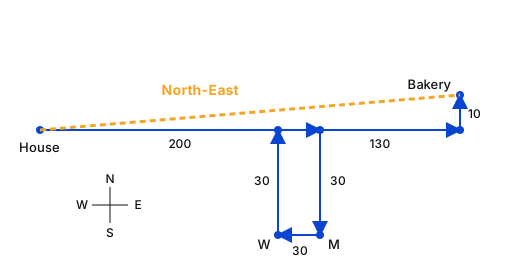
X, from his house, ran 200 steps towards the east and then ran 30 steps after turning to his right to reach a monastery. He then ran 30 steps towards his right and reached a point W. He then turned again towards his right and ran 30 steps. From there, turning towards his right he ran 130 steps. He then turned towards his left and ran 10 steps to reach a bakery. In which direction is the bakery with respect to X’s house?
X अपने घर से पूर्व की ओर 200 कदम दौड़ा और फिर अपने दाएँ मुड़कर 30 कदम दौड़ा और एक मठ पर पहुँचा। फिर वह अपने दाएँ ओर 30 कदम दौड़ा और बिंदु W पर पहुँचा। फिर वह पुनः अपने दाएँ ओर मुड़ा और 30 कदम दौड़ा। वहाँ से, अपने दाएँ ओर मुड़कर वह 130 कदम दौड़ा। फिर वह अपने बाएँ ओर मुड़ा और 10 कदम दौड़कर एक बेकरी पर पहुँचा। X के घर के सापेक्ष बेकरी किस दिशा में है?
  1. AEastपूर्व
  2. BSouth-Eastदक्षिण-पूर्व
  3. CNorth-Eastउत्तर-पूर्व
  4. DNorthउत्तर
Show answer

Concept: Take the house as origin; East +x, North +y.

  1. East 200 → (200,0); right → South 30 → (200,−30) monastery.
  2. Right → West 30 → (170,−30) = W; right → North 30 → (170,0).
  3. Right → East 130 → (300,0); left → North 10 → (300,10) bakery.
  4. Bakery is east and slightly north of the house → North-East.

Trick: Both x and y positive → North-East.

Answer: (C) North-East

अवधारणा: घर को मूल बिंदु लें; पूर्व +x, उत्तर +y।

  1. पूर्व 200 → (200,0); दाएँ → दक्षिण 30 → (200,−30) मठ।
  2. दाएँ → पश्चिम 30 → (170,−30) = W; दाएँ → उत्तर 30 → (170,0)।
  3. दाएँ → पूर्व 130 → (300,0); बाएँ → उत्तर 10 → (300,10) बेकरी।
  4. बेकरी घर के पूर्व व थोड़ा उत्तर में → उत्तर-पूर्व।

ट्रिक: x और y दोनों धनात्मक → उत्तर-पूर्व।

उत्तर: (C) उत्तर-पूर्व (North-East)

SSC CPO Paper IGeneral Intelligence and ReasoningDirection and DistanceSSC CPO Paper I 2023 · 4 Oct Shift 3 →
Q5432.
Four letter-clusters have been given, out of which three are alike in some manner and one is different. Select the odd letter-cluster.
चार अक्षर-समूह दिए गए हैं, जिनमें से तीन किसी प्रकार से एकसमान हैं और एक उनसे असंगत है। असंगत अक्षर-समूह का चयन कीजिए।
  1. ANJPM
  2. BEAFD
  3. CVRWU
  4. DLHMK
Show answer

Concept: Check the gaps between consecutive letters.

  1. EAFD: 5→1→6→4 = −4,+5,−2.
  2. VRWU: 22→18→23→21 = −4,+5,−2; LHMK: 12→8→13→11 = −4,+5,−2.
  3. NJPM: 14→10→16→13 = −4,+6,−3 → different.

Trick: Write the alphabet positions; the odd gap pattern stands out.

Answer: (A) NJPM

अवधारणा: क्रमागत अक्षरों के बीच अंतर देखें।

  1. EAFD: 5→1→6→4 = −4,+5,−2।
  2. VRWU: −4,+5,−2; LHMK: 12→8→13→11 = −4,+5,−2।
  3. NJPM: 14→10→16→13 = −4,+6,−3 → अलग।

ट्रिक: अक्षरों के स्थानांक लिखें; अलग अंतर तुरंत दिख जाता है।

उत्तर: (A) NJPM

SSC CPO Paper IGeneral Intelligence and ReasoningOdd One Out (Letters)SSC CPO Paper I 2023 · 4 Oct Shift 3 →
Q5433.
Select the option that is related to the fourth term in the same way as the first term is related to the second term and the fifth term is related to the sixth term.
5 : 24 :: ? : 143 :: 4 : 15
उस विकल्प का चयन कीजिए जो चौथे पद से उसी प्रकार संबंधित है, जिस प्रकार पहला पद दूसरे पद से संबंधित है और पाँचवाँ पद छठे पद से संबंधित है।
5 : 24 :: ? : 143 :: 4 : 15
  1. A7
  2. B12
  3. C8
  4. D11
Show answer

Concept: Second term =n2−1.

  1. 52−1=24 ✓, 42−1=15 ✓.
  2. n2−1=143⇒n2=144⇒n=12.

Trick: Numbers like 15,24,143 are one less than perfect squares.

Answer: (B) 12

अवधारणा: दूसरा पद =n2−1।

  1. 52−1=24 ✓, 42−1=15 ✓।
  2. n2−1=143⇒n2=144⇒n=12।

ट्रिक: 15,24,143 जैसी संख्याएँ पूर्ण वर्ग से 1 कम हैं।

उत्तर: (B) 12

SSC CPO Paper IGeneral Intelligence and ReasoningNumber AnalogySSC CPO Paper I 2023 · 4 Oct Shift 3 →
Q5434.
If ‘+’ means ‘divided by’, ‘ ̶ ’ means ‘added to’, ‘×’ means ‘subtracted from’ and ‘÷’
means ‘multiplied by’, then what will be the value of the following expression?
[{(23 × 15) - (2 ÷ 2)} + (2 - 4)] ÷ 2
यदि ‘+’ का अर्थ ‘से भाग’, ‘ ̶ ’ का अर्थ ‘में जोड़ा’, ‘×’ का अर्थ ‘में से घटाया’ और ‘÷’
का अर्थ ‘से गुणा’ है, तो निम्नलिखित व्यंजक का मान क्या होगा?
[{(23 × 15) - (2 ÷ 2)} + (2 - 4)] ÷ 2
  1. A8
  2. B2
  3. C6
  4. D4
Show answer

Concept: Replace each sign as given, then use BODMAS.

  1. After replacing: [{(23−15)+(2×2)}÷(2+4)]×2.
  2. =[(8+4)÷6]×2
  3. =2×2=4

Trick: Rewrite the whole expression first, then solve — never solve with the old signs.

Answer: (D) 4

अवधारणा: दिए अनुसार चिह्न बदलें, फिर BODMAS लगाएँ।

  1. चिह्न बदलने पर: [{(23−15)+(2×2)}÷(2+4)]×2।
  2. =[(8+4)÷6]×2
  3. =2×2=4

ट्रिक: पहले पूरा व्यंजक नए चिह्नों में लिखें, फिर हल करें।

उत्तर: (D) 4

SSC CPO Paper IGeneral Intelligence and ReasoningMathematical OperationsSSC CPO Paper I 2023 · 4 Oct Shift 3 →
Q5435.
Which of the following numbers will replace the question mark (?) in the given series? 261, 232, 203, ?, 145, 116
निम्नलिखित में से कौन-सी संख्या दी गई श्रृंखला में प्रश्न चिह्न (?) के स्थान पर आएगी? 261, 232, 203, ?, 145, 116
  1. A174
  2. B188
  3. C192
  4. D186
Show answer

Concept: Constant difference.

  1. 261−232=29, 232−203=29.
  2. ?=203−29=174; check 174−29=145 ✓.

Trick: Verify the guessed term with the next given term.

Answer: (A) 174

अवधारणा: स्थिर अंतर।

  1. 261−232=29, 232−203=29।
  2. ?=203−29=174; जाँच 174−29=145 ✓।

ट्रिक: अनुमानित पद को अगले दिए पद से जाँचें।

उत्तर: (A) 174

SSC CPO Paper IGeneral Intelligence and ReasoningNumber SeriesSSC CPO Paper I 2023 · 4 Oct Shift 3 →
Q5436.
In a certain code language, ‘HUSTLE’ is written as ‘SFHEOT’ and 'BRIGHT' is written as 'IIBTSG'. How will ‘TUNNEL’ be written in that language?
किसी निश्चित कूट भाषा में, ‘HUSTLE’ को ‘SFHEOT’ लिखा जाता है और ‘BRIGHT’ को ‘IIBTSG’ लिखा जाता है। उसी भाषा में ‘TUNNEL’ को किस प्रकार लिखा जाएगा?
  1. ANRTPEN
  2. BNGTYPN
  3. CNFTLVN
  4. DRNLPED
Show answer

Concept: Code = 3rd letter, opposite of 2nd, 1st, 6th, opposite of 5th, 4th (opposite pair sum =27).

  1. HUSTLE: S, opp(U)=F, H, E, opp(L)=O, T → SFHEOT ✓.
  2. BRIGHT: I, opp(R)=I, B, T, opp(H)=S, G → IIBTSG ✓.
  3. TUNNEL: N, opp(U)=F, T, L, opp(E)=V, N → NFTLVN.

Trick: Letters that do not occur in the word (F, O) are usually opposite letters.

Answer: (C) NFTLVN

अवधारणा: कोड = तीसरा अक्षर, दूसरे का विपरीत, पहला, छठा, पाँचवें का विपरीत, चौथा (विपरीत युग्म योग =27)।

  1. HUSTLE: S, F, H, E, O, T → SFHEOT ✓।
  2. BRIGHT: I, opp(R)=I, B, T, opp(H)=S, G → IIBTSG ✓।
  3. TUNNEL: N, opp(U)=F, T, L, opp(E)=V, N → NFTLVN।

ट्रिक: शब्द में न होने वाले अक्षर (F, O) प्रायः विपरीत अक्षर होते हैं।

उत्तर: (C) NFTLVN

SSC CPO Paper IGeneral Intelligence and ReasoningCoding-DecodingSSC CPO Paper I 2023 · 4 Oct Shift 3 →
Q5437.
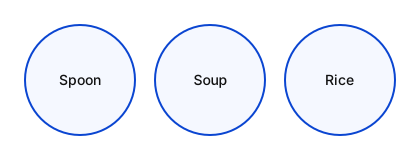
Select the Venn diagram that best illustrates the relationship between the following classes.
Spoon, Soup, Rice
उस वेन आरेख का चयन कीजिए जो निम्नलिखित वर्गों के बीच संबंध को सर्वोत्तम रूप से दर्शाता है।
चम्मच, सूप, चावल
  1. A
  2. B
  3. C
  4. D
Show answer

Concept: Check whether any item belongs to another class.

  1. Spoon is a utensil, soup is a liquid dish, rice is a grain/food.
  2. No class is part of another and none overlap.
  3. So three separate circles.

Trick: Unrelated items → three disjoint circles.

Answer: (A) Option (A) figure (three separate circles)

अवधारणा: देखें कि कोई वस्तु दूसरे वर्ग में आती है या नहीं।

  1. Spoon बर्तन है, soup तरल व्यंजन है, rice अनाज/भोजन है।
  2. कोई वर्ग दूसरे का भाग नहीं और कोई ओवरलैप नहीं।
  3. अतः तीन अलग वृत्त।

ट्रिक: असंबंधित वस्तुएँ → तीन अलग वृत्त।

उत्तर: (A) विकल्प (A) की आकृति (तीन अलग वृत्त)

SSC CPO Paper IGeneral Intelligence and ReasoningVenn DiagramSSC CPO Paper I 2023 · 4 Oct Shift 3 →
Q5438.
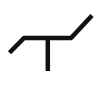
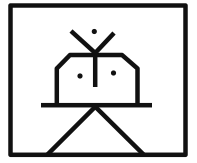
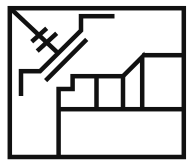
Select the option figure in which the given figure is embedded as its part (rotation is NOT allowed).
उस विकल्प आकृति का चयन कीजिए जिसमें दी गई आकृति उसके भाग के रूप में निहित है (आकृति को घुमाने की अनुमति नहीं है)।
  1. A
  2. B
  3. C
  4. D
Show answer

Concept: Look for the exact shape in the same orientation (no rotation).

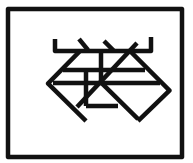
  1. The given figure: a horizontal line with a short vertical stroke going down from it, and a slant rising to the right from its right end.
  2. In option (D) this horizontal-plus-slant outline appears in the upper part of the figure, with the same orientation.
  3. In (A), (B), (C) the slant or the downward stroke is missing or turned.

Trick: Locate the most distinctive part (the slant) first, then check the rest around it.

Answer: (D) Option (D) figure

अवधारणा: दी गई आकृति को उसी दिशा (बिना घुमाए) में खोजें।

  1. दी गई आकृति: एक क्षैतिज रेखा, उससे नीचे जाती छोटी खड़ी रेखा और दाएँ सिरे से ऊपर उठती तिरछी रेखा।
  2. विकल्प (D) के ऊपरी भाग में यही आकृति उसी दिशा में है।
  3. (A), (B), (C) में तिरछी या नीचे वाली रेखा नहीं है या घूमी हुई है।

ट्रिक: पहले सबसे विशेष भाग (तिरछी रेखा) खोजें, फिर बाकी जाँचें।

उत्तर: (D) विकल्प (D) की आकृति

SSC CPO Paper IGeneral Intelligence and ReasoningEmbedded FiguresSSC CPO Paper I 2023 · 4 Oct Shift 3 →
Q5439.
‘P $ Q’ means ‘P is the daughter of Q’
‘P ? Q’ means ‘P is the son of Q’
‘P * Q’ means ‘P is the sister of Q ‘
‘P = Q’ means ‘P is the father of Q ‘
If ‘D $ G * U ? F’, how is G related to F?
‘P $ Q’ का अर्थ है ‘P, Q की पुत्री है’
‘P ? Q’ का अर्थ है ‘P, Q का पुत्र है’
‘P * Q’ का अर्थ है ‘P, Q की बहन है’
‘P = Q’ का अर्थ है ‘P, Q का पिता है’
यदि ‘D $ G * U ? F’ है, तो G का F से क्या संबंध है?
  1. AFather's sisterपिता की बहन
  2. BMother's sisterमाता की बहन
  3. CBrotherभाई
  4. DDaughterपुत्री
Show answer

Concept: Decode each symbol from left to right.

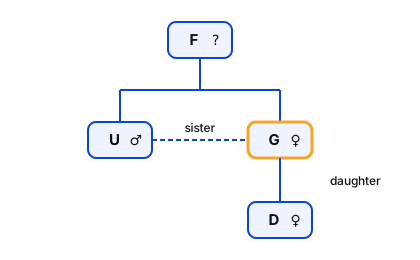
  1. D $ G: D is the daughter of G.
  2. G * U: G is the sister of U → G is female.
  3. U ? F: U is the son of F.
  4. G is U’s sister, so G is also F’s child — a daughter.

Trick: Gender of G is fixed by "sister" — so "Brother" is ruled out.

Answer: (D) Daughter

अवधारणा: हर चिह्न को बाएँ से दाएँ खोलें।

  1. D $ G: D, G की बेटी है।
  2. G * U: G, U की बहन है → G स्त्री।
  3. U ? F: U, F का बेटा है।
  4. G, U की बहन है, अतः F की संतान — बेटी।

ट्रिक: "sister" से G का लिंग तय — "Brother" बाहर।

उत्तर: (D) Daughter (बेटी)

SSC CPO Paper IGeneral Intelligence and ReasoningBlood Relations (Coded)SSC CPO Paper I 2023 · 4 Oct Shift 3 →
Q5440.
Select the set in which the numbers are related in the same way as are the numbers of the following sets.
(NOTE : Operations should be performed on the whole numbers, without breaking
down the numbers into its constituent digits. E.g. 13- Operations on 13 such as adding /subtracting /multiplying etc. to 13 can be performed. Breaking down 13 into 1 and 3 and then performing mathematical operations on 1 and 3 is not allowed.)
(13, 18, 21)
(11, 25, 8)
उस समुच्चय का चयन कीजिए जिसमें संख्याएँ उसी प्रकार संबंधित हैं, जिस प्रकार निम्नलिखित समुच्चयों की संख्याएँ संबंधित हैं।
(ध्यान दें: संख्याओं को उनके घटक अंकों में विभाजित किए बिना, पूर्ण संख्याओं पर
संक्रियाएँ की जानी चाहिए। उदाहरण के लिए 13 – 13 पर संक्रियाएँ जैसे 13 में जोड़ना/घटाना/गुणा करना आदि किया जा सकता है। 13 को 1 और 3 में विभाजित करना और फिर 1 और 3 पर गणितीय संक्रियाएँ करना वर्जित है।)
(13, 18, 21)
(11, 25, 8)
  1. A(6, 10, 12)
  2. B(4, 12, 24)
  3. C(8, 16, 23)
  4. D(14, 33, 9)
Show answer

Concept: Rule: 2nd+3rd=3×1st.

  1. (13,18,21): 18+21=39=3×13 ✓.
  2. (11,25,8): 25+8=33=3×11 ✓.
  3. (14,33,9): 33+9=42=3×14 ✓.
  4. Others: 10+12=22≠18; 12+24=36≠12; 16+23=39≠24.

Trick: When the first number is the "odd" one, test sums/differences of the other two against its multiples.

Answer: (D) (14,33,9)

अवधारणा: नियम: दूसरी+तीसरी=3×पहली।

  1. (13,18,21): 18+21=39=3×13 ✓।
  2. (11,25,8): 25+8=33=3×11 ✓।
  3. (14,33,9): 33+9=42=3×14 ✓।
  4. अन्य: 10+12=22≠18; 12+24=36≠12; 16+23=39≠24।

ट्रिक: बाकी दो संख्याओं का योग/अंतर पहली संख्या के गुणजों से मिलाएँ।

उत्तर: (D) (14,33,9)

SSC CPO Paper IGeneral Intelligence and ReasoningNumber Set RelationSSC CPO Paper I 2023 · 4 Oct Shift 3 →