Question bank

Q&A: practice questions with answers

Search questions on any topic. Filter by exam category, exam, subject and topic, try the question, then open the answer and explanation.

Courses – airGurukul

6,600 questions found.

Q5621.
Select the set in which the numbers are related in the same way as are the numbers of the following set.
(NOTE : Operations should be performed on the whole numbers, without breaking
down the numbers into its constituent digits. E.g. 13 – Operations on 13 such as
adding /subtracting/ multiplying etc. to 13 can be performed. Breaking down 13 into 1 and 3 and then performing mathematical operations on 1 and 3 is NOT allowed)
(9, 1, 19)
(5, 2, 14)
उस समुच्चय का चयन कीजिए जिसमें संख्याएँ उसी प्रकार संबंधित हैं जिस प्रकार निम्नलिखित समुच्चय की संख्याएँ संबंधित हैं।
(नोट: संक्रियाएँ संख्याओं को उनके घटक अंकों में विभक्त किए बिना, पूर्ण संख्याओं पर की जानी चाहिए। उदाहरण 13 – 13 पर संक्रियाएँ जैसे 13 में जोड़ना/घटाना/गुणा करना आदि किया जा सकता है। 13 को 1 और 3 में विभक्त करना और फिर 1 और 3 पर गणितीय संक्रियाएँ करने की अनुमति नहीं है।)
(9, 1, 19)
(5, 2, 14)
  1. A(3,5,56)
  2. B(3,2,10)
  3. C(2,5,12)
  4. D(4,7,37)
Show answer

Concept: Third number =2×first+(second)2.

  1. (9,1,19): 2×9+12=19 ✓.
  2. (5,2,14): 2×5+22=14 ✓.
  3. (3,2,10): 2×3+22=10 ✓.
  4. Others: 6+25=31≠56, 4+25=29≠12, 8+49=57≠37.

Trick: Try the simplest combination of a multiple of the first and a power of the second; check it on both given sets.

Answer: (B) (3,2,10)

अवधारणा: तीसरी संख्या =2×पहली+(दूसरी)2।

  1. (9,1,19): 2×9+12=19 ✓।
  2. (5,2,14): 2×5+22=14 ✓।
  3. (3,2,10): 2×3+22=10 ✓।
  4. बाकी: 6+25=31≠56, 4+25=29≠12, 8+49=57≠37।

ट्रिक: पहली संख्या का गुणज और दूसरी का वर्ग जोड़कर देखें; दोनों दिए समुच्चयों पर जाँचें।

उत्तर: (B) (3,2,10)
SSC CPO Paper IGeneral Intelligence and ReasoningNumber Set RelationSSC CPO Paper I 2023 · 4 Oct Shift 2 →
Q5622.
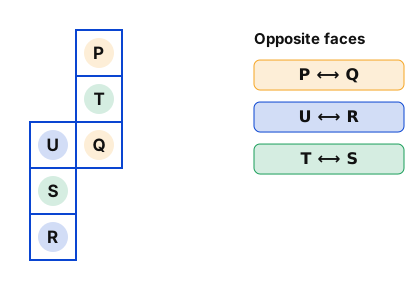
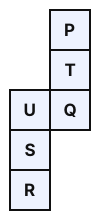
A cube is made by folding the given sheet. In the cube so formed, which pair of letters will be on the opposite faces?
दी गई शीट को मोड़कर एक घन बनाया जाता है। इस प्रकार बने घन में, अक्षरों का कौन-सा युग्म विपरीत फलकों पर होगा?
  1. AT and ST और S
  2. BR and PR और P
  3. CP and UP और U
  4. DU and TU और T
Show answer

Concept: In a cube net, two squares in the same straight line with exactly one square between them are opposite faces.

  1. Column P-T-Q: P and Q are opposite.
  2. Column U-S-R: U and R are opposite.
  3. The remaining two faces T and S are opposite.
  4. Options (B), (C), (D) pair faces that are adjacent, so only T and S is correct.

Trick: Skip-one rule along a straight line; the last two faces left over make the third pair.

Answer: (A) T and S

अवधारणा: घन के जाल में एक सीधी रेखा में बीच में एक फलक छोड़कर आने वाले दो फलक विपरीत होते हैं।

  1. स्तंभ P-T-Q: P और Q विपरीत।
  2. स्तंभ U-S-R: U और R विपरीत।
  3. बचे हुए दो फलक T और S विपरीत।
  4. (B), (C), (D) के जोड़े आसन्न (adjacent) फलक हैं, अतः केवल T और S सही।

ट्रिक: सीधी रेखा में एक छोड़कर नियम; अंत में बचे दो फलक तीसरा जोड़ा बनाते हैं।

उत्तर: (A) T and S

SSC CPO Paper IGeneral Intelligence and ReasoningCube Net (Opposite Faces)SSC CPO Paper I 2023 · 4 Oct Shift 2 →
Q5623.
A @ B means ‘A is the husband of B’
A & B means ‘A is the mother of B’
A # B means ‘A is the daughter of B’
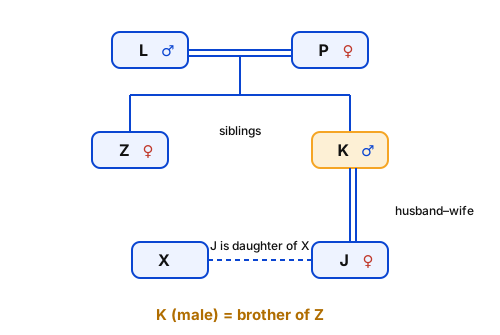
If Z # L @ P & K @ J # X, then how is K related to Z?
A @ B का अर्थ है ‘A, B का पति है’
A & B का अर्थ है ‘A, B की माता है’
A # B का अर्थ है ‘A, B की पुत्री है’
यदि Z # L @ P & K @ J # X है, तो K का Z से क्या संबंध है?
  1. ABrotherभाई
  2. BSisterबहन
  3. CMotherमाता
  4. DBrother’ wifeभाई की पत्नी
Show answer

Concept: Decode each symbol and build the family tree.

  1. Z # L: Z is the daughter of L.
  2. L @ P: L is the husband of P. P & K: P is the mother of K, so K is the child of L and P.
  3. K @ J: K is the husband of J, so K is male (J # X only tells that J is X's daughter).
  4. Z and K are children of the same parents and K is male, so K is Z's brother.

Trick: 'Husband' fixes the gender of K; children of the same couple are siblings.

Answer: (A) Brother

अवधारणा: हर चिह्न का अर्थ लगाकर वंश-वृक्ष बनाएँ।

  1. Z # L: Z, L की बेटी है।
  2. L @ P: L, P का पति है। P & K: P, K की माँ है, अतः K भी L और P की संतान है।
  3. K @ J: K, J का पति है, अतः K पुरुष है (J # X: J, X की बेटी है)।
  4. Z और K एक ही माता-पिता की संतान हैं और K पुरुष है, अतः K, Z का भाई है।

ट्रिक: 'पति' शब्द से K का लिंग तय होता है; एक ही दंपति की संतानें भाई-बहन होती हैं।

उत्तर: (A) Brother

SSC CPO Paper IGeneral Intelligence and ReasoningCoded Blood RelationSSC CPO Paper I 2023 · 4 Oct Shift 2 →
Q5624.
In a certain code language, 'ALIVE' is coded as 64 and 'HALL' is coded as 45. How will 'MOVIE' be coded in that language?
एक निश्चित कूट भाषा में, 'ALIVE' को 64 के रूप में कूटबद्ध किया जाता है और 'HALL' को 45 के रूप में कूटबद्ध किया जाता है। उस भाषा में 'MOVIE' को किस प्रकार कूटबद्ध किया जाएगा?
  1. A71
  2. B80
  3. C79
  4. D58
Show answer

Concept: Code = sum of alphabet positions + 3 for every letter.

  1. ALIVE: 1+12+9+22+5=49; 49+5×3=64 ✓.
  2. HALL: 8+1+12+12=33; 33+4×3=45 ✓.
  3. MOVIE: 13+15+22+9+5=64.
  4. Code =64+5×3=79.

Trick: Code − letter sum = 15 (5 letters) and 12 (4 letters), i.e. 3 per letter.

Answer: (C) 79

अवधारणा: कोड = अक्षरों के स्थानीय मानों का योग + प्रति अक्षर 3।

  1. ALIVE: 1+12+9+22+5=49; 49+5×3=64 ✓।
  2. HALL: 8+1+12+12=33; 33+4×3=45 ✓।
  3. MOVIE: 13+15+22+9+5=64।
  4. कोड =64+5×3=79।

ट्रिक: कोड − अक्षर योग = 15 (5 अक्षर) और 12 (4 अक्षर), यानी प्रति अक्षर 3।

उत्तर: (C) 79

SSC CPO Paper IGeneral Intelligence and ReasoningCoding–Decoding (Letter Values)SSC CPO Paper I 2023 · 4 Oct Shift 2 →
Q5625.
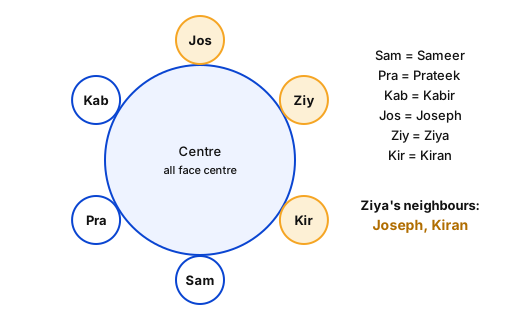
Six students Prateek, Sameer, Kabir, Ziya, Joseph, Kiran are sitting around a circular table facing the centre (not necessarily in the same order). Prateek is an immediate neighbour of both Sameer and Kabir. Ziya is sitting second to the right of Sameer.
Kiran is sitting third to the left of Kabir. Joseph is an immediate neighbour of both Ziya and Kabir.
Who is an immediate neighbour of Ziya?
छह विद्यार्थी प्रतीक, समीर, कबीर, ज़िया, जोसेफ़, किरण एक वृत्ताकार मेज़ के चारों ओर केंद्र की ओर मुख करके बैठे हैं (यह आवश्यक नहीं कि इसी क्रम में हों)। प्रतीक, समीर और कबीर दोनों का निकटतम पड़ोसी है। ज़िया, समीर के दाएँ से दूसरे स्थान पर बैठा है।
किरण, कबीर के बाएँ से तीसरे स्थान पर बैठा है। जोसेफ़, ज़िया और कबीर दोनों का निकटतम पड़ोसी है।
ज़िया का निकटतम पड़ोसी कौन है?
  1. APrateekप्रतीक
  2. BKabirकबीर
  3. CSameerसमीर
  4. DKiranकिरण
Show answer

Concept: Facing the centre, a person's right is the anticlockwise side and left is the clockwise side. Join the 'neighbour of both' clues into chains.

  1. Prateek sits between Sameer and Kabir: Sameer–Prateek–Kabir.
  2. Joseph sits between Ziya and Kabir: Kabir–Joseph–Ziya. So the chain is Sameer–Prateek–Kabir–Joseph–Ziya, and Kiran takes the last seat between Ziya and Sameer.
  3. Check: Ziya is second to the right of Sameer (Sameer → Kiran → Ziya) and Kiran is opposite (third to the left of) Kabir ✓.
  4. Ziya's neighbours are Joseph and Kiran; among the options, Kiran.

Trick: Two 'neighbour of both' clues sharing Kabir build a 5-person chain at once; the sixth seat is automatic.

Answer: (D) Kiran

अवधारणा: केंद्र की ओर मुख होने पर व्यक्ति का दायाँ = वामावर्त (anticlockwise) और बायाँ = दक्षिणावर्त (clockwise) होता है। 'दोनों का पड़ोसी' वाले संकेतों से शृंखला बनाएँ।

  1. Prateek, Sameer और Kabir के बीच: Sameer–Prateek–Kabir।
  2. Joseph, Ziya और Kabir के बीच: Kabir–Joseph–Ziya। अतः Sameer–Prateek–Kabir–Joseph–Ziya, और Kiran, Ziya तथा Sameer के बीच बचे स्थान पर।
  3. जाँच: Ziya, Sameer के दाएँ दूसरे स्थान पर (Sameer → Kiran → Ziya) और Kiran, Kabir के ठीक सामने (बाएँ तीसरा) ✓।
  4. Ziya के पड़ोसी Joseph और Kiran हैं; विकल्पों में Kiran।

ट्रिक: Kabir वाले दो 'दोनों का पड़ोसी' संकेत तुरंत 5 लोगों की शृंखला बना देते हैं; छठा स्थान अपने-आप तय।

उत्तर: (D) Kiran

SSC CPO Paper IGeneral Intelligence and ReasoningCircular Seating ArrangementSSC CPO Paper I 2023 · 4 Oct Shift 2 →
Q5626.
If A denotes ‘+’, B denotes ‘×’, C denotes ‘−’, and D denotes ‘÷’, then what will be the value of the following expression?
89 A 94 C 35 D 8 B 8 = ?
यदि A का अर्थ ‘+’, B का अर्थ ‘×’, C का अर्थ ‘−’ और D का अर्थ ‘÷’ है, तो निम्नलिखित व्यंजक का मान क्या होगा?
89 A 94 C 35 D 8 B 8 = ?
  1. A148
  2. B189
  3. C169
  4. D135
Show answer

Concept: Replace the letters by signs and apply BODMAS.

  1. 89+94−35÷8×8.
  2. 35÷8×8=35 (dividing and multiplying by 8 cancel).
  3. 89+94−35=148.

Trick: '÷8×8' cancels out, so just compute 89+94−35.

Answer: (A) 148

अवधारणा: अक्षरों के स्थान पर चिह्न रखें और BODMAS लगाएँ।

  1. 89+94−35÷8×8।
  2. 35÷8×8=35 (8 से भाग और गुणा कट जाते हैं)।
  3. 89+94−35=148।

ट्रिक: '÷8×8' कट जाता है, केवल 89+94−35 करें।

उत्तर: (A) 148

SSC CPO Paper IGeneral Intelligence and ReasoningMathematical OperationsSSC CPO Paper I 2023 · 4 Oct Shift 2 →
Q5627.
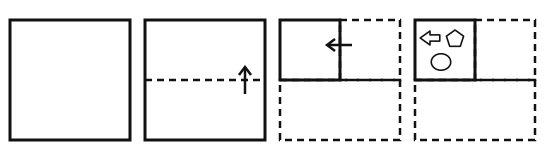
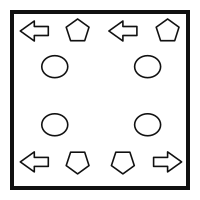
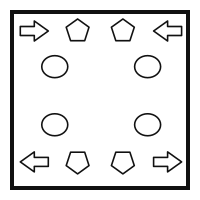
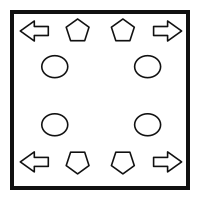
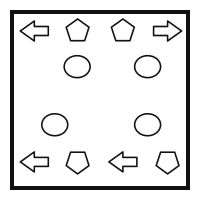
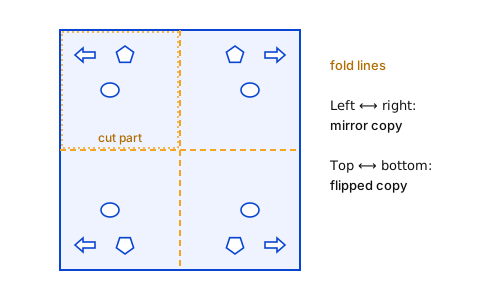
The sequence of folding a piece of paper and the manner in which the folded paper is cut is shown in the following figures. How would this paper look when unfolded?
एक कागज़ को मोड़ने का क्रम और मोड़े गए कागज़ को काटने का तरीका निम्नलिखित आकृतियों में दर्शाया गया है। खोलने पर यह कागज़ कैसा दिखाई देगा?
  1. A
  2. B
  3. C
  4. D
Show answer

Concept: While unfolding, every cut is copied as a mirror image across each fold line, in the reverse order of folding.

  1. The sheet was folded bottom-to-top, then right-to-left, so the cuts in the top-left quarter appear in all four quarters.
  2. Opening the vertical fold: the left-pointing arrow becomes a right-pointing arrow in the top-right quarter; pentagon and circle are copied.
  3. Opening the horizontal fold: the bottom half is an upside-down copy of the top half, so the pentagons point downward there, arrows still point outward.
  4. This gives arrows pointing outward at all four corners: figure (C).

Trick: Final sheet is symmetric about both fold lines: check that the corner arrows all point away from the centre.

Answer: (C) the third option figure

अवधारणा: खोलते समय हर कटाव, मोड़ की हर रेखा के पार दर्पण-प्रतिबिंब की तरह उल्टे क्रम में दोहराया जाता है।

  1. कागज़ पहले नीचे से ऊपर, फिर दाएँ से बाएँ मोड़ा गया, इसलिए ऊपरी-बाएँ भाग के कटाव चारों भागों में आएँगे।
  2. खड़ा मोड़ खोलने पर: बाईं ओर वाला तीर ऊपरी-दाएँ भाग में दाईं ओर इशारा करेगा; पंचभुज और वृत्त दोहराए जाएँगे।
  3. आड़ा मोड़ खोलने पर: निचला आधा ऊपरी आधे की उलटी प्रति होगा, वहाँ पंचभुज नीचे की ओर नुकीले होंगे।
  4. चारों कोनों पर तीर बाहर की ओर: आकृति (C)।

ट्रिक: अंतिम कागज़ दोनों मोड़ रेखाओं के सापेक्ष सममित होता है: देखें कि कोनों के तीर केंद्र से बाहर की ओर हों।

उत्तर: (C) तीसरी विकल्प आकृति

SSC CPO Paper IGeneral Intelligence and ReasoningPaper Folding and CuttingSSC CPO Paper I 2023 · 4 Oct Shift 2 →
Q5628.
Select the option that represents the letters which, when sequentially placed from left to right in the blanks below, will complete the letter series.
F _ _ Y _ _ K B _ O F _ B Y _
उस विकल्प का चयन कीजिए जो उन अक्षरों को दर्शाता है जिन्हें नीचे दिए गए रिक्त स्थानों में बाएँ से दाएँ क्रमिक रूप से रखने पर अक्षर शृंखला पूरी हो जाएगी।
F _ _ Y _ _ K B _ O F _ B Y _
  1. AO F K B O Y K
  2. BB Y O K F O K
  3. CK B O F Y K O
  4. DY O K B F O K
Show answer

Concept: Find the repeating block of letters.

  1. Put option (C) K B O F Y K O into the blanks.
  2. Series becomes F K B Y O | F K B Y O | F K B Y O.
  3. The block FKBYO repeats three times, so (C) fits.

Trick: Given letters F … Y … K B … O F … B Y suggest a 5-letter block starting with F; test that first.

Answer: (C) K B O F Y K O

अवधारणा: अक्षरों का दोहराने वाला समूह खोजें।

  1. विकल्प (C) K B O F Y K O रिक्त स्थानों में रखें।
  2. श्रृंखला: F K B Y O | F K B Y O | F K B Y O।
  3. समूह FKBYO तीन बार दोहराता है, अतः (C) सही।

ट्रिक: दिए अक्षर F से शुरू होने वाले 5 अक्षरों के समूह का संकेत देते हैं; पहले वही जाँचें।

उत्तर: (C) K B O F Y K O

SSC CPO Paper IGeneral Intelligence and ReasoningLetter Series (Blanks)SSC CPO Paper I 2023 · 4 Oct Shift 2 →
Q5629.
Select the option that is related to the fifth letter-cluster in the same way as the second letter-cluster is related to the first letter-cluster and the fourth letter-cluster is related to the third letter-cluster.
INDIA : FKAFX :: ESTONIA : BPQLKFX:: MALAYSIA :?
उस विकल्प का चयन कीजिए जो पाँचवें अक्षर-समूह से उसी प्रकार संबंधित है जिस प्रकार दूसरा अक्षर-समूह पहले अक्षर-समूह से और चौथा अक्षर-समूह तीसरे अक्षर-समूह से संबंधित है।
INDIA : FKAFX :: ESTONIA : BPQLKFX:: MALAYSIA :?
  1. AJPFXXIXV
  2. BJXVPFXXI
  3. CJXIXFXVP
  4. DJXIXVPFX
Show answer

Concept: Each letter is moved 3 places back in the alphabet (−3).

  1. INDIA: I→F, N→K, D→A, I→F, A→X gives FKAFX ✓.
  2. ESTONIA: E→B, S→P, T→Q, O→L, N→K, I→F, A→X gives BPQLKFX ✓.
  3. MALAYSIA: M→J, A→X, L→I, A→X, Y→V, S→P, I→F, A→X gives JXIXVPFX.

Trick: A always becomes X (going back past A to Z): every A in MALAYSIA turns into X at positions 2, 4, 8.

Answer: (D) JXIXVPFX

अवधारणा: हर अक्षर वर्णमाला में 3 स्थान पीछे जाता है (−3)।

  1. INDIA: I→F, N→K, D→A, I→F, A→X से FKAFX ✓।
  2. ESTONIA: E→B, S→P, T→Q, O→L, N→K, I→F, A→X से BPQLKFX ✓।
  3. MALAYSIA: M→J, A→X, L→I, A→X, Y→V, S→P, I→F, A→X से JXIXVPFX।

ट्रिक: A हमेशा X बनता है: MALAYSIA के 2, 4, 8वें स्थान पर X होना चाहिए।

उत्तर: (D) JXIXVPFX

SSC CPO Paper IGeneral Intelligence and ReasoningLetter-Cluster AnalogySSC CPO Paper I 2023 · 4 Oct Shift 2 →
Q5630.
In a certain code language, ‘PAINT’ is written as ‘ODYTN’ and 'BRUSH' is written as 'CMMOZ'. How will ‘HOUSE’ be written in that language?
एक निश्चित कूट भाषा में, ‘PAINT’ को ‘ODYTN’ लिखा जाता है और 'BRUSH' को 'CMMOZ' लिखा जाता है। उस भाषा में ‘HOUSE’ को किस प्रकार लिखा जाएगा?
  1. AWDNOS
  2. BWPMOC
  3. CPHYWS
  4. DPBOMS
Show answer

Concept: Take each letter's opposite (A↔Z, B↔Y …, position 27−n), then move the first two letters +4 and the last three letters +7.

  1. PAINT: opposites K, Z, R, M, G → +4,+4,+7,+7,+7 → O, D, Y, T, N = ODYTN ✓.
  2. BRUSH: opposites Y, I, F, H, S → C, M, M, O, Z = CMMOZ ✓.
  3. HOUSE: opposites S, L, F, H, V → +4: W, P; +7: M, O, C.
  4. Code = WPMOC.

Trick: U→M and S→O occur in BRUSH at the same positions as in HOUSE, so the answer must have M, O in 3rd–4th place: only WPMOC.

Answer: (B) WPMOC

अवधारणा: हर अक्षर का विपरीत अक्षर लें (A↔Z, B↔Y …, स्थान 27−n), फिर पहले दो अक्षरों में +4 और अंतिम तीन में +7 करें।

  1. PAINT: विपरीत K, Z, R, M, G → +4,+4,+7,+7,+7 → ODYTN ✓।
  2. BRUSH: विपरीत Y, I, F, H, S → CMMOZ ✓।
  3. HOUSE: विपरीत S, L, F, H, V → +4: W, P; +7: M, O, C।
  4. कोड = WPMOC।

ट्रिक: BRUSH में U→M और S→O उन्हीं स्थानों पर हैं जहाँ HOUSE में; अतः उत्तर के तीसरे-चौथे स्थान पर M, O: केवल WPMOC।

उत्तर: (B) WPMOC

SSC CPO Paper IGeneral Intelligence and ReasoningCoding–Decoding (Opposite Letters)SSC CPO Paper I 2023 · 4 Oct Shift 2 →
Q5631.
Select the option that represents the correct order of the given words as they would appear in an English dictionary?
1.Wrist
2.Wrangle
3.Workable
4.Wrongful
5.Woodland
उस विकल्प का चयन कीजिए जो दिए गए शब्दों के उस सही क्रम को दर्शाता है जिसमें वे अंग्रेज़ी शब्दकोश में आएँगे।
1.Wrist
2.Wrangle
3.Workable
4.Wrongful
5.Woodland
  1. A3, 5, 2, 1, 4
  2. B3, 2, 5, 1, 4
  3. C5, 2, 3, 1, 4
  4. D5, 3, 2, 1, 4
Show answer

Concept: Compare letter by letter after the common first letter W.

  1. Second letters: O (Woodland, Workable) come before R (Wrangle, Wrist, Wrongful).
  2. Woodland (WOO) before Workable (WOR).
  3. Third letters A < I < O: Wrangle, Wrist, Wrongful.
  4. Order: 5, 3, 2, 1, 4.

Trick: Split into WO- and WR- groups first.

Answer: (D) 5, 3, 2, 1, 4

अवधारणा: पहला अक्षर W समान है, आगे अक्षर-दर-अक्षर तुलना करें।

  1. दूसरा अक्षर: O (Woodland, Workable) पहले, R (Wrangle, Wrist, Wrongful) बाद में।
  2. Woodland (WOO), Workable (WOR) से पहले।
  3. तीसरा अक्षर A, I, O: Wrangle, Wrist, Wrongful।
  4. क्रम: 5, 3, 2, 1, 4।

ट्रिक: पहले WO- और WR- दो समूह बनाएँ।

उत्तर: (D) 5, 3, 2, 1, 4

SSC CPO Paper IGeneral Intelligence and ReasoningDictionary OrderSSC CPO Paper I 2023 · 4 Oct Shift 2 →
Q5632.
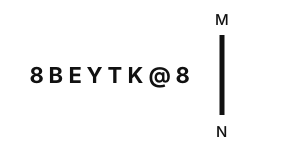
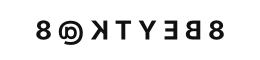
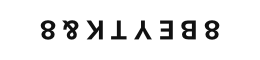
Select the correct mirror image of the given figure when the mirror is placed at MN as shown below.
जब दर्पण को नीचे दर्शाए अनुसार MN पर रखा जाता है, तो दी गई आकृति के सही दर्पण प्रतिबिंब का चयन कीजिए।
  1. A
  2. B
  3. C
  4. D
Show answer

Concept: With a vertical mirror on the right, the order of characters is reversed and each character is flipped left-to-right; nothing turns upside down.

  1. Original: 8 B E Y T K @ 8. Read from the mirror side: 8 @ K T Y E B 8.
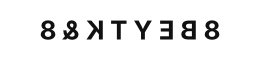
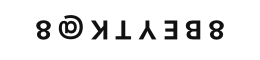
  2. Each character is laterally flipped: B, E, K and @ face the other way, while 8, T and Y look unchanged.
  3. Option (C) shows exactly this, with the @ reversed and nothing inverted.

Trick: Symmetric characters (8, T, Y) stay the same; check the asymmetric ones (B, E, K, @).

Answer: (C) the third option figure

अवधारणा: दाईं ओर रखे खड़े दर्पण में अक्षरों का क्रम उलट जाता है और हर अक्षर बाएँ-दाएँ पलटता है; कुछ भी उल्टा (ऊपर-नीचे) नहीं होता।

  1. मूल: 8 B E Y T K @ 8। दर्पण की ओर से: 8 @ K T Y E B 8।
  2. हर अक्षर पार्श्व रूप से पलटता है: B, E, K और @ दूसरी ओर मुड़ जाते हैं, 8, T, Y वैसे ही दिखते हैं।
  3. विकल्प (C) ठीक यही दिखाता है; @ उल्टी दिशा में है और कुछ भी उल्टा नहीं।

ट्रिक: सममित अक्षर (8, T, Y) नहीं बदलते; असममित अक्षरों (B, E, K, @) को जाँचें।

उत्तर: (C) तीसरी विकल्प आकृति

SSC CPO Paper IGeneral Intelligence and ReasoningMirror ImageSSC CPO Paper I 2023 · 4 Oct Shift 2 →
Q5633.
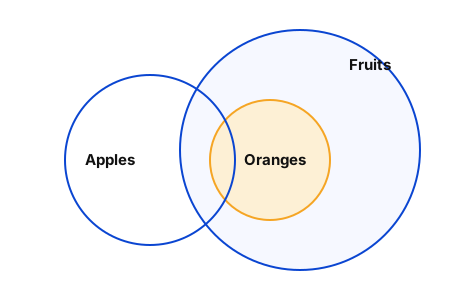
Two statements are given, followed by two conclusions numbered I and II. Assuming the statements to be true, even if they seem to be at variance with commonly known facts, decide which of the conclusions logically follow(s) from the statements.
Statements:
Some apples are oranges.
All oranges are fruits.
Conclusions:
I) All apples are fruits.
II) Some fruits are oranges.
दो कथन दिए गए हैं, जिनके बाद I और II से संख्यांकित दो निष्कर्ष दिए गए हैं। कथनों को सत्य मानते हुए, भले ही वे सामान्य रूप से ज्ञात तथ्यों से भिन्न प्रतीत होते हों, निर्णय लीजिए कि कौन-सा/से निष्कर्ष तार्किक रूप से कथनों का अनुसरण करता है/करते हैं।
कथन:
कुछ सेब, संतरे हैं।
सभी संतरे, फल हैं।
निष्कर्ष:
I) सभी सेब, फल हैं।
II) कुछ फल, संतरे हैं।
  1. ANeither Conclusion I nor II follows.न तो निष्कर्ष I और न ही II अनुसरण करता है।
  2. BOnly Conclusion II follows.केवल निष्कर्ष II अनुसरण करता है।
  3. CBoth Conclusions I and II follow.निष्कर्ष I और II दोनों अनुसरण करते हैं।
  4. DOnly Conclusion I followsकेवल निष्कर्ष I अनुसरण करता है
Show answer

Concept: Some A are B + All B are C ⇒ Some A are C; also 'All B are C' ⇒ 'Some C are B'.

  1. All oranges are fruits ⇒ some fruits are oranges, so II follows.
  2. Only the apples that are oranges are surely fruits; other apples may lie outside fruits, so 'All apples are fruits' (I) does not follow.

Trick: An 'All' statement can always be converted to 'Some' in reverse.

Answer: (B) Only Conclusion II follows.

अवधारणा: Some A are B + All B are C ⇒ Some A are C; तथा 'All B are C' से 'Some C are B' निकलता है।

  1. All oranges are fruits ⇒ some fruits are oranges, अतः II अनुसरण करता है।
  2. केवल वही apples निश्चित रूप से fruits हैं जो oranges हैं; बाकी apples बाहर हो सकते हैं, अतः I ('All apples are fruits') अनुसरण नहीं करता।

ट्रिक: 'All' कथन को उलटकर हमेशा 'Some' बनाया जा सकता है।

उत्तर: (B) Only Conclusion II follows.

SSC CPO Paper IGeneral Intelligence and ReasoningSyllogismSSC CPO Paper I 2023 · 4 Oct Shift 2 →
Q5634.
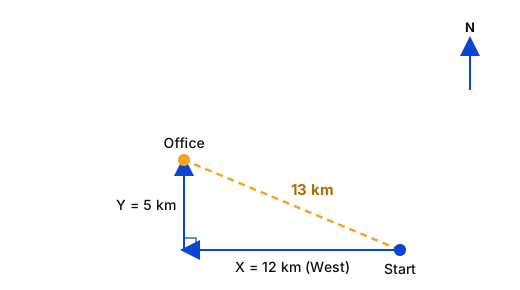
Manohar cycles X km towards west and then turns right and cycles Y km to reach his office. Now, the shortest distance between the starting point and his office is 13 km. What can be the value of X and Y, respectively, (in km)?
मनोहर पश्चिम की ओर X km साइकिल चलाता है और फिर दाएँ मुड़कर अपने कार्यालय पहुँचने के लिए Y km साइकिल चलाता है। अब, प्रारंभिक बिंदु और उसके कार्यालय के बीच की न्यूनतम दूरी 13 km है। X और Y का मान क्रमशः (km में) क्या हो सकता है?
  1. A12 and 512 और 5
  2. B8 and 58 और 5
  3. C11 and 611 और 6
  4. D6 and 76 और 7
Show answer

Concept: West then a right turn (north) makes a right angle, so X2+Y2=132=169.

  1. 122+52=144+25=169 ✓.
  2. 82+52=89, 112+62=157, 62+72=85: none equals 169.
  3. So X = 12 km and Y = 5 km.

Trick: (5, 12, 13) is the standard Pythagorean triplet.

Answer: (A) 12 and 5

अवधारणा: पश्चिम जाकर दाएँ (उत्तर) मुड़ने से समकोण बनता है, अतः X2+Y2=132=169।

  1. 122+52=144+25=169 ✓।
  2. 82+52=89, 112+62=157, 62+72=85: कोई 169 नहीं।
  3. अतः X = 12 km और Y = 5 km।

ट्रिक: (5, 12, 13) प्रसिद्ध पाइथागोरस त्रिक है।

उत्तर: (A) 12 and 5

SSC CPO Paper IGeneral Intelligence and ReasoningDirection and DistanceSSC CPO Paper I 2023 · 4 Oct Shift 2 →
Q5635.
In a certain code language, ‘EARS’ is coded as ‘4268’ and ‘NICE’ is coded as ‘9723’. What is the code for ‘E’ in the given code language?
एक निश्चित कूट भाषा में, ‘EARS’ को ‘4268’ के रूप में कूटबद्ध किया जाता है और ‘NICE’ को ‘9723’ के रूप में कूटबद्ध किया जाता है। दी गई कूट भाषा में ‘E’ के लिए कूट क्या है?
  1. A3
  2. B2
  3. C9
  4. D4
Show answer

Concept: A letter common to two words takes the digit common to their codes.

  1. EARS → {4, 2, 6, 8}; NICE → {9, 7, 2, 3}.
  2. Common letter: E. Common digit: 2.
  3. So E = 2.

Trick: Compare letter sets and digit sets; one common element each means a direct match.

Answer: (B) 2

अवधारणा: दो शब्दों में उभयनिष्ठ अक्षर का कोड, उनके कोडों में उभयनिष्ठ अंक होता है।

  1. EARS → {4, 2, 6, 8}; NICE → {9, 7, 2, 3}।
  2. उभयनिष्ठ अक्षर: E; उभयनिष्ठ अंक: 2।
  3. अतः E = 2।

ट्रिक: अक्षरों और अंकों दोनों में एक-एक उभयनिष्ठ हो तो सीधा मिलान।

उत्तर: (B) 2

SSC CPO Paper IGeneral Intelligence and ReasoningCoding–Decoding (Common Letter)SSC CPO Paper I 2023 · 4 Oct Shift 2 →
Q5636.
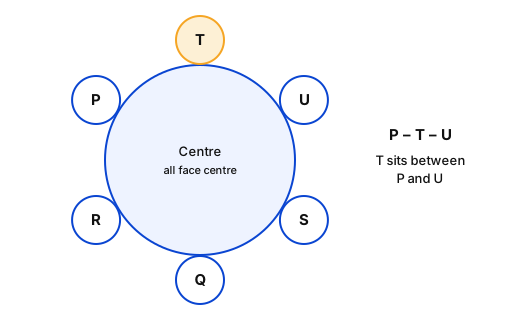
Six people are sitting around a circular table facing the centre. P sits second to the left of Q. S is an immediate neighbour of both Q and U. T sits second to the left of R. Who is the immediate neighbour of both P and U?
छह व्यक्ति एक वृत्ताकार मेज़ के चारों ओर केंद्र की ओर मुख करके बैठे हैं। P, Q के बाएँ से दूसरे स्थान पर बैठा है। S, Q और U दोनों का निकटतम पड़ोसी है। T, R के बाएँ से दूसरे स्थान पर बैठा है। P और U दोनों का निकटतम पड़ोसी कौन है?
  1. AT
  2. BS
  3. CQ
  4. DR
Show answer

Concept: Facing the centre, left = clockwise and right = anticlockwise.

  1. Fix Q. P is second to the left of Q.
  2. S is a neighbour of Q and U. If S sat on Q's left, U would need P's seat; so S sits on Q's right and U next to S.
  3. Two seats remain, one on each side of P. T is second to the left of R, so R sits next to Q (between Q and P) and T sits between P and U.
  4. Order: Q, R, P, T, U, S. T is the neighbour of both P and U.

Trick: Place the 'neighbour of both' trio (Q–S–U) first; the remaining two names fill the two gaps.

Answer: (A) T

अवधारणा: केंद्र की ओर मुख होने पर बायाँ = दक्षिणावर्त और दायाँ = वामावर्त।

  1. Q को स्थिर करें। P, Q के बाएँ दूसरे स्थान पर है।
  2. S, Q और U दोनों का पड़ोसी है। Q के बाएँ S रखने पर U की जगह P आ जाएगा, अतः S, Q के दाएँ और U, S के बगल में।
  3. बचे दो स्थान P के दोनों ओर हैं। T, R के बाएँ दूसरे स्थान पर है, अतः R, Q और P के बीच तथा T, P और U के बीच।
  4. क्रम: Q, R, P, T, U, S। T, P और U दोनों का पड़ोसी है।

ट्रिक: पहले 'दोनों का पड़ोसी' वाली तिकड़ी (Q–S–U) रखें; बचे दो नाम खाली जगह भरते हैं।

उत्तर: (A) T

SSC CPO Paper IGeneral Intelligence and ReasoningCircular Seating ArrangementSSC CPO Paper I 2023 · 4 Oct Shift 2 →
Q5637.
Based on the position in the English alphabetical order, three of the following letter- clusters are alike in some manner and one is different. Select the odd letter-cluster.
अंग्रेज़ी वर्णमाला क्रम में स्थिति के आधार पर, निम्नलिखित में से तीन अक्षर-समूह किसी प्रकार से समान हैं और एक असंगत है। असंगत अक्षर-समूह का चयन कीजिए।
  1. ASWYX
  2. BPTVU
  3. CRVXW
  4. DLOQP
Show answer

Concept: Check the gaps between consecutive letters.

  1. SWYX: S+4=W, W+2=Y, Y−1=X.
  2. PTVU: +4,+2,−1 ✓. RVXW: +4,+2,−1 ✓.
  3. LOQP: L+3=O, then +2,−1; the first gap is 3, not 4.

Trick: Only the first gap differs; check that first in such questions.

Answer: (D) LOQP

अवधारणा: क्रमागत अक्षरों का अंतर देखें।

  1. SWYX: S+4=W, W+2=Y, Y−1=X।
  2. PTVU: +4,+2,−1 ✓। RVXW: +4,+2,−1 ✓।
  3. LOQP: L+3=O, फिर +2,−1; पहला अंतर 4 नहीं, 3 है।

ट्रिक: यहाँ केवल पहला अंतर अलग है; ऐसे प्रश्नों में पहले वही जाँचें।

उत्तर: (D) LOQP

SSC CPO Paper IGeneral Intelligence and ReasoningOdd One Out (Letter Clusters)SSC CPO Paper I 2023 · 4 Oct Shift 2 →
Q5638.
Four letter-clusters have been given, out of which three are alike in some manner and one is different. Select the odd letter-cluster.
चार अक्षर-समूह दिए गए हैं, जिनमें से तीन किसी प्रकार से समान हैं और एक असंगत है। असंगत अक्षर-समूह का चयन कीजिए।
  1. AGCKD
  2. BUQYR
  3. CXOTP
  4. DNJRK
Show answer

Concept: Check the gaps between consecutive letters.

  1. GCKD: G−4=C, C+8=K, K−7=D.
  2. UQYR: −4,+8,−7 ✓. NJRK: −4,+8,−7 ✓.
  3. XOTP: X−9=O, O+5=T, T−4=P: pattern differs.

Trick: Just check the first gap: −4 in three clusters, −9 in XOTP.

Answer: (C) XOTP

अवधारणा: क्रमागत अक्षरों का अंतर देखें।

  1. GCKD: G−4=C, C+8=K, K−7=D।
  2. UQYR: −4,+8,−7 ✓। NJRK: −4,+8,−7 ✓।
  3. XOTP: X−9=O, O+5=T, T−4=P: नियम अलग।

ट्रिक: पहले दो अक्षरों का अंतर ही देख लें: तीनों में −4, XOTP में −9।

उत्तर: (C) XOTP

SSC CPO Paper IGeneral Intelligence and ReasoningOdd One Out (Letter Clusters)SSC CPO Paper I 2023 · 4 Oct Shift 2 →
Q5639.
Two statements are given, followed by two conclusions numbered I and II. Assuming the statements to be true, even if they seem to be at variance with commonly known facts, decide which of the conclusions logically follow(s) from the statements.
Statements:
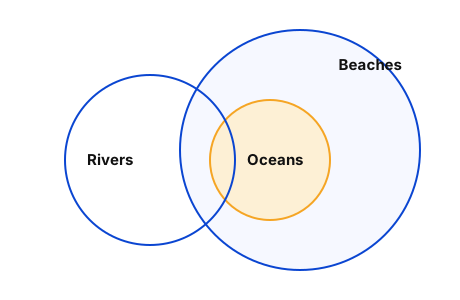
Some rivers are oceans.
All oceans are beaches.
Conclusions:
I. Some rivers are beaches.
II. All oceans are rivers.
दो कथन दिए गए हैं, जिनके बाद I और II से संख्यांकित दो निष्कर्ष दिए गए हैं। कथनों को सत्य मानते हुए, भले ही वे सामान्य रूप से ज्ञात तथ्यों से भिन्न प्रतीत होते हों, निर्णय लीजिए कि कौन-सा/से निष्कर्ष तार्किक रूप से कथनों का अनुसरण करता है/करते हैं।
कथन:
कुछ नदियाँ, महासागर हैं।
सभी महासागर, समुद्र तट हैं।
निष्कर्ष:
I. कुछ नदियाँ, समुद्र तट हैं।
II. सभी महासागर, नदियाँ हैं।
  1. AOnly conclusion II followsकेवल निष्कर्ष II अनुसरण करता है
  2. BBoth conclusions I and II followनिष्कर्ष I और II दोनों अनुसरण करते हैं
  3. CNeither conclusion I nor II followsन तो निष्कर्ष I और न ही II अनुसरण करता है
  4. DOnly conclusion I followsकेवल निष्कर्ष I अनुसरण करता है
Show answer

Concept: Some A are B + All B are C ⇒ Some A are C.

  1. Some rivers are oceans and all oceans are beaches, so those rivers are beaches: I follows.
  2. Only some oceans are known to be rivers; 'All oceans are rivers' (II) does not follow.

Trick: Some + All = Some (conclusion between the first and last terms).

Answer: (D) Only conclusion I follows

अवधारणा: Some A are B + All B are C ⇒ Some A are C।

  1. Some rivers are oceans और all oceans are beaches, अतः वे rivers beaches हैं: I अनुसरण करता है।
  2. केवल कुछ oceans का rivers होना ज्ञात है; 'All oceans are rivers' (II) अनुसरण नहीं करता।

ट्रिक: Some + All = Some (पहले और अंतिम पद के बीच)।

उत्तर: (D) Only conclusion I follows

SSC CPO Paper IGeneral Intelligence and ReasoningSyllogismSSC CPO Paper I 2023 · 4 Oct Shift 2 →
Q5640.
If ‘+’ means ‘×’, ‘–’ means ‘÷’, ‘×’ means ‘+’, and ‘÷’ means ‘−’, then what will be the
value of the following expression?
42 × 168 - 8 ÷ 4 + 3 = ?
यदि ‘+’ का अर्थ ‘×’, ‘–’ का अर्थ ‘÷’, ‘×’ का अर्थ ‘+’ और ‘÷’ का अर्थ ‘−’ है, तो निम्नलिखित व्यंजक का
मान क्या होगा?
42 × 168 - 8 ÷ 4 + 3 = ?
  1. A62
  2. B45
  3. C56
  4. D51
Show answer

Concept: Interchange the signs as given, then use BODMAS.

  1. 42×168−8÷4+3 becomes 42+168÷8−4×3.
  2. 168÷8=21, 4×3=12.
  3. 42+21−12=51.

Trick: Write the new expression fully before calculating, to avoid swapping signs twice.

Answer: (D) 51

अवधारणा: दिए अनुसार चिह्न बदलें, फिर BODMAS लगाएँ।

  1. 42×168−8÷4+3 बनता है 42+168÷8−4×3।
  2. 168÷8=21, 4×3=12।
  3. 42+21−12=51।

ट्रिक: गणना से पहले नया व्यंजक पूरा लिख लें, ताकि चिह्न दो बार न बदलें।

उत्तर: (D) 51

SSC CPO Paper IGeneral Intelligence and ReasoningMathematical OperationsSSC CPO Paper I 2023 · 4 Oct Shift 2 →