Question bank

Q&A: practice questions with answers

Search questions on any topic. Filter by exam category, exam, subject and topic, try the question, then open the answer and explanation.

Courses – airGurukul

6,600 questions found.

Q6001.
Select the option that represents the letters that, when sequentially placed from left to right in the blanks below, will complete the letter series.
L _ _ A _ _ S _ _ K _ _ L _ _ A
उस विकल्प का चयन कीजिए जो उन अक्षरों को दर्शाता है जिन्हें नीचे दिए गए रिक्त स्थानों में बाएँ से दाएँ क्रमिक रूप से रखने पर अक्षर श्रृंखला पूरी हो जाएगी।
L _ _ A _ _ S _ _ K _ _ L _ _ A
  1. AA S L K A L S A K A
  2. BK S K K A L S A K A
  3. CK S L K A L S A K S
  4. DK S L K A L S A K A
Show answer

Concept: Fill the blanks so that the 16 letters form a repeating block.

  1. Total letters =16; the given letters L, A, S, K, L, A suggest a block of 4: LKSA.
  2. Writing LKSA four times: LKSA LKSA LKSA LKSA.
  3. Blanks in order: K S L K A L S A K S.

Trick: Count the letters, try the shortest block that fits all given letters, then read the blanks left to right.

Answer: (C) K S L K A L S A K S

अवधारणा: रिक्त स्थान ऐसे भरें कि 16 अक्षर एक दोहराने वाला समूह बनाएँ।

  1. कुल अक्षर =16; दिए अक्षर L, A, S, K, L, A से 4 अक्षरों का समूह LKSA बनता है।
  2. LKSA को चार बार लिखें: LKSA LKSA LKSA LKSA।
  3. रिक्त स्थान क्रम से: K S L K A L S A K S।

ट्रिक: अक्षर गिनें, सबसे छोटा दोहराने वाला समूह खोजें, फिर रिक्त स्थान बाएँ से दाएँ पढ़ें।

उत्तर: (C) K S L K A L S A K S
SSC CPO Paper IGeneral Intelligence and ReasoningLetter SeriesSSC CPO Paper I 2023 · 3 Oct Shift 3 →
Q6002.
Select the set in which the numbers are related in the same way as the numbers of the given sets.
(NOTE : Operations should be performed on the whole numbers, without breaking
down the numbers into its constituent digits. E.g. 13 – Operations on 13 such as
adding /subtracting /multiplying etc. to 13 can be performed. Breaking down 13 into 1 and 3 and then performing mathematical operations on 1 and 3 is not allowed.)
(6, 8, 106)
(7, 11, 177)
उस समुच्चय का चयन कीजिए जिसमें संख्याएँ उसी प्रकार संबंधित हैं जिस प्रकार दिए गए समुच्चयों की संख्याएँ संबंधित हैं।
(नोट: संक्रियाएँ संख्याओं को उनके घटक अंकों में विभक्त किए बिना, पूर्ण संख्याओं पर की जानी चाहिए। उदाहरण के लिए, 13 – 13 पर की जाने वाली संक्रियाएँ, जैसे 13 में जोड़ना/घटाना/गुणा करना आदि की जा सकती हैं। 13 को 1 और 3 में विभक्त करके फिर 1 और 3 पर गणितीय संक्रियाएँ करने की अनुमति नहीं है।)
(6, 8, 106)
(7, 11, 177)
  1. A(8, 7, 119)
  2. B(9, 8, 154)
  3. C(5, 9, 101)
  4. D(7, 9, 136)
Show answer

Concept: Find one rule linking the first two numbers to the third in both sets.

  1. (6,8): 62+82+6=36+64+6=106 ✓
  2. (7,11): 72+112+7=49+121+7=177 ✓ → rule: a2+b2+a.
  3. (B) (9,8): 81+64+9=154 ✓; (A) 64+49+8=121≠119; (C) 25+81+5=111≠101; (D) 49+81+7=137≠136.

Trick: When the third number is slightly above a2+b2, check whether the extra equals a or b.

Answer: (B) (9, 8, 154)

अवधारणा: दोनों समूहों में पहली दो संख्याओं से तीसरी संख्या बनाने वाला एक नियम खोजें।

  1. (6,8): 62+82+6=36+64+6=106 ✓
  2. (7,11): 72+112+7=49+121+7=177 ✓ → नियम: a2+b2+a।
  3. (B) (9,8): 81+64+9=154 ✓; (A) 121≠119; (C) 111≠101; (D) 137≠136।

ट्रिक: तीसरी संख्या a2+b2 से थोड़ी बड़ी हो तो देखें कि अंतर a या b तो नहीं।

उत्तर: (B) (9, 8, 154)

SSC CPO Paper IGeneral Intelligence and ReasoningNumber Set RelationSSC CPO Paper I 2023 · 3 Oct Shift 3 →
Q6003.
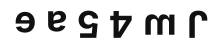
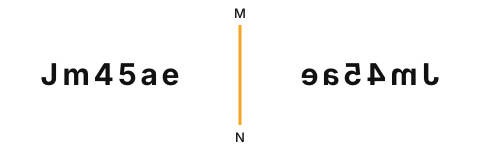
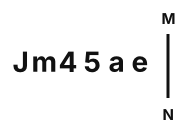
Select the correct mirror image of the given figure when the mirror is placed at MN as shown.
दर्पण को दर्शाए अनुसार MN पर रखे जाने पर दी गई आकृति के सही दर्पण प्रतिबिंब का चयन कीजिए।
  1. A
  2. B
  3. C
  4. D
Show answer

Concept: With the mirror MN on the right (vertical), left and right swap: the order of characters reverses and each character is flipped sideways; top and bottom stay the same.

  1. Object: J m 4 5 a e → image read left to right: e a 5 4 m J, each laterally inverted.
  2. Every character stays upright (no up-down flip).
  3. (A) shows exactly this; (C) and (D) are flipped upside down / partly wrong; (B) keeps 4 and 5 un-mirrored.

Trick: Vertical mirror: reverse the order and flip each letter left↔right — height never changes.

Answer: (A) the first option figure

अवधारणा: दर्पण MN दाईं ओर ऊर्ध्वाधर (vertical) है, इसलिए बायाँ-दायाँ बदलता है: अक्षरों का क्रम उल्टा होता है और हर अक्षर बगल से पलटता है; ऊपर-नीचे नहीं बदलता।

  1. वस्तु: J m 4 5 a e → प्रतिबिंब बाएँ से दाएँ: e a 5 4 m J, हर अक्षर पार्श्व रूप से उल्टा (laterally inverted)।
  2. कोई अक्षर उल्टा (ऊपर-नीचे) नहीं होता।
  3. (A) बिल्कुल ऐसा है; (C), (D) ऊपर-नीचे पलटे / गलत हैं; (B) में 4 और 5 पलटे नहीं गए।

ट्रिक: ऊर्ध्वाधर दर्पण: क्रम उल्टा करो और हर अक्षर बाएँ↔दाएँ पलटो — ऊँचाई नहीं बदलती।

उत्तर: (A) पहली विकल्प आकृति

SSC CPO Paper IGeneral Intelligence and ReasoningMirror ImageSSC CPO Paper I 2023 · 3 Oct Shift 3 →
Q6004.
A @ B means ‘A is the husband of B’
A & B means ‘A is the mother of B’
A # B means ‘A is the daughter of B’
If D & G @ F & E @ H, then how is G related to H?
A @ B का अर्थ है ‘A, B का पति है’
A & B का अर्थ है ‘A, B की माता है’
A # B का अर्थ है ‘A, B की पुत्री है’
यदि D & G @ F & E @ H है, तो G का H से क्या संबंध है?
  1. AHusband’s fatherपति के पिता
  2. BHusband’s motherपति की माता
  3. CMotherमाता
  4. DFatherपिता
Show answer

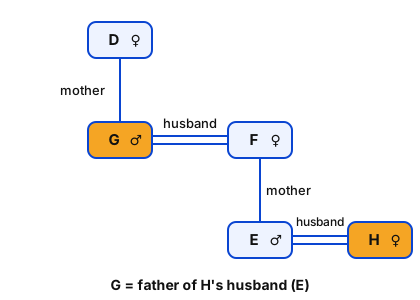
Concept: Decode each symbol and build the family tree: @ = husband of, & = mother of, # = daughter of.

  1. D & G → D is the mother of G.
  2. G @ F → G is the husband of F (G is male).
  3. F & E → F is the mother of E; so G is the father of E.
  4. E @ H → E is the husband of H. Hence G is the father of H's husband.

Yaad rakhein: Father of your husband = father-in-law; in options it is written as “Husband’s father”.

Answer: (A) Husband’s father

अवधारणा: हर चिन्ह का अर्थ लगाकर परिवार वृक्ष बनाएँ: @ = पति, & = माँ, # = बेटी।

  1. D & G → D, G की माँ है।
  2. G @ F → G, F का पति है (G पुरुष)।
  3. F & E → F, E की माँ है; अतः G, E का पिता है।
  4. E @ H → E, H का पति है। अतः G, H के पति का पिता है।

याद रखें: पति के पिता = ससुर (Husband’s father)।

उत्तर: (A) Husband’s father (पति के पिता)

SSC CPO Paper IGeneral Intelligence and ReasoningBlood Relation (Coded)SSC CPO Paper I 2023 · 3 Oct Shift 3 →
Q6005.
In a certain code language, ‘TOWER’ is written as ‘INGYL’ and 'SIGHT' is written as
'JTWVJ'. How will ‘BRING’ be written in that language?
एक निश्चित कूट भाषा में, ‘TOWER’ को ‘INGYL’ लिखा जाता है और ‘SIGHT’ को
‘JTWVJ’ लिखा जाता है। उसी भाषा में ‘BRING’ को किस प्रकार लिखा जाएगा?
  1. ALWYDB
  2. BACTBE
  3. CKRPJS
  4. DAKUPW
Show answer

Concept: Each letter is replaced by its opposite letter (pair sum =27), then shifted: +2,+2,+3,+3,+3.

  1. TOWER: opposites G L D V I → +2,+2,+3,+3,+3 → I N G Y L ✓
  2. SIGHT: opposites H R T S G → J T W V J ✓
  3. BRING: opposites Y I R M T → Y+2=A (wrap), I+2=K, R+3=U, M+3=P, T+3=W.

Trick: Opposite letter =27−position (A↔Z, B↔Y …); after Z continue from A.

Answer: (D) AKUPW

अवधारणा: हर अक्षर को उसके विपरीत अक्षर (स्थान योग =27) से बदलें, फिर +2,+2,+3,+3,+3 आगे बढ़ाएँ।

  1. TOWER: विपरीत G L D V I → +2,+2,+3,+3,+3 → I N G Y L ✓
  2. SIGHT: विपरीत H R T S G → J T W V J ✓
  3. BRING: विपरीत Y I R M T → Y+2=A (Z के बाद A), I+2=K, R+3=U, M+3=P, T+3=W।

ट्रिक: विपरीत अक्षर =27−स्थान (A↔Z, B↔Y …)।

उत्तर: (D) AKUPW

SSC CPO Paper IGeneral Intelligence and ReasoningCoding–DecodingSSC CPO Paper I 2023 · 3 Oct Shift 3 →
Q6006.
If ‘×’ means ‘ ̶ ’, ‘+’ means ‘ ÷ ’, ‘ ̶ ’ means ‘+’, and ‘÷’ means ‘×’, what will be the value of the following expression?
40 + [{( 24 - 12) × ( 2 ÷ 2 )} + ( 18 × 10 )]
यदि ‘×’ का अर्थ ‘ ̶ ’, ‘+’ का अर्थ ‘ ÷ ’, ‘ ̶ ’ का अर्थ ‘+’ और ‘÷’ का अर्थ ‘×’ है, तो निम्नलिखित व्यंजक का मान क्या होगा?
40 + [{( 24 - 12) × ( 2 ÷ 2 )} + ( 18 × 10 )]
  1. A10
  2. B20
  3. C1
  4. D5
Show answer

Concept: Replace the signs (×→−, +→÷, −→+, ÷→×) and solve by brackets then BODMAS.

  1. New expression: 40÷[{(24+12)−(2×2)}÷(18−10)]
  2. =40÷[{36−4}÷8]=40÷[32÷8]
  3. =40÷4=10

Trick: Rewrite the whole expression once with new signs before calculating — avoids mixing old and new signs.

Answer: (A) 10

अवधारणा: चिन्ह बदलें (×→−, +→÷, −→+, ÷→×) और कोष्ठक व BODMAS से हल करें।

  1. नया व्यंजक: 40÷[{(24+12)−(2×2)}÷(18−10)]
  2. =40÷[{36−4}÷8]=40÷[32÷8]
  3. =40÷4=10

ट्रिक: गणना से पहले पूरा व्यंजक नए चिन्हों से एक बार लिख लें।

उत्तर: (A) 10

SSC CPO Paper IGeneral Intelligence and ReasoningMathematical OperationsSSC CPO Paper I 2023 · 3 Oct Shift 3 →
Q6007.
In this question, three statements are given, followed by two conclusions numbered I and II. Assuming the statements to be true, even if they seem to be at variance with commonly known facts, decide which of the conclusions logically follows/follow from the statements.
Statements:
I. No dean is a teacher.
II. All teachers are professors.
III. No professor is a lecturer.
Conclusions:
I. Some deans are lecturers.
II. Some teachers are lecturers.
इस प्रश्न में तीन कथन दिए गए हैं, जिनके बाद I और II से संख्यांकित दो निष्कर्ष दिए गए हैं। कथनों को सत्य मानते हुए, भले ही वे सामान्यतः ज्ञात तथ्यों से भिन्न प्रतीत होते हों, निर्णय कीजिए कि कौन-सा/से निष्कर्ष तार्किक रूप से कथनों का अनुसरण करता है/करते हैं।
कथन:
I. कोई भी डीन, शिक्षक नहीं है।
II. सभी शिक्षक, प्रोफेसर हैं।
III. कोई भी प्रोफेसर, लेक्चरर नहीं है।
निष्कर्ष:
I. कुछ डीन, लेक्चरर हैं।
II. कुछ शिक्षक, लेक्चरर हैं।
  1. AOnly conclusion II followsकेवल निष्कर्ष II अनुसरण करता है
  2. BOnly conclusion I followsकेवल निष्कर्ष I अनुसरण करता है
  3. CBoth conclusions I and II followनिष्कर्ष I और II दोनों अनुसरण करते हैं
  4. DNeither conclusion I nor II followsन तो निष्कर्ष I और न ही II अनुसरण करता है
Show answer

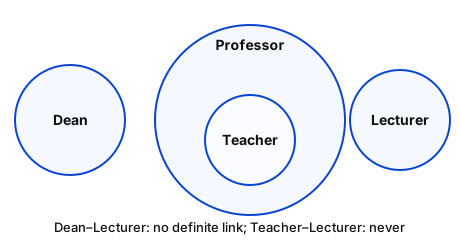
Concept: Draw the least-overlap Venn diagram and test each conclusion as a definite fact.

  1. Teacher lies inside Professor; Professor and Lecturer never meet → no Teacher is a Lecturer. So II is false.
  2. Dean is only separated from Teacher; nothing links Dean with Lecturer, so “Some deans are lecturers” is only a possibility. I does not follow.

Yaad rakhein: Two negative-type links (No…No) never give a definite positive “Some” conclusion.

Answer: (D) Neither conclusion I nor II follows

अवधारणा: न्यूनतम ओवरलैप वाला वेन आरेख बनाकर हर निष्कर्ष को निश्चित तथ्य के रूप में जाँचें।

  1. Teacher, Professor के अंदर है; Professor और Lecturer कभी नहीं मिलते → कोई Teacher, Lecturer नहीं। अतः II गलत।
  2. Dean का Lecturer से कोई निश्चित संबंध नहीं, इसलिए “Some deans are lecturers” केवल संभावना है। I अनुसरण नहीं करता।

याद रखें: दो नकारात्मक कथनों से निश्चित “Some” वाला निष्कर्ष नहीं निकलता।

उत्तर: (D) Neither conclusion I nor II follows (कोई नहीं)

SSC CPO Paper IGeneral Intelligence and ReasoningSyllogismSSC CPO Paper I 2023 · 3 Oct Shift 3 →
Q6008.
Select the correct combination of mathematical signs to sequentially replace the *
signs and to balance the given equation.
42 * 7 * 3 * 2 * 13 * 7
दिए गए समीकरण को संतुलित करने के लिए * चिह्नों को
क्रमिक रूप से प्रतिस्थापित करने वाले गणितीय चिह्नों के सही संयोजन का चयन कीजिए।
42 * 7 * 3 * 2 * 13 * 7
  1. A÷, ×, −, =, ×
  2. B+, =, ÷, ×, +
  3. C÷, ×, =, +, +
  4. D÷, ×, +, =, +
Show answer

Concept: Put each option's signs in order and check both sides with BODMAS.

  1. (D): 42÷7×3+2=13+7
  2. LHS =6×3+2=18+2=20; RHS =13+7=20 ✓
  3. (A): 42÷7×3−2=16 vs 13×7=91 ✗; others also fail.

Trick: Look at where “=” is placed in each option first; the RHS (13+7=20 or 13×7=91) quickly removes options.

Answer: (D) ÷, ×, +, =, +

अवधारणा: हर विकल्प के चिन्ह क्रम से लगाकर BODMAS से दोनों पक्ष जाँचें।

  1. (D): 42÷7×3+2=13+7
  2. बायाँ पक्ष =6×3+2=20; दायाँ पक्ष =13+7=20 ✓
  3. (A): 16 बनाम 91 ✗; अन्य विकल्प भी गलत।

ट्रिक: पहले देखें “=” कहाँ है; दायाँ पक्ष जल्दी विकल्प हटाता है।

उत्तर: (D) ÷, ×, +, =, +

SSC CPO Paper IGeneral Intelligence and ReasoningSign BalancingSSC CPO Paper I 2023 · 3 Oct Shift 3 →
Q6009.
In a certain code language, 'Here we go' is coded as 'asa te du' and 'We can go' is
coded as 'du mu asa'. What is the code for the word 'Here'?
एक निश्चित कूट भाषा में, 'Here we go' को 'asa te du' के रूप में कूटबद्ध किया जाता है और 'We can go' को
'du mu asa' के रूप में कूटबद्ध किया जाता है। शब्द 'Here' के लिए कूट क्या है?
  1. Amu
  2. Basa
  3. Cdu
  4. Dte
Show answer

Concept: Common words in two sentences share common codes.

  1. “Here we go” → asa te du; “We can go” → du mu asa.
  2. Common words: we, go → common codes: asa, du.
  3. Remaining word “Here” gets the remaining code te.

Trick: Strike out common words and common codes; what is left pairs up.

Answer: (D) te

अवधारणा: दो वाक्यों के सामान्य शब्दों के कोड भी सामान्य होते हैं।

  1. “Here we go” → asa te du; “We can go” → du mu asa।
  2. सामान्य शब्द: we, go → सामान्य कोड: asa, du।
  3. बचा शब्द “Here” → बचा कोड te।

ट्रिक: सामान्य शब्द और सामान्य कोड काट दें; बचे हुए आपस में मेल खाते हैं।

उत्तर: (D) te

SSC CPO Paper IGeneral Intelligence and ReasoningWord CodingSSC CPO Paper I 2023 · 3 Oct Shift 3 →
Q6010.
Three of the following letter-clusters are alike in some manner and one is different. Select the one that is different.
निम्नलिखित चार अक्षर-समूहों में से तीन किसी प्रकार से एकसमान हैं और एक उनसे असंगत है। उस असंगत अक्षर-समूह का चयन कीजिए।
  1. AQJPK
  2. BKOLN
  3. CMQNP
  4. DXBYA
Show answer

Concept: Check the movement from letter 1 to 3 and from letter 2 to 4.

  1. KOLN: K→L (+1), O→N (−1); MQNP: M→N (+1), Q→P (−1); XBYA: X→Y (+1), B→A (−1).
  2. QJPK: Q→P (−1), J→K (+1) — the pattern is reversed.
  3. Also 1st→2nd is +4 in the other three (K→O, M→Q, X→B) but not in QJPK.

Trick: Compare alternate letters; the cluster whose direction is reversed is the odd one.

Answer: (A) QJPK

अवधारणा: पहले से तीसरे और दूसरे से चौथे अक्षर की चाल देखें।

  1. KOLN: K→L (+1), O→N (−1); MQNP और XBYA में भी यही।
  2. QJPK: Q→P (−1), J→K (+1) — उल्टा क्रम।
  3. तीनों में पहले से दूसरे अक्षर तक +4 (K→O, M→Q, X→B), QJPK में नहीं।

ट्रिक: एकांतर अक्षरों की तुलना करें; जिसकी दिशा उल्टी हो वही भिन्न है।

उत्तर: (A) QJPK

SSC CPO Paper IGeneral Intelligence and ReasoningOdd One Out (Letters)SSC CPO Paper I 2023 · 3 Oct Shift 3 →
Q6011.
Select the correct option that indicates the arrangement of the given words in the
order in which they appear in an English dictionary.
1. Glory
2. Glossary
3. Globe
4. Gloss
5. Glow
6. Gloomy
उस सही विकल्प का चयन कीजिए जो दिए गए शब्दों की उस व्यवस्था को दर्शाता है
जिस क्रम में वे अंग्रेज़ी शब्दकोश में आते हैं।
1. Glory
2. Glossary
3. Globe
4. Gloss
5. Glow
6. Gloomy
  1. A3, 1, 6, 4, 2, 5
  2. B3, 6, 1, 2, 4, 5
  3. C3, 6, 1, 4, 2, 5
  4. D6, 3, 1, 4, 2, 5
Show answer

Concept: All words start with GLO; compare the 4th letter, then further letters.

  1. 4th letters: Globe, Gloomy, Glory, Gloss, Glossary, Glow → b, o, r, s, s, w.
  2. Gloss vs Glossary: Gloss is a prefix of Glossary, so Gloss comes first.
  3. Order: Globe(3), Gloomy(6), Glory(1), Gloss(4), Glossary(2), Glow(5).

Yaad rakhein: A shorter word that is the beginning of a longer word always comes first (Gloss → Glossary).

Answer: (C) 3, 6, 1, 4, 2, 5

अवधारणा: सभी शब्द GLO से शुरू हैं; चौथा अक्षर फिर आगे के अक्षर तुलना करें।

  1. चौथे अक्षर: b, o, r, s, s, w (Globe, Gloomy, Glory, Gloss, Glossary, Glow)।
  2. Gloss, Glossary का शुरुआती भाग है, इसलिए Gloss पहले।
  3. क्रम: Globe(3), Gloomy(6), Glory(1), Gloss(4), Glossary(2), Glow(5)।

याद रखें: छोटा शब्द जो बड़े शब्द की शुरुआत हो, हमेशा पहले आता है।

उत्तर: (C) 3, 6, 1, 4, 2, 5

SSC CPO Paper IGeneral Intelligence and ReasoningDictionary OrderSSC CPO Paper I 2023 · 3 Oct Shift 3 →
Q6012.
If '+' means '–', '–' means '÷', '÷' means '×' and '×' means '+', then what will come in
place of the (?) in the following equation?
15 ÷ 405 – 3 + 25 × 5 = ?
यदि '+' का अर्थ '–', '–' का अर्थ '÷', '÷' का अर्थ '×' और '×' का अर्थ '+' है, तो निम्नलिखित समीकरण में
प्रश्न चिह्न (?) के स्थान पर क्या आएगा?
15 ÷ 405 – 3 + 25 × 5 = ?
  1. A1890
  2. B2000
  3. C2005
  4. D1889
Show answer

Concept: Swap signs (+→−, −→÷, ÷→×, ×→+) and apply BODMAS.

  1. New: 15×405÷3−25+5
  2. 405÷3=135; 15×135=2025
  3. 2025−25+5=2005

Trick: Do the division first (405÷3) to keep numbers small.

Answer: (C) 2005

अवधारणा: चिन्ह बदलें (+→−, −→÷, ÷→×, ×→+) और BODMAS लगाएँ।

  1. नया: 15×405÷3−25+5
  2. 405÷3=135; 15×135=2025
  3. 2025−25+5=2005

ट्रिक: पहले भाग (405÷3) करें, संख्या छोटी रहती है।

उत्तर: (C) 2005

SSC CPO Paper IGeneral Intelligence and ReasoningMathematical OperationsSSC CPO Paper I 2023 · 3 Oct Shift 3 →
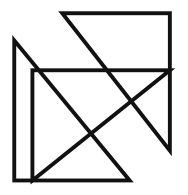
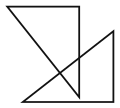
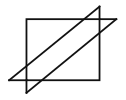
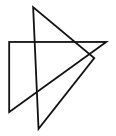
Q6013.
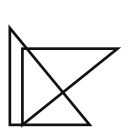
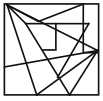
Select the option that is embedded in the given figure as its part (rotation is NOT allowed).
उस विकल्प का चयन कीजिए जो दी गई आकृति में उसके भाग के रूप में निहित है (घुमाने की अनुमति नहीं है)।
  1. A
  2. B
  3. C
  4. D
Show answer

Concept: The correct option must appear inside the big figure with the same size and orientation (no rotation).

  1. The given figure has a tall left rectangle with two diagonals crossing it and a horizontal line at the top-right.
  2. Option (D) — vertical side, a horizontal top line and two crossing slanted lines — traces exactly on the left part of the figure.
  3. (A), (B), (C) need lines/angles that are not present in the figure.

Trick: Fix one distinctive corner of the option (here the vertical edge with the cross) and look for it in the figure.

Answer: (D) the fourth option figure

अवधारणा: सही विकल्प बड़ी आकृति में उसी आकार और दिशा में (बिना घुमाए) दिखना चाहिए।

  1. दी गई आकृति में बाईं ओर लंबा आयत, उसे काटती दो तिरछी रेखाएँ और ऊपर क्षैतिज रेखा है।
  2. विकल्प (D) — ऊर्ध्वाधर भुजा, ऊपर क्षैतिज रेखा और दो कटती तिरछी रेखाएँ — आकृति के बाएँ भाग में ठीक बैठता है।
  3. (A), (B), (C) में ऐसी रेखाएँ/कोण हैं जो आकृति में नहीं हैं।

ट्रिक: विकल्प का कोई विशेष कोना (यहाँ ऊर्ध्वाधर भुजा और क्रॉस) पकड़कर आकृति में खोजें।

उत्तर: (D) चौथी विकल्प आकृति

SSC CPO Paper IGeneral Intelligence and ReasoningEmbedded FigureSSC CPO Paper I 2023 · 3 Oct Shift 3 →
Q6014.
Two statements are given, followed by two conclusions numbered I and II. Assuming the statements to be true, even if they seem to be at variance with commonly known facts, decide which of the conclusions logically follow(s) from the statements.
Statements:
All cupboards are shelves.
All shelves are drawers.
Conclusions:
I. All cupboards are drawers.
II. All drawers are shelves.
दो कथन दिए गए हैं, जिनके बाद I और II से संख्यांकित दो निष्कर्ष दिए गए हैं। कथनों को सत्य मानते हुए, भले ही वे सामान्यतः ज्ञात तथ्यों से भिन्न प्रतीत होते हों, निर्णय कीजिए कि कौन-सा/से निष्कर्ष तार्किक रूप से कथनों का अनुसरण करता है/करते हैं।
कथन:
सभी अलमारियाँ, शेल्फ हैं।
सभी शेल्फ, दराज हैं।
निष्कर्ष:
I. सभी अलमारियाँ, दराज हैं।
II. सभी दराज, शेल्फ हैं।
  1. ANeither conclusion I nor II followsन तो निष्कर्ष I और न ही II अनुसरण करता है
  2. BBoth conclusions I and II followनिष्कर्ष I और II दोनों अनुसरण करते हैं
  3. COnly conclusion II followsकेवल निष्कर्ष II अनुसरण करता है
  4. DOnly conclusion I followsकेवल निष्कर्ष I अनुसरण करता है
Show answer

Concept: “All A are B” + “All B are C” gives “All A are C”; the reverse (All C are B) is not certain.

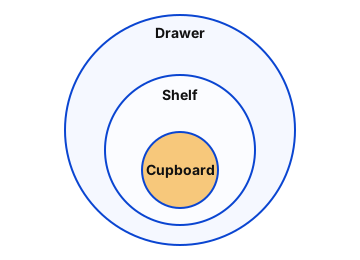
  1. Cupboard ⊂ Shelf ⊂ Drawer, so every cupboard is a drawer → I follows.
  2. Drawer is the biggest circle; part of it may lie outside Shelf → II does not follow.

Yaad rakhein: “All” cannot be reversed: All shelves are drawers ≠ All drawers are shelves.

Answer: (D) Only conclusion I follows

अवधारणा: “All A are B” + “All B are C” से “All A are C” निकलता है; उल्टा (All C are B) निश्चित नहीं।

  1. Cupboard ⊂ Shelf ⊂ Drawer, अतः हर cupboard एक drawer है → I अनुसरण करता है।
  2. Drawer सबसे बड़ा वृत्त है; उसका कुछ भाग Shelf के बाहर हो सकता है → II नहीं।

याद रखें: “All” को उल्टा नहीं कर सकते।

उत्तर: (D) Only conclusion I follows (केवल I)

SSC CPO Paper IGeneral Intelligence and ReasoningSyllogismSSC CPO Paper I 2023 · 3 Oct Shift 3 →
Q6015.
Which of the following terms will replace the question mark (?) in the given series? WWVU , USTQ , ? , QKPI , OGNE
दी गई श्रृंखला में प्रश्न चिह्न (?) के स्थान पर निम्नलिखित में से कौन-सा पद आएगा? WWVU , USTQ , ? , QKPI , OGNE
  1. ASQRM
  2. BSORW
  3. CSORM
  4. DSROM
Show answer

Concept: Read each letter position of the clusters as a separate series.

  1. 1st letters: W, U, ?, Q, O → −2 each → S.
  2. 2nd letters: W, S, ?, K, G → −4 each → O.
  3. 3rd letters: V, T, ?, P, N → −2 → R; 4th letters: U, Q, ?, I, E → −4 → M.

Trick: Split a cluster series column-wise; each column is usually a simple ± step.

Answer: (C) SORM

अवधारणा: हर समूह के अक्षरों को स्थान के अनुसार अलग श्रृंखला मानें।

  1. पहले अक्षर: W, U, ?, Q, O → −2 → S।
  2. दूसरे अक्षर: W, S, ?, K, G → −4 → O।
  3. तीसरे: V, T, ?, P, N → −2 → R; चौथे: U, Q, ?, I, E → −4 → M।

ट्रिक: समूह श्रृंखला को कॉलम-वार तोड़ें; हर कॉलम सरल ± चाल होता है।

उत्तर: (C) SORM

SSC CPO Paper IGeneral Intelligence and ReasoningLetter SeriesSSC CPO Paper I 2023 · 3 Oct Shift 3 →
Q6016.
In a certain code language, ‘CARD’ is coded as ‘3597’ and ‘DOGS’ is coded as ‘8346’. What is the code for ‘D’ in the given code language?
एक निश्चित कूट भाषा में, ‘CARD’ को ‘3597’ के रूप में कूटबद्ध किया जाता है और ‘DOGS’ को ‘8346’ के रूप में कूटबद्ध किया जाता है। दी गई कूट भाषा में ‘D’ के लिए कूट क्या है?
  1. A4
  2. B9
  3. C5
  4. D3
Show answer

Concept: A letter common to two words takes the digit common to both codes.

  1. CARD → 3597 and DOGS → 8346.
  2. Only common letter: D; only common digit: 3.
  3. So D = 3.

Trick: Match common letters with common digits — order of digits does not matter.

Answer: (D) 3

अवधारणा: दो शब्दों में सामान्य अक्षर का कोड दोनों कोडों में सामान्य अंक होता है।

  1. CARD → 3597 और DOGS → 8346।
  2. एकमात्र सामान्य अक्षर D; एकमात्र सामान्य अंक 3।
  3. अतः D = 3।

ट्रिक: सामान्य अक्षर ↔ सामान्य अंक; अंकों का क्रम मायने नहीं रखता।

उत्तर: (D) 3

SSC CPO Paper IGeneral Intelligence and ReasoningLetter–Digit CodingSSC CPO Paper I 2023 · 3 Oct Shift 3 →
Q6017.
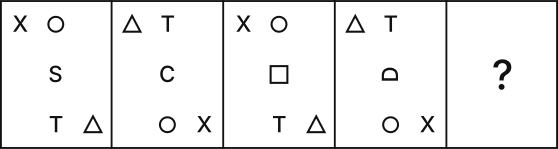
Which figure from the given options would replace the question mark (?) if the following figure series were to be continued?
यदि निम्नलिखित आकृति श्रृंखला को जारी रखा जाए, तो दिए गए विकल्पों में से कौन-सी आकृति प्रश्न चिह्न (?) के स्थान पर आएगी?
  1. A
  2. B
  3. C
  4. D
Show answer

Concept: Corner symbols alternate between two fixed layouts, while the centre symbol changes in every figure.

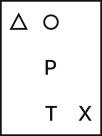
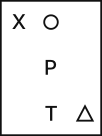
  1. Figures 1, 3 (odd): X, O at top and T, Δ at bottom. Figures 2, 4 (even): Δ, T at top and O, X at bottom.
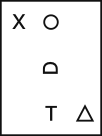
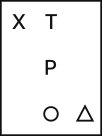
  2. So figure 5 (odd) must again have X, O at top and T, Δ at bottom → only (A) and (C) remain.
  3. The centre shows a new symbol each time (S, C, □, ⊓); (A) repeats figure 4's centre, so the new symbol P in (C) continues the series.

Trick: In alternating series, figure 5 copies figure 3's outer layout — eliminate options first by that.

Answer: (C) the third option figure

अवधारणा: कोनों के चिन्ह दो स्थिर व्यवस्थाओं में बारी-बारी बदलते हैं, और बीच का चिन्ह हर बार नया होता है।

  1. आकृति 1, 3: ऊपर X, O और नीचे T, Δ; आकृति 2, 4: ऊपर Δ, T और नीचे O, X।
  2. इसलिए आकृति 5 में फिर ऊपर X, O और नीचे T, Δ → केवल (A), (C) बचते हैं।
  3. बीच में हर बार नया चिन्ह (S, C, □, ⊓) आता है; (A) आकृति 4 का चिन्ह दोहराता है, इसलिए नया चिन्ह P वाला (C) सही।

ट्रिक: बारी-बारी वाली श्रृंखला में आकृति 5, आकृति 3 जैसी बाहरी व्यवस्था रखती है।

उत्तर: (C) तीसरी विकल्प आकृति

SSC CPO Paper IGeneral Intelligence and ReasoningFigure SeriesSSC CPO Paper I 2023 · 3 Oct Shift 3 →
Q6018.
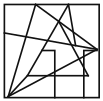
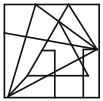
Select the option figure in which the given figure is embedded (rotation is NOT
allowed).
उस विकल्प आकृति का चयन कीजिए जिसमें दी गई आकृति निहित है (घुमाने की अनुमति
नहीं है)।
  1. A
  2. B
  3. C
  4. D
Show answer

Concept: Look for the exact shape (same size, same tilt) inside an option figure; rotation is not allowed.

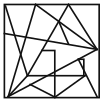
  1. The given shape is a slanted strip with a V-notch at its lower end.
  2. In option (D) this strip is formed by the slanted lines near the inner rectangle, with the notch at the right place.
  3. In (A), (B), (C) the slanted lines meet at other angles, so the notch shape is not formed.

Trick: Trace the notch (the most distinctive part) first; then check the two long parallel edges.

Answer: (D) the fourth option figure

अवधारणा: दी गई आकृति को बिल्कुल उसी आकार और झुकाव में विकल्प में खोजें; घुमाना मना है।

  1. दी गई आकृति एक तिरछी पट्टी है जिसके निचले सिरे पर V-आकार का खाँचा है।
  2. विकल्प (D) में भीतरी आयत के पास की तिरछी रेखाएँ यही पट्टी और खाँचा सही जगह बनाती हैं।
  3. (A), (B), (C) में रेखाएँ अलग कोण पर मिलती हैं, खाँचा नहीं बनता।

ट्रिक: पहले सबसे विशेष भाग (खाँचा) खोजें, फिर दोनों समांतर किनारे मिलाएँ।

उत्तर: (D) चौथी विकल्प आकृति

SSC CPO Paper IGeneral Intelligence and ReasoningEmbedded FigureSSC CPO Paper I 2023 · 3 Oct Shift 3 →
Q6019.
In a certain code language, 'BED' is coded as 9 and 'TABLE' is coded as 25. How will 'RECLINER' be coded in the same language?
एक निश्चित कूट भाषा में, 'BED' को 9 के रूप में कूटबद्ध किया जाता है और 'TABLE' को 25 के रूप में कूटबद्ध किया जाता है। उसी भाषा में 'RECLINER' को किस प्रकार कूटबद्ध किया जाएगा?
  1. A58
  2. B72
  3. C36
  4. D64
Show answer

Concept: The code is the square of the number of letters in the word.

  1. BED has 3 letters → 32=9 ✓
  2. TABLE has 5 letters → 52=25 ✓
  3. RECLINER has 8 letters → 82=64.

Trick: When codes are perfect squares like 9, 25, first test the letter count.

Answer: (D) 64

अवधारणा: कोड = शब्द के अक्षरों की संख्या का वर्ग।

  1. BED में 3 अक्षर → 32=9 ✓
  2. TABLE में 5 अक्षर → 52=25 ✓
  3. RECLINER में 8 अक्षर → 82=64।

ट्रिक: कोड पूर्ण वर्ग हों तो पहले अक्षरों की संख्या जाँचें।

उत्तर: (D) 64

SSC CPO Paper IGeneral Intelligence and ReasoningLetter–Number CodingSSC CPO Paper I 2023 · 3 Oct Shift 3 →
Q6020.
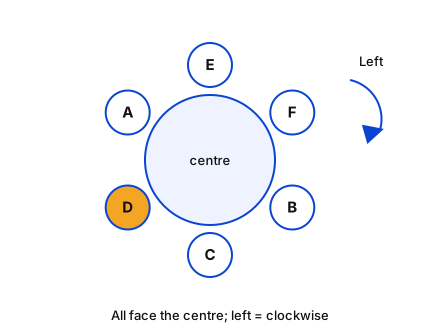
Six students are sitting around a circular table facing the centre. A is an immediate neighbour of both E and D. E sits third to the right of C. D sits third to the left of F. E is an immediate neighbour of F. B sits second to the left of E. Who sits to the immediate left of C?
छह विद्यार्थी एक वृत्ताकार मेज़ के चारों ओर केंद्र की ओर मुख करके बैठे हैं। A, E और D दोनों का निकटतम पड़ोसी है। E, C के दाएँ से तीसरे स्थान पर बैठा है। D, F के बाएँ से तीसरे स्थान पर बैठा है। E, F का निकटतम पड़ोसी है। B, E के बाएँ से दूसरे स्थान पर बैठा है। C के ठीक बाएँ कौन बैठा है?
  1. AB
  2. BD
  3. CE
  4. DA
Show answer

Concept: Six people face the centre: “left” means clockwise, “right” means anticlockwise; third to the right of someone in a 6-seat circle is the opposite seat.

  1. E is third to the right of C → E sits opposite C.
  2. B is second to the left of E; E's neighbours are A and F.
  3. A is also next to D, and D is third to the left of F → order clockwise from C: C, D, A, E, F, B.
  4. Immediate left of C (next clockwise) is D.

Yaad rakhein: In a circle of 6 facing the centre, 3rd to the left = 3rd to the right = opposite seat.

Answer: (B) D

अवधारणा: छह लोग केंद्र की ओर मुख किए हैं: “बायाँ” = दक्षिणावर्त (clockwise), “दायाँ” = वामावर्त; 6 सीटों में तीसरा दाएँ = ठीक सामने।

  1. E, C के तीसरे दाएँ → E, C के सामने।
  2. B, E के दूसरे बाएँ; E के पड़ोसी A और F।
  3. A, D के भी पास है और D, F के तीसरे बाएँ → C से दक्षिणावर्त क्रम: C, D, A, E, F, B।
  4. C के तुरंत बाएँ D है।

याद रखें: 6 लोगों के वृत्त में तीसरा बाएँ = तीसरा दाएँ = आमने-सामने।

उत्तर: (B) D

SSC CPO Paper IGeneral Intelligence and ReasoningCircular ArrangementSSC CPO Paper I 2023 · 3 Oct Shift 3 →