Question bank

Q&A: practice questions with answers

Search questions on any topic. Filter by exam category, exam, subject and topic, try the question, then open the answer and explanation.

Courses – airGurukul

6,600 questions found.

Q6421.
Select the set in which the numbers are related in the same way as are the numbers of the following sets.
(NOTE : Operations should be performed on the whole numbers, without breaking
down the numbers into its constituent digits. E.g. 13 – Operations on 13 such as
adding /subtracting /multiplying etc. to 13 can be performed. Breaking down 13 into 1 and 3 and then performing mathematical operations on 1 and 3 is NOT allowed)
(264, 462), (132, 330)
उस समुच्चय का चयन कीजिए जिसमें संख्याएँ उसी प्रकार संबंधित हैं, जिस प्रकार निम्नलिखित समुच्चयों की संख्याएँ संबंधित हैं।
(नोट: संक्रियाएँ संख्याओं को उनके घटक अंकों में विभाजित किए बिना, पूर्ण संख्याओं पर की जानी चाहिए। उदाहरण के लिए, 13 – 13 पर की जाने वाली संक्रियाएँ, जैसे 13 में जोड़ना/घटाना/गुणा करना आदि की जा सकती हैं। 13 को 1 और 3 में विभाजित करके फिर 1 और 3 पर गणितीय संक्रियाएँ करने की अनुमति नहीं है।)
(264, 462), (132, 330)
  1. A(211, 340)
  2. B(188, 378)
  3. C(386, 584)
  4. D(282, 496)
Show answer

Concept: Find the operation from the first number to the second in each pair.

  1. 462−264=198 and 330−132=198 → second number = first +198.
  2. Check options: 340−211=129, 378−188=190, 584−386=198 ✓, 496−282=214.

Trick: Constant difference pairs: subtract and compare.

Answer: (C) (386,584)

अवधारणा: हर युग्म में पहली से दूसरी संख्या तक की संक्रिया खोजें।

  1. 462−264=198 और 330−132=198 → दूसरी संख्या = पहली +198।
  2. विकल्प जाँचें: 340−211=129, 378−188=190, 584−386=198 ✓, 496−282=214।

ट्रिक: स्थिर अंतर वाले युग्म: घटाकर तुलना करें।

उत्तर: (C) (386,584)
SSC CPO Paper IGeneral Intelligence and ReasoningNumber Analogy (Pairs)SSC CPO Paper I 2023 · 3 Oct Shift 1 →
Q6422.
If A denotes ‘+’, B denotes ‘×’, C denotes ‘−’, and D denotes ‘÷’, then what will come in place of ‘?’ in the following equation?
2 B ? D 2 = 4 B 32 D 8
यदि A का अर्थ ‘+’, B का अर्थ ‘×’, C का अर्थ ‘−’ और D का अर्थ ‘÷’ है, तो निम्नलिखित समीकरण में ‘?’ के स्थान पर क्या आएगा?
2 B ? D 2 = 4 B 32 D 8
  1. A12
  2. B30
  3. C16
  4. D8
Show answer

Concept: Convert letters to signs, simplify the known side, then solve for ?.

  1. B = ×, D = ÷: 2×?÷2=4×32÷8.
  2. RHS =4×4=16.
  3. LHS =2×?÷2=?, so ?=16.

Trick: 2×x÷2=x — the 2s cancel instantly.

Answer: (C) 16

अवधारणा: अक्षरों को चिह्नों में बदलें, ज्ञात पक्ष सरल करें, फिर ? निकालें।

  1. B = ×, D = ÷: 2×?÷2=4×32÷8।
  2. दायाँ पक्ष =4×4=16।
  3. बायाँ पक्ष =2×?÷2=?, अतः ?=16।

ट्रिक: 2×x÷2=x — 2 तुरंत कट जाते हैं।

उत्तर: (C) 16

SSC CPO Paper IGeneral Intelligence and ReasoningMathematical OperationsSSC CPO Paper I 2023 · 3 Oct Shift 1 →
Q6423.
If '+' means '×', '×' means '–', '–' means '÷' and '÷' means '+', then what will come in
place of the (?) in the following equation?
250 – 10 + 10 × 5 ÷ 2 = ?
यदि ‘+’ का अर्थ ‘×’, ‘×’ का अर्थ ‘–’, ‘–’ का अर्थ ‘÷’ और ‘÷’ का अर्थ ‘+’ है, तो निम्नलिखित समीकरण में
(?) के स्थान पर क्या आएगा?
250 – 10 + 10 × 5 ÷ 2 = ?
  1. A247
  2. B167
  3. C320
  4. D234
Show answer

Concept: Substitute the signs, then apply BODMAS.

  1. – → ÷, + → ×, × → –, ÷ → +.
  2. 250−10+10×5÷2→250÷10×10−5+2
  3. =25×10−5+2=250−5+2=247

Trick: Division and multiplication from left to right first, then + and –.

Answer: (A) 247

अवधारणा: चिह्न बदलें, फिर BODMAS लगाएँ।

  1. – → ÷, + → ×, × → –, ÷ → +।
  2. 250−10+10×5÷2→250÷10×10−5+2
  3. =25×10−5+2=250−5+2=247

ट्रिक: पहले भाग और गुणा बाएँ से दाएँ, फिर जोड़ और घटाव।

उत्तर: (A) 247

SSC CPO Paper IGeneral Intelligence and ReasoningMathematical OperationsSSC CPO Paper I 2023 · 3 Oct Shift 1 →
Q6424.
Four letter-clusters have been given, out of which three are alike in some manner and one is different. Select the odd letter-cluster.
चार अक्षर-समूह दिए गए हैं, जिनमें से तीन किसी प्रकार से एकसमान हैं और एक असंगत है। असंगत अक्षर-समूह का चयन कीजिए।
  1. AWYRS
  2. BPSJK
  3. CPRKL
  4. DFHAB
Show answer

Concept: Find the gaps between consecutive letters of each cluster.

  1. WYRS: W → Y (+2), Y → R (−7), R → S (+1).
  2. PRKL: +2,−7,+1. FHAB: +2,−7,+1.
  3. PSJK: P → S (+3), S → J (−9), J → K (+1) — different.

Trick: Same gap pattern (+2,−7,+1) in three clusters; the fourth breaks it.

Answer: (B) PSJK

अवधारणा: हर समूह में क्रमागत अक्षरों का अंतर देखें।

  1. WYRS: W → Y (+2), Y → R (−7), R → S (+1)।
  2. PRKL: +2,−7,+1। FHAB: +2,−7,+1।
  3. PSJK: +3,−9,+1 — अलग।

ट्रिक: तीन समूहों में अंतर (+2,−7,+1) समान; चौथा अलग।

उत्तर: (B) PSJK

SSC CPO Paper IGeneral Intelligence and ReasoningOdd One Out (Letters)SSC CPO Paper I 2023 · 3 Oct Shift 1 →
Q6425.
In a certain code language, ‘VATT’ is coded as ‘65’ and ‘STOLK’ is coded as ‘79’. How will ‘GENEROUS’ be coded in that language?
एक निश्चित कूट भाषा में, ‘VATT’ को ‘65’ के रूप में कूटबद्ध किया जाता है और ‘STOLK’ को ‘79’ के रूप में कूटबद्ध किया जाता है। उसी भाषा में ‘GENEROUS’ को किस प्रकार कूटबद्ध किया जाएगा?
  1. A116
  2. B216
  3. C204
  4. D106
Show answer

Concept: Code = sum of alphabet positions of the letters + 2.

  1. VATT: 22+1+20+20=63, 63+2=65 ✓.
  2. STOLK: 19+20+15+12+11=77, 77+2=79 ✓.
  3. GENEROUS: 7+5+14+5+18+15+21+19=104.
  4. Code =104+2=106.

Trick: Remember positions with EJOTY: E5, J10, O15, T20, Y25.

Answer: (D) 106

अवधारणा: कोड = अक्षरों के स्थानीय मानों का योग + 2।

  1. VATT: 22+1+20+20=63, 63+2=65 ✓।
  2. STOLK: 19+20+15+12+11=77, 77+2=79 ✓।
  3. GENEROUS: 7+5+14+5+18+15+21+19=104।
  4. कोड =104+2=106।

ट्रिक: EJOTY से स्थान याद रखें: E5, J10, O15, T20, Y25।

उत्तर: (D) 106

SSC CPO Paper IGeneral Intelligence and ReasoningCoding (Letter Sum)SSC CPO Paper I 2023 · 3 Oct Shift 1 →
Q6426.
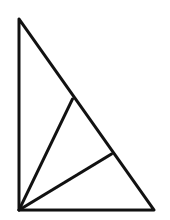
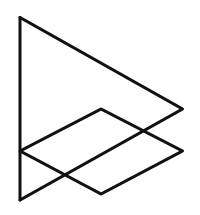
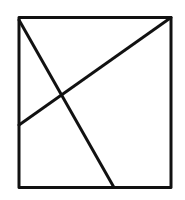
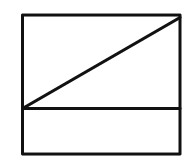
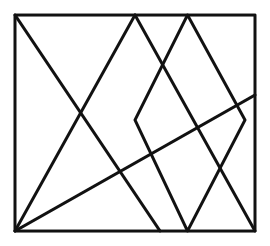
Select the option that is embedded in the given figure as its part (rotation is NOT allowed).
उस विकल्प का चयन कीजिए जो दी गई आकृति में उसके भाग के रूप में सन्निहित है (घुमाने की अनुमति नहीं है)।
  1. A
  2. B
  3. C
  4. D
Show answer

Concept: The option must be traced inside the given figure using its existing lines, without rotation.

  1. The given figure is a rectangle with slanting lines from the bottom-left corner and crossing diagonals.
  2. Option (A) — a right-angled triangle with a line from the bottom-left corner and a line from its middle — is formed by the left edge, the bottom edge and the slanting lines at the lower-left part of the figure.
  3. (B), (C), (D) need line positions or a horizontal middle line that the figure does not have.

Trick: Anchor the option at a corner of the figure that has the same angle, then match each extra line.

Answer: (A) Option (A)

अवधारणा: विकल्प को दी गई आकृति की मौजूदा रेखाओं से, बिना घुमाए, खोजना है।

  1. दी गई आकृति एक आयत है जिसमें नीचे-बाएँ कोने से तिरछी रेखाएँ और कटते विकर्ण हैं।
  2. विकल्प (A) — समकोण त्रिभुज जिसमें नीचे-बाएँ कोने से एक रेखा और बीच से एक रेखा है — आकृति के बाएँ किनारे, नीचे के किनारे और निचले-बाएँ भाग की तिरछी रेखाओं से बनता है।
  3. (B), (C), (D) के लिए ऐसी रेखाएँ (जैसे बीच की क्षैतिज रेखा) चाहिए जो आकृति में नहीं हैं।

ट्रिक: विकल्प को उसी कोण वाले कोने पर रखकर हर अतिरिक्त रेखा मिलाएँ।

उत्तर: (A) विकल्प (A)

SSC CPO Paper IGeneral Intelligence and ReasoningEmbedded FigureSSC CPO Paper I 2023 · 3 Oct Shift 1 →
Q6427.
If ‘+’ means ‘÷’, ‘ ̶ ’ means ‘+’, ‘×’ means ‘−’ and ‘÷’ means ‘×’, what will be the value of the following expression?
[{( 14 × 6 ) - ( 4 ÷ 3 )} + ( 6 - 4 )] ÷ 3
यदि ‘+’ का अर्थ ‘÷’, ‘ ̶ ’ का अर्थ ‘+’, ‘×’ का अर्थ ‘−’ और ‘÷’ का अर्थ ‘×’ है, तो निम्नलिखित व्यंजक का मान क्या होगा?
[{( 14 × 6 ) - ( 4 ÷ 3 )} + ( 6 - 4 )] ÷ 3
  1. A3
  2. B6
  3. C1
  4. D9
Show answer

Concept: Change every sign as given (+ → ÷, – → +, × → –, ÷ → ×), then simplify brackets.

  1. [{(14×6)−(4÷3)}+(6−4)]÷3 becomes [{(14−6)+(4×3)}÷(6+4)]×3.
  2. {8+12}=20, (6+4)=10.
  3. [20÷10]×3=2×3=6

Trick: Rewrite the full expression with new signs before solving the brackets.

Answer: (B) 6

अवधारणा: हर चिह्न बदलें (+ → ÷, – → +, × → –, ÷ → ×), फिर कोष्ठक हल करें।

  1. [{(14×6)−(4÷3)}+(6−4)]÷3 बन जाता है [{(14−6)+(4×3)}÷(6+4)]×3।
  2. {8+12}=20, (6+4)=10।
  3. [20÷10]×3=2×3=6

ट्रिक: कोष्ठक हल करने से पहले पूरा व्यंजक नए चिह्नों के साथ लिखें।

उत्तर: (B) 6

SSC CPO Paper IGeneral Intelligence and ReasoningMathematical OperationsSSC CPO Paper I 2023 · 3 Oct Shift 1 →
Q6428.
Select the option that is related to the fifth letter-cluster in the same way as the second letter-cluster is related to the first letter-cluster and the fourth letter-cluster is related to the third letter-cluster.
TEMPLE : SCJLGY :: CHURCH : BFRNXB :: MOSQUE :?
उस विकल्प का चयन कीजिए जो पाँचवें अक्षर-समूह से उसी प्रकार संबंधित है, जिस प्रकार दूसरा अक्षर-समूह पहले अक्षर-समूह से संबंधित है और चौथा अक्षर-समूह तीसरे अक्षर-समूह से संबंधित है।
TEMPLE : SCJLGY :: CHURCH : BFRNXB :: MOSQUE :?
  1. ALMPYPM
  2. BLMPYMP
  3. CLPYMPM
  4. DLMPMPY
Show answer

Concept: Each letter moves back by its position number: −1,−2,−3,−4,−5,−6.

  1. TEMPLE: T−1=S, E−2=C, M−3=J, P−4=L, L−5=G, E−6=Y → SCJLGY ✓.
  2. CHURCH → BFRNXB follows the same rule.
  3. MOSQUE: M−1=L, O−2=M, S−3=P, Q−4=M, U−5=P, E−6=Y → LMPMPY.

Trick: Backward wrap: E−6 goes E→D→C→B→A→Z→Y.

Answer: (D) LMPMPY

अवधारणा: हर अक्षर अपने स्थान-क्रमांक जितना पीछे जाता है: −1,−2,−3,−4,−5,−6।

  1. TEMPLE: T−1=S, E−2=C, M−3=J, P−4=L, L−5=G, E−6=Y → SCJLGY ✓।
  2. CHURCH → BFRNXB भी इसी नियम से।
  3. MOSQUE: M−1=L, O−2=M, S−3=P, Q−4=M, U−5=P, E−6=Y → LMPMPY।

ट्रिक: पीछे जाते समय A के बाद Z आता है: E−6 = Y।

उत्तर: (D) LMPMPY

SSC CPO Paper IGeneral Intelligence and ReasoningLetter AnalogySSC CPO Paper I 2023 · 3 Oct Shift 1 →
Q6429.
In a certain code language, 'COURT' is coded as OCRTR and 'JUDGE' is coded as
UJAEG. How will 'ORDER' be coded in the same language?
एक निश्चित कूट भाषा में, ‘COURT’ को OCRTR के रूप में कूटबद्ध किया जाता है और ‘JUDGE’ को
UJAEG के रूप में कूटबद्ध किया जाता है। उसी भाषा में ‘ORDER’ को किस प्रकार कूटबद्ध किया जाएगा?
  1. ALDRRE
  2. BROARE
  3. CREARO
  4. DROBRE
Show answer

Concept: Swap the 1st and 2nd letters, move the middle letter back by 3, and swap the 4th and 5th letters.

  1. COURT: CO → OC, U−3=R, RT → TR → OCRTR ✓.
  2. JUDGE: JU → UJ, D−3=A, GE → EG → UJAEG ✓.
  3. ORDER: OR → RO, D−3=A, ER → RE → ROARE.

Trick: Pair swaps at both ends + a shift in the middle letter.

Answer: (B) ROARE

अवधारणा: पहले-दूसरे अक्षर की अदला-बदली, बीच वाला अक्षर 3 पीछे, और चौथे-पाँचवें की अदला-बदली।

  1. COURT: CO → OC, U−3=R, RT → TR → OCRTR ✓।
  2. JUDGE: JU → UJ, D−3=A, GE → EG → UJAEG ✓।
  3. ORDER: OR → RO, D−3=A, ER → RE → ROARE।

ट्रिक: दोनों सिरों पर जोड़ी बदलें + बीच के अक्षर में खिसकाव।

उत्तर: (B) ROARE

SSC CPO Paper IGeneral Intelligence and ReasoningCoding-DecodingSSC CPO Paper I 2023 · 3 Oct Shift 1 →
Q6430.
Which of the following numbers will replace the question mark (?) in the given series? 115, 130, 122, 137, 129, ?
दी गई श्रृंखला में प्रश्न चिह्न (?) के स्थान पर निम्नलिखित में से कौन-सी संख्या आएगी? 115, 130, 122, 137, 129, ?
  1. A144
  2. B142
  3. C148
  4. D150
Show answer

Concept: Find the differences between consecutive terms.

  1. 130−115=+15, 122−130=−8, 137−122=+15, 129−137=−8.
  2. The pattern alternates +15, −8.
  3. Next: 129+15=144.

Trick: Alternating differences: write them below the series.

Answer: (A) 144

अवधारणा: क्रमागत पदों का अंतर निकालें।

  1. 130−115=+15, 122−130=−8, 137−122=+15, 129−137=−8।
  2. पैटर्न: बारी-बारी +15, −8।
  3. अगला: 129+15=144।

ट्रिक: बारी-बारी वाले अंतर श्रृंखला के नीचे लिखें।

उत्तर: (A) 144

SSC CPO Paper IGeneral Intelligence and ReasoningNumber SeriesSSC CPO Paper I 2023 · 3 Oct Shift 1 →
Q6431.
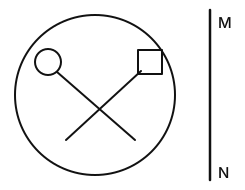
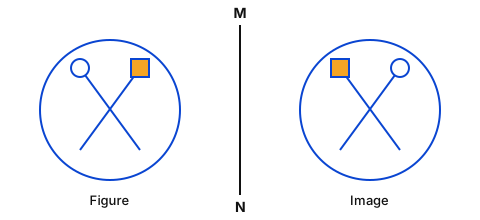
Select the correct mirror image of the given figure when the mirror is placed at line MN as shown.
दी गई आकृति के सही दर्पण प्रतिबिंब का चयन कीजिए, जब दर्पण को दर्शाए गए अनुसार MN रेखा पर रखा गया हो।
  1. A
  2. B
  3. C
  4. D
Show answer

Concept: A vertical mirror on the right swaps left and right; top and bottom stay the same.

  1. In the figure, the line ending in a small circle has its circle at the top-left; the line ending in a small square has its square at the top-right.
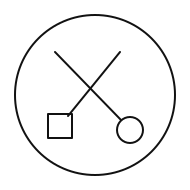
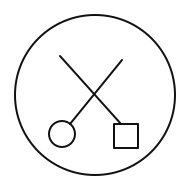
  2. In the mirror, the circle moves to the top-right and the square to the top-left; both ends stay at the top.
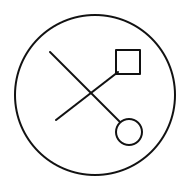
  3. Option (D) shows this. (A), (B), (C) move one or both ends to the bottom.

Trick: Vertical mirror: only left ↔ right swap; any up–down change is wrong.

Answer: (D) Option (D)

अवधारणा: दाईं ओर रखे ऊर्ध्वाधर दर्पण में बायाँ-दायाँ बदलता है; ऊपर-नीचे वही रहता है।

  1. आकृति में छोटा वृत्त वाली रेखा का वृत्त ऊपर-बाएँ और छोटा वर्ग वाली रेखा का वर्ग ऊपर-दाएँ है।
  2. दर्पण में वृत्त ऊपर-दाएँ और वर्ग ऊपर-बाएँ आ जाता है; दोनों सिरे ऊपर ही रहते हैं।
  3. विकल्प (D) में यही है। (A), (B), (C) में कोई सिरा नीचे चला गया है।

ट्रिक: ऊर्ध्वाधर दर्पण: केवल बायाँ ↔ दायाँ; ऊपर-नीचे बदला तो गलत।

उत्तर: (D) विकल्प (D)

SSC CPO Paper IGeneral Intelligence and ReasoningMirror ImageSSC CPO Paper I 2023 · 3 Oct Shift 1 →
Q6432.
In a certain code language, ‘FLORA’ is written as ‘WQOLC’ and 'MONEY' is written as 'PNPYE'. How will ‘GOING’ be written in that language?
एक निश्चित कूट भाषा में, ‘FLORA’ को ‘WQOLC’ लिखा जाता है और ‘MONEY’ को ‘PNPYE’ लिखा जाता है। उसी भाषा में ‘GOING’ को किस प्रकार लिखा जाएगा?
  1. AVNUPW
  2. BRMWEH
  3. CVBUDP
  4. DRHKSR
Show answer

Concept: Take the opposite letter of each letter (sum 27), then add +2,+2,+3,+3,+3.

  1. FLORA: opposites U, O, L, I, Z → U+2=W, O+2=Q, L+3=O, I+3=L, Z+3=C → WQOLC ✓.
  2. MONEY: N, L, M, V, B → P, N, P, Y, E → PNPYE ✓.
  3. GOING: T, L, R, M, T → T+2=V, L+2=N, R+3=U, M+3=P, T+3=W → VNUPW.

Trick: Opposite pairs: A–Z, B–Y, C–X … (positions add to 27).

Answer: (A) VNUPW

अवधारणा: हर अक्षर का विपरीत अक्षर लें (योग 27), फिर क्रम से +2,+2,+3,+3,+3 जोड़ें।

  1. FLORA: विपरीत U, O, L, I, Z → U+2=W, O+2=Q, L+3=O, I+3=L, Z+3=C → WQOLC ✓।
  2. MONEY: N, L, M, V, B → P, N, P, Y, E → PNPYE ✓।
  3. GOING: T, L, R, M, T → T+2=V, L+2=N, R+3=U, M+3=P, T+3=W → VNUPW।

ट्रिक: विपरीत जोड़े: A–Z, B–Y, C–X … (स्थानों का योग 27)।

उत्तर: (A) VNUPW

SSC CPO Paper IGeneral Intelligence and ReasoningCoding-Decoding (Opposite Letters)SSC CPO Paper I 2023 · 3 Oct Shift 1 →
Q6433.
Select the set in which the numbers are related in the same way as are the numbers of the following set.
(NOTE : Operations should be performed on the whole numbers, without breaking
down the numbers into its constituent digits. E.g. 13 – Operations on 13 such as
adding /subtracting/ multiplying etc. to 13 can be performed. Breaking down 13 into 1 and 3 and then performing mathematical operations on 1 and 3 is NOT allowed)
(6, 2, 96)
(5, 6, 240)
उस समुच्चय का चयन कीजिए जिसमें संख्याएँ उसी प्रकार संबंधित हैं, जिस प्रकार निम्नलिखित समुच्चय की संख्याएँ संबंधित हैं।
(नोट: संक्रियाएँ संख्याओं को उनके घटक अंकों में विभाजित किए बिना, पूर्ण संख्याओं पर की जानी चाहिए। उदाहरण के लिए, 13 – 13 पर की जाने वाली संक्रियाएँ, जैसे 13 में जोड़ना/घटाना/गुणा करना आदि की जा सकती हैं। 13 को 1 और 3 में विभाजित करके फिर 1 और 3 पर गणितीय संक्रियाएँ करने की अनुमति नहीं है।)
(6, 2, 96)
(5, 6, 240)
  1. A(4,1,6)
  2. B(12,3,45)
  3. C(1,2,16)
  4. D(8,3,28)
Show answer

Concept: Third number = first × second ×8.

  1. (6,2,96): 6×2×8=96 ✓.
  2. (5,6,240): 5×6×8=240 ✓.
  3. (1,2,16): 1×2×8=16 ✓. Others: 4×1×8=32≠6, 12×3×8=288≠45, 8×3×8=192≠28.

Trick: Divide the third number by the product of the first two — a constant (8) reveals the rule.

Answer: (C) (1,2,16)

अवधारणा: तीसरी संख्या = पहली × दूसरी ×8।

  1. (6,2,96): 6×2×8=96 ✓।
  2. (5,6,240): 5×6×8=240 ✓।
  3. (1,2,16): 1×2×8=16 ✓। अन्य: 4×1×8=32≠6, 12×3×8=288≠45, 8×3×8=192≠28।

ट्रिक: तीसरी संख्या को पहली दो के गुणनफल से भाग दें — स्थिर (8) मिलते ही नियम मिल गया।

उत्तर: (C) (1,2,16)

SSC CPO Paper IGeneral Intelligence and ReasoningNumber Analogy (Sets)SSC CPO Paper I 2023 · 3 Oct Shift 1 →
Q6434.
Study the given pattern carefully and select the number that can replace the question mark (?) in it.
First row: 19, 6, 37
Second row: 21, 8, 45
Third row: 72, 14, ?
(NOTE : Operations should be performed on the whole numbers, without breaking
down the numbers into its constituent digits. E.g. 13 – Operations on 13 such as
adding /subtracting /multiplying etc. to 13 can be performed. Breaking down 13 into 1 and 3 and then performing mathematical operations on 1 and 3 is not allowed)
दिए गए पैटर्न का ध्यानपूर्वक अध्ययन कीजिए और उस संख्या का चयन कीजिए जो इसमें प्रश्न चिह्न (?) का स्थान ले सकती है।
पहली पंक्ति: 19, 6, 37
दूसरी पंक्ति: 21, 8, 45
तीसरी पंक्ति: 72, 14, ?
(नोट: संक्रियाएँ संख्याओं को उनके घटक अंकों में विभाजित किए बिना, पूर्ण संख्याओं पर की जानी चाहिए। उदाहरण के लिए, 13 – 13 पर की जाने वाली संक्रियाएँ, जैसे 13 में जोड़ना/घटाना/गुणा करना आदि की जा सकती हैं। 13 को 1 और 3 में विभाजित करके फिर 1 और 3 पर गणितीय संक्रियाएँ करने की अनुमति नहीं है।)
  1. A124
  2. B134
  3. C114
  4. D144
Show answer

Concept: Third number = first +3× second.

  1. Row 1: 19+3×6=19+18=37 ✓.
  2. Row 2: 21+3×8=21+24=45 ✓.
  3. Row 3: 72+3×14=72+42=114.

Trick: Subtract the first number from the third and divide by the second: 186=248=3.

Answer: (C) 114

अवधारणा: तीसरी संख्या = पहली +3× दूसरी।

  1. पंक्ति 1: 19+3×6=19+18=37 ✓।
  2. पंक्ति 2: 21+3×8=21+24=45 ✓।
  3. पंक्ति 3: 72+3×14=72+42=114।

ट्रिक: तीसरी में से पहली घटाकर दूसरी से भाग दें: 186=248=3।

उत्तर: (C) 114

SSC CPO Paper IGeneral Intelligence and ReasoningNumber Pattern (Rows)SSC CPO Paper I 2023 · 3 Oct Shift 1 →
Q6435.
If A denotes ‘+’, B denotes ‘×’, C denotes ‘−’, and D denotes ‘÷’, then what will be the value of the following expression?
39 D 13 B 2 C 6 A 8
यदि A का अर्थ ‘+’, B का अर्थ ‘×’, C का अर्थ ‘−’ और D का अर्थ ‘÷’ है, तो निम्नलिखित व्यंजक का मान क्या होगा?
39 D 13 B 2 C 6 A 8
  1. A10
  2. B8
  3. C12
  4. D9
Show answer

Concept: A = +, B = ×, C = −, D = ÷; then apply BODMAS.

  1. 39D13B2C6A8=39÷13×2−6+8
  2. =3×2−6+8=6−6+8
  3. =8

Trick: Solve ÷ and × left to right before + and −.

Answer: (B) 8

अवधारणा: A = +, B = ×, C = −, D = ÷; फिर BODMAS लगाएँ।

  1. 39D13B2C6A8=39÷13×2−6+8
  2. =3×2−6+8=6−6+8
  3. =8

ट्रिक: + और − से पहले ÷ और × बाएँ से दाएँ हल करें।

उत्तर: (B) 8

SSC CPO Paper IGeneral Intelligence and ReasoningMathematical OperationsSSC CPO Paper I 2023 · 3 Oct Shift 1 →
Q6436.
Select the set in which the numbers are related in the same way as are the numbers of the following sets.
(NOTE : Operations should be performed on the whole numbers, without breaking
down the numbers into its constituent digits. E.g. 13- Operations on 13 such as adding /subtracting /multiplying etc. to 13 can be performed. Breaking down 13 into 1 and 3 and then performing mathematical operations on 1 and 3 is not allowed.)
(7, 91, 98)
(4, 52, 56)
उस समुच्चय का चयन कीजिए जिसमें संख्याएँ उसी प्रकार संबंधित हैं, जिस प्रकार निम्नलिखित समुच्चयों की संख्याएँ संबंधित हैं।
(नोट: संक्रियाएँ संख्याओं को उनके घटक अंकों में विभाजित किए बिना, पूर्ण संख्याओं पर की जानी चाहिए। उदाहरण के लिए, 13 – 13 पर की जाने वाली संक्रियाएँ, जैसे 13 में जोड़ना/घटाना/गुणा करना आदि की जा सकती हैं। 13 को 1 और 3 में विभाजित करके फिर 1 और 3 पर गणितीय संक्रियाएँ करने की अनुमति नहीं है।)
(7, 91, 98)
(4, 52, 56)
  1. A(12, 156, 168)
  2. B(3, 36, 42)
  3. C(8, 80, 96)
  4. D(5, 25, 60)
Show answer

Concept: Second = first ×13; third = first ×14 (i.e. second + first).

  1. (7,91,98): 7×13=91, 91+7=98 ✓.
  2. (4,52,56): 4×13=52, 52+4=56 ✓.
  3. (12,156,168): 12×13=156, 156+12=168 ✓. (B): 3×13=39≠36 ✗.

Trick: Divide the middle number by the first: 917=524=13.

Answer: (A) (12,156,168)

अवधारणा: दूसरी = पहली ×13; तीसरी = पहली ×14 (यानी दूसरी + पहली)।

  1. (7,91,98): 7×13=91, 91+7=98 ✓।
  2. (4,52,56): 4×13=52, 52+4=56 ✓।
  3. (12,156,168): 12×13=156, 156+12=168 ✓। (B): 3×13=39≠36 ✗।

ट्रिक: बीच की संख्या को पहली से भाग दें: 917=524=13।

उत्तर: (A) (12,156,168)

SSC CPO Paper IGeneral Intelligence and ReasoningNumber Analogy (Sets)SSC CPO Paper I 2023 · 3 Oct Shift 1 →
Q6437.
If A denotes ‘+’, B denotes ‘×’, C denotes ‘−’, and D denotes ‘÷’, then what will be the value of the following equation?
96 D 3 B 8 C 25 A 14 = ?
यदि A का अर्थ ‘+’, B का अर्थ ‘×’, C का अर्थ ‘−’ और D का अर्थ ‘÷’ है, तो निम्नलिखित समीकरण का मान क्या होगा?
96 D 3 B 8 C 25 A 14 = ?
  1. A217
  2. B234
  3. C254
  4. D245
Show answer

Concept: Replace letters by signs (A = +, B = ×, C = −, D = ÷) and use BODMAS.

  1. 96÷3×8−25+14
  2. =32×8−25+14=256−25+14
  3. =245

Trick: Left-to-right for ÷ and ×: first 96÷3, then ×8.

Answer: (D) 245

अवधारणा: अक्षरों को चिह्नों से बदलें (A = +, B = ×, C = −, D = ÷) और BODMAS लगाएँ।

  1. 96÷3×8−25+14
  2. =32×8−25+14=256−25+14
  3. =245

ट्रिक: ÷ और × बाएँ से दाएँ: पहले 96÷3, फिर ×8।

उत्तर: (D) 245

SSC CPO Paper IGeneral Intelligence and ReasoningMathematical OperationsSSC CPO Paper I 2023 · 3 Oct Shift 1 →
Q6438.
If A denotes ‘+’, B denotes ‘×’, C denotes ‘−’, and D denotes ‘÷’, then what will come in place of ‘?’ in the following equation?
7 A 3 B 24 D 2 = 20 B ? A 3
यदि A का अर्थ ‘+’, B का अर्थ ‘×’, C का अर्थ ‘−’ और D का अर्थ ‘÷’ है, तो निम्नलिखित समीकरण में ‘?’ के स्थान पर क्या आएगा?
7 A 3 B 24 D 2 = 20 B ? A 3
  1. A2
  2. B20
  3. C14
  4. D7
Show answer

Concept: Convert signs, evaluate the left side, then solve the right side for ?.

  1. LHS: 7+3×24÷2=7+36=43.
  2. RHS: 20×?+3.
  3. 20×?+3=43⇒20×?=40⇒?=2

Trick: Back-substitute options: 20×2+3=43 ✓.

Answer: (A) 2

अवधारणा: चिह्न बदलें, बायाँ पक्ष हल करें, फिर दाएँ पक्ष से ? निकालें।

  1. बायाँ पक्ष: 7+3×24÷2=7+36=43।
  2. दायाँ पक्ष: 20×?+3।
  3. 20×?+3=43⇒20×?=40⇒?=2

ट्रिक: विकल्प रखकर जाँचें: 20×2+3=43 ✓।

उत्तर: (A) 2

SSC CPO Paper IGeneral Intelligence and ReasoningMathematical OperationsSSC CPO Paper I 2023 · 3 Oct Shift 1 →
Q6439.
Which of the following numbers will replace the question mark (?) in the given series? 35, ?, 40, 47, 45, 53
दी गई श्रृंखला में प्रश्न चिह्न (?) के स्थान पर निम्नलिखित में से कौन-सी संख्या आएगी? 35, ?, 40, 47, 45, 53
  1. A37
  2. B43
  3. C42
  4. D41
Show answer

Concept: Split the series into two alternate series.

  1. Odd terms: 35,40,45 → +5 each.
  2. Even terms: ?,47,53 → +6 each.
  3. So ?=47−6=41.

Trick: When the series goes up and down irregularly, check alternate terms.

Answer: (D) 41

अवधारणा: श्रृंखला को दो एकांतर (alternate) श्रृंखलाओं में बाँटें।

  1. विषम स्थान: 35,40,45 → हर बार +5।
  2. सम स्थान: ?,47,53 → हर बार +6।
  3. अतः ?=47−6=41।

ट्रिक: श्रृंखला ऊपर-नीचे हो तो एकांतर पद देखें।

उत्तर: (D) 41

SSC CPO Paper IGeneral Intelligence and ReasoningNumber Series (Alternate)SSC CPO Paper I 2023 · 3 Oct Shift 1 →
Q6440.
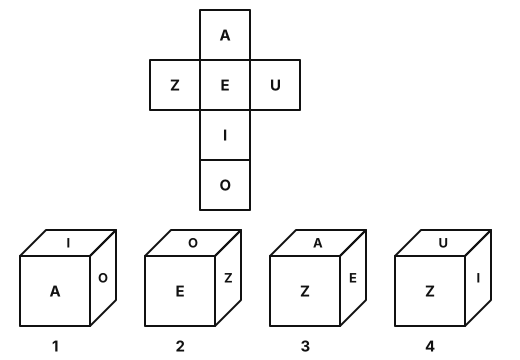
If the given sheet is folded to form a cube, which of the given figures is/are possible? (The elements are shown to indicate the sides only.)
यदि दी गई शीट को मोड़कर घन बनाया जाए, तो दी गई आकृतियों में से कौन-सी संभव है/हैं? (तत्वों को केवल फलकों को इंगित करने के लिए दर्शाया गया है।)
  1. AOnly 1 and 2केवल 1 और 2
  2. BOnly 1, 2 and 4केवल 1, 2 और 4
  3. COnly 2 and 3केवल 2 और 3
  4. DOnly 3केवल 3
Show answer

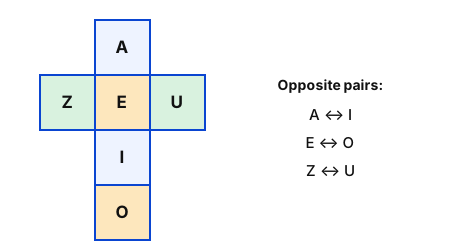
Concept: In a net, two faces separated by exactly one face in a straight line are opposite; opposite faces can never be seen together.

  1. Column A–E–I–O: A and I are opposite, E and O are opposite. Row Z–E–U: Z and U are opposite.
  2. Fig 1 shows I and A together ✗. Fig 2 shows O and E together ✗. Fig 4 shows U and Z together ✗.
  3. Fig 3 shows A, Z, E — mutually adjacent faces, so it is possible.

Trick: Mark the three opposite pairs first; reject any cube showing a pair.

Answer: (D) Only 3

अवधारणा: जाल में एक सीधी रेखा में एक फलक छोड़कर आने वाले दो फलक विपरीत होते हैं; विपरीत फलक कभी एक साथ नहीं दिखते।

  1. कॉलम A–E–I–O: A–I विपरीत, E–O विपरीत। पंक्ति Z–E–U: Z–U विपरीत।
  2. आकृति 1 में I और A साथ ✗। आकृति 2 में O और E साथ ✗। आकृति 4 में U और Z साथ ✗।
  3. आकृति 3 में A, Z, E — तीनों आसन्न हैं, अतः संभव।

ट्रिक: पहले तीनों विपरीत जोड़े चिह्नित करें; जिस घन में कोई जोड़ा साथ दिखे, उसे हटा दें।

उत्तर: (D) केवल 3

SSC CPO Paper IGeneral Intelligence and ReasoningCube Net (Paper Folding)SSC CPO Paper I 2023 · 3 Oct Shift 1 →