Question bank

Q&A: practice questions with answers

Search questions on any topic. Filter by exam category, exam, subject and topic, try the question, then open the answer and explanation.

Courses – airGurukul

6,600 questions found.

Q6441.
Which figure from the given options would replace the question mark (?) if the following figure series were to be continued?
BLAST, LBPTS, SLBPT, LSCTP, ?
यदि निम्नलिखित आकृति श्रृंखला को जारी रखा जाए, तो दिए गए विकल्पों में से कौन-सी आकृति प्रश्न चिह्न (?) का स्थान लेगी?
BLAST, LBPTS, SLBPT, LSCTP, ?
  1. ASLDPT
  2. BSCTPL
  3. CPLTSC
  4. DPLSCT
Show answer

Concept: The steps alternate between a 'swap' step and a 'rotate' step.

  1. BLAST → LBPTS: 1st–2nd letters swapped, 4th–5th swapped, middle letter changed.
  2. LBPTS → SLBPT: the last letter moves to the front (all others shift right).
  3. SLBPT → LSCTP: again 1st–2nd and 4th–5th swapped, middle letter changed (B → C).
  4. Next is a rotate step: LSCTP → last letter P to the front → PLSCT.

Trick: Compare each term with the previous one, not with the first term.

Answer: (D) PLSCT

अवधारणा: चरण बारी-बारी से 'अदला-बदली' और 'घुमाव' वाले हैं।

  1. BLAST → LBPTS: पहले-दूसरे और चौथे-पाँचवें अक्षर की अदला-बदली, बीच का अक्षर बदला।
  2. LBPTS → SLBPT: अंतिम अक्षर सबसे आगे (बाकी एक-एक स्थान दाएँ)।
  3. SLBPT → LSCTP: फिर पहले-दूसरे और चौथे-पाँचवें की अदला-बदली, बीच का अक्षर B → C।
  4. अब घुमाव वाला चरण: LSCTP → अंतिम अक्षर P आगे → PLSCT।

ट्रिक: हर पद की तुलना पिछले पद से करें, पहले पद से नहीं।

उत्तर: (D) PLSCT
SSC CPO Paper IGeneral Intelligence and ReasoningLetter Pattern SeriesSSC CPO Paper I 2023 · 3 Oct Shift 1 →
Q6442.
Which of the following numbers will replace the question mark (?) in the given series? −1729, −181, −19, ?
दी गई श्रृंखला में प्रश्न चिह्न (?) के स्थान पर निम्नलिखित में से कौन-सी संख्या आएगी? −1729, −181, −19, ?
  1. A1
  2. B−1
  3. C−13
  4. D13
Show answer

Concept: Each term is multiplied by 9 to get the next.

  1. −1729×9=−181
  2. −181×9=−19
  3. −19×9=−1

Trick: Denominators 93,92,91 → next 90=1; the sign stays negative.

Answer: (B) −1

अवधारणा: हर पद को 9 से गुणा करने पर अगला पद मिलता है।

  1. −1729×9=−181
  2. −181×9=−19
  3. −19×9=−1

ट्रिक: हर (denominator) 93,92,91 → अगला 90=1; चिह्न ऋणात्मक ही रहता है।

उत्तर: (B) −1

SSC CPO Paper IGeneral Intelligence and ReasoningNumber Series (Geometric)SSC CPO Paper I 2023 · 3 Oct Shift 1 →
Q6443.
Which letter-cluster will replace the question mark (?) to complete the given series? MKPN, LMOP, ?, JQMT, ISLV
दी गई श्रृंखला को पूरा करने के लिए प्रश्न चिह्न (?) के स्थान पर कौन-सा अक्षर-समूह आएगा? MKPN, LMOP, ?, JQMT, ISLV
  1. AKOLT
  2. BKNNQ
  3. CKNMR
  4. DKONR
Show answer

Concept: Track each of the four positions separately.

  1. 1st: M, L, ?, J, I → −1 → K.
  2. 2nd: K, M, ?, Q, S → +2 → O.
  3. 3rd: P, O, ?, M, L → −1 → N.
  4. 4th: N, P, ?, T, V → +2 → R.

Trick: Positions 1 and 3 go −1, positions 2 and 4 go +2.

Answer: (D) KONR

अवधारणा: चारों स्थानों को अलग-अलग देखें।

  1. पहला: M, L, ?, J, I → −1 → K।
  2. दूसरा: K, M, ?, Q, S → +2 → O।
  3. तीसरा: P, O, ?, M, L → −1 → N।
  4. चौथा: N, P, ?, T, V → +2 → R।

ट्रिक: स्थान 1 और 3 में −1, स्थान 2 और 4 में +2।

उत्तर: (D) KONR

SSC CPO Paper IGeneral Intelligence and ReasoningLetter SeriesSSC CPO Paper I 2023 · 3 Oct Shift 1 →
Q6444.
Select the option that is related to the third word in the same way as the second word is related to the first word. (The words must be considered as meaningful words and must not be related to each other based on the number of letters/number of
consonants/vowels in the word.)
Butterfly : Caterpillar :: Insect : ?
उस विकल्प का चयन कीजिए जो तीसरे शब्द से उसी प्रकार संबंधित है, जिस प्रकार दूसरा शब्द पहले शब्द से संबंधित है। (शब्दों को अर्थपूर्ण शब्द माना जाना चाहिए और उन्हें शब्द में अक्षरों की संख्या/
व्यंजनों/स्वरों की संख्या के आधार पर एक-दूसरे से संबंधित नहीं किया जाना चाहिए।)
तितली : इल्ली :: कीट : ?
  1. ACygnetहंस का बच्चा (Cygnet)
  2. BNymphनिम्फ (Nymph)
  3. CLarvaलार्वा (Larva)
  4. DMicrobesसूक्ष्मजीव (Microbes)
Show answer

Concept: A caterpillar is the larval (young, worm-like) stage of a butterfly.

  1. Butterfly : Caterpillar = adult : its larval stage.
  2. For the general term 'Insect', the corresponding stage is 'Larva'.
  3. Cygnet is a young swan; Nymph is a stage only in some insects (e.g. grasshopper); Microbes are unrelated.

Yaad rakhein: Egg → Larva → Pupa → Adult (complete metamorphosis); caterpillar = larva of butterfly.

Answer: (C) Larva

अवधारणा: Caterpillar, butterfly की larval (लार्वा) अवस्था है।

  1. Butterfly : Caterpillar = वयस्क : उसकी लार्वा अवस्था।
  2. सामान्य शब्द 'Insect' के लिए संबंधित अवस्था 'Larva' है।
  3. Cygnet हंस का बच्चा है; Nymph केवल कुछ कीटों (जैसे टिड्डा) की अवस्था है; Microbes असंबंधित।

याद रखें: Egg → Larva → Pupa → Adult (पूर्ण कायांतरण); caterpillar = butterfly का larva।

उत्तर: (C) Larva

SSC CPO Paper IGeneral Intelligence and ReasoningWord AnalogySSC CPO Paper I 2023 · 3 Oct Shift 1 →
Q6445.
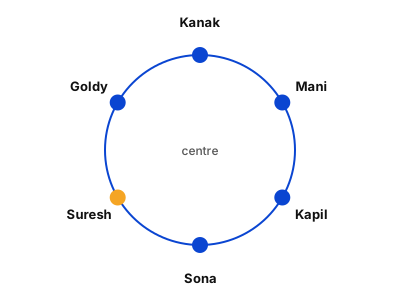
Six friends are sitting in a circle. All of them are facing the centre. Kanak sits third to the right of Sona. Kapil is an immediate neighbour of Mani. Goldy sits second to the right of Mani. Sona is an immediate neighbour of Kapil and Suresh.
Who sits to the immediate right of Goldy?
छह मित्र एक वृत्त में बैठे हैं। उन सभी का मुख केंद्र की ओर है। कनक, सोना के दाईं ओर तीसरे स्थान पर बैठा है। कपिल, मणि का निकटतम पड़ोसी है। गोल्डी, मणि के दाईं ओर दूसरे स्थान पर बैठा है। सोना, कपिल और सुरेश का निकटतम पड़ोसी है।
गोल्डी के ठीक दाईं ओर कौन बैठा है?
  1. ASonaसोना
  2. BKapilकपिल
  3. CKanakकनक
  4. DSureshसुरेश
Show answer

Concept: With everyone facing the centre, 'right' means anticlockwise as seen from above. In a circle of 6, third to the right = directly opposite.

  1. Kanak is third to the right of Sona → opposite Sona.
  2. Sona's neighbours are Kapil and Suresh. Kapil is next to Mani.
  3. If Kapil is to Sona's right, Mani is next and Goldy (second to the right of Mani) comes after Kanak — fits. The other case puts Goldy on Sona's seat ✗.
  4. Order to the right: Sona, Kapil, Mani, Kanak, Goldy, Suresh → immediate right of Goldy is Suresh.

Trick: Facing centre: right = anticlockwise; facing outside: right = clockwise.

Answer: (D) Suresh

अवधारणा: सभी का मुख केंद्र की ओर हो तो 'दायाँ' = ऊपर से देखने पर वामावर्त (anticlockwise)। 6 के वृत्त में तीसरा दाएँ = ठीक सामने।

  1. Kanak, Sona के तीसरे दाएँ → Sona के ठीक सामने।
  2. Sona के पड़ोसी Kapil और Suresh। Kapil, Mani के पास।
  3. यदि Kapil, Sona के दाएँ है तो Mani उसके बाद और Goldy (Mani के दूसरे दाएँ) Kanak के बाद — ठीक बैठता है। दूसरी स्थिति में Goldy, Sona की जगह आता है ✗।
  4. दाएँ क्रम: Sona, Kapil, Mani, Kanak, Goldy, Suresh → Goldy के ठीक दाएँ Suresh।

ट्रिक: केंद्र की ओर मुख: दायाँ = वामावर्त; बाहर की ओर मुख: दायाँ = दक्षिणावर्त।

उत्तर: (D) Suresh

SSC CPO Paper IGeneral Intelligence and ReasoningCircular Seating ArrangementSSC CPO Paper I 2023 · 3 Oct Shift 1 →
Q6446.
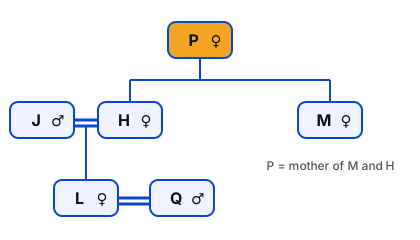
L is the wife of Q. P is the mother of M. J is the father of L. M is the sister of H. J is the husband of H. How is P related to L?
L, Q की पत्नी है। P, M की माता है। J, L का पिता है। M, H की बहन है। J, H का पति है। P का L से क्या संबंध है?
  1. AMother’s motherमाता की माता
  2. BSister’s sonबहन का पुत्र
  3. CMother’s sisterमाता की बहन
  4. DSister’s husbandबहन का पति
Show answer

Concept: Build a family tree from the statements, marking genders.

  1. J is the father of L and the husband of H → H is L's mother.
  2. M is the sister of H, and P is the mother of M → P is also H's mother.
  3. So P is the mother of L's mother.

Trick: Husband of mother is father — link the couple first, then go up one generation.

Answer: (A) Mother’s mother

अवधारणा: कथनों से लिंग सहित परिवार वृक्ष बनाएँ।

  1. J, L का पिता और H का पति → H, L की माँ है।
  2. M, H की बहन है और P, M की माँ है → P, H की भी माँ है।
  3. अतः P, L की माँ की माँ (नानी) है।

ट्रिक: पहले दंपति को जोड़ें, फिर एक पीढ़ी ऊपर जाएँ।

उत्तर: (A) Mother’s mother (माँ की माँ)

SSC CPO Paper IGeneral Intelligence and ReasoningBlood RelationSSC CPO Paper I 2023 · 3 Oct Shift 1 →
Q6447.
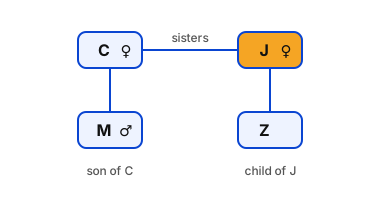
‘A = B’ means ‘A is the father of B‘.
‘A $ B’ means ‘A is the sister of B’.
‘A * B’ means ‘A is the mother of B‘.
‘A ? B’ means ‘A is the son of B‘.
If M ? C $ J * Z, then how is J related to M?
‘A = B’ का अर्थ है ‘A, B का पिता है’।
‘A $ B’ का अर्थ है ‘A, B की बहन है’।
‘A * B’ का अर्थ है ‘A, B की माता है’।
‘A ? B’ का अर्थ है ‘A, B का पुत्र है’।
यदि M ? C $ J * Z है, तो J का M से क्या संबंध है?
  1. ASisterबहन
  2. BMother's sisterमाता की बहन
  3. CMother's motherमाता की माता
  4. DBrotherभाई
Show answer

Concept: Decode each symbol and build the tree: '?' = son of, '$' = sister of, '*' = mother of.

  1. M ? C → M is the son of C.
  2. C $ J → C is the sister of J.
  3. J * Z → J is the mother of Z, so J is female.
  4. J is a sister of C, who is M's mother → J is M's mother's sister.

Trick: Read the chain left to right and keep track of genders: '*' makes J female.

Answer: (B) Mother's sister

अवधारणा: हर चिह्न डिकोड करके वृक्ष बनाएँ: '?' = son of, '$' = sister of, '*' = mother of।

  1. M ? C → M, C का पुत्र है।
  2. C $ J → C, J की बहन है।
  3. J * Z → J, Z की माँ है, अतः J महिला है।
  4. J, C की बहन है और C, M की माँ है → J, M की माँ की बहन (मौसी) है।

ट्रिक: शृंखला बाएँ से दाएँ पढ़ें और लिंग पर ध्यान दें: '*' से J महिला।

उत्तर: (B) Mother's sister (मौसी)

SSC CPO Paper IGeneral Intelligence and ReasoningCoded Blood RelationSSC CPO Paper I 2023 · 3 Oct Shift 1 →
Q6448.
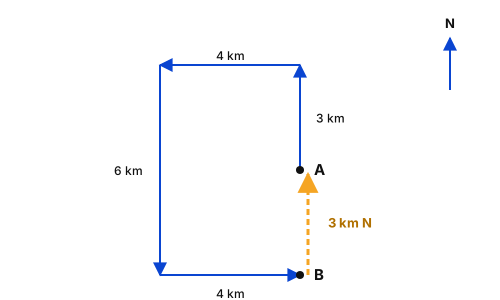
Rohit drives 3 km towards north from point A. He takes a left turn and drives 4 km.
Again he takes a left turn and drives 6 km. Finally, he takes a left turn and drives 4 km to reach point B. How far and towards which direction should he drive in order to
reach point A again?
रोहित बिंदु A से उत्तर की ओर 3 km गाड़ी चलाता है। वह बाएँ मुड़ता है और 4 km गाड़ी चलाता है।
वह फिर से बाएँ मुड़ता है और 6 km गाड़ी चलाता है। अंत में, वह बाएँ मुड़ता है और 4 km गाड़ी चलाकर बिंदु B पर पहुँचता है। फिर से बिंदु A पर
पहुँचने के लिए उसे कितनी दूर और किस दिशा में गाड़ी चलानी चाहिए?
  1. A4 km towards southदक्षिण की ओर 4 km
  2. B3 km towards eastपूर्व की ओर 3 km
  3. C3 km towards northउत्तर की ओर 3 km
  4. D2 km towards westपश्चिम की ओर 2 km
Show answer

Concept: Plot the path with A at the origin; three left turns from north lead west, south, then east.

  1. 3 km north → (0,3). Left (west) 4 km → (−4,3).
  2. Left (south) 6 km → (−4,−3). Left (east) 4 km → B =(0,−3).
  3. B is directly 3 km south of A, so he must drive 3 km north.

Trick: East–west moves cancel (4−4=0); net north–south =3−6=−3.

Answer: (C) 3 km towards north

अवधारणा: A को मूल बिंदु मानकर मार्ग बनाएँ; उत्तर से तीन बार बाएँ मुड़ने पर पश्चिम, दक्षिण, फिर पूर्व।

  1. 3 km उत्तर → (0,3)। बाएँ (पश्चिम) 4 km → (−4,3)।
  2. बाएँ (दक्षिण) 6 km → (−4,−3)। बाएँ (पूर्व) 4 km → B =(0,−3)।
  3. B, A से ठीक 3 km दक्षिण में है, अतः 3 km उत्तर जाना होगा।

ट्रिक: पूर्व-पश्चिम कट जाते हैं (4−4=0); कुल उत्तर-दक्षिण =3−6=−3।

उत्तर: (C) 3 km उत्तर की ओर

SSC CPO Paper IGeneral Intelligence and ReasoningDirection and DistanceSSC CPO Paper I 2023 · 3 Oct Shift 1 →
Q6449.
In a certain code language, ‘FRIEND’ is written as ‘IIFDME’ and 'DEMAND' is written as 'MVDDMA'. How will ‘GROUND’ be written in that language?
एक निश्चित कूट भाषा में, ‘FRIEND’ को ‘IIFDME’ लिखा जाता है और ‘DEMAND’ को ‘MVDDMA’ लिखा जाता है। उसी भाषा में ‘GROUND’ को किस प्रकार लिखा जाएगा?
  1. ADOTENC
  2. BPXKRYS
  3. COIGDMU
  4. DOFTSBU
Show answer

Concept: Split the word into two halves of three letters, reverse each half, and replace the middle letter of each half by its opposite letter (sum 27).

  1. FRIEND: FRI → IRF → R→I → IIF; END → DNE → N→M → DME → IIFDME ✓.
  2. DEMAND: DEM → MED → E→V → MVD; AND → DNA → N→M → DMA → MVDDMA ✓.
  3. GROUND: GRO → ORG → R→I → OIG; UND → DNU → N→M → DMU → OIGDMU.

Trick: Opposite pairs: R–I, N–M, E–V (each pair adds to 27).

Answer: (C) OIGDMU

अवधारणा: शब्द को तीन-तीन अक्षरों के दो भागों में बाँटें, हर भाग उल्टा करें और हर भाग के बीच वाले अक्षर को उसके विपरीत अक्षर (योग 27) से बदलें।

  1. FRIEND: FRI → IRF → R→I → IIF; END → DNE → N→M → DME → IIFDME ✓।
  2. DEMAND: DEM → MED → E→V → MVD; AND → DNA → N→M → DMA → MVDDMA ✓।
  3. GROUND: GRO → ORG → R→I → OIG; UND → DNU → N→M → DMU → OIGDMU।

ट्रिक: विपरीत जोड़े: R–I, N–M, E–V (हर जोड़े का योग 27)।

उत्तर: (C) OIGDMU

SSC CPO Paper IGeneral Intelligence and ReasoningCoding-DecodingSSC CPO Paper I 2023 · 3 Oct Shift 1 →
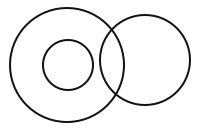
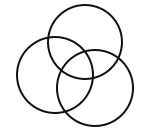
Q6450.
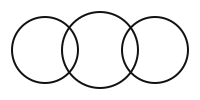
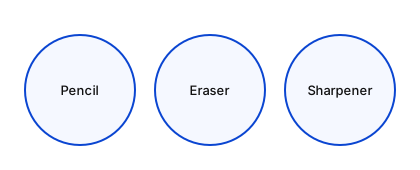
Select the Venn diagram that best illustrates the relationship between the following classes.
Pencil, Eraser, Sharpener
उस वेन आरेख का चयन कीजिए जो निम्नलिखित वर्गों के बीच संबंध को सर्वोत्तम रूप से दर्शाता है।
पेंसिल, रबड़, शार्पनर
  1. A
  2. B
  3. C
  4. D
Show answer

Concept: Check whether any member of one class can belong to another class.

  1. Pencil, eraser and sharpener are three different stationery items.
  2. No pencil is an eraser or a sharpener, and no eraser is a sharpener.
  3. So the three classes are completely separate — three disjoint circles, option (B).

Trick: Different objects of the same category (here stationery) → separate circles, unless the category itself is given.

Answer: (B) Option (B)

अवधारणा: जाँचें कि किसी वर्ग का कोई सदस्य दूसरे वर्ग में आ सकता है या नहीं।

  1. Pencil, Eraser और Sharpener तीन अलग-अलग स्टेशनरी वस्तुएँ हैं।
  2. कोई pencil, eraser या sharpener नहीं है, और कोई eraser, sharpener नहीं है।
  3. अतः तीनों वर्ग पूरी तरह अलग — तीन अलग वृत्त, विकल्प (B)।

ट्रिक: एक ही श्रेणी की अलग-अलग वस्तुएँ → अलग वृत्त (जब तक श्रेणी स्वयं न दी हो)।

उत्तर: (B) विकल्प (B)

SSC CPO Paper IGeneral Intelligence and ReasoningVenn DiagramSSC CPO Paper I 2023 · 3 Oct Shift 1 →
Q6451.
Which of the following does NOT belong to the family of organic compounds?
निम्नलिखित में से कौन-सा कार्बनिक यौगिकों (organic compounds) के परिवार से संबंधित नहीं है?
  1. AAmmoniaअमोनिया
  2. BNonaneनोनेन
  3. CFuranफ्यूरान
  4. DDecaneडेकेन
Show answer

Concept: Organic compounds are carbon compounds (usually with C–H bonds); compounds without carbon are inorganic.

  1. Nonane (C9H20) and decane (C10H22) are alkanes – hydrocarbons.
  2. Furan (C4H4O) is a five-membered heterocyclic organic compound containing carbon.
  3. Ammonia (NH3) contains only nitrogen and hydrogen – no carbon, so it is inorganic.

Yaad rakhein: No carbon = not organic. Look for the formula without C.

Answer: (A) Ammonia

अवधारणा: कार्बनिक यौगिक कार्बन के यौगिक होते हैं (प्रायः C–H बंध सहित); जिनमें कार्बन नहीं होता वे अकार्बनिक हैं।

  1. Nonane (C9H20) और Decane (C10H22) एल्केन (alkane) हाइड्रोकार्बन हैं।
  2. Furan (C4H4O) पाँच सदस्यीय विषमचक्रीय (heterocyclic) कार्बनिक यौगिक है।
  3. Ammonia (NH3) में केवल नाइट्रोजन और हाइड्रोजन हैं – कार्बन नहीं, अतः यह अकार्बनिक है।

याद रखें: कार्बन नहीं = कार्बनिक नहीं। जिस सूत्र में C न हो, वही उत्तर।

उत्तर: (A) Ammonia

SSC CPO Paper IGeneral Knowledge and General AwarenessOrganic CompoundsSSC CPO Paper I 2023 · 3 Oct Shift 1 →
Q6452.
In November 2020, ___________ has set a record of becoming the world’s fastest
piano player ever.
नवंबर 2020 में, ___________ ने विश्व का अब तक का सबसे तेज़
पियानो वादक बनने का रिकॉर्ड बनाया है।
  1. ALydian Nadhaswaramलिडियन नादस्वरम
  2. BAnisrinivasanअनिश्रीनिवासन
  3. CGauri Mishraगौरी मिश्रा
  4. DShikha Chaurasiaशिखा चौरसिया
Show answer

Concept: Lydian Nadhaswaram is a child music prodigy from Chennai.

  1. In November 2020 he set the record of being the world's fastest piano player (playing a record number of notes per minute).
  2. He became famous after winning the US TV talent show 'The World's Best' (2019) as a teenager.
  3. He also composed music for the film 'Barroz' (Mohanlal's directorial debut).

Yaad rakhein: Lydian – piano prodigy of Chennai; Nadhaswaram is also the name of a Tamil wind instrument, but he plays piano.

Answer: (A) Lydian Nadhaswaram

अवधारणा: Lydian Nadhaswaram चेन्नई का एक बाल संगीत प्रतिभा (prodigy) है।

  1. नवम्बर 2020 में उसने विश्व का सबसे तेज़ पियानो वादक (fastest piano player) होने का रिकॉर्ड बनाया।
  2. वह 2019 में अमेरिकी TV शो 'The World's Best' जीतकर प्रसिद्ध हुआ।
  3. उसने फ़िल्म 'Barroz' (मोहनलाल निर्देशित) का संगीत भी दिया।

याद रखें: Lydian – चेन्नई का पियानो प्रॉडिजी; नाम में Nadhaswaram (वाद्य) है, पर वह पियानो बजाता है।

उत्तर: (A) Lydian Nadhaswaram

SSC CPO Paper IGeneral Knowledge and General AwarenessPersons in NewsSSC CPO Paper I 2023 · 3 Oct Shift 1 →
Q6453.
For Kharif crops, the temperature required for farming is above 25 degrees Celsius with high humidity and annual rainfall above ________ cm.
खरीफ फसलों के लिए, कृषि हेतु आवश्यक तापमान 25 डिग्री सेल्सियस से अधिक, उच्च आर्द्रता और ________ cm से अधिक वार्षिक वर्षा है।
  1. A16
  2. B100
  3. C35
  4. D50
Show answer

Concept: Kharif crops are sown with the onset of the south-west monsoon (June–July) and harvested in September–October.

  1. They need high temperature (above 25∘C) and high humidity.
  2. They need heavy rainfall – annual rainfall above 100cm.
  3. Examples: rice, maize, jowar, bajra, cotton, jute, groundnut.

Yaad rakhein: Kharif = monsoon crop = hot + wet: above 25∘C and above 100cm rain.

Answer: (B) 100

अवधारणा: खरीफ फसलें दक्षिण-पश्चिम मानसून (जून–जुलाई) के साथ बोई जाती हैं और सितम्बर–अक्टूबर में काटी जाती हैं।

  1. इन्हें उच्च तापमान (25∘C से अधिक) और उच्च आर्द्रता चाहिए।
  2. इन्हें अधिक वर्षा चाहिए – वार्षिक वर्षा 100cm से अधिक।
  3. उदाहरण: धान, मक्का, ज्वार, बाजरा, कपास, जूट, मूँगफली।

याद रखें: खरीफ = मानसून फसल = गर्म + गीला: 25∘C से ऊपर, 100cm से अधिक वर्षा।

उत्तर: (B) 100

SSC CPO Paper IGeneral Knowledge and General AwarenessKharif CropsSSC CPO Paper I 2023 · 3 Oct Shift 1 →
Q6454.
Bhutia dance is performed in which of the following states?
भूटिया नृत्य निम्नलिखित में से किस राज्य में किया जाता है?
  1. AWest Bengalपश्चिम बंगाल
  2. BOdishaओडिशा
  3. CSikkimसिक्किम
  4. DNagalandनागालैंड
Show answer

Concept: Bhutia dance is a folk dance of the Bhutia community of Sikkim.

  1. The Bhutias are a Tibetan-origin community living mainly in Sikkim; their dances (e.g. Singhi Chham, Yak Chham) are linked to Buddhist festivals like Losar.
  2. Odisha is known for Odissi and Chhau, Nagaland for Chang Lo, and West Bengal for Gambhira and Chhau (Purulia).

Yaad rakhein: Bhutia, Lepcha and Limboo – the three main communities of Sikkim.

Answer: (C) Sikkim

अवधारणा: Bhutia नृत्य सिक्किम के Bhutia समुदाय का लोक नृत्य है।

  1. Bhutia तिब्बती मूल का समुदाय है जो मुख्यतः सिक्किम में रहता है; इनके नृत्य (जैसे Singhi Chham, Yak Chham) Losar जैसे बौद्ध त्योहारों से जुड़े हैं।
  2. ओडिशा – Odissi, Chhau; नागालैंड – Chang Lo; पश्चिम बंगाल – Gambhira, Chhau (पुरुलिया)।

याद रखें: Bhutia, Lepcha और Limboo – सिक्किम के तीन प्रमुख समुदाय।

उत्तर: (C) Sikkim

SSC CPO Paper IGeneral Knowledge and General AwarenessFolk DancesSSC CPO Paper I 2023 · 3 Oct Shift 1 →
Q6455.
With which neighbouring country did India sign the Farakka Treaty in 1996 for sharing of the Ganga Waters and on augmenting its flows?
भारत ने गंगा जल के बँटवारे और इसके प्रवाह को बढ़ाने के लिए 1996 में किस पड़ोसी देश के साथ फरक्का संधि पर हस्ताक्षर किए थे?
  1. ABhutanभूटान
  2. BBangladeshबांग्लादेश
  3. CNepalनेपाल
  4. DAfghanistanअफ़ग़ानिस्तान
Show answer

Concept: The Ganga Water Sharing Treaty (Farakka Treaty) was signed between India and Bangladesh on 12 December 1996.

  1. It was signed by PM H.D. Deve Gowda and PM Sheikh Hasina for sharing Ganga waters at the Farakka Barrage during the lean season (January–May).
  2. Its validity is 30 years (up to 2026).
  3. With Nepal India has the Mahakali Treaty (1996); with Pakistan the Indus Waters Treaty (1960).

Yaad rakhein: Farakka Barrage is in West Bengal, just before the Ganga enters Bangladesh.

Answer: (B) Bangladesh

अवधारणा: गंगा जल बँटवारा संधि (Farakka Treaty) 12 दिसम्बर 1996 को भारत और बांग्लादेश के बीच हुई।

  1. इस पर प्रधानमंत्री H.D. देवगौड़ा और शेख हसीना ने हस्ताक्षर किए; यह शुष्क मौसम (जनवरी–मई) में फरक्का बैराज पर गंगा जल बँटवारे के लिए है।
  2. इसकी अवधि 30 वर्ष है (2026 तक)।
  3. नेपाल के साथ महाकाली संधि (1996), पाकिस्तान के साथ सिंधु जल संधि (1960)।

याद रखें: फरक्का बैराज पश्चिम बंगाल में है, ठीक वहाँ जहाँ से गंगा बांग्लादेश में जाती है।

उत्तर: (B) Bangladesh

SSC CPO Paper IGeneral Knowledge and General AwarenessIndia's Water TreatiesSSC CPO Paper I 2023 · 3 Oct Shift 1 →
Q6456.
Which ruler of the Chahamana dynasty made Ajmer his capital?
चाहमान वंश के किस शासक ने अजमेर को अपनी राजधानी बनाया था?
  1. AAjayarajaअजयराज
  2. BPrithviraj IIपृथ्वीराज द्वितीय
  3. CArnorajअर्णोराज
  4. DPrithviraj IIIपृथ्वीराज तृतीय
Show answer

Concept: The Chahamanas of Shakambhari (Chauhans) ruled parts of present-day Rajasthan.

  1. Ajayaraja II (early 12th century) founded the city of Ajayameru (Ajmer) and made it the capital.
  2. Arnoraja was his son and successor; Prithviraj III (Prithviraj Chauhan) was the most famous ruler, defeated by Muhammad Ghori in the Second Battle of Tarain (1192).

Yaad rakhein: Ajayaraja → Ajayameru → Ajmer (the name itself comes from the founder).

Answer: (A) Ajayaraja

अवधारणा: शाकम्भरी के चाहमान (चौहान) शासकों ने वर्तमान राजस्थान के भागों पर शासन किया।

  1. अजयराज द्वितीय (12वीं सदी के आरम्भ में) ने अजयमेरु (Ajmer) नगर बसाया और उसे राजधानी बनाया।
  2. अर्णोराज उसका पुत्र और उत्तराधिकारी था; पृथ्वीराज तृतीय (पृथ्वीराज चौहान) सबसे प्रसिद्ध शासक था, जो तराइन के द्वितीय युद्ध (1192) में मुहम्मद गोरी से हारा।

याद रखें: अजयराज → अजयमेरु → अजमेर (नाम ही संस्थापक से बना)।

उत्तर: (A) Ajayaraja

SSC CPO Paper IGeneral Knowledge and General AwarenessChahamana (Chauhan) DynastySSC CPO Paper I 2023 · 3 Oct Shift 1 →
Q6457.
How many Members of Parliament were elected from Punjab to the 17th Lok Sabha?
17वीं लोकसभा के लिए पंजाब से कितने संसद सदस्य निर्वाचित हुए थे?
  1. A14
  2. B15
  3. C13
  4. D17
Show answer

Concept: Seats in the Lok Sabha are allotted to states roughly in proportion to population.

  1. Punjab has 13 Lok Sabha constituencies, so 13 MPs were elected from Punjab to the 17th Lok Sabha (2019).
  2. For comparison: Haryana 10, Himachal Pradesh 4, Uttar Pradesh 80 (highest).

Yaad rakhein: Punjab – 13 Lok Sabha seats, 117 Vidhan Sabha seats, 7 Rajya Sabha seats.

Answer: (C) 13

अवधारणा: लोक सभा में राज्यों को सीटें लगभग जनसंख्या के अनुपात में मिलती हैं।

  1. पंजाब में 13 लोक सभा निर्वाचन क्षेत्र हैं, अतः 17वीं लोक सभा (2019) में पंजाब से 13 सांसद चुने गए।
  2. तुलना: हरियाणा 10, हिमाचल प्रदेश 4, उत्तर प्रदेश 80 (सबसे अधिक)।

याद रखें: पंजाब – लोक सभा 13, विधान सभा 117, राज्य सभा 7 सीटें।

उत्तर: (C) 13

SSC CPO Paper IGeneral Knowledge and General AwarenessLok Sabha SeatsSSC CPO Paper I 2023 · 3 Oct Shift 1 →
Q6458.
In India, which of the following regulatory mechanisms was NOT in existence to
enforce regulation of the industrial sector?
भारत में, निम्नलिखित में से कौन-सा नियामक तंत्र औद्योगिक क्षेत्र के विनियमन को लागू करने के लिए
अस्तित्व में नहीं था?
  1. AIndustrial licensing under which every entrepreneur had to get permission from government officials to start a firm, close a firm or decide the amount of goods that could be produced.औद्योगिक लाइसेंसिंग, जिसके अंतर्गत प्रत्येक उद्यमी को कोई फर्म शुरू करने, फर्म बंद करने या उत्पादित की जा सकने वाली वस्तुओं की मात्रा तय करने के लिए सरकारी अधिकारियों से अनुमति लेनी पड़ती थी।
  2. BControls on price fixation and distribution of selected industrial products.चयनित औद्योगिक उत्पादों के मूल्य निर्धारण और वितरण पर नियंत्रण।
  3. CPrivate sector was allowed in all industries.निजी क्षेत्र को सभी उद्योगों में अनुमति दी गई थी।
  4. DSome goods could be produced only in small-scale industries.कुछ वस्तुओं का उत्पादन केवल लघु उद्योगों में ही किया जा सकता था।
Show answer

Concept: Before the 1991 reforms, the industrial sector was tightly regulated (licence-permit raj) under the Industrial Policy Resolution, 1956.

  1. Industrial licensing was needed to start, expand or close a firm and to decide output.
  2. Prices and distribution of selected products (cement, steel, etc.) were controlled; some goods were reserved for small-scale industries.
  3. The private sector was NOT allowed in all industries – many industries were reserved for the public sector. So option (C) was not a mechanism in existence.

Yaad rakhein: Pre-1991 = licence, price control, SSI reservation, public-sector reservation. 'Private sector everywhere' came only after 1991.

Answer: (C) Private sector was allowed in all industries.

अवधारणा: 1991 के सुधारों से पहले औद्योगिक क्षेत्र औद्योगिक नीति प्रस्ताव 1956 के अंतर्गत कड़ाई से नियंत्रित था (licence-permit raj)।

  1. फ़र्म शुरू करने, बढ़ाने, बंद करने और उत्पादन तय करने के लिए औद्योगिक लाइसेंस आवश्यक था।
  2. चुनिंदा वस्तुओं (सीमेंट, इस्पात आदि) की कीमत और वितरण नियंत्रित थे; कुछ वस्तुएँ केवल लघु उद्योगों (small-scale industries) के लिए आरक्षित थीं।
  3. निजी क्षेत्र को सभी उद्योगों में अनुमति नहीं थी – कई उद्योग सार्वजनिक क्षेत्र के लिए आरक्षित थे। अतः (C) उस समय की व्यवस्था नहीं थी।

याद रखें: 1991 से पहले = लाइसेंस, मूल्य नियंत्रण, SSI आरक्षण, सार्वजनिक क्षेत्र आरक्षण। निजी क्षेत्र को खुली छूट 1991 के बाद मिली।

उत्तर: (C) Private sector was allowed in all industries.

SSC CPO Paper IGeneral Knowledge and General AwarenessIndustrial Policy before 1991SSC CPO Paper I 2023 · 3 Oct Shift 1 →
Q6459.
Who among the following Indian authors has written the autobiography titled ‘My
Story’?
निम्नलिखित भारतीय लेखकों में से किसने ‘My
Story’ (माई स्टोरी) शीर्षक वाली आत्मकथा लिखी है?
  1. AArundhati Royअरुंधति रॉय
  2. BShobha Deyशोभा डे
  3. CKiran Desaiकिरण देसाई
  4. DKamala Dasकमला दास
Show answer

Concept: 'My Story' is the autobiography of the Malayalam and English writer Kamala Das (Madhavikutty).

  1. It was first published in Malayalam as 'Ente Katha' and in English in 1976; it was famous for its candid narration.
  2. Arundhati Roy – The God of Small Things; Kiran Desai – The Inheritance of Loss; Shobhaa De – Socialite Evenings, Selective Memory (her memoir).

Yaad rakhein: Kamala Das – 'My Story' (Ente Katha).

Answer: (D) Kamala Das

अवधारणा: 'My Story' मलयालम व अंग्रेज़ी लेखिका कमला दास (माधविकुट्टी) की आत्मकथा है।

  1. यह मलयालम में 'Ente Katha' के रूप में और अंग्रेज़ी में 1976 में प्रकाशित हुई; अपनी स्पष्टवादिता के लिए प्रसिद्ध है।
  2. अरुंधति रॉय – The God of Small Things; किरण देसाई – The Inheritance of Loss; शोभा डे – Socialite Evenings, Selective Memory (संस्मरण)।

याद रखें: कमला दास – 'My Story' (Ente Katha)।

उत्तर: (D) Kamala Das

SSC CPO Paper IGeneral Knowledge and General AwarenessBooks and AuthorsSSC CPO Paper I 2023 · 3 Oct Shift 1 →
Q6460.
Methyl ethyl ketone is also known as:
मिथाइल एथिल कीटोन (Methyl ethyl ketone) को इस नाम से भी जाना जाता है:
  1. A2-butanone2-ब्यूटेनोन (2-butanone)
  2. Bpropanoneप्रोपेनोन (propanone)
  3. Cmethyl pentanoneमिथाइल पेंटेनोन (methyl pentanone)
  4. D2-butanol2-ब्यूटेनॉल (2-butanol)
Show answer

Concept: Methyl ethyl ketone is CH3–CO–CH2–CH3: a ketone with 4 carbon atoms.

  1. 4-carbon chain → 'butan'; ketone group → suffix '-one'.
  2. The C=O is at carbon 2, so the IUPAC name is butan-2-one (2-butanone).
  3. Propanone is acetone (dimethyl ketone); 2-butanol is an alcohol (–OH), not a ketone.

Yaad rakhein: Count carbons: methyl (1) + C=O (1) + ethyl (2) = 4 → butanone.

Answer: (A) 2-butanone

अवधारणा: Methyl ethyl ketone = CH3–CO–CH2–CH3, 4 कार्बन वाला कीटोन।

  1. 4 कार्बन की श्रृंखला → 'butan'; कीटोन समूह → प्रत्यय '-one'।
  2. C=O कार्बन 2 पर है, अतः IUPAC नाम butan-2-one (2-butanone)।
  3. Propanone = acetone (dimethyl ketone); 2-butanol एल्कोहॉल (–OH) है, कीटोन नहीं।

याद रखें: कार्बन गिनें: methyl (1) + C=O (1) + ethyl (2) = 4 → butanone।

उत्तर: (A) 2-butanone

SSC CPO Paper IGeneral Knowledge and General AwarenessIUPAC NomenclatureSSC CPO Paper I 2023 · 3 Oct Shift 1 →