Question bank

Q&A: practice questions with answers

Search questions on any topic. Filter by exam category, exam, subject and topic, try the question, then open the answer and explanation.

Courses – airGurukul

6,600 questions found.

Q661.
Who among the following are eligible for free legal aid under the National Legal
Services Authority?
A.A member of a Scheduled Caste or Scheduled Tribe.
B.A victim of trafficking in human beings or beggar as referred to in Article 23 of the Constitution
C.An industrial workman
D.A person under circumstances of undeserved want such as being a victim of a mass disasters
E.To file any case in Supreme Court, if any person need free legal aid, the person’s annual income must be below 10 lakhs.
राष्ट्रीय विधिक
सेवा प्राधिकरण के अंतर्गत निम्नलिखित में से कौन निःशुल्क विधिक सहायता के लिए पात्र हैं?
A.अनुसूचित जाति या अनुसूचित जनजाति का सदस्य।
B.संविधान के अनुच्छेद 23 में उल्लिखित मानव दुर्व्यापार (trafficking) से पीड़ित व्यक्ति या भिखारी
C.एक औद्योगिक कामगार
D.अनपेक्षित अभाव की परिस्थितियों में कोई व्यक्ति, जैसे सामूहिक आपदा से पीड़ित होना
E.सर्वोच्च न्यायालय में कोई भी मामला दायर करने के लिए, यदि किसी व्यक्ति को निःशुल्क विधिक सहायता की आवश्यकता है, तो उस व्यक्ति की वार्षिक आय 10 लाख से कम होनी चाहिए।
  1. AB, C and D onlyकेवल B, C और D
  2. BA, B, C, D and EA, B, C, D और E
  3. CA, B, C and D onlyकेवल A, B, C और D
  4. DA, B and E onlyकेवल A, B और E
Show answer

Concept: Section 12 of the Legal Services Authorities Act, 1987 lists who is entitled to free legal services under NALSA.

  1. Eligible: members of SC/ST (A), victims of trafficking or begar under Article 23 (B), industrial workmen (C), and persons in undeserved want such as victims of mass disaster, ethnic violence, flood, drought, earthquake (D).
  2. Statement E is wrong: the income ceiling for free legal aid in Supreme Court cases is not ₹10 lakh (the Supreme Court Legal Services Committee limit is ₹5 lakh).
  3. So A, B, C and D only.

Yaad rakhein: Section 12 list: SC/ST, trafficking victims, women & children, disabled, disaster victims, industrial workmen, persons in custody, low-income persons.

Answer: (C) A, B, C and D only

अवधारणा: विधिक सेवा प्राधिकरण अधिनियम, 1987 की धारा 12 बताती है कि NALSA के तहत निःशुल्क विधिक सहायता का पात्र कौन है।

  1. पात्र: SC/ST के सदस्य (A), अनुच्छेद 23 में वर्णित मानव तस्करी या बेगार के पीड़ित (B), औद्योगिक कामगार (C), और सामूहिक आपदा आदि से अवांछित अभाव में पड़े व्यक्ति (D)।
  2. कथन E गलत है: सर्वोच्च न्यायालय के मामलों में आय सीमा ₹10 लाख नहीं है (Supreme Court Legal Services Committee की सीमा ₹5 लाख है)।
  3. अतः केवल A, B, C और D।

याद रखें: धारा 12: SC/ST, तस्करी पीड़ित, महिलाएँ व बच्चे, दिव्यांग, आपदा पीड़ित, औद्योगिक कामगार, हिरासत में व्यक्ति, कम आय वाले।

उत्तर: (C) A, B, C and D only
SSC CPO Paper IGeneral Knowledge and General AwarenessFree Legal Aid – NALSASSC CPO Paper I 2024 · 28 Jun Shift 3 →
Q662.
Which of the following was NOT an advantage of privatisation?
निम्नलिखित में से कौन-सा निजीकरण का लाभ नहीं था?
  1. AAdditional source of revenue for the governmentसरकार के लिए राजस्व का अतिरिक्त स्रोत
  2. BLow interference of political motivesराजनीतिक उद्देश्यों का कम हस्तक्षेप
  3. COverall improved performanceसमग्र रूप से बेहतर प्रदर्शन
  4. DReduced competitionप्रतिस्पर्धा में कमी
Show answer

Concept: Privatisation transfers ownership/management of public enterprises to the private sector, mainly to raise efficiency and competition.

  1. Selling stakes (disinvestment) gives the government extra revenue — an advantage.
  2. Private management faces less political interference and usually improves performance — advantages.
  3. Privatisation increases competition; 'reduced competition' is not an advantage of it.

Yaad rakhein: LPG reforms 1991: privatisation → more competition, efficiency, revenue.

Answer: (D) Reduced competition

अवधारणा: निजीकरण में सार्वजनिक उपक्रमों का स्वामित्व/प्रबंधन निजी क्षेत्र को दिया जाता है, मुख्यतः दक्षता और प्रतिस्पर्धा बढ़ाने के लिए।

  1. हिस्सेदारी बेचने (विनिवेश) से सरकार को अतिरिक्त राजस्व मिलता है — लाभ।
  2. निजी प्रबंधन में राजनीतिक हस्तक्षेप कम और प्रदर्शन बेहतर होता है — लाभ।
  3. निजीकरण से प्रतिस्पर्धा बढ़ती है; 'प्रतिस्पर्धा में कमी' इसका लाभ नहीं है।

याद रखें: 1991 LPG सुधार: निजीकरण → अधिक प्रतिस्पर्धा, दक्षता, राजस्व।

उत्तर: (D) Reduced competition (प्रतिस्पर्धा में कमी)

SSC CPO Paper IGeneral Knowledge and General AwarenessPrivatisationSSC CPO Paper I 2024 · 28 Jun Shift 3 →
Q663.
Tattvabodhini Patrika promoted the study of India’s past in which language?
तत्त्वबोधिनी पत्रिका ने किस भाषा में भारत के अतीत के अध्ययन को बढ़ावा दिया?
  1. ASanskritसंस्कृत
  2. BBengaliबंगाली
  3. CHindiहिंदी
  4. DEnglishअंग्रेज़ी
Show answer

Concept: The Tattvabodhini Sabha was founded by Debendranath Tagore in 1839; its journal was the Tattvabodhini Patrika (1843).

  1. The Patrika was published in Bengali, edited for long by Akshay Kumar Datta.
  2. It promoted a systematic study of India's past, Upanishadic thought and science in the Bengali language.
  3. It was the mouthpiece of the Brahmo Samaj under Debendranath Tagore.

Yaad rakhein: Tattvabodhini → Debendranath Tagore → Bengali → Brahmo Samaj.

Answer: (B) Bengali

अवधारणा: तत्वबोधिनी सभा की स्थापना देवेंद्रनाथ टैगोर ने 1839 में की; इसकी पत्रिका तत्वबोधिनी पत्रिका (1843) थी।

  1. यह पत्रिका बंगाली भाषा में प्रकाशित होती थी; लंबे समय तक इसके संपादक अक्षय कुमार दत्त रहे।
  2. इसने बंगाली भाषा में भारत के अतीत, उपनिषद् विचार और विज्ञान के अध्ययन को बढ़ावा दिया।
  3. यह देवेंद्रनाथ टैगोर के समय ब्रह्म समाज का मुखपत्र थी।

याद रखें: तत्वबोधिनी → देवेंद्रनाथ टैगोर → बंगाली → ब्रह्म समाज।

उत्तर: (B) Bengali (बंगाली)

SSC CPO Paper IGeneral Knowledge and General AwarenessBengal Renaissance – PressSSC CPO Paper I 2024 · 28 Jun Shift 3 →
Q664.
In Andhra region, who among the following translated a few portions of Mahabharata in Telugu?
आंध्र क्षेत्र में, निम्नलिखित में से किसने महाभारत के कुछ अंशों का तेलुगु में अनुवाद किया?
  1. ANanniahनन्नैया
  2. BTikkannaतिक्कन्ना
  3. CKambanकंबन
  4. DPampaपंपा
Show answer

Concept: The Telugu Mahabharata (Andhra Mahabharatam) was written by the 'Kavitrayam' (trinity of poets).

  1. Nannaya (Nanniah), court poet of Chalukya king Rajaraja Narendra (11th century), began it and translated the first few portions (Adi, Sabha and part of Aranya Parva).
  2. Tikkana and later Errana completed the remaining parvas.
  3. Kamban wrote the Tamil Ramayana; Pampa wrote in Kannada (Vikramarjuna Vijaya).

Yaad rakhein: Kavitrayam: Nannaya → Tikkana → Errana (in that order).

Answer: (A) Nanniah

अवधारणा: तेलुगु महाभारत (आंध्र महाभारतम्) की रचना 'कवित्रयम्' (तीन कवियों) ने की।

  1. चालुक्य राजा राजराज नरेंद्र के दरबारी कवि नन्नय (Nanniah) (11वीं सदी) ने इसकी शुरुआत की और प्रारंभिक कुछ भागों (आदि, सभा और आरण्य पर्व का अंश) का अनुवाद किया।
  2. तिक्कना और बाद में एर्राना ने शेष पर्व पूरे किए।
  3. कंबन ने तमिल रामायण लिखी; पम्प कन्नड़ कवि थे।

याद रखें: कवित्रयम्: नन्नय → तिक्कना → एर्राना (इसी क्रम में)।

उत्तर: (A) Nanniah (नन्नय)

SSC CPO Paper IGeneral Knowledge and General AwarenessTelugu LiteratureSSC CPO Paper I 2024 · 28 Jun Shift 3 →
Q665.
Who among the following was the founding president of the Indian Olympic
Association?
निम्नलिखित में से कौन भारतीय ओलंपिक
संघ के संस्थापक अध्यक्ष थे?
  1. ADadabhai Naorojiदादाभाई नौरोजी
  2. BJamsetji Tataजमशेदजी टाटा
  3. CAG. Noehrenए.जी. नोहरेन
  4. DDorabji Tataदोराबजी टाटा
Show answer

Concept: The Indian Olympic Association (IOA) was formed in 1927.

  1. Sir Dorabji Tata was its founding president; he had also financed India's participation in the 1920 Antwerp Olympics.
  2. Dr. A.G. Noehren (of YMCA) was its first secretary-general — a tempting but wrong option.
  3. Jamsetji Tata (Dorabji's father) founded the Tata group; Dadabhai Naoroji was a political leader.

Yaad rakhein: IOA 1927: President Dorabji Tata, Secretary A.G. Noehren.

Answer: (D) Dorabji Tata

अवधारणा: भारतीय ओलंपिक संघ (IOA) का गठन 1927 में हुआ।

  1. सर दोराबजी टाटा इसके संस्थापक अध्यक्ष थे; उन्होंने 1920 एंटवर्प ओलंपिक में भारत की भागीदारी का खर्च भी उठाया था।
  2. डॉ. ए.जी. नोहरेन (YMCA) इसके पहले महासचिव थे — यह भ्रामक विकल्प है।
  3. जमशेदजी टाटा (दोराबजी के पिता) टाटा समूह के संस्थापक थे; दादाभाई नौरोजी राजनीतिक नेता थे।

याद रखें: IOA 1927: अध्यक्ष दोराबजी टाटा, सचिव ए.जी. नोहरेन।

उत्तर: (D) Dorabji Tata (दोराबजी टाटा)

SSC CPO Paper IGeneral Knowledge and General AwarenessSports Organisations – IOASSC CPO Paper I 2024 · 28 Jun Shift 3 →
Q666.
Pt. Shiv Kumar Sharma, an accomplished Santoor player, originally hails from the
State /UT of:
एक कुशल संतूर वादक, पं. शिव कुमार शर्मा मूल रूप से किस
राज्य/केंद्रशासित प्रदेश से हैं?
  1. AJammu and Kashmirजम्मू और कश्मीर
  2. BLakshadweepलक्षद्वीप
  3. CAssamअसम
  4. DHimachal Pradeshहिमाचल प्रदेश
Show answer

Concept: The santoor is a hammered string instrument originally used in the Sufiana music of Kashmir.

  1. Pandit Shivkumar Sharma was born in Jammu (1938), in present-day UT of Jammu and Kashmir.
  2. He made the santoor a solo instrument of Hindustani classical music.
  3. He was awarded the Padma Vibhushan (2001).

Yaad rakhein: Santoor ↔ Kashmir ↔ Shivkumar Sharma (and son Rahul Sharma).

Answer: (A) Jammu and Kashmir

अवधारणा: संतूर एक तार-वाद्य है जिसे हथौड़ियों से बजाया जाता है; यह मूलतः कश्मीर के सूफ़ियाना संगीत में प्रयुक्त होता था।

  1. पंडित शिवकुमार शर्मा का जन्म जम्मू (1938) में हुआ — वर्तमान केंद्र शासित प्रदेश जम्मू और कश्मीर।
  2. उन्होंने संतूर को हिंदुस्तानी शास्त्रीय संगीत का एकल वाद्य बनाया।
  3. उन्हें पद्म विभूषण (2001) मिला।

याद रखें: संतूर ↔ कश्मीर ↔ शिवकुमार शर्मा (और पुत्र राहुल शर्मा)।

उत्तर: (A) Jammu and Kashmir (जम्मू और कश्मीर)

SSC CPO Paper IGeneral Knowledge and General AwarenessIndian Music – SantoorSSC CPO Paper I 2024 · 28 Jun Shift 3 →
Q667.
The Carnatic classical vocalist and first ever musician to receive the Bharat Ratna
award, also known as ‘Queen of songs’, is _________.
कर्नाटक शास्त्रीय गायिका और भारत रत्न पुरस्कार प्राप्त करने वाली पहली संगीतज्ञ, जिन्हें ‘गीतों की रानी’
के नाम से भी जाना जाता है, _________ हैं।
  1. AShubha Mudgalशुभा मुद्गल
  2. BGirija Deviगिरिजा देवी
  3. CMS Subbulakshmiएम.एस. सुब्बुलक्ष्मी
  4. DGangubai Hangalगंगूबाई हंगल
Show answer

Concept: M.S. Subbulakshmi was a legendary Carnatic vocalist from Madurai, Tamil Nadu.

  1. In 1998 she became the first musician to receive the Bharat Ratna.
  2. She was also the first Indian musician to receive the Ramon Magsaysay Award (1974); Nehru called her the 'Queen of Songs'.
  3. Shubha Mudgal, Girija Devi and Gangubai Hangal are Hindustani vocalists.

Yaad rakhein: Musicians with Bharat Ratna: M.S. Subbulakshmi (1998), Ravi Shankar (1999), Lata Mangeshkar & Bismillah Khan (2001), Bhimsen Joshi (2009), Bhupen Hazarika (2019).

Answer: (C) MS Subbulakshmi

अवधारणा: एम.एस. सुब्बुलक्ष्मी मदुरै (तमिलनाडु) की महान कर्नाटक शास्त्रीय गायिका थीं।

  1. 1998 में वे भारत रत्न पाने वाली पहली संगीतकार बनीं।
  2. वे रेमन मैग्सेसे पुरस्कार (1974) पाने वाली पहली भारतीय संगीतकार भी थीं; नेहरू ने उन्हें 'Queen of Songs' कहा।
  3. शुभा मुद्गल, गिरिजा देवी और गंगूबाई हंगल हिंदुस्तानी गायिकाएँ हैं।

याद रखें: भारत रत्न पाने वाले संगीतकार: एम.एस. सुब्बुलक्ष्मी (1998), रविशंकर (1999), लता मंगेशकर व बिस्मिल्लाह खान (2001), भीमसेन जोशी (2009), भूपेन हज़ारिका (2019)।

उत्तर: (C) MS Subbulakshmi (एम.एस. सुब्बुलक्ष्मी)

SSC CPO Paper IGeneral Knowledge and General AwarenessIndian Music – Bharat RatnaSSC CPO Paper I 2024 · 28 Jun Shift 3 →
Q668.
A Flight of Pigeons is a famous book written by _________________.
‘A Flight of Pigeons’ _________________ द्वारा लिखी गई एक प्रसिद्ध पुस्तक है।
  1. ARuskin Bondरस्किन बॉन्ड
  2. BSalman Rushdieसलमान रुश्दी
  3. CKhushwant Singhखुशवंत सिंह
  4. DVikram Sethविक्रम सेठ
Show answer

Concept: A Flight of Pigeons is a novella set during the Revolt of 1857.

  1. It was written by Ruskin Bond (published 1978).
  2. It was adapted into Shyam Benegal's film Junoon (1978).
  3. Salman Rushdie – Midnight's Children; Khushwant Singh – Train to Pakistan; Vikram Seth – A Suitable Boy.

Yaad rakhein: Ruskin Bond: The Room on the Roof, A Flight of Pigeons, The Blue Umbrella, Our Trees Still Grow in Dehra.

Answer: (A) Ruskin Bond

अवधारणा: A Flight of Pigeons 1857 के विद्रोह की पृष्ठभूमि पर लिखा उपन्यासिका है।

  1. इसके लेखक रस्किन बॉन्ड हैं (प्रकाशन 1978)।
  2. इस पर श्याम बेनेगल की फ़िल्म जुनून (1978) बनी।
  3. सलमान रुश्दी – Midnight's Children; खुशवंत सिंह – Train to Pakistan; विक्रम सेठ – A Suitable Boy।

याद रखें: रस्किन बॉन्ड: The Room on the Roof, A Flight of Pigeons, The Blue Umbrella।

उत्तर: (A) Ruskin Bond (रस्किन बॉन्ड)

SSC CPO Paper IGeneral Knowledge and General AwarenessBooks and AuthorsSSC CPO Paper I 2024 · 28 Jun Shift 3 →
Q669.
Which unit is used to measure the concentration of contaminants in soil and
sediment?
मृदा और अवसाद में संदूषकों की सांद्रता मापने के लिए किस इकाई
का उपयोग किया जाता है?
  1. APPBB
  2. BTDS
  3. CDPMO
  4. DPPM
Show answer

Concept: Contaminants in soil or sediment are present in very small amounts, so they are expressed as parts of contaminant per million parts of soil.

  1. ppm (parts per million) = mg of contaminant per kg of soil — the standard unit for soil/sediment contamination.
  2. TDS (Total Dissolved Solids) refers to water quality, not a unit for soil.
  3. DPMO (Defects Per Million Opportunities) is a quality-control measure; 'PPBB' is not a standard unit.

Yaad rakhein: 1ppm=1mg/kg (soil) =1mg/L (water).

Answer: (D) PPM

अवधारणा: मिट्टी या अवसाद (sediment) में प्रदूषक बहुत कम मात्रा में होते हैं, इसलिए उन्हें मिट्टी के दस लाख भागों में प्रदूषक के भागों के रूप में व्यक्त करते हैं।

  1. ppm (parts per million) = प्रति kg मिट्टी में mg प्रदूषक — मिट्टी/अवसाद प्रदूषण की मानक इकाई।
  2. TDS (कुल घुलित ठोस) जल गुणवत्ता से जुड़ा है, मिट्टी की इकाई नहीं।
  3. DPMO गुणवत्ता नियंत्रण का माप है; 'PPBB' कोई मानक इकाई नहीं।

याद रखें: 1ppm=1mg/kg (मिट्टी) =1mg/L (जल)।

उत्तर: (D) PPM

SSC CPO Paper IGeneral Knowledge and General AwarenessUnits – Pollutant ConcentrationSSC CPO Paper I 2024 · 28 Jun Shift 3 →
Q670.
Who among the following is the author of the book ‘The Oath of the Vayuputras’?
निम्नलिखित में से कौन ‘The Oath of the Vayuputras’ पुस्तक के लेखक हैं?
  1. AIndrapramit Dasइंद्रप्रमित दास
  2. BVikram Chandraविक्रम चंद्र
  3. CAmish Tripathiअमीश त्रिपाठी
  4. DRavi Subramanianरवि सुब्रमण्यन
Show answer

Concept: The Oath of the Vayuputras (2013) is the third book of the Shiva Trilogy.

  1. The Shiva Trilogy is written by Amish Tripathi.
  2. The first two books are The Immortals of Meluha (2010) and The Secret of the Nagas (2011).
  3. Vikram Chandra wrote Sacred Games; Ravi Subramanian writes banking thrillers.

Yaad rakhein: Shiva Trilogy order: Meluha → Nagas → Vayuputras.

Answer: (C) Amish Tripathi

अवधारणा: The Oath of the Vayuputras (2013) शिव त्रयी (Shiva Trilogy) की तीसरी पुस्तक है।

  1. शिव त्रयी के लेखक अमीश त्रिपाठी हैं।
  2. पहली दो पुस्तकें The Immortals of Meluha (2010) और The Secret of the Nagas (2011) हैं।
  3. विक्रम चंद्रा ने Sacred Games लिखी; रवि सुब्रमण्यन बैंकिंग थ्रिलर लिखते हैं।

याद रखें: शिव त्रयी क्रम: मेलुहा → नागा → वायुपुत्र।

उत्तर: (C) Amish Tripathi (अमीश त्रिपाठी)

SSC CPO Paper IGeneral Knowledge and General AwarenessBooks and AuthorsSSC CPO Paper I 2024 · 28 Jun Shift 3 →
Q671.
The ___________ project has been organised by the Central government for the
villagers, to conserve water for drinking, irrigation, fisheries and afforestation.
पेयजल, सिंचाई, मत्स्य पालन और वनरोपण के लिए जल संरक्षण हेतु केंद्र सरकार द्वारा
ग्रामीणों के लिए ___________ परियोजना आयोजित की गई है।
  1. ANeeru-Meeruनीरू-मीरू
  2. BHaryaliहरियाली
  3. CChipko andolanचिपको आंदोलन
  4. DArvary Pani Sansadअरवरी पानी संसद
Show answer

Concept: Haryali is a Central Government watershed-development initiative (Ministry of Rural Development, 2003).

  1. It aims to help villagers conserve rainwater for drinking, irrigation, fisheries and afforestation, executed through Gram Panchayats.
  2. Neeru-Meeru ('water and you') is a programme of the Andhra Pradesh state government, not the Centre.
  3. Arvary Pani Sansad is a community effort in Alwar (Rajasthan); Chipko is a forest-protection movement.

Yaad rakhein: Central = Haryali; Andhra = Neeru-Meeru; Rajasthan (Alwar) = Arvary Pani Sansad.

Answer: (B) Haryali

अवधारणा: हरियाली केंद्र सरकार (ग्रामीण विकास मंत्रालय, 2003) की जलग्रहण (watershed) विकास परियोजना है।

  1. इसका उद्देश्य ग्रामीणों को पेयजल, सिंचाई, मत्स्य पालन और वनीकरण हेतु वर्षा जल संरक्षण में सक्षम बनाना है; यह ग्राम पंचायतों द्वारा लागू होती है।
  2. नीरू-मीरू आंध्र प्रदेश राज्य सरकार का कार्यक्रम है, केंद्र का नहीं।
  3. अरवरी पानी संसद अलवर (राजस्थान) का सामुदायिक प्रयास है; चिपको वन-संरक्षण आंदोलन है।

याद रखें: केंद्र = हरियाली; आंध्र = नीरू-मीरू; राजस्थान (अलवर) = अरवरी पानी संसद।

उत्तर: (B) Haryali (हरियाली)

SSC CPO Paper IGeneral Knowledge and General AwarenessWater Conservation SchemesSSC CPO Paper I 2024 · 28 Jun Shift 3 →
Q672.
Devanampriya Piyadasi is another name for whom among the following Mauryan
kings?
देवानांप्रिय पियदसी निम्नलिखित में से किस मौर्य
राजा का दूसरा नाम है?
  1. ASampratiसम्प्रति
  2. BAshokaअशोक
  3. CShatadhanvanशतधन्वन
  4. DBindusaraबिंदुसार
Show answer

Concept: Ashoka's edicts refer to the king by his titles rather than by name.

  1. The titles are Devanampiya ('beloved of the gods') and Piyadasi ('of pleasing appearance').
  2. The name 'Ashoka' itself appears in the Maski and Gujarra minor rock edicts, confirming the identification.
  3. Bindusara was Ashoka's father; Samprati and Shatadhanvan were later Mauryas.

Yaad rakhein: Maski edict = first edict where the name 'Ashoka' was found.

Answer: (B) Ashoka

अवधारणा: अशोक के अभिलेखों में राजा को नाम से नहीं बल्कि उपाधियों से संबोधित किया गया है।

  1. उपाधियाँ हैं देवानांपिय ('देवताओं का प्रिय') और पियदसि ('प्रियदर्शी')।
  2. मास्की और गुर्जरा लघु शिलालेखों में 'अशोक' नाम मिलता है, जिससे यह पहचान पक्की होती है।
  3. बिंदुसार अशोक के पिता थे; सम्प्रति और शतधन्वन बाद के मौर्य शासक थे।

याद रखें: मास्की अभिलेख = पहला अभिलेख जिसमें 'अशोक' नाम मिला।

उत्तर: (B) Ashoka (अशोक)

SSC CPO Paper IGeneral Knowledge and General AwarenessMauryan EmpireSSC CPO Paper I 2024 · 28 Jun Shift 3 →
Q673.
To what phylum does a blood sucking leech belong?
रक्त चूसने वाली जोंक किस संघ (phylum) से संबंधित है?
  1. AAschelmenthisएस्केल्मिंथीज़ (Aschelmenthis)
  2. BCnidarianनाइडेरिया (Cnidarian)
  3. CPlatyhelminthesप्लैटीहेल्मिंथीज़ (Platyhelminthes)
  4. DAnnelidaऐनेलिडा (Annelida)
Show answer

Concept: Animals with a long, soft body divided into ring-like segments (metameric segmentation) belong to phylum Annelida.

  1. The leech (Hirudinaria) is a segmented, blood-sucking ectoparasite — phylum Annelida (with earthworm and Nereis).
  2. It secretes hirudin, an anticoagulant that keeps blood from clotting.
  3. Platyhelminthes = flatworms (tapeworm, liver fluke); Cnidaria = Hydra, jellyfish; Aschelminthes = roundworms (Ascaris).

Yaad rakhein: Annelida = 'annulus' (little ring): earthworm, leech, Nereis.

Answer: (D) Annelida

अवधारणा: लंबा, कोमल और वलय जैसे खंडों में बँटा शरीर (विखंडीय खंडीभवन) वाले जंतु एनेलिडा संघ में आते हैं।

  1. जोंक (Hirudinaria) खंडित, रक्त चूसने वाला बाह्य परजीवी है — संघ एनेलिडा (केंचुआ और नेरीस के साथ)।
  2. यह हिरुडिन स्रावित करती है जो रक्त को जमने नहीं देता (anticoagulant)।
  3. प्लेटीहेल्मिंथीज़ = चपटे कृमि (फीताकृमि); निडेरिया = हाइड्रा, जेलीफ़िश; एस्केल्मिंथीज़ = गोलकृमि (एस्केरिस)।

याद रखें: एनेलिडा = 'annulus' (छोटा छल्ला): केंचुआ, जोंक, नेरीस।

उत्तर: (D) Annelida (एनेलिडा)

SSC CPO Paper IGeneral Knowledge and General AwarenessAnimal Kingdom – PhylaSSC CPO Paper I 2024 · 28 Jun Shift 3 →
Q674.
Who described the algae Spirogyra in 1674 and named the motile organisms
Animalcules, meaning ‘little animals’?
किसने 1674 में शैवाल स्पाइरोगायरा (Spirogyra) का वर्णन किया और गतिशील जीवों को
एनिमलक्यूल्स (Animalcules) नाम दिया, जिसका अर्थ है ‘छोटे जंतु’?
  1. AMaurice Wilkinsमौरिस विल्किंस
  2. BAnton Van Leeuwenhoekएंटोनी वान ल्यूवेनहॉक
  3. CRobert Remakरॉबर्ट रेमाक
  4. DBarthelemy Dumortierबार्थेलेमी डुमोर्टियर
Show answer

Concept: Antonie van Leeuwenhoek, a Dutch lens-maker, built powerful single-lens microscopes.

  1. In 1674 he observed and described the green alga Spirogyra in lake water.
  2. He called the tiny moving organisms he saw 'animalcules' (little animals); he also first saw bacteria and sperm cells.
  3. He is called the 'Father of Microbiology'. Robert Remak worked on cell division; Maurice Wilkins on DNA X-ray work.

Yaad rakhein: Robert Hooke – 'cell' (1665, cork); Leeuwenhoek – first living cells/animalcules (1674).

Answer: (B) Anton Van Leeuwenhoek

अवधारणा: डच लेंस-निर्माता एंटोनी वॉन ल्यूवेनहॉक ने शक्तिशाली एक-लेंस वाले सूक्ष्मदर्शी बनाए।

  1. 1674 में उन्होंने झील के पानी में हरे शैवाल Spirogyra को देखा और उसका वर्णन किया।
  2. उन्होंने देखे गए सूक्ष्म गतिशील जीवों को 'animalcules' (छोटे जंतु) कहा; बैक्टीरिया और शुक्राणु भी पहली बार उन्होंने देखे।
  3. उन्हें 'सूक्ष्मजीवविज्ञान का जनक' कहते हैं। रॉबर्ट रेमक ने कोशिका विभाजन पर, मॉरिस विल्किन्स ने DNA पर कार्य किया।

याद रखें: रॉबर्ट हुक – 'cell' (1665, कॉर्क); ल्यूवेनहॉक – पहली जीवित कोशिका/animalcules (1674)।

उत्तर: (B) Anton Van Leeuwenhoek (एंटोनी वॉन ल्यूवेनहॉक)

SSC CPO Paper IGeneral Knowledge and General AwarenessHistory of Biology – MicroscopySSC CPO Paper I 2024 · 28 Jun Shift 3 →
Q675.
Which of the following mountains of India is famous for tea and coffee production?
भारत के निम्नलिखित में से कौन-से पर्वत चाय और कॉफ़ी उत्पादन के लिए प्रसिद्ध हैं?
  1. AAravaliअरावली
  2. BVidhyanchalविंध्याचल
  3. CHimalayaहिमालय
  4. DNilgiriनीलगिरि
Show answer

Concept: Tea and coffee need warm, humid climate, heavy rainfall and well-drained hill slopes.

  1. The Nilgiri hills (Tamil Nadu, meeting point of Western and Eastern Ghats) are famous for tea estates (Ooty, Coonoor) and coffee.
  2. The South Indian hills (Nilgiri with Karnataka's Chikmagalur–Kodagu) are the main coffee belt of India.
  3. Aravali and Vindhyachal are dry/old ranges not known for tea–coffee; the Himalaya (Darjeeling) is known for tea, not coffee.

Yaad rakhein: Coffee in India = South only (Karnataka, Kerala, Tamil Nadu – Nilgiri).

Answer: (D) Nilgiri

अवधारणा: चाय और कॉफी के लिए गर्म-आर्द्र जलवायु, अधिक वर्षा और अच्छे जल-निकास वाली पहाड़ी ढलानें चाहिए।

  1. नीलगिरि पहाड़ियाँ (तमिलनाडु, पश्चिमी और पूर्वी घाट का मिलन स्थल) चाय बागानों (ऊटी, कुन्नूर) और कॉफी के लिए प्रसिद्ध हैं।
  2. दक्षिण भारत की पहाड़ियाँ (नीलगिरि तथा कर्नाटक के चिकमगलूर–कोडगु) भारत की मुख्य कॉफी पट्टी हैं।
  3. अरावली और विंध्याचल चाय–कॉफी के लिए प्रसिद्ध नहीं; हिमालय (दार्जिलिंग) चाय के लिए है, कॉफी के लिए नहीं।

याद रखें: भारत में कॉफी = केवल दक्षिण (कर्नाटक, केरल, तमिलनाडु – नीलगिरि)।

उत्तर: (D) Nilgiri (नीलगिरि)

SSC CPO Paper IGeneral Knowledge and General AwarenessMountains of India – Plantation CropsSSC CPO Paper I 2024 · 28 Jun Shift 3 →
Q676.
Which Article of the Indian Constitution mentions that a person may be appointed as the Governor of two or more states?
भारतीय संविधान के किस अनुच्छेद में उल्लेख है कि एक ही व्यक्ति को दो या अधिक राज्यों का राज्यपाल नियुक्त किया जा सकता है?
  1. AArticle 153अनुच्छेद 153
  2. BArticle 150अनुच्छेद 150
  3. CArticle 151अनुच्छेद 151
  4. DArticle 152अनुच्छेद 152
Show answer

Concept: Articles 153–167 of Part VI deal with the Governor of a State.

  1. Article 153: there shall be a Governor for each State.
  2. Its proviso (added by the 7th Amendment, 1956) says nothing prevents the appointment of the same person as Governor for two or more States.
  3. Article 155 – appointment by the President; Article 156 – term; Articles 150–152 are about audit/definition (CAG accounts form, CAG reports, definition of 'State').

Yaad rakhein: 153 = Governor exists (one person may hold two States); 154 = executive power; 155 = appointment; 156 = term.

Answer: (A) Article 153

अवधारणा: भाग VI के अनुच्छेद 153–167 राज्य के राज्यपाल से संबंधित हैं।

  1. अनुच्छेद 153: प्रत्येक राज्य के लिए एक राज्यपाल होगा।
  2. इसका परंतुक (7वाँ संशोधन, 1956 द्वारा जोड़ा गया) कहता है कि एक ही व्यक्ति को दो या अधिक राज्यों का राज्यपाल नियुक्त किया जा सकता है।
  3. अनुच्छेद 155 – राष्ट्रपति द्वारा नियुक्ति; 156 – कार्यकाल; 150–152 लेखा/CAG रिपोर्ट/'राज्य' की परिभाषा से संबंधित हैं।

याद रखें: 153 = राज्यपाल होगा (एक व्यक्ति दो राज्य); 154 = कार्यकारी शक्ति; 155 = नियुक्ति; 156 = कार्यकाल।

उत्तर: (A) Article 153 (अनुच्छेद 153)

SSC CPO Paper IGeneral Knowledge and General AwarenessIndian Polity – GovernorSSC CPO Paper I 2024 · 28 Jun Shift 3 →
Q677.
Which of the following statements is correct about ‘Loo’ winds in the context of the Indian climate?
भारतीय जलवायु के संदर्भ में ‘लू’ पवनों के बारे में निम्नलिखित में से कौन-सा कथन सही है?
  1. AThey blow in the winter and rainy season.ये शीत और वर्षा ऋतु में चलती हैं।
  2. BThey blow in the summer season.ये ग्रीष्म ऋतु में चलती हैं।
  3. CThey blow in the winter season.ये शीत ऋतु में चलती हैं।
  4. DThey blow in the rainy season.ये वर्षा ऋतु में चलती हैं।
Show answer

Concept: 'Loo' is a hot, dry, dusty local wind of the north-western plains of India.

  1. It blows in the afternoons during the summer season (May–June) over Punjab, Haryana, Delhi, Uttar Pradesh and Bihar.
  2. Temperatures may reach 45∘C to 50∘C; exposure can cause heatstroke.
  3. It does not blow in winter or in the rainy (monsoon) season.

Yaad rakhein: Summer local winds: Loo (north India), Mango showers (Kerala–Karnataka), Kalbaisakhi/Nor'westers (Bengal), Cherry blossom (Karnataka coffee).

Answer: (B) They blow in the summer season.

अवधारणा: 'लू' उत्तर-पश्चिमी भारत के मैदानों में चलने वाली गर्म, शुष्क, धूल भरी स्थानीय पवन है।

  1. यह ग्रीष्म ऋतु (मई–जून) में दोपहर के समय पंजाब, हरियाणा, दिल्ली, उत्तर प्रदेश और बिहार में चलती है।
  2. तापमान 45∘C से 50∘C तक पहुँच सकता है; इससे लू लगना (heatstroke) होता है।
  3. यह शीत ऋतु या वर्षा ऋतु में नहीं चलती।

याद रखें: ग्रीष्म की स्थानीय पवनें: लू (उत्तर भारत), आम्र वर्षा (केरल–कर्नाटक), काल बैसाखी (बंगाल), चेरी ब्लॉसम (कर्नाटक)।

उत्तर: (B) They blow in the summer season. (ये ग्रीष्म ऋतु में चलती हैं।)

SSC CPO Paper IGeneral Knowledge and General AwarenessIndian Climate – Local WindsSSC CPO Paper I 2024 · 28 Jun Shift 3 →
Q678.
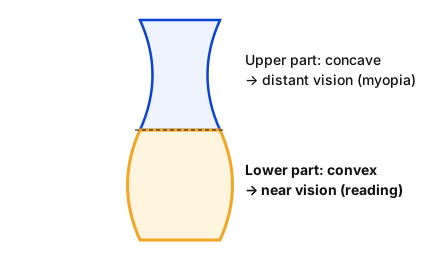
Which part of the bifocal lens facilitates near vision?
द्विफोकसी लेंस (bifocal lens) का कौन-सा भाग निकट दृष्टि को सुगम बनाता है?
  1. ALower part with concave lensअवतल लेंस वाला निचला भाग
  2. BUpper part with convex lensउत्तल लेंस वाला ऊपरी भाग
  3. CLower part with convex lensउत्तल लेंस वाला निचला भाग
  4. DUpper part with concave lensअवतल लेंस वाला ऊपरी भाग
Show answer

Concept: A bifocal lens is used when a person has both myopia and hypermetropia (often due to presbyopia in old age).

  1. The upper part is a concave lens — it corrects distant vision (myopia), since we look up/straight for far objects.
  2. The lower part is a convex lens — it corrects near vision, since we look down while reading.
  3. So near vision is facilitated by the lower part with a convex lens.

Yaad rakhein: Reading = looking down = lower part = convex (converging) lens.

Answer: (C) Lower part with convex lens

अवधारणा: द्विफोकसी (bifocal) लेंस तब लगाया जाता है जब व्यक्ति को निकट-दृष्टि और दूर-दृष्टि दोनों दोष हों (प्रायः वृद्धावस्था में जरा-दूरदृष्टिता/presbyopia के कारण)।

  1. ऊपरी भाग में अवतल (concave) लेंस — दूर की वस्तुएँ देखने (myopia सुधार) के लिए।
  2. निचले भाग में उत्तल (convex) लेंस — पास की वस्तुएँ देखने के लिए, क्योंकि पढ़ते समय हम नीचे देखते हैं।
  3. अतः निकट दृष्टि के लिए निचला भाग उत्तल लेंस वाला है।

याद रखें: पढ़ना = नीचे देखना = निचला भाग = उत्तल (अभिसारी) लेंस।

उत्तर: (C) Lower part with convex lens (निचला भाग – उत्तल लेंस)

SSC CPO Paper IGeneral Knowledge and General AwarenessHuman Eye – Bifocal LensSSC CPO Paper I 2024 · 28 Jun Shift 3 →
Q679.
Shovana Narayan has been honoured with the Padma Shri for her contribution to
which Indian dance form?
शोवना नारायण को किस भारतीय नृत्य शैली में उनके योगदान के लिए पद्म श्री से
सम्मानित किया गया है?
  1. AKathakaliकथकली
  2. BKathakकथक
  3. CKuchipudiकुचिपुड़ी
  4. DOdissiओडिसी
Show answer

Concept: Shovana Narayan is a leading Kathak dancer of India.

  1. She was trained under Kundanlal Gangani and Birju Maharaj's tradition and is known for innovative Kathak choreography.
  2. She received the Padma Shri in 1992 for her contribution to Kathak.
  3. Kathakali (Kerala), Kuchipudi (Andhra Pradesh) and Odissi (Odisha) are different classical forms.

Yaad rakhein: Kathak names: Birju Maharaj, Sitara Devi, Shovana Narayan, Kumudini Lakhia, Uma Sharma.

Answer: (B) Kathak

अवधारणा: शोवना नारायण भारत की प्रमुख कथक नृत्यांगना हैं।

  1. उन्होंने कुंदनलाल गंगानी और बिरजू महाराज की परंपरा में प्रशिक्षण लिया और नवाचारी कथक नृत्य-रचना के लिए जानी जाती हैं।
  2. उन्हें कथक में योगदान के लिए 1992 में पद्म श्री मिला।
  3. कथकली (केरल), कुचिपुड़ी (आंध्र प्रदेश) और ओडिसी (ओडिशा) अलग शास्त्रीय नृत्य हैं।

याद रखें: कथक: बिरजू महाराज, सितारा देवी, शोवना नारायण, कुमुदिनी लाखिया, उमा शर्मा।

उत्तर: (B) Kathak (कथक)

SSC CPO Paper IGeneral Knowledge and General AwarenessIndian Classical Dance – KathakSSC CPO Paper I 2024 · 28 Jun Shift 3 →
Q680.
Dalkhai is a popular folk dance of:
डालखाई निम्नलिखित में से किसका एक लोकप्रिय लोक नृत्य है?
  1. ABiharबिहार
  2. BUttar Pradeshउत्तर प्रदेश
  3. COdishaओडिशा
  4. DPunjabपंजाब
Show answer

Concept: Dalkhai is a folk dance of western Odisha (Sambalpur, Bargarh, Balangir regions).

  1. It is performed mainly by young women during Dussehra and other festivals, addressing the goddess Dalkhai.
  2. It is accompanied by instruments like dhol, nisan, tasa and mahuri.
  3. Other Odisha folk dances: Ghumura, Chhau (Mayurbhanj), Gotipua; Punjab – Bhangra/Giddha; Bihar – Jat-Jatin; UP – Charkula.

Yaad rakhein: Sambalpur (Odisha) folk set: Dalkhai, Rasarkeli, Maelajada, Sambalpuri.

Answer: (C) Odisha

अवधारणा: दलखाई पश्चिमी ओडिशा (संबलपुर, बरगढ़, बलांगीर क्षेत्र) का लोक नृत्य है।

  1. यह मुख्यतः युवतियाँ दशहरा आदि त्योहारों पर करती हैं, देवी दलखाई को संबोधित करते हुए।
  2. इसमें ढोल, निसान, तासा, महुरी जैसे वाद्य बजते हैं।
  3. ओडिशा के अन्य लोक नृत्य: घुमुरा, छऊ (मयूरभंज), गोटीपुआ; पंजाब – भांगड़ा/गिद्दा; बिहार – जट-जटिन; उ.प्र. – चरकुला।

याद रखें: संबलपुर (ओडिशा) के लोक नृत्य: दलखाई, रसरकेली, मायलाजड़ा।

उत्तर: (C) Odisha (ओडिशा)

SSC CPO Paper IGeneral Knowledge and General AwarenessFolk Dances of IndiaSSC CPO Paper I 2024 · 28 Jun Shift 3 →