Question bank

Q&A: practice questions with answers

Search questions on any topic. Filter by exam category, exam, subject and topic, try the question, then open the answer and explanation.

Courses – airGurukul

6,600 questions found.

Q801.
Given below are two statements and two conclusions. Take the statements to be true even if they are at variance with commonly known facts, and decide whether the
conclusion(s) follow(s) the given statements.
Statements:
All trains are buses.
Some buses are cars.
Conclusions:
I. All cars are buses.
II. Some buses are trains.
नीचे दो कथन और दो निष्कर्ष दिए गए हैं। कथनों को सत्य मानते हुए, भले ही वे सामान्यतः ज्ञात तथ्यों से भिन्न प्रतीत होते हों, निर्णय कीजिए कि कौन-सा/से
निष्कर्ष दिए गए कथनों का अनुसरण करता है/करते हैं।
कथन:
सभी रेलगाड़ियाँ, बसें हैं।
कुछ बसें, कारें हैं।
निष्कर्ष:
I. सभी कारें, बसें हैं।
II. कुछ बसें, रेलगाड़ियाँ हैं।
  1. ANeither conclusion I nor II followsन तो निष्कर्ष I और न ही II अनुसरण करता है
  2. BOnly conclusion II followsकेवल निष्कर्ष II अनुसरण करता है
  3. CBoth the conclusions followदोनों निष्कर्ष अनुसरण करते हैं
  4. DOnly conclusion I followsकेवल निष्कर्ष I अनुसरण करता है
Show answer

Concept: Draw the smallest possible Venn diagram that satisfies both statements and test each conclusion.
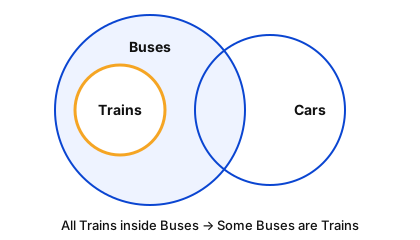
  1. All trains are buses → the Trains circle lies completely inside the Buses circle.
  2. Some buses are cars → Cars overlaps Buses; it need not be fully inside Buses.
  3. I: All cars are buses – not certain, because part of Cars may lie outside Buses. ✗
  4. II: Some buses are trains – the converse of 'All trains are buses' (trains exist inside buses). ✓

Trick: 'All A are B' always gives 'Some B are A'; a 'Some' statement never gives an 'All' conclusion.

Answer: (B) Only conclusion II follows

अवधारणा: दोनों कथनों को संतुष्ट करने वाला न्यूनतम वेन आरेख बनाकर हर निष्कर्ष जाँचें।

  1. All trains are buses → Trains का वृत्त पूरा Buses के अंदर।
  2. Some buses are cars → Cars, Buses को केवल आंशिक रूप से काटता है।
  3. I: All cars are buses – निश्चित नहीं, Cars का कुछ भाग Buses के बाहर हो सकता है। ✗
  4. II: Some buses are trains – 'All trains are buses' का उल्टा (converse) रूप, हमेशा सत्य। ✓

ट्रिक: 'All A are B' से 'Some B are A' हमेशा निकलता है; 'Some' कथन से 'All' निष्कर्ष कभी नहीं।

उत्तर: (B) केवल निष्कर्ष II अनुसरण करता है
SSC CPO Paper IGeneral Intelligence and ReasoningSyllogismSSC CPO Paper I 2024 · 28 Jun Shift 2 →
Q802.
Select the option that is related to the fifth number in the same way as the fourth
number is related to the third number and the second number is related to the first number.
76 : 69 :: 49 : 45 :: 69 : ?
उस विकल्प का चयन कीजिए जो पाँचवीं संख्या से उसी प्रकार संबंधित है, जिस प्रकार चौथी
संख्या तीसरी संख्या से संबंधित है और दूसरी संख्या पहली संख्या से संबंधित है।
76 : 69 :: 49 : 45 :: 69 : ?
  1. A62
  2. B63
  3. C67
  4. D65
Show answer

Concept: Find one rule that changes the first number into the second in each given pair.

  1. 76→69: 76−7=69 (subtract its tens digit 7).
  2. 49→45: 49−4=45 (subtract its tens digit 4).
  3. So 69→69−6=63.

Trick: Check small differences first: here the differences 7 and 4 are exactly the tens digits.

Answer: (B) 63

अवधारणा: हर दिए गए युग्म में पहली संख्या से दूसरी संख्या बनाने वाला नियम खोजें।

  1. 76→69: 76−7=69 (दहाई का अंक 7 घटाया)।
  2. 49→45: 49−4=45 (दहाई का अंक 4 घटाया)।
  3. अतः 69→69−6=63।

ट्रिक: पहले अंतर देखें: अंतर 7 और 4 ठीक दहाई के अंक हैं।

उत्तर: (B) 63

SSC CPO Paper IGeneral Intelligence and ReasoningNumber AnalogySSC CPO Paper I 2024 · 28 Jun Shift 2 →
Q803.
In a certain code language, 'HEMANT' is coded as 24-15-39-3-42-60 and 'VINAY' is
coded as 66-27-42-3-75. How will 'MOHAN' be coded in the same language?
एक निश्चित कूट भाषा में, 'HEMANT' को 24-15-39-3-42-60 के रूप में कूटबद्ध किया जाता है और 'VINAY' को
66-27-42-3-75 के रूप में कूटबद्ध किया जाता है। उसी भाषा में 'MOHAN' को किस प्रकार कूटबद्ध किया जाएगा?
  1. A36-3-41-24-39
  2. B43-24-3-56-7
  3. C39-45-24-3-42
  4. D24-39-4-42-27
Show answer

Concept: Each letter is replaced by three times its position in the alphabet.

  1. HEMANT: H=8, E=5, M=13, A=1, N=14, T=20 → ×3 → 24-15-39-3-42-60 ✓.
  2. VINAY: V=22, I=9, N=14, A=1, Y=25 → 66-27-42-3-75 ✓.
  3. MOHAN: M=13, O=15, H=8, A=1, N=14 → 39, 45, 24, 3, 42.

Trick: A is coded 3 in both words – that instantly tells you the multiplier is 3.

Answer: (C) 39-45-24-3-42

अवधारणा: हर अक्षर को उसकी वर्णमाला स्थिति के तीन गुना से बदला गया है।

  1. HEMANT: H=8, E=5, M=13, A=1, N=14, T=20 → ×3 → 24-15-39-3-42-60 ✓।
  2. VINAY: V=22, I=9, N=14, A=1, Y=25 → 66-27-42-3-75 ✓।
  3. MOHAN: M=13, O=15, H=8, A=1, N=14 → 39, 45, 24, 3, 42।

ट्रिक: दोनों शब्दों में A का कोड 3 है – तुरंत पता चलता है कि गुणक 3 है।

उत्तर: (C) 39-45-24-3-42

SSC CPO Paper IGeneral Intelligence and ReasoningCoding-Decoding (Numbers)SSC CPO Paper I 2024 · 28 Jun Shift 2 →
Q804.
In a certain code language, ‘MARCH’ is written as ‘LBQDG’ and ‘TAXAS’ is written as ‘SBWBR’. How will ‘PIECE’ be written in the given language?
एक निश्चित कूट भाषा में, ‘MARCH’ को ‘LBQDG’ लिखा जाता है और ‘TAXAS’ को ‘SBWBR’ लिखा जाता है। उसी भाषा में ‘PIECE’ को किस प्रकार लिखा जाएगा?
  1. AOJDDD
  2. BQHCED
  3. CQJDDF
  4. DOJDED
Show answer

Concept: Compare each letter of the word with its code letter.

  1. MARCH → LBQDG: M−1=L, A+1=B, R−1=Q, C+1=D, H−1=G.
  2. TAXAS → SBWBR follows the same pattern −1,+1,−1,+1,−1.
  3. PIECE: P−1=O, I+1=J, E−1=D, C+1=D, E−1=D → OJDDD.

Trick: Alternating −1/+1 – check just the first two letters (O, J) to shortlist option (A).

Answer: (A) OJDDD

अवधारणा: शब्द के हर अक्षर की तुलना उसके कोड अक्षर से करें।

  1. MARCH → LBQDG: M−1=L, A+1=B, R−1=Q, C+1=D, H−1=G।
  2. TAXAS → SBWBR में भी यही क्रम −1,+1,−1,+1,−1।
  3. PIECE: P−1=O, I+1=J, E−1=D, C+1=D, E−1=D → OJDDD।

ट्रिक: −1/+1 बारी-बारी से – पहले दो अक्षर (O, J) से ही विकल्प (A) मिल जाता है।

उत्तर: (A) OJDDD

SSC CPO Paper IGeneral Intelligence and ReasoningCoding-Decoding (Letters)SSC CPO Paper I 2024 · 28 Jun Shift 2 →
Q805.
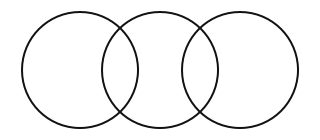
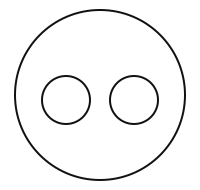
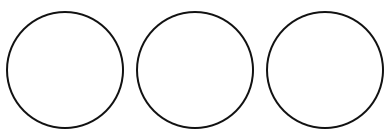
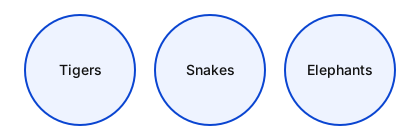
Select the Venn diagram that best illustrates the relationship between the following classes.
Tigers, Snakes, Elephants
उस वेन आरेख का चयन कीजिए जो निम्नलिखित वर्गों के बीच के संबंध को सर्वोत्तम ढंग से दर्शाता है।
बाघ, साँप, हाथी
  1. A
  2. B
  3. C
  4. D
Show answer

Concept: Decide whether any member of one class can belong to another.

  1. Tigers, snakes and elephants are three completely different kinds of animals.
  2. No tiger is a snake or an elephant, and no snake is an elephant.
  3. So the three classes are disjoint – three separate circles.

Trick: Three unrelated categories of the same level → three separate circles.

Answer: (D) Three separate circles

अवधारणा: देखें कि एक वर्ग का कोई सदस्य दूसरे वर्ग में आ सकता है या नहीं।

  1. Tigers, snakes और elephants तीन बिल्कुल अलग प्रकार के जीव हैं।
  2. कोई बाघ साँप या हाथी नहीं, और कोई साँप हाथी नहीं।
  3. अतः तीनों वर्ग अलग-अलग – तीन अलग वृत्त।

ट्रिक: एक ही स्तर की तीन असंबंधित श्रेणियाँ → तीन अलग वृत्त।

उत्तर: (D) तीन अलग-अलग वृत्त

SSC CPO Paper IGeneral Intelligence and ReasoningVenn DiagramSSC CPO Paper I 2024 · 28 Jun Shift 2 →
Q806.
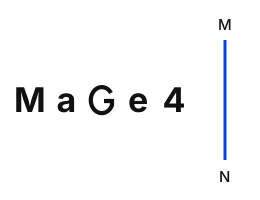
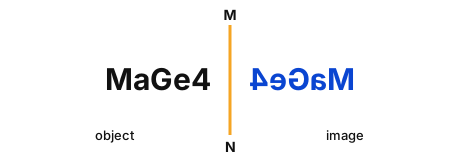
Select the correct mirror image of the given figure when the mirror is placed at MN as shown below.
दी गई आकृति की सही दर्पण छवि का चयन कीजिए, जब दर्पण को नीचे दर्शाए अनुसार MN पर रखा जाता है।
  1. A
  2. B
  3. C
  4. D
Show answer

Concept: A vertical mirror on the right reverses left and right; top and bottom stay the same.

  1. The order of the characters reverses: M a G e 4 → 4 e G a M.
  2. Each character is also flipped sideways (laterally inverted), including the small 'a' and 'e'.
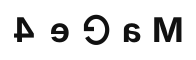
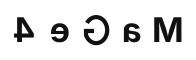
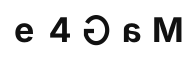
  3. Option (B) shows every character reversed; in (A) the 'a' is not flipped, (C) is upside down, (D) has the wrong order.

Trick: Vertical mirror: read the figure from right to left and flip every symbol sideways – nothing turns upside down.

Answer: (B) Option (B)

अवधारणा: दाईं ओर रखा ऊर्ध्वाधर दर्पण बायाँ-दायाँ उलट देता है; ऊपर-नीचे वैसा ही रहता है।

  1. अक्षरों का क्रम उलट जाता है: M a G e 4 → 4 e G a M।
  2. हर अक्षर भी पार्श्व रूप से (sideways) उलटता है, छोटे 'a' और 'e' भी।
  3. (B) में सब सही उलटे हैं; (A) में 'a' नहीं उलटा, (C) उल्टा-पुल्टा है, (D) में क्रम गलत है।

ट्रिक: ऊर्ध्वाधर दर्पण: आकृति को दाएँ से बाएँ पढ़ें और हर चिह्न को बगल से पलटें – कुछ भी उल्टा (upside down) नहीं होता।

उत्तर: (B) विकल्प (B)

SSC CPO Paper IGeneral Intelligence and ReasoningMirror ImageSSC CPO Paper I 2024 · 28 Jun Shift 2 →
Q807.
Select the option that is related to the fifth letter-cluster in the same way as the second letter-cluster is related to the first letter-cluster and the fourth letter-cluster is related to the third letter-cluster.
NAPE : MZOD :: DULL : CTKK :: KIND : ?
उस विकल्प का चयन कीजिए जो पाँचवें अक्षर-समूह से उसी प्रकार संबंधित है, जिस प्रकार दूसरा अक्षर-समूह पहले अक्षर-समूह से संबंधित है और चौथा अक्षर-समूह तीसरे अक्षर-समूह से संबंधित है।
NAPE : MZOD :: DULL : CTKK :: KIND : ?
  1. AIFLB
  2. BLJOE
  3. CLHOC
  4. DJHMC
Show answer

Concept: Find the letter shift from the first cluster to the second.

  1. NAPE → MZOD: N−1=M, A−1=Z, P−1=O, E−1=D.
  2. DULL → CTKK: every letter −1.
  3. KIND: K−1=J, I−1=H, N−1=M, D−1=C → JHMC.

Trick: Every letter moves one step back; remember A−1 = Z (circular alphabet).

Answer: (D) JHMC

अवधारणा: पहले समूह से दूसरे समूह तक अक्षरों का खिसकाव देखें।

  1. NAPE → MZOD: N−1=M, A−1=Z, P−1=O, E−1=D।
  2. DULL → CTKK: हर अक्षर −1।
  3. KIND: K−1=J, I−1=H, N−1=M, D−1=C → JHMC।

ट्रिक: हर अक्षर एक कदम पीछे; याद रखें A−1 = Z (वृत्ताकार वर्णमाला)।

उत्तर: (D) JHMC

SSC CPO Paper IGeneral Intelligence and ReasoningLetter AnalogySSC CPO Paper I 2024 · 28 Jun Shift 2 →
Q808.
Which of the following numbers will replace the question mark (?) in the given series?
−32, −8, −2, ?, −18
दी गई श्रृंखला में प्रश्न चिह्न (?) के स्थान पर निम्नलिखित में से कौन-सी संख्या आएगी?
−32, −8, −2, ?, −18
  1. A−4
  2. B−12
  3. C−1
  4. D−14
Show answer

Concept: Check the ratio between consecutive terms.

  1. −32÷4=−8, −8÷4=−2.
  2. Next: −2÷4=−12.
  3. Check: −12÷4=−18 ✓ (last term).

Trick: When terms shrink by the same factor (here 4), it is a geometric series – divide again.

Answer: (B) −12

अवधारणा: क्रमागत पदों का अनुपात देखें।

  1. −32÷4=−8, −8÷4=−2।
  2. अगला: −2÷4=−12।
  3. जाँच: −12÷4=−18 ✓ (अंतिम पद)।

ट्रिक: पद एक ही गुणक (यहाँ 4) से घटें तो गुणोत्तर श्रेणी (GP) – फिर से भाग दें।

उत्तर: (B) −12

SSC CPO Paper IGeneral Intelligence and ReasoningNumber SeriesSSC CPO Paper I 2024 · 28 Jun Shift 2 →
Q809.
What will come in the place of ‘?’ in the following equation, if ‘+’ and ‘–’ are
interchanged and also ‘×’ and ‘÷’ are interchanged?
47 ÷ 3 – 126 × 6 + 18 = ?
यदि ‘+’ और ‘–’ को आपस में बदल दिया जाए तथा ‘×’ और ‘÷’ को भी आपस में बदल दिया जाए, तो निम्नलिखित
समीकरण में ‘?’ के स्थान पर क्या आएगा?
47 ÷ 3 – 126 × 6 + 18 = ?
  1. A138
  2. B156
  3. C144
  4. D149
Show answer

Concept: Interchange the signs first, then apply BODMAS.

  1. After swapping (+ ↔ −, × ↔ ÷): 47×3+126÷6−18.
  2. 47×3=141, 126÷6=21.
  3. 141+21−18=144.

Trick: Rewrite the whole expression with new signs before calculating – most mistakes come from swapping only one pair.

Answer: (C) 144

अवधारणा: पहले चिह्न बदलें, फिर BODMAS लगाएँ।

  1. चिह्न बदलने पर (+ ↔ −, × ↔ ÷): 47×3+126÷6−18।
  2. 47×3=141, 126÷6=21।
  3. 141+21−18=144।

ट्रिक: गणना से पहले पूरा व्यंजक नए चिह्नों के साथ लिख लें – ज़्यादातर गलती एक ही जोड़ी बदलने से होती है।

उत्तर: (C) 144

SSC CPO Paper IGeneral Intelligence and ReasoningMathematical OperationsSSC CPO Paper I 2024 · 28 Jun Shift 2 →
Q810.
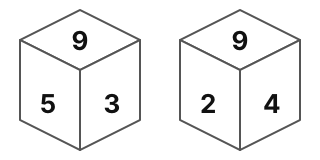
A dice has numbers 2, 3, 4, 5, 8 and 9 on its sides. Two different positions of the same dice are shown below. Select the number that will be on the face opposite to the one having 3.
एक पासे के फलकों पर संख्याएँ 2, 3, 4, 5, 8 और 9 अंकित हैं। नीचे एक ही पासे की दो अलग-अलग स्थितियाँ दर्शाई गई हैं। उस संख्या का चयन कीजिए जो 3 वाले फलक के विपरीत फलक पर होगी।
  1. A4
  2. B8
  3. C2
  4. D5
Show answer

Concept: A face common to both positions helps fix the cyclic order of the four side faces.

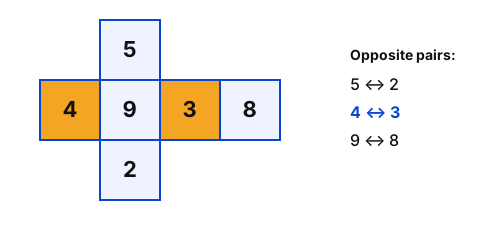
  1. 9 is on top in both views, so 9 is opposite neither 5, 3, 2 nor 4 → 9 is opposite 8.
  2. Around 9 the order runs 5 → 3 in the first view and 2 → 4 in the second; the only cycle that fits is 5, 3, 2, 4.
  3. In this cycle alternate faces are opposite: 5 ↔ 2 and 3 ↔ 4.

Trick: Same face on top in both views → the faces seen with it in the two views are its four neighbours; the missing one is opposite.

Answer: (A) 4

अवधारणा: दोनों स्थितियों में उभयनिष्ठ फलक से चार पार्श्व फलकों का चक्रीय क्रम तय होता है।

  1. दोनों में 9 ऊपर है, अतः 9 के सामने 5, 3, 2, 4 नहीं → 9 के सामने 8।
  2. 9 के चारों ओर क्रम पहली स्थिति में 5 → 3 और दूसरी में 2 → 4; उपयुक्त चक्र केवल 5, 3, 2, 4 है।
  3. इस चक्र में एक छोड़कर फलक आमने-सामने: 5 ↔ 2 और 3 ↔ 4।

ट्रिक: एक ही फलक दोनों बार ऊपर हो तो उसके साथ दिखे चारों अंक उसके पड़ोसी हैं; जो नहीं दिखा वह उसके सामने है।

उत्तर: (A) 4

SSC CPO Paper IGeneral Intelligence and ReasoningDiceSSC CPO Paper I 2024 · 28 Jun Shift 2 →
Q811.
Which of the following numbers will replace the question mark (?) in the given series? 78, 86, 258, 322, ?
दी गई श्रृंखला में प्रश्न चिह्न (?) के स्थान पर निम्नलिखित में से कौन-सी संख्या आएगी? 78, 86, 258, 322, ?
  1. A1288
  2. B1360
  3. C1610
  4. D1420
Show answer

Concept: Look for alternating operations.

  1. 78+8=86 (where 8=23).
  2. 86×3=258.
  3. 258+64=322 (where 64=43).
  4. Next: 322×5=1610.

Trick: Pattern: +23, ×3, +43, ×5 – additions are cubes of even numbers, multipliers are odd numbers.

Answer: (C) 1610

अवधारणा: बारी-बारी से होने वाली संक्रियाएँ देखें।

  1. 78+8=86 (8=23)।
  2. 86×3=258।
  3. 258+64=322 (64=43)।
  4. अगला: 322×5=1610।

ट्रिक: क्रम: +23, ×3, +43, ×5 – जोड़ सम संख्याओं के घन, गुणक विषम संख्याएँ।

उत्तर: (C) 1610

SSC CPO Paper IGeneral Intelligence and ReasoningNumber SeriesSSC CPO Paper I 2024 · 28 Jun Shift 2 →
Q812.
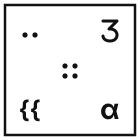
Select the figure from among the given options that can logically replace the question mark (?) in the following series.
दिए गए विकल्पों में से उस आकृति का चयन कीजिए जो निम्नलिखित श्रृंखला में प्रश्न चिह्न (?) के स्थान पर तार्किक रूप से आ सकती है।
  1. A
  2. B
  3. C
  4. D
Show answer

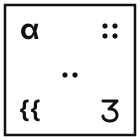
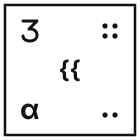
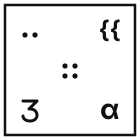
Concept: Track one symbol through the figures; all symbols move along the same path of five positions.

  1. '{{' goes top-left → centre → top-right → bottom-right; 'α' goes bottom-left → top-left → centre → top-right.
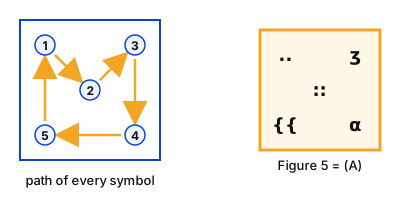
  2. So every symbol moves one step on the path: top-left → centre → top-right → bottom-right → bottom-left → top-left.
  3. From figure 4: '..' (bottom-left) → top-left, 'ʒ' (centre) → top-right, '::' (top-left) → centre, '{{' (bottom-right) → bottom-left, 'α' (top-right) → bottom-right.
  4. This matches option (A).

Trick: Follow just one symbol and fix its next position, then check only the options that agree.

Answer: (A) Option (A)

अवधारणा: एक चिह्न को सभी आकृतियों में देखें; सभी चिह्न पाँच स्थानों के एक ही मार्ग पर चलते हैं।

  1. '{{' ऊपर-बाएँ → केंद्र → ऊपर-दाएँ → नीचे-दाएँ; 'α' नीचे-बाएँ → ऊपर-बाएँ → केंद्र → ऊपर-दाएँ।
  2. अतः हर चिह्न एक कदम चलता है: ऊपर-बाएँ → केंद्र → ऊपर-दाएँ → नीचे-दाएँ → नीचे-बाएँ → ऊपर-बाएँ।
  3. आकृति 4 से: '..' → ऊपर-बाएँ, 'ʒ' → ऊपर-दाएँ, '::' → केंद्र, '{{' → नीचे-बाएँ, 'α' → नीचे-दाएँ।
  4. यह विकल्प (A) से मेल खाता है।

ट्रिक: केवल एक चिह्न की अगली स्थिति तय करें, फिर उसी से मेल खाने वाले विकल्प जाँचें।

उत्तर: (A) विकल्प (A)

SSC CPO Paper IGeneral Intelligence and ReasoningFigure SeriesSSC CPO Paper I 2024 · 28 Jun Shift 2 →
Q813.
In a certain code language,
'A x B' means ‘A is the son of B’,
'A – B' means ‘A is the brother of B’,
'A + B' means ‘A is the wife of B’,
'A % B' means ‘A is the father of B’.
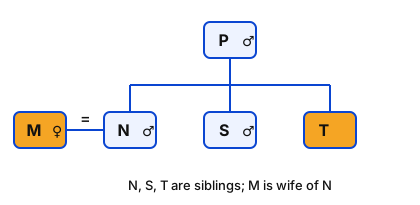
How is M related to T if ‘M + N x P % S – T’?
एक निश्चित कूट भाषा में,
'A x B' का अर्थ है ‘A, B का पुत्र है’,
'A – B' का अर्थ है ‘A, B का भाई है’,
'A + B' का अर्थ है ‘A, B की पत्नी है’,
'A % B' का अर्थ है ‘A, B का पिता है’।
यदि ‘M + N x P % S – T’ है, तो M, T से किस प्रकार संबंधित है?
  1. AMother's motherमाता की माता
  2. BBrother's wife's father's motherभाई की पत्नी के पिता की माता
  3. CWife's father's motherपत्नी के पिता की माता
  4. DBrother's wifeभाई की पत्नी
Show answer

Concept: Decode each symbol step by step and build a family tree.

  1. M + N: M is the wife of N.
  2. N × P: N is the son of P. P % S: P is the father of S.
  3. S – T: S is the brother of T, so N, S and T are all children of P.
  4. Hence N is T's brother and M (N's wife) is T's brother's wife.

Trick: Start from T and walk back: T → brother (N) → his wife (M).

Answer: (D) Brother's wife

अवधारणा: हर चिह्न को क्रम से डिकोड करके वंश-वृक्ष बनाएँ।

  1. M + N: M, N की पत्नी है।
  2. N × P: N, P का पुत्र है। P % S: P, S का पिता है।
  3. S – T: S, T का भाई है, अतः N, S, T तीनों P की संतान हैं।
  4. अतः N, T का भाई है और M (N की पत्नी) T के भाई की पत्नी (भाभी) है।

ट्रिक: T से शुरू करें: T → भाई (N) → उसकी पत्नी (M)।

उत्तर: (D) Brother's wife (भाई की पत्नी)

SSC CPO Paper IGeneral Intelligence and ReasoningCoded Blood RelationsSSC CPO Paper I 2024 · 28 Jun Shift 2 →
Q814.
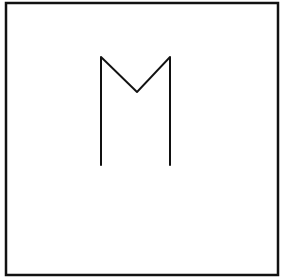
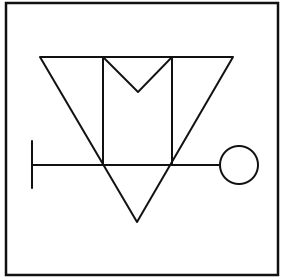
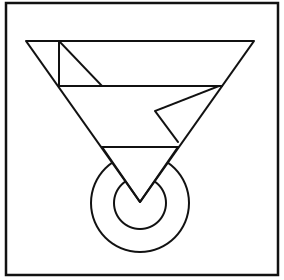
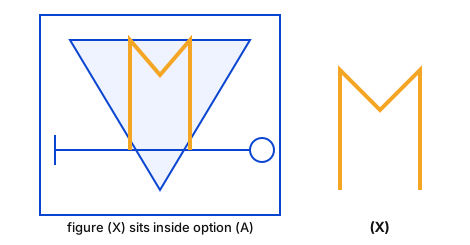
Select the option figure in which the given figure (X) is embedded as its part (rotation is NOT allowed).

(X)
उस विकल्प आकृति का चयन कीजिए जिसमें दी गई आकृति (X) उसके भाग के रूप में निहित है (घुमाने की अनुमति नहीं है)।

(X)
  1. A
  2. B
  3. C
  4. D
Show answer

Concept: Look for the exact shape of (X) – same size and same orientation – inside an option.

  1. Figure (X) is an 'M': two vertical lines joined at the top by a V.
  2. In option (A) the two vertical lines inside the inverted triangle, joined by the V at the top edge, form exactly this shape.
  3. The other options contain only slanted lines or a reversed/upside-down V, so (X) cannot be traced in them without rotation.

Trick: Pick the most distinctive part of (X) (here the V between two parallel verticals) and search for it.

Answer: (A) Option (A)

अवधारणा: (X) का ठीक वही आकार – उसी माप और उसी दिशा में – किसी विकल्प में खोजें।

  1. आकृति (X) एक 'M' है: दो ऊर्ध्वाधर रेखाएँ जो ऊपर V से जुड़ी हैं।
  2. विकल्प (A) में उल्टे त्रिभुज के अंदर की दो ऊर्ध्वाधर रेखाएँ और ऊपर का V ठीक यही आकार बनाते हैं।
  3. अन्य विकल्पों में केवल तिरछी रेखाएँ या उल्टा V है, घुमाए बिना (X) नहीं मिलता।

ट्रिक: (X) का सबसे विशिष्ट भाग (यहाँ दो समांतर रेखाओं के बीच का V) चुनकर खोजें।

उत्तर: (A) विकल्प (A)

SSC CPO Paper IGeneral Intelligence and ReasoningEmbedded FigureSSC CPO Paper I 2024 · 28 Jun Shift 2 →
Q815.
Which of the following terms will replace the question mark (?) in the given series? ADO, DGR, GJU,?
दी गई श्रृंखला में प्रश्न चिह्न (?) के स्थान पर निम्नलिखित में से कौन-सा पद आएगा? ADO, DGR, GJU,?
  1. ALON
  2. BJMX
  3. CJCB
  4. DRCB
Show answer

Concept: Check each letter position separately.

  1. First letters: A, D, G, J (+3).
  2. Second letters: D, G, J, M (+3).
  3. Third letters: O, R, U, X (+3).
  4. Next term: JMX.

Trick: Every letter of every term moves +3 – the next term is simply the previous term shifted by 3.

Answer: (B) JMX

अवधारणा: हर स्थान के अक्षर अलग-अलग जाँचें।

  1. पहले अक्षर: A, D, G, J (+3)।
  2. दूसरे अक्षर: D, G, J, M (+3)।
  3. तीसरे अक्षर: O, R, U, X (+3)।
  4. अगला पद: JMX।

ट्रिक: हर अक्षर +3 चलता है – पिछले पद को 3 आगे खिसकाएँ।

उत्तर: (B) JMX

SSC CPO Paper IGeneral Intelligence and ReasoningLetter SeriesSSC CPO Paper I 2024 · 28 Jun Shift 2 →
Q816.
What will come in place of the question mark (?) in the following equation, if ‘+’ and ‘–’ are interchanged and ‘×’ and ‘÷’ are interchanged?
712 ÷ 6 – 15 × 3 + 15 = ?
यदि ‘+’ और ‘–’ को आपस में बदल दिया जाए तथा ‘×’ और ‘÷’ को आपस में बदल दिया जाए, तो निम्नलिखित समीकरण में प्रश्न चिह्न (?) के स्थान पर क्या आएगा?
712 ÷ 6 – 15 × 3 + 15 = ?
  1. A4263
  2. B4262
  3. C4256
  4. D4265
Show answer

Concept: Interchange the signs, then use BODMAS.

  1. New expression: 712×6+15÷3−15.
  2. 712×6=4272, 15÷3=5.
  3. 4272+5−15=4262.

Trick: Last digit check: 2+5−5 ends in 2 → only 4262 fits.

Answer: (B) 4262

अवधारणा: चिह्न बदलें, फिर BODMAS लगाएँ।

  1. नया व्यंजक: 712×6+15÷3−15।
  2. 712×6=4272, 15÷3=5।
  3. 4272+5−15=4262।

ट्रिक: इकाई अंक जाँच: 2+5−5 का इकाई अंक 2 → केवल 4262।

उत्तर: (B) 4262

SSC CPO Paper IGeneral Intelligence and ReasoningMathematical OperationsSSC CPO Paper I 2024 · 28 Jun Shift 2 →
Q817.
In a certain code language, ‘HEN’ is coded as ‘9’ and ‘AFTER’ is coded as ‘25’. How will ‘SMALLEST’ be coded in that language?
एक निश्चित कूट भाषा में, ‘HEN’ को ‘9’ के रूप में कूटबद्ध किया जाता है और ‘AFTER’ को ‘25’ के रूप में कूटबद्ध किया जाता है। उसी भाषा में ‘SMALLEST’ को किस प्रकार कूटबद्ध किया जाएगा?
  1. A31
  2. B64
  3. C81
  4. D56
Show answer

Concept: The code depends on the number of letters in the word.

  1. HEN has 3 letters → 32=9.
  2. AFTER has 5 letters → 52=25.
  3. SMALLEST has 8 letters → 82=64.

Trick: Codes 9 and 25 are perfect squares of 3 and 5 – count the letters.

Answer: (B) 64

अवधारणा: कोड शब्द के अक्षरों की संख्या पर आधारित है।

  1. HEN में 3 अक्षर → 32=9।
  2. AFTER में 5 अक्षर → 52=25।
  3. SMALLEST में 8 अक्षर → 82=64।

ट्रिक: 9 और 25, 3 और 5 के वर्ग हैं – अक्षर गिनें।

उत्तर: (B) 64

SSC CPO Paper IGeneral Intelligence and ReasoningCoding-DecodingSSC CPO Paper I 2024 · 28 Jun Shift 2 →
Q818.
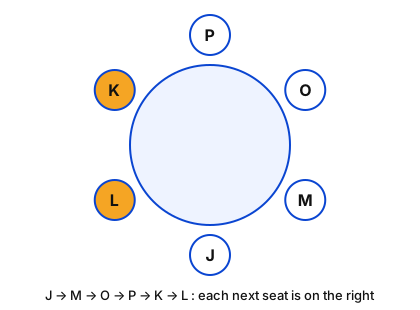
J, K, L, M, O and P are sitting around a circular table facing the centre. Both L and M are immediate neighbours of J. Only one person sits between M and P. O sits second to the right of J. O is not an immediate neighbour of L. Who is sitting to the immediate right of K?
J, K, L, M, O और P एक वृत्ताकार मेज़ के चारों ओर केंद्र की ओर मुख करके बैठे हैं। L और M दोनों, J के निकटतम पड़ोसी हैं। M और P के बीच केवल एक व्यक्ति बैठा है। O, J के दाईं ओर दूसरे स्थान पर बैठा है। O, L का निकटतम पड़ोसी नहीं है। K के ठीक दाईं ओर कौन बैठा है?
  1. AL
  2. BJ
  3. CP
  4. DO
Show answer

Concept: Facing the centre, a person's right is the anticlockwise direction.

  1. Fix J. O is second to the right of J, so the seat to J's immediate right is between J and O.
  2. L and M sit next to J; O is not a neighbour of L, so M is to J's right and L to J's left.
  3. One person sits between M and P: M – O – P, so P sits right of O; K takes the last seat.
  4. Order towards the right: J, M, O, P, K, L → immediate right of K is L.

Trick: Write the circle as a ring J → M → O → P → K → L; 'immediate right' is simply the next name.

Answer: (A) L

अवधारणा: केंद्र की ओर मुख होने पर व्यक्ति का दायाँ = वामावर्त (anticlockwise) दिशा।

  1. J को स्थिर करें। O, J के दाएँ दूसरे स्थान पर है, अतः J का ठीक दायाँ स्थान J और O के बीच है।
  2. L और M, J के पड़ोसी; O, L का पड़ोसी नहीं, अतः M, J के दाएँ और L, J के बाएँ।
  3. M और P के बीच एक व्यक्ति: M – O – P, अतः P, O के दाएँ; K अंतिम स्थान पर।
  4. दाईं ओर क्रम: J, M, O, P, K, L → K के ठीक दाएँ L।

ट्रिक: वृत्त को J → M → O → P → K → L की कड़ी लिखें; 'ठीक दायाँ' = अगला नाम।

उत्तर: (A) L

SSC CPO Paper IGeneral Intelligence and ReasoningCircular Seating ArrangementSSC CPO Paper I 2024 · 28 Jun Shift 2 →
Q819.
Which of the following numbers will replace the question mark (?) in the given series? 324, 361, 400, 441, 484, ?
दी गई श्रृंखला में प्रश्न चिह्न (?) के स्थान पर निम्नलिखित में से कौन-सी संख्या आएगी? 324, 361, 400, 441, 484, ?
  1. A592
  2. B567
  3. C529
  4. D586
Show answer

Concept: Recognise consecutive perfect squares.

  1. 324=182, 361=192, 400=202.
  2. 441=212, 484=222.
  3. Next: 232=529.

Trick: Differences 37, 39, 41, 43 rise by 2 → next difference 45: 484+45=529.

Answer: (C) 529

अवधारणा: क्रमागत पूर्ण वर्ग पहचानें।

  1. 324=182, 361=192, 400=202।
  2. 441=212, 484=222।
  3. अगला: 232=529।

ट्रिक: अंतर 37, 39, 41, 43 (2 बढ़ते) → अगला अंतर 45: 484+45=529।

उत्तर: (C) 529

SSC CPO Paper IGeneral Intelligence and ReasoningNumber SeriesSSC CPO Paper I 2024 · 28 Jun Shift 2 →
Q820.
If + means −, − means ×, × means ÷, and ÷ means +, what will be the value of the
following expression?
20 × 5 – 7 ÷ 4 + 3 = ?
यदि + का अर्थ −, − का अर्थ ×, × का अर्थ ÷ और ÷ का अर्थ + है, तो निम्नलिखित
व्यंजक का मान क्या होगा?
20 × 5 – 7 ÷ 4 + 3 = ?
  1. A25
  2. B18
  3. C35
  4. D29
Show answer

Concept: Replace each sign by its meaning, then use BODMAS.

  1. × → ÷, – → ×, ÷ → +, + → −: 20÷5×7+4−3.
  2. 20÷5=4, 4×7=28.
  3. 28+4−3=29.

Trick: Make a small table of the four replacements before rewriting – avoids double replacement.

Answer: (D) 29

अवधारणा: हर चिह्न को उसके अर्थ से बदलें, फिर BODMAS।

  1. × → ÷, – → ×, ÷ → +, + → −: 20÷5×7+4−3।
  2. 20÷5=4, 4×7=28।
  3. 28+4−3=29।

ट्रिक: चारों बदलावों की छोटी तालिका पहले बना लें – दोहरी गलती से बचेंगे।

उत्तर: (D) 29

SSC CPO Paper IGeneral Intelligence and ReasoningMathematical OperationsSSC CPO Paper I 2024 · 28 Jun Shift 2 →