- A cm
- B cm
- C cm
- D cm
Show answer
Concept: Surface area of sphere .
- .
- .
Trick: , then .
Answer: (B)
अवधारणा: गोले का पृष्ठीय क्षेत्रफल ।
- ।
- ।
ट्रिक: , ।
उत्तर: (B)
Question bank
Search questions on any topic. Filter by exam category, exam, subject and topic, try the question, then open the answer and explanation.
Concept: Surface area of sphere .
Trick: , then .
Answer: (B)
अवधारणा: गोले का पृष्ठीय क्षेत्रफल ।
ट्रिक: , ।
उत्तर: (B)
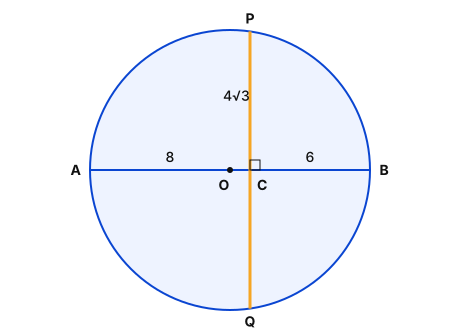
Concept: A diameter perpendicular to a chord bisects it; also .
Trick: Intersecting chords: with .
Answer: (D)
अवधारणा: जीवा पर लंब व्यास उसे समद्विभाजित करता है; ।
ट्रिक: प्रतिच्छेदी जीवाएँ: , ।
उत्तर: (D)
Concept: Average speed .
Trick: The slow ship leg (40 h) dominates, pulling the average down.
Answer: (A)
अवधारणा: औसत चाल ।
ट्रिक: धीमी जहाज यात्रा (40 h) औसत को नीचे खींचती है।
उत्तर: (A)
Concept: Brackets first, then divide.
Trick: Numerator , denominator – neat round numbers.
Answer: (D)
अवधारणा: पहले कोष्ठक, फिर भाग।
ट्रिक: अंश 1000, हर 500।
उत्तर: (D)
| Age | 25-30 | 31-50 | 51+ |
|---|---|---|---|
| Classical | 2 | 9 | 16 |
| Pop | 10 | 16 | 8 |
| Hip-Hop | 4 | 7 | 6 |
| Rock | 14 | 17 | 14 |
| Ambient | 7 | 13 | 20 |
| Total | 37 | 62 | 64 |
| आयु | 25-30 | 31-50 | 51+ |
|---|---|---|---|
| शास्त्रीय | 2 | 9 | 16 |
| पॉप | 10 | 16 | 8 |
| हिप-हॉप | 4 | 7 | 6 |
| रॉक | 14 | 17 | 14 |
| एम्बिएंट | 7 | 13 | 20 |
| कुल | 37 | 62 | 64 |
Concept: Required for age 31-50.
Trick: .
Answer: (C) 74.19%
अवधारणा: 31-50 आयु वर्ग में अभीष्ट ।
ट्रिक: ।
उत्तर: (C) 74.19%
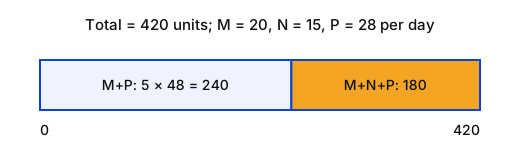
Concept: Total work = LCM units.
Trick: Nakul works only for the remaining part – divide remainder by combined rate.
Answer: (B)
अवधारणा: कुल कार्य = LCM इकाई।
ट्रिक: Nakul केवल शेष कार्य में – शेष ÷ संयुक्त दर।
उत्तर: (B)
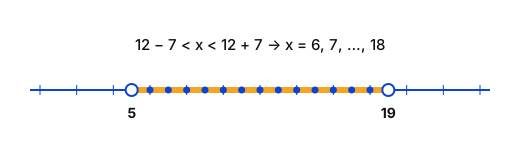
Concept: , so .
Trick: If then .
Answer: (C)
अवधारणा: , अतः ।
ट्रिक: तो ।
उत्तर: (C)
Concept: .
Yaad rakhein: Count (b = smaller side).
Answer: (A)
अवधारणा: ।
याद रखें: संख्या (b = छोटी भुजा)।
उत्तर: (A)
Concept: Net change (decrease negative).
Trick: Multiplier: .
Answer: (B) 4.04% more
अवधारणा: शुद्ध परिवर्तन (कमी ऋणात्मक)।
ट्रिक: गुणक: ।
उत्तर: (B) 4.04% more
Concept: Final SP tag price after discount cashback CP .
Trick: Add the cashback back before dividing by .
Answer: (C) 1744.44
अवधारणा: अंतिम SP छूट के बाद मूल्य कैशबैक CP ।
ट्रिक: पहले कैशबैक जोड़ें, फिर से भाग।
उत्तर: (C) 1744.44
Concept: When an adjective ending in -ous becomes a noun, the 'u' is often dropped: generous → generosity.
Trick: Similar pattern: curious → curiosity, generous → generosity, famous → fame. The '-ous' + '-ity' combination becomes '-osity'.
Answer: (A) Generousity
अवधारणा: जब -ous पर ख़त्म होने वाला adjective noun बनता है, तो अक्सर 'u' हट जाता है: generous → generosity.
ट्रिक: इसी तरह: curious → curiosity, generous → generosity; '-ous' + '-ity' = '-osity'।
उत्तर: (A) Generousity
Concept: Suspect (verb/noun) means to doubt someone's honesty or motives; as a noun it can mean a look or examination with doubt.
Trick: Sus-pect = 'look from under' with doubt; intro- = inside, retro- = back, circum- = around.
Answer: (B) Suspect
अवधारणा: Suspect का अर्थ है किसी की नीयत (motives) पर संदेह करना या संदेह की दृष्टि से जाँचना।
ट्रिक: intro- = अंदर, retro- = पीछे, circum- = चारों ओर; संदेह = suspect।
उत्तर: (B) Suspect
Concept: Effervescent literally means bubbly (like soda); figuratively it describes a person who is vivacious and enthusiastic.
Trick: Think of a fizzing soft drink – full of bubbles and energy = effervescent person.
Answer: (B) Effervescent
अवधारणा: Effervescent का शाब्दिक अर्थ है बुलबुलेदार (soda जैसा); व्यक्ति के लिए – जोशीला, उत्साह से भरा (vivacious and enthusiastic)।
ट्रिक: Soda की तरह 'बुलबुलों' से भरा उत्साह = effervescent।
उत्तर: (B) Effervescent
Concept: Symphony (Greek syn = together + phone = sound) means a harmonious combination or consonance of sounds.
Trick: syn/sym = together, phone = sound (telephone, microphone) → symphony = sounds together.
Answer: (D) Symphony
अवधारणा: Symphony (Greek syn = साथ + phone = ध्वनि) का अर्थ है ध्वनियों का सामंजस्य (consonance of sounds)।
ट्रिक: sym = साथ, phone = ध्वनि (telephone, microphone) → symphony = साथ मिली ध्वनियाँ।
उत्तर: (D) Symphony
Concept: Bonsai is the Japanese art of growing artificially dwarfed trees and shrubs in pots.
Trick: Bon-sai = 'tray planting' in Japanese – a tree in a tray/pot.
Answer: (D) Bonsai
अवधारणा: Bonsai गमलों में पेड़-पौधों को छोटा (बौना) रखकर उगाने की जापानी कला है।
ट्रिक: Bon-sai = जापानी में 'ट्रे/गमले में पौधा'।
उत्तर: (D) Bonsai
Concept: With the noun level (rank or tier in a hierarchy), the fixed preposition is at: at all levels, at the national level.
Trick: at + level/stage/point: at all levels, at this stage, at that point.
Answer: (D) various government departments at all levels
अवधारणा: Noun level (स्तर) के साथ सही preposition at है: at all levels, at the national level।
ट्रिक: at + level/stage/point: at all levels, at this stage।
उत्तर: (D) various government departments at all levels
Concept: Tighten one's belt = to spend less money because there is less available.
Trick: Less food/money → tighter belt. Spending cut = belt tightened.
Answer: (A) tighten his belt
अवधारणा: Tighten one's belt = पैसों की कमी के कारण खर्च कम करना।
ट्रिक: कम खर्च = कमर कसना (belt tight करना)।
उत्तर: (A) tighten his belt
Concept: Black sheep = a member of a family or group who is regarded as a disgrace; i.e. disreputable.
Trick: 'Black sheep of the family' = the one who brings disgrace (bad name) to the family.
Answer: (C) Disreputable
अवधारणा: Black sheep = परिवार या समूह का वह सदस्य जो बदनामी का कारण हो, अर्थात् disreputable (बदनाम)।
ट्रिक: 'Black sheep of the family' = कुल-कलंक।
उत्तर: (C) Disreputable
Concept: In a time clause (when, before, after, until, as soon as) referring to the future, we use the simple present, not 'will'.
Trick: When/if/until clause → no 'will'. 'When he comes, I will…'
Answer: (C) When my father will come
अवधारणा: भविष्य को बताने वाले time clause (when, before, after, until) में simple present आता है, 'will' नहीं।
ट्रिक: When/if/until वाले clause में 'will' नहीं लगता।
उत्तर: (C) When my father will come
Concept: The verb phrase is place trust in someone; after a preposition the object form of the relative pronoun, whom, is used.
Trick: Preposition + whom (never preposition + who).
Answer: (A) No substitution
अवधारणा: Phrase है place trust in someone; preposition के बाद relative pronoun का object रूप whom आता है।
ट्रिक: Preposition + whom (कभी preposition + who नहीं)।
उत्तर: (A) No substitution