Q1041.
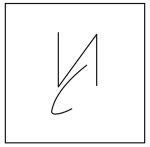
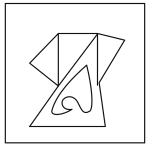
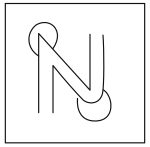
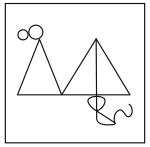
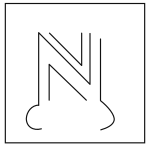
A sheet of paper is folded along the dotted line successively along the directions
shown and is then punched in the last. How would the paper look when unfolded?
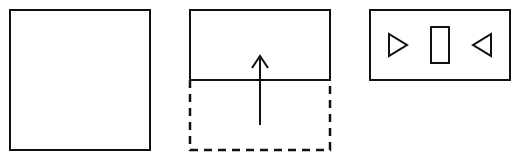
shown and is then punched in the last. How would the paper look when unfolded?
एक कागज़ की शीट को दर्शाई गई दिशाओं में बिंदीदार रेखा के अनुदिश क्रमिक रूप से
मोड़ा जाता है और फिर अंत में उसमें छेद किया जाता है। खोलने पर कागज़ कैसा दिखाई देगा?
मोड़ा जाता है और फिर अंत में उसमें छेद किया जाता है। खोलने पर कागज़ कैसा दिखाई देगा?
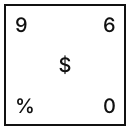
- A
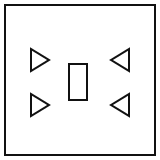
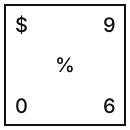
- B
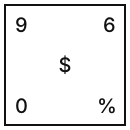
- C
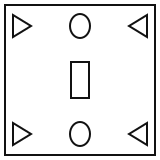
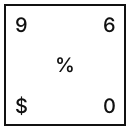
- D
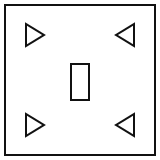
Show answer
Concept: A punch made through folded layers appears in every layer; on unfolding, the holes are reflected across the fold line.
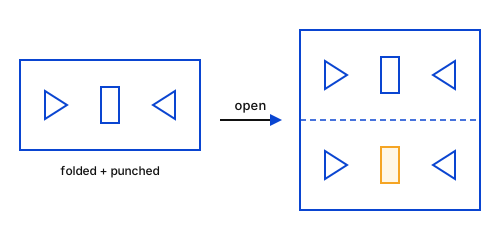
- The square is folded once: the lower half is turned up onto the upper half, so there are 2 layers.
- The punches (▷, rectangle, ◁) in one row go through both layers.
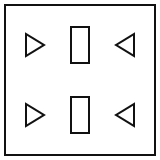
- On opening, the upper half keeps the row and the lower half gets its mirror image about the horizontal fold — the same row again (these shapes look the same when flipped top-to-bottom).
- So the unfolded sheet has two identical rows: ▷ rectangle ◁ above and below. That is option (B).
Trick: One fold = holes doubled; the copy is the mirror image across the fold line.
Answer: (B)
अवधारणा: मुड़ी हुई परतों में किया गया छेद हर परत में बनता है; खोलने पर छेद fold-line के सापेक्ष प्रतिबिंबित होते हैं।
- वर्ग को एक बार मोड़ा गया: निचला आधा भाग ऊपर के आधे पर, अतः 2 परतें।
- एक पंक्ति में छेद (▷, आयत, ◁) दोनों परतों से होकर बनते हैं।
- खोलने पर ऊपरी आधे में वही पंक्ति रहती है और निचले आधे में क्षैतिज fold के सापेक्ष उसका प्रतिबिंब — वही पंक्ति फिर से (ये आकृतियाँ ऊपर-नीचे पलटने पर समान दिखती हैं)।
- अतः खुली शीट में दो एक जैसी पंक्तियाँ: ऊपर और नीचे ▷ आयत ◁। यह विकल्प (B) है।
ट्रिक: एक मोड़ = छेद दुगुने; प्रति, fold-line के सापेक्ष दर्पण प्रतिबिंब होती है।
उत्तर: (B)