Question bank

Q&A: practice questions with answers

Search questions on any topic. Filter by exam category, exam, subject and topic, try the question, then open the answer and explanation.

Courses – airGurukul

4,200 questions found.

Q1.
Each of the digits in the number 78152469 is arranged in ascending order from left to right. Which of the following digits will be fourth from the left?
संख्या 78152469 के प्रत्येक अंक को बाएँ से दाएँ आरोही क्रम में व्यवस्थित किया जाता है। निम्नलिखित में से कौन-सा अंक बाएँ से चौथा होगा?
  1. A5
  2. B7
  3. C6
  4. D4
Show answer

Concept: Rewrite the digits from smallest to largest, then count the asked place.

  1. Digits of 78152469 sorted: 1, 2, 4, 5, 6, 7, 8, 9.
  2. New number = 12456789.
  3. Counting from left: 1, 2, 4, 5 → 4th place = 5.

Trick: Only the 4 smallest digits matter: 1, 2, 4, 5 – the largest of these is the answer.

Answer: (A) 5

अवधारणा: अंकों को छोटे से बड़े क्रम में लिखकर माँगा गया स्थान गिनें।

  1. 78152469 के अंक आरोही क्रम में: 1, 2, 4, 5, 6, 7, 8, 9
  2. नई संख्या = 12456789
  3. बाएँ से चौथा अंक = 5

ट्रिक: सिर्फ़ सबसे छोटे 4 अंक देखें (1, 2, 4, 5) – इनमें सबसे बड़ा ही उत्तर है।

उत्तर: (A) 5
SSC GDGeneral Intelligence & ReasoningDigit arrangement – ascending orderSSC GD 2025 · 25 Feb Shift 3 →
Q2.
In a certain code language, 'A + B' means 'A is the mother of B', 'A − B' means 'A is the sister of B', 'A × B' means 'A is the father of B' and 'A ÷ B' means 'A is the brother of B'. How is A related to C if 'A + B × C ÷ D − E'?
एक निश्चित कूट भाषा में, 'A + B' का अर्थ है 'A, B की माता है', 'A − B' का अर्थ है 'A, B की बहन है', 'A × B' का अर्थ है 'A, B का पिता है' तथा 'A ÷ B' का अर्थ है 'A, B का भाई है'। यदि 'A + B × C ÷ D − E' है, तो A का C से क्या संबंध है?
  1. AFather's motherपिता की माता
  2. BSister's daughterबहन की पुत्री
  3. CBrother's daughterभाई की पुत्री
  4. DMother's motherमाता की माता
Show answer

Concept: Decode each symbol, then trace only the links that connect A to C.

  1. A + B → A is mother of B.
  2. B × C → B is father of C.
  3. C ÷ D and D − E only describe C's siblings – not needed.
  4. So A is the mother of C's father → C's father's mother (paternal grandmother).

Trick: Stop decoding once both asked persons (A and C) are linked – the rest is extra data.

Answer: (A) Father's mother

अवधारणा: हर चिह्न का अर्थ लिखें और केवल A से C तक की कड़ी देखें।

  1. A + B → A, B की माँ है।
  2. B × C → B, C का पिता है।
  3. C ÷ D, D − E केवल C के भाई-बहन बताते हैं – इनकी ज़रूरत नहीं।
  4. अतः A, C के पिता की माँ है → पिता की माँ।

ट्रिक: जैसे ही पूछे गए दोनों व्यक्ति जुड़ जाएँ, आगे का कूट छोड़ दें।

उत्तर: (A) पिता की माँ

SSC GDGeneral Intelligence & ReasoningCoded blood relation – mathematical symbolsSSC GD 2025 · 25 Feb Shift 3 →
Q3.
In a certain code language, 'STAY' is coded as '3845' and 'LAYS' is coded as '3578'. How is ' T ' coded in the given language?
एक निश्चित कूट भाषा में, 'STAY' को '3845' के रूप में तथा 'LAYS' को '3578' के रूप में कूटबद्ध किया जाता है। उसी भाषा में ' $T$ ' को किस प्रकार कूटबद्ध किया जाएगा?
  1. A3
  2. B5
  3. C8
  4. D4
Show answer

Concept: When letters are jumbled, common letters in two words share the common digits.

  1. STAY = 3845, LAYS = 3578.
  2. Common letters: S, A, Y; common digits: 3, 5, 8.
  3. Leftover in STAY: letter T and digit 4 → T = 4.

Trick: Cancel the common part of both words and both codes – the leftover pairs up directly (here also L = 7).

Answer: (D) 4

अवधारणा: जब कूट क्रम में न हो, तो दो शब्दों के उभयनिष्ठ अक्षरों के कूट भी उभयनिष्ठ अंक होते हैं।

  1. STAY = 3845, LAYS = 3578
  2. उभयनिष्ठ अक्षर S, A, Y ↔ उभयनिष्ठ अंक 3, 5, 8
  3. STAY में बचा अक्षर T और बचा अंक 4 → T = 4

ट्रिक: दोनों शब्दों और कूटों से उभयनिष्ठ हिस्सा काट दें – जो बचे वही जोड़ी है (L = 7 भी)।

उत्तर: (D) 4

SSC GDGeneral Intelligence & ReasoningLetter coding – common letters/digitsSSC GD 2025 · 25 Feb Shift 3 →
Q4.
L, M, N, O, P, Q and R are sitting around a circular table facing the centre (but not necessarily in the same order). O is sitting to the immediate left of M and the immediate right of Q. L is sitting to the immediate left of Q and the immediate right of P. R is sitting to the immediate right of M and the immediate left of N. Who is sitting to the immediate right of N?
L, M, N, O, P, Q और R एक वृत्ताकार मेज के चारों ओर केंद्र की ओर मुख करके बैठे हैं (आवश्यक नहीं कि इसी क्रम में)। O, M के ठीक बाएँ और Q के ठीक दाएँ बैठा है। L, Q के ठीक बाएँ और P के ठीक दाएँ बैठा है। R, M के ठीक दाएँ और N के ठीक बाएँ बैठा है। N के ठीक दाएँ कौन बैठा है?
  1. AO
  2. BQ
  3. CP
  4. DR
Show answer

Concept: Facing the centre: left = clockwise neighbour, right = anticlockwise neighbour.

  1. O left of M, right of Q → clockwise M, O, Q.
  2. L left of Q, right of P → Q, L, P.
  3. R right of M, left of N → N, R, M.
  4. Join: N, R, M, O, Q, L, P (clockwise). N's immediate right = seat just anticlockwise = P.

Trick: Turn each 'X is left of Y, right of Z' clue into a 3-letter chain and join chains at common letters.

Answer: (C) P

अवधारणा: केंद्र की ओर मुख हो तो बायाँ = दक्षिणावर्त पड़ोसी, दायाँ = वामावर्त पड़ोसी।

  1. O, M के बाएँ और Q के दाएँ → M, O, Q
  2. L, Q के बाएँ और P के दाएँ → Q, L, P
  3. R, M के दाएँ और N के बाएँ → N, R, M
  4. क्रम (दक्षिणावर्त): N, R, M, O, Q, L, P → N के ठीक दाएँ P

ट्रिक: हर सूचना को 3 अक्षरों की कड़ी बनाएँ और समान अक्षर पर कड़ियाँ जोड़ दें।

उत्तर: (C) P

SSC GDGeneral Intelligence & ReasoningCircular seating – facing centreSSC GD 2025 · 25 Feb Shift 3 →
Q5.
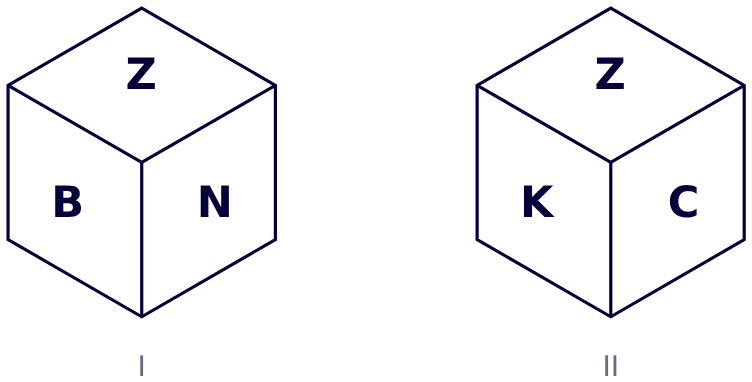
A dice has its faces marked by letters K, N, A, B, C and Z. Two positions of the same dice are given below. Which face is opposite to face A?
figure
एक पासे के फलकों पर K, N, A, B, C और Z अक्षर अंकित हैं। इसी पासे की दो स्थितियाँ नीचे दी गई हैं। फलक A के विपरीत कौन-सा फलक है?
figure
  1. AZ
  2. BB
  3. CN
  4. DK
Show answer

Concept: A face seen with four different neighbours is opposite the sixth, unseen face.

  1. Z appears in both positions.
  2. Faces seen next to Z: B, N (view 1) and K, C (view 2).
  3. Z touches B, N, K, C → only A is left → A is opposite Z.

Trick: Common face + list its 4 neighbours → the missing letter is its opposite.

Answer: (A) Z

अवधारणा: जिस फलक के चारों पड़ोसी दिख जाएँ, उसका विपरीत वही छठा फलक होता है जो साथ में नहीं दिखा।

  1. Z दोनों स्थितियों में है।
  2. Z के साथ दिखे: B, N और K, C
  3. Z के चार पड़ोसी पूरे → बचा A, अतः A के विपरीत Z

ट्रिक: उभयनिष्ठ फलक के 4 पड़ोसी गिनें – जो अक्षर नहीं दिखा वही विपरीत।

उत्तर: (A) Z

SSC GDGeneral Intelligence & ReasoningDice – common face in two viewsSSC GD 2025 · 25 Feb Shift 3 →
Q6.
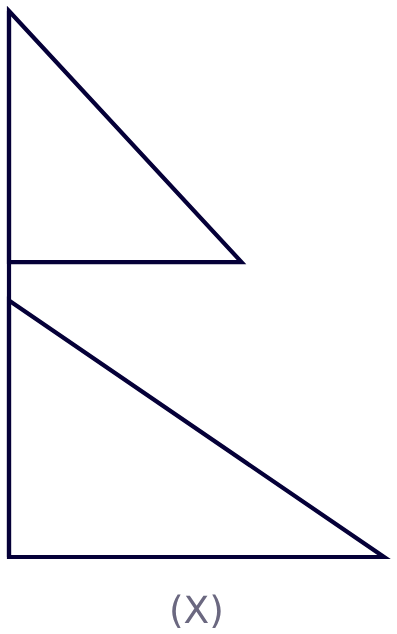
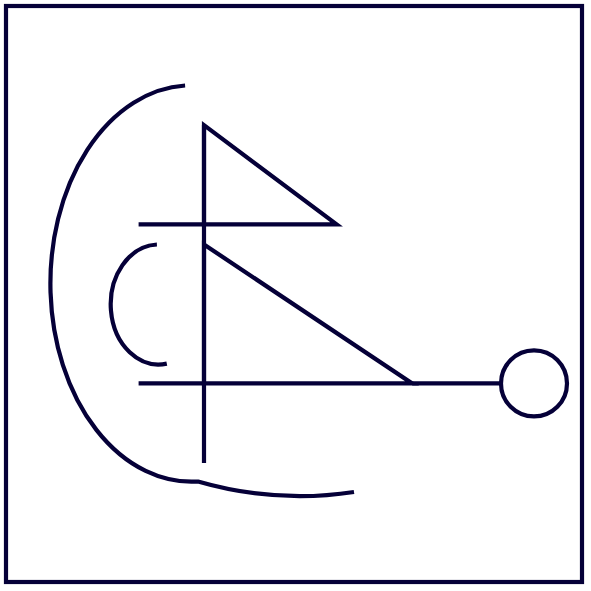
Select the option in which the given figure ( X ) is embedded (rotation is NOT allowed).
figure
उस विकल्प का चयन कीजिए जिसमें दी गई आकृति (X) सन्निहित है (घुमाने की अनुमति नहीं है)।
figure
  1. Afigure
  2. Bfigure
  3. Cfigure
  4. Dfigure
Show answer

Concept: The figure must appear inside the option with the same size and the same orientation (no rotation).

  1. Key features of X: one long vertical line with two right-angled triangles attached on its right side – a small one at the top and a bigger one below.
  2. Check each option for a vertical side carrying both triangles in this exact direction.
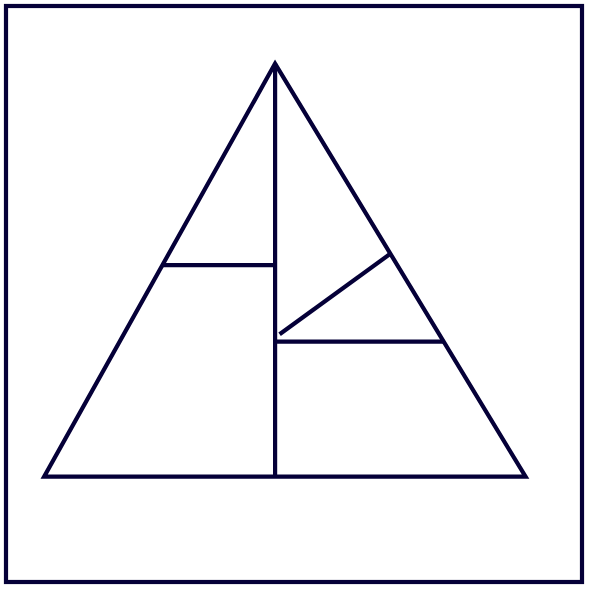
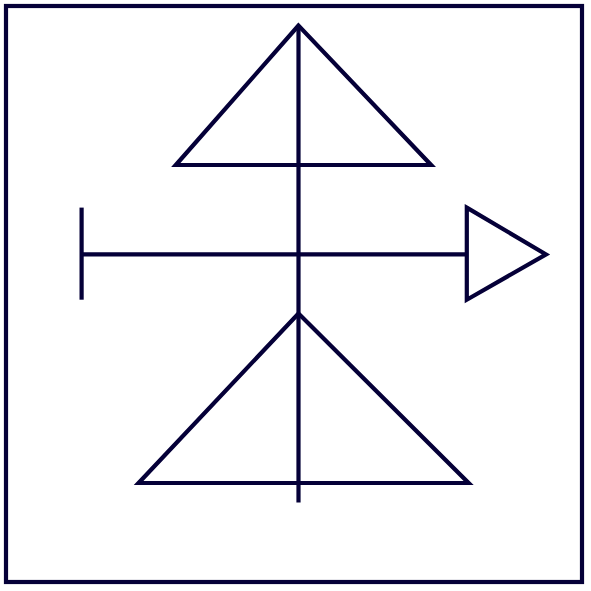
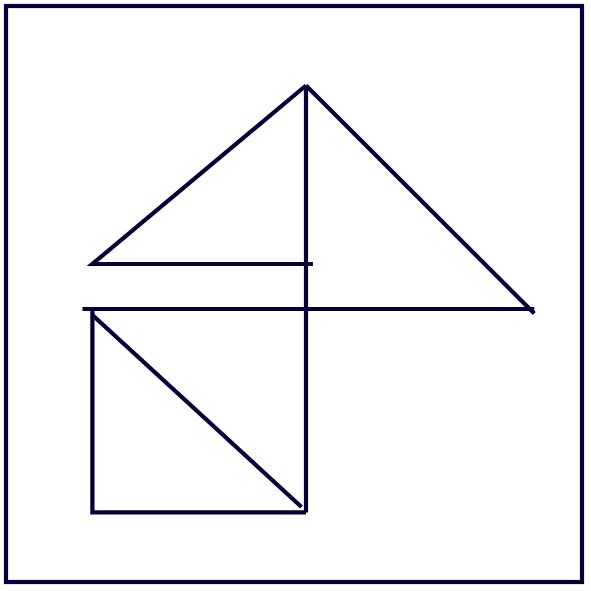
  3. Only option (d) contains this shape unchanged; others have the triangles on isosceles bases or turned the other way.

Trick: Pick the most distinctive part (here the vertical line with both triangles on the same side) and search only for that.

Answer: (D) figure (d)

अवधारणा: आकृति उसी आकार और उसी दिशा में (बिना घुमाए) विकल्प के अंदर होनी चाहिए।

  1. X की पहचान: एक लंबी खड़ी रेखा, जिसकी दाहिनी तरफ़ दो right-angled त्रिभुज लगे हैं – ऊपर छोटा, नीचे बड़ा।
  2. हर विकल्प में ऐसी खड़ी भुजा खोजें जिस पर दोनों त्रिभुज इसी दिशा में हों।
  3. केवल विकल्प (d) में यह आकृति ज्यों की त्यों मिलती है।

ट्रिक: सबसे अलग दिखने वाला हिस्सा (खड़ी रेखा + एक ही ओर दो त्रिभुज) चुनकर केवल उसे खोजें।

उत्तर: (D) आकृति (d)

SSC GDGeneral Intelligence & ReasoningEmbedded figureSSC GD 2025 · 25 Feb Shift 3 →
Q7.
In a certain code language, 'sun is hot' is coded as 'la ah ft' and 'moon is beautiful' is coded as 'la ik zy'. How is 'is' coded in the given language?
एक निश्चित कूट भाषा में, 'sun is hot' को 'la ah ft' और 'moon is beautiful' को 'la ik zy' के रूप में कूटबद्ध किया जाता है। उसी भाषा में 'is' को किस प्रकार कूटबद्ध किया जाएगा?
  1. Aft
  2. Bzy
  3. Cla
  4. Dik
Show answer

Concept: A word common to two sentences gets the code common to both coded strings.

  1. sun is hot → la ah ft
  2. moon is beautiful → la ik zy
  3. Common word: 'is'; common code: 'la' → is = la.

Trick: Match common word ↔ common code in one glance; ignore everything else.

Answer: (C) la

अवधारणा: दो वाक्यों में जो शब्द साझा है, उसका कूट दोनों कूट-वाक्यों में साझा होगा।

  1. sun is hot → la ah ft
  2. moon is beautiful → la ik zy
  3. साझा शब्द 'is', साझा कूट 'la' → is = la

ट्रिक: साझा शब्द ↔ साझा कूट – बाकी सब छोड़ दें।

उत्तर: (C) la

SSC GDGeneral Intelligence & ReasoningSentence coding – common wordSSC GD 2025 · 25 Feb Shift 3 →
Q8.
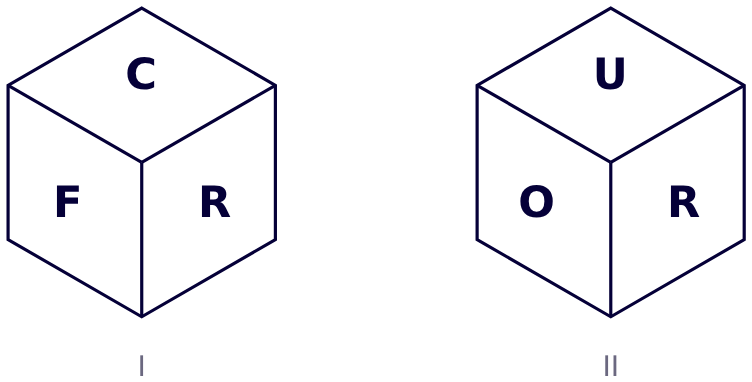
A dice has its faces marked by letters C, L, O, U, R and F. Two positions of the same dice are shown in the given figures. Which face is opposite to face L ?
figure
एक पासे के फलकों पर C, L, O, U, R और F अक्षर अंकित हैं। दी गई आकृतियों में इसी पासे की दो स्थितियाँ दर्शाई गई हैं। फलक L के विपरीत कौन-सा फलक है?
figure
  1. AC
  2. BF
  3. CO
  4. DR
Show answer

Concept: If one face is common to both views, its four visible neighbours cannot be opposite it; the leftover letter is.

  1. R is common to both positions.
  2. Neighbours of R seen: C, F (view 1) and U, O (view 2).
  3. Letters left: only L → L is opposite R.

Trick: Common face + 4 neighbours = opposite found in 5 seconds.

Answer: (D) R

अवधारणा: दोनों स्थितियों में उभयनिष्ठ फलक के चारों पड़ोसी दिख जाएँ तो बचा अक्षर उसके विपरीत होता है।

  1. R दोनों स्थितियों में है।
  2. R के पड़ोसी: C, F और U, O
  3. बचा अक्षर L → L के विपरीत R

ट्रिक: उभयनिष्ठ फलक + 4 पड़ोसी = विपरीत तुरंत।

उत्तर: (D) R

SSC GDGeneral Intelligence & ReasoningDice – opposite faceSSC GD 2025 · 25 Feb Shift 3 →
Q9.
What should come in place of the question mark (?) in the given series? 17 64 103 134 157 ?
दी गई शृंखला में प्रश्नवाचक चिह्न (?) के स्थान पर क्या आना चाहिए? 17 64 103 134 157 ?
  1. A179
  2. B168
  3. C172
  4. D185
Show answer

Concept: Check first differences; here they fall by a fixed amount.

  1. Differences: 47, 39, 31, 23 (each 8 less).
  2. Next difference = 23 − 8 = 15.
  3. Next term = 157 + 15 = 172.

Trick: When gaps shrink by a fixed step, use that step (here −8) to get the next gap directly.

Answer: (C) 172

अवधारणा: क्रमिक अंतर देखें; यहाँ अंतर हर बार समान मात्रा से घटता है।

  1. अंतर: 47, 39, 31, 23 (हर बार 8 कम)
  2. अगला अंतर = 23 − 8 = 15
  3. अगला पद = 157 + 15 = 172

ट्रिक: जब अंतर स्थिर रूप से घटें, तो द्वितीय अंतर (यहाँ −8) से सीधे अगला पद निकालें।

उत्तर: (C) 172

SSC GDGeneral Intelligence & ReasoningNumber series – decreasing differencesSSC GD 2025 · 25 Feb Shift 3 →
Q10.
Based on the English alphabetical order, three of the following four letter-clusters are alike in a certain way and thus form a group. Which is the one that DOES NOT belong to that group? (Note: The odd one out is not based on the number of consonants/vowels or their position in the letter-cluster.)
अंग्रेजी वर्णमाला क्रम के आधार पर, निम्नलिखित चार अक्षर-समूहों में से तीन एक निश्चित प्रकार से समान हैं और इस प्रकार एक समूह बनाते हैं। वह कौन-सा है जो उस समूह से संबंधित नहीं है? (नोट: विषम अक्षर-समूह व्यंजनों/स्वरों की संख्या या अक्षर-समूह में उनकी स्थिति पर आधारित नहीं है।)
  1. AKMH
  2. BGDH
  3. CQSN
  4. DHJE
Show answer

Concept: Convert letters to positions and compare the jumps inside each cluster.

  1. KMH: 11→13→8 = +2, −5
  2. QSN: 17→19→14 = +2, −5; HJE: 8→10→5 = +2, −5
  3. GDH: 7→4→8 = −3, +4 → different.

Trick: In three clusters the 3rd letter is 3 places before the 1st (K→H, Q→N, H→E); GDH breaks it.

Answer: (B) GDH

अवधारणा: अक्षरों के स्थानीय मान लिखकर हर समूह के अंदर की छलाँग तुलना करें।

  1. KMH: 11→13→8 = +2, −5
  2. QSN: +2, −5; HJE: +2, −5
  3. GDH: 7→4→8 = −3, +4 → अलग

ट्रिक: तीन समूहों में तीसरा अक्षर पहले से 3 स्थान पीछे है (K→H, Q→N, H→E); GDH में नहीं।

उत्तर: (B) GDH

SSC GDGeneral Intelligence & ReasoningOdd one out – letter clustersSSC GD 2025 · 25 Feb Shift 3 →
Q11.
RC 66 is related to SD 67 in a certain way. In the same way, NV 3 is related to OW 4. To which of the following is CH 9 related, following the same logic?
RC 66 एक निश्चित प्रकार से SD 67 से संबंधित है। उसी प्रकार, NV 3, OW 4 से संबंधित है। समान तर्क का अनुसरण करते हुए, CH 9 निम्नलिखित में से किससे संबंधित है?
  1. ADI 8
  2. BFI 10
  3. CDI 10
  4. DBI 10
Show answer

Concept: Find the change on each letter and on the number separately.

  1. RC 66 → SD 67: R→S, C→D (+1), 66→67 (+1).
  2. NV 3 → OW 4: same +1 rule.
  3. CH 9 → C+1 = D, H+1 = I, 9+1 = 10 → DI 10.

Trick: Number must be 10 → only (B), (C), (D) remain; first letter must be D → (C).

Answer: (C) DI 10

अवधारणा: अक्षरों और संख्या में बदलाव अलग-अलग देखें।

  1. RC 66 → SD 67: हर अक्षर +1, संख्या +1
  2. NV 3 → OW 4: वही नियम
  3. CH 9 → DI 10

ट्रिक: संख्या 10 होनी चाहिए → (A) बाहर; पहला अक्षर D → सीधे (C)।

उत्तर: (C) DI 10

SSC GDGeneral Intelligence & ReasoningLetter-number analogySSC GD 2025 · 25 Feb Shift 3 →
Q12.
Read the given statements and conclusions carefully. Assuming that the information given in the statements is true, even if it appears to be at variance with commonly known facts, decide which of the given conclusions logically follow(s) from the statements.
Statements:
Some tabs are medicines.
Some tabs are ointments.
Some medicines are branches.
Conclusions:
(I): Some tabs are branches.
(II): Some medicines are ointments.
दिए गए कथनों और निष्कर्षों को ध्यानपूर्वक पढ़िए। यह मानते हुए कि कथनों में दी गई जानकारी सत्य है, चाहे वह सर्वज्ञात तथ्यों से भिन्न प्रतीत होती हो, निर्णय कीजिए कि दिए गए निष्कर्षों में से कौन-सा/से कथनों का तार्किक रूप से अनुसरण करता है/करते हैं।
कथन:
कुछ टैब दवाइयाँ हैं।
कुछ टैब मलहम हैं।
कुछ दवाइयाँ शाखाएँ हैं।
निष्कर्ष:
(I): कुछ टैब शाखाएँ हैं।
(II): कुछ दवाइयाँ मलहम हैं।
  1. AOnly conclusion (I) follows.केवल निष्कर्ष (I) अनुसरण करता है।
  2. BNeither conclusion (I) nor (II) follows.न तो निष्कर्ष (I) और न ही (II) अनुसरण करता है।
  3. CBoth conclusions (I) and (II) follow.निष्कर्ष (I) और (II) दोनों अनुसरण करते हैं।
  4. DOnly conclusion (II) follows.केवल निष्कर्ष (II) अनुसरण करता है।
Show answer

Concept: Two 'some' statements joined through a middle term give no definite conclusion.

  1. Tabs–branches: tabs link to medicines, medicines link to branches – both links are 'some' → (I) not certain.
  2. Medicines–ointments: both only meet through tabs via 'some' → (II) not certain.
  3. A diagram with no overlap is possible, so neither follows.

Trick: Some + Some = No conclusion. Both conclusions here need such a chain, so reject both.

Answer: (B) Neither conclusion (I) nor (II) follows.

अवधारणा: दो 'कुछ' कथनों को जोड़कर पक्का निष्कर्ष संभव नहीं होता।

  1. टैब–ब्रांच: टैब→दवा और दवा→ब्रांच दोनों 'कुछ' हैं → (I) निश्चित नहीं।
  2. दवा–मरहम: दोनों टैब से 'कुछ' द्वारा जुड़े → (II) निश्चित नहीं।
  3. ऐसा चित्र संभव है जिसमें कोई मेल न हो → दोनों अनुसरण नहीं करते।

ट्रिक: कुछ + कुछ = कोई निष्कर्ष नहीं।

उत्तर: (B) न तो (I) न ही (II) अनुसरण करता है

SSC GDGeneral Intelligence & ReasoningSyllogism – all 'some' statementsSSC GD 2025 · 25 Feb Shift 3 →
Q13.
What should come in place of the question mark (?) in the given series based on the English alphabetical order? BDF HJL NPR ? ZBD
अंग्रेजी वर्णमाला क्रम के आधार पर दी गई शृंखला में प्रश्नवाचक चिह्न (?) के स्थान पर क्या आना चाहिए? BDF HJL NPR ? ZBD
  1. ATVX
  2. BXTV
  3. CVTX
  4. DXYZ
Show answer

Concept: Each letter of a group moves a fixed number of places in the next group.

  1. B→H→N (+6), D→J→P (+6), F→L→R (+6).
  2. Missing group: N+6 = T, P+6 = V, R+6 = X → TVX.
  3. Check: T+6 = Z, V+6 = B, X+6 = D → ZBD ✔

Trick: Inside every group letters skip one (B_D_F); only TVX has that pattern among the options.

Answer: (A) TVX

अवधारणा: हर समूह का प्रत्येक अक्षर अगले समूह में निश्चित स्थान आगे बढ़ता है।

  1. B→H→N, D→J→P, F→L→R (+6)
  2. लुप्त समूह: T, V, X
  3. जाँच: TVX + 6 = ZBD ✔

ट्रिक: हर समूह में अक्षर एक छोड़कर हैं (B_D_F) – विकल्पों में केवल TVX ऐसा है।

उत्तर: (A) TVX

SSC GDGeneral Intelligence & ReasoningLetter series – +6 patternSSC GD 2025 · 25 Feb Shift 3 →
Q14.
Identify the figure given in the options which when put in place of the question mark (?) will logically complete the series.
figure
दिए गए विकल्पों में से उस आकृति की पहचान कीजिए जिसे प्रश्नवाचक चिह्न (?) के स्थान पर रखने पर शृंखला तार्किक रूप से पूर्ण हो जाएगी।
figure
  1. Afigure
  2. Bfigure
  3. Cfigure
  4. Dfigure
Show answer

Concept: Track two changes: the symbol used and how many copies appear.

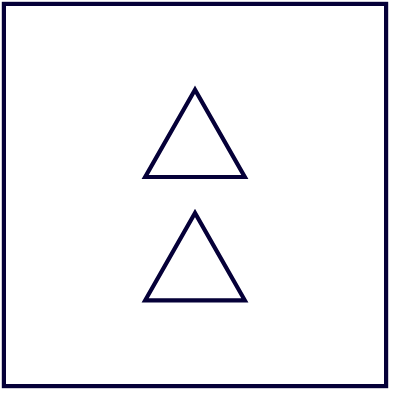
  1. Frames 1–3: triangles, count 1, 2, 3.
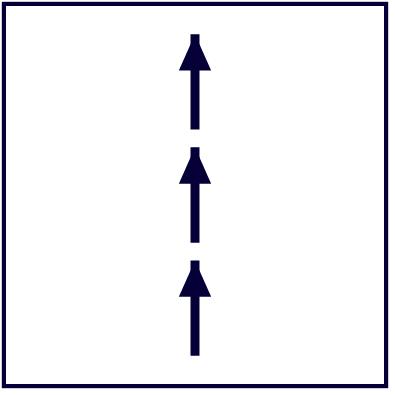
  2. Frames 4–5: arrows, count 1, 2 → a new block of 3 has begun.
  3. Frame 6 must be 3 arrows – option (c).

Trick: Find the block length (here 3) – the next frame just completes the current block.

Answer: (C) figure (c)

अवधारणा: दो बदलाव देखें: कौन-सा चिह्न है और कितनी बार है।

  1. आकृति 1–3: त्रिभुज, संख्या 1, 2, 3
  2. आकृति 4–5: तीर, संख्या 1, 2
  3. आकृति 6 में 3 तीर होंगे → विकल्प (c)

ट्रिक: खंड की लंबाई (यहाँ 3) पहचानें – अगली आकृति बस उस खंड को पूरा करती है।

उत्तर: (C) आकृति (c)

SSC GDGeneral Intelligence & ReasoningFigure series – symbol and countSSC GD 2025 · 25 Feb Shift 3 →
Q15.
K, L, M, N, O and P are sitting around a circular table, facing the centre (but not necessarily in the same order). K sits second to the right of L. N sits third to the left of K. P is not an immediate neighbour of K. O sits second to the left of M. What is the position of O with respect to K?
K, L, M, N, O और P एक वृत्ताकार मेज के चारों ओर केंद्र की ओर मुख करके बैठे हैं (आवश्यक नहीं कि इसी क्रम में)। K, L के दाएँ से दूसरे स्थान पर बैठा है। N, K के बाएँ से तीसरे स्थान पर बैठा है। P, K का निकटतम पड़ोसी नहीं है। O, M के बाएँ से दूसरे स्थान पर बैठा है। K के सापेक्ष O की स्थिति क्या है?
  1. AImmediate Rightठीक दाएँ
  2. BSecond to the Leftबाएँ से दूसरा
  3. CImmediate Leftठीक बाएँ
  4. DThird to the Rightदाएँ से तीसरा
Show answer

Concept: Facing centre: left = clockwise, right = anticlockwise. Fix one person and place others by steps.

  1. Fix K at seat 0. L is 2 seats clockwise (seat 2); N is 3 clockwise (seat 3).
  2. Free seats: 1, 4, 5. O is 2 clockwise of M → only M = 5, O = 1 works.
  3. P = 4 (not next to K ✔). O is 1 seat clockwise of K → immediate left.

Trick: Number the seats 0–5 clockwise from K; 'second to left' = +2, 'third to left' = +3.

Answer: (C) Immediate Left

अवधारणा: केंद्र की ओर मुख: बायाँ = दक्षिणावर्त। एक व्यक्ति को स्थिर करके बाकी को स्थान-संख्या से रखें।

  1. K = स्थान 0; L दक्षिणावर्त 2 पर, N 3 पर।
  2. खाली स्थान 1, 4, 5; O, M से 2 स्थान दक्षिणावर्त → M = 5, O = 1
  3. P = 4 (K का पड़ोसी नहीं ✔)। O, K से 1 स्थान दक्षिणावर्त → ठीक बाएँ

ट्रिक: K से दक्षिणावर्त 0–5 नंबर दें; 'दूसरा बाएँ' = +2, 'तीसरा बाएँ' = +3।

उत्तर: (C) ठीक बाएँ

SSC GDGeneral Intelligence & ReasoningCircular seating – six personsSSC GD 2025 · 25 Feb Shift 3 →
Q16.
The position(s) of how many letters will remain unchanged if each of the letters in the word NOTABLE is arranged in the English alphabetical order ?
यदि शब्द NOTABLE के प्रत्येक अक्षर को अंग्रेजी वर्णमाला क्रम में व्यवस्थित किया जाए, तो कितने अक्षरों की स्थिति अपरिवर्तित रहेगी?
  1. AThreeतीन
  2. Boneएक
  3. CTwoदो
  4. DZeroशून्य
Show answer

Concept: Sort the letters alphabetically and compare position by position.

  1. NOTABLE → letters A, B, E, L, N, O, T → ABELNOT.
  2. Compare: N/A, O/B, T/E, A/L, B/N, L/O, E/T – no match.
  3. Unchanged positions = 0.

Trick: The middle letter (4th) must be the 4th smallest: A is the smallest, not 4th → mismatch; check others the same way quickly.

Answer: (D) Zero

अवधारणा: अक्षरों को वर्णमाला क्रम में लगाकर हर स्थान की तुलना करें।

  1. NOTABLE → ABELNOT
  2. तुलना: N/A, O/B, T/E, A/L, B/N, L/O, E/T – कोई मेल नहीं
  3. अपरिवर्तित स्थान = 0

ट्रिक: दोनों शब्द एक के नीचे एक लिखें – एक बार में सभी 7 स्थान जाँच लें।

उत्तर: (D) शून्य

SSC GDGeneral Intelligence & ReasoningLetter positions after alphabetical arrangementSSC GD 2025 · 25 Feb Shift 3 →
Q17.
Following a certain code language, CBGD is related to HGLI and UFLO is related to ZKQT. To which of the given options is VJRM related in the given code language?
एक निश्चित कूट भाषा का अनुसरण करते हुए, CBGD, HGLI से संबंधित है तथा UFLO, ZKQT से संबंधित है। उसी कूट भाषा में VJRM दिए गए विकल्पों में से किससे संबंधित है?
  1. ABOWR
  2. BAOWR
  3. CAWOH
  4. DAGRR
Show answer

Concept: Find the uniform shift from the example pairs and apply it.

  1. CBGD → HGLI: each letter +5.
  2. UFLO → ZKQT: each +5 ✔
  3. VJRM: V+5 = A (after Z), J+5 = O, R+5 = W, M+5 = R → AOWR.

Trick: V is 5th from the end (V W X Y Z), so V+5 wraps to A – only (B), (C), (D) start with A; J+5 = O leaves (B).

Answer: (B) AOWR

अवधारणा: उदाहरण जोड़ी से एक समान खिसकाव पता करें और लागू करें।

  1. CBGD → HGLI: हर अक्षर +5
  2. UFLO → ZKQT: +5 ✔
  3. VJRM → A, O, W, R = AOWR

ट्रिक: V + 5 Z के बाद घूमकर A बनता है; दूसरा अक्षर O होने से सीधे (B)।

उत्तर: (B) AOWR

SSC GDGeneral Intelligence & ReasoningLetter coding – +5 shiftSSC GD 2025 · 25 Feb Shift 3 →
Q18.
What should come in place of the question mark (?) in the given series? 781 791 800 808 815 ?
दी गई शृंखला में प्रश्नवाचक चिह्न (?) के स्थान पर क्या आना चाहिए? 781 791 800 808 815 ?
  1. A822
  2. B820
  3. C819
  4. D821
Show answer

Concept: Successive differences decrease by 1.

  1. Differences: 10, 9, 8, 7.
  2. Next difference = 6.
  3. 815 + 6 = 821.

Trick: Spot the shrinking gaps 10, 9, 8, 7 → just add 6.

Answer: (D) 821

अवधारणा: क्रमिक अंतर हर बार 1 कम होते हैं।

  1. अंतर: 10, 9, 8, 7
  2. अगला अंतर = 6
  3. 815 + 6 = 821

ट्रिक: अंतर 10, 9, 8, 7 → अगला 6 जोड़ दें।

उत्तर: (D) 821

SSC GDGeneral Intelligence & ReasoningNumber series – differences falling by 1SSC GD 2025 · 25 Feb Shift 3 →
Q19.
Select the Venn diagram that best illustrates the relationship between the following classes.
Cat, Pant, Ice
उस वेन आरेख का चयन कीजिए जो निम्नलिखित वर्गों के बीच के संबंध को सर्वोत्तम रूप से दर्शाता है।
बिल्ली, पैंट, बर्फ
  1. Afigure
  2. Bfigure
  3. Cfigure
  4. Dfigure
Show answer

Concept: Classes with no common member are shown as separate circles.

  1. Cat is an animal, pant is clothing, ice is frozen water.
  2. No item belongs to two of these classes.
  3. So three disjoint circles – option (c).

Trick: If no pair of items can overlap, look straight for three separate circles.

Answer: (C) three separate circles (figure c)

अवधारणा: जिन वर्गों में कोई सदस्य साझा न हो, वे अलग-अलग वृत्तों से दिखाए जाते हैं।

  1. बिल्ली = जानवर, पैंट = कपड़ा, बर्फ़ = जमा पानी
  2. किसी भी दो वर्गों में कुछ भी साझा नहीं
  3. अतः तीन अलग वृत्त – विकल्प (c)

ट्रिक: कोई भी जोड़ी आपस में न जुड़े तो सीधे तीन अलग वृत्त चुनें।

उत्तर: (C) तीन अलग वृत्त (आकृति c)

SSC GDGeneral Intelligence & ReasoningVenn diagram – unrelated classesSSC GD 2025 · 25 Feb Shift 3 →
Q20.
Find the correct alternative that when filled in the blanks in the same sequence will make the series logically complete.
_MIK M_LN PS_Q SVR_ VYU_
सही विकल्प ज्ञात कीजिए जो रिक्त स्थानों में उसी क्रम में भरे जाने पर शृंखला को तार्किक रूप से पूर्ण करेगा।
_MIK M_LN PS_Q SVR_ VYU_
  1. AIMNSU
  2. BJPOTW
  3. CIPNTU
  4. DJMOSW
Show answer

Concept: Break into groups of four; each column then follows a +3 pattern.

  1. Groups: _MIK, M_LN, PS_Q, SVR_, VYU_.
  2. Column 1: J, M, P, S, V; column 2: M, P, S, V, Y (+3).
  3. Column 3: I, L, O, R, U; column 4: K, N, Q, T, W (+3).
  4. Blanks in order: J, P, O, T, W.

Trick: First blank sits before M in a +3 chain → M−3 = J; only (B) and (D) start with J, and 2nd blank = M+3 = P gives (B).

Answer: (B) JPOTW

अवधारणा: श्रृंखला के 4-4 अक्षरों के खंड बनाएँ; हर स्तंभ +3 क्रम में चलता है।

  1. समूह: _MIK, M_LN, PS_Q, SVR_, VYU_
  2. स्तंभ 1: J, M, P, S, V; स्तंभ 2: M, P, S, V, Y
  3. स्तंभ 3: I, L, O, R, U; स्तंभ 4: K, N, Q, T, W
  4. रिक्त स्थान: J, P, O, T, W

ट्रिक: पहला रिक्त = M − 3 = J, दूसरा = M + 3 = P → सीधे (B)।

उत्तर: (B) JPOTW

SSC GDGeneral Intelligence & ReasoningLetter series – fill the blanksSSC GD 2025 · 25 Feb Shift 3 →