Question bank

Q&A: practice questions with answers

Search questions on any topic. Filter by exam category, exam, subject and topic, try the question, then open the answer and explanation.

Courses – airGurukul

4,200 questions found.

Q2001.
Select the Venn diagram that best illustrates the relationship between the following classes.
Son, Father, Brother
निम्नलिखित वर्गों के बीच संबंध को सर्वोत्तम रूप से दर्शाने वाले वेन आरेख का चयन कीजिए।
पुत्र, पिता, भाई
  1. Afigure
  2. Bfigure
  3. Cfigure
  4. Dfigure
Show answer

Concept: Find which class contains the others and which classes only partly share members.
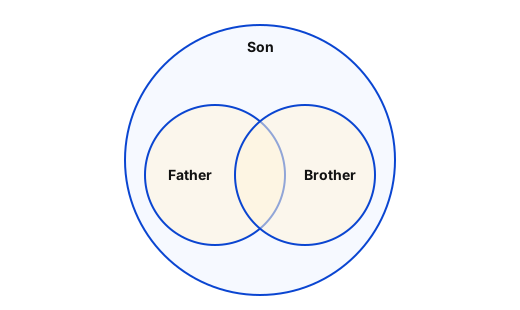
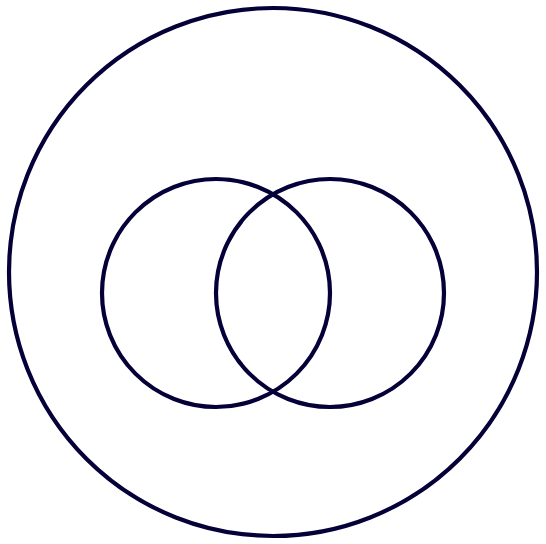
  1. Any father or brother is a male child of someone, so both are subsets of Son (big outer circle).
  2. A man may be a father and a brother at once, but not always – so Father and Brother circles partly overlap.
  3. Required picture: two overlapping circles inside one big circle.

Trick: Ask 'Is every X a Y?' for each pair – a 'yes' means draw X inside Y.

Answer: (A)the figure with two intersecting circles inside a larger circle

अवधारणा: देखें कौन-सा वर्ग बाकी दोनों को समेटता है और कौन-से वर्ग आंशिक रूप से साझा हैं।

  1. हर पिता और हर भाई किसी न किसी का बेटा है – इसलिए दोनों पुत्र के अंदर आएँगे।
  2. एक व्यक्ति पिता और भाई दोनों हो सकता है, पर ज़रूरी नहीं – अतः पिता व भाई के वृत्त आंशिक रूप से कटते हैं।
  3. अतः: बड़े वृत्त के अंदर दो कटते वृत्त।

ट्रिक: हर जोड़ी के लिए पूछें 'क्या हर X, Y है?' – 'हाँ' हो तो X को Y के अंदर बनाएँ।

उत्तर: (A)बड़े वृत्त के अंदर दो कटते वृत्त वाली आकृति

SSC GDGeneral Intelligence & ReasoningVenn diagram – Son, Father, BrotherSSC GD 2025 · 13 Feb Shift 1 →
Q2002.
The sequence of folding a piece of paper and the manner in which the folded paper is cut is shown in the following figures. How would this paper look when unfolded?
figure
कागज के एक टुकड़े को मोड़ने का क्रम और मुड़े हुए कागज को जिस प्रकार काटा गया है, वह निम्नलिखित आकृतियों में दर्शाया गया है। खोलने पर यह कागज कैसा दिखाई देगा?
figure
  1. Afigure
  2. Bfigure
  3. Cfigure
  4. Dfigure
Show answer

Concept: When a sheet is folded once, every cut appears twice on opening – mirrored about the fold line.

  1. The bottom half is lifted onto the top half, so the crease is the horizontal middle line.
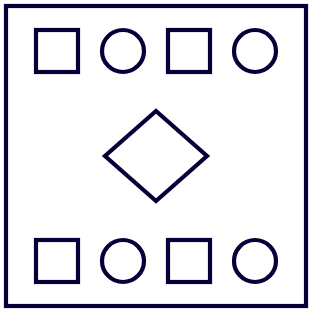
  2. The four small holes cut in a row stay clear of the crease → it appears in the top half and again, mirrored, in the bottom half.
  3. The triangle touches the crease → its two halves join into one rhombus in the centre.

Trick: A shape cut on the fold opens as one doubled shape; a shape cut away from the fold opens as two copies.

Answer: (A)the figure with a row of 4 holes at the top, a matching row at the bottom and one rhombus at the centre

अवधारणा: एक बार मोड़े गए कागज़ में हर कट खोलने पर मोड़-रेखा के सापेक्ष दर्पण-रूप में दो बार दिखता है।

  1. नीचे का आधा भाग ऊपर मोड़ा गया, अतः मोड़-रेखा बीच की क्षैतिज रेखा है।
  2. पंक्ति के चारों छेद मोड़ से हटकर हैं → ऊपर एक पंक्ति और नीचे उसकी दर्पण पंक्ति बनेगी।
  3. त्रिभुज मोड़-रेखा पर कटा है → खुलने पर बीच में एक पूरा समचतुर्भुज बनता है।

ट्रिक: मोड़ पर कटी आकृति खुलकर एक बड़ी आकृति बनती है; मोड़ से दूर कटी आकृति दो बार आती है।

उत्तर: (A)दो पंक्तियों में चार-चार आकृतियाँ और बीच में एक समचतुर्भुज वाली आकृति

SSC GDGeneral Intelligence & ReasoningPaper folding and cutting – one horizontal foldSSC GD 2025 · 13 Feb Shift 1 →
Q2003.
Based on the English alphabetical order, three of the following four letter-clusters are alike in a certain way and thus form a group. Which letter-cluster DOES NOT belong to that group?
(Note: The odd one out is not based on the number of consonants/vowels or their position in the letter-cluster.)
अंग्रेजी वर्णमाला क्रम के आधार पर, निम्नलिखित चार अक्षर-समूहों में से तीन एक निश्चित प्रकार से समान हैं और इस प्रकार एक समूह बनाते हैं। कौन-सा अक्षर-समूह उस समूह से संबंधित नहीं है?
(नोट: विषम अक्षर-समूह का चयन अक्षर-समूह में व्यंजनों/स्वरों की संख्या अथवा उनकी स्थिति पर आधारित नहीं है।)
  1. AZCA
  2. BGJH
  3. CMPD
  4. DLOM
Show answer

Concept: Check the gap between 1st→2nd and 2nd→3rd letters of each cluster.

  1. ZCA: Z(26)+3 = C (wrap), C−2 = A ✔
  2. GJH: G+3 = J, J−2 = H ✔; LOM: L+3 = O, O−2 = M ✔
  3. MPD: M+3 = P, but P(16) → D(4) is −12 ✘

Trick: Once the first step (+3) matches everywhere, test only the last letter: it must be 1 letter after the first letter (Z→A, G→H, L→M). M→D fails instantly.

Answer: (C) MPD

अवधारणा: हर समूह में पहले→दूसरे और दूसरे→तीसरे अक्षर का अंतर देखें।

  1. ZCA: Z+3 = C (घूमकर), C−2 = A ✔
  2. GJH: +3, −2 ✔; LOM: L+3 = O, O−2 = M ✔
  3. MPD: M+3 = P, पर P(16) → D(4) = −12 ✘

ट्रिक: तीसरा अक्षर पहले अक्षर से ठीक अगला होना चाहिए (Z→A, G→H, L→M)। M→D नहीं – वही विषम।

उत्तर: (C) MPD

SSC GDGeneral Intelligence & ReasoningOdd letter-cluster – +3, −2 patternSSC GD 2025 · 13 Feb Shift 1 →
Q2004.
Based on some logic, 'MARVEL' is written as 'SXROCP' and 'STRING' is written as 'YQRBLK'. Following the same logic, 'CIRCLE' can be written as:
किसी तर्क के आधार पर, 'MARVEL' को 'SXROCP' लिखा जाता है और 'STRING' को 'YQRBLK' लिखा जाता है। उसी तर्क का अनुसरण करते हुए, 'CIRCLE' को किस प्रकार लिखा जा सकता है?
  1. AIFRVJK
  2. BKFRVJK
  3. CKFRVJI
  4. DIFRVJI
Show answer

Concept: Each position has its own fixed shift, which is the same for every word.

  1. MARVEL → SXROCP: shifts are +6, −3, 0, −7, −2, +4 (STRING → YQRBLK confirms).
  2. CIRCLE: Apply to CIRCLE → I (C+6), F (I−3), R (no change), V (C−7, wrapping), J (L−2), I (E+4).
  3. Code = IFRVJI.

Trick: Find only the 1st and last letters first: C+6 = I and E+4 = I → only IFRVJI ends and starts with I.

Answer: (D) IFRVJI

अवधारणा: हर स्थान का अपना तय खिसकाव है, जो हर शब्द पर समान लगता है।

  1. MARVEL → SXROCP: +6, −3, 0, −7, −2, +4 (STRING → YQRBLK से पुष्टि)।
  2. CIRCLE: CIRCLE पर लगाएँ → I (C+6), F (I−3), R (वही), V (C−7, घूमकर), J (L−2), I (E+4)।
  3. कोड = IFRVJI।

ट्रिक: पहला और आखिरी अक्षर ही निकालें: C+6 = I, E+4 = I → केवल IFRVJI फिट।

उत्तर: (D) IFRVJI

SSC GDGeneral Intelligence & ReasoningCoding – position-wise letter shiftsSSC GD 2025 · 13 Feb Shift 1 →
Q2005.
Select the option that represents the letters that, when sequentially placed from left to right in the blanks below, will complete the letter series.
tar__olvt_riv__vtar_v_l_
उस विकल्प का चयन कीजिए जो उन अक्षरों को निरूपित करता है, जिन्हें नीचे दिए गए रिक्त स्थानों में बाएँ से दाएँ क्रमिक रूप से रखने पर अक्षर-शृंखला पूर्ण हो जाएगी।
tar__olvt_riv__vtar_v_l_
  1. Atarivolv
  2. Bivaoliov
  3. Cvaltavri
  4. Dvolvtari
Show answer

Concept: A long series with blanks is usually one block repeated; find the block and fill the gaps.

  1. 24 places → block of 8: tarivolv × 3.
  2. Fill: tarivolv | tarivolv | tarivolv
  3. Missing letters in order: i v a o l i o v.

Trick: Spot the repeated start 'tar' – the distance between two 'tar's (8) gives the block length.

Answer: (B) ivaoliov

अवधारणा: खाली स्थानों वाली लंबी श्रृंखला प्रायः एक ही खंड का दोहराव होती है।

  1. कुल 24 स्थान → 8 अक्षरों का खंड tarivolv, तीन बार।
  2. भरें: tarivolv | tarivolv | tarivolv
  3. क्रम से अक्षर: i v a o l i o v।

ट्रिक: दो 'tar' के बीच की दूरी (8) ही खंड की लंबाई है।

उत्तर: (B) ivaoliov

SSC GDGeneral Intelligence & ReasoningLetter series – repeating blockSSC GD 2025 · 13 Feb Shift 1 →
Q2006.
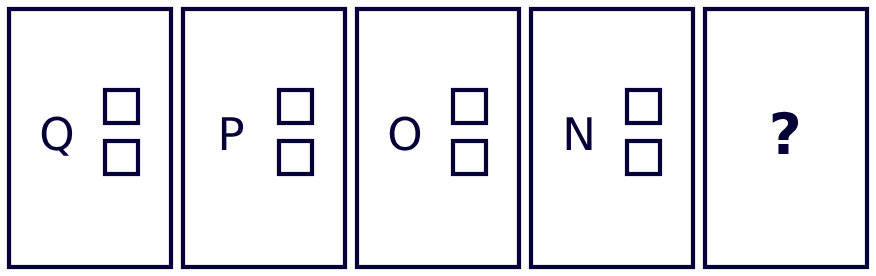
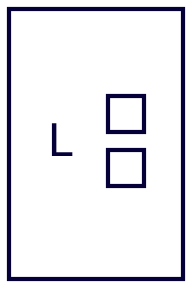
Identify the figure given in the options which when put in place of the question mark (?) will logically complete the series.
figure
विकल्पों में दी गई उस आकृति की पहचान कीजिए, जिसे प्रश्नवाचक चिह्न (?) के स्थान पर रखने पर शृंखला तार्किक रूप से पूर्ण हो जाएगी।
figure
  1. Afigure
  2. Bfigure
  3. Cfigure
  4. Dfigure
Show answer

Concept: Separate the changing element from the fixed one.

  1. The two small squares stay the same in every box – fixed part.
  2. The letter goes back one place each time: Q → P → O → N → M.
  3. So the next box has M with two small squares.

Trick: Eliminate options that alter the fixed part (number of squares) first, then check the letter.

Answer: (A)the figure showing M with two small squares

अवधारणा: बदलने वाले और स्थिर भाग को अलग करें।

  1. दो छोटे वर्ग हर बॉक्स में एक जैसे – स्थिर भाग।
  2. अक्षर हर बार एक स्थान पीछे: Q → P → O → N → M।
  3. अतः अगले बॉक्स में M और दो छोटे वर्ग।

ट्रिक: पहले वे विकल्प हटाएँ जिनमें स्थिर भाग (वर्गों की संख्या) बदला हो।

उत्तर: (A)M और दो छोटे वर्ग वाली आकृति

SSC GDGeneral Intelligence & ReasoningFigure series – letter moving backSSC GD 2025 · 13 Feb Shift 1 →
Q2007.
In a certain code language, 'SBZFPA' is coded as '18' and 'GNPQ' is coded as '12'. What is the code for 'LCEZRDX' in the given code language?
एक निश्चित कूट भाषा में, 'SBZFPA' को '18' के रूप में कूटबद्ध किया जाता है और 'GNPQ' को '12' के रूप में कूटबद्ध किया जाता है। दी गई कूट भाषा में 'LCEZRDX' का कूट क्या है?
  1. A21
  2. B19
  3. C26
  4. D24
Show answer

Concept: The code depends only on how many letters the word has.

  1. SBZFPA: 6 letters → 6×3=18 ✔
  2. GNPQ: 4 letters → 4×3=12 ✔
  3. LCEZRDX: 7 letters → 7×3= 21

Trick: When codes are small multiples like 18, 12, divide by the letter count first – a constant ratio (3) cracks it.

Answer: (A) 21

अवधारणा: कोड केवल शब्द में अक्षरों की संख्या पर निर्भर है।

  1. SBZFPA: 6 अक्षर → 6×3=18 ✔
  2. GNPQ: 4 अक्षर → 4×3=12 ✔
  3. LCEZRDX: 7 अक्षर → 7×3= 21

ट्रिक: कोड को अक्षर-संख्या से भाग दें – स्थिर अनुपात (3) मिला तो हल।

उत्तर: (A) 21

SSC GDGeneral Intelligence & ReasoningCoding – number of letters × 3SSC GD 2025 · 13 Feb Shift 1 →
Q2008.
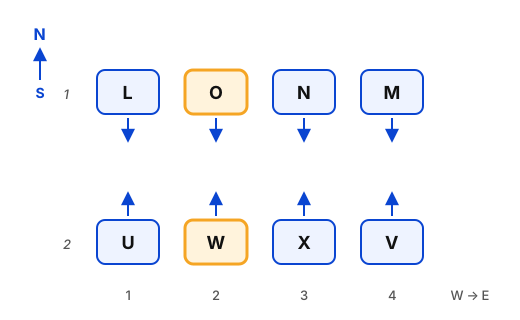
Eight people are sitting in two parallel rows containing 4 people each in such a way that there is equal distance between adjacent persons. In row 1, L, M, N and O are seated and all of them are facing south. In row 2, U, V, W and X are seated and all of them are facing north. Thus, each person faces another person from the other row. W sits to the immediate right of U. Only two people sit between L and M. U faces L. The one who faces N sits to the immediate left of V . X does not sit at any of the extreme ends. Who amongst the following faces O?
आठ व्यक्ति दो समानांतर पंक्तियों में इस प्रकार बैठे हैं कि प्रत्येक पंक्ति में 4 व्यक्ति हैं तथा आसन्न व्यक्तियों के बीच समान दूरी है। पंक्ति 1 में L, M, N और O बैठे हैं तथा वे सभी दक्षिण की ओर उन्मुख हैं। पंक्ति 2 में U, V, W और X बैठे हैं तथा वे सभी उत्तर की ओर उन्मुख हैं। इस प्रकार, प्रत्येक व्यक्ति दूसरी पंक्ति के एक व्यक्ति के सम्मुख है। W, U के ठीक दाईं ओर बैठा है। L और M के बीच केवल दो व्यक्ति बैठे हैं। U, L के सम्मुख है। N के सम्मुख बैठा व्यक्ति V के ठीक बाईं ओर बैठा है। X किसी भी अंतिम छोर पर नहीं बैठा है। निम्नलिखित में से कौन O के सम्मुख है?
  1. AV
  2. BX
  3. CU
  4. DW
Show answer

Concept: Number seats 1–4 from the left of the drawing; row 2 faces north so its 'right' = drawing's right.

  1. Two people between L and M → they occupy ends 1 and 4 of row 1.
  2. W is just right of U and U faces L → U = 1, W = 2, L = 1, M = 4.
  3. X not at an end → X = 3, V = 4.
  4. Person facing N is just left of V → X (3), so N = 3, O = 2. Seat 2 of row 2 is W.

Trick: 'Only two between' in a row of 4 always means the two ends – fix them first.

Answer: (D) W

अवधारणा: सीटों को चित्र के बाएँ से 1–4 क्रमांकित करें; पंक्ति 2 उत्तर-मुखी है, उसका 'दायाँ' = चित्र का दायाँ।

  1. L और M के बीच दो लोग → दोनों पंक्ति 1 के सिरों (1, 4) पर।
  2. W, U के ठीक दाएँ और U सामने L → U = 1, W = 2, L = 1, M = 4।
  3. X सिरे पर नहीं → X = 3, V = 4।
  4. N के सामने वाला V के ठीक बाएँ → X(3), अतः N = 3, O = 2। O के सामने W।

ट्रिक: 4 की पंक्ति में 'बीच में केवल दो' का मतलब हमेशा दोनों सिरे।

उत्तर: (D) W

SSC GDGeneral Intelligence & ReasoningSeating – two parallel rowsSSC GD 2025 · 13 Feb Shift 1 →
Q2009.
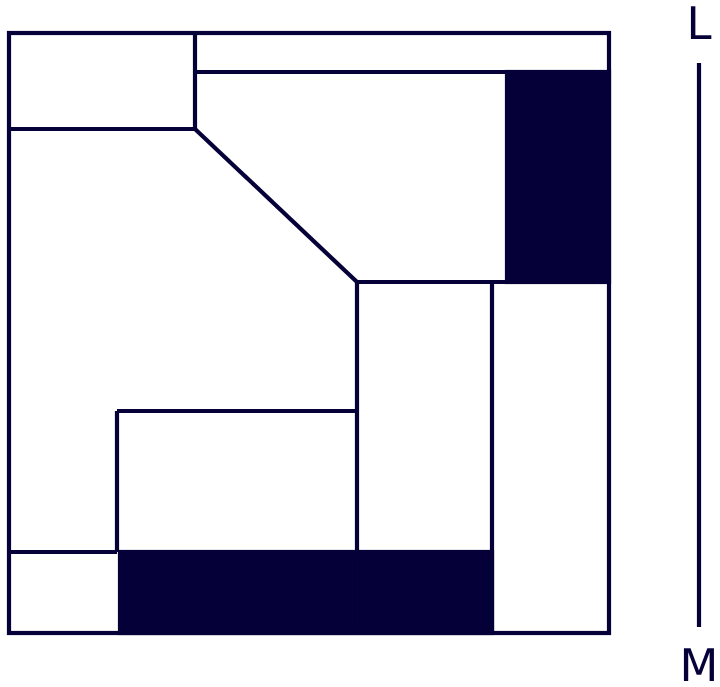
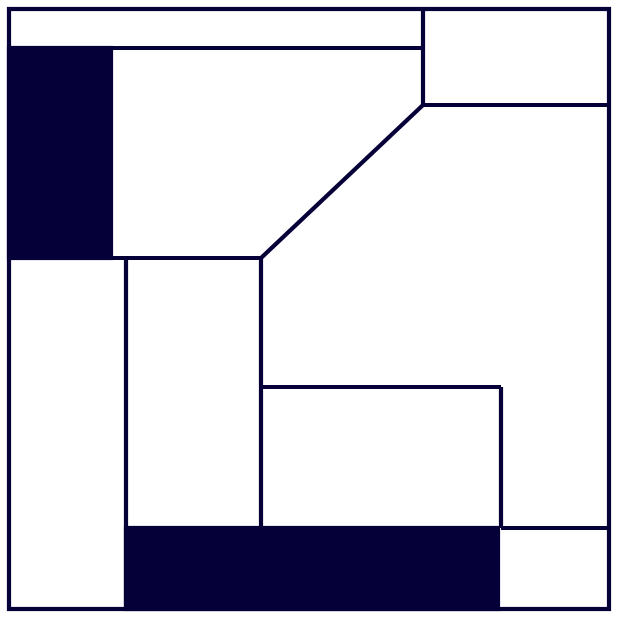
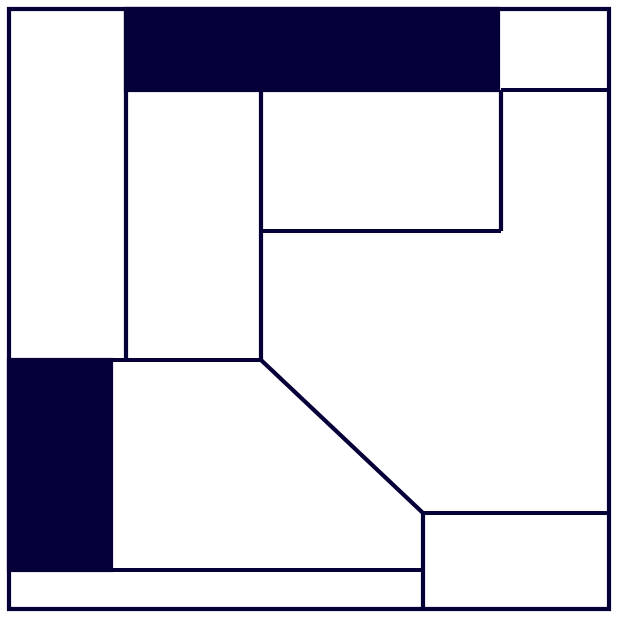
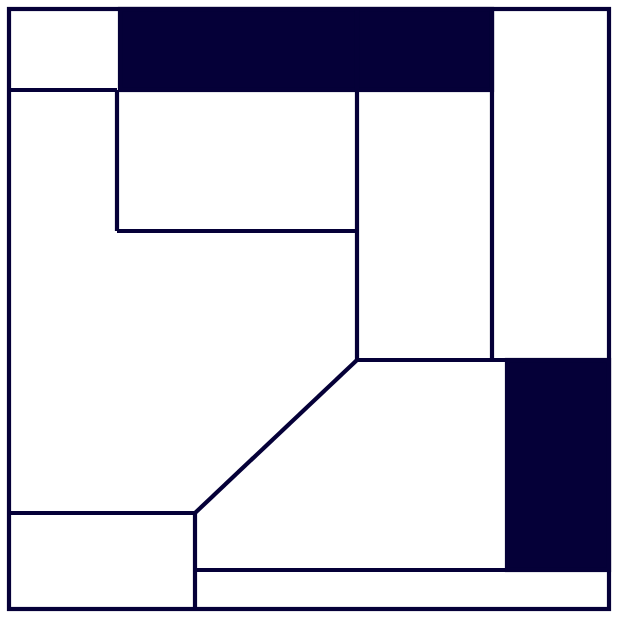
Select the correct mirror image of the given figure when the mirror is placed at LM as shown below.
figure
उस विकल्प का चयन कीजिए जो दी गई आकृति का सही दर्पण प्रतिबिंब है, जब दर्पण को नीचे दर्शाए अनुसार LM पर रखा जाए।
figure
  1. Afigure
  2. Bfigure
  3. Cfigure
  4. Dfigure
Show answer

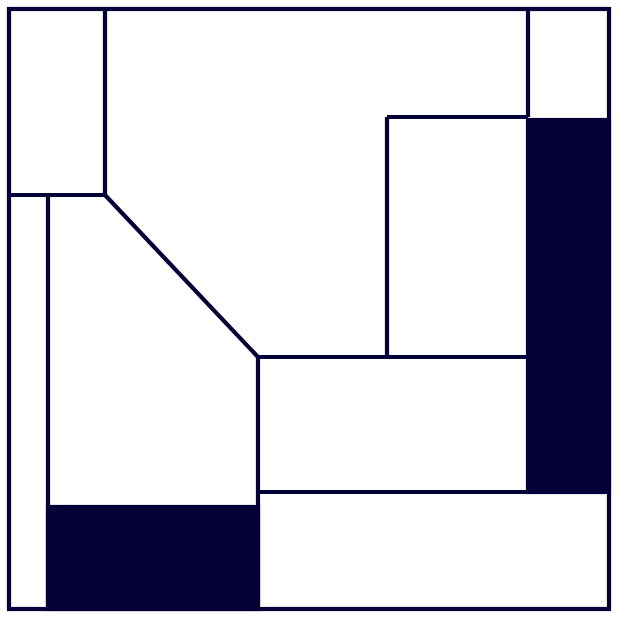
Concept: A vertical mirror swaps left and right; top and bottom stay unchanged.

  1. Black block at top-right → moves to top-left.
  2. Black bar at bottom (left of centre) → stays at bottom, now right of centre.
  3. The slanting line also flips its direction; only option B shows all three changes.

Trick: Track one corner element only: the side flips, the level (top/bottom) never changes.

Answer: (B)the second figure

अवधारणा: ऊर्ध्वाधर दर्पण में बायाँ-दायाँ बदलता है; ऊपर-नीचे वही रहता है।

  1. ऊपर-दाएँ का काला ब्लॉक → ऊपर-बाएँ।
  2. नीचे की काली पट्टी (केंद्र से बाएँ) → नीचे ही, अब केंद्र से दाएँ।
  3. तिरछी रेखा की दिशा भी उलटती है; तीनों बदलाव केवल विकल्प B में।

ट्रिक: एक कोने की आकृति पकड़ें: पक्ष बदलेगा, ऊँचाई (ऊपर/नीचे) नहीं।

उत्तर: (B)दूसरी आकृति

SSC GDGeneral Intelligence & ReasoningMirror image – vertical mirrorSSC GD 2025 · 13 Feb Shift 1 →
Q2010.
What will come in the place of the question mark '(?)' in the following equation, if ' - ' and ' ÷ ' are interchanged and ' × ' and ' + ' are interchanged? 24 + 25 - 5 × 2 ÷ 9 = ?
यदि ' - ' और ' ÷ ' को आपस में बदल दिया जाए तथा ' × ' और ' + ' को आपस में बदल दिया जाए, तो निम्नलिखित समीकरण में प्रश्नवाचक चिह्न '(?)' के स्थान पर क्या आएगा? 24 + 25 - 5 × 2 ÷ 9 = ?
  1. A115
  2. B114
  3. C113
  4. D112
Show answer

Concept: Replace the signs first, then solve using BODMAS.

  1. Swap − ↔ ÷ and × ↔ +: 24×25÷5+2−9
  2. 24×25=600; 600÷5=120
  3. 120+2−9= 113

Trick: Do 24×(25÷5)=24×5=120 – smaller numbers, faster.

Answer: (C) 113

अवधारणा: पहले चिह्न बदलें, फिर BODMAS से हल करें।

  1. − ↔ ÷ तथा × ↔ +: 24×25÷5+2−9
  2. 24×25=600; 600÷5=120
  3. 120+2−9= 113

ट्रिक: 24×(25÷5)=24×5=120 – जल्दी हल।

उत्तर: (C) 113

SSC GDGeneral Intelligence & ReasoningSign interchange – BODMASSSC GD 2025 · 13 Feb Shift 1 →
Q2011.
BD 11 is related to CE 33 in a certain way. In the same way, ST 10 is related to TU 30. To which of the given options is UB 2 related, following the same logic?
BD 11 एक निश्चित प्रकार से CE 33 से संबंधित है। उसी प्रकार, ST 10, TU 30 से संबंधित है। उसी तर्क का अनुसरण करते हुए, UB 2 दिए गए विकल्पों में से किससे संबंधित है?
  1. AUC 6
  2. BVC 8
  3. CVC 6
  4. DUC 8
Show answer

Concept: Handle the letters and the number separately.

  1. Letters: each moves +1 (B→C, D→E; S→T, T→U).
  2. Number: ×3 (11→33, 10→30).
  3. UB 2 → VC and 2×3=6 → VC 6.

Trick: Number part alone leaves UC 6 / VC 6; the U→V shift then picks VC 6.

Answer: (C) VC 6

अवधारणा: अक्षर-भाग और अंक-भाग का नियम अलग से निकालें।

  1. अक्षर: हर अक्षर +1 (B→C, D→E; S→T, T→U)।
  2. संख्या: ×3 (11→33, 10→30)।
  3. UB 2 → VC तथा 2×3=6 → VC 6।

ट्रिक: संख्या से UC 6 / VC 6 बचते हैं; U→V से VC 6 तय।

उत्तर: (C) VC 6

SSC GDGeneral Intelligence & ReasoningAnalogy – letters +1, number ×3SSC GD 2025 · 13 Feb Shift 1 →
Q2012.
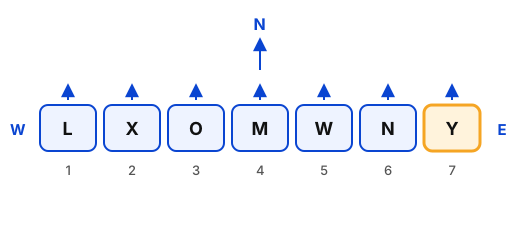
Seven people, L, M, N, O, W, X and Y, are sitting in a row, facing north (but not necessarily in the same order) . Only L sits to the left of X. Only four people sit between L and N . Only M sits between O and W , and O is not an immediate neighbour of N . Who sits at the extreme right of the line?
सात व्यक्ति L, M, N, O, W, X और Y एक पंक्ति में उत्तर की ओर उन्मुख होकर बैठे हैं (आवश्यक नहीं कि इसी क्रम में हों)। X के बाईं ओर केवल L बैठा है। L और N के बीच केवल चार व्यक्ति बैठे हैं। O और W के बीच केवल M बैठा है, तथा O, N का निकटतम पड़ोसी नहीं है। पंक्ति के अंतिम दाएँ छोर पर कौन बैठा है?
  1. AL
  2. BY
  3. CO
  4. DN
Show answer

Concept: Use fixed clues first; seats 1–7 from left (all face north).

  1. Only L is left of X → L = 1, X = 2.
  2. Four between L and N → N = 6.
  3. O-M-W need 3 adjacent seats without seat 6 → seats 3, 4, 5 with M = 4.
  4. O can't be next to N → O = 3, W = 5; remaining Y = 7 (extreme right).

Trick: 'Only one person to the left of X' = X is 2nd from the left – a direct fix.

Answer: (B) Y

अवधारणा: पहले निश्चित सूचनाएँ लगाएँ; बाएँ से सीट 1–7 (सभी उत्तर-मुखी)।

  1. X के बाएँ केवल L → L = 1, X = 2।
  2. L और N के बीच चार → N = 6।
  3. O-M-W को लगातार 3 सीटें चाहिए, सीट 6 के बिना → 3, 4, 5; M = 4।
  4. O, N का पड़ोसी नहीं → O = 3, W = 5; बचा Y = 7 (दाएँ छोर)।

ट्रिक: 'X के बाएँ केवल एक' = X बाएँ से दूसरा।

उत्तर: (B) Y

SSC GDGeneral Intelligence & ReasoningLinear seating – seven in a rowSSC GD 2025 · 13 Feb Shift 1 →
Q2013.
The position(s) of how many letters will remain unchanged if each of the letters in the word DETECTOR is arranged in the reverse English alphabetical order?
यदि शब्द DETECTOR के प्रत्येक अक्षर को विपरीत अंग्रेजी वर्णमाला क्रम में व्यवस्थित किया जाए, तो कितने अक्षरों की स्थिति अपरिवर्तित रहेगी?
  1. ATwoदो
  2. BOneएक
  3. CZeroशून्य
  4. DThreeतीन
Show answer

Concept: Sort the letters Z→A and compare each position with the original word.

  1. Arranged Z→A, DETECTOR becomes TTROEEDC.
  2. Place-by-place, the original DETECTOR and the new TTROEEDC never share a letter at the same position → zero.

Trick: First letter after sorting must be the 'largest' letter (T); D ≠ T – then just scan the rest quickly.

Answer: (C) Zero

अवधारणा: अक्षरों को Z→A क्रम में लगाकर हर स्थान की मूल शब्द से तुलना करें।

  1. Z→A क्रम में DETECTOR बनता है TTROEEDC।
  2. मूल शब्द और नए शब्द को एक-दूसरे के नीचे लिखें – किसी भी स्थान पर एक-सा अक्षर नहीं → शून्य।

ट्रिक: दोहराए अक्षर (T, E) साथ-साथ लिखें, फिर पंक्ति-से-पंक्ति मिलाएँ।

उत्तर: (C) शून्य

SSC GDGeneral Intelligence & ReasoningLetter rearrangement – reverse orderSSC GD 2025 · 13 Feb Shift 1 →
Q2014.
What should come in place of the question mark (?) in the given series? 534249384534 ?
दी गई शृंखला में प्रश्नवाचक चिह्न (?) के स्थान पर क्या आना चाहिए? 534249384534 ?
  1. A41
  2. B43
  3. C29
  4. D27
Show answer

Concept: Split the digit string into 2-digit numbers and look at the differences.

  1. Numbers: 53, 42, 49, 38, 45, 34, ?
  2. Differences: −11, +7, −11, +7, −11, …
  3. Next: 34 + 7 = 41

Trick: Alternate terms fall by 4 each (53, 49, 45 and 42, 38, 34) – so the next after 45 is 41.

Answer: (A) 41

अवधारणा: अंकों को दो-दो अंकों की संख्याओं में तोड़ें और अंतर देखें।

  1. संख्याएँ: 53, 42, 49, 38, 45, 34, ?
  2. अंतर: −11, +7, −11, +7, −11, …
  3. अगला: 34 + 7 = 41

ट्रिक: एकांतर पद 4-4 घटते हैं (53, 49, 45) → अगला 41।

उत्तर: (A) 41

SSC GDGeneral Intelligence & ReasoningNumber series – alternate −11, +7SSC GD 2025 · 13 Feb Shift 1 →
Q2015.
What should come in place of the question mark (?) in the given series? 123121117111 ? 93
दी गई शृंखला में प्रश्नवाचक चिह्न (?) के स्थान पर क्या आना चाहिए? 123121117111 ? 93
  1. A103
  2. B101
  3. C105
  4. D99
Show answer

Concept: Read 3-digit numbers; differences rise by 2.

  1. Terms: 123, 121, 117, 111, ?, 93
  2. Differences: −2, −4, −6, −8, −10
  3. 111 − 8 = 103; check 103 − 10 = 93 ✔

Trick: Always verify with the last given term (93) – it confirms the pattern in one step.

Answer: (A) 103

अवधारणा: तीन-अंकीय संख्याएँ पढ़ें; अंतर 2-2 बढ़ता है।

  1. पद: 123, 121, 117, 111, ?, 93
  2. अंतर: −2, −4, −6, −8, −10
  3. 111 − 8 = 103; जाँच 103 − 10 = 93 ✔

ट्रिक: अंतिम पद (93) से जाँच कर लें – पैटर्न पक्का।

उत्तर: (A) 103

SSC GDGeneral Intelligence & ReasoningNumber series – growing differencesSSC GD 2025 · 13 Feb Shift 1 →
Q2016.
What should come in place of (?) in the given series based on the English alphabetical order? LYG, JWE, HUC, FSA, ?
अंग्रेजी वर्णमाला क्रम के आधार पर दी गई शृंखला में (?) के स्थान पर क्या आना चाहिए? LYG, JWE, HUC, FSA, ?
  1. ADQY
  2. BBOX
  3. CEPZ
  4. DCPX
Show answer

Concept: Track each position of the three-letter terms separately.

  1. 1st letters: L, J, H, F → D (−2)
  2. 2nd letters: Y, W, U, S → Q (−2)
  3. 3rd letters: G, E, C, A → Y (A−2 wraps to Y)

Trick: The first letter alone (D) eliminates all other options.

Answer: (A) DQY

अवधारणा: तीनों स्थानों के अक्षर अलग-अलग देखें।

  1. पहला: L, J, H, F → D (−2)
  2. दूसरा: Y, W, U, S → Q (−2)
  3. तीसरा: G, E, C, A → Y (A से 2 पीछे घूमकर)

ट्रिक: सिर्फ पहला अक्षर D ही बाकी विकल्प हटा देता है।

उत्तर: (A) DQY

SSC GDGeneral Intelligence & ReasoningLetter series – each letter −2SSC GD 2025 · 13 Feb Shift 1 →
Q2017.
In a certain code language, 'COWS' is coded as '5691' and 'COST' is coded as '1679'. What is the code for ' T ' in the given code language?
एक निश्चित कूट भाषा में, 'COWS' को '5691' के रूप में कूटबद्ध किया जाता है और 'COST' को '1679' के रूप में कूटबद्ध किया जाता है। दी गई कूट भाषा में ' T ' का कूट क्या है?
  1. A9
  2. B7
  3. C6
  4. D1
Show answer

Concept: Letters common to two words share the common digits; the leftover letter gets the leftover digit.

  1. COWS = 5691, COST = 1679.
  2. Common letters C, O, S ↔ common digits 1, 6, 9.
  3. Extra in COST is T; extra digit in 1679 is 7 → T = 7 (and W = 5).

Trick: Cancel common letters and common digits – what remains pairs up directly.

Answer: (B) 7

अवधारणा: दोनों शब्दों के समान अक्षरों के कोड भी समान होते हैं; बचा अक्षर = बचा अंक।

  1. COWS = 5691, COST = 1679।
  2. समान अक्षर C, O, S ↔ समान अंक 1, 6, 9।
  3. COST में अतिरिक्त T; 1679 में अतिरिक्त अंक 7 → T = 7 (W = 5)।

ट्रिक: समान अक्षर और समान अंक काट दें – जो बचे वही जोड़ी।

उत्तर: (B) 7

SSC GDGeneral Intelligence & ReasoningCoding – common letter eliminationSSC GD 2025 · 13 Feb Shift 1 →
Q2018.
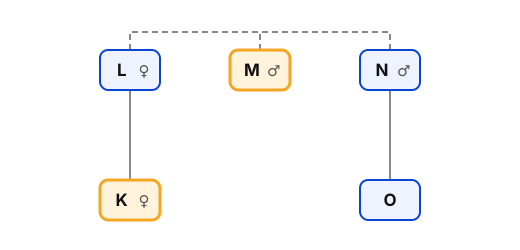
In a certain code language, ' A + B ' means ' A is the brother of B ', ' A - B ' means ' A is the daughter of B ', ' A × B ' means ' A is the sister of B ' and ' A ÷ B ' means ' A is the father of B '. How is M related to K if ' K - L × M + N ÷ O '?
एक निश्चित कूट भाषा में, ' A + B ' का अर्थ है ' A, B का भाई है ', ' A - B ' का अर्थ है ' A, B की पुत्री है ', ' A × B ' का अर्थ है ' A, B की बहन है ' तथा ' A ÷ B ' का अर्थ है ' A, B का पिता है '। यदि ' K - L × M + N ÷ O ' है, तो M, K से किस प्रकार संबंधित है?
  1. AFather's sisterपिता की बहन
  2. BMother's brotherमाता का भाई
  3. CBrother's wifeभाई की पत्नी
  4. DSon's daughterपुत्र की पुत्री
Show answer

Concept: Decode the chain pair by pair; keep only links that connect M to K.

  1. K − L: K is daughter of L → L is K's parent.
  2. L × M: L is sister of M → L is female, so L = K's mother.
  3. M is L's brother → M is K's mother's brother. (M + N, N ÷ O are not needed.)

Trick: Stop decoding once both names in the question are linked – the rest is filler.

Answer: (B) Mother's brother

अवधारणा: कड़ी-दर-कड़ी अर्थ निकालें; केवल M और K को जोड़ने वाली कड़ियाँ रखें।

  1. K − L: K, L की बेटी → L, K का माता/पिता।
  2. L × M: L, M की बहन → L स्त्री है, अतः K की माँ।
  3. M, L का भाई → M, K की माँ का भाई (मामा)। M + N, N ÷ O अनावश्यक।

ट्रिक: जैसे ही प्रश्न के दोनों व्यक्ति जुड़ जाएँ, आगे की कड़ियाँ छोड़ दें।

उत्तर: (B) माता का भाई

SSC GDGeneral Intelligence & ReasoningCoded blood relationSSC GD 2025 · 13 Feb Shift 1 →
Q2019.
Read the given statements and conclusions carefully. Assuming that the information given in the statements is true, even if it appears to be at variance with commonly known facts, decide which of the given conclusions logically follow(s) from the statements.
Statements:
All handles are locks.
No lock is a shelf.
No lock is a cupboard.
Conclusions:
(I) No handle is a shelf.
(II) Some cupboards are shelves.
दिए गए कथनों और निष्कर्षों को ध्यानपूर्वक पढ़िए। कथनों में दी गई जानकारी को सत्य मानते हुए, चाहे वह सर्वज्ञात तथ्यों से भिन्न प्रतीत होती हो, निर्णय कीजिए कि दिए गए निष्कर्षों में से कौन-सा/से कथनों का तार्किक रूप से अनुसरण करता है/करते हैं।
कथन:
सभी हैंडल ताले हैं।
कोई ताला शेल्फ नहीं है।
कोई ताला अलमारी नहीं है।
निष्कर्ष:
(I) कोई हैंडल शेल्फ नहीं है।
(II) कुछ अलमारियाँ शेल्फ हैं।
  1. ABoth conclusions (I) and (II) followनिष्कर्ष (I) और (II) दोनों अनुसरण करते हैं
  2. BNeither conclusion (I) nor (II) followsन तो निष्कर्ष (I) और न ही (II) अनुसरण करता है
  3. COnly conclusion (II) followsकेवल निष्कर्ष (II) अनुसरण करता है
  4. DOnly conclusion (I) followsकेवल निष्कर्ष (I) अनुसरण करता है
Show answer

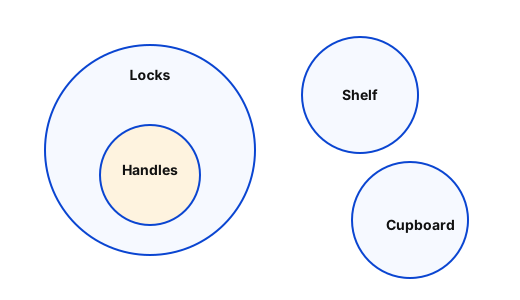
Concept: 'All A are B' + 'No B is C' ⇒ 'No A is C'; two classes both outside a third class have no definite relation.

  1. All handles ⊂ locks, and locks have no shelf → no handle is a shelf. (I) follows ✔
  2. Cupboards and shelves are each only known to be outside locks – their link is unknown. (II) is just a possibility ✘

Trick: All + No = No (for the subset). 'Some' between two outsiders never follows.

Answer: (D) Only conclusion (I) follows

अवधारणा: 'सभी A, B हैं' + 'कोई B, C नहीं' ⇒ 'कोई A, C नहीं'; तीसरे वर्ग से बाहर के दो वर्गों का संबंध तय नहीं।

  1. सभी हैंडल ताले के अंदर, और ताले में कोई शेल्फ नहीं → कोई हैंडल शेल्फ नहीं। (I) ✔
  2. अलमारी और शेल्फ दोनों बस ताले से बाहर हैं – आपसी संबंध अज्ञात। (II) केवल संभावना ✘

ट्रिक: All + No = No। दो 'बाहरी' वर्गों के बीच 'कुछ' कभी निश्चित नहीं।

उत्तर: (D) केवल निष्कर्ष (I) अनुसरण करता है

SSC GDGeneral Intelligence & ReasoningSyllogism – All / NoSSC GD 2025 · 13 Feb Shift 1 →
Q2020.
The sequence of folding a piece of paper and the manner in which the folded paper is cut is shown in the following figures. How would this paper look when unfolded?
figure
कागज के एक टुकड़े को मोड़ने का क्रम और मुड़े हुए कागज को जिस प्रकार काटा गया है, वह निम्नलिखित आकृतियों में दर्शाया गया है। खोलने पर यह कागज कैसा दिखाई देगा?
figure
  1. Afigure
  2. Bfigure
  3. Cfigure
  4. Dfigure
Show answer

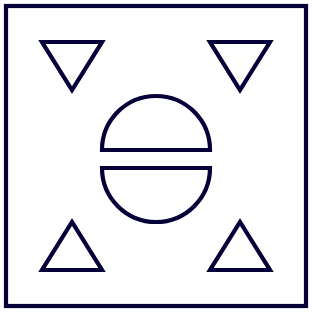
Concept: On unfolding, each cut is reflected across the fold line.

  1. Bottom half folded up → fold line = horizontal centre line.
  2. Two triangles away from the fold → two near the top corners plus their upside-down mirrors near the bottom corners (4 triangles).
  3. Semicircle on the fold → opens as one full circle in the centre.

Trick: Count holes: off-fold cuts double (2 → 4 triangles), on-fold cut becomes one whole shape (1 circle).

Answer: (D)the figure with four triangles near the corners and one circle in the centre

अवधारणा: खोलने पर हर कट मोड़-रेखा के सापेक्ष प्रतिबिंबित होता है।

  1. नीचे का आधा ऊपर मोड़ा → मोड़-रेखा बीच की क्षैतिज रेखा।
  2. मोड़ से दूर दो त्रिभुज → ऊपर के कोनों पर दो और नीचे के कोनों पर उनके उल्टे प्रतिबिंब (कुल 4)।
  3. मोड़ पर कटा अर्धवृत्त → बीच में एक पूरा वृत्त।

ट्रिक: गिनती करें: मोड़ से दूर कट दोगुने (4 त्रिभुज), मोड़ पर कट एक पूरी आकृति (1 वृत्त)।

उत्तर: (D)कोनों पर चार त्रिभुज और बीच में एक वृत्त वाली आकृति

SSC GDGeneral Intelligence & ReasoningPaper folding and cutting – cuts on and off the foldSSC GD 2025 · 13 Feb Shift 1 →