Question bank

Q&A: practice questions with answers

Search questions on any topic. Filter by exam category, exam, subject and topic, try the question, then open the answer and explanation.

Courses – airGurukul

4,200 questions found.

Q2201.
Read the given statements and conclusions carefully. Assuming that the information given in the statements is true, even if it appears to be at variance with commonly known facts, decide which of the given conclusions logically follow(s) from the statements.
Statements:
Some words are paragraphs.
All paragraphs are essays.
No essay is a story.
Conclusions:
(I): Some paragraphs are stories.
(II): All words are essay.
दिए गए कथनों और निष्कर्षों को ध्यानपूर्वक पढ़िए। कथनों में दी गई जानकारी को सत्य मानते हुए, चाहे वह सर्वज्ञात तथ्यों से भिन्न प्रतीत होती हो, निर्णय कीजिए कि दिए गए निष्कर्षों में से कौन-सा/से निष्कर्ष कथनों का तार्किक रूप से अनुसरण करता है/करते हैं।
कथन:
कुछ शब्द अनुच्छेद हैं।
सभी अनुच्छेद निबंध हैं।
कोई भी निबंध कहानी नहीं है।
निष्कर्ष:
(I): कुछ अनुच्छेद कहानियाँ हैं।
(II): सभी शब्द निबंध हैं।
  1. ABoth conclusions (I) and (II) follow.निष्कर्ष (I) और (II) दोनों अनुसरण करते हैं।
  2. BNeither conclusion (I) nor (II) follows.न तो निष्कर्ष (I) और न ही निष्कर्ष (II) अनुसरण करता है।
  3. COnly conclusion (II) follows.केवल निष्कर्ष (II) अनुसरण करता है।
  4. DOnly conclusion (I) follows.केवल निष्कर्ष (I) अनुसरण करता है।
Show answer

Concept: Draw the least-overlap diagram; a conclusion follows only if it is true in every possible case.
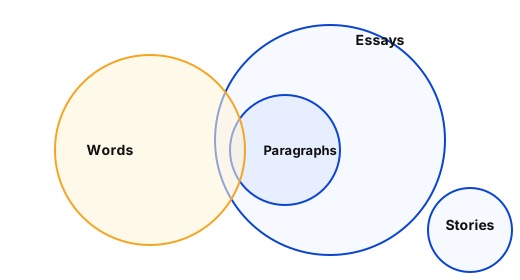
  1. Paragraphs ⊂ Essays, and Essays have nothing common with Stories.
  2. (I) Paragraphs lie inside Essays, so they can never touch Stories → (I) is false.
  3. (II) Only some words are paragraphs; the other words may lie outside Essays → 'All words are essays' is not certain.

Trick: 'All A are B' + 'No B is C' ⇒ 'No A is C' is definite, so 'Some A are C' is always rejected.

Answer: (B) Neither conclusion (I) nor (II) follows.

अवधारणा: कम-से-कम ओवरलैप वाला चित्र बनाइए; निष्कर्ष तभी सही है जब हर संभव स्थिति में सही हो।

  1. अनुच्छेद पूरी तरह निबंध के अंदर हैं, और निबंध का कहानी से कोई संबंध नहीं।
  2. (I) अनुच्छेद कभी कहानी नहीं हो सकते → (I) गलत।
  3. (II) केवल कुछ शब्द अनुच्छेद हैं; बाकी शब्द निबंध से बाहर भी हो सकते हैं → (II) निश्चित नहीं।

ट्रिक: 'सभी A, B हैं' + 'कोई B, C नहीं' ⇒ 'कोई A, C नहीं' — इसलिए 'कुछ A, C हैं' हमेशा गलत।

उत्तर: (B) न तो निष्कर्ष (I) और न ही निष्कर्ष (II) अनुसरण करता है।

SSC GDGeneral Intelligence & ReasoningSyllogism – some/all/noSSC GD 2025 · 12 Feb Shift 2 →
Q2202.
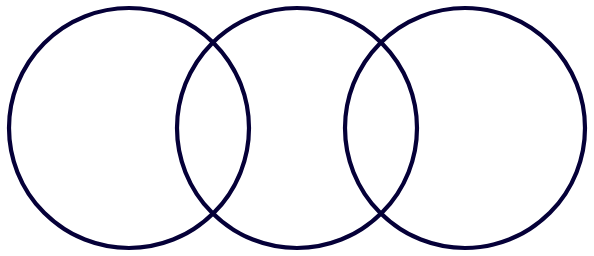
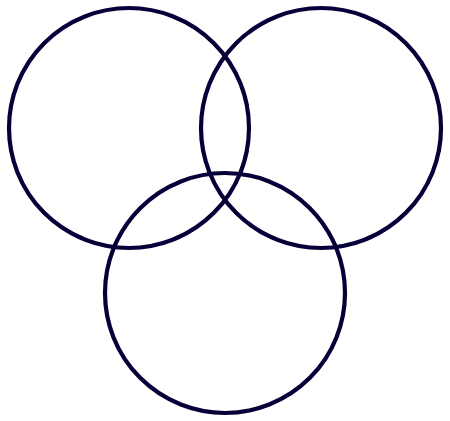
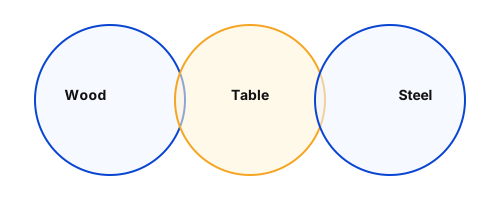
Select the Venn diagram that best illustrates the relationship between the following classes.
Table, Wood, Steel
उस वेन आरेख का चयन कीजिए जो निम्नलिखित वर्गों के बीच के संबंध को सर्वोत्तम रूप से दर्शाता है।
मेज, लकड़ी, स्टील
  1. Afigure
  2. Bfigure
  3. Cfigure
  4. Dfigure
Show answer

Concept: Check which pairs overlap and which pairs are completely separate.

  1. Some tables are wooden → Table overlaps Wood.
  2. Some tables are of steel → Table overlaps Steel.
  3. Wood and steel are different materials → these two circles never meet.
  4. So Table sits in the middle, cutting both, with Wood and Steel apart – the three-circle chain in option (B).

Trick: Common link in the middle + two unrelated items on the sides = chain of three circles.

Answer: (B)Chain of three circles with Table in the middle.

अवधारणा: देखिए कौन-से दो वर्ग आपस में मिलते हैं और कौन-से पूरी तरह अलग हैं।

  1. कुछ मेज़ लकड़ी की होती हैं → मेज़ और लकड़ी का ओवरलैप।
  2. कुछ मेज़ स्टील की होती हैं → मेज़ और स्टील का ओवरलैप।
  3. लकड़ी और स्टील अलग पदार्थ हैं → ये दोनों वृत्त नहीं मिलते।
  4. अतः बीच में मेज़, दोनों ओर लकड़ी व स्टील – विकल्प (B) वाली श्रृंखला।

ट्रिक: बीच की कड़ी दोनों से जुड़ी, किनारे वाले आपस में अलग = तीन वृत्तों की चेन।

उत्तर: (B)मेज़ बीच में, तीन वृत्तों की श्रृंखला।

SSC GDGeneral Intelligence & ReasoningVenn diagram – Table, Wood, SteelSSC GD 2025 · 12 Feb Shift 2 →
Q2203.
In a certain code language, 'AUNT' is coded as '8793' and 'NUTS' is coded as '3598'. What is the code for 'S' in the given code language ?
एक निश्चित कूट भाषा में, 'AUNT' को '8793' के रूप में कूटबद्ध किया जाता है और 'NUTS' को '3598' के रूप में कूटबद्ध किया जाता है। दी गई कूट भाषा में 'S' के लिए कूट क्या है?
  1. A9
  2. B8
  3. C5
  4. D3
Show answer

Concept: Letters common to both words take the digits common to both codes; the leftover letter gets the leftover digit.

  1. AUNT → 8793, NUTS → 3598.
  2. Common letters U, N, T ↔ common digits 8, 9, 3.
  3. NUTS has S left over; 3598 has 5 left over → S = 5.
  4. (Similarly A = 7.)

Trick: Cancel the common letters and common digits – whatever remains pairs up directly.

Answer: (C) 5

अवधारणा: दोनों शब्दों के समान अक्षर, दोनों कोड के समान अंकों से मेल खाते हैं; बचे अक्षर को बचा अंक मिलता है।

  1. AUNT → 8793, NUTS → 3598
  2. समान अक्षर U, N, T ↔ समान अंक 8, 9, 3
  3. NUTS में बचा S, 3598 में बचा 5 → S = 5
  4. (इसी तरह A = 7)

ट्रिक: समान अक्षर और समान अंक काट दीजिए – जो बचे वही जोड़ी है।

उत्तर: (C) 5

SSC GDGeneral Intelligence & ReasoningCoding – common letter eliminationSSC GD 2025 · 12 Feb Shift 2 →
Q2204.
RSTR is related to UVWU in a certain way based on the English alphabetical order. In the same way, WXYW is related to ZABZ. To which of the given options is FGHF related, following the same logic ?
RSTR, अंग्रेजी वर्णमाला क्रम के आधार पर एक निश्चित तरीके से UVWU से संबंधित है। उसी प्रकार, WXYW, ZABZ से संबंधित है। उसी तर्क का अनुसरण करते हुए, दिए गए विकल्पों में से FGHF किससे संबंधित है?
  1. AIIJI
  2. BIJJI
  3. CIJKI
  4. DIKJK
Show answer

Concept: Find the shift applied to each letter and repeat it.

  1. R→U, S→V, T→W: every letter +3.
  2. Check: W→Z, X→A, Y→B (Z wraps to A).
  3. FGHF +3 → F→I, G→J, H→K, F→I = IJKI.

Trick: First and last letters are the same in FGHF, so the answer must also start and end with the same letter and have three different letters in the middle – only IJKI fits.

Answer: (C) IJKI

अवधारणा: हर अक्षर पर लगा खिसकाव पहचानिए और वही दोहराइए।

  1. R→U, S→V, T→W: हर अक्षर +3
  2. जाँच: W→Z, X→A, Y→B (Z के बाद फिर A)
  3. FGHF +3 → I, J, K, I = IJKI

ट्रिक: FGHF में पहला-आखिरी अक्षर समान और बीच के तीन अलग – उत्तर भी ऐसा ही होगा; केवल IJKI फिट है।

उत्तर: (C) IJKI

SSC GDGeneral Intelligence & ReasoningLetter analogy – +3 shiftSSC GD 2025 · 12 Feb Shift 2 →
Q2205.
What should come in place of the question mark (?) in the given series ?
32, 39, 44, 51, 56, ?
दी गई शृंखला में प्रश्नवाचक चिह्न (?) के स्थान पर क्या आना चाहिए?
32, 39, 44, 51, 56, ?
  1. A64
  2. B65
  3. C62
  4. D63
Show answer

Concept: Look at the differences between consecutive terms.

  1. Gaps between terms: 7, 5, 7, 5 (they alternate).
  2. So the next gap is 7.
  3. 56 + 7 = 63.

Trick: Every alternate term grows by 12 (32, 44, 56 and 39, 51, ?) → 51 + 12 = 63.

Answer: (D) 63

अवधारणा: क्रमागत पदों का अंतर देखिए।

  1. पदों के बीच अंतर: 7, 5, 7, 5 (बारी-बारी से)
  2. अतः अगला अंतर 7 होगा
  3. 56 + 7 = 63

ट्रिक: एक छोड़कर पद 12 से बढ़ते हैं: 39, 51, ? → 51 + 12 = 63।

उत्तर: (D) 63

SSC GDGeneral Intelligence & ReasoningNumber series – alternate differencesSSC GD 2025 · 12 Feb Shift 2 →
Q2206.
Based on the English alphabetical order, three of the following four letter-clusters are alike in a certain way and thus form a group. Which letter-cluster DOES NOT belong to that group?
(Note: The odd one out is not based on the number of consonants/vowels or their position in the letter-cluster.)
अंग्रेजी वर्णमाला क्रम के आधार पर, निम्नलिखित चार अक्षर-समूहों में से तीन एक निश्चित प्रकार से समान हैं और इस प्रकार एक समूह बनाते हैं। कौन-सा अक्षर-समूह उस समूह से संबंधित नहीं है?
(नोट: असंगत अक्षर-समूह, अक्षर-समूह में व्यंजनों/स्वरों की संख्या या उनकी स्थिति पर आधारित नहीं है।)
  1. AGZS
  2. BOHA
  3. CFYT
  4. DIBU
Show answer

Concept: Convert letters to positions (A=1 … Z=26) and compare the steps.

  1. GZS: 7→26→19 = −7, −7 (cyclic).
  2. OHA: 15→8→1 = −7, −7.
  3. IBU: 9→2→21 = −7, −7 (cyclic).
  4. FYT: 6→25 = −7, but 25→20 = −5 → odd one.

Trick: Going back 7 is the same as going forward 19; just check each cluster's second-to-third step – FYT breaks it.

Answer: (C) FYT

अवधारणा: अक्षरों को स्थान-संख्या (A=1 … Z=26) में बदलकर अंतर देखिए।

  1. GZS: 7→26→19 = −7, −7 (चक्रीय)
  2. OHA: 15→8→1 = −7, −7
  3. IBU: 9→2→21 = −7, −7 (चक्रीय)
  4. FYT: 6→25 = −7, पर 25→20 = −5 → यही अलग

ट्रिक: दूसरे से तीसरे अक्षर का अंतर जाँचें – Y से 7 पीछे R आता, T नहीं।

उत्तर: (C) FYT

SSC GDGeneral Intelligence & ReasoningOdd one out – letter gapsSSC GD 2025 · 12 Feb Shift 2 →
Q2207.
In a certain code language, 'HAMS' is coded as '5607' and 'MASK' is coded as '0578'. What is the code for ' K ' in the given code language?
एक निश्चित कूट भाषा में, 'HAMS' को '5607' के रूप में कूटबद्ध किया जाता है और 'MASK' को '0578' के रूप में कूटबद्ध किया जाता है। दी गई कूट भाषा में 'K' के लिए कूट क्या है?
  1. A5
  2. B0
  3. C8
  4. D7
Show answer

Concept: Common letters ↔ common digits; the leftover letter takes the leftover digit.

  1. HAMS → 5607, MASK → 0578.
  2. Common letters A, M, S ↔ common digits 5, 0, 7.
  3. MASK has K left; 0578 has 8 left → K = 8.
  4. (Also H = 6.)

Trick: Strike out what is common in both words and both codes – the unpaired ones match.

Answer: (C) 8

अवधारणा: समान अक्षर ↔ समान अंक; बचे अक्षर को बचा अंक।

  1. HAMS → 5607, MASK → 0578
  2. समान अक्षर A, M, S ↔ समान अंक 5, 0, 7
  3. MASK में बचा K, 0578 में बचा 8 → K = 8
  4. (साथ ही H = 6)

ट्रिक: दोनों तरफ़ समान चीज़ें काटें – बची हुई सीधी जोड़ी बनाती हैं।

उत्तर: (C) 8

SSC GDGeneral Intelligence & ReasoningCoding – common letter eliminationSSC GD 2025 · 12 Feb Shift 2 →
Q2208.
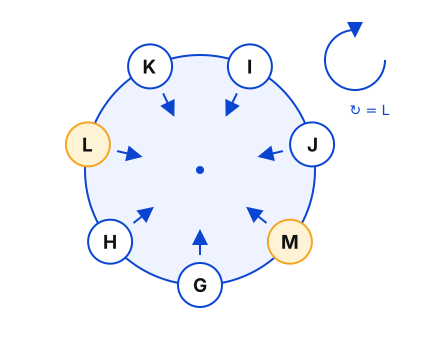
G, H, I, J, K, L and M are sitting around a circular table, facing the centre of the table (but not necessarily in the same order). Only two people sit between G and I when counted from the right of G. Only two people sit between I and H. Only three people sit between G and K. M sits to the immediate left of J. How many people sit between L and M when counted from the right of L ?
G, H, I, J, K, L और M एक वृत्ताकार मेज के चारों ओर मेज के केंद्र की ओर मुख करके बैठे हैं (आवश्यक नहीं कि इसी क्रम में हों)। G के दाईं ओर से गिनने पर G और I के बीच केवल दो व्यक्ति बैठे हैं। I और H के बीच केवल दो व्यक्ति बैठे हैं। G और K के बीच केवल तीन व्यक्ति बैठे हैं। M, J के ठीक बाईं ओर बैठा है। L के दाईं ओर से गिनने पर L और M के बीच कितने व्यक्ति बैठे हैं?
  1. ATwoदो
  2. BOneएक
  3. CThreeतीन
  4. DFourचार
Show answer

Concept: Facing the centre: left = clockwise, right = anticlockwise. Number 7 seats clockwise 0–6.

  1. G = 0; I is 3 seats to G's right → I = 4.
  2. H is 3 seats from I; seat 0 is taken → H = 1.
  3. K is 4 seats from G; seat 4 is taken → K = 3.
  4. Free: 2, 5, 6. M on J's immediate left → J = 5, M = 6; L = 2.
  5. From L going right (anticlockwise): H, G, then M → 2 people between.

Trick: Settle the fixed people (G, I, H, K) first; the adjacent pair (J–M) always goes to the only two neighbouring empty seats.

Answer: (A) Two

अवधारणा: केंद्र की ओर मुख हो तो बायाँ = दक्षिणावर्त, दायाँ = वामावर्त। 7 सीटें 0–6 (दक्षिणावर्त)।

  1. G = 0; I, G के दाएँ तीसरी सीट → I = 4
  2. H, I से 3 सीट दूर; 0 भरी है → H = 1
  3. K, G से 4 सीट दूर; 4 भरी है → K = 3
  4. खाली 2, 5, 6; M, J के ठीक बाएँ → J = 5, M = 6, L = 2
  5. L के दाएँ (वामावर्त) चलें: H, G, फिर M → बीच में 2 व्यक्ति

ट्रिक: पहले निश्चित व्यक्ति बैठाएँ; पास-पास बैठने वाली जोड़ी (J–M) बची हुई दो सटी सीटों पर ही जाएगी।

उत्तर: (A) दो

SSC GDGeneral Intelligence & ReasoningCircular seating – facing centreSSC GD 2025 · 12 Feb Shift 2 →
Q2209.
What will come in the place of the question mark '(?)' in the following equation, if '−' and '÷' are interchanged and '×' and '+' are interchanged? 19 + 24 − 6 × 8 ÷ 6 = ?
निम्नलिखित समीकरण में प्रश्नवाचक चिह्न '(?)' के स्थान पर क्या आएगा, यदि '−' और '÷' को आपस में बदल दिया जाए तथा '×' और '+' को आपस में बदल दिया जाए? 19 + 24 − 6 × 8 ÷ 6 = ?
  1. A76
  2. B78
  3. C77
  4. D79
Show answer

Concept: Swap the signs first, then solve using BODMAS.

  1. − ↔ ÷ and × ↔ +: 19+24−6×8÷6 becomes 19×24÷6+8−6.
  2. 19×24=456; 456÷6=76.
  3. 76+8−6=78.

Trick: Simplify 24÷6=4 first: 19×4=76, then +2 → 78.

Answer: (B) 78

अवधारणा: पहले चिह्न बदलिए, फिर BODMAS से हल कीजिए।

  1. − ↔ ÷ और × ↔ +: 19×24÷6+8−6
  2. 19×24=456; 456÷6=76
  3. 76+8−6=78

ट्रिक: पहले 24÷6=4 करें: 19×4=76, फिर +8−6=+2 → 78।

उत्तर: (B) 78

SSC GDGeneral Intelligence & ReasoningSign interchange – BODMASSSC GD 2025 · 12 Feb Shift 2 →
Q2210.
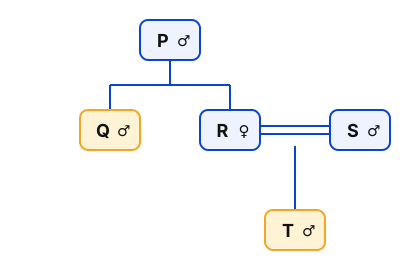
Q is the son of P. P is the father of R. R is the wife of S. T is the son of S. How is Q related to T ?
Q, P का पुत्र है। P, R का पिता है। R, S की पत्नी है। T, S का पुत्र है। Q, T से किस प्रकार संबंधित है?
  1. ABrotherभाई
  2. BMother's brotherमाता का भाई (मामा)
  3. CFatherपिता
  4. DMother's fatherमाता के पिता (नाना)
Show answer

Concept: Link each person generation by generation.

  1. Q and R are both children of P → siblings (Q is male).
  2. R is S's wife and T is S's son → R is T's mother.
  3. Q = brother of T's mother.

Trick: Mother's brother = maternal uncle (mama). Q is one generation above T, so 'Brother' is ruled out at once.

Answer: (B) Mother's brother

अवधारणा: हर व्यक्ति को पीढ़ी-दर-पीढ़ी जोड़िए।

  1. Q और R दोनों P की संतान → भाई-बहन (Q पुरुष)
  2. R, S की पत्नी और T, S का पुत्र → R, T की माँ
  3. Q = T की माँ का भाई

ट्रिक: माँ का भाई = मामा। Q, T से एक पीढ़ी ऊपर है, इसलिए 'भाई' तुरंत बाहर।

उत्तर: (B) माता का भाई (मामा)

SSC GDGeneral Intelligence & ReasoningBlood relation – uncleSSC GD 2025 · 12 Feb Shift 2 →
Q2211.
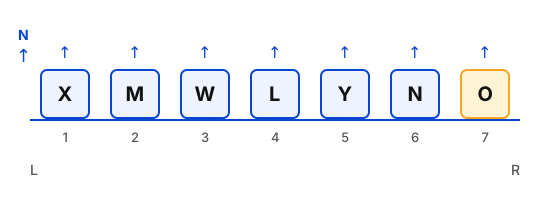
Seven people, L, M, N, O, W, X and Y, are sitting in a row, facing north (but not necessarily in the same order). No one sits to the left of X. Only four people sit between X and N . Only three people sit to the right of L. M sits to the immediate left of W. O is not an immediate neighbour of L. Who sits at the right most end of the line?
सात व्यक्ति L, M, N, O, W, X और Y एक पंक्ति में उत्तर की ओर मुख करके बैठे हैं (आवश्यक नहीं कि इसी क्रम में हों)। X के बाईं ओर कोई नहीं बैठा है। X और N के बीच केवल चार व्यक्ति बैठे हैं। L के दाईं ओर केवल तीन व्यक्ति बैठे हैं। M, W के ठीक बाईं ओर बैठा है। O, L का निकटतम पड़ोसी नहीं है। पंक्ति के सबसे दाएँ सिरे पर कौन बैठा है?
  1. AL
  2. BY
  3. CN
  4. DO
Show answer

Concept: Facing north, left end = seat 1, right end = seat 7. Fix definite people first.

  1. No one left of X → X = 1. Four between X and N → N = 6.
  2. Three to the right of L → L = 4.
  3. M immediately left of W: only adjacent free seats are 2–3 → M = 2, W = 3.
  4. O not next to L → O ≠ 5 → O = 7, Y = 5.
  5. Row: X M W L Y N O → right end is O.

Trick: 'Only k people to the right' means seat number = 7 − k; here L = 7 − 3 = 4.

Answer: (D) O

अवधारणा: उत्तर की ओर मुख: बायाँ सिरा = सीट 1, दायाँ सिरा = सीट 7। पहले निश्चित स्थान भरें।

  1. X के बाएँ कोई नहीं → X = 1; X और N के बीच चार → N = 6
  2. L के दाएँ तीन → L = 4
  3. M, W के ठीक बाएँ: सटी खाली सीटें केवल 2–3 → M = 2, W = 3
  4. O, L का पड़ोसी नहीं → O = 7, Y = 5
  5. क्रम: X M W L Y N O → दाएँ सिरे पर O

ट्रिक: 'दाएँ केवल k व्यक्ति' का अर्थ सीट = 7 − k; यहाँ L = 4।

उत्तर: (D) O

SSC GDGeneral Intelligence & ReasoningLinear seating – row facing northSSC GD 2025 · 12 Feb Shift 2 →
Q2212.
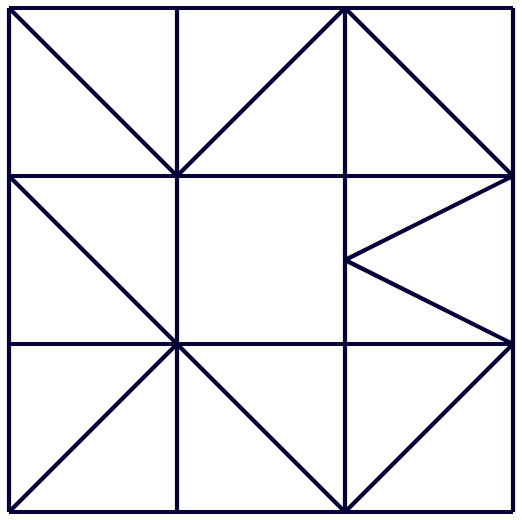
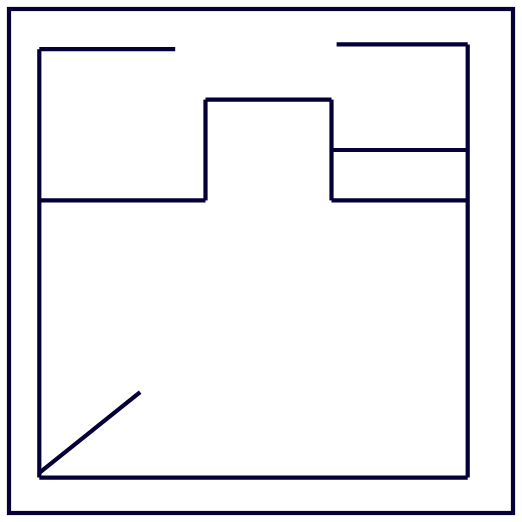
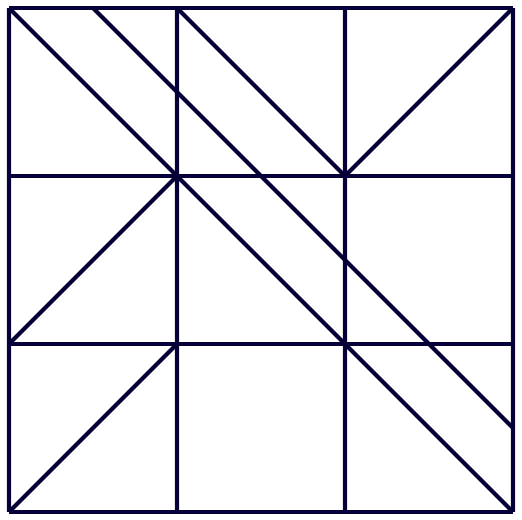
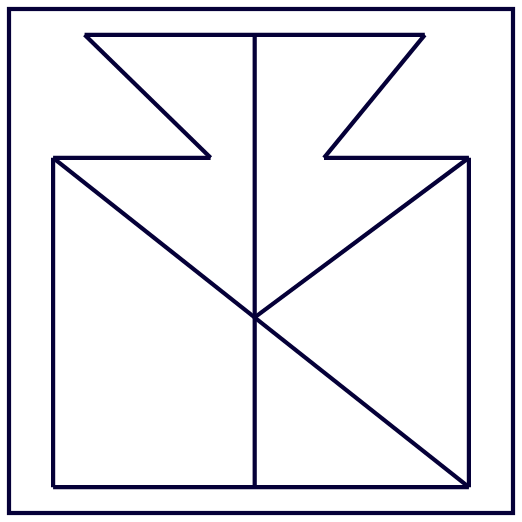
Select the option in which the given figure is embedded (rotation is NOT allowed).
figure
उस विकल्प का चयन कीजिए जिसमें दी गई आकृति अंतर्निहित है (घुमाने की अनुमति नहीं है)।
figure
  1. Afigure
  2. Bfigure
  3. Cfigure
  4. Dfigure
Show answer

Concept: The exact figure, same size and same orientation, must be traceable inside the option.

  1. Break the figure into its parts: long base, tall right vertical, short step at the top, a slant rising to the right above the step, and a small slant at the bottom-left.
  2. (B) and (D) have no full base joined to a right vertical → rejected.
  3. In (A) the top slant runs the wrong way; in (C) every stroke appears with the correct direction.

Trick: Pick the most unusual stroke (here the slant above the step) and check its direction in each option first – this removes wrong options quickly.

Answer: (C)Option (c)

अवधारणा: दी गई आकृति उसी आकार और उसी दिशा में विकल्प के अंदर दिखनी चाहिए (घुमाना नहीं)।

  1. आकृति के भाग: लंबा आधार, दाईं ओर ऊँची खड़ी रेखा, ऊपर छोटा कदम, कदम के ऊपर दाईं ओर उठती तिरछी रेखा, नीचे-बाएँ छोटी तिरछी रेखा।
  2. (B) व (D) में आधार से जुड़ी दाईं खड़ी रेखा नहीं → बाहर।
  3. (A) में ऊपरी तिरछी रेखा उलटी दिशा में है; (C) में सभी भाग सही दिशा में हैं।

ट्रिक: सबसे अलग दिखने वाली रेखा (ऊपर की तिरछी) की दिशा पहले जाँचें – गलत विकल्प जल्दी हट जाते हैं।

उत्तर: (C)विकल्प (c)

SSC GDGeneral Intelligence & ReasoningEmbedded figureSSC GD 2025 · 12 Feb Shift 2 →
Q2213.
What should come in place of the question mark (?) in the given series ? 335, 280, 228, 179, 133, ?
दी गई शृंखला में प्रश्नवाचक चिह्न (?) के स्थान पर क्या आना चाहिए? 335, 280, 228, 179, 133, ?
  1. A112
  2. B90
  3. C106
  4. D98
Show answer

Concept: Find the differences; check if they change by a fixed amount.

  1. Gaps: 55, 52, 49, 46.
  2. Each gap is 3 less than the previous → next gap 43.
  3. 133 − 43 = 90.

Trick: Second-level difference is constant (−3): just continue 55, 52, 49, 46, 43.

Answer: (B) 90

अवधारणा: अंतर निकालिए और देखिए कि वह कितना बदल रहा है।

  1. अंतर: 55, 52, 49, 46
  2. हर अंतर पिछले से 3 कम → अगला अंतर 43
  3. 133 − 43 = 90

ट्रिक: अंतरों का अंतर स्थिर (−3) है: 55, 52, 49, 46, 43।

उत्तर: (B) 90

SSC GDGeneral Intelligence & ReasoningNumber series – decreasing differencesSSC GD 2025 · 12 Feb Shift 2 →
Q2214.
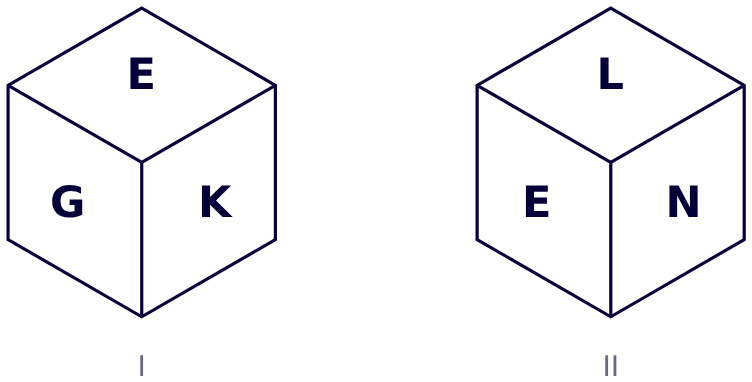
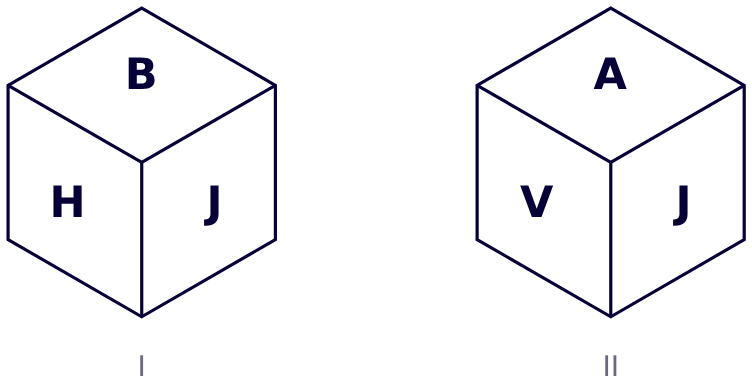
A dice has its faces marked by letters N, K, G, H, L and E. Two positions of the same dice are given below. Which face is opposite to face H ?
figure
एक पासे के फलकों पर अक्षर N, K, G, H, L और E अंकित हैं। उसी पासे की दो स्थितियाँ नीचे दी गई हैं। फलक H के विपरीत कौन-सा फलक है?
figure
  1. AE
  2. BG
  3. CL
  4. DN
Show answer

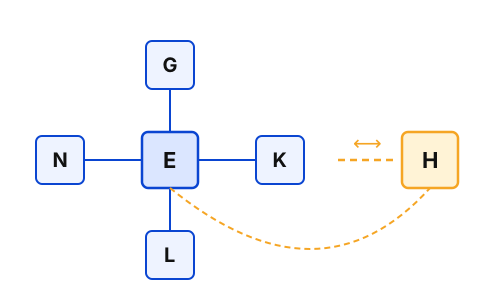
Concept: A face touches four faces; the one face never seen beside it is its opposite.

  1. View 1: E with G and K. View 2: E with L and N.
  2. E is adjacent to G, K, L, N.
  3. Only H is left → H is opposite E.

Trick: The letter appearing in both views often reveals its opposite at once: list its four neighbours, the missing letter is the answer.

Answer: (A) E

अवधारणा: एक फलक चार फलकों को छूता है; जो कभी साथ न दिखे वह विपरीत है।

  1. पहली स्थिति: E के साथ G, K; दूसरी: E के साथ L, N
  2. E के पड़ोसी G, K, L, N
  3. बचा केवल H → H, E के विपरीत

ट्रिक: दोनों स्थितियों में दिखने वाले अक्षर के चार पड़ोसी लिखें – जो छूटे वही विपरीत।

उत्तर: (A) E

SSC GDGeneral Intelligence & ReasoningDice – common face methodSSC GD 2025 · 12 Feb Shift 2 →
Q2215.
The position(s) of how many letters will remain unchanged if each of the letters in the word CABLEWAY is arranged in reverse English alphabetical order ?
यदि शब्द CABLEWAY के प्रत्येक अक्षर को विपरीत अंग्रेजी वर्णमाला क्रम में व्यवस्थित किया जाए, तो कितने अक्षरों का स्थान अपरिवर्तित रहेगा?
  1. ATwoदो
  2. BFourचार
  3. CThreeतीन
  4. DOneएक
Show answer

Concept: Rewrite the letters Z→A and compare position by position.

  1. CABLEWAY has 8 letters, with A appearing twice.
  2. Arranged from Z to A: Y, W, L, E, C, B and then the two A's at places 7 and 8.
  3. Original: C A B L E W A Y. Matching place by place, only position 7 has the same letter (A) in both.

Trick: In reverse order the two A's must take the last two places; CABLEWAY has A at place 7 → that one stays. Count = 1.

Answer: (D) One

अवधारणा: अक्षरों को Z→A क्रम में लिखकर स्थान-दर-स्थान मिलाइए।

  1. CABLEWAY में 8 अक्षर हैं, A दो बार
  2. Z से A क्रम: Y, W, L, E, C, B, फिर दोनों A (7वें व 8वें स्थान पर)
  3. मूल शब्द C A B L E W A Y से मिलाने पर केवल 7वें स्थान पर दोनों में A है

ट्रिक: उलटे क्रम में दोनों A अंतिम दो स्थानों पर जाएँगे; मूल शब्द में 7वें स्थान पर A है → वही अपरिवर्तित।

उत्तर: (D) एक

SSC GDGeneral Intelligence & ReasoningLetter rearrangement – reverse orderSSC GD 2025 · 12 Feb Shift 2 →
Q2216.
EWRT is related to LDYA in a certain way based on the English alphabetical order. In the same way, GYTV is related to NFAC. To which of the following options is BTOQ related, following the same logic?
EWRT, अंग्रेजी वर्णमाला क्रम के आधार पर एक निश्चित तरीके से LDYA से संबंधित है। उसी प्रकार, GYTV, NFAC से संबंधित है। उसी तर्क का अनुसरण करते हुए, निम्नलिखित विकल्पों में से BTOQ किससे संबंधित है?
  1. AVAIX
  2. BIAXV
  3. CVAXI
  4. DIAVX
Show answer

Concept: Each letter moves a fixed number of places (cyclic).

  1. E(5)→L(12): +7; W(23)→D(4): +7 cyclic; R→Y, T→A also +7.
  2. GYTV → NFAC confirms +7.
  3. BTOQ: B→I, T→A, O→V, Q→X = IAVX.

Trick: Check only the first two letters: B+7 = I and T+7 = A → only 'IAVX' and 'IAXV' remain; O+7 = V gives IAVX.

Answer: (D) IAVX

अवधारणा: हर अक्षर निश्चित स्थान आगे खिसकता है (चक्रीय)।

  1. E(5)→L(12): +7; W(23)→D(4): +7 (चक्रीय); R→Y, T→A भी +7
  2. GYTV → NFAC से पुष्टि
  3. BTOQ: B→I, T→A, O→V, Q→X = IAVX

ट्रिक: पहले दो अक्षर देखें: I, A → दो विकल्प बचे; तीसरा O+7 = V → IAVX।

उत्तर: (D) IAVX

SSC GDGeneral Intelligence & ReasoningLetter analogy – +7 shiftSSC GD 2025 · 12 Feb Shift 2 →
Q2217.
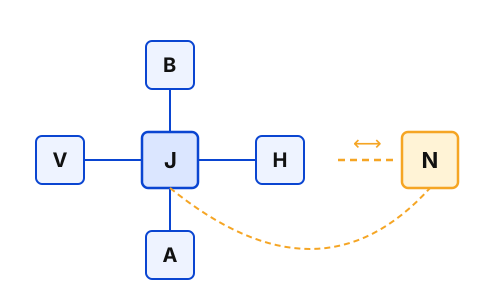
A dice has its faces marked by letters V, H, A, N, B and J. Two positions of the same dice are given below. Which face is opposite to face N ?
figure
एक पासे के फलकों पर अक्षर V, H, A, N, B और J अंकित हैं। उसी पासे की दो स्थितियाँ नीचे दी गई हैं। फलक N के विपरीत कौन-सा फलक है?
figure
  1. AA
  2. BB
  3. CH
  4. DJ
Show answer

Concept: The face never seen next to a given face is its opposite.

  1. View 1: J with B and H. View 2: J with A and V.
  2. Neighbours of J: B, H, A, V.
  3. The only face not touching J is N → N is opposite J.

Trick: Take the letter common to both views, write its four neighbours – the missing sixth letter is its opposite.

Answer: (D) J

अवधारणा: जो फलक किसी फलक के साथ कभी न दिखे, वही उसके विपरीत।

  1. पहली स्थिति: J के साथ B, H; दूसरी: J के साथ A, V
  2. J के पड़ोसी: B, H, A, V
  3. J को न छूने वाला केवल N → N, J के विपरीत

ट्रिक: दोनों स्थितियों में समान अक्षर के चार पड़ोसी लिखें – छठा छूटा अक्षर विपरीत।

उत्तर: (D) J

SSC GDGeneral Intelligence & ReasoningDice – common face methodSSC GD 2025 · 12 Feb Shift 2 →
Q2218.
What should come in place of the question mark (?) in the given series based on the English alphabetical order ? CZV FYU IXT LWS?
अंग्रेजी वर्णमाला क्रम के आधार पर दी गई शृंखला में प्रश्नवाचक चिह्न (?) के स्थान पर क्या आना चाहिए? CZV FYU IXT LWS ?
  1. AOVR
  2. BVVO
  3. CORV
  4. DVOR
Show answer

Concept: Track each column of letters separately.

  1. 1st letters: C, F, I, L → +3 → next O.
  2. 2nd letters: Z, Y, X, W → −1 → next V.
  3. 3rd letters: V, U, T, S → −1 → next R.
  4. Next term = OVR.

Trick: First letters alone decide it: L+3 = O, and only OVR / ORV start with O; second letter W−1 = V → OVR.

Answer: (A) OVR

अवधारणा: हर स्तंभ के अक्षर अलग-अलग देखिए।

  1. पहले अक्षर: C, F, I, L → +3 → O
  2. दूसरे अक्षर: Z, Y, X, W → −1 → V
  3. तीसरे अक्षर: V, U, T, S → −1 → R
  4. अगला पद = OVR

ट्रिक: L+3 = O से दो विकल्प बचते हैं; W−1 = V से OVR पक्का।

उत्तर: (A) OVR

SSC GDGeneral Intelligence & ReasoningLetter-cluster seriesSSC GD 2025 · 12 Feb Shift 2 →
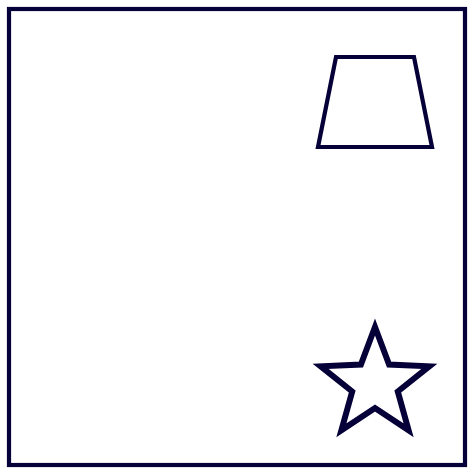
Q2219.
Identify the figure given in the options which when put in place of the question mark (?) will logically complete the series.
figure
विकल्पों में दी गई उस आकृति की पहचान कीजिए, जिसे प्रश्नवाचक चिह्न (?) के स्थान पर रखने से शृंखला तार्किक रूप से पूर्ण हो जाएगी।
figure
  1. Afigure
  2. Bfigure
  3. Cfigure
  4. Dfigure
Show answer

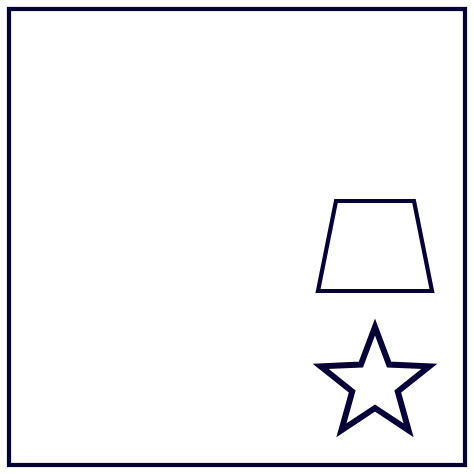
Concept: Follow each shape separately and note how many cells it moves per step.

  1. Both the trapezium and the star move one row up each step.
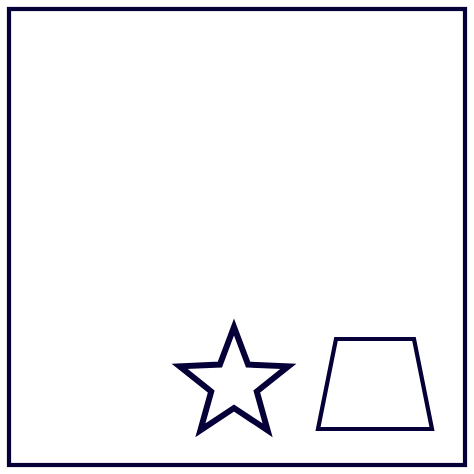
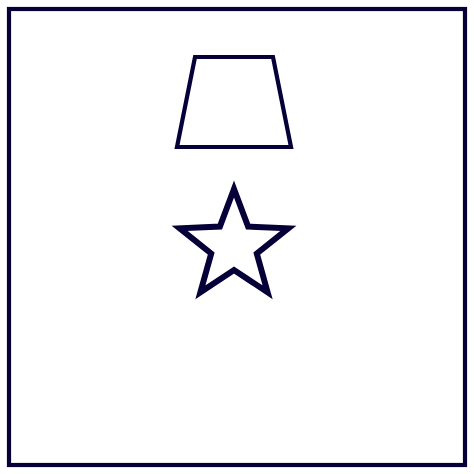
  2. After the top row, a shape restarts at the bottom of the next column.
  3. In figure 5 the trapezium reaches the top of the middle column and the star the middle of the same column, directly below it – only option (d) shows this.

Trick: Predict the position of just one shape (trapezium → top-middle) and eliminate; then confirm with the second shape.

Answer: (D)Option (d)

अवधारणा: हर आकृति को अलग से देखें कि वह हर चरण में कितना खिसकती है।

  1. समलंब और तारा दोनों हर चरण में एक पंक्ति ऊपर जाते हैं।
  2. सबसे ऊपर पहुँचने के बाद आकृति अगले स्तंभ की सबसे नीचे वाली पंक्ति से शुरू होती है।
  3. 5वीं आकृति में समलंब बीच वाले स्तंभ में ऊपर और तारा ठीक उसके नीचे बीच में – केवल विकल्प (d) में ऐसा है।

ट्रिक: पहले केवल एक आकृति (समलंब) की स्थिति निकालें, विकल्प हटाएँ; फिर तारे से पुष्टि करें।

उत्तर: (D)विकल्प (d)

SSC GDGeneral Intelligence & ReasoningFigure series – moving shapesSSC GD 2025 · 12 Feb Shift 2 →
Q2220.
Select the combination of letters that when filled in the blanks in the same sequence will make the series logically complete.
_DHLI_JNKH_PMJN_OLP_
उस अक्षर संयोजन का चयन कीजिए, जिसे रिक्त स्थानों में उसी क्रम में भरने पर शृंखला तार्किक रूप से पूर्ण हो जाएगी।
_DHLI_JNKH_PMJN_OLP_
  1. AEFMRU
  2. BEDMSU
  3. CGDLST
  4. DGFLRT
Show answer

Concept: 20 places → split into five blocks of 4 and read column-wise.

  1. Blocks: _DHL / I_JN / KH_P / MJN_ / OLP_.
  2. Column 1: _, I, K, M, O (+2) → G. Column 2: D, _, H, J, L → F.
  3. Column 3: H, J, _, N, P → L. Column 4: L, N, P, _, _ → R, T.
  4. Blanks: G F L R T.

Trick: First blank alone: column I, K, M, O steps +2, so it is G → only GDLST or GFLRT; second blank F settles it.

Answer: (D) GFLRT

अवधारणा: 20 स्थान → 4-4 के पाँच खंड बनाकर स्तंभवार पढ़ें।

  1. खंड: _DHL / I_JN / KH_P / MJN_ / OLP_
  2. स्तंभ 1: _, I, K, M, O (+2) → G; स्तंभ 2: D, _, H, J, L → F
  3. स्तंभ 3: H, J, _, N, P → L; स्तंभ 4: L, N, P, _, _ → R, T
  4. रिक्त स्थान: G F L R T

ट्रिक: पहला रिक्त G आते ही दो विकल्प बचते हैं; दूसरा F → GFLRT।

उत्तर: (D) GFLRT

SSC GDGeneral Intelligence & ReasoningLetter series – blanksSSC GD 2025 · 12 Feb Shift 2 →