Question bank

Q&A: practice questions with answers

Search questions on any topic. Filter by exam category, exam, subject and topic, try the question, then open the answer and explanation.

Courses – airGurukul

4,200 questions found.

Q2241.
The price of fuel decreases by 25%, 15% and 45% in three successive months, but increases by 65% in the fourth month. What is the percentage increase/decrease in the price of fuel in the fourth month as compared to its original price?
ईंधन की कीमत में तीन क्रमागत महीनों में 25%, 15% और 45% की कमी होती है, परंतु चौथे महीने में उसमें 65% की वृद्धि होती है। चौथे महीने में ईंधन की कीमत में उसकी मूल कीमत की तुलना में कितने प्रतिशत की वृद्धि/कमी होती है?
  1. AIncreases by 38.95%38.95% की वृद्धि
  2. BIncreases by 47.41%47.41% की वृद्धि
  3. CDecreases by 42.14%42.14% की कमी
  4. DDecreases by 37.35%37.35% की कमी
Show answer

Concept: Successive % changes multiply: new value = original × product of (1±r100).

  1. Factors: 0.75 (−25%), 0.85 (−15%), 0.55 (−45%), 1.65 (+65%).
  2. 0.75×0.85=0.6375; ×0.55≈0.3506; ×1.65≈0.5785.
  3. Final price ≈ 57.85% of original → decrease ≈ 42.14%.

Trick: Three cuts already leave only about 35%; even a 65% rise cannot cross 100%, so both 'increase' options are out at once.

Answer: (C) Decreases by 42.14%

अवधारणा: क्रमिक प्रतिशत परिवर्तन गुणा होते हैं: नया मान = मूल × (1±r100) के गुणनफल।

  1. गुणक: 0.75 (−25%), 0.85 (−15%), 0.55 (−45%), 1.65 (+65%)
  2. 0.75×0.85=0.6375; ×0.55≈0.3506; ×1.65≈0.5785
  3. अंतिम मूल्य ≈ मूल का 57.85% → लगभग 42.14% कमी

ट्रिक: तीन कटौतियों के बाद केवल ~35% बचता है; 65% वृद्धि भी 100% पार नहीं करा सकती – 'वृद्धि' वाले दोनों विकल्प तुरंत बाहर।

उत्तर: (C) 42.14% की कमी
SSC GDElementary MathematicsSuccessive percentage changeSSC GD 2025 · 12 Feb Shift 2 →
Q2242.
Raghu invested some money in HDFC at 4% per annum rate of interest. What would be the corresponding simple interest (in ₹) if after 2 years, Raghu got ₹102 as compound interest, considering annual compounding?
रघु ने HDFC में कुछ धनराशि 4% वार्षिक ब्याज दर पर निवेश की। यदि वार्षिक चक्रवृद्धि मानते हुए 2 वर्ष बाद रघु को चक्रवृद्धि ब्याज के रूप में ₹102 प्राप्त हुए, तो तत्संगत साधारण ब्याज (₹ में) कितना होगा?
  1. A115
  2. B110
  3. C100
  4. D95
Show answer

Concept: For 2 years, CI=SI×(1+r200), since the second year also earns interest on the first year's interest.

  1. 1+4200=1.02.
  2. SI=102÷1.02= ₹100.
  3. Check: P=100×100÷(4×2)= ₹1250; CI=1250×(1.042−1)=1250×0.0816= ₹102 ✓

Trick: 2-year CISI ratio = 1+r200. At 4% it is 1.02, so just divide CI by 1.02.

Answer: (C) 100

अवधारणा: 2 वर्ष के लिए CI=SI×(1+r200), क्योंकि दूसरे वर्ष पहले वर्ष के ब्याज पर भी ब्याज मिलता है।

  1. 1+4200=1.02
  2. SI=102÷1.02= ₹100
  3. जाँच: P=100×100÷8= ₹1250; CI=1250×0.0816= ₹102 ✓

ट्रिक: 2 वर्ष में CI÷SI=1+r200; 4% पर यह 1.02 है, बस CI को 1.02 से भाग दीजिए।

उत्तर: (C) 100

SSC GDElementary MathematicsCI and SI – 2 yearsSSC GD 2025 · 12 Feb Shift 2 →
Q2243.
Find the volume of a sphere whose radius is 10 cm.
(Take π = 3.141)
उस गोले का आयतन ज्ञात कीजिए जिसकी त्रिज्या 10 cm है।
(π = 3.141 लीजिए)
  1. A4188 cm³
  2. B4238 cm³
  3. C4288 cm³
  4. D4138 cm³
Show answer

Concept: Volume of a sphere = 43πr3.

  1. r3=103=1000.
  2. V=43×3.141×1000=4×1047=4188cm3.

Trick: 3.141÷3=1.047; so V=4×1.047×1000=4188 – no long division needed.

Answer: (A) 4188 cm³

अवधारणा: गोले का आयतन = 43πr3

  1. r3=103=1000
  2. V=43×3.141×1000=4×1047=4188 घन सेमी

ट्रिक: 3.141÷3=1.047 → V=4×1047=4188; लंबा भाग नहीं करना पड़ता।

उत्तर: (A) 4188 cm³

SSC GDElementary MathematicsMensuration – volume of sphereSSC GD 2025 · 12 Feb Shift 2 →
Q2244.
If 2% of x = 264, then x is equal to:
यदि x का 2% = 264 है, तो x बराबर है:
  1. A26400
  2. B13300
  3. C13200
  4. D26500
Show answer

Concept: If p% of x = A, then x=A×100÷p.

  1. x=264×100÷2.
  2. =132×100=13200.

Trick: 2%=150, so x=264×50=13200.

Answer: (C) 13200

अवधारणा: यदि x का p% = A, तो x=A×100÷p

  1. x=264×100÷2
  2. = 13200

ट्रिक: 2%=150, अतः x=264×50=13200।

उत्तर: (C) 13200

SSC GDElementary MathematicsPercentage – finding the wholeSSC GD 2025 · 12 Feb Shift 2 →
Q2245.
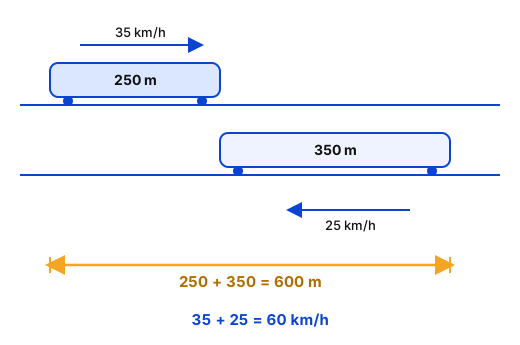
Two trains of lengths 250 metres and 350 metres will cross each other in ______ seconds when moving in opposite directions with speeds 35 km per hour and 25 km per hour.
250 मीटर और 350 मीटर लंबाई वाली दो रेलगाड़ियाँ 35 किमी प्रति घंटा और 25 किमी प्रति घंटा की चाल से विपरीत दिशाओं में चलते हुए एक-दूसरे को ______ सेकंड में पार करेंगी।
  1. A30
  2. B36
  3. C34
  4. D32
Show answer

Concept: Crossing each other: distance = sum of lengths; opposite directions → speeds add.

  1. Distance = 250+350=600 m.
  2. Relative speed = 35+25=60 km/h = 60×518=503 m/s.
  3. Time = 600÷503=36 s.

Trick: Time (s)=length (m)×18speed in km/h×5=600×18300=36.

Answer: (B) 36

अवधारणा: एक-दूसरे को पार करने में दूरी = दोनों लंबाइयों का योग; विपरीत दिशा में चालें जुड़ती हैं।

  1. दूरी = 250+350=600 मी
  2. दोनों चालों का योग 60 किमी/घं, यानी 503 मी/से
  3. समय = 600÷503=36 सेकंड

ट्रिक: समय=मीटर×18किमी/घं×5=600×18300=36।

उत्तर: (B) 36

SSC GDElementary MathematicsTrains – opposite directionsSSC GD 2025 · 12 Feb Shift 2 →
Q2246.
Suraj completes 112 of a work in nine days. At this rate, how many more days will he take to complete the work ?
सूरज किसी कार्य का 112 भाग नौ दिनों में पूरा करता है। इसी दर से, उसे शेष कार्य पूरा करने में और कितने दिन लगेंगे?
  1. A90
  2. B108
  3. C81
  4. D99
Show answer

Concept: Work done ∝ time at a constant rate.

  1. 112 of the work → 9 days, so each twelfth takes 9 days.
  2. Remaining = 1112 → 11×9=99 days.

Trick: Don't find the total first – remaining parts × days per part = 11×9. (108 is the total, a trap.)

Answer: (D) 99

अवधारणा: समान दर पर किया गया कार्य समय के अनुपात में होता है।

  1. 112 कार्य = 9 दिन, यानी हर 112 भाग में 9 दिन
  2. शेष 1112 → 11×9=99 दिन

ट्रिक: कुल समय (108) निकालने की ज़रूरत नहीं – शेष भाग×9=99; 108 जाल विकल्प है।

उत्तर: (D) 99

SSC GDElementary MathematicsTime and work – remaining workSSC GD 2025 · 12 Feb Shift 2 →
Q2247.
There are 38 members in group A, 31 members in group B and 52 members in group C . All the members of these groups went to a restaurant. The average amount spent on each member of group A, B and C is ₹375, ₹309 and ₹298, respectively. The total average amount (in ₹) spent per member is:
समूह A में 38 सदस्य हैं, समूह B में 31 सदस्य हैं और समूह C में 52 सदस्य हैं। इन समूहों के सभी सदस्य एक रेस्तराँ गए। समूह A, B और C के प्रत्येक सदस्य पर खर्च की गई औसत राशि क्रमशः ₹375, ₹309 और ₹298 है। प्रति सदस्य कुल औसत राशि (₹ में) कितनी है?
  1. A330
  2. B329
  3. C325
  4. D327
Show answer

Concept: Combined average = total amount ÷ total members (weighted, not simple average).

  1. Take ₹300 as base. Extra over base: A: 38×75=2850; B: 31×9=279; C: 52×(−2)=−104.
  2. Net extra = 3025; members = 38+31+52=121.
  3. Average = 300+3025÷121=300+25= ₹325.

Trick: Assumed-mean method: subtract a round base, average only the deviations – the numbers stay small.

Answer: (C) 325

अवधारणा: समूहों का आकार अलग है, इसलिए भारित (weighted) औसत लेना होगा, तीनों औसतों का सीधा औसत नहीं।

  1. आधार ₹300 मानें। अतिरिक्त: A: 38×75=2850; B: 31×9=279; C: 52×(−2)=−104
  2. कुल अतिरिक्त = 3025; कुल सदस्य = 121
  3. औसत = 300+3025÷121=300+25= ₹325

ट्रिक: कल्पित माध्य विधि: गोल आधार घटाकर केवल विचलनों का औसत लें – गणना छोटी हो जाती है।

उत्तर: (C) 325

SSC GDElementary MathematicsWeighted averageSSC GD 2025 · 12 Feb Shift 2 →
Q2248.
Zakir travels from City A to City B.
If Zakir drives his car at 38 of his normal speed, then he reaches City B 45 minutes late. Find the time (in minutes) that Zakir would have taken to travel from City A to City B if he drove at his normal speed.
ज़ाकिर शहर A से शहर B तक यात्रा करता है।
यदि ज़ाकिर अपनी कार अपनी सामान्य चाल के 38 भाग की चाल से चलाता है, तो वह शहर B पर 45 मिनट देर से पहुँचता है। वह समय (मिनट में) ज्ञात कीजिए जो ज़ाकिर को शहर A से शहर B तक अपनी सामान्य चाल से यात्रा करने में लगता।
  1. A25
  2. B18
  3. C34
  4. D27
Show answer

Concept: For a fixed distance, time is inversely proportional to speed.

  1. Speed ratio new : normal = 3 : 8 → time ratio = 8 : 3.
  2. Difference = 8−3=5 parts = 45 min → 1 part = 9 min.
  3. Normal time = 3 parts = 27 min.

Trick: Reverse the speed fraction to get the time ratio, then 'difference in parts = late minutes'.

Answer: (D) 27

अवधारणा: दूरी तय हो तो चाल घटने पर समय उसी अनुपात में उलटा बढ़ता है (T∝1S)।

  1. चाल नई : सामान्य = 3 : 8 → समय = 8 : 3
  2. अंतर 5 भाग = 45 मिनट → 1 भाग = 9 मिनट
  3. सामान्य समय = 3 भाग = 27 मिनट

ट्रिक: चाल के भिन्न को उलटें = समय का अनुपात; भागों का अंतर = देरी के मिनट।

उत्तर: (D) 27

SSC GDElementary MathematicsSpeed and time – late arrivalSSC GD 2025 · 12 Feb Shift 2 →
Q2249.
The single discount equivalent to three successive discounts of 16%, 10% and 25% is:
16%, 10% और 25% की तीन क्रमागत छूटों के तुल्य एकल छूट कितनी है?
  1. A38.7%
  2. B43.3%
  3. C53.6%
  4. D49.5%
Show answer

Concept: Two discounts a% and b% equal a single discount of a+b−ab100.

  1. 16% and 10%: 16+10−1.6=24.4%.
  2. 24.4% and 25%: 24.4+25−24.4×25100=49.4−6.1=43.3%.

Trick: Never add discounts directly (51% is the trap); combine two at a time with a+b−ab100.

Answer: (B) 43.3%

अवधारणा: दो छूट a% व b% = एकल छूट a+b−ab100

  1. 16% व 10%: 16+10−1.6=24.4%
  2. 24.4% व 25%: 49.4−6.1=43.3%

ट्रिक: छूटें सीधे न जोड़ें (51% जाल है); दो-दो करके a+b−ab100 लगाएँ।

उत्तर: (B) 43.3%

SSC GDElementary MathematicsSuccessive discountsSSC GD 2025 · 12 Feb Shift 2 →
Q2250.
400 guavas were bought at ₹1230 per hundred and were sold at a profit of ₹880. Find the selling price (in ₹) per dozen of guavas.
400 अमरूद ₹1230 प्रति सैकड़ा की दर से खरीदे गए और ₹880 के लाभ पर बेचे गए। अमरूदों का प्रति दर्जन विक्रय मूल्य (₹ में) ज्ञात कीजिए।
  1. A164
  2. B184
  3. C174
  4. D189
Show answer

Concept: SP = CP + profit; then convert to the required unit.

  1. CP of 400 guavas = 4 × ₹1230 = ₹4920.
  2. SP = 4920+880= ₹5800 → per guava ₹14.50.
  3. Per dozen = 12×14.5= ₹174.

Trick: Per-dozen SP = total SP×12400=5800×3100=174.

Answer: (C) 174

अवधारणा: SP = CP + Profit निकालकर उसे प्रति दर्जन में बदलें।

  1. 400 अमरूदों का CP = 4 × ₹1230 = ₹4920
  2. SP = 4920+880= ₹5800 → एक अमरूद ₹14.50
  3. एक दर्जन = 12×14.5= ₹174

ट्रिक: प्रति दर्जन SP = कुल SP×12400=5800×3100=174।

उत्तर: (C) 174

SSC GDElementary MathematicsProfit – selling price per dozenSSC GD 2025 · 12 Feb Shift 2 →
Q2251.
Vipul invests a sum of ₹5400 and Vijay invests a sum of ₹9400 at the same rate of simple interest per annum. If, at the end of 4 years, Vijay gets ₹840 more interest than Vipul, then find the rate of interest per annum (in percentage).
विपुल ₹5400 की राशि और विजय ₹9400 की राशि समान वार्षिक साधारण ब्याज दर पर निवेश करते हैं। यदि 4 वर्ष के अंत में विजय को विपुल से ₹840 अधिक ब्याज मिलता है, तो वार्षिक ब्याज दर (प्रतिशत में) ज्ञात कीजिए।
  1. A4.25
  2. B3.25
  3. C7.25
  4. D5.25
Show answer

Concept: Same rate and time → difference in SI comes only from the difference in principal.

  1. Principal difference = 9400−5400= ₹4000.
  2. SI on ₹4000 for 4 years = ₹840 → R=840×1004000×4.
  3. R=84000÷16000=5.25%.

Trick: Work only with the extra principal; the individual interests are never needed.

Answer: (D) 5.25

अवधारणा: दर और समय समान हों तो ब्याज का अंतर केवल मूलधन के अंतर से आता है।

  1. मूलधन का अंतर = 9400−5400= ₹4000
  2. ₹4000 पर 4 वर्ष का ब्याज ₹840 → R=840×1004000×4
  3. R=84000÷16000=5.25%

ट्रिक: केवल अतिरिक्त मूलधन पर काम करें; दोनों का अलग-अलग ब्याज निकालना ज़रूरी नहीं।

उत्तर: (D) 5.25

SSC GDElementary MathematicsSimple interest – rate from differenceSSC GD 2025 · 12 Feb Shift 2 →
Q2252.
The smallest number which when decreased by 3 is divisible by 15,25 and 55 , is:
वह सबसे छोटी संख्या जिसमें से 3 घटाने पर वह 15, 25 और 55 से विभाज्य हो जाती है, है:
  1. A828
  2. B825
  3. C831
  4. D822
Show answer

Concept: Number − 3 must be a multiple of 15, 25 and 55 → number=LCM+3.

  1. 15=3×5, 25=52, 55=5×11.
  2. LCM=3×52×11=825.
  3. Required number = 825+3=828.

Trick: Options check: only 828−3=825 ends in 5/0 and is divisible by 11 and 3.

Answer: (A) 828

अवधारणा: संख्या − 3, संख्याओं 15, 25, 55 से विभाज्य हो → संख्या=LCM+3

  1. 15=3×5, 25=52, 55=5×11
  2. LCM=3×25×11=825
  3. अभीष्ट संख्या = 825+3=828

ट्रिक: विकल्पों से 3 घटाकर देखें – केवल 825 ही तीनों से विभाज्य है।

उत्तर: (A) 828

SSC GDElementary MathematicsLCM – number with a remainderSSC GD 2025 · 12 Feb Shift 2 →
Q2253.
Find the value of [(27 × 5) × {3 ÷ 3 × (15 − 13)/2}]
[(27 × 5) × {3 ÷ 3 × (15 − 13)/2}] का मान ज्ञात कीजिए।
  1. A138
  2. B135
  3. C143
  4. D149
Show answer

Concept: Solve innermost brackets first; ÷ and × left to right.

  1. 15−132=22=1.
  2. {3÷3×1}=1.
  3. 27×5=135 → 135×1=135.

Trick: If the curly bracket works out to 1, the answer is simply 27×5.

Answer: (B) 135

अवधारणा: पहले अंदर का कोष्ठक; ÷ और × बाएँ से दाएँ।

  1. 15−132=1
  2. {3÷3×1}=1
  3. 27×5=135 → 135×1=135

ट्रिक: मझला कोष्ठक 1 बने तो उत्तर सीधे 27×5 है।

उत्तर: (B) 135

SSC GDElementary MathematicsSimplification – brackets (BODMAS)SSC GD 2025 · 12 Feb Shift 2 →
Q2254.
Six pipes are required to fill a tank in 1 hour 45 minutes. How long will it take if only three pipes of the same type are used ?
एक टंकी को 1 घंटा 45 मिनट में भरने के लिए छह पाइपों की आवश्यकता होती है। यदि उसी प्रकार के केवल तीन पाइपों का उपयोग किया जाए, तो इसमें कितना समय लगेगा?
  1. A3 h 20 min3 घंटे 20 मिनट
  2. B3 h 15 min3 घंटे 15 मिनट
  3. C3 h 40 min3 घंटे 40 मिनट
  4. D3 h 30 min3 घंटे 30 मिनट
Show answer

Concept: Pipes × time = constant for filling the same tank.

  1. 1 h 45 min = 105 min.
  2. 6×105=3×t → t=210 min.
  3. 210 min = 3 h 30 min.

Trick: Half the pipes → double the time: 2 × 1 h 45 min = 3 h 30 min.

Answer: (D) 3 h 30 min

अवधारणा: एक ही टंकी के लिए पाइपों की संख्या × समय = स्थिर

  1. 1 घं 45 मि = 105 मिनट
  2. 6×105=3×t → t=210 मिनट
  3. 210 मिनट = 3 घं 30 मि

ट्रिक: पाइप आधे → समय दोगुना: 2 × 1 घं 45 मि = 3 घं 30 मि।

उत्तर: (D) 3 घंटे 30 मिनट

SSC GDElementary MathematicsPipes – inverse proportionSSC GD 2025 · 12 Feb Shift 2 →
Q2255.
Find the value of [(17 × 9) × {6 ÷ 3 × (18 − 14)/2}]
[(17 × 9) × {6 ÷ 3 × (18 − 14)/2}] का मान ज्ञात कीजिए।
  1. A637
  2. B612
  3. C613
  4. D631
Show answer

Concept: Innermost bracket first, then ÷ and × from left to right.

  1. 18−142=42=2.
  2. {6÷3×2}=2×2=4.
  3. (17×9)=153 → 153×4=612.

Trick: Unit digit check: 7×9 → 3, and 3×4 → 2; only 612 ends in 2.

Answer: (B) 612

अवधारणा: सबसे अंदर का कोष्ठक पहले, फिर ÷ व × बाएँ से दाएँ।

  1. 18−142=2
  2. {6÷3×2}=4
  3. 17×9=153 → 153×4=612

ट्रिक: इकाई अंक: 7×9 → 3, फिर 3×4 → 2; केवल 612 का अंतिम अंक 2 है।

उत्तर: (B) 612

SSC GDElementary MathematicsSimplification – brackets (BODMAS)SSC GD 2025 · 12 Feb Shift 2 →
Q2256.
The average of 12 numbers is 49.5. The average of the first 5 numbers is 45, and the average of the next 4 numbers is 53.25. What is the average of the remaining three numbers?
12 संख्याओं का औसत 49.5 है। पहली 5 संख्याओं का औसत 45 है और अगली 4 संख्याओं का औसत 53.25 है। शेष तीन संख्याओं का औसत क्या है?
  1. A84
  2. B52
  3. C62
  4. D26
Show answer

Concept: Use deviations from the overall average; total deviation must be zero.

  1. First 5: (45 − 49.5) × 5 = −22.5.
  2. Next 4: (53.25 − 49.5) × 4 = +15.
  3. Net = −7.5, so the last 3 must give +7.5 → each is 2.5 above → 49.5 + 2.5 = 52.

Trick: Deviation method avoids big totals: what the first groups lose, the last group must make up.

Answer: (B) 52

अवधारणा: कुल औसत से विचलन लें; सभी विचलनों का योग शून्य होना चाहिए।

  1. पहली 5: (45 − 49.5) × 5 = −22.5
  2. अगली 4: (53.25 − 49.5) × 4 = +15
  3. कुल −7.5, अतः अंतिम 3 को +7.5 देना होगा → प्रत्येक 2.5 अधिक → 49.5 + 2.5 = 52

ट्रिक: विचलन विधि में बड़े योग नहीं बनाने पड़ते – जो कमी पहले समूहों में है, वह अंतिम समूह पूरी करता है।

उत्तर: (B) 52

SSC GDElementary MathematicsAverage – remaining numbersSSC GD 2025 · 12 Feb Shift 2 →
Q2257.
What is the greatest number that will divide 175 and 385 leaving the remainder 4 and 5, respectively ?
वह सबसे बड़ी संख्या कौन-सी है जो 175 और 385 को विभाजित करने पर क्रमशः 4 और 5 शेषफल छोड़ती है?
  1. A21
  2. B20
  3. C22
  4. D19
Show answer

Concept: Greatest divisor leaving remainders r1, r2 = HCF(N1−r1,N2−r2).

  1. 175−4=171; 385−5=380.
  2. 171=9×19; 380=20×19.
  3. HCF = 19 (and 19 > both remainders).

Trick: Test options on 171 alone: 21, 20, 22 don't divide it; 19×9=171 does.

Answer: (D) 19

अवधारणा: शेषफल r1, r2 छोड़ने वाला सबसे बड़ा भाजक = HCF(N1−r1,N2−r2)

  1. 175−4=171; 385−5=380
  2. 171=9×19; 380=20×19
  3. HCF = 19 (और 19 दोनों शेषफलों से बड़ा है)

ट्रिक: विकल्पों को केवल 171 पर जाँचें: 19×9=171, बाकी से भाग नहीं जाता।

उत्तर: (D) 19

SSC GDElementary MathematicsHCF – with different remaindersSSC GD 2025 · 12 Feb Shift 2 →
Q2258.
A team of 20 people can complete a work in 15 days. After working for 6 days, 10 workers leave. How many additional days will it take for the remaining workers to finish the work ?
20 लोगों की एक टीम किसी कार्य को 15 दिनों में पूरा कर सकती है। 6 दिन कार्य करने के बाद 10 श्रमिक कार्य छोड़ देते हैं। शेष श्रमिकों को कार्य पूरा करने में कितने अतिरिक्त दिन लगेंगे?
  1. A18
  2. B17
  3. C15
  4. D16
Show answer

Concept: Total work in man-days stays fixed.

  1. After 6 days, 15−6=9 days of work remain for 20 people.
  2. That work = 20×9=180 man-days.
  3. With 10 people: 180÷10=18 days.

Trick: Half the workers → double the remaining days: 9×2=18.

Answer: (A) 18

अवधारणा: कुल कार्य (व्यक्ति-दिन) स्थिर रहता है।

  1. 6 दिन बाद 20 लोगों के लिए 9 दिन का कार्य बचा
  2. यह कार्य = 20×9=180 व्यक्ति-दिन
  3. 10 लोगों से: 180÷10=18 दिन

ट्रिक: लोग आधे → बचे दिन दोगुने: 9×2=18।

उत्तर: (A) 18

SSC GDElementary MathematicsWork – workers leaving midwaySSC GD 2025 · 12 Feb Shift 2 →
Q2259.
If at the same rate of interest, in 2 years, the simple interest is ₹40 and compound interest is ₹60, then what is the principal (in ₹) ?
यदि समान ब्याज दर पर, 2 वर्षों में साधारण ब्याज ₹40 और चक्रवृद्धि ब्याज ₹60 है, तो मूलधन (₹ में) कितना है?
  1. A13
  2. B24
  3. C15
  4. D20
Show answer

Concept: In 2 years, CI − SI = interest on the first year's interest.

  1. One year's SI = 40÷2= ₹20; CI − SI = ₹20.
  2. Interest on ₹20 for a year is ₹20 → R = 100%.
  3. SI=P×100×2÷100=2P=40 → P = ₹20.

Trick: Rate=CI−SIone year SI×100=2020×100=100%; then P=SI÷R×T100.

Answer: (D) 20

अवधारणा: 2 वर्ष में CI − SI = पहले वर्ष के ब्याज पर एक वर्ष का ब्याज।

  1. एक वर्ष का SI = ₹20; CI − SI = ₹20
  2. ₹20 पर एक वर्ष का ब्याज ₹20 → R = 100%
  3. SI=2P=40 → P = ₹20

ट्रिक: दर=CI−SIएक वर्ष का SI×100=100%; फिर P=SI÷R×T100।

उत्तर: (D) 20

SSC GDElementary MathematicsCI vs SI – finding principalSSC GD 2025 · 12 Feb Shift 2 →
Q2260.
15 mangoes are bought for ₹250, and 9 mangoes are bought for ₹200. If all the mangoes are sold at ₹240 per dozen, then what is the profit percentage in the entire transaction (round up to two decimal places) ?
15 आम ₹250 में खरीदे जाते हैं और 9 आम ₹200 में खरीदे जाते हैं। यदि सभी आम ₹240 प्रति दर्जन की दर से बेचे जाते हैं, तो पूरे लेन-देन में लाभ प्रतिशत कितना है (दो दशमलव स्थानों तक पूर्णांकित)?
  1. A106.67%
  2. B6.67%
  3. C93.37%
  4. D66.67%
Show answer

Concept: Profit%=SP−CPCP×100 on the whole lot.

  1. Mangoes = 15+9=24 = 2 dozen; CP = 250+200= ₹450.
  2. SP = 2×240= ₹480; profit = ₹30.
  3. Profit%=30450×100=6.67%.

Trick: 30450=115, and 115=623% – a standard fraction-percent pair.

Answer: (B) 6.67%

अवधारणा: पूरे सौदे पर लाभ%=SP−CPCP×100

  1. आम = 15+9=24 = 2 दर्जन; CP = ₹450
  2. SP = 2×240= ₹480; लाभ = ₹30
  3. लाभ%=30450×100=6.67%

ट्रिक: 30450=115=623% – याद रखने योग्य भिन्न-प्रतिशत जोड़ी।

उत्तर: (B) 6.67%

SSC GDElementary MathematicsProfit percentage – mixed purchaseSSC GD 2025 · 12 Feb Shift 2 →