Question bank

Q&A: practice questions with answers

Search questions on any topic. Filter by exam category, exam, subject and topic, try the question, then open the answer and explanation.

Courses – airGurukul

4,200 questions found.

Q2301.
Based on the English alphabetical order, three of the following four letter-clusters are alike in a certain way and thus form a group. Which letter-cluster DOES NOT belong to that group?
(Note: The odd one out is not based on the number of consonants/vowels or their position in the letter-cluster.)
अंग्रेजी वर्णमाला क्रम के आधार पर, निम्नलिखित चार अक्षर-समूहों में से तीन एक निश्चित प्रकार से समान हैं तथा इस प्रकार एक समूह बनाते हैं। कौन-सा अक्षर-समूह उस समूह से संबंधित नहीं है?
(नोट: विषम पद का आधार अक्षर-समूह में व्यंजनों/स्वरों की संख्या अथवा उनकी स्थिति नहीं है।)
  1. AOIP
  2. BLPJ
  3. COSM
  4. DMQK
Show answer

Concept: Find the common jump pattern between letter positions; the cluster that breaks it is odd.

  1. LPJ = 12, 16, 10 → +4, −6
  2. OSM = 15, 19, 13 → +4, −6
  3. MQK = 13, 17, 11 → +4, −6
  4. OIP = 15, 9, 16 → −6, +7 (pattern broken)

Trick: In the three alike clusters the last letter is always 2 places before the first (L→J, O→M, M→K). OIP fails this at once.

Answer: (A) OIP

अवधारणा: अक्षरों की स्थिति के बीच का अंतर देखें; जो समूह नियम तोड़े वही विषम है।

  1. LPJ = 12, 16, 10 → +4, −6
  2. OSM = 15, 19, 13 → +4, −6
  3. MQK = 13, 17, 11 → +4, −6
  4. OIP = 15, 9, 16 → −6, +7, नियम टूट गया

ट्रिक: तीनों समान समूहों में तीसरा अक्षर पहले अक्षर से 2 पीछे है (L→J, O→M, M→K)। OIP में ऐसा नहीं।

उत्तर: (A) OIP
SSC GDGeneral Intelligence & ReasoningOdd one out – letter gapsSSC GD 2025 · 12 Feb Shift 1 →
Q2302.
Select the combination of letters that when sequentially placed in the blanks of the given series, will logically complete the series.
_OSNR_QLPK_JNIM_LGK_
उन अक्षरों के संयोजन का चयन कीजिए जिन्हें दी गई शृंखला के रिक्त स्थानों में क्रमिक रूप से रखने पर शृंखला तार्किक रूप से पूर्ण हो जाएगी।
_OSNR_QLPK_JNIM_LGK_
  1. AVMQHE
  2. BTNOGF
  3. CTMOHF
  4. DVNQGE
Show answer

Concept: Split the 20-letter string into equal blocks and find the rule inside each block.

  1. Blocks of 4: [_OSN] [R_QL] [PK_J] [NIM_] [LGK_]
  2. Inside a block: −5, +4, −5 (e.g. R→M→Q→L)
  3. Block starters: T, R, P, N, L (each −2)
  4. Blanks: T, M (R−5), O (K+4), H (M−5), F (K−5)

Trick: Check option C on block 1 only: T−5 = O ✓, and the first letters T, R, P, N, L drop by 2 — options with V are out instantly.

Answer: (C) TMOHF

अवधारणा: 20 अक्षरों को 4-4 के बराबर खंडों में बाँटें और हर खंड का नियम खोजें।

  1. खंड: [_OSN] [R_QL] [PK_J] [NIM_] [LGK_]
  2. हर खंड में: −5, +4, −5 (जैसे R→M→Q→L)
  3. हर खंड का आरंभ: T, R, P, N, L (हर बार 2 घटा)
  4. रिक्त स्थान: T, M, O, H, F

ट्रिक: पहला खंड जाँचें: T−5 = O ✓; V वाले विकल्प तुरंत बाहर।

उत्तर: (C) TMOHF

SSC GDGeneral Intelligence & ReasoningLetter series – fill the blanksSSC GD 2025 · 12 Feb Shift 1 →
Q2303.
In a certain code language, 'JIVE' is coded as '1597' and 'FIVE' is coded as '5781'. What is the code for ' F ' in the given code language?
एक निश्चित कूट भाषा में, 'JIVE' को '1597' तथा 'FIVE' को '5781' लिखा जाता है। उसी कूट भाषा में ' F ' का कूट क्या होगा?
  1. A5
  2. B7
  3. C8
  4. D1
Show answer

Concept: Letters common to two words share the common digits; the leftover letter takes the leftover digit.

  1. JIVE → 1597, FIVE → 5781
  2. Common letters I, V, E ↔ common digits 1, 5, 7
  3. Extra letter F in FIVE ↔ extra digit 8 in 5781

Trick: Cancel the common digits from the second code: 5781 − {1, 5, 7} leaves 8 = F.

Answer: (C) 8

अवधारणा: दोनों शब्दों के समान अक्षरों का कोड भी समान अंक होगा; बचे अक्षर को बचा अंक मिलेगा।

  1. JIVE → 1597, FIVE → 5781
  2. समान अक्षर I, V, E ↔ समान अंक 1, 5, 7
  3. FIVE में बचा F ↔ 5781 में बचा 8

ट्रिक: दूसरे कोड से 1, 5, 7 हटा दें — जो बचे (8) वही F है।

उत्तर: (C) 8

SSC GDGeneral Intelligence & ReasoningCoding – common letters methodSSC GD 2025 · 12 Feb Shift 1 →
Q2304.
What will come in the place of the question mark '(?)' in the following equation, if ' - ' and ' ÷ ' are interchanged and ' x ' and ' + ' are interchanged?
7+45−15×5÷12= ?
यदि ' - ' और ' ÷ ' को परस्पर बदल दिया जाए तथा ' x ' और ' + ' को परस्पर बदल दिया जाए, तो निम्नलिखित समीकरण में प्रश्नवाचक चिह्न '(?)' के स्थान पर क्या आएगा?
7+45−15×5÷12= ?
  1. A14
  2. B16
  3. C15
  4. D17
Show answer

Concept: Swap the signs as told, then solve using BODMAS.

  1. Swap: − ↔ ÷ and × ↔ +
  2. Expression becomes 7×45÷15+5−12
  3. 45÷15=3, so 7×3=21
  4. 21+5−12=14

Trick: Do division first (45÷15=3) to keep numbers small instead of computing 7×45=315.

Answer: (A) 14

अवधारणा: बताए अनुसार चिह्न बदलें, फिर BODMAS से हल करें।

  1. बदलाव: − ↔ ÷ तथा × ↔ +
  2. नया व्यंजक: 7×45÷15+5−12
  3. 45÷15=3, फिर 7×3=21
  4. 21+5−12=14

ट्रिक: पहले 45÷15=3 करें, बड़ी गुणा (315) से बचेंगे।

उत्तर: (A) 14

SSC GDGeneral Intelligence & ReasoningMathematical operations – sign swapSSC GD 2025 · 12 Feb Shift 1 →
Q2305.
In a certain code language, 'CLAP' is coded as '6452' and 'PALM' is coded as '5428'. How is ' M ' coded in the given language?
एक निश्चित कूट भाषा में, 'CLAP' को '6452' तथा 'PALM' को '5428' लिखा जाता है। उसी भाषा में ' M ' को किस प्रकार कूटबद्ध किया जाएगा?
  1. A6
  2. B4
  3. C5
  4. D8
Show answer

Concept: Common letters ↔ common digits; the odd letter gets the odd digit.

  1. CLAP → 6452, PALM → 5428
  2. Common letters L, A, P ↔ common digits 4, 5, 2
  3. PALM has extra M; 5428 has extra 8

Trick: Remove 4, 5, 2 from 5428 — the digit left (8) is M.

Answer: (D) 8

अवधारणा: समान अक्षर ↔ समान अंक; अलग अक्षर को अलग अंक मिलता है।

  1. CLAP → 6452, PALM → 5428
  2. समान अक्षर L, A, P ↔ समान अंक 4, 5, 2
  3. PALM में अतिरिक्त M, 5428 में अतिरिक्त 8

ट्रिक: 5428 से 4, 5, 2 हटाएँ — बचा 8 ही M है।

उत्तर: (D) 8

SSC GDGeneral Intelligence & ReasoningCoding – common letters methodSSC GD 2025 · 12 Feb Shift 1 →
Q2306.
DEATH is related to GLITZ in a certain way based on the English alphabetical order. In the same way, GRAVE is related to JYIVW. To which of the given options is BENCH related, following the same logic?
अंग्रेजी वर्णमाला क्रम के आधार पर DEATH का संबंध एक निश्चित प्रकार से GLITZ से है। उसी प्रकार GRAVE का संबंध JYIVW से है। इसी तर्क का अनुसरण करते हुए BENCH का संबंध दिए गए विकल्पों में से किससे है?
  1. AFKVCA
  2. BFLVCZ
  3. CELVCA
  4. DELVCZ
Show answer

Concept: Find the shift of each letter position and apply the same shifts to the new word.

  1. DEATH → GLITZ: +3, +7, +8, 0, +18 (GRAVE → JYIVW confirms)
  2. B(2)+3 = E, E(5)+7 = L(12)
  3. N(14)+8 = V(22), C+0 = C
  4. H(8)+18 = Z(26) → ELVCZ

Trick: 4th letter never changes and 5th of DEATH/GRAVE pair shows H→Z; only options with C and Z remain (B, D) — first letter E picks D.

Answer: (D) ELVCZ

अवधारणा: हर स्थान के अक्षर का खिसकाव निकालें और वही नए शब्द पर लगाएँ।

  1. DEATH → GLITZ: +3, +7, +8, 0, +18 (GRAVE → JYIVW से पुष्टि)
  2. B→E (+3), E→L (+7)
  3. N→V (+8), C वही रहेगा
  4. H+18 = Z → ELVCZ

ट्रिक: चौथा अक्षर नहीं बदलता और H→Z; C और Z वाले विकल्प B, D बचे — पहला अक्षर E होने से D सही।

उत्तर: (D) ELVCZ

SSC GDGeneral Intelligence & ReasoningLetter analogy – position shiftsSSC GD 2025 · 12 Feb Shift 1 →
Q2307.
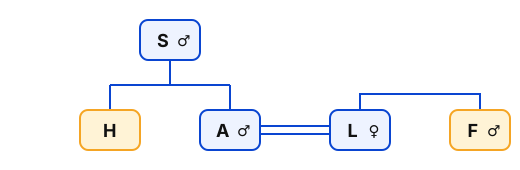
In a certain code language, 'A < B' means 'A is the son of B', 'A / B' means 'A is the father of B', 'A : B' means 'A is the wife of B' and 'A ! B' means 'A is the brother of B'.
How is F related to H if 'F ! L : A < S / H'?
एक निश्चित कूट भाषा में, 'A < B' का अर्थ है 'A, B का पुत्र है', 'A / B' का अर्थ है 'A, B का पिता है', 'A : B' का अर्थ है 'A, B की पत्नी है' तथा 'A ! B' का अर्थ है 'A, B का भाई है'।
यदि 'F ! L : A < S / H' है, तो F का H से क्या संबंध है?
  1. ABrother's wife's fatherभाई की पत्नी का पिता
  2. BBrother's wife's brotherभाई की पत्नी का भाई
  3. CBrother's wife's sisterभाई की पत्नी की बहन
  4. DBrother's wife's sonभाई की पत्नी का पुत्र
Show answer

Concept: Decode each symbol link from left to right and build the family chain.

  1. F ! L → F is L's brother; L : A → L is A's wife
  2. A < S → A is S's son; S / H → S is H's father
  3. So A and H are siblings (A is H's brother)
  4. From H: brother (A) → his wife (L) → her brother (F)

Trick: Trace backwards from H: H → A → L → F, naming each link — brother's wife's brother.

Answer: (B) Brother's wife's brother

अवधारणा: हर चिह्न को बाएँ से दाएँ खोलें और परिवार-श्रृंखला बनाएँ।

  1. F ! L → F, L का भाई; L : A → L, A की पत्नी
  2. A < S → A, S का पुत्र; S / H → S, H का पिता
  3. अतः A, H का भाई है
  4. H से: भाई (A) → उसकी पत्नी (L) → उसका भाई (F)

ट्रिक: H से उल्टा चलें: H → A → L → F — भाई की पत्नी का भाई।

उत्तर: (B) भाई की पत्नी का भाई

SSC GDGeneral Intelligence & ReasoningCoded blood relationsSSC GD 2025 · 12 Feb Shift 1 →
Q2308.
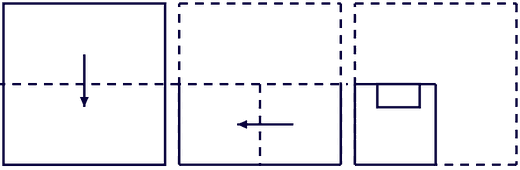
A paper is folded and cut as shown below. How will it appear when unfolded?
figure
नीचे दर्शाए अनुसार एक कागज़ को मोड़कर काटा जाता है। खोले जाने पर वह कैसा दिखाई देगा?
figure
  1. Afigure
  2. Bfigure
  3. Cfigure
  4. Dfigure
Show answer

Concept: While unfolding, every cut is mirrored across each fold line; a cut on a fold line opens into one full hole.

  1. Fold 1: top half down → crease is the horizontal middle line
  2. Fold 2: right half onto left → crease is the vertical middle line
  3. The rectangular cut lies on the horizontal crease edge of the folded piece
  4. Unfolding gives 2 rectangles, side by side, each sitting across the horizontal middle line

Trick: Count holes = 4 copies, but cuts touching a crease merge in pairs → 4 ÷ 2 = 2 holes, symmetric about the centre.

Answer: (A) Figure (A)

अवधारणा: खोलते समय हर कट मोड़-रेखा के दोनों ओर दर्पण-प्रतिबिंब बनता है; मोड़ पर लगा कट एक पूरा छेद बन जाता है।

  1. पहला मोड़: ऊपरी आधा नीचे → बीच की आड़ी रेखा पर मोड़
  2. दूसरा मोड़: दायाँ आधा बाएँ पर → बीच की खड़ी रेखा पर मोड़
  3. आयताकार कट क्षैतिज मोड़ वाले किनारे पर है
  4. खुलने पर 2 आयत, अगल-बगल, दोनों बीच की आड़ी रेखा के आर-पार

ट्रिक: 4 प्रतियाँ बनतीं, पर मोड़ पर लगे कट जोड़े में मिलते हैं → 2 छेद।

उत्तर: (A) आकृति (A)

SSC GDGeneral Intelligence & ReasoningPaper folding and cuttingSSC GD 2025 · 12 Feb Shift 1 →
Q2309.
What should come in place of the question (?) in the given series based on the English alphabetical order?
BFA CGA DHA EIA ?
अंग्रेजी वर्णमाला क्रम के आधार पर दी गई शृंखला में प्रश्नवाचक चिह्न (?) के स्थान पर क्या आना चाहिए?
BFA CGA DHA EIA ?
  1. AFJA
  2. BFGH
  3. CFAJ
  4. DJFA
Show answer

Concept: Track each letter position of the clusters separately.

  1. 1st letters: B, C, D, E → F
  2. 2nd letters: F, G, H, I → J
  3. 3rd letter: always A
  4. Next term: FJA

Trick: 1st and 2nd letters always keep a gap of 4 (B→F, E→I), so F→J; only FJA fits.

Answer: (A) FJA

अवधारणा: हर स्थान के अक्षर को अलग-अलग देखें।

  1. पहला अक्षर: B, C, D, E → F
  2. दूसरा अक्षर: F, G, H, I → J
  3. तीसरा अक्षर: हमेशा A
  4. अगला पद: FJA

ट्रिक: पहले और दूसरे अक्षर में हमेशा 4 का अंतर (B→F), अतः F→J।

उत्तर: (A) FJA

SSC GDGeneral Intelligence & ReasoningLetter-cluster seriesSSC GD 2025 · 12 Feb Shift 1 →
Q2310.
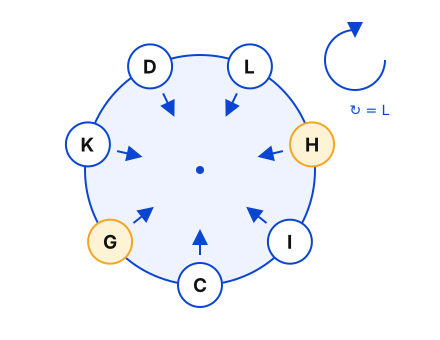
C, D, G, H, I, K and L are sitting around a circular table facing the centre of the table (but not necessarily in the same order). Only two people sit between D and C when counted from the left of C. K sits third to the left of I. H sits to the immediate right of I. H sits second to the left of D. L is not an immediate neighbour of K. Who sits third to the right of G?
C, D, G, H, I, K तथा L एक वृत्ताकार मेज़ के चारों ओर मेज़ के केंद्र की ओर मुख करके बैठे हैं (आवश्यक नहीं कि इसी क्रम में)। C के बाईं ओर से गिनने पर D और C के बीच केवल दो व्यक्ति बैठे हैं। K, I के बाईं ओर तीसरे स्थान पर बैठा है। H, I के ठीक दाईं ओर बैठा है। H, D के बाईं ओर दूसरे स्थान पर बैठा है। L, K का निकटतम पड़ोसी नहीं है। G के दाईं ओर तीसरे स्थान पर कौन बैठा है?
  1. AD
  2. BL
  3. CH
  4. DC
Show answer

Concept: Facing the centre: left = clockwise, right = anticlockwise. Fix one person and place others.

  1. Put C at seat 0 (clockwise numbering). Two between, from C's left → D at seat 3
  2. H second to left of D → seat 5; H is I's immediate right → I at seat 6
  3. K third to left of I → seat 2
  4. Seats 1, 4 left; L not next to K → L = 4, G = 1
  5. Third to the right of G (anticlockwise): 1 → 0 → 6 → 5 = H

Trick: Start from the most fixed clue (D–C gap) and move only in one direction (clockwise numbers) to avoid left/right confusion.

Answer: (C) H

अवधारणा: केंद्र की ओर मुख होने पर बायाँ = दक्षिणावर्त, दायाँ = वामावर्त।

  1. C को स्थान 0 पर रखें; C के बाएँ से दो के बाद D → स्थान 3
  2. H, D के बाएँ दूसरा → 5; H, I के ठीक दाएँ → I = 6
  3. K, I के बाएँ तीसरा → 2
  4. बचे 1, 4; L, K के पास नहीं → L = 4, G = 1
  5. G के दाएँ तीसरा: 1 → 0 → 6 → 5 = H

ट्रिक: सबसे पक्का संकेत (D–C) से शुरू करें और एक ही दिशा में स्थान गिनें।

उत्तर: (C) H

SSC GDGeneral Intelligence & ReasoningCircular seating arrangementSSC GD 2025 · 12 Feb Shift 1 →
Q2311.
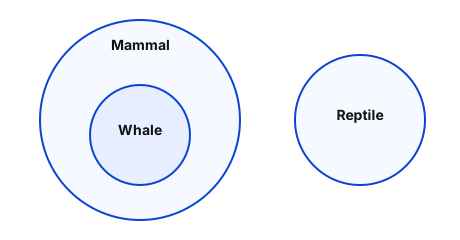
Select the Venn diagram that best illustrates the relationship between the following classes.
Whale, Mammal, Reptile
उस वेन आरेख का चयन कीजिए जो निम्नलिखित वर्गों के बीच के संबंध को सर्वोत्तम रूप से दर्शाता है।
ह्वेल, स्तनधारी, सरीसृप
  1. Afigure
  2. Bfigure
  3. Cfigure
  4. Dfigure
Show answer

Concept: Show subset as a circle inside another; unrelated classes as separate circles.

  1. Every whale is a mammal → Whale circle inside Mammal
  2. No reptile is a mammal or a whale → Reptile circle separate
  3. Needed: one circle inside another + one detached circle = option (B)

Yaad rakhein: Whales breathe through lungs and feed milk to their young — that is why they are mammals, not fish.

Answer: (B) Figure (B)

अवधारणा: उपसमुच्चय को दूसरे वृत्त के अंदर तथा असंबंधित वर्ग को अलग वृत्त में दिखाते हैं।

  1. हर व्हेल स्तनधारी है → व्हेल वृत्त, स्तनधारी वृत्त के अंदर
  2. सरीसृप न स्तनधारी है न व्हेल → अलग वृत्त
  3. अतः एक वृत्त अंदर + एक अलग = विकल्प (B)

याद रखें: व्हेल फेफड़ों से साँस लेती है और बच्चों को दूध पिलाती है, इसलिए यह स्तनधारी है, मछली नहीं।

उत्तर: (B) आकृति (B)

SSC GDGeneral Intelligence & ReasoningVenn diagram – classificationSSC GD 2025 · 12 Feb Shift 1 →
Q2312.
Select the figure from among the given options that can replace the question mark (?) in the following series.
figure
दिए गए विकल्पों में से उस आकृति का चयन कीजिए जो निम्नलिखित शृंखला में प्रश्नवाचक चिह्न (?) का स्थान ले सके।
figure
  1. Afigure
  2. Bfigure
  3. Cfigure
  4. Dfigure
Show answer

Concept: Find how much the whole figure turns each step and keep all its parts unchanged.

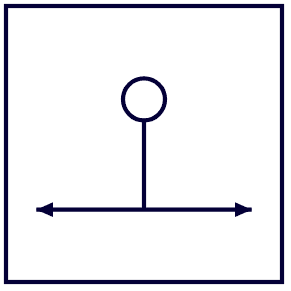
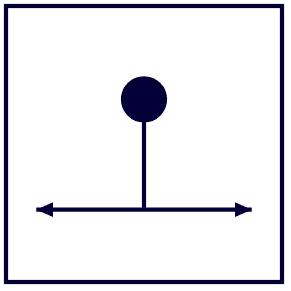
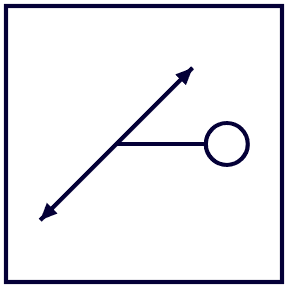
  1. Figure: two-headed arrow with a perpendicular stem ending in a hollow circle
  2. Each step turns the whole figure 45° clockwise
  3. 4th figure: arrow vertical, stem to the right → 5th: arrow on the ↗ diagonal, stem pointing down-right
  4. Only (A) keeps the stem at 90° to the arrow with an empty circle

Trick: Reject options where the shape has not turned or where any part (filled circle, non-perpendicular stem) changed.

Answer: (A) Figure (A)

अवधारणा: पूरी आकृति हर चरण में कितनी घूमती है, यह देखें; उसके भाग नहीं बदलते।

  1. आकृति: दोमुँहा तीर, जिससे लंब डंडी और खोखला वृत्त जुड़ा है
  2. हर अगले चित्र में पूरी आकृति घड़ी की सुई की दिशा में 45° मुड़ती है
  3. चौथी में तीर खड़ा, डंडी दाईं ओर → पाँचवीं में तीर ↗ विकर्ण पर, डंडी नीचे-दाएँ
  4. केवल (A) में डंडी समकोण पर और वृत्त खोखला है

ट्रिक: जो विकल्प घूमा ही नहीं या जिसका कोई भाग बदला, उसे हटा दें।

उत्तर: (A) आकृति (A)

SSC GDGeneral Intelligence & ReasoningFigure series – rotationSSC GD 2025 · 12 Feb Shift 1 →
Q2313.
Select the option in which the given figure ( X ) is embedded (rotation is NOT allowed).
figure
उस विकल्प का चयन कीजिए जिसमें दी गई आकृति ( X ) अंतर्निहित है (घूर्णन की अनुमति नहीं है)।
figure
  1. Afigure
  2. Bfigure
  3. Cfigure
  4. Dfigure
Show answer

Concept: Find the exact shape (same size and slant) hidden inside an option, without rotating it.

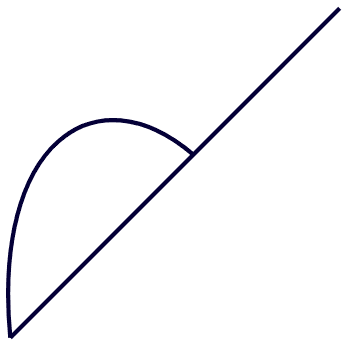
  1. (X) = one straight slanting line (bottom-left to top-right) with an arc on its upper-left side joining it at the lower end and the middle
  2. In (B), edges of the two diamonds join into one such slanting line, and the curve in the left diamond matches the arc
  3. (A) has an arrowhead, (C) meets at a centre, (D) has a horizontal main line

Trick: First match the longest line's slant; discard every option where that line is not at the same angle.

Answer: (B) Figure (B)

अवधारणा: दी गई आकृति को बिना घुमाए उसी आकार और झुकाव में विकल्पों में खोजें।

  1. (X): नीचे-बाएँ से ऊपर-दाएँ जाती एक सीधी रेखा, जिसके ऊपरी-बाएँ ओर एक चाप है
  2. (B) में दोनों हीरों के किनारे मिलकर वैसी ही रेखा बनाते हैं और बाएँ हीरे का वक्र चाप से मेल खाता है
  3. (A) में तीर, (C) में केंद्र पर मिलन, (D) में मुख्य रेखा क्षैतिज

ट्रिक: पहले सबसे लंबी रेखा का झुकाव मिलाएँ; अलग झुकाव वाले विकल्प हटाएँ।

उत्तर: (B) आकृति (B)

SSC GDGeneral Intelligence & ReasoningEmbedded figureSSC GD 2025 · 12 Feb Shift 1 →
Q2314.
What should come in place of the question mark (?) in the given series?
17 9 29 21 65 57 ?
दी गई शृंखला में प्रश्नवाचक चिह्न (?) के स्थान पर क्या आना चाहिए?
17 9 29 21 65 57 ?
  1. A175
  2. B169
  3. C173
  4. D167
Show answer

Concept: Two operations repeat by turns: −8, then ×3+2.

  1. 17−8=9; 9×3+2=29
  2. 29−8=21; 21×3+2=65
  3. 65−8=57; next: 57×3+2
  4. 57×3=171; 171+2=173

Trick: Unit digit check: 57×3 ends in 1, +2 → ends in 3. Only 173 ends in 3.

Answer: (C) 173

अवधारणा: दो संक्रियाएँ बारी-बारी से: −8, फिर ×3+2।

  1. 17−8=9; 9×3+2=29
  2. 29−8=21; 21×3+2=65
  3. 65−8=57; अगला: 57×3+2
  4. 171+2=173

ट्रिक: इकाई अंक: 7×3=21 → 1, +2 → 3। केवल 173 का इकाई अंक 3 है।

उत्तर: (C) 173

SSC GDGeneral Intelligence & ReasoningNumber series – alternate operationsSSC GD 2025 · 12 Feb Shift 1 →
Q2315.
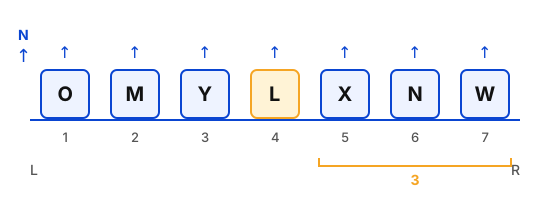
Seven people, L, M, N, O, W, X and Y, are sitting in a row, facing north (but not necessarily in the same order). Only two people sit to the left of Y. Only three people sit between Y and W. X sits second to the right of Y. Only two people sit between X and M. L sits at some place to the right of O but at some place to the left of N. How many people sit to the right of L ?
सात व्यक्ति L, M, N, O, W, X तथा Y एक पंक्ति में उत्तर की ओर मुख करके बैठे हैं (आवश्यक नहीं कि इसी क्रम में)। Y के बाईं ओर केवल दो व्यक्ति बैठे हैं। Y और W के बीच केवल तीन व्यक्ति बैठे हैं। X, Y के दाईं ओर दूसरे स्थान पर बैठा है। X और M के बीच केवल दो व्यक्ति बैठे हैं। L, O के दाईं ओर किसी स्थान पर परंतु N के बाईं ओर किसी स्थान पर बैठा है। L के दाईं ओर कितने व्यक्ति बैठे हैं?
  1. ATwoदो
  2. BThreeतीन
  3. COneएक
  4. DFourचार
Show answer

Concept: Facing north: left end = seat 1. Place the fixed people first.

  1. Two people left of Y → Y = 3
  2. Three between Y and W → W = 7
  3. X second right of Y → X = 5; two between X and M → M = 2
  4. Seats 1, 4, 6 for O < L < N → O = 1, L = 4, N = 6
  5. Right of L: X, N, W = 3 people

Trick: Since 'O left of L left of N' and the free seats are 1, 4, 6, L must be the middle one — seat 4, so 7 − 4 = 3 to its right.

Answer: (B) Three

अवधारणा: उत्तर की ओर मुख: बायाँ सिरा = स्थान 1। पहले पक्के व्यक्ति रखें।

  1. Y के बाएँ दो → Y = 3
  2. Y और W के बीच तीन → W = 7
  3. X, Y के दाएँ दूसरा → X = 5; X और M के बीच दो → M = 2
  4. खाली 1, 4, 6 में O, L, N क्रम से → L = 4
  5. L के दाएँ: X, N, W = 3

ट्रिक: L बीच वाला खाली स्थान (4) लेगा, अतः दाएँ 7 − 4 = 3 व्यक्ति।

उत्तर: (B) तीन

SSC GDGeneral Intelligence & ReasoningLinear seating arrangementSSC GD 2025 · 12 Feb Shift 1 →
Q2316.
Each letter in the word GUILDER is arranged in the English alphabetical order. How many letters are there in the English alphabetical order between the letter which is fourth from the left end and the one which is first from the right end in the new letter-cluster thus formed?
शब्द GUILDER के प्रत्येक अक्षर को अंग्रेजी वर्णानुक्रम में व्यवस्थित किया जाता है। इस प्रकार बने नए अक्षर-समूह में बाएँ सिरे से चौथे अक्षर तथा दाएँ सिरे से पहले अक्षर के बीच अंग्रेजी वर्णमाला क्रम में कितने अक्षर हैं?
  1. A12
  2. B9
  3. C11
  4. D10
Show answer

Concept: Letters between two letters = difference of positions − 1.

  1. GUILDER in order: D, E, G, I, L, R, U
  2. 4th from left = I (9), 1st from right = U (21)
  3. Between: 21 − 9 − 1 = 11

Trick: Remember EJOTY: E5, J10, O15, T20, Y25 — I = 9 and U = 21 come instantly.

Answer: (C) 11

अवधारणा: दो अक्षरों के बीच के अक्षर = स्थानों का अंतर − 1।

  1. GUILDER क्रम में: D, E, G, I, L, R, U
  2. बाएँ से चौथा = I (9), दाएँ से पहला = U (21)
  3. बीच में: 21 − 9 − 1 = 11

ट्रिक: EJOTY याद रखें: E5, J10, O15, T20, Y25 — I = 9, U = 21 तुरंत।

उत्तर: (C) 11

SSC GDGeneral Intelligence & ReasoningAlphabet rearrangementSSC GD 2025 · 12 Feb Shift 1 →
Q2317.
YFOT is related to CIRX in a certain way based on the English alphabetical order. In the same way, UBHW is related to YEKA. To which of the following is SAEX related, following the same logic?
अंग्रेजी वर्णमाला क्रम के आधार पर YFOT का संबंध एक निश्चित प्रकार से CIRX से है। उसी प्रकार UBHW का संबंध YEKA से है। इसी तर्क का अनुसरण करते हुए SAEX का संबंध निम्नलिखित में से किससे है?
  1. AVCGA
  2. BWCGC
  3. CVBIC
  4. DWDHB
Show answer

Concept: Find the letter-wise shift from the example pair and apply it.

  1. YFOT → CIRX: +4, +3, +3, +4 (UBHW → YEKA same)
  2. S + 4 = W, A + 3 = D
  3. E + 3 = H, X + 4 = B (after Z, restart at A)
  4. Answer: WDHB

Trick: First letter S+4 = W leaves only B and D; second letter A+3 = D confirms option D.

Answer: (D) WDHB

अवधारणा: उदाहरण जोड़े से हर अक्षर का खिसकाव निकालें और लगाएँ।

  1. YFOT → CIRX: +4, +3, +3, +4
  2. S + 4 = W, A + 3 = D
  3. E + 3 = H, X + 4 = B (Z के बाद फिर A)
  4. उत्तर: WDHB

ट्रिक: S+4 = W से विकल्प B, D बचे; A+3 = D से D पक्का।

उत्तर: (D) WDHB

SSC GDGeneral Intelligence & ReasoningLetter analogy – shiftsSSC GD 2025 · 12 Feb Shift 1 →
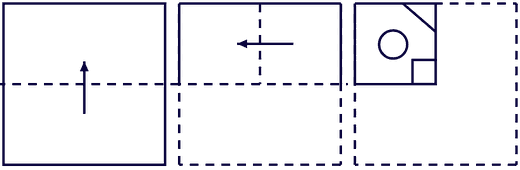
Q2318.
A paper is folded and cut as shown below. How will it appear when unfolded?
figure
नीचे दर्शाए अनुसार एक कागज़ को मोड़कर काटा जाता है। खोले जाने पर वह कैसा दिखाई देगा?
figure
  1. Afigure
  2. Bfigure
  3. Cfigure
  4. Dfigure
Show answer

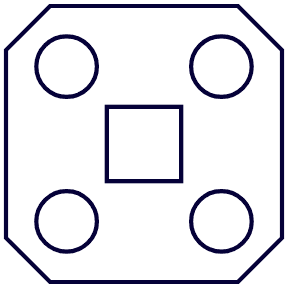
Concept: Each cut repeats in all four quarters; cuts on a crease join into single holes or notches.

  1. Folds: bottom up, then right onto left → top-left quarter remains
  2. Circle in the middle of the quarter → one circle in each quarter (4 circles)
  3. Square at the corner of both creases → one square at the sheet's centre
  4. Corner cut on top edge and vertical crease → V-notches at the middle of top and bottom edges; side edges stay straight

Trick: Check the edges first: only the edge touched by the cut gets notched — this removes (D) and (B) quickly.

Answer: (C) Figure (C)

अवधारणा: हर कट चारों भागों में दोहराता है; मोड़ पर लगे कट मिलकर एक छेद/खाँचा बनाते हैं।

  1. नीचे का आधा ऊपर, फिर दायाँ बाएँ पर → ऊपरी-बायाँ चौथाई बचा
  2. बीच का वृत्त → चारों भागों में 4 वृत्त
  3. दोनों मोड़ों के कोने का वर्ग → केंद्र में एक वर्ग
  4. ऊपरी किनारे व खड़े मोड़ का कट → ऊपर-नीचे किनारों के बीच में V-खाँचे; बगल के किनारे सीधे

ट्रिक: पहले किनारे जाँचें — जिस किनारे को कट छूता ही नहीं, वह सीधा रहेगा।

उत्तर: (C) आकृति (C)

SSC GDGeneral Intelligence & ReasoningPaper folding and cuttingSSC GD 2025 · 12 Feb Shift 1 →
Q2319.
What should come in place of the question mark (?) in the given series?
710 712 716 722 730 ?
दी गई शृंखला में प्रश्नवाचक चिह्न (?) के स्थान पर क्या आना चाहिए?
710 712 716 722 730 ?
  1. A742
  2. B738
  3. C740
  4. D744
Show answer

Concept: Differences between terms form a simple pattern.

  1. Differences: 2, 4, 6, 8
  2. Next difference = 10
  3. 730 + 10 = 740

Trick: Even-number gaps mean nth term = 710 + n(n−1): for n = 6, 710 + 30 = 740.

Answer: (C) 740

अवधारणा: पदों के अंतर का क्रम देखें।

  1. अंतर: 2, 4, 6, 8
  2. अगला अंतर = 10
  3. 730 + 10 = 740

ट्रिक: सम संख्याओं का अंतर: nवाँ पद = 710 + n(n−1); n = 6 पर 740।

उत्तर: (C) 740

SSC GDGeneral Intelligence & ReasoningNumber series – increasing differencesSSC GD 2025 · 12 Feb Shift 1 →
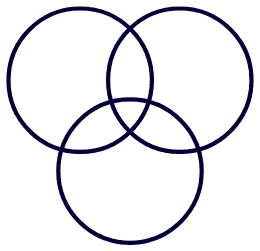
Q2320.
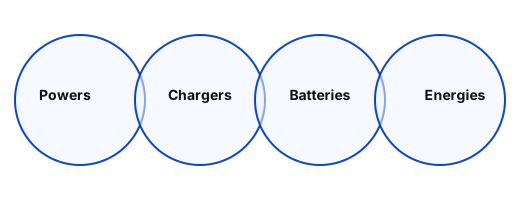
Read the given statements and conclusions carefully. Assuming that the information given in the statements is true, even if it appears to be at variance with commonly known facts, decide which of the given conclusions logically follow(s) from the statements.
Statements:
Some chargers are batteries.
Some chargers are powers.
Some batteries are energies.
Conclusions:
(I) Some chargers are energies.
(II) Some batteries are powers.
दिए गए कथनों और निष्कर्षों को ध्यानपूर्वक पढ़िए। यह मानते हुए कि कथनों में दी गई जानकारी सत्य है, चाहे वह सर्वज्ञात तथ्यों से भिन्न प्रतीत होती हो, निर्णय कीजिए कि दिए गए निष्कर्षों में से कौन-सा/से कथनों का तार्किक रूप से अनुसरण करता है/करते हैं।
कथन:
कुछ चार्जर बैटरियाँ हैं।
कुछ चार्जर शक्तियाँ हैं।
कुछ बैटरियाँ ऊर्जाएँ हैं।
निष्कर्ष:
(I) कुछ चार्जर ऊर्जाएँ हैं।
(II) कुछ बैटरियाँ शक्तियाँ हैं।
  1. AOnly conclusion (II) followsकेवल निष्कर्ष (II) अनुसरण करता है
  2. BOnly conclusion (I) followsकेवल निष्कर्ष (I) अनुसरण करता है
  3. CBoth conclusions (I) and (II) followदोनों निष्कर्ष (I) और (II) अनुसरण करते हैं
  4. DNeither conclusion (I) nor (II) followsन तो निष्कर्ष (I) और न ही (II) अनुसरण करता है
Show answer

Concept: Two 'Some' statements together never give a definite conclusion.

  1. I: chargers–batteries (some) and batteries–energies (some) → no fixed link
  2. II: batteries and powers connect only through chargers (some + some) → no fixed link
  3. Both can be false in a valid diagram

Trick: Some + Some = No conclusion. Spot it and skip the diagram.

Answer: (D) Neither conclusion (I) nor (II) follows

अवधारणा: दो 'कुछ' वाले कथन मिलकर कोई पक्का निष्कर्ष नहीं देते।

  1. I: चार्जर–बैटरी (कुछ) और बैटरी–ऊर्जा (कुछ) → निश्चित संबंध नहीं
  2. II: बैटरी और पावर केवल चार्जर से जुड़े (कुछ + कुछ) → निश्चित नहीं
  3. दोनों निष्कर्ष गलत भी हो सकते हैं

ट्रिक: कुछ + कुछ = कोई निष्कर्ष नहीं। आरेख की ज़रूरत नहीं।

उत्तर: (D) न तो निष्कर्ष (I) और न ही (II) अनुसरण करता है

SSC GDGeneral Intelligence & ReasoningSyllogism – some + someSSC GD 2025 · 12 Feb Shift 1 →