Question bank

Q&A: practice questions with answers

Search questions on any topic. Filter by exam category, exam, subject and topic, try the question, then open the answer and explanation.

Courses – airGurukul

4,200 questions found.

Q2801.
The position(s) of how many letters will remain unchanged if each of the letters in the word MODULES is arranged in the English alphabetical order ?
यदि शब्द MODULES के प्रत्येक अक्षर को अंग्रेजी वर्णमाला क्रम में व्यवस्थित किया जाए, तो कितने अक्षरों की स्थिति अपरिवर्तित रहेगी?
  1. ATwoदो
  2. BOneएक
  3. CZeroशून्य
  4. DThreeतीन
Show answer

Concept: Sort the letters A→Z and compare slot by slot with the original word.

  1. Original: M O D U L E S
  2. Sorted: D E L M O S U
  3. Slot-wise pairs: M/D, O/E, D/L, U/M, L/O, E/S, S/U – no pair matches.
  4. So 0 letters keep their place.

Trick: Check only the 1st and last slots first (M≠D, S≠U); then scan the middle – saves time.

Answer: (C) Zero

अवधारणा: अक्षरों को A→Z क्रम में लगाकर मूल शब्द से स्थान-दर-स्थान मिलाएँ।

हल:

  1. मूल: M O D U L E S
  2. क्रमबद्ध: D E L M O S U
  3. जोड़े: M/D, O/E, D/L, U/M, L/O, E/S, S/U – कोई भी समान नहीं।
  4. अतः 0 अक्षर अपनी जगह पर रहते हैं।

ट्रिक: पहले पहला व अंतिम स्थान जाँचें, फिर बीच वाले – समय बचता है।

उत्तर: (C) शून्य
SSC GDGeneral Intelligence & ReasoningLetter positions after alphabetical sortingSSC GD 2025 · 10 Feb Shift 2 →
Q2802.
JGKH is related to LIMJ in a certain way based on the English alphabetical order. In the same way, VSWT is related to XUYV. To which of the given options is WTXU related, following the same logic ?
JGKH एक निश्चित तरीके से LIMJ से संबंधित है, जो अंग्रेजी वर्णमाला क्रम पर आधारित है। उसी प्रकार, VSWT, XUYV से संबंधित है। समान तर्क का अनुसरण करते हुए, WTXU दिए गए विकल्पों में से किससे संबंधित है?
  1. AYVZW
  2. BYUYW
  3. CYVYW
  4. DYWYA
Show answer

Concept: Each letter of the first cluster is shifted by a fixed number of places.

  1. J→L, G→I, K→M, H→J: every letter +2.
  2. Check: V→X, S→U, W→Y, T→V (+2) ✔
  3. WTXU +2 → W→Y, T→V, X→Z, U→W = YVZW.

Trick: Option B, C, D have 'Y' as 3rd letter, but X+2 = Z – only (A) has Z.

Answer: (A) YVZW

अवधारणा: पहले समूह का हर अक्षर निश्चित स्थान आगे खिसकता है।

हल:

  1. J→L, G→I, K→M, H→J: सभी +2।
  2. जाँच: V→X, S→U, W→Y, T→V (+2) ✔
  3. WTXU +2 → Y, V, Z, W = YVZW।

ट्रिक: तीसरा अक्षर X+2 = Z होना चाहिए – केवल (A) में Z है।

उत्तर: (A) YVZW

SSC GDGeneral Intelligence & ReasoningLetter analogy – +2 shiftSSC GD 2025 · 10 Feb Shift 2 →
Q2803.
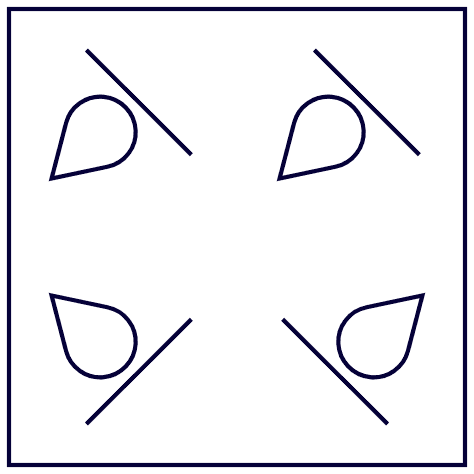
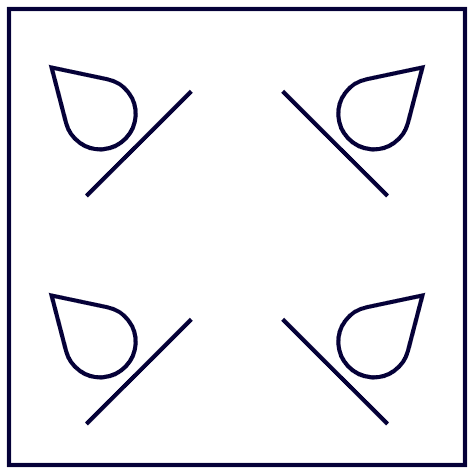
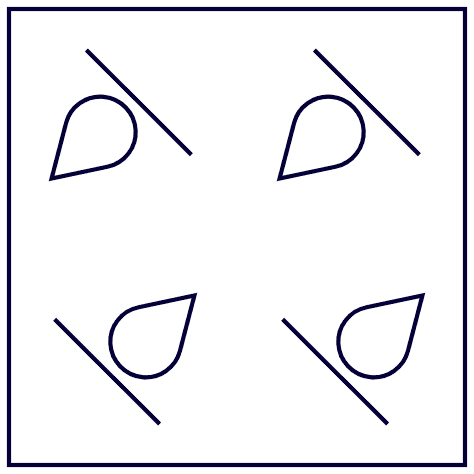
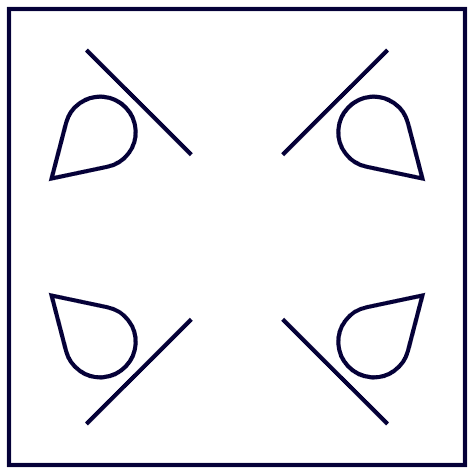
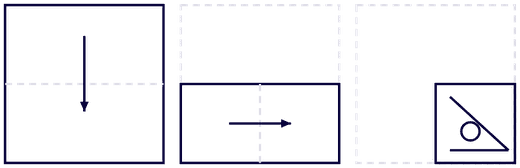
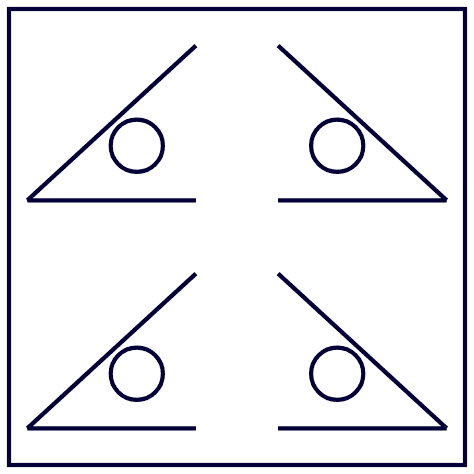
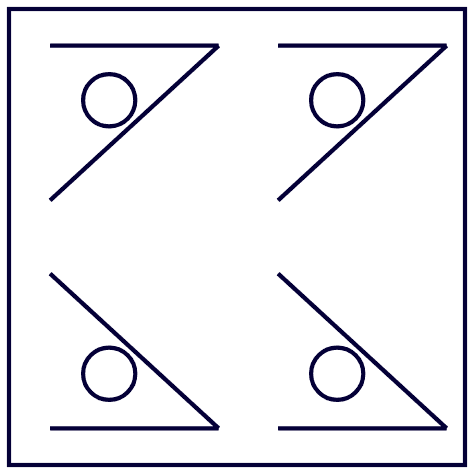
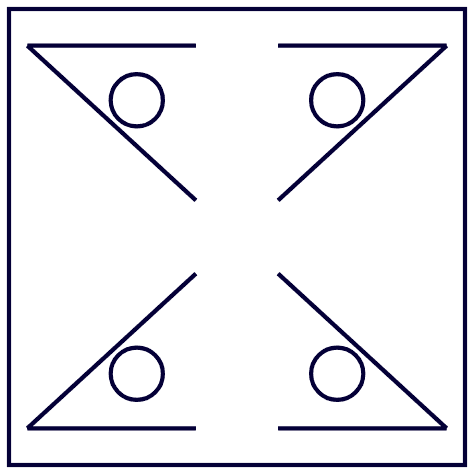
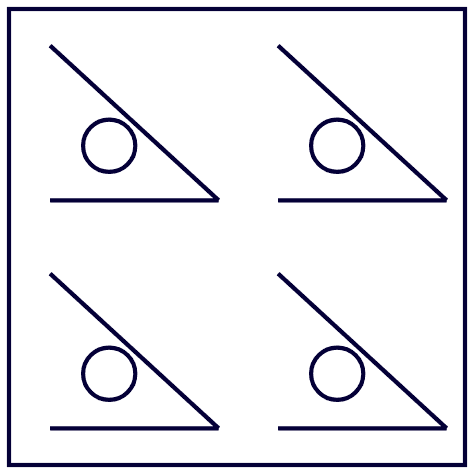
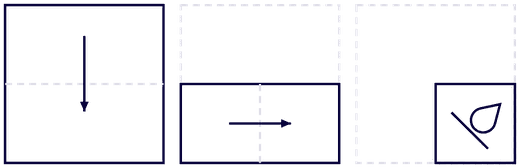
A paper is folded and punched as shown below. How will it appear when unfolded?
figure
एक कागज़ को नीचे दर्शाए अनुसार मोड़ा और छेदा जाता है। खोले जाने पर वह कैसा दिखाई देगा?
figure
  1. Afigure
  2. Bfigure
  3. Cfigure
  4. Dfigure
Show answer

Concept: Unfolding works like a mirror at every crease; 2 folds turn 1 punch into 4.

  1. Fold 1: top half down; fold 2: left half onto right → punch sits in the bottom-right quarter.
  2. Open the vertical fold: the mark is mirrored into the bottom-left quarter.
  3. Open the horizontal fold: both marks are mirrored into the top half.
  4. Result: 4 marks, each a mirror image of its neighbour across the crease – figure (D).

Trick: Look at the slant of the line: across a crease it must flip direction (\ becomes /). Reject options where neighbours slant the same way.

Answer: (D) Figure (D)

अवधारणा: खोलते समय हर मोड़ दर्पण की तरह काम करता है; 2 मोड़ में 1 छेद → 4 निशान।

हल:

  1. पहला मोड़ ऊपर से नीचे, दूसरा बाएँ से दाएँ → छेद नीचे-दाएँ चौथाई में।
  2. खड़ा मोड़ खोलने पर निशान नीचे-बाएँ में दर्पण-प्रतिबिंब बनता है।
  3. आड़ा मोड़ खोलने पर दोनों निशान ऊपर वाले आधे में उलट कर आते हैं।
  4. कुल 4 निशान, मोड़ के आर-पार एक-दूसरे के दर्पण-प्रतिबिंब – आकृति (D)।

ट्रिक: रेखा का झुकाव देखें: मोड़ के आर-पार झुकाव उलटना चाहिए (\ से /)। जहाँ पड़ोसी एक ही ओर झुके हों, वह विकल्प गलत।

उत्तर: (D) आकृति (D)

SSC GDGeneral Intelligence & ReasoningPaper folding – two folds, one punchSSC GD 2025 · 10 Feb Shift 2 →
Q2804.
What should come in place of (?) in the given series based on the English alphabetical order ?
DMW, GPZ, JSC, MVF, ?
अंग्रेजी वर्णमाला क्रम के आधार पर दी गई शृंखला में (?) के स्थान पर क्या आना चाहिए?
DMW, GPZ, JSC, MVF, ?
  1. ANZK
  2. BQAL
  3. CPYI
  4. DMWJ
Show answer

Concept: Treat the 1st, 2nd and 3rd letters as three separate series.

  1. 1st letters: D, G, J, M → +3 → P
  2. 2nd letters: M, P, S, V → +3 → Y
  3. 3rd letters: W, Z, C, F → +3 (wraps after Z) → I
  4. Next term = PYI.

Trick: Only one option starts with P (M+3) – pick it in 5 seconds.

Answer: (C) PYI

अवधारणा: पहले, दूसरे और तीसरे अक्षर की तीन अलग श्रृंखलाएँ बनाएँ।

हल:

  1. पहले अक्षर: D, G, J, M → +3 → P
  2. दूसरे अक्षर: M, P, S, V → +3 → Y
  3. तीसरे अक्षर: W, Z, C, F → +3 (Z के बाद फिर A) → I
  4. अगला पद = PYI।

ट्रिक: M+3 = P; केवल एक विकल्प P से शुरू होता है।

उत्तर: (C) PYI

SSC GDGeneral Intelligence & ReasoningLetter series – +3 in each positionSSC GD 2025 · 10 Feb Shift 2 →
Q2805.
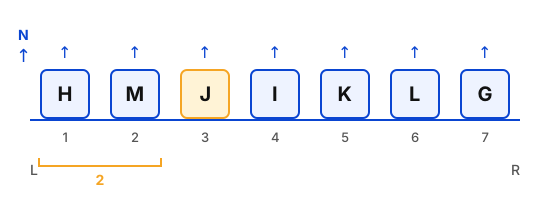
Seven people, G, H, I, J, K, L and M, are sitting in a row, facing north(but not necessarily in the same order) . Only five people sit between H and G. L sits to the immediate left of G. Only one person sits between L and I . J sits at some place to the left of K but at some place to the right of M . How many people sit to the left of J ?
सात व्यक्ति G, H, I, J, K, L और M एक पंक्ति में उत्तर की ओर मुख करके बैठे हैं (आवश्यक नहीं कि इसी क्रम में)। H और G के बीच केवल पाँच व्यक्ति बैठे हैं। L, G के ठीक बाईं ओर बैठा है। L और I के बीच केवल एक व्यक्ति बैठा है। J, K के बाईं ओर कहीं तथा M के दाईं ओर कहीं बैठा है। J के बाईं ओर कितने व्यक्ति बैठे हैं?
  1. AFourचार
  2. BOneएक
  3. CTwoदो
  4. DThreeतीन
Show answer

Concept: Fix the extreme-gap clue first; 5 people between two persons in a row of 7 means both sit at the ends.

  1. H, G at ends; L is immediate left of G, so G = seat 7, L = 6, H = 1.
  2. One person between L and I → I = seat 4.
  3. Seats 2, 3, 5 remain for M, J, K with M < J < K → M = 2, J = 3, K = 5.
  4. Row: H M J I K L G → left of J: H, M = 2 persons.

Trick: 'n−2 people between two persons' in a row of n ⇒ they occupy the two ends.

Answer: (C) Two

अवधारणा: सबसे बड़े अंतर वाला संकेत पहले लगाएँ; 7 की पंक्ति में दो के बीच 5 हों तो दोनों छोर पर हैं।

हल:

  1. H, G छोर पर; L, G के ठीक बाएँ → G = 7, L = 6, H = 1।
  2. L और I के बीच एक → I = 4।
  3. बची सीटें 2, 3, 5 पर M, J, K (M बाएँ, फिर J, फिर K) → M = 2, J = 3, K = 5।
  4. क्रम: H M J I K L G → J के बाएँ H, M = 2 व्यक्ति।

ट्रिक: n की पंक्ति में दो व्यक्तियों के बीच n−2 हों तो वे दोनों सिरों पर होंगे।

उत्तर: (C) दो

SSC GDGeneral Intelligence & ReasoningLinear seating – row of sevenSSC GD 2025 · 10 Feb Shift 2 →
Q2806.
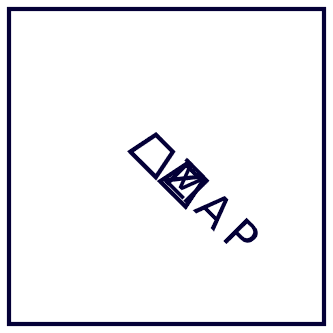
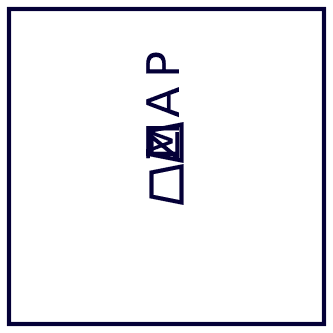
Identify the figure given in the options which when put in place of the question mark (?) will logically complete the series.
figure
उस आकृति की पहचान कीजिए जिसे प्रश्न-चिह्न (?) के स्थान पर रखने पर दी गई शृंखला तार्किक रूप से पूर्ण हो जाएगी।
figure
  1. Afigure
  2. Bfigure
  3. Cfigure
  4. Dfigure
Show answer

Concept: The same symbol string rotates by a fixed angle at each step.

  1. Box 1: string vertical (reads downwards).
  2. Box 2 → 3 → 4: it turns 45° anticlockwise each time (diagonal, horizontal, rising diagonal).
  3. One more 45° anticlockwise turn makes it vertical again, reading from bottom to top – matching figure (D).

Trick: Track just one end symbol (e.g. the square) – see where it points next; ignore the rest.

Answer: (D) Figure (D)

अवधारणा: एक ही चिह्न-समूह हर चरण में निश्चित कोण से घूमता है।

हल:

  1. पहले खाने में समूह खड़ा (ऊपर से नीचे)।
  2. आगे के खानों में हर बार 45° वामावर्त घूमता है (तिरछा, आड़ा, ऊपर उठता तिरछा)।
  3. अगला 45° घुमाव उसे फिर खड़ा कर देगा, अब नीचे से ऊपर पढ़ा जाएगा – आकृति (D)।

ट्रिक: केवल एक छोर का चिह्न (जैसे वर्ग) देखें कि वह अगली बार किस दिशा में होगा।

उत्तर: (D) आकृति (D)

SSC GDGeneral Intelligence & ReasoningFigure series – 45° anticlockwise rotationSSC GD 2025 · 10 Feb Shift 2 →
Q2807.
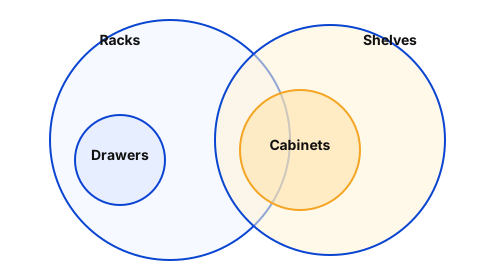
Read the given statements and conclusions carefully. Assuming that the information given in the statements is true, even if it appears to be at variance with commonly known facts, decide which of the given conclusions logically follow(s) from the statements.
Statements:
All drawers are racks.
Some racks are cabinets.
All cabinets are shelves.
Conclusions:
(I) All shelves are racks.
(II) Some shelves are drawers.
दिए गए कथनों और निष्कर्षों को ध्यानपूर्वक पढ़िए। यह मानते हुए कि कथनों में दी गई जानकारी सत्य है, चाहे वह सामान्यतः ज्ञात तथ्यों से भिन्न प्रतीत होती हो, निर्णय कीजिए कि दिए गए निष्कर्षों में से कौन-सा/से निष्कर्ष कथनों का तार्किक रूप से अनुसरण करता है/करते हैं।
कथन:
सभी दराज़ रैक हैं।
कुछ रैक कैबिनेट हैं।
सभी कैबिनेट शेल्फ हैं।
निष्कर्ष:
(I) सभी शेल्फ रैक हैं।
(II) कुछ शेल्फ दराज़ हैं।
  1. ANeither conclusion (I) nor (II) followsन तो निष्कर्ष (I) और न ही (II) अनुसरण करता है
  2. BOnly conclusion (I) followsकेवल निष्कर्ष (I) अनुसरण करता है
  3. CBoth conclusions (I) and (II) followदोनों निष्कर्ष (I) और (II) अनुसरण करते हैं
  4. DOnly conclusion (II) followsकेवल निष्कर्ष (II) अनुसरण करता है
Show answer

Concept: A conclusion follows only if it is true in every possible diagram.

  1. Cabinets ⊂ Shelves, but shelves can lie outside racks → (I) 'All shelves are racks' is not certain.
  2. Drawers ⊂ Racks; the cabinet–rack overlap may miss the drawers completely → no shelf need be a drawer, so (II) fails.
  3. Neither conclusion follows.

Trick: 'All A are B' never gives 'All B are A'. And two 'Some' links via a middle term give no definite result.

Answer: (A) Neither conclusion (I) nor (II) follows

अवधारणा: निष्कर्ष तभी सही है जब हर संभव आरेख में सत्य हो।

हल:

  1. कैबिनेट ⊂ शेल्फ, पर शेल्फ रैक के बाहर भी हो सकती हैं → (I) निश्चित नहीं।
  2. ड्रॉअर ⊂ रैक; रैक–कैबिनेट का साझा भाग ड्रॉअर से अलग हो सकता है → (II) भी निश्चित नहीं।
  3. कोई निष्कर्ष नहीं निकलता।

ट्रिक: 'सभी A, B हैं' से 'सभी B, A हैं' कभी नहीं निकलता।

उत्तर: (A) न तो निष्कर्ष (I) और न ही (II) अनुसरण करता है

SSC GDGeneral Intelligence & ReasoningSyllogism – All / SomeSSC GD 2025 · 10 Feb Shift 2 →
Q2808.
In a certain code language, 'TZKI' is coded as '55' and 'QBYA' is coded as '34'. What is the code for 'FWNP' in the given language?
एक निश्चित कूट भाषा में 'TZKI' को '55' के रूप में तथा 'QBYA' को '34' के रूप में कूटबद्ध किया जाता है। उसी भाषा में 'FWNP' का कूट क्या होगा?
  1. A52
  2. B48
  3. C55
  4. D41
Show answer

Concept: Code = (sum of alphabet positions) − a constant.

  1. QBYA → Q17, B2, Y25, A1; total 45, and 45 − 11 = 34 ✔
  2. TZKI → T20, Z26, K11, I9; total 66, and 66 − 11 = 55 ✔
  3. FWNP → F6, W23, N14, P16; total 59, so code = 59 − 11 = 48.

Trick: Use EJOTY (5, 10, 15, 20, 25) to read positions fast: W = Y−2 = 23, P = O+1 = 16.

Answer: (B) 48

अवधारणा: कोड = (वर्णमाला में अक्षरों की क्रम-संख्याओं का जोड़) − एक निश्चित संख्या।

हल:

  1. QBYA → Q17, B2, Y25, A1; जोड़ 45, और 45 − 11 = 34 ✔
  2. TZKI → T20, Z26, K11, I9; जोड़ 66, और 66 − 11 = 55 ✔
  3. FWNP → F6, W23, N14, P16; जोड़ 59, कोड = 59 − 11 = 48।

ट्रिक: EJOTY (5, 10, 15, 20, 25) से स्थान जल्दी निकालें: W = 23, P = 16।

उत्तर: (B) 48

SSC GDGeneral Intelligence & ReasoningCoding – sum of place values minus 11SSC GD 2025 · 10 Feb Shift 2 →
Q2809.
Select the combination of letters that when sequentially placed in the blanks of the given series, will logically complete the series.
_ZVR U_TP SV_N QTP_ ORN_
अक्षरों के उस संयोजन का चयन कीजिए, जिसे दी गई शृंखला के रिक्त स्थानों में क्रमानुसार रखने पर शृंखला तार्किक रूप से पूर्ण हो जाएगी।
_ZVR U_TP SV_N QTP_ ORN_
  1. AYXQLI
  2. BYVQKI
  3. CWVRKJ
  4. DWXRLJ
Show answer

Concept: Split into 4-letter groups and find the pattern inside a group and between groups.

  1. Groups: _ZVR, U_TP, SV_N, QTP_, ORN_.
  2. Inside each group: +3, −4, −4 (e.g. S→V→R→N).
  3. Group starts fall by 2: W, U, S, Q, O → first blank W.
  4. Fill: WZVR, UXTP, SVRN, QTPL, ORNJ → W X R L J.

Trick: First blank must be Z−3 = W → only (C) and (D) remain; second blank U+3 = X → (D).

Answer: (D) WXRLJ

अवधारणा: श्रृंखला को 4-4 अक्षरों के समूह में बाँटें; समूह के अंदर और समूहों के बीच नियम देखें।

हल:

  1. समूह: _ZVR, U_TP, SV_N, QTP_, ORN_।
  2. हर समूह के भीतर: +3, −4, −4 (उदाहरण U→X→T→P)।
  3. हर समूह का आरंभिक अक्षर 2-2 पीछे: W, U, S, Q, O।
  4. पूर्ण: WZVR, UXTP, SVRN, QTPL, ORNJ → W X R L J।

ट्रिक: पहला रिक्त Z−3 = W → (C), (D) बचे; दूसरा U+3 = X → (D)।

उत्तर: (D) WXRLJ

SSC GDGeneral Intelligence & ReasoningLetter series – fill the blanksSSC GD 2025 · 10 Feb Shift 2 →
Q2810.
What will come in the place of the question mark (?) in the following equation, if ' + ' and ' ÷ ' are interchanged and ' − ' and ' × ' are interchanged?
18 ÷ 15 + 5 × 3 − 4 = ?
निम्नलिखित समीकरण में प्रश्न-चिह्न (?) के स्थान पर क्या आएगा, यदि ' + ' और ' ÷ ' को आपस में बदल दिया जाए तथा ' − ' और ' × ' को आपस में बदल दिया जाए?
18 ÷ 15 + 5 × 3 − 4 = ?
  1. A5
  2. B9
  3. C1
  4. D13
Show answer

Concept: Swap the signs first, then solve by BODMAS.

  1. Swap +↔÷ and −↔×: 18+15÷5−3×4
  2. 15÷5=3, 3×4=12
  3. 18+3−12=9

Trick: Rewrite the whole expression with new signs before calculating – most errors come from swapping in the head.

Answer: (B) 9

अवधारणा: पहले चिह्न बदलें, फिर BODMAS से हल करें।

हल:

  1. +↔÷ और −↔× करने पर: 18+15÷5−3×4
  2. 15÷5=3, 3×4=12
  3. 18+3−12=9

ट्रिक: गणना से पहले पूरा व्यंजक नए चिह्नों के साथ लिख लें – मन में बदलने से गलती होती है।

उत्तर: (B) 9

SSC GDGeneral Intelligence & ReasoningMathematical operations – sign interchangeSSC GD 2025 · 10 Feb Shift 2 →
Q2811.
LNPR is related to TVXZ in a certain way based on the English alphabetical order. In the same way, FHJL is related to NPRT. To which of the given options is ZBDF related, following the same logic?
LNPR एक निश्चित तरीके से TVXZ से संबंधित है, जो अंग्रेजी वर्णमाला क्रम पर आधारित है। उसी प्रकार, FHJL, NPRT से संबंधित है। समान तर्क का अनुसरण करते हुए, ZBDF दिए गए विकल्पों में से किससे संबंधित है?
  1. AHJLP
  2. BHJSD
  3. CHJLN
  4. DHJTY
Show answer

Concept: Find the constant shift between corresponding letters.

  1. L(12)→T(20), N→V, P→X, R→Z: each +8.
  2. FHJL→NPRT is also +8 ✔
  3. ZBDF +8: Z→H (wraps), B→J, D→L, F→N = HJLN.

Trick: All options start with HJ; the 3rd and 4th letters must also be 2 apart (D, F) → only HJLN keeps the gap of 2.

Answer: (C) HJLN

अवधारणा: संगत अक्षरों के बीच स्थिर अंतर खोजें।

हल:

  1. L(12)→T(20), N→V, P→X, R→Z: हर अक्षर +8।
  2. FHJL→NPRT भी +8 ✔
  3. ZBDF +8: Z→H (Z के बाद A से गिनें), B→J, D→L, F→N = HJLN।

ट्रिक: ZBDF के अक्षरों में 2-2 का अंतर है, उत्तर में भी होना चाहिए → केवल HJLN।

उत्तर: (C) HJLN

SSC GDGeneral Intelligence & ReasoningLetter analogy – +8 shiftSSC GD 2025 · 10 Feb Shift 2 →
Q2812.
Based on the English alphabetical order, three of the following four letter - clusters are alike in a certain way and thus form a group. Which letter-cluster DOES NOT belong to that group?
(Note: The odd one out is not based on the number of consonants/vowels or their position in the letter-cluster.)
अंग्रेजी वर्णमाला क्रम के आधार पर, निम्नलिखित चार अक्षर-समूहों में से तीन एक निश्चित प्रकार से समान हैं और इस प्रकार एक समूह बनाते हैं। कौन-सा अक्षर-समूह उस समूह से संबंधित नहीं है?
(नोट: असंगत का चयन अक्षर-समूह में व्यंजनों/स्वरों की संख्या या उनकी स्थिति पर आधारित नहीं है।)
  1. AGID
  2. BPRM
  3. CHJE
  4. DDGB
Show answer

Concept: Write positions and compare the gaps inside each cluster.

  1. GID: 7, 9, 4 → +2, −5
  2. PRM: 16, 18, 13 → +2, −5
  3. HJE: 8, 10, 5 → +2, −5
  4. DGB: 4, 7, 2 → +3, −5 ✘ – odd one.

Trick: In the three alike clusters, the 1st and 3rd letters are 3 apart (G/D, P/M, H/E); for DGB they are only 2 apart.

Answer: (D) DGB

अवधारणा: स्थानीय मान लिखकर समूह के अंदर अंतर देखें।

हल:

  1. GID: 7, 9, 4 → +2, −5
  2. PRM: 16, 18, 13 → +2, −5
  3. HJE: 8, 10, 5 → +2, −5
  4. DGB: 4, 7, 2 → +3, −5 ✘ – यही भिन्न।

ट्रिक: तीन समान समूहों में पहले और तीसरे अक्षर का अंतर 3 है; DGB में केवल 2।

उत्तर: (D) DGB

SSC GDGeneral Intelligence & ReasoningOdd one out – letter clustersSSC GD 2025 · 10 Feb Shift 2 →
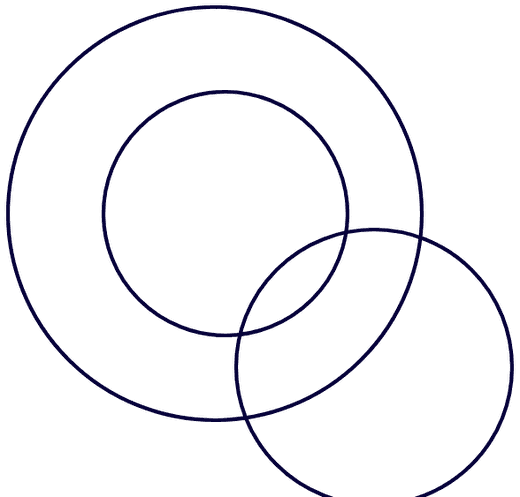
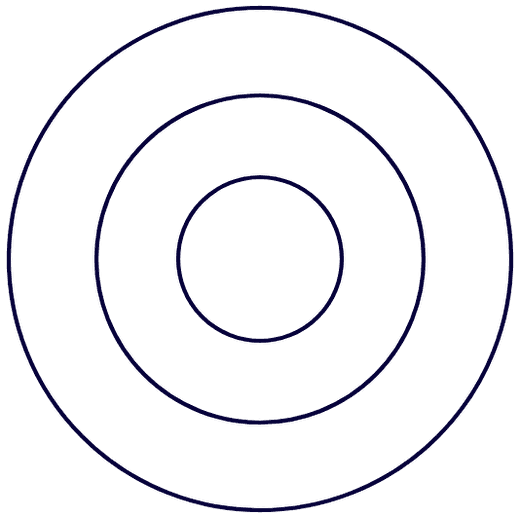
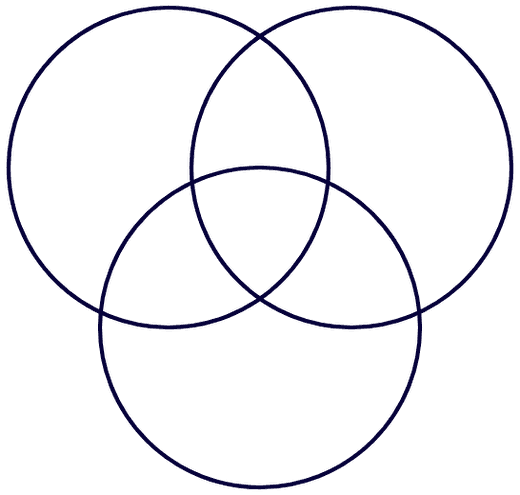
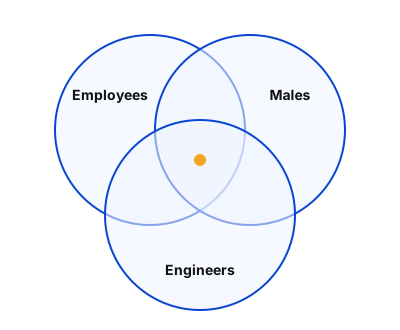
Q2813.
Select the Venn diagram that best illustrates the relationship between the following classes.
Employees, Males, Engineers
उस वेन आरेख का चयन कीजिए जो निम्नलिखित वर्गों के बीच के संबंध को सर्वोत्तम रूप से दर्शाता है।
कर्मचारी, पुरुष, इंजीनियर
  1. Afigure
  2. Bfigure
  3. Cfigure
  4. Dfigure
Show answer

Concept: If every pair of classes partly overlaps and none contains another, draw three intersecting circles.

  1. Some employees are males, some are not (female employees).
  2. Some males are engineers; some engineers are female.
  3. Some engineers are not employees (self-employed).
  4. All three overlap partly → three intersecting circles, figure (C).

Trick: Think of one person in each region: e.g. a male engineer-employee proves the common centre exists.

Answer: (C) Figure (C)

अवधारणा: जब हर दो वर्ग आंशिक रूप से मिलें और कोई दूसरे के अंदर न हो, तो तीन परस्पर कटते वृत्त बनते हैं।

हल:

  1. महिलाएँ भी नौकरी करती हैं, अतः Employees और Males आंशिक रूप से मिलते हैं।
  2. हर पुरुष Engineer नहीं और Engineer महिला भी हो सकती है – आंशिक मेल।
  3. स्वरोज़गार वाला Engineer नौकरी में नहीं होता – Engineers और Employees भी आंशिक।
  4. तीनों जोड़े आंशिक रूप से मिलते हैं → तीन कटते वृत्त, आकृति (C)।

ट्रिक: हर भाग के लिए एक उदाहरण सोचें – जैसे पुरुष इंजीनियर कर्मचारी, तो बीच का साझा भाग बनता है।

उत्तर: (C) आकृति (C)

SSC GDGeneral Intelligence & ReasoningVenn diagram – three overlapping classesSSC GD 2025 · 10 Feb Shift 2 →
Q2814.
In a certain code language, 'REST' is coded as ' 3149 ' and 'SEAT' is coded as '4398'. How is ' R ' coded in the given language ?
एक निश्चित कूट भाषा में 'REST' को '3149' के रूप में तथा 'SEAT' को '4398' के रूप में कूटबद्ध किया जाता है। उसी भाषा में ' R ' को किस रूप में कूटबद्ध किया जाएगा?
  1. A1
  2. B9
  3. C3
  4. D4
Show answer

Concept: Letters common to two words share the digits common to their codes.

  1. REST = 3149, SEAT = 4398.
  2. Common letters: E, S, T; common digits: 3, 4, 9.
  3. REST's leftover letter R ↔ leftover digit 1.

Trick: Just find the digit in the first code missing from the second code – that is R.

Answer: (A) 1

अवधारणा: दो शब्दों के साझा अक्षरों के कोड भी दोनों कोड में साझा होंगे।

हल:

  1. REST = 3149, SEAT = 4398।
  2. साझा अक्षर: E, S, T; साझा अंक: 3, 4, 9।
  3. REST में बचा अक्षर R ↔ बचा अंक 1।

ट्रिक: पहले कोड का वह अंक ढूँढें जो दूसरे कोड में नहीं है – वही R है।

उत्तर: (A) 1

SSC GDGeneral Intelligence & ReasoningCoding – common letters, common digitsSSC GD 2025 · 10 Feb Shift 2 →
Q2815.
What should come in place of the question mark (?) in the given series?
11, 14, 24, 41, 65, ?
दी गई शृंखला में प्रश्न-चिह्न (?) के स्थान पर क्या आना चाहिए?
11, 14, 24, 41, 65, ?
  1. A98
  2. B97
  3. C95
  4. D96
Show answer

Concept: When first differences are irregular, check the differences of differences.

  1. Differences: 3, 10, 17, 24
  2. These rise by 7 → next difference = 31
  3. 65 + 31 = 96

Trick: Unit digit check: 65 + 31 ends in 6 → only 96 fits.

Answer: (D) 96

अवधारणा: जब पहला अंतर अनियमित लगे, तो अंतरों का अंतर देखें।

हल:

  1. अंतर: 3, 10, 17, 24
  2. ये 7-7 बढ़ते हैं → अगला अंतर = 31
  3. 65 + 31 = 96

ट्रिक: इकाई अंक: 5 + 1 = 6 → केवल 96 फिट।

उत्तर: (D) 96

SSC GDGeneral Intelligence & ReasoningNumber series – second difference 7SSC GD 2025 · 10 Feb Shift 2 →
Q2816.
P is the brother of R. R is the father of Q. S is the husband of Q. T is the daughter of S. How is P related to T?
P, R का भाई है। R, Q का पिता है। S, Q का पति है। T, S की पुत्री है। P, T से किस प्रकार संबंधित है?
  1. AMother's brotherमाता का भाई
  2. BMother's father's fatherमाता के पिता के पिता
  3. CMother's father's brotherमाता के पिता का भाई
  4. DFather's brotherपिता का भाई
Show answer

Concept: Start from the person asked about (T) and climb the tree step by step.

  1. S is Q's husband and T is S's daughter → Q is T's mother.
  2. R is Q's father → R is T's mother's father.
  3. P is R's brother → P is T's mother's father's brother.

Trick: Read from T upward: mother → her father → his brother. Write each link as you go.

Answer: (C) Mother's father's brother

अवधारणा: जिसके बारे में पूछा है (T), वहीं से ऊपर की ओर चलें।

हल:

  1. S, Q का पति और T, S की बेटी → Q, T की माँ।
  2. R, Q का पिता → R, T की माँ के पिता (नाना)।
  3. P, R का भाई → P, T की माँ के पिता का भाई।

ट्रिक: T से ऊपर पढ़ें: माँ → उनके पिता → उनके भाई।

उत्तर: (C) माता के पिता का भाई

SSC GDGeneral Intelligence & ReasoningBlood relation – chain from TSSC GD 2025 · 10 Feb Shift 2 →
Q2817.
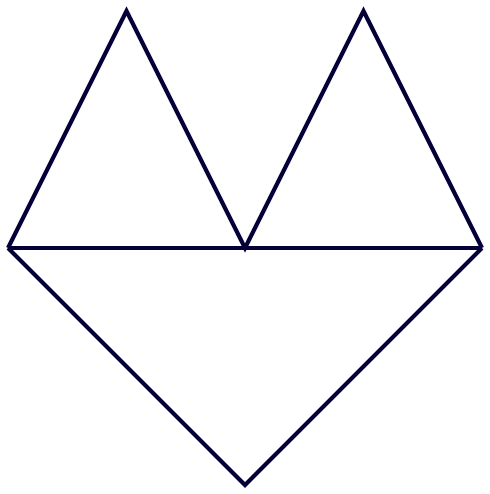
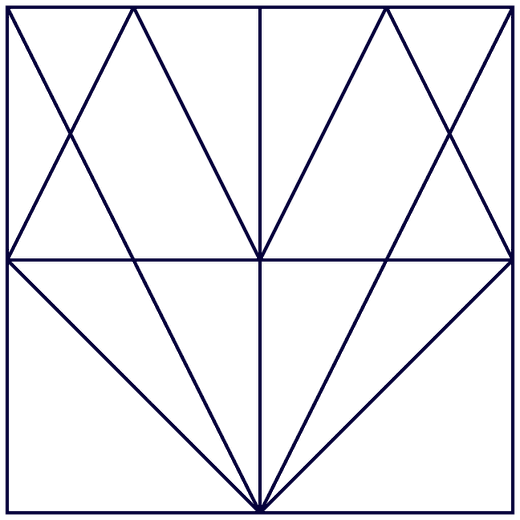
Select the option figure in which the given figure (X) is embedded as its part (rotation is NOT allowed).
figure
(X)
उस विकल्प-आकृति का चयन कीजिए जिसमें दी गई आकृति (X) उसके एक भाग के रूप में अंतर्निहित है (घुमाने की अनुमति नहीं है)।
figure
(X)
  1. Afigure
  2. Bfigure
  3. Cfigure
  4. Dfigure
Show answer

Concept: The exact shape (X), same size and orientation, must be traceable inside the option.

  1. (X): a base line with two peaks above it and a V below, all meeting the base at its ends and middle.
  2. In figure (C), the central horizontal line acts as this base; the peaks touch the top and the V closes at the bottom.
  3. No rotation is needed – every line of (X) is present in (C).

Trick: Locate the most distinctive part first (the V under the base), then verify the rest.

Answer: (C) Figure (C)

अवधारणा: आकृति (X) बिना घुमाए, उसी आकार और दिशा में विकल्प के अंदर दिखनी चाहिए।

हल:

  1. (X): एक आधार रेखा, उसके ऊपर दो शिखर और नीचे एक V।
  2. आकृति (C) में बीच की आड़ी रेखा ही आधार है; शिखर ऊपर और V नीचे पूरा बनता है।
  3. घुमाने की ज़रूरत नहीं – (X) की हर रेखा (C) में मौजूद है।

ट्रिक: सबसे विशेष भाग (आधार के नीचे V) पहले खोजें, फिर बाकी रेखाएँ मिलाएँ।

उत्तर: (C) आकृति (C)

SSC GDGeneral Intelligence & ReasoningEmbedded figureSSC GD 2025 · 10 Feb Shift 2 →
Q2818.
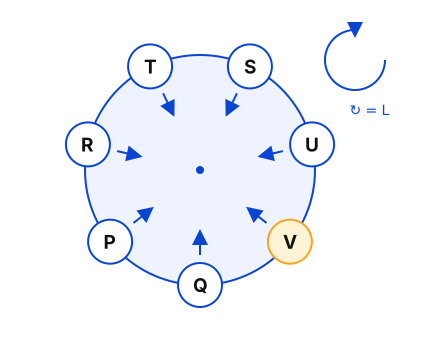
P, Q, R, S, T, U and V are sitting around a circular table facing the centre (but not necessarily in the same order). P is sitting to the immediate right of R and the immediate left of Q. S is sitting to the immediate right of U and the immediate left of T. T is sitting to the immediate left of R. Who is the immediate neighbour of both Q and U?
P, Q, R, S, T, U और V एक वृत्ताकार मेज़ के चारों ओर केंद्र की ओर मुख करके बैठे हैं (आवश्यक नहीं कि इसी क्रम में)। P, R के ठीक दाईं ओर तथा Q के ठीक बाईं ओर बैठा है। S, U के ठीक दाईं ओर तथा T के ठीक बाईं ओर बैठा है। T, R के ठीक बाईं ओर बैठा है। Q और U दोनों का निकटतम पड़ोसी कौन है?
  1. AP
  2. BV
  3. CS
  4. DT
Show answer

Concept: Facing the centre: immediate left = next seat clockwise, immediate right = next seat anticlockwise.

  1. Clockwise links: Q→P→R (P left of Q, R left of P).
  2. T is immediate left of R → T comes right after R clockwise.
  3. T→S→U (S left of T, U right of S).
  4. Order: Q, P, R, T, S, U and V in the last seat → V sits between U and Q.

Trick: With 7 seats and 6 people chained, the left-over person always fills the gap between the two chain ends.

Answer: (B) V

अवधारणा: केंद्र की ओर मुख हो तो ठीक बाएँ = दक्षिणावर्त अगला स्थान, ठीक दाएँ = वामावर्त अगला।

हल:

  1. दक्षिणावर्त: Q→P→R।
  2. T, R के ठीक बाएँ → R के बाद T।
  3. T→S→U।
  4. क्रम: Q, P, R, T, S, U; बची सीट पर V → V, U और Q के बीच।

ट्रिक: 7 सीटों में 6 की श्रृंखला बने तो बचा व्यक्ति श्रृंखला के दोनों सिरों के बीच बैठता है।

उत्तर: (B) V

SSC GDGeneral Intelligence & ReasoningCircular seating – facing centreSSC GD 2025 · 10 Feb Shift 2 →
Q2819.
What should come in place of the question mark (?) in the given series?
80, 100, 122, 146, 172, 200, ?
दी गई शृंखला में प्रश्न-चिह्न (?) के स्थान पर क्या आना चाहिए?
80, 100, 122, 146, 172, 200, ?
  1. A250
  2. B246
  3. C234
  4. D230
Show answer

Concept: Consecutive differences form an arithmetic pattern.

  1. Differences: 20, 22, 24, 26, 28
  2. Next difference = 30
  3. 200 + 30 = 230

Trick: Even-step differences: the answer must end in 0 and lie just above 200 → 230.

Answer: (D) 230

अवधारणा: क्रमागत अंतर समांतर पैटर्न बनाते हैं।

हल:

  1. अंतर: 20, 22, 24, 26, 28
  2. अगला अंतर = 30
  3. 200 + 30 = 230

ट्रिक: अंतर 2-2 बढ़ रहा है, अगला अंतर 30 – उत्तर 200 के ठीक ऊपर 230।

उत्तर: (D) 230

SSC GDGeneral Intelligence & ReasoningNumber series – differences rising by 2SSC GD 2025 · 10 Feb Shift 2 →
Q2820.
A paper is folded and punched as shown below. How will it appear when unfolded?
figure
एक कागज़ को नीचे दर्शाए अनुसार मोड़ा और छेदा जाता है। खोले जाने पर वह कैसा दिखाई देगा?
figure
  1. Afigure
  2. Bfigure
  3. Cfigure
  4. Dfigure
Show answer

Concept: Each crease reflects the cut; two folds give four mirror-image cuts.

  1. Folds: top onto bottom, then left onto right → cut lies in bottom-right quarter.
  2. Vertical crease: bottom-left copy has the slant reversed left-to-right, line still at the bottom.
  3. Horizontal crease: top copies are upside-down versions of the bottom ones.
  4. The pattern of four symmetric marks matches figure (C).

Trick: The final figure must be symmetric about both creases – fold the option in your mind and see if all marks overlap.

Answer: (C) Figure (C)

अवधारणा: हर मोड़ कटे निशान का दर्पण-प्रतिबिंब बनाता है; दो मोड़ से चार निशान।

हल:

  1. मोड़: ऊपर से नीचे, फिर बाएँ से दाएँ → निशान नीचे-दाएँ चौथाई में।
  2. खड़े मोड़ से नीचे-बाएँ में निशान बाएँ-दाएँ उलटा, रेखा नीचे ही।
  3. आड़े मोड़ से ऊपर के निशान नीचे वालों के उलटे (ऊपर-नीचे)।
  4. चार सममित निशानों वाली आकृति (C) है।

ट्रिक: उत्तर आकृति दोनों मोड़-रेखाओं के प्रति सममित होगी – मन में मोड़ें, सभी निशान एक-दूसरे पर आने चाहिए।

उत्तर: (C) आकृति (C)

SSC GDGeneral Intelligence & ReasoningPaper folding – mirror at each creaseSSC GD 2025 · 10 Feb Shift 2 →