Question bank

Q&A: practice questions with answers

Search questions on any topic. Filter by exam category, exam, subject and topic, try the question, then open the answer and explanation.

Courses – airGurukul

4,200 questions found.

Q2901.
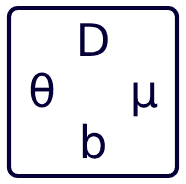
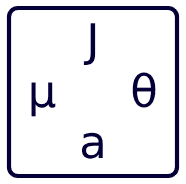
Select the figure from among the given options that can replace the question mark (?) in the following series.

figure
दिए गए विकल्पों में से वह आकृति चुनिए जो निम्नलिखित शृंखला में प्रश्नवाचक चिह्न (?) का स्थान ले सकती है।
figure
  1. Afigure
  2. Bfigure
  3. Cfigure
  4. Dfigure
Show answer

Concept: Track each element of the box separately – the two Greek symbols and the letter pair.

  1. μ and θ swap sides from box to box: boxes 1, 3 have μ–θ, boxes 2, 4 have θ–μ. So box 5 needs μ on the left, θ on the right – (b) is out.
  2. Letter pairs used so far: F/k, R/d, D/m, I/b – no letter repeats in the strip.
  3. (a) repeats R and k, (c) repeats R and m. Only (d) gives a fresh pair J/a with μ–θ.

Trick: In figure series, first settle the element that flips/rotates (here the symbols) – it usually knocks out one or two options instantly.

Answer: (D) Figure (d)

अवधारणा: बॉक्स के हर हिस्से (दोनों ग्रीक चिह्न और अक्षर-जोड़ी) को अलग-अलग देखें।

  1. μ और θ हर बार जगह बदलते हैं: बॉक्स 1, 3 में μ–θ और 2, 4 में θ–μ। अतः बॉक्स 5 में μ बाएँ, θ दाएँ – (b) बाहर।
  2. अब तक प्रयुक्त अक्षर-जोड़ियाँ: F/k, R/d, D/m, I/b – कोई अक्षर दोबारा नहीं आता।
  3. (a) में R, k और (c) में R, m दोहराए गए हैं। केवल (d) में नई जोड़ी J/a तथा μ–θ है।

ट्रिक: पहले वह हिस्सा जाँचें जो हर कदम पर पलटता है – इससे एक-दो विकल्प तुरंत कट जाते हैं।

उत्तर: (D) आकृति (d)
SSC GDGeneral Intelligence & ReasoningFigure series – alternating symbols, unused lettersSSC GD 2025 · 10 Feb Shift 1 →
Q2902.
RMDH is related to PKBF in a certain way based on the English alphabetical order. In the same way, SUGV is related to QSET. To which of the given options is MXKD related, following the same logic ?
अंग्रेज़ी वर्णमाला क्रम के आधार पर RMDH एक निश्चित प्रकार से PKBF से संबंधित है। उसी प्रकार, SUGV, QSET से संबंधित है। उसी तर्क का अनुसरण करते हुए, MXKD दिए गए विकल्पों में से किससे संबंधित है?
  1. AOZMF
  2. BKZIF
  3. CKVIB
  4. DOVMB
Show answer

Concept: Each letter of the first cluster is moved by a fixed number of places.

  1. RMDH → PKBF: R−2=P, M−2=K, D−2=B, H−2=F.
  2. Check SUGV → QSET: every letter again −2.
  3. MXKD: M−2=K, X−2=V, K−2=I, D−2=B → KVIB.

Trick: Find the shift from the first letter only (M−2=K), then keep options starting with K: KZIF, KVIB. Second letter X−2=V → KVIB.

Answer: (C) KVIB

अवधारणा: पहले समूह के हर अक्षर को समान स्थान खिसकाया गया है।

  1. RMDH और PKBF: हर अक्षर दो स्थान पीछे जाता है।
  2. SUGV → QSET में भी हर अक्षर −2।
  3. MXKD के हर अक्षर से 2 घटाने पर K, V, I, B मिलते हैं, यानी KVIB।

ट्रिक: केवल पहला अक्षर देखें: M−2=K, तो KZIF या KVIB बचे; दूसरा X−2=V → KVIB।

उत्तर: (C) KVIB

SSC GDGeneral Intelligence & ReasoningLetter analogy – constant backward shiftSSC GD 2025 · 10 Feb Shift 1 →
Q2903.
In a certain code language, 'SKIP' is coded as '5269' and 'SILK' is coded as '2576'. How is 'L' coded in the given language?
एक निश्चित कूट भाषा में, 'SKIP' को '5269' और 'SILK' को '2576' लिखा जाता है। दी गई भाषा में 'L' को किस प्रकार लिखा जाएगा?
  1. A2
  2. B5
  3. C9
  4. D7
Show answer

Concept: Letters common to both words take the digits common to both codes; the leftover letter takes the leftover digit.

  1. SKIP = 5269, SILK = 2576.
  2. Common letters S, K, I ↔ common digits 2, 5, 6.
  3. Left in SILK: L; left in its code: 7 → L = 7 (and P = 9).

Trick: Cancel the shared letters/digits mentally – whatever survives in the second word is your answer.

Answer: (D) 7

अवधारणा: दोनों शब्दों में समान अक्षरों के कोड दोनों कोड में समान अंक होते हैं; बचा अक्षर = बचा अंक।

  1. SKIP = 5269, SILK = 2576।
  2. समान अक्षर S, K, I ↔ समान अंक 2, 5, 6।
  3. SILK में बचा L और उसके कोड में बचा 7 → L = 7 (P = 9)।

ट्रिक: समान अक्षर-अंक काट दें, जो बचे वही उत्तर है।

उत्तर: (D) 7

SSC GDGeneral Intelligence & ReasoningCoding – common letters, common digitsSSC GD 2025 · 10 Feb Shift 1 →
Q2904.
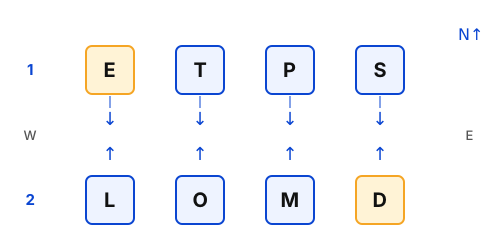
Eight people are sitting in two parallel rows containing 4 people each in such a way that there is equal distance between adjacent persons.
In row 1, P, E, S and T are seated and all of them are facing south.
In row 2, M, O, L and D are seated and all of them are facing north.
Thus, each person faces another person from the other row.
O faces the one sitting to the immediate right of P. Only one person sits between O and D. Only two people sit between L and D. D faces the one sitting second to the left of T.E sits at some place to the right of S . Which of the following represents both people sitting at extreme ends of the rows?
आठ व्यक्ति दो समानांतर पंक्तियों में इस प्रकार बैठे हैं कि प्रत्येक पंक्ति में 4 व्यक्ति हैं और आसन्न व्यक्तियों के बीच समान दूरी है।
पंक्ति 1 में P, E, S और T बैठे हैं तथा ये सभी दक्षिण की ओर उन्मुख हैं।
पंक्ति 2 में M, O, L और D बैठे हैं तथा ये सभी उत्तर की ओर उन्मुख हैं।
इस प्रकार, प्रत्येक व्यक्ति दूसरी पंक्ति के एक व्यक्ति के सम्मुख है।
O उस व्यक्ति के सम्मुख है जो P के ठीक दाईं ओर बैठा है। O और D के बीच केवल एक व्यक्ति बैठा है। L और D के बीच केवल दो व्यक्ति बैठे हैं। D उस व्यक्ति के सम्मुख है जो T के बाईं ओर दूसरे स्थान पर बैठा है। E, S के दाईं ओर कहीं बैठा है। निम्नलिखित में से कौन-सा विकल्प पंक्तियों के अंतिम छोरों पर बैठे दोनों व्यक्तियों को दर्शाता है?
  1. AT and OT और O
  2. BS and OS और O
  3. CE and DE और D
  4. DP and LP और L
Show answer

Concept: Row 1 faces south, Row 2 faces north, so their 'left/right' are opposite. Number seats 1–4 from the same side.

  1. Two people between L and D → L, D at the two ends of Row 2.
  2. D faces 2nd to the left of T → D = seat 4, L = seat 1, T = seat 2 (Row 1).
  3. One person between O and D → O = seat 2, M = seat 3. O faces T, who is immediate right of P → P = seat 3.
  4. E is to the right of S (Row 1 faces south, so right is towards seat 1) → E = seat 1, S = seat 4.

Trick: Start with the clue that fixes ends ('only two between' in a row of 4 means both ends). Ends: Row 1 E, S; Row 2 L, D – only (c) fits.

Answer: (C) E and D

अवधारणा: पंक्ति 1 का मुख दक्षिण और पंक्ति 2 का उत्तर की ओर है, इसलिए दोनों के बाएँ-दाएँ उल्टे हैं। सीटें 1–4 एक ही ओर से गिनें।

  1. L और D के बीच दो लोग → L, D पंक्ति 2 के दोनों सिरों पर।
  2. D, T के बाएँ से दूसरे व्यक्ति के सामने → D = 4, L = 1, T = 2 (पंक्ति 1)।
  3. O और D के बीच एक → O = 2, M = 3; O के सामने T है जो P के ठीक दाएँ → P = 3।
  4. E, S के दाएँ (दक्षिणमुखी पंक्ति में दायाँ = सीट 1 की ओर) → E = 1, S = 4।

ट्रिक: 4 की पंक्ति में 'बीच में केवल दो' = दोनों सिरे। सिरों पर: पंक्ति 1 में E, S; पंक्ति 2 में L, D।

उत्तर: (C) E और D

SSC GDGeneral Intelligence & ReasoningSeating – two parallel rowsSSC GD 2025 · 10 Feb Shift 1 →
Q2905.
Select the correct alternative that when filled in the blanks in the same sequence will make the series logically complete.
_URVQ_SWRW_XSXU_TYV_
वह सही विकल्प चुनिए जिसे रिक्त स्थानों में उसी क्रम में भरने पर शृंखला तार्किक रूप से पूर्ण हो जाएगी।
_URVQ_SWRW_XSXU_TYV_
  1. APVTYZ
  2. BPUTWZ
  3. COVSYX
  4. DOUSWX
Show answer

Concept: Split the 20-letter string into 5 blocks of 4; each block gets one blank.

  1. Blocks: _URV | Q_SW | RW_X | SXU_ | TYV_.
  2. Position 1: P,Q,R,S,T; position 2: U,V,W,X,Y; position 3: R,S,T,U,V; position 4: V,W,X,Y,Z.
  3. Blanks = P, V, T, Y, Z.

Trick: Block 1 starts with the blank and block 2 with Q → blank 1 must be P; only (a) and (b) start with P. Block 2's 2nd letter must be V → (a).

Answer: (A) PVTYZ

अवधारणा: 20 अक्षरों को 4-4 के 5 समूहों में बाँटें, हर समूह में एक रिक्त स्थान है।

  1. समूह: _URV | Q_SW | RW_X | SXU_ | TYV_।
  2. पहला स्थान P→T, दूसरा U→Y, तीसरा R→V, चौथा V→Z (हर बार +1)।
  3. रिक्त अक्षर = P, V, T, Y, Z।

ट्रिक: दूसरा समूह Q से शुरू है, तो पहला P होगा; अब (a), (b) में से दूसरा रिक्त V वाला (a)।

उत्तर: (A) PVTYZ

SSC GDGeneral Intelligence & ReasoningLetter series – fill the blanksSSC GD 2025 · 10 Feb Shift 1 →
Q2906.
What should come in place of the
question mark (?) in the given series based on the English alphabetical order? TEJ UDK VCL WBM ?
अंग्रेज़ी वर्णमाला क्रम के आधार पर दी गई शृंखला में प्रश्नवाचक चिह्न (?) के स्थान पर क्या आना चाहिए? TEJ UDK VCL WBM ?
  1. AXAN
  2. BYAO
  3. CYAN
  4. DXAO
Show answer

Concept: Each letter position of the cluster follows its own +1 / −1 pattern.

  1. 1st letters: T, U, V, W → X (+1).
  2. 2nd letters: E, D, C, B → A (−1).
  3. 3rd letters: J, K, L, M → N (+1). Next = XAN.

Trick: Middle letter decides fast: B−1 = A, and the last letter M+1 = N → only XAN.

Answer: (A) XAN

अवधारणा: समूह का हर स्थान अपना अलग +1/−1 क्रम चलता है।

  1. पहला अक्षर: T, U, V, W → X (+1)।
  2. दूसरा अक्षर: E, D, C, B → A (−1)।
  3. तीसरा अक्षर: J, K, L, M → N (+1)। अगला = XAN।

ट्रिक: पहला अक्षर X और अंतिम N वाला विकल्प केवल XAN है।

उत्तर: (A) XAN

SSC GDGeneral Intelligence & ReasoningLetter-cluster series – position-wise patternSSC GD 2025 · 10 Feb Shift 1 →
Q2907.
In a certain code language, ACEG is coded as 16 and BOQT is coded as 54. How will UWIF be coded in the given language?
एक निश्चित कूट भाषा में, ACEG को 16 और BOQT को 54 लिखा जाता है। दी गई भाषा में UWIF को किस प्रकार लिखा जाएगा?
  1. A60
  2. B75
  3. C59
  4. D57
Show answer

Concept: Code = sum of the alphabet place values of the letters.

  1. ACEG: 1+3+5+7 = 16 ✓
  2. BOQT: 2+15+17+20 = 54 ✓
  3. UWIF: 21+23+9+6 = 59

Trick: Remember EJOTY = 5, 10, 15, 20, 25 to get place values in a second: U = 21, W = 23.

Answer: (C) 59

अवधारणा: कोड = अक्षरों के वर्णमाला क्रमांकों का योग।

  1. ACEG: 1+3+5+7 = 16 ✓
  2. BOQT: 2+15+17+20 = 54 ✓
  3. UWIF: 21+23+9+6 = 59

ट्रिक: EJOTY (5, 10, 15, 20, 25) याद रखें – U = 21, W = 23 तुरंत निकलेंगे।

उत्तर: (C) 59

SSC GDGeneral Intelligence & ReasoningCoding – sum of letter positionsSSC GD 2025 · 10 Feb Shift 1 →
Q2908.
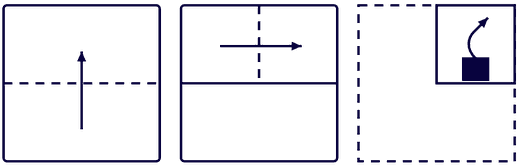
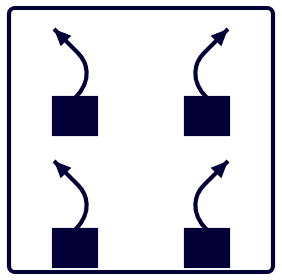
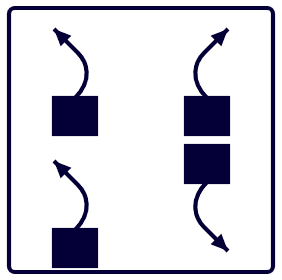
A paper is folded and punched as shown below. How will it appear when unfolded?
figure
नीचे दर्शाए अनुसार एक कागज़ को मोड़ा और पंच किया जाता है। खोले जाने पर वह कैसा दिखाई देगा?
figure
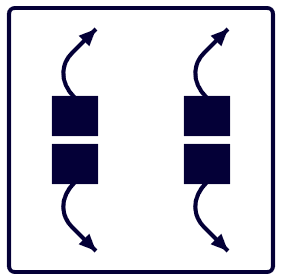
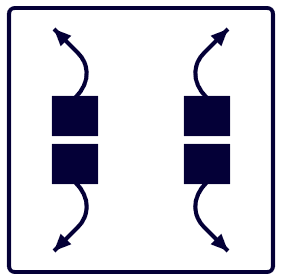
  1. Afigure
  2. Bfigure
  3. Cfigure
  4. Dfigure
Show answer

Concept: Every fold doubles the holes; on unfolding, each hole reappears as a mirror image across the fold line.

  1. Two folds (bottom up, then left over right) leave a quarter of the sheet.
  2. The punch passes through 4 layers → 4 holes, one per quarter.
  3. The holes must be mirror images across both the vertical and horizontal centre lines – this pattern appears only in (d).

Trick: Count first: n folds → 2n holes. Then check symmetry about each fold line; unfold in reverse order of folding.

Answer: (D) Figure (d)

अवधारणा: हर मोड़ पर छेद दोगुने होते हैं; खोलने पर छेद मोड़-रेखा के सापेक्ष दर्पण-प्रतिबिंब में आता है।

  1. दो मोड़ (नीचे से ऊपर, फिर बाएँ से दाएँ) के बाद कागज़ का एक-चौथाई भाग बचता है।
  2. छेद 4 परतों से गुज़रता है → हर चौथाई में एक, कुल 4 छेद।
  3. छेद ऊर्ध्वाधर और क्षैतिज दोनों केंद्र-रेखाओं के सापेक्ष सममित हों – ऐसा केवल (d) में है।

ट्रिक: n मोड़ = 2n छेद। फिर उल्टे क्रम में खोलते हुए समरूपता जाँचें।

उत्तर: (D) आकृति (d)

SSC GDGeneral Intelligence & ReasoningPaper folding and punchingSSC GD 2025 · 10 Feb Shift 1 →
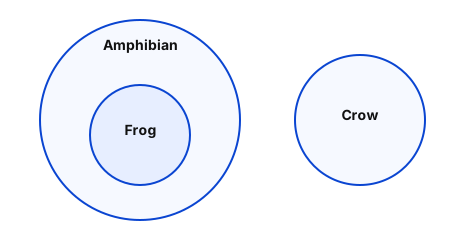
Q2909.
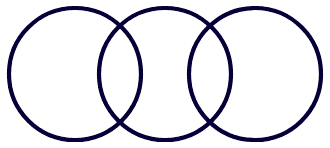
Select the Venn diagram that best illustrates the relationship between the following classes.
Amphibian, Crow, Frog
वह वेन आरेख चुनिए जो निम्नलिखित वर्गों के बीच के संबंध को सर्वोत्तम रूप से दर्शाता है।
उभयचर, कौआ, मेंढक
  1. Afigure
  2. Bfigure
  3. Cfigure
  4. Dfigure
Show answer

Concept: Draw a subset inside its parent class; an unrelated class stays separate.

  1. Frog is a type of amphibian → Frog circle inside Amphibian circle.
  2. Crow is a bird – neither amphibian nor frog → separate circle.

Trick: Pattern '2 nested + 1 separate' – look for one circle inside another and a third circle away from both.

Answer: (A) Figure (a)

अवधारणा: उपवर्ग को मुख्य वर्ग के अंदर बनाएँ; असंबंधित वर्ग अलग रहता है।

  1. हर मेंढक उभयचर वर्ग में आता है → छोटा वृत्त (मेंढक) बड़े वृत्त (उभयचर) में।
  2. कौआ एक पक्षी है, उभयचर नहीं → अलग वृत्त।

ट्रिक: 'दो वृत्त एक-दूसरे के अंदर + एक अलग' वाला चित्र चुनें।

उत्तर: (A) आकृति (a)

SSC GDGeneral Intelligence & ReasoningVenn diagram – class relationshipSSC GD 2025 · 10 Feb Shift 1 →
Q2910.
What should come in place of the question mark (?) in the given series? 77 86 104 140 212 ?
दी गई शृंखला में प्रश्नवाचक चिह्न (?) के स्थान पर क्या आना चाहिए? 77 86 104 140 212 ?
  1. A355
  2. B356
  3. C358
  4. D357
Show answer

Concept: Differences between terms form a ×2 pattern.

  1. Differences: 9, 18, 36, 72.
  2. Next difference = 72×2=144.
  3. ? = 212+144=356.

Trick: When differences double, next term = last term + 2 × (last difference): 212+144.

Answer: (B) 356

अवधारणा: क्रमागत पदों का अंतर हर बार ×2 होता है।

  1. अंतर: 9, 18, 36, 72।
  2. अगला अंतर = 72×2=144।
  3. ? = 212+144=356।

ट्रिक: अंतर दोगुना हो तो अगला पद = अंतिम पद + 2 × अंतिम अंतर।

उत्तर: (B) 356

SSC GDGeneral Intelligence & ReasoningNumber series – doubling differencesSSC GD 2025 · 10 Feb Shift 1 →
Q2911.
In a certain code language, 'STAIR' is coded as '#*&@$' and 'TEARS' is coded as '*&^@#'. What is the code for 'I' in the given code language?
एक निश्चित कूट भाषा में, 'STAIR' को '#*&@$' और 'TEARS' को '*&^@#' लिखा जाता है। दी गई कूट भाषा में 'I' के लिए कूट क्या है?
  1. A#
  2. B^
  3. C@
  4. D$
Show answer

Concept: Letters common to both words share symbols; the unique letter takes the unique symbol.

  1. STAIR = #*&@$, TEARS = *&^@#.
  2. Common letters S, T, A, R ↔ common symbols #, *, &, @.
  3. STAIR's extra letter I ↔ its extra symbol $ (and E = ^).

Trick: Only $ is absent from the second code – so it must be I, the only letter absent from TEARS.

Answer: (D) $

अवधारणा: दोनों शब्दों के समान अक्षरों के चिह्न समान; अलग अक्षर = अलग चिह्न।

  1. STAIR = #*&@$, TEARS = *&^@#।
  2. समान अक्षर S, T, A, R ↔ समान चिह्न #, *, &, @।
  3. STAIR का अतिरिक्त अक्षर I ↔ अतिरिक्त चिह्न $ (E = ^)।

ट्रिक: दूसरे कोड में जो चिह्न नहीं है ($), वही पहले शब्द के अनोखे अक्षर I का है।

उत्तर: (D) $

SSC GDGeneral Intelligence & ReasoningCoding – symbol for the odd letterSSC GD 2025 · 10 Feb Shift 1 →
Q2912.
What should come in place of the question mark (?) in the given series? 9 25 53 157 317 ?
दी गई शृंखला में प्रश्नवाचक चिह्न (?) के स्थान पर क्या आना चाहिए? 9 25 53 157 317 ?
  1. A953
  2. B947
  3. C949
  4. D951
Show answer

Concept: Two operations alternate.

  1. 9×3−2=25; 25×2+3=53.
  2. 53×3−2=157; 157×2+3=317.
  3. Next: 317×3−2=949.

Trick: Ratio check: terms roughly ×3, ×2, ×3, ×2 – so next ≈ 317×3=951; adjust by −2 → 949.

Answer: (C) 949

अवधारणा: दो संक्रियाएँ बारी-बारी से लगती हैं।

  1. 9×3−2=25; 25×2+3=53।
  2. 53×3−2=157; 157×2+3=317।
  3. अगला: 317×3−2=949।

ट्रिक: पद लगभग ×3, ×2 बढ़ रहे हैं; अगला ≈ 317×3=951, फिर −2 = 949।

उत्तर: (C) 949

SSC GDGeneral Intelligence & ReasoningNumber series – alternate ×3−2, ×2+3SSC GD 2025 · 10 Feb Shift 1 →
Q2913.
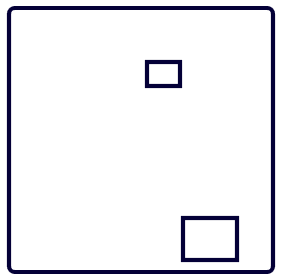
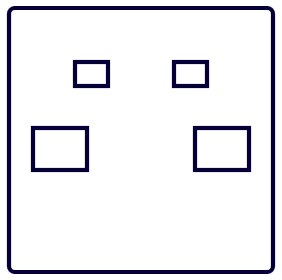
A paper is folded and cut as shown below. How will it appear when unfolded?
figure
नीचे दर्शाए अनुसार एक कागज़ को मोड़ा और काटा जाता है। खोले जाने पर वह कैसा दिखाई देगा?
figure
  1. Afigure
  2. Bfigure
  3. Cfigure
  4. Dfigure
Show answer

Concept: A cut touching the fold opens into one bigger hole centred on the fold line.

  1. One vertical fold: left half laid on right half.
  2. Both rectangular cuts sit on the folded edge.
  3. Unfolded: two rectangles (small above, bigger in the middle), each spread equally across the vertical centre line – figure (b).

Trick: Cut on the fold = single symmetric hole; cut away from the fold = two separate mirror holes.

Answer: (B) Figure (b)

अवधारणा: मोड़ की रेखा पर किया गया कट खोलने पर मोड़-रेखा के बीचों-बीच एक बड़ा छेद बनता है।

  1. एक ऊर्ध्वाधर मोड़: बायाँ आधा दाएँ आधे पर।
  2. दोनों आयताकार कट मोड़ वाले किनारे पर हैं।
  3. खोलने पर दो आयत (ऊपर छोटा, बीच में बड़ा) केंद्र-रेखा पर सममित – आकृति (b)।

ट्रिक: मोड़ पर कट = एक सममित छेद; मोड़ से दूर कट = दो अलग दर्पण छेद।

उत्तर: (B) आकृति (b)

SSC GDGeneral Intelligence & ReasoningPaper folding and cuttingSSC GD 2025 · 10 Feb Shift 1 →
Q2914.
Based on the English alphabetical order, three of the following four letter-clusters are alike in a certain way and thus form a group. Which letter-cluster DOES NOT belong to that group?
( Note :- The odd one out is not based on the number of consonants/vowels or their position in the letter-cluster.)
अंग्रेज़ी वर्णमाला क्रम के आधार पर, निम्नलिखित चार अक्षर-समूहों में से तीन एक निश्चित प्रकार से समान हैं और इस प्रकार एक समूह बनाते हैं। कौन-सा अक्षर-समूह उस समूह से संबंधित नहीं है?
( नोट :- विषम अक्षर-समूह का चयन व्यंजनों/स्वरों की संख्या अथवा अक्षर-समूह में उनके स्थान पर आधारित नहीं है।)
  1. AKOI
  2. BMTW
  3. CLPJ
  4. DOSM
Show answer

Concept: Compare the step from 1st→2nd and 2nd→3rd letter in each cluster.

  1. KOI: 11→15→9 = +4, −6.
  2. LPJ: 12→16→10 = +4, −6; OSM: 15→19→13 = +4, −6.
  3. MTW: 13→20→23 = +7, +3 – different.

Trick: In three clusters the 3rd letter comes before the 2nd in the alphabet; in MTW it goes forward – spot it without full counting.

Answer: (B) MTW

अवधारणा: हर समूह में पहले→दूसरे और दूसरे→तीसरे अक्षर का अंतर देखें।

  1. KOI: 11→15→9 = +4, −6।
  2. LPJ: 12→16→10 = +4, −6; OSM: 15→19→13 = +4, −6।
  3. MTW: 13→20→23 = +7, +3 – अलग।

ट्रिक: तीन समूहों में तीसरा अक्षर पीछे लौटता है, MTW में आगे बढ़ता है – वही विषम।

उत्तर: (B) MTW

SSC GDGeneral Intelligence & ReasoningOdd one out – letter gapsSSC GD 2025 · 10 Feb Shift 1 →
Q2915.
The position(s) of how many letters will remain unchanged if each of the letters in the word GRISTLE is arranged in the English alphabetical order?
यदि शब्द GRISTLE के प्रत्येक अक्षर को अंग्रेज़ी वर्णमाला क्रम में व्यवस्थित किया जाए, तो कितने अक्षरों का स्थान अपरिवर्तित रहेगा?
  1. ATwoदो
  2. BOneएक
  3. CThreeतीन
  4. DZeroशून्य
Show answer

Concept: Write the letters in A–Z order and compare position by position.

  1. GRISTLE → E G I L R S T.
  2. Compare: G/E, R/G, I/I, S/L, T/R, L/S, E/T.
  3. Only I (3rd place) stays.

Trick: Check middle letters first – here I is 3rd in both words; the ends (G, E) obviously change.

Answer: (B) One

अवधारणा: अक्षरों को A–Z क्रम में लिखकर स्थानवार तुलना करें।

  1. GRISTLE → E G I L R S T।
  2. तुलना: G/E, R/G, I/I, S/L, T/R, L/S, E/T।
  3. केवल I (तीसरा स्थान) अपरिवर्तित।

ट्रिक: दोनों पंक्तियाँ एक-दूसरे के नीचे लिखें, मिलान तुरंत दिखेगा।

उत्तर: (B) एक

SSC GDGeneral Intelligence & ReasoningAlphabetical rearrangement – unchanged positionsSSC GD 2025 · 10 Feb Shift 1 →
Q2916.
If 2 is added to each odd digit and 2 is subtracted from each even digit in the number 5163748 , what will be the sum of the highest and lowest digit in the new number thus formed?
यदि संख्या 5163748 के प्रत्येक विषम अंक में 2 जोड़ा जाए और प्रत्येक सम अंक में से 2 घटाया जाए, तो इस प्रकार बनी नई संख्या के सबसे बड़े और सबसे छोटे अंक का योग क्या होगा?
  1. A9
  2. B14
  3. C11
  4. D16
Show answer

Concept: Apply the rule to each digit, then pick the largest and smallest digit.

  1. 5163748 → 7, 3, 4, 5, 9, 2, 6.
  2. Highest = 9 (from 7), lowest = 2 (from 4).
  3. Sum = 9 + 2 = 11.

Trick: No need to write the full number: highest comes from the biggest odd digit (7+2 = 9), lowest from min(1+2, 4−2) = 2.

Answer: (C) 11

अवधारणा: हर अंक पर नियम लगाकर सबसे बड़ा और सबसे छोटा अंक चुनें।

  1. 5163748 → 7, 3, 4, 5, 9, 2, 6।
  2. सबसे बड़ा = 9, सबसे छोटा = 2।
  3. योग = 9 + 2 = 11।

ट्रिक: पूरी संख्या की ज़रूरत नहीं: सबसे बड़ा विषम 7+2 = 9; सबसे छोटा min(1+2, 4−2) = 2।

उत्तर: (C) 11

SSC GDGeneral Intelligence & ReasoningDigit operations – odd +2, even −2SSC GD 2025 · 10 Feb Shift 1 →
Q2917.
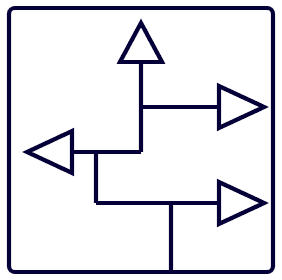
Select the option in which the given figure ( X ) is embedded (rotation is NOT allowed).
figure
वह विकल्प चुनिए जिसमें दी गई आकृति (X) सन्निहित है (घुमाने की अनुमति नहीं है)।
figure
  1. Afigure
  2. Bfigure
  3. Cfigure
  4. Dfigure
Show answer

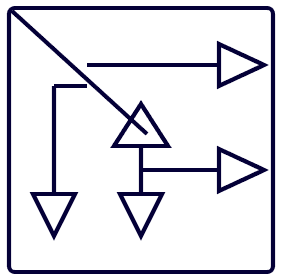
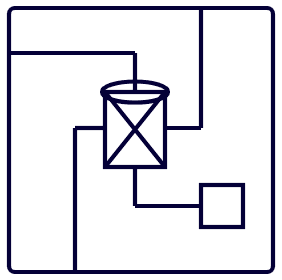
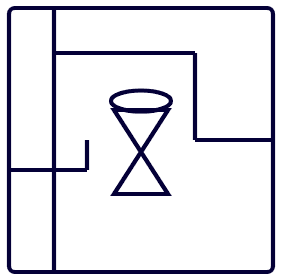
Concept: Find the exact shape, same size and same orientation, hidden inside an option.

  1. Figure X: an upright box with a curved cap on top and two lines from the top corners meeting at the centre.
  2. (a), (b) have no capped box; in (d) the cap sits on an hourglass, not a box.
  3. In (c) the capped box is present and the upper half of the cross inside it gives the two corner-to-centre lines.

Trick: Pick the most unusual part of X (the curved cap) and search only for it – most options fail immediately.

Answer: (C) Figure (c)

अवधारणा: दी गई आकृति उसी आकार और उसी दिशा में किसी विकल्प के भीतर छिपी होनी चाहिए।

  1. आकृति X: खड़ा बॉक्स, ऊपर घुमावदार टोपी और ऊपरी कोनों से केंद्र तक दो रेखाएँ।
  2. (a), (b) में टोपी वाला बॉक्स नहीं; (d) में टोपी एक घड़ी-आकार पर है, बॉक्स पर नहीं।
  3. (c) में टोपी वाला बॉक्स है और भीतर के क्रॉस का ऊपरी भाग कोनों से केंद्र की रेखाएँ देता है।

ट्रिक: आकृति का सबसे अनोखा भाग (घुमावदार टोपी) पहले खोजें – अधिकतर विकल्प वहीं कट जाते हैं।

उत्तर: (C) आकृति (c)

SSC GDGeneral Intelligence & ReasoningEmbedded figureSSC GD 2025 · 10 Feb Shift 1 →
Q2918.
Read the given statements and conclusions carefully. Assuming that the information given in the statements is true, even if it appears to be at variance with commonly known facts, decide which of the given conclusion(s) logically follow(s) from the statements.
Statements:
All crows are rocks.
All rocks are plants.
All plants are flowers.
Conclusions:
(I) All crows are flowers.
(II) Some flowers are rocks.
दिए गए कथनों और निष्कर्षों को ध्यानपूर्वक पढ़िए। यह मानते हुए कि कथनों में दी गई सूचना सत्य है, चाहे वह सामान्यतः ज्ञात तथ्यों से भिन्न प्रतीत होती हो, निर्णय कीजिए कि दिए गए निष्कर्षों में से कौन-सा/से निष्कर्ष कथनों का तार्किक रूप से अनुसरण करता है/करते हैं।
कथन:
सभी कौए चट्टानें हैं।
सभी चट्टानें पौधे हैं।
सभी पौधे फूल हैं।
निष्कर्ष:
(I) सभी कौए फूल हैं।
(II) कुछ फूल चट्टानें हैं।
  1. AOnly conclusion (II) follows.केवल निष्कर्ष (II) अनुसरण करता है।
  2. BNeither conclusion (I) nor (II) follows.न तो निष्कर्ष (I) और न ही निष्कर्ष (II) अनुसरण करता है।
  3. COnly conclusion (I) follows.केवल निष्कर्ष (I) अनुसरण करता है।
  4. DBoth conclusions (I) and (II) follow.निष्कर्ष (I) और (II) दोनों अनुसरण करते हैं।
Show answer

Concept: All A are B, all B are C ⇒ all A are C; and 'All B are C' always implies 'Some C are B'.

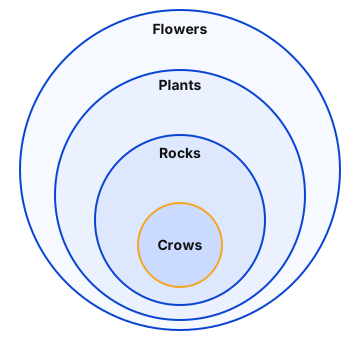
  1. Crows ⊂ Rocks ⊂ Plants ⊂ Flowers.
  2. I: crows are inside flowers → follows.
  3. II: rocks are inside flowers, so some flowers are rocks → follows.

Trick: In a pure 'All' chain, any 'All' conclusion going forward and any 'Some' conclusion in either direction is true.

Answer: (D) Both conclusions (I) and (II) follow.

अवधारणा: सभी A, B हैं और सभी B, C हैं ⇒ सभी A, C हैं; 'सभी B, C हैं' से 'कुछ C, B हैं' भी निकलता है।

  1. कौआ ⊂ चट्टान ⊂ पौधा ⊂ फूल।
  2. I: सभी कौए फूल हैं → अनुसरण करता है।
  3. II: हर चट्टान फूल वर्ग के भीतर है, इसलिए फूलों का एक हिस्सा चट्टान है → यह भी सही।

ट्रिक: केवल 'सभी' वाली श्रृंखला में आगे की दिशा का 'सभी' और किसी भी दिशा का 'कुछ' सत्य होता है।

उत्तर: (D) निष्कर्ष (I) और (II) दोनों अनुसरण करते हैं।

SSC GDGeneral Intelligence & ReasoningSyllogism – chain of 'All'SSC GD 2025 · 10 Feb Shift 1 →
Q2919.
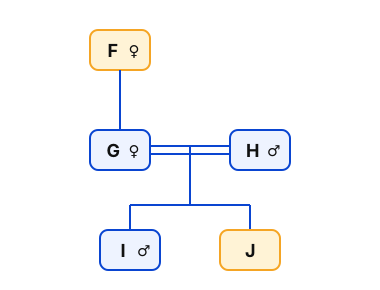
In a certain code language,
' A+B ' means ' A is the mother of B ',
' A−B ' means ' A is the brother of B ',
' A×B ' means ' A is the wife of B′ and
′A÷B′ means ' A is the father of B′.
Based on the above, how is F related to J if ' F+G×H÷I−J '?
एक निश्चित कूट भाषा में,
' A+B ' का अर्थ है ' A, B की माता है ',
' A−B ' का अर्थ है ' A, B का भाई है ',
' A×B ' का अर्थ है ' A, B′ की पत्नी है और
′A÷B′ का अर्थ है ' A, B′ का पिता है।
उपर्युक्त के आधार पर, यदि ' F+G×H÷I−J ' है, तो F, J से किस प्रकार संबंधित है?
  1. AWife's fatherपत्नी के पिता
  2. BMother's motherमाता की माता
  3. CDaughterपुत्री
  4. DMother's husbandमाता के पति
Show answer

Concept: Decode each symbol pair and build a family tree.

  1. F + G: F is G's mother. G × H: G is H's wife.
  2. H ÷ I: H is I's father → G is I's mother.
  3. I − J: I is J's brother → J is also G's child.
  4. F is mother of G, who is mother of J → F is J's mother's mother.

Trick: Gender check: F is a mother (female), so 'Wife's father' and 'Mother's husband' are out instantly.

Answer: (B) Mother's mother

अवधारणा: हर चिह्न को खोलकर परिवार-वृक्ष बनाएँ।

  1. F + G: F, G की माँ। G × H: G, H की पत्नी।
  2. H ÷ I: H, I का पिता → G, I की माँ।
  3. I − J: I, J का भाई → J भी G की संतान।
  4. F, G की माँ और G, J की माँ → F, J की माँ की माँ (नानी)।

ट्रिक: F 'माँ' है यानी स्त्री – 'पत्नी के पिता' और 'माँ के पति' तुरंत हट जाते हैं।

उत्तर: (B) माता की माता

SSC GDGeneral Intelligence & ReasoningCoded blood relationSSC GD 2025 · 10 Feb Shift 1 →
Q2920.
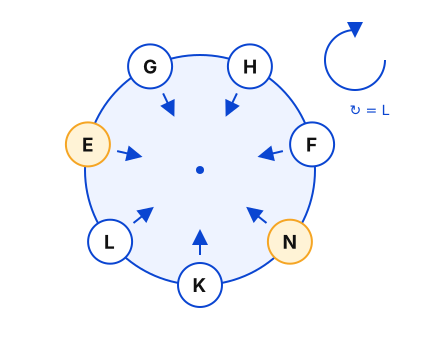
E, F, G, H, K, L and N are sitting around a circular table, facing the centre (but not necessarily in the same order).
G sits third to the left of K. N sits second to the left of H. Only K sits between L and N. F is not an immediate neighbour of G.
How many people sit between E and N when counted from the right of E ?
E, F, G, H, K, L और N एक वृत्ताकार मेज़ के चारों ओर केंद्र की ओर उन्मुख होकर बैठे हैं (आवश्यक नहीं कि इसी क्रम में)।
G, K के बाईं ओर तीसरे स्थान पर बैठा है। N, H के बाईं ओर दूसरे स्थान पर बैठा है। L और N के बीच केवल K बैठा है। F, G का निकटतम पड़ोसी नहीं है।
E के दाईं ओर से गिनने पर E और N के बीच कितने व्यक्ति बैठे हैं?
  1. AThreeतीन
  2. BOneएक
  3. CTwoदो
  4. DFourचार
Show answer

Concept: Facing the centre: left = clockwise, right = anticlockwise.

  1. Place K; G is 3rd to K's left. L and N are K's two neighbours.
  2. N is 2nd to the left of H; this works only with N on K's right side and H two seats further right.
  3. Empty seats: one between H and N, one between L and G. F can't touch G → F between H and N, E between L and G.
  4. From E going right: L, K, then N → 2 people between.

Trick: Fix the person with the most clues (K) first; 'only K between L and N' instantly gives K's two neighbours.

Answer: (C) Two

अवधारणा: केंद्र की ओर मुख हो तो बायाँ = दक्षिणावर्त, दायाँ = वामावर्त।

  1. K को रखें; G, K के बाएँ तीसरे स्थान पर। L और N, K के दोनों पड़ोसी।
  2. N, H के बाएँ दूसरे स्थान पर – यह तभी संभव है जब N, K के दाएँ हो और H उससे दो स्थान आगे दाएँ।
  3. खाली सीटें: H–N के बीच और L–G के बीच। F, G का पड़ोसी नहीं → F, H–N के बीच; E, L–G के बीच।
  4. E के दाएँ से गिनें: L, K, फिर N → बीच में 2 व्यक्ति।

ट्रिक: सबसे अधिक सूचना वाले (K) से शुरू करें; 'L और N के बीच केवल K' से K के दोनों पड़ोसी तय हो जाते हैं।

उत्तर: (C) दो

SSC GDGeneral Intelligence & ReasoningCircular seating – facing centreSSC GD 2025 · 10 Feb Shift 1 →