Question bank

Q&A: practice questions with answers

Search questions on any topic. Filter by exam category, exam, subject and topic, try the question, then open the answer and explanation.

Courses – airGurukul

4,200 questions found.

Q3001.
In a certain code language, 'cup of coffee' is coded as 'lh em ro' and 'he loves coffee' is coded as 'em tf za'. How is 'coffee' coded in the given language?
एक निश्चित कूट भाषा में, 'cup of coffee' को 'lh em ro' के रूप में कूटबद्ध किया जाता है और 'he loves coffee' को 'em tf za' के रूप में कूटबद्ध किया जाता है। उसी कूट भाषा में 'coffee' को किस प्रकार कूटबद्ध किया जाएगा?
  1. Alh
  2. Bro
  3. Cem
  4. Dza
Show answer

Concept: A word present in both sentences gets the code present in both codes.

  1. Sentence 1: cup, of, coffee → lh, em, ro.
  2. Sentence 2: he, loves, coffee → em, tf, za.
  3. Common word = coffee; common code = em.

Trick: Circle the repeated word and the repeated code – match them directly, no need to decode the rest.

Answer: (C) em

अवधारणा: दोनों वाक्यों में आने वाले शब्द का कोड वही होगा जो दोनों कोड में आता है।

  1. वाक्य 1: cup of coffee → lh em ro
  2. वाक्य 2: he loves coffee → em tf za
  3. दोनों में शब्द coffee और कोड em समान है।

ट्रिक: दोहराए गए शब्द को दोहराए गए कोड से सीधे मिलाइए – बाकी डिकोड करने की ज़रूरत नहीं।

उत्तर: (C) em

SSC GDGeneral Intelligence & ReasoningCoding – common word, common codeSSC GD 2025 · 7 Feb Shift 3 →
Q3002.
What should come in place of the question mark (?) in the given series based on the English alphabetical order ? LMD MKG NIJ OGM ? QCS
अंग्रेजी वर्णमाला क्रम पर आधारित दी गई शृंखला में प्रश्नवाचक चिह्न (?) के स्थान पर क्या आना चाहिए? LMD MKG NIJ OGM ? QCS
  1. AQEP
  2. BPGP
  3. CPEP
  4. DPFR
Show answer

Concept: Track the 1st, 2nd and 3rd letters of each group separately.

  1. 1st letters: L, M, N, O, P, Q (+1).
  2. 2nd letters: M, K, I, G, E, C (−2).
  3. 3rd letters: D, G, J, M, P, S (+3).
  4. Missing group = PEP.

Trick: First letter must be P (L→Q runs +1) – this alone removes QEP; then 2nd letter E removes PGP and PFR.

Answer: (C) PEP

अवधारणा: हर समूह के पहले, दूसरे और तीसरे अक्षर को अलग-अलग देखें।

  1. पहले अक्षर: L, M, N, O, P, Q (+1)
  2. दूसरा स्थान: M→K→I→G→E→C, हर बार −2
  3. तीसरा स्थान: D→G→J→M→P→S, हर बार +3
  4. ? = PEP

ट्रिक: पहला अक्षर P होना चाहिए – QEP बाहर; दूसरा अक्षर E – PGP और PFR भी बाहर।

उत्तर: (C) PEP

SSC GDGeneral Intelligence & ReasoningLetter series – position-wise patternSSC GD 2025 · 7 Feb Shift 3 →
Q3003.
Select the combination of letters that when sequentially placed in the blanks of the given series, will logically complete the series.
_HMGD_NHEJ_IFKP_GLQ_
उस अक्षर-संयोजन का चयन कीजिए जिसे दी गई शृंखला के रिक्त स्थानों में क्रमानुसार रखने पर शृंखला तार्किक रूप से पूर्ण हो जाएगी।
_HMGD_NHEJ_IFKP_GLQ_
  1. ACIOJK
  2. BCGOLK
  3. CDIPJM
  4. DDGPLM
Show answer

Concept: 20 places with 5 blanks → split into 5 blocks of 4 letters each.

  1. Blocks: _HMG / D_NH / EJ_I / FKP_ / GLQ_.
  2. Each column rises by +1: C D E F G, H I J K L, M N O P Q, G H I J K.
  3. Blanks in order: C, I, O, J, K.

Trick: Look at the last block GLQ_ – the 4th column G H I J → K, so the answer must end in K: only CIOJK and CGOLK; 2nd blank (column H→I) gives I.

Answer: (A) CIOJK

अवधारणा: 20 स्थान और 5 रिक्तियाँ → 4-4 अक्षरों के 5 खंड बनाइए।

  1. खंड: _HMG / D_NH / EJ_I / FKP_ / GLQ_
  2. हर स्तंभ +1 से बढ़ता है: C D E F G, H I J K L, M N O P Q, G H I J K
  3. रिक्तियाँ क्रम से: C, I, O, J, K

ट्रिक: अंतिम रिक्ति K होनी चाहिए – केवल CIOJK और CGOLK बचते हैं; दूसरी रिक्ति I है, अतः CIOJK।

उत्तर: (A) CIOJK

SSC GDGeneral Intelligence & ReasoningLetter series – fill the blanksSSC GD 2025 · 7 Feb Shift 3 →
Q3004.
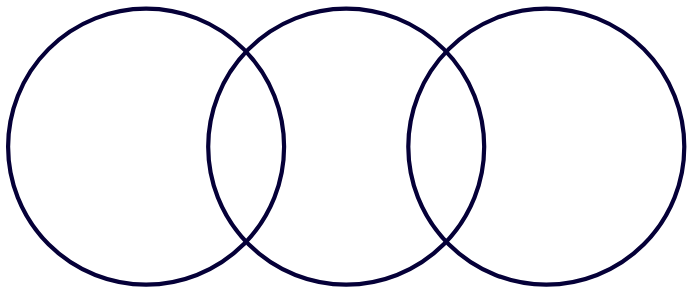
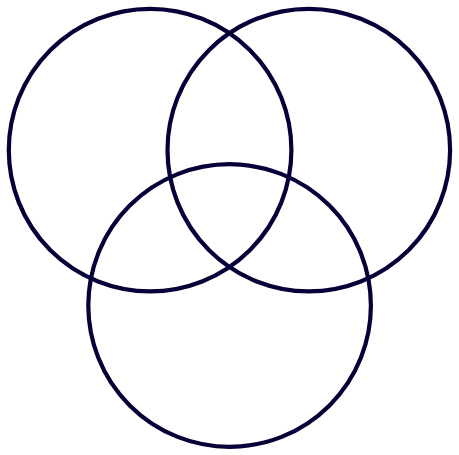
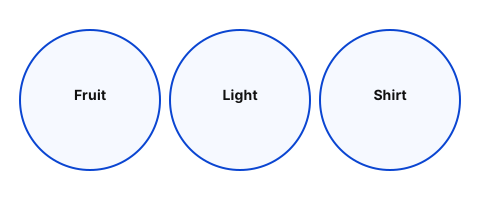
Select the Venn diagram that best illustrates the relationship between the following classes.
Fruit, Light, Shirt
उस वेन आरेख का चयन कीजिए जो निम्नलिखित वर्गों के बीच के संबंध को सर्वोत्तम रूप से दर्शाता है।
फल, प्रकाश, कमीज़
  1. Afigure
  2. Bfigure
  3. Cfigure
  4. Dfigure
Show answer

Concept: If no class is a part of another and they share no member, draw three separate circles.

  1. Fruit – something we eat; Light – a form of energy; Shirt – clothing.
  2. No fruit is light or a shirt; no light is a shirt.
  3. So three disjoint circles.

Trick: Three totally different categories (food, energy, clothes) = three separate circles.

Answer: (D) Three separate circles

अवधारणा: जब कोई वर्ग दूसरे का भाग न हो और कोई सदस्य साझा न हो, तो तीन अलग वृत्त बनते हैं।

  1. फल – खाने की वस्तु; प्रकाश – ऊर्जा का रूप; शर्ट – वस्त्र।
  2. कोई फल प्रकाश या शर्ट नहीं है, और प्रकाश शर्ट नहीं है।
  3. इसलिए तीनों वृत्त अलग-अलग।

ट्रिक: तीन बिलकुल अलग श्रेणियाँ (भोजन, ऊर्जा, कपड़ा) = तीन अलग वृत्त।

उत्तर: (D) तीन अलग वृत्त

SSC GDGeneral Intelligence & ReasoningVenn diagram – unrelated classesSSC GD 2025 · 7 Feb Shift 3 →
Q3005.
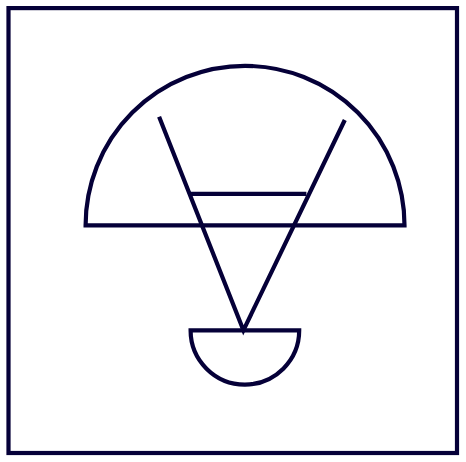
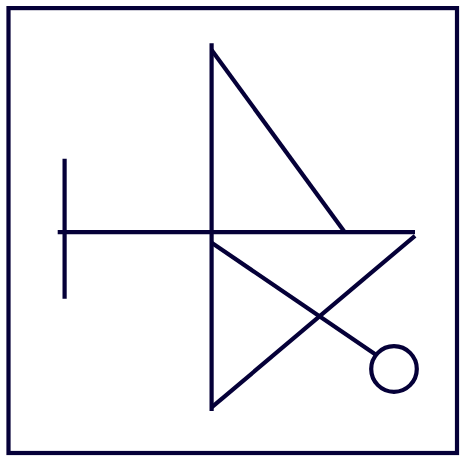
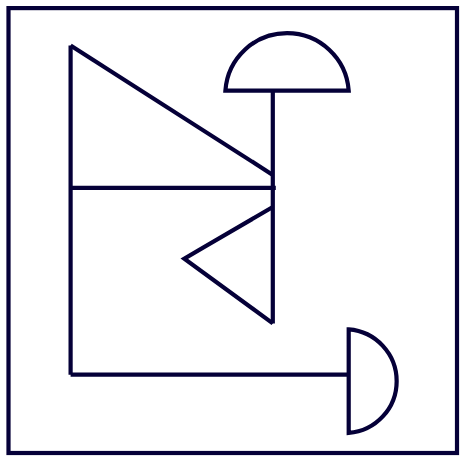
Select the option in which the given figure ( X ) is embedded (rotation is NOT allowed).
figure
(X)
उस विकल्प का चयन कीजिए जिसमें दी गई आकृति (X) सन्निहित है (घुमाने की अनुमति नहीं है)।
figure
(X)
  1. Afigure
  2. Bfigure
  3. Cfigure
  4. Dfigure
Show answer

Concept: Find figure (X) inside an option in the same orientation (no rotation).

  1. (X) = a vertical line with a hollow triangle on its lower part, apex pointing left.
  2. Scan each option for that exact vertical line + left-pointing triangle.
  3. Only option (d) contains it; others show the triangle on the wrong side or no such line.

Trick: Fix one unique feature (here the triangle's apex direction) and reject options where it is reversed.

Answer: (D) Option (d)

अवधारणा: आकृति (X) को उसी दिशा में (बिना घुमाए) विकल्प में खोजें।

  1. (X) = एक खड़ी रेखा, जिसके निचले भाग पर खोखला त्रिभुज है और शीर्ष बाईं ओर है।
  2. हर विकल्प में यही रेखा + बाईं ओर मुख वाला त्रिभुज देखें।
  3. केवल विकल्प (d) में यह मिलता है।

ट्रिक: एक विशेष पहचान (त्रिभुज के शीर्ष की दिशा) तय करें और जिनमें उलटी है उन्हें हटा दें।

उत्तर: (D) विकल्प (d)

SSC GDGeneral Intelligence & ReasoningEmbedded figureSSC GD 2025 · 7 Feb Shift 3 →
Q3006.
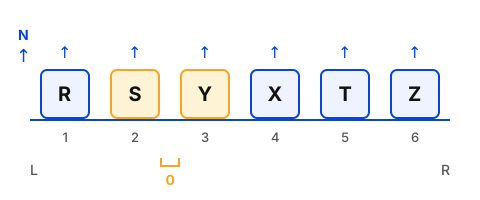
Six friends, R, S, T, X, Y and Z, are sitting in a straight row facing north (but not necessarily in the same order) . Only two people sit to the left of Y. Only two people sit between Y and Z . Only one person sits between Z and X. R sits to the immediate left of S . How many people sit between Y and S ?
छह मित्र R, S, T, X, Y और Z एक सीधी पंक्ति में उत्तर की ओर मुख करके बैठे हैं (आवश्यक नहीं कि इसी क्रम में)। Y के बाईं ओर केवल दो व्यक्ति बैठे हैं। Y और Z के बीच केवल दो व्यक्ति बैठे हैं। Z और X के बीच केवल एक व्यक्ति बैठा है। R, S के ठीक बाईं ओर बैठा है। Y और S के बीच कितने व्यक्ति बैठे हैं?
  1. ATwoदो
  2. BThreeतीन
  3. CZeroशून्य
  4. DOneएक
Show answer

Concept: Number seats 1–6 from the left (all face north) and place fixed persons first.

  1. Two to the left of Y → Y = seat 3.
  2. Two between Y and Z → Z = seat 6.
  3. One between Z and X → X = seat 4.
  4. R immediately left of S → R = 1, S = 2; T = 5.
  5. S (2) and Y (3) are neighbours → 0 people between.

Trick: Start with the clue that fixes an exact seat ('only two to the left') – it locks the rest quickly.

Answer: (C) Zero

अवधारणा: बाएँ से सीट 1–6 मानें (सभी उत्तर मुख) और पहले निश्चित स्थान भरें।

  1. Y के बाएँ दो → Y = सीट 3
  2. Y और Z के बीच दो → Z = सीट 6
  3. Z और X के बीच एक → X = सीट 4
  4. R, S के ठीक बाएँ → R = 1, S = 2; T = 5
  5. S (2) और Y (3) पास-पास → बीच में शून्य।

ट्रिक: जो संकेत सटीक सीट बताए, उसी से शुरू करें – बाकी अपने-आप बैठ जाते हैं।

उत्तर: (C) शून्य

SSC GDGeneral Intelligence & ReasoningLinear seating arrangementSSC GD 2025 · 7 Feb Shift 3 →
Q3007.
In a certain code language, 'FWYO' is coded as '39' and 'SIXR' is coded as '38'.
How is 'LARZ' coded in the given language?
एक निश्चित कूट भाषा में, 'FWYO' को '39' के रूप में और 'SIXR' को '38' के रूप में कूटबद्ध किया जाता है।
उसी कूट भाषा में 'LARZ' को किस प्रकार कूटबद्ध किया जाएगा?
  1. A51
  2. B44
  3. C53
  4. D47
Show answer

Concept: Code = sum of reverse alphabet positions (reverse = 27−position).

  1. FWYO: 21+4+2+12=39 ✓
  2. SIXR: 8+18+3+9=38 ✓
  3. LARZ: L=15, A=26, R=9, Z=1 → 15+26+9+1=51.

Trick: If the forward sum is too big (FWYO forward = 69), try reverse: forward + reverse = 27×4=108, so reverse = 108−69=39. For LARZ: forward 57 → 108−57=51.

Answer: (A) 51

अवधारणा: कोड = अक्षरों के उल्टे स्थान का योग (उल्टा स्थान = 27−स्थान)।

  1. FWYO: 21+4+2+12=39 ✓
  2. SIXR: 8+18+3+9=38 ✓
  3. LARZ: 15+26+9+1=51

ट्रिक: चार अक्षरों का सीधा योग + उल्टा योग = 108। LARZ का सीधा योग 57 → 108−57=51।

उत्तर: (A) 51

SSC GDGeneral Intelligence & ReasoningCoding – sum of reverse positionsSSC GD 2025 · 7 Feb Shift 3 →
Q3008.
Based on the English alphabetical order, three of the following four letter-clusters are alike in a certain way and thus form a group. Which letter-cluster DOES NOT belong to that group?
(Note: The odd one out is not based on the number of consonants/vowels or their position in the letter-cluster.)
अंग्रेजी वर्णमाला क्रम के आधार पर, निम्नलिखित चार अक्षर-समूहों में से तीन एक निश्चित प्रकार से समान हैं और इस प्रकार एक समूह बनाते हैं। वह अक्षर-समूह कौन-सा है जो उस समूह से संबंधित नहीं है?
(नोट: असंगत अक्षर-समूह का आधार अक्षर-समूह में व्यंजनों/स्वरों की संख्या या उनकी स्थिति नहीं है।)
  1. AKLQ
  2. BORV
  3. CTUZ
  4. DOPU
Show answer

Concept: Compare the gaps between consecutive letters in each cluster.

  1. KLQ: K→L +1, L→Q +5.
  2. TUZ: +1, +5; OPU: +1, +5.
  3. ORV: O→R +3, R→V +4 – different.

Trick: In three options the first two letters are neighbours (KL, TU, OP); ORV is the only one where they are not.

Answer: (B) ORV

अवधारणा: हर समूह में क्रमागत अक्षरों का अंतर देखें।

  1. KLQ: +1, +5
  2. TUZ: +1, +5; OPU: +1, +5
  3. ORV: +3, +4 – अलग।

ट्रिक: तीन विकल्पों में पहले दो अक्षर पड़ोसी हैं (KL, TU, OP); ORV में नहीं।

उत्तर: (B) ORV

SSC GDGeneral Intelligence & ReasoningOdd one out – letter gapsSSC GD 2025 · 7 Feb Shift 3 →
Q3009.
The position(s) of how many letters will remain unchanged if each of the letters in the word QUARTOS is arranged in the English alphabetical order ?
यदि QUARTOS शब्द के प्रत्येक अक्षर को अंग्रेजी वर्णमाला क्रम में व्यवस्थित किया जाए, तो कितने अक्षरों की स्थिति अपरिवर्तित रहेगी?
  1. AOneएक
  2. BZeroशून्य
  3. CThreeतीन
  4. DTwoदो
Show answer

Concept: Write the word and its alphabetical arrangement one below the other; count matching places.

  1. Original: Q U A R T O S
  2. Sorted: A O Q R S T U
  3. Place 4 has R in both; no other place matches.
  4. Unchanged letters = 1.

Trick: Check the middle letter first – in a 7-letter word, the letter that is 4th in alphabetical rank often stays (R here).

Answer: (A) One

अवधारणा: शब्द और उसका वर्णानुक्रम एक-दूसरे के नीचे लिखकर समान स्थान गिनें।

  1. मूल: Q U A R T O S
  2. क्रमबद्ध: A O Q R S T U
  3. केवल चौथे स्थान पर R दोनों में समान है।
  4. अपरिवर्तित अक्षर = 1

ट्रिक: 7 अक्षरों में बीच वाला (चौथा) अक्षर पहले जाँचें – यहाँ R वहीं रहता है।

उत्तर: (A) एक

SSC GDGeneral Intelligence & ReasoningAlphabetical rearrangement of a wordSSC GD 2025 · 7 Feb Shift 3 →
Q3010.
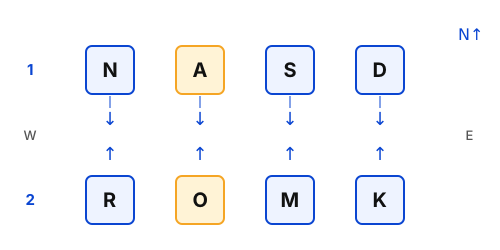
Eight people are sitting in two parallel rows containing 4 people each in such a way that there is equal distance between adjacent persons.
In row 1, D, A, N and S are seated and all of them are facing south.
In row 2, M, O, R and K are seated and all of them are facing north.
Thus, each person faces another person from the other row.
No one sits to the right of K. Only two people sit between R and K. The one facing O sits second to the right of the one facing K. A sits to the immediate right of S. N sits to the immediate right of A and does not face O. Which of the following represents both people facing each other?
आठ व्यक्ति दो समानांतर पंक्तियों में इस प्रकार बैठे हैं कि प्रत्येक पंक्ति में 4 व्यक्ति हैं और आसन्न व्यक्तियों के बीच समान दूरी है।
पंक्ति 1 में D, A, N और S बैठे हैं तथा वे सभी दक्षिण की ओर मुख किए हुए हैं।
पंक्ति 2 में M, O, R और K बैठे हैं तथा वे सभी उत्तर की ओर मुख किए हुए हैं।
इस प्रकार, प्रत्येक व्यक्ति दूसरी पंक्ति के किसी एक व्यक्ति के सामने बैठा है।
K के दाईं ओर कोई नहीं बैठा है। R और K के बीच केवल दो व्यक्ति बैठे हैं। O के सामने बैठा व्यक्ति, K के सामने बैठे व्यक्ति के दाईं ओर दूसरे स्थान पर बैठा है। A, S के ठीक दाईं ओर बैठा है। N, A के ठीक दाईं ओर बैठा है और O के सामने नहीं है। निम्नलिखित में से कौन-सा एक-दूसरे के सामने बैठे दोनों व्यक्तियों को दर्शाता है?
  1. AA and OA और O
  2. BN and ON और O
  3. CR and SR और S
  4. DD and MD और M
Show answer

Concept: Row 1 faces south, row 2 faces north, so their 'right' sides are opposite.

  1. No one right of K → K at the right end of row 2; two between R and K → R at the other end.
  2. Person facing O is 2nd right of the one facing K → O sits next to R; M fills the last seat.
  3. Row 1: S, A, N consecutive (A right of S, N right of A); N must not face O → N faces R, A faces O, S faces M, D faces K.
  4. Matching pair: A – O.

Trick: Draw both rows in one table with seat columns; each column is a facing pair – then just read the option.

Answer: (A) A and O

अवधारणा: पंक्ति 1 दक्षिण और पंक्ति 2 उत्तर की ओर है, इसलिए दोनों का 'दायाँ' उल्टी दिशा में है।

  1. K के दाएँ कोई नहीं → K पंक्ति 2 के दाएँ छोर पर; R और K के बीच दो → R दूसरे छोर पर।
  2. O के सामने वाला, K के सामने वाले के दूसरे दाएँ → O, R के पास; M बची सीट पर।
  3. पंक्ति 1: S, A, N लगातार; N, O के सामने नहीं → N–R, A–O, S–M, D–K।
  4. सही जोड़ी: A और O

ट्रिक: दोनों पंक्तियों को एक तालिका में लिखें – हर स्तंभ एक आमने-सामने जोड़ी है।

उत्तर: (A) A और O

SSC GDGeneral Intelligence & ReasoningParallel-row seatingSSC GD 2025 · 7 Feb Shift 3 →
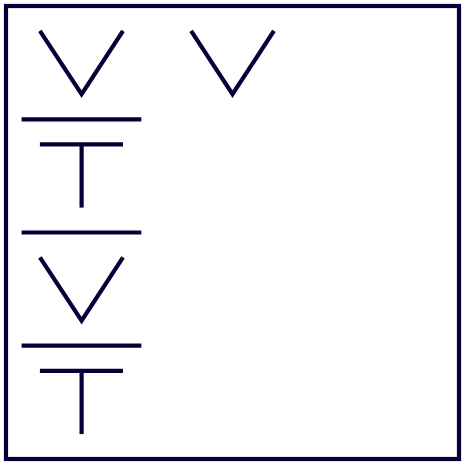
Q3011.
Identify the figure given in the options which when put in place of the question mark (?) will logically complete the series.
figure
विकल्पों में दी गई उस आकृति की पहचान कीजिए जिसे प्रश्नवाचक चिह्न (?) के स्थान पर रखने पर शृंखला तार्किक रूप से पूर्ण हो जाएगी।
figure
  1. Afigure
  2. Bfigure
  3. Cfigure
  4. Dfigure
Show answer

Concept: Count how many symbols each box has and in what order they are filled.

  1. Boxes hold 1, 2, 3, 4 symbols → next box holds 5.
  2. Symbols fill the first column top to bottom, then start the second column.
  3. Shapes alternate T, V, T, V → the 5th is T at the top of column 2.

Trick: Count first: options without exactly 5 symbols are rejected instantly.

Answer: (A) Option (a)

अवधारणा: हर डिब्बे में चिह्नों की संख्या और भरने का क्रम देखें।

  1. डिब्बों में 1, 2, 3, 4 चिह्न → अगले में 5।
  2. चिह्न पहले स्तंभ में ऊपर से नीचे भरते हैं, फिर दूसरे स्तंभ में।
  3. आकार T, V, T, V बारी-बारी → पाँचवाँ T, दूसरे स्तंभ में सबसे ऊपर।

ट्रिक: पहले गिनती करें – जिस विकल्प में 5 चिह्न नहीं, वह तुरंत बाहर।

उत्तर: (A) विकल्प (a)

SSC GDGeneral Intelligence & ReasoningFigure series – growing symbolsSSC GD 2025 · 7 Feb Shift 3 →
Q3012.
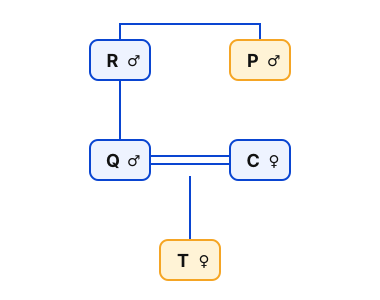
P is the brother of R. R is the father of Q. C is the wife of Q. T is the daughter of C. How is P related to T?
P, R का भाई है। R, Q का पिता है। C, Q की पत्नी है। T, C की पुत्री है। P का T से क्या संबंध है?
  1. AFather's father's brotherपिता के पिता का भाई
  2. BFather's brotherपिता का भाई
  3. CFather's fatherपिता के पिता
  4. DFatherपिता
Show answer

Concept: Build the family tree from T upward.

  1. C is wife of Q and T is C's daughter → Q is T's father.
  2. R is Q's father → R is T's father's father (grandfather).
  3. P is R's brother → P = father's father's brother.

Trick: Go generation-wise: P and R are on the same level, two generations above T → answer must contain 'father's father'.

Answer: (A) Father's father's brother

अवधारणा: T से ऊपर की ओर परिवार-वृक्ष बनाइए।

  1. C, Q की पत्नी है और T, C की बेटी → Q, T का पिता।
  2. R, Q का पिता → R, T के पिता का पिता (दादा)।
  3. P, R का भाई → P = पिता के पिता का भाई।

ट्रिक: P और R एक ही पीढ़ी में, T से दो पीढ़ी ऊपर – उत्तर में 'पिता के पिता' होना ही चाहिए।

उत्तर: (A) पिता के पिता का भाई

SSC GDGeneral Intelligence & ReasoningBlood relation – chainSSC GD 2025 · 7 Feb Shift 3 →
Q3013.
FROM is related to CPLK in a certain way based on the English alphabetical order. In the same way, TJCE is related to QHZC. To which of the given options is KDTY related, following the same logic?
अंग्रेजी वर्णमाला क्रम के आधार पर FROM एक निश्चित प्रकार से CPLK से संबंधित है। उसी प्रकार, TJCE, QHZC से संबंधित है। समान तर्क का अनुसरण करते हुए, दिए गए विकल्पों में से KDTY किससे संबंधित है?
  1. AHBQW
  2. BHBWQ
  3. CHQWB
  4. DHQWE
Show answer

Concept: Find the shift of each letter in the given pairs and apply it.

  1. FROM → CPLK: −3, −2, −3, −2.
  2. TJCE → QHZC: −3, −2, −3, −2 ✓
  3. Apply to KDTY: K→H, D→B, T→Q, Y→W, giving HBQW.

Trick: Only the first two letters H, B are enough – options HBQW and HBWQ remain; T−3 = Q picks HBQW.

Answer: (A) HBQW

अवधारणा: दिए गए जोड़ों में हर अक्षर का खिसकाव निकालकर लागू करें।

  1. FROM → CPLK: −3, −2, −3, −2
  2. TJCE → QHZC: −3, −2, −3, −2 ✓
  3. KDTY: H, B, Q, W → HBQW

ट्रिक: पहले दो अक्षर H, B से दो विकल्प बचते हैं; T−3 = Q से HBQW तय।

उत्तर: (A) HBQW

SSC GDGeneral Intelligence & ReasoningLetter analogy – backward shiftSSC GD 2025 · 7 Feb Shift 3 →
Q3014.
What should come in place of the question mark (?) in the given series? 2, 3, 6, 11, 18, ?
दी गई शृंखला में प्रश्नवाचक चिह्न (?) के स्थान पर क्या आना चाहिए? 2, 3, 6, 11, 18, ?
  1. A26
  2. B28
  3. C25
  4. D27
Show answer

Concept: Differences between terms form a pattern.

  1. Differences: 1, 3, 5, 7 (odd numbers).
  2. Next difference = 9.
  3. 18+9=27.

Trick: Terms are n2+2 (0+2, 1+2, 4+2, 9+2, 16+2) → 25+2=27.

Answer: (D) 27

अवधारणा: पदों के बीच का अंतर एक पैटर्न बनाता है।

  1. अंतर: 1, 3, 5, 7 (विषम संख्याएँ)
  2. अगला अंतर = 9
  3. 18+9=27

ट्रिक: पद = n2+2 (0, 1, 4, 9, 16 में 2 जोड़ें) → 25+2=27।

उत्तर: (D) 27

SSC GDGeneral Intelligence & ReasoningNumber series – odd differencesSSC GD 2025 · 7 Feb Shift 3 →
Q3015.
What should come in place of the question mark (?) in the given series? 451, 450, 447, 442, ?, 426
दी गई शृंखला में प्रश्नवाचक चिह्न (?) के स्थान पर क्या आना चाहिए? 451, 450, 447, 442, ?, 426
  1. A435
  2. B431
  3. C437
  4. D433
Show answer

Concept: Terms decrease by consecutive odd numbers.

  1. 451 − 1 = 450, 450 − 3 = 447, 447 − 5 = 442.
  2. Next: 442 − 7 = 435.
  3. Check: 435 − 9 = 426 ✓

Trick: Work backwards from the last term: 426 + 9 = 435 – confirms in one step.

Answer: (A) 435

अवधारणा: पद क्रमागत विषम संख्याओं से घटते हैं।

  1. 451 − 1 = 450, 450 − 3 = 447, 447 − 5 = 442
  2. अगला: 442 − 7 = 435
  3. जाँच: 435 − 9 = 426 ✓

ट्रिक: अंतिम पद से उल्टा चलें: 426 + 9 = 435।

उत्तर: (A) 435

SSC GDGeneral Intelligence & ReasoningNumber series – decreasing by odd numbersSSC GD 2025 · 7 Feb Shift 3 →
Q3016.
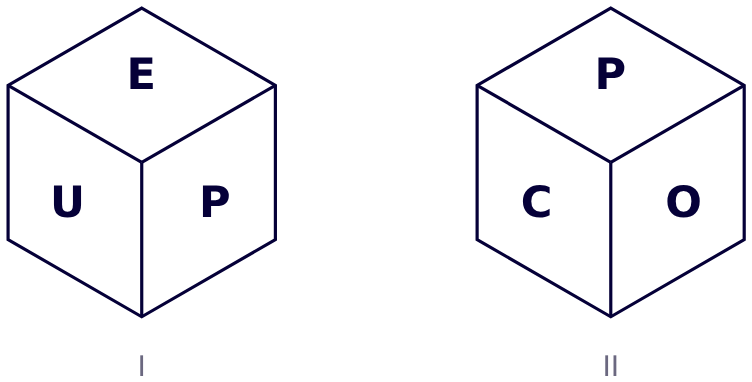
A dice has its faces marked by letters P, U, C, O, E and M. Two positions of the same dice are shown in the given figures. Which face is opposite to face M?
figure
एक पासे के फलकों पर P, U, C, O, E और M अक्षर अंकित हैं। दी गई आकृतियों में उसी पासे की दो स्थितियाँ दर्शाई गई हैं। फलक M के विपरीत कौन-सा फलक है?
figure
  1. AC
  2. BO
  3. CE
  4. DP
Show answer

Concept: Faces seen together in any view are adjacent, so they cannot be opposite.

  1. View I: P with E and U.
  2. View II: P with C and O.
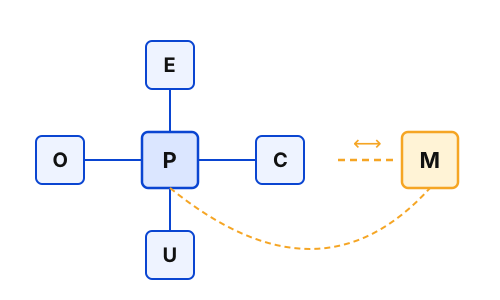
  3. P is adjacent to E, U, C, O → the only remaining face M is opposite P.

Trick: The letter that appears in both views and touches four faces – its opposite is the one face never seen beside it.

Answer: (D) P

अवधारणा: एक ही दृश्य में दिखे फलक आसन्न होते हैं, विपरीत नहीं।

  1. दृश्य I: P के साथ E और U
  2. दृश्य II: P के साथ C और O
  3. P, E, U, C, O से सटा है → बचा हुआ M, P के विपरीत।

ट्रिक: जो अक्षर दोनों दृश्यों में है और चार फलकों को छूता है, उसका विपरीत वही है जो कभी उसके साथ नहीं दिखा।

उत्तर: (D) P

SSC GDGeneral Intelligence & ReasoningDice – opposite faceSSC GD 2025 · 7 Feb Shift 3 →
Q3017.
What will come in the place of the question mark '(?)' in the following equation, if '÷' and '×' are interchanged and '+' and '-' are interchanged?
40 - 8 ÷ 1 + 72 × 8 = ?
यदि '÷' और '×' को आपस में बदल दिया जाए तथा '+' और '-' को आपस में बदल दिया जाए, तो निम्नलिखित समीकरण में प्रश्नवाचक चिह्न '(?)' के स्थान पर क्या आएगा?
40 - 8 ÷ 1 + 72 × 8 = ?
  1. A40
  2. B38
  3. C41
  4. D39
Show answer

Concept: Swap the signs as told, then solve by BODMAS.

  1. After swapping: 40+8×1−72÷8.
  2. 8×1=8; 72÷8=9.
  3. 40+8−9=39.

Trick: Rewrite the whole expression with new signs first – most errors come from swapping in the head.

Answer: (D) 39

अवधारणा: चिह्न बदलकर BODMAS से हल करें।

  1. बदलने पर: 40+8×1−72÷8
  2. 8×1=8; 72÷8=9
  3. 40+8−9=39

ट्रिक: पहले पूरा व्यंजक नए चिह्नों के साथ लिख लें – मन में बदलने से गलती होती है।

उत्तर: (D) 39

SSC GDGeneral Intelligence & ReasoningInterchanging signs – BODMASSSC GD 2025 · 7 Feb Shift 3 →
Q3018.
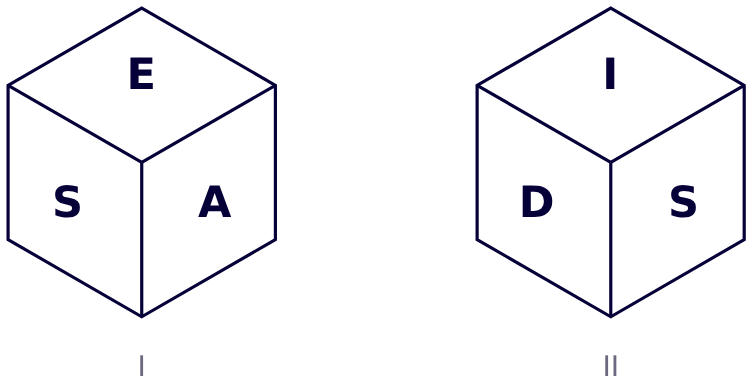
A dice has its faces marked by letters Y, S, I, A, D and E. Two positions of the same dice are shown in the given figures. Which face is opposite to face Y?
figure
एक पासे के फलकों पर Y, S, I, A, D और E अक्षर अंकित हैं। दी गई आकृतियों में उसी पासे की दो स्थितियाँ दर्शाई गई हैं। फलक Y के विपरीत कौन-सा फलक है?
figure
  1. AS
  2. BA
  3. CI
  4. DE
Show answer

Concept: A face that touches four other faces is opposite the fifth one.

  1. View I: S with E and A.
  2. View II: S with I and D.
  3. S touches E, A, I, D → S is opposite Y.

Trick: Find the letter common to both views; the face never seen with it is its opposite.

Answer: (A) S

अवधारणा: जो फलक चार फलकों को छूता है, वह पाँचवें के विपरीत होता है।

  1. दृश्य I: S के साथ E और A
  2. दृश्य II: S के साथ I और D
  3. S, E, A, I, D से सटा है → S, Y के विपरीत।

ट्रिक: दोनों दृश्यों में समान अक्षर लें; जो फलक उसके साथ कभी नहीं दिखा, वही विपरीत है।

उत्तर: (A) S

SSC GDGeneral Intelligence & ReasoningDice – opposite faceSSC GD 2025 · 7 Feb Shift 3 →
Q3019.
GRSN is related to JUVQ in a certain way based on the English alphabetical order. In the same way, KDEA is related to NGHD. To which of the following is BSTG related, following the same logic?
अंग्रेजी वर्णमाला क्रम के आधार पर GRSN एक निश्चित प्रकार से JUVQ से संबंधित है। उसी प्रकार, KDEA, NGHD से संबंधित है। समान तर्क का अनुसरण करते हुए, निम्नलिखित में से BSTG किससे संबंधित है?
  1. AEVWJ
  2. BCTWJ
  3. CCTUH
  4. DEVUH
Show answer

Concept: Each letter moves forward by the same number of places.

  1. GRSN → JUVQ: every letter +3.
  2. KDEA → NGHD: every letter +3 ✓
  3. BSTG: E, V, W, J → EVWJ.

Trick: Check just the first letter: B + 3 = E leaves EVWJ and EVUH; T + 3 = W fixes EVWJ.

Answer: (A) EVWJ

अवधारणा: हर अक्षर समान स्थानों से आगे बढ़ता है।

  1. GRSN → JUVQ: हर अक्षर +3
  2. KDEA → NGHD: हर अक्षर +3 ✓
  3. BSTG: E, V, W, J → EVWJ

ट्रिक: पहला अक्षर B + 3 = E – दो विकल्प बचते हैं; T + 3 = W से EVWJ तय।

उत्तर: (A) EVWJ

SSC GDGeneral Intelligence & ReasoningLetter analogy – +3 shiftSSC GD 2025 · 7 Feb Shift 3 →
Q3020.
Read the given statements and conclusions carefully. Assuming that the information given in the statements is true, even if it appears to be at variance with commonly known facts, decide which of the given conclusions logically follow(s) from the statements.
Statements:
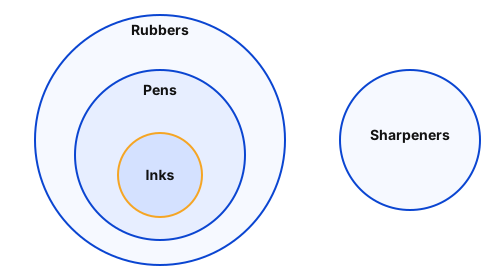
All inks are pens.
All pens are rubbers.
No rubber is a sharpener.
Conclusions:
(I) No ink is a sharpener.
(II) Some rubbers are inks.
दिए गए कथनों और निष्कर्षों को ध्यानपूर्वक पढ़िए। कथनों में दी गई जानकारी को सत्य मानते हुए, चाहे वह सर्वज्ञात तथ्यों से भिन्न प्रतीत होती हो, निर्णय कीजिए कि दिए गए निष्कर्षों में से कौन-सा/से कथनों का तार्किक रूप से अनुसरण करता है/करते हैं।
कथन:
सभी स्याही, पेन हैं।
सभी पेन, रबड़ हैं।
कोई रबड़, शार्पनर नहीं है।
निष्कर्ष:
(I) कोई स्याही, शार्पनर नहीं है।
(II) कुछ रबड़, स्याही हैं।
  1. ABoth conclusions (I) and (II) followनिष्कर्ष (I) और (II) दोनों अनुसरण करते हैं
  2. BNeither conclusion (I) nor (II) followsन तो निष्कर्ष (I) और न ही (II) अनुसरण करता है
  3. COnly conclusion (II) followsकेवल निष्कर्ष (II) अनुसरण करता है
  4. DOnly conclusion (I) followsकेवल निष्कर्ष (I) अनुसरण करता है
Show answer

Concept: All A are B + No B is C ⇒ No A is C; 'All A are B' also gives 'Some B are A'.

  1. Inks ⊂ Pens ⊂ Rubbers; Sharpener lies outside Rubbers.
  2. Inks sit wholly inside Rubbers, and Sharpeners touch no Rubber → Sharpeners touch no Ink: (I) follows.
  3. All inks are rubbers → Some rubbers are inks: (II) follows.

Trick: 'All + No = No' and 'All' can always be reversed as 'Some' – both rules apply here.

Answer: (A) Both conclusions (I) and (II) follow

अवधारणा: सभी A, B हैं + कोई B, C नहीं ⇒ कोई A, C नहीं; और 'सभी A, B हैं' से 'कुछ B, A हैं'।

  1. स्याही ⊂ पेन ⊂ रबर; शार्पनर रबर से बाहर।
  2. हर स्याही रबर है और कोई रबर शार्पनर नहीं → कोई स्याही शार्पनर नहीं: (I) सही।
  3. सभी स्याही रबर हैं → कुछ रबर स्याही हैं: (II) सही।

ट्रिक: 'सभी + कोई नहीं = कोई नहीं' और 'सभी' को उलटकर 'कुछ' बनाया जा सकता है।

उत्तर: (A) निष्कर्ष (I) और (II) दोनों अनुसरण करते हैं

SSC GDGeneral Intelligence & ReasoningSyllogism – all/no statementsSSC GD 2025 · 7 Feb Shift 3 →