Question bank

Q&A: practice questions with answers

Search questions on any topic. Filter by exam category, exam, subject and topic, try the question, then open the answer and explanation.

Courses – airGurukul

4,200 questions found.

Q3101.
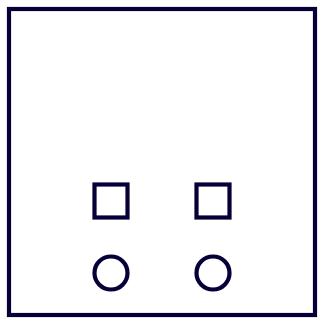
A paper is folded and cut as shown below. How will it appear when unfolded?
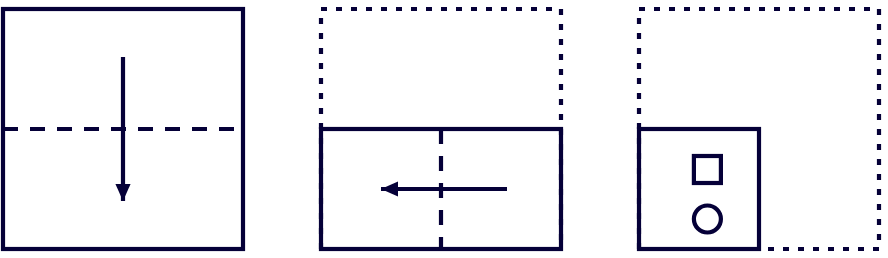
figure
एक कागज को नीचे दर्शाए अनुसार मोड़ा और काटा जाता है। खोलने पर वह कैसा दिखाई देगा?
figure
  1. Afigure
  2. Bfigure
  3. Cfigure
  4. Dfigure
Show answer

Concept: Every fold doubles each cut; two folds mean each cut appears 4 times, mirrored across the fold lines.

  1. The paper is folded twice → it opens into 4 layers, so each mark is repeated 4 times.
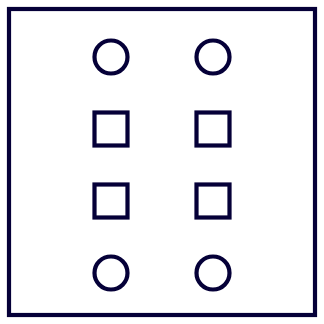
  2. Cuts made: 1 square + 1 circle → open sheet shows 4 squares + 4 circles (8 holes).
  3. Unfold the last fold first, then the earlier one, mirroring the holes each time. In each column the order reads circle–square–square–circle.
  4. Only option (C) matches this mirrored pattern.

Trick: Count holes first: (cuts)×2folds=2×4=8. Reject options with the wrong count, then check the mirror symmetry.

Answer: (C) figure (c)

अवधारणा: हर मोड़ पर कट दोगुना होता है; दो मोड़ = हर कट 4 बार, मोड़-रेखा के दर्पण रूप में।

  1. कागज़ दो बार मोड़ा गया → खोलने पर 4 परतें, यानी हर निशान 4 बार।
  2. कटे हैं एक वर्गाकार और एक गोल छेद → खोलने पर कुल 8 छेद (चार वर्गाकार, चार गोल)।
  3. आख़िरी मोड़ पहले खोलें, फिर पहला; हर बार छेदों का दर्पण बनाएँ। हर कॉलम में ऊपर से नीचे: गोल, वर्गाकार, वर्गाकार, गोल।
  4. यह पैटर्न केवल विकल्प (C) में है।

ट्रिक: पहले छेद गिनें: कट×2मोड़=2×4=8; गलत गिनती वाले विकल्प तुरंत हटाएँ।

उत्तर: (C) आकृति (c)

SSC GDGeneral Intelligence & ReasoningPaper folding – two folds, cut patternSSC GD 2025 · 7 Feb Shift 2 →
Q3102.
What should come in place of the question mark (?) in the given series based on the English alphabetical order?
KRB MTD OVF QXH ?
अंग्रेजी वर्णमाला क्रम पर आधारित दी गई शृंखला में प्रश्नवाचक चिह्न (?) के स्थान पर क्या आना चाहिए?
KRB MTD OVF QXH ?
  1. ATZJ
  2. BSZK
  3. CSZJ
  4. DRZJ
Show answer

Concept: Track each letter position of the clusters separately.

  1. 1st letters: K, M, O, Q → +2 each → S.
  2. 2nd letters: R, T, V, X → +2 → Z.
  3. 3rd letters: B, D, F, H → +2 → J.
  4. Next cluster = SZJ.

Trick: Check just the first letter (Q+2 = S) to cut options to SZK/SZJ, then the last letter H+2 = J settles it.

Answer: (C) SZJ

अवधारणा: हर समूह के अक्षरों को स्थान के अनुसार अलग-अलग देखें।

  1. पहला अक्षर: K, M, O, Q → +2 → S।
  2. दूसरा अक्षर: R, T, V, X → +2 → Z।
  3. तीसरा अक्षर: B, D, F, H → +2 → J।
  4. अगला समूह = SZJ।

ट्रिक: पहले अक्षर Q+2 = S से दो विकल्प बचते हैं; अंतिम अक्षर H+2 = J से उत्तर पक्का।

उत्तर: (C) SZJ

SSC GDGeneral Intelligence & ReasoningLetter series – +2 in each positionSSC GD 2025 · 7 Feb Shift 2 →
Q3103.
The position(s) of how many letters will remain unchanged if each of the letters in the word ROTCHES is arranged in the English alphabetical order ?
यदि शब्द ROTCHES के प्रत्येक अक्षर को अंग्रेजी वर्णमाला क्रम में व्यवस्थित किया जाए, तो कितने अक्षरों की स्थिति अपरिवर्तित रहेगी?
  1. AThreeतीन
  2. BZeroशून्य
  3. COneएक
  4. DTwoदो
Show answer

Concept: Sort the letters A→Z and compare position by position.

  1. Original word: ROTCHES; arranged A→Z: CEHORST.
  2. Check place by place – every place differs (e.g. 1st: R vs C, 4th: C vs O, 7th: S vs T).
  3. Unchanged letters = 0.

Trick: The first letter of the sorted word must be the smallest letter (C); if the word does not start with it, position 1 is already changed – go on checking only likely spots.

Answer: (B) Zero

अवधारणा: अक्षरों को A→Z क्रम में लगाकर हर स्थान की तुलना करें।

  1. मूल शब्द: ROTCHES; A→Z क्रम में: CEHORST।
  2. हर स्थान पर अक्षर बदल गया (जैसे 1st: R बनाम C, 4th: C बनाम O, 7th: S बनाम T)।
  3. अपरिवर्तित अक्षर = 0।

ट्रिक: क्रमबद्ध शब्द हमेशा सबसे छोटे अक्षर (यहाँ C) से शुरू होगा – इससे पहला स्थान तुरंत जाँच लें।

उत्तर: (B) शून्य

SSC GDGeneral Intelligence & ReasoningLetter positions after alphabetical arrangementSSC GD 2025 · 7 Feb Shift 2 →
Q3104.
What will come in the place of the question mark (?) in the following equation, if '+' and '-' are interchanged and '×' and '÷' are interchanged?
48 × 3 - 16 + 6 ÷ 3 = ?
यदि '+' और '-' को आपस में बदल दिया जाए तथा '×' और '÷' को आपस में बदल दिया जाए, तो निम्नलिखित समीकरण में प्रश्नवाचक चिह्न (?) के स्थान पर क्या आएगा?
48 × 3 - 16 + 6 ÷ 3 = ?
  1. A5
  2. B14
  3. C11
  4. D8
Show answer

Concept: Swap the signs as told, then solve using BODMAS.

  1. Swap +↔− and ×↔÷: 48÷3+16−6×3
  2. Division/multiplication first: 16+16−18
  3. = 32−18=14

Trick: Rewrite the whole expression with new signs before calculating – most mistakes come from swapping signs mid-way.

Answer: (B) 14

अवधारणा: बताए अनुसार चिह्न बदलें, फिर BODMAS से हल करें।

  1. +↔− और ×↔÷ करने पर: 48÷3+16−6×3
  2. पहले भाग/गुणा: 16+16−18
  3. = 32−18=14

ट्रिक: गणना से पहले पूरा व्यंजक नए चिह्नों के साथ दोबारा लिख लें – गलती की गुंजाइश कम होगी।

उत्तर: (B) 14

SSC GDGeneral Intelligence & ReasoningSign interchange – BODMASSSC GD 2025 · 7 Feb Shift 2 →
Q3105.
Select the correct alternative that when filled in the blanks in the same sequence will make the series logically complete.
_KHLJ_IMKM_NLNK_MOL_
उस सही विकल्प का चयन कीजिए, जिसे रिक्त स्थानों में उसी क्रम में भरने पर शृंखला तार्किक रूप से पूर्ण हो जाए।
_KHLJ_IMKM_NLNK_MOL_
  1. AFKGQT
  2. BFLGOT
  3. CILJOP
  4. DIKJQP
Show answer

Concept: Split the 20-letter string into 5 groups of 4; each column moves +1 from group to group.

  1. Groups: _KHL | J_IM | KM_N | LNK_ | MOL_
  2. Column 1: _, J, K, L, M → I; Column 2: K, _, M, N, O → L
  3. Column 3: H, I, _, K, L → J; Column 4: L, M, N, _, _ → O, P
  4. Blanks in order: I, L, J, O, P → ILJOP.

Trick: Last two blanks fill column 4 as L, M, N, O, P – so the answer must end in “OP”; only ILJOP does.

Answer: (C) ILJOP

अवधारणा: 20 अक्षरों को 4-4 के 5 समूहों में बाँटें; हर कॉलम अगले समूह में +1 बढ़ता है।

  1. समूह: _KHL | J_IM | KM_N | LNK_ | MOL_
  2. कॉलम 1: _, J, K, L, M → I; कॉलम 2: K, _, M, N, O → L
  3. कॉलम 3: H, I, _, K, L → J; कॉलम 4: L, M, N, _, _ → O, P
  4. रिक्त स्थान क्रम से: I, L, J, O, P → ILJOP।

ट्रिक: कॉलम 4 के अंतिम दो खाली O, P होंगे – “OP” पर ख़त्म होने वाला एक ही विकल्प है।

उत्तर: (C) ILJOP

SSC GDGeneral Intelligence & ReasoningMissing letters – group of fourSSC GD 2025 · 7 Feb Shift 2 →
Q3106.
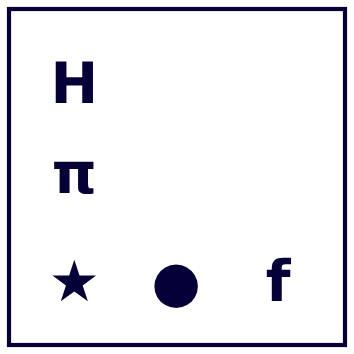
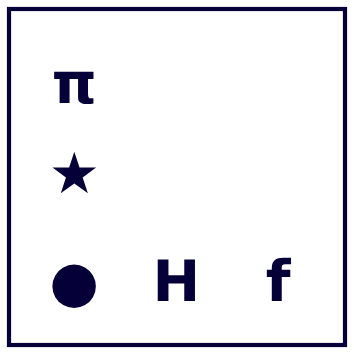
Select the figure from among the given options that can replace the question mark (?) in the following series.
figure
उस आकृति का चयन कीजिए जो दिए गए विकल्पों में से निम्नलिखित शृंखला में प्रश्नवाचक चिह्न (?) का स्थान ले सके।
figure
  1. Afigure
  2. Bfigure
  3. Cfigure
  4. Dfigure
Show answer

Concept: Follow how symbols enter, slide and move up in each step.

  1. At every step a new symbol enters at the bottom-right.
  2. The bottom row shifts one place left; the symbol pushed out moves up to the left of the row above.
  3. Applying this to the 4th figure: f enters, bottom row reads dot, H, f; the star goes up; π stays on top.
  4. This arrangement is option (C).

Trick: Track only the newest symbol's place and the top element – two checks usually remove 3 options.

Answer: (C) figure (c)

अवधारणा: देखें कि हर चरण में चिह्न कहाँ से आते हैं, कैसे खिसकते हैं और ऊपर जाते हैं।

  1. हर अगली आकृति में दाएँ-नीचे कोने पर नया चिह्न आता है।
  2. नीचे की कतार एक खाना बाईं ओर सरकती है; कतार से बाहर हुआ चिह्न ऊपर की कतार के बाएँ खाने में पहुँचता है।
  3. अगली आकृति: नया चिह्न f; नीचे की कतार में H के बाईं ओर बिंदु और दाईं ओर f; तारा ऊपर चढ़ता है; शीर्ष पर π बना रहता है।
  4. यही व्यवस्था विकल्प (C) में है।

ट्रिक: केवल नए चिह्न की जगह और सबसे ऊपर वाला चिह्न देखें – दो जाँच में 3 विकल्प हट जाते हैं।

उत्तर: (C) आकृति (c)

SSC GDGeneral Intelligence & ReasoningFigure series – symbols shiftingSSC GD 2025 · 7 Feb Shift 2 →
Q3107.
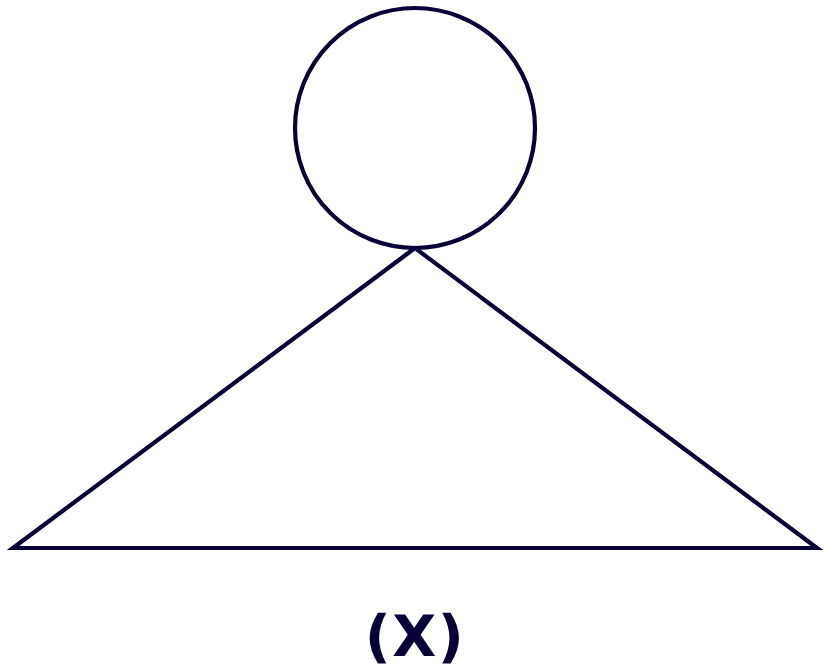
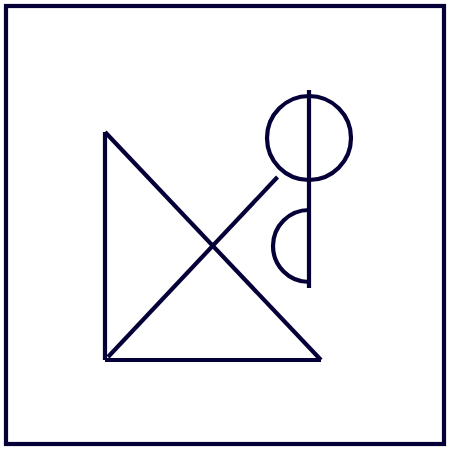
Select the option in which the given figure ( X ) is embedded (rotation is NOT allowed).
figure
उस विकल्प का चयन कीजिए जिसमें दी गई आकृति (X) सन्निहित है (घुमाने की अनुमति नहीं है)।
figure
  1. Afigure
  2. Bfigure
  3. Cfigure
  4. Dfigure
Show answer

Concept: Find figure X in an option with the same size and orientation (no rotation).

  1. X = a circle sitting on the top vertex of an upright triangle with a horizontal base.
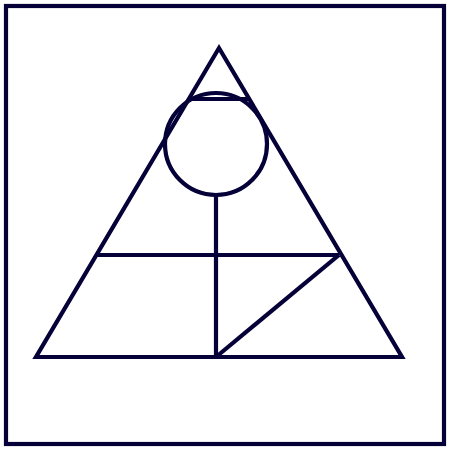
  2. (B): two slanting lines meeting just below a circle plus the bottom edge form this triangle, with the circle on its apex. ✔
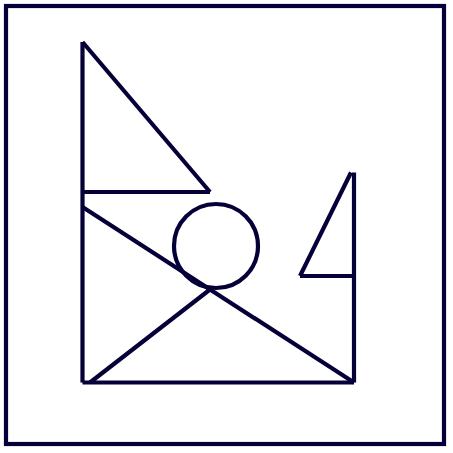
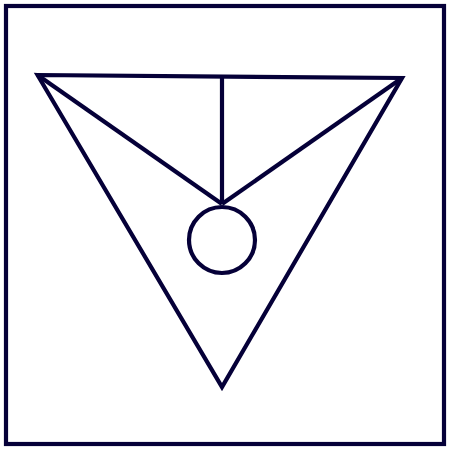
  3. (A) circle is inside the triangle; (C) triangle points down; (D) circle is separate.

Trick: Search for the most distinctive part first (circle touching an apex), then confirm the rest of the shape around it.

Answer: (B) figure (b)

अवधारणा: आकृति X को उसी आकार और दिशा में (बिना घुमाए) विकल्पों में ढूँढें।

  1. X = सीधे खड़े त्रिभुज (क्षैतिज आधार) के शीर्ष पर टिका वृत्त।
  2. (B): गोले के ठीक नीचे आपस में जुड़ती दो झुकी लकीरें तल-रेखा के साथ मिलकर यही त्रिकोण पूरा करती हैं, गोला शिखर पर टिका है। ✔
  3. (A): गोला त्रिकोण के भीतर; (C): त्रिकोण उल्टा; (D): गोला अलग-थलग।

ट्रिक: पहले सबसे खास हिस्सा (शीर्ष को छूता वृत्त) खोजें, फिर बाकी आकृति मिलाएँ।

उत्तर: (B) आकृति (b)

SSC GDGeneral Intelligence & ReasoningEmbedded figure – circle on triangleSSC GD 2025 · 7 Feb Shift 2 →
Q3108.
What should come in place of the question mark (?) in the given series?
18 55 89 120 148 ?
दी गई शृंखला में प्रश्नवाचक चिह्न (?) के स्थान पर क्या आना चाहिए?
18 55 89 120 148 ?
  1. A192
  2. B185
  3. C173
  4. D168
Show answer

Concept: Look at consecutive differences.

  1. Differences: 37, 34, 31, 28 → each 3 less.
  2. Next difference = 28 − 3 = 25.
  3. 148 + 25 = 173.

Trick: Differences shrink, so the next jump must be smaller than 28 → answer lies below 148 + 28 = 176; only 173 and 168 qualify, and 168 needs a jump of 20.

Answer: (C) 173

अवधारणा: क्रमागत पदों का अंतर देखें।

  1. अंतर: 37, 34, 31, 28 → हर बार 3 कम।
  2. अगला अंतर = 28 − 3 = 25।
  3. 148 + 25 = 173।

ट्रिक: अंतर घट रहा है, तो उत्तर 148 + 28 = 176 से छोटा होगा – 173 या 168; 168 के लिए अंतर 20 चाहिए, जो फिट नहीं।

उत्तर: (C) 173

SSC GDGeneral Intelligence & ReasoningNumber series – differences falling by 3SSC GD 2025 · 7 Feb Shift 2 →
Q3109.
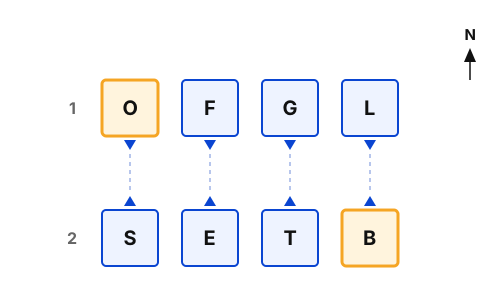
Eight people are sitting in two parallel rows containing 4 people each in such a way that there is equal distance between adjacent persons.
In row 1, G, L, O and F are seated and all of them are facing south.
In row 2, B, E, S and T are seated and all of them are facing north.
Thus, each person faces another person from the other row.
No one sits to the left of S. No one sits to the left of L. Only one person sits between T and S. The one facing E sits second to the right of L. O sits second to the right of G.
Which of the following represents both people sitting at extreme ends of the rows?
आठ व्यक्ति दो समानांतर पंक्तियों में इस प्रकार बैठे हैं कि प्रत्येक पंक्ति में 4 व्यक्ति हैं तथा आसन्न व्यक्तियों के बीच समान दूरी है।
पंक्ति 1 में G, L, O और F बैठे हैं तथा वे सभी दक्षिण की ओर मुख किए हुए हैं।
पंक्ति 2 में B, E, S और T बैठे हैं तथा वे सभी उत्तर की ओर मुख किए हुए हैं।
इस प्रकार, प्रत्येक व्यक्ति दूसरी पंक्ति के एक व्यक्ति के सम्मुख बैठा है।
S के बाएँ कोई नहीं बैठा है। L के बाएँ कोई नहीं बैठा है। T और S के बीच केवल एक व्यक्ति बैठा है। E के सम्मुख बैठा व्यक्ति, L के दाएँ दूसरे स्थान पर बैठा है। O, G के दाएँ दूसरे स्थान पर बैठा है।
निम्नलिखित में से कौन-सा विकल्प पंक्तियों के अंतिम छोरों पर बैठे दोनों व्यक्तियों को दर्शाता है?
  1. AG and SG और S
  2. BO and BO और B
  3. CO and TO और T
  4. DL and EL और E
Show answer

Concept: North-facing row: left = west; south-facing row: left = east.

  1. Number seats 1–4 from west. Row 2 (north): no one left of S → S = 1; one between T and S → T = 3.
  2. Row 1 (south): no one left of L → L = 4 (east end).
  3. Second to the right of L (right = west) = seat 2 → E faces it, so E = 2, B = 4.
  4. O is second to the right of G → G = 3, O = 1, F = 2.
  5. Ends: row 1 → O, L; row 2 → S, B. Option with both at ends: O and B.

Trick: Fix the “no one to the left” persons first – they give two end seats instantly.

Answer: (B) O and B

अवधारणा: उत्तरमुखी पंक्ति में बायाँ = पश्चिम; दक्षिणमुखी पंक्ति में बायाँ = पूर्व।

  1. पश्चिम से सीटें 1–4 मानें। पंक्ति 2 (उत्तरमुखी): S के बाएँ कोई नहीं → S = 1; T और S के बीच एक → T = 3।
  2. पंक्ति 1 (दक्षिणमुखी): L के बाएँ कोई नहीं → L = 4।
  3. L के दाएँ से दूसरा (दायाँ = पश्चिम) = सीट 2 → E उसके सामने, E = 2, B = 4।
  4. O, G के दाएँ से दूसरा → G = 3, O = 1, F = 2।
  5. छोर: पंक्ति 1 → O, L; पंक्ति 2 → S, B। सही जोड़ी: O और B।

ट्रिक: “बाएँ कोई नहीं” वाले व्यक्ति पहले बैठाएँ – दो छोर तुरंत तय हो जाते हैं।

उत्तर: (B) O और B

SSC GDGeneral Intelligence & ReasoningSeating – two parallel rowsSSC GD 2025 · 7 Feb Shift 2 →
Q3110.
In a coded language 'TRIP' is coded as '#@&$' and 'PART' is coded as '&^@#'. What is the code for A in the same code language?
एक कूट भाषा में 'TRIP' को '#@&$' के रूप में तथा 'PART' को '&^@#' के रूप में कूटबद्ध किया जाता है। उसी कूट भाषा में A का कूट क्या है?
  1. A@
  2. B$
  3. C^
  4. D#
Show answer

Concept: When codes are jumbled, match letters common to both words with symbols common to both codes.

  1. TRIP → #, @, &, $; PART → &, ^, @, #.
  2. Common letters T, R, P ↔ common symbols #, @, &.
  3. Leftover in PART: A; leftover in its code: ^ → A = ^.

Trick: Uncommon letter ↔ uncommon symbol. Likewise I = $.

Answer: (C) ^

अवधारणा: कोड क्रम में न हों तो दोनों शब्दों के समान अक्षरों को दोनों कोडों के समान चिह्नों से मिलाएँ।

  1. TRIP → #, @, &, $; PART → &, ^, @, #।
  2. समान अक्षर T, R, P ↔ समान चिह्न #, @, &।
  3. PART में बचा अक्षर A, कोड में बचा चिह्न ^ → A = ^।

ट्रिक: बचा हुआ अक्षर = बचा हुआ चिह्न। इसी तरह I = $।

उत्तर: (C) ^

SSC GDGeneral Intelligence & ReasoningCoding – common letters, common symbolsSSC GD 2025 · 7 Feb Shift 2 →
Q3111.
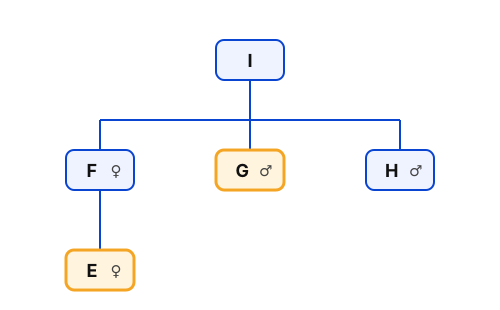
In a certain code language, 'A + B' means 'A is the daughter of B', 'A - B' means 'A is the brother of B', 'A × B' means 'A is the sister of B' and 'A ÷ B' means 'A is the son of B'.
How is G related to E if 'E + F × G - H ÷ I'?
एक निश्चित कूट भाषा में, 'A + B' का अर्थ है 'A, B की पुत्री है', 'A - B' का अर्थ है 'A, B का भाई है', 'A × B' का अर्थ है 'A, B की बहन है' तथा 'A ÷ B' का अर्थ है 'A, B का पुत्र है'।
यदि 'E + F × G - H ÷ I' है, तो G, E से किस प्रकार संबंधित है?
  1. AMother's sisterमाता की बहन
  2. BSister's daughterबहन की पुत्री
  3. CBrother's daughterभाई की पुत्री
  4. DMother's brotherमाता का भाई
Show answer

Concept: Decode only the part of the chain linking the two persons asked.

  1. E + F → E is F's daughter.
  2. F × G → F is G's sister, so F is female → F is E's mother.
  3. G − H → G is a brother (male).
  4. G is the brother of E's mother → mother's brother.

Trick: Stop as soon as both names (E and G) are connected – the rest (H, I) is noise.

Answer: (D) Mother's brother

अवधारणा: केवल उतना ही भाग हल करें जो पूछे गए दो व्यक्तियों को जोड़ता है।

  1. E + F → E, F की बेटी है।
  2. F × G → F, G की बहन है; F स्त्री है → F, E की माँ है।
  3. G − H → G भाई (पुरुष) है।
  4. G, E की माँ का भाई है → मामा।

ट्रिक: जैसे ही E और G जुड़ जाएँ, रुक जाएँ – H, I केवल भ्रम के लिए हैं।

उत्तर: (D) माता का भाई

SSC GDGeneral Intelligence & ReasoningCoded blood relationsSSC GD 2025 · 7 Feb Shift 2 →
Q3112.
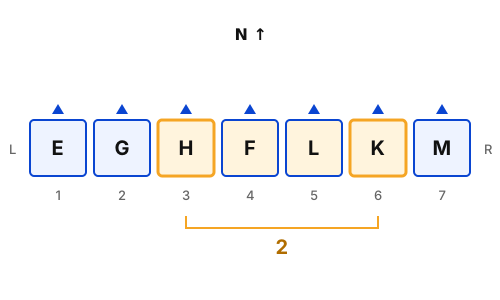
Seven people, E, F, G, H, K, L and M are sitting in a row, facing north (but not necessarily in the same order). Only three people sit between E and L. F sits to the immediate left of L. No one sits to the right of M. Only two people sit between M and F. H sits to the immediate right of G. How many people sit between K and H?
सात व्यक्ति E, F, G, H, K, L और M एक पंक्ति में उत्तर की ओर मुख करके बैठे हैं (आवश्यक नहीं कि इसी क्रम में)। E और L के बीच केवल तीन व्यक्ति बैठे हैं। F, L के ठीक बाएँ बैठा है। M के दाएँ कोई नहीं बैठा है। M और F के बीच केवल दो व्यक्ति बैठे हैं। H, G के ठीक दाएँ बैठा है। K और H के बीच कितने व्यक्ति बैठे हैं?
  1. AFourचार
  2. BOneएक
  3. CTwoदो
  4. DThreeतीन
Show answer

Concept: Fix the definite positions first (ends), then fill the rest.

  1. Seats 1–7 from left. No one right of M → M = 7; two between M and F → F = 4.
  2. F immediately left of L → L = 5; three between E and L → E = 1.
  3. Free seats 2, 3, 6; G–H adjacent → G = 2, H = 3; K = 6.
  4. Between K (6) and H (3): seats 4, 5 → 2 persons.

Trick: Persons between seats a and b = |a − b| − 1 = 6 − 3 − 1 = 2.

Answer: (C) Two

अवधारणा: पहले निश्चित स्थान (छोर) तय करें, फिर बाकी भरें।

  1. बाएँ से सीट 1–7। M के दाएँ कोई नहीं → M = 7; M और F के बीच दो → F = 4।
  2. F, L के ठीक बाएँ → L = 5; E और L के बीच तीन → E = 1।
  3. खाली सीटें 2, 3, 6; G–H साथ-साथ → G = 2, H = 3; K = 6।
  4. K (6) और H (3) के बीच: सीट 4, 5 → 2 व्यक्ति।

ट्रिक: बीच में व्यक्ति = |a − b| − 1 = 6 − 3 − 1 = 2।

उत्तर: (C) दो

SSC GDGeneral Intelligence & ReasoningLinear seating – seven persons facing northSSC GD 2025 · 7 Feb Shift 2 →
Q3113.
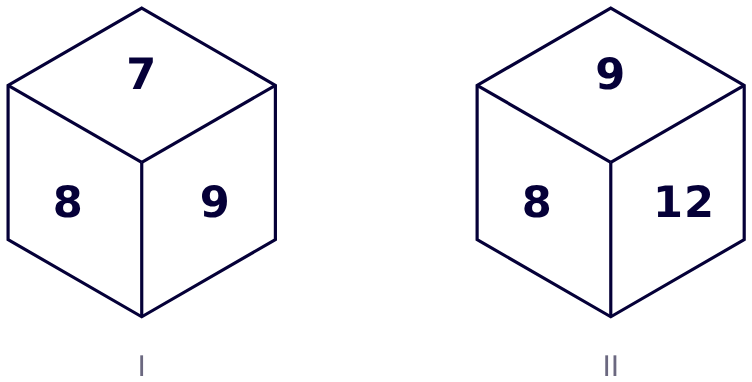
Two different positions of the same dice are given below. Which is the number on the face opposite to the face containing 12 ?
figure
एक ही पासे की दो भिन्न स्थितियाँ नीचे दी गई हैं। 12 वाले फलक के विपरीत फलक पर कौन-सी संख्या है?
figure
  1. A10
  2. B11
  3. C7
  4. D9
Show answer

Concept: If one face stays fixed, the dice has rotated about that axis; the four side faces move in a cycle.

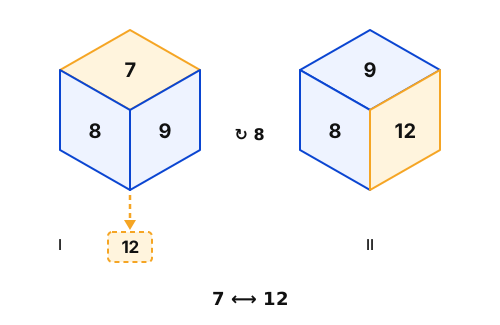
  1. 8 is on the left face in both views → rotation about the 8-axis.
  2. 9 moved from the right face to the top, so every face moved one step: bottom → right.
  3. 12 appears on the right in view II → it was at the bottom in view I, below the top face 7.
  4. Top and bottom are opposite → 12 is opposite 7.

Yaad rakhein: A face visible together with another in any view can never be its opposite – use this to eliminate options quickly.

Answer: (C) 7

अवधारणा: यदि एक फलक दोनों स्थितियों में स्थिर है, तो पासा उसी अक्ष पर घूमा है; बाकी चार फलक चक्र में चलते हैं।

  1. 8 वाला फलक दोनों चित्रों में बाईं ओर ही है → पासा इसी अक्ष पर घूमा।
  2. 9 दाएँ से ऊपर गया, यानी हर फलक एक कदम चला: नीचे → दाएँ।
  3. दूसरी स्थिति में 12 दाएँ है → पहली स्थिति में वह नीचे था, ऊपर 7 के ठीक विपरीत।
  4. ऊपर-नीचे विपरीत होते हैं → 12 के विपरीत 7।

याद रखें: किसी भी स्थिति में साथ दिखने वाले दो फलक कभी विपरीत नहीं होते – इससे विकल्प जल्दी हटाएँ।

उत्तर: (C) 7

SSC GDGeneral Intelligence & ReasoningDice – opposite face from two viewsSSC GD 2025 · 7 Feb Shift 2 →
Q3114.
DGHK is related to ADEH in a certain way based on the English alphabetical order. In the same way, MQTU is related to JNQR. To which of the following is HLQR related, following the same logic?
DGHK, अंग्रेजी वर्णमाला क्रम के आधार पर एक निश्चित प्रकार से ADEH से संबंधित है। उसी प्रकार, MQTU, JNQR से संबंधित है। इसी तर्क का अनुसरण करते हुए, HLQR निम्नलिखित में से किससे संबंधित है?
  1. AFJOP
  2. BKOTU
  3. CEINO
  4. DLHQR
Show answer

Concept: Find the uniform shift between the pairs.

  1. D→A, G→D, H→E, K→H: each −3. MQTU → JNQR: also −3.
  2. HLQR − 3: H→E, L→I, Q→N, R→O.
  3. Result: EINO.

Trick: Only the first letter is needed: H − 3 = E, and only one option starts with E.

Answer: (C) EINO

अवधारणा: जोड़ों के बीच समान खिसकाव खोजें।

  1. D→A, G→D, H→E, K→H: हर अक्षर −3। MQTU → JNQR भी −3।
  2. HLQR − 3: H→E, L→I, Q→N, R→O।
  3. परिणाम: EINO।

ट्रिक: केवल पहला अक्षर देखें: H − 3 = E; E से शुरू होने वाला एक ही विकल्प है।

उत्तर: (C) EINO

SSC GDGeneral Intelligence & ReasoningLetter analogy – each letter −3SSC GD 2025 · 7 Feb Shift 2 →
Q3115.
Based on the English alphabetical order, three of the following four letter-clusters are alike in a certain way and thus form a group. Which letter-cluster DOES NOT belong to that group?
(Note: The odd man out is not based on the number of consonants/vowels or their position in the letter-cluster.)
अंग्रेजी वर्णमाला क्रम के आधार पर, निम्नलिखित चार अक्षर-समूहों में से तीन एक निश्चित प्रकार से समान हैं और इस प्रकार एक समूह बनाते हैं। कौन-सा अक्षर-समूह उस समूह से संबंधित नहीं है?
(नोट: विषम अक्षर-समूह का आधार व्यंजनों/स्वरों की संख्या अथवा अक्षर-समूह में उनकी स्थिति नहीं है।)
  1. ABDG
  2. BMOQ
  3. CEGJ
  4. DQSV
Show answer

Concept: Compare gaps between consecutive letters.

  1. BDG: B→D +2, D→G +3.
  2. EGJ: +2, +3; QSV: +2, +3.
  3. MOQ: +2, +2 → different.

Trick: The first gap is +2 in all four, so compare only the last gap: 3, 2, 3, 3 – the odd value marks the answer.

Answer: (B) MOQ

अवधारणा: क्रमागत अक्षरों के बीच का अंतर देखें।

  1. BDG: B→D +2, D→G +3।
  2. EGJ: +2, +3; QSV: +2, +3।
  3. MOQ: +2, +2 → अलग।

ट्रिक: पहला अंतर सबमें +2 है; केवल दूसरा अंतर देखें: 3, 2, 3, 3 – अलग वाला उत्तर।

उत्तर: (B) MOQ

SSC GDGeneral Intelligence & ReasoningOdd one out – letter gapsSSC GD 2025 · 7 Feb Shift 2 →
Q3116.
What should come in place of the question mark (?) in the given series?
650 660 669 677 684 ?
दी गई शृंखला में प्रश्नवाचक चिह्न (?) के स्थान पर क्या आना चाहिए?
650 660 669 677 684 ?
  1. A686
  2. B688
  3. C692
  4. D690
Show answer

Concept: Consecutive differences decrease by 1.

  1. Differences: +10, +9, +8, +7.
  2. Next difference = +6.
  3. 684 + 6 = 690.

Trick: Decreasing-by-1 pattern → just add (last difference − 1) to the last term.

Answer: (D) 690

अवधारणा: क्रमागत अंतर 1-1 घट रहा है।

  1. अंतर: +10, +9, +8, +7।
  2. अगला अंतर = +6।
  3. 684 + 6 = 690।

ट्रिक: अंतर 1-1 घटे तो अंतिम पद में (अंतिम अंतर − 1) जोड़ दें।

उत्तर: (D) 690

SSC GDGeneral Intelligence & ReasoningNumber series – differences 10, 9, 8…SSC GD 2025 · 7 Feb Shift 2 →
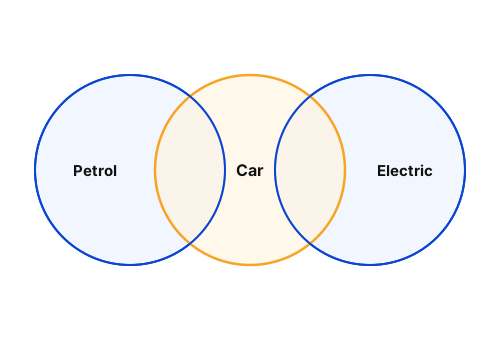
Q3117.
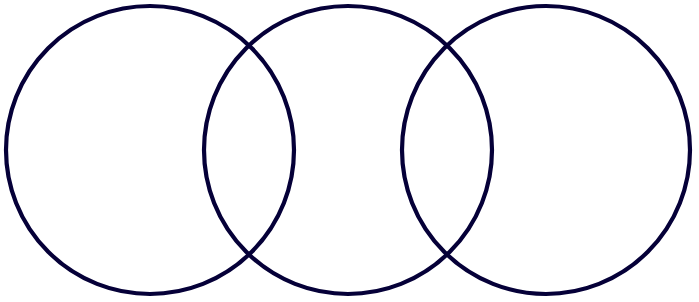
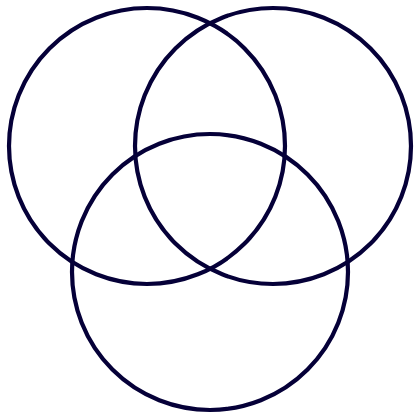
Select the Venn diagram that best illustrate the relationship between the following classes.
Petrol, Car, Electric.
उस वेन आरेख का चयन कीजिए जो निम्नलिखित वर्गों के बीच के संबंध को सर्वोत्तम रूप से दर्शाता है।
पेट्रोल, कार, इलेक्ट्रिक।
  1. Afigure
  2. Bfigure
  3. Cfigure
  4. Dfigure
Show answer

Concept: Decide overlap/separation for each pair of classes.

  1. Car–Petrol: some cars run on petrol, but petrol is used elsewhere too → partial overlap.
  2. Car–Electric: some cars are electric, and electricity runs other things → partial overlap.
  3. Petrol–Electric: nothing common → separate.
  4. Picture: Car in the middle cutting two separate circles → option (B).

Trick: Two classes with nothing in common + one class linking both = “chain” of three circles.

Answer: (B) figure (b)

अवधारणा: हर दो वर्गों के बीच संबंध (आंशिक / अलग) तय करें।

  1. कार–पेट्रोल: पेट्रोल वाली कारें होती हैं, और पेट्रोल बाइक आदि में भी लगता है → आंशिक।
  2. कार–इलेक्ट्रिक: बिजली वाली कारें भी हैं, और बिजली घरों में भी काम आती है → आंशिक।
  3. पेट्रोल–इलेक्ट्रिक: कुछ भी समान नहीं → अलग।
  4. चित्र: बीच का “कार” वृत्त दो अलग वृत्तों को काटे → विकल्प (B)।

ट्रिक: दो अलग वर्ग + दोनों को जोड़ने वाला एक वर्ग = तीन वृत्तों की “चेन”।

उत्तर: (B) आकृति (b)

SSC GDGeneral Intelligence & ReasoningVenn diagram – Petrol, Car, ElectricSSC GD 2025 · 7 Feb Shift 2 →
Q3118.
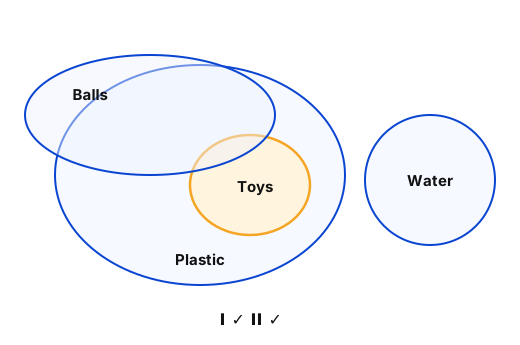
Read the given statements and conclusions carefully. Assuming that the information given in the statements is true, even if it appears to be at variance with commonly known facts, decide which of the given conclusions logically follow(s) from the statements.
Statements:
Some balls are toys.
All toys are plastic.
No plastic is water.
Conclusions:
(I): Some balls are plastic.
(II): No toy is water.
दिए गए कथनों और निष्कर्षों को ध्यानपूर्वक पढ़िए। यह मानते हुए कि कथनों में दी गई जानकारी सत्य है, चाहे वह सर्वज्ञात तथ्यों से भिन्न प्रतीत होती हो, निर्णय कीजिए कि दिए गए निष्कर्षों में से कौन-सा/से कथनों का तार्किक रूप से अनुसरण करता/करते है/हैं।
कथन:
कुछ गेंदें खिलौने हैं।
सभी खिलौने प्लास्टिक हैं।
कोई प्लास्टिक पानी नहीं है।
निष्कर्ष:
(I): कुछ गेंदें प्लास्टिक हैं।
(II): कोई खिलौना पानी नहीं है।
  1. ABoth conclusions (I) and (II) follow.निष्कर्ष (I) और (II) दोनों अनुसरण करते हैं।
  2. BNeither conclusion (I) nor (II) follows.न तो निष्कर्ष (I) और न ही निष्कर्ष (II) अनुसरण करता है।
  3. COnly conclusion (II) follows.केवल निष्कर्ष (II) अनुसरण करता है।
  4. DOnly conclusion (I) follows.केवल निष्कर्ष (I) अनुसरण करता है।
Show answer

Concept: Some + All = Some; All + No = No.

  1. Some balls are toys + All toys are plastic → Some balls are plastic. (I) ✔
  2. All toys are plastic + No plastic is water → No toy is water. (II) ✔
  3. Both follow.

Trick: Rule pairs: I + A = I, A + E = E. Apply directly without drawing.

Answer: (A) Both conclusions (I) and (II) follow.

अवधारणा: कुछ + सभी = कुछ; सभी + कोई नहीं = कोई नहीं।

  1. गेंद–खिलौना (कुछ) + खिलौना–प्लास्टिक (सभी) → गेंद–प्लास्टिक (कुछ)। (I) ✔
  2. खिलौना–प्लास्टिक (सभी) + प्लास्टिक–पानी (कोई नहीं) → खिलौना–पानी (कोई नहीं)। (II) ✔
  3. दोनों निष्कर्ष सही।

ट्रिक: नियम: I + A = I, A + E = E – बिना चित्र बनाए सीधे लगाएँ।

उत्तर: (A) निष्कर्ष (I) और (II) दोनों अनुसरण करते हैं।

SSC GDGeneral Intelligence & ReasoningSyllogism – some, all, noSSC GD 2025 · 7 Feb Shift 2 →
Q3119.
In a certain code language 'NBSF' is coded as '82' and 'IMSR' is coded as '118'. What is the code for 'AYLC' in the given code language?
एक निश्चित कूट भाषा में 'NBSF' को '82' के रूप में तथा 'IMSR' को '118' के रूप में कूटबद्ध किया जाता है। दी गई कूट भाषा में 'AYLC' का कूट क्या है?
  1. A94
  2. B99
  3. C86
  4. D82
Show answer

Concept: Code=2×(sum of alphabet positions).

  1. NBSF: 14+2+19+6=41; 41×2=82 ✔
  2. IMSR: 9+13+19+18=59; 59×2=118 ✔
  3. AYLC: 1+25+12+3=41; 41×2=82.

Trick: AYLC has the same letter-sum (41) as NBSF, so it must get the same code, 82.

Answer: (D) 82

अवधारणा: कोड=2×(अक्षरों के स्थानीय मानों का योग)।

  1. NBSF: 14+2+19+6=41; 41×2=82 ✔
  2. IMSR: 9+13+19+18=59; 59×2=118 ✔
  3. AYLC: 1+25+12+3=41; 41×2=82।

ट्रिक: AYLC का योग (41) NBSF के बराबर है, इसलिए कोड भी वही 82।

उत्तर: (D) 82

SSC GDGeneral Intelligence & ReasoningNumber coding – twice the sum of positionsSSC GD 2025 · 7 Feb Shift 2 →
Q3120.
GFBE is related to FEAD in a certain way based on the English alphabetical order. In the same way, AZVY is related to ZYUX. To which of the given options is CBXA related, following the same logic ?
GFBE, अंग्रेजी वर्णमाला क्रम के आधार पर एक निश्चित प्रकार से FEAD से संबंधित है। उसी प्रकार, AZVY, ZYUX से संबंधित है। इसी तर्क का अनुसरण करते हुए, CBXA दिए गए विकल्पों में से किससे संबंधित है?
  1. ABAVZ
  2. BBBVD
  3. CBZVZ
  4. DBAWZ
Show answer

Concept: Each letter moves one step back (A wraps to Z).

  1. GFBE → FEAD and AZVY → ZYUX: every letter −1.
  2. CBXA − 1: C→B, B→A, X→W, A→Z.
  3. Result: BAWZ.

Trick: Check the third letter only: X − 1 = W – only BAWZ has W.

Answer: (D) BAWZ

अवधारणा: हर अक्षर में −1 का बदलाव (A से पहले Z आता है)।

  1. GFBE → FEAD और AZVY → ZYUX: हर अक्षर −1।
  2. CBXA − 1: C→B, B→A, X→W, A→Z।
  3. परिणाम: BAWZ।

ट्रिक: केवल तीसरा अक्षर देखें: X − 1 = W – W केवल BAWZ में है।

उत्तर: (D) BAWZ

SSC GDGeneral Intelligence & ReasoningLetter analogy – each letter −1SSC GD 2025 · 7 Feb Shift 2 →