Question bank

Q&A: practice questions with answers

Search questions on any topic. Filter by exam category, exam, subject and topic, try the question, then open the answer and explanation.

Courses – airGurukul

4,200 questions found.

Q3141.
A salesman offers a discount scheme of 'Buy 25 and get 5 free' on the purchase of notebooks in his shop. He professes that a notebook costs him ₹10, but in reality, it costs him ₹5. Find the difference between his profit percentage and scheme discount.
एक विक्रेता अपनी दुकान में नोटबुक की खरीद पर '25 खरीदिए और 5 मुफ़्त पाइए' की छूट योजना देता है। वह दावा करता है कि एक नोटबुक की लागत उसे ₹10 पड़ती है, जबकि वास्तव में उसकी लागत ₹5 है। उसके लाभ प्रतिशत और योजना छूट के बीच का अंतर ज्ञात कीजिए।
  1. A42%
  2. B48%
  3. C50%
  4. D56%
Show answer

Concept: Customer pays for 25 but gets 30; real cost decides real profit.

  1. Money received = 25 × ₹10 = ₹250; items given = 30.
  2. True cost = 30 × ₹5 = ₹150 → profit = ₹100 → profit % = 100150×100=6623%.
  3. Scheme discount = freetotal=530×100=1623%.
  4. Difference = 6623−1623=50%.

Trick: Both percentages end in 23, so the difference is a clean whole number – only 50% fits once you get 6623%.

Answer: (C) 50%

अवधारणा: ग्राहक 25 का पैसा देकर 30 कॉपियाँ लेता है; असली लागत से असली लाभ निकलेगा।

  1. प्राप्त राशि = 25 × ₹10 = ₹250; दी गई कॉपियाँ = 30।
  2. वास्तविक लागत = 30 × ₹5 = ₹150 → लाभ = ₹100 → लाभ% = 100150×100=6623%।
  3. योजना छूट = मुफ्तकुल=530×100=1623%।
  4. अंतर = 6623−1623=50%।

ट्रिक: दोनों प्रतिशत 23 पर ख़त्म होते हैं, इसलिए अंतर पूर्णांक होगा – सीधे 50%।

उत्तर: (C) 50%
SSC GDElementary MathematicsProfit with free-item scheme and false costSSC GD 2025 · 7 Feb Shift 2 →
Q3142.
If the mean proportional of 18 and 98 is 2A + 6, the value of A is:
यदि 18 और 98 का मध्यानुपाती 2A + 6 है, तो A का मान क्या है:
  1. A16
  2. B19
  3. C18
  4. D17
Show answer

Concept: Mean proportional of a and b = ab.

  1. 18×98=1764=42.
  2. 2A+6=42→2A=36.
  3. A=18.

Trick: 18=2×9 and 98=2×49, so 18×98=2×3×7=42 – no big multiplication needed.

Answer: (C) 18

अवधारणा: दो संख्याओं का मध्यानुपाती = उनके गुणनफल का वर्गमूल।

  1. गुणनफल 1764, उसका वर्गमूल 42।
  2. A=(42−6)÷2=18।

ट्रिक: 18=2×9, 98=2×49 → 18×98=2×3×7=42।

उत्तर: (C) 18

SSC GDElementary MathematicsMean proportionalSSC GD 2025 · 7 Feb Shift 2 →
Q3143.
The third proportional of (X^2.5/Y^1.5) × Z^3.5 and X^0.25 × (Y^0.25/Z^(-0.25)) is:
(X^2.5/Y^1.5) × Z^3.5 तथा X^0.25 × (Y^0.25/Z^(-0.25)) का तृतीय समानुपाती है:
  1. AY3X3Z3
  2. BY2X2Z3
  3. CY2X2Z2
  4. DY2X3Z2
Show answer

Concept: Third proportional of a and b = b2a (from a:b=b:c).

  1. Write b as one power: b=(XYZ)14, because 1Z−14=Z14. So b2=(XYZ)12.
  2. Write a with fractions: a=X52Z72÷Y32.
  3. Divide power by power: X→12−52=−2; Y→12+32=2; Z→12−72=−3.
  4. c=Y2÷(X2Z3).

Trick: Only the Z power (−3) and X power (−2) are needed to pick the option – all options share Y2.

Answer: (B) Y2X2Z3

अवधारणा: a, b का तृतीयानुपाती c हो तो a:b=b:c, यानी c=b2a।

  1. b को एक घात में लिखें: b=(XYZ)14 (क्योंकि 1Z−14=Z14), अतः b2=(XYZ)12।
  2. a को भिन्नों में: a=X52Z72÷Y32।
  3. घातें घटाएँ: X→12−52=−2; Y→12+32=2; Z→12−72=−3।
  4. c=Y2÷(X2Z3)।

ट्रिक: सभी विकल्पों में Y2 है – केवल X (−2) और Z (−3) की घात देखकर उत्तर चुनें।

उत्तर: (B) Y2X2Z3

SSC GDElementary MathematicsThird proportional with indicesSSC GD 2025 · 7 Feb Shift 2 →
Q3144.
The distance from Chandigarh to Amritsar is covered in 4.5 hours at a speed of 50 km/hr. By how much should the speed (in km/hr) be increased to save 30 minutes of travel time?
चंडीगढ़ से अमृतसर की दूरी 50 km/hr की चाल से 4.5 घंटे में तय की जाती है। यात्रा के समय में से 30 मिनट बचाने के लिए चाल (km/hr में) कितनी बढ़ाई जानी चाहिए?
  1. A6.75
  2. B6
  3. C6.5
  4. D6.25
Show answer

Concept: Distance fixed → new speed = distance ÷ new time.

  1. Distance: 225 km (50 km/h for 4.5 h).
  2. Saving 30 min leaves 4 h, so required speed = 2254=56.25 km/h.
  3. Extra speed needed = 6.25 km/h.

Trick: Time ratio 4.5:4=9:8 → speed ratio 8 : 9, so increase = 508=6.25.

Answer: (D) 6.25

अवधारणा: दूरी स्थिर → नई चाल = दूरी ÷ नया समय।

  1. दूरी: 225 किमी (50 किमी/घं से 4.5 घंटे)।
  2. आधा घंटा बचाने पर 4 घंटे बचे, तो आवश्यक चाल = 2254=56.25 किमी/घं।
  3. चाल में बढ़ोतरी = 6.25 किमी/घं।

ट्रिक: समय का अनुपात 9 : 8 → चाल का अनुपात 8 : 9; वृद्धि = 508=6.25।

उत्तर: (D) 6.25

SSC GDElementary MathematicsSpeed increase to save timeSSC GD 2025 · 7 Feb Shift 2 →
Q3145.
The price (per litre) of petrol increases by 40%. By what percent should its consumption be reduced such that the expenditure on it increases by 19% only?
पेट्रोल का मूल्य (प्रति लीटर) 40% बढ़ जाता है। इस पर होने वाला व्यय केवल 19% ही बढ़े, इसके लिए इसकी खपत में कितने प्रतिशत की कमी की जानी चाहिए?
  1. A15%
  2. B85%
  3. C84%
  4. D18%
Show answer

Concept: Expenditure = price × consumption.

  1. New price factor = 1.40; new expenditure factor = 1.19.
  2. New consumption factor = 1.19÷1.40=0.85.
  3. Reduction = 1−0.85=0.15 → 15%.

Trick: 119140=1720=85% – reduce by 15%. (85% is the new consumption, a trap option.)

Answer: (A) 15%

अवधारणा: व्यय = मूल्य × खपत।

  1. नया मूल्य = 1.40 गुना; नया व्यय = 1.19 गुना।
  2. नई खपत = 1.19÷1.40=0.85 गुना।
  3. कमी = 1−0.85=0.15 → 15%।

ट्रिक: 119140=1720=85% → कमी 15%। (85% नई खपत है, कमी नहीं – जाल वाला विकल्प।)

उत्तर: (A) 15%

SSC GDElementary MathematicsPrice–consumption–expenditureSSC GD 2025 · 7 Feb Shift 2 →
Q3146.
Evaluate: (-9) - (-60) ÷ (-15) + (-3) × 6
मान ज्ञात कीजिए: (-9) - (-60) ÷ (-15) + (-3) × 6
  1. A-31
  2. B-34
  3. C-30
  4. D-33
Show answer

Concept: BODMAS, with sign rules: (−) ÷ (−) = +, (−) × (+) = −.

  1. Product term: (−3) × 6 = −18.
  2. Division term: (−60) ÷ (−15) = +4, and it is being subtracted → −4.
  3. All three terms are negative: −(9 + 4 + 18) = −31.

Trick: When every term is negative, just add the sizes and put a minus sign in front.

Answer: (A) -31

अवधारणा: BODMAS और चिह्न नियम: (−) ÷ (−) = +, (−) × (+) = −।

  1. गुणा वाला पद: (−3) × 6 = −18।
  2. भाग वाला पद: (−60) ÷ (−15) = +4, जो घटाया जा रहा है → −4।
  3. तीनों पद ऋणात्मक: −(9 + 4 + 18) = −31।

ट्रिक: सभी पद ऋणात्मक हों तो संख्याएँ जोड़कर आगे ऋण चिह्न लगा दें।

उत्तर: (A) -31

SSC GDElementary MathematicsSimplification with negative numbersSSC GD 2025 · 7 Feb Shift 2 →
Q3147.
The average age of 40 students of a class is 12 years. If the age of the teacher is also included, the average age of the whole group becomes 13 years. The age (in years) of the teacher is:
एक कक्षा के 40 विद्यार्थियों की औसत आयु 12 वर्ष है। यदि शिक्षक की आयु भी सम्मिलित कर ली जाए, तो पूरे समूह की औसत आयु 13 वर्ष हो जाती है। शिक्षक की आयु (वर्षों में) क्या है:
  1. A50
  2. B51
  3. C53
  4. D56
Show answer

Concept: New person's value = new total − old total.

  1. Old total = 40×12=480.
  2. New total = 41×13=533.
  3. Teacher = 533−480=53 years.

Trick: Teacher = new average + (old count × increase) = 13+40×1=53.

Answer: (C) 53

अवधारणा: नए व्यक्ति का मान = नया योग − पुराना योग।

  1. पुराना योग = 40×12=480।
  2. नया योग = 41×13=533।
  3. अंतर 533−480=53 → शिक्षक 53 वर्ष के हैं।

ट्रिक: नया औसत (13) + हर छात्र का 1 वर्ष × 40 छात्र = 53।

उत्तर: (C) 53

SSC GDElementary MathematicsAverage – teacher's age includedSSC GD 2025 · 7 Feb Shift 2 →
Q3148.
The average age of 35 students in a group is 15 years. When the teacher's age is included, the average age of the group increases by 1.25 years. What is the teacher's age (in years)?
एक समूह के 35 विद्यार्थियों की औसत आयु 15 वर्ष है। शिक्षक की आयु सम्मिलित करने पर समूह की औसत आयु 1.25 वर्ष बढ़ जाती है। शिक्षक की आयु (वर्षों में) क्या है?
  1. A45
  2. B60
  3. C55
  4. D50
Show answer

Concept: Included person = new average + (old count × rise).

  1. New average = 15+1.25=16.25.
  2. Teacher = 16.25+35×1.25=16.25+43.75.
  3. = 60 years.

Trick: Equivalent: old average + (new count × rise) = 15+36×1.25=15+45=60.

Answer: (B) 60

अवधारणा: जोड़ा गया व्यक्ति = नया औसत + (पुरानी संख्या × वृद्धि)।

  1. नया औसत = 15+1.25=16.25।
  2. शिक्षक = 16.25+35×1.25=16.25+43.75।
  3. = 60 वर्ष।

ट्रिक: पुराना औसत + (नई संख्या × वृद्धि) = 15+36×1.25=60।

उत्तर: (B) 60

SSC GDElementary MathematicsAverage – increase by 1.25 yearsSSC GD 2025 · 7 Feb Shift 2 →
Q3149.
The simple interest on a principal amount (in ₹) is ₹524 for a period of 2 years at the rate of 5% per annum. The principal amount (in ₹) is:
किसी मूलधन (₹ में) पर 5% वार्षिक ब्याज दर से 2 वर्ष का साधारण ब्याज ₹524 है। मूलधन (₹ में) क्या है:
  1. A5240
  2. B5239
  3. C5249
  4. D5234
Show answer

Concept: P=(SI×100)÷(R×T).

  1. R×T=5×2=10%.
  2. 10% of P = ₹524.
  3. P=524×10 = ₹5240.

Trick: Total rate is 10%, so just append a zero to the SI.

Answer: (A) 5240

अवधारणा: P=(SI×100)÷(R×T)।

  1. R×T=5×2=10%।
  2. P का 10% = ₹524।
  3. P=524×10 = ₹5240।

ट्रिक: कुल दर 10% है, तो ब्याज के आगे एक शून्य लगा दें।

उत्तर: (A) 5240

SSC GDElementary MathematicsSimple interest – find principalSSC GD 2025 · 7 Feb Shift 2 →
Q3150.
The diagonals of a rhombus are 4 m and 6 m, respectively. Find its area (in m²).
एक समचतुर्भुज के विकर्ण क्रमशः 4 m और 6 m हैं। इसका क्षेत्रफल (m² में) ज्ञात कीजिए।
  1. A9
  2. B12
  3. C18
  4. D24
Show answer

Concept: Area of rhombus = 12×d1×d2.

  1. d1=4 m, d2=6 m.
  2. Area = 12×4×6=12 m².

Yaad rakhein: Side of a rhombus = (d12)2+(d22)2 – here 4+9=13 m.

Answer: (B) 12

अवधारणा: समचतुर्भुज का क्षेत्रफल = 12×d1×d2।

  1. d1=4 मी, d2=6 मी।
  2. क्षेत्रफल = 12×4×6=12 मी²।

याद रखें: समचतुर्भुज की भुजा = (d12)2+(d22)2 – यहाँ 13 मी।

उत्तर: (B) 12

SSC GDElementary MathematicsArea of rhombusSSC GD 2025 · 7 Feb Shift 2 →
Q3151.
Ajay invested some money in HDFC at 4% per annum rate of interest. What would be the corresponding simple interest (in ₹) if after 2 years, Ajay got ₹204 as compound interest, considering annual compounding?
अजय ने HDFC में 4% वार्षिक ब्याज दर पर कुछ धनराशि निवेश की। यदि वार्षिक चक्रवृद्धि मानते हुए 2 वर्ष बाद अजय को ₹204 चक्रवृद्धि ब्याज के रूप में प्राप्त हुए, तो संगत साधारण ब्याज (₹ में) कितना होगा?
  1. A215
  2. B200
  3. C210
  4. D195
Show answer

Concept: 2-year CI rate = 2r+r2100.

  1. At 4%: 8+0.16=8.16% of P = ₹204.
  2. P = 204×100÷8.16 = ₹2500.
  3. SI for 2 years = 2500×4×2÷100 = ₹200.

Trick: CI : SI (2 yrs) = 8.16 : 8 → SI = 204×88.16=200.

Answer: (B) 200

अवधारणा: 2 वर्ष की CI दर = 2r+r2100।

  1. 4% पर दो वर्ष की CI दर: 8+0.16=8.16%, जो ₹204 के बराबर है।
  2. मूलधन = 204008.16 = ₹2500।
  3. 2 वर्ष का SI = 2500×4×2÷100 = ₹200।

ट्रिक: CI : SI (2 वर्ष) = 8.16 : 8 → SI = 204×88.16=200।

उत्तर: (B) 200

SSC GDElementary MathematicsSI from given CI (2 years)SSC GD 2025 · 7 Feb Shift 2 →
Q3152.
If the income of Ravi is 24% more than that of Ram, then by what percentage is the income of Ram less than that of Ravi?
यदि रवि की आय राम की आय से 24% अधिक है, तो राम की आय रवि की आय से कितने प्रतिशत कम है?
  1. A70031
  2. B60031
  3. C40031
  4. D50031
Show answer

Concept: If A is x% more than B, B is x100+x×100% less than A.

  1. Ram = 100, Ravi = 124.
  2. Ram is less by 24 out of 124.
  3. 24124×100=2400124=60031 %.

Trick: Denominator 124=4×31, so the answer must have 31 below; numerator = 24×25=600.

Answer: (B) 60031

अवधारणा: बढ़ोतरी x% हो तो उल्टी तुलना में कमी = x÷(100+x)×100%।

  1. राम = 100, रवि = 124।
  2. राम 124 में से 24 कम है।
  3. 24124×100=2400124=60031 %।

ट्रिक: 124=4×31; अंश = 24×25=600 → 60031।

उत्तर: (B) 60031

SSC GDElementary MathematicsPercentage – more than / less thanSSC GD 2025 · 7 Feb Shift 2 →
Q3153.
The greatest number, which divides 1477 and 671 to leave 0 and 6 respectively as remainders, is:
वह सबसे बड़ी संख्या ज्ञात कीजिए, जो 1477 और 671 को विभाजित करने पर क्रमशः 0 और 6 शेषफल छोड़ती है:
  1. A17
  2. B16
  3. C20
  4. D7
Show answer

Concept: Required number = HCF of (numbers − their remainders).

  1. 1477−0=1477; 671−6=665.
  2. 665=5×7×19; 1477=7×211.
  3. HCF = 7 (and 7>6, so remainder 6 is valid).

Trick: Test options: 1477÷7=211 exactly and 671=7×95+6 ✔. 17, 16, 20 do not divide 1477.

Answer: (D) 7

अवधारणा: अभीष्ट संख्या = (संख्या − शेषफल) का HCF।

  1. 1477−0=1477; 671−6=665।
  2. 665=5×7×19; 1477=7×211।
  3. HCF = 7 (7>6, अतः शेष 6 संभव)।

ट्रिक: विकल्प जाँचें: 1477÷7=211 पूरा, 671=7×95+6 ✔।

उत्तर: (D) 7

SSC GDElementary MathematicsHCF with different remaindersSSC GD 2025 · 7 Feb Shift 2 →
Q3154.
Pramod sold 154 chairs and had a gain equal to the selling price of 54 chairs. What is his profit percentage?
प्रमोद ने 154 कुर्सियाँ बेचीं और उसे 54 कुर्सियों के विक्रय मूल्य के बराबर लाभ हुआ। उसका लाभ प्रतिशत क्या है?
  1. A64%
  2. B59%
  3. C49%
  4. D54%
Show answer

Concept: SP−CP=gain; express everything in “chairs' SP”.

  1. SP(154)−CP(154)=SP(54)→CP(154)=SP(100).
  2. Take SP of 1 chair = ₹1: CP = 100, SP = 154.
  3. Profit % = 54100×100=54%.

Trick: Profit % = gain itemssold−gain items×100=54154−54×100=54%.

Answer: (D) 54%

अवधारणा: SP−CP=लाभ; सब कुछ कुर्सियों के SP में लिखें।

  1. SP(154)−CP(154)=SP(54)→CP(154)=SP(100)।
  2. 1 कुर्सी का SP = ₹1 मानें: CP = 100, SP = 154।
  3. लाभ% = 54100×100=54%।

ट्रिक: लाभ% = लाभ वाली वस्तुएँबेची−लाभ वाली×100=54100×100=54%।

उत्तर: (D) 54%

SSC GDElementary MathematicsGain equal to SP of some articlesSSC GD 2025 · 7 Feb Shift 2 →
Q3155.
A shopkeeper bought an article for ₹520. At what price (in ₹) should he sell the article to make 20% profit?
एक दुकानदार ने एक वस्तु ₹520 में खरीदी। 20% लाभ कमाने के लिए उसे वह वस्तु किस मूल्य (₹ में) पर बेचनी चाहिए?
  1. A612
  2. B636
  3. C624
  4. D416
Show answer

Concept: SP=CP×100+P%100.

  1. SP=520×120100.
  2. = 520×1.2 = ₹624.

Trick: 20% of 520=104 (10% = 52, doubled) → 520+104=624.

Answer: (C) 624

अवधारणा: SP=CP×100+लाभ%100।

  1. SP=520×120100।
  2. = 520×1.2 = ₹624।

ट्रिक: 520 का 10%=52, 20%=104 → 520+104=624।

उत्तर: (C) 624

SSC GDElementary MathematicsSelling price for given profit %SSC GD 2025 · 7 Feb Shift 2 →
Q3156.
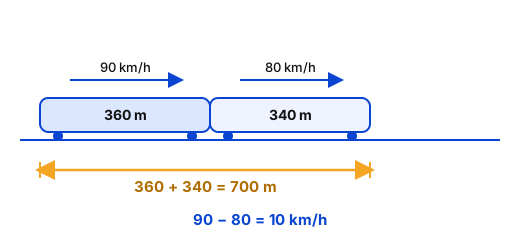
Two trains having lengths of 340 m and 360 m are running at speeds of 80 km/h and 90 km/h, respectively, in the same direction. The time taken (in minutes) by the faster train, coming from behind, to completely cross the other train is:
340 m और 360 m लंबाई वाली दो रेलगाड़ियाँ एक ही दिशा में क्रमशः 80 km/h और 90 km/h की चाल से चल रही हैं। पीछे से आने वाली तेज़ रेलगाड़ी द्वारा दूसरी रेलगाड़ी को पूरी तरह पार करने में लिया गया समय (मिनट में) क्या है:
  1. A7
  2. B4.2
  3. C3.7
  4. D6
Show answer

Concept: Same direction → relative speed = difference; distance = sum of lengths.

  1. Length to clear = 700 m (340+360).
  2. Speed gap (same direction) = 10 km/h, i.e. 259 m/s.
  3. Time = 700÷(259)=252 s, which is 4.2 min.

Trick: Work in km and hours: 0.7 km ÷ 10 km/h = 0.07 h = 0.07×60=4.2 min.

Answer: (B) 4.2

अवधारणा: एक ही दिशा → सापेक्ष चाल = अंतर; दूरी = लंबाइयों का योग।

  1. सापेक्ष चाल = 90−80=10 किमी/घं = 10×518=259 मी/से।
  2. दूरी = 340+360=700 मी।
  3. समय = 700×925=252 से = 4.2 मिनट।

ट्रिक: किमी-घंटे में: 0.7÷10=0.07 घंटा = 0.07×60=4.2 मिनट।

उत्तर: (B) 4.2

SSC GDElementary MathematicsTrains – crossing in same directionSSC GD 2025 · 7 Feb Shift 2 →
Q3157.
Krish has ₹1224 with him. He divided it amongst his sons Veer and Nitin and asked them to invest it at 4% rate of interest compounded annually. It was seen that Veer and Nitin got same amount after 12 and 13 years respectively. How much (in ₹) did Krish give to Nitin?
कृष के पास ₹1224 हैं। उसने यह राशि अपने पुत्रों वीर और नितिन में बाँट दी और उनसे कहा कि वे इसे 4% वार्षिक चक्रवृद्धि ब्याज दर पर निवेश करें। यह देखा गया कि वीर और नितिन को क्रमशः 12 और 13 वर्ष बाद समान राशि प्राप्त हुई। कृष ने नितिन को कितनी राशि (₹ में) दी?
  1. A624
  2. B600
  3. C450
  4. D724
Show answer

Concept: If V(1+r)12=N(1+r)13, then V:N=(1+r):1.

  1. 1+4100=2625→V:N=26:25.
  2. Total parts = 51 → 1 part = 1224÷51=24.
  3. Nitin = 25×24 = ₹600.

Trick: One-year gap → shares in ratio (100+r):100. The person investing longer gets the smaller share.

Answer: (B) 600

अवधारणा: V(1+r)12=N(1+r)13 हो तो V:N=(1+r):1।

  1. 1+4100=2625→V:N=26:25।
  2. कुल भाग = 51 → 1 भाग = 1224÷51=24।
  3. नितिन = 25×24 = ₹600।

ट्रिक: एक वर्ष का अंतर → हिस्से (100+r):100; जो अधिक समय निवेश करे उसे छोटा हिस्सा।

उत्तर: (B) 600

SSC GDElementary MathematicsCI – equal amounts after different yearsSSC GD 2025 · 7 Feb Shift 2 →
Q3158.
Evaluate: 32÷8×4−3×3
मान ज्ञात कीजिए: 32÷8×4−3×3
  1. A9
  2. B6
  3. C7
  4. D10
Show answer

Concept: ÷ and × have equal priority; solve them left to right, then subtract.

  1. 32÷8=4, then 4×4=16.
  2. 3×3=9.
  3. 16−9=7.

Trick: Common trap: doing 8×4 first gives 32÷32=1 → 1−9=−8 (not in options). Always go left to right.

Answer: (C) 7

अवधारणा: ÷ और × की प्राथमिकता बराबर है; बाएँ से दाएँ हल करें, फिर घटाएँ।

  1. 32÷8=4, फिर 4×4=16।
  2. 3×3=9।
  3. 16−9=7।

ट्रिक: आम गलती: पहले 8×4 करने पर 32÷32=1 आता है – हमेशा बाएँ से दाएँ चलें।

उत्तर: (C) 7

SSC GDElementary MathematicsBODMAS – left to right for ÷ and ×SSC GD 2025 · 7 Feb Shift 2 →
Q3159.
The greatest number, which divides 943 and 1957 to leave 7 and 1 respectively as remainders, is:
वह सबसे बड़ी संख्या ज्ञात कीजिए, जो 943 और 1957 को विभाजित करने पर क्रमशः 7 और 1 शेषफल छोड़ती है:
  1. A12
  2. B28
  3. C10
  4. D13
Show answer

Concept: Subtract the remainders, then take the HCF.

  1. 943−7=936; 1957−1=1956.
  2. 1956−2×936=84; 936=11×84+12; 84=7×12.
  3. HCF = 12 (greater than 7, so valid).

Trick: Check options from the largest: 28 does not divide 936; 13 does not divide 1956 (13×150=1950, remainder 6); 12 divides both ✔.

Answer: (A) 12

अवधारणा: शेषफल घटाकर HCF निकालें।

  1. 943−7=936; 1957−1=1956।
  2. 1956−2×936=84; 936=11×84+12; 84=7×12।
  3. HCF = 12 (7 से बड़ा, अतः मान्य)।

ट्रिक: बड़े विकल्प से जाँचें: 28 से 936 नहीं कटता; 13 से 1956 नहीं कटता; 12 दोनों को काटता है ✔।

उत्तर: (A) 12

SSC GDElementary MathematicsHCF with different remaindersSSC GD 2025 · 7 Feb Shift 2 →
Q3160.
A and B can do a work in 30 days and 10 days, respectively. If they work on alternate days starting with A, then in how many days will the work be completed?
A और B किसी कार्य को क्रमशः 30 दिन और 10 दिन में कर सकते हैं। यदि वे A से आरंभ करते हुए एकांतर दिनों में कार्य करें, तो कार्य कितने दिनों में पूरा होगा?
  1. A1213
  2. B1613
  3. C1513
  4. D1413
Show answer

Concept: Take total work = LCM, find work per 2-day cycle.

  1. Work = LCM(30, 10) = 30 units; A = 1 unit/day, B = 3 units/day.
  2. One cycle (A + B, 2 days) = 4 units → 7 cycles = 28 units in 14 days.
  3. Day 15 (A): 28+1=29 units; left 1 unit, B needs 13 day.
  4. Total = 15+13=1513 days.

Trick: Never divide 30 by 4 directly – stop cycles just before the finish and finish day by day.

Answer: (C) 1513

अवधारणा: कुल कार्य = LCM मानें, फिर 2 दिन के चक्र का कार्य निकालें।

  1. कार्य = LCM(30, 10) = 30 इकाई; A = 1 इकाई/दिन, B = 3 इकाई/दिन।
  2. एक चक्र (2 दिन) = 4 इकाई → 7 चक्र = 14 दिन में 28 इकाई।
  3. 15वाँ दिन (A): 29 इकाई; शेष 1 इकाई B 13 दिन में करेगा।
  4. कुल = 15+13=1513 दिन।

ट्रिक: 30÷4 सीधे न करें – काम पूरा होने से ठीक पहले चक्र रोकें, फिर दिन-दर-दिन गिनें।

उत्तर: (C) 1513

SSC GDElementary MathematicsWork on alternate daysSSC GD 2025 · 7 Feb Shift 2 →