Question bank

Q&A: practice questions with answers

Search questions on any topic. Filter by exam category, exam, subject and topic, try the question, then open the answer and explanation.

Courses – airGurukul

4,200 questions found.

Q301.
Each letter in the word DUMPERS is arranged in the English alphabetical order. How many letters are there in the English alphabetical order between the letter which is fourth from the left end and the one which is second from the right end in the new letter-cluster thus formed?
शब्द DUMPERS के प्रत्येक अक्षर को अंग्रेजी वर्णमाला क्रम में व्यवस्थित किया जाता है। इस प्रकार बने नए अक्षर-समूह में बाएँ छोर से चौथे अक्षर और दाएँ छोर से दूसरे अक्षर के बीच अंग्रेजी वर्णमाला क्रम में कितने अक्षर आते हैं?
  1. A2
  2. B5
  3. C1
  4. D3
Show answer

Concept: Sort the word's letters A→Z, pick the asked positions, then count letters lying between them in the alphabet.

  1. DUMPERS sorted: D E M P R S U.
  2. 4th from left = P; 2nd from right = S.
  3. P(16) and S(19): letters between = Q, R → 19 − 16 − 1 = 2.

Trick: Letters between two positions = difference of ranks − 1.

Answer: (A) 2

अवधारणा: शब्द के अक्षरों को A→Z क्रम में लगाकर पूछे गए स्थान ढूँढें, फिर वर्णमाला में उनके बीच के अक्षर गिनें।

  1. DUMPERS का क्रम: D E M P R S U।
  2. बाएँ से चौथा = P, दाएँ से दूसरा = S।
  3. P(16) और S(19) के बीच Q, R → 19 − 16 − 1 = 2।

ट्रिक: दो अक्षरों के बीच की संख्या = स्थानों का अंतर − 1।

उत्तर: (A) 2

SSC GDGeneral Intelligence & ReasoningAlphabetical arrangement – letters betweenSSC GD 2025 · 21 Feb Shift 3 →
Q302.
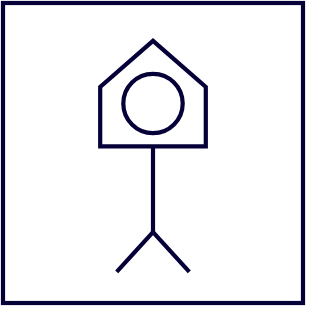
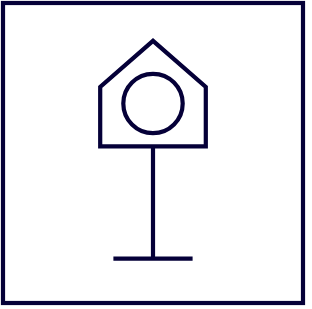
Identify the figure given in the options, which when put in place of the question mark (?) will logically complete the series.
figure
उस आकृति की पहचान कीजिए जो विकल्पों में दी गई है और जिसे प्रश्नवाचक चिह्न (?) के स्थान पर रखने पर शृंखला तार्किक रूप से पूर्ण हो जाएगी।
figure
  1. Afigure
  2. Bfigure
  3. Cfigure
  4. Dfigure
Show answer

Concept: The same figure keeps rotating by a fixed angle; continue the rotation one more step.

  1. The pentagon, inner circle and forked stalk never change – only the direction of the stalk does.
  2. Frame to frame the stalk moves up → up-right → right → down-right, i.e. 45° clockwise each time.
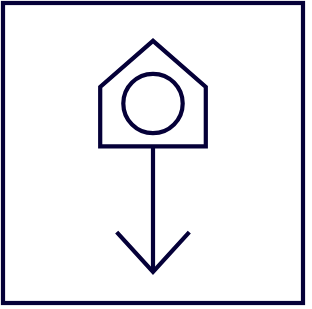
  3. Next step: stalk points straight down with the pentagon on top, and the fork must remain open (two spreading arms).

Trick: Track one distinctive part (the stalk) like a clock hand – 45° per step means the 5th frame is exactly opposite the 1st.

Answer: (A) Figure (A)

अवधारणा: एक ही आकृति हर बार निश्चित कोण से घूमती है; अगला घूर्णन ज्ञात करें।

  1. पंचभुज, अंदर का वृत्त और काँटेदार डंठल वैसे ही रहते हैं – केवल डंठल की दिशा बदलती है।
  2. डंठल ऊपर → ऊपर-दाएँ → दाएँ → नीचे-दाएँ, यानी हर बार 45° दक्षिणावर्त।
  3. अगली आकृति: डंठल सीधा नीचे, पंचभुज ऊपर, और काँटा खुला (दो फैली भुजाएँ)।

ट्रिक: किसी एक हिस्से (डंठल) को घड़ी की सुई मानें – 45° प्रति चरण पर पाँचवीं आकृति पहली के ठीक उलटी होगी।

उत्तर: (A) आकृति (A)

SSC GDGeneral Intelligence & ReasoningFigure series – 45° rotationSSC GD 2025 · 21 Feb Shift 3 →
Q303.
Select the option that represents the letters that, when sequentially placed from left to right in the blanks below, will complete the letter series.
C _ _ _ B _ _ A X B _ Z
उस विकल्प का चयन कीजिए जो नीचे दिए गए रिक्त स्थानों में बाएँ से दाएँ क्रमिक रूप से रखे जाने पर अक्षर शृंखला को पूर्ण करेगा।
C _ _ _ B _ _ A X B _ Z
  1. ACCXAZA
  2. BXCZACA
  3. CZAXCZC
  4. DACXZCZ
Show answer

Concept: A fixed group of letters repeats; find the group from the given letters.

  1. Given: C _ _ _ B _ _ A X B _ Z (12 places).
  2. C at 1, B at 5, and A X B at 8–10 suggest the block CZAXB of length 5.
  3. Full series: CZAXB CZAXB CZ – place 12 is Z ✓.
  4. Blanks (places 2,3,4,6,7,11): Z A X C Z C.

Trick: Try option (c) directly in the blanks – the whole line splits into equal repeating blocks only for ZAXCZC.

Answer: (C) ZAXCZC

अवधारणा: अक्षरों का एक निश्चित समूह बार-बार दोहराता है; दिए अक्षरों से समूह पहचानें।

  1. दिया है: C _ _ _ B _ _ A X B _ Z (12 स्थान)।
  2. 1 पर C, 5 पर B तथा 8–10 पर A X B से समूह CZAXB (5 अक्षर) बनता है।
  3. पूरी श्रृंखला: CZAXB CZAXB CZ – 12वाँ स्थान Z ✓।
  4. रिक्त स्थान: Z A X C Z C।

ट्रिक: विकल्प भरकर देखें – केवल ZAXCZC से बराबर दोहराते समूह बनते हैं।

उत्तर: (C) ZAXCZC

SSC GDGeneral Intelligence & ReasoningLetter series – repeating blockSSC GD 2025 · 21 Feb Shift 3 →
Q304.
What should come in place of the question mark (?) in the given series based on the English alphabetical order? BCG EFJ HIM KLP ?
अंग्रेजी वर्णमाला क्रम पर आधारित दी गई शृंखला में प्रश्नवाचक चिह्न (?) के स्थान पर क्या आना चाहिए? BCG EFJ HIM KLP ?
  1. ANOS
  2. BNOT
  3. CQOT
  4. DQOS
Show answer

Concept: Each letter position of the clusters follows its own +3 pattern.

  1. 1st letters: B, E, H, K → +3 → N.
  2. 2nd letters: C, F, I, L → +3 → O.
  3. 3rd letters: G, J, M, P → +3 → S.
  4. Next cluster = NOS.

Trick: Only the first column matters to cut options: next is N (removes Q-options); third column P+3 = S picks NOS.

Answer: (A) NOS

अवधारणा: हर समूह के प्रत्येक स्थान का अक्षर अपने +3 क्रम में चलता है।

  1. पहले अक्षर: B, E, H, K → +3 → N।
  2. दूसरे अक्षर: C, F, I, L → +3 → O।
  3. तीसरे अक्षर: G, J, M, P → +3 → S।
  4. अगला समूह = NOS।

ट्रिक: पहला कॉलम N देता है (Q वाले विकल्प हटे); तीसरा कॉलम P+3 = S से NOS तय।

उत्तर: (A) NOS

SSC GDGeneral Intelligence & ReasoningLetter-cluster seriesSSC GD 2025 · 21 Feb Shift 3 →
Q305.
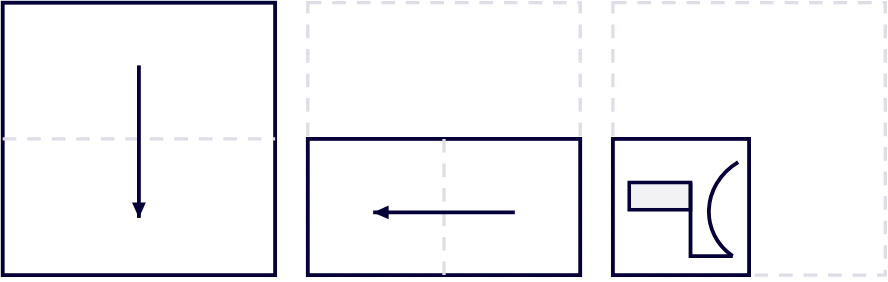
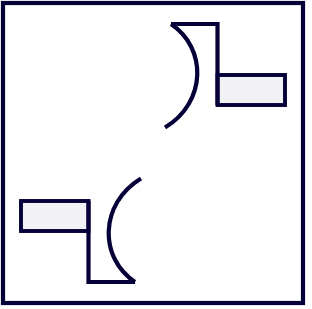
A paper is folded and punched as shown below. How will it appear when unfolded?
figure
एक कागज़ को नीचे दर्शाए अनुसार मोड़ा और छेदा जाता है। खोलने पर वह कैसा दिखाई देगा?
figure
  1. Afigure
  2. Bfigure
  3. Cfigure
  4. Dfigure
Show answer

Concept: Every fold doubles the layers; on opening, each crease reflects the punch like a mirror.

  1. Fold 1: top half onto bottom (horizontal crease). Fold 2: right half onto left (vertical crease).
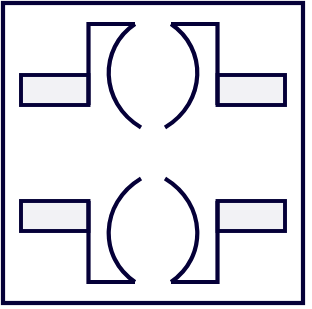
  2. Two folds = 4 layers, so the single punch appears 4 times – once in each quarter.
  3. Neighbouring cuts are mirror images across the creases: the flat bar stays towards the outer edge and the curved side faces the centre.

Trick: Count first (4 cuts), then check mirror direction – options with 2 cuts or wrongly turned cuts are out in seconds.

Answer: (B) Figure (B)

अवधारणा: हर मोड़ परतें दुगुनी करता है; खोलने पर हर मोड़-रेखा छेद को दर्पण की तरह प्रतिबिंबित करती है।

  1. मोड़ 1: ऊपरी आधा नीचे (क्षैतिज रेखा)। मोड़ 2: दायाँ आधा बाएँ (ऊर्ध्वाधर रेखा)।
  2. दो मोड़ = 4 परतें, अतः एक छेद चारों चौथाइयों में दिखेगा।
  3. पड़ोसी छेद मोड़-रेखा पर दर्पण प्रतिबिंब हैं: सीधी पट्टी बाहर की ओर, वक्र भाग केंद्र की ओर।

ट्रिक: पहले गिनती (4 छेद), फिर दिशा जाँचें – 2 छेद वाले या उलटे छेद वाले विकल्प तुरंत बाहर।

उत्तर: (B) आकृति (B)

SSC GDGeneral Intelligence & ReasoningPaper folding and punchingSSC GD 2025 · 21 Feb Shift 3 →
Q306.
In a certain code language, 'TIDE' is coded as '2986' and 'KITE' is coded as '8216'. How is 'D' coded in the given language?
एक निश्चित कूट भाषा में, 'TIDE' का कूट '2986' है और 'KITE' का कूट '8216' है। उसी भाषा में 'D' का कूट क्या होगा?
  1. A9
  2. B8
  3. C6
  4. D2
Show answer

Concept: Letters common to two words take the digits common to their codes.

  1. TIDE → 2986, KITE → 8216.
  2. Common letters: T, I, E; common digits: 2, 8, 6.
  3. TIDE's leftover letter D gets the leftover digit 9.

Trick: Strike out common letters and common digits – whatever remains pairs up.

Answer: (A) 9

अवधारणा: दो शब्दों में उभयनिष्ठ अक्षरों को उनके कोड के उभयनिष्ठ अंक मिलते हैं।

  1. TIDE → 2986, KITE → 8216।
  2. उभयनिष्ठ अक्षर: T, I, E; उभयनिष्ठ अंक: 2, 8, 6।
  3. TIDE में बचा अक्षर D और बचा अंक 9।

ट्रिक: दोनों तरफ़ से उभयनिष्ठ हटाइए – जो बचे वही जोड़ी है।

उत्तर: (A) 9

SSC GDGeneral Intelligence & ReasoningCoding – common letters and digitsSSC GD 2025 · 21 Feb Shift 3 →
Q307.
E, F, G, H, J, K and L are sitting around a circular table facing the centre of the table (but not necessarily in the same order). L sits to the immediate right of F. Only three people sit between L and H when counted from the left of L . Only three people sit between F and J when counted from the left of F. E sits to the immediate right of K. How many people sit between F and K when counted from the right of K ?
E, F, G, H, J, K और L एक वृत्ताकार मेज़ के चारों ओर मेज़ के केंद्र की ओर मुख करके बैठे हैं (किंतु आवश्यक नहीं कि इसी क्रम में हों)। L, F के ठीक दाएँ बैठा है। L के बाएँ से गिनने पर L और H के बीच केवल तीन व्यक्ति बैठे हैं। F के बाएँ से गिनने पर F और J के बीच केवल तीन व्यक्ति बैठे हैं। E, K के ठीक दाएँ बैठा है। K के दाएँ से गिनने पर F और K के बीच कितने व्यक्ति बैठे हैं?
  1. AFourचार
  2. BThreeतीन
  3. COneएक
  4. DTwoदो
Show answer

Concept: Facing the centre, a person's left is clockwise and right is anticlockwise.

  1. Fix F; L is just right of F (one seat anticlockwise).
  2. H is 4 seats from L going left (clockwise); J is 4 seats from F going left.
  3. Only one adjacent empty pair remains for K and E with E to K's right; G takes the last seat.
  4. From K moving right: E, then F → one person between.

Trick: Number seats 0–6 clockwise: F=0, L=6, H=3, J=4, K=2, E=1, G=5 – count directly.

Answer: (C) One

अवधारणा: केंद्र की ओर मुख होने पर व्यक्ति का बायाँ दक्षिणावर्त और दायाँ वामावर्त होता है।

  1. F तय करें; L, F के ठीक दाएँ (एक सीट वामावर्त)।
  2. L से बाएँ (दक्षिणावर्त) 4 सीट पर H; F से बाएँ 4 सीट पर J।
  3. K और E के लिए केवल एक सटी खाली जोड़ी बचती है (E, K के दाएँ); बची सीट G की।
  4. K से दाईं ओर: E, फिर F → बीच में एक व्यक्ति।

ट्रिक: सीटें 0–6 दक्षिणावर्त: F=0, L=6, H=3, J=4, K=2, E=1, G=5 – सीधे गिनें।

उत्तर: (C) एक

SSC GDGeneral Intelligence & ReasoningCircular seating – facing centreSSC GD 2025 · 21 Feb Shift 3 →
Q308.
AR 18 is related to HO 31 in a certain way. In the same way, KN 05 is related to RK 18. To which of the given options is QL 15 related, following the same logic?
AR 18 एक निश्चित प्रकार से HO 31 से संबंधित है। उसी प्रकार, KN 05, RK 18 से संबंधित है। समान तर्क का अनुसरण करते हुए QL 15 दिए गए विकल्पों में से किससे संबंधित है?
  1. AXI 27
  2. BXI 28
  3. CYK 26
  4. DWJ 28
Show answer

Concept: Apply the same letter shifts and number change found in the example pairs.

  1. AR 18 → HO 31: 1st letter +7, 2nd letter −3, number +13.
  2. Same rule works for the second pair (K→R, N→K, 05→18).
  3. For QL 15: Q moves 7 ahead to X, L moves 3 back to I, and 15 becomes 28 → XI 28.

Trick: Number part alone decides: 15+13 = 28 leaves XI 28 or WJ 28; first letter Q+7 = X picks XI 28.

Answer: (B) XI 28

अवधारणा: उदाहरण जोड़ों में अक्षरों और संख्या का जो बदलाव है, वही लागू करें।

  1. AR 18 → HO 31: पहला अक्षर +7, दूसरा −3, संख्या +13।
  2. दूसरी जोड़ी (K→R, N→K, 05→18) पर भी यही नियम।
  3. QL 15 में Q से 7 आगे X, L से 3 पीछे I, और 15 बढ़कर 28 → XI 28।

ट्रिक: संख्या 28 से दो विकल्प बचते हैं; Q+7 = X से XI 28 तय।

उत्तर: (B) XI 28

SSC GDGeneral Intelligence & ReasoningLetter-number analogySSC GD 2025 · 21 Feb Shift 3 →
Q309.
What will come in the place of the question mark (?) in the following equation, if ' + ' and ' − ' are interchanged and ' × ' and ' ÷ ' are interchanged?
41 + 8 ÷ 6 − 24 × 2 = ?
निम्नलिखित समीकरण में प्रश्नवाचक चिह्न (?) के स्थान पर क्या आएगा, यदि ' + ' और ' − ' को आपस में बदल दिया जाए तथा ' × ' और ' ÷ ' को आपस में बदल दिया जाए?
41 + 8 ÷ 6 − 24 × 2 = ?
  1. A5
  2. B11
  3. C1
  4. D16
Show answer

Concept: Swap the signs first, then solve by BODMAS.

  1. After swapping: 41 − 8 × 6 + 24 ÷ 2.
  2. Multiplication gives 48; division gives 12.
  3. So the value is 41 + 12 − 48 = 53 − 48 = 5.

Trick: Write the new expression on paper before calculating – most mistakes come from swapping mentally.

Answer: (A) 5

अवधारणा: पहले चिह्न बदलें, फिर BODMAS से हल करें।

  1. बदलने के बाद: 41 − 8 × 6 + 24 ÷ 2।
  2. 8 × 6 = 48 और 24 ÷ 2 = 12।
  3. 41 − 48 + 12 = 5।

ट्रिक: नया व्यंजक पहले लिख लें, फिर गणना करें – मन में बदलने से गलती होती है।

उत्तर: (A) 5

SSC GDGeneral Intelligence & ReasoningSign interchange – BODMASSSC GD 2025 · 21 Feb Shift 3 →
Q310.
Six people, F, G, H, I, J and S, are sitting in a straight line facing north (but not necessarily in the same order). No one sits to the right of F. Only three people sit between F and J. Only two people sit between J and G. H sits second to the left of I . How many people sit between H and S ?
छह व्यक्ति F, G, H, I, J और S एक सीधी पंक्ति में उत्तर की ओर मुख करके बैठे हैं (किंतु आवश्यक नहीं कि इसी क्रम में हों)। F के दाईं ओर कोई नहीं बैठा है। F और J के बीच केवल तीन व्यक्ति बैठे हैं। J और G के बीच केवल दो व्यक्ति बैठे हैं। H, I के बाईं ओर दूसरे स्थान पर बैठा है। H और S के बीच कितने व्यक्ति बैठे हैं?
  1. ATwoदो
  2. BFourचार
  3. COneएक
  4. DThreeतीन
Show answer

Concept: Facing north, right = right end of the row; place fixed people first.

  1. Seats 1–6 from left. Nobody to F's right → F = 6.
  2. Three between F and J → J = 2.
  3. Two between J and G → G = 5.
  4. H second to the left of I with seats 1, 3, 4 free → H = 1, I = 3; S = 4.
  5. Between H(1) and S(4): J, I → 2.

Trick: People between seats a and b = |a − b| − 1 = 4 − 1 − 1 = 2.

Answer: (A) Two

अवधारणा: उत्तर की ओर मुख होने पर दायाँ = पंक्ति का दायाँ सिरा; पहले निश्चित लोगों को बैठाएँ।

  1. बाएँ से सीट 1–6। F के दाएँ कोई नहीं → F = 6।
  2. F और J के बीच तीन → J = 2।
  3. J और G के बीच दो → G = 5।
  4. H, I के बाएँ दूसरे स्थान पर; खाली 1, 3, 4 → H = 1, I = 3; S = 4।
  5. H(1) और S(4) के बीच: J, I → 2।

ट्रिक: सीट a और b के बीच लोग = |a − b| − 1।

उत्तर: (A) दो

SSC GDGeneral Intelligence & ReasoningLinear seating – facing northSSC GD 2025 · 21 Feb Shift 3 →
Q311.
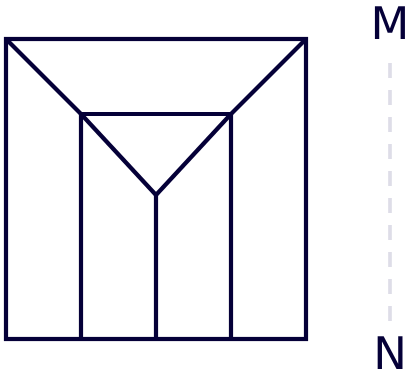
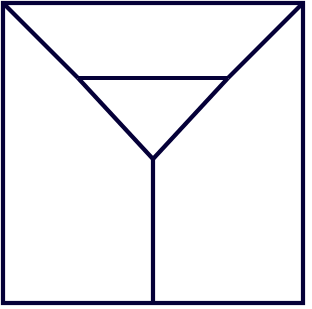
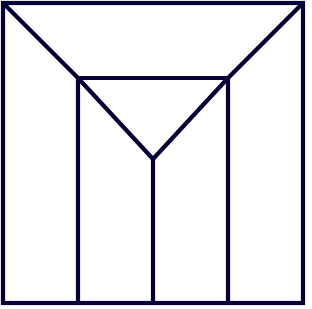
Select the correct mirror image of the given figure when the mirror is placed at MN as shown below.
figure
दी गई आकृति का सही दर्पण प्रतिबिंब चुनिए, जब दर्पण को नीचे दर्शाए अनुसार MN पर रखा जाए।
figure
  1. Afigure
  2. Bfigure
  3. Cfigure
  4. Dfigure
Show answer

Concept: A vertical mirror swaps left and right; top and bottom stay the same.

  1. MN stands vertically beside the figure, so only left–right reverses.
  2. The figure is symmetric about its own vertical centre line, so its image looks the same as the original.
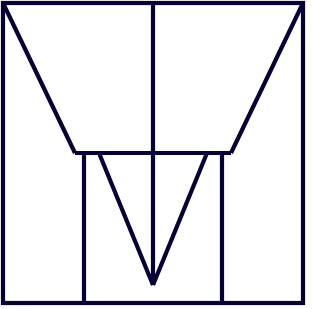
  3. So pick the option that reproduces the original completely – no missing line at the base, neither the outer uprights nor the small middle one under the V.

Trick: For a symmetric figure, just look for the option that is an exact copy with no line missing.

Answer: (D) Figure (D)

अवधारणा: ऊर्ध्वाधर दर्पण में बायाँ-दायाँ बदलता है; ऊपर-नीचे वैसा ही रहता है।

  1. MN आकृति के पास खड़ा है, इसलिए केवल बायाँ-दायाँ उलटेगा।
  2. आकृति बीच से दोनों ओर एक जैसी (सममित) है, अतः प्रतिबिंब मूल जैसा ही दिखेगा।
  3. सही विकल्प में आधार तक जाने वाली सारी रेखाएँ होनी चाहिए – कोई भी लाइन गायब नहीं।

ट्रिक: सममित आकृति में बस वह विकल्प चुनें जो हूबहू प्रति हो, कोई रेखा कम न हो।

उत्तर: (D) आकृति (D)

SSC GDGeneral Intelligence & ReasoningMirror image – vertical mirrorSSC GD 2025 · 21 Feb Shift 3 →
Q312.
Based on the English alphabetical order, three of the following four letter-clusters are alike in a certain way and thus form a group. Which letter-cluster DOES NOT belong to that group?
(Note: The odd one out is not based on the number of consonants/vowels or their position in the letter-cluster.)
अंग्रेजी वर्णमाला क्रम के आधार पर, निम्नलिखित चार अक्षर-समूहों में से तीन किसी निश्चित प्रकार से समान हैं और इस प्रकार एक समूह बनाते हैं। कौन-सा अक्षर-समूह उस समूह से संबंधित नहीं है?
(नोट: विषम अक्षर-समूह, अक्षर-समूह में व्यंजनों/स्वरों की संख्या अथवा उनकी स्थिति पर आधारित नहीं है।)
  1. ALOI
  2. BPSM
  3. CRUO
  4. DTWS
Show answer

Concept: Find the gap pattern between consecutive letters of each cluster.

  1. LOI: +3, −6. PSM: +3, −6. RUO: +3, −6.
  2. TWS: T→W = +3 but W→S = −4.
  3. TWS breaks the pattern.

Trick: Check only the 1st and 3rd letters: L→I, P→M, R→O are all −3, but T→S is −1.

Answer: (D) TWS

अवधारणा: हर समूह में क्रमिक अक्षरों का अंतर देखें।

  1. LOI: +3, −6। PSM: +3, −6। RUO: +3, −6।
  2. TWS: T→W = +3 पर W→S = −4।
  3. अतः TWS अलग है।

ट्रिक: केवल पहला और तीसरा अक्षर देखें: L→I, P→M, R→O सब −3, पर T→S = −1।

उत्तर: (D) TWS

SSC GDGeneral Intelligence & ReasoningOdd one out – letter gapsSSC GD 2025 · 21 Feb Shift 3 →
Q313.
In a certain code language, 'TNRA' is coded as '28' and 'LOPGVO' is coded as '42'. How is 'JDSHKQB' coded in the given language?
एक निश्चित कूट भाषा में, 'TNRA' का कूट '28' है और 'LOPGVO' का कूट '42' है। उसी भाषा में 'JDSHKQB' का कूट क्या होगा?
  1. A44
  2. B52
  3. C50
  4. D49
Show answer

Concept: The code depends only on how many letters the word has.

  1. TNRA: 4 letters → 4 × 7 = 28.
  2. LOPGVO: 6 letters → 6 × 7 = 42.
  3. JDSHKQB: 7 letters → 7 × 7 = 49.

Trick: When codes are multiples of one number and words look random, divide code by length first.

Answer: (D) 49

अवधारणा: कोड केवल शब्द के अक्षरों की संख्या पर निर्भर है।

  1. TNRA: 4 अक्षर → 4 × 7 = 28।
  2. LOPGVO: 6 अक्षर → 6 × 7 = 42।
  3. JDSHKQB: 7 अक्षर → 7 × 7 = 49।

ट्रिक: कोड किसी एक संख्या के गुणज हों तो पहले कोड ÷ अक्षर संख्या जाँचें।

उत्तर: (D) 49

SSC GDGeneral Intelligence & ReasoningCoding – letter count × 7SSC GD 2025 · 21 Feb Shift 3 →
Q314.
What should come in place of the question mark (?) in the given series? 54 55 58 63 70 ?
दी गई शृंखला में प्रश्नवाचक चिह्न (?) के स्थान पर क्या आना चाहिए? 54 55 58 63 70 ?
  1. A78
  2. B81
  3. C80
  4. D79
Show answer

Concept: Differences between terms are consecutive odd numbers.

  1. Differences: 1, 3, 5, 7.
  2. Next difference = 9.
  3. 70 + 9 = 79.

Trick: Terms = 54 + n²: 54, 55, 58, 63, 70, 79 (adding 0², 1², 2², 3², 4², 5²).

Answer: (D) 79

अवधारणा: पदों के बीच का अंतर क्रमागत विषम संख्याएँ हैं।

  1. अंतर: 1, 3, 5, 7।
  2. अगला अंतर = 9।
  3. 70 + 9 = 79।

ट्रिक: पद = 54 + n²: 0², 1², 2², 3², 4², 5² जोड़ते जाएँ → 79।

उत्तर: (D) 79

SSC GDGeneral Intelligence & ReasoningNumber series – odd differencesSSC GD 2025 · 21 Feb Shift 3 →
Q315.
Select the Venn diagram that best illustrates the relationship between the following classes.
Cow, Cheetah, Wild animals
उस वेन आरेख का चयन कीजिए जो निम्नलिखित वर्गों के बीच के संबंध को सर्वोत्तम रूप से दर्शाता है।
गाय, चीता, जंगली जानवर
  1. Afigure
  2. Bfigure
  3. Cfigure
  4. Dfigure
Show answer

Concept: Show subset as a circle inside another, and unrelated classes as separate circles.

  1. All cheetahs are wild animals → Cheetah circle inside Wild animals.
  2. Cow is a domestic animal – it is neither a cheetah nor wild → separate circle.
  3. Required: one circle within another + one independent circle.

Trick: Ask 'is every X a Y?' for each pair – only Cheetah→Wild is 'yes', so only one nesting.

Answer: (B) Figure (B)

अवधारणा: उपसमुच्चय को दूसरे वृत्त के अंदर और असंबंधित वर्ग को अलग वृत्त में दिखाएँ।

  1. हर चीता जंगली जानवर है → चीता वृत्त, जंगली जानवर वृत्त के अंदर।
  2. गाय पालतू है – न चीता, न जंगली → अलग वृत्त।
  3. चाहिए: एक वृत्त दूसरे के अंदर + एक अलग वृत्त।

ट्रिक: हर जोड़ी पर पूछें 'क्या हर X, Y है?' – केवल चीता→जंगली 'हाँ', अतः एक ही नेस्टिंग।

उत्तर: (B) आकृति (B)

SSC GDGeneral Intelligence & ReasoningVenn diagram – classesSSC GD 2025 · 21 Feb Shift 3 →
Q316.
Read the given statements and conclusions carefully. Assuming that the information given in the statements is true, even if it appears to be at variance with commonly known facts, decide which of the given conclusions logically follow(s) from the statements.
Statements:
All sacks are rugs.
All mugs are rugs.
All pugs are rugs.
Conclusions:
(I): Some pugs are sacks.
(II): Some mugs are pugs.
दिए गए कथनों और निष्कर्षों को ध्यानपूर्वक पढ़िए। यह मानते हुए कि कथनों में दी गई जानकारी सत्य है, चाहे वह सर्वज्ञात तथ्यों से भिन्न प्रतीत होती हो, निर्णय कीजिए कि दिए गए निष्कर्षों में से कौन-सा/से निष्कर्ष कथनों का तार्किक रूप से अनुसरण करता है/करते हैं।
कथन:
सभी सैक (sacks), रग (rugs) हैं।
सभी मग (mugs), रग (rugs) हैं।
सभी पग (pugs), रग (rugs) हैं।
निष्कर्ष:
(I): कुछ पग (pugs), सैक (sacks) हैं।
(II): कुछ मग (mugs), पग (pugs) हैं।
  1. AOnly conclusion (I) follows.केवल निष्कर्ष (I) अनुसरण करता है।
  2. BBoth conclusions (I) and (II) follow.निष्कर्ष (I) और (II) दोनों अनुसरण करते हैं।
  3. CNeither conclusion (I) nor (II) follows.न तो निष्कर्ष (I) और न ही निष्कर्ष (II) अनुसरण करता है।
  4. DOnly conclusion (II) follows.केवल निष्कर्ष (II) अनुसरण करता है।
Show answer

Concept: A conclusion follows only if it is true in every possible diagram.

  1. Sacks, mugs and pugs are each fully inside rugs.
  2. No link among sacks, mugs and pugs is given.
  3. Draw them as three separate circles inside rugs → both 'Some pugs are sacks' and 'Some mugs are pugs' fail.

Trick: When all statements share only a common big class, sub-classes have no definite relation with each other.

Answer: (C) Neither conclusion (I) nor (II) follows.

अवधारणा: निष्कर्ष तभी निकलता है जब वह हर संभव आरेख में सत्य हो।

  1. सैक, मग और पग – तीनों रग के अंदर हैं।
  2. इन तीनों के आपसी संबंध के बारे में कुछ नहीं कहा गया।
  3. रग के अंदर तीन अलग वृत्त बनाने पर दोनों निष्कर्ष असत्य हो जाते हैं।

ट्रिक: जब सब कथन केवल एक बड़े वर्ग से जुड़े हों, तो छोटे वर्गों में कोई निश्चित संबंध नहीं होता।

उत्तर: (C) न तो निष्कर्ष (I) और न ही (II) निकलता है।

SSC GDGeneral Intelligence & ReasoningSyllogism – 'All' statementsSSC GD 2025 · 21 Feb Shift 3 →
Q317.
What should come in place of the question mark (?) in the given series? 53 63 76 92 111 ?
दी गई शृंखला में प्रश्नवाचक चिह्न (?) के स्थान पर क्या आना चाहिए? 53 63 76 92 111 ?
  1. A156
  2. B133
  3. C126
  4. D143
Show answer

Concept: The differences themselves increase by a constant.

  1. Differences: 10, 13, 16, 19 (each +3).
  2. Next difference = 22.
  3. 111 + 22 = 133.

Trick: Last digit check: differences end 0,3,6,9,2 → 111 + …2 ends in 3; only 133 fits.

Answer: (B) 133

अवधारणा: अंतर स्वयं एक निश्चित संख्या से बढ़ते हैं।

  1. अंतर: 10, 13, 16, 19 (हर बार +3)।
  2. अगला अंतर = 22।
  3. 111 + 22 = 133।

ट्रिक: इकाई अंक: 111 में …2 जोड़ने पर अंत 3 – केवल 133।

उत्तर: (B) 133

SSC GDGeneral Intelligence & ReasoningNumber series – second differencesSSC GD 2025 · 21 Feb Shift 3 →
Q318.
In a certain code language, 'A + B' means 'A is the daughter of B', 'A − B' means 'A is the brother of B', 'A × B' means 'A is the wife of B' and 'A ÷ B' means 'A is the father of B'. Based on the above, how is P related to T if 'P − Q + R × S ÷ T'?
एक निश्चित कूट भाषा में, 'A + B' का अर्थ है 'A, B की पुत्री है', 'A − B' का अर्थ है 'A, B का भाई है', 'A × B' का अर्थ है 'A, B की पत्नी है' तथा 'A ÷ B' का अर्थ है 'A, B का पिता है'। उपर्युक्त के आधार पर, यदि 'P − Q + R × S ÷ T' है, तो P, T से किस प्रकार संबंधित है?
  1. AFatherपिता
  2. BBrotherभाई
  3. CSonपुत्र
  4. DHusbandपति
Show answer

Concept: Decode each symbol and build the family tree link by link.

  1. P − Q: P is Q's brother. Q + R: Q is R's daughter.
  2. R × S: R is S's wife. S ÷ T: S is T's father.
  3. So P and T are both children of S and R; P is male.

Trick: A male who shares both parents with T is T's brother – no need to draw the full tree.

Answer: (B) Brother

अवधारणा: हर चिह्न का अर्थ लगाकर क्रम से वंश-वृक्ष बनाएँ।

  1. P − Q: P, Q का भाई। Q + R: Q, R की बेटी।
  2. R × S: R, S की पत्नी। S ÷ T: S, T का पिता।
  3. अतः P और T दोनों S व R की संतान हैं; P पुरुष है।

ट्रिक: जिस पुरुष के माता-पिता T वाले ही हों, वह T का भाई है।

उत्तर: (B) भाई

SSC GDGeneral Intelligence & ReasoningCoded blood relationsSSC GD 2025 · 21 Feb Shift 3 →
Q319.
MH 45 is related to KF 40 in a certain way. In the same way, TN 35 is related to RL 30. To which of the following is ZI 25 related following the same logic?
MH 45 एक निश्चित प्रकार से KF 40 से संबंधित है। उसी प्रकार, TN 35, RL 30 से संबंधित है। समान तर्क का अनुसरण करते हुए ZI 25 निम्नलिखित में से किससे संबंधित है?
  1. AYJ 25
  2. BXG 20
  3. CXH 25
  4. DWK 30
Show answer

Concept: Find the change in both letters and the number, then repeat it.

  1. MH 45 → KF 40: each letter −2, number −5.
  2. TN 35 → RL 30 confirms the same rule.
  3. ZI 25: Z−2 = X, I−2 = G, 25−5 = 20 → XG 20.

Trick: Number alone: 25 − 5 = 20 is in only one option.

Answer: (B) XG 20

अवधारणा: दोनों अक्षरों और संख्या का बदलाव पहचानकर वही दोहराएँ।

  1. MH 45 → KF 40: हर अक्षर −2, संख्या −5।
  2. TN 35 → RL 30 से नियम पुष्ट।
  3. ZI 25: Z−2 = X, I−2 = G, 25−5 = 20 → XG 20।

ट्रिक: केवल संख्या: 25 − 5 = 20 सिर्फ़ एक विकल्प में है।

उत्तर: (B) XG 20

SSC GDGeneral Intelligence & ReasoningLetter-number analogySSC GD 2025 · 21 Feb Shift 3 →
Q320.
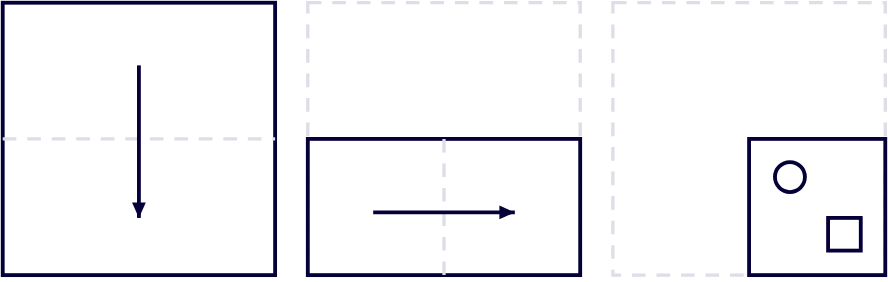
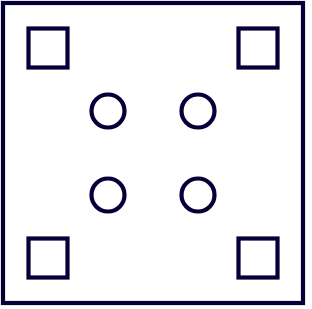
A paper is folded and cut as shown below. How will it appear when unfolded?
figure
एक कागज़ को नीचे दर्शाए अनुसार मोड़ा और काटा जाता है। खोलने पर वह कैसा दिखाई देगा?
figure
  1. Afigure
  2. Bfigure
  3. Cfigure
  4. Dfigure
Show answer

Concept: Each cut is repeated in every layer; on opening, creases act as mirrors.

  1. Two folds (horizontal then vertical) make 4 layers, so each cut appears 4 times.
  2. The square was cut at the outer corner of the folded quarter → squares go to the 4 corners of the sheet.
  3. The circle was near the inner corner (where creases meet) → 4 circles cluster round the centre.

Trick: Outer corner of the folded piece → sheet corners; inner corner → sheet centre.

Answer: (A) Figure (A)

अवधारणा: हर कट हर परत में दोहराता है; खोलने पर मोड़-रेखाएँ दर्पण का काम करती हैं।

  1. दो मोड़ (क्षैतिज फिर ऊर्ध्व) से 4 परतें → हर कट 4 बार।
  2. छोटा चौकोर कट मुड़े टुकड़े के बाहरी छोर पर है → खुलने पर ये शीट के हर किनारे-कोने में आएँगे।
  3. गोल छेद भीतरी छोर (जहाँ दोनों मोड़ मिलते हैं) के पास है → खुलने पर ये बीच में इकट्ठे दिखेंगे।

ट्रिक: मुड़े टुकड़े का बाहरी कोना → कागज़ के कोने; भीतरी कोना → कागज़ का केंद्र।

उत्तर: (A) आकृति (A)

SSC GDGeneral Intelligence & ReasoningPaper folding and cuttingSSC GD 2025 · 21 Feb Shift 3 →