Question bank

Q&A: practice questions with answers

Search questions on any topic. Filter by exam category, exam, subject and topic, try the question, then open the answer and explanation.

Courses – airGurukul

4,200 questions found.

Q3201.
In a certain code language, 'A + B' means 'A is the mother of B', 'A - B' means 'A is the brother of B', 'A × B' means 'A is the wife of B' and 'A ÷ B' means 'A is the father of B'. Based on the above, how is M related to O if 'K ÷ L × M - N + O'?
एक निश्चित कूट भाषा में, 'A + B' का अर्थ है 'A, B की माता है', 'A - B' का अर्थ है 'A, B का भाई है', 'A × B' का अर्थ है 'A, B की पत्नी है' और 'A ÷ B' का अर्थ है 'A, B का पिता है'। उपर्युक्त के आधार पर, यदि 'K ÷ L × M - N + O' है, तो M का O से क्या संबंध है?
  1. AWife's fatherपत्नी का पिता
  2. BMother's brotherमाता का भाई
  3. CMother's husbandमाता का पति
  4. DDaughter's husbandपुत्री का पति
Show answer

Concept: Decode each symbol pair and chain the relations from M towards O.
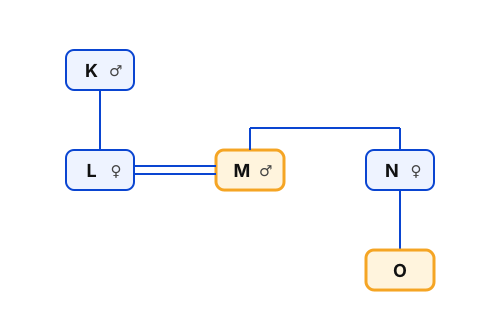
  1. L × M → L is M's wife; M − N → M is N's brother.
  2. N + O → N is O's mother.
  3. So M is the brother of O's mother.

Trick: Start from the asked person (M) and look only at the links that lead to O; K and L are not needed.

Answer: (B) Mother's brother

अवधारणा: हर चिह्न का अर्थ लगाकर M से O तक संबंध जोड़ें।

  1. M − N → M, N का भाई है।
  2. N + O → N, O की माँ है।
  3. अतः M, O की माँ का भाई (मामा) है।

ट्रिक: केवल M से O तक की कड़ी देखें; K और L की जरूरत नहीं।

उत्तर: (B) माता का भाई

SSC GDGeneral Intelligence & ReasoningCoded blood relationSSC GD 2025 · 7 Feb Shift 1 →
Q3202.
ILOR is related to UXAD in a certain way based on the English alphabetical order. In the same way, CFIL is related to ORUX. To which of the given options is WZCF related, following the same logic ?
अंग्रेजी वर्णमाला क्रम के आधार पर ILOR एक निश्चित तरीके से UXAD से संबंधित है। उसी प्रकार, CFIL, ORUX से संबंधित है। समान तर्क का अनुसरण करते हुए, WZCF दिए गए विकल्पों में से किससे संबंधित है?
  1. AILOR
  2. BILUY
  3. CILMK
  4. DILWR
Show answer

Concept: Each letter is shifted forward by a fixed number of places.

  1. I→U: 9+12 = 21; C→O: 3+12 = 15, so the rule is +12.
  2. W(23)+12 = 35−26 = 9 → I; Z(26)+12 = 38−26 = 12 → L.
  3. C(3)+12 = 15 → O; F(6)+12 = 18 → R.

Trick: +12 is the same as −14; check only the first two letters (IL) — then pick the option ending in OR.

Answer: (A) ILOR

अवधारणा: हर अक्षर को एक निश्चित संख्या आगे बढ़ाया गया है।

  1. I→U और C→O: दोनों में +12।
  2. W(23)+12 = 35−26 = 9 → I, Z → L।
  3. C+12 = O, F+12 = R → ILOR।

ट्रिक: चारों विकल्प IL से शुरू हैं, बस C और F को +12 करें: O, R।

उत्तर: (A) ILOR

SSC GDGeneral Intelligence & ReasoningLetter analogy (+12 shift)SSC GD 2025 · 7 Feb Shift 1 →
Q3203.
The position(s) of how many letters will remain unchanged if each of the letters in the word ARMCHAIR is arranged in the reverse English alphabetical order ?
यदि शब्द ARMCHAIR के प्रत्येक अक्षर को विपरीत अंग्रेजी वर्णमाला क्रम में व्यवस्थित किया जाए, तो कितने अक्षरों का स्थान अपरिवर्तित रहेगा?
  1. AThreeतीन
  2. BFourचार
  3. CTwoदो
  4. DOneएक
Show answer

Concept: Write the letters in Z→A order and compare place by place with the original word.

  1. Original: A R M C H A I R
  2. Z→A order: R R M I H C A A
  3. Same at places 2 (R), 3 (M) and 5 (H) → 3 letters.

Trick: Repeated letters (A, A and R, R) sit together in the sorted row; write both rows one below the other to compare quickly.

Answer: (A) Three

अवधारणा: अक्षरों को Z से A के क्रम में लिखकर मूल शब्द से स्थान-दर-स्थान मिलाएँ।

  1. मूल शब्द: ARMCHAIR
  2. Z→A क्रम में: RRMIHCAA
  3. स्थान 2 (R), 3 (M), 5 (H) समान → 3 अक्षर।

ट्रिक: दोनों पंक्तियाँ एक के नीचे एक लिखें, तुलना तुरंत हो जाती है।

उत्तर: (A) तीन

SSC GDGeneral Intelligence & ReasoningLetter positions after rearrangingSSC GD 2025 · 7 Feb Shift 1 →
Q3204.
JILT is related to AZCK in a certain way based on the English alphabetical order. In the same way, ZYBJ is related to QPSA. To which of the following options is YXAI related, following the same logic?
अंग्रेजी वर्णमाला क्रम के आधार पर JILT एक निश्चित तरीके से AZCK से संबंधित है। उसी प्रकार, ZYBJ, QPSA से संबंधित है। समान तर्क का अनुसरण करते हुए, YXAI निम्नलिखित में से किस विकल्प से संबंधित है?
  1. APOZR
  2. BPRZO
  3. CPORZ
  4. DPRDE
Show answer

Concept: Every letter moves back by the same number of places.

  1. J(10)→A(1) and Z(26)→Q(17): both −9.
  2. Y(25)−9 = 16 → P; X(24)−9 = 15 → O.
  3. A(1)−9 → 18 → R; I(9)−9 → 26 → Z.

Trick: −9 = +17. Y→P, X→O already leave only options A, B, C; A→R decides it as PORZ.

Answer: (C) PORZ

अवधारणा: हर अक्षर को समान संख्या पीछे खिसकाया गया है।

  1. J→A, Z→Q: दोनों में −9।
  2. Y→P, X→O।
  3. A−9 → R, I−9 → Z; अतः PORZ।

ट्रिक: −9 और +17 एक ही बात है; तीसरा अक्षर R होना चाहिए।

उत्तर: (C) PORZ

SSC GDGeneral Intelligence & ReasoningLetter analogy (−9 shift)SSC GD 2025 · 7 Feb Shift 1 →
Q3205.
In a certain code language, 'AGED' is coded as '7613' and 'EARG' is coded as '1236'. What is the code for 'R' in the given code language?
एक निश्चित कूट भाषा में, 'AGED' को '7613' और 'EARG' को '1236' के रूप में कूटबद्ध किया जाता है। उसी कूट भाषा में 'R' का कूट क्या है?
  1. A1
  2. B6
  3. C3
  4. D2
Show answer

Concept: Letters common to two words share the common digits; the leftover letter gets the leftover digit.

  1. AGED = 7613, EARG = 1236.
  2. Common letters A, G, E ↔ common digits 6, 1, 3.
  3. Leftover in EARG is R, leftover digit in 1236 is 2 → R = 2.

Trick: Cancel the common letters and digits; what remains pairs up directly (D = 7, R = 2).

Answer: (D) 2

अवधारणा: दोनों शब्दों के समान अक्षरों के कोड भी समान अंक होते हैं।

  1. AGED = 7613, EARG = 1236।
  2. समान अक्षर A, G, E ↔ समान अंक 6, 1, 3।
  3. EARG में बचा R, 1236 में बचा 2 → R = 2।

ट्रिक: समान को काटें, जो बचे वही जोड़ी है (D = 7, R = 2)।

उत्तर: (D) 2

SSC GDGeneral Intelligence & ReasoningCoding by common lettersSSC GD 2025 · 7 Feb Shift 1 →
Q3206.
Select the figure from among the given options that can replace the question mark (?) in the following series.
figure
दी गई शृंखला में प्रश्नवाचक चिह्न (?) के स्थान पर आने वाली आकृति का चयन कीजिए।
figure
  1. Afigure
  2. Bfigure
  3. Cfigure
  4. Dfigure
Show answer

Concept: Check whether the figures repeat after a fixed gap.

  1. Figures 1 and 3 have the same layout of the four symbols.
  2. Figures 2 and 4 also match each other.
  3. So the pattern alternates; figure 5 must look like figure 1 → option (C).

Trick: When positions 1, 3 and 2, 4 match, the 5th term simply copies the 1st.

Answer: (C) The figure in option (C)

अवधारणा: देखें कि आकृतियाँ किसी निश्चित अंतर पर दोहराई जा रही हैं या नहीं।

  1. आकृति 1 और 3 में चारों चिह्नों की स्थिति समान है।
  2. आकृति 2 और 4 भी आपस में समान हैं।
  3. अतः पाँचवीं आकृति पहली जैसी होगी → विकल्प (C)।

ट्रिक: 1-3 और 2-4 समान हों तो 5वीं आकृति = पहली आकृति।

उत्तर: (C) विकल्प (C) की आकृति

SSC GDGeneral Intelligence & ReasoningFigure series (alternating)SSC GD 2025 · 7 Feb Shift 1 →
Q3207.
Which two numbers should be interchanged to make the given equation correct?
9 × (34 - 15) + (105 ÷ 7) + 28 + (13 × 4) = 218
(Note: Interchange should be done of entire number and not individual digits of a given number)
दिए गए समीकरण को सही बनाने के लिए किन दो संख्याओं को आपस में बदला जाना चाहिए?
9 × (34 - 15) + (105 ÷ 7) + 28 + (13 × 4) = 218 (नोट: अदला-बदली पूरी संख्या की होनी चाहिए, न कि दी गई संख्या के अलग-अलग अंकों की।)
  1. A28 and 1528 और 15
  2. B15 and 1315 और 13
  3. C34 and 2834 और 28
  4. D15 and 715 और 7
Show answer

Concept: Find the current value, see the gap, then test options that can create that gap.

  1. Now: 9×19+15+28+52=266; we need 218, i.e. 48 less.
  2. Swap 34 and 28: 9×(28−15)+15+34+52
  3. =117+15+34+52=218 ✓

Trick: The bracket value is multiplied by 9, so changing 34 changes the total most — test options containing 34 first.

Answer: (C) 34 and 28

अवधारणा: पहले वर्तमान मान निकालें, फिर अंतर देखकर विकल्प जाँचें।

  1. अभी: 9×19+15+28+52=266; चाहिए 218 (48 कम)।
  2. 34 ↔ 28 करने पर कोष्ठक (28−15)=13 और 9×13=117।
  3. कुल: 117+15(105÷7)+52(13×4)+34=218 ✓

ट्रिक: कोष्ठक 9 से गुणा हो रहा है, इसलिए 34 वाला विकल्प पहले जाँचें।

उत्तर: (C) 34 और 28

SSC GDGeneral Intelligence & ReasoningInterchange numbers in equationSSC GD 2025 · 7 Feb Shift 1 →
Q3208.
Select the option that represents the letters that, when sequentially placed from left to right in the blanks below, will complete the letter series.
_ D _ L _ F _ O L J
उस विकल्प का चयन कीजिए जो नीचे दिए गए रिक्त स्थानों में बाएँ से दाएँ क्रमिक रूप से रखे जाने पर अक्षर शृंखला को पूरा करेगा।
_ D _ L _ F _ O L J
  1. AFOJD
  2. BDJOF
  3. CJDOF
  4. DOJDF
Show answer

Concept: A block of letters repeats; find its length from the given letters.

  1. 10 places with letters L at 4 and 9 → block length 5.
  2. Block = FDOLJ, so the series is FDOLJ-FDOLJ.
  3. Blanks at 1, 3, 5, 7 → F, O, J, D.

Trick: Same letter appearing 5 places apart (L at 4 and 9) tells you the block size instantly.

Answer: (A) FOJD

अवधारणा: अक्षरों का एक समूह दोहराया जा रहा है।

  1. L स्थान 4 और 9 पर है → समूह 5 अक्षरों का।
  2. समूह: F D O L J, दो बार।
  3. रिक्त स्थान 1, 3, 5, 7 → F, O, J, D।

ट्रिक: एक ही अक्षर का अंतर (4 से 9 = 5) समूह की लंबाई बता देता है।

उत्तर: (A) FOJD

SSC GDGeneral Intelligence & ReasoningLetter series – fill blanksSSC GD 2025 · 7 Feb Shift 1 →
Q3209.
What should come in place of the question mark (?) in the given series? 1001 1000 998 995 991 ?
दी गई शृंखला में प्रश्नवाचक चिह्न (?) के स्थान पर क्या आना चाहिए? 1001 1000 998 995 991 ?
  1. A986
  2. B984
  3. C987
  4. D989
Show answer

Concept: Subtract consecutive terms to find the pattern.

  1. Differences: −1, −2, −3, −4.
  2. Next difference: −5.
  3. 991 − 5 = 986.

Trick: Natural-number differences → next step is simply the next counting number.

Answer: (A) 986

अवधारणा: लगातार पदों का अंतर निकालें।

  1. अंतर: −1, −2, −3, −4।
  2. अगला अंतर −5।
  3. 991 − 5 = 986।

ट्रिक: अंतर 1, 2, 3, 4 क्रम में हों तो अगला 5 ही होगा।

उत्तर: (A) 986

SSC GDGeneral Intelligence & ReasoningNumber series – increasing differenceSSC GD 2025 · 7 Feb Shift 1 →
Q3210.
What should come in place of the question mark (?) in the given series? 620 621 624 629 636 ?
दी गई शृंखला में प्रश्नवाचक चिह्न (?) के स्थान पर क्या आना चाहिए? 620 621 624 629 636 ?
  1. A643
  2. B645
  3. C646
  4. D644
Show answer

Concept: Differences between terms form a pattern.

  1. Differences: +1, +3, +5, +7 (odd numbers).
  2. Next difference: +9.
  3. 636+9=645.

Trick: 620+n2 for n=0,1,2,3,4 → next 620+25=645.

Answer: (B) 645

अवधारणा: पदों के बीच के अंतर में पैटर्न है।

  1. अंतर: +1, +3, +5, +7 (विषम संख्याएँ)।
  2. अगला अंतर +9।
  3. 636+9=645।

ट्रिक: 620+02,12,22,32,42 → अगला 620+52=645।

उत्तर: (B) 645

SSC GDGeneral Intelligence & ReasoningNumber series – odd differencesSSC GD 2025 · 7 Feb Shift 1 →
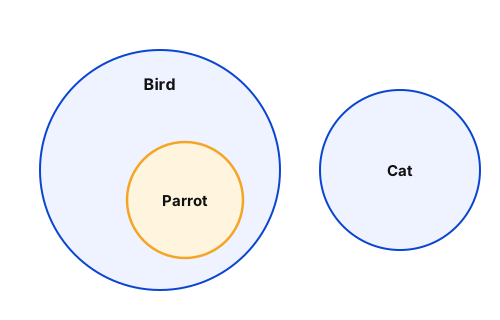
Q3211.
Select the Venn diagram that best illustrates the relationship between the following classes.
Parrot, Cat, Bird
उस वेन आरेख का चयन कीजिए जो निम्नलिखित वर्गों के बीच के संबंध को सर्वोत्तम रूप से दर्शाता है।
तोता, बिल्ली, पक्षी
  1. Afigure
  2. Bfigure
  3. Cfigure
  4. Dfigure
Show answer

Concept: Show 'is a part of' by a circle inside another, and unrelated classes as separate circles.

  1. All parrots are birds → parrot circle inside bird circle.
  2. A cat is neither a bird nor a parrot → separate circle.
  3. Option (B) shows exactly this.

Trick: Ask 'is every X a Y?' for each pair — yes = inside, no link = apart.

Answer: (B) The diagram in option (B)

अवधारणा: एक वर्ग दूसरे का भाग हो तो वृत्त अंदर, असंबंधित वर्ग अलग वृत्त।

  1. हर तोता पक्षी है → तोता वृत्त, पक्षी वृत्त के अंदर।
  2. बिल्ली न पक्षी है न तोता → अलग वृत्त।
  3. यह व्यवस्था विकल्प (B) में है।

ट्रिक: हर जोड़ी के लिए पूछें: क्या हर X, Y है? हाँ = अंदर, संबंध नहीं = अलग।

उत्तर: (B) विकल्प (B) का आरेख

SSC GDGeneral Intelligence & ReasoningVenn diagram – classesSSC GD 2025 · 7 Feb Shift 1 →
Q3212.
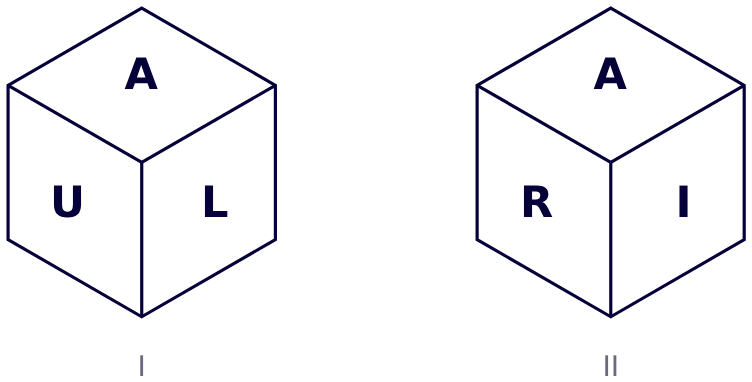
A dice has its faces marked by letters Q, R, U, A, I and L. Two positions of the same dice are given below. Which face is opposite to face Q?
figure
एक पासे के फलकों पर अक्षर Q, R, U, A, I और L अंकित हैं। इसी पासे की दो स्थितियाँ नीचे दी गई हैं। फलक Q के विपरीत कौन-सा फलक है?
figure
  1. AR
  2. BL
  3. CA
  4. DU
Show answer

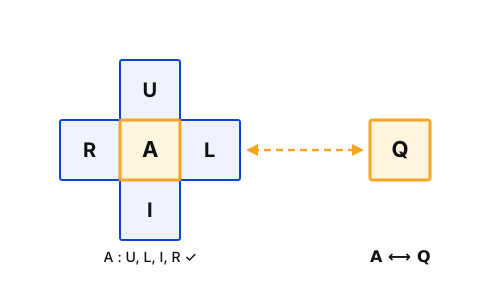
Concept: If one face stays the same in both views, the four faces around it are its neighbours.

  1. A is common in both views; U, L, R, I are seen beside it.
  2. So these four are adjacent to A.
  3. The only remaining face Q must be opposite A.

Trick: Face that is adjacent to four different faces is opposite the sixth.

Answer: (C) A

अवधारणा: दोनों स्थितियों में एक फलक समान हो तो उसके चारों ओर के फलक उसके पड़ोसी होते हैं।

  1. A दोनों में है; उसके साथ U, L, R, I दिखते हैं।
  2. ये चारों A के आसन्न हैं।
  3. बचा हुआ Q, A के विपरीत होगा।

ट्रिक: जो फलक चार अलग फलकों से सटा हो, वह छठे के विपरीत होता है।

उत्तर: (C) A

SSC GDGeneral Intelligence & ReasoningDice – opposite faceSSC GD 2025 · 7 Feb Shift 1 →
Q3213.
In a certain code language, 'ZXFGA' is coded as '3' and 'BTGHASQR' is coded as '6'. What is the code for 'YWNERI' in the given language?
एक निश्चित कूट भाषा में, 'ZXFGA' को '3' और 'BTGHASQR' को '6' के रूप में कूटबद्ध किया जाता है। उसी भाषा में 'YWNERI' का कूट क्या है?
  1. A5
  2. B6
  3. C4
  4. D7
Show answer

Concept: When the code is a small number, try relating it to the number of letters.

  1. ZXFGA: 5 letters → 3 (5 − 2).
  2. BTGHASQR: 8 letters → 6 (8 − 2).
  3. YWNERI: 6 letters → 6 − 2 = 4.

Trick: Single-digit codes for words → first count letters.

Answer: (C) 4

अवधारणा: कोड छोटी संख्या हो तो अक्षरों की गिनती से संबंध देखें।

  1. ZXFGA: 5 अक्षर → 3 (5 − 2)।
  2. BTGHASQR: 8 अक्षर → 6 (8 − 2)।
  3. YWNERI: 6 अक्षर → 6 − 2 = 4।

ट्रिक: शब्द का कोड एक अंक हो तो पहले अक्षर गिनें।

उत्तर: (C) 4

SSC GDGeneral Intelligence & ReasoningCoding by letter countSSC GD 2025 · 7 Feb Shift 1 →
Q3214.
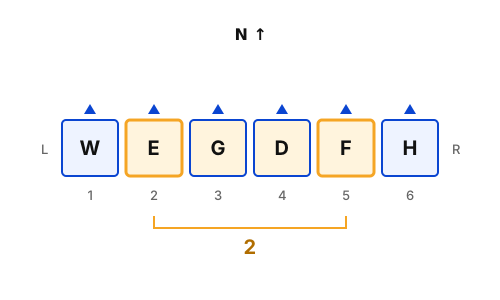
Six people, D, E, F, G, H and W, are sitting in a row facing north (but not necessarily in the same order). Only two people sit between W and D. G sits to the immediate left of D. No one sits to the right of H. Only two people sit between H and G. E sits to the immediate left of G. How many people sit between F and E?
छह व्यक्ति D, E, F, G, H और W एक पंक्ति में उत्तर की ओर मुख करके बैठे हैं (आवश्यक नहीं कि इसी क्रम में हों)। W और D के बीच केवल दो व्यक्ति बैठे हैं। G, D के ठीक बाएँ बैठा है। H के दाएँ कोई नहीं बैठा है। H और G के बीच केवल दो व्यक्ति बैठे हैं। E, G के ठीक बाएँ बैठा है। F और E के बीच कितने व्यक्ति बैठे हैं?
  1. AThreeतीन
  2. BOneएक
  3. CFourचार
  4. DTwoदो
Show answer

Concept: Fix the person with a definite seat first, then place others step by step (facing north: left = our left).

  1. No one right of H → H at seat 6; two between H and G → G at 3.
  2. D right of G → D at 4; E left of G → E at 2.
  3. Two between W and D → W at 1; F at 5.
  4. Between E(2) and F(5): G, D → 2 people.

Trick: Start with an 'end' clue like 'no one to the right' — it fixes a seat immediately.

Answer: (D) Two

अवधारणा: जिसकी जगह पक्की हो, उसे पहले बैठाएँ (उत्तर मुख: बायाँ = हमारा बायाँ)।

  1. H के दाएँ कोई नहीं → H सीट 6; H और G के बीच दो → G सीट 3।
  2. D, G के दाएँ → सीट 4; E, G के बाएँ → सीट 2।
  3. W और D के बीच दो → W सीट 1; F सीट 5।
  4. E(2) और F(5) के बीच G, D → 2 व्यक्ति।

ट्रिक: 'दाएँ कोई नहीं' जैसा संकेत सीधे सिरे की सीट तय कर देता है।

उत्तर: (D) दो

SSC GDGeneral Intelligence & ReasoningLinear seating arrangementSSC GD 2025 · 7 Feb Shift 1 →
Q3215.
Read the given statements and conclusions carefully. Assuming that the information given in the statements is true, even if it appears to be at variance with commonly known facts, decide which of the given conclusion(s) logically follow(s) from the statement(s).
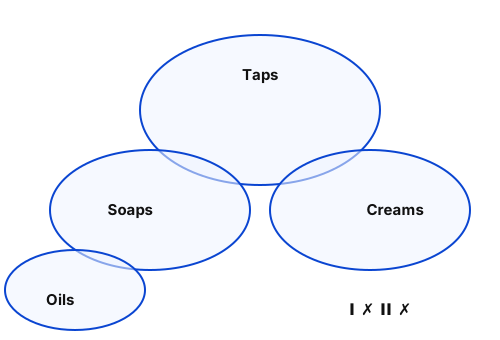
Statements: Some taps are soaps.
Some taps are creams.
Some soaps are oils.
Conclusions: (I) Some taps are oils.
(II) Some soaps are creams.
दिए गए कथनों और निष्कर्षों को ध्यानपूर्वक पढ़िए। यह मानते हुए कि कथनों में दी गई जानकारी सत्य है, चाहे वह सामान्यतः ज्ञात तथ्यों से भिन्न प्रतीत होती हो, निर्णय कीजिए कि दिए गए निष्कर्षों में से कौन-सा/से निष्कर्ष कथनों का तार्किक रूप से अनुसरण करता है/करते हैं।
कथन: कुछ नल साबुन हैं।
कुछ नल क्रीम हैं।
कुछ साबुन तेल हैं।
निष्कर्ष: (I) कुछ नल तेल हैं।
(II) कुछ साबुन क्रीम हैं।
  1. ANeither conclusion (I) nor (II) follows.न तो निष्कर्ष (I) और न ही (II) अनुसरण करता है।
  2. BOnly conclusion (I) follows.केवल निष्कर्ष (I) अनुसरण करता है।
  3. CBoth conclusions (I) and (II) follow.दोनों निष्कर्ष (I) और (II) अनुसरण करते हैं।
  4. DOnly conclusion (II) follows.केवल निष्कर्ष (II) अनुसरण करता है।
Show answer

Concept: Two 'some' statements through a common term give no definite conclusion.

  1. Taps–soaps and soaps–oils are 'some'; taps and oils are never linked directly → I doubtful.
  2. Taps–soaps and taps–creams are 'some'; soaps and creams not linked → II doubtful.
  3. So neither follows.

Trick: Some + Some = no conclusion. Spot this and answer in seconds.

Answer: (A) Neither conclusion (I) nor (II) follows.

अवधारणा: दो 'कुछ' कथनों से कोई निश्चित निष्कर्ष नहीं निकलता।

  1. नल–साबुन और साबुन–तेल 'कुछ' हैं; नल–तेल का सीधा संबंध नहीं → I संदिग्ध।
  2. नल–साबुन और नल–क्रीम 'कुछ' हैं; साबुन–क्रीम नहीं जुड़े → II संदिग्ध।
  3. अतः कोई नहीं।

ट्रिक: कुछ + कुछ = कोई निष्कर्ष नहीं।

उत्तर: (A) न तो निष्कर्ष (I) और न ही (II) अनुसरण करता है।

SSC GDGeneral Intelligence & ReasoningSyllogism – 'some' statementsSSC GD 2025 · 7 Feb Shift 1 →
Q3216.
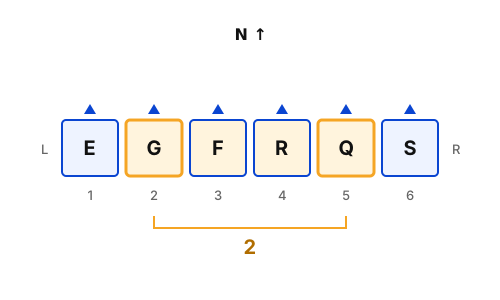
Six people, E, F, G, Q, R and S, are sitting in a row facing north (but not necessarily in the same order). Only two people sit to the right of R. Only two people sit between R and E. Only one person sits between E and F. F sits to the immediate left of R. S sits to the immediate right of Q. How many people sit between Q and G?
छह व्यक्ति E, F, G, Q, R और S एक पंक्ति में उत्तर की ओर मुख करके बैठे हैं (आवश्यक नहीं कि इसी क्रम में हों)। R के दाएँ केवल दो व्यक्ति बैठे हैं। R और E के बीच केवल दो व्यक्ति बैठे हैं। E और F के बीच केवल एक व्यक्ति बैठा है। F, R के ठीक बाएँ बैठा है। S, Q के ठीक दाएँ बैठा है। Q और G के बीच कितने व्यक्ति बैठे हैं?
  1. ATwoदो
  2. BThreeतीन
  3. COneएक
  4. DFourचार
Show answer

Concept: Use the clue that fixes an exact seat first (seats 1–6 from left, all facing north).

  1. Two to the right of R → R at 4; F immediately left → F at 3.
  2. Two between R and E → E at 1 (one person between E and F ✓).
  3. Q, S adjacent pair → Q at 5, S at 6; G at 2.
  4. Between G(2) and Q(5): F, R → 2 people.

Trick: 'Only two to the right' in a row of 6 = seat 4 straight away.

Answer: (A) Two

अवधारणा: पहले वह संकेत लें जो सीट पक्की करता है (बाएँ से सीट 1–6)।

  1. R के दाएँ दो → R सीट 4; F ठीक बाएँ → सीट 3।
  2. R और E के बीच दो → E सीट 1।
  3. Q, S साथ-साथ → Q सीट 5, S सीट 6; G सीट 2।
  4. G(2) और Q(5) के बीच F, R → 2 व्यक्ति।

ट्रिक: 6 की पंक्ति में 'दाएँ केवल दो' = सीधे सीट 4।

उत्तर: (A) दो

SSC GDGeneral Intelligence & ReasoningLinear seating arrangementSSC GD 2025 · 7 Feb Shift 1 →
Q3217.
Based on the English alphabetical order, three of the following four letter -clusters are alike in a certain way and thus form a group. Which letter-cluster DOES NOT belong to that group?
(Note: The odd man out is not based on the number of consonants/vowels or their position in the letter-cluster.)
अंग्रेजी वर्णमाला क्रम के आधार पर, निम्नलिखित चार अक्षर-समूहों में से तीन एक निश्चित प्रकार से समान हैं और इस प्रकार एक समूह बनाते हैं। कौन-सा अक्षर-समूह उस समूह से संबंधित नहीं है?
(नोट: विषम अक्षर-समूह का आधार अक्षर-समूह में व्यंजनों/स्वरों की संख्या या उनकी स्थिति नहीं है।)
  1. ATOJ
  2. BMHC
  3. CGBW
  4. DQJE
Show answer

Concept: Check the gap between letters using alphabet positions (cyclic after A).

  1. TOJ: 20→15→10 (−5, −5); MHC: 13→8→3 (−5, −5).
  2. GBW: 7→2→23 (−5, then −5 wrapping past A).
  3. QJE: 17→10→5 (−7, −5) → odd one.

Trick: Remember EJOTY (5, 10, 15, 20, 25) — clusters on a 5-step are easy to spot.

Answer: (D) QJE

अवधारणा: अक्षरों के स्थान-अंक से अंतर जाँचें (A के बाद Z पर घूमता है)।

  1. TOJ: −5, −5; MHC: −5, −5।
  2. GBW: 7→2→23 (A से पीछे घूमकर भी −5)।
  3. QJE: 17→10→5 (−7, −5) → अलग।

ट्रिक: EJOTY (5, 10, 15, 20, 25) याद रखें।

उत्तर: (D) QJE

SSC GDGeneral Intelligence & ReasoningOdd one out – letter clustersSSC GD 2025 · 7 Feb Shift 1 →
Q3218.
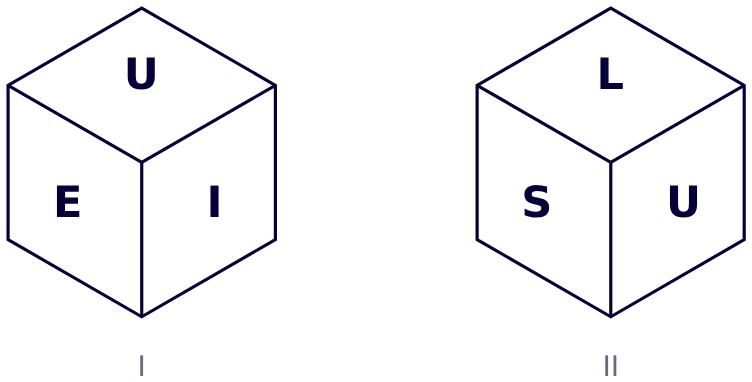
A dice has its faces marked by letters E, I, L, R, S and U. Two positions of the same dice are shown in the given figures. Which face is opposite to face R?
figure
एक पासे के फलकों पर अक्षर E, I, L, R, S और U अंकित हैं। दी गई आकृतियों में इसी पासे की दो स्थितियाँ दर्शाई गई हैं। फलक R के विपरीत कौन-सा फलक है?
figure
  1. AL
  2. BE
  3. CU
  4. DS
Show answer

Concept: Faces seen together in a view are adjacent; a face has 4 neighbours and 1 opposite.

  1. View 1: U is next to E and I.
  2. View 2: U is next to L and S.
  3. U touches E, I, L, S → the face left, R, is opposite U.

Trick: Common face in both views + its 4 neighbours → the unused letter is its opposite.

Answer: (C) U

अवधारणा: एक दृश्य में साथ दिखने वाले फलक आसन्न होते हैं; हर फलक के 4 पड़ोसी और 1 विपरीत।

  1. पहली स्थिति: U के साथ E, I।
  2. दूसरी स्थिति: U के साथ L, S।
  3. U के पड़ोसी E, I, L, S → बचा R, U के विपरीत।

ट्रिक: जो अक्षर किसी स्थिति में U के साथ न दिखे, वही विपरीत।

उत्तर: (C) U

SSC GDGeneral Intelligence & ReasoningDice – opposite faceSSC GD 2025 · 7 Feb Shift 1 →
Q3219.
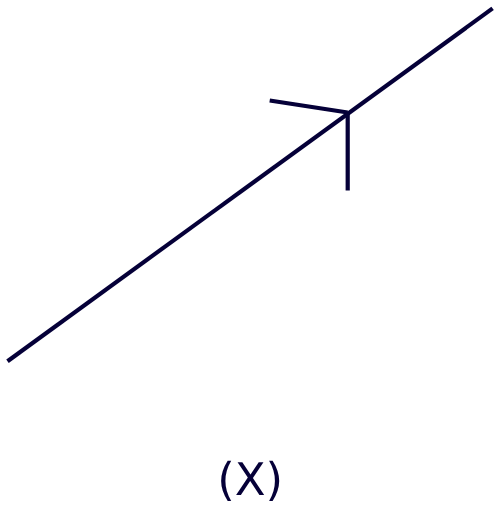
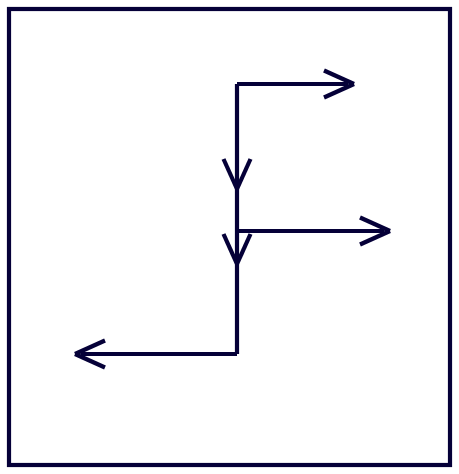
Select the option in which the given figure ( X ) is embedded (rotation is NOT allowed).
figure
उस विकल्प का चयन कीजिए जिसमें दी गई आकृति (X) सन्निहित है (घुमाने की अनुमति नहीं है)।
figure
  1. Afigure
  2. Bfigure
  3. Cfigure
  4. Dfigure
Show answer

Concept: Look for figure (X) inside the options in the same direction and size (no rotation).

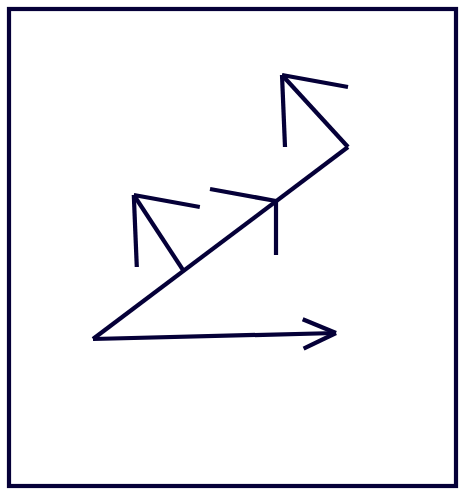
  1. (X) is a slanting line rising to the right with an arrow-head in its middle.
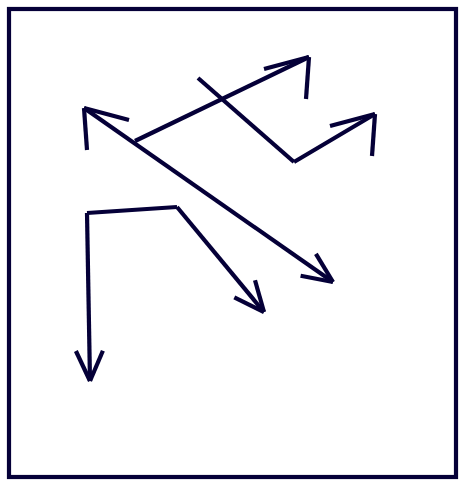
  2. Options (B) and (C) lack such a slant/arrow; in (A) the heads are at the ends.
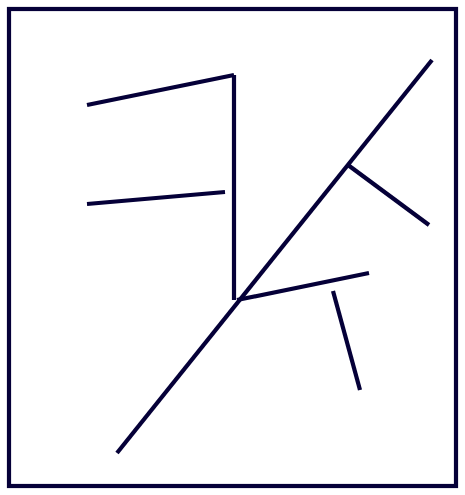
  3. Option (D) contains the same line and arrow-head in the same orientation.

Trick: Pick one distinctive part of (X) (here the middle arrow-head) and scan options only for it.

Answer: (D) The figure in option (D)

अवधारणा: आकृति (X) को उसी दिशा और आकार में विकल्पों में खोजें (घुमाना मना है)।

  1. (X) दाईं ओर ऊपर उठती तिरछी रेखा है, जिसके बीच में तीर का सिरा है।
  2. (B), (C) में ऐसी रेखा/तीर नहीं; (A) में सिरे छोरों पर हैं।
  3. विकल्प (D) में वही रेखा और तीर उसी दिशा में है।

ट्रिक: (X) का कोई खास भाग (बीच का तीर) चुनें और केवल उसे खोजें।

उत्तर: (D) विकल्प (D) की आकृति

SSC GDGeneral Intelligence & ReasoningEmbedded figureSSC GD 2025 · 7 Feb Shift 1 →
Q3220.
What should come in place of the question mark (?) in the given series based on the English alphabetical order? AFQ BHR CJS DLT ?
अंग्रेजी वर्णमाला क्रम के आधार पर दी गई शृंखला में प्रश्नवाचक चिह्न (?) के स्थान पर क्या आना चाहिए? AFQ BHR CJS DLT ?
  1. AFNU
  2. BFMU
  3. CENU
  4. DEOU
Show answer

Concept: Treat each letter position as a separate series.

  1. 1st letters: A, B, C, D → E (+1).
  2. 2nd letters: F, H, J, L → N (+2).
  3. 3rd letters: Q, R, S, T → U (+1).

Trick: Only the first letter decides between E- and F- options; the second letter (N) finishes it.

Answer: (C) ENU

अवधारणा: हर स्थान के अक्षर को अलग श्रृंखला मानें।

  1. पहला अक्षर: A, B, C, D → E (+1)।
  2. दूसरा: F, H, J, L → N (+2)।
  3. तीसरा: Q, R, S, T → U (+1)।

ट्रिक: पहला अक्षर E होने से A, B हटे; दूसरा N होने से उत्तर ENU।

उत्तर: (C) ENU

SSC GDGeneral Intelligence & ReasoningLetter series – three columnsSSC GD 2025 · 7 Feb Shift 1 →