Question bank

Q&A: practice questions with answers

Search questions on any topic. Filter by exam category, exam, subject and topic, try the question, then open the answer and explanation.

Courses – airGurukul

4,200 questions found.

Q3401.
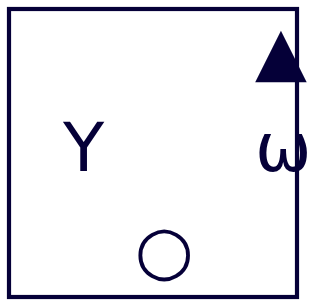
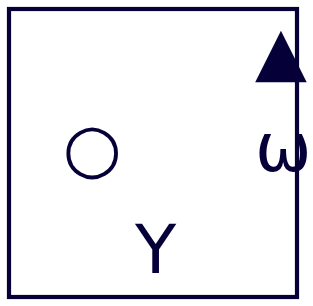
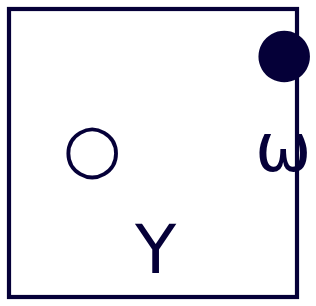
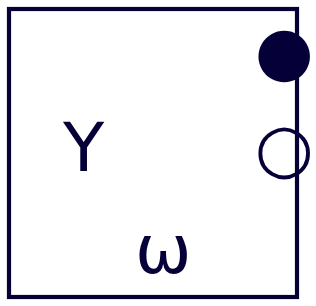
Select the figure from among the given options that can replace the question mark (?) in the following series.

figure
दिए गए विकल्पों में से उस आकृति का चयन कीजिए, जो निम्नलिखित शृंखला में प्रश्नवाचक चिह्न (?) का स्थान ले सके।
figure
  1. Afigure
  2. Bfigure
  3. Cfigure
  4. Dfigure
Show answer

Concept: Look at each element separately: inner symbols shift position step by step, and the corner symbol follows its own cycle.

  1. The three inner symbols (ω, ○, Y) and the blank spot occupy four side positions; at every step all of them shift one place anticlockwise.
  2. Four shifts complete a full round, so figure 5 must have the same inner layout as figure 1.
  3. The corner mark cycles ● → ▲ → ■ → ★, so figure 5 again shows ●.
  4. Only option (C) has figure-1 layout with ● in the corner.

Trick: When a pattern moves one of four positions per step, term 5 = term 1. Just match the first figure.

Answer: (C) Figure (C)

अवधारणा: हर हिस्से को अलग देखें: अंदर के चिह्न हर चरण में जगह बदलते हैं और कोने का चिह्न अपने चक्र में चलता है।

हल:

  1. ω, ○, Y और खाली जगह – ये चार किनारे की जगहें घेरते हैं; हर चरण में सब एक स्थान वामावर्त (anticlockwise) खिसकते हैं।
  2. चार चरणों में एक पूरा चक्कर, इसलिए 5वीं आकृति की अंदरूनी व्यवस्था पहली आकृति जैसी होगी।
  3. कोने का चिह्न ● → ▲ → ■ → ★ चलता है, अतः 5वीं में फिर ● आएगा।
  4. यह मेल केवल विकल्प (C) में है।

ट्रिक: चार स्थानों में एक-एक खिसकने वाले पैटर्न में 5वाँ पद = पहला पद; बस पहली आकृति से मिलाएँ।

उत्तर: (C) आकृति (C)
SSC GDGeneral Intelligence & ReasoningFigure series – rotating symbolsSSC GD 2025 · 6 Feb Shift 2 →
Q3402.
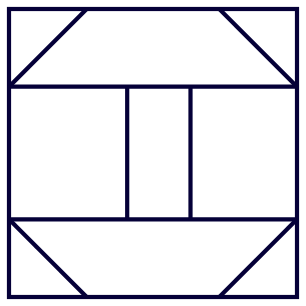
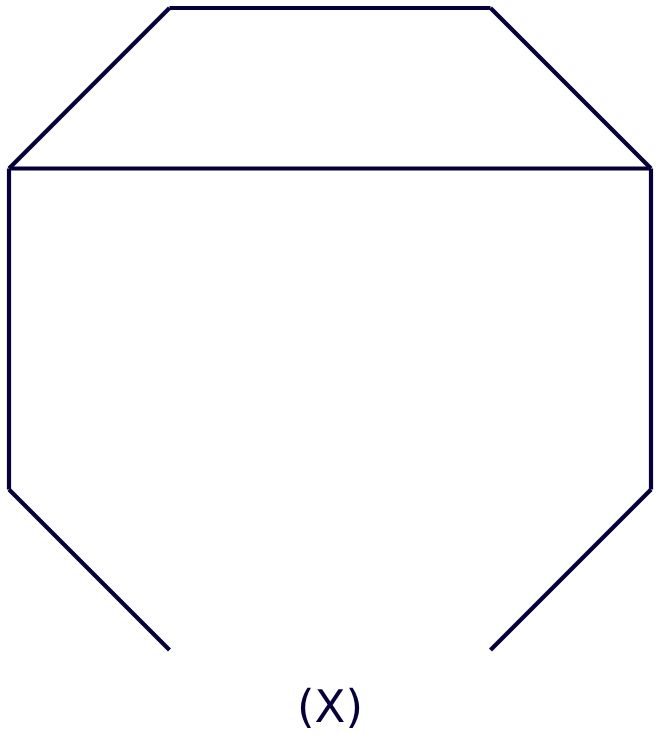
Select the option figure in which the given figure ( X ) is embedded as its part (rotation is
NOT allowed).
figure
उस विकल्प आकृति का चयन कीजिए, जिसमें दी गई आकृति ( X ) उसके एक भाग के रूप में अंतर्निहित है (घुमाने की अनुमति नहीं है)।
figure
  1. Afigure
  2. Bfigure
  3. Cfigure
  4. Dfigure
Show answer

Concept: The hidden figure must appear with every line in the same direction, since rotation is not allowed.

  1. Figure X is like a box with all four corners cut by slant lines and one horizontal line running across it.
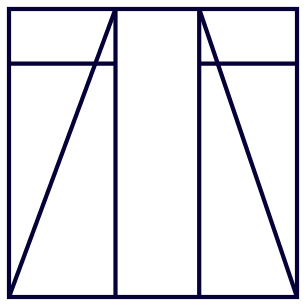
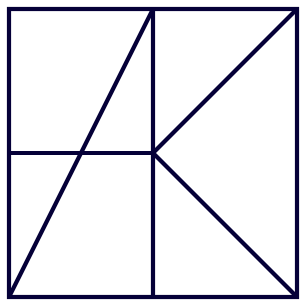
  2. Options (A), (C), (D) contain long diagonals but no matching pair of slanting corner cuts, so the top part of X cannot be traced in them.
  3. Option (B) has slanted corners and a full horizontal line – X fits exactly.

Trick: Pick the most unusual part of X (here the slanted corner cuts) and scan options only for that part; others get eliminated fast.

Answer: (B) Figure (B)

अवधारणा: घुमाना मना है, इसलिए X की हर रेखा उसी दिशा में विकल्प में दिखनी चाहिए।

हल:

  1. X एक डिब्बे जैसी आकृति है जिसके चारों कोने तिरछे कटे हैं और बीच में एक क्षैतिज रेखा पूरी चौड़ाई में है।
  2. (A), (C), (D) में लंबी तिरछी रेखाएँ हैं पर कोनों के तिरछे कट की जोड़ी नहीं, अतः X का ऊपरी हिस्सा नहीं बनता।
  3. (B) में तिरछे कोने और पूरी क्षैतिज रेखा दोनों हैं – X पूरी तरह फिट।

ट्रिक: X का सबसे अलग हिस्सा (तिरछे कोने) चुनें और विकल्पों में सिर्फ वही खोजें; बाकी जल्दी कट जाते हैं।

उत्तर: (B) आकृति (B)

SSC GDGeneral Intelligence & ReasoningEmbedded figureSSC GD 2025 · 6 Feb Shift 2 →
Q3403.
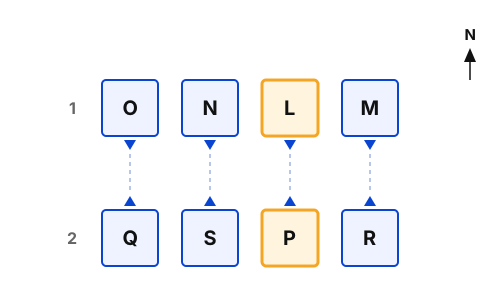
Eight people are sitting in two parallel rows containing 4 people each in such a way that there is equal distance between adjacent persons.
In row 1 - L, M, N and O are seated and all of them are facing south.
In row 2 - P, Q, R and S are seated and all of them are facing north.
Thus, each person faces another person from the other row. Only one person sits between N and M. Only one person sits between Q and P. The one facing P sits at the second position from the left of the line. N sits to the immediate left of O and faces S. O does not face P.
Which of the following represents both people facing each other?
आठ व्यक्ति दो समानांतर पंक्तियों में इस प्रकार बैठे हैं कि प्रत्येक पंक्ति में 4 व्यक्ति हैं और आसन्न व्यक्तियों के बीच समान दूरी है।
पंक्ति 1 में - L, M, N और O बैठे हैं तथा वे सभी दक्षिण की ओर मुख किए हुए हैं।
पंक्ति 2 में - P, Q, R और S बैठे हैं तथा वे सभी उत्तर की ओर मुख किए हुए हैं।
इस प्रकार, प्रत्येक व्यक्ति दूसरी पंक्ति के किसी एक व्यक्ति के सामने बैठा है। N और M के बीच केवल एक व्यक्ति बैठा है। Q और P के बीच केवल एक व्यक्ति बैठा है। P के सामने बैठा व्यक्ति पंक्ति के बाएँ छोर से दूसरे स्थान पर बैठा है। N, O के ठीक बाईं ओर बैठा है और S के सामने है। O, P के सामने नहीं है।
निम्नलिखित में से कौन-सा युग्म आमने-सामने बैठे दोनों व्यक्तियों को दर्शाता है?
  1. AL and SL और S
  2. BL and PL और P
  3. CM and SM और S
  4. DN and RN और R
Show answer

Concept: Fix the sure blocks first (N–O pair), then place others using 'one person between' clues.

  1. N is immediately left of O and N faces S → block N O.
  2. One person between N and M → row 1 (from its own left): M, L, N, O.
  3. Whoever faces P sits 2nd from the line's left end → L faces P (also O does not face P ✔).
  4. Row 2 opposite M, L, N, O = R, P, S, Q; only S sits between P and Q ✔.

Trick: Check options against fixed facts: N faces S, so (D) 'N and R' is out; M can't face S either → only L–P remains plausible.

Answer: (B) L and P

अवधारणा: पहले पक्का ब्लॉक (N–O) रखें, फिर 'एक व्यक्ति बीच में' वाले संकेत लगाएँ।

हल:

  1. N, O के ठीक बाएँ है और N, S के सामने है → ब्लॉक N O।
  2. N और M के बीच एक व्यक्ति → पंक्ति 1 (अपने बाएँ से): M, L, N, O।
  3. जो P की ओर मुँह किए है, वह लाइन में बाईं ओर से नंबर 2 पर है → L, P के सामने है (O, P के सामने नहीं ✔)।
  4. पंक्ति 2 क्रम: R, P, S, Q; P और Q के बीच केवल S ✔।

ट्रिक: N तो S के सामने है, इसलिए (C) और (D) तुरंत बाहर; बचे विकल्पों में L–P सही बैठता है।

उत्तर: (B) L और P

SSC GDGeneral Intelligence & ReasoningSeating – two parallel rowsSSC GD 2025 · 6 Feb Shift 2 →
Q3404.
Based on the English alphabetical order, three of the following four letter-clusters are alike in a certain way and thus form a group. Which letter-cluster DOES NOT belong to that group? (Note: The odd one out is not based on the number of consonants/vowels or their position in the letter-cluster.)
अंग्रेज़ी वर्णमाला क्रम के आधार पर, निम्नलिखित चार अक्षर-समूहों में से तीन एक निश्चित प्रकार से समान हैं और इस प्रकार एक समूह बनाते हैं। कौन-सा अक्षर-समूह उस समूह से संबंधित नहीं है? (नोट: विषम अक्षर-समूह, अक्षर-समूह में व्यंजनों/स्वरों की संख्या या उनके स्थान पर आधारित नहीं है।)
  1. AEDH
  2. BTTW
  3. CQPT
  4. DZYC
Show answer

Concept: Find the step pattern between consecutive letters of each cluster.

  1. EDH: E→D = −1, D→H = +4.
  2. QPT: −1, +4; ZYC: −1, +4 (Y +4 wraps to C).
  3. TTW: T→T = 0, T→W = +3 – pattern broken.

Trick: A repeated letter (TT) means a gap of 0 – usually that cluster is the odd one.

Answer: (B) TTW

अवधारणा: हर समूह में क्रमागत अक्षरों का अंतर देखें।

हल:

  1. EDH: E→D = −1, D→H = +4।
  2. QPT: −1, +4; ZYC: −1, +4 (Y से +4 = C, घूमकर)।
  3. TTW: T→T = 0, T→W = +3 – पैटर्न अलग।

ट्रिक: जिस समूह में एक ही अक्षर दोहराया हो (TT), उसका अंतर 0 होता है – वही अक्सर विषम निकलता है।

उत्तर: (B) TTW

SSC GDGeneral Intelligence & ReasoningOdd one out – letter gapsSSC GD 2025 · 6 Feb Shift 2 →
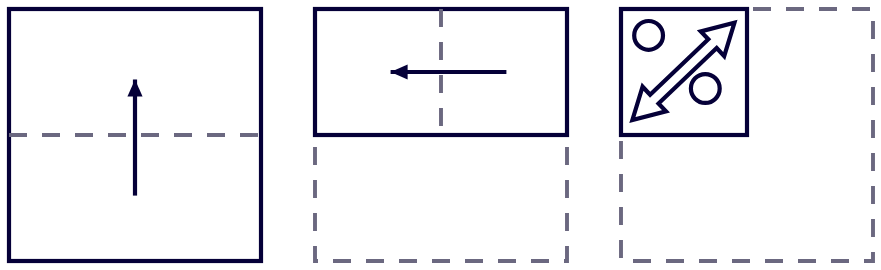
Q3405.
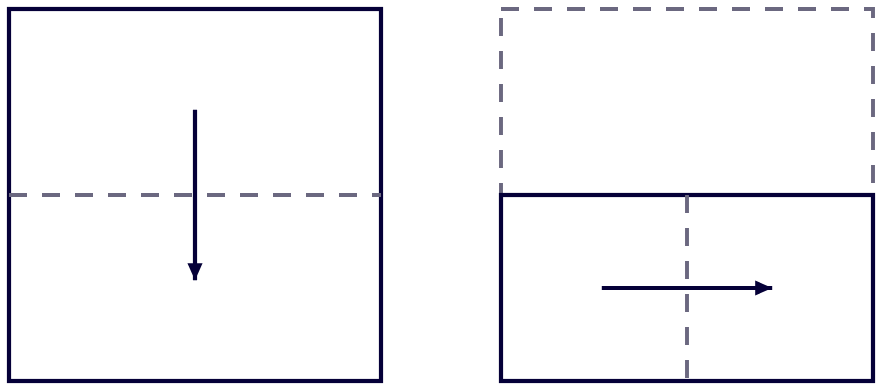
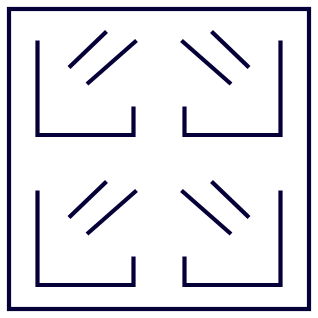
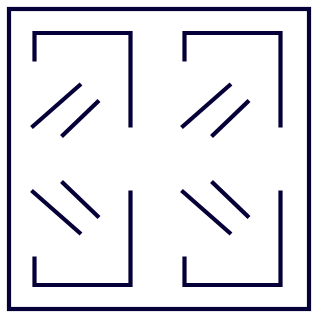
A paper is folded and cut as shown below. How will it appear when unfolded?
figure
एक कागज़ को नीचे दर्शाए अनुसार मोड़ा और काटा जाता है। खोलने पर वह कैसा दिखाई देगा?
figure
  1. Afigure
  2. Bfigure
  3. Cfigure
  4. Dfigure
Show answer

Concept: Each fold doubles the cut; unfold in reverse order and mirror the mark across each fold line.

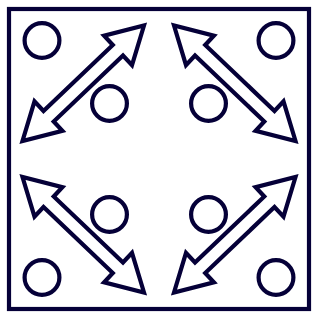
  1. Paper is folded twice (horizontal + vertical), so the cut passes through 4 layers → the design appears in all 4 quarters.
  2. Opening the vertical fold gives a left–right mirror image; opening the horizontal fold gives an up–down mirror image.
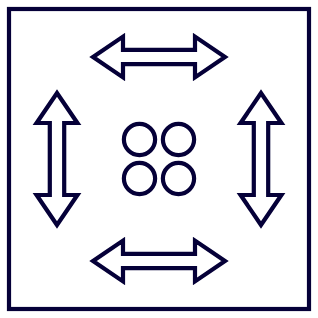
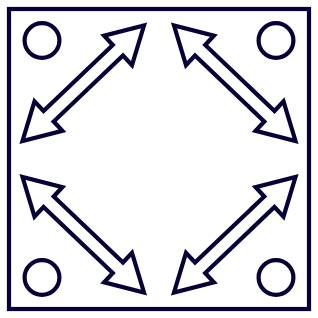
  3. So every quarter must show the slanted double arrow with both small circles, arrows tilting oppositely in neighbouring quarters.
  4. (D) loses a circle per quarter; (B), (C) put circles in the middle – only (A) fits.

Trick: Count first: 2 folds → 4 copies of every hole/cut. Reject options with the wrong count, then check mirror direction.

Answer: (A) Figure (A)

अवधारणा: हर मोड़ कट को दोगुना करता है; उल्टे क्रम में खोलें और हर मोड़ की रेखा पर दर्पण प्रतिबिंब बनाएँ।

हल:

  1. दो मोड़ (क्षैतिज + ऊर्ध्वाधर) → 4 परतें → डिज़ाइन चारों चौथाई भागों में आएगा।
  2. ऊर्ध्वाधर मोड़ खोलने पर बाएँ-दाएँ प्रतिबिंब, क्षैतिज मोड़ खोलने पर ऊपर-नीचे प्रतिबिंब।
  3. हर चौथाई में तिरछा दो-मुँहा तीर तथा दोनों गोले दिखने चाहिए, पड़ोसी भागों में तीर उल्टी दिशा में।
  4. (D) में हर भाग से एक वृत्त गायब, (B), (C) में वृत्त बीच में – केवल (A) सही।

ट्रिक: पहले गिनती: 2 मोड़ = हर छेद/कट की 4 प्रतियाँ। गलत संख्या वाले विकल्प हटाएँ, फिर दिशा देखें।

उत्तर: (A) आकृति (A)

SSC GDGeneral Intelligence & ReasoningPaper folding and cuttingSSC GD 2025 · 6 Feb Shift 2 →
Q3406.
What should come in place of the question mark (?) in the given series?
101 111 122 134 147 ?
दी गई शृंखला में प्रश्नवाचक चिह्न (?) के स्थान पर क्या आना चाहिए?
101 111 122 134 147 ?
  1. A158
  2. B161
  3. C151
  4. D156
Show answer

Concept: Differences between terms increase by 1.

  1. Differences: 10, 11, 12, 13.
  2. Next difference = 14.
  3. ? = 147 + 14 = 161.

Trick: When gaps rise by 1, next term = last term + (last gap + 1) = 147 + 14.

Answer: (B) 161

अवधारणा: पदों का अंतर हर बार 1 बढ़ता है।

हल:

  1. अंतर: 10, 11, 12, 13।
  2. अगला अंतर = 14।
  3. ? = 147 + 14 = 161।

ट्रिक: 147 + 14 का इकाई अंक 1 है और उत्तर 157 से बड़ा होना चाहिए → 161।

उत्तर: (B) 161

SSC GDGeneral Intelligence & ReasoningNumber series – increasing differencesSSC GD 2025 · 6 Feb Shift 2 →
Q3407.
'NEYG' is related to 'PHBI' in a certain way based on the English alphabetical order. In the same way, 'LAVS' is related to 'NDYU'. To which of the following is 'HCTB' related, following the same logic ?
'NEYG' एक निश्चित प्रकार से अंग्रेज़ी वर्णमाला क्रम के आधार पर 'PHBI' से संबंधित है। उसी प्रकार, 'LAVS' का संबंध 'NDYU' से है। इसी तर्क का अनुसरण करते हुए 'HCTB' निम्नलिखित में से किससे संबंधित है?
  1. AJFWD
  2. BHEVB
  3. CGEXD
  4. DHGVC
Show answer

Concept: Find the shift for each position and apply the same shifts.

  1. NEYG → PHBI: N+2, E+3, Y+3 (=B), G+2.
  2. LAVS → NDYU: same +2, +3, +3, +2 ✔.
  3. HCTB: H+2 = J, C+3 = F, T+3 = W, B+2 = D → JFWD.

Trick: First letter H+2 = J – only option (A) starts with J. Done in 5 seconds.

Answer: (A) JFWD

अवधारणा: हर स्थान का खिसकाव निकालें और वही लागू करें।

हल:

  1. NEYG → PHBI: N+2, E+3, Y+3 (=B), G+2।
  2. LAVS → NDYU: वही +2, +3, +3, +2 ✔।
  3. HCTB: H+2 = J, C+3 = F, T+3 = W, B+2 = D → JFWD।

ट्रिक: पहला अक्षर H+2 = J; केवल (A) J से शुरू होता है।

उत्तर: (A) JFWD

SSC GDGeneral Intelligence & ReasoningLetter analogy – +2, +3, +3, +2SSC GD 2025 · 6 Feb Shift 2 →
Q3408.
Find the correct alternative that when filled in the blanks in the same sequence will make the series logically complete.
_ D G I K _ J L N J _ O Q M P _ T P S _
उस सही विकल्प का चयन कीजिए, जिसे रिक्त स्थानों में उसी क्रम में रखने पर शृंखला तार्किक रूप से पूर्ण हो जाए।
_ D G I K _ J L N J _ O Q M P _ T P S _
  1. AHGMRU
  2. BHFMSU
  3. CEGNRV
  4. DEFNSV
Show answer

Concept: 20 places and 5 blanks → split into 5 groups of 4 and compare same-position letters.

  1. Groups: _DGI, K_JL, NJ_O, QMP_, TPS_.
  2. 2nd letters D, ?, J, M, P go up by 3 → blank = G. 3rd letters G, J, ?, P, S → blank = M.
  3. 4th letters I, L, O, ?, ? → R, U. 1st letters ?, K, N, Q, T → H.
  4. Blanks in order: H, G, M, R, U.

Trick: First blank: column K, N, Q, T steps +3, so it is H – this alone removes (C) and (D); 2nd blank G then picks (A).

Answer: (A) HGMRU

अवधारणा: 20 स्थान, 5 रिक्त → 4-4 अक्षरों के 5 समूह बनाकर एक ही स्थान के अक्षर मिलाएँ।

हल:

  1. समूह: _DGI, K_JL, NJ_O, QMP_, TPS_।
  2. दूसरे अक्षर D, ?, J, M, P (+3) → G; तीसरे अक्षर G, J, ?, P, S → M।
  3. चौथे अक्षर I, L, O, ?, ? → R, U; पहले अक्षर ?, K, N, Q, T → H।
  4. क्रम से: H, G, M, R, U।

ट्रिक: पहला रिक्त H निकलते ही (C), (D) बाहर; दूसरा रिक्त G → (A)।

उत्तर: (A) HGMRU

SSC GDGeneral Intelligence & ReasoningLetter series – fill the blanksSSC GD 2025 · 6 Feb Shift 2 →
Q3409.
In a certain code language, 'are you busy' is coded as 'mg rc tp' and 'you need rest is coded as 'rc as bo'. How is 'you' coded in the given language?
एक निश्चित कूट भाषा में, 'are you busy' को 'mg rc tp' के रूप में कूटबद्ध किया जाता है तथा 'you need rest' को 'rc as bo' के रूप में कूटबद्ध किया जाता है। दी गई भाषा में 'you' को किस प्रकार कूटबद्ध किया जाएगा?
  1. Arc
  2. Bas
  3. Cmg
  4. Dbo
Show answer

Concept: A word present in both sentences gets the code present in both codes.

  1. Common word in 'are you busy' and 'you need rest' = you.
  2. Common code in 'mg rc tp' and 'rc as bo' = rc.
  3. So you = rc.

Trick: Just intersect: common word ↔ common code.

Answer: (A) rc

अवधारणा: दोनों वाक्यों में आने वाले शब्द का कोड दोनों कोड-समूहों में आएगा।

हल:

  1. उभयनिष्ठ शब्द = you।
  2. उभयनिष्ठ कोड ('mg rc tp' और 'rc as bo') = rc।
  3. अतः you = rc।

ट्रिक: सीधा मिलान: कॉमन शब्द ↔ कॉमन कोड।

उत्तर: (A) rc

SSC GDGeneral Intelligence & ReasoningCoding – common wordSSC GD 2025 · 6 Feb Shift 2 →
Q3410.
The position(s) of how many letters will remain unchanged if each of the letters in the word SYMPHONY is arranged in the English alphabetical order?
यदि शब्द SYMPHONY के प्रत्येक अक्षर को अंग्रेज़ी वर्णमाला क्रम में व्यवस्थित किया जाए, तो कितने अक्षरों का स्थान अपरिवर्तित रहेगा?
  1. AFourचार
  2. BTwoदो
  3. CThreeतीन
  4. DOneएक
Show answer

Concept: Write the letters in A–Z order and compare position by position.

  1. SYMPHONY → alphabetical: H M N O P S Y Y.
  2. Compare: S/H, Y/M, M/N, P/O, H/P, O/S, N/Y, Y/Y.
  3. Only the 8th letter (Y) stays the same → One.

Trick: Two Y's are the largest letters, so they go to positions 7–8; the word already ends in Y → at least 1 match, check the rest quickly.

Answer: (D) One

अवधारणा: अक्षरों को A–Z क्रम में लिखें और हर स्थान की तुलना करें।

हल:

  1. SYMPHONY → वर्णक्रम: H M N O P S Y Y।
  2. तुलना: S/H, Y/M, M/N, P/O, H/P, O/S, N/Y, Y/Y।
  3. केवल 8वाँ अक्षर Y नहीं बदला → एक।

ट्रिक: दोनों Y सबसे बड़े अक्षर हैं, अंतिम दो स्थान पर जाएँगे; शब्द पहले से Y पर खत्म है, बाकी जल्दी जाँचें।

उत्तर: (D) एक

SSC GDGeneral Intelligence & ReasoningLetter arrangement – unchanged positionsSSC GD 2025 · 6 Feb Shift 2 →
Q3411.
What will come in the place of the question mark (?) in the following equation, if ' + ' and ' × ' are interchanged and ' − ' and ' ÷ ' are interchanged?
18 ÷ 90 − 5 × 11 + 2 = ?
यदि ' + ' और ' × ' को आपस में बदल दिया जाए तथा ' − ' और ' ÷ ' को आपस में बदल दिया जाए, तो निम्नलिखित समीकरण में प्रश्नवाचक चिह्न (?) के स्थान पर क्या आएगा?
18 ÷ 90 − 5 × 11 + 2 = ?
  1. A18
  2. B15
  3. C22
  4. D27
Show answer

Concept: Swap the signs first, then solve using BODMAS.

  1. After swapping (+↔×, −↔÷): 18−90÷5+11×2.
  2. 90÷5=18; 11×2=22.
  3. 18−18+22=22.

Trick: Write the new expression fully before solving – most mistakes come from swapping only one pair.

Answer: (C) 22

अवधारणा: पहले चिह्न बदलें, फिर BODMAS से हल करें।

हल:

  1. बदलने पर (+↔×, −↔÷): 18−90÷5+11×2।
  2. 90÷5=18; 11×2=22।
  3. 18−18+22=22।

ट्रिक: हल करने से पहले पूरा नया व्यंजक लिख लें – ज़्यादातर गलती एक ही जोड़ी बदलने से होती है।

उत्तर: (C) 22

SSC GDGeneral Intelligence & ReasoningSign interchange – BODMASSSC GD 2025 · 6 Feb Shift 2 →
Q3412.
In a certain code language, 'get the book' is coded as 'as pg nk' and 'book is good' is coded as 'nk ml bt'. How is 'book' coded in the given language ?
एक निश्चित कूट भाषा में, 'get the book' को 'as pg nk' के रूप में कूटबद्ध किया जाता है तथा 'book is good' को 'nk ml bt' के रूप में कूटबद्ध किया जाता है। दी गई भाषा में 'book' को किस प्रकार कूटबद्ध किया जाएगा?
  1. Apg
  2. Bas
  3. Cbt
  4. Dnk
Show answer

Concept: The word repeated in both sentences takes the code repeated in both codes.

  1. 'get the book' and 'book is good' share only 'book'.
  2. 'as pg nk' and 'nk ml bt' share only 'nk'.
  3. So book = nk.

Trick: Match common to common – no need to decode other words.

Answer: (D) nk

अवधारणा: दोनों वाक्यों में दोहराया शब्द, दोनों कोड में दोहराए कोड से जुड़ा होता है।

हल:

  1. दोनों वाक्यों में केवल 'book' समान है।
  2. दोनों कोड में केवल 'nk' समान है।
  3. अतः book = nk।

ट्रिक: कॉमन से कॉमन मिलाएँ – बाकी शब्द decode करने की ज़रूरत नहीं।

उत्तर: (D) nk

SSC GDGeneral Intelligence & ReasoningCoding – common wordSSC GD 2025 · 6 Feb Shift 2 →
Q3413.
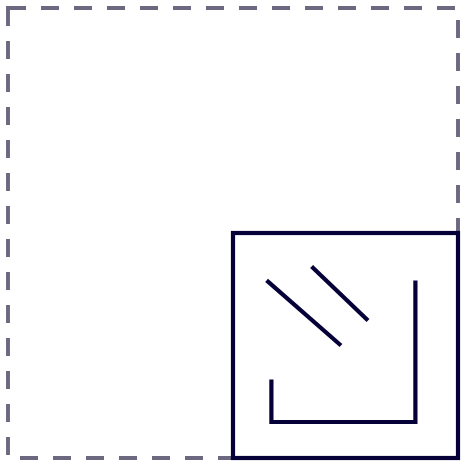
A paper is folded and punched as shown below. How will it appear when unfolded?
figure
figure
एक कागज़ को नीचे दर्शाए अनुसार मोड़ा और छेदा जाता है। खोलने पर वह कैसा दिखाई देगा?
figure
figure
  1. Afigure
  2. Bfigure
  3. Cfigure
  4. Dfigure
Show answer

Concept: Two folds → 4 layers; unfolding mirrors the mark across each fold line.

  1. Folds: top half down, then left half to the right → cut lies in the bottom-right quarter through 4 layers.
  2. Opening the vertical fold mirrors it left–right; opening the horizontal fold mirrors both copies up–down.
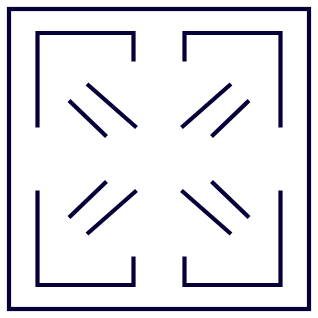
  3. So all 4 quarters carry the mark, each bracket opening towards the centre.
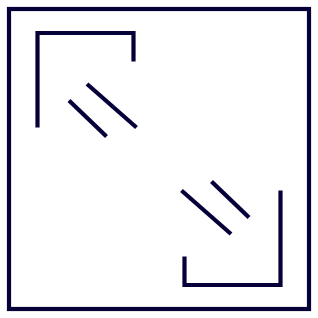
  4. (A) has only 2 copies, (C) all face up, (D) not mirrored → (B).

Trick: Mirror images across a fold always face each other – look for marks that 'point to the centre'.

Answer: (B) Figure (B)

अवधारणा: दो मोड़ → 4 परतें; खोलने पर हर मोड़ की रेखा पर दर्पण प्रतिबिंब।

हल:

  1. ऊपरी आधा नीचे, फिर बायाँ आधा दाएँ → कट नीचे-दाएँ चौथाई में 4 परतों पर।
  2. खड़ा मोड़ हटाते ही बाएँ-दाएँ उल्टी छवि, फिर आड़ा मोड़ हटाते ही ऊपर-नीचे उल्टी छवि।
  3. चारों भागों में निशान, हर ब्रैकेट केंद्र की ओर खुला।
  4. (A) में केवल 2 निशान, (C) में सब ऊपर की ओर, (D) प्रतिबिंब नहीं → (B)।

ट्रिक: मोड़ के दोनों ओर के प्रतिबिंब एक-दूसरे की ओर मुँह करते हैं – 'केंद्र की ओर' वाले निशान देखें।

उत्तर: (B) आकृति (B)

SSC GDGeneral Intelligence & ReasoningPaper folding and punchingSSC GD 2025 · 6 Feb Shift 2 →
Q3414.
What should come in place of the question mark (?) in the given series?
35 43 53 65 79 ?
दी गई शृंखला में प्रश्नवाचक चिह्न (?) के स्थान पर क्या आना चाहिए?
35 43 53 65 79 ?
  1. A95
  2. B112
  3. C103
  4. D107
Show answer

Concept: Differences are consecutive even numbers.

  1. Differences: 8, 10, 12, 14.
  2. Next difference = 16.
  3. ? = 79 + 16 = 95.

Trick: Second difference is constant (2), so next gap = last gap + 2.

Answer: (A) 95

अवधारणा: अंतर हर बार 2 बढ़ रहा है (8, 10, 12 …)।

हल:

  1. अंतर: 8, 10, 12, 14।
  2. अगला अंतर = 16।
  3. ? = 79 + 16 = 95।

ट्रिक: दूसरा अंतर स्थिर (2) है, इसलिए अगला अंतर = पिछला + 2।

उत्तर: (A) 95

SSC GDGeneral Intelligence & ReasoningNumber series – even differencesSSC GD 2025 · 6 Feb Shift 2 →
Q3415.
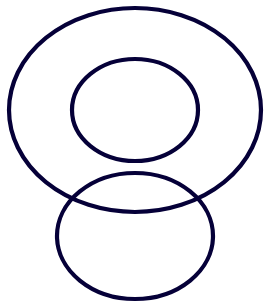
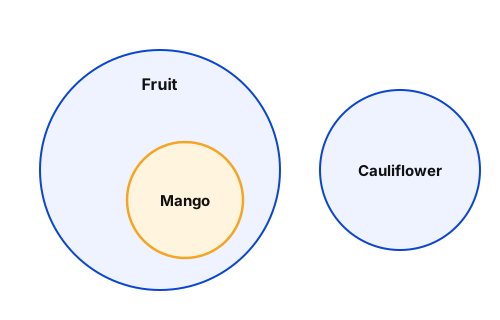
Select the Venn diagram that best illustrates the relationship among the following classes.
Mango, Fruit, Cauliflower
उस वेन आरेख का चयन कीजिए, जो निम्नलिखित वर्गों के बीच के संबंध को सर्वोत्तम रूप से दर्शाता है।
आम, फल, फूलगोभी
  1. Afigure
  2. Bfigure
  3. Cfigure
  4. Dfigure
Show answer

Concept: Subset goes inside its class; an unrelated class is drawn separately.

  1. Mango is a fruit → Mango circle inside Fruit circle.
  2. Cauliflower is a vegetable → no overlap with Fruit or Mango.
  3. Required: small circle inside a big one + one separate circle.

Trick: Ask 'is every A a B?' for each pair – yes means inside, no common member means separate.

Answer: (B) Figure (B)

अवधारणा: उपवर्ग अपने वर्ग के अंदर; असंबंधित वर्ग अलग बनाएँ।

हल:

  1. आम एक फल है → आम का वृत्त फल के वृत्त के अंदर।
  2. फूलगोभी सब्ज़ी है → फल या आम से कोई संबंध नहीं।
  3. आरेख: बड़े वृत्त में छोटा वृत्त + एक अलग वृत्त।

ट्रिक: हर जोड़ी पर पूछें 'क्या हर A, B है?' – हाँ = अंदर, कोई साझा सदस्य नहीं = अलग।

उत्तर: (B) आकृति (B)

SSC GDGeneral Intelligence & ReasoningVenn diagram – class relationSSC GD 2025 · 6 Feb Shift 2 →
Q3416.
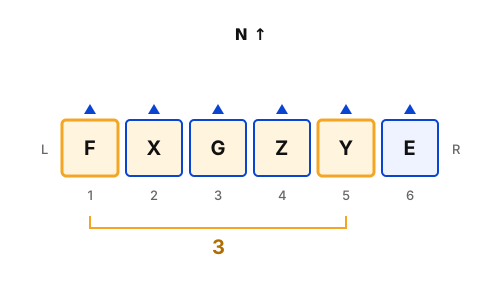
Six friends, E, F, G, X, Y and Z, are sitting in a row facing north (but not necessarily in the same order) . No one sits to the left of F. Only four people sit between F and E. Only three people sit to the left of Z. X sits to the immediate left of G. How many people sit between Y and F ?
छह मित्र E, F, G, X, Y और Z उत्तर की ओर मुख करके एक पंक्ति में बैठे हैं (आवश्यक नहीं कि इसी क्रम में)। F के बाईं ओर कोई नहीं बैठा है। F और E के बीच केवल चार व्यक्ति बैठे हैं। Z के बाईं ओर केवल तीन व्यक्ति बैठे हैं। X, G के ठीक बाईं ओर बैठा है। Y और F के बीच कितने व्यक्ति बैठे हैं?
  1. AThreeतीन
  2. BOneएक
  3. CFourचार
  4. DTwoदो
Show answer

Concept: Fix the end positions first, then fill pairs.

  1. No one left of F → F at seat 1; four between F and E → E at seat 6.
  2. Three to the left of Z → Z at seat 4.
  3. X immediately left of G → X = 2, G = 3; Y = 5.
  4. Between F(1) and Y(5): X, G, Z = 3.

Trick: People between seats a and b = |a − b| − 1 = 5 − 1 − 1 = 3.

Answer: (A) Three

अवधारणा: पहले किनारे के स्थान तय करें, फिर जोड़ियाँ भरें।

हल:

  1. F के बाएँ कोई नहीं → F = 1; F और E के बीच चार → E = 6।
  2. Z के बाएँ तीन → Z = 4।
  3. X, G के ठीक बाएँ → X = 2, G = 3; Y = 5।
  4. F(1) और Y(5) के बीच: X, G, Z = 3।

ट्रिक: स्थान a और b के बीच व्यक्ति = |a − b| − 1 = 3।

उत्तर: (A) तीन

SSC GDGeneral Intelligence & ReasoningLinear seating – single rowSSC GD 2025 · 6 Feb Shift 2 →
Q3417.
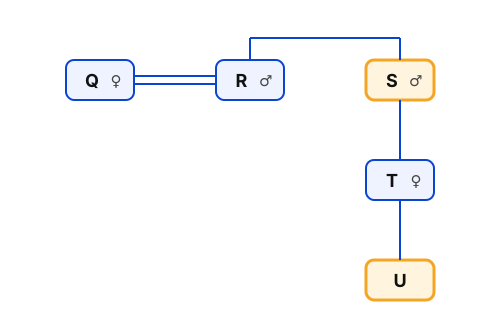
In a certain code language, ' A + B ' means ' A is the mother of B ', ' A − B ' means ' A is the brother of B ', ' A × B ' means ' A is the wife of B ' and ' A ÷ B ' means ' A is the father of B '.
Based on the above, how is S related to U if ' Q × R − S ÷ T + U '?
एक निश्चित कूट भाषा में, ' A + B ' का अर्थ है ' A, B की माता है ', ' A − B ' का अर्थ है ' A, B का भाई है ', ' A × B ' का अर्थ है ' A, B की पत्नी है ' तथा ' A ÷ B ' का अर्थ है ' A, B का पिता है '।
उपर्युक्त के आधार पर, यदि ' Q × R − S ÷ T + U ' है, तो S, U से किस प्रकार संबंधित है?
  1. ADaughterपुत्री
  2. BMother's husbandमाता का पति
  3. CMother's fatherमाता का पिता
  4. DBrother's wifeभाई की पत्नी
Show answer

Concept: Decode each symbol pair and build the family tree.

  1. Q × R: Q is R's wife. R − S: R is S's brother.
  2. S ÷ T: S is T's father. T + U: T is U's mother.
  3. So S is the father of U's mother → mother's father.

Trick: Only the last two links (S ÷ T + U) matter for S–U: father of the mother.

Answer: (C) Mother's father

अवधारणा: हर चिह्न को खोलकर वंश-वृक्ष बनाएँ।

हल:

  1. Q × R: Q, R की पत्नी; R − S: R, S का भाई।
  2. S ÷ T: S, T का पिता; T + U: T, U की माँ।
  3. S, U की माँ का पिता है → नाना (Mother's father)।

ट्रिक: S–U के लिए केवल आखिरी दो कड़ियाँ (S ÷ T + U) देखें: माँ का पिता।

उत्तर: (C) माता का पिता

SSC GDGeneral Intelligence & ReasoningCoded blood relationSSC GD 2025 · 6 Feb Shift 2 →
Q3418.
What should come in place of the question mark (?) in the given series based on the English alphabetical order ? DKC ZGY ? RYQ NUM
अंग्रेज़ी वर्णमाला क्रम के आधार पर दी गई शृंखला में प्रश्नवाचक चिह्न (?) के स्थान पर क्या आना चाहिए? DKC ZGY ? RYQ NUM
  1. AVCV
  2. BVDU
  3. CUDU
  4. DVCU
Show answer

Concept: Every letter moves 4 steps back from one term to the next.

  1. DKC → ZGY: D−4 = Z, K−4 = G, C−4 = Y.
  2. ZGY −4 → V C U.
  3. Check: VCU −4 → RYQ ✔, RYQ −4 → NUM ✔.

Trick: Use the last letters only: C, Y, ?, Q, M → Y−4 = U; then middle G−4 = C picks VCU.

Answer: (D) VCU

अवधारणा: हर पद में हर अक्षर 4 स्थान पीछे जाता है।

हल:

  1. DKC → ZGY: D−4 = Z, K−4 = G, C−4 = Y।
  2. ZGY −4 → V C U।
  3. जाँच: VCU −4 → RYQ ✔, RYQ −4 → NUM ✔।

ट्रिक: सिर्फ अंतिम अक्षर: Y−4 = U, फिर बीच का G−4 = C → VCU।

उत्तर: (D) VCU

SSC GDGeneral Intelligence & ReasoningLetter series – each letter −4SSC GD 2025 · 6 Feb Shift 2 →
Q3419.
SBFU is related to VDHX in a certain way based on the English alphabetical order. In the same way, HOXA is related to KQZD. To which of the given options is ZEPI related, following the same logic?
SBFU एक निश्चित प्रकार से अंग्रेज़ी वर्णमाला क्रम के आधार पर VDHX से संबंधित है। उसी प्रकार, HOXA का संबंध KQZD से है। इसी तर्क का अनुसरण करते हुए दिए गए विकल्पों में से ZEPI किससे संबंधित है?
  1. ACGRL
  2. BDHSN
  3. CDISK
  4. DBHTM
Show answer

Concept: Find the shift at each position and repeat it.

  1. SBFU → VDHX: +3, +2, +2, +3.
  2. HOXA → KQZD: +3, +2, +2, +3 ✔.
  3. ZEPI: Z+3 = C, E+2 = G, P+2 = R, I+3 = L → CGRL.

Trick: Z+3 wraps to C – only option (A) starts with C.

Answer: (A) CGRL

अवधारणा: हर स्थान का खिसकाव निकालें और दोहराएँ।

हल:

  1. SBFU → VDHX: +3, +2, +2, +3।
  2. HOXA → KQZD: +3, +2, +2, +3 ✔।
  3. ZEPI: Z+3 = C, E+2 = G, P+2 = R, I+3 = L → CGRL।

ट्रिक: Z+3 घूमकर C बनता है – केवल (A) C से शुरू होता है।

उत्तर: (A) CGRL

SSC GDGeneral Intelligence & ReasoningLetter analogy – +3, +2, +2, +3SSC GD 2025 · 6 Feb Shift 2 →
Q3420.
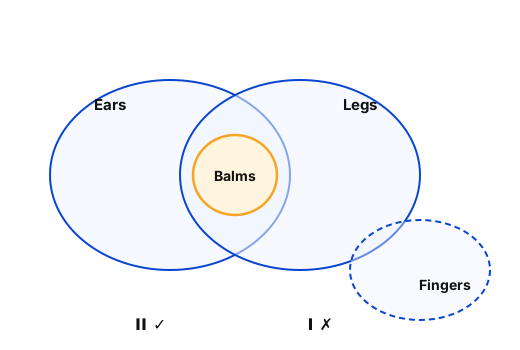
Read the given statements and conclusions carefully. Assuming that the information given in the statements is true, even if it appears to be at variance with commonly known facts, decide which of the given conclusions logically follow(s) from the statements.
Statements: All balms are ears.
All balms are legs.
Some legs are fingers.
Conclusions: (I): Some fingers are balms.
(II): Some legs are ears.
दिए गए कथनों और निष्कर्षों को ध्यानपूर्वक पढ़िए। यह मानते हुए कि कथनों में दी गई जानकारी सत्य है, चाहे वह सर्वज्ञात तथ्यों से भिन्न प्रतीत होती हो, निर्णय कीजिए कि दिए गए निष्कर्षों में से कौन-सा/से कथनों का तार्किक रूप से अनुसरण करता है/करते हैं।
कथन: सभी बाम कान हैं।
सभी बाम टाँगें हैं।
कुछ टाँगें उँगलियाँ हैं।
निष्कर्ष: (I): कुछ उँगलियाँ बाम हैं।
(II): कुछ टाँगें कान हैं।
  1. AOnly conclusion (II) follows.केवल निष्कर्ष (II) अनुसरण करता है।
  2. BOnly conclusion (I) follows.केवल निष्कर्ष (I) अनुसरण करता है।
  3. CNeither conclusion (I) nor (II) follows.न तो निष्कर्ष (I) और न ही (II) अनुसरण करता है।
  4. DBoth conclusions (I) and (II) follow.निष्कर्ष (I) और (II) दोनों अनुसरण करते हैं।
Show answer

Concept: A conclusion follows only if it is true in every possible diagram.

  1. All balms are ears and all balms are legs → balms lie inside both legs and ears.
  2. I: Fingers touch only legs; they may miss balms → 'Some fingers are balms' does not follow.
  3. II: Balms are common to legs and ears → 'Some legs are ears' follows.

Trick: Two 'All' statements with the same subject (All A are B, All A are C) always give 'Some B are C'.

Answer: (A) Only conclusion (II) follows.

अवधारणा: निष्कर्ष तभी सही है जब वह हर संभव आरेख में सत्य हो।

हल:

  1. सभी balms, ears भी हैं और legs भी → balms दोनों के अंदर।
  2. I: fingers केवल legs से जुड़े हैं, balms से अलग रह सकते हैं → नहीं निकलता।
  3. II: balms, legs और ears दोनों में हैं → 'कुछ legs, ears हैं' निकलता है।

ट्रिक: एक ही विषय वाले दो 'सभी' कथन (सभी A, B हैं; सभी A, C हैं) से हमेशा 'कुछ B, C हैं' निकलता है।

उत्तर: (A) केवल निष्कर्ष (II) अनुसरण करता है।

SSC GDGeneral Intelligence & ReasoningSyllogismSSC GD 2025 · 6 Feb Shift 2 →