Question bank

Q&A: practice questions with answers

Search questions on any topic. Filter by exam category, exam, subject and topic, try the question, then open the answer and explanation.

Courses – airGurukul

4,200 questions found.

Q3501.
Select the combination of letters that when sequentially placed in the blanks of the given series, will logically complete the series.
_NJOK_LQMR_SOTP_QVR_
उस अक्षर-संयोजन का चयन कीजिए, जिसे दी गई शृंखला के रिक्त स्थानों में क्रमवार रखने पर शृंखला तार्किक रूप से पूर्ण हो जाएगी।
_NJOK_LQMR_SOTP_QVR_
  1. AHOQVX
  2. BIPNUW
  3. CIONVQ
  4. DHPQUX
Show answer

Concept: Split the 20-letter series into 5 blocks of 4; each block is the previous one shifted forward.

  1. Blocks: _NJO | K_LQ | MR_S | OTP_ | QVR_.
  2. Each letter of a block moves +2 in the next block: N→P→R→T→V, J→L→N→P→R, O→Q→S→U→W.
  3. So blocks are INJO, KPLQ, MRNS, OTPU, QVRW.
  4. Missing letters in order: I, P, N, U, W.

Trick: 20 letters → try 4-letter blocks first; check only the first column (?, K, M, O, Q = +2 steps) to get I quickly, then match options starting with I and P.

Answer: (B) IPNUW

अवधारणा: 20 अक्षरों को 4-4 के 5 समूहों में बाँटें; हर समूह पिछले समूह से आगे खिसकता है।

हल:

  1. समूह: _NJO | K_LQ | MR_S | OTP_ | QVR_
  2. हर अक्षर अगले समूह में +2 बढ़ता है: N→P→R→T→V, O→Q→S→U→W।
  3. पूरे समूह: INJO, KPLQ, MRNS, OTPU, QVRW।
  4. रिक्त अक्षर क्रम से: I, P, N, U, W।

ट्रिक: पहले कॉलम (?, K, M, O, Q) में +2 का क्रम है, अतः पहला अक्षर I; फिर दूसरा P वाला विकल्प चुनें।

उत्तर: (B) IPNUW
SSC GDGeneral Intelligence & ReasoningLetter series – blanks in repeating blocksSSC GD 2025 · 6 Feb Shift 1 →
Q3502.
The position(s) of how many letters will remain unchanged if each of the letters in the word TREASURE is arranged in the reverse English alphabetical order?
यदि शब्द TREASURE के प्रत्येक अक्षर को विपरीत अंग्रेज़ी वर्णानुक्रम में व्यवस्थित किया जाए, तो कितने अक्षरों का स्थान अपरिवर्तित रहेगा?
  1. AOneएक
  2. BTwoदो
  3. CThreeतीन
  4. DZeroशून्य
Show answer

Concept: Arrange the letters from Z towards A and compare each position with the original word.

  1. Word: TREASURE → descending order: UTSRREEA.
  2. Position check: 1st T vs U, 2nd R vs T, 3rd E vs S, 4th A vs R, 5th S vs R, 6th U vs E, 7th R vs E, 8th E vs A.
  3. No position keeps its letter → zero.

Trick: The biggest letter U must come first and the smallest A last; since the word starts with T and ends with E, both ends already change – then scan the middle only.

Answer: (D) Zero

अवधारणा: अक्षरों को Z से A की ओर लगाकर हर स्थान को मूल शब्द से मिलाएँ।

हल:

  1. शब्द TREASURE → उल्टा वर्णक्रम: UTSRREEA
  2. स्थानवार: पहला T बनाम U, दूसरा R बनाम T, तीसरा E बनाम S, चौथा A बनाम R, पाँचवाँ S बनाम R, छठा U बनाम E, सातवाँ R बनाम E, आठवाँ E बनाम A।
  3. कोई अक्षर अपने स्थान पर नहीं रहा → शून्य।

ट्रिक: सबसे बड़ा अक्षर U पहले और सबसे छोटा A अंत में आएगा; इसलिए दोनों सिरे तुरंत बदल जाते हैं, फिर केवल बीच वाले अक्षर जाँचें।

उत्तर: (D) शून्य

SSC GDGeneral Intelligence & ReasoningLetter rearrangement – reverse alphabetical orderSSC GD 2025 · 6 Feb Shift 1 →
Q3503.
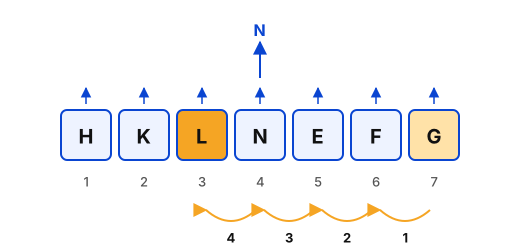
Seven people, E, F, G, H, K, L and N, are sitting in a row facing north (but not necessarily in the same order) .No one sits to the left of H. Only four people sit between H and F. Only three people sit to the right of N. K sits to the immediate left of L. G is not an immediate neighbour of N. Who sits fourth to the left of G?
सात व्यक्ति E, F, G, H, K, L और N एक पंक्ति में उत्तर की ओर मुख करके बैठे हैं (आवश्यक नहीं कि इसी क्रम में)। H के बाईं ओर कोई नहीं बैठा है। H और F के बीच केवल चार व्यक्ति बैठे हैं। N के दाईं ओर केवल तीन व्यक्ति बैठे हैं। K, L के ठीक बाईं ओर बैठा है। G, N का निकटतम पड़ोसी नहीं है। G के बाईं ओर चौथे स्थान पर कौन बैठा है?
  1. AL
  2. BE
  3. CK
  4. DN
Show answer

Concept: Fix the people with definite seats first (seats 1–7 from left), then place the pairs.

  1. Nobody left of H → H = 1. Three people right of N → N = 4.
  2. Four people between H and F → F = 6.
  3. K immediately left of L → only free pair 2–3: K = 2, L = 3.
  4. G not next to N → G = 7, E = 5. Order: H K L N E F G.
  5. Fourth to the left of G (seat 7) = seat 3 = L.

Trick: Facing north, 'x-th to the left' simply means subtract x from the seat number: 7 − 4 = 3.

Answer: (A) L

अवधारणा: पहले निश्चित स्थान वाले व्यक्तियों को बैठाएँ (बाएँ से सीट 1–7), फिर जोड़ों को रखें।

हल:

  1. H के बाएँ कोई नहीं → H = 1; N के दाएँ तीन → N = 4।
  2. H और F के बीच चार → F = 6।
  3. K, L के ठीक बाएँ → खाली जोड़ी 2–3: K = 2, L = 3।
  4. G, N का पड़ोसी नहीं → G = 7, E = 5। क्रम: H K L N E F G
  5. G (सीट 7) के बाएँ चौथा = सीट 3 = L।

ट्रिक: उत्तरमुखी पंक्ति में 'बाएँ x-वाँ' = सीट संख्या में से x घटाएँ: 7 − 4 = 3।

उत्तर: (A) L

SSC GDGeneral Intelligence & ReasoningLinear seating – row facing northSSC GD 2025 · 6 Feb Shift 1 →
Q3504.
In a certain code language, 'can I go' is coded as 'pr nt gs' and 'he can swim' is coded as 'li ed pr'. How is 'can' coded in the given language?
एक निश्चित कूट भाषा में 'can I go' को 'pr nt gs' के रूप में तथा 'he can swim' को 'li ed pr' के रूप में कूटबद्ध किया जाता है। उसी भाषा में 'can' को किस प्रकार कूटबद्ध किया जाएगा?
  1. Aed
  2. Bpr
  3. Cgs
  4. Dnt
Show answer

Concept: A word repeated in two sentences gets the code repeated in both coded groups.

  1. 'can I go' → pr nt gs; 'he can swim' → li ed pr.
  2. Common word: can. Common code: pr.
  3. Hence can = pr.

Trick: Just look for the one code present in both groups – no need to decode the other words.

Answer: (B) pr

अवधारणा: दो वाक्यों में जो शब्द दोहराया गया है, उसका कोड दोनों कोड-समूहों में दोहराया जाता है।

हल:

  1. 'can I go' → pr nt gs; 'he can swim' → li ed pr।
  2. समान शब्द: can; समान कोड: pr।
  3. अतः can = pr।

ट्रिक: सिर्फ वह कोड ढूँढें जो दोनों समूहों में हो – बाकी शब्द हल करने की ज़रूरत नहीं।

उत्तर: (B) pr

SSC GDGeneral Intelligence & ReasoningCoding – common word, common codeSSC GD 2025 · 6 Feb Shift 1 →
Q3505.
What should come in place of the question mark (?) in the given series?
12, 31, 59, 114, 214, ?
दी गई शृंखला में प्रश्नवाचक चिह्न (?) के स्थान पर क्या आना चाहिए?
12, 31, 59, 114, 214, ?
  1. A368
  2. B307
  3. C377
  4. D386
Show answer

Concept: When first differences are irregular, check the differences of the differences.

  1. First differences: 19, 28, 55, 100.
  2. Second differences: 9, 27, 45 → increasing by 18.
  3. Next second difference = 63 → next first difference = 100+63=163.
  4. ? = 214+163=377.

Trick: 9, 27, 45 are 9×1,9×3,9×5 – odd multiples of 9, so the next is 9×7=63.

Answer: (C) 377

अवधारणा: पहले अंतर अनियमित हों तो अंतरों का अंतर देखें।

हल:

  1. पहले अंतर: 19, 28, 55, 100
  2. दूसरे अंतर: 9, 27, 45 → हर बार 18 अधिक।
  3. अगला दूसरा अंतर 63 → अगला पहला अंतर 100+63=163।
  4. ? = 214+163=377

ट्रिक: 9, 27, 45 = 9×1,9×3,9×5 (विषम गुणज), अगला 9×7=63।

उत्तर: (C) 377

SSC GDGeneral Intelligence & ReasoningNumber series – second differencesSSC GD 2025 · 6 Feb Shift 1 →
Q3506.
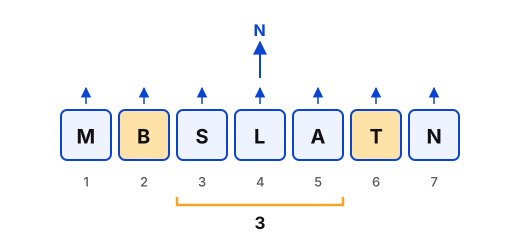
Seven people, A, B, L, M, N, S and T, are sitting in a row, facing north(but not necessarily in the same order). No one sits to the right of N. Only three people sit between N and S . Only two people sit between S and T. M sits third to the left of L. A sits to the immediate right of L.
How many people sit between B and T?
सात व्यक्ति A, B, L, M, N, S और T एक पंक्ति में उत्तर की ओर मुख करके बैठे हैं (आवश्यक नहीं कि इसी क्रम में)। N के दाईं ओर कोई नहीं बैठा है। N और S के बीच केवल तीन व्यक्ति बैठे हैं। S और T के बीच केवल दो व्यक्ति बैठे हैं। M, L के बाईं ओर तीसरे स्थान पर बैठा है। A, L के ठीक दाईं ओर बैठा है।
B और T के बीच कितने व्यक्ति बैठे हैं?
  1. ATwoदो
  2. BThreeतीन
  3. COneएक
  4. DFourचार
Show answer

Concept: Number seats 1–7 from the left; place fixed people first.

  1. Nobody right of N → N = 7. Three between N and S → S = 3.
  2. Two between S and T → T = 6.
  3. M third left of L with A just right of L → M = 1, L = 4, A = 5; B = 2.
  4. Order: M B S L A T N. Between B (2) and T (6): S, L, A = 3 people.

Trick: People between seats p and q = |p − q| − 1 = 6 − 2 − 1 = 3.

Answer: (B) Three

अवधारणा: बाएँ से सीट 1–7 मानें; पहले निश्चित व्यक्ति बैठाएँ।

हल:

  1. N के दाएँ कोई नहीं → N = 7; N और S के बीच तीन → S = 3।
  2. S और T के बीच दो → T = 6।
  3. M, L के बाएँ तीसरा और A, L के ठीक दाएँ → M = 1, L = 4, A = 5; B = 2।
  4. क्रम: M B S L A T N; B (2) और T (6) के बीच S, L, A = 3 व्यक्ति।

ट्रिक: सीट p और q के बीच व्यक्ति = |p − q| − 1 = 6 − 2 − 1 = 3।

उत्तर: (B) तीन

SSC GDGeneral Intelligence & ReasoningLinear seating – people between two personsSSC GD 2025 · 6 Feb Shift 1 →
Q3507.
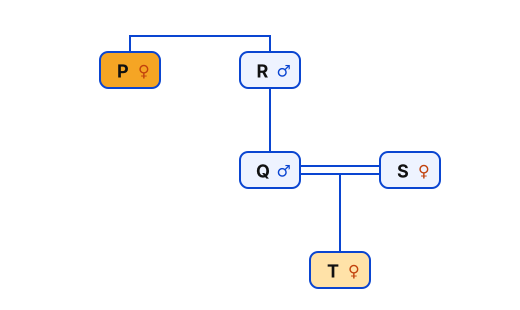
P is the sister of R. R is the father of Q. S is the wife of Q. T is the daughter of S. How is P related to T?
P, R की बहन है। R, Q का पिता है। S, Q की पत्नी है। T, S की पुत्री है। P का T से क्या संबंध है?
  1. AFather's motherपिता की माता
  2. BFather's father's sisterपिता के पिता की बहन
  3. CFather's father's motherपिता के पिता की माता
  4. DFather's mother's sisterपिता की माता की बहन
Show answer

Concept: Climb from T upward one generation at a time.

  1. T is daughter of S, and S is Q's wife → Q is T's father.
  2. R is Q's father → R is T's father's father.
  3. P is R's sister → P = T's father's father's sister.

Trick: Start from the person named last (T) and move up the chain; each 'father' link adds one generation.

Answer: (B) Father's father's sister

अवधारणा: T से शुरू करके एक-एक पीढ़ी ऊपर चढ़ें।

हल:

  1. T की माँ S है और S का पति Q → Q ही T का पिता।
  2. R, Q का पिता → R = T का दादा।
  3. P, R की बहन → P = T के दादा की बहन।

ट्रिक: जिसके संबंध में पूछा है (T) वहीं से श्रृंखला ऊपर की ओर पढ़ें।

उत्तर: (B) पिता के पिता की बहन

SSC GDGeneral Intelligence & ReasoningBlood relation – tracing the generationsSSC GD 2025 · 6 Feb Shift 1 →
Q3508.
ER 32 is related to DS 34 in a certain way. In the same way, XW 54 is related to WX 56. To which of the given options is ZB 78 related, following the same logic?
ER 32 एक निश्चित प्रकार से DS 34 से संबंधित है। उसी प्रकार, XW 54, WX 56 से संबंधित है। समान तर्क का अनुसरण करते हुए, ZB 78 दिए गए विकल्पों में से किससे संबंधित है?
  1. AYC 80
  2. BYA 78
  3. CYA 80
  4. DYA 79
Show answer

Concept: Treat each letter and the number as separate parts with their own fixed change.

  1. ER 32 → DS 34: E−1 = D, R+1 = S, 32+2 = 34.
  2. XW 54 → WX 56: X−1 = W, W+1 = X, 54+2 = 56 ✓.
  3. ZB 78 → Z−1 = Y, B+1 = C, 78+2 = 80 → YC 80.

Trick: Number +2 leaves only YC 80 and YA 80; second letter must move forward (B→C), so YC 80.

Answer: (A) YC 80

अवधारणा: पहले अक्षर, दूसरे अक्षर और अंक – तीनों का नियम स्वतंत्र रूप से देखें।

हल:

  1. ER 32 → DS 34: E−1 = D, R+1 = S, 32+2 = 34।
  2. XW 54 → WX 56: X−1 = W, W+1 = X, 54+2 = 56 ✓
  3. ZB 78 → Y, C, 80 → YC 80।

ट्रिक: संख्या +2 से YC 80 और YA 80 बचते हैं; दूसरा अक्षर आगे बढ़ता है (B→C), अतः YC 80।

उत्तर: (A) YC 80

SSC GDGeneral Intelligence & ReasoningAnalogy – letter and number shiftsSSC GD 2025 · 6 Feb Shift 1 →
Q3509.
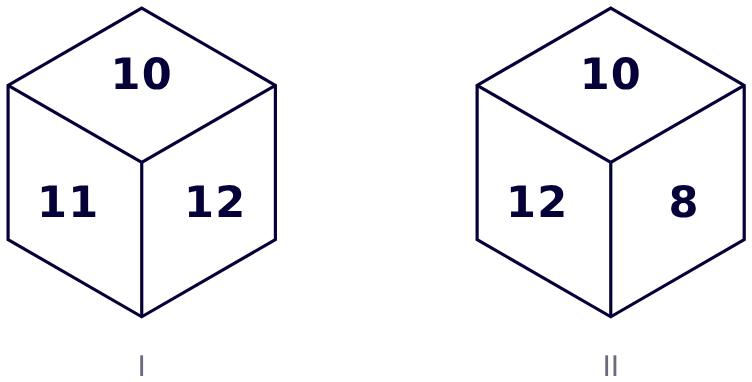
Two different positions of the same dice are given below. Which is the number on the face opposite to the face containing 11?
figure
एक ही पासे की दो भिन्न स्थितियाँ नीचे दी गई हैं। 11 अंक वाले फलक के विपरीत फलक पर कौन-सी संख्या है?
figure
  1. A8
  2. B7
  3. C10
  4. D9
Show answer

Concept: If the same face stays on top in both views, the four side faces just rotate in a ring.

  1. 10 is on top in both views → bottom fixed, only sides turn.
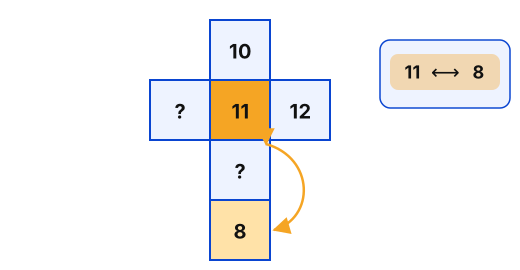
  2. View I: 11 then 12 around the side; view II: 12 then 8.
  3. Side ring order: 11 → 12 → 8 → (fourth face).
  4. In a 4-face ring, alternate faces are opposite → 11 opposite 8.

Trick: Common top face → write the side faces in sequence; the face two steps away is the opposite.

Answer: (A) 8

अवधारणा: दोनों स्थितियों में ऊपर वाला फलक एक ही हो तो चारों पार्श्व फलक एक चक्र में घूमते हैं।

हल:

  1. दोनों में 10 ऊपर है → नीचे वाला फलक भी वही, केवल पार्श्व घूमे।
  2. स्थिति I: 11 के बाद 12; स्थिति II: 12 के बाद 8।
  3. पार्श्व क्रम: 11 → 12 → 8 → (चौथा)।
  4. चार के चक्र में एक छोड़कर वाला फलक विपरीत → 11 के विपरीत 8।

ट्रिक: ऊपर समान हो तो पार्श्व फलकों को क्रम में लिखें; दो कदम दूर वाला विपरीत होगा।

उत्तर: (A) 8

SSC GDGeneral Intelligence & ReasoningDice – opposite face from two positionsSSC GD 2025 · 6 Feb Shift 1 →
Q3510.
Select the Venn diagram that best illustrate the relationship between the following classes.
Grapes, Green, Table
उस वेन आरेख का चयन कीजिए, जो निम्नलिखित वर्गों के बीच संबंध को सर्वोत्तम रूप से दर्शाता है।
अंगूर, हरा, मेज़
  1. Afigure
  2. Bfigure
  3. Cfigure
  4. Dfigure
Show answer

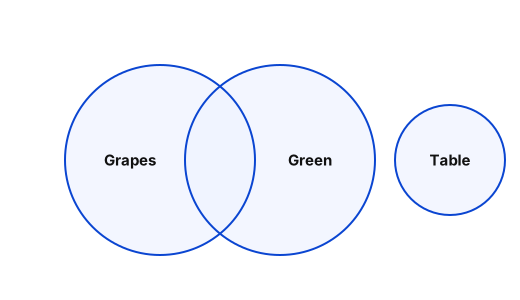
Concept: Check each pair of classes: partial overlap, inside, or totally separate.

  1. Grapes & Green: some grapes are green, many green things aren't grapes → overlapping circles.
  2. Grapes & Table: no relation → separate.
  3. So: two intersecting circles + one independent circle, as in option (c).

Trick: Pick the odd class first (Table has nothing to do with grapes/colour) – it must be a stand-alone circle; eliminate options where it touches others.

Answer: (C) the given figure

अवधारणा: हर दो वर्गों का संबंध देखें: आंशिक मेल, अंदर, या बिल्कुल अलग।

हल:

  1. अंगूर और हरा: कुछ अंगूर हरे होते हैं, हर हरी चीज़ अंगूर नहीं → प्रतिच्छेदी वृत्त।
  2. मेज़ का अंगूर से कोई संबंध नहीं → अलग वृत्त।
  3. अतः दो कटते वृत्त + एक अलग वृत्त, जो विकल्प (c) में है।

ट्रिक: असंबंधित वर्ग (मेज़) पहले पहचानें – वह अलग वृत्त होगा; जहाँ वह दूसरों को छूता है वे विकल्प हटाएँ।

उत्तर: (C) दिया गया चित्र

SSC GDGeneral Intelligence & ReasoningVenn diagram – Grapes, Green, TableSSC GD 2025 · 6 Feb Shift 1 →
Q3511.
Read the given statements and conclusions carefully. Assuming that the information given in the statements is true, even if it appears to be at variance with commonly known facts, decide which of the given conclusions logically follow(s) from the statements.
Statements:
All tops are bags.
Some bags are cats.
No cat is a dog.
Conclusions:
(I): No top is a dog.
(II): Some cats are tops.
दिए गए कथनों और निष्कर्षों को ध्यानपूर्वक पढ़िए। यह मानते हुए कि कथनों में दी गई जानकारी सत्य है, चाहे वह सर्वज्ञात तथ्यों से भिन्न प्रतीत होती हो, निर्णय कीजिए कि दिए गए निष्कर्षों में से कौन-सा/से निष्कर्ष कथनों का तार्किक रूप से अनुसरण करता है/करते हैं।
कथन:
सभी टॉप, बैग हैं।
कुछ बैग, बिल्लियाँ हैं।
कोई बिल्ली, कुत्ता नहीं है।
निष्कर्ष:
(I): कोई टॉप, कुत्ता नहीं है।
(II): कुछ बिल्लियाँ, टॉप हैं।
  1. ANeither conclusion (I) nor (II) follows.न तो निष्कर्ष (I) और न ही (II) अनुसरण करता है।
  2. BBoth conclusion (I) and (II) follows.निष्कर्ष (I) और (II) दोनों अनुसरण करते हैं।
  3. COnly conclusion (I) follows.केवल निष्कर्ष (I) अनुसरण करता है।
  4. DOnly conclusion (II) follows.केवल निष्कर्ष (II) अनुसरण करता है।
Show answer

Concept: A conclusion follows only if it is true in every possible diagram.

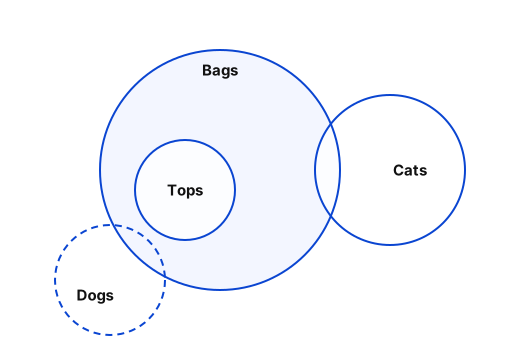
  1. Tops ⊂ Bags; Cats overlap Bags; Cats and Dogs are disjoint.
  2. Dogs are not linked to Tops at all, so 'No top is a dog' is not certain → I fails.
  3. Cats may touch only the non-top part of Bags, so 'Some cats are tops' is not certain → II fails.

Trick: Two 'some/all' chains joined through the middle term (bags) by 'some' give no definite link – such conclusions never follow.

Answer: (A) Neither conclusion (I) nor (II) follows.

अवधारणा: निष्कर्ष तभी सही है जब हर संभव आरेख में सत्य हो।

हल:

  1. Tops पूरी तरह Bags में; Cats का Bags से आंशिक मेल; Cats और Dogs अलग।
  2. Dogs का Tops से कोई सीधा संबंध नहीं → 'कोई top dog नहीं' निश्चित नहीं → I गलत।
  3. Cats, Bags के उस भाग में हो सकती हैं जो Tops नहीं → II भी निश्चित नहीं।

ट्रिक: बीच के पद (bags) से 'some' द्वारा जुड़े दो वर्गों में कोई निश्चित संबंध नहीं बनता।

उत्तर: (A) न तो निष्कर्ष (I) और न ही (II) अनुसरण करता है।

SSC GDGeneral Intelligence & ReasoningSyllogism – possibility casesSSC GD 2025 · 6 Feb Shift 1 →
Q3512.
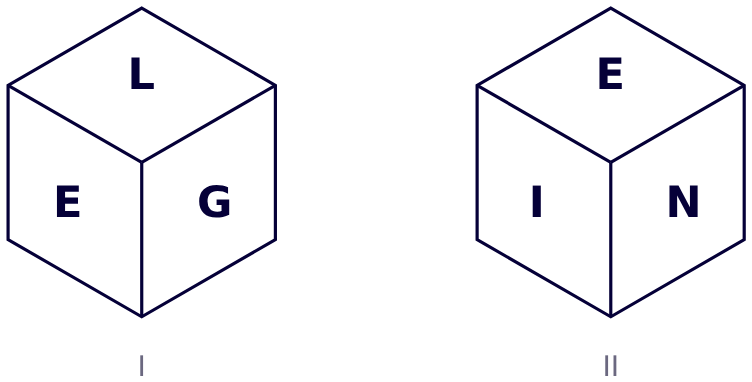
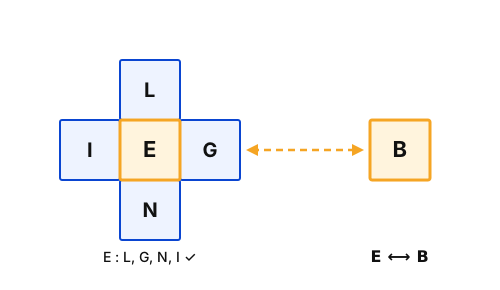
A dice has its faces marked by letters B, G, N, E, I and L. Two positions of the same dice are shown in the given figures. Which face is opposite to face B?
figure
एक पासे के फलकों पर अक्षर B, G, N, E, I और L अंकित हैं। दी गई आकृतियों में एक ही पासे की दो स्थितियाँ दर्शाई गई हैं। फलक B के विपरीत कौन-सा फलक है?
figure
  1. AI
  2. BE
  3. CG
  4. DN
Show answer

Concept: A face adjacent to four of the remaining five faces must be opposite the fifth.

  1. View I: L, E, G seen together → E touches L and G.
  2. View II: E, I, N seen together → E touches I and N.
  3. E touches L, G, I, N → the only face left, B, is opposite E.

Trick: Find the letter common to both views and list all its neighbours; the missing letter is its opposite.

Answer: (B) E

अवधारणा: जो फलक बाकी पाँच में से चार को छूता है, वह पाँचवें के विपरीत होता है।

हल:

  1. स्थिति I: L, E, G साथ → E, L और G से सटा।
  2. स्थिति II: E, I, N साथ → E, I और N से सटा।
  3. E के पड़ोसी L, G, I, N → बचा B, अतः B के विपरीत E।

ट्रिक: दोनों स्थितियों में उभयनिष्ठ अक्षर के सभी पड़ोसी लिखें; जो छूट जाए वही विपरीत।

उत्तर: (B) E

SSC GDGeneral Intelligence & ReasoningDice – face touching four othersSSC GD 2025 · 6 Feb Shift 1 →
Q3513.
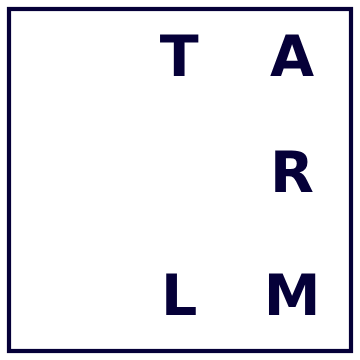
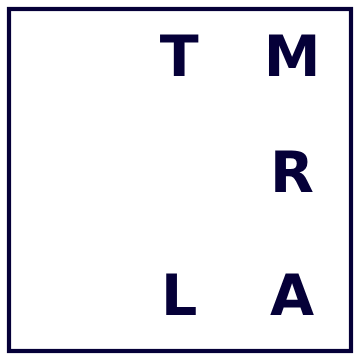
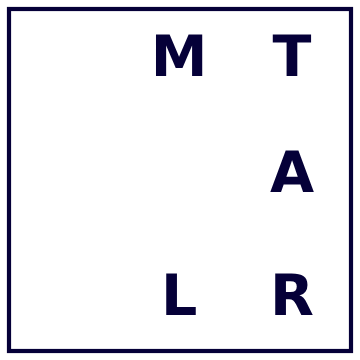
Identify the figure given in the options which when put in place of the question mark (?) will logically complete the series.
figure
उस आकृति की पहचान कीजिए, जिसे विकल्पों में से प्रश्नवाचक चिह्न (?) के स्थान पर रखने पर शृंखला तार्किक रूप से पूर्ण हो जाएगी।
figure
  1. Afigure
  2. Bfigure
  3. Cfigure
  4. Dfigure
Show answer

Concept: Track two things: how many letters appear and which way the block moves.

  1. The letters sit on the 8 border spots of the square.
  2. Each figure adds one letter: R, RA, MRA, MRAT → next has 5 letters (LMRAT).
  3. The block's starting spot shifts one step anticlockwise each time.
  4. Figure 5 starts at bottom-centre: L, M, R, A, T going anticlockwise → option (a).

Trick: First eliminate options without five letters, then check only the position of the first letter.

Answer: (A) the given figure

अवधारणा: दो बातें देखें: अक्षरों की संख्या और समूह की दिशा।

हल:

  1. अक्षर वर्ग के किनारे की 8 जगहों पर बैठते हैं।
  2. हर आकृति में एक अक्षर जुड़ता है: R, RA, MRA, MRAT → अगली में 5 अक्षर (LMRAT)।
  3. समूह हर बार एक स्थान वामावर्त खिसकता है।
  4. आकृति 5 नीचे-मध्य से शुरू: L, M, R, A, T वामावर्त → विकल्प (a)।

ट्रिक: पहले 5 अक्षर न रखने वाले विकल्प हटाएँ, फिर केवल पहले अक्षर की स्थिति जाँचें।

उत्तर: (A) दिया गया चित्र

SSC GDGeneral Intelligence & ReasoningFigure series – letters moving round a borderSSC GD 2025 · 6 Feb Shift 1 →
Q3514.
Based on the English alphabetical order, three of the following four letter-clusters are alike in a certain way and thus form a group. Which letter-cluster DOES NOT belong to that group?
(Note: The odd one out is not based on the number of consonants/vowels or their position in the letter-cluster.)
अंग्रेज़ी वर्णानुक्रम के आधार पर, निम्नलिखित चार अक्षर-समूहों में से तीन एक निश्चित प्रकार से समान हैं और इस प्रकार एक समूह बनाते हैं। कौन-सा अक्षर-समूह उस समूह से संबंधित नहीं है?
(नोट: विषम अक्षर-समूह, अक्षर-समूह में व्यंजनों/स्वरों की संख्या या उनकी स्थिति पर आधारित नहीं है।)
  1. AWXQ
  2. BJMS
  3. CEHN
  4. DKNT
Show answer

Concept: Convert letters to positions and compare the gaps within each cluster.

  1. JMS: 10, 13, 19 → +3, +6
  2. EHN: 5, 8, 14 → +3, +6
  3. KNT: 11, 14, 20 → +3, +6
  4. WXQ: 23, 24, 17 → +1, −7 → odd one.

Trick: Use EJOTY (5, 10, 15, 20, 25) to get positions instantly: J = 10, T = 20, etc.

Answer: (A) WXQ

अवधारणा: अक्षरों को स्थान-मान में बदलकर समूह के भीतर अंतर देखें।

हल:

  1. JMS: 10, 13, 19 → +3, +6
  2. EHN: 5, 8, 14 → +3, +6
  3. KNT: 11, 14, 20 → +3, +6
  4. WXQ: 23, 24, 17 → +1, −7 → भिन्न।

ट्रिक: EJOTY (5, 10, 15, 20, 25) याद रखें – स्थान-मान तुरंत मिलेंगे।

उत्तर: (A) WXQ

SSC GDGeneral Intelligence & ReasoningOdd one out – letter gapsSSC GD 2025 · 6 Feb Shift 1 →
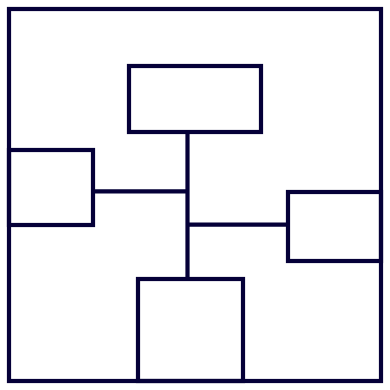
Q3515.
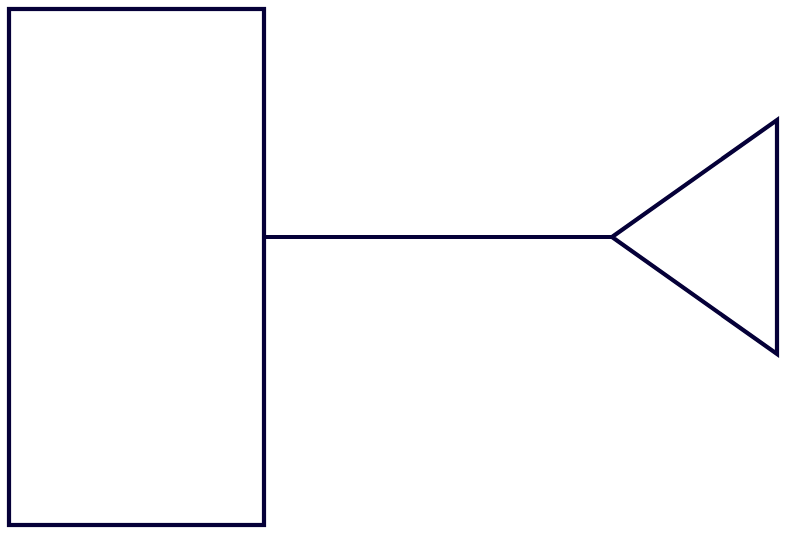
Select the option in which the given figure (X) is embedded (rotation is NOT allowed).
figure
उस विकल्प का चयन कीजिए, जिसमें दी गई आकृति (X) अंतर्निहित है (घुमाने की अनुमति नहीं है)।
figure
  1. Afigure
  2. Bfigure
  3. Cfigure
  4. Dfigure
Show answer

Concept: Without rotating, find the exact shape (same size and direction) hidden in an option.

  1. Figure X: a tall rectangle joined by a horizontal line to a triangle pointing left.
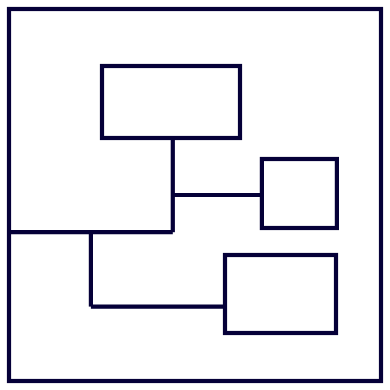
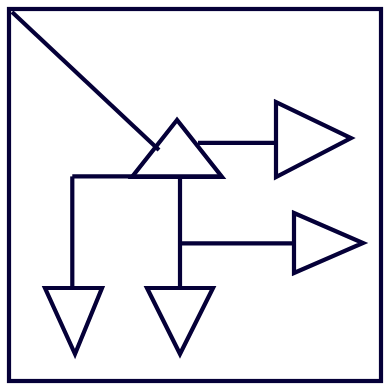
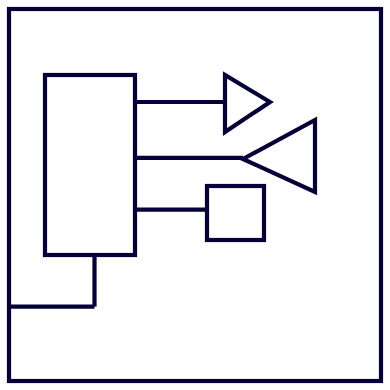
  2. (a) and (d) have no triangle; triangles in (b) face other directions.
  3. Option (c) contains the rectangle–line–left-pointing-triangle exactly.

Trick: Spot the most distinctive part (here the left-facing triangle) and reject every option where it is missing or turned.

Answer: (C) the given figure

अवधारणा: बिना घुमाए वही आकृति (उसी आकार व दिशा में) विकल्प में ढूँढें।

हल:

  1. आकृति X: लंबा आयत, क्षैतिज रेखा से बाईं ओर नोक वाले त्रिभुज से जुड़ा।
  2. (a) और (d) में त्रिभुज नहीं; (b) के त्रिभुज दूसरी दिशा में।
  3. (c) में आयत–रेखा–बाएँ नोक वाला त्रिभुज ठीक वैसा ही है।

ट्रिक: सबसे खास हिस्सा (बाईं ओर मुड़ा त्रिभुज) पहचानें और जिन विकल्पों में वह नहीं या घूमा है, उन्हें हटाएँ।

उत्तर: (C) दिया गया चित्र

SSC GDGeneral Intelligence & ReasoningEmbedded figureSSC GD 2025 · 6 Feb Shift 1 →
Q3516.
What should come in place of the question mark (?) in the given series? 673, 670, 664, 655, 643, ?
दी गई शृंखला में प्रश्नवाचक चिह्न (?) के स्थान पर क्या आना चाहिए? 673, 670, 664, 655, 643, ?
  1. A632
  2. B625
  3. C628
  4. D630
Show answer

Concept: Find how much is subtracted each time.

  1. 673 − 3 = 670, 670 − 6 = 664, 664 − 9 = 655, 655 − 12 = 643.
  2. Subtracted amounts: 3, 6, 9, 12 (multiples of 3) → next 15.
  3. ? = 643 − 15 = 628.

Trick: Differences are the 3-table; the answer must be 643 minus a multiple of 3 – only 628 fits (643 − 628 = 15).

Answer: (C) 628

अवधारणा: हर बार कितना घटाया गया, देखें।

हल:

  1. 673 → 670 → 664 → 655 → 643
  2. हर कदम पर कमी: 3, 6, 9, 12 → अगली कमी 15।
  3. ? = 643 − 15 = 628

ट्रिक: अंतर 3 का पहाड़ा है; विकल्पों में से 643 − 628 = 15 ही सही बैठता है।

उत्तर: (C) 628

SSC GDGeneral Intelligence & ReasoningNumber series – decreasing differencesSSC GD 2025 · 6 Feb Shift 1 →
Q3517.
What should come in place of the question mark (?) in the given series based on the English alphabetical order? CEA, GIE, KMI, OQM, ?
अंग्रेज़ी वर्णानुक्रम के आधार पर दी गई शृंखला में प्रश्नवाचक चिह्न (?) के स्थान पर क्या आना चाहिए? CEA, GIE, KMI, OQM, ?
  1. ASUQ
  2. BRUQ
  3. CUSQ
  4. DSVQ
Show answer

Concept: Compare the same position across consecutive terms.

  1. 1st letters: C, G, K, O (+4) → S
  2. 2nd letters: E, I, M, Q (+4) → U
  3. 3rd letters: A, E, I, M (+4) → Q
  4. Next term: SUQ.

Trick: Within each term the pattern is +2, −4 (C→E→A); only SUQ (S→U→Q) keeps it.

Answer: (A) SUQ

अवधारणा: लगातार पदों में एक ही स्थान के अक्षरों की तुलना करें।

हल:

  1. पहले अक्षर: C, G, K, O (+4) → S
  2. दूसरे: E, I, M, Q (+4) → U
  3. तीसरे: A, E, I, M (+4) → Q
  4. अगला पद: SUQ

ट्रिक: हर पद के अंदर +2, −4 का क्रम (C→E→A) है; विकल्पों में केवल SUQ में यह मिलता है।

उत्तर: (A) SUQ

SSC GDGeneral Intelligence & ReasoningLetter series – +4 in each positionSSC GD 2025 · 6 Feb Shift 1 →
Q3518.
In a certain code language, 'ZIYJ' is coded as '38' and 'PXBO' is coded as '51'. What is the code for 'VTUC' in the given code language?
एक निश्चित कूट भाषा में 'ZIYJ' को '38' के रूप में तथा 'PXBO' को '51' के रूप में कूटबद्ध किया जाता है। उसी कूट भाषा में 'VTUC' का कूट क्या होगा?
  1. A51
  2. B42
  3. C49
  4. D56
Show answer

Concept: Each letter is replaced by its opposite letter (A↔Z); the code is the sum of their positions.

  1. ZIYJ → A R B Q → 1+18+2+17=38 ✓
  2. PXBO → K C Y L → 11+3+25+12=51 ✓
  3. VTUC → E G F X → 5+7+6+24=42.

Trick: Opposite position = 27 − position, so code = 27×4 − (sum of actual positions): 108−(22+20+21+3)=108−66=42.

Answer: (B) 42

अवधारणा: हर अक्षर को उसके विपरीत अक्षर (A↔Z) से बदलकर स्थान-मानों का योग ही कोड है।

हल:

  1. ZIYJ → A R B Q → 1+18+2+17=38 ✓
  2. PXBO → K C Y L → 11+3+25+12=51 ✓
  3. VTUC → E G F X → 5+7+6+24=42

ट्रिक: विपरीत मान = 27 − मान; अतः कोड = 108−(22+20+21+3)=108−66=42।

उत्तर: (B) 42

SSC GDGeneral Intelligence & ReasoningCoding – sum of opposite-letter positionsSSC GD 2025 · 6 Feb Shift 1 →
Q3519.
Based on some logic, 'CLICHE' is written as 'IHJAMF' and 'KINDLY' is written as 'QEOBQZ'. Following the same logic, 'FUMBLE' can be written as:
किसी तर्क के आधार पर, 'CLICHE' को 'IHJAMF' लिखा जाता है और 'KINDLY' को 'QEOBQZ' लिखा जाता है। उसी तर्क का अनुसरण करते हुए, 'FUMBLE' को किस प्रकार लिखा जा सकता है?
  1. AMQNZQE
  2. BKQNZQE
  3. CLQNZQF
  4. DLQNZWG
Show answer

Concept: Find the shift for each position from one example and verify with the other.

  1. CLICHE → IHJAMF: shifts +6, −4, +1, −2, +5, +1.
  2. KINDLY → QEOBQZ gives the same shifts ✓.
  3. FUMBLE: F→L (+6), U→Q (−4), M→N (+1), B→Z (−2, wrapping), L→Q (+5), E→F (+1) → LQNZQF.

Trick: Check just the last letter: E+1 = F, and only LQNZQF ends in F.

Answer: (C) LQNZQF

अवधारणा: एक उदाहरण से हर स्थान का अंतर निकालें, दूसरे से जाँचें।

हल:

  1. CLICHE → IHJAMF: +6, −4, +1, −2, +5, +1
  2. KINDLY → QEOBQZ में भी यही अंतर ✓
  3. FUMBLE: L, Q, N, Z (B−2), Q, F → LQNZQF

ट्रिक: अंतिम अक्षर E+1 = F; केवल LQNZQF ही F पर समाप्त होता है।

उत्तर: (C) LQNZQF

SSC GDGeneral Intelligence & ReasoningCoding – position-wise letter shiftsSSC GD 2025 · 6 Feb Shift 1 →
Q3520.
What will come in the place of the question mark (?) in the following equation, if '÷' and '×' are interchanged? 11 ÷ 4 + 3 × 3 - 1 = ?
निम्नलिखित समीकरण में प्रश्नवाचक चिह्न (?) के स्थान पर क्या आएगा, यदि '÷' और '×' को आपस में बदल दिया जाए? 11 ÷ 4 + 3 × 3 - 1 = ?
  1. A42
  2. B36
  3. C44
  4. D56
Show answer

Concept: Swap the signs first, then solve using BODMAS.

  1. After swapping: 11×4+3÷3−1
  2. =44+1−1
  3. =44

Trick: +1 and −1 cancel, so the answer is simply 11×4=44.

Answer: (C) 44

अवधारणा: पहले चिह्न बदलें, फिर BODMAS से हल करें।

हल:

  1. बदलने पर: 11×4+3÷3−1
  2. =44+1−1
  3. =44

ट्रिक: +1 और −1 कट जाते हैं, उत्तर सीधे 11×4=44।

उत्तर: (C) 44

SSC GDGeneral Intelligence & ReasoningMathematical operations – interchanging signsSSC GD 2025 · 6 Feb Shift 1 →