Question bank

Q&A: practice questions with answers

Search questions on any topic. Filter by exam category, exam, subject and topic, try the question, then open the answer and explanation.

Courses – airGurukul

4,200 questions found.

Q3701.
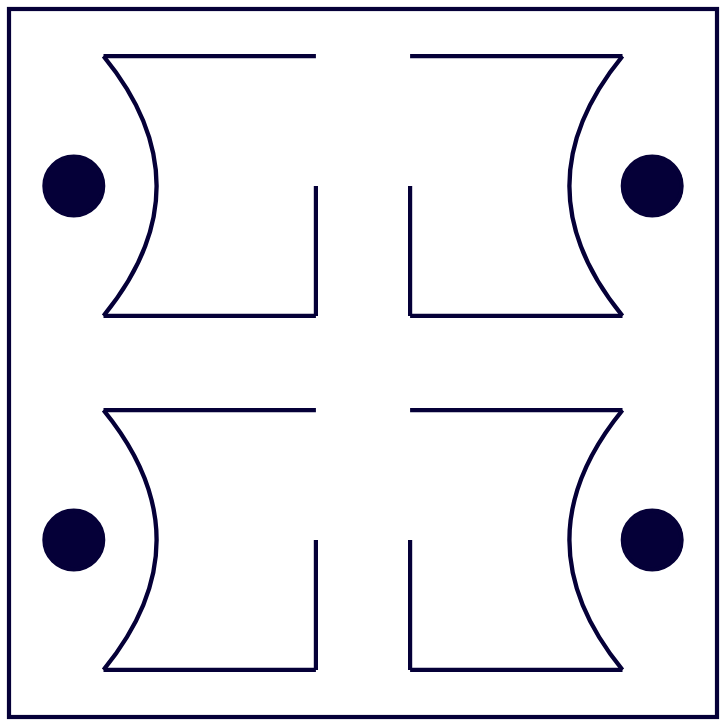
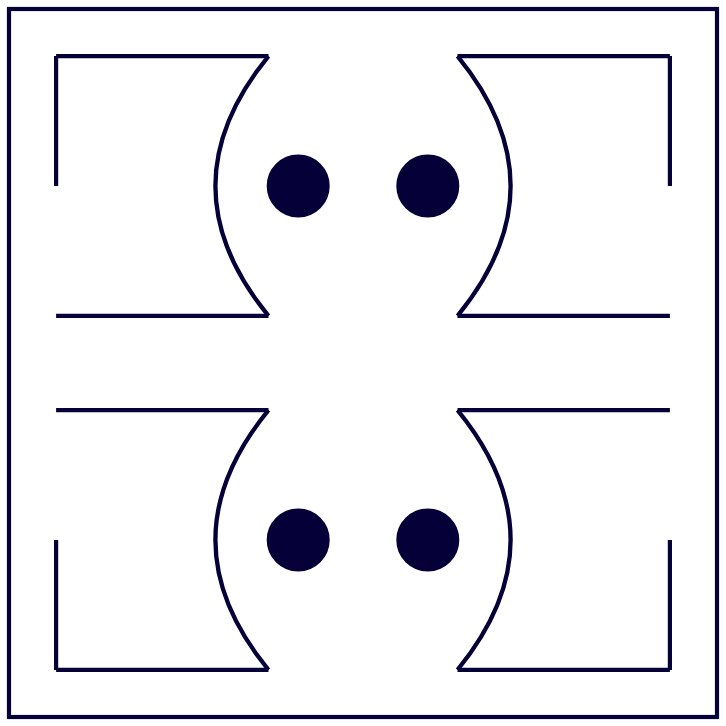
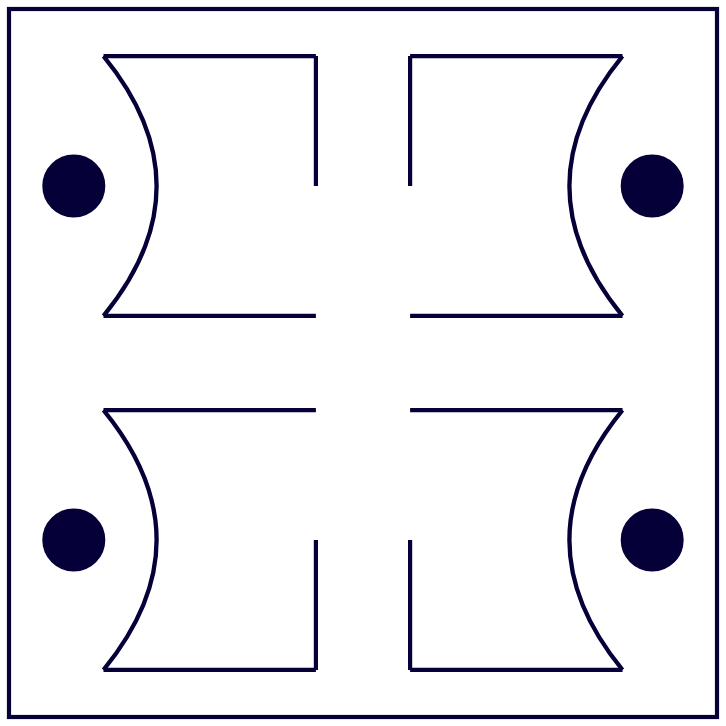
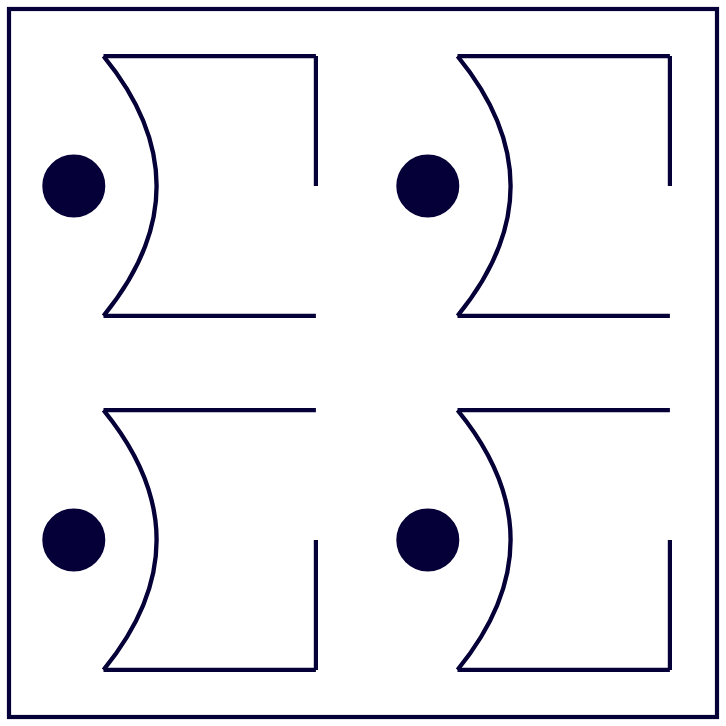
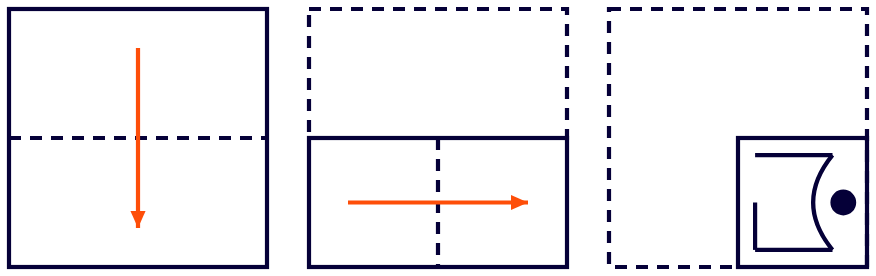
A paper is folded and punched as shown below. How will it appear when unfolded?
figure
एक कागज़ को नीचे दर्शाए अनुसार मोड़ा और छेदा जाता है। खोलने पर वह कैसा दिखाई देगा?
figure
  1. Afigure
  2. Bfigure
  3. Cfigure
  4. Dfigure
Show answer

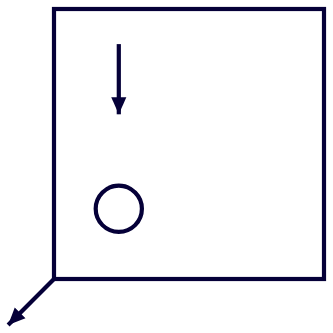
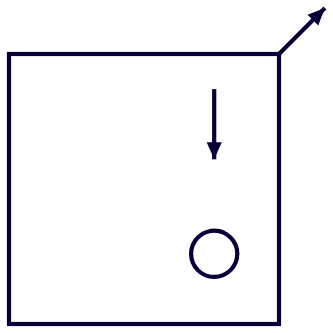
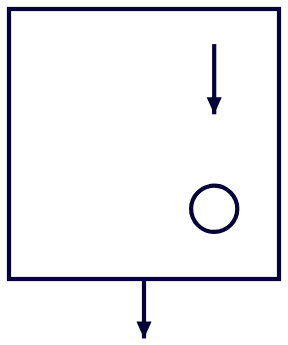
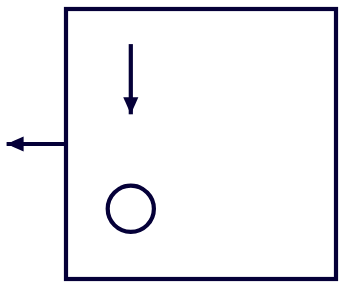
Concept: Each unfolding acts like a mirror across the fold line; every cut gets reflected.

  1. Fold 1: top half went onto bottom half. Fold 2: left half went onto right half. So the punch sits in the bottom-right quarter.
  2. Open fold 2: copy the bottom-right design as a left-right mirror image into the bottom-left quarter.
  3. Open fold 1: reflect the whole lower half upwards, so in the top quarters the small nick flips from the lower arm to the upper arm.
  4. (b) and (d) show no proper mirroring; (a) mirrors only sideways. Only (c) mirrors both ways.

Trick: Last fold opens first. Check one asymmetric detail (like the small nick) – it must flip in the upper half.

Answer: (C) – figure (c)

अवधारणा: हर बार कागज़ खोलने पर कट उस मोड़ की रेखा पर दर्पण-प्रतिबिम्ब बनाता है।

हल:

  1. पहला मोड़: ऊपरी आधा नीचे आया; दूसरा मोड़: बायाँ आधा दाएँ आया। अतः छेद निचले-दाएँ चौथाई में है।
  2. दूसरा मोड़ खोलें: निचले-दाएँ भाग की बाएँ-दाएँ उलटी नकल निचले-बाएँ भाग में।
  3. पहला मोड़ खोलें: पूरा निचला आधा ऊपर की ओर उलटेगा, इसलिए ऊपरी भागों में छोटा कट ऊपर वाली भुजा पर जाएगा।
  4. (b), (d) में दर्पण-नियम नहीं; (a) में केवल बाएँ-दाएँ। केवल (c) सही है।

ट्रिक: आखिरी मोड़ सबसे पहले खुलता है। किसी एक असमान निशान को देखें – ऊपरी आधे में वह उलटना चाहिए।

उत्तर: (C) – आकृति (c)
SSC GDGeneral Intelligence & ReasoningPaper folding – punched sheet unfoldedSSC GD 2025 · 5 Feb Shift 2 →
Q3702.
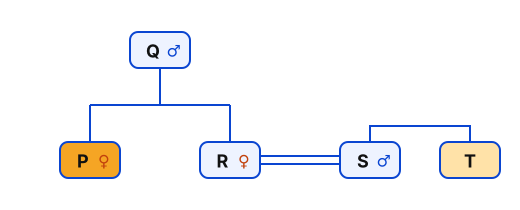
In a certain code language, 'A + B' means 'A is the daughter of B', 'A - B' means 'A is the brother of B', 'A × B' means 'A is the wife of B' and 'A ÷ B' means 'A is the father of B'. Based on the above, how is P related to T if 'P + Q ÷ R × S - T'?
एक निश्चित कूट भाषा में, 'A + B' का अर्थ है 'A, B की पुत्री है', 'A - B' का अर्थ है 'A, B का भाई है', 'A × B' का अर्थ है 'A, B की पत्नी है' तथा 'A ÷ B' का अर्थ है 'A, B का पिता है'। उपर्युक्त के आधार पर, यदि 'P + Q ÷ R × S - T' है, तो P, T से किस प्रकार संबंधित है?
  1. ABrother's wife's sisterभाई की पत्नी की बहन
  2. BWife's sisterपत्नी की बहन
  3. CBrother's wife's motherभाई की पत्नी की माँ
  4. DWife's motherपत्नी की माँ
Show answer

Concept: Decode each symbol pair one by one, then walk from T back to P.

  1. P + Q → P is Q's daughter; Q ÷ R → Q is R's father.
  2. So P and R are both daughters of Q → sisters (R is female, being a wife).
  3. R × S → R is S's wife; S − T → S is T's brother.
  4. From T: brother (S) → his wife (R) → her sister (P).

Trick: Always start the reading from the person asked about (T) and move towards P.

Answer: (A) Brother's wife's sister

अवधारणा: हर चिह्न-जोड़ी को अलग पढ़ें, फिर T से P तक संबंध जोड़ें।

हल:

  1. P + Q → P, Q की बेटी; Q ÷ R → Q, R का पिता।
  2. P और R दोनों Q की बेटियाँ → बहनें (R पत्नी है, अतः स्त्री)।
  3. R × S → R, S की पत्नी; S − T → S, T का भाई।
  4. T से: भाई (S) → उसकी पत्नी (R) → उसकी बहन (P)।

ट्रिक: जिसके संबंध में पूछा है (T) वहीं से पढ़ना शुरू करें।

उत्तर: (A) भाई की पत्नी की बहन

SSC GDGeneral Intelligence & ReasoningCoded blood relation – symbol chainSSC GD 2025 · 5 Feb Shift 2 →
Q3703.
DSXL is related to FUZN in a certain way based on the English alphabetical order. In the same way, GMUB is related to IOWD. To which of the following is TFON related, following the same logic ?
अंग्रेजी वर्णमाला क्रम के आधार पर DSXL एक निश्चित प्रकार से FUZN से संबंधित है। उसी प्रकार, GMUB, IOWD से संबंधित है। समान तर्क का अनुसरण करते हुए, TFON निम्नलिखित में से किससे संबंधित है?
  1. ASEQP
  2. BVHQP
  3. CSENM
  4. DVHNM
Show answer

Concept: Find the uniform letter shift between the given pairs.

  1. Every letter of DSXL moves 2 steps ahead (D+2 = F … L+2 = N).
  2. Check: G→I, M→O, U→W, B→D (+2) ✓.
  3. TFON +2 → T→V, F→H, O→Q, N→P = VHQP.

Trick: Just check the first letter: T+2 = V leaves (B) and (D); second-last O+2 = Q picks (B).

Answer: (B) VHQP

अवधारणा: दिए गए जोड़ों में अक्षरों का एक जैसा खिसकाव पहचानें।

हल:

  1. D→F, S→U, X→Z, L→N: हर अक्षर +2।
  2. जाँच: G→I, M→O, U→W, B→D (+2) ✓।
  3. TFON में +2 → V, H, Q, P = VHQP।

ट्रिक: पहला अक्षर T+2 = V से (B), (D) बचे; तीसरा O+2 = Q से (B) तय।

उत्तर: (B) VHQP

SSC GDGeneral Intelligence & ReasoningLetter analogy – +2 shiftSSC GD 2025 · 5 Feb Shift 2 →
Q3704.
What will come in the place of the question mark (?) in the following equation, if ' + ' and ' - ' are interchanged and ' × ' and ' ÷ ' are interchanged?
19 + 55 × 5 - 7 ÷ 3 = ?
निम्नलिखित समीकरण में प्रश्नवाचक चिह्न (?) के स्थान पर क्या आएगा, यदि ' + ' और ' - ' को आपस में बदल दिया जाए तथा ' × ' और ' ÷ ' को आपस में बदल दिया जाए?
19 + 55 × 5 - 7 ÷ 3 = ?
  1. A33
  2. B41
  3. C29
  4. D37
Show answer

Concept: Swap the signs first, then solve using BODMAS.

  1. After swapping: 19 − 55 ÷ 5 + 7 × 3.
  2. 55 ÷ 5 = 11; 7 × 3 = 21.
  3. 19 − 11 + 21 = 29.

Trick: Rewrite the whole expression with new signs before calculating – never swap mentally midway.

Answer: (C) 29

अवधारणा: पहले चिह्न बदलें, फिर BODMAS से हल करें।

हल:

  1. बदलने के बाद: 19 − 55 ÷ 5 + 7 × 3
  2. 55 ÷ 5 = 11; 7 × 3 = 21
  3. 19 − 11 + 21 = 29

ट्रिक: नया व्यंजक पूरा लिख लें, फिर गणना करें – बीच में दिमाग़ में बदलने से गलती होती है।

उत्तर: (C) 29

SSC GDGeneral Intelligence & ReasoningSign interchange – BODMASSSC GD 2025 · 5 Feb Shift 2 →
Q3705.
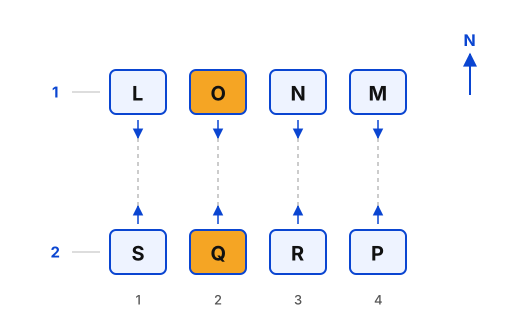
Eight people are sitting in two parallel rows containing 4 people each in such a way that there is equal distance between adjacent persons.
In row 1 - L, M, N and O are seated and all of them are facing south.
In row 2 - P, Q, R and S are seated and all of them are facing north.
Thus, each person faces another person from the other row. Q sits to the immediate right of S. Only two people sit between L and M. S faces L. The one who faces N sits to the immediate left of P. R does not sit at any of the extreme ends.
Who among the following faces O?
आठ व्यक्ति दो समानांतर पंक्तियों में इस प्रकार बैठे हैं कि प्रत्येक पंक्ति में 4 व्यक्ति हैं तथा निकटवर्ती व्यक्तियों के बीच समान दूरी है।
पंक्ति 1 - L, M, N और O बैठे हैं तथा इन सभी का मुख दक्षिण की ओर है।
पंक्ति 2 - P, Q, R और S बैठे हैं तथा इन सभी का मुख उत्तर की ओर है।
इस प्रकार, प्रत्येक व्यक्ति का मुख दूसरी पंक्ति के किसी एक व्यक्ति की ओर है। Q, S के ठीक दाईं ओर बैठा है। L और M के बीच केवल दो व्यक्ति बैठे हैं। S का मुख L की ओर है। जिस व्यक्ति का मुख N की ओर है, वह P के ठीक बाईं ओर बैठा है। R किसी भी अंतिम छोर पर नहीं बैठा है।
निम्नलिखित में से किसका मुख O की ओर है?
  1. AP
  2. BS
  3. CR
  4. DQ
Show answer

Concept: North-facing and south-facing people have opposite 'right' directions; fix row 2 first.

  1. Number columns 1–4. Row 2 (north): right = towards 4. Row 1 (south): right = towards 1.
  2. Q immediately right of S, R not at an end → S1, Q2, R3, P4.
  3. Two between L and M → ends; S faces L → L1, M4.
  4. Person facing N is immediate left of P → column 3 (R) → N3, so O2.
  5. O (col 2) faces Q.

Trick: Draw columns once; for the facing row, simply reverse left/right.

Answer: (D) Q

अवधारणा: उत्तरमुखी और दक्षिणमुखी लोगों के 'दाएँ' उलटी दिशा में होते हैं; पहले पंक्ति 2 तय करें।

हल:

  1. कॉलम 1–4 मानें। पंक्ति 2 (उत्तर): दायाँ = 4 की ओर। पंक्ति 1 (दक्षिण): दायाँ = 1 की ओर।
  2. Q, S के ठीक दाएँ और R किनारे पर नहीं → S1, Q2, R3, P4।
  3. L, M के बीच दो लोग → दोनों किनारों पर; S के सामने L → L1, M4।
  4. N के सामने वाला P के ठीक बाएँ → कॉलम 3 (R) → N3, अतः O2।
  5. O (कॉलम 2) के सामने Q है।

ट्रिक: आमने-सामने वाली पंक्ति में बस बायाँ-दायाँ उलट दें।

उत्तर: (D) Q

SSC GDGeneral Intelligence & ReasoningSeating – two facing rowsSSC GD 2025 · 5 Feb Shift 2 →
Q3706.
What should come in place of the question mark (?) in the given series?
878 880 884 890 898 ?
दी गई शृंखला में प्रश्नवाचक चिह्न (?) के स्थान पर क्या आना चाहिए?
878 880 884 890 898 ?
  1. A904
  2. B906
  3. C908
  4. D910
Show answer

Concept: Differences between terms increase steadily.

  1. Differences: +2, +4, +6, +8.
  2. Next difference = +10.
  3. 898 + 10 = 908.

Trick: Differences are consecutive even numbers – very common SSC pattern.

Answer: (C) 908

अवधारणा: पदों के बीच का अंतर बराबर बढ़ रहा है।

हल:

  1. अंतर: +2, +4, +6, +8
  2. अगला अंतर +10
  3. 898 + 10 = 908

ट्रिक: अंतर क्रमागत सम संख्याएँ हैं – SSC का आम पैटर्न।

उत्तर: (C) 908

SSC GDGeneral Intelligence & ReasoningNumber series – even differencesSSC GD 2025 · 5 Feb Shift 2 →
Q3707.
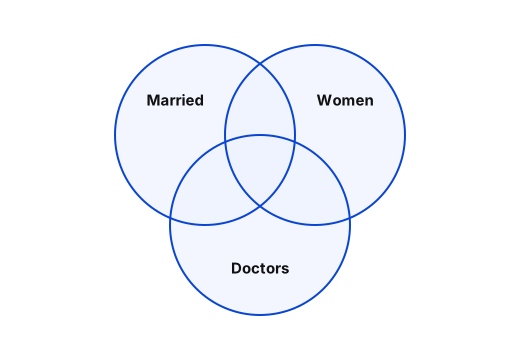
Select the Venn diagram that best illustrates the relationship between the following classes.
Married, Women, Doctors
उस वेन आरेख का चयन कीजिए जो निम्नलिखित वर्गों के बीच के संबंध को सर्वोत्तम रूप से दर्शाता है।
विवाहित, महिलाएँ, डॉक्टर
  1. Afigure
  2. Bfigure
  3. Cfigure
  4. Dfigure
Show answer

Concept: Decide for each pair: inside, separate, or partly common.

  1. A married person may or may not be a woman → partial overlap.
  2. A woman may or may not be a doctor → partial overlap.
  3. A doctor may or may not be married → partial overlap.
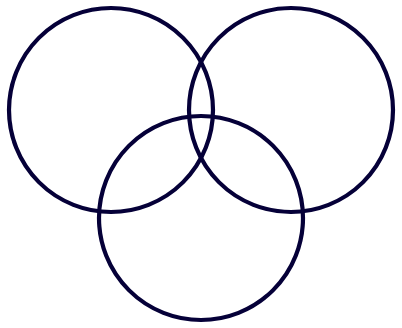
  4. All three pairs overlap partly → three intersecting circles.

Trick: If each pair shares only some members, pick the figure where all three circles cut each other.

Answer: (A) – figure (a)

अवधारणा: हर जोड़ी के लिए तय करें: अंदर, अलग या आंशिक साझा।

हल:

  1. विवाहित व्यक्ति स्त्री हो भी सकता है और नहीं भी → आंशिक।
  2. स्त्री डॉक्टर हो सकती है, ज़रूरी नहीं → आंशिक।
  3. डॉक्टर विवाहित हो सकता है → आंशिक।
  4. तीनों जोड़ियाँ आंशिक → तीन परस्पर कटते वृत्त।

ट्रिक: हर जोड़ी आंशिक साझा हो तो तीनों वृत्त एक-दूसरे को काटते हुए चुनें।

उत्तर: (A) – आकृति (a)

SSC GDGeneral Intelligence & ReasoningVenn diagram – three overlapping classesSSC GD 2025 · 5 Feb Shift 2 →
Q3708.
In a certain code language, 'MRGF' is coded as '15-20-9-8' and 'YDXB' is coded as '27-6-26-4'. What is the code for 'JWAS' in the given code language ?
एक निश्चित कूट भाषा में, 'MRGF' को '15-20-9-8' तथा 'YDXB' को '27-6-26-4' लिखा जाता है। उसी कूट भाषा में 'JWAS' का कूट क्या होगा?
  1. A14-27 - 5-23
  2. B11-23 - 2-22
  3. C12-25-3-21
  4. D16-28 - 6-24
Show answer

Concept: Code = alphabet position of each letter + 2.

  1. MRGF = 13,18,7,6 → +2 → 15-20-9-8 ✓.
  2. YDXB = 25,4,24,2 → 27-6-26-4 ✓.
  3. JWAS = 10,23,1,19 → 12-25-3-21.

Trick: A = 1 → its code is 3; only option (C) has 3 in the third place.

Answer: (C) 12-25-3-21

अवधारणा: कोड = अक्षर का वर्णमाला क्रमांक + 2।

हल:

  1. MRGF = 13,18,7,6 → +2 → 15-20-9-8 ✓
  2. YDXB = 25,4,24,2 → 27-6-26-4 ✓
  3. JWAS = 10,23,1,19 → 12-25-3-21

ट्रिक: A = 1 का कोड 3 होगा; तीसरे स्थान पर 3 केवल (C) में है।

उत्तर: (C) 12-25-3-21

SSC GDGeneral Intelligence & ReasoningLetter–number coding – position + 2SSC GD 2025 · 5 Feb Shift 2 →
Q3709.
DKSO is related to CIPK in a certain way based on the English alphabetical order. In the same way, LAPZ is related to KYMV. To which of the given options is EYGN related, following the same logic ?
अंग्रेजी वर्णमाला क्रम के आधार पर DKSO एक निश्चित प्रकार से CIPK से संबंधित है। उसी प्रकार, LAPZ, KYMV से संबंधित है। समान तर्क का अनुसरण करते हुए, दिए गए विकल्पों में से EYGN किससे संबंधित है?
  1. ABWDK
  2. BDWDJ
  3. CBVDK
  4. DCVCI
Show answer

Concept: Each letter moves back by an increasing amount.

  1. D→C (−1), K→I (−2), S→P (−3), O→K (−4).
  2. LAPZ → KYMV follows the same.
  3. EYGN: E−1 = D, Y−2 = W, G−3 = D, N−4 = J → DWDJ.

Trick: First letter E−1 = D – only option (B) starts with D.

Answer: (B) DWDJ

अवधारणा: हर अक्षर बढ़ती मात्रा में पीछे जाता है।

हल:

  1. D→C (−1), K→I (−2), S→P (−3), O→K (−4)।
  2. LAPZ → KYMV भी यही नियम।
  3. EYGN: E−1 = D, Y−2 = W, G−3 = D, N−4 = J → DWDJ

ट्रिक: पहला अक्षर E−1 = D – केवल (B) D से शुरू होता है।

उत्तर: (B) DWDJ

SSC GDGeneral Intelligence & ReasoningLetter analogy – −1, −2, −3, −4SSC GD 2025 · 5 Feb Shift 2 →
Q3710.
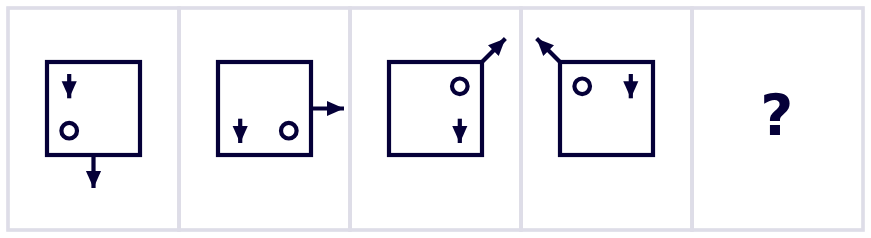
Identify the figure given in the options, which when put in place of the question mark (?) will logically complete the series.
figure
विकल्पों में दी गई उस आकृति की पहचान कीजिए, जिसे प्रश्नवाचक चिह्न (?) के स्थान पर रखने से शृंखला तार्किक रूप से पूर्ण हो जाएगी।
figure
  1. Afigure
  2. Bfigure
  3. Cfigure
  4. Dfigure
Show answer

Concept: Track each element separately; all three move anticlockwise one step at a time.

  1. Small down-arrow: TL → BL → BR → TR → next TL.
  2. Small circle (one step ahead): BL → BR → TR → TL → next BL.
  3. Outer arrow: bottom → right → top-right → top-left → next left side.
  4. Only figure (d) has arrow at TL, circle at BL and outer arrow on the left.

Trick: Follow one element at a time and eliminate options after each one.

Answer: (D) – figure (d)

अवधारणा: हर तत्व को अलग-अलग देखें; तीनों एक-एक कदम वामावर्त चलते हैं।

हल:

  1. छोटा तीर कोनों में घूमता है: TL → BL → BR → TR, अतः अगली बार TL।
  2. छोटा वृत्त (एक कदम आगे): अगला नीचे-बाएँ।
  3. बाहर वाला तीर: नीचे की भुजा → दाईं भुजा → TR कोना → TL कोना, अतः अगला बाईं भुजा पर।
  4. यह सब केवल (d) में है।

ट्रिक: एक-एक तत्व लेकर विकल्प हटाते जाएँ।

उत्तर: (D) – आकृति (d)

SSC GDGeneral Intelligence & ReasoningFigure series – anticlockwise movementSSC GD 2025 · 5 Feb Shift 2 →
Q3711.
The position(s) of how many letters will remain unchanged if each letter in the word SCRAMBLE is arranged in the English alphabetical order ?
यदि SCRAMBLE शब्द के प्रत्येक अक्षर को अंग्रेजी वर्णमाला क्रम में व्यवस्थित किया जाए, तो कितने अक्षरों का स्थान अपरिवर्तित रहेगा?
  1. AThreeतीन
  2. BNoneकोई नहीं
  3. COneएक
  4. DTwoदो
Show answer

Concept: Arrange letters A→Z and compare place by place.

  1. SCRAMBLE → alphabetical: A B C E L M R S.
  2. Original vs sorted: 1st S≠A, 2nd C≠B, … 8th E≠S – check all eight.
  3. No position matches.

Trick: Write both rows one below the other – matching takes 5 seconds.

Answer: (B) None

अवधारणा: अक्षरों को A→Z क्रम में लिखें और स्थान-दर-स्थान मिलाएँ।

हल:

  1. SCRAMBLE → क्रम में: A B C E L M R S
  2. आठों स्थान जाँचें: पहला S≠A, दूसरा C≠B, … आठवाँ E≠S
  3. कोई भी स्थान समान नहीं।

ट्रिक: दोनों पंक्तियाँ एक के नीचे एक लिखें – मिलान तुरंत हो जाता है।

उत्तर: (B) कोई नहीं

SSC GDGeneral Intelligence & ReasoningLetter positions after alphabetical arrangementSSC GD 2025 · 5 Feb Shift 2 →
Q3712.
What should come in place of the question mark (?) in the given series?
83 95 108 122 137 ?
दी गई शृंखला में प्रश्नवाचक चिह्न (?) के स्थान पर क्या आना चाहिए?
83 95 108 122 137 ?
  1. A148
  2. B153
  3. C166
  4. D172
Show answer

Concept: Consecutive differences go up by 1.

  1. Differences: 12, 13, 14, 15.
  2. Next difference = 16.
  3. 137 + 16 = 153.

Trick: Last term is odd and the next difference is even → answer is odd; only 153 among close values fits.

Answer: (B) 153

अवधारणा: क्रमागत अंतर 1-1 से बढ़ते हैं।

हल:

  1. अंतर: 12, 13, 14, 15
  2. अगला अंतर 16
  3. 137 + 16 = 153

ट्रिक: विषम + सम = विषम, अतः उत्तर विषम होगा – 153।

उत्तर: (B) 153

SSC GDGeneral Intelligence & ReasoningNumber series – differences +1 eachSSC GD 2025 · 5 Feb Shift 2 →
Q3713.
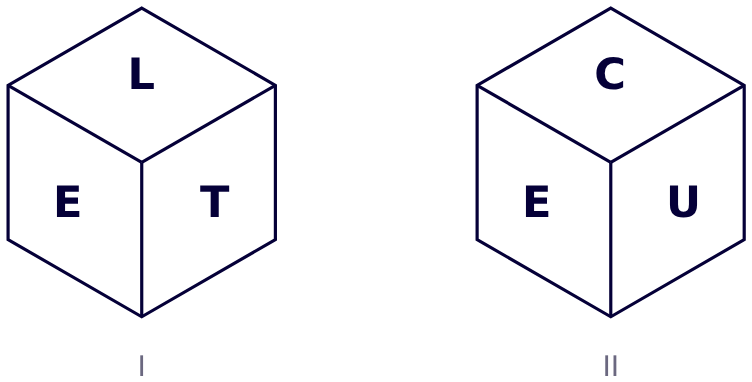
A dice has its faces marked by letters C, L, A, U, T and E. Two positions of the same dice are shown in the given figures. Which face is opposite to face A?
figure
एक पासे के फलकों पर C, L, A, U, T और E अक्षर अंकित हैं। दी गई आकृतियों में उसी पासे की दो स्थितियाँ दर्शाई गई हैं। फलक A के विपरीत कौन-सा फलक है?
figure
  1. AT
  2. BE
  3. CC
  4. DU
Show answer

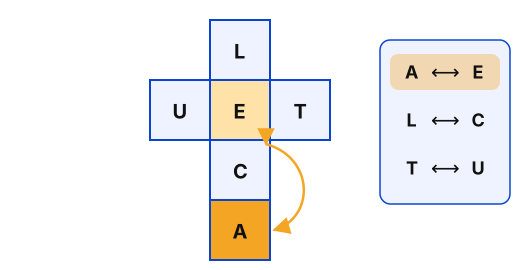
Concept: A face that touches four other faces is opposite the remaining fifth one.

  1. E appears in both views.
  2. Neighbours of E: L, T (view 1) and C, U (view 2).
  3. Only A never touches E → A is opposite E.

Trick: Look for the letter common to both positions and list all its neighbours.

Answer: (B) E

अवधारणा: जो फलक चार फलकों से सटा हो, वह बचे हुए पाँचवें के विपरीत होता है।

हल:

  1. E दोनों चित्रों में मौजूद है।
  2. E के पड़ोसी: L, T (पहली) और C, U (दूसरी)।
  3. केवल A, E से नहीं सटता → A के विपरीत E।

ट्रिक: दोनों चित्रों में समान अक्षर पकड़ें और उसके सभी पड़ोसी लिखें।

उत्तर: (B) E

SSC GDGeneral Intelligence & ReasoningDice – opposite face by eliminationSSC GD 2025 · 5 Feb Shift 2 →
Q3714.
Read the given statements and conclusions carefully. Assuming that the information given in the statements is true, even if it appears to be at variance with commonly known facts, decide which of the given conclusions logically follow(s) from the statements.
Statements:
All cars are rabbits.
All rabbits are bananas.
All bananas are lamps.
Conclusions:
(I): All cars are lamps.
(II): Some lamps are rabbits.
दिए गए कथनों और निष्कर्षों को ध्यानपूर्वक पढ़िए। कथनों में दी गई जानकारी को सत्य मानते हुए, भले ही वह सर्वज्ञात तथ्यों से भिन्न प्रतीत होती हो, यह निर्णय कीजिए कि दिए गए निष्कर्षों में से कौन-सा/से निष्कर्ष कथनों का तार्किक रूप से अनुसरण करता है/करते हैं।
कथन:
सभी कारें खरगोश हैं।
सभी खरगोश केले हैं।
सभी केले लैंप हैं।
निष्कर्ष:
(I): सभी कारें लैंप हैं।
(II): कुछ लैंप खरगोश हैं।
  1. AOnly conclusion (I) follows.केवल निष्कर्ष (I) अनुसरण करता है।
  2. BOnly conclusion (II) follows.केवल निष्कर्ष (II) अनुसरण करता है।
  3. CBoth conclusions (I) and (II) follow.निष्कर्ष (I) और (II) दोनों अनुसरण करते हैं।
  4. DNeither conclusion (I) nor (II) follow.न तो निष्कर्ष (I) और न ही निष्कर्ष (II) अनुसरण करता है।
Show answer

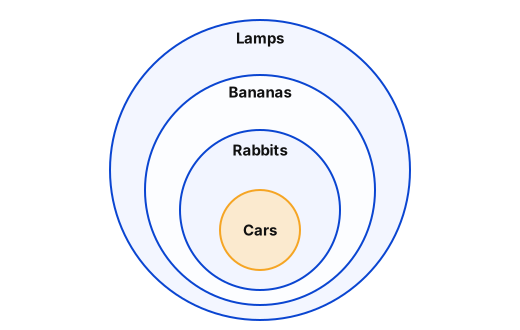
Concept: All A are B + All B are C gives All A are C; 'All' also gives a 'Some' converse.

  1. Cars ⊂ Rabbits ⊂ Bananas ⊂ Lamps.
  2. So all cars are lamps → I follows.
  3. All rabbits are lamps → some lamps are rabbits → II follows.

Trick: In an 'All' chain, any first-to-later 'All' conclusion and any reverse 'Some' conclusion are true.

Answer: (C) Both conclusions (I) and (II) follow.

अवधारणा: सभी A, B हैं + सभी B, C हैं ⇒ सभी A, C हैं; 'सभी' से उल्टा 'कुछ' भी सत्य।

हल:

  1. कार ⊂ खरगोश ⊂ केले ⊂ लैंप
  2. अतः सभी कार लैंप हैं → I सही।
  3. सभी खरगोश लैंप हैं → कुछ लैंप खरगोश हैं → II सही।

ट्रिक: 'सभी' की श्रृंखला में आगे की ओर 'सभी' और पीछे की ओर 'कुछ' – दोनों निष्कर्ष सत्य होते हैं।

उत्तर: (C) I और II दोनों अनुसरण करते हैं।

SSC GDGeneral Intelligence & ReasoningSyllogism – chain of 'All' statementsSSC GD 2025 · 5 Feb Shift 2 →
Q3715.
Seven people A, B, C, D, E, F and G are sitting in a straight line facing the north (but not necessarily in the same order). G and C are sitting at the ends of the line, not necessarily in the same order. F is sitting to the immediate right of G and the immediate left of D. E is sitting to the immediate right of D. A is sitting second to the right of E. B is sitting second to the left of C. Who is sitting between B and C?
सात व्यक्ति A, B, C, D, E, F और G उत्तर की ओर मुख करके एक सीधी पंक्ति में बैठे हैं (आवश्यक नहीं कि इसी क्रम में)। G और C पंक्ति के छोरों पर बैठे हैं, आवश्यक नहीं कि इसी क्रम में। F, G के ठीक दाईं ओर तथा D के ठीक बाईं ओर बैठा है। E, D के ठीक दाईं ओर बैठा है। A, E के दाईं ओर दूसरे स्थान पर बैठा है। B, C के बाईं ओर दूसरे स्थान पर बैठा है। B और C के बीच कौन बैठा है?
  1. AE
  2. BF
  3. CA
  4. DD
Show answer

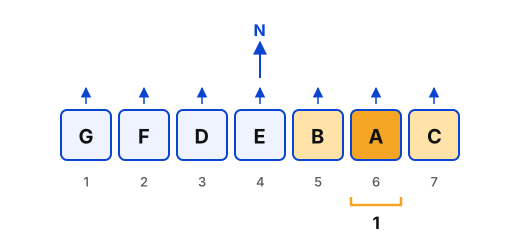
Concept: Facing north: right means moving to a higher seat number from the left.

  1. G–F–D block with G at an end → G1, F2, D3.
  2. E right of D → E4; A second right of E → A6.
  3. C at other end → C7; B second left of C → B5.
  4. Order: G F D E B A C → between B and C is A.

Trick: Place the biggest fixed block (G F D E) first; the rest falls in place.

Answer: (C) A

अवधारणा: उत्तर की ओर मुख: दायाँ = बाएँ सिरे से बढ़ता क्रमांक।

हल:

  1. G–F–D समूह, G सिरे पर → G1, F2, D3
  2. D के दाएँ E → E4; E से दूसरा दाएँ A → A6
  3. दूसरे सिरे पर C → C7; C से दूसरा बाएँ B → B5
  4. क्रम: G F D E B A C → B और C के बीच A।

ट्रिक: सबसे बड़ा तय समूह (G F D E) पहले रखें, बाकी अपने-आप बैठ जाते हैं।

उत्तर: (C) A

SSC GDGeneral Intelligence & ReasoningLinear seating – single row facing northSSC GD 2025 · 5 Feb Shift 2 →
Q3716.
Select the option that represents the letters that, when sequentially placed from left to right in the blanks below, will complete the letter series.
A__FD_SGF_A__FDAS__D
उस विकल्प का चयन कीजिए जो उन अक्षरों को दर्शाता है, जिन्हें नीचे दिए गए रिक्त स्थानों में बाएँ से दाएँ क्रमिक रूप से रखने पर अक्षर शृंखला पूर्ण हो जाएगी।
A__FD_SGF_A__FDAS__D
  1. ASGADGSDF
  2. BSGADGSGF
  3. CSGADSGGF
  4. DSGADAGGF
Show answer

Concept: 20 places = 4 repeats of a 5-letter block.

  1. Block: A S G F D.
  2. Split: A_ _FD | _SGF_ | A_ _FD | AS_ _D.
  3. Blanks: SG, AD, SG, GF → SGADSGGF.

Trick: Find the block length from the given letters (here 5) before filling.

Answer: (C) SGADSGGF

अवधारणा: 20 स्थान = 5 अक्षर के खंड की 4 आवृत्ति।

हल:

  1. खंड: A S G F D
  2. बाँटें: A_ _FD | _SGF_ | A_ _FD | AS_ _D
  3. रिक्त: SG, AD, SG, GF → SGADSGGF

ट्रिक: भरने से पहले खंड की लंबाई (यहाँ 5) पहचानें।

उत्तर: (C) SGADSGGF

SSC GDGeneral Intelligence & ReasoningLetter series – repeating blockSSC GD 2025 · 5 Feb Shift 2 →
Q3717.
What should come in place of the question mark (?) in the given series based on the English alphabetical order ? GID KMH OQL SUP ?
अंग्रेजी वर्णमाला क्रम के आधार पर दी गई शृंखला में प्रश्नवाचक चिह्न (?) के स्थान पर क्या आना चाहिए? GID KMH OQL SUP ?
  1. AWYR
  2. BRWT
  3. CWYT
  4. DVXS
Show answer

Concept: Each position of the cluster moves +4.

  1. 1st: G, K, O, S → W.
  2. 2nd: I, M, Q, U → Y.
  3. 3rd: D, H, L, P → T.
  4. Next = WYT.

Trick: Only (A) and (C) start WY; third letter P+4 = T picks (C).

Answer: (C) WYT

अवधारणा: समूह का हर स्थान +4 बढ़ता है।

हल:

  1. पहला: G, K, O, S → W
  2. दूसरा: I, M, Q, U → Y
  3. तीसरा: D, H, L, P → T
  4. अगला = WYT

ट्रिक: WY से शुरू (A), (C); तीसरा P+4 = T → (C)।

उत्तर: (C) WYT

SSC GDGeneral Intelligence & ReasoningLetter-cluster series – +4 in each placeSSC GD 2025 · 5 Feb Shift 2 →
Q3718.
Based on the English alphabetical order, three of the following four letter-clusters are alike in a certain way and thus form a group. Which letter-cluster DOES NOT belong to that group?
(Note: The odd one out is not based on the number of consonants/vowels or their position in the letter-cluster.)
अंग्रेजी वर्णमाला क्रम के आधार पर, निम्नलिखित चार अक्षर-समूहों में से तीन एक निश्चित प्रकार से समान हैं और इस प्रकार एक समूह बनाते हैं। कौन-सा अक्षर-समूह उस समूह से संबंधित नहीं है?
(नोट: असंगत अक्षर-समूह, व्यंजनों/स्वरों की संख्या या अक्षर-समूह में उनके स्थान पर आधारित नहीं है।)
  1. AGKI
  2. BMQO
  3. CSWU
  4. DKON
Show answer

Concept: Compare the gaps from the first letter in each cluster.

  1. GKI: +4, +2. MQO: +4, +2. SWU: +4, +2.
  2. KON: +4, +3 → breaks the rule.

Trick: The middle letter of the group's 3rd letter is exactly halfway (G _ I _ K): only KON fails.

Answer: (D) KON

अवधारणा: हर समूह में पहले अक्षर से अंतर देखें।

हल:

  1. GKI: +4, +2; MQO: +4, +2; SWU: +4, +2
  2. KON: +4, +3 → नियम टूटा।

ट्रिक: तीसरा अक्षर पहले और दूसरे के ठीक बीच होना चाहिए – KON में नहीं।

उत्तर: (D) KON

SSC GDGeneral Intelligence & ReasoningOdd one out – letter gapsSSC GD 2025 · 5 Feb Shift 2 →
Q3719.
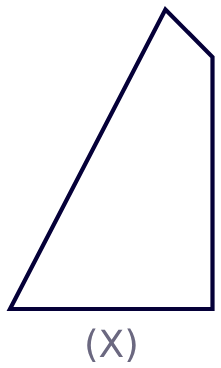
Select the option figure in which the given figure ( X ) is embedded as its part (rotation is NOT allowed).
figure
उस विकल्प आकृति का चयन कीजिए जिसमें दी गई आकृति (X) उसके एक भाग के रूप में अंतर्निहित है (घुमाना मान्य नहीं है)।
figure
  1. Afigure
  2. Bfigure
  3. Cfigure
  4. Dfigure
Show answer

Concept: Find the same shape, in the same orientation, inside one option.

  1. Figure X: flat base, vertical right side, long slanting left side and a short slant cut at the top.
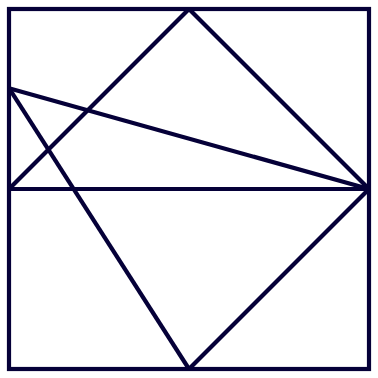
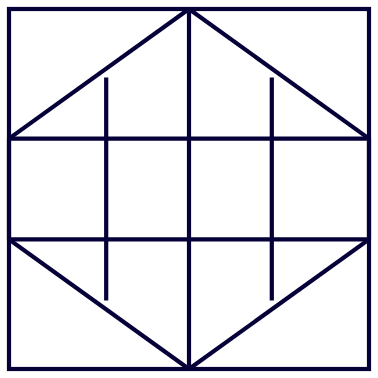
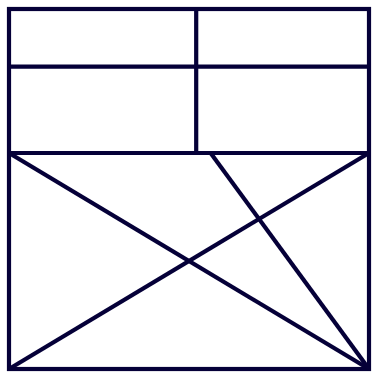
  2. In (b), the lower-right part of the square forms exactly this outline.
  3. In the others the slant is on the wrong side or the top cut is missing.

Trick: Match the most unusual edge (the short top cut) first, then confirm the rest.

Answer: (B) – figure (b)

अवधारणा: वही आकृति, उसी दिशा में, किसी विकल्प के अंदर खोजें।

हल:

  1. आकृति X: सीधा आधार, दायाँ ऊर्ध्वाधर किनारा, बायाँ लंबा तिरछा किनारा और ऊपर छोटा तिरछा कट।
  2. (b) में वर्ग के दाएँ-नीचे वाले हिस्से में यही आकार मिलता है।
  3. बाकी में तिरछा किनारा गलत ओर है या ऊपर का कट नहीं है।

ट्रिक: सबसे अलग किनारे (ऊपर का छोटा कट) से मिलान शुरू करें।

उत्तर: (B) – आकृति (b)

SSC GDGeneral Intelligence & ReasoningEmbedded figure – no rotationSSC GD 2025 · 5 Feb Shift 2 →
Q3720.
In a certain code language, 'WEDS' is coded as ' 3 ' and 'MAIUFQX' is coded as ' 6 '. How is 'GIQRBZLA' coded in the given language ?
एक निश्चित कूट भाषा में, 'WEDS' को ' 3 ' तथा 'MAIUFQX' को ' 6 ' लिखा जाता है। उसी भाषा में 'GIQRBZLA' को किस प्रकार लिखा जाएगा?
  1. A7
  2. B8
  3. C5
  4. D4
Show answer

Concept: Code depends on the number of letters, not on which letters.

  1. WEDS: 4 letters → 3.
  2. MAIUFQX: 7 letters → 6.
  3. GIQRBZLA: 8 letters → 8 − 1 = 7.

Trick: When a word is coded as a single small number, count its letters first.

Answer: (A) 7

अवधारणा: कोड अक्षरों की गिनती पर निर्भर है, अक्षरों पर नहीं।

हल:

  1. WEDS: 4 अक्षर → 3
  2. MAIUFQX: 7 अक्षर → 6
  3. GIQRBZLA: 8 अक्षर → 8 − 1 = 7

ट्रिक: शब्द का कोड एक छोटी संख्या हो तो पहले अक्षर गिनें।

उत्तर: (A) 7

SSC GDGeneral Intelligence & ReasoningCoding – letter count minus oneSSC GD 2025 · 5 Feb Shift 2 →