Question bank

Q&A: practice questions with answers

Search questions on any topic. Filter by exam category, exam, subject and topic, try the question, then open the answer and explanation.

Courses – airGurukul

4,200 questions found.

Q3801.
Read the given statements and conclusions carefully. Assuming that the information given in the statements is true, even if it appears to be at variance with commonly known facts, decide which of the given conclusions logically follow(s) from the statements.
Statements:
All lyricists are singers.
Some singers are writers.
No writer is a musician.
Conclusions:
(I): No lyricist is a musician.
(II): Some writers are lyricists
दिए गए कथनों और निष्कर्षों को ध्यानपूर्वक पढ़िए। कथनों में दी गई जानकारी को सत्य मानते हुए, भले ही वह सर्वज्ञात तथ्यों से भिन्न प्रतीत होती हो, यह निर्णय कीजिए कि दिए गए निष्कर्षों में से कौन-सा/से निष्कर्ष कथनों का तार्किक रूप से अनुसरण करता है/करते हैं।
कथन:
सभी गीतकार गायक हैं।
कुछ गायक लेखक हैं।
कोई लेखक संगीतकार नहीं है।
निष्कर्ष:
(I): कोई गीतकार संगीतकार नहीं है।
(II): कुछ लेखक गीतकार हैं
  1. AOnly conclusion (II) follows .केवल निष्कर्ष (II) अनुसरण करता है।
  2. BOnly conclusion (I) follows .केवल निष्कर्ष (I) अनुसरण करता है।
  3. CNeither conclusion (I) nor (II) follows.न तो निष्कर्ष (I) और न ही निष्कर्ष (II) अनुसरण करता है।
  4. DBoth conclusion (I) and (II) follows.निष्कर्ष (I) और (II) दोनों अनुसरण करते हैं।
Show answer

Concept: A conclusion follows only if it is true in every possible diagram.

  1. Lyricists ⊂ Singers; Singers partly overlap Writers; Writers and Musicians are separate.
  2. (I) Musicians have no link with Singers, so a lyricist may or may not be a musician – not definite.
  3. (II) The writers inside singers may lie outside the lyricist part – not definite.
  4. Both are only possibilities.

Trick: 'No' and 'Some' conclusions between terms that are never directly connected are almost always 'possible', not certain.

Answer: (C) Neither conclusion (I) nor (II) follows.

अवधारणा: निष्कर्ष तभी सही है जब वह हर संभव आरेख में सत्य हो।

हल:

  1. गीतकार ⊂ गायक; गायक और लेखक आंशिक रूप से मिलते हैं; लेखक और संगीतकार अलग हैं।
  2. (I) संगीतकार का गायक से कोई सीधा संबंध नहीं, अतः गीतकार संगीतकार हो भी सकता है – निश्चित नहीं।
  3. (II) गायक-लेखक वाला भाग गीतकार से बाहर भी हो सकता है – निश्चित नहीं।
  4. दोनों केवल संभावनाएँ हैं।

ट्रिक: जिन दो पदों का सीधा संबंध कथनों में नहीं दिया, उनके बीच निष्कर्ष प्रायः ‘संभव’ होता है, निश्चित नहीं।

उत्तर: (C) न तो (I) और न ही (II) अनुसरण करता है।

SSC GDGeneral Intelligence & ReasoningSyllogism – three statementsSSC GD 2025 · 5 Feb Shift 1 →
Q3802.
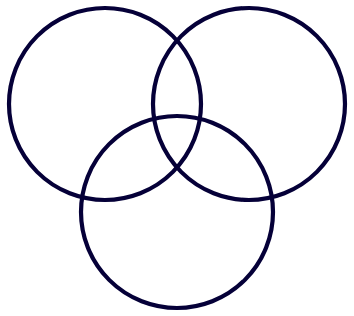
Select the Venn diagram that best illustrates the relationship between the following classes.
Onion, Vegetable, Shirt
उस वेन आरेख का चयन कीजिए जो निम्नलिखित वर्गों के बीच के संबंध को सर्वोत्तम रूप से दर्शाता है।
प्याज, सब्जी, कमीज
  1. Afigure
  2. Bfigure
  3. Cfigure
  4. Dfigure
Show answer

Concept: Show 'is a type of' as a circle inside a circle; unrelated classes stay apart.

  1. Every onion is a vegetable → Onion circle lies inside Vegetable circle.
  2. Shirt has nothing in common with either → a separate circle.
  3. Required figure: two nested circles + one detached circle.

Trick: Ask 'Is every A a B?' for each pair – a Yes means nesting, a No with no overlap means separate.

Answer: (A) Figure (a)

अवधारणा: ‘का प्रकार है’ वाले संबंध में एक वृत्त दूसरे के अंदर; असंबंधित वर्ग अलग।

हल:

  1. हर प्याज सब्ज़ी है → प्याज का वृत्त सब्ज़ी के वृत्त के अंदर।
  2. कमीज़ का दोनों से कोई संबंध नहीं → अलग वृत्त।
  3. अभीष्ट आकृति: दो अंदर-बाहर वृत्त + एक अलग वृत्त।

ट्रिक: हर जोड़े के लिए पूछें – ‘क्या हर A, B है?’ हाँ हो तो अंदर, बिल्कुल न हो तो अलग।

उत्तर: (A) आकृति (a)

SSC GDGeneral Intelligence & ReasoningVenn diagram – class relationSSC GD 2025 · 5 Feb Shift 1 →
Q3803.
E, F, G, H, K, L and N are sitting around a circular table facing the centre (but not necessarily in the same order). Only two people sit between H and G when counted from the right of H. Only three people sit between L and N when counted from the right of N. G sits to the immediate right of N. K sits to the immediate right of E. How many people sit between F and E when counted from the left of F ?
E, F, G, H, K, L और N एक वृत्ताकार मेज़ के चारों ओर केंद्र की ओर मुख करके बैठे हैं (आवश्यक नहीं कि इसी क्रम में)। H के दाईं ओर से गिनने पर H और G के बीच केवल दो व्यक्ति बैठे हैं। N के दाईं ओर से गिनने पर L और N के बीच केवल तीन व्यक्ति बैठे हैं। G, N के ठीक दाईं ओर बैठा है। K, E के ठीक दाईं ओर बैठा है। F के बाईं ओर से गिनने पर F और E के बीच कितने व्यक्ति बैठे हैं?
  1. ATwoदो
  2. BFourचार
  3. CThreeतीन
  4. DOneएक
Show answer

Concept: Facing the centre: right = anticlockwise, left = clockwise.

  1. Number seats 1–7 clockwise, N = 1. G is immediate right of N → G = 7.
  2. From N's right skip 3 people (7, 6, 5) → L = 4. From H's right skip 2 and reach G → H = 3.
  3. Empty seats 2, 5, 6; adjacent pair 5–6 gives E = 6, K = 5; so F = 2.
  4. From F going left (clockwise): H, L, K, then E → 3 people.

Trick: Fix the person with most clues (N) first; the pair-clue (K right of E) always goes into the only two adjacent empty seats.

Answer: (C) Three

अवधारणा: केंद्र की ओर मुख: दायाँ = वामावर्त, बायाँ = दक्षिणावर्त।

हल:

  1. सीटें 1–7 दक्षिणावर्त, N = 1 । G, N के ठीक दाएँ → G = 7 ।
  2. N के दाएँ से 3 छोड़ें (7, 6, 5) → L = 4 । H के दाएँ से 2 छोड़कर G आए → H = 3 ।
  3. खाली सीटें 2, 5, 6; लगातार जोड़ी 5–6 → E = 6, K = 5; अतः F = 2 ।
  4. F के बाएँ (दक्षिणावर्त) से: H, L, K, फिर E → 3 व्यक्ति।

ट्रिक: सबसे अधिक संकेत वाले व्यक्ति (N) को पहले बैठाएँ; जोड़ी वाला संकेत हमेशा बची हुई लगातार दो सीटों में जाता है।

उत्तर: (C) तीन

SSC GDGeneral Intelligence & ReasoningCircular seating – 7 personsSSC GD 2025 · 5 Feb Shift 1 →
Q3804.
In a certain code language 'GPZJ' is coded as '98' and 'OWRS' is coded as '66'. What is the code for 'VIXE' in the given language ?
एक निश्चित कूट भाषा में 'GPZJ' को '98' के रूप में तथा 'OWRS' को '66' के रूप में कूटबद्ध किया जाता है। उसी भाषा में 'VIXE' का कूट क्या होगा?
  1. A88
  2. B86
  3. C96
  4. D91
Show answer

Concept: Code = 2 × (sum of positions of the opposite letters); opposite of p = 27 − p.

  1. GPZJ: 20 + 11 + 1 + 17 = 49 → 49 × 2 = 98 ✓
  2. OWRS: 12 + 4 + 9 + 8 = 33 → 33 × 2 = 66 ✓
  3. VIXE: V=22, I=9, X=24, E=5, total 60.
  4. Opposite sum = 4 × 27 − 60 = 48 → 48 × 2 = 96.

Trick: For a 4-letter word, sum of opposites = 108 − (sum of the letters). No need to find each opposite letter.

Answer: (C) 96

अवधारणा: कोड = 2 × (विपरीत अक्षरों के स्थानों का योग); p का विपरीत = 27 − p ।

हल:

  1. GPZJ: 20 + 11 + 1 + 17 = 49 → 49 × 2 = 98 ✓
  2. OWRS: 12 + 4 + 9 + 8 = 33 → 33 × 2 = 66 ✓
  3. VIXE: V=22, I=9, X=24, E=5, कुल 60 ।
  4. विपरीत योग = 4 × 27 − 60 = 48 → 48 × 2 = 96 ।

ट्रिक: 4 अक्षरों वाले शब्द में विपरीत अक्षरों का योग = 108 − (अक्षरों का योग)। हर अक्षर का विपरीत निकालने की ज़रूरत नहीं।

उत्तर: (C) 96

SSC GDGeneral Intelligence & ReasoningCoding – opposite letter sumSSC GD 2025 · 5 Feb Shift 1 →
Q3805.
What should come in place of the question mark (?) in the given series based on the English alphabetical order ? BMY, DNW, ?, HPS
अंग्रेजी वर्णमाला क्रम के आधार पर, दी गई शृंखला में प्रश्नवाचक चिह्न (?) के स्थान पर क्या आना चाहिए? BMY, DNW, ?, HPS
  1. AEOU
  2. BFOT
  3. CFPU
  4. DFOU
Show answer

Concept: Each letter place of the cluster runs its own series.

  1. 1st letters: B, D, _, H → +2 each → F.
  2. 2nd letters: M, N, _, P → +1 each → O.
  3. 3rd letters: Y, W, _, S → −2 each → U.
  4. Missing term: FOU.

Trick: Solve only the 1st letter (F) – it removes (a); the 2nd letter O removes (c); then the 3rd letter U picks (d) over (b).

Answer: (D) FOU

अवधारणा: समूह का हर स्थान अपनी अलग श्रृंखला बनाता है।

हल:

  1. पहला अक्षर: B, D, _, H → +2 → F ।
  2. दूसरा अक्षर: M, N, _, P → +1 → O ।
  3. तीसरा अक्षर: Y, W, _, S → −2 → U ।
  4. लुप्त पद: FOU ।

ट्रिक: पहले अक्षर F से (a) हटता है, दूसरे O से (c), और तीसरे U से (b) — बचता है (d)।

उत्तर: (D) FOU

SSC GDGeneral Intelligence & ReasoningLetter series – three positionsSSC GD 2025 · 5 Feb Shift 1 →
Q3806.
Based on the English alphabetical order, three of the following four letter - clusters are alike in a certain way and thus form a group. Which letter-cluster DOES NOT belong to that group?
(Note: The odd man out is not based on the number of consonants/vowels or their position in the letter-cluster.)
अंग्रेजी वर्णमाला क्रम के आधार पर, निम्नलिखित चार अक्षर-समूहों में से तीन एक निश्चित प्रकार से समान हैं और इस प्रकार एक समूह बनाते हैं। कौन-सा अक्षर-समूह उस समूह से संबंधित नहीं है?
(नोट: विषम अक्षर-समूह का आधार अक्षर-समूह में व्यंजनों/स्वरों की संख्या अथवा उनकी स्थिति नहीं है।)
  1. AVSW
  2. BNLO
  3. CWTX
  4. DKHL
Show answer

Concept: Compare the gaps between consecutive letters.

  1. VSW: 22 → 19 → 23 = −3, +4
  2. WTX: 23 → 20 → 24 = −3, +4; KHL: 11 → 8 → 12 = −3, +4
  3. NLO: 14 → 12 → 15 = −2, +3 → different.

Trick: In the other three, the last letter is just the next letter after the first (V→W, W→X, K→L); in NLO, N→O also holds, so check the middle letter: it is 3 back in the others but only 2 back in NLO.

Answer: (B) NLO

अवधारणा: लगातार अक्षरों के बीच का अंतर देखें।

हल:

  1. VSW: 22 → 19 → 23 = −3, +4
  2. WTX: 23 → 20 → 24 = −3, +4; KHL: 11 → 8 → 12 = −3, +4
  3. NLO: 14 → 12 → 15 = −2, +3 → अलग।

ट्रिक: बाकी तीनों में बीच का अक्षर पहले से 3 पीछे है; NLO में केवल 2 पीछे।

उत्तर: (B) NLO

SSC GDGeneral Intelligence & ReasoningOdd one out – letter gapsSSC GD 2025 · 5 Feb Shift 1 →
Q3807.
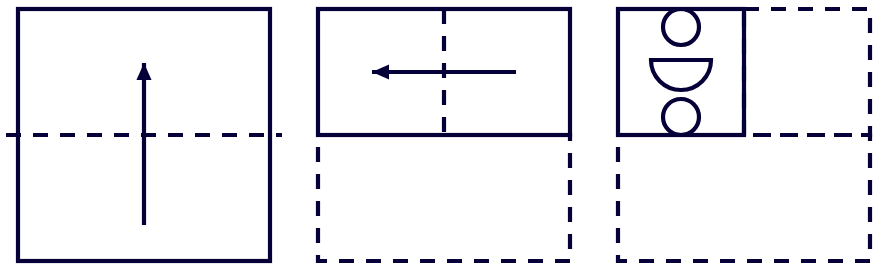
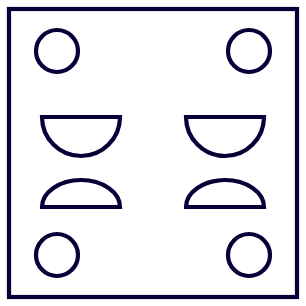
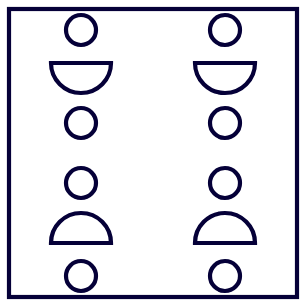
The sequence of folding a piece of paper and the manner in which the folded paper is cut is shown in the following figures. How would this paper look when unfolded ?
figure
कागज़ के एक टुकड़े को मोड़ने का क्रम तथा मुड़े हुए कागज़ को जिस प्रकार काटा गया है, वह निम्नलिखित आकृतियों में दर्शाया गया है। खोले जाने पर यह कागज़ कैसा दिखाई देगा?
figure
  1. Afigure
  2. Bfigure
  3. Cfigure
  4. Dfigure
Show answer

Concept: Each fold acts as a mirror line; unfolding doubles the cuts across it.

  1. Fold 1: bottom half onto top → horizontal centre line is a mirror.
  2. Fold 2: right half onto left → vertical centre line is a mirror.
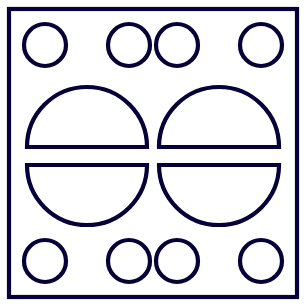
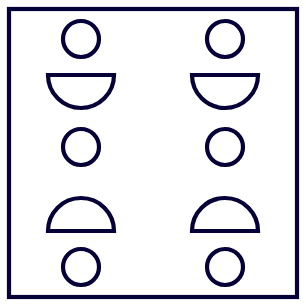
  3. Cuts (two small circles and a curved cut) are in one quarter, so they appear in all 4 quarters as mirror images.
  4. Only option (d) shows 4 matching, mirror-placed sets.

Trick: Unfold in reverse order (last fold first) and count: 2 folds → every cut appears 4 times.

Answer: (D) Figure (d)

अवधारणा: हर मोड़ एक दर्पण-रेखा है; खोलने पर कटाव उसके दोनों ओर दोहराता है।

हल:

  1. पहला मोड़: नीचे का आधा ऊपर → क्षैतिज मध्य रेखा दर्पण।
  2. दूसरा मोड़: दायाँ आधा बाएँ पर → ऊर्ध्वाधर मध्य रेखा दर्पण।
  3. कटाव (दो छोटे वृत्त और एक वक्र कटाव) एक चौथाई भाग में हैं, अतः चारों भागों में दर्पण-प्रतिबिंब बनेंगे।
  4. केवल विकल्प (d) में ऐसे 4 मिलते-जुलते समूह हैं।

ट्रिक: उल्टे क्रम में खोलें (अंतिम मोड़ पहले); 2 मोड़ = हर कटाव 4 बार।

उत्तर: (D) आकृति (d)

SSC GDGeneral Intelligence & ReasoningPaper folding and cuttingSSC GD 2025 · 5 Feb Shift 1 →
Q3808.
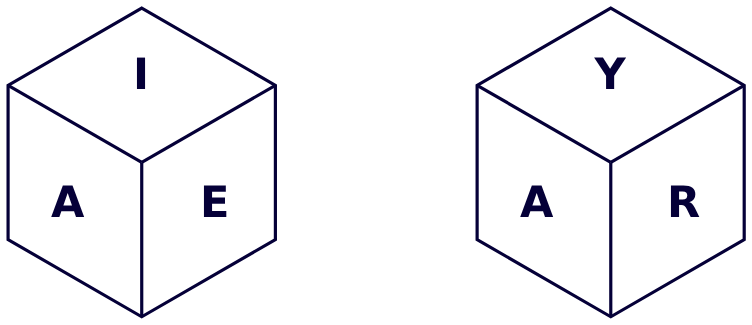
A dice has its faces marked by letters R, E, I, P, Y and A. Two positions of the same dice are given below. Which face is opposite to face P ?
figure
एक पासे के फलकों पर R, E, I, P, Y और A अक्षर अंकित हैं। नीचे उसी पासे की दो स्थितियाँ दी गई हैं। फलक P के विपरीत कौन-सा फलक है?
figure
  1. AY
  2. BA
  3. CR
  4. DE
Show answer

Concept: Faces seen together in a view are adjacent, never opposite.

  1. View 1: A is with I and E.
  2. View 2: A is with Y and R.
  3. A touches I, E, Y, R → the only face left is P.
  4. So P is opposite A.

Trick: Pick the letter common to both views; list its 4 neighbours – the missing 6th letter is its opposite.

Answer: (B) A

अवधारणा: एक ही दृश्य में दिखे फलक आसन्न होते हैं, विपरीत नहीं।

हल:

  1. दृश्य 1: A के साथ I और E ।
  2. दृश्य 2: A के साथ Y और R ।
  3. A के आसन्न: I, E, Y, R → बचा केवल P ।
  4. अतः P के विपरीत A है।

ट्रिक: दोनों दृश्यों में साझा अक्षर लें; उसके 4 पड़ोसी लिखें – छठा बचा अक्षर ही विपरीत है।

उत्तर: (B) A

SSC GDGeneral Intelligence & ReasoningDice – opposite faceSSC GD 2025 · 5 Feb Shift 1 →
Q3809.
What will come in the place of the question mark (?) in the following equation, if ' + ' and ' ÷ ' are interchanged and ' - ' and ' × ' are interchanged?
16 - 2 × 10⁴ + 4 ÷ 20 = ?
निम्नलिखित समीकरण में प्रश्नवाचक चिह्न (?) के स्थान पर क्या आएगा, यदि ' + ' और ' ÷ ' को आपस में बदल दिया जाए तथा ' - ' और ' × ' को आपस में बदल दिया जाए?
16 - 2 × 10⁴ + 4 ÷ 20 = ?
  1. A29
  2. B37
  3. C26
  4. D33
Show answer

Concept: Swap the signs first, then apply BODMAS.

  1. + ↔ ÷ and − ↔ ×: 16 − 2 × 10⁴ + 4 ÷ 20 becomes 16 × 2 − 104 ÷ 4 + 20.
  2. 16 × 2 = 32; 104 ÷ 4 = 26.
  3. 32 − 26 + 20 = 26.

Trick: Rewrite the whole expression with new signs before calculating – most errors come from swapping only one sign.

Answer: (C) 26

अवधारणा: पहले चिह्न बदलें, फिर BODMAS लगाएँ।

हल:

  1. + ↔ ÷ और − ↔ ×: 16 − 2 × 10⁴ + 4 ÷ 20 → 16 × 2 − 104 ÷ 4 + 20 ।
  2. 16 × 2 = 32; 104 ÷ 4 = 26 ।
  3. 32 − 26 + 20 = 26 ।

ट्रिक: गणना से पहले पूरा व्यंजक नए चिह्नों के साथ दोबारा लिखें – गलती प्रायः एक चिह्न छूटने से होती है।

उत्तर: (C) 26

SSC GDGeneral Intelligence & ReasoningMathematical operations – interchangeSSC GD 2025 · 5 Feb Shift 1 →
Q3810.
Identify the figure given in the options which when put in place of the question mark (?) will logically complete the series.
figure
उस आकृति की पहचान कीजिए जो विकल्पों में दी गई है और जिसे प्रश्नवाचक चिह्न (?) के स्थान पर रखने से शृंखला तार्किक रूप से पूर्ण हो जाएगी।
figure
  1. Afigure
  2. Bfigure
  3. Cfigure
  4. Dfigure
Show answer

Concept: When only the number of symbols changes, count them and find the pattern.

  1. Crosses in the boxes: 15, 14, 12, 9.
  2. Decrease: −1, −2, −3 → next −4.
  3. 9 − 4 = 5 crosses; only option (d) has 5.

Trick: Count only the changing element; the drop growing by 1 each step is the most common pattern.

Answer: (D) Figure (d)

अवधारणा: जब केवल चिह्नों की संख्या बदले, तो गिनकर पैटर्न ढूँढें।

हल:

  1. क्रॉस की संख्या: 15, 14, 12, 9 ।
  2. कमी: −1, −2, −3 → अगली −4 ।
  3. 9 − 4 = 5 क्रॉस; केवल विकल्प (d) में 5 हैं।

ट्रिक: केवल बदलने वाला तत्व गिनें; हर बार 1 बढ़ती कमी सबसे आम पैटर्न है।

उत्तर: (D) आकृति (d)

SSC GDGeneral Intelligence & ReasoningFigure series – count of elementsSSC GD 2025 · 5 Feb Shift 1 →
Q3811.
Select the combination of letters that when sequentially placed in the blanks of the given series will complete the series.
CR_S__ROS_C__SS_R_S_
उस अक्षर-संयोजन का चयन कीजिए जिसे दी गई शृंखला के रिक्त स्थानों में क्रमानुसार रखने पर शृंखला पूर्ण हो जाएगी।
CR_S__ROS_C__SS_R_S_
  1. AOSCSROCOS
  2. BQPQDBADAP
  3. CQNPADEPQT
  4. DASCSRACOH
Show answer

Concept: Find a repeating block that fits the given letters.

  1. 20 places → 4 blocks of 5; C R _ S _ suggests CROSS.
  2. CROSS CROSS CROSS CROSS matches every printed letter.
  3. Blanks in order: O, S, C, S, R, O, C, O, S → OSCSROCOS.

Trick: Check only the first 2–3 letters of each option against the first blanks (O, S, C) – only (a) starts this way.

Answer: (A) OSCSROCOS

अवधारणा: दिए अक्षरों में फिट होने वाला दोहराता खंड खोजें।

हल:

  1. 20 स्थान → 5-5 के 4 खंड; C R _ S _ से शब्द CROSS ।
  2. CROSS CROSS CROSS CROSS हर छपे अक्षर से मेल खाता है।
  3. रिक्तों का क्रम: O, S, C, S, R, O, C, O, S → OSCSROCOS ।

ट्रिक: विकल्पों के केवल पहले 2–3 अक्षर (O, S, C) मिलाएँ – सिर्फ (a) ऐसे शुरू होता है।

उत्तर: (A) OSCSROCOS

SSC GDGeneral Intelligence & ReasoningLetter series – fill the blanksSSC GD 2025 · 5 Feb Shift 1 →
Q3812.
The position(s) of how many letters will remain unchanged if each of the letters in the word OPERATOR is arranged in the English alphabetical order?
यदि शब्द OPERATOR के प्रत्येक अक्षर को अंग्रेजी वर्णमाला क्रम में व्यवस्थित किया जाए, तो कितने अक्षरों की स्थिति अपरिवर्तित रहेगी?
  1. AZeroशून्य
  2. BTwoदो
  3. COneएक
  4. DThreeतीन
Show answer

Concept: Write the word and its alphabetical form one above the other and compare place by place.

  1. Original: O P E R A T O R
  2. Sorted: A E O O P R R T
  3. Pairs: O/A, P/E, E/O, R/O, A/P, T/R, O/R, R/T – no match.

Trick: The first letter can stay only if it is the smallest letter of the word; O is not (A is), so start checking with that quick test.

Answer: (A) Zero

अवधारणा: शब्द और उसका वर्णानुक्रम रूप ऊपर-नीचे लिखकर स्थानवार मिलाएँ।

हल:

  1. मूल: O P E R A T O R
  2. क्रमबद्ध: A E O O P R R T
  3. जोड़े: O/A, P/E, E/O, R/O, A/P, T/R, O/R, R/T – कोई मेल नहीं।

ट्रिक: पहला अक्षर तभी स्थिर रहेगा जब वह शब्द का सबसे छोटा अक्षर हो; यहाँ A सबसे छोटा है, O नहीं।

उत्तर: (A) शून्य

SSC GDGeneral Intelligence & ReasoningLetter arrangement – unchanged positionsSSC GD 2025 · 5 Feb Shift 1 →
Q3813.
CGJK is related to IMPQ in a certain way based on the English alphabetical order. In the same way, HLQR is related to NRWX. To which of the given options is AEMO related, following the same logic?
अंग्रेजी वर्णमाला क्रम के आधार पर CGJK एक निश्चित प्रकार से IMPQ से संबंधित है। उसी प्रकार, HLQR, NRWX से संबंधित है। इसी तर्क का अनुसरण करते हुए, AEMO दिए गए विकल्पों में से किससे संबंधित है?
  1. AZDLN
  2. BDHPS
  3. CGKSU
  4. DOEAM
Show answer

Concept: Each letter moves forward by the same number.

  1. C→I, G→M, J→P, K→Q: +6 each.
  2. H→N, L→R, Q→W, R→X: +6 each.
  3. AEMO +6: A→G, E→K, M→S, O→U = GKSU.

Trick: Apply the rule only to the first letter: A + 6 = G – only option (c) starts with G.

Answer: (C) GKSU

अवधारणा: हर अक्षर समान संख्या आगे बढ़ता है।

हल:

  1. C→I, G→M, J→P, K→Q: हर एक +6 ।
  2. H→N, L→R, Q→W, R→X: हर एक +6 ।
  3. AEMO +6: A→G, E→K, M→S, O→U = GKSU ।

ट्रिक: केवल पहले अक्षर पर नियम लगाएँ: A + 6 = G – केवल विकल्प (c) G से शुरू होता है।

उत्तर: (C) GKSU

SSC GDGeneral Intelligence & ReasoningLetter analogy – constant shiftSSC GD 2025 · 5 Feb Shift 1 →
Q3814.
In a certain code language.
' U + S ' means ' U is the daughter of S ', ' U @ S ' means ' U is the father of S ', ' U * S ' means ' U is the husband of S ' and ' U # S ' means 'U is the mother of S'. Based on the above, how is B related to E if 'E * L # B @ P' ?
एक निश्चित कूट भाषा में।
' U + S ' का अर्थ है ' U, S की पुत्री है ', ' U @ S ' का अर्थ है ' U, S का पिता है ', ' U * S ' का अर्थ है ' U, S का पति है ' तथा ' U # S ' का अर्थ है ' U, S की माता है '। उपर्युक्त के आधार पर, यदि 'E * L # B @ P' है, तो B, E से किस प्रकार संबंधित है?
  1. ABrotherभाई
  2. Bson's sonपुत्र का पुत्र
  3. CBrother's sonभाई का पुत्र
  4. DSonपुत्र
Show answer

Concept: Decode each symbol pair one at a time, then join the links.

  1. E * L → E is husband of L.
  2. L # B → L is mother of B, so B is the child of E and L.
  3. B @ P → B is father of P, so B is male.
  4. Male child of E → son.

Trick: The last link usually tells only the gender of the middle person – here '@' (father) shows B is male.

Answer: (D) Son

अवधारणा: हर चिह्न को एक-एक करके खोलें, फिर कड़ियाँ जोड़ें।

हल:

  1. E * L → E, L का पति है।
  2. L # B → L, B की माँ है; अतः B, E और L की संतान है।
  3. B @ P → B, P का पिता है, अतः B पुरुष है।
  4. E की पुरुष संतान → पुत्र।

ट्रिक: अंतिम कड़ी प्रायः केवल लिंग बताती है – यहाँ ‘@’ (पिता) से B पुरुष है।

उत्तर: (D) पुत्र

SSC GDGeneral Intelligence & ReasoningCoded blood relationSSC GD 2025 · 5 Feb Shift 1 →
Q3815.
What should come in place of the question mark (?) in the given series ? 173 151 130 110 91 ?
दी गई शृंखला में प्रश्नवाचक चिह्न (?) के स्थान पर क्या आना चाहिए? 173 151 130 110 91 ?
  1. A64
  2. B78
  3. C73
  4. D56
Show answer

Concept: Find the differences between consecutive terms.

  1. 173 − 151 = 22, 151 − 130 = 21, 130 − 110 = 20, 110 − 91 = 19.
  2. Next difference = 18.
  3. 91 − 18 = 73.

Trick: Last digit check: 91 − 18 ends in 3 → only 73 fits.

Answer: (C) 73

अवधारणा: लगातार पदों का अंतर निकालें।

हल:

  1. 173 − 151 = 22, 151 − 130 = 21, 130 − 110 = 20, 110 − 91 = 19 ।
  2. अगला अंतर = 18 ।
  3. 91 − 18 = 73 ।

ट्रिक: इकाई अंक जाँचें: 91 − 18 का अंतिम अंक 3 → केवल 73 ।

उत्तर: (C) 73

SSC GDGeneral Intelligence & ReasoningNumber series – decreasing differenceSSC GD 2025 · 5 Feb Shift 1 →
Q3816.
FROM is related to WJFE in a certain way based on the English alphabetical order. In the same way, VLEG is related to MDVY. To which of the following options is UNDI related, following the same logic?
अंग्रेजी वर्णमाला क्रम के आधार पर FROM एक निश्चित प्रकार से WJFE से संबंधित है। उसी प्रकार, VLEG, MDVY से संबंधित है। इसी तर्क का अनुसरण करते हुए, UNDI निम्नलिखित में से किस विकल्प से संबंधित है?
  1. ALFAU
  2. BLFUA
  3. CLLFA
  4. DLAUF
Show answer

Concept: Letters move back by 9, 8, 9, 8 (wrapping Z→A).

  1. FROM → WJFE: F−9=W, R−8=J, O−9=F, M−8=E.
  2. VLEG → MDVY follows the same −9, −8, −9, −8.
  3. UNDI: U−9=L, N−8=F, D−9=U, I−8=A → LFUA.

Trick: Options all start with L, so check the 3rd letter: D − 9 wraps to U – only (b) has U in third place with A last.

Answer: (B) LFUA

अवधारणा: अक्षर क्रमशः 9, 8, 9, 8 पीछे जाते हैं (Z→A घेरे में)।

हल:

  1. FROM → WJFE: F−9=W, R−8=J, O−9=F, M−8=E ।
  2. VLEG → MDVY भी −9, −8, −9, −8 ।
  3. UNDI: U−9=L, N−8=F, D−9=U, I−8=A → LFUA ।

ट्रिक: सभी विकल्प L से शुरू हैं, इसलिए तीसरा अक्षर जाँचें: D − 9 = U – केवल (b) में।

उत्तर: (B) LFUA

SSC GDGeneral Intelligence & ReasoningLetter analogy – alternating backward shiftSSC GD 2025 · 5 Feb Shift 1 →
Q3817.
What should come in place of the question mark (?) in the given series ? 666 676 687 699 712 ?
दी गई शृंखला में प्रश्नवाचक चिह्न (?) के स्थान पर क्या आना चाहिए? 666 676 687 699 712 ?
  1. A722
  2. B730
  3. C724
  4. D726
Show answer

Concept: Differences rise by 1 each step.

  1. 676 − 666 = 10, 687 − 676 = 11, 699 − 687 = 12, 712 − 699 = 13.
  2. Next difference = 14.
  3. 712 + 14 = 726.

Trick: Unit digit: 2 + 4 = 6 → only 726 ends in 6.

Answer: (D) 726

अवधारणा: अंतर हर बार 1 बढ़ता है।

हल:

  1. 676 − 666 = 10, 687 − 676 = 11, 699 − 687 = 12, 712 − 699 = 13 ।
  2. अगला अंतर = 14 ।
  3. 712 + 14 = 726 ।

ट्रिक: इकाई अंक: 2 + 4 = 6 → केवल 726 ।

उत्तर: (D) 726

SSC GDGeneral Intelligence & ReasoningNumber series – increasing differenceSSC GD 2025 · 5 Feb Shift 1 →
Q3818.
In a certain code language, 'BASE' is coded as '8970' and 'ASET' is coded as '0697'. What is the code for 'T' in the given code language ?
एक निश्चित कूट भाषा में 'BASE' को '8970' के रूप में तथा 'ASET' को '0697' के रूप में कूटबद्ध किया जाता है। उसी कूट भाषा में 'T' का कूट क्या है?
  1. A7
  2. B6
  3. C0
  4. D9
Show answer

Concept: Digits are jumbled, so match the set of letters with the set of digits.

  1. BASE = {8, 9, 7, 0}; ASET = {0, 6, 9, 7}.
  2. A, S, E are common → common digits 9, 7, 0 belong to them.
  3. Leftover: B = 8 and T = 6.

Trick: Cancel common letters and common digits – the letter left in a word gets the digit left in its code.

Answer: (B) 6

अवधारणा: अंक उलझे क्रम में हैं, अतः अक्षरों के समूह को अंकों के समूह से मिलाएँ।

हल:

  1. BASE = {8, 9, 7, 0}; ASET = {0, 6, 9, 7} ।
  2. A, S, E दोनों में → साझा अंक 9, 7, 0 इन्हीं के।
  3. बचे: B = 8 और T = 6 ।

ट्रिक: साझा अक्षर और साझा अंक काट दें – शब्द में बचा अक्षर कोड के बचे अंक के बराबर।

उत्तर: (B) 6

SSC GDGeneral Intelligence & ReasoningCoding – common letters, common digitsSSC GD 2025 · 5 Feb Shift 1 →
Q3819.
Kunti, Panjiri, Anjali, Hansraj and Roshan are sitting in a circular table facing the centre(but not necessarily in the same order). Roshan is sitting to the immediate right of Hansraj and Hansraj is sitting to the immediate right of Anjali. Panjiri is the immediate neighbour of Kunti and Roshan. Which of the following statements is correct ?
कुंती, पंजीरी, अंजलि, हंसराज और रोशन एक वृत्ताकार मेज़ के चारों ओर केंद्र की ओर मुख करके बैठे हैं (आवश्यक नहीं कि इसी क्रम में)। रोशन, हंसराज के ठीक दाईं ओर बैठा है तथा हंसराज, अंजलि के ठीक दाईं ओर बैठा है। पंजीरी, कुंती और रोशन की निकटतम पड़ोसी है। निम्नलिखित में से कौन-सा कथन सही है?
  1. AAnjali is the immediate neighbour of Kunti and Hansraj.अंजलि, कुंती और हंसराज की निकटतम पड़ोसी है।
  2. BKunti is the immediate neighbour of Anjali and Roshan.कुंती, अंजलि और रोशन की निकटतम पड़ोसी है।
  3. CRoshan is the immediate neighbour of Hansraj and Kunti.रोशन, हंसराज और कुंती का निकटतम पड़ोसी है।
  4. DPanjiri is the immediate neighbour of Hansraj and Anjali.पंजीरी, हंसराज और अंजलि की निकटतम पड़ोसी है।
Show answer

Concept: Facing the centre, the person on X's right sits next to X anticlockwise.

  1. Anjali → Hansraj on her right → Roshan on his right: A, H, R in a row.
  2. Panjiri must be beside Roshan and Kunti → next to R comes P, then K.
  3. Order round the table: A, H, R, P, K (K back next to A).
  4. Anjali's neighbours: Kunti and Hansraj.

Trick: Build the longest chain of 'immediate right' clues first; in a 5-seat circle the last two seats get fixed by the neighbour clue.

Answer: (A) Anjali is the immediate neighbour of Kunti and Hansraj.

अवधारणा: केंद्र की ओर मुख होने पर किसी के दाईं ओर वाला व्यक्ति वामावर्त दिशा में अगली सीट पर होता है।

हल:

  1. अंजलि (A) के दाएँ हंसराज (H), फिर H के दाएँ रोशन (R): A, H, R एक पंक्ति में।
  2. पंजिरी (P) को R और कुंती (K) दोनों से सटा होना है → R के बाद P, उसके बाद K ।
  3. गोल क्रम: A, H, R, P, K और K फिर से A के बगल में।
  4. A के दोनों ओर K और H बैठे हैं।

ट्रिक: ‘ठीक दाएँ’ वाले संकेत जोड़कर सबसे लंबी कड़ी बनाएँ; 5 सीटों में बची दो सीटें पड़ोसी वाले संकेत से भर जाती हैं।

उत्तर: (A) अंजलि, कुंती और हंसराज की निकटतम पड़ोसी है।

SSC GDGeneral Intelligence & ReasoningCircular seating – 5 personsSSC GD 2025 · 5 Feb Shift 1 →
Q3820.
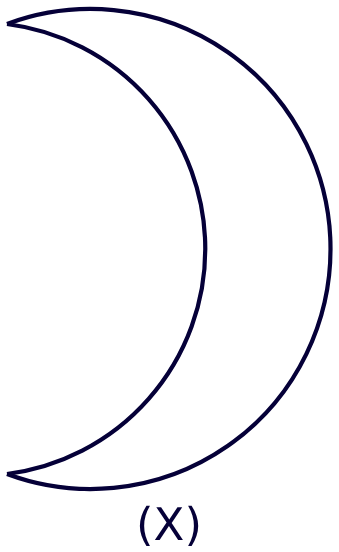
Select the option in which the given figure ( X ) is embedded (rotation is NOT allowed).
figure
उस विकल्प का चयन कीजिए जिसमें दी गई आकृति (X) अंतर्निहित है (घुमाने की अनुमति नहीं है)।
figure
  1. Afigure
  2. Bfigure
  3. Cfigure
  4. Dfigure
Show answer

Concept: The figure must appear exactly – same size, same direction (no rotation).

  1. Figure (X) is a crescent: a deep outer arc and a flatter inner arc joined at top and bottom, hollow side to the left.
  2. In option (a), the large circle overlapped by the spoked circle leaves exactly this crescent on the right.
  3. Other options give a crescent of a different shape or facing another way.

Trick: Lock onto one distinctive feature (here the direction of the hollow) and reject options where it points elsewhere.

Answer: (A) Figure (a)

अवधारणा: आकृति ठीक उसी आकार और दिशा में दिखनी चाहिए (घुमाना मना है)।

हल:

  1. आकृति (X) एक अर्धचंद्र है: गहरा बाहरी चाप और चपटा भीतरी चाप, ऊपर-नीचे जुड़े, खोखला भाग बाईं ओर।
  2. विकल्प (a) में बड़े वृत्त को तीलियों वाला वृत्त ढकता है और बचा भाग ठीक यही अर्धचंद्र बनाता है।
  3. अन्य विकल्पों में आकार या दिशा अलग है।

ट्रिक: एक विशेष पहचान (यहाँ खोखले भाग की दिशा) पकड़ें और उलटी दिशा वाले विकल्प हटा दें।

उत्तर: (A) आकृति (a)

SSC GDGeneral Intelligence & ReasoningEmbedded figureSSC GD 2025 · 5 Feb Shift 1 →