Question bank

Q&A: practice questions with answers

Search questions on any topic. Filter by exam category, exam, subject and topic, try the question, then open the answer and explanation.

Courses – airGurukul

4,200 questions found.

Q3901.
What should come in place of the question mark (?) in the given series? 65 86 114 149 191 ?
दी गई शृंखला में प्रश्नवाचक चिह्न (?) के स्थान पर क्या आना चाहिए? 65 86 114 149 191 ?
  1. A240
  2. B216
  3. C226
  4. D232
Show answer

Concept: Gaps between terms form their own pattern.

  1. Gaps: 21, 28, 35, 42 → each grows by 7.
  2. Next gap = 42 + 7 = 49.
  3. ? = 191 + 49 = 240

Trick: Gaps are 7×3, 7×4, 7×5, 7×6 → next is 7×7 = 49. Only 240 − 191 = 49 among options.

Answer: (A) 240

अवधारणा: क्रमागत पदों का अंतर एक नियम पर चलता है।

हल:

  1. अंतर: 21, 28, 35, 42 → हर बार 7 अधिक।
  2. अगला अंतर = 42 + 7 = 49
  3. ? = 191 + 49 = 240

ट्रिक: अंतर 7 के पहाड़े (7×3, 7×4…) हैं, अगला 7×7 = 49।

उत्तर: (A) 240

SSC GDGeneral Intelligence & ReasoningNumber series – differences rising by 7SSC GD 2025 · 4 Feb Shift 3 →
Q3902.
What should come in place of the question mark (?) in the given series? 10 11 13 17 25 ?
दी गई शृंखला में प्रश्नवाचक चिह्न (?) के स्थान पर क्या आना चाहिए? 10 11 13 17 25 ?
  1. A42
  2. B40
  3. C43
  4. D41
Show answer

Concept: Differences double each time.

  1. Gaps: 1, 2, 4, 8 (powers of 2).
  2. Next gap = 16.
  3. ? = 25 + 16 = 41

Trick: Pattern 'add 2⁰, 2¹, 2², 2³, 2⁴' – the next term is just 25 + 2⁴.

Answer: (D) 41

अवधारणा: अंतर हर बार दोगुना होता है।

हल:

  1. अंतर: 1, 2, 4, 8
  2. अगला अंतर = 8 × 2 = 16
  3. ? = 25 + 16 = 41

ट्रिक: 2 की घातें जुड़ रही हैं: 2⁰, 2¹, 2², 2³, 2⁴।

उत्तर: (D) 41

SSC GDGeneral Intelligence & ReasoningNumber series – doubling differencesSSC GD 2025 · 4 Feb Shift 3 →
Q3903.
In a certain code language, 'BIGS' is coded as '4593' and 'SING' is coded as '9432'. What is the code for 'N' in the given code language?
एक निश्चित कूट भाषा में, 'BIGS' को '4593' के रूप में कूटबद्ध किया जाता है और 'SING' को '9432' के रूप में कूटबद्ध किया जाता है। उसी कूट भाषा में 'N' का कूट क्या होगा?
  1. A2
  2. B9
  3. C4
  4. D3
Show answer

Concept: Letters shared by two words get the digits shared by their codes.

  1. BIGS → 4593, SING → 9432.
  2. Common letters I, G, S ↔ common digits 4, 9, 3.
  3. Extra letter in SING is N; extra digit in 9432 is 2 → N = 2.

Trick: Strike out the common digits; the one left in the second code belongs to the one letter left in the second word.

Answer: (A) 2

अवधारणा: दोनों शब्दों के साझा अक्षरों का कोड, दोनों कोडों के साझा अंक होते हैं।

हल:

  1. BIGS → 4593, SING → 9432
  2. साझा अक्षर I, G, S ↔ साझा अंक 4, 9, 3
  3. SING में बचा अक्षर N, 9432 में बचा अंक 2 → N = 2

ट्रिक: समान अंक काट दें; बचा अंक ही बचे अक्षर का कोड है।

उत्तर: (A) 2

SSC GDGeneral Intelligence & ReasoningCoding – common letters, common digitsSSC GD 2025 · 4 Feb Shift 3 →
Q3904.
MLTA is related to QHXW in a certain way based on the English alphabetical order. In the same way, LNVB is related to PJZX. To which of the given options is CWON related, following the same logic?
अंग्रेजी वर्णमाला क्रम के आधार पर MLTA एक निश्चित प्रकार से QHXW से संबंधित है। उसी प्रकार, LNVB, PJZX से संबंधित है। समान तर्क का अनुसरण करते हुए, CWON दिए गए विकल्पों में से किससे संबंधित है?
  1. AGSJS
  2. BGASR
  3. CGSAR
  4. DGSSJ
Show answer

Concept: Each letter moves by a fixed alternating step.

  1. MLTA → QHXW: M+4, L−4, T+4, A−4 (A−4 wraps to W).
  2. Check LNVB → PJZX ✔.
  3. CWON → G (=C+4), S (=W−4), S (=O+4), J (=N−4) → GSSJ

Trick: First letter C+4 = G for all options; the last letter N−4 = J picks GSSJ directly.

Answer: (D) GSSJ

अवधारणा: हर अक्षर बारी-बारी +4 और −4 खिसकता है।

हल:

  1. MLTA → QHXW: M+4, L−4, T+4, A−4
  2. LNVB → PJZX से नियम पक्का।
  3. CWON → G (=C+4), S (=W−4), S (=O+4), J (=N−4) → GSSJ

ट्रिक: केवल अंतिम अक्षर N−4 = J देखें – सिर्फ GSSJ में J है।

उत्तर: (D) GSSJ

SSC GDGeneral Intelligence & ReasoningLetter analogy – alternate +4/−4SSC GD 2025 · 4 Feb Shift 3 →
Q3905.
What will come in the place of the question mark '(?)' in the following equation, if ' - ' and ' ÷ ' are interchanged and ' × ' and ' + ' are interchanged? 8 + 63 - 7 × 7 ÷ 9 = ?
यदि ' - ' और ' ÷ ' को आपस में बदल दिया जाए तथा ' × ' और ' + ' को आपस में बदल दिया जाए, तो निम्नलिखित समीकरण में प्रश्नवाचक चिह्न '(?)' के स्थान पर क्या आएगा? 8 + 63 - 7 × 7 ÷ 9 = ?
  1. A68
  2. B69
  3. C70
  4. D71
Show answer

Concept: Swap the signs first, then solve by BODMAS.

  1. Swap − ↔ ÷ and × ↔ +: 8 × 63 ÷ 7 + 7 − 9
  2. 63 ÷ 7 = 9, 8 × 9 = 72
  3. 72 + 7 − 9 = 70

Trick: Do 63 ÷ 7 first – it keeps the numbers small (8 × 9 instead of 8 × 63).

Answer: (C) 70

अवधारणा: पहले चिह्न बदलें, फिर BODMAS से हल करें।

हल:

  1. बदलने पर: 8 × 63 ÷ 7 + 7 − 9
  2. 63 ÷ 7 = 9, 8 × 9 = 72
  3. 72 + 7 − 9 = 70

ट्रिक: पहले 63 ÷ 7 कर लें, गणना छोटी हो जाती है।

उत्तर: (C) 70

SSC GDGeneral Intelligence & ReasoningSign interchange – BODMASSSC GD 2025 · 4 Feb Shift 3 →
Q3906.
Based on the English alphabetical order, three of the following four letter-clusters are alike in a certain way and thus form a group. Which letter-cluster DOES NOT belong to that group?
(Note: The odd man out is not based on the number of consonants/vowels or their position in the letter-cluster.)
अंग्रेजी वर्णमाला क्रम के आधार पर, निम्नलिखित चार अक्षर-समूहों में से तीन एक निश्चित प्रकार से समान हैं और इस प्रकार एक समूह बनाते हैं। कौन-सा अक्षर-समूह उस समूह से संबंधित नहीं है?
(नोट: विषम अक्षर-समूह का आधार अक्षर-समूह में व्यंजनों/स्वरों की संख्या अथवा उनका स्थान नहीं है।)
  1. ANYJ
  2. BTEP
  3. CCNY
  4. DQZK
Show answer

Concept: Three clusters use the same jump between letters.

  1. NYJ: N(14)→Y(25)→J: +11, +11
  2. TEP and CNY: also +11, +11
  3. QZK: Q(17)→Z(26) = +9 ✘

Trick: Check only the first jump of each cluster – the one that is not +11 is odd.

Answer: (D) QZK

अवधारणा: तीन समूहों में अक्षरों के बीच समान छलांग है।

हल:

  1. NYJ: N→Y→J: +11, +11
  2. TEP, CNY: भी +11, +11
  3. QZK: Q(17)→Z(26) = +9 ✘

ट्रिक: हर समूह की केवल पहली छलांग जाँचें; जो +11 नहीं वही अलग।

उत्तर: (D) QZK

SSC GDGeneral Intelligence & ReasoningOdd one out – letter gapsSSC GD 2025 · 4 Feb Shift 3 →
Q3907.
Identify the figure given in the options which when put in place of the question mark (?) will logically complete the series.
figure
उस आकृति का चयन कीजिए जिसे प्रश्नवाचक चिह्न (?) के स्थान पर रखने पर दी गई शृंखला तार्किक रूप से पूर्ण हो जाएगी।
figure
  1. Afigure
  2. Bfigure
  3. Cfigure
  4. Dfigure
Show answer

Concept: Two changes run together: number of arrow-arcs and their turning direction.

  1. Arcs go 6 → 5 → 4 → 3, so the next figure has 2.
  2. Direction alternates clockwise/anticlockwise → next is clockwise.
  3. Only option (B) has 2 clockwise arcs.

Trick: Track one feature at a time – count first, then eliminate by direction.

Answer: (B) Option (B)

अवधारणा: दो बदलाव साथ चलते हैं: चापों की संख्या और घूमने की दिशा।

हल:

  1. चाप 6 → 5 → 4 → 3, अगली आकृति में 2।
  2. दिशा बारी-बारी दक्षिणावर्त/वामावर्त → अगली दक्षिणावर्त।
  3. केवल (B) में 2 दक्षिणावर्त चाप हैं।

ट्रिक: पहले गिनती से छाँटें, फिर दिशा से।

उत्तर: (B) विकल्प (B)

SSC GDGeneral Intelligence & ReasoningFigure series – arcs & directionSSC GD 2025 · 4 Feb Shift 3 →
Q3908.
NRDF is related to PMFA in a certain way based on the English alphabetical order. In the same way, SFJW is related to UALR. To which of the given options is GVKQ related, following the same logic?
अंग्रेजी वर्णमाला क्रम के आधार पर NRDF एक निश्चित प्रकार से PMFA से संबंधित है। उसी प्रकार, SFJW, UALR से संबंधित है। समान तर्क का अनुसरण करते हुए, GVKQ दिए गए विकल्पों में से किससे संबंधित है?
  1. AIQML
  2. BRGLB
  3. CPGKY
  4. DKRCX
Show answer

Concept: Letters shift by +2 and −5 alternately.

  1. NRDF → PMFA: N+2, R−5, D+2, F−5
  2. SFJW → UALR fits the same rule.
  3. GVKQ → I (=G+2), Q (=V−5), M (=K+2), L (=Q−5) → IQML

Trick: G+2 = I – only option (A) starts with I.

Answer: (A) IQML

अवधारणा: अक्षर बारी-बारी +2 और −5 खिसकते हैं।

हल:

  1. NRDF → PMFA: N+2, R−5, D+2, F−5
  2. SFJW → UALR भी यही।
  3. GVKQ → I (=G+2), Q (=V−5), M (=K+2), L (=Q−5) → IQML

ट्रिक: G+2 = I; केवल (A) I से शुरू होता है।

उत्तर: (A) IQML

SSC GDGeneral Intelligence & ReasoningLetter analogy – +2/−5 patternSSC GD 2025 · 4 Feb Shift 3 →
Q3909.
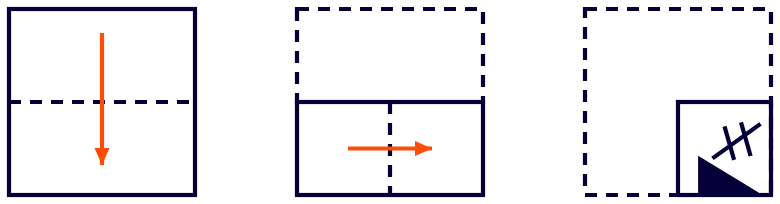
A paper is folded and punched as shown below. How will it appear when unfolded?
figure
एक कागज़ को नीचे दर्शाए अनुसार मोड़ा और छेदा जाता है। खोलने पर वह कैसा दिखाई देगा?
figure
  1. Afigure
  2. Bfigure
  3. Cfigure
  4. Dfigure
Show answer

Concept: Each unfold mirrors the holes across the fold line.

  1. Two folds → the punch lies in one quarter of the sheet.
  2. Open the last fold first: mirror holes across it.
  3. Open the first fold: mirror again → each hole appears 4 times, symmetric about both centre lines – option (D).

Trick: Holes after unfolding = holes punched × 2number of folds (here ×4); reject options with the wrong count.

Answer: (D) Option (D)

अवधारणा: हर बार खोलने पर छेद मोड़ की रेखा के सापेक्ष दर्पण-प्रतिबिंब बनाते हैं।

हल:

  1. दो मोड़ → छेद कागज़ के एक चौथाई भाग में।
  2. अंतिम मोड़ पहले खोलें, छेदों का प्रतिबिंब लें।
  3. फिर पहला मोड़ खोलें → हर छेद 4 बार, दोनों केंद्र रेखाओं के सममित – (D)।

ट्रिक: कुल छेद = छेद × 2मोड़ों की संख्या; गलत संख्या वाले विकल्प हटा दें।

उत्तर: (D) विकल्प (D)

SSC GDGeneral Intelligence & ReasoningPaper folding & punchingSSC GD 2025 · 4 Feb Shift 3 →
Q3910.
Read the given statements and conclusions carefully. Assuming that the information given in the statements is true, even if it appears to be at variance with commonly known facts, decide which of the given conclusion(s) logically follow(s) from the statement(s).
Statements:
All anklets are socks.
All socks are flats.
Some flats are trousers.
Conclusions:
(I) All anklets are flats.
(II) Some trousers are anklets.
दिए गए कथनों और निष्कर्षों को ध्यानपूर्वक पढ़िए। यह मानते हुए कि कथनों में दी गई सूचना सत्य है, चाहे वह सर्वज्ञात तथ्यों से भिन्न प्रतीत होती हो, निर्णय कीजिए कि दिए गए निष्कर्षों में से कौन-सा/से निष्कर्ष कथनों का तार्किक रूप से अनुसरण करता है/करते हैं।
कथन:
सभी पायल मोज़े हैं।
सभी मोज़े फ्लैट्स हैं।
कुछ फ्लैट्स ट्राउज़र हैं।
निष्कर्ष:
(I) सभी पायल फ्लैट्स हैं।
(II) कुछ ट्राउज़र पायल हैं।
  1. AOnly conclusion (I) follows.केवल निष्कर्ष (I) अनुसरण करता है।
  2. BOnly conclusion (II) follows.केवल निष्कर्ष (II) अनुसरण करता है।
  3. CNeither conclusion (I) nor (II) follows.न तो निष्कर्ष (I) और न ही निष्कर्ष (II) अनुसरण करता है।
  4. DBoth conclusions (I) and (II) follow.निष्कर्ष (I) और (II) दोनों अनुसरण करते हैं।
Show answer

Concept: All A are B + All B are C ⇒ All A are C; 'Some' gives no sure link.

  1. Anklets ⊂ Socks ⊂ Flats ⇒ All anklets are flats – I follows.
  2. Trousers touch only 'some flats'; they may lie outside socks ⇒ II not certain.

Trick: A 'Some' statement at the end of the chain never links back to the first term.

Answer: (A) Only conclusion (I) follows.

अवधारणा: सभी A, B हैं + सभी B, C हैं ⇒ सभी A, C हैं; 'कुछ' से पक्का संबंध नहीं।

हल:

  1. एंकलेट ⊂ मोज़े ⊂ फ्लैट्स ⇒ निष्कर्ष I सही।
  2. ट्राउज़र केवल 'कुछ फ्लैट्स' से जुड़े; मोज़ों से बाहर हो सकते हैं ⇒ II निश्चित नहीं।

ट्रिक: श्रृंखला के अंत में 'कुछ' वाला कथन पहले पद से संबंध नहीं बनाता।

उत्तर: (A) सिर्फ़ पहला निष्कर्ष (I) सही है।

SSC GDGeneral Intelligence & ReasoningSyllogism – chain of 'All'SSC GD 2025 · 4 Feb Shift 3 →
Q3911.
In a certain code language, ' A + B ' means ' A is the mother of B ', ' A - B ' means ' A is the daughter of B ', ' A × B ' means ' A is the son of B ' and ' A ÷ B ' means ' A is the brother of B '.
How is F related to C if ' C - D ÷ E × F + G '?
एक निश्चित कूट भाषा में, ' A + B ' का अर्थ है ' A, B की माता है ', ' A - B ' का अर्थ है ' A, B की पुत्री है ', ' A × B ' का अर्थ है ' A, B का पुत्र है ' तथा ' A ÷ B ' का अर्थ है ' A, B का भाई है '।
यदि ' C - D ÷ E × F + G ' है, तो F, C से किस प्रकार संबंधित है?
  1. AMother's fatherमाता के पिता
  2. BFather's motherपिता की माता
  3. CDaughter's sonपुत्री का पुत्र
  4. DFather's brotherपिता का भाई
Show answer

Concept: Decode each symbol, then join the chain.

  1. C − D: C is D's daughter; D ÷ E: D is E's brother (male).
  2. E × F: E is F's son ⇒ D is also F's son.
  3. F + G: F is a mother (female). So F is the mother of C's father.

Trick: Fix genders first: D (brother) is male, F (mother) is female – only 'Father's mother' matches both.

Answer: (B) Father's mother

अवधारणा: हर चिह्न का अर्थ लगाकर श्रृंखला जोड़ें।

हल:

  1. C − D: C, D की बेटी; D ÷ E: D, E का भाई (पुरुष)।
  2. E × F: E, F का बेटा ⇒ D भी F का बेटा।
  3. F + G: F माँ है (स्त्री) ⇒ F, C के पिता की माँ।

ट्रिक: पहले लिंग तय करें: D पुरुष, F स्त्री – केवल 'पिता की माँ' बैठता है।

उत्तर: (B) पिता की माँ

SSC GDGeneral Intelligence & ReasoningCoded blood relationSSC GD 2025 · 4 Feb Shift 3 →
Q3912.
What should come in place of '?' in the given series based on the English alphabetical order?
TKF UJG VIH WHI ?
अंग्रेजी वर्णमाला क्रम के आधार पर दी गई शृंखला में '?' के स्थान पर क्या आना चाहिए?
TKF UJG VIH WHI ?
  1. AXGJ
  2. BZJM
  3. CXLJ
  4. DJGX
Show answer

Concept: Each position of the cluster follows its own step.

  1. 1st letters: T, U, V, W → X (+1)
  2. 2nd letters: K, J, I, H → G (−1)
  3. 3rd letters: F, G, H, I → J (+1)

Trick: 1st letter must be X → options A or C; 2nd letter G → A.

Answer: (A) XGJ

अवधारणा: समूह का हर स्थान अपना नियम मानता है।

हल:

  1. पहले अक्षर: T, U, V, W → X (+1)
  2. दूसरे: K, J, I, H → G (−1)
  3. तीसरे: F, G, H, I → J (+1)

ट्रिक: पहला अक्षर X → A या C; दूसरा G → केवल A।

उत्तर: (A) XGJ

SSC GDGeneral Intelligence & ReasoningLetter series – three positionsSSC GD 2025 · 4 Feb Shift 3 →
Q3913.
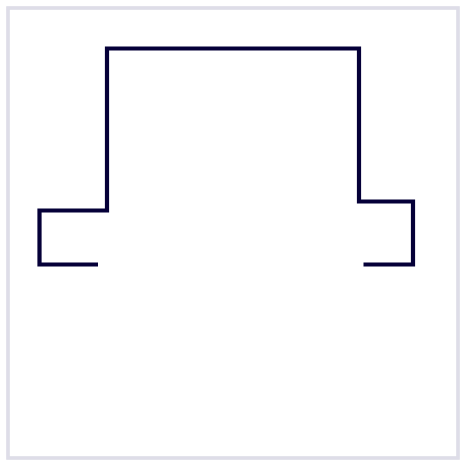
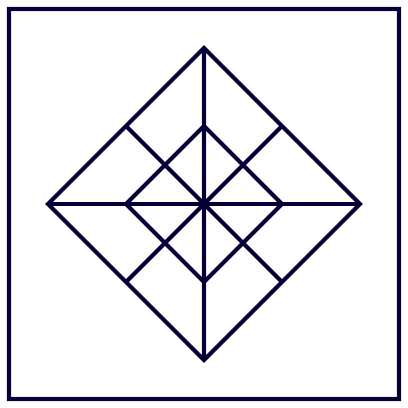
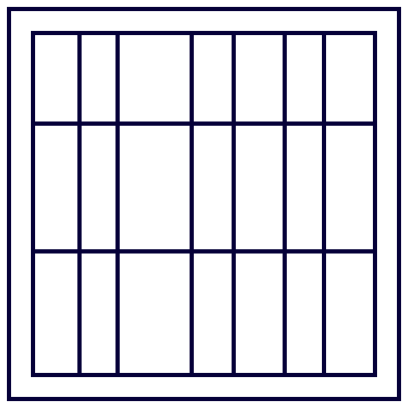
Select the option in which the given figure is embedded (rotation is NOT allowed).
figure
उस विकल्प का चयन कीजिए जिसमें दी गई आकृति सन्निहित है (घुमाने की अनुमति नहीं है)।
figure
  1. Afigure
  2. Bfigure
  3. Cfigure
  4. Dfigure
Show answer

Concept: The exact shape must appear inside an option in the same size and orientation.

  1. Note the key parts: inverted U top with outward steps on both arms.
  2. Search each option for these lines without turning.
  3. Option (C) contains the full outline.

Trick: Look for the most unusual corner/step of the figure first – most options fail there.

Answer: (C) Option (C)

अवधारणा: दी गई आकृति उसी आकार व दिशा में विकल्प में छिपी होनी चाहिए।

हल:

  1. मुख्य भाग देखें: उल्टा U और भुजाओं पर बाहर की ओर सीढ़ी।
  2. बिना घुमाए हर विकल्प में खोजें।
  3. विकल्प (C) में पूरी रूपरेखा मिलती है।

ट्रिक: सबसे अलग कोने/सीढ़ी को पहले खोजें, ज़्यादातर विकल्प वहीं बाहर हो जाते हैं।

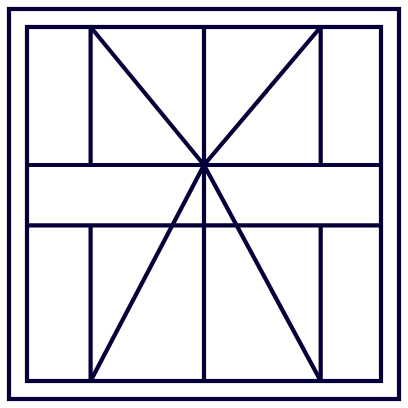
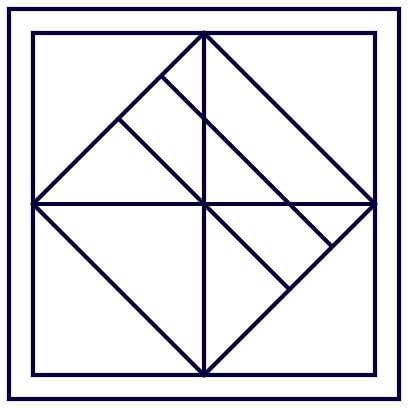
उत्तर: (C) विकल्प (C)

SSC GDGeneral Intelligence & ReasoningEmbedded figureSSC GD 2025 · 4 Feb Shift 3 →
Q3914.
In a certain code language, 'TDZM' is coded as '8-24-2-15' and 'KRIY' is coded as '17-10-19-3'. What is the code for 'HAWP' in the given code language?
एक निश्चित कूट भाषा में, 'TDZM' को '8-24-2-15' के रूप में कूटबद्ध किया जाता है और 'KRIY' को '17-10-19-3' के रूप में कूटबद्ध किया जाता है। उसी कूट भाषा में 'HAWP' का कूट क्या होगा?
  1. A23-25-6-11
  2. B22-9-7-13
  3. C19-8-5-14
  4. D20-27-5-12
Show answer

Concept: Code = 28 − alphabet position of the letter.

  1. T(20) → 8, D(4) → 24: 20+8 = 4+24 = 28.
  2. KRIY: K(11)→17, R(18)→10 ✔
  3. HAWP: 28−8=20, 28−1=27, 28−23=5, 28−16=12

Trick: Letter + its code always = 28; A gives 27 – only option (D) has 27 second.

Answer: (D) 20-27-5-12

अवधारणा: कोड = 28 − अक्षर का स्थान।

हल:

  1. T(20) → 8, D(4) → 24: योग 28।
  2. KRIY: K(11)→17, R(18)→10 ✔
  3. HAWP: 20, 27, 5, 12

ट्रिक: A = 1 का कोड 27 – केवल (D) में 27 है।

उत्तर: (D) 20-27-5-12

SSC GDGeneral Intelligence & ReasoningCoding – 28 minus positionSSC GD 2025 · 4 Feb Shift 3 →
Q3915.
Select the option that represents the letters that, when sequentially placed from left to right in the blanks below, will complete the letter series.
p _ _ u o p q t _ _ _ q _ u o p q _ u _
उस विकल्प का चयन कीजिए जो उन अक्षरों को निरूपित करता है, जिन्हें नीचे दिए गए रिक्त स्थानों में बाएँ से दाएँ क्रमिक रूप से रखने पर अक्षर-शृंखला पूर्ण हो जाएगी।
p _ _ u o p q t _ _ _ q _ u o p q _ u _
  1. Atquoptto
  2. Bqtouptto
  3. Cqtuoptto
  4. Dtqouptot
Show answer

Concept: The series repeats a 5-letter block.

  1. Filled letters 'u o p q t' show the block is p q t u o.
  2. Write: pqtuo pqtuo pqtuo pqtuo.
  3. Blanks read: q t u o p t t o

Trick: Split 20 places into four groups of 5 and fill each group with the same block.

Answer: (C) qtuoptto

अवधारणा: श्रृंखला 5 अक्षरों का एक खंड दोहराती है।

हल:

  1. दिए अक्षरों से खंड: p q t u o
  2. पूरा: pqtuo pqtuo pqtuo pqtuo
  3. खाली स्थान: q t u o p t t o

ट्रिक: 20 स्थानों को 5-5 के चार भागों में बाँटें।

उत्तर: (C) qtuoptto

SSC GDGeneral Intelligence & ReasoningLetter series – repeating blockSSC GD 2025 · 4 Feb Shift 3 →
Q3916.
Seven people, G, H, I, J, K, L and M, are sitting in a row, facing north(but not necessarily in the same order) . No one sits to the right of M. Only three people sit between M and K. Only two people sit between K and H. G sits third to the left of L. J sits to the immediate right of L. How many people sit between I and H ?
सात व्यक्ति G, H, I, J, K, L और M एक पंक्ति में उत्तर की ओर मुख करके बैठे हैं (आवश्यक नहीं कि इसी क्रम में हों)। M के दाईं ओर कोई नहीं बैठा है। M और K के बीच केवल तीन व्यक्ति बैठे हैं। K और H के बीच केवल दो व्यक्ति बैठे हैं। G, L के बाईं ओर तीसरे स्थान पर बैठा है। J, L के ठीक दाईं ओर बैठा है। I और H के बीच कितने व्यक्ति बैठे हैं?
  1. AOneएक
  2. BTwoदो
  3. CThreeतीन
  4. DFourचार
Show answer

Concept: Fix the person with an end position first.

  1. M at right end (7). Three between M and K ⇒ K = 3.
  2. Two between K and H ⇒ H = 6.
  3. G _ _ L J: only L = 4 fits ⇒ G = 1, J = 5; I = 2.
  4. Order: G I K L J H M → between I and H: K, L, J.

Trick: People between seats a and b = |a − b| − 1 = 6 − 2 − 1 = 3.

Answer: (C) Three

अवधारणा: पहले छोर वाले व्यक्ति को बैठाएँ।

हल:

  1. M दाएँ छोर (7) पर; M और K के बीच 3 ⇒ K = 3।
  2. K और H के बीच 2 ⇒ H = 6।
  3. G _ _ L J: L = 4 ⇒ G = 1, J = 5, I = 2।
  4. क्रम: G I K L J H M → I और H के बीच K, L, J।

ट्रिक: बीच के लोग = |स्थान का अंतर| − 1 = 6 − 2 − 1 = 3।

उत्तर: (C) तीन

SSC GDGeneral Intelligence & ReasoningLinear seating – row of 7SSC GD 2025 · 4 Feb Shift 3 →
Q3917.
The position(s) of how many letters will remain unchanged if each of the letters in the word VARIABLE is arranged in the reverse English alphabetical order?
यदि शब्द VARIABLE के प्रत्येक अक्षर को अंग्रेजी वर्णमाला के विपरीत क्रम में व्यवस्थित किया जाए, तो कितने अक्षरों का स्थान अपरिवर्तित रहेगा?
  1. AThreeतीन
  2. BFourचार
  3. COneएक
  4. DTwoदो
Show answer

Concept: Arrange letters Z→A and compare position by position.

  1. VARIABLE → V A R I A B L E
  2. Reverse order: V R L I E B A A
  3. Same place: V (1st), I (4th), B (6th) = 3

Trick: Write both rows one under the other and tick matches – never trust a mental check.

Answer: (A) Three

अवधारणा: अक्षरों को Z→A क्रम में लगाकर स्थान मिलाएँ।

हल:

  1. मूल: V A R I A B L E
  2. उल्टा क्रम: V R L I E B A A
  3. समान स्थान: V, I, B = 3

ट्रिक: दोनों पंक्तियाँ एक-दूसरे के नीचे लिखकर मिलान करें।

उत्तर: (A) तीन

SSC GDGeneral Intelligence & ReasoningLetter rearrangement – reverse orderSSC GD 2025 · 4 Feb Shift 3 →
Q3918.
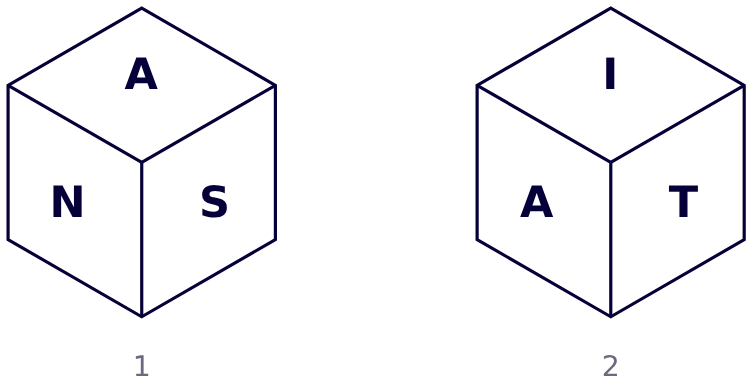
A dice has its faces marked by letters K, A, S, N, T and I. Two positions of the same dice are shown in the given figures. Which face is opposite to face K?
figure
एक पासे के फलकों पर अक्षर K, A, S, N, T और I अंकित हैं। दी गई आकृतियों में उसी पासे की दो स्थितियाँ दर्शाई गई हैं। फलक K के विपरीत कौन-सा फलक है?
figure
  1. AS
  2. BA
  3. CN
  4. DT
Show answer

Concept: A face touches 4 faces; the 5th one is its opposite.

  1. Position 1: A is next to N and S.
  2. Position 2: A is next to I and T.
  3. A touches N, S, I, T ⇒ opposite of A is K.

Trick: The letter common to both views has four neighbours shown – the missing letter is its opposite.

Answer: (B) A

अवधारणा: एक फलक 4 फलकों को छूता है; बचा पाँचवाँ उसका विपरीत।

हल:

  1. स्थिति 1: A के पास N, S।
  2. स्थिति 2: A के पास I, T।
  3. A, N, S, I, T को छूता है ⇒ A के विपरीत K।

ट्रिक: दोनों स्थितियों में उभयनिष्ठ अक्षर के 4 पड़ोसी दिखें तो बचा अक्षर उसका विपरीत।

उत्तर: (B) A

SSC GDGeneral Intelligence & ReasoningDice – opposite faceSSC GD 2025 · 4 Feb Shift 3 →
Q3919.
Six friends E, F, G, R, S and T are sitting around a circular table facing the centre (but not necessarily in the same order). S sits second to the right of F. F sits second to the right of G. Only F sits between R and E. E is an immediate neighbour of S. How many people sit between T and R when counted from the right of R?
छह मित्र E, F, G, R, S और T एक वृत्ताकार मेज़ के चारों ओर केंद्र की ओर मुख करके बैठे हैं (आवश्यक नहीं कि इसी क्रम में हों)। S, F के दाईं ओर दूसरे स्थान पर बैठा है। F, G के दाईं ओर दूसरे स्थान पर बैठा है। R और E के बीच केवल F बैठा है। E, S का निकटतम पड़ोसी है। R के दाईं ओर से गिनने पर T और R के बीच कितने व्यक्ति बैठे हैं?
  1. AFourचार
  2. BOneएक
  3. CThreeतीन
  4. DTwoदो
Show answer

Concept: Facing the centre, 'right' means anticlockwise.

  1. Clockwise order: F, R, G, T, S, E (S 2nd right of F, G 2nd left of F).
  2. E next to S ⇒ E and R flank F; T fills the last seat.
  3. From R towards its right: F, E, S, then T ⇒ 3 people between.

Trick: With 6 seats, the two gaps between any two people add to 4 – one way is 1 (G), the other way 3.

Answer: (C) Three

अवधारणा: केंद्र की ओर मुख हो तो 'दायाँ' = वामावर्त।

हल:

  1. दक्षिणावर्त क्रम: F, R, G, T, S, E
  2. E, S का पड़ोसी ⇒ E और R, F के दोनों ओर; T अंतिम सीट।
  3. R के दाएँ से गिनें: F, E, S फिर T ⇒ बीच में 3।

ट्रिक: 6 सीटों में दोनों ओर के बीच वालों का योग 4: एक ओर 1 (G), दूसरी ओर 3।

उत्तर: (C) तीन

SSC GDGeneral Intelligence & ReasoningCircular seating – facing centreSSC GD 2025 · 4 Feb Shift 3 →
Q3920.
Select the Venn diagram that best illustrate the relationship between the following classes.
Shirt, Cotton, Denim
उस वेन आरेख का चयन कीजिए जो निम्नलिखित वर्गों के बीच के संबंध को सर्वोत्तम रूप से दर्शाता है।
शर्ट, कॉटन, डेनिम
  1. Afigure
  2. Bfigure
  3. Cfigure
  4. Dfigure
Show answer

Concept: Decide which classes can overlap and which are separate.

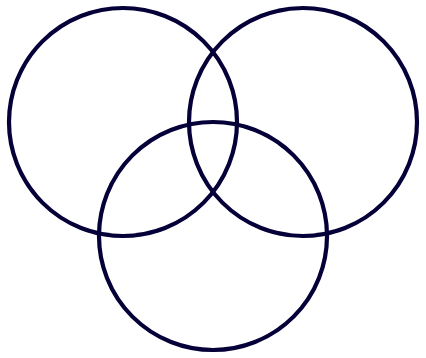
  1. Cotton and denim are different fabrics → separate circles.
  2. A shirt can be cotton or denim → Shirt overlaps both.
  3. Two separate circles joined by a third – option (D).

Trick: Ask 'can one item be both?' for every pair: Cotton–Denim no, Shirt–Cotton yes, Shirt–Denim yes.

Answer: (D) Option (D)

अवधारणा: तय करें कि कौन-से वर्ग आपस में मिलते हैं और कौन अलग हैं।

हल:

  1. सूती और डेनिम अलग कपड़े → अलग वृत्त।
  2. शर्ट सूती या डेनिम हो सकती है → शर्ट दोनों को काटती है।
  3. दो अलग वृत्त, बीच का तीसरा दोनों से जुड़ा – (D)।

ट्रिक: हर जोड़ी पर पूछें 'क्या एक वस्तु दोनों हो सकती है?'

उत्तर: (D) विकल्प (D)

SSC GDGeneral Intelligence & ReasoningVenn diagram – classesSSC GD 2025 · 4 Feb Shift 3 →