Question bank

Q&A: practice questions with answers

Search questions on any topic. Filter by exam category, exam, subject and topic, try the question, then open the answer and explanation.

Courses – airGurukul

4,200 questions found.

Q401.
Read the given statements and conclusions carefully. Assuming that the information given in the statements is true, even if it appears to be at variance with commonly known facts, decide which of the given conclusions logically follow(s) from the statements.
Statements: All breads are croissants.
All breads are muffins.
All breads are pastries.
Conclusions:
(I): All croissants are pastries.
(II): Some pastries are muffins.
दिए गए कथनों और निष्कर्षों को ध्यानपूर्वक पढ़िए। यह मानते हुए कि कथनों में दी गई जानकारी सत्य है, चाहे वह सर्वज्ञात तथ्यों से भिन्न प्रतीत होती हो, निर्णय कीजिए कि दिए गए निष्कर्षों में से कौन-सा/से कथनों का तार्किक रूप से अनुसरण करता है/करते हैं।
कथन: सभी ब्रेड, क्रोइसैं हैं।
सभी ब्रेड, मफिन हैं।
सभी ब्रेड, पेस्ट्री हैं।
निष्कर्ष:
(I): सभी क्रोइसैं, पेस्ट्री हैं।
(II): कुछ पेस्ट्री, मफिन हैं।
  1. ANeither conclusion (I) nor (II) follows.न तो निष्कर्ष (I) और न ही (II) अनुसरण करता है।
  2. BBoth conclusions (I) and (II) follow.निष्कर्ष (I) और (II) दोनों अनुसरण करते हैं।
  3. COnly conclusion (I) follows.केवल निष्कर्ष (I) अनुसरण करता है।
  4. DOnly conclusion (II) follows.केवल निष्कर्ष (II) अनुसरण करता है।
Show answer

Concept: When three 'All' statements share the same subject, the predicates are linked only through that subject.

  1. Breads sit inside croissants, muffins and pastries at the same time.
  2. (I) Croissants outside the bread region may lie outside pastries → 'All croissants are pastries' is not certain.
  3. (II) Any bread is both a pastry and a muffin → some pastries are certainly muffins. Follows.

Trick: Two 'All' statements with the same subject always give a definite 'Some' between their predicates, never an 'All'.

Answer: (D) Only conclusion (II) follows.

अवधारणा: जब तीनों 'सभी' कथनों का विषय एक ही हो, तो बाकी पद केवल उसी विषय के माध्यम से जुड़ते हैं।

हल:

  1. ब्रेड का घेरा क्रोइसां, मफिन और पेस्ट्री तीनों के अंदर है।
  2. (I) ब्रेड के बाहर वाले क्रोइसां पेस्ट्री से बाहर भी हो सकते हैं → निश्चित नहीं।
  3. (II) हर ब्रेड पेस्ट्री भी है और मफिन भी → 'Some pastries are muffins' निश्चित रूप से सत्य।

ट्रिक: एक ही विषय वाले दो 'सभी' कथनों से उनके विधेयों में हमेशा 'कुछ' वाला निष्कर्ष निकलता है, 'सभी' वाला नहीं।

उत्तर: (D) सिर्फ़ (II) वाला निष्कर्ष सही बैठता है।

SSC GDGeneral Intelligence & ReasoningSyllogism – common subject 'breads'SSC GD 2025 · 21 Feb Shift 2 →
Q402.
Select the combination of letters that when sequentially placed in the blanks of the given series, will logically complete the series.
_TWR U_SN QL_J MHK_ IDG_
उस अक्षर-संयोजन का चयन कीजिए, जिसे दी गई शृंखला के रिक्त स्थानों में क्रमानुसार रखने पर शृंखला तार्किक रूप से पूर्ण हो जाएगी।
_TWR U_SN QL_J MHK_ IDG_
  1. AYQOEB
  2. BZQNEC
  3. CZPNFC
  4. DYPOFB
Show answer

Concept: Split the series into equal blocks and compare letters column-wise.

  1. Blocks: _TWR | U_SN | QL_J | MHK_ | IDG_.
  2. Column 2: T, ?, L, H, D → each −4, so the blank is P. Column 1: ?, U, Q, M, I → blank Y.
  3. Column 3: W, S, ?, K, G → O. Column 4: R, N, J, ?, ? → F, then B.
  4. Blanks in order: Y, P, O, F, B.

Trick: Once you see a −4 jump in any one column, test only the first letter of options: Y fits (Y−4 = U), so pick between A and D; then P vs Q settles it.

Answer: (D) YPOFB

अवधारणा: श्रृंखला को बराबर समूहों में बाँटकर हर कॉलम के अक्षरों की तुलना करें।

हल:

  1. समूह: _TWR | U_SN | QL_J | MHK_ | IDG_
  2. दूसरा कॉलम: T, ?, L, H, D → हर बार −4, अतः P। पहला कॉलम: ?, U, Q, M, I → Y।
  3. तीसरा कॉलम: W, S, ?, K, G → O। चौथा कॉलम: R, N, J, ?, ? → F, फिर B।
  4. क्रम: Y, P, O, F, B

ट्रिक: किसी एक कॉलम में −4 दिखते ही विकल्पों का पहला अक्षर जाँचें: Y सही (Y−4 = U), फिर P या Q से उत्तर तय।

उत्तर: (D) YPOFB

SSC GDGeneral Intelligence & ReasoningLetter series – blanks in 4-letter blocksSSC GD 2025 · 21 Feb Shift 2 →
Q403.
E, F, G, H, J, K and L are sitting around a circular table facing the centre of the table (but not necessarily in the same order). Only one person sits between E and L when counted from the left of L. K sits third to the right of J. F sits third to the left of G. K sits to the immediate right of F. H is not an immediate neighbour of F. How many people sit between H and L when counted from the right of H ?
E, F, G, H, J, K और L एक वृत्ताकार मेज़ के चारों ओर मेज़ के केंद्र की ओर मुख करके बैठे हैं (आवश्यक नहीं कि इसी क्रम में हों)। L के बाएँ से गिनने पर E और L के बीच केवल एक व्यक्ति बैठा है। K, J के दाएँ तीसरे स्थान पर बैठा है। F, G के बाएँ तीसरे स्थान पर बैठा है। K, F के ठीक दाएँ बैठा है। H, F का निकटतम पड़ोसी नहीं है। H के दाएँ से गिनने पर H और L के बीच कितने व्यक्ति बैठे हैं?
  1. AThreeतीन
  2. BTwoदो
  3. CFourचार
  4. Doneएक
Show answer

Concept: Facing the centre: left = clockwise, right = anticlockwise.

  1. Fix F. K is immediate right of F; J is 3 places left of K (so K is 3rd to J's right); G is 3rd to the right of F.
  2. Clockwise from F: F, _, J, _, G, _, K. Empty seats: 2nd, 4th, 6th.
  3. E is 2nd to the left of L and H is not next to F → L = 2nd, E = 4th, H = 6th seat.
  4. From the right of H (anticlockwise): G, E, J, then L → 3 people in between.

Trick: Number the seats 0–6 clockwise from F and convert every 'right' to −, 'left' to +; the puzzle then becomes simple addition.

Answer: (A) Three

अवधारणा: केंद्र की ओर मुख हो तो बायाँ = दक्षिणावर्त (clockwise), दायाँ = वामावर्त।

हल:

  1. F को स्थिर करें। K, F के ठीक दाएँ; J, K से 3 स्थान बाएँ; G, F से तीसरा दाएँ।
  2. F से clockwise: F, _, J, _, G, _, K. खाली स्थान: 2रा, 4था, 6ठा।
  3. E, L के बाएँ दूसरा और H, F का पड़ोसी नहीं → L = 2रा, E = 4था, H = 6ठा।
  4. H के दाएँ से गिनें: G, E, J, फिर L → बीच में 3 व्यक्ति।

ट्रिक: सीटों को F से 0–6 नंबर दें; 'दायाँ' को − और 'बायाँ' को + मानें, पहेली सीधा जोड़-घटाव बन जाती है।

उत्तर: (A) तीन

SSC GDGeneral Intelligence & ReasoningCircular seating – 7 persons facing centreSSC GD 2025 · 21 Feb Shift 2 →
Q404.
Select the option in which the given figure (X) is embedded (rotation is NOT allowed).
figure
(X)
उस विकल्प का चयन कीजिए जिसमें दी गई आकृति (X) सन्निहित है (घुमाने की अनुमति नहीं है)।
figure
(X)
  1. Afigure
  2. Bfigure
  3. Cfigure
  4. Dfigure
Show answer

Concept: The exact figure (X), same size and same orientation, must be traceable inside the option.

  1. (X) = a long horizontal line with a semicircle hanging below it; the line extends well beyond the arc on both sides.
  2. In option (d), the horizontal double-arrow passes through the small circle: its lower half gives the semicircle and the arrow gives the long line.
  3. Other options either have straight edges that end where the curve ends, or need rotation.

Trick: Look first for the most distinctive part of (X) (here: line longer than the arc on both sides) and reject options lacking it.

Answer: (D) Option (d)

अवधारणा: आकृति (X) बिना घुमाए, उसी आकार में विकल्प के अंदर दिखनी चाहिए।

हल:

  1. (X) = एक लंबी क्षैतिज रेखा, जिसके नीचे अर्धवृत्त है; रेखा दोनों ओर अर्धवृत्त से आगे तक जाती है।
  2. (d) वाले चित्र में दोनों ओर नोक वाला आड़ा तीर छोटे गोले के बीच से गुज़रता है: वृत्त का निचला आधा = अर्धवृत्त, तीर = लंबी रेखा।
  3. बाकी विकल्पों में सीधी रेखा अर्धवृत्त जितनी ही छोटी है या घुमाना पड़ेगा।

ट्रिक: (X) का सबसे खास हिस्सा पहचानें (यहाँ: अर्धवृत्त से लंबी रेखा) और जिन विकल्पों में वह न हो उन्हें हटा दें।

उत्तर: (D) विकल्प (d)

SSC GDGeneral Intelligence & ReasoningEmbedded figureSSC GD 2025 · 21 Feb Shift 2 →
Q405.
In a certain code language, 'SHOE' is coded as ' 3214 ' and 'HOST' is coded as '3219'. How is 'T' coded in the given language ?
एक निश्चित कूट भाषा में, 'SHOE' को '3214' और 'HOST' को '3219' के रूप में कूटबद्ध किया जाता है। उसी भाषा में 'T' को किस प्रकार कूटबद्ध किया जाएगा?
  1. A9
  2. B2
  3. C3
  4. D1
Show answer

Concept: Letters common to both words take the digits common to both codes; the leftover letter gets the leftover digit.

  1. SHOE → 3214, HOST → 3219.
  2. Common letters S, H, O ↔ common digits 3, 2, 1.
  3. SHOE's extra letter E ↔ extra digit 4; HOST's extra letter T ↔ extra digit 9.

Trick: Cancel the common digits from the second code: 3219 − {3, 2, 1} leaves 9 = T.

Answer: (A) 9

अवधारणा: दोनों शब्दों के सामान्य अक्षरों के कोड भी दोनों कोड में सामान्य होते हैं; बचा हुआ अक्षर = बचा हुआ अंक।

हल:

  1. SHOE → 3214, HOST → 3219
  2. सामान्य अक्षर S, H, O ↔ सामान्य अंक 3, 2, 1
  3. SHOE में अलग E ↔ 4; HOST में अलग T ↔ 9

ट्रिक: दूसरे कोड से सामान्य अंक काट दें: 3219 में से 3, 2, 1 हटाने पर 9 बचता है = T।

उत्तर: (A) 9

SSC GDGeneral Intelligence & ReasoningCoding – common letters, odd digitSSC GD 2025 · 21 Feb Shift 2 →
Q406.
'FNTA' is related to 'BKRZ' in a certain way based on the English alphabetical order. In the same way, 'JOCY' is related to 'FLAX'. To which of the following is 'RWLS' related, following the same logic ?
अंग्रेज़ी वर्णमाला क्रम के आधार पर 'FNTA' एक निश्चित प्रकार से 'BKRZ' से संबंधित है। उसी प्रकार, 'JOCY', 'FLAX' से संबंधित है। समान तर्क का अनुसरण करते हुए 'RWLS' निम्नलिखित में से किससे संबंधित है?
  1. AOSIR
  2. BNTJR
  3. CMRGT
  4. DMSHS
Show answer

Concept: Find the positional change for each letter and apply it to the new word.

  1. F→B (−4), N→K (−3), T→R (−2), A→Z (−1). JOCY→FLAX checks the same.
  2. Now shift RWLS the same way: R → N, W → T, L → J, S → R.

Trick: The last letter only drops by 1, so the answer must end in R (S−1). Only options A and B end in R; second letter W−3 = T picks B.

Answer: (B) NTJR

अवधारणा: हर अक्षर में कितना बदलाव हुआ है, वही बदलाव नए शब्द पर लगाएँ।

हल:

  1. F→B (−4), N→K (−3), T→R (−2), A→Z (−1); JOCY→FLAX में भी यही।
  2. RWLS पर यही नियम: R → N, W → T, L → J, S → R

ट्रिक: अंतिम अक्षर में केवल −1 है, तो उत्तर R पर खत्म होगा (A या B)। दूसरा अक्षर W−3 = T → B।

उत्तर: (B) NTJR

SSC GDGeneral Intelligence & ReasoningLetter analogy – −4, −3, −2, −1SSC GD 2025 · 21 Feb Shift 2 →
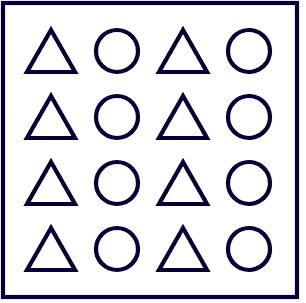
Q407.
A paper is folded and cut as shown below. How will it appear when unfolded?
figure
नीचे दर्शाए अनुसार एक कागज़ को मोड़ा और काटा गया है। खोलने पर वह कैसा दिखाई देगा?
figure
  1. Afigure
  2. Bfigure
  3. Cfigure
  4. Dfigure
Show answer

Concept: Unfold in reverse order; each fold creates a mirror image across the fold line.

  1. Two upward horizontal folds → the cut strip has 4 layers.
  2. Cut strip: ▽ ○ ▽ ○. Opening the 2nd fold adds its mirror below: △ ○ △ ○.
  3. Opening the 1st fold mirrors these two rows again → 4 rows alternating ▽ / △, with circles unchanged in the same columns.

Trick: Horizontal folds only flip shapes up–down; left–right order never changes. Circles look the same after flipping, so check only the triangles' direction row by row.

Answer: (A) Option (a)

अवधारणा: उल्टे क्रम में खोलें; हर मोड़ पर आकृति मोड़-रेखा के सापेक्ष दर्पण प्रतिबिंब बनाती है।

हल:

  1. दो बार क्षैतिज मोड़ → कटी पट्टी में 4 परतें।
  2. कटी पट्टी: ▽ ○ ▽ ○; दूसरा मोड़ खोलने पर नीचे उल्टी पंक्ति: △ ○ △ ○।
  3. पहला मोड़ खोलने पर ये दोनों पंक्तियाँ फिर उलटकर आती हैं → 4 पंक्तियाँ, त्रिभुज बारी-बारी ▽ / △।

ट्रिक: क्षैतिज मोड़ में आकृति केवल ऊपर-नीचे पलटती है, बाएँ-दाएँ क्रम नहीं बदलता। वृत्त पलटने पर वैसा ही रहता है, बस त्रिभुजों की दिशा जाँचें।

उत्तर: (A) विकल्प (a)

SSC GDGeneral Intelligence & ReasoningPaper folding and cuttingSSC GD 2025 · 21 Feb Shift 2 →
Q408.
Eight people are sitting in two parallel rows containing 4 people each in such a way that there is equal distance between adjacent persons.
In row 1, T, R, A and K are seated and all of them are facing south.
In row 2, S, O, M and E are seated and all of them are facing north.
Thus, each person faces another person from the other row.
T sits third to the right of K. The one facing S is an immediate neighbour of K. The one facing R is an immediate neighbour of S. The one facing T is an immediate neighbour of O. M sits at some place to the left of E. Which of the following represents both people sitting at extreme ends of the rows?
आठ व्यक्ति दो समानांतर पंक्तियों में इस प्रकार बैठे हैं कि प्रत्येक पंक्ति में 4 व्यक्ति हैं और आसन्न व्यक्तियों के बीच समान दूरी है।
पंक्ति 1 में T, R, A और K बैठे हैं तथा उन सभी का मुख दक्षिण दिशा की ओर है।
पंक्ति 2 में S, O, M और E बैठे हैं तथा उन सभी का मुख उत्तर दिशा की ओर है।
इस प्रकार, प्रत्येक व्यक्ति दूसरी पंक्ति के किसी एक व्यक्ति के सम्मुख है।
T, K के दाएँ तीसरे स्थान पर बैठा है। S के सम्मुख बैठा व्यक्ति K का निकटतम पड़ोसी है। R के सम्मुख बैठा व्यक्ति S का निकटतम पड़ोसी है। T के सम्मुख बैठा व्यक्ति O का निकटतम पड़ोसी है। M, E के बाईं ओर कहीं बैठा है। निम्नलिखित में से कौन-सा विकल्प पंक्तियों के अंतिम छोरों पर बैठे दोनों व्यक्तियों को दर्शाता है?
  1. AE and AE और A
  2. BM and KM और K
  3. CA and MA और M
  4. DE and RE और R
Show answer

Concept: Row facing south: its right = page-left; row facing north: its left = page-left.

  1. T is 3rd to the right of K (row 1, facing south) → page order: T _ _ K.
  2. Facing S is a neighbour of K → S at position 3 of row 2. Facing R is a neighbour of S → R at position 2, A at 3.
  3. Facing T is a neighbour of O → O at position 2. M left of E → M at 1, E at 4.
  4. Row 1: T R A K; Row 2: M O S E. Ends: T, K, M, E.

Trick: In an option, both names must be end-sitters: M and K are the only pair both at ends.

Answer: (B) M and K

अवधारणा: दक्षिण की ओर मुख वाली पंक्ति का दायाँ = पेज का बायाँ; उत्तर की ओर वाली का बायाँ = पेज का बायाँ।

हल:

  1. T, K के दाएँ तीसरा (पंक्ति 1, दक्षिणमुखी) → पेज पर: T _ _ K
  2. S के सामने वाला K का पड़ोसी → S पंक्ति 2 में स्थान 3 पर। R के सामने वाला S का पड़ोसी → R स्थान 2, A स्थान 3।
  3. T के सामने वाला O का पड़ोसी → O स्थान 2। M, E के बाएँ → M स्थान 1, E स्थान 4।
  4. पंक्ति 1: T R A K; पंक्ति 2: M O S E

ट्रिक: विकल्प में दोनों नाम सिरों पर होने चाहिए: M और K दोनों सिरों पर हैं।

उत्तर: (B) M और K

SSC GDGeneral Intelligence & ReasoningParallel row seating – facing rowsSSC GD 2025 · 21 Feb Shift 2 →
Q409.
Based on the English alphabetical order, three of the following four letter-clusters are alike in a certain way and thus form a group. Which letter-cluster DOES NOT belong to that group?
(Note: The odd one out is not based on the number of consonants/vowels or their position in the letter-cluster.)
अंग्रेज़ी वर्णमाला क्रम के आधार पर, निम्नलिखित चार अक्षर-समूहों में से तीन एक निश्चित प्रकार से समान हैं और इस प्रकार एक समूह बनाते हैं। कौन-सा अक्षर-समूह उस समूह से संबंधित नहीं है?
(नोट: विषम पद, अक्षर-समूह में व्यंजनों/स्वरों की संख्या अथवा उनके स्थान पर आधारित नहीं है।)
  1. AKOL
  2. BRVS
  3. CHLI
  4. DLPN
Show answer

Concept: Check the gap between consecutive letters in each cluster.

  1. KOL: K+4 = O, O−3 = L. RVS: +4, −3. HLI: +4, −3.
  2. LPN: L+4 = P, but P−2 = N (not −3).

Trick: In the three similar clusters the 3rd letter is just the next letter after the 1st (K→L, R→S, H→I). LPN breaks this (L→N).

Answer: (D) LPN

अवधारणा: हर समूह में क्रमागत अक्षरों का अंतर देखें।

हल:

  1. KOL: K+4 = O, O−3 = L। RVS: +4, −3। HLI: +4, −3।
  2. LPN: L+4 = P, परंतु P−2 = N (−3 नहीं)।

ट्रिक: तीनों समान समूहों में तीसरा अक्षर पहले अक्षर का अगला है (K→L, R→S, H→I); LPN में L→N है।

उत्तर: (D) LPN

SSC GDGeneral Intelligence & ReasoningOdd one out – letter clustersSSC GD 2025 · 21 Feb Shift 2 →
Q410.
What should come in place of the question mark (?) in the given series based on the English alphabetical order? FTR KYW PDB UIG ?
अंग्रेज़ी वर्णमाला क्रम के आधार पर दी गई शृंखला में प्रश्नवाचक चिह्न (?) के स्थान पर क्या आना चाहिए? FTR KYW PDB UIG ?
  1. AZNM
  2. BYNL
  3. CZNL
  4. DZNO
Show answer

Concept: Track each position of the clusters separately.

  1. 1st letters: F, K, P, U → +5 → Z.
  2. 2nd letters: T, Y, D, I → +5 → N.
  3. 3rd letters: R, W, B, G → +5 → L.

Trick: Find only the 3rd letter: G+5 = L. Options A, C, D all start ZN, and only C ends in L.

Answer: (C) ZNL

अवधारणा: हर समूह के प्रत्येक स्थान को अलग-अलग देखें।

हल:

  1. पहले अक्षर: F, K, P, U → +5 → Z
  2. दूसरे अक्षर: T, Y, D, I → +5 → N
  3. तीसरे अक्षर: R, W, B, G → +5 → L

ट्रिक: सिर्फ तीसरा अक्षर निकालें: G+5 = L। ZN से शुरू होने वाले विकल्पों में केवल C, L पर खत्म होता है।

उत्तर: (C) ZNL

SSC GDGeneral Intelligence & ReasoningLetter series – +5 in each positionSSC GD 2025 · 21 Feb Shift 2 →
Q411.
In a certain code language, ' A<B ' means ' A is the son of B ', ' A/B ' means ' A is the father of B ', ' A:B ' means ' A is the wife of B ' and ' A!B ' means ' A is the brother of B '.
How is F related to H if ' F ! L: A < S/ H' ?
एक निश्चित कूट भाषा में, ' $A<B$ ' का अर्थ है ' $A$, $B$ का पुत्र है ', ' $A/B$ ' का अर्थ है ' $A$, $B$ का पिता है ', ' $A:B$ ' का अर्थ है ' $A$, $B$ की पत्नी है ' तथा ' $A!B$ ' का अर्थ है ' $A$, $B$ का भाई है '।
यदि ' F ! L: A < S/ H' है, तो F, H से किस प्रकार संबंधित है?
  1. ABrother's wife's sisterभाई की पत्नी की बहन
  2. BBrother's wife's brotherभाई की पत्नी का भाई
  3. CBrother's wife's fatherभाई की पत्नी के पिता
  4. DBrother's wife's motherभाई की पत्नी की माता
Show answer

Concept: Decode each symbol pair one by one, then join the chain.

  1. F ! L → F is brother of L. L : A → L is wife of A.
  2. A < S → A is son of S. S / H → S is father of H.
  3. So A is H's brother, L is A's wife, F is L's brother.

Trick: Read the chain backwards from H: H's brother (A) → his wife (L) → her brother (F). Gender of F is male (brother), so options with sister/mother are out.

Answer: (B) Brother's wife's brother

अवधारणा: हर चिह्न को क्रम से खोलें और फिर संबंधों को जोड़ें।

हल:

  1. F ! L → F, L का भाई। L : A → L, A की पत्नी।
  2. A < S → S का बेटा A है। S / H → S, H का पिता।
  3. अतः A, H का भाई; L उसकी पत्नी; F, L का भाई।

ट्रिक: H से पीछे की ओर पढ़ें: H का भाई (A) → उसकी पत्नी (L) → उसका भाई (F)। F पुरुष है, इसलिए sister/mother वाले विकल्प हट जाते हैं।

उत्तर: (B) Brother's wife's brother (भाई की पत्नी का भाई)

SSC GDGeneral Intelligence & ReasoningCoded blood relationSSC GD 2025 · 21 Feb Shift 2 →
Q412.
Which two numbers should be interchanged to make the given equation correct?
(98−45+14)+(84÷7)−36+(6×2)=43
(Note: Interchange should be done of entire number and not individual digits of a given number)
दिए गए समीकरण को सही बनाने के लिए किन दो संख्याओं को आपस में बदला जाना चाहिए?
$(98-45+14)+(84\div 7)-36+(6\times 2)=43$ (नोट: अदला-बदली पूरी संख्या की की जानी चाहिए, न कि दी गई संख्या के अलग-अलग अंकों की।)
  1. A98 and 8498 और 84
  2. B2 and 72 और 7
  3. C7 and 67 और 6
  4. D7 and 147 और 14
Show answer

Concept: Evaluate the given LHS, find the excess, and test options that can remove it.

  1. Given: (98 − 45 + 14) + (84 ÷ 7) − 36 + 12 = 67 + 12 − 36 + 12 = 55; needs to drop by 12.
  2. Swap 98 and 84: (84 − 45 + 14) + (98 ÷ 7) − 36 + 12 = 53 + 14 − 36 + 12 = 43 ✓

Trick: Swapping 98 and 84 cuts the bracket by 14 but raises the quotient by only 2 (14 − 12) → net −12, exactly the excess.

Answer: (A) 98 and 84

अवधारणा: पहले बायाँ पक्ष हल करें, अंतर निकालें, फिर विकल्प जाँचें।

हल:

  1. दिया: (98 − 45 + 14) + (84 ÷ 7) − 36 + 12 = 67 + 12 − 36 + 12 = 55; 12 कम करना है।
  2. 98 और 84 बदलें: (84 − 45 + 14) + (98 ÷ 7) − 36 + 12 = 53 + 14 − 36 + 12 = 43 ✓

ट्रिक: 98↔84 से कोष्ठक 14 घटता है और भागफल केवल 2 बढ़ता है → कुल −12, ठीक उतना जितना चाहिए।

उत्तर: (A) 98 और 84

SSC GDGeneral Intelligence & ReasoningInterchange numbers to balance equationSSC GD 2025 · 21 Feb Shift 2 →
Q413.
What should come in place of the question mark (?) in the given series? 723 722 719 714 707 ?
दी गई शृंखला में प्रश्नवाचक चिह्न (?) के स्थान पर क्या आना चाहिए? 723 722 719 714 707 ?
  1. A696
  2. B694
  3. C700
  4. D698
Show answer

Concept: Check the differences between successive terms.

  1. 723 − 1 = 722, − 3 = 719, − 5 = 714, − 7 = 707.
  2. Next subtract 9: 707 − 9 = 698.

Trick: Subtracting 1, 3, 5, 7… means the total drop is a perfect square: 723 − 5² = 698.

Answer: (D) 698

अवधारणा: क्रमागत पदों का अंतर देखें।

हल:

  1. 723 − 1 = 722, − 3 = 719, − 5 = 714, − 7 = 707
  2. अगला −9: 707 − 9 = 698

ट्रिक: 1, 3, 5, 7… का योग पूर्ण वर्ग होता है: 5वाँ घटाव के बाद कुल कमी 5² = 25 → 723 − 25 = 698।

उत्तर: (D) 698

SSC GDGeneral Intelligence & ReasoningNumber series – odd-number differencesSSC GD 2025 · 21 Feb Shift 2 →
Q414.
What should come in place of the question mark (?) in the given series? 16 37 79 142 226 ?
दी गई शृंखला में प्रश्नवाचक चिह्न (?) के स्थान पर क्या आना चाहिए? 16 37 79 142 226 ?
  1. A307
  2. B309
  3. C313
  4. D331
Show answer

Concept: Find the differences; they form a simple pattern.

  1. Differences: 21, 42, 63, 84 = 21 × 1, 2, 3, 4.
  2. Next difference = 21 × 5 = 105 → 226 + 105 = 331.

Trick: Unit digits: 226 + 105 ends in 1. Among the options only 331 ends in 1.

Answer: (D) 331

अवधारणा: क्रमागत अंतर निकालें; वे एक सरल पैटर्न बनाते हैं।

हल:

  1. अंतर: 21, 42, 63, 84 = 21 × 1, 2, 3, 4
  2. अगला अंतर = 21 × 5 = 105 → 226 + 105 = 331

ट्रिक: इकाई अंक देखें: 6 + 5 = 11 → उत्तर 1 पर खत्म; 331 ही उपयुक्त है।

उत्तर: (D) 331

SSC GDGeneral Intelligence & ReasoningNumber series – differences in multiples of 21SSC GD 2025 · 21 Feb Shift 2 →
Q415.
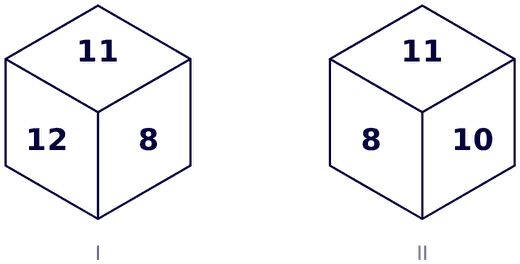
Two different positions of the same dice are given below. Which is the number on the face opposite to the face containing 10 ?
figure
नीचे एक ही पासे की दो भिन्न स्थितियाँ दी गई हैं। 10 वाले फलक के विपरीत फलक पर कौन-सी संख्या है?
figure
  1. A7
  2. B8
  3. C12
  4. D11
Show answer

Concept: If the same face stays on top in both views, the four side faces go round in one fixed cycle.

  1. 11 is on top in both views, so 12, 8, 10 and one hidden face are the four side faces.
  2. Cycle of side faces: 12 → 8 → 10 → (hidden). In a cycle of four, alternate faces are opposite.
  3. 12 and 10 are alternate (8 lies between them) → opposite.

Trick: Faces seen adjacent to a common face (8) in both views, on opposite sides of it, are opposite each other: 12 (left of 8) and 10 (right of 8).

Answer: (C) 12

अवधारणा: जब दोनों स्थितियों में ऊपर एक ही अंक हो, तो चारों पार्श्व सतहें एक तय चक्र में घूमती हैं।

हल:

  1. दोनों में 11 ऊपर है → 12, 8, 10 और एक छिपी सतह पार्श्व सतहें हैं।
  2. चक्र: 12 → 8 → 10 → (छिपी)। चार के चक्र में एक छोड़कर वाली सतहें विपरीत होती हैं।
  3. 12 और 10 के बीच 8 है → दोनों विपरीत।

ट्रिक: 8 के एक ओर 12 और दूसरी ओर 10 दिखे हैं, इसलिए 12 और 10 आमने-सामने हैं।

उत्तर: (C) 12

SSC GDGeneral Intelligence & ReasoningDice – common top faceSSC GD 2025 · 21 Feb Shift 2 →
Q416.
The position(s) of how many letters will remain unchanged if each of the letters in the word GROUPIE is arranged in the English alphabetical order ?
यदि शब्द GROUPIE के प्रत्येक अक्षर को अंग्रेज़ी वर्णमाला क्रम में व्यवस्थित किया जाए, तो कितने अक्षरों का स्थान अपरिवर्तित रहेगा?
  1. AOneएक
  2. BTwoदो
  3. CZeroशून्य
  4. DThreeतीन
Show answer

Concept: Arrange the letters A→Z and compare with the original place by place.

  1. GROUPIE → E G I O P R U.
  2. Compare: G/E, R/G, O/I, U/O, P/P, I/R, E/U.
  3. Only P (5th place) stays.

Trick: A letter can stay put only if exactly (its position − 1) letters of the word come before it alphabetically: P has E, G, I, O before it = 4 → stays 5th.

Answer: (A) One

अवधारणा: अक्षरों को A से Z क्रम में लगाकर हर स्थान की मूल शब्द से तुलना करें।

हल:

  1. GROUPIE → E G I O P R U
  2. तुलना: G/E, R/G, O/I, U/O, P/P, I/R, E/U
  3. केवल P (5वाँ स्थान) अपनी जगह पर।

ट्रिक: कोई अक्षर तभी अपनी जगह रहता है जब उससे पहले वर्णक्रम में आने वाले अक्षर (स्थान − 1) हों: P से पहले E, G, I, O = 4 → 5वाँ स्थान।

उत्तर: (A) एक

SSC GDGeneral Intelligence & ReasoningAlphabetical rearrangement – unchanged positionsSSC GD 2025 · 21 Feb Shift 2 →
Q417.
In a certain code language, 'RICE' is coded as '7613' and 'FIRE' is coded as '1374'. How is 'C' coded in the given language ?
एक निश्चित कूट भाषा में, 'RICE' को '7613' और 'FIRE' को '1374' के रूप में कूटबद्ध किया जाता है। उसी भाषा में 'C' को किस प्रकार कूटबद्ध किया जाएगा?
  1. A7
  2. B3
  3. C6
  4. D1
Show answer

Concept: Common letters take common digits; the unique letter takes the unique digit.

  1. RICE → 7613, FIRE → 1374.
  2. Common letters R, I, E ↔ common digits 7, 1, 3.
  3. Left in RICE: C ↔ 6 (and in FIRE: F ↔ 4).

Trick: Strike out the digits present in both codes from 7613: only 6 survives, so C = 6.

Answer: (C) 6

अवधारणा: सामान्य अक्षरों के कोड सामान्य अंक; अलग अक्षर का कोड अलग अंक।

हल:

  1. RICE → 7613, FIRE → 1374
  2. सामान्य अक्षर R, I, E ↔ सामान्य अंक 7, 1, 3
  3. RICE में बचा C ↔ 6 (FIRE में F ↔ 4)

ट्रिक: 7613 में से दोनों कोड में आने वाले अंक हटाएँ: केवल 6 बचता है → C = 6।

उत्तर: (C) 6

SSC GDGeneral Intelligence & ReasoningCoding – common letters, odd digitSSC GD 2025 · 21 Feb Shift 2 →
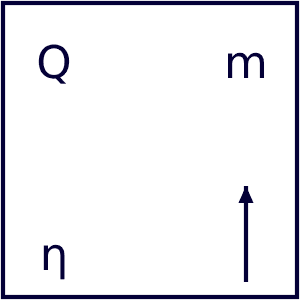
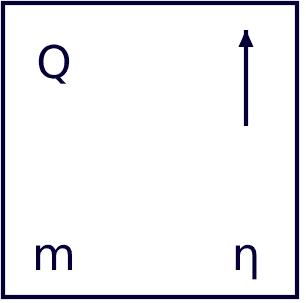
Q418.
Select the figure from among the given options that can replace the question mark (?) in the following series.
figure
दिए गए विकल्पों में से उस आकृति का चयन कीजिए जो निम्नलिखित शृंखला में प्रश्नवाचक चिह्न (?) का स्थान ले सकती है।
figure
  1. Afigure
  2. Bfigure
  3. Cfigure
  4. Dfigure
Show answer

Concept: Track one symbol's corner position from box to box.

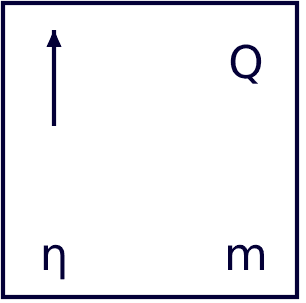
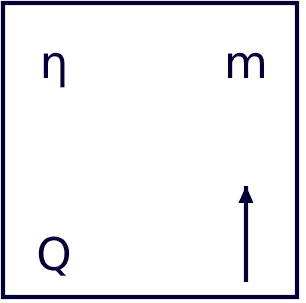
  1. All four symbols (Q, m, η, arrow) move one corner clockwise each step.
  2. After four steps they return to the start, so figure 5 = figure 1.
  3. Figure 1: Q top-left, m top-right, arrow bottom-right, η bottom-left → option (a).

Trick: In any 4-corner clockwise cycle, the 5th figure always repeats the 1st – just match the first figure.

Answer: (A) Option (a)

अवधारणा: किसी एक चिह्न की कोने वाली स्थिति को हर चित्र में देखें।

हल:

  1. चारों चिह्न (Q, m, η, तीर) हर अगली आकृति में घड़ी की सुई की दिशा में अगले कोने पर पहुँचते हैं।
  2. चार चरणों बाद वे वापस शुरू की स्थिति में → 5वीं आकृति = पहली आकृति।
  3. पहली आकृति में Q बायाँ-ऊपर, m दायाँ-ऊपर, तीर दायाँ-नीचे, η बायाँ-नीचे → विकल्प (a)।

ट्रिक: 4 कोनों के चक्र में 5वीं आकृति हमेशा पहली जैसी होती है – बस पहली आकृति से मिलाएँ।

उत्तर: (A) विकल्प (a)

SSC GDGeneral Intelligence & ReasoningFigure series – clockwise rotation of symbolsSSC GD 2025 · 21 Feb Shift 2 →
Q419.
FCBF is related to EBAE in a certain way based on the English alphabetical order. In the same way, XUTX is related to WTSW. To which of the given options is NKJN related, following the same logic?
अंग्रेज़ी वर्णमाला क्रम के आधार पर FCBF एक निश्चित प्रकार से EBAE से संबंधित है। उसी प्रकार, XUTX, WTSW से संबंधित है। समान तर्क का अनुसरण करते हुए NKJN दिए गए विकल्पों में से किससे संबंधित है?
  1. AMJIM
  2. BMIHM
  3. CMKHQ
  4. DMJHM
Show answer

Concept: Compare each letter of the pair; the same shift applies to the new cluster.

  1. FCBF → EBAE: every letter −1. XUTX → WTSW: every letter −1.
  2. Shift NKJN back by one: N → M, K → J, J → I, N → M.

Trick: First and last letters are the same in every given cluster, so the answer must start and end with the same letter – this removes MKHQ; then J−1 = I gives MJIM.

Answer: (A) MJIM

अवधारणा: जोड़े के हर अक्षर में बदलाव देखें और वही नए समूह पर लगाएँ।

हल:

  1. FCBF → EBAE: हर अक्षर −1। XUTX → WTSW: हर अक्षर −1।
  2. NKJN को एक-एक पीछे करें: N → M, K → J, J → I, N → M

ट्रिक: हर दिए गए अक्षर-समूह का पहला व आखिरी अक्षर एक ही है, तो उत्तर भी ऐसा होगा (MKHQ हटे); J−1 = I से MJIM।

उत्तर: (A) MJIM

SSC GDGeneral Intelligence & ReasoningLetter analogy – each letter −1SSC GD 2025 · 21 Feb Shift 2 →
Q420.
Select the Venn diagram that best illustrates the relationship between the following classes.
Rose, Flower, Bear
उस वेन आरेख का चयन कीजिए जो निम्नलिखित वर्गों के बीच के संबंध को सर्वोत्तम रूप से दर्शाता है।
गुलाब, फूल, भालू
  1. Afigure
  2. Bfigure
  3. Cfigure
  4. Dfigure
Show answer

Concept: Show 'is a part of' as a circle inside another; unrelated classes as separate circles.

  1. Every rose is a flower → rose circle inside flower circle.
  2. Bear has no link with either class → draw it as a separate circle.

Trick: Pattern 'A ⊂ B, C separate' is common: e.g. Mango, Fruit, Car – same diagram.

Answer: (B) Option (b)

अवधारणा: 'का भाग है' को एक वृत्त के अंदर दूसरा वृत्त; असंबंधित वर्ग को अलग वृत्त से दिखाएँ।

हल:

  1. हर गुलाब फूल है → गुलाब का वृत्त फूल के वृत्त के अंदर।
  2. भालू न गुलाब है, न फूल → अलग वृत्त।

ट्रिक: 'A ⊂ B, C अलग' वाला पैटर्न आम है: जैसे आम, फल, कार – यही आरेख।

उत्तर: (B) विकल्प (b)

SSC GDGeneral Intelligence & ReasoningVenn diagram – Rose, Flower, BearSSC GD 2025 · 21 Feb Shift 2 →