Question bank

Q&A: practice questions with answers

Search questions on any topic. Filter by exam category, exam, subject and topic, try the question, then open the answer and explanation.

Courses – airGurukul

4,200 questions found.

Q501.
Select the combination of letters that when filled in the blanks in the same sequence will make the series logically complete.
_BFKG_HMIF_OKHL_MJN_
उस अक्षर-संयोजन का चयन कीजिए, जिसे रिक्त स्थानों में उसी क्रम में भरने पर दी गई शृंखला तार्किक रूप से पूर्ण हो जाएगी।
_BFKG_HMIF_OKHL_MJN_
  1. AEFJRS
  2. BCDKQT
  3. CEDJQS
  4. DCFKRT
Show answer

Concept: A 20-letter string usually hides 5 blocks of 4 letters that change by a fixed step.

  1. Split: _BFK | G_HM | IF_O | KHL_ | MJN_.
  2. 1st letters: _, G, I, K, M → step +2, so blank = E.
  3. 2nd letters: B, _, F, H, J → blank = D; 3rd letters: F, H, _, L, N → blank = J.
  4. 4th letters: K, M, O, _, _ → Q, S.
  5. Blanks in order: E D J Q S.

Trick: Test only the first blank: block-1 must start with E (…E, G, I…). That alone removes (b) and (d); the second letter D then removes (a).

Answer: (C) EDJQS

अवधारणा: 20 अक्षरों की श्रृंखला को 4-4 अक्षरों के 5 खंडों में बाँटें, हर स्थान पर अक्षर समान अंतर से बढ़ते हैं।

  1. खंड: _BFK | G_HM | IF_O | KHL_ | MJN_
  2. पहले अक्षर _, G, I, K, M (+2) → E
  3. दूसरे अक्षर B, _, F, H, J → D; तीसरे F, H, _, L, N → J
  4. चौथे K, M, O, _, _ → Q, S

ट्रिक: पहला रिक्त E ही होगा, इससे (b), (d) तुरंत हटते हैं; दूसरा D होने से (a) भी हट जाता है।

उत्तर: (C) EDJQS
SSC GDGeneral Intelligence & ReasoningLetter series – fill the blanksSSC GD 2025 · 21 Feb Shift 1 →
Q502.
In a certain code language, 'RATE' is coded as '7532' and 'PART' is coded as '6735'. How is 'P' coded in the given language ?
एक निश्चित कूट भाषा में 'RATE' को '7532' तथा 'PART' को '6735' लिखा जाता है। उसी भाषा में 'P' को किस प्रकार लिखा जाएगा?
  1. A2
  2. B6
  3. C5
  4. D7
Show answer

Concept: Letters common to both words share the common digits; the leftover letter takes the leftover digit.

  1. RATE → 7532, PART → 6735.
  2. Common letters R, A, T ↔ common digits 7, 3, 5.
  3. RATE has extra E with extra digit 2 → E = 2.
  4. PART has extra P with extra digit 6 → P = 6.

Trick: Cancel the shared digits (7, 3, 5) from the PART code – whatever remains is P.

Answer: (B) 6

अवधारणा: दोनों शब्दों में समान अक्षरों के लिए समान अंक होते हैं; बचा हुआ अक्षर बचे हुए अंक से जुड़ता है।

  1. RATE → 7532, PART → 6735
  2. R, A, T दोनों में हैं ↔ अंक 7, 3, 5 दोनों में हैं।
  3. PART में अतिरिक्त अक्षर P और अतिरिक्त अंक 6 → P = 6 (इसी तरह E = 2)।

ट्रिक: PART के कोड से 7, 3, 5 काट दें – जो अंक बचे वही P है।

उत्तर: (B) 6

SSC GDGeneral Intelligence & ReasoningCoding-decoding – common lettersSSC GD 2025 · 21 Feb Shift 1 →
Q503.
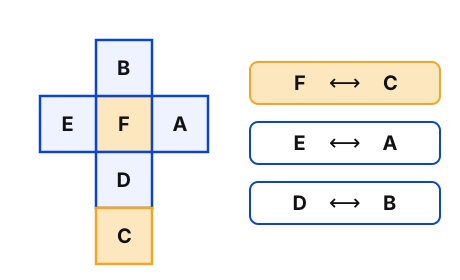
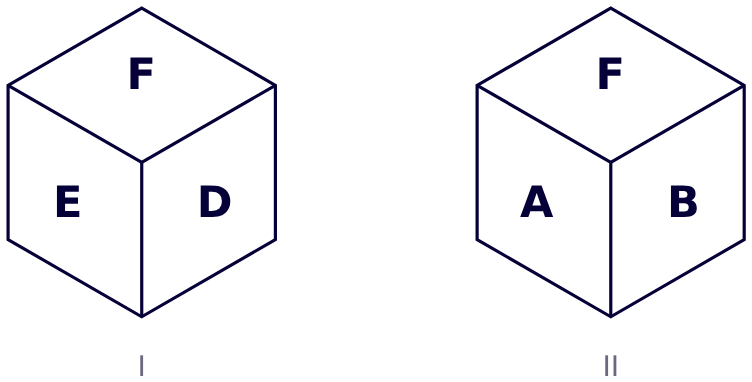
A dice has its faces marked by letters A, B, C, D, E and F. Two different positions of the same dice are shown. Select the letter that will be on the face opposite to the one having C ?
figure
एक पासे के फलकों पर A, B, C, D, E और F अक्षर अंकित हैं। एक ही पासे की दो भिन्न स्थितियाँ दर्शाई गई हैं। उस अक्षर का चयन कीजिए, जो C वाले फलक के विपरीत फलक पर होगा।
figure
  1. AE
  2. BD
  3. CF
  4. DB
Show answer

Concept: If four different letters are all adjacent to one face, the sixth letter must be opposite it.

  1. F appears in both positions of the dice.
  2. Its neighbours are E, D (first view) and A, B (second view) – four different letters.
  3. Only C is never seen next to F, so C is opposite F.

Trick: Common face + list its 4 neighbours; the missing sixth letter is its opposite.

Answer: (C) F

अवधारणा: यदि किसी फलक के चारों पड़ोसी अलग-अलग दिख जाएँ तो छठा अक्षर उसके विपरीत होगा।

  1. F दोनों स्थितियों में दिखता है।
  2. F के पास E, D (पहली स्थिति) और A, B (दूसरी स्थिति) हैं – चार अलग अक्षर।
  3. बचा अक्षर C कभी F के पास नहीं आया, अतः C, F के विपरीत है।

ट्रिक: उभयनिष्ठ फलक के 4 पड़ोसी लिखें, जो छठा अक्षर छूट जाए वही विपरीत।

उत्तर: (C) F

SSC GDGeneral Intelligence & ReasoningDice – opposite faceSSC GD 2025 · 21 Feb Shift 1 →
Q504.
What should come in place of the question mark (?) in the given series? 451 460 470 ? 493 506
दी गई शृंखला में प्रश्नवाचक चिह्न (?) के स्थान पर क्या आएगा? 451 460 470 ? 493 506
  1. A481
  2. B479
  3. C480
  4. D482
Show answer

Concept: Successive differences grow by 1 each time.

  1. 460 − 451 = 9, 470 − 460 = 10.
  2. Next difference = 11 → 470 + 11 = 481.
  3. Check: 481 + 12 = 493, 493 + 13 = 506 ✓

Trick: Work backwards from the end too: 506 − 13 = 493, 493 − 12 = 481 – both sides agree.

Answer: (A) 481

अवधारणा: क्रमागत पदों का अंतर हर बार 1 बढ़ता है।

  1. 460 − 451 = 9, 470 − 460 = 10
  2. अगला अंतर 11 → 470 + 11 = 481
  3. जाँच: 481 + 12 = 493, 493 + 13 = 506 ✓

ट्रिक: पीछे से भी जाँचें: 493 − 12 = 481, दोनों ओर से एक ही उत्तर।

उत्तर: (A) 481

SSC GDGeneral Intelligence & ReasoningNumber series – increasing differenceSSC GD 2025 · 21 Feb Shift 1 →
Q505.
What should come in place of '?' in the given series based on the English alphabetical order ?
EIK IGJ MEI QCH ?
अंग्रेजी वर्णमाला क्रम के आधार पर दी गई शृंखला में '?' के स्थान पर क्या आएगा?
EIK IGJ MEI QCH ?
  1. AIUA
  2. BUAI
  3. CAUI
  4. DUAG
Show answer

Concept: Treat each position of the 3-letter clusters as its own series.

  1. 1st letters E → I → M → Q: +4 each → U.
  2. 2nd letters I → G → E → C: −2 each → A.
  3. 3rd letters K → J → I → H: −1 each → G.

Trick: Options (b) and (d) both start UA; just check the last letter: H − 1 = G.

Answer: (D) UAG

अवधारणा: हर समूह के पहले, दूसरे और तीसरे अक्षर की अलग-अलग श्रृंखला बनाएँ।

  1. पहले अक्षर E, I, M, Q (+4) → U
  2. दूसरे अक्षर I, G, E, C (−2) → A
  3. तीसरे अक्षर K, J, I, H (−1) → G

ट्रिक: (b) और (d) दोनों UA से शुरू हैं, बस अंतिम अक्षर देखें: H − 1 = G।

उत्तर: (D) UAG

SSC GDGeneral Intelligence & ReasoningLetter-cluster seriesSSC GD 2025 · 21 Feb Shift 1 →
Q506.
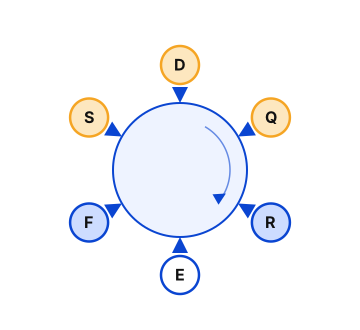
Six people, D, E, F, Q, R and S, are sitting around a circular table facing the centre (but not necessarily in the same order). S sits to the immediate right of D. E sits second to the left of Q. Q sits to the immediate left of D. F sits third to the right of Q. How many people sit between R and F when counted from the left of F?
छह व्यक्ति D, E, F, Q, R और S एक वृत्ताकार मेज़ के चारों ओर केंद्र की ओर मुख करके बैठे हैं (आवश्यक नहीं कि इसी क्रम में)। S, D के ठीक दाईं ओर बैठा है। E, Q के बाईं ओर दूसरे स्थान पर बैठा है। Q, D के ठीक बाईं ओर बैठा है। F, Q के दाईं ओर तीसरे स्थान पर बैठा है। F के बाईं ओर से गिनने पर R और F के बीच कितने व्यक्ति बैठे हैं?
  1. AThreeतीन
  2. BFourचार
  3. CTwoदो
  4. DOneएक
Show answer

Concept: Facing the centre: left = clockwise, right = anticlockwise.

  1. Fix D. Q is D's immediate left, S is D's immediate right → clockwise order S, D, Q.
  2. From Q: 2 seats left gives E; 3 seats right gives F (seat opposite Q).
  3. Remaining seat → R. Clockwise: D, Q, R, E, F, S.
  4. From F going left (clockwise): S, D, Q, then R → 3 persons between.

Trick: In a 6-seat circle, 'third to the right/left' is always the seat directly opposite.

Answer: (A) Three

अवधारणा: केंद्र की ओर मुख होने पर बायाँ = दक्षिणावर्त, दायाँ = वामावर्त।

  1. D को रखें; Q उसके तुरंत बाएँ, S तुरंत दाएँ।
  2. Q से दो स्थान बाएँ E; Q से तीन स्थान दाएँ (ठीक सामने) F।
  3. बचे स्थान पर R। दक्षिणावर्त क्रम: D, Q, R, E, F, S
  4. F के बाएँ से गिनें: S, D, Q, फिर R → बीच में 3 व्यक्ति।

ट्रिक: 6 सीटों के वृत्त में 'तीसरा दाएँ/बाएँ' हमेशा ठीक सामने वाली सीट होती है।

उत्तर: (A) तीन

SSC GDGeneral Intelligence & ReasoningCircular seating – 6 personsSSC GD 2025 · 21 Feb Shift 1 →
Q507.
NT 6 is related to QR 1 in a certain way. In the same way, FN 8 is related to IL 3. To which of the following is JL 16 related, following the same logic?
NT 6 एक निश्चित प्रकार से QR 1 से संबंधित है। उसी प्रकार, FN 8, IL 3 से संबंधित है। समान तर्क का अनुसरण करते हुए, JL 16 निम्नलिखित में से किससे संबंधित है?
  1. AMM 11
  2. BNM 10
  3. CLJ 10
  4. DMJ 11
Show answer

Concept: Find the change in each part separately and apply it to the new term.

  1. NT6 → QR1: N+3 = Q, T−2 = R, 6−5 = 1.
  2. FN8 → IL3 fits the same: F+3 = I, N−2 = L, 8−5 = 3.
  3. JL16 → J+3 = M, L−2 = J, 16−5 = 11 → MJ 11.

Trick: The number rule (−5) gives 11, leaving (a) and (d); first letter J+3 = M fits both, second letter L−2 = J picks (d).

Answer: (D) MJ 11

अवधारणा: हर भाग का बदलाव अलग से निकालकर नए पद पर लगाएँ।

  1. NT6 → QR1: N+3 = Q, T−2 = R, 6−5 = 1
  2. FN8 → IL3 भी यही नियम मानता है।
  3. JL16 → J+3 = M, L−2 = J, 16−5 = 11 → MJ 11

ट्रिक: संख्या −5 से 11 मिलता है, केवल (a) और (d) बचते हैं; दूसरा अक्षर L−2 = J से (d) चुनें।

उत्तर: (D) MJ 11

SSC GDGeneral Intelligence & ReasoningAnalogy – letters with numberSSC GD 2025 · 21 Feb Shift 1 →
Q508.
Read the given statements and conclusions carefully. Assuming that the information given in the statements is true, even if it appears to be at variance with commonly known facts, decide which of the given conclusion(s) logically follow(s) from the statement(s).
Statements:
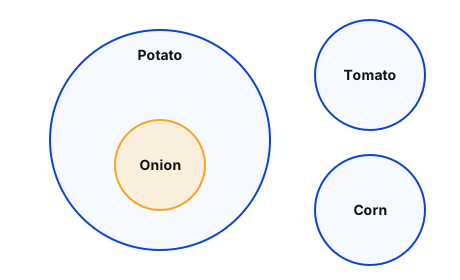
All onions are potatoes.
No potato is a tomato.
No potato is a corn
Conclusions:
(I) No onion is a tomato.
(II) Some corns are tomatoes.
दिए गए कथनों और निष्कर्षों को ध्यानपूर्वक पढ़िए। यह मानते हुए कि कथनों में दी गई जानकारी सत्य है, चाहे वह सर्वज्ञात तथ्यों से भिन्न प्रतीत होती हो, निर्णय कीजिए कि दिए गए निष्कर्षों में से कौन-सा/से निष्कर्ष कथनों का तार्किक रूप से अनुसरण करता है/करते हैं।
कथन:
सभी प्याज आलू हैं।
कोई आलू टमाटर नहीं है।
कोई आलू मक्का नहीं है।
निष्कर्ष:
(I) कोई प्याज टमाटर नहीं है।
(II) कुछ मक्के टमाटर हैं।
  1. ABoth conclusions (I) and (II) follow.निष्कर्ष (I) और (II) दोनों अनुसरण करते हैं।
  2. BOnly conclusion (II) follows.केवल निष्कर्ष (II) अनुसरण करता है।
  3. COnly conclusion (I) follows.केवल निष्कर्ष (I) अनुसरण करता है।
  4. DNeither conclusion (I) nor (II) follows.न तो निष्कर्ष (I) और न ही निष्कर्ष (II) अनुसरण करता है।
Show answer

Concept: If A is wholly inside B and B is separate from C, then A is separate from C.

  1. Onion ⊂ Potato; Potato has no link with Tomato or Corn.
  2. (I) Onion lies inside Potato, which never touches Tomato → no onion is a tomato ✓.
  3. (II) Corn and Tomato are both just outside Potato; their meeting is only possible, not certain ✗.

Trick: Two 'No' statements about a common class (Potato) never give a definite relation between the other two.

Answer: (C) Only conclusion (I) follows.

अवधारणा: यदि A पूरी तरह B के अंदर है और B, C से अलग है, तो A भी C से अलग होगा।

  1. प्याज ⊂ आलू; आलू का टमाटर व मक्का से कोई संबंध नहीं।
  2. (I) सभी प्याज = आलू, और आलू-टमाटर में कोई मेल नहीं ⇒ निष्कर्ष I सत्य ✓
  3. (II) मक्का और टमाटर का मिलना केवल संभावना है, निश्चित नहीं ✗

ट्रिक: एक ही वर्ग (आलू) पर दो 'कोई नहीं' कथनों से बाकी दो वर्गों के बीच निश्चित निष्कर्ष नहीं निकलता।

उत्तर: (C) केवल निष्कर्ष (I) अनुसरण करता है।

SSC GDGeneral Intelligence & ReasoningSyllogism – 'No' statementsSSC GD 2025 · 21 Feb Shift 1 →
Q509.
The position(s) of how many letters will remain unchanged if each of the letters in the word ACTIVITY is arranged in reverse English alphabetical order ?
यदि शब्द ACTIVITY के प्रत्येक अक्षर को विपरीत अंग्रेजी वर्णमाला क्रम में व्यवस्थित किया जाए, तो कितने अक्षरों की स्थिति अपरिवर्तित रहेगी?
  1. AThreeतीन
  2. BFourचार
  3. COneएक
  4. DTwoदो
Show answer

Concept: Rearrange from Z to A and compare position by position.

  1. Original: A C T I V I T Y
  2. Z→A order: Y V T T I I C A
  3. Same place: 3rd (T) and 6th (I) only.

Trick: Write the two rows one under the other and tick matching columns – takes 10 seconds.

Answer: (D) Two

अवधारणा: अक्षरों को Z से A के क्रम में लगाकर स्थान-दर-स्थान मिलाएँ।

  1. मूल: A C T I V I T Y
  2. उल्टा क्रम: Y V T T I I C A
  3. केवल तीसरा (T) और छठा (I) स्थान वही रहता है।

ट्रिक: दोनों पंक्तियाँ एक-दूसरे के नीचे लिखकर मेल खाते कॉलम पर निशान लगाएँ।

उत्तर: (D) दो

SSC GDGeneral Intelligence & ReasoningLetter arrangement – reverse orderSSC GD 2025 · 21 Feb Shift 1 →
Q510.
What should come in place of the question mark (?) in the given series? 567 570 575 582 591 ?
दी गई शृंखला में प्रश्नवाचक चिह्न (?) के स्थान पर क्या आएगा? 567 570 575 582 591 ?
  1. A596
  2. B600
  3. C599
  4. D602
Show answer

Concept: Differences form consecutive odd numbers.

  1. 570−567 = 3, 575−570 = 5, 582−575 = 7, 591−582 = 9.
  2. Next difference = 11 → 591 + 11 = 602.

Trick: Odd-number differences mean term = 566 + n²: 566 + 6² = 566 + 36 = 602.

Answer: (D) 602

अवधारणा: क्रमागत अंतर लगातार विषम संख्याएँ हैं।

  1. अंतर: 3, 5, 7, 9
  2. अगला अंतर 11 → 591 + 11 = 602

ट्रिक: विषम अंतर का अर्थ है पद = 566 + n²; छठा पद = 566 + 36 = 602।

उत्तर: (D) 602

SSC GDGeneral Intelligence & ReasoningNumber series – odd-number differencesSSC GD 2025 · 21 Feb Shift 1 →
Q511.
Select the option figure in which the given figure (X) is embedded as its part (rotation is NOT allowed).
figure
(X)
उस विकल्प आकृति का चयन कीजिए, जिसमें दी गई आकृति (X) उसके एक भाग के रूप में सन्निहित है (घुमाने की अनुमति नहीं है)।
figure
(X)
  1. Afigure
  2. Bfigure
  3. Cfigure
  4. Dfigure
Show answer

Concept: The given shape must be traced inside an option in the same orientation (no rotation).

  1. Figure (X): two vertical lines joined at the top, crossed by one straight line that extends outside on both sides.
  2. In option (c) the middle column gives the two verticals and the top edge closes them.
  3. The lower horizontal lines on the left and right sit at the same level, forming the crossing line.
  4. Other options lack a crossing line at one common height.

Trick: Pick the most unusual part of (X) – here the straight cut sticking out on both sides – and search only for that.

Answer: (C)

अवधारणा: दी गई आकृति विकल्प के भीतर उसी दिशा में (बिना घुमाए) मिलनी चाहिए।

  1. आकृति (X): ऊपर से जुड़ी दो खड़ी रेखाएँ, जिन्हें एक सीधी रेखा काटकर दोनों ओर बाहर निकलती है।
  2. (c) में मध्य वाली पट्टी से दोनों ऊर्ध्व रेखाएँ और ऊपर की रेखा मिल जाती हैं।
  3. पट्टी के दोनों तरफ़ की नीचे वाली रेखाएँ समान स्तर पर हैं, जो (X) की आर-पार रेखा बनाती हैं।

ट्रिक: (X) का सबसे विशेष भाग पकड़ें और विकल्पों में केवल उसी को खोजें।

उत्तर: (C)

SSC GDGeneral Intelligence & ReasoningEmbedded figureSSC GD 2025 · 21 Feb Shift 1 →
Q512.
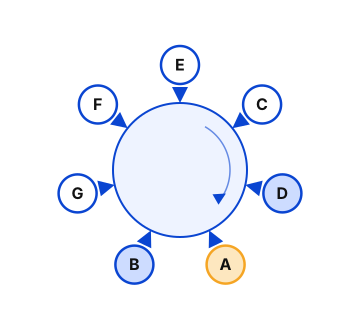
A, B, C, D, E, F and G are sitting around a circular table facing the centre (but not necessarily in the same order). B sits third to the right of E. E sits second to the left of G. G is to the immediate right of F. G is not an immediate neighbour of E. A sits on the immediate right of B and C sits on the immediate left of E. How many people sit between D and B when counted from the left of D?
A, B, C, D, E, F और G एक वृत्ताकार मेज़ के चारों ओर केंद्र की ओर मुख करके बैठे हैं (आवश्यक नहीं कि इसी क्रम में)। B, E के दाईं ओर तीसरे स्थान पर बैठा है। E, G के बाईं ओर दूसरे स्थान पर बैठा है। G, F के ठीक दाईं ओर है। G, E का निकटतम पड़ोसी नहीं है। A, B के ठीक दाईं ओर तथा C, E के ठीक बाईं ओर बैठा है। D के बाईं ओर से गिनने पर D और B के बीच कितने व्यक्ति बैठे हैं?
  1. ATwoदो
  2. BThreeतीन
  3. CFourचार
  4. DOneएक
Show answer

Concept: Facing the centre: left = clockwise, right = anticlockwise.

  1. Seat E. G is placed so that E is second to G's left; F sits just left of G (G is on F's right).
  2. B is third to E's right; A is B's immediate right; C is E's immediate left.
  3. Clockwise order: E, C, D, A, B, G, F (D takes the last seat).
  4. From D moving left: A, then B → 1 person between.

Trick: Start with the person mentioned most often (E) and fix the 'third/second' clues first; one-seat clues come last.

Answer: (D) One

अवधारणा: केंद्र की ओर मुख होने पर बायाँ = दक्षिणावर्त, दायाँ = वामावर्त।

  1. E को रखें; E, G के बाएँ दूसरे स्थान पर है; F, G के ठीक बाएँ (G, F के दाएँ)।
  2. B, E के दाएँ तीसरा; A, B के ठीक दाएँ; C, E के ठीक बाएँ।
  3. दक्षिणावर्त क्रम: E, C, D, A, B, G, F
  4. D के बाएँ से: A, फिर B → बीच में 1 व्यक्ति।

ट्रिक: सबसे अधिक बार आए व्यक्ति (E) से शुरू करें; दूर वाले संकेत पहले लगाएँ।

उत्तर: (D) एक

SSC GDGeneral Intelligence & ReasoningCircular seating – 7 personsSSC GD 2025 · 21 Feb Shift 1 →
Q513.
In a certain code language, 'I eat breakfast' is coded as ' hk mr It' and 'breakfast is healthy' is coded as 'xz hk bd'. How is 'breakfast' coded in the given language ?
एक निश्चित कूट भाषा में 'I eat breakfast' को ' hk mr It' तथा 'breakfast is healthy' को 'xz hk bd' लिखा जाता है। उसी भाषा में 'breakfast' को किस प्रकार लिखा जाएगा?
  1. Aft
  2. Bhk
  3. Cxz
  4. Dmr
Show answer

Concept: A word present in both sentences gets the code present in both coded forms.

  1. 'I eat breakfast' → hk mr It; 'breakfast is healthy' → xz hk bd.
  2. Common word: breakfast. Common code: hk.
  3. So breakfast = hk.

Trick: Don't decode everything – just circle the repeated word and the repeated code.

Answer: (B) hk

अवधारणा: दोनों वाक्यों में आया शब्द, दोनों कोडों में आए कोड से जुड़ता है।

  1. 'I eat breakfast' → hk mr It; 'breakfast is healthy' → xz hk bd
  2. समान शब्द: breakfast; समान कोड: hk
  3. अतः breakfast = hk

ट्रिक: पूरा कोड न खोलें, केवल दोहराया गया शब्द और दोहराया गया कोड मिलाएँ।

उत्तर: (B) hk

SSC GDGeneral Intelligence & ReasoningCoding – common word methodSSC GD 2025 · 21 Feb Shift 1 →
Q514.
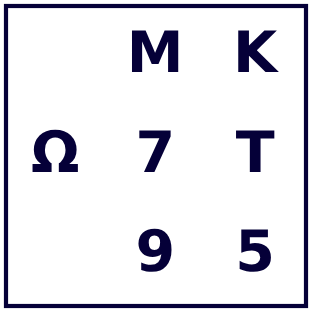
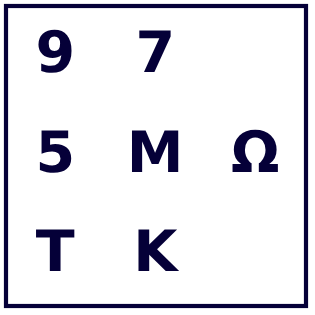
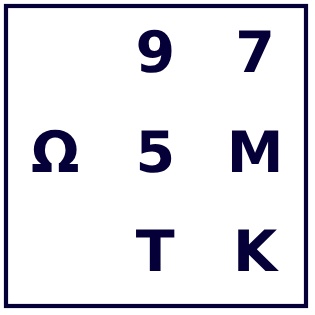
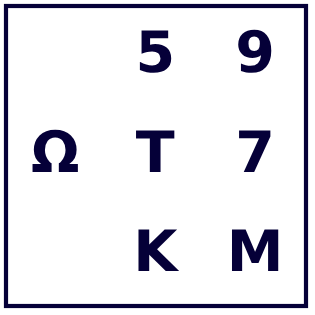
Identify the figure given in the options, which when put in place of the question mark (?) will logically complete the series.
figure
विकल्पों में दी गई उस आकृति की पहचान कीजिए, जिसे प्रश्नवाचक चिह्न (?) के स्थान पर रखने पर शृंखला तार्किक रूप से पूर्ण हो जाएगी।
figure
  1. Afigure
  2. Bfigure
  3. Cfigure
  4. Dfigure
Show answer

Concept: Track the movement of the symbols and the position of the block separately.

  1. Six symbols sit in two columns; each step they shift one cell in a clockwise loop.
  2. From figure 4 (left 7, 9, 5; right M, K, T) the next step gives left 9, 5, T and right 7, M, K.
  3. The block alternates sides, so in figure 5 it returns to the right with Ω on the left.
  4. Only option (c) satisfies both changes.

Trick: First use the block's side to cut two options, then check just one symbol (T moving to the left column).

Answer: (C)

अवधारणा: चिह्नों की चाल और खंड की स्थिति, दोनों को अलग-अलग देखें।

  1. छह चिह्न दो स्तंभों में हैं; हर चरण में सभी एक खाना दक्षिणावर्त खिसकते हैं।
  2. चित्र 4 (बाएँ 7, 9, 5; दाएँ M, K, T) से अगला: बाएँ 9, 5, T और दाएँ 7, M, K।
  3. खंड बारी-बारी से पक्ष बदलता है, अतः अब दाईं ओर, Ω बाईं ओर।

ट्रिक: पहले खंड की दिशा से दो विकल्प हटाएँ, फिर केवल एक चिह्न (T) की जगह जाँचें।

उत्तर: (C)

SSC GDGeneral Intelligence & ReasoningFigure series – rotating symbolsSSC GD 2025 · 21 Feb Shift 1 →
Q515.
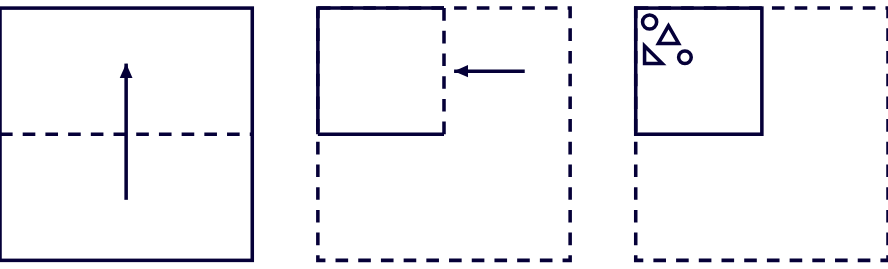
A paper is folded and cut as shown below. How will it appear when unfolded?
figure
एक कागज़ को नीचे दर्शाए अनुसार मोड़ा और काटा जाता है। खोलने पर वह किस प्रकार दिखाई देगा?
figure
  1. Afigure
  2. Bfigure
  3. Cfigure
  4. Dfigure
Show answer

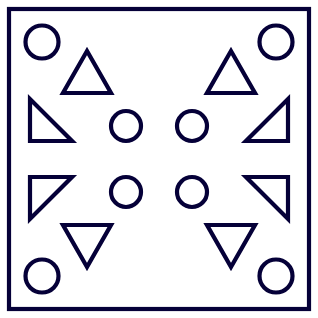
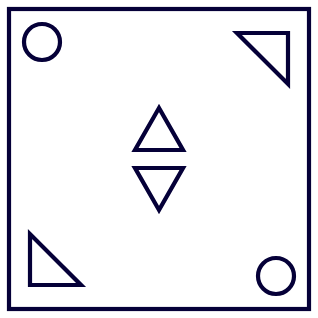
Concept: Each fold doubles every cut as a mirror image about the fold line.

  1. Two folds (horizontal, then vertical) → each cut appears 4 times.
  2. The circle at the folded corner shows up at all four corners.
  3. The circle near the open corner becomes four circles around the centre; both triangles also appear four times.
  4. Only option (a) has corner circles and a ring of four central circles.

Trick: Count shapes first: 2 folds → each shape × 4. Any option with a different count is out.

Answer: (A)

अवधारणा: हर मोड़ पर कटा हुआ भाग मोड़ रेखा के दर्पण प्रतिबिंब में दोगुना हो जाता है।

  1. दो मोड़ → हर कटाव 4 बार दिखेगा।
  2. मोड़ वाले कोने का गोला खोलने पर कागज़ के चारों सिरों पर दिखेगा।
  3. दूसरा गोला बीच में चार गोलों का समूह बनाता है; त्रिभुज भी चार-चार बनते हैं।
  4. केवल विकल्प (a) में यह सब है।

ट्रिक: पहले गिनती करें: 2 मोड़ = हर आकृति × 4; अलग गिनती वाले विकल्प हटा दें।

उत्तर: (A)

SSC GDGeneral Intelligence & ReasoningPaper folding and cuttingSSC GD 2025 · 21 Feb Shift 1 →
Q516.
UHAR is related to XKDU in a certain way based on the English alphabetical order. In the same way, SDWC is related to VGZF. To which of the given options is IMOS related, following the same logic ?
अंग्रेजी वर्णमाला क्रम के आधार पर UHAR एक निश्चित प्रकार से XKDU से संबंधित है। उसी प्रकार, SDWC, VGZF से संबंधित है। समान तर्क का अनुसरण करते हुए, दिए गए विकल्पों में से IMOS किससे संबंधित है?
  1. AMOSW
  2. BGQTU
  3. CLPRV
  4. DGORT
Show answer

Concept: Every letter is moved forward by the same number of places.

  1. UHAR → XKDU: U+3 = X, H+3 = K, A+3 = D, R+3 = U.
  2. SDWC → VGZF confirms +3.
  3. Shift IMOS by three: (I, M, O, S) → (L, P, R, V).

Trick: Only the first letter is needed: I+3 = L, and only option (c) begins with L.

Answer: (C) LPRV

अवधारणा: हर अक्षर समान स्थान आगे खिसकता है।

  1. UHAR → XKDU: हर अक्षर +3
  2. SDWC → VGZF भी +3
  3. IMOS → L, P, R, V = LPRV

ट्रिक: केवल पहला अक्षर देखें: I+3 = L, और L से केवल विकल्प (c) शुरू होता है।

उत्तर: (C) LPRV

SSC GDGeneral Intelligence & ReasoningLetter analogy – constant shiftSSC GD 2025 · 21 Feb Shift 1 →
Q517.
What will come in the place of the question mark (?) in the following equation, if '+' and '×' are interchanged and '−' and '÷' are interchanged? 51 ÷ 6 + 9 × 84 − 4 = ?
यदि '+' और '×' को आपस में बदल दिया जाए तथा '−' और '÷' को आपस में बदल दिया जाए, तो निम्नलिखित समीकरण में प्रश्नवाचक चिह्न (?) के स्थान पर क्या आएगा? 51 ÷ 6 + 9 × 84 − 4 = ?
  1. A25
  2. B21
  3. C18
  4. D30
Show answer

Concept: Swap the signs first, then solve using BODMAS.

  1. 51 ÷ 6 + 9 × 84 − 4 becomes 51 − 6 × 9 + 84 ÷ 4.
  2. 6 × 9 = 54; 84 ÷ 4 = 21.
  3. 51 − 54 + 21 = 18.

Trick: Rewrite the full expression with new signs on one line before calculating – most mistakes come from swapping mid-way.

Answer: (C) 18

अवधारणा: पहले चिह्न बदलें, फिर BODMAS से हल करें।

  1. नया व्यंजक: 51 − 6 × 9 + 84 ÷ 4
  2. 6 × 9 = 54; 84 ÷ 4 = 21
  3. 51 − 54 + 21 = 18

ट्रिक: गणना से पहले पूरा व्यंजक नए चिह्नों के साथ दोबारा लिख लें, गलती नहीं होगी।

उत्तर: (C) 18

SSC GDGeneral Intelligence & ReasoningMathematical operations – sign interchangeSSC GD 2025 · 21 Feb Shift 1 →
Q518.
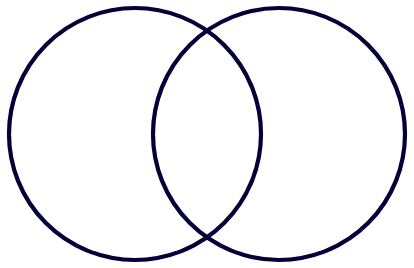
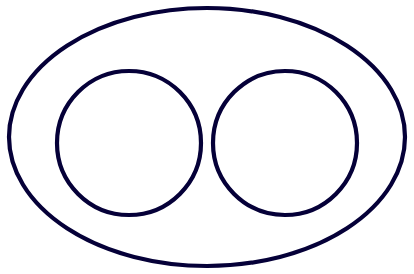
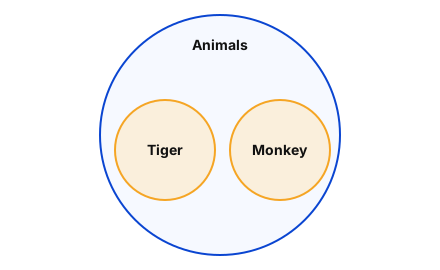
Select the Venn diagram that best illustrates the relationship between the following classes
Tiger, Monkey, Animals
उस वेन आरेख का चयन कीजिए, जो निम्नलिखित वर्गों के बीच के संबंध को सर्वोत्तम रूप से निरूपित करता है।
बाघ, बंदर, पशु
  1. Afigure
  2. Bfigure
  3. Cfigure
  4. Dfigure
Show answer

Concept: Two unrelated members of one larger class are drawn as two separate circles inside a big circle.

  1. Tigers and monkeys are both animals → both inside 'Animals'.
  2. A tiger can never be a monkey → their circles do not touch.
  3. Option (b) shows exactly this.

Yaad rakhein: Similar pattern: Rose, Lily, Flowers or Iron, Copper, Metals – same diagram.

Answer: (B)

अवधारणा: एक बड़े वर्ग के दो असंबंधित सदस्य, बड़े वृत्त के अंदर दो अलग वृत्त होते हैं।

  1. बाघ और बंदर दोनों जानवर हैं → दोनों 'जानवर' के अंदर।
  2. बाघ कभी बंदर नहीं हो सकता → दोनों वृत्त अलग।
  3. विकल्प (b) यही दिखाता है।

याद रखें: गुलाब, कमल, फूल या लोहा, तांबा, धातु – इनका भी यही आरेख बनता है।

उत्तर: (B)

SSC GDGeneral Intelligence & ReasoningVenn diagram – two subsetsSSC GD 2025 · 21 Feb Shift 1 →
Q519.
Based on the English alphabetical order, three of the following four letter-clusters are alike in a certain way and thus form a group. Which is the one that DOES NOT belong to that group ?
(Note: The odd one out is not based on the number of consonants/vowels or their position in the letter-cluster.)
अंग्रेजी वर्णमाला क्रम के आधार पर, निम्नलिखित चार अक्षर-समूहों में से तीन किसी प्रकार से समान हैं और इस प्रकार एक समूह बनाते हैं। वह कौन-सा है जो उस समूह से संबंधित नहीं है?
(नोट: विषम अक्षर-समूह की पहचान अक्षर-समूह में व्यंजनों/स्वरों की संख्या या उनकी स्थिति के आधार पर नहीं की जानी है।)
  1. ABZC
  2. BNLO
  3. CQPR
  4. DPNQ
Show answer

Concept: Compare the 2nd and 3rd letters with the 1st letter of each cluster.

  1. Pattern (−2, +1) from the first letter: B→Z & C, N→L & O, P→N & Q.
  2. QPR gives (−1, +1): P is only one step behind Q, so it breaks the pattern.

Trick: The 3rd letter is +1 in all four, so look only at the middle letter – the one with a gap of 1 instead of 2 is odd.

Answer: (C) QPR

अवधारणा: पहले अक्षर को आधार मानकर बाकी दो अक्षरों की दूरी देखें।

  1. नियम (−2, +1): B→Z व C, N→L व O, P→N व Q
  2. QPR में (−1, +1) है, अतः यह अलग है।

ट्रिक: तीसरा अक्षर सबमें +1 है, केवल बीच वाला अक्षर देखें – जिसमें अंतर 2 की जगह 1 हो, वही अलग है।

उत्तर: (C) QPR

SSC GDGeneral Intelligence & ReasoningOdd one out – letter clustersSSC GD 2025 · 21 Feb Shift 1 →
Q520.
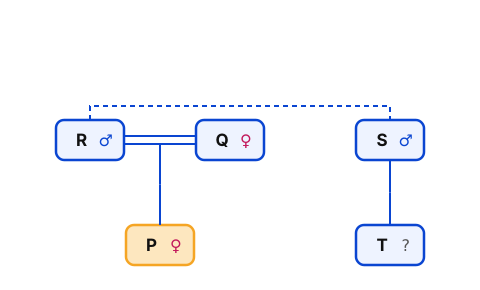
In a certain code language, 'A + B' means 'A is the daughter of B', 'A − B' means 'A is the brother of B', 'A × B' means 'A is the wife of B' and 'A ÷ B' means 'A is the father of B'.
Based on the above, how is P related to T if 'P + Q × R − S ÷ T'?
एक निश्चित कूट भाषा में, 'A + B' का अर्थ है 'A, B की पुत्री है', 'A − B' का अर्थ है 'A, B का भाई है', 'A × B' का अर्थ है 'A, B की पत्नी है' तथा 'A ÷ B' का अर्थ है 'A, B का पिता है'।
उपर्युक्त के आधार पर, यदि 'P + Q × R − S ÷ T' है, तो P, T से किस प्रकार संबंधित है?
  1. AMother's brother's daughterमाता के भाई की पुत्री
  2. BMother's brother's wifeमाता के भाई की पत्नी
  3. CFather's brother's daughterपिता के भाई की पुत्री
  4. DFather's brother's wifeपिता के भाई की पत्नी
Show answer

Concept: Decode each symbol pair one by one and build a small family tree.

  1. P + Q: P is Q's daughter. Q × R: Q is R's wife → R is P's father.
  2. R − S: R is S's brother. S ÷ T: S is T's father.
  3. So R is T's father's brother, and P (R's daughter) is T's father's brother's daughter.

Trick: P is female (daughter) and of T's generation – that removes both 'wife' options; R and S are brothers on the father's side, removing 'mother's'.

Answer: (C) Father's brother's daughter

अवधारणा: हर चिह्न का अर्थ क्रम से लगाकर छोटा वंश-वृक्ष बनाएँ।

  1. P + Q: P, Q की बेटी; Q × R: Q, R की पत्नी → R, P का पिता।
  2. R − S: R, S का भाई; S ÷ T: S, T का पिता।
  3. T के लिए R = चाचा/ताऊ; उनकी बेटी P, यानी T की चचेरी बहन (पिता के भाई की बेटी)।

ट्रिक: P बेटी है और T की पीढ़ी की है, इसलिए 'पत्नी' वाले विकल्प हटते हैं; संबंध पिता की ओर से है, 'माँ' वाला हटता है।

उत्तर: (C) पिता के भाई की बेटी

SSC GDGeneral Intelligence & ReasoningCoded blood relationSSC GD 2025 · 21 Feb Shift 1 →