Question bank

Q&A: practice questions with answers

Search questions on any topic. Filter by exam category, exam, subject and topic, try the question, then open the answer and explanation.

Courses – airGurukul

4,200 questions found.

Q601.
'NZRB' is related to 'LXOY' in a certain way based on the English alphabetical order. In the same way, 'VJAT' is related to 'THXQ'. To which of the following is "PGXL" related, following the same logic?
'NZRB' एक निश्चित तरीके से अंग्रेजी वर्णमाला क्रम के आधार पर 'LXOY' से संबंधित है। उसी प्रकार, 'VJAT' 'THXQ' से संबंधित है। उसी तर्क का अनुसरण करते हुए "PGXL" निम्नलिखित में से किससे संबंधित है?
  1. AMGVH
  2. BMFWJ
  3. CNEUI
  4. DOEVG
Show answer

Concept: Find the shift applied to each letter position and repeat it.

  1. NZRB → LXOY: N→L (−2), Z→X (−2), R→O (−3), B→Y (−3, wrapping past A).
  2. Check VJAT → THXQ: −2, −2, −3, −3 ✔.
  3. PGXL: P−2 = N, G−2 = E, X−3 = U, L−3 = I → NEUI.

Trick: Pattern is (−2, −2, −3, −3). Only option C starts with N (P−2), so the answer is fixed after the first letter.

Answer: (C) NEUI

अवधारणा: हर स्थान के अक्षर पर लगा खिसकाव पहचानकर वही नियम लगाएँ।

  1. NZRB → LXOY: N→L (−2), Z→X (−2), R→O (−3), B→Y (−3, A के बाद Z से गिनें)।
  2. VJAT → THXQ में भी −2, −2, −3, −3 ✔।
  3. PGXL: P−2 = N, G−2 = E, X−3 = U, L−3 = I → NEUI।

ट्रिक: नियम (−2, −2, −3, −3) है। P−2 = N से शुरू होने वाला केवल विकल्प C है।

उत्तर: (C) NEUI
SSC GDGeneral Intelligence & ReasoningLetter analogy – fixed backward shiftsSSC GD 2025 · 20 Feb Shift 3 →
Q602.
RQAZ is related to JMSV in a certain way based on the English alphabetical order. In the same way, LAUJ is related to DWMF. To which of the following options is NOWX related, following the same logic?
RQAZ एक निश्चित तरीके से अंग्रेजी वर्णमाला क्रम के आधार पर JMSV से संबंधित है। उसी प्रकार, LAUJ DWMF से संबंधित है। उसी तर्क का अनुसरण करते हुए NOWX निम्नलिखित में से किस विकल्प से संबंधित है?
  1. AFTOK
  2. BFOKT
  3. CFOTK
  4. DFKOT
Show answer

Concept: Each position moves back by a fixed amount (cyclic alphabet).

  1. RQAZ → JMSV: R(18)→J(10) −8, Q→M −4, A→S −8 (cyclic), Z→V −4.
  2. LAUJ → DWMF confirms −8, −4, −8, −4.
  3. NOWX: N−8 = F, O−4 = K, W−8 = O, X−4 = T → FKOT.

Trick: All options start with F; decide by the 2nd letter: O−4 = K → only option D has K second.

Answer: (D) FKOT

अवधारणा: हर स्थान का अक्षर निश्चित संख्या से पीछे जाता है (वर्णमाला चक्रीय)।

  1. RQAZ → JMSV: R(18)→J(10) −8, Q→M −4, A→S −8 (चक्रीय), Z→V −4।
  2. LAUJ → DWMF से −8, −4, −8, −4 पुष्टि।
  3. NOWX: N−8 = F, O−4 = K, W−8 = O, X−4 = T → FKOT।

ट्रिक: सभी विकल्प F से शुरू हैं; दूसरा अक्षर देखें: O−4 = K, जो केवल D में है।

उत्तर: (D) FKOT

SSC GDGeneral Intelligence & ReasoningLetter analogy – alternate −8/−4 shiftsSSC GD 2025 · 20 Feb Shift 3 →
Q603.
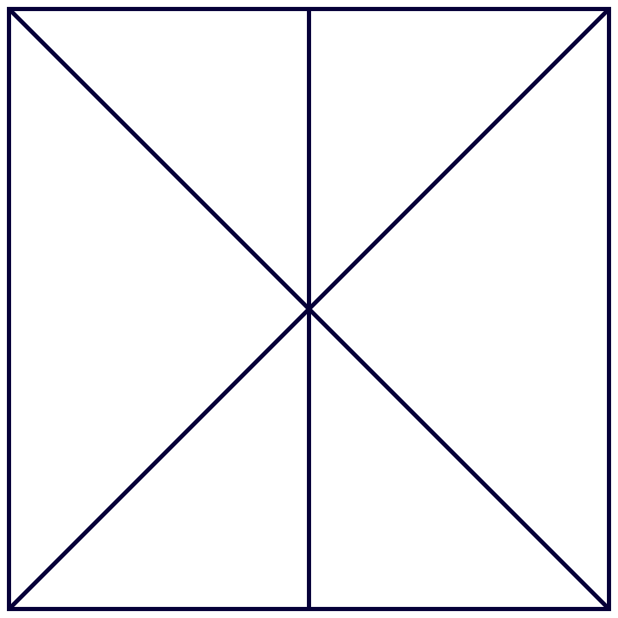
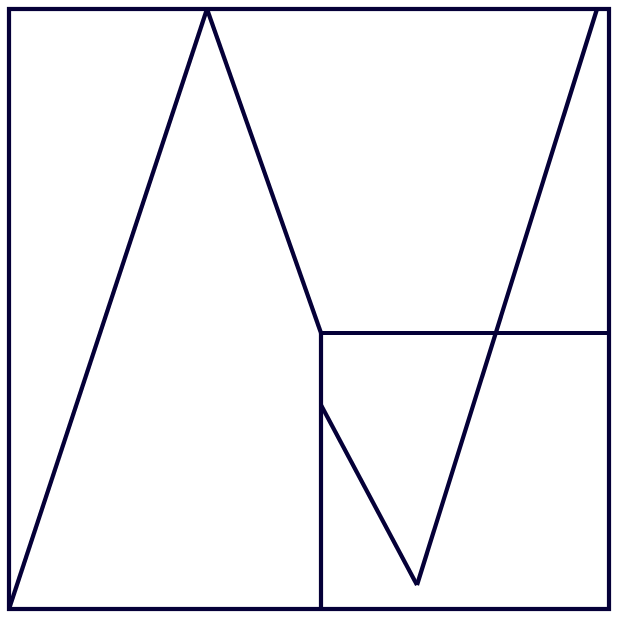
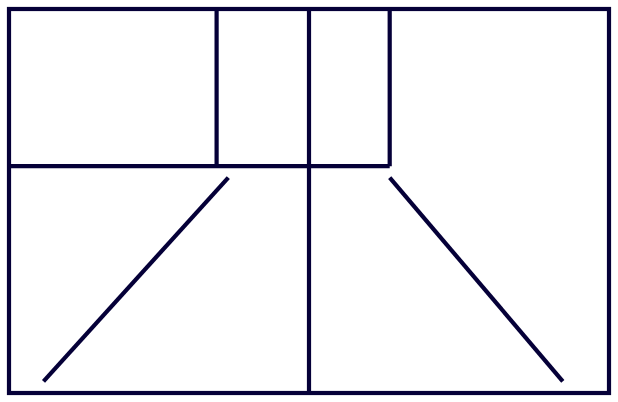
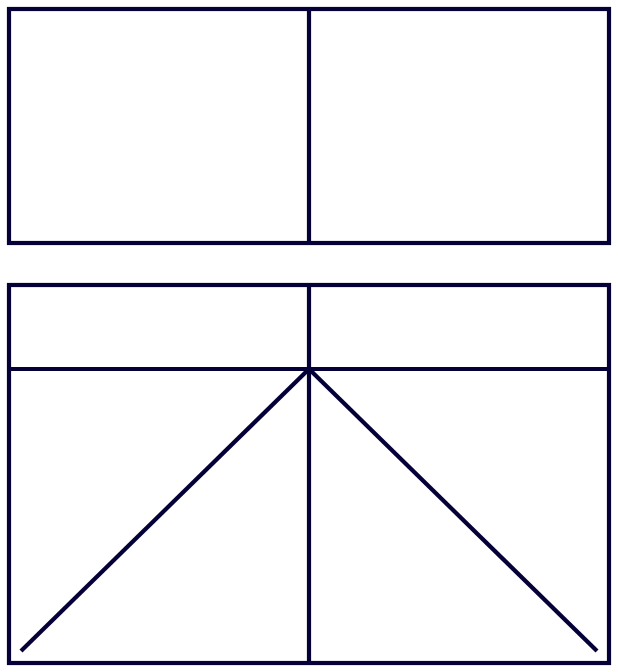
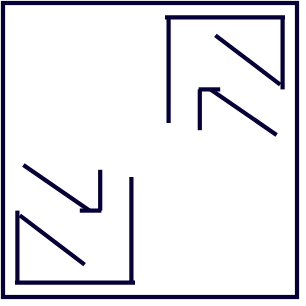
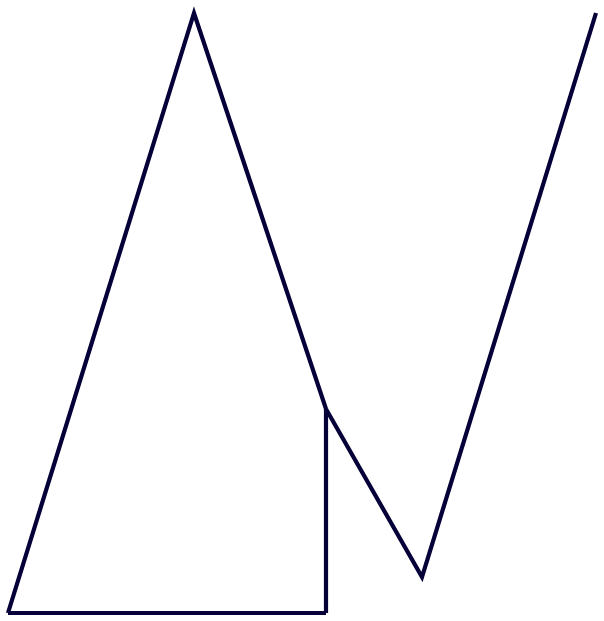
Select the option figure in which the given figure ( X ) is embedded as its part (rotation is NOT allowed).
figure
उस विकल्प-आकृति का चयन कीजिए जिसमें दी गई आकृति (X) उसके एक भाग के रूप में सन्निहित है (घुमाने की अनुमति नहीं है)।
figure
  1. Afigure
  2. Bfigure
  3. Cfigure
  4. Dfigure
Show answer

Concept: Find the option that contains figure X in the same orientation (no rotation).

  1. Note X's key parts: a zig-zag with two peaks and a low point, a horizontal base at bottom-left and a small vertical line joining the slant to the base.
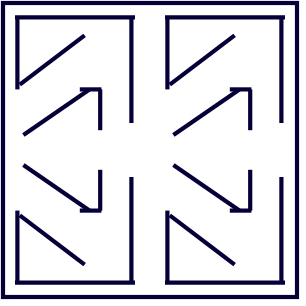
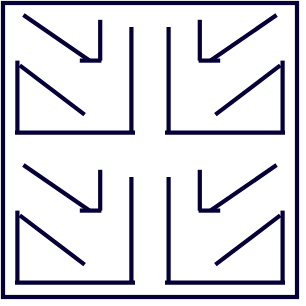
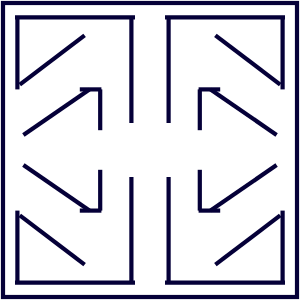
  2. In option (b) the zig-zag starts at the bottom-left corner, the base lies on the square's bottom edge and the vertical line meets it — all parts match.
  3. Options (a), (c), (d) lack the two peaks joined by a low point.

Trick: Trace the most unusual part of X (the small vertical touching the base) in each option first; it eliminates options fastest.

Answer: (B)

अवधारणा: वह विकल्प चुनें जिसमें आकृति X बिना घुमाए उसी दिशा में छिपी हो।

  1. X के मुख्य भाग: दो शिखरों और एक निचले बिंदु वाली टेढ़ी-मेढ़ी रेखा, नीचे-बाएँ क्षैतिज आधार और आधार तक आती छोटी खड़ी रेखा।
  2. विकल्प (b) में रेखा नीचे-बाएँ कोने से उठती है, आधार वर्ग की निचली भुजा पर है और खड़ी रेखा भी मिलती है।
  3. (a), (c), (d) में निचले बिंदु से जुड़े दो शिखर नहीं हैं।

ट्रिक: X का सबसे अलग हिस्सा (आधार से मिलती छोटी खड़ी रेखा) पहले खोजें — गलत विकल्प जल्दी हटते हैं।

उत्तर: (B)

SSC GDGeneral Intelligence & ReasoningEmbedded figureSSC GD 2025 · 20 Feb Shift 3 →
Q604.
The position(s) of how many letters will remain unchanged if each of the letters in the word PUSHING is arranged in the English alphabetical order?
यदि शब्द PUSHING के प्रत्येक अक्षर को अंग्रेजी वर्णमाला क्रम में व्यवस्थित किया जाए, तो कितने अक्षरों का स्थान अपरिवर्तित रहेगा?
  1. AZeroशून्य
  2. BOneएक
  3. CTwoदो
  4. DThreeतीन
Show answer

Concept: Compare the original word with its letters sorted A→Z, position by position.

  1. PUSHING: P U S H I N G
  2. Sorted: G H I N P S U
  3. Place by place none matches (1st: P vs G … 7th: G vs U); even the middle letters H, I, N land elsewhere.

Trick: Quick check: the first letter P is not the smallest and the last letter G is not the largest, so test only the middle letters.

Answer: (A) Zero

अवधारणा: मूल शब्द और उसके अक्षरों को A→Z क्रम में लिखकर हर स्थान की तुलना करें।

  1. PUSHING: P U S H I N G
  2. क्रम में: G H I N P S U
  3. किसी भी स्थान पर एक जैसा अक्षर नहीं (पहला: P बनाम G … सातवाँ: G बनाम U); बीच के H, I, N भी खिसक जाते हैं।

ट्रिक: पहला अक्षर P सबसे छोटा नहीं और अंतिम G सबसे बड़ा नहीं, तो केवल बीच के अक्षर जाँचें।

उत्तर: (A) शून्य

SSC GDGeneral Intelligence & ReasoningLetter positions after alphabetical sortingSSC GD 2025 · 20 Feb Shift 3 →
Q605.
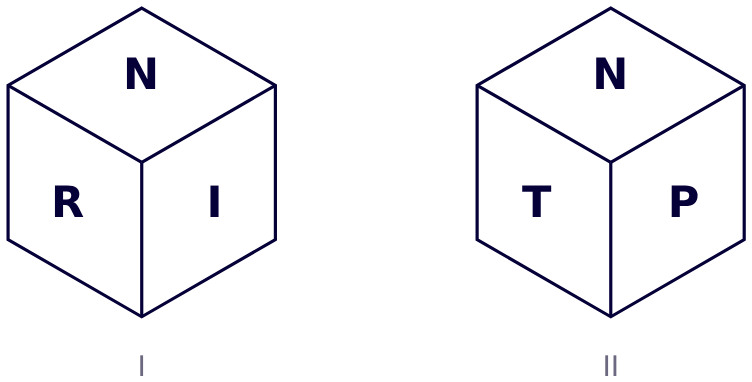
A dice has its faces marked by letters N, R, P, I, T and E. Two positions of the same dice are shown in the given figures. Which face is opposite to face E?
figure
एक पासे के फलकों पर अक्षर N, R, P, I, T और E अंकित हैं। दी गई आकृतियों में उसी पासे की दो स्थितियाँ दर्शाई गई हैं। फलक E के विपरीत कौन-सा फलक है?
figure
  1. AN
  2. BI
  3. CP
  4. DT
Show answer

Concept: If the same face stays on top in two views, the four side faces shown are all adjacent to it.

  1. N is on top in both views.
  2. Side faces seen: R, I (view 1) and T, P (view 2) — four different letters, all adjacent to N.
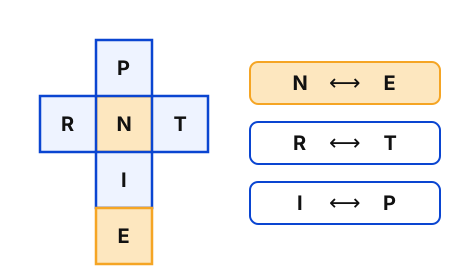
  3. The only remaining letter, E, must be at the bottom, i.e. opposite N.

Trick: Common face + 4 different neighbours → the 6th letter is its opposite.

Answer: (A) N

अवधारणा: दो स्थितियों में ऊपर एक ही फलक हो तो दिखे हुए चारों पार्श्व फलक उसके निकटवर्ती होते हैं।

  1. दोनों स्थितियों में N ऊपर है।
  2. पार्श्व फलक: R, I (पहली) और T, P (दूसरी) — चारों अलग, सब N के पड़ोसी।
  3. बचा हुआ अक्षर E नीचे होगा, यानी N के विपरीत।

ट्रिक: साझा फलक + 4 अलग पड़ोसी → छठा अक्षर उसका विपरीत।

उत्तर: (A) N

SSC GDGeneral Intelligence & ReasoningDice – opposite face from common topSSC GD 2025 · 20 Feb Shift 3 →
Q606.
Based on the English alphabetical order, three of the following four letter-clusters are alike in a certain way and thus form a group. Which letter-cluster DOES NOT belong to that group?
(Note: The odd man out is not based on the number of consonants/vowels or their position in the letter-cluster.)
अंग्रेजी वर्णमाला क्रम के आधार पर, निम्नलिखित चार अक्षर-समूहों में से तीन एक निश्चित प्रकार से समान हैं और इस प्रकार एक समूह बनाते हैं। कौन-सा अक्षर-समूह उस समूह से संबंधित नहीं है?
(नोट: असंगत अक्षर-समूह, समूह में व्यंजनों/स्वरों की संख्या अथवा उनकी स्थिति पर आधारित नहीं है।)
  1. ALNO
  2. BTVW
  3. CACD
  4. DJLN
Show answer

Concept: Compare the gaps between consecutive letters in each cluster.

  1. LNO: +2, +1
  2. TVW: +2, +1; ACD: +2, +1
  3. JLN: +2, +2 → different pattern.

Trick: Look at the last two letters: O follows N, W follows V, D follows C directly, but N does not follow L.

Answer: (D) JLN

अवधारणा: हर समूह में लगातार अक्षरों के बीच का अंतर देखें।

  1. LNO: +2, +1
  2. TVW: +2, +1; ACD: +2, +1
  3. JLN: +2, +2 → नियम अलग।

ट्रिक: अंतिम दो अक्षर देखें: NO, VW, CD लगातार हैं, पर LN लगातार नहीं।

उत्तर: (D) JLN

SSC GDGeneral Intelligence & ReasoningOdd one out – letter gapsSSC GD 2025 · 20 Feb Shift 3 →
Q607.
What will come in the place of the question mark '(?)' in the following equation, if ' × ' and ' + ' are interchanged and ' − ' and ' ÷ ' are interchanged? 44 ÷ 9 × 32 − 8 + 4 = ?
निम्नलिखित समीकरण में प्रश्नवाचक चिह्न '(?)' के स्थान पर क्या आएगा, यदि '×' और '+' को आपस में बदल दिया जाए तथा '−' और '÷' को आपस में बदल दिया जाए? 44 ÷ 9 × 32 − 8 + 4 = ?
  1. A52
  2. B53
  3. C54
  4. D51
Show answer

Concept: Swap the signs as told, then solve using BODMAS.

  1. × ↔ + and − ↔ ÷: 44÷9×32−8+4 becomes 44−9+32÷8×4.
  2. 32÷8=4; 4×4=16.
  3. 44−9+16=51.

Trick: Rewrite the whole expression once before calculating — most mistakes come from swapping signs mentally.

Answer: (D) 51

अवधारणा: बताए अनुसार चिह्न बदलें, फिर BODMAS से हल करें।

  1. × ↔ + और − ↔ ÷: 44÷9×32−8+4 → 44−9+32÷8×4।
  2. 32÷8=4; 4×4=16।
  3. 44−9+16=51।

ट्रिक: गणना से पहले पूरा व्यंजक नए चिह्नों के साथ लिख लें — मन में बदलने पर गलती होती है।

उत्तर: (D) 51

SSC GDGeneral Intelligence & ReasoningSymbol interchange – BODMASSSC GD 2025 · 20 Feb Shift 3 →
Q608.
In a certain code language:
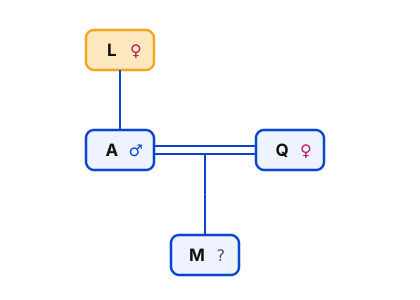
' I @ Z ' means ' I is the husband of Z ', ' I * Z ' means ' I is the mother of Z ', ' I $ Z ' means ' I is the daughter of Z ' and ' I # Z ' means ' I is the father of Z '.
Based on the above, how is L related to Q if ' L * A @ Q * M '?
एक निश्चित कूट भाषा में:
' I @ Z ' का अर्थ है ' I, Z का पति है ', ' I * Z ' का अर्थ है ' I, Z की माता है ', ' I $ Z ' का अर्थ है ' I, Z की पुत्री है ' तथा ' I # Z ' का अर्थ है ' I, Z का पिता है '।
उपर्युक्त के आधार पर, यदि ' L * A @ Q * M ' है, तो L, Q से किस प्रकार संबंधित है?
  1. AMother's motherमाता की माता
  2. BSisterबहन
  3. CHusband's motherपति की माता
  4. DSister's daughterबहन की पुत्री
Show answer

Concept: Decode each symbol pair separately and link them.

  1. L * A → L is A's mother.
  2. A @ Q → A is Q's husband.
  3. Q * M → Q is M's mother (not needed).
  4. So L is the mother of Q's husband.

Trick: Read only the links between L and Q; ignore extra parts like Q * M.

Answer: (C) Husband's mother

अवधारणा: हर चिह्न-जोड़ी को अलग से पढ़कर संबंध जोड़ें।

  1. L * A → L, A की माता है।
  2. A @ Q → A, Q का पति है।
  3. Q * M → Q, M की माता है (आवश्यक नहीं)।
  4. अतः L, Q के पति की माता है।

ट्रिक: केवल L से Q तक की कड़ी देखें; Q * M जैसी अतिरिक्त जानकारी छोड़ दें।

उत्तर: (C) पति की माता

SSC GDGeneral Intelligence & ReasoningCoded blood relationSSC GD 2025 · 20 Feb Shift 3 →
Q609.
What should come in place of the question mark (?) in the given series based on the English alphabetical order? FNV GOW HPX IQY?
अंग्रेजी वर्णमाला क्रम के आधार पर दी गई शृंखला में प्रश्नवाचक चिह्न (?) के स्थान पर क्या आना चाहिए? FNV GOW HPX IQY?
  1. AISZ
  2. BJRU
  3. CIRU
  4. DJRZ
Show answer

Concept: Treat each letter position as its own series.

  1. 1st letters: F, G, H, I → J
  2. 2nd letters: N, O, P, Q → R
  3. 3rd letters: V, W, X, Y → Z

Trick: Every letter moves +1, so just add 1 to each letter of IQY → JRZ.

Answer: (D) JRZ

अवधारणा: हर स्थान के अक्षरों को अलग शृंखला मानें।

  1. पहले अक्षर: F, G, H, I → J
  2. दूसरे अक्षर: N, O, P, Q → R
  3. तीसरे अक्षर: V, W, X, Y → Z

ट्रिक: हर अक्षर +1 बढ़ता है, तो IQY के हर अक्षर में 1 जोड़ें → JRZ।

उत्तर: (D) JRZ

SSC GDGeneral Intelligence & ReasoningLetter series – column-wise +1SSC GD 2025 · 20 Feb Shift 3 →
Q610.
What should come in place of the question mark (?) in the given series? 153, 128, 105, 84, 65, ?
दी गई शृंखला में प्रश्नवाचक चिह्न (?) के स्थान पर क्या आना चाहिए? 153, 128, 105, 84, 65, ?
  1. A32
  2. B28
  3. C36
  4. D48
Show answer

Concept: Find the differences between consecutive terms.

  1. Gaps: 25 (153→128), 23, 21, 19 (84→65)
  2. Differences fall by 2 → next is 17.
  3. 65−17=48

Trick: Alternatively the terms are 122+9,112+7,102+5,92+3,82+1, so next = 72−1=48.

Answer: (D) 48

अवधारणा: लगातार पदों का अंतर निकालें।

  1. अंतर: 25 (153→128), 23, 21, 19 (84→65)
  2. अंतर 2-2 घट रहे हैं → अगला 17।
  3. 65−17=48

ट्रिक: दूसरा तरीका: 122+9,112+7,102+5,92+3,82+1 → अगला 72−1=48।

उत्तर: (D) 48

SSC GDGeneral Intelligence & ReasoningNumber series – decreasing odd differencesSSC GD 2025 · 20 Feb Shift 3 →
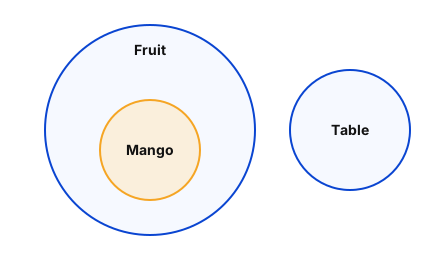
Q611.
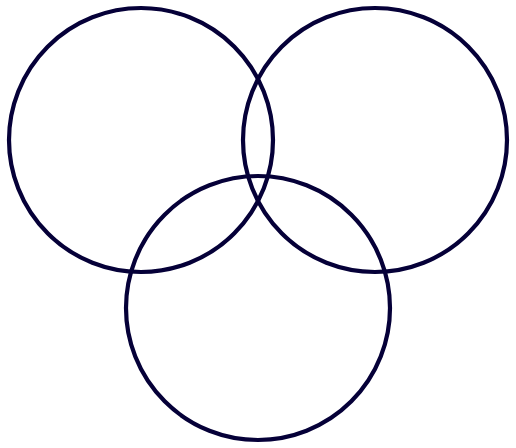
Select the Venn diagram that best illustrates the relationship between the following classes.
Mango, Fruit, Table
उस वेन आरेख का चयन कीजिए जो निम्नलिखित वर्गों के बीच के संबंध को सर्वोत्तम रूप से दर्शाता है।
आम, फल, मेज़
  1. Afigure
  2. Bfigure
  3. Cfigure
  4. Dfigure
Show answer

Concept: Place each class by asking: fully inside, overlapping, or separate?

  1. Every mango is a fruit → Mango circle lies inside Fruit circle.
  2. A table is neither fruit nor mango → separate circle.
  3. Diagram: one circle inside another + one independent circle = option (a).

Trick: Unrelated objects (table vs food items) always get a separate circle.

Answer: (A)

अवधारणा: हर वर्ग के लिए सोचें: पूरी तरह अंदर, आंशिक रूप से जुड़ा, या अलग?

  1. हर आम एक फल है → आम का वृत्त फल के अंदर।
  2. मेज़ न फल है न आम → अलग वृत्त।
  3. आरेख: एक वृत्त दूसरे के अंदर + एक स्वतंत्र वृत्त = विकल्प (a)।

ट्रिक: असंबंधित वस्तु (मेज़ बनाम खाद्य) का वृत्त हमेशा अलग होता है।

उत्तर: (A)

SSC GDGeneral Intelligence & ReasoningVenn diagram – subset and separate classSSC GD 2025 · 20 Feb Shift 3 →
Q612.
In a certain code language, 'WGOA' is coded as '68' and 'ISLT' is coded as '54'. What is the code for 'DXRI' in the given language?
एक निश्चित कूट भाषा में, 'WGOA' को '68' के रूप में कूटबद्ध किया जाता है तथा 'ISLT' को '54' के रूप में कूटबद्ध किया जाता है। उसी भाषा में 'DXRI' का कूट क्या है?
  1. A42
  2. B55
  3. C48
  4. D59
Show answer

Concept: Code = sum of opposite-letter values (27 − position) + 6.

  1. WGOA: opposites D, T, L, Z = 4 + 20 + 12 + 26 = 62; 62 + 6 = 68 ✔
  2. ISLT: R, H, O, G = 18 + 8 + 15 + 7 = 48; 48 + 6 = 54 ✔
  3. DXRI: W, C, I, R = 23 + 3 + 9 + 18 = 53; 53 + 6 = 59

Trick: Shortcut: code = 114 − (sum of the word's own positions). DXRI: 4 + 24 + 18 + 9 = 55 → 114 − 55 = 59.

Answer: (D) 59

अवधारणा: कूट = विपरीत अक्षरों के स्थानीय मान (27 − स्थान) का योग + 6।

  1. WGOA: विपरीत D, T, L, Z = 4 + 20 + 12 + 26 = 62; 62 + 6 = 68 ✔
  2. ISLT: R, H, O, G = 18 + 8 + 15 + 7 = 48; 48 + 6 = 54 ✔
  3. DXRI: W, C, I, R = 23 + 3 + 9 + 18 = 53; 53 + 6 = 59

ट्रिक: शॉर्टकट: कूट = 114 − (शब्द के अपने अक्षरों का योग)। DXRI: 4 + 24 + 18 + 9 = 55 → 114 − 55 = 59।

उत्तर: (D) 59

SSC GDGeneral Intelligence & ReasoningLetter coding – opposite-letter sumSSC GD 2025 · 20 Feb Shift 3 →
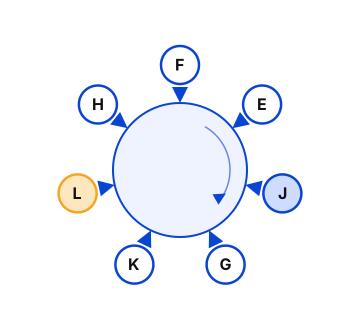
Q613.
E, F, G, H, J, K and L are sitting around a circular table facing the centre of the table (but not necessarily in the same order). K is an immediate neighbour of both L and G . G sits third to the left of F. E sits to the immediate left of F . H is NOT an immediate neighbour of G. Who sits third to the left of J?
E, F, G, H, J, K और L एक वृत्ताकार मेज़ के चारों ओर मेज़ के केंद्र की ओर मुख करके बैठे हैं (आवश्यक नहीं कि इसी क्रम में)। K, L और G दोनों का निकटतम पड़ोसी है। G, F के बाएँ से तीसरे स्थान पर बैठा है। E, F के ठीक बाएँ बैठा है। H, G का निकटतम पड़ोसी नहीं है। J के बाएँ से तीसरे स्थान पर कौन बैठा है?
  1. AH
  2. BG
  3. CL
  4. DE
Show answer

Concept: Facing the centre, 'left' means clockwise.

  1. Fix F. E is 1 seat clockwise of F, G is 3 seats clockwise → one seat between E and G.
  2. K neighbours both L and G, so K sits on G's far side and L next to K.
  3. H is not G's neighbour → J takes the seat between E and G; H takes the last seat.
  4. Clockwise order: F, E, J, G, K, L, H. Three seats clockwise from J: G, K, L.

Trick: Place the two fixed people (E, G) relative to F first; the rest fall in by elimination.

Answer: (C) L

अवधारणा: केंद्र की ओर मुख हो तो 'बाएँ' का अर्थ दक्षिणावर्त (clockwise) है।

  1. F को स्थिर करें। E, F से 1 स्थान दक्षिणावर्त, G 3 स्थान → E और G के बीच एक सीट।
  2. K, L और G दोनों का पड़ोसी है, तो K, G के दूसरी ओर और L, K के पास।
  3. H, G का पड़ोसी नहीं → E-G के बीच J, बची सीट पर H।
  4. दक्षिणावर्त क्रम: F, E, J, G, K, L, H। J से तीसरा: G, K, L।

ट्रिक: पहले F के सापेक्ष निश्चित व्यक्तियों (E, G) को बैठाएँ; बाकी स्वतः तय हो जाते हैं।

उत्तर: (C) L

SSC GDGeneral Intelligence & ReasoningCircular seating – facing centreSSC GD 2025 · 20 Feb Shift 3 →
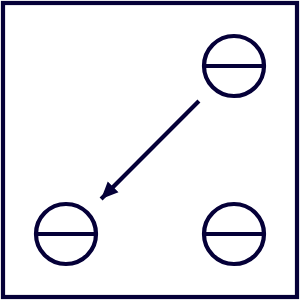
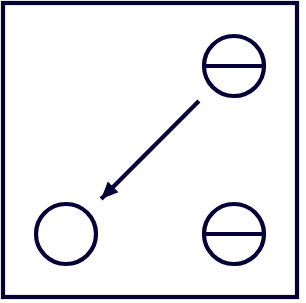
Q614.
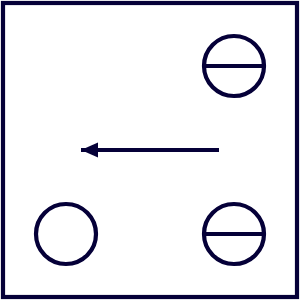
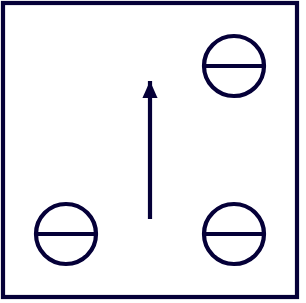
Identify the figure given in the options which when put in place of the question mark (?) will logically complete the series.
figure
उस आकृति की पहचान कीजिए जिसे प्रश्नवाचक चिह्न (?) के स्थान पर रखने पर शृंखला तार्किक रूप से पूर्ण हो जाएगी।
figure
  1. Afigure
  2. Bfigure
  3. Cfigure
  4. Dfigure
Show answer

Concept: Track each element (arrow, circles) separately.

  1. Arrow turns clockwise by 45°, 90°, 45° … → next turn 90°, so it points left.
  2. Circles move clockwise around the corners; each older circle gets a bar → next figure: barred circles at top-right and bottom-right, a new plain circle at bottom-left.
  3. Only option (c) has the left arrow with this circle arrangement.

Trick: Use the arrow first — it eliminates (a), (b), (d) at once.

Answer: (C)

अवधारणा: हर तत्व (तीर, वृत्त) को अलग-अलग ट्रैक करें।

  1. तीर घड़ी की दिशा में 45°, 90°, 45° मुड़ता है → अगली बार 90°, तीर बाईं ओर।
  2. वृत्त घड़ी की दिशा में अगले कोने पर आते हैं और पुराने वृत्त पर रेखा लगती है → ऊपर-दाएँ व नीचे-दाएँ रेखा वाले वृत्त, नीचे-बाएँ नया सादा वृत्त।
  3. बाएँ मुख वाला तीर व यही वृत्त-व्यवस्था दोनों विकल्प (c) में ही मिलते हैं।

ट्रिक: पहले तीर देखें — इससे (a), (b), (d) तुरंत हट जाते हैं।

उत्तर: (C)

SSC GDGeneral Intelligence & ReasoningFigure series – rotating arrow and circlesSSC GD 2025 · 20 Feb Shift 3 →
Q615.
Six people, K, L, M, N, O and Z, are sitting in a straight row facing north (but not necessarily in the same order). No one sits to the left of M. Only three people sit between M and K. Only three people sit to the right of O. Z sits to the immediate left of O. N is not an immediate neighbour of O. Who sits at the rightmost end of the line?
छह व्यक्ति K, L, M, N, O और Z उत्तर की ओर मुख करके एक सीधी पंक्ति में बैठे हैं (आवश्यक नहीं कि इसी क्रम में)। M के बाईं ओर कोई नहीं बैठा है। M और K के बीच केवल तीन व्यक्ति बैठे हैं। O के दाईं ओर केवल तीन व्यक्ति बैठे हैं। Z, O के ठीक बाईं ओर बैठा है। N, O का निकटतम पड़ोसी नहीं है। पंक्ति के सबसे दाएँ छोर पर कौन बैठा है?
  1. AL
  2. BK
  3. CN
  4. DO
Show answer

Concept: Number seats 1–6 from the left and fix definite positions first.

  1. No one left of M → M = 1. Three between M and K → K = 5.
  2. Three to the right of O → O = 3; Z immediately left of O → Z = 2.
  3. Seat 4 is O's neighbour, so N can't sit there → L = 4, N = 6.

Trick: Fix end-seat clues ("no one to the left") first — they anchor the whole row.

Answer: (C) N

अवधारणा: बाएँ से सीट 1–6 मानें और पहले निश्चित स्थान भरें।

  1. M के बाएँ कोई नहीं → M = 1; M और K के बीच तीन → K = 5।
  2. O के दाएँ तीन → O = 3; Z, O के ठीक बाएँ → Z = 2।
  3. सीट 4, O की पड़ोसी है, वहाँ N नहीं → L = 4, N = 6।

ट्रिक: "किसी के बाएँ कोई नहीं" जैसे छोर वाले संकेत पहले लगाएँ — पूरी पंक्ति तय होती है।

उत्तर: (C) N

SSC GDGeneral Intelligence & ReasoningLinear seating – facing northSSC GD 2025 · 20 Feb Shift 3 →
Q616.
What should come in place of the question mark (?) in the given series? 110, 221, 443, 887, 1775, ?
दी गई शृंखला में प्रश्नवाचक चिह्न (?) के स्थान पर क्या आना चाहिए? 110, 221, 443, 887, 1775, ?
  1. A2051
  2. B2751
  3. C3551
  4. D3051
Show answer

Concept: Each term is roughly double the previous → test ×2 + 1.

  1. 110×2+1=221; 221×2+1=443
  2. 443×2+1=887; 887×2+1=1775
  3. 1775×2+1=3551

Trick: All terms are odd after 110, and only 3551 is close to double 1775 (≈3550).

Answer: (C) 3551

अवधारणा: हर पद पिछले का लगभग दोगुना है → ×2 + 1 जाँचें।

  1. 110×2+1=221; 221×2+1=443
  2. 443×2+1=887; 887×2+1=1775
  3. 1775×2+1=3551

ट्रिक: 1775 का दोगुना ≈3550; विकल्पों में केवल 3551 इसके पास है।

उत्तर: (C) 3551

SSC GDGeneral Intelligence & ReasoningNumber series – ×2 + 1SSC GD 2025 · 20 Feb Shift 3 →
Q617.
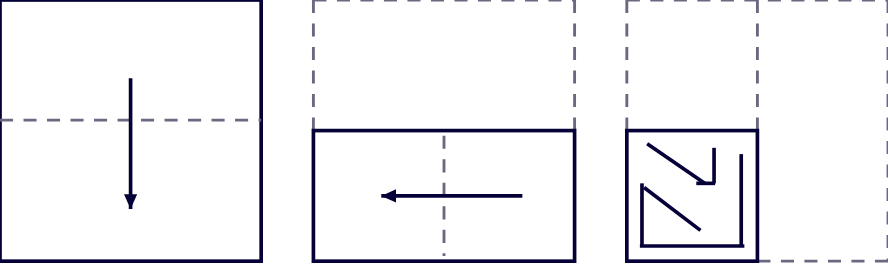
A paper is folded and punched as shown below. How will it appear when unfolded?
figure
एक कागज़ को नीचे दर्शाए अनुसार मोड़ा और छेदा गया है। खोलने पर वह कैसा दिखाई देगा?
figure
  1. Afigure
  2. Bfigure
  3. Cfigure
  4. Dfigure
Show answer

Concept: Unfold in reverse order; every fold line acts as a mirror.

  1. The paper is folded twice (top to bottom, then right to left) → the punch passes through 4 layers.
  2. Opening the vertical fold mirrors the mark into the bottom-right quarter.
  3. Opening the horizontal fold mirrors both marks into the top half → 4 marks, each a mirror image across the fold lines = option (d).

Trick: Number of holes = 2number of folds (here 22=4); then check mirror direction.

Answer: (D)

अवधारणा: उल्टे क्रम में खोलें; हर मोड़ रेखा दर्पण की तरह काम करती है।

  1. कागज़ दो बार मुड़ा (ऊपर से नीचे, फिर दाएँ से बाएँ) → छेद 4 परतों में।
  2. खड़ा मोड़ खोलने पर निशान नीचे-दाएँ भाग में दर्पण-प्रतिबिंब बनता है।
  3. क्षैतिज मोड़ खोलने पर दोनों निशान ऊपर दर्पण रूप में → 4 निशान = विकल्प (d)।

ट्रिक: छेदों की संख्या = 2मोड़ों की संख्या (यहाँ 22=4); फिर दर्पण दिशा जाँचें।

उत्तर: (D)

SSC GDGeneral Intelligence & ReasoningPaper folding and punchingSSC GD 2025 · 20 Feb Shift 3 →
Q618.
Read the given statements and conclusions carefully. Assuming that the information given in the statements is true, even if it appears to be at variance with commonly known facts, decide which of the given conclusions logically follow(s) from the statements.
Statements:
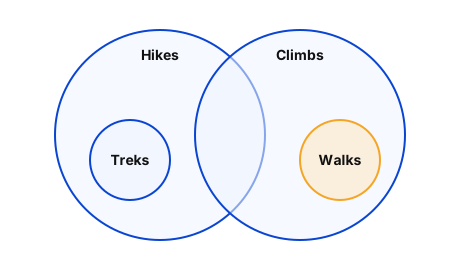
All treks are hikes.
Some hikes are climbs.
All walks are climbs.
Conclusions:
(I): Some walks are treks.
(II): Some walks are hikes.
दिए गए कथनों और निष्कर्षों को ध्यानपूर्वक पढ़िए। यह मानते हुए कि कथनों में दी गई जानकारी सत्य है, चाहे वह सर्वज्ञात तथ्यों से भिन्न प्रतीत होती हो, निर्णय कीजिए कि दिए गए निष्कर्षों में से कौन-सा/से कथनों का तार्किक रूप से अनुसरण करता है/करते हैं।
कथन:
सभी ट्रेक, हाइक हैं।
कुछ हाइक, क्लाइंब हैं।
सभी वॉक, क्लाइंब हैं।
निष्कर्ष:
(I): कुछ वॉक, ट्रेक हैं।
(II): कुछ वॉक, हाइक हैं।
  1. AOnly conclusion (II) follows.केवल निष्कर्ष (II) अनुसरण करता है।
  2. BNeither conclusion (I) nor (II) follows.न तो निष्कर्ष (I) और न ही निष्कर्ष (II) अनुसरण करता है।
  3. CBoth conclusions (I) and (II) follow.दोनों निष्कर्ष (I) और (II) अनुसरण करते हैं।
  4. DOnly conclusion (I) follows.केवल निष्कर्ष (I) अनुसरण करता है।
Show answer

Concept: A conclusion follows only if it is true in every possible diagram.

  1. Treks ⊂ Hikes; Hikes and Climbs partly overlap; Walks ⊂ Climbs.
  2. Walks can be drawn in the part of Climbs outside Hikes → 'Some walks are hikes' is not certain.
  3. Treks lie inside Hikes, so walks can't be definitely treks either.

Trick: Two 'All' statements linked only through a 'Some' never give a definite conclusion.

Answer: (B) Neither conclusion (I) nor (II) follows.

अवधारणा: निष्कर्ष तभी अनुसरण करता है जब वह हर संभव आरेख में सत्य हो।

  1. ट्रेक ⊂ हाइक; हाइक और क्लाइंब आंशिक रूप से मिलते हैं; वॉक ⊂ क्लाइंब।
  2. वॉक को क्लाइंब के उस भाग में बना सकते हैं जो हाइक से बाहर है → 'कुछ वॉक हाइक हैं' निश्चित नहीं।
  3. ट्रेक, हाइक के अंदर है, तो वॉक का ट्रेक होना भी निश्चित नहीं।

ट्रिक: जब दो 'सभी' कथन केवल 'कुछ' से जुड़ें, तो निश्चित निष्कर्ष नहीं निकलता।

उत्तर: (B) न तो निष्कर्ष (I) और न ही निष्कर्ष (II) अनुसरण करता है।

SSC GDGeneral Intelligence & ReasoningSyllogism – possibility vs certaintySSC GD 2025 · 20 Feb Shift 3 →
Q619.
In a certain code language, 'XIAP' is coded as '60' and 'NGQC' is coded as '51'. What is the code for 'TFIZ' in the given language?
एक निश्चित कूट भाषा में, 'XIAP' को '60' के रूप में कूटबद्ध किया जाता है तथा 'NGQC' को '51' के रूप में कूटबद्ध किया जाता है। उसी भाषा में 'TFIZ' का कूट क्या है?
  1. A68
  2. B55
  3. C71
  4. D52
Show answer

Concept: Add alphabet positions and compare with the code.

  1. XIAP: 24 + 9 + 1 + 16 = 50 → code 60 (+10)
  2. NGQC: 14 + 7 + 17 + 3 = 41 → code 51 (+10)
  3. TFIZ: 20 + 6 + 9 + 26 = 61 → 61 + 10 = 71

Trick: When both codes exceed the letter-sum by the same number, the rule is 'sum + constant'.

Answer: (C) 71

अवधारणा: अक्षरों के स्थानीय मान जोड़कर कूट से तुलना करें।

  1. XIAP: 24 + 9 + 1 + 16 = 50 → कूट 60 (+10)
  2. NGQC: 14 + 7 + 17 + 3 = 41 → कूट 51 (+10)
  3. TFIZ: 20 + 6 + 9 + 26 = 61 → 61 + 10 = 71

ट्रिक: दोनों कूट योग से समान संख्या अधिक हों तो नियम 'योग + स्थिरांक' है।

उत्तर: (C) 71

SSC GDGeneral Intelligence & ReasoningLetter coding – sum of positions + 10SSC GD 2025 · 20 Feb Shift 3 →
Q620.
Select the combination of letters that when sequentially placed in the blanks of the given series will make the series logically complete.
_CFB D_IE GI_H JLO_ MOR_
अक्षरों के उस संयोजन का चयन कीजिए जिसे दी गई शृंखला के रिक्त स्थानों में क्रमिक रूप से रखने पर शृंखला तार्किक रूप से पूर्ण हो जाएगी।
_CFB D_IE GI_H JLO_ MOR_
  1. AAFLKN
  2. BAELMN
  3. CBEJMQ
  4. DBFJKQ
Show answer

Concept: Each 4-letter group follows: first, first+2, first+5, first+1; groups start +3 apart.

  1. Group starts: _, D, G, J, M → first blank = A (D − 3).
  2. D_IE: D + 2 = F; GI_H: G + 5 = L.
  3. JLO_: J + 1 = K; MOR_: M + 1 = N.
  4. Blanks: A, F, L, K, N.

Trick: Only option A begins with A and has F second — decide after two blanks.

Answer: (A) AFLKN

अवधारणा: हर 4-अक्षरी समूह: पहला, पहला+2, पहला+5, पहला+1; समूहों के पहले अक्षर +3 के अंतर पर।

  1. पहले अक्षर: _, D, G, J, M → पहला रिक्त = A (D − 3)।
  2. D_IE: D + 2 = F; GI_H: G + 5 = L।
  3. JLO_: J + 1 = K; MOR_: M + 1 = N।
  4. रिक्त: A, F, L, K, N।

ट्रिक: A से शुरू और दूसरा F — केवल विकल्प A; दो रिक्त भरते ही उत्तर तय।

उत्तर: (A) AFLKN

SSC GDGeneral Intelligence & ReasoningLetter series – fill the blanksSSC GD 2025 · 20 Feb Shift 3 →