Question bank

Q&A: practice questions with answers

Search questions on any topic. Filter by exam category, exam, subject and topic, try the question, then open the answer and explanation.

Courses – airGurukul

4,200 questions found.

Q901.
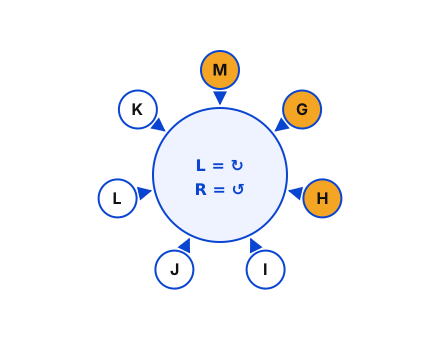
A, B, C, D, E, F and G are sitting around a circular table facing the centre (but not necessarily in the same order). G is sitting to the immediate left of B. E is sitting to the immediate left of G. C is sitting to the immediate left of E. F is sitting to the immediate right of D and the immediate left of A. D is sitting to the immediate right of B. Who is sitting to the immediate left of C?
A, B, C, D, E, F और G एक वृत्ताकार मेज़ के चारों ओर केंद्र की ओर मुख करके बैठे हैं (आवश्यक नहीं कि इसी क्रम में)। G, B के ठीक बाएँ बैठा है। E, G के ठीक बाएँ बैठा है। C, E के ठीक बाएँ बैठा है। F, D के ठीक दाएँ और A के ठीक बाएँ बैठा है। D, B के ठीक दाएँ बैठा है। C के ठीक बाएँ कौन बैठा है?
  1. AE
  2. BB
  3. CA
  4. DF
Show answer

Concept: When everyone faces the centre, 'left' = next seat clockwise, 'right' = next seat anticlockwise.
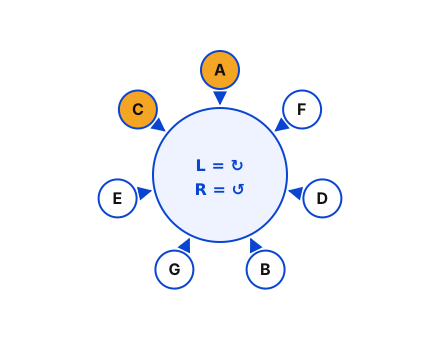
  1. Left-chain: B, then G (left of B), then E, then C → clockwise B–G–E–C.
  2. D is right of B and F is right of D, A is left of F → clockwise A–F–D–B.
  3. Join: A–F–D–B–G–E–C, and after C the circle returns to A.

Trick: Build one long clockwise chain from all 'immediate left' clues; the seat after the last name closes the circle.

Answer: (C) A

अवधारणा: केंद्र की ओर मुख हो तो बायाँ = घड़ी की दिशा में अगली सीट, दायाँ = उल्टी दिशा में अगली सीट।

  1. बायें वाले संकेत: B के बायें G, G के बायें E, E के बायें C → क्रम B–G–E–C।
  2. D, B के दायें; F, D के दायें और A के बायें F → क्रम A–F–D–B।
  3. पूरा क्रम A–F–D–B–G–E–C; C के बाद फिर A आता है।

ट्रिक: सारे 'बायें' संकेतों को एक ही दिशा की श्रृंखला में जोड़ें; अंतिम व्यक्ति के बाद पहला व्यक्ति ही बैठता है।

उत्तर: (C) A

SSC GDGeneral Intelligence & ReasoningCircular seating – facing centreSSC GD 2025 · 19 Feb Shift 3 →
Q902.
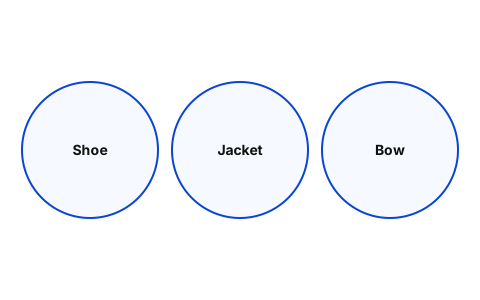
Select the Venn diagram that best illustrates the relationship between the following classes.
Shoe, Jacket, Bow
निम्नलिखित वर्गों के बीच के संबंध को सर्वोत्तम रूप से दर्शाने वाला वेन आरेख चुनिए।
जूता, जैकेट, धनुष
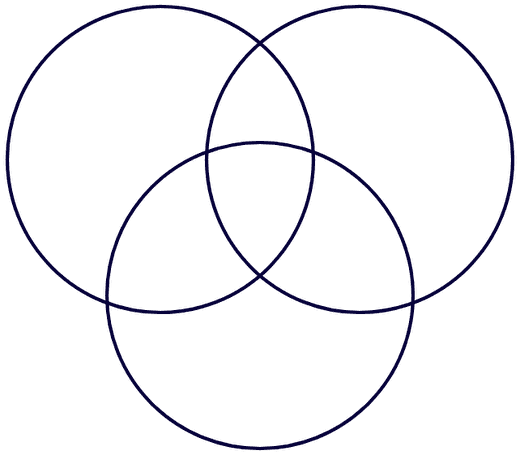
  1. Afigure
  2. Bfigure
  3. Cfigure
  4. Dfigure
Show answer

Concept: Classes with no common member are drawn as separate, non-touching circles.

  1. Shoe is footwear, jacket is clothing, bow is a weapon/ribbon – none is a type of another.
  2. No item can be two of these at once, so there is zero overlap.
  3. Three separate circles = figure (a).

Trick: Ask 'can one object be both?' for each pair – three 'no' answers means three disjoint circles.

Answer: (A)Three separate circles

अवधारणा: जिन वर्गों में कोई सदस्य साझा नहीं, उन्हें अलग-अलग वृत्तों से दिखाते हैं।

  1. जूता, जैकेट और धनुष/बो – कोई भी दूसरे का प्रकार नहीं है।
  2. कोई वस्तु एक साथ दो वर्गों में नहीं आती, इसलिए कोई ओवरलैप नहीं।
  3. तीन अलग वृत्त = विकल्प (a)।

ट्रिक: हर जोड़े के लिए पूछें 'क्या एक वस्तु दोनों हो सकती है?' – तीनों बार 'नहीं' तो तीन अलग वृत्त।

उत्तर: (A)तीन अलग-अलग वृत्त

SSC GDGeneral Intelligence & ReasoningVenn diagram – unrelated classesSSC GD 2025 · 19 Feb Shift 3 →
Q903.
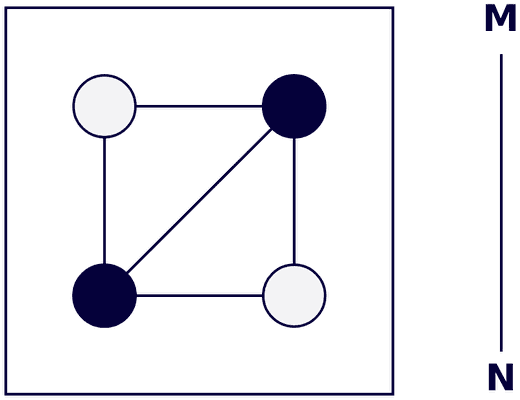
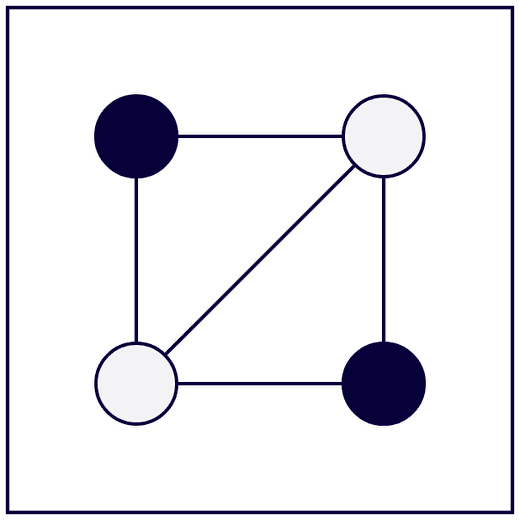
Select the correct mirror image of the given figure when the mirror is placed at MN as shown below.
figure
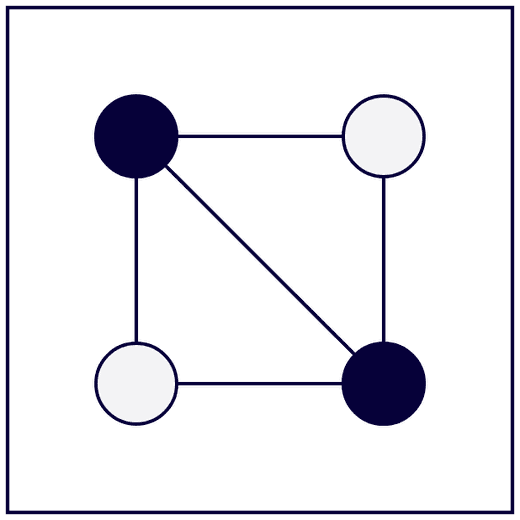
दिए गए चित्र का सही दर्पण प्रतिबिंब चुनिए, जबकि दर्पण नीचे दर्शाए अनुसार MN पर रखा गया हो।
figure
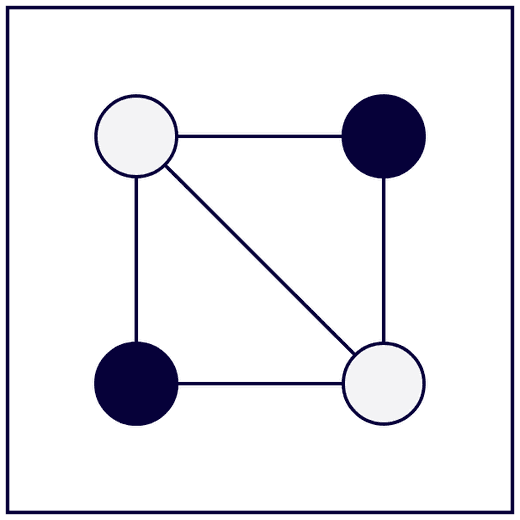
  1. Afigure
  2. Bfigure
  3. Cfigure
  4. Dfigure
Show answer

Concept: A vertical mirror swaps left and right only; top and bottom stay unchanged.

  1. Filled dots at top-right and bottom-left shift to top-left and bottom-right.
  2. The diagonal that rose to the right must now rise to the left (slope reverses).
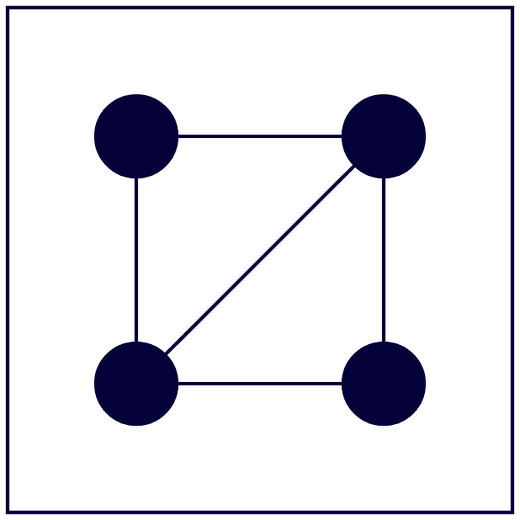
  3. Option (b) keeps the old slope; only (c) has both changes.

Trick: Check one slanted line first – in a vertical mirror its slope must reverse; this alone removes most options.

Answer: (C)Figure (c)

अवधारणा: ऊर्ध्वाधर दर्पण में केवल बायाँ-दायाँ बदलता है; ऊपर-नीचे वैसा ही रहता है।

  1. ऊपर-दायें और नीचे-बायें के भरे बिंदु अब ऊपर-बायें और नीचे-दायें आ जाते हैं।
  2. तिरछी रेखा का झुकाव उल्टा हो जाता है।
  3. (b) में झुकाव वही है; केवल (c) में दोनों बदलाव सही हैं।

ट्रिक: पहले तिरछी रेखा देखें – ऊर्ध्वाधर दर्पण में उसका झुकाव उल्टा होना ही चाहिए।

उत्तर: (C)आकृति (c)

SSC GDGeneral Intelligence & ReasoningMirror image – vertical mirrorSSC GD 2025 · 19 Feb Shift 3 →
Q904.
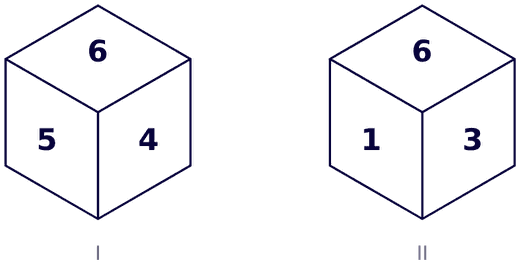
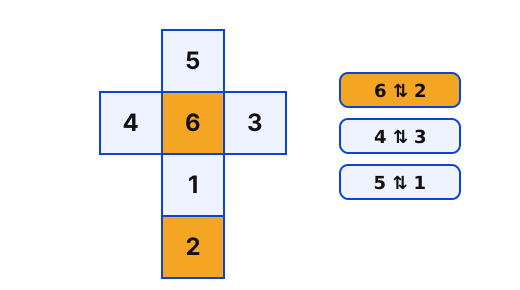
Two different positions of the same dice are given below. Which is the number on the face opposite to the face containing 2 ?
figure
एक ही पासे की दो अलग-अलग स्थितियाँ नीचे दी गई हैं। 2 वाले फलक के विपरीत फलक पर कौन-सी संख्या है?
figure
  1. A3
  2. B1
  3. C6
  4. D4
Show answer

Concept: Faces adjacent to a common face cannot be opposite to it; the left-over number is opposite.

  1. 6 is visible in both positions.
  2. Neighbours of 6: 5, 4 (first view) and 1, 3 (second view).
  3. Only 2 is not a neighbour, so 2 and 6 are opposite.

Trick: Common face + list its 4 neighbours → the missing sixth number is its opposite.

Answer: (C) 6

अवधारणा: किसी फलक के साथ दिखने वाले फलक उसके विपरीत नहीं हो सकते; बचा हुआ अंक विपरीत होता है।

  1. दोनों स्थितियों में 6 दिख रहा है।
  2. 6 के पड़ोसी: 5, 4 और 1, 3।
  3. केवल 2 बचता है, अतः 2 और 6 आमने-सामने हैं।

ट्रिक: साझा फलक के चार पड़ोसी लिखें – छठा बचा अंक ही उसका विपरीत।

उत्तर: (C) 6

SSC GDGeneral Intelligence & ReasoningDice – opposite faceSSC GD 2025 · 19 Feb Shift 3 →
Q905.
In a certain code language, 'do the math' is coded as 'ab cd ef' and 'math is fun' is coded as 'ef gh ij'. How is 'math' coded in the given language?
एक निश्चित कूट भाषा में 'do the math' को 'ab cd ef' के रूप में कूटबद्ध किया जाता है और 'math is fun' को 'ef gh ij' के रूप में कूटबद्ध किया जाता है। दी गई भाषा में 'math' को किस प्रकार कूटबद्ध किया जाएगा?
  1. Aab
  2. Bgh
  3. Cef
  4. Dcd
Show answer

Concept: A word repeated in two sentences gets the code repeated in both code groups.

  1. 'do the math' → ab cd ef; 'math is fun' → ef gh ij.
  2. Common word: math; common code: ef.
  3. So math = ef.

Trick: Circle the repeated word and the repeated code – match them directly.

Answer: (C) ef

अवधारणा: दो वाक्यों में दोहराए गए शब्द का कोड दोनों कोड-समूहों में दोहराया जाता है।

  1. 'do the math' → ab cd ef; 'math is fun' → ef gh ij।
  2. साझा शब्द math और साझा कोड ef।
  3. अतः math = ef।

ट्रिक: दोहराया शब्द और दोहराया कोड मिलाइए – सीधे उत्तर।

उत्तर: (C) ef

SSC GDGeneral Intelligence & ReasoningCoding – common word methodSSC GD 2025 · 19 Feb Shift 3 →
Q906.
Identify the figure given in the options, which when put in place of the question mark (?) will logically complete the series.
figure
विकल्पों में दिए गए उस चित्र की पहचान कीजिए, जिसे प्रश्नवाचक चिह्न (?) के स्थान पर रखने से शृंखला तार्किक रूप से पूर्ण हो जाएगी।
figure
  1. Afigure
  2. Bfigure
  3. Cfigure
  4. Dfigure
Show answer

Concept: The symbol moves one corner clockwise each step and a new symbol appears each time.

  1. Positions: top-right → bottom-right → bottom-left → top-left.
  2. Next position: top-right again.
  3. (b), (c) fail the position; (d) repeats the square; (a) has a new star at top-right.

Trick: Track only the corner first, then remove options that repeat an old symbol.

Answer: (A)Figure (a)

अवधारणा: चिह्न हर बार एक कोना दक्षिणावर्त खिसकता है और हर बार नया चिह्न आता है।

  1. स्थिति: ऊपर-दायाँ → नीचे-दायाँ → नीचे-बायाँ → ऊपर-बायाँ।
  2. अगली स्थिति फिर ऊपर-दायाँ।
  3. (b), (c) की स्थिति गलत; (d) में वर्ग दोहराया गया; (a) में नया तारा ऊपर-दायें है।

ट्रिक: पहले केवल कोना देखें, फिर दोहराए चिह्न वाले विकल्प हटाएँ।

उत्तर: (A)आकृति (a)

SSC GDGeneral Intelligence & ReasoningFigure series – clockwise positionSSC GD 2025 · 19 Feb Shift 3 →
Q907.
What will come in the place of the question mark '(?)' in the following equation, if ' ÷ ' and ' × ' are interchanged and ' + ' and ' − ' are interchanged?
69 − 2 ÷ 7 + 35 × 7 = ?
निम्नलिखित समीकरण में प्रश्नवाचक चिह्न '(?)' के स्थान पर क्या आएगा, यदि ' ÷ ' और ' × ' को आपस में बदल दिया जाए तथा ' + ' और ' − ' को आपस में बदल दिया जाए?
69 − 2 ÷ 7 + 35 × 7 = ?
  1. A78
  2. B79
  3. C77
  4. D80
Show answer

Concept: Swap the signs first, then simplify using BODMAS.

  1. After swapping: 69+2×7−35÷7.
  2. 2×7=14, 35÷7=5.
  3. 69+14−5=78.

Trick: Rewrite the whole expression with new signs before doing any arithmetic – most errors come from swapping mid-way.

Answer: (A) 78

अवधारणा: पहले चिह्न बदलें, फिर BODMAS से सरल करें।

  1. बदलने के बाद: 69+2×7−35÷7।
  2. 2×7=14, 35÷7=5।
  3. 69+14−5=78।

ट्रिक: गणना से पहले पूरा व्यंजक नए चिह्नों के साथ दोबारा लिखें।

उत्तर: (A) 78

SSC GDGeneral Intelligence & ReasoningSign interchange – BODMASSSC GD 2025 · 19 Feb Shift 3 →
Q908.
PQTU is related to LMPQ in a certain way based on the English alphabetical order. In the same way, EHLN is related to ADHJ. To which of the given options is FMRW related, following the same logic?
अंग्रेज़ी वर्णमाला के क्रम के आधार पर PQTU एक निश्चित प्रकार से LMPQ से संबंधित है। उसी प्रकार, EHLN, ADHJ से संबंधित है। उसी तर्क का अनुसरण करते हुए, FMRW दिए गए विकल्पों में से किससे संबंधित है?
  1. AJQVA
  2. BBINS
  3. CCHMR
  4. DDKPU
Show answer

Concept: Each letter shifts back by a fixed number of places.

  1. PQTU − 4 each → LMPQ ✓; EHLN − 4 each → ADHJ ✓.
  2. Apply to FMRW: F(6)−4 = B(2), M(13)−4 = I(9), R(18)−4 = N(14), W(23)−4 = S(19).
  3. Result: BINS.

Trick: Check only the first letter of each option: F−4 = B leaves only option (b).

Answer: (B) BINS

अवधारणा: हर अक्षर में से एक निश्चित संख्या घटती है।

  1. PQTU में हर अक्षर से 4 घटाएँ → LMPQ ✓; EHLN − 4 → ADHJ ✓।
  2. FMRW पर लगाएँ: F(6)−4 = B(2), M(13)−4 = I(9), R(18)−4 = N(14), W(23)−4 = S(19)।
  3. परिणाम: BINS।

ट्रिक: विकल्पों का केवल पहला अक्षर जाँचें: F−4 = B, केवल (b) बचता है।

उत्तर: (B) BINS

SSC GDGeneral Intelligence & ReasoningLetter analogy – minus 4SSC GD 2025 · 19 Feb Shift 3 →
Q909.
G, H, I, J, K, L and M are sitting around a circular table, facing the centre of the table (but not necessarily in the same order). Only one person sits between M and L when counted from the right of M. Only one person sits between L and I. Only one person sits between M and H. Only two people sit between K and I. Only one person sits between J and H. Who sits to the immediate right and left of G, respectively?
G, H, I, J, K, L और M एक वृत्ताकार मेज़ के चारों ओर मेज़ के केंद्र की ओर मुख करके बैठे हैं (आवश्यक नहीं कि इसी क्रम में)। M के दाईं ओर से गिनने पर M और L के बीच केवल एक व्यक्ति बैठा है। L और I के बीच केवल एक व्यक्ति बैठा है। M और H के बीच केवल एक व्यक्ति बैठा है। K और I के बीच केवल दो व्यक्ति बैठे हैं। J और H के बीच केवल एक व्यक्ति बैठा है। G के ठीक दाईं और बाईं ओर क्रमशः कौन बैठा है?
  1. AM and HM और H
  2. BI and MI और M
  3. CM and IM और I
  4. DH and MH और M
Show answer

Concept: Fix M, then place others using the 'one/two between' clues; facing centre, right = anticlockwise.

  1. Seats 1–7 clockwise, M = 1. One between M and L from M's right → L = 6.
  2. H = 3 (one between M and H); J = 5 (one between J and H).
  3. I = 4 (one between L and I); K = 7 (two between K and I); G = 2.
  4. Right of G = seat 1 (M), left of G = seat 3 (H).

Trick: Place the person mentioned in the most clues (H) early; the last empty seat goes to the person never mentioned (G).

Answer: (A) M and H

अवधारणा: M को स्थिर करें, फिर 'बीच में एक/दो' संकेत लगाएँ; केंद्र की ओर मुख में दायाँ = वामावर्त।

  1. सीट 1–7 घड़ी की दिशा में, M = 1। M के दायें से गिनने पर L = 6।
  2. H = 3, J = 5।
  3. I = 4, K = 7, बची सीट 2 पर G।
  4. G के दायें सीट 1 (M), बायें सीट 3 (H)।

ट्रिक: जिस व्यक्ति का नाम किसी संकेत में नहीं (G), वह अंत में खाली सीट पर बैठता है।

उत्तर: (A) M और H

SSC GDGeneral Intelligence & ReasoningCircular seating – gapsSSC GD 2025 · 19 Feb Shift 3 →
Q910.
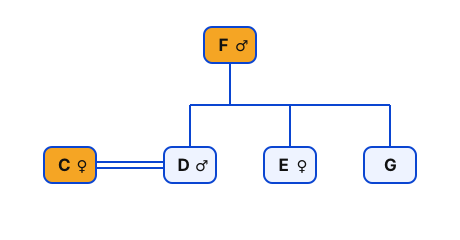
In a certain code language, 'A + B' means 'A is the father of B', 'A − B' means 'A is the wife of B',
'A × B' means 'A is the brother of B' and 'A ÷ B' means 'A is the daughter of B'.
How is F related to C if 'C − D × E ÷ F + G'?
एक निश्चित कूट भाषा में, 'A + B' का अर्थ है 'A, B का पिता है', 'A − B' का अर्थ है 'A, B की पत्नी है',
'A × B' का अर्थ है 'A, B का भाई है' और 'A ÷ B' का अर्थ है 'A, B की पुत्री है'।
यदि 'C − D × E ÷ F + G' है, तो F, C से किस प्रकार संबंधित है?
  1. AHusband's fatherपति का पिता
  2. BBrother's sonभाई का पुत्र
  3. CDaughter's daughterपुत्री की पुत्री
  4. DMother's fatherमाता का पिता
Show answer

Concept: Decode each sign, then trace the chain from C to F.

  1. C − D: C is D's wife. D × E: D is E's brother.
  2. E ÷ F: E is F's daughter, so brother D is F's son.
  3. F + G: F is father of G (not needed).
  4. F is the father of C's husband.

Trick: Only the links connecting C to F matter – skip the rest (F + G).

Answer: (A) Husband's father

अवधारणा: हर चिह्न का अर्थ लिखें और C से F तक संबंध जोड़ें।

  1. C − D → D की पत्नी C; D × E → E का भाई D।
  2. E ÷ F → F की बेटी E, तो उसका भाई D भी F की संतान (बेटा)।
  3. अतः C के पति (D) के पिता = F, यानी ससुर।

ट्रिक: केवल C से F तक की कड़ी देखें; F + G की जरूरत नहीं।

उत्तर: (A) पति का पिता

SSC GDGeneral Intelligence & ReasoningCoded blood relationSSC GD 2025 · 19 Feb Shift 3 →
Q911.
What should come in place of the question mark (?) in the given series?
410, 408, 404, 398, ?, 380
दी गई शृंखला में प्रश्नवाचक चिह्न (?) के स्थान पर क्या आना चाहिए?
410, 408, 404, 398, ?, 380
  1. A386
  2. B388
  3. C392
  4. D390
Show answer

Concept: Subtracted values increase by 2 each step.

  1. 410 − 2 = 408, 408 − 4 = 404, 404 − 6 = 398.
  2. Next: 398 − 8 = 390.
  3. Check: 390 − 10 = 380 ✓.

Trick: Even-number differences 2, 4, 6, 8, 10 – always verify with the last given term.

Answer: (D) 390

अवधारणा: हर चरण में घटने वाला अंक पिछले से 2 अधिक होता है।

  1. 410 − 2 = 408, 408 − 4 = 404, 404 − 6 = 398।
  2. अगला: 398 − 8 = 390।
  3. जाँच: 390 − 10 = 380 ✓।

ट्रिक: अंतर 2, 4, 6, 8, 10 – अंतिम पद से उत्तर अवश्य जाँचें।

उत्तर: (D) 390

SSC GDGeneral Intelligence & ReasoningNumber series – increasing differenceSSC GD 2025 · 19 Feb Shift 3 →
Q912.
The position(s) of how many letters will remain unchanged if each of the letters in the word 'IDENTITY' arranged in reverse English alphabetical order?
यदि शब्द 'IDENTITY' के प्रत्येक अक्षर को अंग्रेज़ी वर्णमाला के विपरीत क्रम में व्यवस्थित किया जाए, तो कितने अक्षरों का स्थान अपरिवर्तित रहेगा?
  1. AFourचार
  2. BTwoदो
  3. CThreeतीन
  4. DOneएक
Show answer

Concept: Write the letters in Z→A order and compare place by place.

  1. IDENTITY = I D E N T I T Y.
  2. Reverse order: Y T T N I I E D.
  3. Match at 4th place (N) and 6th place (I) → two letters.

Trick: Write both rows one under the other and tick matches – avoid doing it mentally.

Answer: (B) Two

अवधारणा: अक्षरों को Z से A क्रम में लिखें और स्थान-दर-स्थान मिलाएँ।

  1. IDENTITY = I D E N T I T Y।
  2. उल्टा क्रम: Y T T N I I E D।
  3. चौथे (N) और छठे (I) स्थान पर मेल → दो अक्षर।

ट्रिक: दोनों पंक्तियाँ एक के नीचे एक लिखें और मेल पर निशान लगाएँ।

उत्तर: (B) दो

SSC GDGeneral Intelligence & ReasoningLetter rearrangement – positions unchangedSSC GD 2025 · 19 Feb Shift 3 →
Q913.
Select the option that represents the letters that, when sequentially placed from left to right in the blanks below, will complete the letter series.
_ _ L M _ G _ L _ D _ P L _
उस विकल्प का चयन कीजिए जो उन अक्षरों को दर्शाता है, जिन्हें नीचे दिए गए रिक्त स्थानों में बाएँ से दाएँ क्रमानुसार रखने पर अक्षर शृंखला पूर्ण हो जाएगी।
_ _ L M _ G _ L _ D _ P L _
  1. APMGDPDM
  2. BGPDPMGM
  3. CMGGDPPM
  4. DDPNPDMG
Show answer

Concept: Find a block that repeats and fill blanks from it.

  1. Given letters fit the 5-letter block GPLMD.
  2. Series: GPLMD GPLMD GPLM.
  3. Blanks (1,2,5,7,9,11,14) = G P D P M G M.

Trick: Test the option's letters in the blanks – (b) makes 'GPLMD' repeat perfectly.

Answer: (B) GPDPMGM

अवधारणा: दोहराने वाला खंड खोजें और उससे रिक्त स्थान भरें।

  1. दिए अक्षर खंड GPLMD से मेल खाते हैं।
  2. श्रृंखला: GPLMD GPLMD GPLM।
  3. रिक्त स्थान = G P D P M G M।

ट्रिक: विकल्प भरकर देखें – (b) से GPLMD बार-बार बनता है।

उत्तर: (B) GPDPMGM

SSC GDGeneral Intelligence & ReasoningLetter series – repeating blockSSC GD 2025 · 19 Feb Shift 3 →
Q914.
In a certain code language, 'DENS' is coded as '8976' and 'SENT' is coded as '6739'. What is the code for 'T' in the given code language?
एक निश्चित कूट भाषा में 'DENS' को '8976' के रूप में कूटबद्ध किया जाता है और 'SENT' को '6739' के रूप में कूटबद्ध किया जाता है। दी गई कूट भाषा में 'T' का कूट क्या है?
  1. A9
  2. B6
  3. C7
  4. D3
Show answer

Concept: Codes are jumbled; remove common letters and common digits to pair the leftovers.

  1. DENS = 8976, SENT = 6739.
  2. Common letters E, N, S ↔ common digits 9, 7, 6.
  3. Left-over: D = 8 and T = 3.

Trick: Odd letter out ↔ odd digit out – no need to decode E, N, S.

Answer: (D) 3

अवधारणा: कोड क्रम में नहीं हैं; साझा अक्षर और साझा अंक हटाकर बचे हुए मिलाएँ।

  1. DENS = 8976, SENT = 6739।
  2. साझा अक्षर E, N, S ↔ साझा अंक 9, 7, 6।
  3. बचे: D = 8, T = 3।

ट्रिक: बचा अक्षर ↔ बचा अंक – बाकी डिकोड करने की जरूरत नहीं।

उत्तर: (D) 3

SSC GDGeneral Intelligence & ReasoningCoding – common letters methodSSC GD 2025 · 19 Feb Shift 3 →
Q915.
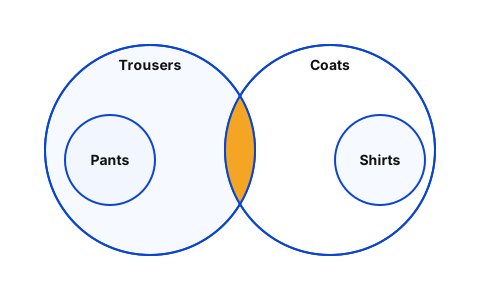
Read the given statements and conclusions carefully. Assuming that the information given in the statements is true, even if it appears to be at variance with commonly known facts, decide which of the given conclusions logically follow(s) from the statements.
Statements: All pants are trousers.
No pant is a shirt.
All shirts are coats.
Conclusions: (I) No coat is a trouser.
(II) Some coats are pants.
दिए गए कथनों और निष्कर्षों को ध्यानपूर्वक पढ़िए। यह मानते हुए कि कथनों में दी गई जानकारी सत्य है, चाहे वह सर्वज्ञात तथ्यों से भिन्न प्रतीत होती हो, निर्णय कीजिए कि दिए गए निष्कर्षों में से कौन-सा/से निष्कर्ष कथनों का तार्किक रूप से अनुसरण करता/करते है/हैं।
कथन: सभी पैंट ट्राउज़र हैं।
कोई पैंट शर्ट नहीं है।
सभी शर्ट कोट हैं।
निष्कर्ष: (I) कोई कोट ट्राउज़र नहीं है।
(II) कुछ कोट पैंट हैं।
  1. AOnly conclusion (I) follows.केवल निष्कर्ष (I) अनुसरण करता है।
  2. BOnly conclusion (II) follows.केवल निष्कर्ष (II) अनुसरण करता है।
  3. CNeither conclusion (I) nor (II) follows.न तो निष्कर्ष (I) और न ही (II) अनुसरण करता है।
  4. DBoth conclusions (I) and (II) follow.दोनों निष्कर्ष (I) और (II) अनुसरण करते हैं।
Show answer

Concept: A conclusion follows only if it is true in every possible diagram.

  1. Pants ⊂ Trousers; Shirts ⊂ Coats; Pants and Shirts disjoint.
  2. (I) 'No coat is a trouser' – coats may or may not overlap trousers → not certain.
  3. (II) 'Some coats are pants' – no link forces it → not certain.

Trick: If two classes are never linked by any statement, any definite conclusion about them fails.

Answer: (C) Neither conclusion (I) nor (II) follows.

अवधारणा: निष्कर्ष तभी सही है जब हर संभव आरेख में सत्य हो।

  1. पैंट ⊂ ट्राउज़र; शर्ट ⊂ कोट; पैंट और शर्ट अलग।
  2. (I) कोट और ट्राउज़र का कोई संबंध तय नहीं → नहीं निकलता।
  3. (II) कोट और पैंट का कोई निश्चित संबंध नहीं → नहीं निकलता।

ट्रिक: जिन वर्गों को कोई कथन नहीं जोड़ता, उन पर निश्चित निष्कर्ष नहीं निकलता।

उत्तर: (C) न तो निष्कर्ष (I) और न ही (II) अनुसरण करता है।

SSC GDGeneral Intelligence & ReasoningSyllogism – possibility casesSSC GD 2025 · 19 Feb Shift 3 →
Q916.
Based on the English alphabetical order, three of the following four letter-clusters are alike in a certain way and thus form a group. Which is the one that DOES NOT belong to that group? (Note: The odd one out is not based on the number of consonants/vowels or their position in the letter-cluster.)
अंग्रेज़ी वर्णमाला के क्रम के आधार पर, निम्नलिखित चार अक्षर-समूहों में से तीन एक निश्चित प्रकार से समान हैं और इस प्रकार एक समूह बनाते हैं। वह कौन-सा है जो उस समूह से संबंधित नहीं है? (ध्यान दें: असंगत को अक्षर-समूह में व्यंजनों/स्वरों की संख्या या उनके स्थान के आधार पर नहीं चुना गया है।)
  1. ALMJ
  2. BONL
  3. CEFC
  4. DFGD
Show answer

Concept: Find the step pattern inside each cluster.

  1. LMJ: +1, −3; EFC: +1, −3; FGD: +1, −3.
  2. ONL: −1, −2 – different pattern.
  3. So ONL is odd.

Trick: First two letters consecutive forward (LM, EF, FG) – ON goes backward, spotted instantly.

Answer: (B) ONL

अवधारणा: हर समूह में अक्षरों के बीच का अंतर देखें।

  1. LMJ: +1, −3; EFC: +1, −3; FGD: +1, −3।
  2. ONL: −1, −2 – अलग पैटर्न।
  3. अतः ONL विषम है।

ट्रिक: पहले दो अक्षर आगे क्रम में (LM, EF, FG) – ON उल्टा है, तुरंत पहचान।

उत्तर: (B) ONL

SSC GDGeneral Intelligence & ReasoningOdd one out – letter gapsSSC GD 2025 · 19 Feb Shift 3 →
Q917.
OQUT is related to QSWV in a certain way based on the English alphabetical order. In the same way, IKON is related to KMQP. To which of the given options is ZBFE related, following the same logic?
अंग्रेज़ी वर्णमाला के क्रम के आधार पर OQUT एक निश्चित प्रकार से QSWV से संबंधित है। उसी प्रकार, IKON, KMQP से संबंधित है। उसी तर्क का अनुसरण करते हुए, ZBFE दिए गए विकल्पों में से किससे संबंधित है?
  1. ABDHG
  2. BBCGG
  3. CBDGG
  4. DBEGP
Show answer

Concept: Every letter moves 2 places forward (with wrap-around after Z).

  1. OQUT + 2 each → QSWV ✓; IKON + 2 each → KMQP ✓.
  2. ZBFE: Z→B, B→D, F→H, E→G.
  3. Result: BDHG.

Trick: Third letter decides: F+2 = H appears only in option (a).

Answer: (A) BDHG

अवधारणा: हर अक्षर में +2 जोड़ें (Z के बाद गिनती फिर A से)।

  1. OQUT में हर अक्षर +2 → QSWV ✓; IKON +2 → KMQP ✓।
  2. ZBFE: Z→B, B→D, F→H, E→G।
  3. परिणाम: BDHG।

ट्रिक: तीसरा अक्षर F+2 = H केवल (a) में है।

उत्तर: (A) BDHG

SSC GDGeneral Intelligence & ReasoningLetter analogy – plus 2SSC GD 2025 · 19 Feb Shift 3 →
Q918.
What should come in place of the question mark (?) in the given series? 11, 19, 27, 35, 43, ?
दी गई शृंखला में प्रश्नवाचक चिह्न (?) के स्थान पर क्या आना चाहिए? 11, 19, 27, 35, 43, ?
  1. A53
  2. B50
  3. C52
  4. D51
Show answer

Concept: Constant difference series (AP).

  1. 19−11=8, 27−19=8, … each step +8.
  2. 43+8=51.

Trick: All terms are 11 more than multiples of 8 → only 51 (=8×5+11) fits.

Answer: (D) 51

अवधारणा: समान अंतर वाली श्रृंखला (समांतर श्रेणी)।

  1. 19−11=8, 27−19=8 … हर बार +8।
  2. 43+8=51।

ट्रिक: हर पद 8 का गुणज + 11 है → केवल 51 (=8×5+11) मेल खाता है।

उत्तर: (D) 51

SSC GDGeneral Intelligence & ReasoningNumber series – constant differenceSSC GD 2025 · 19 Feb Shift 3 →
Q919.
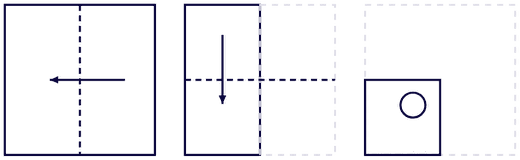
A paper is folded and cut as shown below. How will it appear when unfolded?
figure
एक कागज़ को नीचे दर्शाए अनुसार मोड़ा और काटा जाता है। खोलने पर वह कैसा दिखाई देगा?
figure
  1. Afigure
  2. Bfigure
  3. Cfigure
  4. Dfigure
Show answer

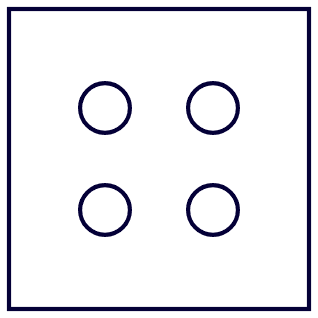
Concept: Each fold doubles the layers, so the number of holes doubles on unfolding.

  1. Two folds → 4 layers; one punch cuts 4 holes.
  2. Unfolding reflects the hole across each fold line.
  3. Result: one hole in each quarter, symmetric about both centre lines.

Trick: Holes on unfolding = holes punched × 2number of folds =1×22=4.

Answer: (A)Figure (a)

अवधारणा: हर मोड़ पर परतें दोगुनी होती हैं, इसलिए खोलने पर छेद भी दोगुने।

  1. दो मोड़ → 4 परतें; एक छेद = 4 छेद।
  2. खोलने पर छेद मोड़-रेखा के सापेक्ष प्रतिबिंबित होते हैं।
  3. हर चौथाई में एक छेद, दोनों मध्य रेखाओं के सापेक्ष सममित।

ट्रिक: कुल छेद = काटे गए छेद × 2मोड़ों की संख्या =1×22=4।

उत्तर: (A)आकृति (a)

SSC GDGeneral Intelligence & ReasoningPaper folding and cuttingSSC GD 2025 · 19 Feb Shift 3 →
Q920.
What should come in place of the question mark (?) in the given series based on the English alphabetical order? RQP, LKJ, FED, ?, TSR
अंग्रेज़ी वर्णमाला के क्रम के आधार पर दी गई शृंखला में प्रश्नवाचक चिह्न (?) के स्थान पर क्या आना चाहिए? RQP, LKJ, FED, ?, TSR
  1. AZYX
  2. BYXZ
  3. CXYZ
  4. DABC
Show answer

Concept: Each group is 3 consecutive letters in reverse; the first letter drops by 6.

  1. First letters: R(18) → L(12) → F(6).
  2. 6 − 6 = 0 → wraps to 26 = Z, so group = ZYX.
  3. Check: Z(26) − 6 = 20 = T → TSR ✓.

Trick: For backward wrap, add 26: 0 + 26 = 26 = Z.

Answer: (A) ZYX

अवधारणा: हर समूह 3 क्रमागत अक्षर उल्टे क्रम में है; पहला अक्षर 6 घटता है।

  1. पहले अक्षर: R(18) → L(12) → F(6)।
  2. 6 − 6 = 0 → 26 जोड़ें = Z, समूह ZYX।
  3. जाँच: 26 − 6 = 20 = T → TSR ✓।

ट्रिक: शून्य या ऋणात्मक आए तो 26 जोड़ दें।

उत्तर: (A) ZYX

SSC GDGeneral Intelligence & ReasoningLetter cluster series – minus 6SSC GD 2025 · 19 Feb Shift 3 →