Question bank

Q&A: practice questions with answers

Search questions on any topic. Filter by exam category, exam, subject and topic, try the question, then open the answer and explanation.

Courses – airGurukul

4,200 questions found.

Q1101.
In a certain code language, 'drink clean water' is coded as 'rd tm kg' and 'clean your house' is coded as 'db fo tm'. How is 'clean' coded in the given language?
एक निश्चित कूट भाषा में, 'drink clean water' को 'rd tm kg' लिखा जाता है और 'clean your house' को 'db fo tm' लिखा जाता है। दी गई भाषा में 'clean' को किस प्रकार लिखा जाएगा?
  1. Atm
  2. Bfo
  3. Crd
  4. Dkg
Show answer

Concept: A word present in two sentences gets the code present in both code groups.

  1. Sentence 1: drink clean water → rd tm kg
  2. Sentence 2: clean your house → db fo tm
  3. Only common word = clean; only common code = tm.

Trick: Circle the repeated word and the repeated code – match them directly, no need to decode the rest.

Answer: (A) tm

अवधारणा: जो शब्द दोनों वाक्यों में है, उसका कोड दोनों कोड-समूहों में मिलेगा।

  1. वाक्य 1: drink clean water → rd tm kg
  2. वाक्य 2: clean your house → db fo tm
  3. दोनों में साझा शब्द clean और साझा कोड tm है।

ट्रिक: दोहराया गया शब्द और दोहराया गया कोड सीधे मिला दें, बाकी कोड हल करने की ज़रूरत नहीं।

उत्तर: (A) tm
SSC GDGeneral Intelligence & ReasoningCoding – common word, common codeSSC GD 2025 · 19 Feb Shift 1 →
Q1102.
Each letter in the word INJURED is arranged in the English alphabetical order. How many letters are there in the English alphabetical order between the letter which is second from the left end and the one which is fourth from the right end in the new letter-cluster thus formed?
शब्द INJURED के प्रत्येक अक्षर को अंग्रेजी वर्णानुक्रम में व्यवस्थित किया जाता है। इस प्रकार बने नए अक्षर-समूह में बाएँ छोर से दूसरे अक्षर और दाएँ छोर से चौथे अक्षर के बीच अंग्रेजी वर्णानुक्रम में कितने अक्षर हैं?
  1. A3
  2. B6
  3. C4
  4. D2
Show answer

Concept: Rearrange letters alphabetically, locate the asked positions, then count alphabet letters between them.

  1. INJURED → D, E, I, J, N, R, U (7 letters)
  2. 2nd from left = E; 4th from right = J (U, R, N, J)
  3. Letters between E(5) and J(10) in alphabet = 10 − 5 − 1 = 4 (F, G, H, I)

Trick: Letters between two letters = difference of their positions − 1.

Answer: (C) 4

अवधारणा: अक्षरों को वर्णमाला क्रम में लगाएँ, पूछी गई स्थितियाँ ढूँढें और उनके बीच के अक्षर गिनें।

  1. INJURED → D, E, I, J, N, R, U
  2. बाएँ से दूसरा = E; दाएँ से चौथा = J
  3. E(5) और J(10) के बीच = 10 − 5 − 1 = 4 अक्षर (F, G, H, I)

ट्रिक: दो अक्षरों के बीच अक्षर = स्थान-अंकों का अंतर − 1

उत्तर: (C) 4

SSC GDGeneral Intelligence & ReasoningLetter arrangement – letters between two positionsSSC GD 2025 · 19 Feb Shift 1 →
Q1103.
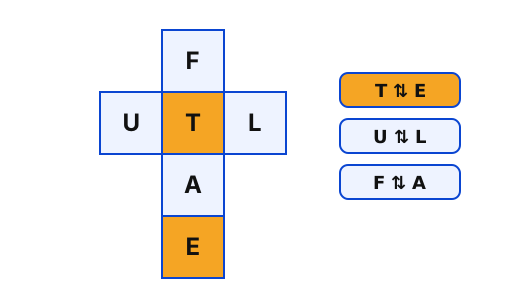
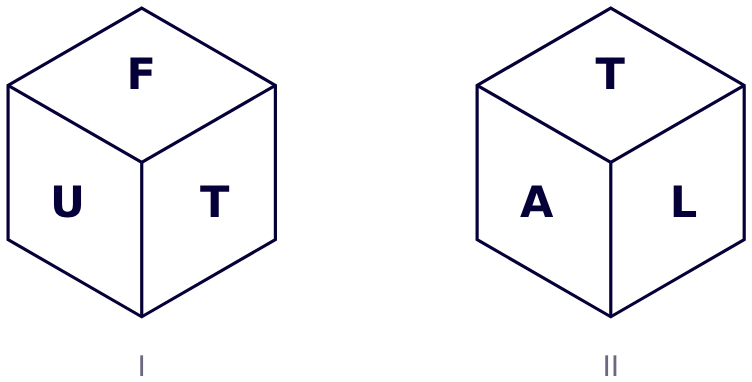
A dice has its faces marked by letters L, E, A, T, F and U. Two positions of the same dice are shown in the given figures. Which face is opposite to face E?
figure
एक पासे के फलकों पर L, E, A, T, F और U अक्षर अंकित हैं। इसी पासे की दो स्थितियाँ दी गई आकृतियों में दर्शाई गई हैं। फलक E के विपरीत कौन-सा फलक है?
figure
  1. AT
  2. BA
  3. CF
  4. DL
Show answer

Concept: A face has exactly four neighbours; the one letter that never appears beside it is opposite.

  1. T is seen in both positions.
  2. Neighbours of T: F, U (view 1) and A, L (view 2) = 4 faces.
  3. The only letter left, E, must be opposite T.

Trick: Find the letter common to both views, list its 4 neighbours – the 6th letter is its opposite.

Answer: (A) T

अवधारणा: किसी फलक के ठीक चार पड़ोसी होते हैं; जो अक्षर उसके साथ कभी नहीं दिखता वही विपरीत होता है।

  1. T दोनों स्थितियों में दिख रहा है।
  2. T के पड़ोसी: F, U (पहली स्थिति) और A, L (दूसरी स्थिति) = 4
  3. बचा हुआ अक्षर E ही T के विपरीत है।

ट्रिक: दोनों चित्रों में साझा अक्षर के 4 पड़ोसी लिखें – छठा अक्षर उसका विपरीत होगा।

उत्तर: (A) T

SSC GDGeneral Intelligence & ReasoningDice – opposite face from two viewsSSC GD 2025 · 19 Feb Shift 1 →
Q1104.
What should come in place of the question mark (?) in the given series? 310 311 301 303 293 296 286 ?
दी गई शृंखला में प्रश्नवाचक चिह्न (?) के स्थान पर क्या आना चाहिए? 310 311 301 303 293 296 286 ?
  1. A289
  2. B288
  3. C290
  4. D276
Show answer

Concept: Differences follow two alternating patterns.

  1. Differences: +1, −10, +2, −10, +3, −10
  2. Additions grow 1, 2, 3 → next is +4
  3. ? = 286 + 4 = 290

Trick: When a constant step (−10) keeps repeating, look at the other steps separately – they usually rise by 1.

Answer: (C) 290

अवधारणा: अंतर दो अलग-अलग पैटर्न में बारी-बारी से चलते हैं।

  1. अंतर: +1, −10, +2, −10, +3, −10
  2. जोड़ 1, 2, 3 बढ़ रहा है → अगला +4
  3. ? = 286 + 4 = 290

ट्रिक: जब एक ही अंतर (−10) बार-बार आए, तो बाकी अंतरों को अलग देखें।

उत्तर: (C) 290

SSC GDGeneral Intelligence & ReasoningNumber series – alternating differencesSSC GD 2025 · 19 Feb Shift 1 →
Q1105.
In a certain code language, 'JQBT' is coded as '147' and 'IWOG' is coded as '162'. What is the code for 'SDLO' in the given language ?
एक निश्चित कूट भाषा में, 'JQBT' को '147' लिखा जाता है और 'IWOG' को '162' लिखा जाता है। दी गई भाषा में 'SDLO' का कूट क्या होगा?
  1. A156
  2. B150
  3. C145
  4. D138
Show answer

Concept: Code=(sum of alphabet positions)×3.

  1. JQBT: 10+17+2+20=49 → 49×3=147 ✔
  2. IWOG: 9+23+15+7=54 → 54×3=162 ✔
  3. SDLO: 19+4+12+15=50 → 50×3=150

Trick: Both codes are multiples of 3 (147, 162) – that hints at a ×3 rule on the letter sum.

Answer: (B) 150

अवधारणा: कोड=(अक्षरों के स्थानीय मान का योग)×3

  1. JQBT: 10+17+2+20=49 → 49×3=147
  2. IWOG: 9+23+15+7=54 → 54×3=162
  3. SDLO: 19+4+12+15=50 → 50×3=150

ट्रिक: दोनों कोड 3 से विभाज्य हैं – इससे ×3 नियम का संकेत मिलता है।

उत्तर: (B) 150

SSC GDGeneral Intelligence & ReasoningCoding – sum of letter values × 3SSC GD 2025 · 19 Feb Shift 1 →
Q1106.
What should come in place of '?' in the given series based on the English alphabetical order?
HNB KQE NTH QWK ?
अंग्रेजी वर्णानुक्रम पर आधारित दी गई शृंखला में '?' के स्थान पर क्या आना चाहिए?
HNB KQE NTH QWK ?
  1. ATZL
  2. BTZN
  3. CKWQ
  4. DRXL
Show answer

Concept: Each letter of a cluster moves forward by 3 in the next cluster.

  1. H→K→N→Q→T (+3)
  2. N→Q→T→W→Z (+3)
  3. B→E→H→K→N (+3)

Trick: Check only the last letter: K + 3 = N – only option (B) ends in N with TZ.

Answer: (B) TZN

अवधारणा: हर समूह का प्रत्येक अक्षर अगले समूह में 3 स्थान आगे बढ़ता है।

  1. H→K→N→Q→T
  2. N→Q→T→W→Z
  3. B→E→H→K→N

ट्रिक: केवल अंतिम अक्षर जाँचें: K + 3 = N – सिर्फ विकल्प (B) TZN में है।

उत्तर: (B) TZN

SSC GDGeneral Intelligence & ReasoningLetter series – +3 shiftSSC GD 2025 · 19 Feb Shift 1 →
Q1107.
In a certain code language.
'U $ J' means 'U is the husband of J',
'U # J' means 'U is the mother of J',
'U @ J' means 'U is the father of J' and
'U + J' means 'U is the daughter of J'.
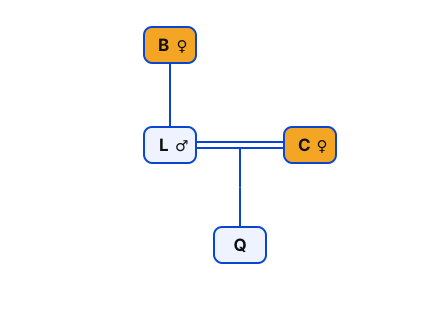
Based on the above, how is B related to C if 'B # L $ C # Q'?
एक निश्चित कूट भाषा में।
'U $ J' का अर्थ है 'U, J का पति है',
'U # J' का अर्थ है 'U, J की माता है',
'U @ J' का अर्थ है 'U, J का पिता है' और
'U + J' का अर्थ है 'U, J की पुत्री है'।
उपर्युक्त के आधार पर, यदि 'B # L $ C # Q' है, तो B, C से किस प्रकार संबंधित है?
  1. ASister's motherबहन की माता
  2. BFather's motherपिता की माता
  3. CMother's motherमाता की माता
  4. DHusband's motherपति की माता
Show answer

Concept: Decode each symbol and join the links.

  1. B # L → B is mother of L
  2. L $ C → L is husband of C
  3. So B is the mother of C's husband (C # Q only adds C's child).

Trick: Read the chain from the asked person (C) back to B: C → husband L → his mother B.

Answer: (D) Husband's mother

अवधारणा: हर चिह्न का अर्थ निकालकर कड़ियाँ जोड़ें।

  1. B # L → B, L की माँ है
  2. L $ C → L, C का पति है
  3. अतः B, C के पति की माँ (सास) है।

ट्रिक: C से शुरू करें: C → पति L → उसकी माँ B।

उत्तर: (D) पति की माता

SSC GDGeneral Intelligence & ReasoningCoded blood relationSSC GD 2025 · 19 Feb Shift 1 →
Q1108.
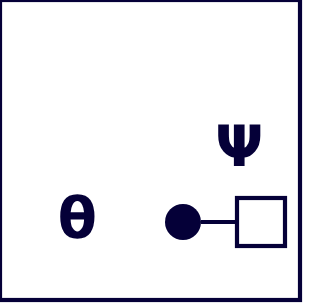
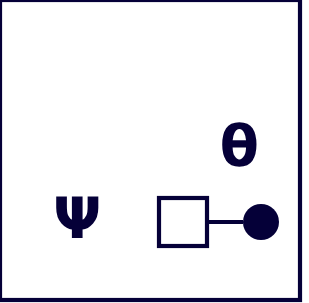
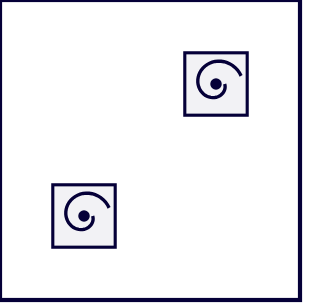
Select the figure from among the given options that can replace the question mark (?) in the following series.
figure
दिए गए विकल्पों में से वह आकृति चुनिए जो निम्नलिखित शृंखला में प्रश्नवाचक चिह्न (?) का स्थान ले सके।
figure
  1. Afigure
  2. Bfigure
  3. Cfigure
  4. Dfigure
Show answer

Concept: Track every element separately: position change and rotation.

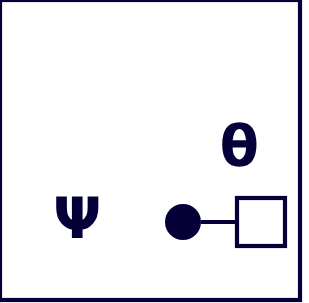
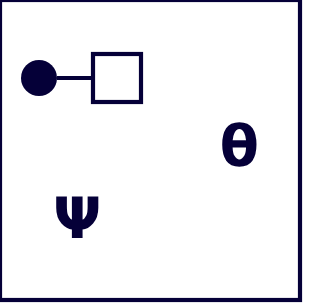
  1. θ shifts clockwise by one place per figure, so in figure 5 it sits at the middle of the right side.
  2. Ψ shifts the same way, so in figure 5 it reaches the lower-left corner.
  3. The dot-and-square piece rotates 90° clockwise each time and alternates corners → back to top-left with the dot on the left.

Trick: Follow one symbol at a time and eliminate options that fail even one symbol.

Answer: (D)

अवधारणा: हर तत्व को अलग-अलग देखें: स्थान परिवर्तन और घूर्णन।

  1. θ हर आकृति में घड़ी की दिशा में एक स्थान खिसकता है → पाँचवीं आकृति में दाईं भुजा के बीच।
  2. Ψ भी घड़ी की दिशा में एक स्थान खिसकता है → पाँचवीं आकृति में निचले-बाएँ कोने पर।
  3. बिंदु-वर्ग वाला हिस्सा हर बार 90° दक्षिणावर्त घूमता है और कोना बदलता है → ऊपर-बाएँ कोने में।

ट्रिक: एक-एक चिह्न की स्थिति जाँचें; जो विकल्प किसी एक में भी गलत हो, उसे हटा दें।

उत्तर: (D)

SSC GDGeneral Intelligence & ReasoningFigure series – clockwise movementSSC GD 2025 · 19 Feb Shift 1 →
Q1109.
What should come in place of the question mark (?) in the given series? 23 32 67 76 155 164 ?
दी गई शृंखला में प्रश्नवाचक चिह्न (?) के स्थान पर क्या आना चाहिए? 23 32 67 76 155 164 ?
  1. A313
  2. B331
  3. C303
  4. D330
Show answer

Concept: Steps alternate: +9, then ×2 + 3.

  1. 23+9=32; 32×2+3=67
  2. 67+9=76; 76×2+3=155
  3. 155+9=164; 164×2+3=331

Trick: The jump roughly doubles every other step, so the answer is about 2×164=328 → only 331 fits +3.

Answer: (B) 331

अवधारणा: संक्रियाएँ बारी-बारी से: +9, फिर ×2 + 3

  1. 23+9=32; 32×2+3=67
  2. 67+9=76; 76×2+3=155
  3. 155+9=164; 164×2+3=331

ट्रिक: हर दूसरे पद में संख्या लगभग दोगुनी होती है: 2×164=328, +3 → 331

उत्तर: (B) 331

SSC GDGeneral Intelligence & ReasoningNumber series – two alternate operationsSSC GD 2025 · 19 Feb Shift 1 →
Q1110.
GTBK is related to KRFI in a certain way based on the English alphabetical order. In the same way, NSFX is related to RQJV. To which of the given options is EKVO related, following the same logic ?
अंग्रेजी वर्णानुक्रम के आधार पर GTBK एक निश्चित प्रकार से KRFI से संबंधित है। उसी प्रकार, NSFX, RQJV से संबंधित है। इसी तर्क का अनुसरण करते हुए, EKVO दिए गए विकल्पों में से किससे संबंधित है?
  1. AHJRN
  2. BIIZM
  3. CHJTN
  4. DGJSO
Show answer

Concept: Find the shift of each position in the given pairs and repeat it.

  1. GTBK → KRFI: +4, −2, +4, −2 (NSFX → RQJV same)
  2. EKVO → (E→I), (K→I), (V→Z), (O→M)
  3. Result = IIZM

Trick: First letter E + 4 = I – only option (B) starts with I.

Answer: (B) IIZM

अवधारणा: दिए गए जोड़ों में हर स्थान का खिसकाव निकालें और वही लागू करें।

  1. GTBK → KRFI: +4, −2, +4, −2 (NSFX → RQJV भी)
  2. EKVO → (E→I), (K→I), (V→Z), (O→M)
  3. उत्तर = IIZM

ट्रिक: पहला अक्षर E + 4 = I – केवल विकल्प (B) I से शुरू होता है।

उत्तर: (B) IIZM

SSC GDGeneral Intelligence & ReasoningLetter analogy – +4, −2 patternSSC GD 2025 · 19 Feb Shift 1 →
Q1111.
Based on the English alphabetical order, three of the following four letter-clusters are alike in a certain way and thus form a group. Which letter-cluster DOES NOT belong to that group?
(Note: The odd one out is not based on the number of consonants/vowels or their position in the letter-cluster.)
अंग्रेजी वर्णानुक्रम के आधार पर, निम्नलिखित चार अक्षर-समूहों में से तीन एक निश्चित प्रकार से समान हैं और इस प्रकार एक समूह बनाते हैं। कौन-सा अक्षर-समूह उस समूह से संबंधित नहीं है?
(नोट: विषम अक्षर-समूह, अक्षर-समूह में व्यंजनों/स्वरों की संख्या या उनकी स्थिति पर आधारित नहीं है।)
  1. ADFO
  2. BMOT
  3. CSUZ
  4. DLNS
Show answer

Concept: Three clusters share the same gap pattern between letters.

  1. MOT: +2, +5; SUZ: +2, +5; LNS: +2, +5
  2. DFO: D→F = +2 but F→O = +9
  3. DFO breaks the pattern.

Trick: First and last letters of the group members differ by 7 (M–T, S–Z, L–S); D–O differs by 11.

Answer: (A) DFO

अवधारणा: तीन समूहों में अक्षरों के बीच का अंतर एक-सा है।

  1. MOT: +2, +5; SUZ: +2, +5; LNS: +2, +5
  2. DFO: D→F = +2 पर F→O = +9
  3. DFO पैटर्न तोड़ता है।

ट्रिक: पहले और अंतिम अक्षर का अंतर बाकी में 7 है, DFO में 11।

उत्तर: (A) DFO

SSC GDGeneral Intelligence & ReasoningOdd one out – letter gapsSSC GD 2025 · 19 Feb Shift 1 →
Q1112.
What will come in the place of the question mark '(?)' in the following equation, if ' ÷ ' and ' × ' are interchanged and ' + ' and ' − ' are interchanged? 20 − 7 ÷ 4 + 20 × 4 = ?
निम्नलिखित समीकरण में प्रश्नवाचक चिह्न '(?)' के स्थान पर क्या आएगा, यदि '÷' और '×' को आपस में बदल दिया जाए तथा ' + ' और ' − ' को आपस में बदल दिया जाए? 20 − 7 ÷ 4 + 20 × 4 = ?
  1. A43
  2. B41
  3. C44
  4. D42
Show answer

Concept: Swap the signs first, then apply BODMAS.

  1. After swapping: 20+7×4−20÷4
  2. =20+28−5
  3. =43

Trick: Rewrite the whole expression with new signs before calculating – never swap mentally midway.

Answer: (A) 43

अवधारणा: पहले चिह्न बदलें, फिर BODMAS लगाएँ।

  1. बदलने के बाद: 20+7×4−20÷4
  2. =20+28−5
  3. =43

ट्रिक: हल करने से पहले पूरा व्यंजक नए चिह्नों के साथ दोबारा लिखें।

उत्तर: (A) 43

SSC GDGeneral Intelligence & ReasoningSymbol interchange – BODMASSSC GD 2025 · 19 Feb Shift 1 →
Q1113.
Select the option that represents the letters that, when sequentially placed from left to right in the blanks below, will complete the letter series.
A_PL__Z_LM__PLMAZP__
उस विकल्प का चयन कीजिए जो उन अक्षरों को दर्शाता है, जिन्हें नीचे दिए गए रिक्त स्थानों में बाएँ से दाएँ क्रमिक रूप से रखने पर अक्षर शृंखला पूर्ण हो जाएगी।
A_PL__Z_LM__PLMAZP__
  1. AMZAPAZLM
  2. BZMAPAZLM
  3. CZMPAAZLM
  4. DMZPAAZML
Show answer

Concept: The series is a repeating 5-letter block.

  1. Block = AZPLM, repeated 4 times (20 letters)
  2. AZPLM | AZPLM | AZPLM | AZPLM
  3. Blanks: Z, M, A, P, A, Z, L, M

Trick: Fill the first blank only: A_P → Z (from AZP later in the string). Only (B) and (C) start with Z; then second blank M after L kills nothing, third blank A picks (B).

Answer: (B) ZMAPAZLM

अवधारणा: श्रेणी 5 अक्षरों का दोहराता खंड है।

  1. खंड = AZPLM, चार बार
  2. AZPLM | AZPLM | AZPLM | AZPLM
  3. रिक्त स्थान: Z, M, A, P, A, Z, L, M

ट्रिक: पहला रिक्त Z है, इसलिए (B) या (C); तीसरा रिक्त A है → (B)।

उत्तर: (B) ZMAPAZLM

SSC GDGeneral Intelligence & ReasoningLetter series – repeating blockSSC GD 2025 · 19 Feb Shift 1 →
Q1114.
KMOQ is related to SUWY in a certain way based on the English alphabetical order. In the same way, EGIK is related to MOQS. To which of the given options is YACE related, following the same logic?
अंग्रेजी वर्णानुक्रम के आधार पर KMOQ एक निश्चित प्रकार से SUWY से संबंधित है। उसी प्रकार, EGIK, MOQS से संबंधित है। इसी तर्क का अनुसरण करते हुए, YACE दिए गए विकल्पों में से किससे संबंधित है?
  1. AGIKM
  2. BGIJK
  3. CGIKL
  4. DGIMK
Show answer

Concept: Each letter moves +8, wrapping after Z.

  1. K→S, M→U, O→W, Q→Y: +8 each
  2. YACE → (Y→G), (A→I), (C→K), (E→M)
  3. Result = GIKM

Trick: YACE has equal gaps of 2 (Y,A,C,E), so the answer must also have gaps of 2 – only GIKM.

Answer: (A) GIKM

अवधारणा: हर अक्षर 8 स्थान आगे बढ़ता है (Z के बाद A से फिर)।

  1. K→S, M→U, O→W, Q→Y: सब +8
  2. YACE → (Y→G), (A→I), (C→K), (E→M)
  3. उत्तर = GIKM

ट्रिक: YACE में अक्षरों के बीच 2 का अंतर है, उत्तर में भी वही होगा – केवल GIKM।

उत्तर: (A) GIKM

SSC GDGeneral Intelligence & ReasoningLetter analogy – +8 shiftSSC GD 2025 · 19 Feb Shift 1 →
Q1115.
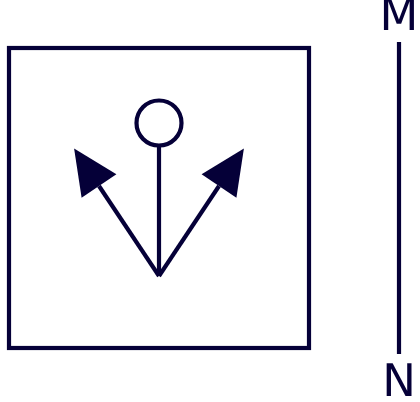
Select the correct mirror image of the given figure when the mirror is placed at MN as shown below.
figure
उस विकल्प का चयन कीजिए जो दी गई आकृति का सही दर्पण प्रतिबिंब हो, जब दर्पण को नीचे दर्शाए अनुसार MN पर रखा जाए।
figure
  1. Afigure
  2. Bfigure
  3. Cfigure
  4. Dfigure
Show answer

Concept: A vertical mirror swaps left and right only; shading and up–down stay the same.

  1. The figure is symmetric about its vertical centre line.
  2. So its image in MN looks identical to the original.
  3. Options that change a solid part to hollow (or vice versa) are wrong.

Trick: A mirror never changes shading – reject any option where fill has changed.

Answer: (A)

अवधारणा: ऊर्ध्वाधर दर्पण केवल बाएँ-दाएँ बदलता है; रंग भराव और ऊपर-नीचे वही रहते हैं।

  1. दी गई आकृति के दोनों आधे भाग (बाएँ-दाएँ) समान हैं।
  2. इसलिए MN पर बना चित्र हूबहू वैसा ही रहेगा, कोई भाग नहीं बदलेगा।
  3. जिन विकल्पों में भरा भाग खाली (या उल्टा) हो गया, वे गलत हैं।

ट्रिक: दर्पण कभी भराव नहीं बदलता – ऐसे विकल्प तुरंत हटाएँ।

उत्तर: (A)

SSC GDGeneral Intelligence & ReasoningMirror image – vertical mirrorSSC GD 2025 · 19 Feb Shift 1 →
Q1116.
Read the given statements and conclusions carefully. Assuming that the information given in the statements is true, even if it appears to be at variance with commonly known facts, decide which of the given conclusions logically follow(s) from the statements.
Statements:
Some papers are books.
All books are shelves.
No shelf is a library.
Conclusions:
(I): Some papers are shelves.
(II): All books are libraries.
दिए गए कथनों और निष्कर्षों को ध्यानपूर्वक पढ़िए। कथनों में दी गई जानकारी को सत्य मानते हुए, चाहे वह सर्वज्ञात तथ्यों से भिन्न प्रतीत होती हो, निर्णय कीजिए कि दिए गए निष्कर्षों में से कौन-सा/कौन-से कथनों का तार्किक रूप से अनुसरण करता है/करते हैं।
कथन:
कुछ कागज़, पुस्तकें हैं।
सभी पुस्तकें, अलमारियाँ हैं।
कोई भी अलमारी, पुस्तकालय नहीं है।
निष्कर्ष:
(I): कुछ कागज़, अलमारियाँ हैं।
(II): सभी पुस्तकें, पुस्तकालय हैं।
  1. ANeither conclusion (I) nor (II) follows.न तो निष्कर्ष (I) और न ही (II) अनुसरण करता है।
  2. BOnly conclusion (II) follows.केवल निष्कर्ष (II) अनुसरण करता है।
  3. COnly conclusion (I) follows.केवल निष्कर्ष (I) अनुसरण करता है।
  4. DBoth conclusions (I) and (II) follow.निष्कर्ष (I) और (II) दोनों अनुसरण करते हैं।
Show answer

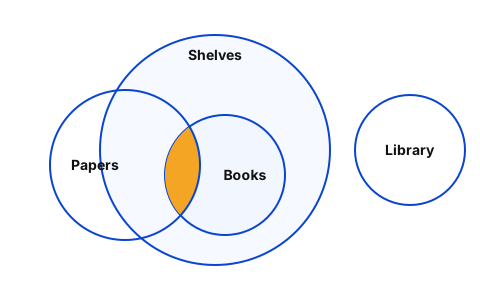
Concept: Some A are B + All B are C ⇒ Some A are C; All B are C + No C is D ⇒ No B is D.

  1. Some papers are books, all books are shelves ⇒ some papers are shelves → I follows.
  2. All books are shelves, no shelf is library ⇒ no book is a library.
  3. So 'All books are libraries' is false → II does not follow.

Trick: Some + All = Some; All + No = No. Use these two rules in 5 seconds.

Answer: (C) Only conclusion (I) follows.

अवधारणा: कुछ A, B हैं + सभी B, C हैं ⇒ कुछ A, C हैं; सभी B, C हैं + कोई C, D नहीं ⇒ कोई B, D नहीं।

  1. कुछ कागज़ किताबें हैं, सभी किताबें शेल्फ हैं ⇒ कुछ कागज़ शेल्फ हैं → I सही।
  2. सभी किताबें शेल्फ हैं, कोई शेल्फ लाइब्रेरी नहीं ⇒ कोई किताब लाइब्रेरी नहीं।
  3. इसलिए II अनुसरण नहीं करता।

ट्रिक: कुछ + सभी = कुछ; सभी + कोई नहीं = कोई नहीं।

उत्तर: (C) केवल निष्कर्ष (I) अनुसरण करता है।

SSC GDGeneral Intelligence & ReasoningSyllogism – some, all, noSSC GD 2025 · 19 Feb Shift 1 →
Q1117.
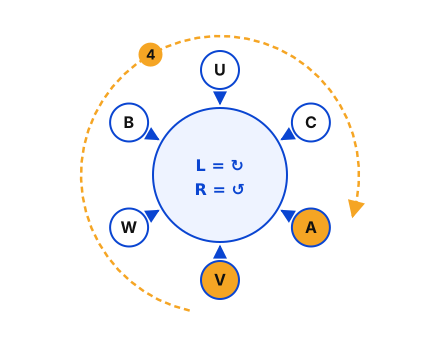
Six students A, B, C, U, V and W are seating around a circular table facing the centre (but not necessarily in the same order). Only one person sits between U and W when counted from the right of U . Only one person sits between A and W. Only two people sit between A and B. C is an immediate neighbour of U. How many people sit between A and V when counted from the left of V ?
छह विद्यार्थी A, B, C, U, V और W एक वृत्ताकार मेज़ के चारों ओर केंद्र की ओर मुख करके बैठे हैं (आवश्यक नहीं कि इसी क्रम में)। U के दाएँ से गिनने पर U और W के बीच केवल एक व्यक्ति बैठा है। A और W के बीच केवल एक व्यक्ति बैठा है। A और B के बीच केवल दो व्यक्ति बैठे हैं। C, U का निकटतम पड़ोसी है। V के बाएँ से गिनने पर A और V के बीच कितने व्यक्ति बैठे हैं?
  1. ATwoदो
  2. BThreeतीन
  3. CFourचार
  4. DOneएक
Show answer

Concept: Facing the centre: right = anticlockwise, left = clockwise.

  1. Seats 1–6 clockwise, U = 1. W is 2 seats to U's right → W = 5.
  2. One between A and W (seat 1 is U) → A = 3.
  3. Two between A and B → B = 6; C beside U → C = 2; V = 4.
  4. From V's left (clockwise): W, B, U, C, then A → 4 people.

Trick: In a 6-seat circle, counting the long way between two people = 4 − (short way count).

Answer: (C) Four

अवधारणा: केंद्र की ओर मुख हो तो दायाँ = वामावर्त, बायाँ = दक्षिणावर्त।

  1. सीटें 1–6 दक्षिणावर्त, U = 1; W, U के दाएँ 2 सीट पर → W = 5
  2. A और W के बीच एक व्यक्ति → A = 3
  3. A और B के बीच दो → B = 6; C, U के पास → C = 2; V = 4
  4. V के बाएँ से: W, B, U, C, फिर A → 4 व्यक्ति

ट्रिक: 6 सीटों वाले वृत्त में दो लोगों के बीच दोनों ओर के व्यक्तियों का योग 4 होता है।

उत्तर: (C) चार

SSC GDGeneral Intelligence & ReasoningCircular seating – facing centreSSC GD 2025 · 19 Feb Shift 1 →
Q1118.
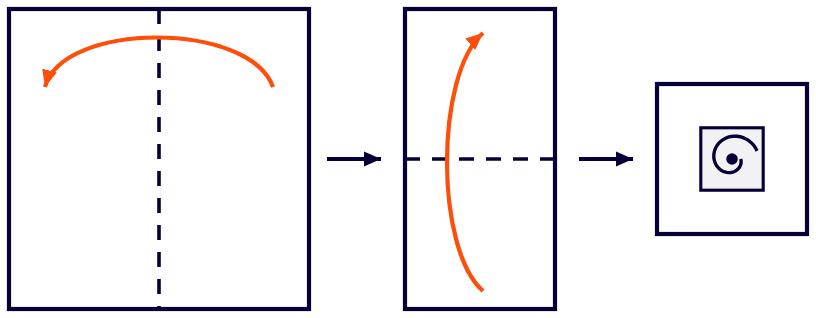
A paper is folded and punched as shown below. How will it appear when unfolded?
figure
एक कागज़ को नीचे दर्शाए अनुसार मोड़ा और पंच किया जाता है। खोलने पर वह कैसा दिखाई देगा?
figure
  1. Afigure
  2. Bfigure
  3. Cfigure
  4. Dfigure
Show answer

Concept: Each fold doubles the holes; unfolding reflects holes across the fold line.

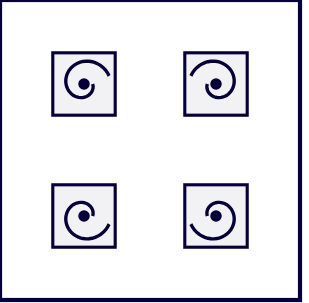
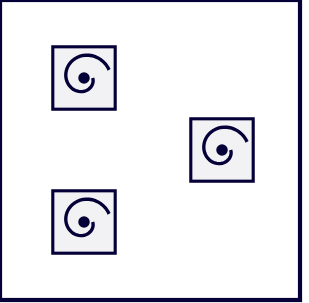
  1. Two folds → one punch makes 2×2=4 holes.
  2. Unfold the horizontal fold: hole mirrored top–bottom.
  3. Unfold the vertical fold: both holes mirrored left–right → one hole in each quarter.

Trick: Count first: holes=2number of folds×punches. Options with 2 holes are out instantly.

Answer: (B)

अवधारणा: हर मोड़ छेदों को दोगुना करता है; खोलने पर छेद मोड़-रेखा के सापेक्ष दर्पण की तरह आते हैं।

  1. दो मोड़ → एक छेद से 2×2=4 छेद
  2. क्षैतिज मोड़ खोलें: छेद ऊपर-नीचे प्रतिबिंबित
  3. ऊर्ध्वाधर मोड़ खोलें: दोनों छेद बाएँ-दाएँ प्रतिबिंबित → हर चौथाई में एक छेद

ट्रिक: पहले गिनती करें: छेद=2मोड़ों की संख्या×पंच; 2 छेद वाले विकल्प तुरंत हटाएँ।

उत्तर: (B)

SSC GDGeneral Intelligence & ReasoningPaper folding and punchingSSC GD 2025 · 19 Feb Shift 1 →
Q1119.
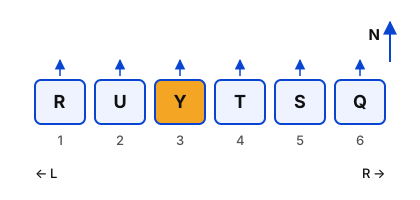
Six people, Q, R, S, T, U and Y, are sitting in a row facing North (but not necessarily in the same order). Only four people sit between R and Q. S sits to the immediate left of Q. Only one person sits between S and Y. Y sits at some place to the left of T but at some place to the right of U. Who sits third from the left end of the line?
छह व्यक्ति Q, R, S, T, U और Y उत्तर की ओर मुख करके एक पंक्ति में बैठे हैं (आवश्यक नहीं कि इसी क्रम में)। R और Q के बीच केवल चार व्यक्ति बैठे हैं। S, Q के ठीक बाईं ओर बैठा है। S और Y के बीच केवल एक व्यक्ति बैठा है। Y, T के बाईं ओर किसी स्थान पर बैठा है, परंतु U के दाईं ओर किसी स्थान पर बैठा है। पंक्ति के बाएँ छोर से तीसरे स्थान पर कौन बैठा है?
  1. AS
  2. BU
  3. CY
  4. DT
Show answer

Concept: Fix the end positions first, then place the rest.

  1. Four between R and Q → they sit at the ends.
  2. S is immediately left of Q → Q = seat 6, S = 5, R = 1.
  3. One between S and Y → Y = 3.
  4. U left of Y, T right of Y → U = 2, T = 4. Order: R U Y T S Q

Trick: 'Four people between' in a row of six always means the two are at the ends.

Answer: (C) Y

अवधारणा: पहले छोर की स्थितियाँ तय करें, फिर बाकी।

  1. R और Q के बीच चार → दोनों छोर पर
  2. S, Q के ठीक बाएँ → Q = 6, S = 5, R = 1
  3. S और Y के बीच एक → Y = 3
  4. U, Y के बाएँ और T दाएँ → U = 2, T = 4। क्रम: R U Y T S Q

ट्रिक: 6 की पंक्ति में 'बीच में चार' का अर्थ है दोनों सिरों पर बैठे हैं।

उत्तर: (C) Y

SSC GDGeneral Intelligence & ReasoningLinear seating – row facing NorthSSC GD 2025 · 19 Feb Shift 1 →
Q1120.
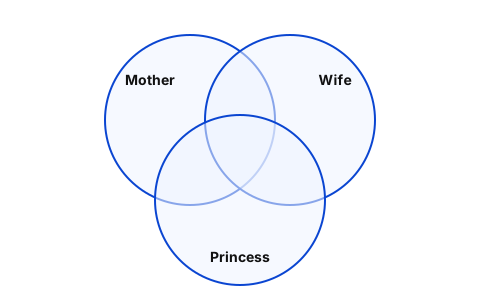
Select the Venn diagram that best illustrate the relationship between the following classes.
Mother, Princess, Wife
उस वेन आरेख का चयन कीजिए जो निम्नलिखित वर्गों के बीच के संबंध को सर्वोत्तम रूप से दर्शाता है।
माता, राजकुमारी, पत्नी
  1. Afigure
  2. Bfigure
  3. Cfigure
  4. Dfigure
Show answer

Concept: Check each pair: can they overlap? must one contain the other?

  1. A mother may or may not be a wife, and vice versa → partial overlap.
  2. A princess can be a mother and/or a wife, but need not be → overlaps both.
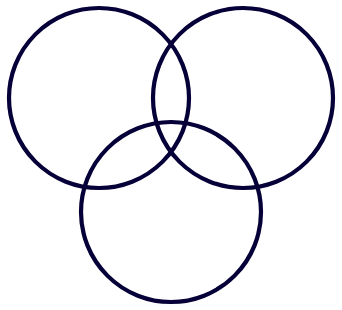
  3. No class lies fully inside another → three mutually intersecting circles.

Trick: If every pair 'can be but need not be', choose the three-overlapping-circles figure.

Answer: (B)

अवधारणा: हर जोड़ी जाँचें: क्या ये साझा हो सकते हैं? क्या एक दूसरे में पूरा है?

  1. माँ पत्नी हो भी सकती है और नहीं भी → आंशिक ओवरलैप
  2. राजकुमारी माँ या पत्नी हो सकती है, पर ज़रूरी नहीं → दोनों से ओवरलैप
  3. कोई वर्ग दूसरे में पूरा नहीं → तीनों वृत्त एक-दूसरे को काटते हैं

ट्रिक: जब हर जोड़ी 'हो सकती है, ज़रूरी नहीं' हो, तो तीन परस्पर कटते वृत्त चुनें।

उत्तर: (B)

SSC GDGeneral Intelligence & ReasoningVenn diagram – partial overlapsSSC GD 2025 · 19 Feb Shift 1 →