Question bank

Q&A: practice questions with answers

Search questions on any topic. Filter by exam category, exam, subject and topic, try the question, then open the answer and explanation.

Courses – airGurukul

4,200 questions found.

Q101.
In a certain code language, 'A / B' means 'A is the father of B', 'A : B' means 'A is the wife of B', 'A ! B' means 'A is the brother of B' and 'A < B' means 'A is the son of B'. How is T related to S if 'T < I / M : E ! S'?
एक निश्चित कूट भाषा में, 'A / B' का अर्थ है 'A, B का पिता है', 'A : B' का अर्थ है 'A, B की पत्नी है', 'A ! B' का अर्थ है 'A, B का भाई है' तथा 'A < B' का अर्थ है 'A, B का पुत्र है'। यदि 'T < I / M : E ! S' है, तो T का S से क्या संबंध है?
  1. ABrother's wife's motherभाई की पत्नी की माता
  2. BBrother's wife's brotherभाई की पत्नी का भाई
  3. CBrother's wife's sisterभाई की पत्नी की बहन
  4. DBrother's wife's fatherभाई की पत्नी का पिता
Show answer

Concept: Decode each symbol pair from left to right and then describe T as seen from S.

  1. T < I → T is I's son; I / M → I is M's father. So T is M's brother.
  2. M : E → M is E's wife; E ! S → E is S's brother.
  3. From S: brother (E) → his wife (M) → her brother (T).

Trick: Start the chain from the person asked about (S) and walk backwards to T: S → E → M → T.

Answer: (B) Brother's wife's brother

अवधारणा: हर चिह्न को बाएँ से दाएँ खोलें, फिर S की नज़र से T का संबंध बताएँ।

  1. T < I → T, I का बेटा; I / M → I, M का पिता। अतः T, M का भाई है।
  2. M : E → M, E की पत्नी; E ! S → E, S का भाई।
  3. S से चलें: भाई (E) → उसकी पत्नी (M) → उसका भाई (T)।

ट्रिक: जिससे संबंध पूछा है (S), वहीं से उल्टा चलें: S → E → M → T।

उत्तर: (B) भाई की पत्नी का भाई
SSC GDGeneral Intelligence & ReasoningCoded blood relationSSC GD 2025 · 25 Feb Shift 2 →
Q102.
Based on the English alphabetical order, three of the following four letter-clusters are alike in a certain way and thus form a group. Which letter-cluster DOES NOT belong to that group?
(Note: The odd one out is not based on the number of consonants/vowels or their position in the letter-cluster.)
अंग्रेजी वर्णमाला क्रम के आधार पर, निम्नलिखित चार अक्षर-समूहों में से तीन एक निश्चित प्रकार से समान हैं तथा एक समूह बनाते हैं। वह कौन-सा अक्षर-समूह है जो उस समूह से संबंधित नहीं है?
(नोट: विषम अक्षर-समूह का आधार अक्षर-समूह में व्यंजनों/स्वरों की संख्या अथवा उनकी स्थिति नहीं है।)
  1. AUWT
  2. BOQN
  3. CGHF
  4. DMOL
Show answer

Concept: Find the letter gaps from the first letter in each cluster.

  1. UWT: U+2=W, U−1=T. OQN: O+2=Q, O−1=N. MOL: M+2=O, M−1=L.
  2. GHF: G+1=H (not +2), G−1=F.
  3. So GHF breaks the +2, −1 pattern.

Trick: Check only the middle letter: in three options it skips one letter; in GHF it does not.

Answer: (C) GHF

अवधारणा: हर समूह में पहले अक्षर से बाकी अक्षरों की दूरी देखें।

  1. UWT: U+2=W, U−1=T; OQN: O+2=Q, O−1=N; MOL: M+2=O, M−1=L।
  2. GHF में G+1=H है, +2 नहीं।
  3. इसलिए GHF नियम (+2, −1) तोड़ता है।

ट्रिक: सिर्फ़ बीच का अक्षर जाँचें — तीन में एक अक्षर छूटता है, GHF में नहीं।

उत्तर: (C) GHF

SSC GDGeneral Intelligence & ReasoningOdd letter-clusterSSC GD 2025 · 25 Feb Shift 2 →
Q103.
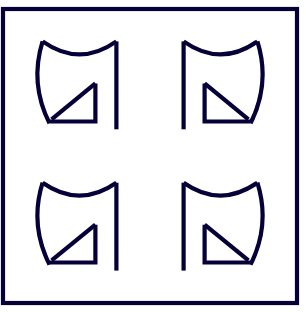
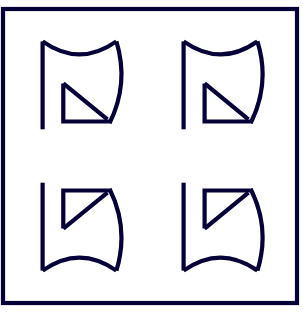
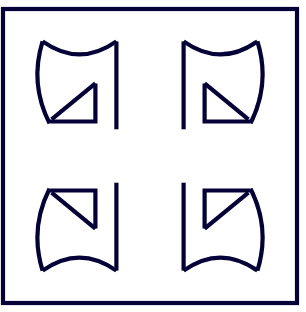
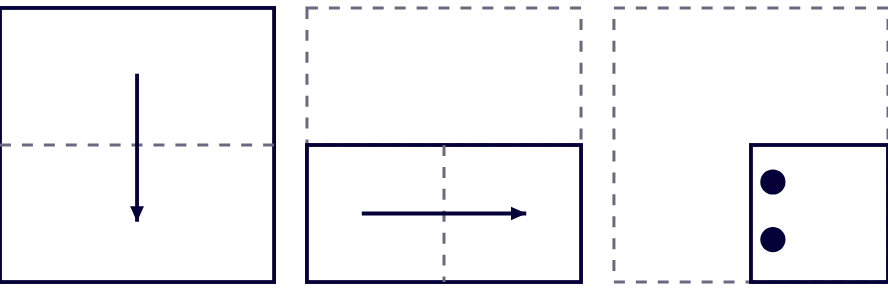
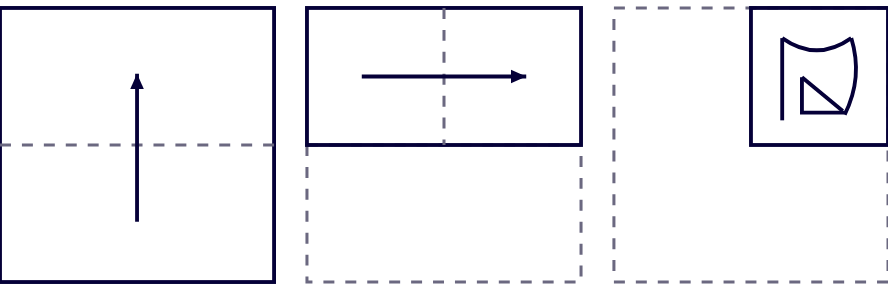
A paper is folded and punched as shown below. How will it appear when unfolded?
figure
एक कागज़ को नीचे दर्शाए अनुसार मोड़ा और छेदा गया है। खोलने पर वह कैसा दिखाई देगा?
figure
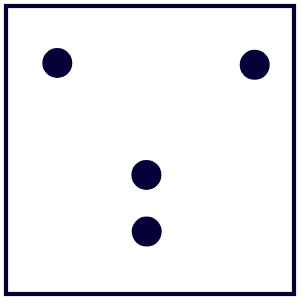
  1. Afigure
  2. Bfigure
  3. Cfigure
  4. Dfigure
Show answer

Concept: Unfold in reverse order; every hole is reflected across each fold line.

  1. Open the last fold first: the punch gets a mirror copy across the vertical fold line.
  2. Open the first fold: both punches get mirror copies across the horizontal fold line.
  3. So the sheet must show 4 punches, symmetric left-right and top-bottom — only option (d) fits.

Trick: Holes after unfolding = holes punched × 2number of folds (here 1 × 2² = 4); reject options with a wrong count first.

Answer: (D) Figure (d)

अवधारणा: उल्टे क्रम में खोलें; हर मोड़ की रेखा के पार छेद का दर्पण-प्रतिबिंब बनता है।

  1. पहले अंतिम मोड़ खोलें: खड़ी रेखा के दूसरी ओर छेद की प्रति बनती है।
  2. फिर पहला मोड़ खोलें: दोनों छेद आड़ी रेखा के पार दोहराए जाते हैं।
  3. कुल 4 छेद, बाएँ-दाएँ और ऊपर-नीचे सममित — केवल विकल्प (d) सही बैठता है।

ट्रिक: खुलने पर छेद = छेद × 2मोड़ों की संख्या (1 × 2² = 4); गलत गिनती वाले विकल्प पहले हटाएँ।

उत्तर: (D) आकृति (d)

SSC GDGeneral Intelligence & ReasoningPaper folding and punchingSSC GD 2025 · 25 Feb Shift 2 →
Q104.
Eight people are sitting in two parallel rows containing 4 people each, in such a way that there is equal distance between adjacent persons.
In row 1 - W, O, R and K are seated and all of them are facing south.
In row 2 - P, A, S and T are seated and all of them are facing north.
Thus, each person faces another person from the other row.
K sits second to the left of R. T sits second to the right of A. Only two people sit between A and P. O faces S.
Which of the following options represents both people sitting at the extreme ends of the rows?
आठ व्यक्ति दो समानांतर पंक्तियों में इस प्रकार बैठे हैं कि प्रत्येक पंक्ति में 4 व्यक्ति हैं तथा आसन्न व्यक्तियों के बीच समान दूरी है।
पंक्ति 1 में - W, O, R और K बैठे हैं तथा वे सभी दक्षिण की ओर मुख किए हुए हैं।
पंक्ति 2 में - P, A, S और T बैठे हैं तथा वे सभी उत्तर की ओर मुख किए हुए हैं।
इस प्रकार, प्रत्येक व्यक्ति दूसरी पंक्ति के एक व्यक्ति के सम्मुख है।
K, R के बाएँ से दूसरे स्थान पर बैठा है। T, A के दाएँ से दूसरे स्थान पर बैठा है। A और P के बीच केवल दो व्यक्ति बैठे हैं। O का मुख S की ओर है।
निम्नलिखित में से कौन-सा विकल्प पंक्तियों के अंतिम छोरों पर बैठे दोनों व्यक्तियों को दर्शाता है?
  1. AR and PR और P
  2. BO and TO और T
  3. CP and OP और O
  4. DS and WS और W
Show answer

Concept: Fix the firm clues first (people at ends, facing pairs), then fill the rest.

  1. Seats 1–4 from left (as drawn). 'Only two between A and P' → A and P at the ends; T is 2nd right of A → A=1, T=3, P=4, S=2.
  2. O faces S → O at seat 2 of row 1.
  3. K 2nd left of R: R=2 is taken by O, so R=1, K=3, W=4.
  4. Ends: R, W (row 1) and A, P (row 2). Pair offered: R and P.

Trick: 'Only two people between' in a row of 4 means both sit at the two ends — place them first.

Answer: (A) R and P

अवधारणा: पहले पक्के संकेत (किनारे वाले, आमने-सामने वाले) लगाएँ, फिर बाकी भरें।

  1. सीट 1–4 (चित्र में बाएँ से)। A और P के बीच दो लोग → दोनों किनारों पर; T, A के दाएँ दूसरा → A=1, T=3, P=4, S=2।
  2. O, S के सामने → पंक्ति 1 में सीट 2 पर O।
  3. K, R के बाएँ दूसरा: सीट 2 पर O है, इसलिए R=1, K=3, W=4।
  4. किनारे: R, W और A, P। विकल्प में जोड़ी: R और P।

ट्रिक: 4 की पंक्ति में 'बीच में केवल दो' का मतलब है दोनों किनारों पर — उन्हें सबसे पहले बिठाएँ।

उत्तर: (A) R और P

SSC GDGeneral Intelligence & ReasoningTwo-row seating arrangementSSC GD 2025 · 25 Feb Shift 2 →
Q105.
ZLER is related to BJBT in a certain way based on the English alphabetical order. In the same way, NDSG is related to PBPI. To which of the following is YIHB related, following the same logic?
अंग्रेजी वर्णमाला क्रम के आधार पर ZLER एक निश्चित प्रकार से BJBT से संबंधित है। उसी प्रकार, NDSG, PBPI से संबंधित है। समान तर्क का अनुसरण करते हुए YIHB निम्नलिखित में से किससे संबंधित है?
  1. AACDC
  2. BBHFE
  3. CZIDF
  4. DAGED
Show answer

Concept: Find the shift for each letter position and repeat it.

  1. ZLER → BJBT: +2, −2, −3, +2 (NDSG → PBPI gives the same).
  2. For YIHB: A = Y+2, G = I−2, E = H−3, D = B+2.
  3. Result: AGED.

Trick: After Z, count +2 by wrapping round: Y→Z→A.

Answer: (D) AGED

अवधारणा: हर स्थान के अक्षर का खिसकाव निकालें और वही दोहराएँ।

  1. ZLER → BJBT: +2, −2, −3, +2 (NDSG → PBPI में भी यही)।
  2. YIHB पर लगाएँ: A = Y+2, G = I−2, E = H−3, D = B+2।
  3. उत्तर: AGED।

ट्रिक: Z के बाद गिनती फिर A से: Y→Z→A।

उत्तर: (D) AGED

SSC GDGeneral Intelligence & ReasoningLetter analogy – position shiftsSSC GD 2025 · 25 Feb Shift 2 →
Q106.
What should come in place of the question mark (?) in the given series?
45 45 46 50 59 ?
दी गई शृंखला में प्रश्नवाचक चिह्न (?) के स्थान पर क्या आना चाहिए?
45 45 46 50 59 ?
  1. A76
  2. B74
  3. C77
  4. D75
Show answer

Concept: The gaps between terms are perfect squares in order.

  1. Gaps: 0, 1, 4, 9 = 0², 1², 2², 3².
  2. Next gap = 4² = 16.
  3. 59 + 16 = 75.

Trick: Gaps 0, 1, 4, 9 are instantly recognisable squares — just add the next square.

Answer: (D) 75

अवधारणा: पदों के बीच का अंतर क्रम से पूर्ण वर्ग है।

  1. अंतर: 0, 1, 4, 9 = 0², 1², 2², 3²।
  2. अगला अंतर = 4² = 16।
  3. 59 + 16 = 75।

ट्रिक: 0, 1, 4, 9 देखते ही वर्ग पहचानें — अगला वर्ग जोड़ दें।

उत्तर: (D) 75

SSC GDGeneral Intelligence & ReasoningNumber series – square differencesSSC GD 2025 · 25 Feb Shift 2 →
Q107.
In a certain code language, 'mind your words' is coded as 'at bd kj' and 'use words wisely' is coded as 'hk kj bo'. How is 'words' coded in the given language ?
एक निश्चित कूट भाषा में, 'mind your words' को 'at bd kj' के रूप में कूटबद्ध किया जाता है तथा 'use words wisely' को 'hk kj bo' के रूप में कूटबद्ध किया जाता है। दी गई भाषा में 'words' को किस प्रकार कूटबद्ध किया जाएगा?
  1. Aat
  2. Bkj
  3. Cbd
  4. Dhk
Show answer

Concept: A word present in both sentences takes the code present in both codes.

  1. Sentence 1: mind, your, words → at, bd, kj.
  2. Sentence 2: use, words, wisely → hk, kj, bo.
  3. Common word 'words' ↔ common code 'kj'.

Trick: Match common with common — no need to decode other words.

Answer: (B) kj

अवधारणा: दोनों वाक्यों में आने वाले शब्द का कोड वही है जो दोनों कोडों में आता है।

  1. वाक्य 1: mind, your, words → at, bd, kj।
  2. वाक्य 2: use, words, wisely → hk, kj, bo।
  3. साझा शब्द 'words' ↔ साझा कोड 'kj'।

ट्रिक: साझा शब्द = साझा कोड; बाकी शब्द खोलने की ज़रूरत नहीं।

उत्तर: (B) kj

SSC GDGeneral Intelligence & ReasoningCoding – common word methodSSC GD 2025 · 25 Feb Shift 2 →
Q108.
Read the given statements and conclusions carefully. Assuming that the information given in the statements is true, even if it appears to be at variance with commonly known facts, decide which of the given conclusions logically follow(s) from the statements.
Statements:
All dress are cloth.
All shirts are cloth.
All ties are cloth.
Conclusions:
(I): Some ties are dress.
(II): Some shirts are tie.
दिए गए कथनों और निष्कर्षों को ध्यानपूर्वक पढ़िए। यह मानते हुए कि कथनों में दी गई जानकारी सत्य है, भले ही वह सर्वज्ञात तथ्यों से भिन्न प्रतीत होती हो, निर्णय कीजिए कि दिए गए निष्कर्षों में से कौन-सा/से कथनों का तार्किक रूप से अनुसरण करता है/करते हैं।
कथन:
सभी ड्रेस, कपड़े हैं।
सभी शर्ट, कपड़े हैं।
सभी टाई, कपड़े हैं।
निष्कर्ष:
(I): कुछ टाई, ड्रेस हैं।
(II): कुछ शर्ट, टाई हैं।
  1. ANeither conclusion (I) nor conclusion (II) follows.न तो निष्कर्ष (I) और न ही निष्कर्ष (II) अनुसरण करता है।
  2. BBoth conclusions (I) and (II) follow.निष्कर्ष (I) और (II) दोनों अनुसरण करते हैं।
  3. COnly conclusion (I) follows.केवल निष्कर्ष (I) अनुसरण करता है।
  4. DOnly conclusion (II) follows.केवल निष्कर्ष (II) अनुसरण करता है।
Show answer

Concept: If A, B and C are all inside one bigger set, nothing is fixed about A, B, C overlapping each other.

  1. Dress, shirts and ties each lie fully inside cloth.
  2. They can be drawn as three separate circles inside cloth.
  3. So 'Some ties are dress' and 'Some shirts are tie' are both uncertain.

Trick: 'All X are Z' + 'All Y are Z' never gives any link between X and Y.

Answer: (A) Neither conclusion (I) nor conclusion (II) follows.

अवधारणा: यदि A, B, C तीनों एक बड़े समूह के अंदर हों, तो आपस में उनका मेल तय नहीं होता।

  1. dress, shirts और ties तीनों cloth के अंदर हैं।
  2. cloth के अंदर तीनों को अलग-अलग वृत्त बनाया जा सकता है।
  3. इसलिए दोनों निष्कर्ष निश्चित नहीं हैं।

ट्रिक: 'सभी X, Z हैं' + 'सभी Y, Z हैं' से X और Y का कोई संबंध नहीं निकलता।

उत्तर: (A) न तो निष्कर्ष (I) और न ही (II) अनुसरण करता है।

SSC GDGeneral Intelligence & ReasoningSyllogism – common parent classSSC GD 2025 · 25 Feb Shift 2 →
Q109.
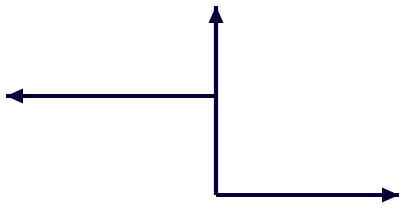
Select the option in which the given figure (X) is embedded (rotation is NOT allowed).
figure
उस विकल्प का चयन कीजिए जिसमें दी गई आकृति (X) सन्निहित है (घुमाने की अनुमति नहीं है)।
figure
  1. Afigure
  2. Bfigure
  3. Cfigure
  4. Dfigure
Show answer

Concept: The same shape must appear inside the option with the same size and direction (no rotation).

  1. Figure (X) is made of arrows: one pointing up, one going left from its stem, one going right from its foot.
  2. Only option (a) contains all three arrows with arrowheads in the same directions.
  3. The other options have plain lines without arrowheads, so (X) cannot be traced in them.

Trick: Look for the most distinctive part first (here the arrowheads) and reject options that lack it.

Answer: (A) Figure (a)

अवधारणा: वही आकृति विकल्प में उसी आकार और दिशा में दिखनी चाहिए (घुमाना मना है)।

  1. आकृति (X) तीर से बनी है: एक ऊपर, एक तने से बाएँ, एक नीचे से दाएँ।
  2. केवल विकल्प (a) में तीनों तीर उसी दिशा में सिरों सहित हैं।
  3. बाकी विकल्पों में बिना सिरे की सादी रेखाएँ हैं, इसलिए (X) उनमें नहीं मिलती।

ट्रिक: सबसे अलग हिस्सा (यहाँ तीर का सिरा) पहले खोजें; जिनमें नहीं है, उन्हें हटा दें।

उत्तर: (A) आकृति (a)

SSC GDGeneral Intelligence & ReasoningEmbedded figureSSC GD 2025 · 25 Feb Shift 2 →
Q110.
What should come in place of the question mark (?) in the given series based on the English alphabetical order ? ABC FGH LMN STU ?
अंग्रेजी वर्णमाला क्रम के आधार पर दी गई शृंखला में प्रश्नवाचक चिह्न (?) के स्थान पर क्या आना चाहिए ? ABC FGH LMN STU ?
  1. AABC
  2. BIJK
  3. CWXY
  4. DRST
Show answer

Concept: Each term is 3 consecutive letters; track only the first letter.

  1. First letters: A(1), F(6), L(12), S(19) → gaps +5, +6, +7.
  2. Next gap +8: 19 + 8 = 27 → 27 − 26 = 1 = A.
  3. Term: ABC.

Trick: When the count crosses 26, subtract 26 to come back to the start of the alphabet.

Answer: (A) ABC

अवधारणा: हर पद में 3 क्रमागत अक्षर हैं; केवल पहला अक्षर देखें।

  1. शुरुआती अक्षरों के क्रमांक 1(A), 6(F), 12(L), 19(S) → अंतर +5, +6, +7।
  2. अगला +8: 19 + 8 = 27 → 27 − 26 = 1 = A।
  3. पद: ABC।

ट्रिक: 26 से आगे जाने पर 26 घटा दें — वर्णमाला फिर A से शुरू।

उत्तर: (A) ABC

SSC GDGeneral Intelligence & ReasoningLetter series – increasing gapsSSC GD 2025 · 25 Feb Shift 2 →
Q111.
Select the combination of letters that when filled in the blanks in the same sequence will make the series logically complete.
_GIMK_JNLI_OMJL_NKM_
अक्षरों के उस संयोजन का चयन कीजिए जिसे रिक्त स्थानों में उसी क्रम में रखने पर शृंखला तार्किक रूप से पूर्ण हो जाएगी।
_GIMK_JNLI_OMJL_NKM_
  1. AJIKRQ
  2. BFHMPT
  3. CFIMRT
  4. DJHKPQ
Show answer

Concept: 20 places → split into five blocks of 4 and compare letters column-wise.

  1. Blocks: _GIM | K_JN | LI_O | MJL_ | NKM_.
  2. Column 1: J K L M N; column 2: G H I J K; column 3: I J K L M; column 4: M N O P Q.
  3. Blanks in order: J, H, K, P, Q.

Trick: Every column moves +1 block to block — fill each blank from its neighbour above.

Answer: (D) JHKPQ

अवधारणा: 20 स्थान → 4-4 अक्षरों के पाँच खंड बनाएँ और स्तंभ के अनुसार मिलाएँ।

  1. खंड: _GIM | K_JN | LI_O | MJL_ | NKM_।
  2. स्तंभ 1: J K L M N; स्तंभ 2: G H I J K; स्तंभ 3: I J K L M; स्तंभ 4: M N O P Q।
  3. क्रम से रिक्त: J, H, K, P, Q।

ट्रिक: हर स्तंभ में अगला अक्षर +1 है — ऊपर वाले अक्षर से रिक्त भरें।

उत्तर: (D) JHKPQ

SSC GDGeneral Intelligence & ReasoningLetter series – fill the blanksSSC GD 2025 · 25 Feb Shift 2 →
Q112.
What will come in the place of the question mark '(?)' in the following equation, if '÷' and '×' are interchanged and '+' and '−' are interchanged?
11 − 9 ÷ 2 + 16 × 8 = ?
निम्नलिखित समीकरण में प्रश्नवाचक चिह्न '(?)' के स्थान पर क्या आएगा, यदि '÷' और '×' को आपस में बदल दिया जाए तथा '+' और '−' को आपस में बदल दिया जाए?
11 − 9 ÷ 2 + 16 × 8 = ?
  1. A27
  2. B28
  3. C26
  4. D25
Show answer

Concept: Swap the signs first, then solve using BODMAS.

  1. After swapping: 11 + 9 × 2 − 16 ÷ 8.
  2. 9 × 2 = 18; 16 ÷ 8 = 2.
  3. 11 + 18 − 2 = 27.

Trick: Rewrite the full expression before calculating — most mistakes come from swapping only one pair.

Answer: (A) 27

अवधारणा: पहले चिह्न बदलें, फिर BODMAS से हल करें।

  1. बदलने के बाद: 11 + 9 × 2 − 16 ÷ 8।
  2. 9 × 2 = 18; 16 ÷ 8 = 2।
  3. 11 + 18 − 2 = 27।

ट्रिक: हिसाब से पहले पूरा व्यंजक दोबारा लिखें — गलती अक्सर एक ही जोड़ी बदलने से होती है।

उत्तर: (A) 27

SSC GDGeneral Intelligence & ReasoningInterchange of signsSSC GD 2025 · 25 Feb Shift 2 →
Q113.
A square sheet of paper is folded along the dotted line successively along the directions shown and is then punched in the end. How would the paper look when unfolded ?
figure
कागज़ की एक वर्गाकार शीट को बिंदुदार रेखा के अनुदिश दर्शाई गई दिशाओं में क्रमशः मोड़ा जाता है और अंत में छेदा जाता है। खोलने पर कागज़ कैसा दिखाई देगा?
figure
  1. Afigure
  2. Bfigure
  3. Cfigure
  4. Dfigure
Show answer

Concept: Each unfolding doubles the holes by mirroring them across the fold line.

  1. Two holes are punched in the folded quarter.
  2. Opening the vertical fold → 4 holes; opening the horizontal fold → 8 holes.
  3. The holes form 2 columns × 4 rows, symmetric about both centre lines — option (c).

Trick: 2 holes × 2² (two folds) = 8 holes; options with 3 or 4 holes are out at once.

Answer: (C) Figure (c)

अवधारणा: हर बार खोलने पर मोड़ की रेखा के पार प्रतिबिंब बनने से छेद दुगुने होते हैं।

  1. मुड़े चौथाई भाग में 2 छेद हैं।
  2. खड़ा मोड़ खोलने पर 4, आड़ा मोड़ खोलने पर 8 छेद।
  3. छेद 2 स्तंभ × 4 पंक्ति में बनेंगे, ऊपर-नीचे और दाएँ-बाएँ एक जैसे — विकल्प (c)।

ट्रिक: 2 छेद × 2² (दो मोड़) = 8; 3 या 4 छेद वाले विकल्प तुरंत हटाएँ।

उत्तर: (C) आकृति (c)

SSC GDGeneral Intelligence & ReasoningPaper folding – two holesSSC GD 2025 · 25 Feb Shift 2 →
Q114.
Identify the figure given in the options, which when put in place of the question mark (?) will logically complete the series.
figure
विकल्पों में दी गई उस आकृति की पहचान कीजिए, जिसे प्रश्नवाचक चिह्न (?) के स्थान पर रखने पर शृंखला तार्किक रूप से पूर्ण हो जाएगी।
figure
  1. Afigure
  2. Bfigure
  3. Cfigure
  4. Dfigure
Show answer

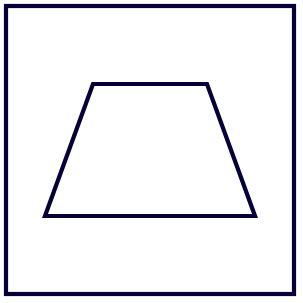
Concept: The number of straight lines in each figure grows by one.

  1. Series: open angle (2 lines) → triangle (3) → square (4).
  2. So the next figure needs 5 straight lines.
  3. Option (a) has 5 lines; the trapezium and parallelogram have 4 and the star figure has more than 5.

Trick: In shape series, count sides/lines first — it settles most questions in seconds.

Answer: (A) Figure (a)

अवधारणा: हर आकृति में सीधी रेखाओं की संख्या एक-एक बढ़ती है।

  1. श्रृंखला: खुला कोण (2 रेखा) → त्रिभुज (3) → वर्ग (4)।
  2. अगली आकृति में 5 सीधी रेखाएँ चाहिए।
  3. विकल्प (a) में 5 रेखाएँ हैं; समलंब व समांतर चतुर्भुज में 4 और तारे वाली आकृति में 5 से अधिक।

ट्रिक: आकृति श्रृंखला में पहले भुजाएँ/रेखाएँ गिनें — ज़्यादातर प्रश्न सेकंडों में हल।

उत्तर: (A) आकृति (a)

SSC GDGeneral Intelligence & ReasoningFigure series – count of linesSSC GD 2025 · 25 Feb Shift 2 →
Q115.
What should come in place of the question mark (?) in the given series?
5 14 22 48 56 ?
दी गई शृंखला में प्रश्नवाचक चिह्न (?) के स्थान पर क्या आना चाहिए?
5 14 22 48 56 ?
  1. A116
  2. B161
  3. C112
  4. D121
Show answer

Concept: Two operations are applied turn by turn: ×2 + 4, then +8.

  1. 5 × 2 + 4 = 14; 14 + 8 = 22.
  2. 22 × 2 + 4 = 48; 48 + 8 = 56.
  3. Next: 56 × 2 + 4 = 116.

Trick: When gaps jump irregularly (9, 8, 26, 8), test a repeating 'multiply' step and 'add' step.

Answer: (A) 116

अवधारणा: दो संक्रियाएँ बारी-बारी चलती हैं: ×2 + 4, फिर +8।

  1. 5 × 2 + 4 = 14; 14 + 8 = 22।
  2. 22 × 2 + 4 = 48; 48 + 8 = 56।
  3. अगला: 56 × 2 + 4 = 116।

ट्रिक: अंतर अनियमित (9, 8, 26, 8) हों तो 'गुणा' और 'जोड़' का क्रम आज़माएँ।

उत्तर: (A) 116

SSC GDGeneral Intelligence & ReasoningNumber series – alternate operationsSSC GD 2025 · 25 Feb Shift 2 →
Q116.
In a certain code language 'LQAB' is coded as '32' and 'CMGP' is coded as '39'. What is the code for 'SJZC' in the given language ?
एक निश्चित कूट भाषा में 'LQAB' को '32' के रूप में कूटबद्ध किया जाता है तथा 'CMGP' को '39' के रूप में कूटबद्ध किया जाता है। दी गई भाषा में 'SJZC' का कूट क्या है?
  1. A58
  2. B49
  3. C42
  4. D60
Show answer

Concept: Code = sum of alphabet positions of the letters.

  1. LQAB: 12 + 17 + 1 + 2 = 32 ✓; CMGP: 3 + 13 + 7 + 16 = 39 ✓.
  2. SJZC: 19 + 10 + 26 + 3 = 58.

Trick: Remember EJOTY = 5, 10, 15, 20, 25 to find letter positions fast (S = T − 1 = 19).

Answer: (A) 58

अवधारणा: कोड = अक्षरों के वर्णमाला स्थानों का योग।

  1. LQAB: 12 + 17 + 1 + 2 = 32 ✓; CMGP: 3 + 13 + 7 + 16 = 39 ✓।
  2. SJZC: 19 + 10 + 26 + 3 = 58।

ट्रिक: EJOTY = 5, 10, 15, 20, 25 याद रखें — स्थान तुरंत मिलेंगे (S = T − 1 = 19)।

उत्तर: (A) 58

SSC GDGeneral Intelligence & ReasoningCoding – sum of letter positionsSSC GD 2025 · 25 Feb Shift 2 →
Q117.
Six friends, A, B, C, K, L and M, are sitting in a straight line facing north (but not necessarily in the same order). Only two people sit between A and M. B sits to the immediate left of M. No one sits to the right of C . Only two people sit between C and B . B sits to the immediate right of L. How many people sit to the left of K ?
छह मित्र A, B, C, K, L और M एक सीधी पंक्ति में उत्तर की ओर मुख करके बैठे हैं (आवश्यक नहीं कि इसी क्रम में)। A और M के बीच केवल दो व्यक्ति बैठे हैं। B, M के ठीक बाएँ बैठा है। C के दाएँ कोई नहीं बैठा है। C और B के बीच केवल दो व्यक्ति बैठे हैं। B, L के ठीक दाएँ बैठा है। K के बाएँ कितने व्यक्ति बैठे हैं?
  1. ATwoदो
  2. BThreeतीन
  3. CFourचार
  4. DOneएक
Show answer

Concept: Facing north, left/right are the same as ours; start with the fixed end.

  1. Nobody right of C → C at seat 6. Two between C and B → B at 3.
  2. L immediately left of B → L at 2; M immediately right of B → M at 4.
  3. Two between A and M → A at 1; K takes seat 5.
  4. Left of K: A, L, B, M = 4 people.

Trick: Seat number − 1 = people to the left (K at 5 → 4).

Answer: (C) Four

अवधारणा: उत्तर की ओर मुख हो तो बाएँ-दाएँ हमारे जैसा; पहले निश्चित छोर से शुरू करें।

  1. C के दाएँ कोई नहीं → C सीट 6; C और B के बीच दो → B सीट 3।
  2. L, B के ठीक बाएँ → सीट 2; M, B के ठीक दाएँ → सीट 4।
  3. A और M के बीच दो → A सीट 1; K सीट 5।
  4. K के बाएँ: A, L, B, M = 4 लोग।

ट्रिक: सीट संख्या − 1 = बाईं ओर के लोग (K सीट 5 → 4)।

उत्तर: (C) चार

SSC GDGeneral Intelligence & ReasoningLinear seating – facing northSSC GD 2025 · 25 Feb Shift 2 →
Q118.
MEGA is related to OFIB in a certain way based on the English alphabetical order. In the same way, UIOE is related to WJQF. To which of the given options is ALUH related, following the same logic ?
अंग्रेजी वर्णमाला क्रम के आधार पर MEGA एक निश्चित प्रकार से OFIB से संबंधित है। उसी प्रकार, UIOE, WJQF से संबंधित है। समान तर्क का अनुसरण करते हुए ALUH दिए गए विकल्पों में से किससे संबंधित है?
  1. ACMIW
  2. BCMWI
  3. CCWMI
  4. DWCMI
Show answer

Concept: Letters shift alternately by +2 and +1, keeping their order.

  1. MEGA → OFIB and UIOE → WJQF: +2, +1, +2, +1.
  2. For ALUH: C = A+2, M = L+1, W = U+2, I = H+1.
  3. Result: CMWI.

Trick: All options use the same letters — only the order matters, so get the 3rd letter (W) right.

Answer: (B) CMWI

अवधारणा: अक्षर बारी-बारी +2 और +1 खिसकते हैं, क्रम वही रहता है।

  1. MEGA → OFIB तथा UIOE → WJQF: +2, +1, +2, +1।
  2. ALUH पर लगाएँ: C = A+2, M = L+1, W = U+2, I = H+1।
  3. उत्तर: CMWI।

ट्रिक: सभी विकल्पों में अक्षर एक जैसे हैं — केवल क्रम देखें; तीसरा अक्षर W होना चाहिए।

उत्तर: (B) CMWI

SSC GDGeneral Intelligence & ReasoningLetter analogy – +2, +1 patternSSC GD 2025 · 25 Feb Shift 2 →
Q119.
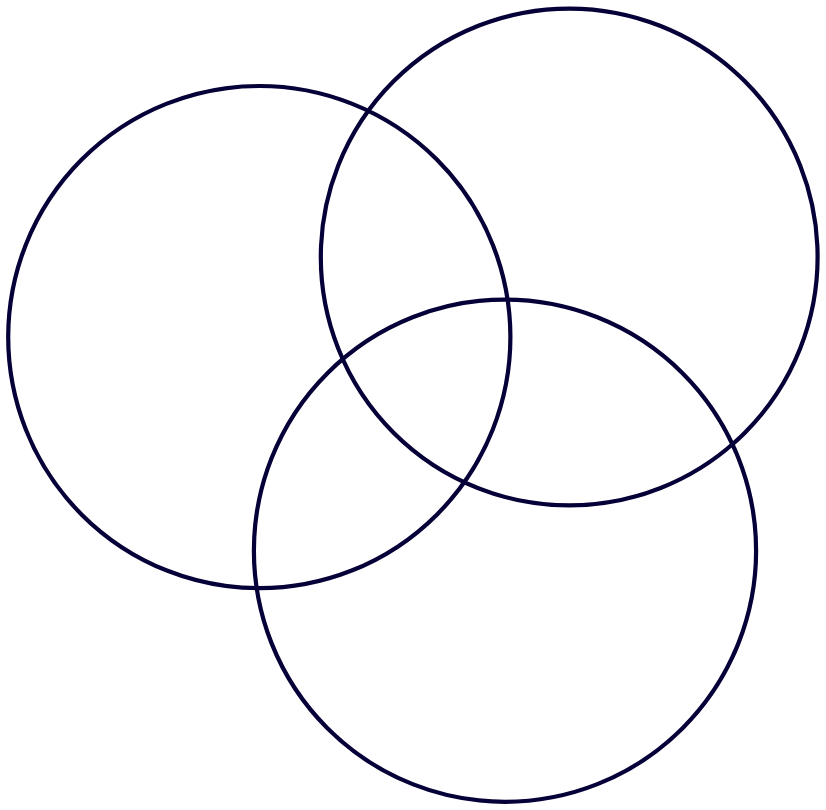
Select the Venn diagram that best illustrates the relationship between the following classes.
Alphabet, Consonants, Vowels
उस वेन आरेख का चयन कीजिए जो निम्नलिखित वर्गों के बीच के संबंध को सर्वोत्तम रूप से दर्शाता है।
वर्णमाला, व्यंजन, स्वर
  1. Afigure
  2. Bfigure
  3. Cfigure
  4. Dfigure
Show answer

Concept: Two classes inside a bigger class, with no overlap between them.

  1. Consonants and vowels are both letters of the alphabet.
  2. No letter is both a consonant and a vowel.
  3. So: one big circle containing two separate small circles — option (c).

Yaad rakhein: Similar sets: Human – Male – Female; Number – Even – Odd.

Answer: (C) Figure (c)

अवधारणा: बड़े वर्ग के अंदर दो वर्ग, जो आपस में नहीं मिलते।

  1. व्यंजन और स्वर दोनों वर्णमाला के अक्षर हैं।
  2. कोई अक्षर एक साथ स्वर और व्यंजन नहीं हो सकता।
  3. अतः बड़े वृत्त के अंदर दो अलग छोटे वृत्त — विकल्प (c)।

याद रखें: ऐसे ही समूह: मनुष्य – पुरुष – स्त्री; संख्या – सम – विषम।

उत्तर: (C) आकृति (c)

SSC GDGeneral Intelligence & ReasoningVenn diagram – two parts of a wholeSSC GD 2025 · 25 Feb Shift 2 →
Q120.
The position(s) of how many letters will remain unchanged if each of the letters in the word DAUGHTER is arranged in the English alphabetical order ?
यदि शब्द DAUGHTER के प्रत्येक अक्षर को अंग्रेजी वर्णमाला क्रम में व्यवस्थित किया जाए, तो कितने अक्षरों की स्थिति अपरिवर्तित रहेगी?
  1. AOneएक
  2. BFourचार
  3. CTwoदो
  4. DThreeतीन
Show answer

Concept: Arrange the letters alphabetically and compare place by place.

  1. DAUGHTER → ADEGHRTU.
  2. Compare: D/A, A/D, U/E, G/G, H/H, T/R, E/T, R/U.
  3. G and H stay in place → 2.

Trick: Letters already in order in the middle of the word (G, H) are the usual ones that stay fixed.

Answer: (C) Two

अवधारणा: अक्षरों को वर्णमाला क्रम में लगाएँ और स्थान-दर-स्थान मिलाएँ।

  1. DAUGHTER → ADEGHRTU।
  2. मिलान: D/A, A/D, U/E, G/G, H/H, T/R, E/T, R/U।
  3. G और H अपनी जगह पर → 2।

ट्रिक: शब्द के बीच पहले से क्रम में बैठे अक्षर (G, H) अक्सर अपनी जगह पर रहते हैं।

उत्तर: (C) दो

SSC GDGeneral Intelligence & ReasoningLetter arrangement – unchanged positionsSSC GD 2025 · 25 Feb Shift 2 →