Question bank

Q&A: practice questions with answers

Search questions on any topic. Filter by exam category, exam, subject and topic, try the question, then open the answer and explanation.

Courses – airGurukul

4,200 questions found.

Q1201.
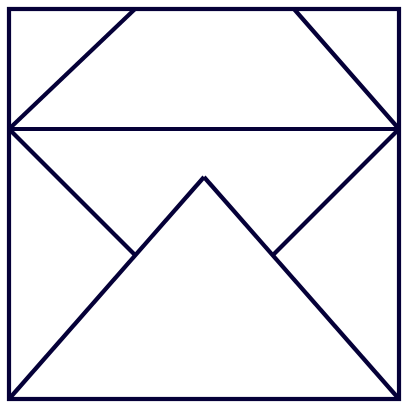
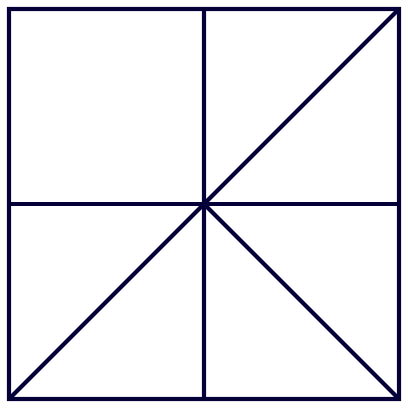
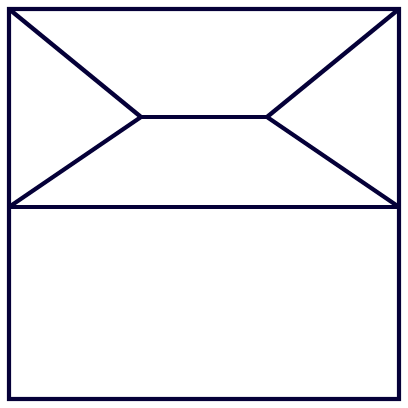
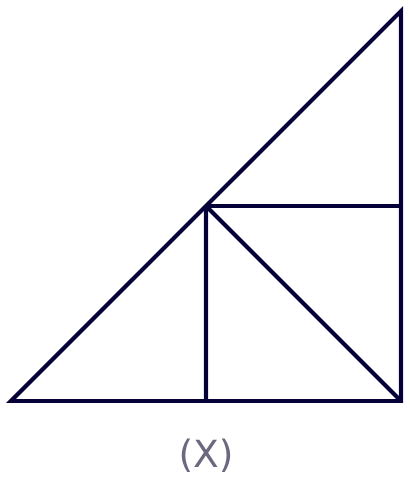
Select the option figure in which the given figure ( X ) is embedded as its part (rotation is NOT allowed).
figure
उस विकल्प-आकृति का चयन कीजिए, जिसमें दी गई आकृति (X) उसके एक भाग के रूप में सन्निहित है (घूर्णन की अनुमति नहीं है)।
figure
  1. Afigure
  2. Bfigure
  3. Cfigure
  4. Dfigure
Show answer

Concept: Find the option that contains figure (X) exactly, in the same size and orientation (no rotation).

  1. Key feature of (X): a right triangle whose hypotenuse goes from bottom-left to top-right, with three lines starting from the middle of that hypotenuse.
  2. In option (b) the square's diagonal acts as the hypotenuse; its base and right side complete the triangle.
  3. The three inner lines of (b) meet at the square's centre = mid-point of the diagonal, so (X) fits perfectly.
  4. Options (a), (c), (d) have no full corner-to-corner slanting line, so (X) cannot be traced.

Trick: First locate the longest line of (X) (here the slanting side) in each option; reject options without it.

Answer: (B) Option figure (b)

अवधारणा: वह विकल्प चुनें जिसमें आकृति (X) बिना घुमाए, उसी आकार और दिशा में छिपी हो।

हल:

  1. (X) की पहचान: नीचे-बाएँ से ऊपर-दाएँ जाता कर्ण, जिसके बीचोंबीच से तीन रेखाएँ (दाएँ, नीचे, कोने की ओर) जाती हैं।
  2. (b) वाले वर्ग का विकर्ण = यही कर्ण; वर्ग का आधार और दायाँ किनारा बाकी दो भुजाएँ।
  3. (b) की अंदरूनी तीनों रेखाएँ वर्ग के केंद्र से निकलती हैं — इसलिए (X) हूबहू बैठती है।
  4. बाकी विकल्पों में पूरी लंबाई की तिरछी रेखा मौजूद नहीं, अतः वे अस्वीकार।

ट्रिक: पहले (X) की सबसे लंबी रेखा हर विकल्प में खोजें; जिसमें न हो उसे तुरंत हटा दें।

उत्तर: (B) विकल्प आकृति (b)

SSC GDGeneral Intelligence & ReasoningEmbedded figureSSC GD 2025 · 18 Feb Shift 3 →
Q1202.
Select the combination of letters that when sequentially placed in the blanks of the given series, will logically complete the series.
_YSXR_QVPU_TNSM_LQK_
उन अक्षरों के संयोजन का चयन कीजिए, जिन्हें दी गई शृंखला के रिक्त स्थानों में क्रमानुसार रखने पर शृंखला तार्किक रूप से पूर्ण हो जाएगी।
_YSXR_QVPU_TNSM_LQK_
  1. AQWNRJ
  2. BQXNSJ
  3. CTXOSP
  4. DTWORP
Show answer

Concept: The series is made of repeating 4-letter blocks; each position of the block changes by a fixed step.

  1. Split into blocks: _YSX | R_QV | PU_T | NSM_ | LQK_.
  2. 1st letters: ?, R, P, N, L → step −2, so first blank = T.
  3. 2nd letters: Y, ?, U, S, Q → blank = W. 3rd letters: S, Q, ?, M, K → blank = O.
  4. 4th letters: X, V, T, ?, ? → R, then P.
  5. Blanks in order: T, W, O, R, P.

Trick: Check only the first blank: block 2 starts with R, so blank 1 = T (R+2). Options with T: (c), (d); second blank W (between Y and U) fixes (d).

Answer: (D) TWORP

अवधारणा: श्रृंखला 4-4 अक्षरों के खंडों में बँटी है; हर स्थान का अक्षर एक निश्चित अंतर से बदलता है।

हल:

  1. खंड बनाएँ: _YSX | R_QV | PU_T | NSM_ | LQK_
  2. पहले अक्षर: ?, R, P, N, L (−2 का अंतर) → T
  3. दूसरे अक्षर: Y, ?, U → W; तीसरे अक्षर: S, Q, ?, M → O
  4. चौथे अक्षर: X, V, T, ?, ? → R और P
  5. रिक्त स्थान: T, W, O, R, P

ट्रिक: केवल पहले दो रिक्त जाँचें: T (R से 2 आगे) और W (Y व U के बीच) — सीधा (d)।

उत्तर: (D) TWORP

SSC GDGeneral Intelligence & ReasoningLetter series – missing lettersSSC GD 2025 · 18 Feb Shift 3 →
Q1203.
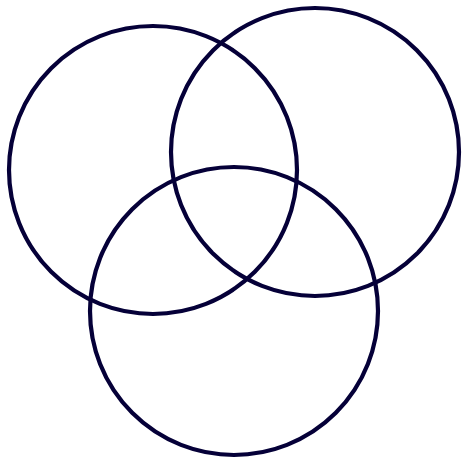
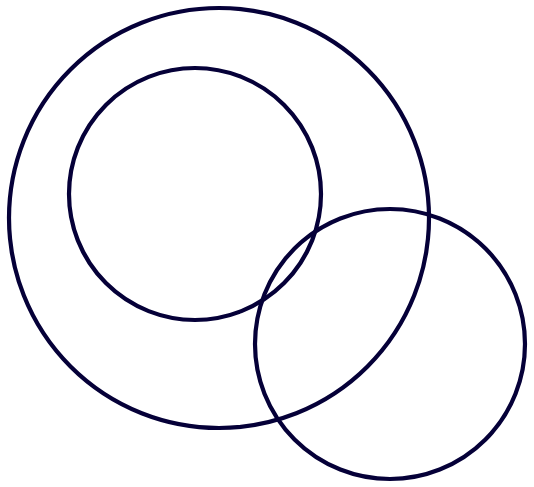
Select the Venn diagram that best illustrates the relationship between the following classes.
Body, Hands, Eyes
उस वेन आरेख का चयन कीजिए, जो निम्नलिखित वर्गों के बीच के संबंध को सर्वोत्तम रूप से दर्शाता है।
शरीर, हाथ, आँखें
  1. Afigure
  2. Bfigure
  3. Cfigure
  4. Dfigure
Show answer

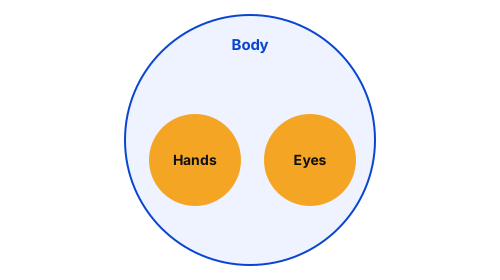
Concept: If two classes are separate parts of a bigger class, draw two non-touching circles inside one large circle.

  1. Hands and Eyes are both parts of the Body → both inside the Body circle.
  2. A hand is never an eye → the two small circles do not overlap.
  3. Option (d) shows exactly this: one big circle with two separate circles inside.

Yaad rakhein: Same pattern: Country – State – another State; Tree – Leaves – Roots.

Answer: (D) Option figure (d)

अवधारणा: यदि दो वर्ग किसी बड़े वर्ग के अलग-अलग भाग हों, तो बड़े वृत्त के अंदर दो अलग (न छूते) वृत्त बनते हैं।

हल:

  1. हाथ और आँखें दोनों शरीर के अंग हैं → दोनों शरीर वाले वृत्त के अंदर।
  2. हाथ कभी आँख नहीं होता → दोनों छोटे वृत्त आपस में नहीं मिलते।
  3. विकल्प (d) में यही चित्र है।

याद रखें: ऐसा ही ढाँचा: पेड़ – पत्ते – जड़ें; देश – राज्य – दूसरा राज्य।

उत्तर: (D) विकल्प आकृति (d)

SSC GDGeneral Intelligence & ReasoningVenn diagram – part and wholeSSC GD 2025 · 18 Feb Shift 3 →
Q1204.
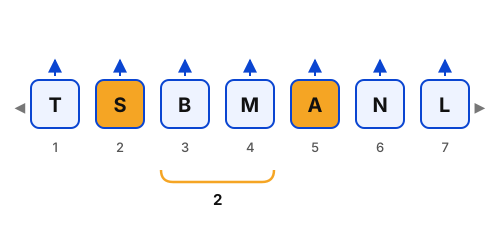
Seven people, A, B, L, M, N, S and T, are sitting in a row, facing north(but not necessarily in the same order). Only two people sit between T and M. Only L sits to the right of N . Only one person sits between M and N . B sits at some place to the right of S but at some place to the left of A.
How many people sit between A and S ?
सात व्यक्ति A, B, L, M, N, S और T एक पंक्ति में उत्तर की ओर मुख करके बैठे हैं (आवश्यक नहीं कि इसी क्रम में)। T और M के बीच केवल दो व्यक्ति बैठे हैं। N के दाईं ओर केवल L बैठा है। M और N के बीच केवल एक व्यक्ति बैठा है। B, S के दाईं ओर किसी स्थान पर तथा A के बाईं ओर किसी स्थान पर बैठा है।
$A$ और $S$ के बीच कितने व्यक्ति बैठे हैं?
  1. AOneएक
  2. BTwoदो
  3. CThreeतीन
  4. DFourचार
Show answer

Concept: Fix the person with the most definite clue first, then place others around him.

  1. 'Only L is to the right of N' → N at seat 6, L at seat 7 (seats 1–7 from left).
  2. One person between M and N → M at seat 4.
  3. Two people between T and M → T at 1 (seat 7 is taken).
  4. Seats 2, 3, 5 left for S, B, A with order S…B…A → S = 2, B = 3, A = 5.
  5. Between S (2) and A (5): B and M → 2 people.

Trick: Phrases like 'only X sits to the right' instantly fix the extreme seats – start there.

Answer: (B) Two

अवधारणा: सबसे निश्चित सूचना से शुरू करें, फिर बाकी लोगों को बिठाएँ।

हल:

  1. बाएँ से सीट 1–7 मानें। 'N के दाएँ केवल L' → N = 6, L = 7
  2. M और N के बीच एक व्यक्ति → M = 4
  3. T और M के बीच दो व्यक्ति → T = 1
  4. बची सीटें 2, 3, 5; क्रम S…B…A → S = 2, B = 3, A = 5
  5. S और A के बीच B और M → 2 व्यक्ति

ट्रिक: 'केवल … दाएँ बैठा है' जैसे वाक्य सिरों की सीट तुरंत तय कर देते हैं।

उत्तर: (B) दो

SSC GDGeneral Intelligence & ReasoningLinear seating – row facing northSSC GD 2025 · 18 Feb Shift 3 →
Q1205.
The position(s) of how many letters will remain unchanged if each letter in the word GLORIFY is arranged in the English alphabetical order?
यदि शब्द GLORIFY के प्रत्येक अक्षर को अंग्रेजी वर्णमाला क्रम में व्यवस्थित किया जाए, तो कितने अक्षरों का स्थान अपरिवर्तित रहेगा?
  1. A2
  2. B0
  3. C1
  4. D3
Show answer

Concept: Arrange the letters A→Z and compare position by position with the original word.

  1. Original: G L O R I F Y.
  2. Sorted: F G I L O R Y.
  3. Compare: G/F, L/G, O/I, R/L, I/O, F/R differ; 7th place Y = Y.
  4. Only 1 letter stays in place.

Trick: The largest letter (Y) already at the end will always stay unchanged – check the first/last letters first.

Answer: (C) 1

अवधारणा: अक्षरों को A से Z के क्रम में लगाकर हर स्थान की तुलना मूल शब्द से करें।

हल:

  1. मूल शब्द: G L O R I F Y
  2. वर्णानुक्रम: F G I L O R Y
  3. पहले छह स्थान बदल गए; सातवें स्थान पर Y दोनों में समान।
  4. अतः केवल 1 अक्षर का स्थान नहीं बदला।

ट्रिक: जो सबसे बाद वाला अक्षर (Y) पहले से अंत में है, वह अपनी जगह रहेगा — पहले सिरों को जाँचें।

उत्तर: (C) 1

SSC GDGeneral Intelligence & ReasoningLetter position after alphabetical arrangementSSC GD 2025 · 18 Feb Shift 3 →
Q1206.
What will come in the place of the question mark '(?)' in the following equation, if '×' and '÷' are interchanged and '−' and '+' are interchanged?
72 + 5 − 42 × 7 ÷ 1 = ?
निम्नलिखित समीकरण में प्रश्न चिह्न '(?)' के स्थान पर क्या आएगा, यदि '×' और '÷' को आपस में बदल दिया जाए तथा '−' और '+' को आपस में बदल दिया जाए?
72 + 5 − 42 × 7 ÷ 1 = ?
  1. A71
  2. B70
  3. C73
  4. D72
Show answer

Concept: Swap the signs as told, then solve using BODMAS.

  1. Given: 72+5−42×7÷1.
  2. After swapping (× ↔ ÷, + ↔ −): 72−5+42÷7×1.
  3. 42÷7×1=6.
  4. 72−5+6=73.

Trick: Rewrite the full expression with new signs before calculating – most mistakes come from swapping only one pair.

Answer: (C) 73

अवधारणा: बताए अनुसार चिह्न बदलें और फिर BODMAS से हल करें।

हल:

  1. दिया है: 72+5−42×7÷1
  2. चिह्न बदलने पर: 72−5+42÷7×1
  3. 42÷7×1=6
  4. 72−5+6=73

ट्रिक: गणना से पहले पूरा व्यंजक नए चिह्नों के साथ दोबारा लिखें — गलती से बचेंगे।

उत्तर: (C) 73

SSC GDGeneral Intelligence & ReasoningInterchange of mathematical signsSSC GD 2025 · 18 Feb Shift 3 →
Q1207.
What should come in place of the question mark (?) in the given series?
310 320 331 343 356 ?
दी गई शृंखला में प्रश्न चिह्न (?) के स्थान पर क्या आना चाहिए?
310 320 331 343 356 ?
  1. A374
  2. B372
  3. C368
  4. D370
Show answer

Concept: Differences between consecutive terms increase by 1.

  1. Differences: 10, 11, 12, 13.
  2. Next difference = 14.
  3. 356 + 14 = 370.

Trick: Last digits: 0, 0, 1, 3, 6 → next must end in 0 (6 + 4 = 10). Only 370 ends in 0.

Answer: (D) 370

अवधारणा: क्रमागत पदों का अंतर हर बार 1 बढ़ता है।

हल:

  1. अंतर: 10, 11, 12, 13
  2. अगला अंतर = 14
  3. 356 + 14 = 370

ट्रिक: इकाई अंक 0, 0, 1, 3, 6 → अगला 6 + 4 = 10, यानी 0 पर खत्म; केवल 370।

उत्तर: (D) 370

SSC GDGeneral Intelligence & ReasoningNumber series – increasing differenceSSC GD 2025 · 18 Feb Shift 3 →
Q1208.
What should come in place of the question mark (?) in the given series?
719 729 739 ? 759 769
दी गई शृंखला में प्रश्न चिह्न (?) के स्थान पर क्या आना चाहिए?
719 729 739 ? 759 769
  1. A747
  2. B746
  3. C748
  4. D749
Show answer

Concept: Each term is 10 more than the previous one.

  1. 729 − 719 = 10, 739 − 729 = 10, 769 − 759 = 10.
  2. Missing term = 739 + 10 = 749.
  3. Check: 759 − 749 = 10 ✓.

Trick: Units digit stays 9 in every term – only 749 ends in 9.

Answer: (D) 749

अवधारणा: हर पद पिछले पद से 10 अधिक है।

हल:

  1. 729 − 719 = 10, 739 − 729 = 10, 769 − 759 = 10
  2. लुप्त पद = 739 + 10 = 749
  3. जाँच: 759 − 749 = 10 ✓

ट्रिक: हर पद का इकाई अंक 9 है — विकल्पों में केवल 749।

उत्तर: (D) 749

SSC GDGeneral Intelligence & ReasoningNumber series – constant differenceSSC GD 2025 · 18 Feb Shift 3 →
Q1209.
Read the given statements and conclusions carefully. Assuming that the information given in the statements is true, even if it appears to be at variance with commonly known facts, decide which of the given conclusions logically follow(s) from the statements.
Statements:
Some superstars are actors.
Some superstars are writers.
Some actors are producers.
Conclusions:
(I): Some superstars are producers.
(II): Some actors are writers.
दिए गए कथनों और निष्कर्षों को ध्यानपूर्वक पढ़िए। यह मानते हुए कि कथनों में दी गई जानकारी सत्य है, चाहे वह सर्वज्ञात तथ्यों से भिन्न प्रतीत होती हो, निर्णय कीजिए कि दिए गए निष्कर्षों में से कौन-सा/से कथनों का तार्किक रूप से अनुसरण करता है/करते हैं।
कथन:
कुछ सुपरस्टार अभिनेता हैं।
कुछ सुपरस्टार लेखक हैं।
कुछ अभिनेता निर्माता हैं।
निष्कर्ष:
(I): कुछ सुपरस्टार निर्माता हैं।
(II): कुछ अभिनेता लेखक हैं।
  1. ABoth conclusions (I) and (II) follow.निष्कर्ष (I) और (II) दोनों अनुसरण करते हैं।
  2. BNeither conclusion (I) nor (II) follows.न तो निष्कर्ष (I) और न ही निष्कर्ष (II) अनुसरण करता है।
  3. COnly conclusion (I) follows.केवल निष्कर्ष (I) अनुसरण करता है।
  4. DOnly conclusion (II) follows.केवल निष्कर्ष (II) अनुसरण करता है।
Show answer

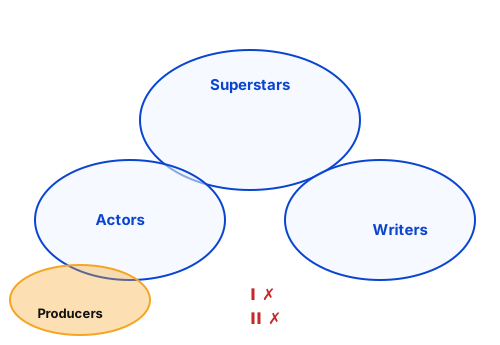
Concept: Two 'some' (particular) statements together never give a definite conclusion.

  1. (I) superstars–actors and actors–producers are both 'some' → no definite link superstars–producers.
  2. (II) actors and writers are each linked only to superstars by 'some' → no definite link.
  3. A valid diagram exists in which both pairs stay apart, so neither conclusion is certain.

Trick: Some + Some = No conclusion. If every statement is 'some', any new pair (not given directly) fails.

Answer: (B) Neither conclusion (I) nor (II) follows.

अवधारणा: Particular + particular कथन मिलकर कभी पक्का परिणाम नहीं देते।

हल:

  1. (I) के लिए दोनों जोड़ने वाले कथन 'कुछ' वाले हैं, इसलिए सुपरस्टार व निर्माता का मेल पक्का नहीं।
  2. (II) में अभिनेता व लेखक दोनों सुपरस्टार के अलग हिस्सों में हो सकते हैं, इसलिए वह भी पक्का नहीं।
  3. एक वैध वेन चित्र में दोनों गलत ठहरते हैं → दोनों असिद्ध।

ट्रिक: कुछ + कुछ = कोई निष्कर्ष नहीं।

उत्तर: (B) न तो निष्कर्ष (I) और न ही निष्कर्ष (II) अनुसरण करता है।

SSC GDGeneral Intelligence & ReasoningSyllogism – all 'some' statementsSSC GD 2025 · 18 Feb Shift 3 →
Q1210.
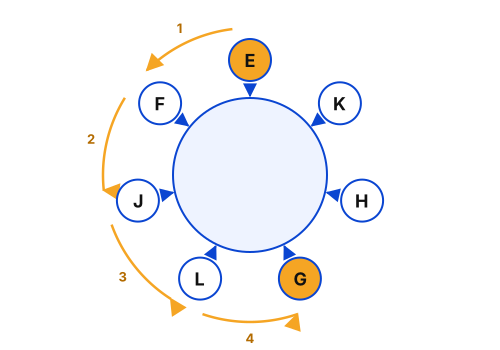
E, F, G, H, J, K and L are sitting around a circular table facing the centre of the table (but not necessarily in the same order). Only two people sit between K and J when counted from the right of K. Only three people sit between H and F when counted from the right of F. J sits to the immediate right of F. G sits to the immediate right of L.
Who sits fourth to the right of E ?
E, F, G, H, J, K और L एक वृत्ताकार मेज़ के चारों ओर मेज़ के केंद्र की ओर मुख करके बैठे हैं (आवश्यक नहीं कि इसी क्रम में)। K के दाईं ओर से गिनने पर K और J के बीच केवल दो व्यक्ति बैठे हैं। F के दाईं ओर से गिनने पर H और F के बीच केवल तीन व्यक्ति बैठे हैं। J, F के ठीक दाईं ओर बैठा है। G, L के ठीक दाईं ओर बैठा है।
E के दाईं ओर चौथे स्थान पर कौन बैठा है?
  1. AF
  2. BG
  3. CH
  4. DL
Show answer

Concept: When facing the centre, 'right' means moving anticlockwise; build the circle by going right from one person.

  1. Start at F; J is immediately right of F.
  2. Three people between F and H (counting right from F) → F, J, _, _, H; L–G pair (G right of L) fills it: F, J, L, G, H.
  3. Two people between K and J counting right from K → K after H, then E, then F: order F, J, L, G, H, K, E.
  4. From E going right: F(1), J(2), L(3), G(4).

Trick: In a 7-seat circle, 4th to the right = 3rd to the left: left of E are K, H, G → G.

Answer: (B) G

अवधारणा: केंद्र की ओर मुख होने पर 'दायाँ' = वामावर्त (anticlockwise) दिशा।

हल:

  1. F से शुरू करें; J, F के ठीक दाएँ।
  2. F के दाएँ गिनने पर F और H के बीच तीन व्यक्ति → L, G का जोड़ा (G, L के दाएँ) भरता है: F, J, L, G, H
  3. K से दाएँ चलें तो J तक दो लोग चाहिए → K, H के बाद और E, K के बाद: पूरा घेरा F-J-L-G-H-K-E
  4. E से दाएँ: F(1), J(2), L(3), G(4)

ट्रिक: 7 लोगों के वृत्त में दाएँ चौथा = बाएँ तीसरा: E के बाएँ K, H, G → G।

उत्तर: (B) G

SSC GDGeneral Intelligence & ReasoningCircular seating – facing centreSSC GD 2025 · 18 Feb Shift 3 →
Q1211.
Based on the English alphabetical order, three of the following four letter-clusters are alike in a certain way and thus form a group. Which letter-cluster DOES NOT belong to that group?
(Note: The odd man out is not based on the number of consonants/vowels or their position in the letter-cluster.)
अंग्रेजी वर्णमाला क्रम के आधार पर, निम्नलिखित चार अक्षर-समूहों में से तीन एक निश्चित प्रकार से समान हैं और इस प्रकार एक समूह बनाते हैं। वह अक्षर-समूह चुनिए जो उस समूह से संबंधित नहीं है।
(नोट: विषम पद ज्ञात करने का आधार अक्षर-समूह में व्यंजनों/स्वरों की संख्या अथवा उनका स्थान नहीं है।)
  1. AKAQ
  2. BRHX
  3. CWMC
  4. DQEU
Show answer

Concept: Find the gaps between letters using alphabet positions.

  1. KAQ: 11 → 1 (−10) → 17 (+16).
  2. RHX: 18 → 8 (−10) → 24 (+16).
  3. WMC: 23 → 13 (−10) → 3 (+16, wrapping after Z).
  4. QEU: 17 → 5 (−12) → 21 (+16) ✗ – first gap differs.

Trick: Compare only the first gap: K−A, R−H, W−M are all 10; Q−E is 12 → odd one.

Answer: (D) QEU

अवधारणा: अक्षरों की वर्णमाला स्थिति से अंतर निकालें।

हल:

  1. KAQ: 11 → 1 (−10) → 17 (+16)
  2. RHX: 18 → 8 (−10) → 24 (+16)
  3. WMC: 23 → 13 (−10) → 3 (+16, Z के बाद फिर A से)
  4. QEU: 17 → 5 (−12) → 21 (+16) ✗

ट्रिक: केवल पहला अंतर देखें: K–A, R–H, W–M = 10; Q–E = 12 → अलग।

उत्तर: (D) QEU

SSC GDGeneral Intelligence & ReasoningOdd one out – letter clustersSSC GD 2025 · 18 Feb Shift 3 →
Q1212.
ADGI is related to BFJM in a certain way based on the English alphabetical order. In the same way, EHLN is related to FJOR. To which of the given options is GKPQ related, following the same logic?
अंग्रेजी वर्णमाला क्रम के आधार पर ADGI एक निश्चित प्रकार से BFJM से संबंधित है। उसी प्रकार, EHLN, FJOR से संबंधित है। दिए गए विकल्पों में से इसी तर्क का अनुसरण करते हुए GKPQ किससे संबंधित है?
  1. APQGK
  2. BHMSU
  3. CHLQR
  4. DIMRS
Show answer

Concept: Each letter shifts forward by its position number.

  1. ADGI → BFJM: +1, +2, +3, +4.
  2. EHLN → FJOR: same steps ✓.
  3. Apply to GKPQ: G→H (+1), K→M (+2), P→S (+3), Q→U (+4) → HMSU.

Trick: First letter G+1 = H leaves (b) and (c); second letter K+2 = M picks (b).

Answer: (B) HMSU

अवधारणा: हर अक्षर अपने स्थान-क्रमांक जितना आगे बढ़ता है।

हल:

  1. ADGI → BFJM: +1, +2, +3, +4
  2. EHLN → FJOR: वही नियम ✓
  3. GKPQ पर लगाएँ: G→H (+1), K→M (+2), P→S (+3), Q→U (+4) → HMSU

ट्रिक: G+1 = H से (b), (c) बचे; K+2 = M से (b) तय।

उत्तर: (B) HMSU

SSC GDGeneral Intelligence & ReasoningLetter analogy – +1, +2, +3, +4SSC GD 2025 · 18 Feb Shift 3 →
Q1213.
In a certain code language, 'DSBQCA' is coded as '4' and 'SJTB' is coded as '2'. What is the code for 'XTPLIKAE' in the given language?
एक निश्चित कूट भाषा में 'DSBQCA' को '4' के रूप में तथा 'SJTB' को '2' के रूप में कूटबद्ध किया जाता है। उसी भाषा में 'XTPLIKAE' का कूट क्या होगा?
  1. A7
  2. B8
  3. C6
  4. D5
Show answer

Concept: Code = (number of letters) − 2.

  1. DSBQCA has 6 letters → 6 − 2 = 4 ✓.
  2. SJTB has 4 letters → 4 − 2 = 2 ✓.
  3. XTPLIKAE has 8 letters → 8 − 2 = 6.

Trick: When codes are small single numbers and words are random letters, first try the letter count.

Answer: (C) 6

अवधारणा: कोड = अक्षरों की संख्या − 2

हल:

  1. DSBQCA में 6 अक्षर → 6 − 2 = 4 ✓
  2. SJTB में 4 अक्षर → 4 − 2 = 2 ✓
  3. XTPLIKAE में 8 अक्षर → 8 − 2 = 6

ट्रिक: कोड छोटी संख्या हो और शब्द बेतरतीब हों, तो पहले अक्षर गिनें।

उत्तर: (C) 6

SSC GDGeneral Intelligence & ReasoningCoding – letter count basedSSC GD 2025 · 18 Feb Shift 3 →
Q1214.
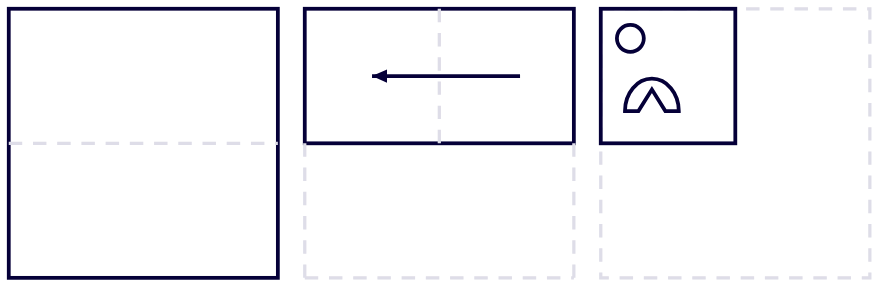
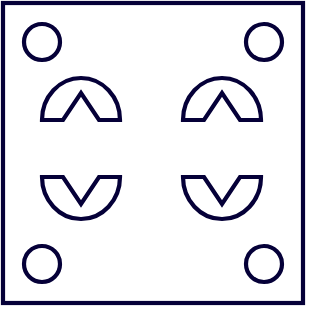
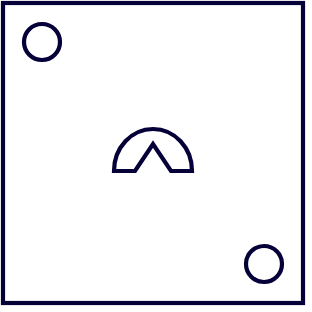
A paper is folded and cut as shown below. How will it appear when unfolded?
figure
एक कागज़ को मोड़कर नीचे दर्शाए अनुसार काटा जाता है। खोलने पर वह कैसा दिखाई देगा?
figure
  1. Afigure
  2. Bfigure
  3. Cfigure
  4. Dfigure
Show answer

Concept: Every cut on a sheet folded twice appears 4 times on opening, as mirror images across each fold line.

  1. Two folds (horizontal, then vertical) → 4 layers, so each cut repeats in all 4 quarters.
  2. The circle cut at the folded corner → one circle near each of the 4 corners.
  3. The arch → 4 arches; the two in the lower half are flipped (mirror of the upper half).
  4. Only option (a) shows 4 circles and 4 correctly mirrored arches.

Trick: Count first: 2 folds = 4 copies of each cut. Reject options with fewer shapes, then check mirror direction.

Answer: (A) Option figure (a)

अवधारणा: दो बार मोड़े गए कागज़ पर हर कट खोलने पर 4 बार, मोड़-रेखा के दर्पण-प्रतिबिंब के रूप में दिखता है।

हल:

  1. दो मोड़ → 4 परतें, इसलिए हर कट चारों भागों में आएगा।
  2. कोने पर कटा वृत्त → चारों कोनों पर एक-एक वृत्त।
  3. मेहराब (arch) → 4; नीचे के आधे भाग वाले दो उलटे (दर्पण) होंगे।
  4. केवल (a) में 4 वृत्त और सही दिशा वाले 4 मेहराब हैं।

ट्रिक: पहले गिनती करें: 2 मोड़ = हर कट की 4 प्रतियाँ; कम आकृति वाले विकल्प हटा दें।

उत्तर: (A) विकल्प आकृति (a)

SSC GDGeneral Intelligence & ReasoningPaper folding and cuttingSSC GD 2025 · 18 Feb Shift 3 →
Q1215.
What should come in place of the question mark (?) in the given series based on the English alphabetical order? DDI BBD ZZY XXT?
अंग्रेजी वर्णमाला क्रम के आधार पर दी गई शृंखला में प्रश्न चिह्न (?) के स्थान पर क्या आना चाहिए? DDI BBD ZZY XXT?
  1. AVVQ
  2. BVVO
  3. CVVR
  4. DVVP
Show answer

Concept: Treat each letter position of the term as a separate series.

  1. 1st letters: D, B, Z, X → −2 each → V.
  2. 2nd letter = 1st letter → V.
  3. 3rd letters: I, D, Y, T → −5 each → O.
  4. Next term = VVO.

Trick: All options start with VV, so only the third letter matters: T − 5 = O.

Answer: (B) VVO

अवधारणा: हर पद के अक्षरों के स्थान को अलग-अलग श्रृंखला मानें।

हल:

  1. पहले अक्षर: D, B, Z, X → हर बार −2 → V
  2. दूसरा अक्षर = पहला अक्षर → V
  3. तीसरे अक्षर: I, D, Y, T → हर बार −5 → O
  4. अगला पद = VVO

ट्रिक: सभी विकल्प VV से शुरू हैं; केवल तीसरा अक्षर देखें: T − 5 = O।

उत्तर: (B) VVO

SSC GDGeneral Intelligence & ReasoningLetter series – column-wise stepsSSC GD 2025 · 18 Feb Shift 3 →
Q1216.
KB 23 is related to SK 50 in a certain way. In the same way, BP 12 is related to JY 39. To which of the given options is MH 31 related, following the same logic?
KB 23 एक निश्चित प्रकार से SK 50 से संबंधित है। उसी प्रकार, BP 12, JY 39 से संबंधित है। दिए गए विकल्पों में से इसी तर्क का अनुसरण करते हुए MH 31 किससे संबंधित है?
  1. ATQ 58
  2. BUP 57
  3. CVR 56
  4. DUQ 58
Show answer

Concept: Letters move by fixed steps and the number increases by a fixed value.

  1. KB → SK: K+8 = S, B+9 = K; BP → JY: B+8 = J, P+9 = Y.
  2. Numbers: 23 + 27 = 50, 12 + 27 = 39.
  3. MH 31 → M+8 = U, H+9 = Q, 31 + 27 = 58 → UQ 58.

Trick: Number part alone: 31 + 27 = 58 leaves (a) and (d); first letter M+8 = U picks (d).

Answer: (D) UQ 58

अवधारणा: अक्षर निश्चित अंतर से आगे बढ़ते हैं और संख्या में निश्चित मान जुड़ता है।

हल:

  1. KB → SK: K+8 = S, B+9 = K; BP → JY: B+8 = J, P+9 = Y
  2. संख्या: 23 + 27 = 50, 12 + 27 = 39
  3. MH 31 → M+8 = U, H+9 = Q, 31 + 27 = 58 → UQ 58

ट्रिक: केवल संख्या से 58 वाले (a), (d) बचे; M+8 = U से (d)।

उत्तर: (D) UQ 58

SSC GDGeneral Intelligence & ReasoningLetter-number analogySSC GD 2025 · 18 Feb Shift 3 →
Q1217.
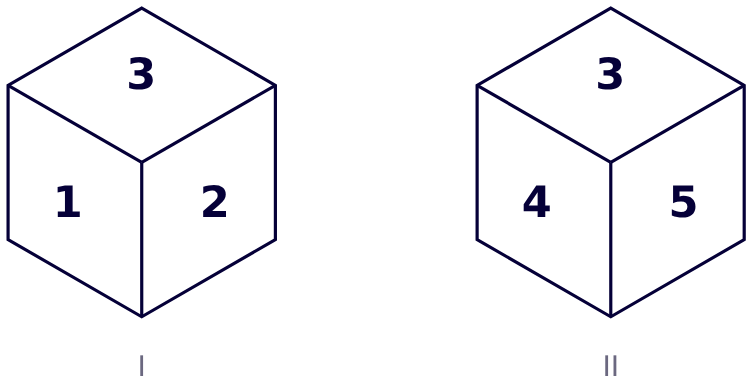
Two different positions of the same dice are given below. Which is the number on the face opposite to the face containing 6 ?
figure
एक ही पासे की दो भिन्न स्थितियाँ नीचे दी गई हैं। 6 वाले फलक के सम्मुख फलक पर कौन-सी संख्या है?
figure
  1. A3
  2. B5
  3. C2
  4. D4
Show answer

Concept: Faces adjacent to a face can never be opposite to it.

  1. 3 appears on top in both positions → same face, the dice only rotated around it.
  2. 1, 2 (first view) and 4, 5 (second view) are all side faces touching 3.
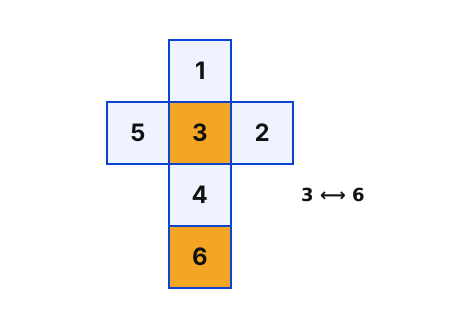
  3. So none of 1, 2, 4, 5 is opposite 3; the only face left, 6, is opposite 3.

Trick: List the 4 numbers seen next to a common face; the missing sixth number is opposite it.

Answer: (A) 3

अवधारणा: किसी फलक के आसन्न (साथ लगे) फलक कभी उसके विपरीत नहीं होते।

हल:

  1. दोनों स्थितियों में 3 ऊपर है → पासा उसी के चारों ओर घूमा है।
  2. 1, 2 और 4, 5 सभी 3 के आसन्न फलक हैं।
  3. बचा हुआ फलक 6 ही 3 के विपरीत होगा।

ट्रिक: उभयनिष्ठ फलक के साथ दिखे 4 अंक लिखें; जो छठा अंक नहीं दिखा, वही विपरीत है।

उत्तर: (A) 3

SSC GDGeneral Intelligence & ReasoningDice – common faceSSC GD 2025 · 18 Feb Shift 3 →
Q1218.
In a certain code language, 'NFTBZ' is coded as '20' and 'ZOQ' is coded as '12'. What is the code for 'GZFESITY' in the given language?
एक निश्चित कूट भाषा में 'NFTBZ' को '20' के रूप में तथा 'ZOQ' को '12' के रूप में कूटबद्ध किया जाता है। उसी भाषा में 'GZFESITY' का कूट क्या होगा?
  1. A22
  2. B37
  3. C28
  4. D32
Show answer

Concept: Code=4×(number of letters).

  1. NFTBZ: 5 letters → 5×4=20 ✓.
  2. ZOQ: 3 letters → 3×4=12 ✓.
  3. GZFESITY: 8 letters → 8×4=32.

Trick: Both codes are multiples of 4 and of the letter count – divide code by length to find the multiplier quickly.

Answer: (D) 32

अवधारणा: कोड=4×अक्षरों की संख्या

हल:

  1. NFTBZ: 5 अक्षर → 5×4=20 ✓
  2. ZOQ: 3 अक्षर → 3×4=12 ✓
  3. GZFESITY: 8 अक्षर → 8×4=32

ट्रिक: कोड÷अक्षर-संख्या=गुणक (20÷5=4) — तुरंत नियम मिल जाता है।

उत्तर: (D) 32

SSC GDGeneral Intelligence & ReasoningCoding – letter count × 4SSC GD 2025 · 18 Feb Shift 3 →
Q1219.
In a certain code language, 'A + B' means 'A is the daughter of B', 'A − B' means 'A is the brother of B', 'A × B' means 'A is the wife of B' and 'A ÷ B' means 'A is the father of B'. Based on the above, how is P related to T if 'P + Q × R ÷ S − T'?
एक निश्चित कूट भाषा में 'A + B' का अर्थ है 'A, B की पुत्री है', 'A − B' का अर्थ है 'A, B का भाई है', 'A × B' का अर्थ है 'A, B की पत्नी है' तथा 'A ÷ B' का अर्थ है 'A, B का पिता है'। उपर्युक्त के आधार पर, यदि 'P + Q × R ÷ S − T' है, तो P, T से किस प्रकार संबंधित है?
  1. ADaughterपुत्री
  2. BWifeपत्नी
  3. CSisterबहन
  4. DMotherमाता
Show answer

Concept: Decode each symbol one by one and link the family members.

  1. P + Q: P is daughter of Q (P is female).
  2. Q × R: Q is wife of R → Q, R are P's parents.
  3. R ÷ S: R is father of S → S is P's sibling.
  4. S − T: S is brother of T → T is also a child of R and Q.
  5. So P (female) is the sister of T.

Trick: Gender of P is fixed at the first symbol ('daughter'); siblings via the same father → sister.

Answer: (C) Sister

अवधारणा: हर चिह्न को क्रम से खोलें और परिवार का चित्र बनाएँ।

हल:

  1. P + Q: P, Q की बेटी (P स्त्री)
  2. Q × R: Q, R की पत्नी → Q और R, P के माता-पिता
  3. R ÷ S: R, S का पिता → S, P का भाई/बहन
  4. S − T: S, T का भाई → T भी R-Q की संतान
  5. अतः P, T की बहन है।

ट्रिक: पहले चिह्न से ही P का लिंग (स्त्री) तय हो जाता है; एक ही पिता की संतानें → बहन।

उत्तर: (C) बहन

SSC GDGeneral Intelligence & ReasoningCoded blood relationSSC GD 2025 · 18 Feb Shift 3 →
Q1220.
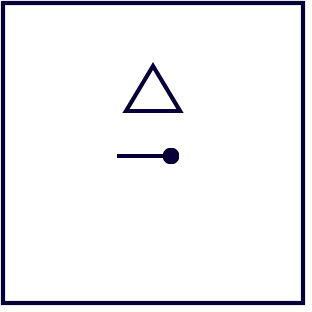
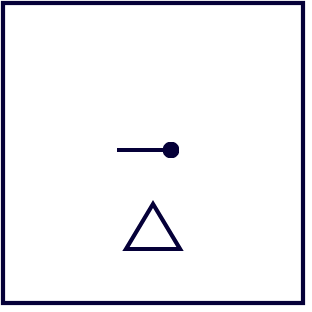
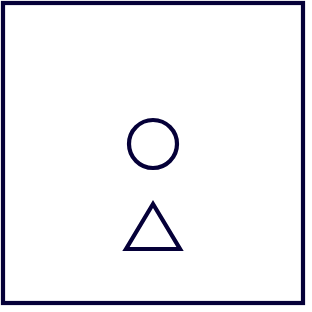
Select the figure from among the given options that can replace the question mark (?) in the following series.
figure
दिए गए विकल्पों में से उस आकृति का चयन कीजिए, जो निम्नलिखित शृंखला में प्रश्न चिह्न (?) के स्थान पर आ सकती है।
figure
  1. Afigure
  2. Bfigure
  3. Cfigure
  4. Dfigure
Show answer

Concept: Track one element at a time: its position changes by a fixed turn each step.

  1. The small triangle goes top → left → bottom → right: a 90° anticlockwise move each step.
  2. Next step: the triangle returns to the top, with the other symbol below it.
  3. The symbols themselves stay upright and a new symbol appears each time.
  4. Option (d) alone matches: triangle up, fresh upright circle under it.

Trick: Fix the triangle's position first – it eliminates options (b) and (c) at once.

Answer: (D) Option figure (d)

अवधारणा: एक-एक तत्व को अलग से देखें; उसकी स्थिति हर चरण में निश्चित घुमाव से बदलती है।

हल:

  1. छोटा त्रिभुज ऊपर → बाएँ → नीचे → दाएँ जाता है: हर बार 90° वामावर्त।
  2. अगली आकृति में त्रिभुज फिर ऊपर और दूसरा चिह्न उसके नीचे।
  3. चिह्न सीधे खड़े रहते हैं और हर बार नया चिह्न आता है।
  4. केवल (d) में त्रिभुज ऊपर और नीचे नया सीधा चिह्न (वृत्त) है।

ट्रिक: पहले त्रिभुज की स्थिति तय करें — (b) और (c) तुरंत हट जाते हैं।

उत्तर: (D) विकल्प आकृति (d)

SSC GDGeneral Intelligence & ReasoningFigure series – rotating positionSSC GD 2025 · 18 Feb Shift 3 →