Question bank

Q&A: practice questions with answers

Search questions on any topic. Filter by exam category, exam, subject and topic, try the question, then open the answer and explanation.

Courses – airGurukul

4,200 questions found.

Q1301.
Based on the English alphabetical order, three of the following four letter-clusters are alike in a certain way and thus form a group. Which letter-cluster DOES NOT belong to that group? (Note: The odd one out is not based on the number of consonants/vowels or their position in the letter-cluster.)
अंग्रेजी वर्णमाला क्रम के आधार पर, निम्नलिखित चार अक्षर-समूहों में से तीन एक निश्चित प्रकार से समान हैं और इस प्रकार एक समूह बनाते हैं। कौन-सा अक्षर-समूह उस समूह से संबंधित नहीं है? (नोट: विषम पद, अक्षर-समूह में व्यंजनों/स्वरों की संख्या या उनके स्थान पर आधारित नहीं है।)
  1. ALIM
  2. BBYC
  3. CQNR
  4. DIGJ
Show answer

Concept: Find the gap pattern (first→second, second→third) that three clusters share.

  1. LIM: L(12)→I(9) = −3, I(9)→M(13) = +4.
  2. BYC: B→Y = −3 (wrap Z, Y), Y→C = +4. QNR: Q(17)→N(14) = −3, N→R = +4.
  3. IGJ: I(9)→G(7) = −2, G→J = +3 – different pattern.

Trick: Check only the middle letter against the first: three clusters move back 3, one moves back 2 – that is the odd one.

Answer: (D) IGJ

अवधारणा: तीन समूहों में अक्षरों के बीच का अंतर (पहला→दूसरा, दूसरा→तीसरा) एक जैसा होगा।

  1. LIM: L(12)→I(9) = −3, I→M(13) = +4.
  2. BYC: B→Y = −3, Y→C = +4; QNR: Q(17)→N(14) = −3, N→R = +4.
  3. IGJ: I(9)→G(7) = −2, G→J = +3 – पैटर्न अलग।

ट्रिक: सिर्फ पहले और बीच वाले अक्षर का अंतर देखें – तीन में −3 है, IGJ में −2।

उत्तर: (D) IGJ

SSC GDGeneral Intelligence & ReasoningOdd one out – letter gapsSSC GD 2025 · 18 Feb Shift 2 →
Q1302.
Select the figure from among the given options that can replace the question mark (?) in the following series.
figure
दिए गए विकल्पों में से उस आकृति का चयन कीजिए जो निम्नलिखित शृंखला में प्रश्नवाचक चिह्न (?) का स्थान ले सकती है।
figure
  1. Afigure
  2. Bfigure
  3. Cfigure
  4. Dfigure
Show answer

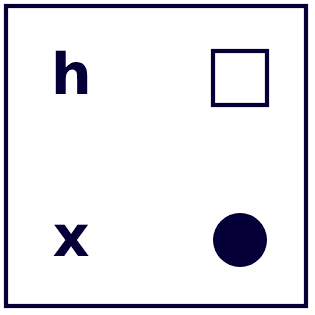
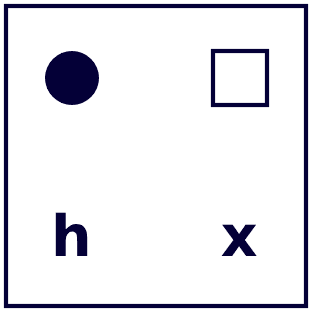
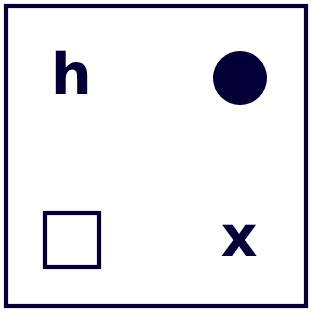
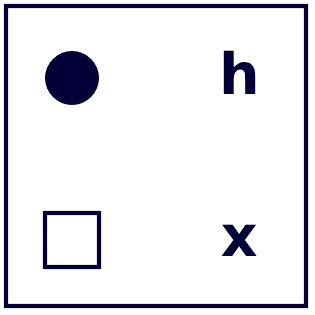
Concept: In many figure series two arrangements simply alternate: 1st = 3rd = 5th, 2nd = 4th.

  1. Compare the four corner symbols of figures 1 and 3 – they are identical (filled dot and h on top, hollow square and x below).
  2. Figures 2 and 4 form the second arrangement.
  3. So the 5th figure must be a copy of figure 1/3; only option (D) matches every corner.

Trick: When positions 1 and 3 look the same, skip the rule-hunting – just pick the option identical to figure 1.

Answer: (D)

अवधारणा: कई आकृति श्रृंखलाओं में दो व्यवस्थाएँ बारी-बारी आती हैं: 1, 3, 5 एक जैसी; 2, 4 एक जैसी।

  1. आकृति 1 और 3 के चारों कोनों के चिह्न समान हैं (ऊपर भरा बिंदु और h, नीचे खाली वर्ग और x)।
  2. आकृति 2 और 4 दूसरी व्यवस्था हैं।
  3. अतः 5वीं आकृति = आकृति 1; हर कोना केवल विकल्प (D) में मेल खाता है।

ट्रिक: जब 1 और 3 एक जैसी हों, तो सीधे आकृति 1 जैसा विकल्प चुनें।

उत्तर: (D)

SSC GDGeneral Intelligence & ReasoningFigure series – alternating patternSSC GD 2025 · 18 Feb Shift 2 →
Q1303.
In a certain code language, 'CALF' is coded as '7904' and 'FACE' is coded as '0489'. What is the code for ' E ' in the given code language ?
एक निश्चित कूट भाषा में, 'CALF' को '7904' तथा 'FACE' को '0489' के रूप में कूटबद्ध किया जाता है। दी गई कूट भाषा में ' E ' का कूट क्या होगा?
  1. A0
  2. B4
  3. C9
  4. D8
Show answer

Concept: Letters common to two words take the digits common to both codes.

  1. CALF = 7904, FACE = 0489.
  2. Common letters C, A, F ↔ common digits 9, 0, 4.
  3. Left-over letter of FACE is E and left-over digit of 0489 is 8.
  4. So E = 8 (and L = 7).

Trick: Strike out shared letters and shared digits; the single survivors pair up directly.

Answer: (D) 8

अवधारणा: दोनों शब्दों के समान अक्षरों का कोड दोनों कोडों के समान अंक होते हैं।

  1. CALF = 7904, FACE = 0489.
  2. समान अक्षर C, A, F ↔ समान अंक 9, 0, 4.
  3. FACE में बचा अक्षर E और 0489 में बचा अंक 8.
  4. अतः E = 8 (और L = 7)।

ट्रिक: समान अक्षर और समान अंक काट दें – जो अकेले बचें, वही आपस में जोड़ी हैं।

उत्तर: (D) 8

SSC GDGeneral Intelligence & ReasoningCoding – common letters methodSSC GD 2025 · 18 Feb Shift 2 →
Q1304.
XUYZ is related to WTXY in a certain way based on the English alphabetical order. In the same way, EBFG is related to DAEF. To which of the given options is DAEF related, following the same logic?
अंग्रेजी वर्णमाला क्रम के आधार पर XUYZ एक निश्चित प्रकार से WTXY से संबंधित है। उसी प्रकार, EBFG, DAEF से संबंधित है। उसी तर्क का अनुसरण करते हुए, DAEF दिए गए विकल्पों में से किससे संबंधित है?
  1. ACYCE
  2. BCACH
  3. CCZCE
  4. DCZDE
Show answer

Concept: Find the shift applied to every letter and repeat it.

  1. XUYZ → WTXY: X−1 = W, U−1 = T, Y−1 = X, Z−1 = Y.
  2. EBFG → DAEF also uses −1 on each letter.
  3. DAEF −1: D→C, A→Z (wrap-around), E→D, F→E = CZDE.

Trick: Remember A − 1 = Z. Only options with Z in 2nd place survive (C, D); then E−1 = D picks CZDE.

Answer: (D) CZDE

अवधारणा: हर अक्षर पर लगा बदलाव ढूँढकर वही दोहराएँ।

  1. XUYZ → WTXY: हर अक्षर में −1.
  2. EBFG → DAEF में भी −1.
  3. DAEF −1: D→C, A→Z (घूमकर), E→D, F→E = CZDE.

ट्रिक: A − 1 = Z याद रखें; दूसरे स्थान पर Z वाले विकल्प (C, D) बचते हैं, फिर E−1 = D से CZDE.

उत्तर: (D) CZDE

SSC GDGeneral Intelligence & ReasoningLetter analogy – each letter −1SSC GD 2025 · 18 Feb Shift 2 →
Q1305.
USTD is related to VUWH in a certain way based on the English alphabetical order. In the same way, PAVG is related to QCYK. To which of the given options is ZJOU related, following the same logic?
अंग्रेजी वर्णमाला क्रम के आधार पर USTD एक निश्चित प्रकार से VUWH से संबंधित है। उसी प्रकार, PAVG, QCYK से संबंधित है। उसी तर्क का अनुसरण करते हुए, ZJOU दिए गए विकल्पों में से किससे संबंधित है?
  1. ACKSZ
  2. BCMQY
  3. CBHRX
  4. DALRY
Show answer

Concept: When one common shift fails, check each position separately.

  1. U→V +1, S→U +2, T→W +3, D→H +4.
  2. PAVG → QCYK: same +1, +2, +3, +4.
  3. ZJOU: Z+1 = A, J+2 = L, O+3 = R, U+4 = Y → ALRY.

Trick: Z+1 = A, so only an option starting with A can be right – that is (D) straight away.

Answer: (D) ALRY

अवधारणा: एक समान बदलाव न मिले तो हर स्थान का अलग-अलग अंतर देखें।

  1. U→V +1, S→U +2, T→W +3, D→H +4.
  2. PAVG → QCYK में भी +1, +2, +3, +4.
  3. ZJOU: Z+1 = A, J+2 = L, O+3 = R, U+4 = Y → ALRY.

ट्रिक: Z+1 = A होता है; A से शुरू होने वाला केवल विकल्प (D) है।

उत्तर: (D) ALRY

SSC GDGeneral Intelligence & ReasoningLetter analogy – +1, +2, +3, +4SSC GD 2025 · 18 Feb Shift 2 →
Q1306.
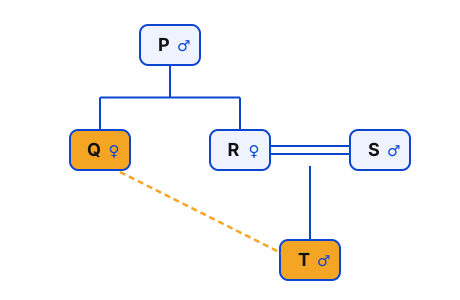
Q is the daughter of P. P is the father of R. R is the wife of S. T is the son of S. How is Q related to T ?
Q, P की पुत्री है। P, R का पिता है। R, S की पत्नी है। T, S का पुत्र है। Q, T से किस प्रकार संबंधित है?
  1. ASisterबहन
  2. BMother's sisterमाता की बहन
  3. CMotherमाता
  4. DMother's motherमाता की माता
Show answer

Concept: Build the family tree one link at a time.

  1. P is father of Q (daughter) and of R → Q and R are sisters.
  2. R is wife of S and T is son of S → R is T's mother.
  3. Q is the sister of T's mother.

Yaad rakhein: Mother's sister = maternal aunt (mausi); father's sister = bua.

Answer: (B) Mother's sister

अवधारणा: एक-एक संबंध जोड़कर परिवार वृक्ष बनाएँ।

  1. P, Q (बेटी) और R दोनों के पिता हैं → Q और R बहनें।
  2. S की पत्नी R है; S का बेटा T है, तो T की माँ R हुई।
  3. अतः Q, T की माँ की बहन (मौसी) है।

याद रखें: माँ की बहन = मौसी; पिता की बहन = बुआ।

उत्तर: (B) माता की बहन

SSC GDGeneral Intelligence & ReasoningBlood relation – mother's sisterSSC GD 2025 · 18 Feb Shift 2 →
Q1307.
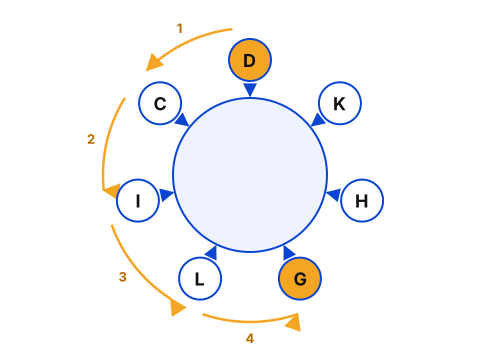
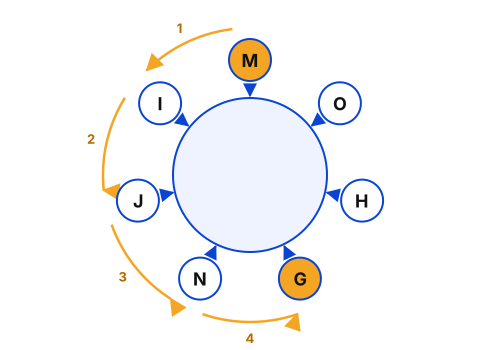
C, D, G, H, I, K and L are sitting around a circular table facing the centre of the table(but not necessarily in the same order). Only two people sit between K and I when counted from the right of K. Only three people sit between H and C when counted from the right of C. I sits to the immediate right of C. G sits to the immediate right of L. Who sits fourth to the right of D ?
C, D, G, H, I, K तथा L एक वृत्ताकार मेज़ के चारों ओर मेज़ के केंद्र की ओर मुख करके बैठे हैं (आवश्यक नहीं कि इसी क्रम में)। K के दाईं ओर से गिनने पर K तथा I के बीच केवल दो व्यक्ति बैठे हैं। C के दाईं ओर से गिनने पर H तथा C के बीच केवल तीन व्यक्ति बैठे हैं। I, C के ठीक दाईं ओर बैठा है। G, L के ठीक दाईं ओर बैठा है। D के दाईं ओर चौथे स्थान पर कौन बैठा है?
  1. AG
  2. BC
  3. CI
  4. DL
Show answer

Concept: Facing the centre, 'right' means anticlockwise. Number seats to C's right: C = 0.

  1. I is immediate right of C → I = 1. H has 3 people between from C's right → H = 4.
  2. Two people between K and I from K's right → I is 3rd right of K → K = 1 − 3 = 5.
  3. Free seats 2, 3 take L, G (G right of L) → L = 2, G = 3; D = 6.
  4. 4th right of D: 6 + 4 = 10 → 10 − 7 = 3 → G.

Trick: Give seat numbers 0–6 and use (position + steps) mod 7 – no drawing needed.

Answer: (A) G

अवधारणा: केंद्र की ओर मुख हो तो 'दाएँ' = वामावर्त (anticlockwise)। C के दाएँ सीट नंबर दें: C = 0.

  1. I, C के ठीक दाएँ → I = 1; H और C के बीच 3 → H = 4.
  2. K के दाएँ से K और I के बीच 2 → K = 5.
  3. बची सीट 2, 3 पर L, G (G, L के ठीक दाएँ) → L = 2, G = 3; D = 6.
  4. D के दाएँ चौथा: 6 + 4 = 10 → 10 − 7 = 3 → G.

ट्रिक: सीटों को 0–6 नंबर देकर (स्थान + कदम) में से 7 घटाएँ – चित्र की ज़रूरत नहीं।

उत्तर: (A) G

SSC GDGeneral Intelligence & ReasoningCircular seating – 7 personsSSC GD 2025 · 18 Feb Shift 2 →
Q1308.
Select the combination of letters that when sequentially placed in the blanks of the given series will complete the series.
PMS _ _ P _ _ T V _ M _ T V P M _ _ V
उस अक्षर-संयोजन का चयन कीजिए, जिसे दी गई शृंखला के रिक्त स्थानों में क्रमानुसार रखने पर शृंखला पूर्ण हो जाएगी।
PMS _ _ P _ _ T V _ M _ T V P M _ _ V
  1. AMVTSPSST
  2. BTVMSPSST
  3. CTVMSPTSS
  4. DTMVSPSST
Show answer

Concept: 20 places with 8 blanks; try a 5-letter block repeated 4 times.

  1. The given letters fit the block PMSTV.
  2. PMSTV | PMSTV | PMSTV | PMSTV.
  3. Blanks in order: T V M S P S S T.

Trick: First two blanks follow 'PMS', so they must be T, V → only options (B) and (C) remain; the last two blanks (before V) are S, T → (B).

Answer: (B) TVMSPSST

अवधारणा: 20 स्थान, 8 रिक्त; 5 अक्षरों का खंड 4 बार दोहराकर देखें।

  1. दिए अक्षर PMSTV खंड में फिट होते हैं।
  2. PMSTV | PMSTV | PMSTV | PMSTV.
  3. रिक्त क्रम: T V M S P S S T.

ट्रिक: PMS के बाद T, V आएँगे → केवल (B), (C) बचते हैं; अंत में V से पहले S, T → (B)।

उत्तर: (B) TVMSPSST

SSC GDGeneral Intelligence & ReasoningLetter series – repeating blockSSC GD 2025 · 18 Feb Shift 2 →
Q1309.
Read the given statements and conclusions carefully. Assuming that the information given in the statements is true, even if it appears to be at variance with commonly known facts, decide which of the given conclusions logically follow(s) from the statements.
Statements:
All cages are nests.
Some nests are houses.
No house is a den.
Conclusions:
(I): No cage is a den.
(II): Some houses are cages.
दिए गए कथनों और निष्कर्षों को ध्यानपूर्वक पढ़िए। यह मानते हुए कि कथनों में दी गई जानकारी सत्य है, चाहे वह सर्वज्ञात तथ्यों से भिन्न प्रतीत होती हो, निर्णय कीजिए कि दिए गए निष्कर्षों में से कौन-सा/से निष्कर्ष कथनों का तार्किक रूप से अनुसरण करता है/करते हैं।
कथन:
सभी पिंजरे घोंसले हैं।
कुछ घोंसले घर हैं।
कोई घर माँद नहीं है।
निष्कर्ष:
(I): कोई पिंजरा माँद नहीं है।
(II): कुछ घर पिंजरे हैं।
  1. ABoth conclusions (I) and (II) follow.निष्कर्ष (I) और (II) दोनों अनुसरण करते हैं।
  2. BOnly conclusion (II) follows.केवल निष्कर्ष (II) अनुसरण करता है।
  3. COnly conclusion (I) follows.केवल निष्कर्ष (I) अनुसरण करता है।
  4. DNeither conclusion (I) nor (II) follows.न तो निष्कर्ष (I) और न ही निष्कर्ष (II) अनुसरण करता है।
Show answer

Concept: Accept a conclusion only when every valid diagram supports it.

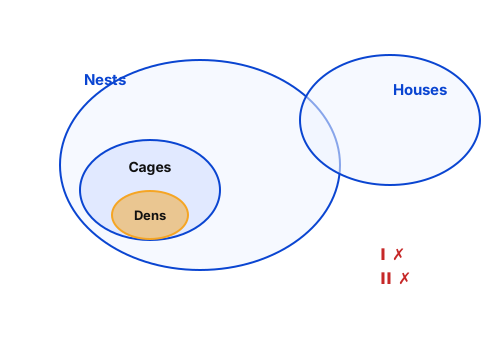
  1. Cages ⊂ Nests; Nests overlap Houses; Houses and Dens are separate.
  2. Dens have no link with Cages – dens may lie inside cages, so 'No cage is a den' (I) is not certain.
  3. The Nest–House overlap may lie outside the Cage circle, so 'Some houses are cages' (II) is not certain.

Trick: 'Some + All' in the wrong order or a 'No' about a third class gives no definite conclusion – look for a direct link; none here.

Answer: (D) Neither conclusion (I) nor (II) follows.

अवधारणा: निष्कर्ष तभी निकलता है जब वह हर संभव चित्र में सत्य हो।

  1. पिंजरे ⊂ घोंसले; घोंसले और घर आंशिक रूप से मिले; घर और मांद अलग।
  2. मांद का पिंजरों से कोई संबंध नहीं – मांद पिंजरों के अंदर भी हो सकती है, अतः (I) निश्चित नहीं।
  3. घोंसले–घर का साझा भाग पिंजरों से बाहर भी हो सकता है, अतः (II) निश्चित नहीं।

ट्रिक: दोनों वर्गों के बीच सीधा संबंध न हो तो 'कोई नहीं' या 'कुछ' वाला निष्कर्ष नहीं निकलता।

उत्तर: (D) न तो निष्कर्ष (I) और न ही निष्कर्ष (II) अनुसरण करता है।

SSC GDGeneral Intelligence & ReasoningSyllogism – 'some' and 'no'SSC GD 2025 · 18 Feb Shift 2 →
Q1310.
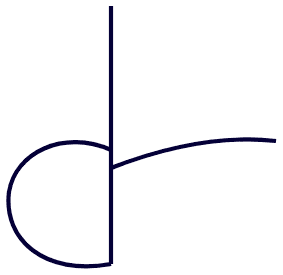
Select the option in which the given figure (X) is embedded (rotation is NOT allowed).
figure
(X)
उस विकल्प का चयन कीजिए, जिसमें दी गई आकृति (X) अंतर्निहित है (घुमाने की अनुमति नहीं है)।
figure
(X)
  1. Afigure
  2. Bfigure
  3. Cfigure
  4. Dfigure
Show answer

Concept: The hidden figure must appear in the same size and orientation (no rotation).

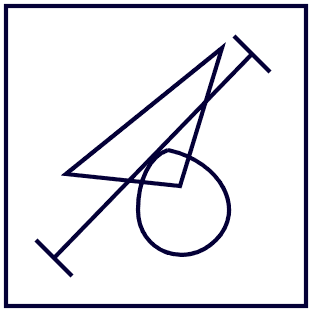
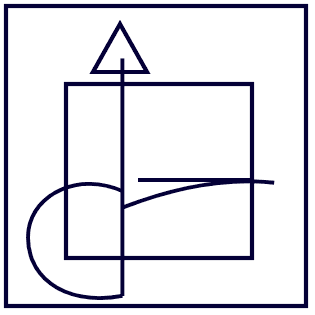
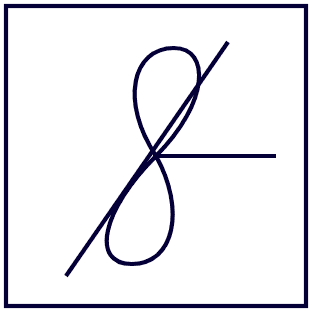
  1. Note the parts of (X): a vertical stroke, one loop at its lower-left and one long curve to the right.
  2. Option (B) contains exactly these parts in the same direction; the extra square and triangle are only drawn over it.
  3. (A) shows the shape tilted, (C) has the loop on the wrong side, (D) has an extra loop.

Trick: Pick one distinctive part (the single loop) and check its side and direction first – it eliminates most options at once.

Answer: (B)

अवधारणा: छिपी आकृति उसी आकार और उसी दिशा में होनी चाहिए (घुमाना मना है)।

  1. (X) के भाग: एक खड़ी रेखा, उसके नीचे-बाएँ एक लूप और दाईं ओर जाता एक लंबा वक्र।
  2. विकल्प (B) में ये सभी भाग उसी दिशा में हैं; वर्ग और त्रिभुज केवल ऊपर बने हैं।
  3. (A) में आकृति झुकी है, (C) में लूप गलत ओर, (D) में एक अतिरिक्त लूप है।

ट्रिक: सबसे अलग दिखने वाला भाग (लूप) चुनें और उसकी दिशा पहले जाँचें – अधिकतर विकल्प तुरंत हट जाते हैं।

उत्तर: (B)

SSC GDGeneral Intelligence & ReasoningEmbedded figureSSC GD 2025 · 18 Feb Shift 2 →
Q1311.
What should come in place of the question mark (?) in the given series based on the English alphabetical order ? EBF FCG GDH HEI ?
अंग्रेजी वर्णमाला क्रम के आधार पर दी गई शृंखला में प्रश्नवाचक चिह्न (?) के स्थान पर क्या आना चाहिए? EBF FCG GDH HEI ?
  1. AIKM
  2. BIJF
  3. CFIJ
  4. DIFJ
Show answer

Concept: Track each letter position of the clusters separately.

  1. 1st letters: E, F, G, H → I.
  2. 2nd letters: B, C, D, E → F.
  3. 3rd letters: F, G, H, I → J.
  4. Next term = IFJ.

Trick: Each term's 3rd letter = its 1st letter + 1 (E→F, F→G…). So after I comes J at the end → IFJ, not IJF.

Answer: (D) IFJ

अवधारणा: हर स्थान के अक्षर को अलग-अलग देखें।

  1. पहले अक्षर: E, F, G, H → I.
  2. दूसरे अक्षर: B, C, D, E → F.
  3. तीसरे अक्षर: F, G, H, I → J.
  4. अगला पद = IFJ.

ट्रिक: हर पद का तीसरा अक्षर = पहला अक्षर + 1; I के बाद अंत में J → IFJ (IJF नहीं)।

उत्तर: (D) IFJ

SSC GDGeneral Intelligence & ReasoningLetter series – positionwise +1SSC GD 2025 · 18 Feb Shift 2 →
Q1312.
G, H, I, J, M, N and O are sitting around a circular table facing the centre of the table (but not necessarily in the same order). Only two people sit between O and J when counted from the right of O. Only three people sit between H and I when counted from the right of I. J sits to the immediate right of I. G sits to the immediate right of N. Who sits fourth to the right of M?
G, H, I, J, M, N तथा O एक वृत्ताकार मेज़ के चारों ओर मेज़ के केंद्र की ओर मुख करके बैठे हैं (आवश्यक नहीं कि इसी क्रम में)। O के दाईं ओर से गिनने पर O तथा J के बीच केवल दो व्यक्ति बैठे हैं। I के दाईं ओर से गिनने पर H तथा I के बीच केवल तीन व्यक्ति बैठे हैं। J, I के ठीक दाईं ओर बैठा है। G, N के ठीक दाईं ओर बैठा है। M के दाईं ओर चौथे स्थान पर कौन बैठा है?
  1. AN
  2. BI
  3. CG
  4. DO
Show answer

Concept: Facing the centre, right = anticlockwise. Number seats to I's right: I = 0.

  1. J immediate right of I → J = 1; three between I and H from I's right → H = 4.
  2. J is 3rd to the right of O → O = 1 − 3 = 5.
  3. Seats 2, 3 → N, G (G right of N); M = 6.
  4. 4th right of M: 6 + 4 = 10 → 10 − 7 = 3 → G.

Trick: Same structure as the C-D-G-H question: seat numbers 0–6 and (seat + steps) mod 7.

Answer: (C) G

अवधारणा: केंद्र की ओर मुख – दाएँ = वामावर्त। I के दाएँ सीट नंबर दें: I = 0.

  1. J, I के ठीक दाएँ → J = 1; I और H के बीच 3 → H = 4.
  2. J, O के दाएँ तीसरा → O = 1 − 3 = 5.
  3. सीट 2, 3 पर N, G (G, N के ठीक दाएँ); M = 6.
  4. M के दाएँ चौथा: 6 + 4 = 10 → 10 − 7 = 3 → G.

ट्रिक: सीट नंबर 0–6 रखें और (सीट + कदम) में से 7 घटाएँ।

उत्तर: (C) G

SSC GDGeneral Intelligence & ReasoningCircular seating – 7 personsSSC GD 2025 · 18 Feb Shift 2 →
Q1313.
In a certain code language, 'FWOD' is coded as '23-6-14-25' and 'SINH' is coded as '10-20-15-21'. How is 'TYLB' coded in the given language?
एक निश्चित कूट भाषा में, 'FWOD' को '23-6-14-25' तथा 'SINH' को '10-20-15-21' के रूप में कूटबद्ध किया जाता है। दी गई भाषा में 'TYLB' को किस प्रकार कूटबद्ध किया जाएगा?
  1. A12-8-20-27
  2. B10-6-19-29
  3. C9-4-17-27
  4. D10-5-18-26
Show answer

Concept: Look for a fixed relation between each letter's position and its number.

  1. FWOD pairs (letter value & code): F 6 & 23, W 23 & 6, O 15 & 14, D 4 & 25 – each pair totals 29.
  2. SINH behaves the same way (S 19 & 10, and so on).
  3. Code = 29 − position. TYLB: T(20)→9, Y(25)→4, L(12)→17, B(2)→27.

Trick: Find just the first number: T(20) → 29 − 20 = 9; only option (C) starts with 9.

Answer: (C) 9-4-17-27

अवधारणा: अक्षर के स्थानीय मान और उसके कोड के बीच निश्चित संबंध खोजें।

  1. FWOD: F 6 & 23, W 23 & 6, O 15 & 14, D 4 & 25 – हर जोड़ी का योग 29.
  2. SINH में भी यही नियम।
  3. कोड = 29 − स्थानीय मान; TYLB: T(20)→9, Y(25)→4, L(12)→17, B(2)→27.

ट्रिक: केवल पहला अंक निकालें: T(20) → 9; 9 से शुरू होने वाला विकल्प केवल (C) है।

उत्तर: (C) 9-4-17-27

SSC GDGeneral Intelligence & ReasoningCoding – letter value + code = 29SSC GD 2025 · 18 Feb Shift 2 →
Q1314.
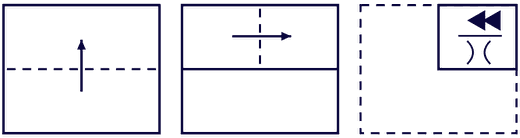
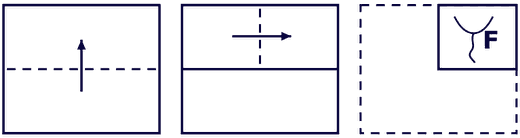
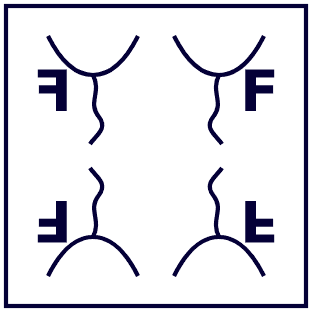
A paper is folded and punched as shown below. How will it appear when unfolded?
figure
एक कागज़ को नीचे दर्शाए अनुसार मोड़ा और छेदा जाता है। खोलने पर वह कैसा दिखाई देगा?
figure
  1. Afigure
  2. Bfigure
  3. Cfigure
  4. Dfigure
Show answer

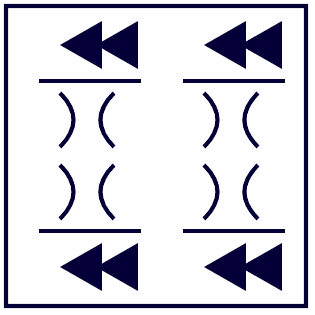
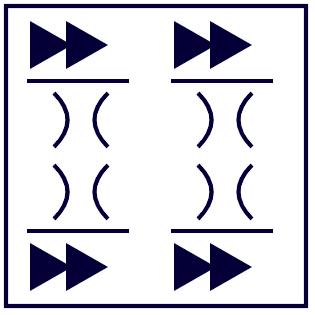
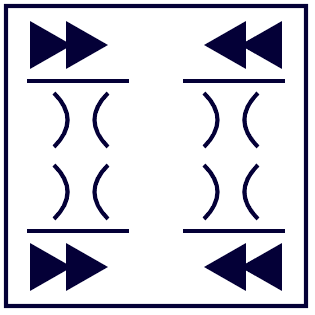
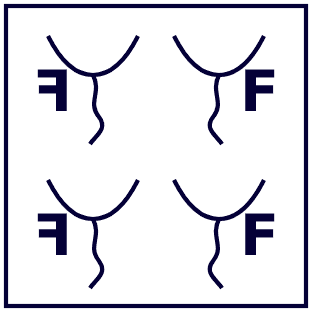
Concept: Unfold in reverse order; each opening creates a mirror image across the fold line.

  1. The sheet is folded bottom-to-top, then left-to-right, so the cut lies in the top-right quarter.
  2. Opening the vertical fold: the top-left quarter shows the left-right mirror (arrow-heads point the other way).
  3. Opening the horizontal fold: the bottom half is the up-down mirror of the top half.
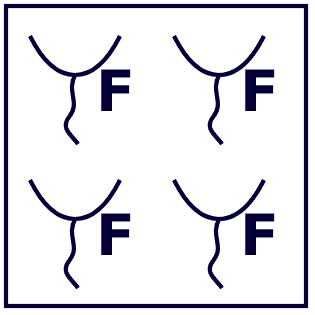
  4. Only option (C) shows both mirrorings correctly.

Trick: Final pattern must be symmetric about both fold lines – reject any option where all four marks face the same way.

Answer: (C)

अवधारणा: मोड़ उल्टे क्रम में खोलें; हर बार मोड़-रेखा के पार दर्पण प्रतिबिंब बनता है।

  1. कागज़ नीचे से ऊपर, फिर बाएँ से दाएँ मुड़ा – कटाव ऊपरी-दाएँ चौथाई में है।
  2. खड़ा मोड़ खोलने पर ऊपरी-बाएँ भाग में बाएँ-दाएँ उल्टा चित्र (तीर के सिरे उल्टी दिशा में)।
  3. आड़ा मोड़ खोलने पर नीचे का आधा भाग ऊपर का ऊपर-नीचे उल्टा चित्र।
  4. दोनों बातें केवल विकल्प (C) में सही हैं।

ट्रिक: अंतिम चित्र दोनों मोड़-रेखाओं के सापेक्ष सममित होगा – जहाँ चारों चिह्न एक ही दिशा में हों, वह विकल्प हटा दें।

उत्तर: (C)

SSC GDGeneral Intelligence & ReasoningPaper folding and punchingSSC GD 2025 · 18 Feb Shift 2 →
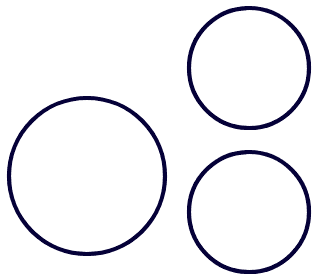
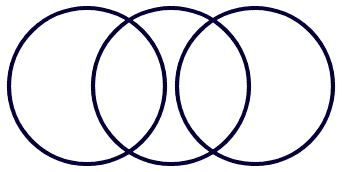
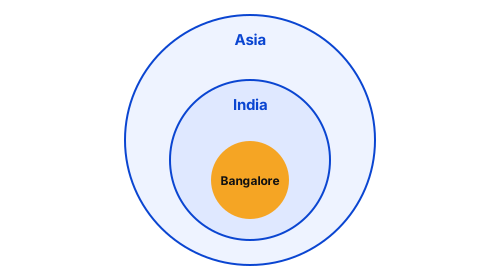
Q1315.
Select the Venn diagram that best illustrates the relationship between the following classes.
Asia, Bangalore, India
उस वेन आरेख का चयन कीजिए, जो निम्नलिखित वर्गों के बीच संबंध को सर्वोत्तम रूप से दर्शाता है।
एशिया, बेंगलुरु, भारत
  1. Afigure
  2. Bfigure
  3. Cfigure
  4. Dfigure
Show answer

Concept: If A is part of B and B is part of C, draw three circles one inside another.

  1. Bangalore is a city in India.
  2. India is a country in Asia.
  3. So Bangalore ⊂ India ⊂ Asia → three concentric circles, option (A).

Trick: City ⊂ Country ⊂ Continent is always the nested (concentric) pattern.

Answer: (A)

अवधारणा: यदि A, B का भाग है और B, C का भाग, तो तीन वृत्त एक-दूसरे के अंदर बनते हैं।

  1. बेंगलुरु, भारत का एक शहर है।
  2. भारत, एशिया का एक देश है।
  3. बेंगलुरु ⊂ भारत ⊂ एशिया → तीन संकेंद्री वृत्त, विकल्प (A)।

ट्रिक: शहर ⊂ देश ⊂ महाद्वीप हमेशा एक के अंदर एक वृत्त वाला चित्र देता है।

उत्तर: (A)

SSC GDGeneral Intelligence & ReasoningVenn diagram – nested classesSSC GD 2025 · 18 Feb Shift 2 →
Q1316.
What should come in place of the question mark (?) in the given series? 105 155 196 228 251 ?
दी गई शृंखला में प्रश्नवाचक चिह्न (?) के स्थान पर क्या आना चाहिए? 105 155 196 228 251 ?
  1. A258
  2. B265
  3. C280
  4. D272
Show answer

Concept: Check the differences between consecutive terms.

  1. Differences: 50, 41, 32, 23.
  2. Each difference is 9 less than the previous → next = 23 − 9 = 14.
  3. 251 + 14 = 265.

Trick: Differences 50, 41, 32, 23 all have digit-sum 5 and fall by 9 – the next is 14.

Answer: (B) 265

अवधारणा: क्रमागत पदों का अंतर देखें।

  1. अंतर: 50, 41, 32, 23.
  2. हर अंतर 9 कम होता है → अगला अंतर 14.
  3. 251 + 14 = 265.

ट्रिक: अंतरों 50, 41, 32, 23 का अंक-योग 5 है और ये 9 से घटते हैं – अगला 14.

उत्तर: (B) 265

SSC GDGeneral Intelligence & ReasoningNumber series – differences fall by 9SSC GD 2025 · 18 Feb Shift 2 →
Q1317.
What should come in place of the question mark (?) in the given series? 18 22 27 33 40 ?
दी गई शृंखला में प्रश्नवाचक चिह्न (?) के स्थान पर क्या आना चाहिए? 18 22 27 33 40 ?
  1. A47
  2. B48
  3. C50
  4. D49
Show answer

Concept: Differences increasing by 1 each step.

  1. Differences: 4, 5, 6, 7.
  2. Next difference = 8.
  3. 40 + 8 = 48.

Yaad rakhein: When differences rise 1, 2, 3… by one each, the series is quadratic – always check the first-difference row before anything else.

Answer: (B) 48

अवधारणा: अंतर हर बार 1 बढ़ रहा है।

  1. अंतर: 4, 5, 6, 7.
  2. अगला अंतर = 8.
  3. 40 + 8 = 48.

याद रखें: संख्या श्रृंखला में सबसे पहले क्रमागत अंतर लिखकर देखें – अधिकतर प्रश्न यहीं हल हो जाते हैं।

उत्तर: (B) 48

SSC GDGeneral Intelligence & ReasoningNumber series – differences +1SSC GD 2025 · 18 Feb Shift 2 →
Q1318.
The position(s) of how many letters will remain unchanged if each of the letters in the word ALTERING is arranged in reverse English alphabetical order?
यदि शब्द ALTERING के प्रत्येक अक्षर को अंग्रेजी वर्णमाला के विपरीत क्रम में व्यवस्थित किया जाए, तो कितने अक्षरों का स्थान अपरिवर्तित रहेगा?
  1. ATwoदो
  2. BZeroशून्य
  3. CThreeतीन
  4. DOneएक
Show answer

Concept: Rearrange the letters Z→A and compare position by position.

  1. Original word: ALTERING.
  2. Letters arranged Z→A: TRNLIGEA.
  3. Match column by column – 1st T≠A, 2nd R≠L … no column has the same letter.

Yaad rakhein: 'Position unchanged' means the same letter at the same serial number – write both rows one below the other and match column-wise.

Answer: (B) Zero

अवधारणा: अक्षरों को Z→A क्रम में लगाकर हर स्थान की तुलना करें।

  1. मूल शब्द: ALTERING.
  2. Z→A क्रम में: TRNLIGEA.
  3. कॉलम-दर-कॉलम मिलाएँ – पहला T≠A, दूसरा R≠L … किसी भी स्थान पर वही अक्षर नहीं।

याद रखें: 'स्थान अपरिवर्तित' का अर्थ है वही अक्षर उसी क्रमांक पर – दोनों पंक्तियाँ एक के नीचे एक लिखकर मिलाएँ।

उत्तर: (B) शून्य

SSC GDGeneral Intelligence & ReasoningLetter rearrangement – reverse orderSSC GD 2025 · 18 Feb Shift 2 →
Q1319.
If 'P' stands for '×', 'Q' stands for '÷', 'R' stands for '−' and 'S' stands for '+', then the resultant of which of the following would be 57?
यदि 'P' का अर्थ '×' है, 'Q' का अर्थ '÷' है, 'R' का अर्थ '−' है तथा 'S' का अर्थ '+' है, तो निम्नलिखित में से किसका परिणाम 57 होगा?
  1. A(160 R 10) S (30 Q 2) S (16 Q 2) R (16 Q 4) R 45
  2. B(160 Q 10) S (30 P 2) R (16 P 4) S 45
  3. C(160 Q 10) R (30 Q 2) S (16 P 4) R 45
  4. D(160 Q 10) R (30 P 4) S 45
Show answer

Concept: Replace P = ×, Q = ÷, R = −, S = + and simplify by BODMAS.

  1. Option (B): 160÷10=16; 30×2=60; 16×4=64.
  2. Add the plus terms: 16+60+45=121; then 121−64=57 ✓.
  3. Others: (A) = 124, (C) = 20, (D) = −59.

Trick: (D) has 30×4=120 against 16+45 – clearly negative; drop it first, then test the shorter option (B).

Answer: (B) (160 Q 10) S (30 P 2) R (16 P 4) S 45

अवधारणा: P = ×, Q = ÷, R = −, S = + रखकर BODMAS से हल करें।

  1. विकल्प (B): 160÷10=16; 30×2=60; 16×4=64.
  2. धन वाले पद: 16+60+45=121; फिर 121−64=57 ✓.
  3. बाकी: (A) = 124, (C) = 20, (D) = −59.

ट्रिक: (D) में 30×4=120 घटता है – उत्तर ऋणात्मक; इसे पहले हटाएँ।

उत्तर: (B) (160 Q 10) S (30 P 2) R (16 P 4) S 45

SSC GDGeneral Intelligence & ReasoningSymbol substitution – BODMASSSC GD 2025 · 18 Feb Shift 2 →
Q1320.
A paper is folded and punched as shown below. How will it appear when unfolded?
figure
एक कागज़ को नीचे दर्शाए अनुसार मोड़ा और छेदा जाता है। खोलने पर वह कैसा दिखाई देगा?
figure
  1. Afigure
  2. Bfigure
  3. Cfigure
  4. Dfigure
Show answer

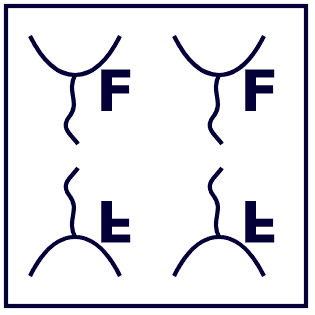
Concept: Unfold step by step; every unfold gives a mirror image of the cut across that fold.

  1. Folds: bottom up, then left to right → the cut sits in the top-right quarter.
  2. Undo the vertical fold: top-left gets the left-right mirror (the F-shaped mark reverses).
  3. Undo the horizontal fold: the lower half is the top half flipped upside down.
  4. Option (D) alone shows both mirrors.

Trick: Diagonally opposite quarters are 180° turns of each other – check one diagonal pair and you're done.

Answer: (D)

अवधारणा: मोड़ एक-एक करके खोलें; हर बार कटाव का दर्पण प्रतिबिंब बनता है।

  1. मोड़: नीचे से ऊपर, फिर बाएँ से दाएँ → कटाव ऊपरी-दाएँ चौथाई में।
  2. खड़ा मोड़ खोलें: ऊपरी-बाएँ भाग में बाएँ-दाएँ उल्टा चित्र (F जैसा चिह्न उल्टा)।
  3. आड़ा मोड़ खोलें: नीचे का आधा भाग ऊपर वाले का ऊपर-नीचे उल्टा रूप।
  4. दोनों बातें केवल (D) में हैं।

ट्रिक: आमने-सामने तिरछे (diagonal) चौथाई एक-दूसरे के 180° घुमाव होते हैं – एक जोड़ी जाँचें, उत्तर मिल जाएगा।

उत्तर: (D)

SSC GDGeneral Intelligence & ReasoningPaper folding and punchingSSC GD 2025 · 18 Feb Shift 2 →