Question bank

Q&A: practice questions with answers

Search questions on any topic. Filter by exam category, exam, subject and topic, try the question, then open the answer and explanation.

Courses – airGurukul

4,200 questions found.

Q1501.
What will come in the place of the question mark '(?)' in the following equation, if ' ÷ ' and ' x ' are interchanged and ' + ' and ' - ' are interchanged ?
31−5÷7+27×9= ?
निम्नलिखित समीकरण में प्रश्न चिह्न '(?)' के स्थान पर क्या आएगा, यदि ' ÷ ' और ' x ' को आपस में बदल दिया जाए तथा ' + ' और ' - ' को आपस में बदल दिया जाए?
31−5÷7+27×9= ?
  1. A64
  2. B65
  3. C66
  4. D63
Show answer

Concept: Swap the signs first, then solve using BODMAS.

  1. Swap ÷↔× and +↔−: 31−5÷7+27×9 becomes 31+5×7−27÷9.
  2. Multiply/divide first: 5×7=35, 27÷9=3.
  3. 31+35−3=63.

Trick: Rewrite the whole expression once with new signs before calculating – solving half-converted lines is the usual mistake.

Answer: (D) 63

अवधारणा: पहले चिह्न बदलें, फिर BODMAS से हल करें।

हल:

  1. ÷↔× और +↔− बदलने पर: 31+5×7−27÷9
  2. पहले गुणा-भाग: 5×7=35, 27÷9=3
  3. 31+35−3=63

ट्रिक: पूरा व्यंजक नए चिह्नों के साथ एक बार दोबारा लिख लें, फिर गणना करें।

उत्तर: (D) 63
SSC GDGeneral Intelligence & ReasoningSymbol interchange – BODMASSSC GD 2025 · 17 Feb Shift 3 →
Q1502.
What should come in place of the question mark (?) in the given series based on the English alphabetical order ?
ABBA, CDDC, EFFE, ? , IJJI
अंग्रेजी वर्णमाला क्रम के आधार पर दी गई शृंखला में प्रश्न चिह्न (?) के स्थान पर क्या आना चाहिए?
ABBA, CDDC, EFFE, ? , IJJI
  1. AGHHI
  2. BGGHG
  3. CGHHH
  4. DGHHG
Show answer

Concept: Each term is a mirror pattern XYYX made of two consecutive letters.

  1. Letter pairs used: AB, CD, EF, ?, IJ – each pair jumps 2 letters ahead.
  2. After EF comes GH (and then IJ, which fits).
  3. Form XYYX with G and H → GHHG.

Trick: Every term reads the same backwards (palindrome) – only GHHG among the options is a palindrome.

Answer: (D) GHHG

अवधारणा: हर पद दो क्रमागत अक्षरों से बना XYYX (दर्पण) पैटर्न है।

हल:

  1. जोड़े: AB, CD, EF, ?, IJ – हर बार 2 अक्षर आगे।
  2. EF के बाद GH आएगा।
  3. XYYX रूप में → GHHG

ट्रिक: हर पद उल्टा पढ़ने पर भी वही है; विकल्पों में केवल GHHG ऐसा है।

उत्तर: (D) GHHG

SSC GDGeneral Intelligence & ReasoningLetter series – XYYX patternSSC GD 2025 · 17 Feb Shift 3 →
Q1503.
In a certain code language, 'DIMS' is coded as '1973' and 'MIND' is coded as '3279'. What is the code for 'N' in the given code language ?
एक निश्चित कूट भाषा में, 'DIMS' को '1973' के रूप में तथा 'MIND' को '3279' के रूप में कूटबद्ध किया जाता है। उसी कूट भाषा में 'N' का कूट क्या है?
  1. A9
  2. B2
  3. C3
  4. D7
Show answer

Concept: When letters and digits are jumbled, match the letters that appear in only one word with the digits that appear in only one code.

  1. DIMS → {1, 9, 7, 3}; MIND → {3, 2, 7, 9}.
  2. Common letters D, I, M ↔ common digits 9, 7, 3.
  3. N appears only in MIND and 2 appears only in its code → N = 2 (and S = 1).

Trick: Cancel the common letters and common digits – whatever is left over pairs up.

Answer: (B) 2

अवधारणा: अक्षर-अंक क्रम में न हों तो जो अक्षर केवल एक शब्द में है, उसे केवल एक कोड में आए अंक से मिलाएँ।

हल:

  1. DIMS → {1, 9, 7, 3}; MIND → {3, 2, 7, 9}
  2. उभयनिष्ठ अक्षर D, I, M ↔ उभयनिष्ठ अंक 9, 7, 3
  3. N केवल MIND में और 2 केवल उसके कोड में → N = 2

ट्रिक: दोनों में आम अक्षर और आम अंक काट दें – जो बचें वही जोड़ी हैं।

उत्तर: (B) 2

SSC GDGeneral Intelligence & ReasoningCoding – common letters methodSSC GD 2025 · 17 Feb Shift 3 →
Q1504.
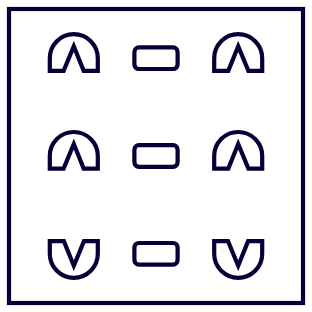
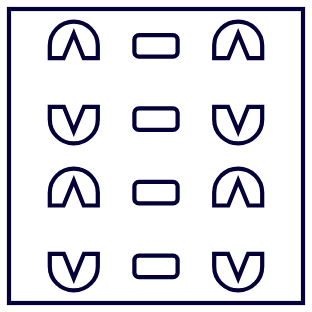
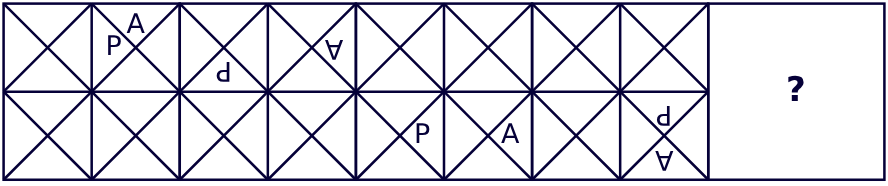
Identify the figure given in the options, which when put in place of the question mark (?) will logically complete the series.
figure
विकल्पों में दी गई उस आकृति की पहचान कीजिए, जिसे प्रश्न चिह्न (?) के स्थान पर रखने पर शृंखला तार्किक रूप से पूर्ण हो जाएगी।
figure
  1. Afigure
  2. Bfigure
  3. Cfigure
  4. Dfigure
Show answer

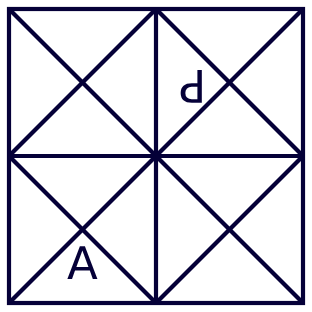
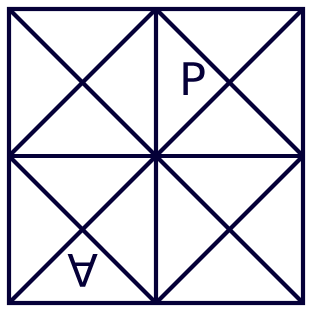
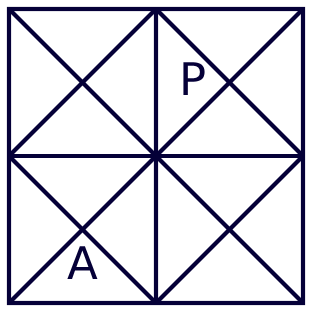
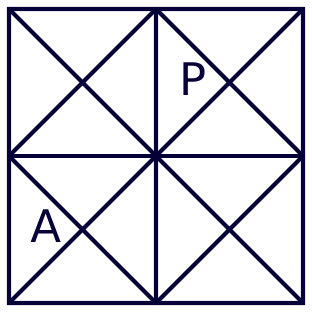
Concept: Track each symbol separately: its position and whether it is upright or inverted.

  1. Letter A stays on an outer triangle and moves one outer triangle clockwise each step → in the 5th figure it reaches the bottom edge, left half.
  2. Letter P stays next to the centre and moves one quadrant anticlockwise each step → it comes back to the top-right quadrant.
  3. Both letters flip upside down every step; figure 4 is inverted, so figure 5 shows both upright.
  4. Only option (c) has upright A at the bottom-left and upright P in the top-right.

Trick: Check the flip (upright/inverted) first – it quickly rejects options (a) and (b).

Answer: (C)

अवधारणा: हर चिह्न को अलग से देखें – उसकी स्थिति और वह सीधा है या उल्टा।

हल:

  1. A बाहरी त्रिभुजों पर हर बार एक खाना दक्षिणावर्त चलता है → 5वीं आकृति में नीचे वाली किनारी का बायाँ भाग।
  2. P केंद्र के पास हर बार एक चतुर्थांश वामावर्त घूमता है → फिर से ऊपर-दाएँ चतुर्थांश में।
  3. दोनों अक्षर हर चरण में उलटते हैं; चौथी आकृति में उल्टे हैं, अतः 5वीं में सीधे।
  4. यह सब केवल विकल्प (c) में है।

ट्रिक: पहले सीधा/उल्टा जाँचें – (a) और (b) तुरंत हट जाते हैं।

उत्तर: (C)

SSC GDGeneral Intelligence & ReasoningFigure series – moving lettersSSC GD 2025 · 17 Feb Shift 3 →
Q1505.
In a certain code language,
' A+B′ means ' A is the mother of B ',
' A−B ' means ' A is the brother of B ',
' A×B′ means ' A is the wife of B ' and
' A÷B′ means ' A is the father of B′.
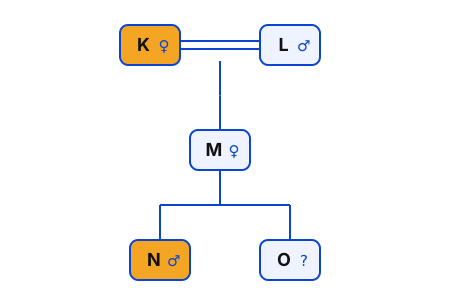
Based on the above, how is K related to N if ' K×L÷M+N−O '?
एक निश्चित कूट भाषा में,
' A+B′ का अर्थ है ' A, B की माता है ',
' A−B ' का अर्थ है ' A, B का भाई है ',
' A×B′ का अर्थ है ' A, B की पत्नी है ' तथा
' A÷B′ का अर्थ है ' A, B′ का पिता है।
उपर्युक्त के आधार पर, K का N से क्या संबंध है, यदि ' K×L÷M+N−O ' है?
  1. AFather's brotherपिता का भाई
  2. BMother's motherमाता की माता
  3. CWife's fatherपत्नी का पिता
  4. DBrother's wifeभाई की पत्नी
Show answer

Concept: Decode each link one by one and build the family tree.

  1. K × L → K is wife of L.
  2. L ÷ M → L is father of M, so K is mother of M.
  3. M + N → M is mother of N.
  4. So K is the mother of N's mother. (N − O is not needed.)

Trick: Stop decoding as soon as the chain links K to N – extra links only waste time.

Answer: (B) Mother's mother

अवधारणा: हर कड़ी अलग-अलग पढ़ें और परिवार-वृक्ष बनाएँ।

हल:

  1. K × L: L की पत्नी = K
  2. L ÷ M: M के पिता = L, तो M की माँ = K
  3. M + N: N की माँ = M
  4. इसलिए K, N की माँ की माँ (नानी) है। N − O की ज़रूरत नहीं।

ट्रिक: जैसे ही K से N तक संबंध जुड़ जाए, आगे की कड़ियाँ छोड़ दें।

उत्तर: (B) माता की माता

SSC GDGeneral Intelligence & ReasoningCoded blood relationSSC GD 2025 · 17 Feb Shift 3 →
Q1506.
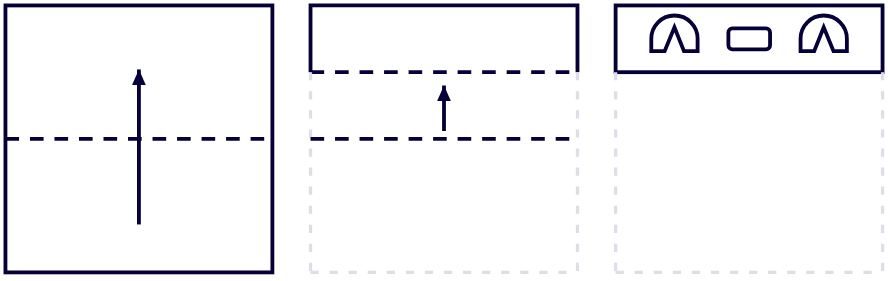
A paper is folded and cut as shown below. How will it appear when unfolded?
figure
एक कागज़ को नीचे दर्शाए अनुसार मोड़ा और काटा जाता है। खोलने पर वह कैसा दिखाई देगा?
figure
  1. Afigure
  2. Bfigure
  3. Cfigure
  4. Dfigure
Show answer

Concept: Every fold opened produces a mirror copy of the cut across the fold line.

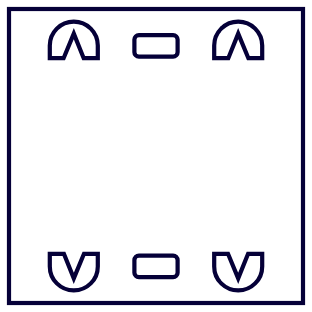
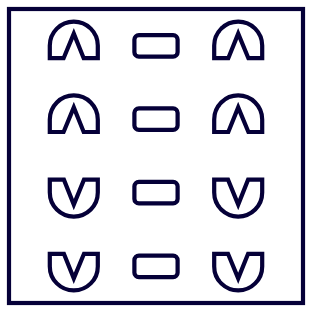
  1. The sheet is folded twice upward, so the cut strip has 4 layers → 4 bands on opening.
  2. Each unfolding mirrors the cut, so neighbouring bands are flipped.
  3. Pattern from one end: upright, inverted, upright, inverted – this is option (d).

Trick: Count layers first: 2 folds = 4 copies. Reject options with 2 or 3 bands instantly.

Answer: (D)

अवधारणा: हर मोड़ खुलने पर कट की दर्पण-प्रतिलिपि मोड़-रेखा के पार बनती है।

हल:

  1. कागज़ दो बार मोड़ा गया → 4 परतें → खोलने पर 4 पट्टियाँ।
  2. हर बार खोलने पर कट उलट जाता है, इसलिए पास-पास की पट्टियाँ उलटी।
  3. क्रम: सीधा, उल्टा, सीधा, उल्टा – यही विकल्प (d) है।

ट्रिक: पहले परतें गिनें: 2 मोड़ = 4 प्रतियाँ; 2 या 3 पट्टी वाले विकल्प तुरंत हटाएँ।

उत्तर: (D)

SSC GDGeneral Intelligence & ReasoningPaper folding and cuttingSSC GD 2025 · 17 Feb Shift 3 →
Q1507.
'TQ 100' is related to 'SR 10' in a certain way. In the same way, 'WO 9' is related to 'VP 3'. To which of the given options is 'JP 121' related, following the same logic?
'TQ 100' एक निश्चित तरीके से 'SR 10' से संबंधित है। उसी प्रकार, 'WO 9' का संबंध 'VP 3' से है। इसी तर्क का अनुसरण करते हुए, 'JP 121' का संबंध दिए गए विकल्पों में से किससे है?
  1. AIQ 11
  2. BJQ 11
  3. CKQ 11
  4. DIQ 12
Show answer

Concept: Find the change in each part: first letter, second letter and the number.

  1. TQ 100 → SR 10: T −1 = S, Q +1 = R, 100=10.
  2. Check: WO 9 → VP 3 (W−1, O+1, 9=3).
  3. JP 121 → J−1 = I, P+1 = Q, 121=11 → IQ 11.

Trick: The number part alone (121=11) removes (d); first letter must go back (I) – removes (b) and (c).

Answer: (A) IQ 11

अवधारणा: तीनों भागों का बदलाव देखें: पहला अक्षर, दूसरा अक्षर और संख्या।

हल:

  1. TQ 100 → SR 10: T −1 = S, Q +1 = R, 100=10
  2. जाँच: WO 9 → VP 3
  3. JP 121 → I, Q और 121=11 → IQ 11

ट्रिक: 121=11 से (d) हटे; पहला अक्षर पीछे जाए (I) – (b), (c) हटे।

उत्तर: (A) IQ 11

SSC GDGeneral Intelligence & ReasoningAnalogy – letters and square rootSSC GD 2025 · 17 Feb Shift 3 →
Q1508.
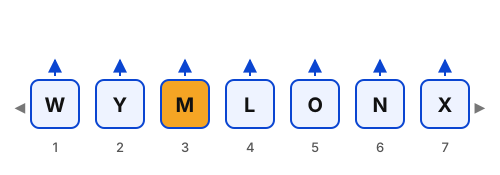
Seven people, L, M, N, O, W, X and Y, are sitting in a row, facing north (but not necessarily in the same order). Only five people sit between W and X. N sits to the immediate left of X . Only one person sits between N and L . M sits at some place to the left of O but at some place to the right of Y. Who sits third from the left end of the line?
सात व्यक्ति L, M, N, O, W, X और Y एक पंक्ति में उत्तर की ओर मुख करके बैठे हैं (आवश्यक नहीं कि इसी क्रम में)। W और X के बीच केवल पाँच व्यक्ति बैठे हैं। N, X के ठीक बाएँ बैठा है। N और L के बीच केवल एक व्यक्ति बैठा है। M, O के बाएँ किसी स्थान पर तथा Y के दाएँ किसी स्थान पर बैठा है। पंक्ति के बाएँ छोर से तीसरे स्थान पर कौन बैठा है?
  1. AL
  2. BY
  3. CM
  4. DW
Show answer

Concept: Start with the clue that fixes ends; all face north, so left = left end.

  1. 5 people between W and X → they take both ends.
  2. N must be just left of X, so X is the right end (7), N = 6, W = 1.
  3. One person between N and L → L = 4.
  4. Seats 2, 3, 5 remain; order Y – M – O gives Y = 2, M = 3, O = 5. Third from left = M.

Trick: In a row of 7, "5 between two people" always means they occupy both ends.

Answer: (C) M

अवधारणा: सबसे पहले वह संकेत लें जो सिरों को तय करे; सबका मुख उत्तर में है।

हल:

  1. W और X के बीच 5 लोग → दोनों सिरों पर (स्थान 1 और 7)।
  2. N, X के ठीक बाएँ → X = 7, N = 6, W = 1
  3. N और L के बीच एक → L = 4
  4. Y, M, O क्रम से 2, 3, 5 पर → बाएँ से तीसरा M

ट्रिक: 7 की पंक्ति में 'दो लोगों के बीच 5' का अर्थ है दोनों सिरों पर बैठे हैं।

उत्तर: (C) M

SSC GDGeneral Intelligence & ReasoningLinear seating arrangementSSC GD 2025 · 17 Feb Shift 3 →
Q1509.
Each letter in the word MONKEYS is arranged in the English alphabetical order. How many letters are there in the English alphabetical order between the letter which is third from the left end and the one which is fourth from the right end in the new letter-cluster thus formed?
शब्द MONKEYS के प्रत्येक अक्षर को अंग्रेजी वर्णमाला क्रम में व्यवस्थित किया जाता है। इस प्रकार बने नए अक्षर-समूह में बाएँ छोर से तीसरे अक्षर तथा दाएँ छोर से चौथे अक्षर के बीच अंग्रेजी वर्णमाला क्रम में कितने अक्षर हैं?
  1. A2
  2. B3
  3. C0
  4. D1
Show answer

Concept: Arrange letters A→Z, then pick the required positions.

  1. MONKEYS in order: E K M N O S Y.
  2. 3rd from left = M; 4th from right = N.
  3. M (13) and N (14) are consecutive → 0 letters between them.

Trick: In a 7-letter cluster, 4th from right = 4th from left (the middle letter).

Answer: (C) 0

अवधारणा: अक्षरों को A→Z क्रम में लगाकर स्थान गिनें।

हल:

  1. MONKEYS क्रम में: E K M N O S Y
  2. बाएँ से तीसरा = M; दाएँ से चौथा = N
  3. M (13) और N (14) क्रमागत → बीच में 0 अक्षर

ट्रिक: 7 अक्षरों में दाएँ से चौथा = बाएँ से चौथा (बीच वाला अक्षर)।

उत्तर: (C) 0

SSC GDGeneral Intelligence & ReasoningAlphabetical rearrangementSSC GD 2025 · 17 Feb Shift 3 →
Q1510.
What should come in place of the question mark (?) in the given series?
18, 28, 40, 54, 70, ?
दी गई शृंखला में प्रश्न चिह्न (?) के स्थान पर क्या आना चाहिए?
18, 28, 40, 54, 70, ?
  1. A88
  2. B90
  3. C87
  4. D89
Show answer

Concept: Check the gaps between terms.

  1. Gaps: 10, 12, 14, 16 – rising by 2.
  2. Next gap = 18.
  3. 70 + 18 = 88.

Trick: Even-step gaps (+2 each time) – just add the next even number.

Answer: (A) 88

अवधारणा: क्रमागत पदों का अंतर देखें।

हल:

  1. अंतर: 10, 12, 14, 16 – हर बार 2 अधिक
  2. अगला अंतर = 18
  3. 70 + 18 = 88

ट्रिक: अंतर सम संख्याएँ 2-2 बढ़ रही हैं – अगली सम संख्या जोड़ दें।

उत्तर: (A) 88

SSC GDGeneral Intelligence & ReasoningNumber series – increasing differenceSSC GD 2025 · 17 Feb Shift 3 →
Q1511.
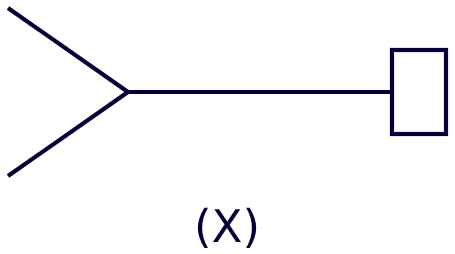
Select the option in which the given figure (X) is embedded (rotation is NOT allowed).
figure
उस विकल्प का चयन कीजिए जिसमें दी गई आकृति (X) सन्निहित है (घुमाने की अनुमति नहीं है)।
figure
  1. Afigure
  2. Bfigure
  3. Cfigure
  4. Dfigure
Show answer

Concept: The hidden figure must appear in the same size and orientation (no rotation).

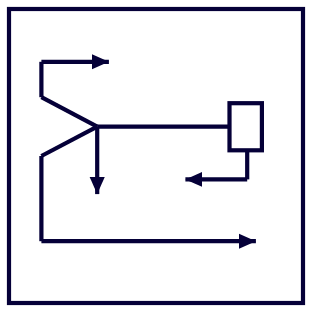
  1. Figure X: two slanted lines meeting at a point, a horizontal line from that point to the right, ending at a small vertical rectangle.
  2. Option (c) shows this exact set in the same direction.
  3. (a) and (b) have only straight horizontal/vertical lines; (d) lacks the slanted pair.

Trick: Look first for the most unusual part (the slanted V-meeting point) – options without it are out.

Answer: (C)

अवधारणा: छिपी आकृति उसी आकार और दिशा में मिलनी चाहिए (घुमाना मना है)।

हल:

  1. X में: दो तिरछी रेखाएँ एक बिंदु पर मिलती हैं, वहाँ से दाईं ओर क्षैतिज रेखा और अंत में छोटा खड़ा आयत।
  2. विकल्प (c) में यही भाग उसी दिशा में है।
  3. (a), (b) में तिरछी रेखाएँ नहीं; (d) में तिरछा जोड़ा नहीं मिलता।

ट्रिक: सबसे अलग भाग (तिरछी रेखाओं का मिलन) पहले ढूँढें – जिसमें न हो, वह विकल्प बाहर।

उत्तर: (C)

SSC GDGeneral Intelligence & ReasoningEmbedded figureSSC GD 2025 · 17 Feb Shift 3 →
Q1512.
ABYW is related to VWTR in a certain way based on the English alphabetical order. In the same way, UVSQ is related to PQNL. To which of the given options is GHEC related, following the same logic ?
अंग्रेजी वर्णमाला क्रम के आधार पर ABYW एक निश्चित तरीके से VWTR से संबंधित है। उसी प्रकार, UVSQ का संबंध PQNL से है। इसी तर्क का अनुसरण करते हुए, GHEC का संबंध दिए गए विकल्पों में से किससे है?
  1. ABBYX
  2. BBCYX
  3. CBDYC
  4. DBCZX
Show answer

Concept: Each letter shifts by a fixed number of places (wrapping after A to Z).

  1. ABYW → VWTR: every letter −5 (A→V, B→W, Y→T, W→R). UVSQ → PQNL also −5.
  2. GHEC: G→B, H→C, E→Z, C→X.
  3. Result: BCZX.

Trick: −5 is the same as +21; for E and C just count back through Z, Y, X…

Answer: (D) BCZX

अवधारणा: हर अक्षर निश्चित स्थान पीछे जाता है (A के बाद Z से गिनें)।

हल:

  1. ABYW → VWTR: हर अक्षर −5; UVSQ → PQNL भी −5
  2. GHEC: G→B, H→C, E→Z, C→X
  3. उत्तर: BCZX

ट्रिक: E और C से 5 पीछे गिनते समय A के बाद Z, Y, X पर जाएँ।

उत्तर: (D) BCZX

SSC GDGeneral Intelligence & ReasoningLetter analogy – backward shiftSSC GD 2025 · 17 Feb Shift 3 →
Q1513.
Based on the English alphabetical order, three of the following four letter-clusters are alike in a certain way and thus form a group. Which letter-cluster DOES NOT belong to that group?
(Note: The odd one out is not based on the number of consonants/vowels or their position in the letter-cluster.)
अंग्रेजी वर्णमाला क्रम के आधार पर, निम्नलिखित चार अक्षर-समूहों में से तीन एक निश्चित प्रकार से समान हैं और इस प्रकार एक समूह बनाते हैं। वह अक्षर-समूह कौन सा है जो उस समूह से संबंधित नहीं है?
(नोट: विषम अक्षर-समूह का आधार अक्षर-समूह में व्यंजनों/स्वरों की संख्या अथवा उनका स्थान नहीं है।)
  1. AKNG
  2. BPRM
  3. CEGB
  4. DGID
Show answer

Concept: Compare the position gaps inside each cluster.

  1. PRM: +2, −5; EGB: +2, −5; GID: +2, −5.
  2. KNG: K→N is +3, N→G is −7.
  3. KNG breaks the pattern.

Trick: Checking just the first gap (+2) is enough: only KNG has +3.

Answer: (A) KNG

अवधारणा: हर समूह में अक्षरों के बीच का अंतर देखें।

हल:

  1. PRM: +2, −5; EGB: +2, −5; GID: +2, −5
  2. KNG: +3, −7
  3. इसलिए KNG अलग है।

ट्रिक: केवल पहला अंतर (+2) देखना काफ़ी है – KNG में +3 है।

उत्तर: (A) KNG

SSC GDGeneral Intelligence & ReasoningOdd one out – letter gapsSSC GD 2025 · 17 Feb Shift 3 →
Q1514.
Select the option that represents the letters that, when sequentially placed from left to right in the blanks below, will complete the letter series.
HI_L_H_K_MH__LMHIK__
उस विकल्प का चयन कीजिए जो उन अक्षरों को निरूपित करता है, जिन्हें नीचे दिए गए रिक्त स्थानों में बाएँ से दाएँ क्रमिक रूप से रखने पर अक्षर शृंखला पूर्ण हो जाएगी।
HI_L_H_K_MH__LMHIK__
  1. AMKILIKLM
  2. BMKLIIKML
  3. CKMLIIKML
  4. DKMILIKLM
Show answer

Concept: Split the series into equal blocks that repeat.

  1. 20 letters → 4 blocks of 5: HIKLM.
  2. HIKLM | HIKLM | HIKLM | HIKLM
  3. Blanks in order: K M I L I K L M.

Trick: Fill only the first 2 blanks (K, M) – options (c) and (d) remain; the 3rd blank (I) picks (d).

Answer: (D) KMILIKLM

अवधारणा: श्रृंखला को बराबर दोहराने वाले खंडों में बाँटें।

हल:

  1. 20 अक्षर → 5-5 के 4 खंड: HIKLM
  2. रिक्त स्थान क्रम से: K M I L I K L M
  3. यह विकल्प (d) है।

ट्रिक: पहले दो रिक्त (K, M) भरें – (c), (d) बचते हैं; तीसरा रिक्त (I) से (d) तय।

उत्तर: (D) KMILIKLM

SSC GDGeneral Intelligence & ReasoningLetter series – repeating blockSSC GD 2025 · 17 Feb Shift 3 →
Q1515.
What should come in place of the question mark (?) in the given series?
13, 18, 29, 34, 45, ?
दी गई शृंखला में प्रश्न चिह्न (?) के स्थान पर क्या आना चाहिए?
13, 18, 29, 34, 45, ?
  1. A58
  2. B48
  3. C56
  4. D50
Show answer

Concept: Look for gaps that repeat in a cycle.

  1. Gaps: +5, +11, +5, +11.
  2. Next gap = +5.
  3. 45 + 5 = 50.

Trick: Alternate terms 13, 29, 45 and 18, 34, ? both rise by 16 → 34 + 16 = 50.

Answer: (D) 50

अवधारणा: अंतर किसी चक्र में दोहराते हैं या नहीं, देखें।

हल:

  1. अंतर: +5, +11, +5, +11
  2. अगला अंतर +5
  3. 45 + 5 = 50

ट्रिक: एकांतर पद 18, 34, ? हर बार 16 बढ़ते हैं → 34 + 16 = 50

उत्तर: (D) 50

SSC GDGeneral Intelligence & ReasoningNumber series – alternating differenceSSC GD 2025 · 17 Feb Shift 3 →
Q1516.
Read the given statements and conclusions carefully. Assuming that the information given in the statements is true, even if it appears to be at variance with commonly known facts, decide which of the given conclusions logically follow(s) from the statements.
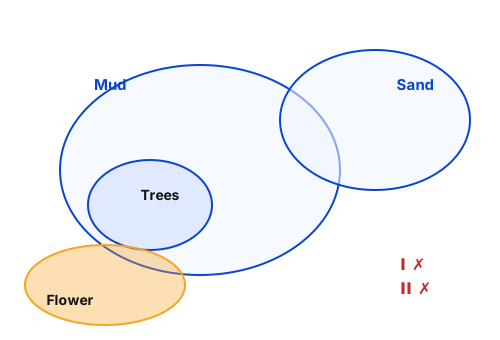
Statements: All trees are mud.
Some mud are sand.
No sand is a flower.
Conclusions: (I): No tree is a flower.
(II): Some sand are trees.
दिए गए कथनों और निष्कर्षों को ध्यानपूर्वक पढ़िए। यह मानते हुए कि कथनों में दी गई जानकारी सत्य है, चाहे वह सर्वज्ञात तथ्यों से भिन्न प्रतीत होती हो, निर्णय कीजिए कि दिए गए निष्कर्षों में से कौन-सा/से कथनों का तार्किक रूप से अनुसरण करता है/करते हैं।
कथन: सभी पेड़ मिट्टी हैं।
कुछ मिट्टी रेत है।
कोई रेत फूल नहीं है।
निष्कर्ष: (I): कोई पेड़ फूल नहीं है।
(II): कुछ रेत पेड़ हैं।
  1. ANeither conclusion (I) nor (II) follows.न तो निष्कर्ष (I) और न ही (II) अनुसरण करता है।
  2. BOnly conclusion (I) follows.केवल निष्कर्ष (I) अनुसरण करता है।
  3. COnly conclusion (II) follows.केवल निष्कर्ष (II) अनुसरण करता है।
  4. DBoth conclusions (I) and (II) follow.दोनों निष्कर्ष (I) और (II) अनुसरण करते हैं।
Show answer

Concept: A conclusion follows only if it is true in every possible diagram.

  1. Trees ⊂ Mud; Mud partly overlaps Sand; Sand and Flower are separate.
  2. Trees can sit in the non-sand part of Mud and still touch Flower → (I) 'No tree is flower' is not certain.
  3. Sand may never touch Trees → (II) 'Some sand are trees' is not certain.

Trick: "Some" + "No" never gives a definite link to a third class through the 'some' part – both conclusions are only possibilities.

Answer: (A) Neither conclusion (I) nor (II) follows.

अवधारणा: निष्कर्ष तभी सही है जब हर संभव आरेख में सत्य हो।

हल:

  1. पेड़ ⊂ मिट्टी; मिट्टी और रेत आंशिक; रेत और फूल अलग।
  2. पेड़ों का घेरा रेत से दूर रहकर फूल को छू सकता है → (I) निश्चित नहीं।
  3. रेत का पेड़ों से मिलना ज़रूरी नहीं → (II) भी निश्चित नहीं।

ट्रिक: 'कुछ' वाले कथन से तीसरे वर्ग के बारे में निश्चित निष्कर्ष नहीं निकलता।

उत्तर: (A) न तो निष्कर्ष (I) और न ही (II) अनुसरण करता है।

SSC GDGeneral Intelligence & ReasoningSyllogism – possibility checkSSC GD 2025 · 17 Feb Shift 3 →
Q1517.
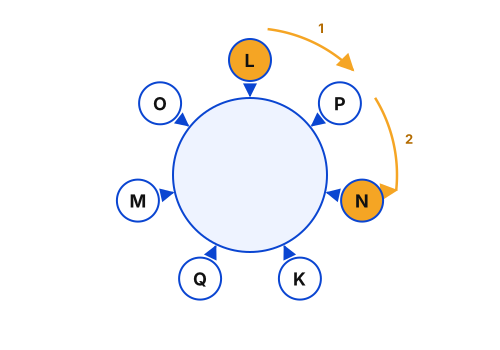
K, L, M, N, O, P and Q are sitting around a circular table, facing the centre (but not necessarily in the same order). M sits second to the right of L. Q sits to the immediate right of M. O sits fourth to the right of K. N sits to the immediate left of P. What is the position of N with respect to L ?
K, L, M, N, O, P और Q एक वृत्ताकार मेज़ के चारों ओर केंद्र की ओर मुख करके बैठे हैं (आवश्यक नहीं कि इसी क्रम में)। M, L के दाएँ से दूसरे स्थान पर बैठा है। Q, M के ठीक दाएँ बैठा है। O, K के दाएँ से चौथे स्थान पर बैठा है। N, P के ठीक बाएँ बैठा है। L के संदर्भ में N का स्थान क्या है?
  1. AThird to the Rightदाएँ से तीसरा
  2. BSecond to the Leftबाएँ से दूसरा
  3. CSecond to the Rightदाएँ से दूसरा
  4. DImmediate Leftठीक बाएँ
Show answer

Concept: Facing the centre: right = anticlockwise, left = clockwise.

  1. Fix L at seat 1 (seats numbered clockwise). M = 2nd right → seat 6; Q immediately right of M → seat 5.
  2. O 4th right of K works only with K = 4, O = 7.
  3. N immediately left of P → P = 2, N = 3.
  4. From L moving clockwise (left): P, then N → N is second to the left of L.

Trick: Place the person with the most clues (L) first; fill pairs (K–O) before single seats.

Answer: (B) Second to the Left

अवधारणा: केंद्र की ओर मुख: दायाँ = वामावर्त, बायाँ = दक्षिणावर्त।

हल:

  1. L को स्थान 1 पर रखें। M, L के दूसरे दाएँ → 6; Q, M के ठीक दाएँ → 5
  2. O, K के चौथे दाएँ → K = 4, O = 7
  3. N, P के ठीक बाएँ → P = 2, N = 3
  4. L से दक्षिणावर्त (बाएँ): P फिर N → N, L के दूसरे बाएँ।

ट्रिक: सबसे अधिक संकेत वाले व्यक्ति (L) को पहले बिठाएँ।

उत्तर: (B) बाएँ से दूसरा

SSC GDGeneral Intelligence & ReasoningCircular seating – facing centreSSC GD 2025 · 17 Feb Shift 3 →
Q1518.
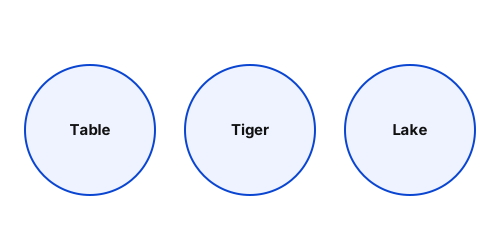
Select the Venn diagram that best illustrates the relationship between the following classes.
Table, Tiger, Lake
उस वेन आरेख का चयन कीजिए जो निम्नलिखित वर्गों के बीच के संबंध को सर्वोत्तम रूप से दर्शाता है।
मेज़, बाघ, झील
  1. Afigure
  2. Bfigure
  3. Cfigure
  4. Dfigure
Show answer

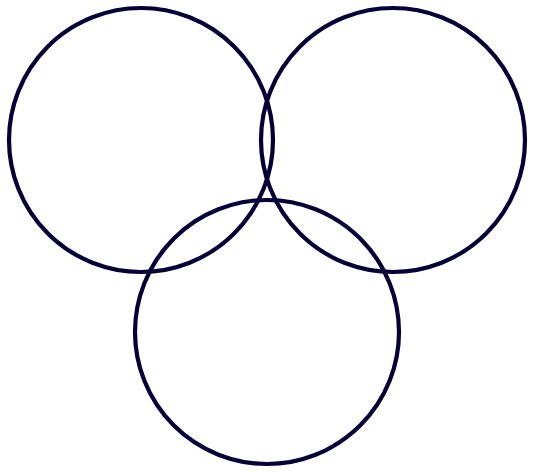
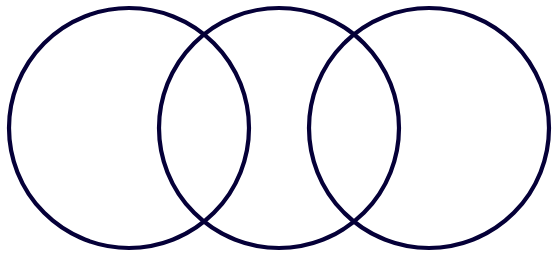
Concept: If no item belongs to two classes, draw three separate circles.

  1. Table (furniture), Tiger (animal), Lake (water body) – no overlap between any pair.
  2. So three disjoint circles → option (c).

Trick: Similar sets: Pen, Lion, River / Chair, Dog, Pond – always three separate circles.

Answer: (C)

अवधारणा: यदि कोई वस्तु दो वर्गों में न आए तो तीनों वृत्त अलग-अलग होंगे।

हल:

  1. मेज़ (फर्नीचर), बाघ (पशु), झील (जलाशय) – किसी जोड़े में कोई साझा भाग नहीं।
  2. अतः तीन अलग वृत्त → विकल्प (c)

ट्रिक: ऐसे समूह (कलम, शेर, नदी) में हमेशा तीन अलग वृत्त बनते हैं।

उत्तर: (C)

SSC GDGeneral Intelligence & ReasoningVenn diagram – unrelated classesSSC GD 2025 · 17 Feb Shift 3 →
Q1519.
In a certain code language 'VSDO' is coded as '20-17-2-13' and 'ILCY' is coded as '7-10- 1-23'. What is the code for 'QNRF' in the given language ?
एक निश्चित कूट भाषा में 'VSDO' को '20-17-2-13' तथा 'ILCY' को '7-10- 1-23' के रूप में कूटबद्ध किया जाता है। उसी भाषा में 'QNRF' का कूट क्या है?
  1. A17-15-18-5
  2. B16-14-18-6
  3. C15-12-16-4
  4. D13-14-17-5
Show answer

Concept: Code = alphabet position − 2.

  1. VSDO = 22, 19, 4, 15 → 20-17-2-13 (each −2). ILCY confirms.
  2. QNRF = 17, 14, 18, 6.
  3. Subtract 2: 15-12-16-4.

Trick: Check only the last letter: F = 6 − 2 = 4 → only option (c) ends in 4.

Answer: (C) 15-12-16-4

अवधारणा: कोड = अक्षर का स्थान − 2

हल:

  1. VSDO = 22, 19, 4, 15 → 20-17-2-13; ILCY से पुष्टि।
  2. QNRF = 17, 14, 18, 6
  3. 2 घटाएँ: 15-12-16-4

ट्रिक: सिर्फ़ अंतिम अक्षर देखें: F = 6 − 2 = 4 – केवल (c) में 4 है।

उत्तर: (C) 15-12-16-4

SSC GDGeneral Intelligence & ReasoningLetter–number codingSSC GD 2025 · 17 Feb Shift 3 →
Q1520.
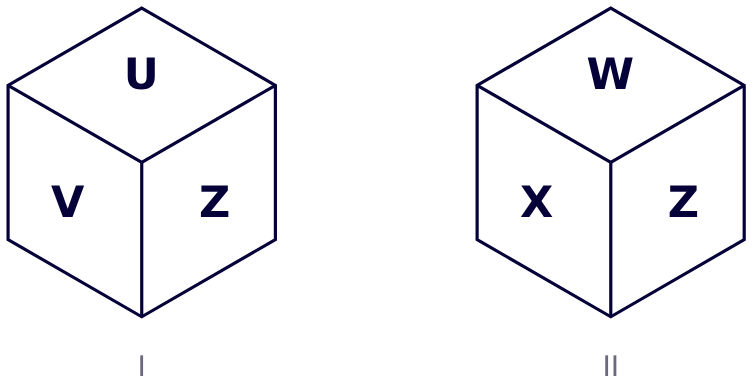
A dice has its faces marked by letters U, V, W, X, Y and Z. Two different positions of the same dice are given below. Select the letter that will be on the face opposite to the one having Y?
figure
एक पासे के फलकों पर U, V, W, X, Y और Z अक्षर अंकित हैं। उसी पासे की दो भिन्न स्थितियाँ नीचे दी गई हैं। उस अक्षर का चयन कीजिए जो Y वाले फलक के विपरीत फलक पर होगा?
figure
  1. AZ
  2. BV
  3. CX
  4. DU
Show answer

Concept: Faces visible together in one view are adjacent, never opposite.

  1. Z appears in both views.
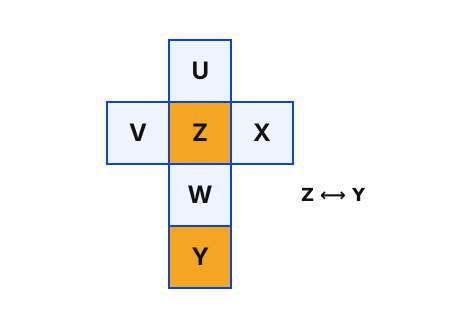
  2. Z touches U, V (view 1) and W, X (view 2) – four adjacent faces.
  3. Only Y is left, so Y is opposite Z.

Trick: A common face that sits beside four different letters is opposite the one letter not seen with it.

Answer: (A) Z

अवधारणा: एक ही दृश्य में दिखने वाले फलक आसन्न होते हैं, विपरीत नहीं।

हल:

  1. Z दोनों दृश्यों में है।
  2. Z के साथ U, V और W, X दिखते हैं – चारों आसन्न।
  3. बचा Y → Y, Z के विपरीत।

ट्रिक: उभयनिष्ठ फलक के साथ जो अक्षर कभी न दिखे, वही उसके विपरीत है।

उत्तर: (A) Z

SSC GDGeneral Intelligence & ReasoningDice – opposite faceSSC GD 2025 · 17 Feb Shift 3 →