Question bank

Q&A: practice questions with answers

Search questions on any topic. Filter by exam category, exam, subject and topic, try the question, then open the answer and explanation.

Courses – airGurukul

4,200 questions found.

Q1701.
In a certain code language,
'A + B' means 'A is the mother of B',
'A − B' means 'A is the brother of B',
'A × B' means 'A is the wife of B' and
'A ÷ B' means 'A is the father of B'.
Based on the above, how is D related to F if 'B + C × D − E ÷ F'?
एक निश्चित कूट भाषा में,
'A + B' का अर्थ है 'A, B की माता है',
'A − B' का अर्थ है 'A, B का भाई है',
'A × B' का अर्थ है 'A, B की पत्नी है' तथा
'A ÷ B' का अर्थ है 'A, B का पिता है'।
उपर्युक्त के आधार पर, यदि 'B + C × D − E ÷ F' है, तो D, F से किस प्रकार संबंधित है?
  1. AWife's fatherपत्नी का पिता
  2. BBrother's brotherभाई का भाई
  3. CFather's brotherपिता का भाई
  4. DMother's husbandमाता का पति
Show answer

Concept: Decode each symbol pair from left to right and join the links into one family chain.
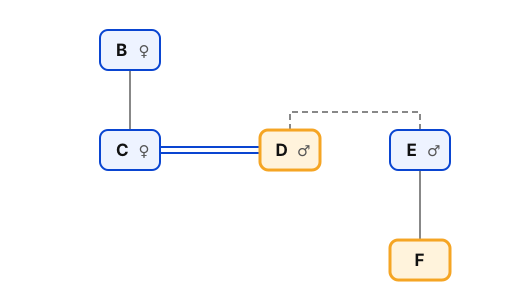
  1. B + C → B is C's mother.
  2. C × D → C is D's wife, so D is C's husband.
  3. D − E → D is E's brother.
  4. E ÷ F → E is F's father.
  5. D is the brother of F's father, i.e. F's uncle (father's brother).

Trick: Only the last two links (D − E ÷ F) touch both D and F; read just those: brother of father.

Answer: (C) Father's brother

अवधारणा: हर चिह्न को बाएँ से दाएँ खोलें और कड़ियों को जोड़कर परिवार-वृक्ष बनाएँ।

  1. B + C : माँ = B, संतान = C।
  2. C × D : पत्नी = C, इसलिए पति = D।
  3. D − E : भाई-भाई/बहन – D भाई है।
  4. E ÷ F : पिता = E, संतान = F।
  5. तो D = (F के पिता) का भाई = चाचा।

ट्रिक: D और F को जोड़ने वाले केवल अंतिम दो चिह्न (D − E ÷ F) पढ़ें: पिता का भाई।

उत्तर: (C) पिता का भाई

SSC GDGeneral Intelligence & ReasoningCoded blood relationsSSC GD 2025 · 17 Feb Shift 1 →
Q1702.
Identify the figure given in the options, which when put in place of the question mark (?) will logically complete the series.
figure
उस आकृति की पहचान कीजिए, जिसे प्रश्नवाचक चिह्न (?) के स्थान पर रखने से दी गई शृंखला तार्किक रूप से पूर्ण हो जाएगी।
figure
  1. Afigure
  2. Bfigure
  3. Cfigure
  4. Dfigure
Show answer

Concept: The same four symbols move together by a fixed angle each step.

  1. In figures 1 and 3 the symbols sit at side mid-points; in figures 2 and 4 they sit at corners – the two layouts alternate.
  2. Each step shifts every symbol 45° clockwise (mid-point → next corner → next mid-point).
  3. Figure 4: Ω top-left, D top-right, △ bottom-right, @ bottom-left. One more 45° clockwise step puts Ω at top-middle, D at right-middle, △ at bottom-middle and @ at left-middle.
  4. Only option (A) shows this arrangement.

Trick: Track one symbol only (say Ω): find its next spot, then reject every option where Ω is elsewhere.

Answer: (A) Figure (A)

अवधारणा: चारों चिह्न हर चरण में एक निश्चित कोण से एक साथ घूमते हैं।

  1. आकृति 1 और 3 में चिह्न किनारों के बीचोंबीच हैं और 2 और 4 में कोनों पर हैं – दोनों व्यवस्थाएँ बारी-बारी से आती हैं।
  2. हर चरण में प्रत्येक चिह्न 45° दक्षिणावर्त खिसकता है।
  3. चौथी आकृति के कोनों पर (बाएँ-ऊपर से घड़ी की दिशा में) Ω, D, △, @ हैं; 45° और घूमने पर ये क्रमशः ऊपरी, दाईं, निचली और बाईं भुजा के बीच में पहुँचेंगे।
  4. यही व्यवस्था विकल्प (A) में है।

ट्रिक: केवल एक चिह्न (जैसे Ω) का अगला स्थान तय करें और बाकी विकल्प हटा दें।

उत्तर: (A) आकृति (A)

SSC GDGeneral Intelligence & ReasoningFigure series – rotating symbolsSSC GD 2025 · 17 Feb Shift 1 →
Q1703.
Based on the English alphabetical order, three of the following four letter-clusters are alike in a certain way and thus form a group. Which letter-cluster DOES NOT belong to that group?
(Note: The odd one out is not based on the number of consonants/vowels or their position in the letter-cluster.)
अंग्रेजी वर्णमाला क्रम के आधार पर, निम्नलिखित चार अक्षर-समूहों में से तीन एक निश्चित प्रकार से समान हैं और इस प्रकार एक समूह बनाते हैं। कौन-सा अक्षर-समूह उस समूह से संबंधित नहीं है?
(नोट: विषम अक्षर-समूह का आधार अक्षर-समूह में व्यंजनों/स्वरों की संख्या अथवा उनकी स्थिति नहीं है।)
  1. AJKP
  2. BFGL
  3. CRSX
  4. DMRZ
Show answer

Concept: Convert letters to alphabet positions and compare the gaps.

  1. JKP = 10, 11, 16 → gaps +1, +5.
  2. FGL = 6, 7, 12 → +1, +5; RSX = 18, 19, 24 → +1, +5.
  3. MRZ = 13, 18, 26 → +5, +8 – a different pattern.

Trick: In three groups the first two letters are neighbours (JK, FG, RS); MR are not – spot it in 5 seconds.

Answer: (D) MRZ

अवधारणा: अक्षरों को उनकी क्रम-संख्या में बदलकर अंतर देखें।

  1. JKP = 10, 11, 16 → अंतर +1, +5
  2. FGL = 6, 7, 12 और RSX = 18, 19, 24 → दोनों में +1, +5
  3. MRZ = 13, 18, 26 → +5, +8, अर्थात अलग नियम।

ट्रिक: तीन समूहों के पहले दो अक्षर लगातार हैं (JK, FG, RS); MR लगातार नहीं – तुरंत विषम।

उत्तर: (D) MRZ

SSC GDGeneral Intelligence & ReasoningOdd one out – letter gapsSSC GD 2025 · 17 Feb Shift 1 →
Q1704.
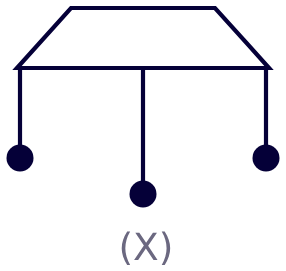
Select the option in which the given figure (X) is embedded (rotation is NOT allowed).
figure
उस विकल्प का चयन कीजिए, जिसमें दी गई आकृति (X) सन्निहित है (घुमाने की अनुमति नहीं है)।
figure
  1. Afigure
  2. Bfigure
  3. Cfigure
  4. Dfigure
Show answer

Concept: Find the option that contains figure (X) in the same size and orientation (no rotation).

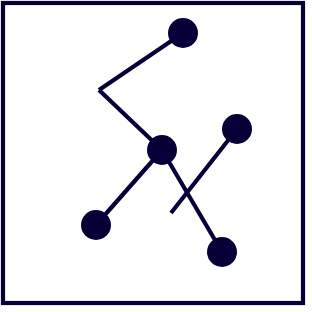
  1. Figure (X): a trapezium (short side up) with three stems below it, each ending in a solid dot; the middle stem is longest.
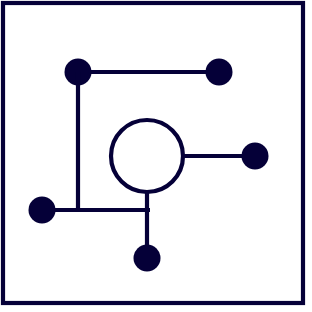
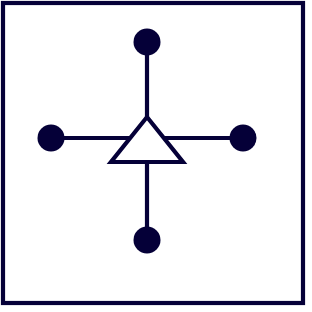
  2. Option (A) is built on a circle and (C) on a triangle – no trapezium, rejected.
  3. Option (D) has no closed trapezium either.
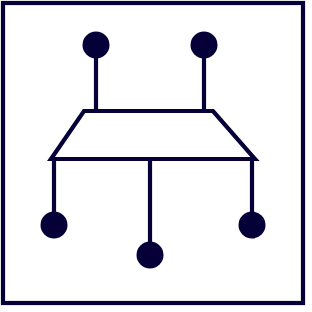
  4. Option (B) shows the same trapezium with the three dotted stems below; only extra lines are added on top.

Trick: Pick the most unusual part of X (three dots hanging below) and look for it first – it eliminates options fast.

Answer: (B) Figure (B)

अवधारणा: वही विकल्प चुनें जिसमें आकृति (X) बिना घुमाए, उसी आकार में छिपी हो।

  1. आकृति (X): ऊपर छोटी भुजा वाला समलंब, जिसके नीचे तीन डंडियाँ हैं और हर डंडी के सिरे पर भरा बिंदु है; बीच वाली सबसे लंबी है।
  2. विकल्प (A) वृत्त पर और (C) त्रिभुज पर आधारित है – समलंब ही नहीं।
  3. विकल्प (D) में भी पूरा समलंब नहीं बनता।
  4. विकल्प (B) में वही समलंब और नीचे तीनों बिंदु वाली डंडियाँ हैं; ऊपर केवल अतिरिक्त रेखाएँ हैं।

ट्रिक: X का सबसे अलग हिस्सा (नीचे लटके तीन बिंदु) पहले खोजें – विकल्प जल्दी कटते हैं।

उत्तर: (B) आकृति (B)

SSC GDGeneral Intelligence & ReasoningEmbedded figureSSC GD 2025 · 17 Feb Shift 1 →
Q1705.
Select the Venn diagram that best illustrates the relationship between the following classes.
Clothes, Shoes, Black
उस वेन आरेख का चयन कीजिए, जो निम्नलिखित वर्गों के बीच के संबंध को सर्वोत्तम रूप से दर्शाता है।
वस्त्र, जूते, काला
  1. Afigure
  2. Bfigure
  3. Cfigure
  4. Dfigure
Show answer

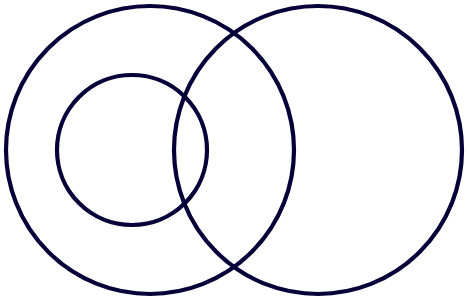
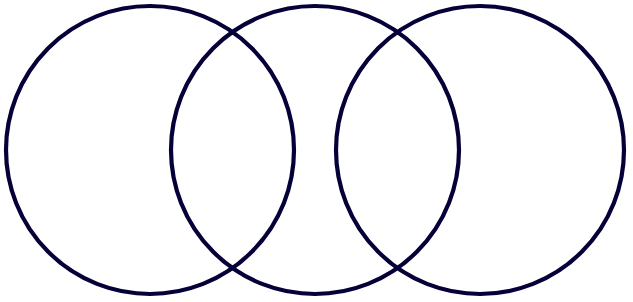
Concept: Check each pair of classes: separate, partly overlapping, or one inside another.

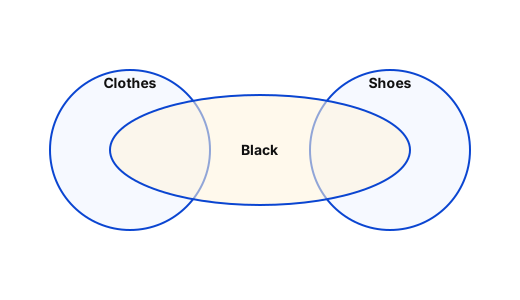
  1. Clothes and Shoes: nothing common → two separate circles.
  2. Black things: some clothes are black, some shoes are black → Black partly overlaps both.
  3. So one circle (Black) cuts two non-touching circles – this is option (D).

Trick: Black is a colour, so it can cut across any two object classes; the two object classes themselves stay apart.

Answer: (D) Figure (D)

अवधारणा: हर दो वर्गों का संबंध देखें – अलग, आंशिक रूप से साझा या एक-दूसरे के अंदर।

  1. वस्त्र और जूते: कोई साझा भाग नहीं → दो अलग वृत्त।
  2. काला: कुछ वस्त्र काले, कुछ जूते काले → काला दोनों को आंशिक रूप से काटता है।
  3. अतः बीच का एक वृत्त दो अलग वृत्तों को काटता है – विकल्प (D)।

ट्रिक: रंग (काला) किसी भी दो वस्तु-वर्गों को काट सकता है, पर दोनों वस्तु-वर्ग आपस में अलग रहते हैं।

उत्तर: (D) आकृति (D)

SSC GDGeneral Intelligence & ReasoningVenn diagram – three classesSSC GD 2025 · 17 Feb Shift 1 →
Q1706.
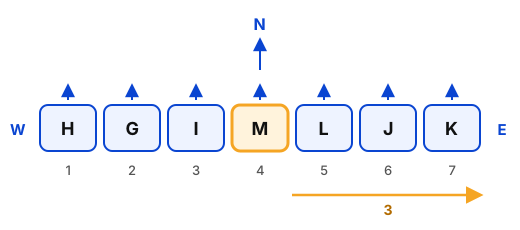
Seven people, G, H, I, J, K, L and M, are sitting in a row, facing north(but not necessarily in the same order). Only two people sit to the left of I. Only three people sit between I and K. L sits second to the right of I. Only two people sit between L and G. M sits at some place to the right of H but at some place to the left of J. How many people sit to the right of M?
सात व्यक्ति G, H, I, J, K, L और M एक पंक्ति में उत्तर की ओर मुख करके बैठे हैं (आवश्यक नहीं कि इसी क्रम में)। I के बाईं ओर केवल दो व्यक्ति बैठे हैं। I और K के बीच केवल तीन व्यक्ति बैठे हैं। L, I के दाईं ओर दूसरे स्थान पर बैठा है। L और G के बीच केवल दो व्यक्ति बैठे हैं। M, H के दाईं ओर किसी स्थान पर तथा J के बाईं ओर किसी स्थान पर बैठा है। M के दाईं ओर कितने व्यक्ति बैठे हैं?
  1. AFourचार
  2. BTwoदो
  3. CThreeतीन
  4. DOneएक
Show answer

Concept: Fix the person with a definite seat first, then place others around them.

  1. Seats 1–7 from left. Two people left of I → I = 3.
  2. Three between I and K → K = 7. L second right of I → L = 5.
  3. Two between L and G → G = 2. Remaining seats 1, 4, 6 with H left of M, M left of J → H = 1, M = 4, J = 6.
  4. Order: H G I M L J K. Right of M: L, J, K = 3 people.

Trick: Right of seat n in a row of 7 = 7 − n people; M at seat 4 → 7 − 4 = 3.

Answer: (C) Three

अवधारणा: जिस व्यक्ति की जगह पक्की हो, उसे पहले बैठाएँ, फिर बाकी।

  1. बाएँ से सीट 1–7 मानें। I के बाएँ दो व्यक्ति → I = 3।
  2. I और K के बीच तीन → K = 7; L, I के दाएँ दूसरा → L = 5।
  3. L और G के बीच दो → G = 2। बची सीटें 1, 4, 6 में H, फिर M, फिर J (बाएँ से) → H = 1, M = 4, J = 6।
  4. क्रम: H G I M L J K; M के दाएँ L, J, K = 3 व्यक्ति।

ट्रिक: 7 की पंक्ति में सीट n के दाएँ = 7 − n व्यक्ति; M सीट 4 पर → 3।

उत्तर: (C) तीन

SSC GDGeneral Intelligence & ReasoningLinear seating – row facing northSSC GD 2025 · 17 Feb Shift 1 →
Q1707.
In a certain code language, 'HXCT' is coded as '55' and 'LAMU' is coded as '47'. What is the code for 'ZFGD' in the given code language?
एक निश्चित कूट भाषा में, 'HXCT' को '55' के रूप में तथा 'LAMU' को '47' के रूप में कूटबद्ध किया जाता है। उसी कूट भाषा में 'ZFGD' का कूट क्या होगा?
  1. A56
  2. B48
  3. C53
  4. D43
Show answer

Concept: Code = sum of the alphabet positions of the letters.

  1. HXCT: 8 + 24 + 3 + 20 = 55 ✔
  2. LAMU: 12 + 1 + 13 + 21 = 47 ✔
  3. ZFGD: 26 + 6 + 7 + 4 = 43

Trick: Remember EJOTY = 5, 10, 15, 20, 25 to get any letter's position instantly.

Answer: (D) 43

अवधारणा: कूट = अक्षरों की वर्णमाला क्रम-संख्याओं का योग।

  1. HXCT: 8 + 24 + 3 + 20 = 55 ✔
  2. LAMU: 12 + 1 + 13 + 21 = 47 ✔
  3. ZFGD: 26 + 6 + 7 + 4 = 43

ट्रिक: EJOTY = 5, 10, 15, 20, 25 याद रखें – किसी भी अक्षर की संख्या तुरंत मिलेगी।

उत्तर: (D) 43

SSC GDGeneral Intelligence & ReasoningCoding – sum of letter positionsSSC GD 2025 · 17 Feb Shift 1 →
Q1708.
What will come in place of '?' in the following equation, if '+' and '÷' are interchanged and '−' and '×' are interchanged?
112 + 8 × 2 − 13 ÷ 21 = ?
यदि '+' और '÷' को आपस में बदल दिया जाए तथा '−' और '×' को आपस में बदल दिया जाए, तो निम्नलिखित समीकरण में '?' के स्थान पर क्या आएगा?
112 + 8 × 2 − 13 ÷ 21 = ?
  1. A5
  2. B9
  3. C6
  4. D11
Show answer

Concept: Swap the signs as told, then solve using BODMAS (÷, × before +, −).

  1. After swapping: 112÷8−2×13+21
  2. 112÷8=14;2×13=26
  3. 14−26+21=9

Trick: Rewrite the whole expression once with new signs before calculating – avoids half-swapped mistakes.

Answer: (B) 9

अवधारणा: बताए अनुसार चिह्न बदलें, फिर BODMAS से हल करें।

  1. बदलने के बाद: 112÷8−2×13+21
  2. 112÷8=14;2×13=26
  3. 14−26+21=9

ट्रिक: गणना से पहले पूरा व्यंजक नए चिह्नों के साथ एक बार लिख लें – गलती नहीं होगी।

उत्तर: (B) 9

SSC GDGeneral Intelligence & ReasoningInterchanging signs – BODMASSSC GD 2025 · 17 Feb Shift 1 →
Q1709.
What should come in place of the question mark (?) in the given series?
800, 789, 767, 734, 690, 635, ?
दी गई शृंखला में प्रश्नवाचक चिह्न (?) के स्थान पर क्या आना चाहिए?
800, 789, 767, 734, 690, 635, ?
  1. A569
  2. B530
  3. C400
  4. D250
Show answer

Concept: Check the differences between consecutive terms.

  1. Differences: −11, −22, −33, −44, −55 (multiples of 11).
  2. Next difference = −66.
  3. 635 − 66 = 569

Trick: Answer must be 635 minus a number bigger than 55 – only 569 fits; 530 would need −105.

Answer: (A) 569

अवधारणा: लगातार पदों का अंतर देखें।

  1. अंतर: −11, −22, −33, −44, −55 (11 के गुणज)
  2. अगला अंतर = −66
  3. 635 − 66 = 569

ट्रिक: अगला पद 635 − (55 से थोड़ी बड़ी संख्या) होगा – केवल 569 सही बैठता है।

उत्तर: (A) 569

SSC GDGeneral Intelligence & ReasoningNumber series – multiples of 11SSC GD 2025 · 17 Feb Shift 1 →
Q1710.
What should come in place of the question mark (?) in the given series based on the English alphabetical order?
Y, N, X, L, W, J, V, H, ?, F
अंग्रेजी वर्णमाला क्रम के आधार पर दी गई शृंखला में प्रश्नवाचक चिह्न (?) के स्थान पर क्या आना चाहिए?
Y, N, X, L, W, J, V, H, ?, F
  1. AT
  2. BI
  3. CU
  4. DJ
Show answer

Concept: Two series are mixed: odd places and even places.

  1. Odd places: Y, X, W, V, ? → each −1.
  2. Even places: N, L, J, H, F → each −2 (confirms the split).
  3. ? is 9th (odd) → letter after V going back = U.

Trick: Whenever letters jump back and forth, split into odd/even positions first.

Answer: (C) U

अवधारणा: दो शृंखलाएँ मिली हैं: विषम स्थान और सम स्थान।

  1. विषम स्थान: Y, X, W, V, ? → हर बार −1
  2. सम स्थान: N, L, J, H, F → हर बार −2
  3. ? नौवें (विषम) स्थान पर है → V के बाद पीछे की ओर = U।

ट्रिक: अक्षर आगे-पीछे कूदें तो पहले विषम/सम स्थानों में बाँटें।

उत्तर: (C) U

SSC GDGeneral Intelligence & ReasoningAlphabet series – alternate lettersSSC GD 2025 · 17 Feb Shift 1 →
Q1711.
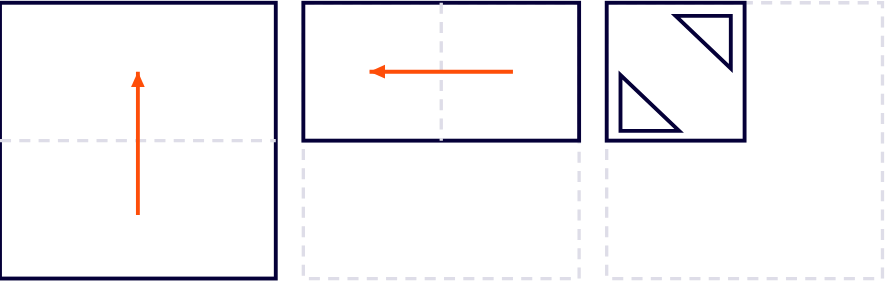
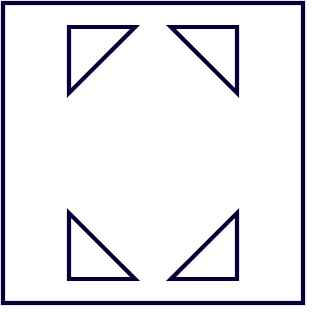
The sequence of folding a piece of paper and the manner in which the folded paper is cut is shown in the following figures. How would this paper look when unfolded?
figure
कागज के एक टुकड़े को मोड़ने का क्रम तथा मुड़े हुए कागज को जिस प्रकार काटा गया है, वह निम्नलिखित आकृतियों में दर्शाया गया है। खोलने पर यह कागज कैसा दिखाई देगा?
figure
  1. Afigure
  2. Bfigure
  3. Cfigure
  4. Dfigure
Show answer

Concept: Each cut is repeated in every layer; unfold step by step as mirror images about fold lines.

  1. Fold 1: bottom half onto top; fold 2: right half onto left → 4 layers in the top-left quarter.
  2. Two triangle cuts lie inside the quarter (not on a fold line) → each opens into 4 triangles.
  3. Total 2 × 4 = 8 triangles, symmetric about both fold lines – as in option (A).

Trick: Holes after unfolding = cuts × number of layers (when no cut touches a fold).

Answer: (A) Figure (A)

अवधारणा: हर कट सभी परतों में बनता है; खोलते समय मोड़-रेखा के सापेक्ष दर्पण-प्रतिबिंब बनाते जाएँ।

  1. पहला मोड़: निचला आधा ऊपर; दूसरा मोड़: दायाँ आधा बाएँ → ऊपर-बाएँ चौथाई में 4 परतें।
  2. दोनों त्रिभुज-कट मोड़ की रेखा को नहीं छूते → खुलने पर हर कट चार अलग त्रिभुज देगा।
  3. कुल त्रिभुज = 8 (2 × 4), चारों चौथाइयों में दर्पण-जैसी व्यवस्था में – विकल्प (A)।

ट्रिक: खोलने पर छेद = कटों की संख्या × परतों की संख्या (जब कट मोड़ पर न हो)।

उत्तर: (A) आकृति (A)

SSC GDGeneral Intelligence & ReasoningPaper folding and cuttingSSC GD 2025 · 17 Feb Shift 1 →
Q1712.
What should come in place of the question mark (?) in the given series?
645, 650, 656, 663, 671, ?
दी गई शृंखला में प्रश्नवाचक चिह्न (?) के स्थान पर क्या आना चाहिए?
645, 650, 656, 663, 671, ?
  1. A676
  2. B677
  3. C680
  4. D679
Show answer

Concept: Differences increase by 1 each time.

  1. Differences: +5, +6, +7, +8
  2. Next difference = +9
  3. 671 + 9 = 680

Trick: Last digits 5→0→6→3→1: just add 9 to 671 – the answer ends in 0, so (C) at once.

Answer: (C) 680

अवधारणा: अंतर हर बार 1 बढ़ता है।

  1. अंतर: +5, +6, +7, +8
  2. अगला अंतर = +9
  3. 671 + 9 = 680

ट्रिक: 671 + 9 का इकाई अंक 0 होगा – केवल 680 मेल खाता है।

उत्तर: (C) 680

SSC GDGeneral Intelligence & ReasoningNumber series – increasing differenceSSC GD 2025 · 17 Feb Shift 1 →
Q1713.
MISC is related to OFUZ in a certain way based on the English alphabetical order. In the same way, ZDEN is related to BAGK. To which of the given options is PVAT related, following the same logic?
अंग्रेजी वर्णमाला क्रम के आधार पर MISC एक निश्चित प्रकार से OFUZ से संबंधित है। उसी प्रकार, ZDEN, BAGK से संबंधित है। उसी तर्क का अनुसरण करते हुए, PVAT दिए गए विकल्पों में से किससे संबंधित है?
  1. ATQBO
  2. BRSCQ
  3. CSTDP
  4. DSTBP
Show answer

Concept: Find the shift on each letter position and apply the same shift.

  1. MISC → OFUZ: M+2=O, I−3=F, S+2=U, C−3=Z.
  2. Check ZDEN → BAGK: Z+2=B, D−3=A, E+2=G, N−3=K ✔.
  3. PVAT: P+2=R, V−3=S, A+2=C, T−3=Q → RSCQ.

Trick: First letter P+2 = R appears only in option (B) – done in one step.

Answer: (B) RSCQ

अवधारणा: हर स्थान के अक्षर पर कितना खिसकाव है, पता करें और वही लागू करें।

  1. MISC → OFUZ: M+2=O, I−3=F, S+2=U, C−3=Z
  2. जाँच ZDEN → BAGK: Z+2=B, D−3=A, E+2=G, N−3=K ✔
  3. PVAT: P+2=R, V−3=S, A+2=C, T−3=Q → RSCQ

ट्रिक: पहला अक्षर P+2 = R केवल विकल्प (B) में है – एक कदम में उत्तर।

उत्तर: (B) RSCQ

SSC GDGeneral Intelligence & ReasoningLetter analogy – +2, −3 patternSSC GD 2025 · 17 Feb Shift 1 →
Q1714.
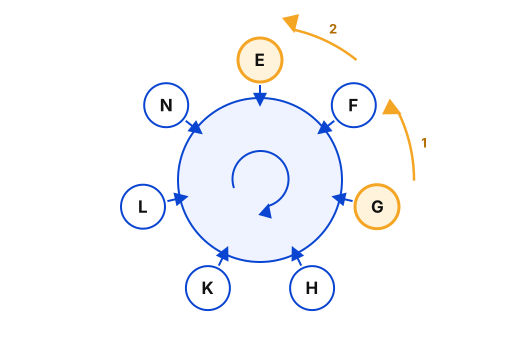
E, F, G, H, K, L and N are sitting around a circular table facing the centre (but not necessarily in the same order) . N sits to the immediate right of E. Only three people sit between N and H when counted from the left of N . Only three people sit between E and K. F sits to the immediate right of G.
How many people sit between E and G when counted from the right of G ?
E, F, G, H, K, L और N एक वृत्ताकार मेज के चारों ओर केंद्र की ओर मुख करके बैठे हैं (आवश्यक नहीं कि इसी क्रम में)। N, E के ठीक दाईं ओर बैठा है। N के बाईं ओर से गिनने पर N और H के बीच केवल तीन व्यक्ति बैठे हैं। E और K के बीच केवल तीन व्यक्ति बैठे हैं। F, G के ठीक दाईं ओर बैठा है।
G के दाईं ओर से गिनने पर E और G के बीच कितने व्यक्ति बैठे हैं?
  1. AThreeतीन
  2. BFourचार
  3. COneएक
  4. DTwoदो
Show answer

Concept: Facing the centre: right = anticlockwise, left = clockwise.

  1. Seats 1–7 clockwise; E = 1. N immediate right of E → N = 7.
  2. From left (clockwise) of N, three between → H = 4.
  3. Three between E and K → K = 5 (other side would hit H).
  4. Free seats 2, 3, 6; F immediate right of G → G = 3, F = 2; L = 6.
  5. From G's right (anticlockwise): G(3) → F(2) → E(1): one person between.

Trick: Facing centre, 'right' moves anticlockwise – draw arrows once and count.

Answer: (C) One

अवधारणा: केंद्र की ओर मुख हो तो दायाँ = वामावर्त, बायाँ = दक्षिणावर्त।

  1. सीट 1–7 दक्षिणावर्त; E = 1। N, E के ठीक दाएँ → N = 7।
  2. N के बाएँ (दक्षिणावर्त) से तीन के बाद → H = 4।
  3. E और K के बीच तीन → K = 5 (दूसरी ओर H से टकराव)।
  4. खाली सीटें 2, 3, 6; F, G के ठीक दाएँ → G = 3, F = 2; L = 6।
  5. G के दाएँ से (वामावर्त): G(3) → F(2) → E(1): बीच में एक व्यक्ति।

ट्रिक: केंद्रमुखी में 'दायाँ' वामावर्त चलता है – एक बार तीर बनाकर गिनें।

उत्तर: (C) एक

SSC GDGeneral Intelligence & ReasoningCircular seating – facing centreSSC GD 2025 · 17 Feb Shift 1 →
Q1715.
Select the combination of letters that when sequentially placed in the blanks of the given series, will logically complete the series.
_QMRN_OTPU_VRWS_TYU_
उन अक्षरों के संयोजन का चयन कीजिए, जिन्हें दी गई शृंखला के रिक्त स्थानों में क्रमिक रूप से रखने पर शृंखला तार्किक रूप से पूर्ण हो जाएगी।
_QMRN_OTPU_VRWS_TYU_
  1. ALSQXZ
  2. BKSNXW
  3. CLRQUZ
  4. DKRNUW
Show answer

Concept: Split the series into equal blocks; each block is the previous one shifted by a fixed number.

  1. Blocks: _QMR | N_OT | PU_V | RWS_ | TYU_
  2. Block 2 vs block 1: every letter is +2 (Q→S, M→O, R→T).
  3. Blocks: LQMR, NSOT, PUQV, RWSX, TYUZ → blanks L, S, Q, X, Z.

Trick: First blank: N − 2 = L, so the answer starts with L; then 2nd blank Q + 2 = S picks (A).

Answer: (A) LSQXZ

अवधारणा: शृंखला को बराबर खंडों में बाँटें; हर खंड पिछले खंड से निश्चित अक्षर आगे है।

  1. खंड: _QMR | N_OT | PU_V | RWS_ | TYU_
  2. खंड 2 बनाम खंड 1: हर अक्षर +2 (Q→S, M→O, R→T)।
  3. खंड: LQMR, NSOT, PUQV, RWSX, TYUZ → रिक्त स्थान L, S, Q, X, Z।

ट्रिक: पहला रिक्त N − 2 = L; दूसरा Q + 2 = S – सीधे (A)।

उत्तर: (A) LSQXZ

SSC GDGeneral Intelligence & ReasoningLetter series – blocks of fourSSC GD 2025 · 17 Feb Shift 1 →
Q1716.
In a certain code language, 'plant more trees' is coded as 'uf gk ro' and 'trees give oxygen' is coded as ' lm xs gk '. How is 'trees' coded in the given language?
एक निश्चित कूट भाषा में, 'plant more trees' को 'uf gk ro' के रूप में तथा 'trees give oxygen' को 'lm xs gk' के रूप में कूटबद्ध किया जाता है। दी गई भाषा में 'trees' को किस प्रकार कूटबद्ध किया जाएगा?
  1. Aro
  2. Buf
  3. Cxs
  4. Dgk
Show answer

Concept: A word that appears in two sentences gets the code that appears in both code groups.

  1. Common word in both sentences: 'trees'.
  2. Common code in 'uf gk ro' and 'lm xs gk': 'gk'.
  3. So trees = gk.

Trick: Never use word order – codes are jumbled; only matching common items works.

Answer: (D) gk

अवधारणा: दो वाक्यों में साझा शब्द का कूट वही होगा जो दोनों कूट-समूहों में साझा है।

  1. दोनों वाक्यों में साझा शब्द: 'trees'।
  2. 'uf gk ro' और 'lm xs gk' में साझा कूट: 'gk'।
  3. अतः trees = gk।

ट्रिक: शब्दों का क्रम न देखें – कूट उलझे होते हैं; केवल साझा शब्द-कूट मिलाएँ।

उत्तर: (D) gk

SSC GDGeneral Intelligence & ReasoningCoding – common word, common codeSSC GD 2025 · 17 Feb Shift 1 →
Q1717.
A dice has its faces marked by letters U, J, T, H, A and S. Two positions of the same dice are given below. Which face is opposite to face J ?
figure
figure
एक पासे के फलकों पर U, J, T, H, A और S अक्षर अंकित हैं। इसी पासे की दो स्थितियाँ नीचे दी गई हैं। J फलक के विपरीत कौन-सा फलक है?
figure
figure
  1. AS
  2. BA
  3. CU
  4. DT
Show answer

Concept: Letters seen next to a face are its neighbours; the one never seen with it is opposite.

  1. U appears in both views at the same place.
  2. View 1 shows A, T beside U; view 2 shows H, S beside U.
  3. So A, T, H, S are the four neighbours of U; the only remaining letter J is opposite U.

Trick: Common face in both views → list its 4 neighbours → the 6th letter is its opposite.

Answer: (C) U

अवधारणा: जो अक्षर किसी फलक के साथ दिखते हैं वे पड़ोसी हैं; जो कभी साथ न दिखे वह विपरीत है।

  1. U दोनों स्थितियों में एक ही जगह दिखता है।
  2. पहली स्थिति में U के साथ A, T; दूसरी में H, S दिखते हैं।
  3. अतः U के चारों पड़ोसी A, T, H, S हैं; बचा अक्षर J, U के विपरीत है।

ट्रिक: दोनों स्थितियों का साझा फलक → उसके 4 पड़ोसी गिनें → छठा अक्षर विपरीत।

उत्तर: (C) U

SSC GDGeneral Intelligence & ReasoningDice – opposite faceSSC GD 2025 · 17 Feb Shift 1 →
Q1718.
The position(s) of how many letters will remain unchanged if each of the letters in the word FUNFAIRS is arranged in reverse English alphabetical order?
यदि शब्द FUNFAIRS के प्रत्येक अक्षर को अंग्रेजी वर्णमाला के विपरीत क्रम में व्यवस्थित किया जाए, तो कितने अक्षरों की स्थिति अपरिवर्तित रहेगी?
  1. AZeroशून्य
  2. BThreeतीन
  3. COneएक
  4. DTwoदो
Show answer

Concept: Write the letters in Z→A order and compare position by position.

  1. Original word: FUNFAIRS.
  2. Arranged Z→A: USRNIFFA.
  3. Place by place (1st to 8th) the two strings differ everywhere – no letter stays put.

Trick: Check only letters that could stay: first must be the largest (U) – F isn't, so scan quickly; none match.

Answer: (A) Zero

अवधारणा: अक्षरों को Z→A क्रम में लिखें और स्थान-दर-स्थान मिलाएँ।

  1. मूल शब्द: FUNFAIRS
  2. Z→A क्रम में: USRNIFFA
  3. दोनों को पहले से आठवें स्थान तक मिलाएँ – किसी भी स्थान पर एक जैसा अक्षर नहीं।

ट्रिक: पहला अक्षर सबसे बड़ा (U) और अंतिम सबसे छोटा (A) होना चाहिए – मूल शब्द में ऐसा नहीं, बाकी भी जल्दी जाँचें।

उत्तर: (A) शून्य

SSC GDGeneral Intelligence & ReasoningLetter rearrangement – reverse orderSSC GD 2025 · 17 Feb Shift 1 →
Q1719.
In a certain code language, GTSU is written as TGHF and KJIE is written as PQRV. How will ALMO be written in the given language?
एक निश्चित कूट भाषा में, GTSU को TGHF लिखा जाता है तथा KJIE को PQRV लिखा जाता है। दी गई भाषा में ALMO को किस प्रकार लिखा जाएगा?
  1. AZYEL
  2. BZLNO
  3. CZONL
  4. DLOGL
Show answer

Concept: Each letter is replaced by its opposite letter (positions add to 27).

  1. G(7) → T(20), T → G, S(19) → H(8), U(21) → F(6): sums = 27.
  2. KJIE → PQRV also follows it.
  3. ALMO: A → Z, L → O, M → N, O → L = ZONL.

Trick: Opposite pairs mnemonic: AZ, BY, … LO ('LOve'), MN ('MaN').

Answer: (C) ZONL

अवधारणा: हर अक्षर को उसके विपरीत अक्षर से बदला गया है (स्थानों का योग 27)।

  1. G(7) → T(20), T → G, S(19) → H(8), U(21) → F(6): योग = 27
  2. KJIE → PQRV भी इसी नियम से।
  3. ALMO: A → Z, L → O, M → N, O → L = ZONL

ट्रिक: विपरीत जोड़े याद रखें: AZ, BY, … LO, MN।

उत्तर: (C) ZONL

SSC GDGeneral Intelligence & ReasoningCoding – opposite lettersSSC GD 2025 · 17 Feb Shift 1 →
Q1720.
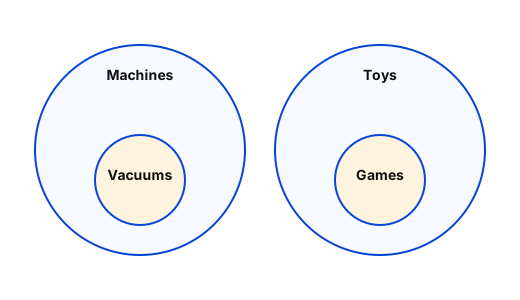
Read the given statements and conclusions carefully. Assuming that the information given in the statements is true, even if it appears to be at variance with commonly known facts, decide which of the given conclusions logically follow(s) from the statements.
Statements:
All vacuums are machines.
No vacuum is a game.
All games are toys.
Conclusions:
(I) No toy is a machine.
(II) Some toys are vacuums.
दिए गए कथनों और निष्कर्षों को ध्यानपूर्वक पढ़िए। यह मानते हुए कि कथनों में दी गई जानकारी सत्य है, चाहे वह सर्वज्ञात तथ्यों से भिन्न प्रतीत होती हो, निर्णय कीजिए कि दिए गए निष्कर्षों में से कौन-सा/से निष्कर्ष कथनों का तार्किक रूप से अनुसरण करता है/करते हैं।
कथन:
सभी वैक्यूम मशीनें हैं।
कोई भी वैक्यूम खेल नहीं है।
सभी खेल खिलौने हैं।
निष्कर्ष:
(I) कोई भी खिलौना मशीन नहीं है।
(II) कुछ खिलौने वैक्यूम हैं।
  1. AOnly conclusion (II) followsकेवल निष्कर्ष (II) अनुसरण करता है
  2. BBoth conclusions (I) and (II) followनिष्कर्ष (I) और (II) दोनों अनुसरण करते हैं
  3. COnly conclusion (I) followsकेवल निष्कर्ष (I) अनुसरण करता है
  4. DNeither conclusion (I) nor (II) followsन तो निष्कर्ष (I) और न ही निष्कर्ष (II) अनुसरण करता है
Show answer

Concept: A conclusion follows only if it is true in every possible diagram.

  1. Vacuum circle inside Machine; Game circle inside Toy; Vacuum and Game separate.
  2. (I) 'No toy is a machine': toys and machines may overlap – not certain.
  3. (II) 'Some toys are vacuums': vacuums may lie fully outside toys – not certain.
  4. Neither follows.

Trick: 'No' + 'All' chains rarely link two outer circles – if no direct link is given, both 'no' and 'some' are doubtful.

Answer: (D) Neither conclusion (I) nor (II) follows

अवधारणा: कोई निष्कर्ष तभी मान्य है जब कथनों से वह निश्चित रूप से निकले – किसी भी चित्र में गलत न हो सके।

  1. वैक्यूम, मशीन के अंदर; खेल, खिलौने के अंदर; वैक्यूम और खेल अलग।
  2. (I) के लिए खिलौना-वृत्त मशीन-वृत्त को काट सकता है, अतः यह पक्का नहीं।
  3. (II) के लिए वैक्यूम-वृत्त को खिलौना-वृत्त से पूरा बाहर रखा जा सकता है, अतः यह भी पक्का नहीं।
  4. कोई भी निष्कर्ष नहीं निकलता।

ट्रिक: जिन दो बाहरी वर्गों के बीच सीधा संबंध न दिया हो, उन पर 'कोई नहीं' और 'कुछ' दोनों संदिग्ध रहते हैं।

उत्तर: (D) न तो निष्कर्ष (I) और न ही निष्कर्ष (II) अनुसरण करता है

SSC GDGeneral Intelligence & ReasoningSyllogismSSC GD 2025 · 17 Feb Shift 1 →