Question bank

Q&A: practice questions with answers

Search questions on any topic. Filter by exam category, exam, subject and topic, try the question, then open the answer and explanation.

Courses – airGurukul

4,200 questions found.

Q1801.
G, H, I, J, M, N and O are sitting around a circular table facing the centre of the table (but not necessarily in the same order). N sits third to the left of I. Only one person sits between I and M when counted from the left of M. Only two people sit between J and O when counted from the right of O. H is an immediate neighbour of J. Who sits third to the right of G?
G, H, I, J, M, N और O एक वृत्ताकार मेज़ के चारों ओर मेज़ के केंद्र की ओर मुख करके बैठे हैं (परंतु आवश्यक नहीं कि इसी क्रम में)। N, I के बाईं ओर तीसरे स्थान पर बैठा है। M के बाईं ओर से गिनने पर I और M के बीच केवल एक व्यक्ति बैठा है। O के दाईं ओर से गिनने पर J और O के बीच केवल दो व्यक्ति बैठे हैं। H, J का निकटतम पड़ोसी है। G के दाईं ओर तीसरे स्थान पर कौन बैठा है?
  1. AI
  2. BO
  3. CN
  4. DH
Show answer

Concept: When all face the centre, left = clockwise and right = anticlockwise.
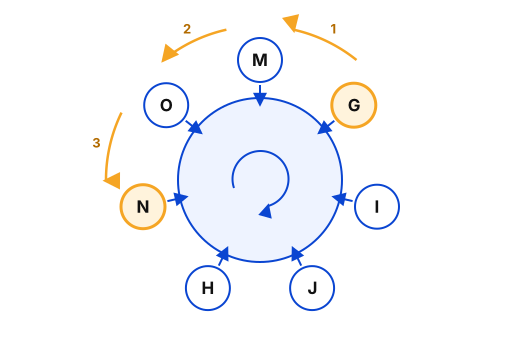
  1. Fix M at seat 1. One person between going left of M ⇒ I at seat 3 (clockwise).
  2. N is 3rd left of I ⇒ seat 6. Free seats: 2, 4, 5, 7.
  3. J is 3 seats to the right (anticlockwise) of O. Only O = 7, J = 4 works; H next to J ⇒ seat 5; G gets seat 2.
  4. Clockwise order: M, G, I, J, H, N, O. Going right (anticlockwise) from G: M → O → N.

Trick: Place the two people linked by a fixed gap first (M–I–N chain), then test the leftover pair J–O in the few empty seats.

Answer: (C) N

अवधारणा: केंद्र की ओर मुख होने पर बायाँ = घड़ी की दिशा, दायाँ = घड़ी की उल्टी दिशा।

हल:

  1. M को सीट 1 पर रखें; M के बाएँ एक व्यक्ति छोड़कर I ⇒ सीट 3।
  2. N, I के बाएँ तीसरा ⇒ सीट 6। खाली सीटें: 2, 4, 5, 7।
  3. J, O के दाएँ तीसरे स्थान पर है ⇒ केवल O = 7, J = 4 सही बैठता है; H, J के पास सीट 5 पर; G सीट 2 पर।
  4. क्रम (घड़ी की दिशा): M, G, I, J, H, N, O। G के दाएँ गिनें: M, O, N।

ट्रिक: पहले निश्चित दूरी वाली कड़ी (M–I–N) बैठाएँ, फिर J–O जोड़ी को बची सीटों में जाँचें।

उत्तर: (C) N
SSC GDGeneral Intelligence & ReasoningCircular seating – facing centreSSC GD 2025 · 13 Feb Shift 3 →
Q1802.
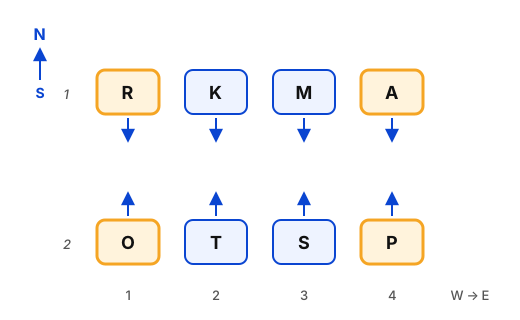
Eight people are sitting in two parallel rows containing 4 people each, in such a way that there is equal distance between adjacent persons.
In row 1 - M, A, R and K are seated and all of them are facing south.
In row 2 - P, O, S and T are seated and all of them are facing north.
Thus each person faces another person from the other row.
T faces the one sitting to the immediate right of M. Only one person sits between T and P. Only two people sit between O and P. P faces the one sitting second to the left of K. R sits at some place to the right of A.
Which of the following options represents both people sitting at the extreme ends of the rows?
आठ व्यक्ति दो समानांतर पंक्तियों में इस प्रकार बैठे हैं कि प्रत्येक पंक्ति में 4 व्यक्ति हैं तथा आसन्न व्यक्तियों के बीच समान दूरी है।
पंक्ति 1 में - M, A, R और K बैठे हैं तथा उन सभी का मुख दक्षिण की ओर है।
पंक्ति 2 में - P, O, S और T बैठे हैं तथा उन सभी का मुख उत्तर की ओर है।
इस प्रकार प्रत्येक व्यक्ति दूसरी पंक्ति के किसी एक व्यक्ति के सम्मुख है।
T का मुख M के ठीक दाईं ओर बैठे व्यक्ति की ओर है। T और P के बीच केवल एक व्यक्ति बैठा है। O और P के बीच केवल दो व्यक्ति बैठे हैं। P का मुख K के बाईं ओर दूसरे स्थान पर बैठे व्यक्ति की ओर है। R, A के दाईं ओर कहीं बैठा है।
निम्नलिखित में से कौन-सा विकल्प पंक्तियों के अंतिम छोरों पर बैठे दोनों व्यक्तियों को दर्शाता है?
  1. AR and SR और S
  2. BA and OA और O
  3. CK and PK और P
  4. DP and KP और K
Show answer

Concept: South-facing row has its right towards our left; north-facing row has its right towards our right.

  1. Two people between O and P ⇒ they occupy the two ends of row 2. One between T and P ⇒ O = 1, T = 2, S = 3, P = 4 (left to right as drawn).
  2. T (pos 2) faces the person to M's immediate right; for a south-facing row 'right' is towards pos 1 ⇒ M = 3.
  3. P (pos 4) faces the one 2nd to the left of K ⇒ K = 2. R must be right of A ⇒ R = 1, A = 4.
  4. Ends: row 1 → R, A; row 2 → O, P. Only 'A and O' are both at ends.

Trick: Just check each option's pair against the four end-seats R, A, O, P – one name at a middle seat kills the option.

Answer: (B) A and O

अवधारणा: दक्षिणमुखी पंक्ति का दायाँ हमारी बाईं ओर और उत्तरमुखी पंक्ति का दायाँ हमारी दाईं ओर होता है।

हल:

  1. O और P के बीच दो लोग ⇒ दोनों पंक्ति 2 के सिरों पर। T और P के बीच एक ⇒ O = 1, T = 2, S = 3, P = 4।
  2. T (स्थान 2) M के ठीक दाएँ वाले के सामने; दक्षिणमुखी के लिए दायाँ = स्थान 1 की ओर ⇒ M = 3।
  3. P (स्थान 4) K के बाएँ दूसरे के सामने ⇒ K = 2; R, A के दाएँ ⇒ R = 1, A = 4।
  4. सिरों पर: R, A, O, P ⇒ केवल 'A और O' दोनों सिरों पर हैं।

ट्रिक: विकल्पों की जोड़ी को चारों सिरे वाले नामों (R, A, O, P) से मिलाएँ।

उत्तर: (B) A और O

SSC GDGeneral Intelligence & ReasoningLinear seating – two facing rowsSSC GD 2025 · 13 Feb Shift 3 →
Q1803.
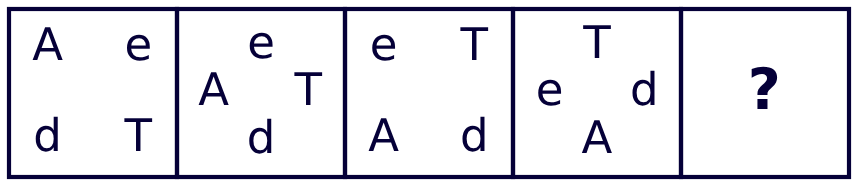
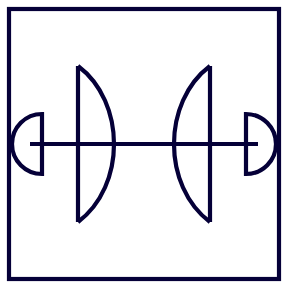
Select the figure from among the given options that can replace the question mark (?) in the following series.
figure
दिए गए विकल्पों में से वह आकृति चुनिए जो निम्नलिखित शृंखला में प्रश्नवाचक चिह्न (?) के स्थान पर आ सकती है।
figure
  1. Afigure
  2. Bfigure
  3. Cfigure
  4. Dfigure
Show answer

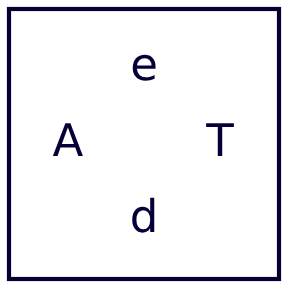
Concept: The four letters A, e, T, d move together by 45° anticlockwise each step.

  1. Boxes alternate: corners → mid-edges → corners → mid-edges, so box 5 has letters at corners.
  2. In box 4: T top, e left, d right, A bottom.
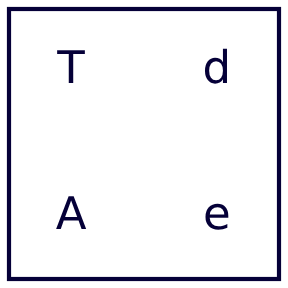
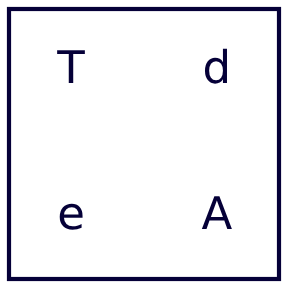
  3. Move each 45° anticlockwise: T → top-left, d → top-right, A → bottom-right, e → bottom-left.
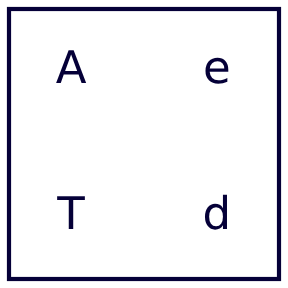
  4. Option (c) matches; (a) has A and e swapped (that would be clockwise).

Trick: Track just one letter (T) for direction, then one more to separate the two look-alike options.

Answer: (C)

अवधारणा: चारों अक्षर A, e, T, d हर चरण में एक साथ 45° वामावर्त (anticlockwise) घूमते हैं।

हल:

  1. अक्षर बारी-बारी से कोनों और भुजाओं के मध्य पर आते हैं ⇒ 5वीं आकृति में कोनों पर।
  2. चौथी आकृति: T ऊपर, e बाएँ, d दाएँ, A नीचे।
  3. 45° वामावर्त घुमाने पर ऊपरी कोनों में T (बायाँ) व d (दायाँ), निचले कोनों में e (बायाँ) व A (दायाँ)।
  4. यह विकल्प (c) से मेल खाता है; (a) में A और e उलटे हैं।

ट्रिक: दिशा के लिए केवल T को देखें, फिर एक और अक्षर से मिलते-जुलते विकल्प अलग करें।

उत्तर: (C)

SSC GDGeneral Intelligence & ReasoningFigure series – rotating lettersSSC GD 2025 · 13 Feb Shift 3 →
Q1804.
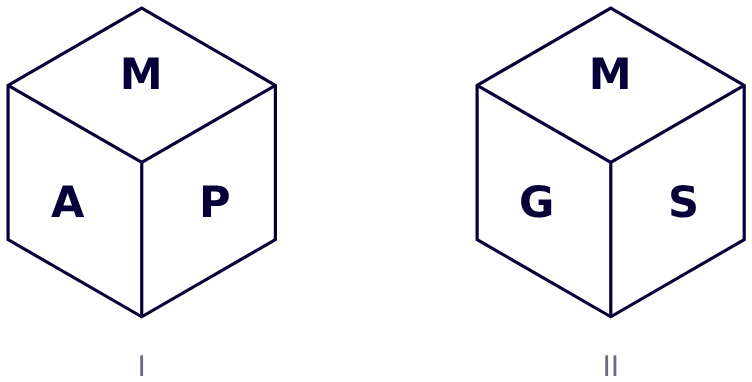
A dice has its faces marked by letters G, S, M, A, I and P. Two positions of the same dice are shown in the given figures. Which face is opposite to face I ?
figure
एक पासे के फलकों पर G, S, M, A, I और P अक्षर अंकित हैं। दिए गए चित्रों में उसी पासे की दो स्थितियाँ दर्शाई गई हैं। फलक I के विपरीत कौन-सा फलक है?
figure
  1. AP
  2. BG
  3. CM
  4. DS
Show answer

Concept: Faces seen together with a face are adjacent to it; the one never seen with it is opposite.

  1. M is on top in both positions.
  2. Side faces shown: A, P (fig. 1) and G, S (fig. 2) – all four touch M.
  3. Only I never appears with M ⇒ I is opposite M.

Trick: Common face in both views → the letter missing from all its neighbours is its opposite.

Answer: (C) M

अवधारणा: जो फलक किसी फलक के साथ दिखते हैं वे आसन्न हैं; जो कभी साथ नहीं दिखता वह विपरीत है।

हल:

  1. दोनों स्थितियों में M ऊपर है।
  2. M के साथ A, P (पहली) और G, S (दूसरी) दिखते हैं ⇒ ये चारों आसन्न।
  3. केवल I कभी M के साथ नहीं दिखा ⇒ I के विपरीत M।

ट्रिक: साझा फलक के चार पड़ोसी गिनें, बचा हुआ अक्षर ही विपरीत है।

उत्तर: (C) M

SSC GDGeneral Intelligence & ReasoningDice – opposite faceSSC GD 2025 · 13 Feb Shift 3 →
Q1805.
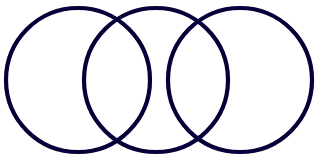
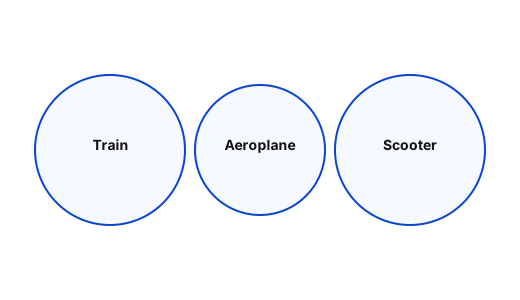
Select the Venn diagram that best illustrates the relationship among the following classes.
Train, Aeroplane, Scooter
उस वेन आरेख का चयन कीजिए जो निम्नलिखित वर्गों के बीच संबंध को सर्वोत्तम रूप से दर्शाता है।
रेलगाड़ी, वायुयान, स्कूटर
  1. Afigure
  2. Bfigure
  3. Cfigure
  4. Dfigure
Show answer

Concept: Classes with no common member are drawn as separate circles.

  1. Train, aeroplane and scooter are three different vehicle types.
  2. No member belongs to two classes at once.
  3. So three disjoint circles – option (a).

Trick: Ask 'can one thing be both?' for each pair; three 'No's = three separate circles.

Answer: (A)

अवधारणा: जिन वर्गों में कोई साझा सदस्य नहीं, उन्हें अलग-अलग वृत्तों से दिखाते हैं।

हल:

  1. रेल, हवाई जहाज़ और स्कूटर तीन अलग वाहन हैं।
  2. कोई भी वस्तु दो वर्गों में एक साथ नहीं।
  3. इसलिए तीन अलग वृत्त – विकल्प (a)।

ट्रिक: हर जोड़ी पर पूछें 'क्या कोई चीज़ दोनों हो सकती है?' – तीनों बार 'नहीं' तो तीन अलग वृत्त।

उत्तर: (A)

SSC GDGeneral Intelligence & ReasoningVenn diagram – unrelated classesSSC GD 2025 · 13 Feb Shift 3 →
Q1806.
In a certain code language, 'CAMS' is coded as ' 8137 ' and 'MACK' is coded as '1238'. What is the code for ' K ' in the given code language?
एक निश्चित कूट भाषा में, 'CAMS' को ' 8137 ' के रूप में तथा 'MACK' को '1238' के रूप में कूटबद्ध किया जाता है। दी गई कूट भाषा में ' K ' का कूट क्या है?
  1. A2
  2. B1
  3. C8
  4. D3
Show answer

Concept: Letters common to two words share the digits common to their codes.

  1. CAMS = 8137, MACK = 1238.
  2. Common letters C, A, M ↔ common digits 1, 3, 8.
  3. Leftover in MACK: letter K ↔ digit 2.

Trick: Cancel the common digits; the odd digit belongs to the odd letter.

Answer: (A) 2

अवधारणा: दोनों शब्दों के साझा अक्षरों के कोड भी दोनों कोडों में साझा होते हैं।

हल:

  1. CAMS = 8137, MACK = 1238।
  2. साझा अक्षर C, A, M ↔ साझा अंक 1, 3, 8।
  3. MACK में बचा अक्षर K ↔ बचा अंक 2।

ट्रिक: साझा अंक काट दें, बचा अंक बचे अक्षर का है।

उत्तर: (A) 2

SSC GDGeneral Intelligence & ReasoningCoding – common letter eliminationSSC GD 2025 · 13 Feb Shift 3 →
Q1807.
What should come in place of the question mark (?) in the given series? 109 119 130 142 155 ?
दी गई शृंखला में प्रश्नवाचक चिह्न (?) के स्थान पर क्या आना चाहिए? 109 119 130 142 155 ?
  1. A169
  2. B161
  3. C168
  4. D160
Show answer

Concept: Differences grow by 1 each time.

  1. Differences: +10, +11, +12, +13.
  2. Next difference: +14.
  3. 155 + 14 = 169.

Trick: Once you spot +10, +11, … just add the next one to the last term.

Answer: (A) 169

अवधारणा: क्रमिक अंतर हर बार 1 बढ़ता है।

हल:

  1. अंतर: +10, +11, +12, +13।
  2. अगला अंतर +14।
  3. 155 + 14 = 169।

ट्रिक: अंतर का क्रम पकड़ते ही अंतिम पद में अगला अंतर जोड़ दें।

उत्तर: (A) 169

SSC GDGeneral Intelligence & ReasoningNumber series – increasing differenceSSC GD 2025 · 13 Feb Shift 3 →
Q1808.
Based on the English alphabetical order, three of the following four letter-clusters are alike in a certain way and thus form a group. Which letter-cluster DOES NOT belong to that group?
(Note: The odd man out is not based on the number of consonants/vowels or their position in the letter-cluster.)
अंग्रेजी वर्णमाला क्रम के आधार पर, निम्नलिखित चार अक्षर-समूहों में से तीन एक निश्चित प्रकार से समान हैं और इस प्रकार एक समूह बनाते हैं। कौन-सा अक्षर-समूह उस समूह से संबंधित नहीं है?
(नोट: विषम पद अक्षर-समूह में व्यंजनों/स्वरों की संख्या अथवा उनकी स्थिति पर आधारित नहीं है।)
  1. AUIW
  2. BLZN
  3. CKYM
  4. DHUJ
Show answer

Concept: Check the gap between 1st→2nd and 2nd→3rd letters in each cluster.

  1. 1st→3rd is +2 in all four (U→W, L→N, K→M, H→J) – not useful.
  2. Count forward 1st→2nd (wrapping after Z): U→I = 14 steps, L→Z = 14 steps, K→Y = 14 steps.
  3. H→U is only 13 steps (H+14 would be V). So HUJ is odd.

Trick: Faster: count 3rd→2nd letter: W→I, N→Z, M→Y are all +12, but J→U is only +11.

Answer: (D) HUJ

अवधारणा: हर समूह में पहले→दूसरे और पहले→तीसरे अक्षर का अंतर देखें।

हल:

  1. पहले→तीसरे का अंतर सब में +2 है, उससे फ़ैसला नहीं होगा।
  2. पहले→दूसरे अक्षर तक आगे गिनें (Z के बाद A से): U→I, L→Z, K→Y – तीनों में 14 कदम।
  3. H→U केवल 13 कदम (H से 14 आगे V आता) ⇒ HUJ अलग।

ट्रिक: तीसरे से दूसरे अक्षर का अंतर देखें: W→I, N→Z, M→Y में +12, पर J→U में +11।

उत्तर: (D) HUJ

SSC GDGeneral Intelligence & ReasoningOdd one out – letter clustersSSC GD 2025 · 13 Feb Shift 3 →
Q1809.
'ZBUP' is related to 'WZSO' in a certain way based on the English alphabetical order. In the same way, 'VSEX' is related to 'SQCW'. To which of the following is 'GMTC' related, following the same logic?
अंग्रेजी वर्णमाला क्रम के आधार पर 'ZBUP' एक निश्चित प्रकार से 'WZSO' से संबंधित है। उसी प्रकार, 'VSEX', 'SQCW' से संबंधित है। समान तर्क का अनुसरण करते हुए, 'GMTC' निम्नलिखित में से किससे संबंधित है?
  1. ADKRB
  2. BCHSA
  3. CCIUB
  4. DBJSC
Show answer

Concept: Apply the same letter-wise shifts to the new cluster.

  1. ZBUP → WZSO: −3, −2, −2, −1.
  2. VSEX → SQCW: −3, −2, −2, −1 (confirmed).
  3. GMTC: G−3 = D, M−2 = K, T−2 = R, C−1 = B ⇒ DKRB.

Trick: Only the first letter is enough here: G−3 = D, and only option (a) starts with D.

Answer: (A) DKRB

अवधारणा: दोनों उदाहरणों वाला अक्षर-परिवर्तन नए समूह पर लगाएँ।

हल:

  1. ZBUP → WZSO: −3, −2, −2, −1।
  2. VSEX → SQCW: वही −3, −2, −2, −1।
  3. GMTC: G−3 = D, M−2 = K, T−2 = R, C−1 = B ⇒ DKRB।

ट्रिक: पहला अक्षर ही काफ़ी है: G−3 = D, और केवल (a) D से शुरू होता है।

उत्तर: (A) DKRB

SSC GDGeneral Intelligence & ReasoningLetter analogy – position shiftsSSC GD 2025 · 13 Feb Shift 3 →
Q1810.
The position(s) of how many letters will remain unchanged if each letter in the word CRADLES is arranged in the English alphabetical order?
यदि शब्द CRADLES के प्रत्येक अक्षर को अंग्रेजी वर्णमाला क्रम में व्यवस्थित किया जाए, तो कितने अक्षरों की स्थिति अपरिवर्तित रहेगी?
  1. ATwoदो
  2. BThreeतीन
  3. CNoneकोई नहीं
  4. DOneएक
Show answer

Concept: Sort the letters and compare position by position.

  1. Original: C R A D L E S.
  2. Sorted: A C D E L R S.
  3. Same place: L (5th) and S (7th) ⇒ 2 letters.

Trick: Write sorted letters directly under the word and tick matches – takes 10 seconds.

Answer: (A) Two

अवधारणा: अक्षरों को वर्णक्रम में लगाकर स्थान-दर-स्थान मिलाएँ।

हल:

  1. मूल: C R A D L E S।
  2. क्रमबद्ध: A C D E L R S।
  3. समान स्थान: L (5वाँ) और S (7वाँ) ⇒ 2 अक्षर।

ट्रिक: क्रमबद्ध अक्षर शब्द के ठीक नीचे लिखकर मिलान पर निशान लगाएँ।

उत्तर: (A) दो

SSC GDGeneral Intelligence & ReasoningAlphabetical arrangement – unchanged positionsSSC GD 2025 · 13 Feb Shift 3 →
Q1811.
What will come in the place of the question mark '(?)' in the following equation, if '×' and '−' are interchanged and '+' and '÷' are interchanged?
88 ÷ 7 × 4 − 21 + 3 = ?
निम्नलिखित समीकरण में प्रश्नवाचक चिह्न '(?)' के स्थान पर क्या आएगा, यदि '×' और '−' को आपस में बदल दिया जाए तथा '+' और '÷' को आपस में बदल दिया जाए?
88 ÷ 7 × 4 − 21 + 3 = ?
  1. A67
  2. B66
  3. C65
  4. D68
Show answer

Concept: Swap the signs first, then solve using BODMAS.

  1. × ↔ − and + ↔ ÷: 88+7−4×21÷3.
  2. 4×21=84; 84÷3=28.
  3. 88+7−28=67.

Trick: Rewrite the whole expression with new signs before calculating – most errors come from swapping mid-way.

Answer: (A) 67

अवधारणा: पहले चिह्न बदलें, फिर BODMAS से हल करें।

हल:

  1. × ↔ − और + ↔ ÷: 88+7−4×21÷3।
  2. 4×21=84; 84÷3=28।
  3. 88+7−28=67।

ट्रिक: गणना से पहले पूरा व्यंजक नए चिह्नों के साथ दोबारा लिखें।

उत्तर: (A) 67

SSC GDGeneral Intelligence & ReasoningSign interchange – BODMASSSC GD 2025 · 13 Feb Shift 3 →
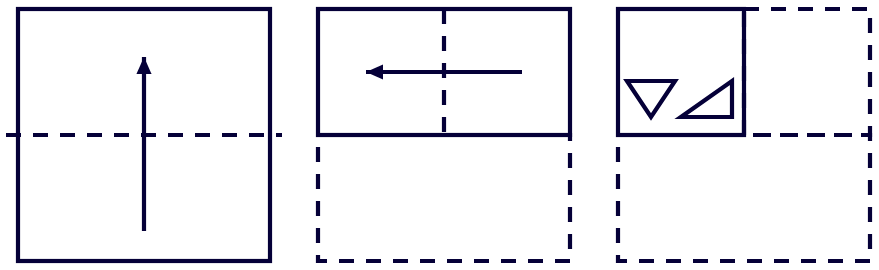
Q1812.
A paper is folded and cut as shown below. How will it appear when unfolded?
figure
एक कागज़ को नीचे दर्शाए अनुसार मोड़ा और काटा जाता है। खोले जाने पर वह कैसा दिखाई देगा?
figure
  1. Afigure
  2. Bfigure
  3. Cfigure
  4. Dfigure
Show answer

Concept: Unfold step by step; each unfold mirrors the cuts across that fold line.

  1. Folds: bottom half up, then right half to left ⇒ cuts are in the top-left quarter.
  2. Unfold the vertical fold ⇒ the pair of triangles is mirrored into the top-right quarter.
  3. Unfold the horizontal fold ⇒ the top row is mirrored downward (points flip).
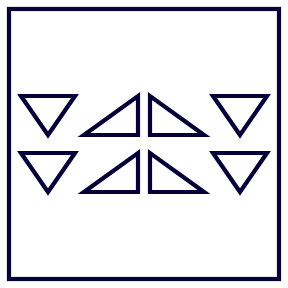
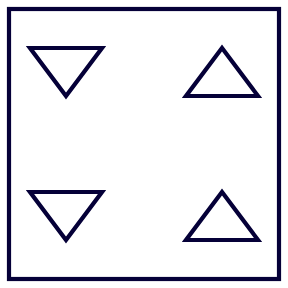
  4. Result: 8 triangles in two rows, lower row a mirror image of upper – option (b).

Trick: Count holes first: 2 cuts × 2 folds ⇒ 2 × 4 = 8 shapes; this removes the 4-triangle option instantly.

Answer: (B)

अवधारणा: हर बार खोलने पर कटे भाग मोड़ की रेखा के पार दर्पण-प्रतिबिंब बनाते हैं।

हल:

  1. नीचे का आधा ऊपर, फिर दायाँ आधा बाएँ ⇒ कट ऊपर-बाएँ चौथाई में।
  2. ऊर्ध्वाधर मोड़ खोलें ⇒ त्रिभुज-जोड़ी ऊपर-दाएँ भी बनती है।
  3. क्षैतिज मोड़ खोलें ⇒ ऊपरी पंक्ति नीचे उलटी (दर्पण) बनती है।
  4. कुल 8 त्रिभुज, निचली पंक्ति ऊपरी का दर्पण – विकल्प (b)।

ट्रिक: पहले छेद गिनें: 2 कट × 4 परतें = 8 आकृतियाँ; 4 त्रिभुज वाला विकल्प तुरंत हटेगा।

उत्तर: (B)

SSC GDGeneral Intelligence & ReasoningPaper folding and cuttingSSC GD 2025 · 13 Feb Shift 3 →
Q1813.
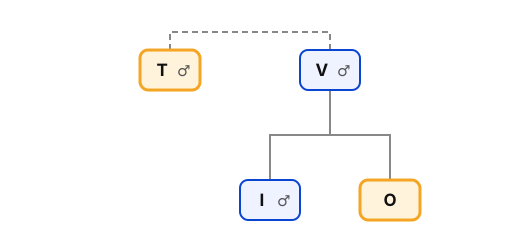
In a certain code language, 'E + M' means 'E is the sister of M', 'E $ M' means 'E is the mother of M', 'E @ M' means 'E is the brother of M' and 'E * M' means 'E is the father of M'. Based on the above, how is T related to O if 'T @ V * I @ O'?
एक निश्चित कूट भाषा में, 'E + M' का अर्थ है 'E, M की बहन है', 'E $ M' का अर्थ है 'E, M की माता है', 'E @ M' का अर्थ है 'E, M का भाई है' तथा 'E * M' का अर्थ है 'E, M का पिता है'। उपर्युक्त के आधार पर, यदि 'T @ V * I @ O' है, तो T, O से किस प्रकार संबंधित है?
  1. AFatherपिता
  2. BFather's brotherपिता का भाई
  3. CMother's motherमाता की माता
  4. DMother's sisterमाता की बहन
Show answer

Concept: Decode each symbol link by link and join the chain.

  1. T @ V ⇒ T is V's brother.
  2. V * I ⇒ V is I's father; I @ O ⇒ I is O's brother, so V is O's father too.
  3. T = brother of O's father ⇒ father's brother.

Trick: Draw a mini tree: brothers on the same level, father one level up – the answer is visible at once.

Answer: (B) Father's brother

अवधारणा: हर चिह्न को क्रम से खोलें और कड़ियाँ जोड़ें।

हल:

  1. T @ V ⇒ T, V का भाई।
  2. V * I ⇒ V, I का पिता; I @ O ⇒ I, O का भाई, अतः V, O का भी पिता।
  3. T = O के पिता का भाई ⇒ चाचा (Father's brother)।

ट्रिक: छोटा परिवार-वृक्ष बनाएँ: भाई एक स्तर पर, पिता एक स्तर ऊपर।

उत्तर: (B) पिता का भाई

SSC GDGeneral Intelligence & ReasoningCoded blood relationsSSC GD 2025 · 13 Feb Shift 3 →
Q1814.
Select the combination of letters that when filled in the blanks in the same sequence will make the series logically complete. _GDIF_HMJO_QNSP_RWT_
उस अक्षर-संयोजन का चयन कीजिए, जिसे रिक्त स्थानों में उसी क्रम में भरने पर शृंखला तार्किक रूप से पूर्ण हो जाएगी। _GDIF_HMJO_QNSP_RWT_
  1. ACJMVZ
  2. BBJLVY
  3. CCKMUZ
  4. DBKLUY
Show answer

Concept: The series splits into 4-letter groups following +5, −3, +5.

  1. Put B, K, L, U, Y: BGDI FKHM JOLQ NSPU RWTY.
  2. Each group: B→G (+5), G→D (−3), D→I (+5); same for all.
  3. Group starters B, F, J, N, R rise by +4 – pattern holds.

Trick: Find one complete group (FKHM area: F _ H M with gaps), get the +5/−3/+5 rule, then test only the 1st blank: B fits (B+5 = G).

Answer: (D) BKLUY

अवधारणा: अक्षरों को 4-4 के टुकड़ों में बाँटें; हर टुकड़े में +5, −3, +5 का नियम है।

हल:

  1. B, K, L, U, Y भरने पर: BGDI FKHM JOLQ NSPU RWTY।
  2. हर समूह: B→G (+5), G→D (−3), D→I (+5)।
  3. समूहों के पहले अक्षर B, F, J, N, R में +4 का अंतर।

ट्रिक: पहला रिक्त जाँचें: B+5 = G ⇒ केवल B वाले विकल्प; दूसरा रिक्त F+5 = K ⇒ (d)।

उत्तर: (D) BKLUY

SSC GDGeneral Intelligence & ReasoningLetter series – fill the blanksSSC GD 2025 · 13 Feb Shift 3 →
Q1815.
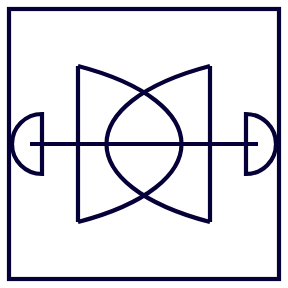
Select the option in which the given figure (X) is embedded (rotation is NOT allowed).
figure
उस विकल्प का चयन कीजिए जिसमें दी गई आकृति (X) सन्निहित है (घुमाने की अनुमति नहीं है)।
figure
  1. Afigure
  2. Bfigure
  3. Cfigure
  4. Dfigure
Show answer

Concept: Find the exact shape, same size and orientation, inside an option.

  1. Figure X: two arcs crossing twice, making an upright pointed lens with four tails to the corners.
  2. No rotation ⇒ lens must stand vertical.
  3. Only option (d) shows the crossing arcs with the lens and all four tails; others lack the crossing.

Trick: Look for the most unique part (the vertical lens formed by crossing arcs) and scan options for just that.

Answer: (D)

अवधारणा: दी गई आकृति उसी आकार और दिशा में विकल्प के भीतर ढूँढ़नी है।

हल:

  1. आकृति X: दो चाप जो दो बार काटते हैं, बीच में खड़ी नुकीली लेंस-आकृति और चार सिरे कोनों तक।
  2. घुमाना मना ⇒ लेंस खड़ा ही रहना चाहिए।
  3. केवल विकल्प (d) में कटते चाप, लेंस और चारों सिरे मिलते हैं।

ट्रिक: आकृति का सबसे अलग हिस्सा (खड़ा लेंस) चुनें और केवल उसे विकल्पों में खोजें।

उत्तर: (D)

SSC GDGeneral Intelligence & ReasoningEmbedded figureSSC GD 2025 · 13 Feb Shift 3 →
Q1816.
What should come in place of the question mark (?) in the given series based on the English alphabetical order? BTD YQA VNX ? PHR
अंग्रेजी वर्णमाला क्रम के आधार पर दी गई शृंखला में प्रश्नवाचक चिह्न (?) के स्थान पर क्या आना चाहिए? BTD YQA VNX ? PHR
  1. ARJV
  2. BSKU
  3. CSKV
  4. DRKU
Show answer

Concept: Each letter position moves back by 3.

  1. 1st letters: B, Y, V, ?, P ⇒ V−3 = S.
  2. 2nd letters: T, Q, N, ?, H ⇒ N−3 = K.
  3. 3rd letters: D, A, X, ?, R ⇒ X−3 = U ⇒ SKU.

Trick: Check with the last term: S−3 = P, K−3 = H, U−3 = R ✔.

Answer: (B) SKU

अवधारणा: हर स्थान का अक्षर 3 पीछे जाता है।

हल:

  1. पहले अक्षर: B, Y, V, ?, P ⇒ V−3 = S।
  2. दूसरे: T, Q, N, ?, H ⇒ N−3 = K।
  3. तीसरे: D, A, X, ?, R ⇒ X−3 = U ⇒ SKU।

ट्रिक: अंतिम पद से जाँचें: S−3 = P, K−3 = H, U−3 = R ✔।

उत्तर: (B) SKU

SSC GDGeneral Intelligence & ReasoningLetter-cluster seriesSSC GD 2025 · 13 Feb Shift 3 →
Q1817.
What should come in place of the question mark (?) in the given series? 823 822 820 817 813 ?
दी गई शृंखला में प्रश्नवाचक चिह्न (?) के स्थान पर क्या आना चाहिए? 823 822 820 817 813 ?
  1. A807
  2. B810
  3. C808
  4. D809
Show answer

Concept: Subtract consecutive numbers 1, 2, 3, 4, …

  1. 823−1=822,−2=820,−3=817,−4=813.
  2. Next subtraction: 5.
  3. 813−5=808.

Trick: Same pattern as triangular numbers: total fall after n steps = n(n+1)2; after 5 steps 823−15=808.

Answer: (C) 808

अवधारणा: क्रम से 1, 2, 3, 4, … घटाए जा रहे हैं।

हल:

  1. 823−1=822,−2=820,−3=817,−4=813।
  2. अगला −5।
  3. 813−5=808।

ट्रिक: 5 चरणों में कुल कमी = 1+2+3+4+5=15 ⇒ 823−15=808।

उत्तर: (C) 808

SSC GDGeneral Intelligence & ReasoningNumber series – decreasing by 1, 2, 3…SSC GD 2025 · 13 Feb Shift 3 →
Q1818.
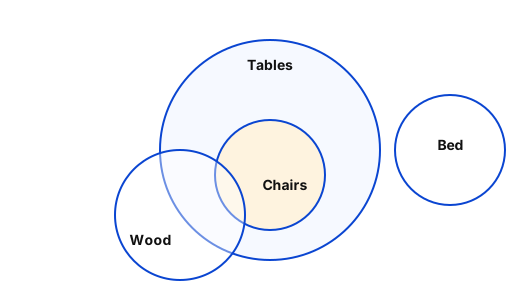
Read the given statements and conclusions carefully. Assuming that the information given in the statements is true, even if it appears to be at variance with commonly known facts, decide which of the given conclusions logically follow(s) from the statements.
Statements:
Some wood are chairs.
All chairs are tables.
No table is a bed.
Conclusions:
(I): Some wood are table.
(II): All chairs are beds.
दिए गए कथनों और निष्कर्षों को ध्यानपूर्वक पढ़िए। यह मानते हुए कि कथनों में दी गई सूचना सत्य है, चाहे वह सर्वज्ञात तथ्यों से भिन्न प्रतीत होती हो, निर्णय कीजिए कि दिए गए निष्कर्षों में से कौन-सा/से कथनों का तार्किक रूप से अनुसरण करता है/करते हैं।
कथन:
कुछ लकड़ियाँ कुर्सियाँ हैं।
सभी कुर्सियाँ मेज़ें हैं।
कोई भी मेज़ बिस्तर नहीं है।
निष्कर्ष:
(I): कुछ लकड़ियाँ मेज़ें हैं।
(II): सभी कुर्सियाँ बिस्तर हैं।
  1. ABoth conclusions (I) and (II) follow.निष्कर्ष (I) और (II) दोनों अनुसरण करते हैं।
  2. BOnly conclusion (II) follows.केवल निष्कर्ष (II) अनुसरण करता है।
  3. CNeither conclusion (I) nor (II) follows.न तो निष्कर्ष (I) और न ही (II) अनुसरण करता है।
  4. DOnly conclusion (l) follows.केवल निष्कर्ष (I) अनुसरण करता है।
Show answer

Concept: Use 'Some + All ⇒ Some' and 'All + No ⇒ No'.

  1. Some wood are chairs + All chairs are tables ⇒ Some wood are tables. (I) follows.
  2. All chairs are tables + No table is bed ⇒ No chair is bed. (II) is false.
  3. So only (I) follows.

Trick: Some+All = Some; All+No = No – these two combos solve most SSC syllogisms.

Answer: (D) Only conclusion (l) follows.

अवधारणा: 'कुछ + सभी ⇒ कुछ' तथा 'सभी + कोई नहीं ⇒ कोई नहीं' नियम लगाएँ।

हल:

  1. 'कुछ wood = chair' और 'सभी chair = table' मिलाकर ⇒ कुछ wood, table हैं – (I) निश्चित।
  2. सभी chair, table में हैं और table व bed का मेल नहीं ⇒ chair भी bed नहीं हो सकती – (II) ग़लत।
  3. इसलिए सिर्फ़ पहला निष्कर्ष सही बैठता है।

ट्रिक: कुछ+सभी = कुछ; सभी+कोई नहीं = कोई नहीं।

उत्तर: (D) केवल निष्कर्ष (I) अनुसरण करता है।

SSC GDGeneral Intelligence & ReasoningSyllogismSSC GD 2025 · 13 Feb Shift 3 →
Q1819.
In a certain code language, 'DAMS' is coded as '7803' and 'MASK' is coded as '0386'. What is the code for ' K ' in the given code language?
एक निश्चित कूट भाषा में, 'DAMS' को '7803' के रूप में तथा 'MASK' को '0386' के रूप में कूटबद्ध किया जाता है। दी गई कूट भाषा में ' K ' का कूट क्या है?
  1. A3
  2. B8
  3. C0
  4. D6
Show answer

Concept: Common letters of the two words map to the common digits of their codes.

  1. DAMS = 7803, MASK = 0386.
  2. Common A, M, S ↔ common 0, 3, 8.
  3. Leftover in MASK: K ↔ 6 (and D ↔ 7).

Trick: Strike out repeated digits; the unpaired digit in the second code is K.

Answer: (D) 6

अवधारणा: दोनों शब्दों के साझा अक्षरों का कोड दोनों संख्याओं में साझा अंक होते हैं।

हल:

  1. DAMS = 7803, MASK = 0386।
  2. साझा A, M, S ↔ साझा 0, 3, 8।
  3. MASK में बचा K ↔ 6 (D ↔ 7)।

ट्रिक: दोहराए अंक काटें; दूसरे कोड का बचा अंक K का है।

उत्तर: (D) 6

SSC GDGeneral Intelligence & ReasoningCoding – common letter eliminationSSC GD 2025 · 13 Feb Shift 3 →
Q1820.
KIFG is related to HFCD in a certain way based on the English alphabetical order. In the same way, AYVW is related to XVST. To which of the given options is CAXY related, following the same logic?
अंग्रेजी वर्णमाला क्रम के आधार पर KIFG एक निश्चित प्रकार से HFCD से संबंधित है। उसी प्रकार, AYVW, XVST से संबंधित है। समान तर्क का अनुसरण करते हुए, दिए गए विकल्पों में से CAXY किससे संबंधित है?
  1. AZYTB
  2. BZXTV
  3. CZXUV
  4. DZWTV
Show answer

Concept: Every letter shifts 3 places backward (wrapping A → X).

  1. KIFG → HFCD: each −3.
  2. AYVW → XVST: each −3 (A−3 = X).
  3. CAXY: C→Z, A→X, X→U, Y→V ⇒ ZXUV.

Trick: Options differ only in the 3rd letter: X−3 = U picks (c) straight away.

Answer: (C) ZXUV

अवधारणा: हर अक्षर 3 स्थान पीछे जाता है (A से पीछे Z, Y, X)।

हल:

  1. KIFG → HFCD: हर अक्षर −3।
  2. AYVW → XVST: हर अक्षर −3।
  3. CAXY: C→Z, A→X, X→U, Y→V ⇒ ZXUV।

ट्रिक: विकल्पों में फर्क तीसरे अक्षर में है: X−3 = U ⇒ (c)।

उत्तर: (C) ZXUV

SSC GDGeneral Intelligence & ReasoningLetter analogy – uniform shiftSSC GD 2025 · 13 Feb Shift 3 →