Question bank

Q&A: practice questions with answers

Search questions on any topic. Filter by exam category, exam, subject and topic, try the question, then open the answer and explanation.

Courses – airGurukul

53,050 questions in the question bank.

Q3661.
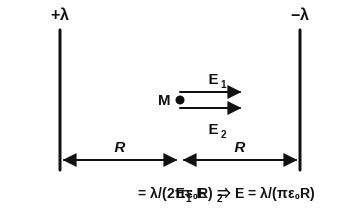
Two parallel infinite line charges with linear charge densities +λ C/m and −λ C/m are placed at a distance of 2R in free space. What is the electric field mid-way between the two line charges?
रेखीय आवेश घनत्व +λ C/m तथा −λ C/m वाले दो समांतर अनंत रेखीय आवेश मुक्त आकाश में 2R दूरी पर रखे हैं। दोनों रेखीय आवेशों के ठीक मध्य में विद्युत क्षेत्र क्या है?
  1. AZeroशून्य
  2. B2λπε0R N/C
  3. Cλπε0R N/C
  4. Dλ2πε0R N/C
Show answer

Concept: Field of an infinite line charge: E=λ2πε0r.

  1. At the midpoint r = R from each line: each field =λ2πε0R.
  2. Field of +λ points away from it, field of −λ points towards it → both point towards −λ (they add).
  3. E=2×λ2πε0R=λπε0R N/C

Short trick: Opposite charges → fields add at the midpoint (like charges would cancel to zero).

Answer: (C) λπε0R N/C

अवधारणा: अनंत रेखीय आवेश का क्षेत्र: E=λ2πε0r।

  1. मध्य बिंदु पर प्रत्येक रेखा से r = R: प्रत्येक क्षेत्र =λ2πε0R।
  2. +λ का क्षेत्र उससे दूर, −λ का क्षेत्र उसकी ओर → दोनों −λ की ओर (जुड़ते हैं)।
  3. E=2×λ2πε0R=λπε0R N/C

शॉर्ट ट्रिक: विपरीत आवेश → मध्य बिंदु पर क्षेत्र जुड़ते हैं (समान आवेशों के लिए शून्य होता)।

उत्तर: (C) λπε0R N/C

NEET UGPhysicsElectrostatics – field of infinite line chargesNEET UG 2019 · 5 May Shift 1 →
Q3662.
Two point charges A and B, having charges +Q and −Q respectively, are placed at certain distance apart and force acting between them is F. If 25% charge of A is transferred to B, then force between the charges becomes :
दो बिंदु आवेश A तथा B, जिन पर क्रमशः +Q तथा −Q आवेश हैं, एक निश्चित दूरी पर रखे हैं तथा उनके बीच बल F है। यदि A का 25% आवेश B को स्थानांतरित कर दिया जाए, तो आवेशों के बीच बल हो जाता है :
  1. AF
  2. B9F16
  3. C16F9
  4. D4F3
Show answer

Concept: F∝qAqB at fixed distance.

  1. Charge transferred =Q4. A: Q−Q4=3Q4; B: −Q+Q4=−3Q4.
  2. F′=F×(3Q/4)2Q2=9F16

Short trick: Both magnitudes become 3/4 → force × (3/4)² = 9/16.

Answer: (B) 9F16

अवधारणा: नियत दूरी पर F∝qAqB।

  1. स्थानांतरित आवेश =Q4। A: Q−Q4=3Q4; B: −Q+Q4=−3Q4।
  2. F′=F×(3Q/4)2Q2=9F16

शॉर्ट ट्रिक: दोनों परिमाण 3/4 हो जाते हैं → बल × (3/4)² = 9/16।

उत्तर: (B) 9F16

NEET UGPhysicsElectrostatics – Coulomb’s lawNEET UG 2019 · 5 May Shift 1 →
Q3663.
A small hole of area of cross-section 2 mm2 is present near the bottom of a fully filled open tank of height 2 m. Taking g = 10 m/s2, the rate of flow of water through the open hole would be nearly
2 m ऊँचाई के पूर्णतः भरे खुले टैंक की तली के पास 2 mm2 अनुप्रस्थ-काट क्षेत्रफल का एक छोटा छिद्र है। g = 10 m/s2 लेने पर खुले छिद्र से जल के प्रवाह की दर लगभग होगी
  1. A12.6×10−6 m3/s
  2. B8.9×10−6 m3/s
  3. C2.23×10−6 m3/s
  4. D6.4×10−6 m3/s
Show answer

Concept: Efflux speed v=2gh; volume flow rate Q=Av.

  1. v=2×10×2=40=6.32 m/s
  2. A=2 mm2=2×10⁻⁶ m2
  3. Q=2×10−6×6.32=12.6×10⁻⁶ m3/s

Short trick: 40≈6.3; double it → 12.6. Remember mm² = 10⁻⁶ m².

Answer: (A) 12.6×10⁻⁶ m3/s

अवधारणा: बहिःस्राव वेग v=2gh; आयतन प्रवाह दर Q=Av।

  1. v=2×10×2=40=6.32 m/s
  2. A=2 mm2=2×10⁻⁶ m2
  3. Q=2×10−6×6.32=12.6×10⁻⁶ m3/s

शॉर्ट ट्रिक: 40≈6.3; इसका दोगुना → 12.6। याद रखें mm² = 10⁻⁶ m²।

उत्तर: (A) 12.6×10⁻⁶ m3/s

NEET UGPhysicsFluids – Torricelli’s theoremNEET UG 2019 · 5 May Shift 1 →
Q3664.

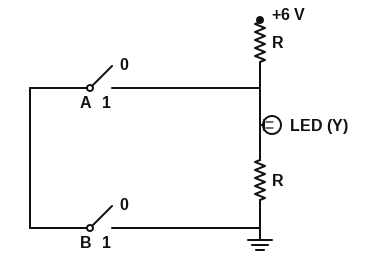
The correct Boolean operation represented by the circuit diagram drawn is :

ऊपर बनाए गए परिपथ आरेख द्वारा निरूपित सही बूलियन संक्रिया है :
  1. AAND
  2. BOR
  3. CNAND
  4. DNOR
Show answer

Concept: Switches A and B are in series, and this series path is connected in parallel with the LED branch (from the junction below the upper R to ground).

  1. If either switch is open (0), the series path is broken → current flows through the LED → Y = 1.
  2. Only when A = 1 and B = 1 does the series path short the LED branch to ground → LED off → Y = 0.
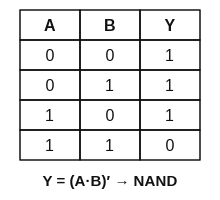
  3. Truth table: 00→1, 01→1, 10→1, 11→0 → Y=A⋅B― = NAND.

Short trick: Series switches = AND; switches placed across (shorting) the output invert it → NAND. (Parallel switches across output → NOR.)

Answer: (C) NAND

अवधारणा: स्विच A तथा B श्रेणी में हैं, और यह श्रेणी पथ LED शाखा के समांतर (ऊपरी R के नीचे की संधि से भू-संपर्क तक) जुड़ा है।

  1. यदि कोई भी स्विच खुला (0) है, तो श्रेणी पथ टूटा है → धारा LED से बहती है → Y = 1।
  2. केवल A = 1 तथा B = 1 होने पर श्रेणी पथ LED शाखा को भू-संपर्क से लघुपथित कर देता है → LED बंद → Y = 0।
  3. सत्यमान सारणी: 00→1, 01→1, 10→1, 11→0 → Y=A⋅B― = NAND।

शॉर्ट ट्रिक: श्रेणी स्विच = AND; आउटपुट के आर-पार (लघुपथन करते) स्विच उसे उलट देते हैं → NAND। (आउटपुट के आर-पार समांतर स्विच → NOR।)

उत्तर: (C) NAND

NEET UGPhysicsSemiconductor electronics – logic gatesNEET UG 2019 · 5 May Shift 1 →
Q3665.
In which of the following processes, heat is neither absorbed nor released by a system?
निम्नलिखित में से किस प्रक्रम में निकाय द्वारा ऊष्मा न तो अवशोषित होती है और न ही मुक्त होती है?
  1. AIsothermalसमतापीय
  2. BAdiabaticरुद्धोष्म
  3. CIsobaricसमदाबी
  4. DIsochoricसमआयतनिक
Show answer

Concept: Adiabatic process: no heat exchange with surroundings, ΔQ = 0.

  1. Isothermal: ΔT = 0 but heat is exchanged (Q = W).
  2. Isobaric: Q = nCPΔT ≠ 0.
  3. Isochoric: Q = nCVΔT ≠ 0.
  4. Adiabatic: Q = 0 by definition.

Short trick: Adia-batic = "not passing through" – heat cannot cross the walls.

Answer: (B) Adiabatic

अवधारणा: रुद्धोष्म प्रक्रम: परिवेश के साथ ऊष्मा का कोई आदान-प्रदान नहीं, ΔQ = 0।

  1. समतापीय: ΔT = 0 परंतु ऊष्मा का आदान-प्रदान होता है (Q = W)।
  2. समदाबी: Q = nCPΔT ≠ 0।
  3. समआयतनिक: Q = nCVΔT ≠ 0।
  4. रुद्धोष्म: परिभाषा से Q = 0।

शॉर्ट ट्रिक: रुद्ध + ऊष्म = ऊष्मा का मार्ग रुद्ध – दीवारों से ऊष्मा पार नहीं होती।

उत्तर: (B) रुद्धोष्म

NEET UGPhysicsThermodynamics – adiabatic processNEET UG 2019 · 5 May Shift 1 →
Q3666.
A 800 turn coil of effective area 0.05 m2 is kept perpendicular to a magnetic field 5×10⁻⁵ T. When the plane of the coil is rotated by 90° around any of its coplanar axis in 0.1 s, the emf induced in the coil will be:
0.05 m2 प्रभावी क्षेत्रफल वाली 800 फेरों की एक कुंडली 5×10⁻⁵ T के चुंबकीय क्षेत्र के लंबवत रखी है। जब कुंडली के तल को उसकी किसी भी समतलीय अक्ष के परितः 0.1 s में 90° घुमाया जाता है, तो कुंडली में प्रेरित विद्युत वाहक बल होगा:
  1. A2 V
  2. B0.2 V
  3. C2×10−3 V
  4. D0.02 V
Show answer

Concept: ε=NΔϕΔt; plane ⊥ B → flux BA; after 90° rotation plane ∥ B → flux 0.

  1. Δϕ=BA−0=5×10−5×0.05=2.5×10⁻⁶ Wb
  2. ε=800×2.5×10−60.1=0.02 V

Short trick: N·B·A/t = 800 × 5×10⁻⁵ × 0.05 / 0.1 → 0.02 V.

Answer: (D) 0.02 V

अवधारणा: ε=NΔϕΔt; तल ⊥ B → फ्लक्स BA; 90° घुमाने पर तल ∥ B → फ्लक्स 0।

  1. Δϕ=BA−0=5×10−5×0.05=2.5×10⁻⁶ Wb
  2. ε=800×2.5×10−60.1=0.02 V

शॉर्ट ट्रिक: N·B·A/t = 800 × 5×10⁻⁵ × 0.05 / 0.1 → 0.02 V।

उत्तर: (D) 0.02 V

NEET UGPhysicsElectromagnetic induction – average induced emfNEET UG 2019 · 5 May Shift 1 →
Q3667.
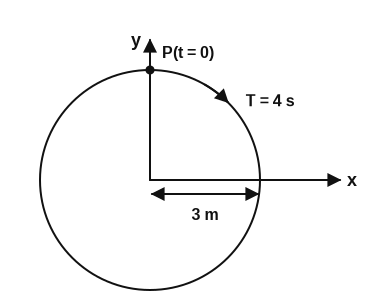
The radius of circle, the period of revolution, initial position and sense of revolution are indicated in the fig.

y-projection of the radius vector of rotating particle P is:
वृत्त की त्रिज्या, परिक्रमण का आवर्तकाल, प्रारंभिक स्थिति तथा परिक्रमण की दिशा चित्र में दर्शाए गए हैं।

घूर्णन करते कण P के त्रिज्या सदिश का y-प्रक्षेप है:
  1. Ay(t)=−3cos⁡2πt, where y in my(t)=−3cos⁡2πt, जहाँ y मीटर में है
  2. By(t)=4sin⁡(πt2), where y in my(t)=4sin⁡(πt2), जहाँ y मीटर में है
  3. Cy(t)=3cos⁡(3πt2), where y in my(t)=3cos⁡(3πt2), जहाँ y मीटर में है
  4. Dy(t)=3cos⁡(πt2), where y in my(t)=3cos⁡(πt2), जहाँ y मीटर में है
Show answer

Concept: Projection of uniform circular motion: y=rcos⁡(ωt+ϕ) with ω=2πT.

  1. r=3 m, ω=2π4=π2 rad/s.
  2. At t = 0, P is on the +y axis → y(0) = +3 m (maximum) → cosine with φ = 0.
  3. Sense (clockwise or anticlockwise) does not change the y-projection when starting at the top: y=3cos⁡(πt2) m.

Short trick: Start at extreme → cos; start at mean → sin. Amplitude = radius (3), ω = 2π/T = π/2.

Answer: (D) y(t)=3cos⁡(πt2)

अवधारणा: एकसमान वृत्तीय गति का प्रक्षेप: y=rcos⁡(ωt+ϕ), जहाँ ω=2πT।

  1. r=3 m, ω=2π4=π2 rad/s।
  2. t = 0 पर P, +y अक्ष पर है → y(0) = +3 m (अधिकतम) → φ = 0 के साथ cosine।
  3. शीर्ष से प्रारंभ होने पर दिशा (दक्षिणावर्त या वामावर्त) y-प्रक्षेप को नहीं बदलती: y=3cos⁡(πt2) m।

शॉर्ट ट्रिक: चरम स्थिति से प्रारंभ → cos; माध्य स्थिति से → sin। आयाम = त्रिज्या (3), ω = 2π/T = π/2।

उत्तर: (D) y(t)=3cos⁡(πt2)

NEET UGPhysicsOscillations – SHM as projection of circular motionNEET UG 2019 · 5 May Shift 1 →
Q3668.
A parallel plate capacitor of capacitance 20 μF is being charged by a voltage source whose potential is changing at the rate of 3 V/s. The conduction current through the connecting wires, and the displacement current through the plates of the capacitor, would be, respectively.
20 μF धारिता का एक समांतर पट्टिका संधारित्र एक वोल्टता स्रोत द्वारा आवेशित किया जा रहा है, जिसका विभव 3 V/s की दर से परिवर्तित हो रहा है। संयोजी तारों में चालन धारा तथा संधारित्र की पट्टिकाओं के बीच विस्थापन धारा क्रमशः होंगी।
  1. AZero, 60 μAशून्य, 60 μA
  2. B60 μA, 60 μA
  3. C60 μA, zero60 μA, शून्य
  4. DZero, zeroशून्य, शून्य
Show answer

Concept: Conduction current Ic=dqdt=CdVdt; displacement current between plates equals it (continuity of current).

  1. Ic=20×10−6×3=60×10−6 A = 60 μA
  2. Id=ε0dϕEdt=Ic=60 μA

Short trick: Displacement current always equals conduction current in a charging capacitor – pick the option with equal values.

Answer: (B) 60 μA, 60 μA

अवधारणा: चालन धारा Ic=dqdt=CdVdt; पट्टिकाओं के बीच विस्थापन धारा इसके बराबर होती है (धारा की सततता)।

  1. Ic=20×10−6×3=60×10−6 A = 60 μA
  2. Id=ε0dϕEdt=Ic=60 μA

शॉर्ट ट्रिक: आवेशित होते संधारित्र में विस्थापन धारा सदैव चालन धारा के बराबर – समान मानों वाला विकल्प चुनें।

उत्तर: (B) 60 μA, 60 μA

NEET UGPhysicsElectromagnetic waves – displacement currentNEET UG 2019 · 5 May Shift 1 →
Q3669.
In an experiment, the percentage of error occurred in the measurement of physical quantities A, B, C and D are 1%, 2%, 3% and 4% respectively. Then the maximum percentage of error in the measurement X, where X=A2B1/2C1/3D3, will be
एक प्रयोग में भौतिक राशियों A, B, C तथा D के मापन में प्रतिशत त्रुटियाँ क्रमशः 1%, 2%, 3% तथा 4% हैं। तब X के मापन में अधिकतम प्रतिशत त्रुटि, जहाँ X=A2B1/2C1/3D3, होगी
  1. A(313)%
  2. B16%
  3. C− 10%
  4. D10%
Show answer

Concept: For a product/quotient of powers, maximum fractional errors add, each multiplied by the magnitude of its power.

  1. ΔXX=2ΔAA+12ΔBB+13ΔCC+3ΔDD
  2. =2(1)+12(2)+13(3)+3(4)=2+1+1+12=16%

Short trick: Errors never subtract (no −10%) – multiply each % by its power and add.

Answer: (B) 16%

अवधारणा: घातों के गुणनफल/भागफल में अधिकतम भिन्नात्मक त्रुटियाँ जुड़ती हैं, प्रत्येक अपनी घात के परिमाण से गुणा होकर।

  1. ΔXX=2ΔAA+12ΔBB+13ΔCC+3ΔDD
  2. =2(1)+12(2)+13(3)+3(4)=2+1+1+12=16%

शॉर्ट ट्रिक: त्रुटियाँ कभी घटती नहीं (−10% नहीं) – प्रत्येक % को उसकी घात से गुणा कर जोड़ें।

उत्तर: (B) 16%

NEET UGPhysicsUnits and measurements – propagation of errorsNEET UG 2019 · 5 May Shift 1 →
Q3670.
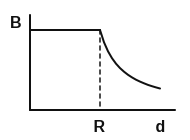
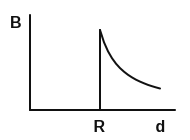
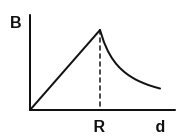
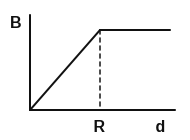
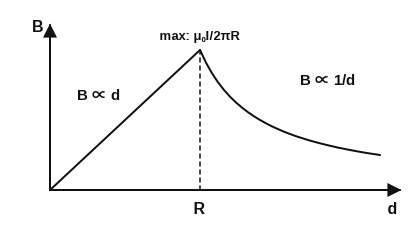
A cylindrical conductor of radius R is carrying a constant current. The plot of the magnitude of the magnetic field. B with the distance d from the centre of the conductor, is correctly represented by the figure :
R त्रिज्या का एक बेलनाकार चालक नियत धारा प्रवाहित कर रहा है। चालक के केंद्र से दूरी d के साथ चुंबकीय क्षेत्र B के परिमाण का आलेख किस चित्र द्वारा सही निरूपित है?
  1. A
  2. B
  3. C
  4. D
Show answer

Concept: Ampere’s law with uniform current density: inside B=μ0Id2πR2, outside B=μ0I2πd.

  1. d < R: B ∝ d → straight line from the origin.
  2. d = R: maximum B=μ0I2πR (continuous, no jump).
  3. d > R: B ∝ 1/d → falls off. This is graph (C).
  4. (A) constant inside – wrong; (B) zero inside (true only for a hollow tube) – wrong; (D) constant outside – wrong.

Short trick: Solid wire: "rise linearly, peak at surface, then 1/d". Hollow pipe: zero inside, 1/d outside.

Answer: (C) linear rise up to R, then 1/d fall

अवधारणा: एकसमान धारा घनत्व के साथ ऐम्पियर नियम: भीतर B=μ0Id2πR2, बाहर B=μ0I2πd।

  1. d < R: B ∝ d → मूलबिंदु से सीधी रेखा।
  2. d = R: अधिकतम B=μ0I2πR (सतत, कोई उछाल नहीं)।
  3. d > R: B ∝ 1/d → घटता है। यह आलेख (C) है।
  4. (A) भीतर नियत – गलत; (B) भीतर शून्य (केवल खोखली नली के लिए सत्य) – गलत; (D) बाहर नियत – गलत।

शॉर्ट ट्रिक: ठोस तार: "रैखिक वृद्धि, पृष्ठ पर शिखर, फिर 1/d"। खोखली नली: भीतर शून्य, बाहर 1/d।

उत्तर: (C) R तक रैखिक वृद्धि, फिर 1/d से कमी

NEET UGPhysicsMoving charges – Ampere’s law for a cylindrical conductorNEET UG 2019 · 5 May Shift 1 →
Q3671.
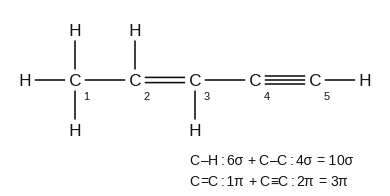
The number of sigma (σ) and pi (π) bonds in pent-2-en-4-yne is
पेन्ट-2-ईन-4-आइन (pent-2-en-4-yne) में सिग्मा (σ) तथा पाई (π) आबंधों की संख्या है
  1. A10σ bonds and 3π bonds10σ आबंध तथा 3π आबंध
  2. B8σ bonds and 5π bonds8σ आबंध तथा 5π आबंध
  3. C11σ bonds and 2π bonds11σ आबंध तथा 2π आबंध
  4. D13σ bonds and no π bonds13σ आबंध तथा कोई π आबंध नहीं
Show answer

Concept: Every single bond = 1σ; a double bond = 1σ + 1π; a triple bond = 1σ + 2π.

  1. Structure: CH3–CH=CH–C≡CH (C5H6).
  2. C–H bonds = 3 + 1 + 1 + 1 = 6 σ; C–C linkages = 4 σ → total 10 σ.
  3. π bonds: C=C gives 1, C≡C gives 2 → 3 π.

Short trick: For an open-chain hydrocarbon CxHy: σ = x + y − 1 = 5 + 6 − 1 = 10; π = degree of unsaturation (no rings) = (2x + 2 − y)/2 = 3.

Answer: (A) 10σ bonds and 3π bonds

अवधारणा: प्रत्येक एकल आबंध = 1σ; द्विआबंध = 1σ + 1π; त्रिआबंध = 1σ + 2π।

  1. संरचना: CH3–CH=CH–C≡CH (C5H6)।
  2. C–H आबंध = 3 + 1 + 1 + 1 = 6 σ; C–C जोड़ = 4 σ → कुल 10 σ।
  3. π आबंध: C=C से 1, C≡C से 2 → 3 π।

शॉर्ट ट्रिक: विवृत-श्रृंखला हाइड्रोकार्बन CxHy के लिए: σ = x + y − 1 = 5 + 6 − 1 = 10; π = असंतृप्तता की कोटि (कोई वलय नहीं) = (2x + 2 − y)/2 = 3।

उत्तर: (A) 10σ आबंध तथा 3π आबंध

NEET UGChemistryChemical bonding – sigma and pi bondsNEET UG 2019 · 5 May Shift 1 →
Q3672.
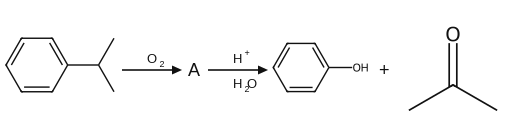
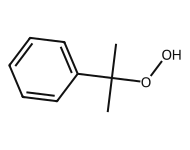
The structure of intermediate A in the following reaction, is
निम्नलिखित अभिक्रिया में मध्यवर्ती A की संरचना है
  1. A
  2. B
  3. C
  4. D
Show answer

Concept: Cumene (isopropylbenzene) is oxidised by air at the benzylic (tertiary) C–H to cumene hydroperoxide, which is cleaved by dilute acid to phenol and acetone.

  1. O2 attacks the tertiary benzylic C–H (most stable benzylic radical) → C6H5C(CH3)2–O–O–H.
  2. H+/H2O: phenyl migrates to O (rearrangement) → phenol + propanone.
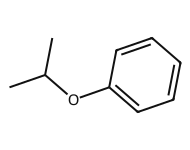
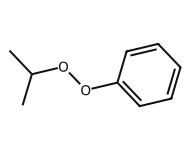
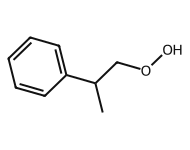
  3. (A) is an ether (no O–O), (C) is a dialkyl-aryl peroxide with O attached to the ring, (D) puts –OOH on the primary carbon – none is formed.

Short trick: Cumene → "cumene hydroperoxide" – the –OOH sits on the same carbon that carried the H, i.e. the carbon bonded to the ring.

Answer: (B) Cumene hydroperoxide, C6H5C(CH3)2OOH

अवधारणा: क्यूमीन (आइसोप्रोपिलबेन्ज़ीन) वायु द्वारा बेन्ज़िलिक (तृतीयक) C–H पर ऑक्सीकृत होकर क्यूमीन हाइड्रोपरॉक्साइड बनाता है, जो तनु अम्ल द्वारा फ़ीनॉल तथा ऐसीटोन में विदलित होता है।

  1. O2 तृतीयक बेन्ज़िलिक C–H (सर्वाधिक स्थायी बेन्ज़िलिक मूलक) पर आक्रमण करता है → C6H5C(CH3)2–O–O–H।
  2. H+/H2O: फ़ेनिल समूह O पर स्थानांतरित होता है (पुनर्विन्यास) → फ़ीनॉल + प्रोपेनोन।
  3. (A) ईथर है (O–O नहीं), (C) में O वलय से जुड़ा परॉक्साइड है, (D) में –OOH प्राथमिक कार्बन पर है – इनमें से कोई नहीं बनता।

शॉर्ट ट्रिक: क्यूमीन → "क्यूमीन हाइड्रोपरॉक्साइड" – –OOH उसी कार्बन पर आता है जिस पर H था, अर्थात् वलय से जुड़ा कार्बन।

उत्तर: (B) क्यूमीन हाइड्रोपरॉक्साइड, C6H5C(CH3)2OOH

NEET UGChemistryAlcohols, phenols – cumene processNEET UG 2019 · 5 May Shift 1 →
Q3673.
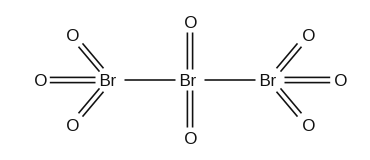
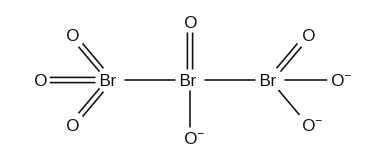
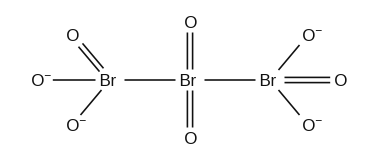
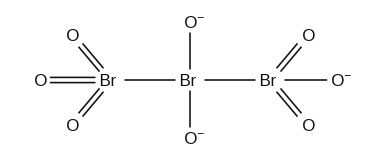
The correct structure of tribromooctaoxide is
ट्राइब्रोमोऑक्टाऑक्साइड की सही संरचना है
  1. A
  2. B
  3. C
  4. D
Show answer

Concept: Br3O8 is a neutral molecule: each Br is bonded only through Br=O double bonds and Br–Br bonds; there are no charges.

  1. Average O.N. of Br = 16/3; the two terminal Br are +6 and the central Br is +4: (6 + 4 + 6) = 16 = 8 × 2 ✓.
  2. Terminal Br: 3 Br=O + 1 Br–Br (6 bonds → +6). Central Br: 2 Br=O + 2 Br–Br (O.N. +4).
  3. (B), (C) and (D) carry negative charges on O; a neutral oxide cannot carry net charge (their net charges are −3, −4, −3).

Short trick: A neutral oxide → pick the structure with NO formal charges at all.

Answer: (A) O=Br(=O)2–Br(=O)2–Br(=O)2=O

अवधारणा: Br3O8 एक उदासीन अणु है: प्रत्येक Br केवल Br=O द्विआबंधों तथा Br–Br आबंधों से जुड़ा है; कोई आवेश नहीं है।

  1. Br की औसत ऑक्सीकरण संख्या = 16/3; दोनों अंतस्थ Br +6 तथा केंद्रीय Br +4 हैं: (6 + 4 + 6) = 16 = 8 × 2 ✓।
  2. अंतस्थ Br: 3 Br=O + 1 Br–Br (+6)। केंद्रीय Br: 2 Br=O + 2 Br–Br (ऑक्सीकरण संख्या +4)।
  3. (B), (C) तथा (D) में O पर ऋण आवेश हैं; उदासीन ऑक्साइड पर कुल आवेश नहीं हो सकता (इनका कुल आवेश −3, −4, −3 है)।

शॉर्ट ट्रिक: उदासीन ऑक्साइड → वह संरचना चुनिए जिसमें कोई भी औपचारिक आवेश न हो।

उत्तर: (A) O=Br(=O)2–Br(=O)2–Br(=O)2=O

NEET UGChemistryp-Block elements – oxides of halogensNEET UG 2019 · 5 May Shift 1 →
Q3674.
4d, 5p, 5f and 6p orbitals are arranged in the order of decreasing energy. The correct option is
4d, 5p, 5f तथा 6p कक्षकों को ऊर्जा के घटते क्रम में व्यवस्थित किया गया है। सही विकल्प है
  1. A5f > 6p > 5p > 4d
  2. B6p > 5f > 5p > 4d
  3. C6p > 5f > 4d > 5p
  4. D5f > 6p > 4d > 5p
Show answer

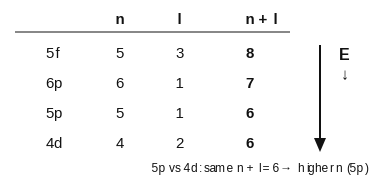
Concept: Aufbau (n + l) rule: higher n + l → higher energy; for equal n + l, the orbital with higher n has higher energy.

  1. n + l values: 5f = 8, 6p = 7, 5p = 6, 4d = 6.
  2. 5p and 4d tie at 6 → 5p (n = 5) is higher than 4d (n = 4).
  3. Order: 5f > 6p > 5p > 4d.

Short trick: Filling order …4d → 5p → 6s → 4f → 5d → 6p → 7s → 5f: an orbital filled later has higher energy, so just read the filling order backwards.

Answer: (A) 5f > 6p > 5p > 4d

अवधारणा: आफबाउ (n + l) नियम: n + l अधिक → ऊर्जा अधिक; n + l समान होने पर अधिक n वाले कक्षक की ऊर्जा अधिक होती है।

  1. n + l मान: 5f = 8, 6p = 7, 5p = 6, 4d = 6।
  2. 5p तथा 4d दोनों का मान 6 है → 5p (n = 5) की ऊर्जा 4d (n = 4) से अधिक।
  3. क्रम: 5f > 6p > 5p > 4d।

शॉर्ट ट्रिक: भरने का क्रम …4d → 5p → 6s → 4f → 5d → 6p → 7s → 5f: जो कक्षक बाद में भरता है उसकी ऊर्जा अधिक होती है, अतः भरने के क्रम को उल्टा पढ़िए।

उत्तर: (A) 5f > 6p > 5p > 4d

NEET UGChemistryAtomic structure – (n + l) ruleNEET UG 2019 · 5 May Shift 1 →
Q3675.
Which of the following reactions are disproportionation reaction?
(a) 2Cu+ ⟶ Cu2+ + Cu0
(b) 3MnO42− + 4H+ ⟶ 2MnO4− + MnO2 + 2H2O
(c) 2KMnO4 Δ​ K2MnO4 + MnO2 + O2
(d) 2MnO4− + 3Mn2+ + 2H2O ⟶ 5MnO2 + 4H+
Select the correct option from the following
निम्नलिखित में से कौन-सी अभिक्रियाएँ असमानुपातन (disproportionation) अभिक्रियाएँ हैं?
(a) 2Cu+ ⟶ Cu2+ + Cu0
(b) 3MnO42− + 4H+ ⟶ 2MnO4− + MnO2 + 2H2O
(c) 2KMnO4 Δ​ K2MnO4 + MnO2 + O2
(d) 2MnO4− + 3Mn2+ + 2H2O ⟶ 5MnO2 + 4H+
निम्नलिखित में से सही विकल्प चुनिए
  1. A(a) and (b) onlyकेवल (a) तथा (b)
  2. B(a), (b) and (c)(a), (b) तथा (c)
  3. C(a), (c) and (d)(a), (c) तथा (d)
  4. D(a) and (d) onlyकेवल (a) तथा (d)
Show answer

Concept: In disproportionation the SAME element in ONE oxidation state is simultaneously oxidised and reduced.

  1. (a) Cu(+1) → Cu(+2) and Cu(0): disproportionation ✓.
  2. (b) Mn(+6) in MnO42− → Mn(+7) in MnO4− and Mn(+4) in MnO2 ✓.
  3. (c) Mn(+7) is only reduced (to +6 and +4) while O(−2) is oxidised to O2 – two different elements: an intramolecular redox (decomposition), not disproportionation ✗.
  4. (d) Mn(+7) and Mn(+2) combine to Mn(+4): the reverse process, comproportionation ✗.

Short trick: Disproportionation = "one goes to two" (one O.S. splits into a higher and a lower one); (d) is "two go to one".

Answer: (A) (a) and (b) only

अवधारणा: असमानुपातन में एक ही ऑक्सीकरण अवस्था वाला एक ही तत्व साथ-साथ ऑक्सीकृत तथा अपचयित होता है।

  1. (a) Cu(+1) → Cu(+2) तथा Cu(0): असमानुपातन ✓।
  2. (b) MnO42− का Mn(+6) → MnO4− में Mn(+7) तथा MnO2 में Mn(+4) ✓।
  3. (c) Mn(+7) केवल अपचयित होता है (+6 तथा +4 में) जबकि O(−2) ऑक्सीकृत होकर O2 बनता है – दो भिन्न तत्व: यह अंतराअणुक अपचयोपचय (अपघटन) है, असमानुपातन नहीं ✗।
  4. (d) Mn(+7) तथा Mn(+2) मिलकर Mn(+4) बनाते हैं: यह विपरीत प्रक्रम, समानुपातन (comproportionation) है ✗।

शॉर्ट ट्रिक: असमानुपातन = "एक से दो" (एक ऑक्सीकरण अवस्था एक उच्च तथा एक निम्न में बँटती है); (d) "दो से एक" है।

उत्तर: (A) केवल (a) तथा (b)

NEET UGChemistryRedox reactions – disproportionationNEET UG 2019 · 5 May Shift 1 →
Q3676.
Under isothermal condition, a gas at 300 K expands from 0.1 L to 0.25 L against a constant external pressure of 2 bar. The work done by the gas is
(Given that 1 L bar = 100 J)
समतापीय स्थिति में, 300 K पर एक गैस 2 bar के नियत बाह्य दाब के विरुद्ध 0.1 L से 0.25 L तक प्रसारित होती है। गैस द्वारा किया गया कार्य है
(दिया है 1 L bar = 100 J)
  1. A–30 J
  2. B5 kJ
  3. C25 J
  4. D30 J
Show answer

Concept: Irreversible expansion against constant external pressure: w=−pextΔV (IUPAC sign convention, w is negative when the system does work).

  1. ΔV=0.25−0.1=0.15 L.
  2. w=−2×0.15=−0.3 L bar.
  3. w=−0.3×100=−30 J; the minus sign shows that the gas does 30 J of work on the surroundings (temperature 300 K is extra data).

Short trick: Expansion → work is done by the system → w is negative; only (A) has the right magnitude with that sign.

Answer: (A) –30 J

अवधारणा: नियत बाह्य दाब के विरुद्ध अनुत्क्रमणीय प्रसार: w=−pextΔV (IUPAC चिह्न परिपाटी, जब निकाय कार्य करता है तो w ऋणात्मक होता है)।

  1. ΔV=0.25−0.1=0.15 L।
  2. w=−2×0.15=−0.3 L bar।
  3. w=−0.3×100=−30 J; ऋण चिह्न दर्शाता है कि गैस परिवेश पर 30 J कार्य करती है (ताप 300 K अतिरिक्त आँकड़ा है)।

शॉर्ट ट्रिक: प्रसार → कार्य निकाय द्वारा किया जाता है → w ऋणात्मक; केवल (A) में इस चिह्न के साथ सही परिमाण है।

उत्तर: (A) –30 J

NEET UGChemistryThermodynamics – work of expansionNEET UG 2019 · 5 May Shift 1 →
Q3677.
Among the following, the one that is not a green house gas is
निम्नलिखित में से कौन-सी ग्रीनहाउस गैस नहीं है?
  1. ANitrous oxideनाइट्रस ऑक्साइड
  2. BMethaneमेथेन
  3. COzoneओज़ोन
  4. DSulphur dioxideसल्फ़र डाइऑक्साइड
Show answer

Concept: Greenhouse gases absorb outgoing infrared radiation: CO2, CH4, N2O, O3, CFCs and water vapour.

  1. N2O (A), CH4 (B) and O3 (C) are all listed greenhouse gases.
  2. SO2 is a primary air pollutant that causes acid rain; it is not counted as a greenhouse gas.

Short trick: Greenhouse list: "CO2, CH4, N2O, O3, CFC, H2O" – SO2 belongs to the acid-rain list.

Answer: (D) Sulphur dioxide

अवधारणा: ग्रीनहाउस गैसें बाहर जाने वाले अवरक्त विकिरण का अवशोषण करती हैं: CO2, CH4, N2O, O3, CFC तथा जलवाष्प।

  1. N2O (A), CH4 (B) तथा O3 (C) सभी ग्रीनहाउस गैसें हैं।
  2. SO2 एक प्राथमिक वायु प्रदूषक है जो अम्ल वर्षा करता है; इसे ग्रीनहाउस गैस नहीं गिना जाता।

शॉर्ट ट्रिक: ग्रीनहाउस सूची: "CO2, CH4, N2O, O3, CFC, H2O" – SO2 अम्ल-वर्षा सूची में आता है।

उत्तर: (D) सल्फ़र डाइऑक्साइड

NEET UGChemistryEnvironmental chemistry – greenhouse gasesNEET UG 2019 · 5 May Shift 1 →
Q3678.
For the cell reaction
2Fe3+(aq) + 2I−(aq) → 2Fe2+(aq) + I2(aq)
ECello=0.24 V at 298 K. The standard Gibbs energy (ΔrGo) of the cell reaction is :
सेल अभिक्रिया
2Fe3+(aq) + 2I−(aq) → 2Fe2+(aq) + I2(aq)
के लिए 298 K पर ECello=0.24 V है। सेल अभिक्रिया की मानक गिब्ज़ ऊर्जा (ΔrGo) है :
  1. A–46.32 kJ mol–1
  2. B–23.16 kJ mol–1
  3. C46.32 kJ mol–1
  4. D23.16 kJ mol–1
Show answer

Concept: ΔrGo=−nFEcello.

  1. Two electrons are transferred (2Fe3+ + 2e− → 2Fe2+; 2I− → I2 + 2e−) → n = 2.
  2. ΔrGo=−2×96500×0.24=−46320 J mol−1 = −46.32 kJ mol−1.

Short trick: Positive E° → spontaneous → ΔG° negative: only (A) and (B) survive; n = 2 doubles 23.16 to 46.32.

Answer: (A) –46.32 kJ mol–1

अवधारणा: ΔrGo=−nFEcello।

  1. दो इलेक्ट्रॉन स्थानांतरित होते हैं (2Fe3+ + 2e− → 2Fe2+; 2I− → I2 + 2e−) → n = 2।
  2. ΔrGo=−2×96500×0.24=−46320 J mol−1 = −46.32 kJ mol−1।

शॉर्ट ट्रिक: E° धनात्मक → स्वतःप्रवर्तित → ΔG° ऋणात्मक: केवल (A) तथा (B) बचते हैं; n = 2 होने से 23.16 का दोगुना 46.32।

उत्तर: (A) –46.32 kJ mol–1

NEET UGChemistryElectrochemistry – Gibbs energy and EMFNEET UG 2019 · 5 May Shift 1 →
Q3679.
Enzymes that utilize ATP in phosphate transfer require an alkaline earth metal (M) as the cofactor. M is :
फ़ॉस्फ़ेट स्थानांतरण में ATP का उपयोग करने वाले एन्ज़ाइमों को सहकारक (cofactor) के रूप में एक क्षारीय मृदा धातु (M) की आवश्यकता होती है। M है :
  1. ABe
  2. BMg
  3. CCa
  4. DSr
Show answer

Concept: NCERT (s-block, biological importance): all enzymes that utilise ATP in phosphate transfer require magnesium as cofactor.

  1. Mg2+ binds to the phosphate groups of ATP (Mg–ATP complex) and activates phosphate transfer.
  2. Be is toxic and not used biologically; Ca2+ works in bones, muscle contraction and blood clotting; Sr has no such role.

Short trick: "Mg for ATP, Ca for bones" – Mg is also the central metal of chlorophyll.

Answer: (B) Mg

अवधारणा: NCERT (s-ब्लॉक, जैविक महत्त्व): फ़ॉस्फ़ेट स्थानांतरण में ATP का उपयोग करने वाले सभी एन्ज़ाइमों को सहकारक के रूप में मैग्नीशियम की आवश्यकता होती है।

  1. Mg2+ ATP के फ़ॉस्फ़ेट समूहों से बंधकर (Mg–ATP संकुल) फ़ॉस्फ़ेट स्थानांतरण को सक्रिय करता है।
  2. Be विषैला है तथा जैविक रूप से प्रयुक्त नहीं होता; Ca2+ अस्थियों, पेशी संकुचन तथा रक्त स्कंदन में कार्य करता है; Sr की ऐसी कोई भूमिका नहीं है।

शॉर्ट ट्रिक: "ATP के लिए Mg, अस्थियों के लिए Ca" – Mg क्लोरोफ़िल की केंद्रीय धातु भी है।

उत्तर: (B) Mg

NEET UGChemistrys-Block elements – biological importance of MgNEET UG 2019 · 5 May Shift 1 →
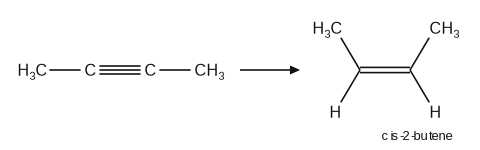
Q3680.
The most suitable reagent for the following conversion, is :
निम्नलिखित रूपांतरण के लिए सबसे उपयुक्त अभिकर्मक है :
  1. ANa/liquid NH3Na/द्रव NH3
  2. BH2, Pd/C, quinolineH2, Pd/C, क्विनोलीन
  3. CZn/HCl
  4. DHg2+/H+, H2O
Show answer

Concept: Lindlar catalyst (Pd poisoned with quinoline/BaSO4) adds one H2 by syn addition → cis-alkene.

  1. Both H atoms add from the same face of the catalyst surface → cis-but-2-ene; the poison stops further reduction to butane.
  2. (A) Na/liq. NH3 (Birch-type) gives anti addition → trans-but-2-ene.
  3. (C) Zn/HCl does not reduce an isolated C≡C.
  4. (D) Hg2+/H+, H2O hydrates the alkyne → butan-2-one.

Short trick: "Lindlar → cis, Liquid NH3 → trans" (L-cis, N-trans).

Answer: (B) H2, Pd/C, quinoline

अवधारणा: लिंडलार उत्प्रेरक (क्विनोलीन/BaSO4 से विषाक्त Pd) एक H2 का सिन-योग कराता है → सिस-ऐल्कीन।

  1. दोनों H परमाणु उत्प्रेरक सतह के एक ही ओर से जुड़ते हैं → सिस-ब्यूट-2-ईन; विष आगे ब्यूटेन तक अपचयन रोकता है।
  2. (A) Na/द्रव NH3 (बर्च-प्रकार) एंटी-योग कराता है → ट्रांस-ब्यूट-2-ईन।
  3. (C) Zn/HCl पृथक C≡C का अपचयन नहीं करता।
  4. (D) Hg2+/H+, H2O ऐल्काइन का जलयोजन कर ब्यूटेन-2-ओन बनाता है।

शॉर्ट ट्रिक: "लिंडलार → सिस, द्रव NH3 → ट्रांस"।

उत्तर: (B) H2, Pd/C, क्विनोलीन

NEET UGChemistryHydrocarbons – partial reduction of alkynesNEET UG 2019 · 5 May Shift 1 →