Question bank

Q&A: practice questions with answers

Search questions on any topic. Filter by exam category, exam, subject and topic, try the question, then open the answer and explanation.

Courses – airGurukul

53,050 questions in the question bank.

Q4021.
Consider two circuits, (A) and (B), each having two resistors. One of them has a positive temperature coefficient of resistance, +α, while the other one has a negative temperature of coefficient, − α, as shown in the figure. The current through these circuits are denoted by IA and IB. At initial temperature, the resistance of the two resistors is R0. As the temperature is increased, the correct option that describes the variation of current in these circuits is :
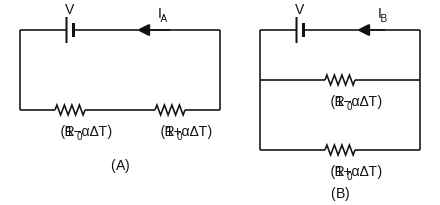
दो परिपथों (A) और (B) पर विचार कीजिए, जिनमें प्रत्येक में दो प्रतिरोधक हैं। चित्रानुसार इनमें से एक का प्रतिरोध ताप गुणांक धनात्मक, +α, है जबकि दूसरे का ताप गुणांक ऋणात्मक, − α, है। इन परिपथों से प्रवाहित धाराएँ IA और IB से दर्शाई गई हैं। प्रारंभिक ताप पर दोनों प्रतिरोधकों का प्रतिरोध R0 है। ताप बढ़ाने पर, इन परिपथों में धारा के परिवर्तन को सही रूप से बताने वाला विकल्प है :
  1. AIA remains constant while IB increasesIA नियत रहती है जबकि IB बढ़ती है
  2. BIA decreases while IB increasesIA घटती है जबकि IB बढ़ती है
  3. CIA increases while IB decreasesIA बढ़ती है जबकि IB घटती है
  4. Dboth IA and IB remain constantIA और IB दोनों नियत रहती हैं
Show answer

Concept: Series resistances add; parallel: Rp=R1R2R1+R2.

  1. (A) series: RA=R0(1−αΔT)+R0(1+αΔT)=2R0 → constant → IA constant.
  2. (B) parallel: RB=R02(1−α2ΔT2)2R0=R02(1−α2ΔT2) → decreases.
  3. So IB=V/RB increases.

Short trick: In parallel, the product falls while the sum stays 2R0 → RB falls; in series only the sum matters.

Answer: (A) IA remains constant while IB increases

अवधारणा: श्रेणी में प्रतिरोध जुड़ते हैं; समांतर में: Rp=R1R2R1+R2।

  1. (A) श्रेणी: RA=R0(1−αΔT)+R0(1+αΔT)=2R0 → नियत → IA नियत।
  2. (B) समांतर: RB=R02(1−α2ΔT2)2R0=R02(1−α2ΔT2) → घटता है।
  3. अतः IB=V/RB बढ़ती है।

शॉर्ट ट्रिक: समांतर में गुणनफल घटता है जबकि योग 2R0 रहता है → RB घटता है; श्रेणी में केवल योग मायने रखता है।

उत्तर: (A) IA नियत रहती है जबकि IB बढ़ती है

NEET UGPhysicsCurrent electricity – temperature coefficient of resistanceNEET UG 2026 · 21 Jun Shift 1 →
Q4022.
Consider that σS, kB, b represent Stefan-Boltzmann constant, Boltzmann constant and Wien's displacement law constant, respectively. The dimension of σSkB−1b is :
मान लीजिए σS, kB, b क्रमशः स्टीफन-बोल्ट्ज़मान नियतांक, बोल्ट्ज़मान नियतांक तथा वीन के विस्थापन नियम का नियतांक निरूपित करते हैं। σSkB−1b की विमा है :
  1. A[L−1T−1K−2]
  2. B[L−1K−2]
  3. C[L−1T−1K−3]
  4. D[L−1T−1K−4]
Show answer

Concept: Use defining relations: E/(At)=σT4, E=kBT, λmT=b.

  1. [σS]=ML2T−2L2TK4=[MT−3K−4].
  2. [kB]=[ML2T−2K−1], so [kB−1]=[M−1L−2T2K].
  3. [b]=[LK].
  4. Product: M1−1L−2+1T−3+2K−4+1+1=[L−1T−1K−2].

Short trick: Mass cancels (σ and kB both have M1), K: −4 + 1 + 1 = −2 – only option (A) has K−2 with T−1.

Answer: (A) [L−1T−1K−2]

अवधारणा: परिभाषित संबंध लें: E/(At)=σT4, E=kBT, λmT=b।

  1. [σS]=ML2T−2L2TK4=[MT−3K−4]।
  2. [kB]=[ML2T−2K−1], अतः [kB−1]=[M−1L−2T2K]।
  3. [b]=[LK]।
  4. गुणनफल: M1−1L−2+1T−3+2K−4+1+1=[L−1T−1K−2]।

शॉर्ट ट्रिक: द्रव्यमान कट जाता है (σ और kB दोनों में M1), K: −4 + 1 + 1 = −2 – केवल विकल्प (A) में T−1 के साथ K−2 है।

उत्तर: (A) [L−1T−1K−2]

NEET UGPhysicsUnits and dimensionsNEET UG 2026 · 21 Jun Shift 1 →
Q4023.
An electromagnetic wave travelling in a lossless dielectric medium having a dielectric constant ϵr = 9, has the electric field, Ex=E0sin⁡(kz−2π×106t) V m−1 where E0 is the amplitude and k is the wave vector. Among the following options, the incorrect choice is :
परावैद्युतांक ϵr = 9 वाले एक हानिरहित परावैद्युत माध्यम में चलती एक विद्युत-चुम्बकीय तरंग का विद्युत क्षेत्र Ex=E0sin⁡(kz−2π×106t) V m−1 है, जहाँ E0 आयाम तथा k तरंग सदिश है। निम्नलिखित विकल्पों में से गलत विकल्प है :
  1. AThe speed of the electromagnetic wave inside the medium is 108 m s−1माध्यम के अंदर विद्युत-चुम्बकीय तरंग की चाल 108 m s−1 है
  2. BThe wavelength of the electromagnetic wave inside the medium is 300 mमाध्यम के अंदर विद्युत-चुम्बकीय तरंग की तरंगदैर्ध्य 300 m है
  3. CThe magnetic field is given by the relation By=B0vsin⁡(kz−2π×106t) where v is the speed of the electromagnetic wave inside the mediumचुम्बकीय क्षेत्र संबंध By=B0vsin⁡(kz−2π×106t) द्वारा दिया जाता है, जहाँ v माध्यम के अंदर विद्युत-चुम्बकीय तरंग की चाल है
  4. DThe direction of propagation of the electromagnetic wave is along +zविद्युत-चुम्बकीय तरंग के संचरण की दिशा +z के अनुदिश है
Show answer

Concept: In a non-magnetic dielectric v=cϵr; λ=vf; B0=E0v; phase (kz−ωt) means travel along +z.

  1. v=3×1083=108 m s−1 → (A) is correct.
  2. f=ω2π=106 Hz → λ=108106=100 m, not 300 m → (B) is incorrect.
  3. The magnetic field amplitude is E0/v, i.e. By=E0vsin⁡(kz−ωt). As printed, (C) has B0v, which is dimensionally wrong → (C) is also incorrect.
  4. (kz−ωt) → propagation along +z → (D) is correct.
  5. Two options, (B) and (C), are incorrect, so the question has two valid answers.

Short trick: 300 m is the free-space wavelength (c/f); inside the medium divide by ϵr=3.

Answer: Bonus – both (B) and (C) are incorrect statements; either choice is to be credited.

अवधारणा: अचुम्बकीय परावैद्युत में v=cϵr; λ=vf; B0=E0v; कला (kz−ωt) का अर्थ +z दिशा में गति।

  1. v=3×1083=108 m s−1 → (A) सही है।
  2. f=ω2π=106 Hz → λ=108106=100 m, 300 m नहीं → (B) गलत है।
  3. चुम्बकीय क्षेत्र का आयाम E0/v है, अर्थात् By=E0vsin⁡(kz−ωt)। मुद्रित रूप में (C) में B0v है, जो विमीय रूप से गलत है → (C) भी गलत है।
  4. (kz−ωt) → +z के अनुदिश संचरण → (D) सही है।
  5. दो विकल्प, (B) और (C), गलत हैं, अतः प्रश्न के दो मान्य उत्तर हैं।

शॉर्ट ट्रिक: 300 m मुक्त आकाश की तरंगदैर्ध्य (c/f) है; माध्यम में ϵr=3 से भाग दें।

उत्तर: बोनस – (B) और (C) दोनों कथन गलत हैं; दोनों में से कोई भी चुनने पर अंक दिए जाने चाहिए।

NEET UGPhysicsElectromagnetic waves – wave in a dielectricNEET UG 2026 · 21 Jun Shift 1 →
Q4024.
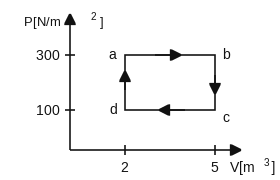
One mole of an ideal monatomic gas undergoes a cyclic process as shown in the figure. The total heat supplied to the gas is :
एक आदर्श एकपरमाणुक गैस का एक मोल चित्रानुसार एक चक्रीय प्रक्रम से गुजरता है। गैस को दी गई कुल ऊष्मा है :
  1. A400 J
  2. B500 J
  3. C600 J
  4. D800 J
Show answer

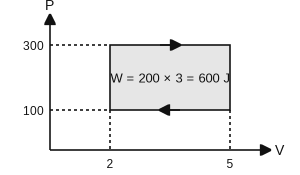
Concept: In a cycle ΔU=0, so net heat supplied Q=W = area enclosed on the P–V diagram (positive for a clockwise cycle).

  1. Cycle a→b→c→d→a is clockwise → net work done by gas is positive.
  2. Area =(300−100)×(5−2)=200×3=600 J.
  3. Net heat supplied Q = 600 J.

Short trick: Clockwise on P–V = engine = positive work; just multiply ΔP × ΔV of the rectangle.

Answer: (C) 600 J

अवधारणा: चक्र में ΔU=0, अतः दी गई कुल ऊष्मा Q=W = P–V आरेख पर घिरा क्षेत्रफल (दक्षिणावर्त चक्र के लिए धनात्मक)।

  1. चक्र a→b→c→d→a दक्षिणावर्त है → गैस द्वारा कुल कार्य धनात्मक।
  2. क्षेत्रफल =(300−100)×(5−2)=200×3=600 J।
  3. दी गई कुल ऊष्मा Q = 600 J।

शॉर्ट ट्रिक: P–V पर दक्षिणावर्त = इंजन = धनात्मक कार्य; बस आयत का ΔP × ΔV गुणा करें।

उत्तर: (C) 600 J

NEET UGPhysicsThermodynamics – cyclic processNEET UG 2026 · 21 Jun Shift 1 →
Q4025.
Consider that an electron is revolving in an excited state of Hydrogen atom with velocity 25.6×10⁵ m s−1. The radius of the orbit is x×10−9 m. The value of x is :
[Take the mass of electron to be 9×10⁻³¹ kg, charge of electron = −1.6×10⁻¹⁹ C and 14πϵ0=9×10⁹ N m2C−2]
मान लीजिए हाइड्रोजन परमाणु की एक उत्तेजित अवस्था में एक इलेक्ट्रॉन वेग 25.6×10⁵ m s−1 से परिक्रमा कर रहा है। कक्षा की त्रिज्या x×10−9 m है। x का मान है :
[इलेक्ट्रॉन का द्रव्यमान 9×10⁻³¹ kg, इलेक्ट्रॉन का आवेश = −1.6×10⁻¹⁹ C तथा 14πϵ0=9×10⁹ N m2C−2 लीजिए]
  1. A4
  2. B3
  3. C2
  4. D1
Show answer

Concept: Coulomb attraction supplies the centripetal force: mv2r=ke2r2⇒r=ke2mv2.

  1. ke2=9×109×(1.6×10−19)2=2.304×10⁻²⁸.
  2. mv2=9×10−31×25.6×1010=2.304×10⁻¹⁹.
  3. r=2.304×10−282.304×10−19=1×10⁻⁹ m → x = 1.

Short trick: Notice 9 × 2.56 = 23.04 appears in both numerator and denominator – they cancel to give exactly 10−9 m.

Answer: (D) 1

अवधारणा: कूलॉम आकर्षण अभिकेंद्र बल देता है: mv2r=ke2r2⇒r=ke2mv2।

  1. ke2=9×109×(1.6×10−19)2=2.304×10⁻²⁸।
  2. mv2=9×10−31×25.6×1010=2.304×10⁻¹⁹।
  3. r=2.304×10−282.304×10−19=1×10⁻⁹ m → x = 1।

शॉर्ट ट्रिक: ध्यान दें 9 × 2.56 = 23.04 अंश और हर दोनों में है – ये कटकर ठीक 10−9 m देते हैं।

उत्तर: (D) 1

NEET UGPhysicsAtoms – electron orbit radiusNEET UG 2026 · 21 Jun Shift 1 →
Q4026.
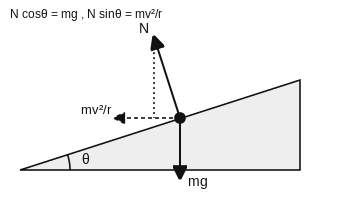
A car travels on a circular racetrack of radius 50 m, which is banked at an angle θ. If the car travels at a speed 10 m s−1, then the wear and tear on its tyres is minimum. Taking the acceleration due to gravity to be 10 m s−2, the value of θ is :
एक कार त्रिज्या 50 m के वृत्ताकार रेसट्रैक पर चलती है, जो कोण θ पर बंकित है। यदि कार 10 m s−1 की चाल से चलती है, तो उसके टायरों की घिसावट न्यूनतम होती है। गुरुत्वीय त्वरण 10 m s−2 लेते हुए, θ का मान है :
  1. Atan−1⁡(15)
  2. Btan−1⁡(25)
  3. Ctan−1⁡(3/2)
  4. Dtan−1⁡(23)
Show answer

Concept: Minimum wear means no friction is needed: the normal reaction alone provides the centripetal force, tan⁡θ=v2rg.

  1. Ncos⁡θ=mg and Nsin⁡θ=mv2r.
  2. tan⁡θ=10250×10=100500=15.
  3. θ=tan−1⁡(15).

Short trick: "Optimum (design) speed" ⇔ friction zero ⇔ tan⁡θ=v2/rg.

Answer: (A) tan−1⁡(15)

अवधारणा: न्यूनतम घिसावट का अर्थ है घर्षण की आवश्यकता नहीं: केवल अभिलंब प्रतिक्रिया अभिकेंद्र बल देती है, tan⁡θ=v2rg।

  1. Ncos⁡θ=mg तथा Nsin⁡θ=mv2r।
  2. tan⁡θ=10250×10=100500=15।
  3. θ=tan−1⁡(15)।

शॉर्ट ट्रिक: "इष्टतम (डिज़ाइन) चाल" ⇔ घर्षण शून्य ⇔ tan⁡θ=v2/rg।

उत्तर: (A) tan−1⁡(15)

NEET UGPhysicsCircular motion – banking of roadsNEET UG 2026 · 21 Jun Shift 1 →
Q4027.
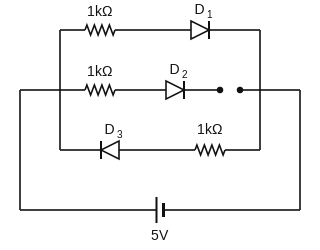
Three identical p-n junction diodes D1, D2 and D3 are connected across a battery as shown in the figure. If the width of the depletion regions of D1, D2 and D3 are W1, W2 and W3, respectively, then the correct option is :
तीन सर्वसम p-n संधि डायोड D1, D2 और D3 चित्रानुसार एक बैटरी के सिरों पर जुड़े हैं। यदि D1, D2 और D3 के अवक्षय क्षेत्रों की चौड़ाइयाँ क्रमशः W1, W2 और W3 हैं, तो सही विकल्प है :
  1. AW1>W2>W3
  2. BW3=W1>W2
  3. CW3>W2>W1
  4. DW2>W1=W3
Show answer

Concept: Forward bias narrows the depletion layer, reverse bias widens it; an unbiased diode keeps its equilibrium width.

  1. The longer plate (left) is the positive terminal, so the left node is at higher potential.
  2. D1: anode on the left (positive side) → forward biased → narrowest, W1 smallest.
  3. D2: its branch is broken (open gap) → no bias → equilibrium width W2.
  4. D3: anode on the right (negative side) → reverse biased → widest, W3 largest.
  5. Hence W3>W2>W1.

Short trick: Order: reverse > unbiased > forward.

Answer: (C) W3>W2>W1

अवधारणा: अग्र अभिनति अवक्षय परत को पतला करती है, पश्च अभिनति चौड़ा करती है; अनभिनत डायोड अपनी साम्य चौड़ाई रखता है।

  1. लंबी प्लेट (बाईं) धन टर्मिनल है, अतः बायाँ संधि-बिंदु उच्च विभव पर है।
  2. D1: ऐनोड बाईं ओर (धन पक्ष) → अग्र अभिनत → सबसे पतली, W1 न्यूनतम।
  3. D2: इसकी शाखा टूटी है (खुला अंतराल) → कोई अभिनति नहीं → साम्य चौड़ाई W2।
  4. D3: ऐनोड दाईं ओर (ऋण पक्ष) → पश्च अभिनत → सबसे चौड़ी, W3 अधिकतम।
  5. अतः W3>W2>W1।

शॉर्ट ट्रिक: क्रम: पश्च > अनभिनत > अग्र।

उत्तर: (C) W3>W2>W1

NEET UGPhysicsSemiconductors – depletion width under biasNEET UG 2026 · 21 Jun Shift 1 →
Q4028.
The following table presents the part of the electromagnetic spectrum and their corresponding major applications.
Part of the electromagnetic spectrumApplications
PMicrowaveIFor purifying the water
QUV raysIIFor warming the food
RGamma raysIIIFor AM and FM communication systems
SRadio waveIVFor treating the Cancer cells
The correct option is :
निम्नलिखित सारणी विद्युत-चुम्बकीय स्पेक्ट्रम के भाग तथा उनके संगत प्रमुख अनुप्रयोग प्रस्तुत करती है।
विद्युत-चुम्बकीय स्पेक्ट्रम का भागअनुप्रयोग
Pसूक्ष्म तरंग (Microwave)Iजल शुद्ध करने के लिए
Qपराबैंगनी (UV) किरणेंIIभोजन गर्म करने के लिए
Rगामा किरणेंIIIAM और FM संचार व्यवस्थाओं के लिए
Sरेडियो तरंगIVकैंसर कोशिकाओं के उपचार के लिए
सही विकल्प है :
  1. AP-I, Q-II, R-III, S-IV
  2. BP-I, Q-IV, R-II, S-III
  3. CP-II, Q-I, R-IV, S-III
  4. DP-II, Q-IV, R-III, S-I
Show answer

Concept: NCERT uses of EM waves: microwave ovens, UV for sterilising water, gamma rays in radiotherapy, radio waves for AM/FM broadcasting.

  1. P Microwave → warming food (II).
  2. Q UV rays → purifying water (I).
  3. R Gamma rays → treating cancer cells (IV).
  4. S Radio waves → AM and FM communication (III).
  5. P-II, Q-I, R-IV, S-III. (A) and (B) start with P-I ✘; (D) puts gamma rays in communication ✘.

Short trick: "Micro-oven, UV-clean, Gamma-cure, Radio-tune."

Answer: (C) P-II, Q-I, R-IV, S-III

अवधारणा: NCERT में विद्युत-चुम्बकीय तरंगों के उपयोग: सूक्ष्म तरंग ओवन, जल निर्जर्मीकरण हेतु UV, विकिरण चिकित्सा में गामा किरणें, AM/FM प्रसारण हेतु रेडियो तरंगें।

  1. P सूक्ष्म तरंग → भोजन गर्म करना (II)।
  2. Q पराबैंगनी किरणें → जल शुद्ध करना (I)।
  3. R गामा किरणें → कैंसर कोशिकाओं का उपचार (IV)।
  4. S रेडियो तरंगें → AM और FM संचार (III)।
  5. P-II, Q-I, R-IV, S-III। (A) और (B) P-I से प्रारंभ होते हैं ✘; (D) गामा किरणों को संचार में रखता है ✘।

शॉर्ट ट्रिक: "माइक्रो-ओवन, UV-सफाई, गामा-इलाज, रेडियो-ट्यून।"

उत्तर: (C) P-II, Q-I, R-IV, S-III

NEET UGPhysicsElectromagnetic waves – spectrum and applicationsNEET UG 2026 · 21 Jun Shift 1 →
Q4029.
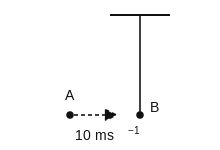
Bob B of mass m at rest is hanging vertically from the ceiling via a massless string of length 10 m, as shown in the figure. Point mass A of mass m travelling horizontally with speed 10 m s−1 hits bob B elastically. The bob B rises h meter after the collision. Taking the acceleration due to gravity g = 10 m s−2 and neglecting the size of the bob, the value of h is :
द्रव्यमान m का गोलक B विराम में, चित्रानुसार 10 m लंबाई की द्रव्यमानरहित डोरी द्वारा छत से ऊर्ध्वाधर लटका है। द्रव्यमान m का बिंदु द्रव्यमान A, 10 m s−1 की चाल से क्षैतिज रूप से चलते हुए गोलक B से प्रत्यास्थ रूप से टकराता है। संघट्ट के बाद गोलक B, h मीटर ऊपर उठता है। गुरुत्वीय त्वरण g = 10 m s−2 लेते हुए तथा गोलक के आकार की उपेक्षा करते हुए, h का मान है :
  1. A8
  2. B7
  3. C5
  4. D2.5
Show answer

Concept: Head-on elastic collision of equal masses exchanges velocities; then energy conservation for the bob.

  1. After collision A stops and B moves with 10 m s−1.
  2. h=v22g=10020=5 m.
  3. Since h = 5 m < l = 10 m, the bob swings up to 5 m without the string going slack – valid.

Short trick: Equal masses + elastic = velocity swap → h = v²/2g.

Answer: (C) 5

अवधारणा: समान द्रव्यमानों का आमने-सामने प्रत्यास्थ संघट्ट वेगों का आदान-प्रदान करता है; फिर गोलक के लिए ऊर्जा संरक्षण।

  1. संघट्ट के बाद A रुक जाता है और B, 10 m s−1 से चलता है।
  2. h=v22g=10020=5 m।
  3. चूँकि h = 5 m < l = 10 m, गोलक डोरी के ढीले हुए बिना 5 m तक उठता है – मान्य।

शॉर्ट ट्रिक: समान द्रव्यमान + प्रत्यास्थ = वेगों की अदला-बदली → h = v²/2g।

उत्तर: (C) 5

NEET UGPhysicsCollisions – elastic collision and pendulum riseNEET UG 2026 · 21 Jun Shift 1 →
Q4030.
An ideal gas is made of polyatomic molecules. Each of the molecules has three translational, three rotational and f number of vibrational modes. If the ratio of heat capacities CP/CV of the gas is 8/7, then the value of f is :
एक आदर्श गैस बहुपरमाणुक अणुओं से बनी है। प्रत्येक अणु में तीन स्थानांतरीय, तीन घूर्णी तथा f कंपनिक विधाएँ (vibrational modes) हैं। यदि गैस की ऊष्मा धारिताओं का अनुपात CP/CV = 8/7 है, तो f का मान है :
  1. A4
  2. B3
  3. C2
  4. D1
Show answer

Concept: Each translational/rotational mode contributes 12R to CV; each vibrational mode contributes R (KE + PE).

  1. CV=32R+32R+fR=(3+f)R, CP=(4+f)R.
  2. γ=4+f3+f=87⇒28+7f=24+8f⇒f=4.

Short trick: γ=1+13+f=1+17 → 3 + f = 7 → f = 4.

Answer: (A) 4

अवधारणा: प्रत्येक स्थानांतरीय/घूर्णी विधा CV में 12R देती है; प्रत्येक कंपनिक विधा R देती है (गतिज + स्थितिज)।

  1. CV=32R+32R+fR=(3+f)R, CP=(4+f)R।
  2. γ=4+f3+f=87⇒28+7f=24+8f⇒f=4।

शॉर्ट ट्रिक: γ=1+13+f=1+17 → 3 + f = 7 → f = 4।

उत्तर: (A) 4

NEET UGPhysicsKinetic theory – degrees of freedom and γNEET UG 2026 · 21 Jun Shift 1 →
Q4031.
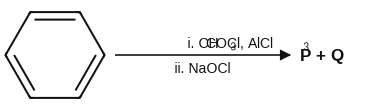
For the following reaction sequence, choose the correct option
निम्नलिखित अभिक्रिया अनुक्रम के लिए सही विकल्प चुनिए
  1. AIf P is the sodium salt of a carboxylic acid, Q is a primary alcohol.यदि P किसी कार्बोक्सिलिक अम्ल का सोडियम लवण है, तो Q एक प्राथमिक ऐल्कोहॉल है।
  2. BP and Q are aromatic compounds.P और Q ऐरोमैटिक यौगिक हैं।
  3. CIf P gives a carboxylic acid on acidification, Q gives a poisonous gas on exposure to air and light.यदि P अम्लीकरण पर कार्बोक्सिलिक अम्ल देता है, तो Q वायु और प्रकाश के संपर्क में आने पर एक विषैली गैस देता है।
  4. DBoth P and Q are carbonyl compounds.P और Q दोनों कार्बोनिल यौगिक हैं।
Show answer

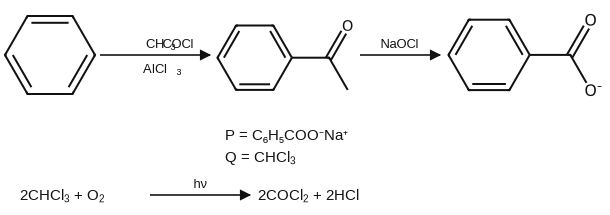
Concept: Friedel-Crafts acylation puts a COCH3 group on benzene; a methyl ketone with NaOCl undergoes the haloform reaction (RCOCH3 → RCOO−Na+ + CHCl3).

  1. C6H6 + CH3COCl/AlCl3 → C6H5COCH3 (acetophenone).
  2. C6H5COCH3 + 3NaOCl → C6H5COONa (P) + CHCl3 (Q) + 2NaOH.
  3. P on acidification gives benzoic acid; Q (chloroform) is slowly oxidised by air in light to phosgene: 2CHCl3 + O2 → 2COCl2 + 2HCl – a poisonous gas. So (C) is correct.
  4. (A) Q is CHCl3, not an alcohol. (B) CHCl3 is not aromatic. (D) Neither sodium benzoate (carboxylate) nor CHCl3 is a carbonyl compound (aldehyde/ketone).

Short trick: CH3CO– group + NaOCl ⇒ "haloform": acid salt + CHX3. Chloroform is stored in dark, closed, full bottles because of phosgene.

Answer: (C) Q (CHCl3) gives poisonous COCl2

अवधारणा: फ्रीडेल-क्राफ्ट्स ऐसिलन से बेंज़ीन पर COCH3 समूह जुड़ता है; मेथिल कीटोन NaOCl के साथ हैलोफॉर्म अभिक्रिया देता है (RCOCH3 → RCOO−Na+ + CHCl3)।

  1. C6H6 + CH3COCl/AlCl3 → C6H5COCH3 (ऐसीटोफ़ीनोन)।
  2. C6H5COCH3 + 3NaOCl → C6H5COONa (P) + CHCl3 (Q) + 2NaOH।
  3. P अम्लीकरण पर बेंज़ोइक अम्ल देता है; Q (क्लोरोफॉर्म) प्रकाश में वायु द्वारा धीरे-धीरे फॉस्जीन में ऑक्सीकृत होता है: 2CHCl3 + O2 → 2COCl2 + 2HCl – एक विषैली गैस। अतः (C) सही है।
  4. (A) Q, CHCl3 है, ऐल्कोहॉल नहीं। (B) CHCl3 ऐरोमैटिक नहीं है। (D) न सोडियम बेंज़ोएट (कार्बोक्सिलेट) और न CHCl3 कार्बोनिल यौगिक (ऐल्डिहाइड/कीटोन) है।

शॉर्ट ट्रिक: CH3CO– समूह + NaOCl ⇒ "हैलोफॉर्म": अम्ल-लवण + CHX3। फॉस्जीन बनने के कारण क्लोरोफॉर्म को गहरे रंग की, बंद, पूरी भरी बोतलों में रखा जाता है।

उत्तर: (C) Q (CHCl3) विषैली COCl2 देता है

NEET UGChemistryAldehydes & ketones – Friedel-Crafts acylation and haloform reactionNEET UG 2026 · 21 Jun Shift 1 →
Q4032.
Given below are two statements:
Statement-I : [Fe(ox)3]3− is chiral.
Statement-II : trans-[Cr(H2O)2(ox)2]− is chiral.
(Given : oxH2 = HOOC – COOH)
In light of the above statements, choose the most appropriate answer from the options given below:
नीचे दो कथन दिए गए हैं:
कथन-I : [Fe(ox)3]3− किरेल है।
कथन-II : trans-[Cr(H2O)2(ox)2]− किरेल है।
(दिया है : oxH2 = HOOC – COOH)
उपर्युक्त कथनों के आलोक में, नीचे दिए गए विकल्पों में से सबसे उपयुक्त उत्तर चुनिए:
  1. ABoth Statement-I and Statement-II are correct.कथन-I और कथन-II दोनों सही हैं।
  2. BBoth Statement-I and Statement-II are incorrect.कथन-I और कथन-II दोनों गलत हैं।
  3. CStatement-I is correct but Statement-II is incorrect.कथन-I सही है लेकिन कथन-II गलत है।
  4. DStatement-I is incorrect but Statement-II is correct.कथन-I गलत है लेकिन कथन-II सही है।
Show answer

Concept: A complex is chiral only if it has no mirror plane (or centre of symmetry). [M(AA)3] is always chiral; trans-[M(AA)2B2] has a mirror plane, only the cis form is chiral.

  1. [Fe(ox)3]3−: three bidentate oxalates form a propeller – Δ and Λ forms are non-superimposable mirror images → chiral. Statement-I correct.
  2. trans-[Cr(H2O)2(ox)2]−: both ox ligands lie in one plane with the two H2O above and below; that equatorial plane is a mirror plane → achiral. Statement-II incorrect.

Short trick: AA3 → always optically active; (AA)2B2 → only cis is optically active, trans never.

Answer: (C) Statement-I correct, Statement-II incorrect

अवधारणा: कोई संकुल तभी किरेल होता है जब उसमें कोई दर्पण तल (या सममिति केंद्र) न हो। [M(AA)3] सदैव किरेल होता है; trans-[M(AA)2B2] में दर्पण तल होता है, केवल cis रूप किरेल होता है।

  1. [Fe(ox)3]3−: तीन द्विदंतुर ऑक्सेलेट प्रोपेलर जैसी संरचना बनाते हैं – Δ और Λ रूप अध्यारोपणीय नहीं होने वाले दर्पण प्रतिबिंब हैं → किरेल। कथन-I सही।
  2. trans-[Cr(H2O)2(ox)2]−: दोनों ox लिगन्ड एक ही तल में हैं और दोनों H2O उसके ऊपर-नीचे; यह विषुवतीय तल दर्पण तल है → अकिरेल। कथन-II गलत।

शॉर्ट ट्रिक: AA3 → सदैव ध्रुवण घूर्णक; (AA)2B2 → केवल cis ध्रुवण घूर्णक, trans कभी नहीं।

उत्तर: (C) कथन-I सही, कथन-II गलत

NEET UGChemistryCoordination compounds – optical isomerismNEET UG 2026 · 21 Jun Shift 1 →
Q4033.
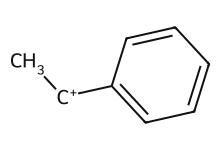
The following carbocation is stabilized by the interaction of the empty p orbital with
निम्नलिखित कार्बधनायन रिक्त p कक्षक की किसके साथ अन्योन्यक्रिया द्वारा स्थायीकृत होता है?
  1. Afilled σ and filled π orbitalsभरे हुए σ और भरे हुए π कक्षक
  2. Bempty σ and empty π* orbitalsरिक्त σ और रिक्त π* कक्षक
  3. Cempty σ* and filled π orbitalsरिक्त σ* और भरे हुए π कक्षक
  4. Dempty σ* and empty π* orbitalsरिक्त σ* और रिक्त π* कक्षक
Show answer

Concept: An empty p orbital (electron-deficient) is stabilised only by donation of electrons – i.e. by overlap with filled orbitals.

  1. Resonance: the empty p orbital overlaps with the filled π orbitals of the benzene ring (benzylic cation, + charge delocalised to o/p positions).
  2. Hyperconjugation: it also overlaps with the filled σ(C–H) orbitals of the adjacent CH3 group (3 α-H).
  3. Empty orbitals (σ*, π*) cannot donate electrons, so (B), (C), (D) are wrong.

Short trick: Cation needs electrons → partner must be FILLED (σ for hyperconjugation, π for resonance).

Answer: (A) filled σ and filled π orbitals

अवधारणा: रिक्त p कक्षक (इलेक्ट्रॉन-न्यून) केवल इलेक्ट्रॉन दान से स्थायी होता है – अर्थात भरे हुए कक्षकों के साथ अतिव्यापन से।

  1. अनुनाद: रिक्त p कक्षक बेंज़ीन वलय के भरे हुए π कक्षकों से अतिव्यापन करता है (बेंज़िलिक धनायन, + आवेश o/p स्थितियों पर विस्थानीकृत)।
  2. अतिसंयुग्मन (hyperconjugation): यह संलग्न CH3 समूह के भरे हुए σ(C–H) कक्षकों (3 α-H) से भी अतिव्यापन करता है।
  3. रिक्त कक्षक (σ*, π*) इलेक्ट्रॉन दान नहीं कर सकते, अतः (B), (C), (D) गलत हैं।

शॉर्ट ट्रिक: धनायन को इलेक्ट्रॉन चाहिए → साथी कक्षक भरा हुआ होना चाहिए (अतिसंयुग्मन हेतु σ, अनुनाद हेतु π)।

उत्तर: (A) भरे हुए σ और भरे हुए π कक्षक

NEET UGChemistryCarbocation stability – resonance and hyperconjugationNEET UG 2026 · 21 Jun Shift 1 →
Q4034.
In potash alum, the ratio of K+ and SO42− ions is
पोटाश ऐलम में K+ और SO42− आयनों का अनुपात है
  1. A1 : 2
  2. B2 : 1
  3. C2 : 3
  4. D3 : 2
Show answer

Concept: Potash alum is K2SO4·Al2(SO4)3·24H2O, i.e. KAl(SO4)2·12H2O.

  1. Per formula KAl(SO4)2·12H2O: 1 K+, 1 Al3+, 2 SO42−.
  2. K+ : SO42− = 1 : 2 (check charge: +1 +3 = +4 = 2 × 2).

Short trick: Alum = M+M3+(SO4)2·12H2O – always one M+ for two sulphates.

Answer: (A) 1 : 2

अवधारणा: पोटाश ऐलम K2SO4·Al2(SO4)3·24H2O है, अर्थात KAl(SO4)2·12H2O।

  1. सूत्र KAl(SO4)2·12H2O में: 1 K+, 1 Al3+, 2 SO42−।
  2. K+ : SO42− = 1 : 2 (आवेश जाँच: +1 +3 = +4 = 2 × 2)।

शॉर्ट ट्रिक: ऐलम = M+M3+(SO4)2·12H2O – दो सल्फेट पर सदैव एक M+।

उत्तर: (A) 1 : 2

NEET UGChemistryDouble salts – potash alumNEET UG 2026 · 21 Jun Shift 1 →
Q4035.
The correct statement about peptides and proteins is
पेप्टाइडों और प्रोटीनों के बारे में सही कथन है
  1. ATertiary structure of proteins has two or more polypeptide subunitsप्रोटीनों की तृतीयक संरचना में दो या अधिक पॉलिपेप्टाइड उप-इकाइयाँ होती हैं
  2. BOnly the proteins having a quaternary structure are biologically active.केवल चतुष्क संरचना वाले प्रोटीन ही जैविक रूप से सक्रिय होते हैं।
  3. CIn β-pleated sheet structures, peptide chains are held together by intermolecular hydrogen bonds.β-प्लीटेड शीट संरचनाओं में पेप्टाइड शृंखलाएँ अंतराअणुक (intermolecular) हाइड्रोजन आबंधों द्वारा एक साथ जुड़ी रहती हैं।
  4. DIn α-helices, the polypeptide chain is twisted into a left-handed screw (helix) through intramolecular hydrogen bonds.α-हेलिक्स में पॉलिपेप्टाइड शृंखला अंतःअणुक (intramolecular) हाइड्रोजन आबंधों द्वारा वामावर्ती पेंच (हेलिक्स) में मुड़ी होती है।
Show answer

Concept: NCERT: β-pleated sheet – chains laid side by side, held by intermolecular H-bonds; α-helix – right-handed helix with intramolecular H-bonds (–NH of one turn to C=O of the next).

  1. (A) wrong: two or more subunits = quaternary structure, not tertiary.
  2. (B) wrong: many proteins with only tertiary structure (e.g. myoglobin, most enzymes) are biologically active.
  3. (C) correct: neighbouring chains in a β-sheet are joined by intermolecular H-bonds.
  4. (D) wrong: the α-helix is a right-handed screw.

Short trick: α – intrA – Right-handed; β – betWEEN chains (inter).

Answer: (C) β-sheets held by intermolecular H-bonds

अवधारणा: NCERT: β-प्लीटेड शीट – शृंखलाएँ अगल-बगल, अंतराअणुक H-आबंधों से जुड़ी; α-हेलिक्स – दक्षिणावर्ती हेलिक्स, अंतःअणुक H-आबंध (एक घुमाव का –NH अगले घुमाव के C=O से)।

  1. (A) गलत: दो या अधिक उप-इकाइयाँ = चतुष्क संरचना, तृतीयक नहीं।
  2. (B) गलत: केवल तृतीयक संरचना वाले अनेक प्रोटीन (जैसे मायोग्लोबिन, अधिकांश एंज़ाइम) जैविक रूप से सक्रिय होते हैं।
  3. (C) सही: β-शीट में पड़ोसी शृंखलाएँ अंतराअणुक H-आबंधों से जुड़ी होती हैं।
  4. (D) गलत: α-हेलिक्स दक्षिणावर्ती (right-handed) पेंच होता है।

शॉर्ट ट्रिक: α – अंतः (intra) – दक्षिणावर्ती; β – शृंखलाओं के बीच (inter)।

उत्तर: (C) β-शीट अंतराअणुक H-आबंधों से जुड़ी

NEET UGChemistryBiomolecules – structure of proteinsNEET UG 2026 · 21 Jun Shift 1 →
Q4036.
The numbers 17.0145 and 21.0235 were rounded to three figures after the decimal point. The resulting numbers, respectively, are
संख्याओं 17.0145 और 21.0235 को दशमलव के बाद तीन अंकों तक पूर्णांकित किया गया। प्राप्त संख्याएँ क्रमशः हैं
  1. A17.014 and 21.02317.014 और 21.023
  2. B17.015 and 21.02317.015 और 21.023
  3. C17.014 and 21.02417.014 और 21.024
  4. D17.015 and 21.02417.015 और 21.024
Show answer

Concept: NCERT rounding rule: if the digit to be dropped is exactly 5, the preceding digit is left unchanged if it is even and increased by 1 if it is odd.

  1. 17.0145: dropped digit 5, preceding digit 4 (even) → stays → 17.014.
  2. 21.0235: dropped digit 5, preceding digit 3 (odd) → becomes 4 → 21.024.

Short trick: "5 makes it EVEN": after rounding, the last kept digit must be even.

Answer: (C) 17.014 and 21.024

अवधारणा: NCERT पूर्णांकन नियम: यदि हटाया जाने वाला अंक ठीक 5 है, तो उससे पहले का अंक सम हो तो अपरिवर्तित रहता है और विषम हो तो 1 बढ़ा दिया जाता है।

  1. 17.0145: हटाया गया अंक 5, पहले का अंक 4 (सम) → अपरिवर्तित → 17.014।
  2. 21.0235: हटाया गया अंक 5, पहले का अंक 3 (विषम) → 4 बनता है → 21.024।

शॉर्ट ट्रिक: "5 सम बनाता है": पूर्णांकन के बाद अंतिम रखा गया अंक सम होना चाहिए।

उत्तर: (C) 17.014 और 21.024

NEET UGChemistrySome basic concepts – rounding offNEET UG 2026 · 21 Jun Shift 1 →
Q4037.
The correct order of solubility of the given salts in water at 298 K is
SaltKsp at 298 K
AgBr5.0×10−13
Zn(OH)21.0×10⁻¹⁵
Hg2Cl21.3×10−18
298 K पर जल में दिए गए लवणों की विलेयता का सही क्रम है
लवण298 K पर Ksp
AgBr5.0×10−13
Zn(OH)21.0×10⁻¹⁵
Hg2Cl21.3×10−18
  1. AHg2Cl2 > Zn(OH)2 > AgBr
  2. BAgBr > Zn(OH)2 > Hg2Cl2
  3. CHg2Cl2 > AgBr > Zn(OH)2
  4. DZn(OH)2 > AgBr > Hg2Cl2
Show answer

Concept: Ksp values can be compared directly only for salts of the same type; otherwise convert each to molar solubility s.

  1. AgBr (1:1): Ksp = s2 → s=5.0×10−13=7.1×10⁻⁷ M.
  2. Zn(OH)2 (1:2): Ksp = s(2s)2 = 4s3 → s=(2.5×10⁻¹⁶)1/3=6.3×10−6 M.
  3. Hg2Cl2 ⇌ Hg22+ + 2Cl−: Ksp = 4s3 → s=(3.25×10⁻¹⁹)1/3=6.9×10−7 M.
  4. Order: Zn(OH)2 (6.3 × 10⁻⁶) > AgBr (7.1 × 10⁻⁷) > Hg2Cl2 (6.9 × 10⁻⁷).

Short trick: Remember Hg2Cl2 gives the dimeric Hg22+ ion, so it is an AB2-type salt (Ksp = 4s3), not A2B2.

Answer: (D) Zn(OH)2 > AgBr > Hg2Cl2

अवधारणा: Ksp मानों की सीधी तुलना केवल समान प्रकार के लवणों में की जा सकती है; अन्यथा प्रत्येक को मोलर विलेयता s में बदलें।

  1. AgBr (1:1): Ksp = s2 → s=5.0×10−13=7.1×10⁻⁷ M।
  2. Zn(OH)2 (1:2): Ksp = s(2s)2 = 4s3 → s=(2.5×10⁻¹⁶)1/3=6.3×10−6 M।
  3. Hg2Cl2 ⇌ Hg22+ + 2Cl−: Ksp = 4s3 → s=(3.25×10⁻¹⁹)1/3=6.9×10−7 M।
  4. क्रम: Zn(OH)2 (6.3 × 10⁻⁶) > AgBr (7.1 × 10⁻⁷) > Hg2Cl2 (6.9 × 10⁻⁷)।

शॉर्ट ट्रिक: याद रखें Hg2Cl2 द्विलकी Hg22+ आयन देता है, अतः यह AB2 प्रकार का लवण है (Ksp = 4s3), A2B2 नहीं।

उत्तर: (D) Zn(OH)2 > AgBr > Hg2Cl2

NEET UGChemistryIonic equilibrium – solubility productNEET UG 2026 · 21 Jun Shift 1 →
Q4038.
Among the following options, the correct trend in the electron gain enthalpy is
निम्नलिखित विकल्पों में से इलेक्ट्रॉन लब्धि एन्थैल्पी की सही प्रवृत्ति है
  1. AF > Cl > Br > I
  2. BBr > Cl > F > I
  3. CCl > F > Br > I
  4. DI > Br > Cl > F
Show answer

Concept: Electron gain enthalpy (magnitude, more negative) of halogens: Cl (−349) > F (−328) > Br (−325) > I (−295) kJ mol−1.

  1. Down the group the added electron goes farther from the nucleus → less negative ΔegH (Cl > Br > I).
  2. F is an exception: its very small 2p subshell causes strong inter-electronic repulsion, so F is less negative than Cl.

Short trick: Halogen anomaly: "Cl beats F" – same pattern as O < S for group 16.

Answer: (C) Cl > F > Br > I

अवधारणा: हैलोजनों की इलेक्ट्रॉन लब्धि एन्थैल्पी (परिमाण, अधिक ऋणात्मक): Cl (−349) > F (−328) > Br (−325) > I (−295) kJ mol−1।

  1. वर्ग में नीचे जाने पर जुड़ने वाला इलेक्ट्रॉन नाभिक से दूर जाता है → ΔegH कम ऋणात्मक (Cl > Br > I)।
  2. F अपवाद है: इसके अत्यंत छोटे 2p उपकोश में तीव्र अंतर-इलेक्ट्रॉनिक प्रतिकर्षण होता है, इसलिए F, Cl से कम ऋणात्मक है।

शॉर्ट ट्रिक: हैलोजन अपवाद: "Cl, F से आगे" – वर्ग 16 में O < S जैसा ही।

उत्तर: (C) Cl > F > Br > I

NEET UGChemistryPeriodic properties – electron gain enthalpyNEET UG 2026 · 21 Jun Shift 1 →
Q4039.
Assertion A:
For an ideal solution formed by mixing liquids P and Q, ΔmixH = 0 and ΔmixV = 0
Reason R:
No interactions occur between P and Q
In the light of the above statements, choose the most appropriate answer from the options given below.
अभिकथन A:
द्रवों P और Q को मिलाकर बने आदर्श विलयन के लिए ΔmixH = 0 और ΔmixV = 0
कारण R:
P और Q के बीच कोई अन्योन्यक्रिया नहीं होती
उपर्युक्त कथनों के आलोक में, नीचे दिए गए विकल्पों में से सबसे उपयुक्त उत्तर चुनिए।
  1. ABoth A and R are correct and R is the correct explanation of AA और R दोनों सही हैं और R, A की सही व्याख्या है
  2. BBoth A and R are correct but R is NOT the correct explanation of AA और R दोनों सही हैं लेकिन R, A की सही व्याख्या नहीं है
  3. CA is correct but R is not correctA सही है लेकिन R सही नहीं है
  4. DA is not correct but R is correctA सही नहीं है लेकिन R सही है
Show answer

Concept: In an ideal solution the A–B interactions are nearly equal to the A–A and B–B interactions; hence no heat change and no volume change on mixing.

  1. A is correct: ideal solution ⇒ ΔmixH = 0, ΔmixV = 0 (and obeys Raoult’s law).
  2. R is wrong: P–Q interactions do exist; they are simply of the same strength as P–P and Q–Q interactions. "No interaction" would describe an ideal gas, not a liquid solution.

Short trick: Ideal solution = "equal" interactions, not "zero" interactions.

Answer: (C) A is correct but R is not correct

अवधारणा: आदर्श विलयन में A–B अन्योन्यक्रियाएँ लगभग A–A और B–B अन्योन्यक्रियाओं के बराबर होती हैं; अतः मिलाने पर न ऊष्मा परिवर्तन होता है, न आयतन परिवर्तन।

  1. A सही है: आदर्श विलयन ⇒ ΔmixH = 0, ΔmixV = 0 (तथा राउल्ट नियम का पालन)।
  2. R गलत है: P–Q अन्योन्यक्रियाएँ होती हैं; वे बस P–P और Q–Q अन्योन्यक्रियाओं जितनी ही प्रबल होती हैं। "कोई अन्योन्यक्रिया नहीं" आदर्श गैस का वर्णन है, द्रव विलयन का नहीं।

शॉर्ट ट्रिक: आदर्श विलयन = "बराबर" अन्योन्यक्रिया, "शून्य" अन्योन्यक्रिया नहीं।

उत्तर: (C) A सही है लेकिन R सही नहीं है

NEET UGChemistrySolutions – ideal solutions (assertion-reason)NEET UG 2026 · 21 Jun Shift 1 →
Q4040.
The amino acid that gives a red-blood colour on treating its sodium fusion extract with sodium nitroprusside is
वह ऐमीनो अम्ल जिसका सोडियम संगलन निष्कर्ष सोडियम नाइट्रोप्रुसाइड के साथ उपचारित करने पर रक्त-लाल रंग देता है, है
  1. Aleucineल्यूसीन (leucine)
  2. Bthreonineथ्रिओनीन (threonine)
  3. Cmethionineमेथिओनीन (methionine)
  4. Dserineसेरीन (serine)
Show answer

Concept: Sodium nitroprusside is the reagent for sulphur in the sodium fusion (Lassaigne’s) extract: S2− + [Fe(CN)5NO]2− → [Fe(CN)5NOS]4− (coloured complex). So the amino acid must contain sulphur.

  1. Methionine, CH3–S–CH2CH2CH(NH2)COOH, contains S → Na2S in the extract → positive nitroprusside test.
  2. Leucine (C6H13NO2), threonine and serine (–OH containing) have no sulphur → no colour.

Short trick: S-containing amino acids: only Methionine and Cysteine (“MC has Sulphur”).

Answer: (C) methionine

अवधारणा: सोडियम नाइट्रोप्रुसाइड सोडियम संगलन (लैसें) निष्कर्ष में सल्फर का अभिकर्मक है: S2− + [Fe(CN)5NO]2− → [Fe(CN)5NOS]4− (रंगीन संकुल)। अतः ऐमीनो अम्ल में सल्फर होना चाहिए।

  1. मेथिओनीन, CH3–S–CH2CH2CH(NH2)COOH, में S है → निष्कर्ष में Na2S → नाइट्रोप्रुसाइड परीक्षण धनात्मक।
  2. ल्यूसीन (C6H13NO2), थ्रिओनीन और सेरीन (–OH युक्त) में सल्फर नहीं है → कोई रंग नहीं।

शॉर्ट ट्रिक: S युक्त ऐमीनो अम्ल: केवल मेथिओनीन और सिस्टीन।

उत्तर: (C) मेथिओनीन

NEET UGChemistryOrganic analysis – Lassaigne’s test for sulphurNEET UG 2026 · 21 Jun Shift 1 →