Question bank

Q&A: practice questions with answers

Search questions on any topic. Filter by exam category, exam, subject and topic, try the question, then open the answer and explanation.

Courses – airGurukul

53,050 questions in the question bank.

Q1041.

Given below are two statements :

Statement I :Due to increase in van der Waals forces, the order of boiling points is CH3CH2CH2I > CH3CH2I > CH3I .
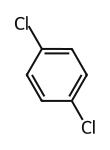
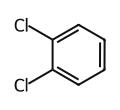
Statement II :As is more symmetric, its melting point is higher than , however its boiling point is lower than
In the light of the above statements, choose the correct answer from the options given below :

नीचे दो कथन दिए गए हैं :

कथन I :वान्डरवाल्स बलों में वृद्धि के कारण क्वथनांकों का क्रम CH3CH2CH2I > CH3CH2I > CH3I है।
कथन II :चूँकि अधिक सममित है, इसका गलनांक से अधिक है, तथापि इसका क्वथनांक से कम है

उपरोक्त कथनों के आलोक में, नीचे दिए गए विकल्पों में से सही उत्तर चुनिए :

  1. ABoth Statement I and Statement II are trueकथन I और कथन II दोनों सत्य हैं
  2. BBoth Statement I and Statement II are falseकथन I और कथन II दोनों असत्य हैं
  3. CStatement I is true but Statement II is falseकथन I सत्य है परन्तु कथन II असत्य है
  4. DStatement I is false but Statement II is trueकथन I असत्य है परन्तु कथन II सत्य है
Show answer

Concept: Boiling point rises with molecular size (van der Waals forces); melting point rises with symmetry (better packing in the crystal).

  1. Statement I: 1-iodopropane (375 K) > iodoethane (345 K) > iodomethane (315 K) – larger molecule, stronger dispersion forces. True.
  2. Statement II: p-dichlorobenzene is symmetrical and packs better → m.p. 326 K vs 256 K for o-isomer. Its b.p. (447 K) is lower than that of the polar o-isomer (453 K). True.

Short trick: para isomer: highest m.p. (symmetry); ortho isomer: highest b.p. (largest dipole).

Answer: (A) Both Statement I and Statement II are true

अवधारणा: आण्विक आकार (वान्डरवाल्स बल) बढ़ने पर क्वथनांक बढ़ता है; सममिति बढ़ने पर (क्रिस्टल में बेहतर संकुलन) गलनांक बढ़ता है।

  1. कथन I: 1-आयोडोप्रोपेन (375 K) > आयोडोएथेन (345 K) > आयोडोमेथेन (315 K) – बड़ा अणु, प्रबल परिक्षेपण बल। सत्य।
  2. कथन II: p-डाइक्लोरोबेन्ज़ीन सममित है तथा बेहतर संकुलित होता है → गलनांक 326 K, जबकि o-समावयवी का 256 K। इसका क्वथनांक (447 K) ध्रुवीय o-समावयवी (453 K) से कम है। सत्य।

शॉर्ट ट्रिक: पैरा समावयवी: सर्वाधिक गलनांक (सममिति); ऑर्थो समावयवी: सर्वाधिक क्वथनांक (सबसे बड़ा द्विध्रुव)।

उत्तर: (A) कथन I और कथन II दोनों सत्य हैं
JEE Main 2026 (April) – Paper 1 (B.E./B.Tech)ChemistryHaloalkanes and Haloarenes – physical propertiesJEE Main 2026 (April) – Paper 1 (B.E./B.Tech) 2026 · 8 Apr Shift 2 →
Q1042.

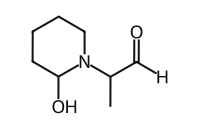
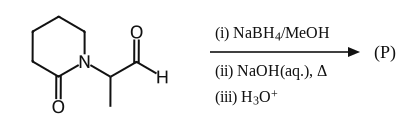
Consider the following reaction.

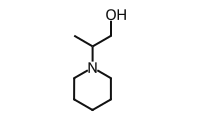
The major product (P) formed is :

निम्नलिखित अभिक्रिया पर विचार कीजिए।

बनने वाला मुख्य उत्पाद (P) है :

  1. A
  2. B
  3. C
  4. D
Show answer

Concept: NaBH4 reduces aldehydes/ketones but not amides; hot aqueous NaOH hydrolyses an amide (lactam) to carboxylate + amine.

  1. (i) NaBH4/MeOH: only –CHO → –CH2OH; the lactam C=O is untouched.
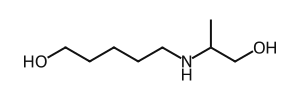
  2. (ii) NaOH(aq), Δ: the cyclic amide (piperidin-2-one) ring opens → −OOC–(CH2)4–NH–CH(CH3)–CH2OH.
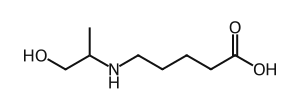
  3. (iii) H3O+: carboxylate → COOH, giving HOOC–(CH2)4–NH–CH(CH3)–CH2OH – option (C).
  4. (A) needs reduction of the amide C=O (NaBH4 cannot); (B) reduces the amide instead of the aldehyde; (D) has the acid reduced to CH2OH.

Short trick: NaBH4 touches only CHO/C=O of aldehyde-ketone; NaOH/Δ opens the lactam – count: one CH2OH + one COOH + NH.

Answer: (C) HOOC(CH2)4NHCH(CH3)CH2OH

अवधारणा: NaBH4 ऐल्डिहाइड/कीटोन को अपचयित करता है परन्तु ऐमाइड को नहीं; गर्म जलीय NaOH ऐमाइड (लैक्टम) को कार्बोक्सिलेट + ऐमीन में जल-अपघटित करता है।

  1. (i) NaBH4/MeOH: केवल –CHO → –CH2OH; लैक्टम का C=O अप्रभावित रहता है।
  2. (ii) NaOH(aq), Δ: चक्रीय ऐमाइड (पिपेरिडिन-2-ओन) वलय खुलता है → −OOC–(CH2)4–NH–CH(CH3)–CH2OH।
  3. (iii) H3O+: कार्बोक्सिलेट → COOH, जिससे HOOC–(CH2)4–NH–CH(CH3)–CH2OH – विकल्प (C) बनता है।
  4. (A) के लिए ऐमाइड C=O का अपचयन चाहिए (NaBH4 नहीं कर सकता); (B) में ऐल्डिहाइड के स्थान पर ऐमाइड अपचयित है; (D) में अम्ल CH2OH में अपचयित दिखाया गया है।

शॉर्ट ट्रिक: NaBH4 केवल ऐल्डिहाइड-कीटोन के C=O पर; NaOH/Δ लैक्टम खोलता है – गिनें: एक CH2OH + एक COOH + NH।

उत्तर: (C) HOOC(CH2)4NHCH(CH3)CH2OH

JEE Main 2026 (April) – Paper 1 (B.E./B.Tech)ChemistryAmides – chemoselective reduction and lactam hydrolysisJEE Main 2026 (April) – Paper 1 (B.E./B.Tech) 2026 · 8 Apr Shift 2 →
Q1043.

Which statements are True ?

A.In Hoffmann bromamide degradation, 4 moles of NaOH and 2 moles of Br2 are consumed per mole of an amide
B.Hoffmann bromamide reaction is not given by alkyl amides.
C.Primary amines can be synthesized by Hoffmann bromamide degradation.
D.Secondary amide on reaction with Br2 and NaOH will give secondary amine.
E.The by-products of Hoffmann degradation are Na2CO3, NaBr and H2O.

Choose the correct answer from the options given below :

कौन-से कथन सत्य हैं ?

A.हॉफमान ब्रोमैमाइड निम्नीकरण में प्रति मोल ऐमाइड 4 मोल NaOH तथा 2 मोल Br2 उपभुक्त होते हैं
B.हॉफमान ब्रोमैमाइड अभिक्रिया ऐल्किल ऐमाइडों द्वारा नहीं दी जाती।
C.प्राथमिक ऐमीनों का संश्लेषण हॉफमान ब्रोमैमाइड निम्नीकरण द्वारा किया जा सकता है।
D.द्वितीयक ऐमाइड Br2 तथा NaOH से अभिक्रिया पर द्वितीयक ऐमीन देगा।
E.हॉफमान निम्नीकरण के उपोत्पाद Na2CO3, NaBr तथा H2O हैं।

नीचे दिए गए विकल्पों में से सही उत्तर चुनिए :

  1. AA, C and E onlyकेवल A, C और E
  2. BB, C and D onlyकेवल B, C और D
  3. CC and E onlyकेवल C और E
  4. DC, D and E onlyकेवल C, D और E
Show answer

Concept: RCONH2 + Br2 + 4NaOH → RNH2 + Na2CO3 + 2NaBr + 2H2O.

  1. A: 4 mol NaOH but only 1 mol Br2 per mol amide → false.
  2. B: alkyl amides (e.g. CH3CONH2 → CH3NH2) do give the reaction → false.
  3. C: the product is a primary amine with one C less → true.
  4. D: the reaction needs two N–H hydrogens (N-bromination, then loss of HBr to form the nitrene/isocyanate); a secondary amide cannot give it → false.
  5. E: by-products Na2CO3, NaBr and H2O → true.
  6. True = C and E only; (A) includes A, (B) includes B and D, (D) includes D.

Short trick: Remember the balanced equation – 1 Br2 : 4 NaOH, works only for –CONH2.

Answer: (C) C and E only

अवधारणा: RCONH2 + Br2 + 4NaOH → RNH2 + Na2CO3 + 2NaBr + 2H2O।

  1. A: प्रति मोल ऐमाइड 4 mol NaOH परन्तु केवल 1 mol Br2 → असत्य।
  2. B: ऐल्किल ऐमाइड (जैसे CH3CONH2 → CH3NH2) यह अभिक्रिया देते हैं → असत्य।
  3. C: उत्पाद एक कार्बन कम वाली प्राथमिक ऐमीन है → सत्य।
  4. D: अभिक्रिया के लिए N पर दो H चाहिए (N-ब्रोमीनन, फिर HBr निकलकर नाइट्रीन/आइसोसायनेट); द्वितीयक ऐमाइड यह नहीं दे सकता → असत्य।
  5. E: उपोत्पाद Na2CO3, NaBr तथा H2O → सत्य।
  6. सत्य = केवल C और E; (A) में A, (B) में B और D, (D) में D शामिल है।

शॉर्ट ट्रिक: संतुलित समीकरण याद रखें – 1 Br2 : 4 NaOH, केवल –CONH2 के लिए।

उत्तर: (C) केवल C और E

JEE Main 2026 (April) – Paper 1 (B.E./B.Tech)ChemistryAmines – Hoffmann bromamide degradationJEE Main 2026 (April) – Paper 1 (B.E./B.Tech) 2026 · 8 Apr Shift 2 →
Q1044.

The incorrect statement from the following with respect to carbohydrates is :

कार्बोहाइड्रेटों के संबंध में निम्नलिखित में से गलत कथन है :

  1. AAll monosaccharides are reducing sugars.सभी मोनोसैकेराइड अपचायी शर्कराएँ हैं।
  2. BThe monosaccharide units obtained from hydrolysis of oligosaccharides are always the same.ओलिगोसैकेराइडों के जल-अपघटन से प्राप्त मोनोसैकेराइड इकाइयाँ सदैव समान होती हैं।
  3. CStarch and cellulose are typical examples of polysaccharides, which are very high molecular weight compounds of more than ten monosaccharide units.स्टार्च तथा सेलुलोस पॉलिसैकेराइडों के प्रारूपिक उदाहरण हैं, जो दस से अधिक मोनोसैकेराइड इकाइयों वाले अत्यंत उच्च अणुभार के यौगिक हैं।
  4. DOpen chain and cyclic structures co-exist at equilibrium that are responsible for certain properties as in the case of D−(+)−glucose.विवृत शृंखला तथा चक्रीय संरचनाएँ साम्य पर सह-अस्तित्व में रहती हैं जो कुछ गुणों के लिए उत्तरदायी हैं, जैसे D−(+)−ग्लूकोस के मामले में।
Show answer

Concept: Oligosaccharides give 2–10 monosaccharide units on hydrolysis; these may be the same or different.

  1. (A) Every monosaccharide has a free aldehyde/α-hydroxy-ketone group (via the open chain) → reduces Tollens'/Fehling's. Correct.
  2. (B) Sucrose → glucose + fructose; lactose → glucose + galactose. The units need not be the same → incorrect.
  3. (C) Starch and cellulose are polysaccharides of a large number of glucose units. Correct.
  4. (D) Glucose exists as α/β-pyranose in equilibrium with a small amount of open chain, explaining mutarotation and its reactions. Correct.

Short trick: ‘always’ in a biomolecule statement is usually the trap – sucrose is the counter-example.

Answer: (B) The monosaccharide units obtained from hydrolysis of oligosaccharides are always the same.

अवधारणा: ओलिगोसैकेराइड जल-अपघटन पर 2–10 मोनोसैकेराइड इकाइयाँ देते हैं; ये समान या भिन्न हो सकती हैं।

  1. (A) प्रत्येक मोनोसैकेराइड में (विवृत शृंखला द्वारा) मुक्त ऐल्डिहाइड/α-हाइड्रॉक्सी-कीटोन समूह होता है → टॉलेन/फेलिंग को अपचयित करता है। सही।
  2. (B) सुक्रोस → ग्लूकोस + फ्रक्टोस; लैक्टोस → ग्लूकोस + गैलेक्टोस। इकाइयाँ समान होना आवश्यक नहीं → गलत।
  3. (C) स्टार्च तथा सेलुलोस बहुत अधिक ग्लूकोस इकाइयों वाले पॉलिसैकेराइड हैं। सही।
  4. (D) ग्लूकोस α/β-पाइरेनोस रूप में थोड़ी विवृत शृंखला के साथ साम्य में रहता है, जो परिवर्ती घूर्णन तथा इसकी अभिक्रियाओं को समझाता है। सही।

शॉर्ट ट्रिक: जैव-अणु कथनों में ‘सदैव’ प्रायः जाल होता है – सुक्रोस इसका प्रति-उदाहरण है।

उत्तर: (B) ओलिगोसैकेराइडों के जल-अपघटन से प्राप्त मोनोसैकेराइड इकाइयाँ सदैव समान होती हैं।

JEE Main 2026 (April) – Paper 1 (B.E./B.Tech)ChemistryBiomolecules – carbohydratesJEE Main 2026 (April) – Paper 1 (B.E./B.Tech) 2026 · 8 Apr Shift 2 →
Q1045.

Which of the following amino acid will give violet coloured complex with neutral ferric chloride solution ?

निम्नलिखित में से कौन-सा ऐमीनो अम्ल उदासीन फेरिक क्लोराइड विलयन के साथ बैंगनी रंग का संकुल देगा ?

  1. AThreonineथ्रिओनीन (Threonine)
  2. BSerineसेरीन (Serine)
  3. CTyrosineटाइरोसीन (Tyrosine)
  4. DCysteineसिस्टीन (Cysteine)
Show answer

Concept: Neutral FeCl3 gives a violet complex with a phenolic (Ar–OH) group.

  1. Tyrosine has a p-hydroxyphenyl side chain (–CH2–C6H4–OH) → violet colour.
  2. Threonine and serine have alcoholic –OH, cysteine has –SH; none is phenolic → no violet colour.

Short trick: FeCl3 violet = phenol; the only phenolic amino acid is tyrosine.

Answer: (C) Tyrosine

अवधारणा: उदासीन FeCl3 फ़ीनॉलिक (Ar–OH) समूह के साथ बैंगनी संकुल देता है।

  1. टाइरोसीन में p-हाइड्रॉक्सीफ़ेनिल पार्श्व शृंखला (–CH2–C6H4–OH) है → बैंगनी रंग।
  2. थ्रिओनीन तथा सेरीन में ऐल्कोहॉलीय –OH तथा सिस्टीन में –SH है; कोई भी फ़ीनॉलिक नहीं → बैंगनी रंग नहीं।

शॉर्ट ट्रिक: FeCl3 बैंगनी = फ़ीनॉल; एकमात्र फ़ीनॉलिक ऐमीनो अम्ल टाइरोसीन है।

उत्तर: (C) टाइरोसीन

JEE Main 2026 (April) – Paper 1 (B.E./B.Tech)ChemistryBiomolecules – amino acids, phenol testJEE Main 2026 (April) – Paper 1 (B.E./B.Tech) 2026 · 8 Apr Shift 2 →
Q1046.

Number of paramagnetic complexes among the following is ________.

[MnBr4]2−, [NiCl4]2−, [Ni(CN)4]2−, [Ni(CO)4], [CoF6]3−, [Fe(CN)6]4−, [Mn(CN)6]3−, [Ti(CN)6]3−, [Cu(H2O)6]2+, [Co(C2O4)3]3−

निम्नलिखित में से अनुचुंबकीय (paramagnetic) संकुलों की संख्या ________ है।

[MnBr4]2−, [NiCl4]2−, [Ni(CN)4]2−, [Ni(CO)4], [CoF6]3−, [Fe(CN)6]4−, [Mn(CN)6]3−, [Ti(CN)6]3−, [Cu(H2O)6]2+, [Co(C2O4)3]3−

Show answer

Concept: Find the d-electron count and spin state (weak-field ligands: Br−, Cl−, F−, H2O → high spin; CN−, CO, C2O42− with Co3+ → low spin).

  1. [MnBr4]2−: Mn2+ d5, tetrahedral → 5 unpaired → para.
  2. [NiCl4]2−: Ni2+ d8, tetrahedral (sp3) → 2 unpaired → para.
  3. [Ni(CN)4]2−: d8, dsp2 square planar → dia.
  4. [Ni(CO)4]: Ni(0) 3d10 → dia.
  5. [CoF6]3−: Co3+ d6 high spin → 4 unpaired → para.
  6. [Fe(CN)6]4−: Fe2+ d6 low spin t2g6 → dia.
  7. [Mn(CN)6]3−: Mn3+ d4 low spin t2g4 → 2 unpaired → para.
  8. [Ti(CN)6]3−: Ti3+ d1 → 1 unpaired → para.
  9. [Cu(H2O)6]2+: Cu2+ d9 → 1 unpaired → para.
  10. [Co(C2O4)3]3−: Co3+ d6 low spin → dia.
  11. Paramagnetic: MnBr42−, NiCl42−, CoF63−, Mn(CN)63−, Ti(CN)63−, Cu(H2O)62+ = 6.

Short trick: Odd number of d electrons (d1, d5, d9) is always paramagnetic; then check only the d4, d6, d8 cases for spin state/geometry.

Answer: 6

अवधारणा: d-इलेक्ट्रॉन संख्या तथा प्रचक्रण अवस्था ज्ञात करें (दुर्बल क्षेत्र लिगन्ड: Br−, Cl−, F−, H2O → उच्च प्रचक्रण; CN−, CO, तथा Co3+ के साथ C2O42− → निम्न प्रचक्रण)।

  1. [MnBr4]2−: Mn2+ d5, चतुष्फलकीय → 5 अयुग्मित → अनुचुंबकीय।
  2. [NiCl4]2−: Ni2+ d8, चतुष्फलकीय (sp3) → 2 अयुग्मित → अनुचुंबकीय।
  3. [Ni(CN)4]2−: d8, dsp2 वर्ग समतलीय → प्रतिचुंबकीय।
  4. [Ni(CO)4]: Ni(0) 3d10 → प्रतिचुंबकीय।
  5. [CoF6]3−: Co3+ d6 उच्च प्रचक्रण → 4 अयुग्मित → अनुचुंबकीय।
  6. [Fe(CN)6]4−: Fe2+ d6 निम्न प्रचक्रण t2g6 → प्रतिचुंबकीय।
  7. [Mn(CN)6]3−: Mn3+ d4 निम्न प्रचक्रण t2g4 → 2 अयुग्मित → अनुचुंबकीय।
  8. [Ti(CN)6]3−: Ti3+ d1 → 1 अयुग्मित → अनुचुंबकीय।
  9. [Cu(H2O)6]2+: Cu2+ d9 → 1 अयुग्मित → अनुचुंबकीय।
  10. [Co(C2O4)3]3−: Co3+ d6 निम्न प्रचक्रण → प्रतिचुंबकीय।
  11. अनुचुंबकीय: MnBr42−, NiCl42−, CoF63−, Mn(CN)63−, Ti(CN)63−, Cu(H2O)62+ = 6।

शॉर्ट ट्रिक: विषम d इलेक्ट्रॉन (d1, d5, d9) सदैव अनुचुंबकीय; फिर केवल d4, d6, d8 में प्रचक्रण/ज्यामिति जाँचें।

उत्तर: 6

JEE Main 2026 (April) – Paper 1 (B.E./B.Tech)ChemistryCoordination Compounds – magnetic behaviourJEE Main 2026 (April) – Paper 1 (B.E./B.Tech) 2026 · 8 Apr Shift 2 →
Q1047.

‘x’ is the product which is obtained from benzene by reacting it with carbon monoxide and hydrogen chloride in the presence of cuprous chloride. ‘y’ is the major product obtained from the benzene by reacting it with ethanoyl chloride in the presence of anhydrous AlCl3. Product (major) obtained by heating x and y in the presence of alkali is z. Total number of π (pi) electrons in z is ________.

‘x’ वह उत्पाद है जो बेन्ज़ीन की क्यूप्रस क्लोराइड की उपस्थिति में कार्बन मोनोक्साइड तथा हाइड्रोजन क्लोराइड से अभिक्रिया द्वारा प्राप्त होता है। ‘y’ वह मुख्य उत्पाद है जो बेन्ज़ीन की निर्जल AlCl3 की उपस्थिति में एथेनॉयल क्लोराइड से अभिक्रिया द्वारा प्राप्त होता है। क्षार की उपस्थिति में x तथा y को गर्म करने पर प्राप्त (मुख्य) उत्पाद z है। z में π (पाई) इलेक्ट्रॉनों की कुल संख्या ________ है।

Show answer

Concept: Gattermann–Koch gives benzaldehyde, Friedel–Crafts acylation gives acetophenone, and their crossed aldol (Claisen–Schmidt) condensation gives chalcone.

  1. x = C6H5CHO (benzaldehyde).
  2. y = C6H5COCH3 (acetophenone).
  3. Alkali, heat: C6H5CHO + CH3COC6H5 → C6H5CH=CH–CO–C6H5 (z, benzalacetophenone) + H2O.
  4. π electrons: 2 benzene rings = 2 × 6 = 12; C=C = 2; C=O = 2 → total 16.

Short trick: Count π bonds: 3 + 3 (rings) + 1 (C=C) + 1 (C=O) = 8 π bonds → 16 π electrons.

Answer: 16

अवधारणा: गाटरमान–कोख से बेन्ज़ैल्डिहाइड, फ्रीडेल–क्राफ्ट्स ऐसिलन से ऐसीटोफ़ीनोन, तथा इनके क्रॉस ऐल्डोल (क्लेजन–श्मिट) संघनन से चाल्कोन बनता है।

  1. x = C6H5CHO (बेन्ज़ैल्डिहाइड)।
  2. y = C6H5COCH3 (ऐसीटोफ़ीनोन)।
  3. क्षार, ताप: C6H5CHO + CH3COC6H5 → C6H5CH=CH–CO–C6H5 (z, बेन्ज़ैल-ऐसीटोफ़ीनोन) + H2O।
  4. π इलेक्ट्रॉन: 2 बेन्ज़ीन वलय = 2 × 6 = 12; C=C = 2; C=O = 2 → कुल 16।

शॉर्ट ट्रिक: π आबंध गिनें: 3 + 3 (वलय) + 1 (C=C) + 1 (C=O) = 8 π आबंध → 16 π इलेक्ट्रॉन।

उत्तर: 16

JEE Main 2026 (April) – Paper 1 (B.E./B.Tech)ChemistryAldehydes and Ketones – Gattermann–Koch, Friedel–Crafts, Claisen–SchmidtJEE Main 2026 (April) – Paper 1 (B.E./B.Tech) 2026 · 8 Apr Shift 2 →
Q1048.

Consider two radiations of wavelengths

1. λ1 = 2000 Å
2. λ2 = 6000 Å

The ratio of the energies of these two radiations (E1E2) is ________ (Nearest integer).

दो विकिरणों के तरंगदैर्घ्य पर विचार कीजिए

1. λ1 = 2000 Å
2. λ2 = 6000 Å

इन दोनों विकिरणों की ऊर्जाओं का अनुपात (E1E2) ________ है (निकटतम पूर्णांक)।

Show answer

Concept: Photon energy E=hcλ, so E∝1λ.

  1. E1E2=λ2λ1=60002000=3.

Short trick: Shorter wavelength → proportionally higher energy; 3 times shorter → 3 times the energy.

Answer: 3

अवधारणा: फोटॉन ऊर्जा E=hcλ, अतः E∝1λ।

  1. E1E2=λ2λ1=60002000=3।

शॉर्ट ट्रिक: छोटा तरंगदैर्घ्य → अनुपाती रूप से अधिक ऊर्जा; 3 गुना छोटा → 3 गुना ऊर्जा।

उत्तर: 3

JEE Main 2026 (April) – Paper 1 (B.E./B.Tech)ChemistryStructure of Atom – photon energyJEE Main 2026 (April) – Paper 1 (B.E./B.Tech) 2026 · 8 Apr Shift 2 →
Q1049.

Consider the reaction

2H2S(g) + 3O2(g) → 2H2O(l) + 2SO2(g)

The magnitude of enthalpy change for the reaction in kJ mol−1 is ________. (Nearest integer)

Given : ΔfH⊖ (H2S) = −20.1 kJ mol−1
ΔfH⊖ (H2O) = −286.0 kJ mol−1
ΔfH⊖ (SO2) = −297.0 kJ mol−1

अभिक्रिया पर विचार कीजिए

2H2S(g) + 3O2(g) → 2H2O(l) + 2SO2(g)

अभिक्रिया के लिए एन्थैल्पी परिवर्तन का परिमाण kJ mol−1 में ________ है। (निकटतम पूर्णांक)

दिया है : ΔfH⊖ (H2S) = −20.1 kJ mol−1
ΔfH⊖ (H2O) = −286.0 kJ mol−1
ΔfH⊖ (SO2) = −297.0 kJ mol−1

Show answer

Concept: ΔrH° = ΣΔfH°(products) − ΣΔfH°(reactants); ΔfH°(O2) = 0.

  1. Products: 2(−286.0) + 2(−297.0) = −572.0 − 594.0 = −1166.0 kJ.
  2. Reactants: 2(−20.1) + 3(0) = −40.2 kJ.
  3. ΔrH° = −1166.0 − (−40.2) = −1125.8 kJ mol−1; magnitude ≈ 1126.

Short trick: 2 × [(−286) + (−297) − (−20.1)] = 2 × (−562.9) = −1125.8.

Answer: 1126

अवधारणा: ΔrH° = ΣΔfH°(उत्पाद) − ΣΔfH°(अभिकारक); ΔfH°(O2) = 0।

  1. उत्पाद: 2(−286.0) + 2(−297.0) = −572.0 − 594.0 = −1166.0 kJ।
  2. अभिकारक: 2(−20.1) + 3(0) = −40.2 kJ।
  3. ΔrH° = −1166.0 − (−40.2) = −1125.8 kJ mol−1; परिमाण ≈ 1126।

शॉर्ट ट्रिक: 2 × [(−286) + (−297) − (−20.1)] = 2 × (−562.9) = −1125.8।

उत्तर: 1126

JEE Main 2026 (April) – Paper 1 (B.E./B.Tech)ChemistryThermodynamics – enthalpy of reaction from enthalpies of formationJEE Main 2026 (April) – Paper 1 (B.E./B.Tech) 2026 · 8 Apr Shift 2 →
Q1050.

Solid carbon, CaO and CaCO3 are mixed and allowed to attain equilibrium at T K.

CaCO3(s) ⇌ CaO(s) + CO2(g)    Kp1 = 0.08 atm
C(s) + CO2(g) ⇌ 2CO(g)    Kp2 = 2 atm

The partial pressure of CO is ________ × 10−1 atm

ठोस कार्बन, CaO तथा CaCO3 को मिलाकर T K पर साम्य प्राप्त करने दिया जाता है।

CaCO3(s) ⇌ CaO(s) + CO2(g)    Kp1 = 0.08 atm
C(s) + CO2(g) ⇌ 2CO(g)    Kp2 = 2 atm

CO का आंशिक दाब ________ × 10−1 atm है

Show answer

Concept: With all three solids present, pCO2 is fixed by the first equilibrium (Kp1 = pCO2) and must also satisfy the second.

  1. pCO2 = Kp1 = 0.08 atm.
  2. Kp2 = pCO2pCO2 → pCO2=2×0.08=0.16.
  3. pCO = 0.4 atm = 4 × 10⁻¹ atm.

Short trick: pCO=Kp1Kp2=0.16=0.4 atm.

Answer: 4

अवधारणा: तीनों ठोस उपस्थित होने पर pCO2 प्रथम साम्य द्वारा निश्चित होता है (Kp1 = pCO2) तथा उसे दूसरे साम्य को भी संतुष्ट करना होता है।

  1. pCO2 = Kp1 = 0.08 atm।
  2. Kp2 = pCO2pCO2 → pCO2=2×0.08=0.16।
  3. pCO = 0.4 atm = 4 × 10⁻¹ atm।

शॉर्ट ट्रिक: pCO=Kp1Kp2=0.16=0.4 atm।

उत्तर: 4

JEE Main 2026 (April) – Paper 1 (B.E./B.Tech)ChemistryChemical Equilibrium – simultaneous heterogeneous equilibriaJEE Main 2026 (April) – Paper 1 (B.E./B.Tech) 2026 · 8 Apr Shift 2 →
Q1051.
For the function f:[1,∞)→[1,∞) defined by f(x)=(x−1)4+1, among the two statements:
(I) The set S={x∈[1,∞):f(x)=f−1(x)} contains exactly two elements, and
(II) The set S={x∈[1,∞):f(x)=f−1(x+1)} is an empty set,
फलन f:[1,∞)→[1,∞), जो f(x)=(x−1)4+1 द्वारा परिभाषित है, के लिए दो कथनों में से:
(I) समुच्चय S={x∈[1,∞):f(x)=f−1(x)} में ठीक दो अवयव हैं, तथा
(II) समुच्चय S={x∈[1,∞):f(x)=f−1(x+1)} एक रिक्त समुच्चय है,
  1. Aonly (I) is TRUEकेवल (I) सत्य है
  2. Bonly (II) is TRUEकेवल (II) सत्य है
  3. Cboth (I) and (II) are TRUE(I) तथा (II) दोनों सत्य हैं
  4. Dneither (I) nor (II) is TRUEन तो (I) और न ही (II) सत्य है
Show answer

Concept: For a strictly increasing function, f(x)=f−1(x) forces f(x)=x; for other equations with f−1, write f−1 explicitly and test signs.

  1. f(x)=(x−1)4+1 is strictly increasing and onto on [1,∞), with f−1(y)=1+(y−1)1/4.
  2. (I) Since f is increasing, f(x)=f−1(x)⇒f(x)=x: (x−1)4=x−1⇒(x−1)[(x−1)3−1]=0⇒x=1,2. So S={1,2} has exactly two elements — (I) is TRUE.
  3. (II) f−1(x+1)=1+x1/4, so the equation is (x−1)4=x1/4. Let g(x)=(x−1)4−x1/4: g(2)=1−21/4<0 and g(3)=16−31/4>0, so a root lies in (2,3). Hence S≠∅ — (II) is FALSE.

Short trick: For increasing f, solve f(x)=x instead of f(x)=f−1(x) — the curves can only meet on the line y=x.

Answer: (A)

अवधारणा: निरंतर वर्धमान फलन के लिए f(x)=f−1(x) से f(x)=x प्राप्त होता है; f−1 वाले अन्य समीकरणों में f−1 को स्पष्ट लिखकर चिह्न जाँचें।

  1. f(x)=(x−1)4+1, [1,∞) पर निरंतर वर्धमान तथा आच्छादक है, और f−1(y)=1+(y−1)1/4।
  2. (I) f वर्धमान है, अतः f(x)=f−1(x)⇒f(x)=x: (x−1)4=x−1⇒(x−1)[(x−1)3−1]=0⇒x=1,2। अतः S={1,2} में ठीक दो अवयव — (I) सत्य।
  3. (II) f−1(x+1)=1+x1/4, अतः समीकरण (x−1)4=x1/4 है। g(x)=(x−1)4−x1/4 लें: g(2)=1−21/4<0 तथा g(3)=16−31/4>0, अतः (2,3) में एक मूल है। अतः S≠∅ — (II) असत्य।

शॉर्ट ट्रिक: वर्धमान f के लिए f(x)=f−1(x) की जगह f(x)=x हल करें — वक्र केवल रेखा y=x पर ही मिल सकते हैं।

उत्तर: (A)

JEE Main 2026 (April) – Paper 1 (B.E./B.Tech)MathematicsFunctions – inverse of a functionJEE Main 2026 (April) – Paper 1 (B.E./B.Tech) 2026 · 4 Apr Shift 2 →
Q1052.
Let S={z∈C:z2+4z+16=0}. Then ∑z∈S|z+3i|2 is equal to:
माना S={z∈C:z2+4z+16=0} है। तब ∑z∈S|z+3i|2 बराबर है:
  1. A42
  2. B23
  3. C27
  4. D38
Show answer

Concept: Solve the quadratic for its complex roots and use |a+bi|2=a2+b2.

  1. z2+4z+16=0⇒z=−4±16−642=−2±23i.
  2. For z1=−2+23i: z1+3i=−2+33i, so |z1+3i|2=4+27=31.
  3. For z2=−2−23i: z2+3i=−2−3i, so |z2+3i|2=4+3=7.
  4. Sum =31+7=38.

Answer: (D)

अवधारणा: द्विघात समीकरण के सम्मिश्र मूल ज्ञात कर |a+bi|2=a2+b2 का प्रयोग करें।

  1. z2+4z+16=0⇒z=−4±16−642=−2±23i।
  2. z1=−2+23i के लिए: z1+3i=−2+33i, अतः |z1+3i|2=4+27=31।
  3. z2=−2−23i के लिए: z2+3i=−2−3i, अतः |z2+3i|2=4+3=7।
  4. योग =31+7=38।

उत्तर: (D)

JEE Main 2026 (April) – Paper 1 (B.E./B.Tech)MathematicsComplex numbers – modulusJEE Main 2026 (April) – Paper 1 (B.E./B.Tech) 2026 · 4 Apr Shift 2 →
Q1053.
If the system of equations:
x+y+z=5
x+2y+3z=9
x+3y+λz=μ
has infinitely many solutions, then the value of λ+μ is:
यदि समीकरण निकाय:
x+y+z=5
x+2y+3z=9
x+3y+λz=μ
के अनंत हल हैं, तो λ+μ का मान है:
  1. A16
  2. B18
  3. C19
  4. D21
Show answer

Concept: Infinitely many solutions ⇒Δ=0 and the equations are consistent (the third is a combination of the first two).

  1. Δ=|11112313λ|=(2λ−9)−(λ−3)+1=λ−5=0⇒λ=5.
  2. Notice E3=2E2−E1 in the coefficients: 2(x+2y+3z)−(x+y+z)=x+3y+5z. So μ=2(9)−5=13.
  3. λ+μ=5+13=18.

Short trick: The coefficient rows (1,1,1),(1,2,3),(1,3,λ) are in arithmetic progression column-wise when λ=5; the RHS must then follow the same AP: 5,9,13.

Answer: (B)

अवधारणा: अनंत हल ⇒Δ=0 तथा निकाय संगत हो (तीसरा समीकरण पहले दो का संयोजन हो)।

  1. Δ=|11112313λ|=(2λ−9)−(λ−3)+1=λ−5=0⇒λ=5।
  2. गुणांकों में E3=2E2−E1: 2(x+2y+3z)−(x+y+z)=x+3y+5z। अतः μ=2(9)−5=13।
  3. λ+μ=5+13=18।

शॉर्ट ट्रिक: λ=5 पर गुणांक-पंक्तियाँ (1,1,1),(1,2,3),(1,3,5) स्तम्भानुसार समांतर श्रेढ़ी (A.P.) में हैं; तब दायाँ पक्ष भी उसी A.P. में होगा: 5,9,13।

उत्तर: (B)

JEE Main 2026 (April) – Paper 1 (B.E./B.Tech)MathematicsDeterminants – system of linear equationsJEE Main 2026 (April) – Paper 1 (B.E./B.Tech) 2026 · 4 Apr Shift 2 →
Q1054.
If α=1 and β=1+i2, where i=−1, are two roots of the equation x3+ax2+bx+c=0, a,b,c∈R, then ∫−11(x3+ax2+bx+c)dx is equal to:
यदि α=1 तथा β=1+i2, जहाँ i=−1 है, समीकरण x3+ax2+bx+c=0, a,b,c∈R के दो मूल हैं, तो ∫−11(x3+ax2+bx+c)dx बराबर है:
  1. A−2
  2. B−4
  3. C−8
  4. D−10
Show answer

Concept: Complex roots of a real polynomial occur in conjugate pairs; odd powers integrate to zero over [−1,1].

  1. Roots: 1, 1+i2, 1−i2.
  2. Sum =3⇒a=−3; sum of products in pairs =(1)(1+i2)+(1)(1−i2)+(1+i2)(1−i2)=2+3=5⇒b=5; product =1⋅3=3⇒c=−3.
  3. ∫−11(x3−3x2+5x−3)dx: the odd terms x3, 5x vanish, leaving ∫−11(−3x2−3)dx=−3⋅23−3(2)=−2−6=−8.

Short trick: Over [−1,1] only the even part matters: 2(a3+c)=2(−1−3)=−8.

Answer: (C)

अवधारणा: वास्तविक बहुपद के सम्मिश्र मूल संयुग्मी युग्मों में होते हैं; [−1,1] पर विषम घातों का समाकलन शून्य होता है।

  1. मूल: 1, 1+i2, 1−i2।
  2. योग =3⇒a=−3; युग्मों में गुणनफलों का योग =(1)(1+i2)+(1)(1−i2)+(1+i2)(1−i2)=2+3=5⇒b=5; गुणनफल =1⋅3=3⇒c=−3।
  3. ∫−11(x3−3x2+5x−3)dx: विषम पद x3, 5x शून्य हो जाते हैं, शेष ∫−11(−3x2−3)dx=−3⋅23−3(2)=−2−6=−8।

शॉर्ट ट्रिक: [−1,1] पर केवल सम भाग का योगदान होता है: 2(a3+c)=2(−1−3)=−8।

उत्तर: (C)

JEE Main 2026 (April) – Paper 1 (B.E./B.Tech)MathematicsTheory of equations – complex roots & definite integralJEE Main 2026 (April) – Paper 1 (B.E./B.Tech) 2026 · 4 Apr Shift 2 →
Q1055.
If the quadratic equation (λ+2)x2−3λx+4λ=0, λ≠−2, has two positive roots, then the number of possible integral values of λ is:
यदि द्विघात समीकरण (λ+2)x2−3λx+4λ=0, λ≠−2, के दो धनात्मक मूल हैं, तो λ के संभव पूर्णांक मानों की संख्या है:
  1. A1
  2. B2
  3. C3
  4. D4
Show answer

Concept: Two positive roots need D≥0, sum of roots >0 and product of roots >0.

  1. D=9λ2−16λ(λ+2)=−7λ2−32λ=−λ(7λ+32)≥0⇒−327≤λ≤0.
  2. Sum =3λλ+2>0 and product =4λλ+2>0⇒λλ+2>0⇒λ>0 or λ<−2.
  3. Intersection: −327≤λ<−2, i.e. λ∈[−4.57…, −2). Integral values: λ=−4,−3.
  4. Check λ=−4: −2x2+12x−16=0⇒x2−6x+8=0⇒x=2,4 ✓; λ=−3: −x2+9x−12=0⇒x=9±332>0 ✓.

Answer: (B)

अवधारणा: दो धनात्मक मूलों के लिए D≥0, मूलों का योग >0 तथा मूलों का गुणनफल >0 आवश्यक है।

  1. D=9λ2−16λ(λ+2)=−7λ2−32λ=−λ(7λ+32)≥0⇒−327≤λ≤0।
  2. योग =3λλ+2>0 तथा गुणनफल =4λλ+2>0⇒λλ+2>0⇒λ>0 अथवा λ<−2।
  3. सर्वनिष्ठ: −327≤λ<−2, अर्थात् λ∈[−4.57…, −2)। पूर्णांक मान: λ=−4,−3।
  4. जाँच λ=−4: −2x2+12x−16=0⇒x2−6x+8=0⇒x=2,4 ✓; λ=−3: −x2+9x−12=0⇒x=9±332>0 ✓।

उत्तर: (B)

JEE Main 2026 (April) – Paper 1 (B.E./B.Tech)MathematicsQuadratic equations – nature of rootsJEE Main 2026 (April) – Paper 1 (B.E./B.Tech) 2026 · 4 Apr Shift 2 →
Q1056.
Let A=[1274−2838−7] and det(A−αI)=0, where α is a real number. If the largest possible value of α is p, then the circle (x−p)2+(y−2p)2=320, intersects the co-ordinate axes at
माना A=[1274−2838−7] तथा det(A−αI)=0 है, जहाँ α एक वास्तविक संख्या है। यदि α का अधिकतम संभव मान p है, तो वृत्त (x−p)2+(y−2p)2=320, निर्देशांक अक्षों को प्रतिच्छेद करता है
  1. A1 point1 बिंदु पर
  2. B2 points2 बिंदुओं पर
  3. C3 points3 बिंदुओं पर
  4. D4 points4 बिंदुओं पर
Show answer

Concept: det(A−αI)=0 gives the characteristic equation α3−(trA)α2+(sum of principal minors)α−detA=0; then count axis intersections of the circle.

  1. trA=1−2−7=−8; sum of principal 2×2 minors =−50−28−10=−88; detA=1(14−64)−2(−28−24)+7(32+6)=−50+104+266=320.
  2. Characteristic equation: α3+8α2−88α−320=0⇒(α−8)(α2+16α+40)=0, roots 8, −8±26. Largest: p=8.
  3. Circle: (x−8)2+(y−16)2=320. On the x-axis (y=0): (x−8)2=64⇒x=0,16. On the y-axis (x=0): (y−16)2=256⇒y=0,32.
  4. The point (0,0) is common to both lists, so the distinct points are (0,0),(16,0),(0,32) — 3 points.

Short trick: c-term of the circle is p2+4p2−320=5(64)−320=0, so the circle passes through the origin — the two axes then give 2+2−1=3 points.

Answer: (C)

अवधारणा: det(A−αI)=0 अभिलाक्षणिक समीकरण (characteristic equation) α3−(trA)α2+(मुख्य उपसारणिकों का योग)α−detA=0 देता है; फिर वृत्त के अक्ष-प्रतिच्छेदन बिंदु गिनें।

  1. trA=1−2−7=−8; मुख्य 2×2 उपसारणिकों का योग =−50−28−10=−88; detA=1(14−64)−2(−28−24)+7(32+6)=−50+104+266=320।
  2. अभिलाक्षणिक समीकरण: α3+8α2−88α−320=0⇒(α−8)(α2+16α+40)=0, मूल 8, −8±26। अधिकतम: p=8।
  3. वृत्त: (x−8)2+(y−16)2=320। x-अक्ष पर (y=0): (x−8)2=64⇒x=0,16। y-अक्ष पर (x=0): (y−16)2=256⇒y=0,32।
  4. बिंदु (0,0) दोनों में उभयनिष्ठ है, अतः भिन्न बिंदु (0,0),(16,0),(0,32) — 3 बिंदु।

शॉर्ट ट्रिक: वृत्त का अचर पद p2+4p2−320=5(64)−320=0 है, अतः वृत्त मूलबिंदु से गुजरता है — दोनों अक्षों से 2+2−1=3 बिंदु मिलते हैं।

उत्तर: (C)

JEE Main 2026 (April) – Paper 1 (B.E./B.Tech)MathematicsMatrices – characteristic roots & circleJEE Main 2026 (April) – Paper 1 (B.E./B.Tech) 2026 · 4 Apr Shift 2 →
Q1057.
Let α=14+18+116+…∞ and β=13+19+127+…∞. Then the value of (0.2)log5⁡(α)+(0.04)log5⁡(β) is equal to:
माना α=14+18+116+…∞ तथा β=13+19+127+…∞ हैं। तब (0.2)log5⁡(α)+(0.04)log5⁡(β) का मान बराबर है:
  1. A4
  2. B5
  3. C8
  4. D25
Show answer

Concept: Infinite GP sum S=a1−r and the identity aloga⁡x=x with base changes.

  1. α=1/41−1/2=12, β=1/31−1/3=12.
  2. (0.2)log5⁡12=5−log5⁡12=5−2log5⁡12=(12)−2=4.
  3. (0.04)log5⁡12=5−2log5⁡12=(12)−2=4.
  4. Total =4+4=8.

Answer: (C)

अवधारणा: अनंत गुणोत्तर श्रेढ़ी का योग S=a1−r तथा सर्वसमिका aloga⁡x=x (आधार परिवर्तन सहित)।

  1. α=1/41−1/2=12, β=1/31−1/3=12।
  2. (0.2)log5⁡12=5−log5⁡12=5−2log5⁡12=(12)−2=4।
  3. (0.04)log5⁡12=5−2log5⁡12=(12)−2=4।
  4. कुल =4+4=8।

उत्तर: (C)

JEE Main 2026 (April) – Paper 1 (B.E./B.Tech)MathematicsSequences & series – infinite GP and logarithmsJEE Main 2026 (April) – Paper 1 (B.E./B.Tech) 2026 · 4 Apr Shift 2 →
Q1058.
For 10 observations x1,x2,…,x10, if ∑i=110(xi+2)2=180 and ∑i=110(xi−1)2=90, then their standard deviation is:
10 प्रेक्षणों x1,x2,…,x10 के लिए, यदि ∑i=110(xi+2)2=180 तथा ∑i=110(xi−1)2=90 हैं, तो उनका मानक विचलन है:
  1. A2
  2. B3
  3. C22
  4. D3
Show answer

Concept: Expand the squares to get ∑xi and ∑xi2, then σ2=∑xi2n−(∑xin)2.

  1. ∑(xi+2)2=∑xi2+4∑xi+40=180.
  2. ∑(xi−1)2=∑xi2−2∑xi+10=90.
  3. Subtracting: 6∑xi+30=90⇒∑xi=10; then ∑xi2=90+20−10=100.
  4. σ2=10010−(1010)2=10−1=9⇒σ=3.

Answer: (D)

अवधारणा: वर्गों का प्रसार कर ∑xi तथा ∑xi2 निकालें, फिर σ2=∑xi2n−(∑xin)2।

  1. ∑(xi+2)2=∑xi2+4∑xi+40=180।
  2. ∑(xi−1)2=∑xi2−2∑xi+10=90।
  3. घटाने पर: 6∑xi+30=90⇒∑xi=10; तब ∑xi2=90+20−10=100।
  4. σ2=10010−(1010)2=10−1=9⇒σ=3।

उत्तर: (D)

JEE Main 2026 (April) – Paper 1 (B.E./B.Tech)MathematicsStatistics – standard deviationJEE Main 2026 (April) – Paper 1 (B.E./B.Tech) 2026 · 4 Apr Shift 2 →
Q1059.
In the expansion of (9x−13x)18, x>0, if the term independent of x is (221)k, then k is equal to:
(9x−13x)18, x>0, के प्रसार में, यदि x से स्वतंत्र पद (221)k है, तो k बराबर है:
  1. A84
  2. B78
  3. C168
  4. D198
Show answer

Concept: In Tr+1=(nr)an−rbr, set the total power of x to zero.

  1. Tr+1=(18r)(9x)18−r(−13x−1/2)r=(18r)(−1)r32(18−r)3−rx18−r−r2.
  2. Power of x: 18−3r2=0⇒r=12.
  3. Term =(1812)3123−12=(1812)=18564.
  4. 221k=18564⇒k=18564221=84.

Answer: (A)

अवधारणा: Tr+1=(nr)an−rbr में x की कुल घात शून्य रखें।

  1. Tr+1=(18r)(9x)18−r(−13x−1/2)r=(18r)(−1)r32(18−r)3−rx18−r−r2।
  2. x की घात: 18−3r2=0⇒r=12।
  3. पद =(1812)3123−12=(1812)=18564।
  4. 221k=18564⇒k=18564221=84।

उत्तर: (A)

JEE Main 2026 (April) – Paper 1 (B.E./B.Tech)MathematicsBinomial theorem – term independent of xJEE Main 2026 (April) – Paper 1 (B.E./B.Tech) 2026 · 4 Apr Shift 2 →
Q1060.
Let P (3cos⁡α, 2sin⁡α), α≠0, be a point on the ellipse x29+y24=1, Q be a point on the circle x2+y2−14x−14y+82=0 and R be a point on the line x+y=5 such that the centroid of the triangle PQR is (2+cos⁡α, 3+23sin⁡α). Then the sum of the ordinates of all possible points R is:
माना P (3cos⁡α, 2sin⁡α), α≠0, दीर्घवृत्त x29+y24=1 पर एक बिंदु है, Q वृत्त x2+y2−14x−14y+82=0 पर एक बिंदु है तथा R रेखा x+y=5 पर एक बिंदु इस प्रकार है कि त्रिभुज PQR का केन्द्रक (2+cos⁡α, 3+23sin⁡α) है। तब R के सभी संभव बिंदुओं की कोटियों (ordinates) का योग है:
  1. A6
  2. B2
  3. C4
  4. D8
Show answer

Concept: Write the centroid conditions; the terms in α cancel, leaving linear relations between Q and R, then force Q onto the circle.

  1. Centroid: 3cos⁡α+xQ+xR3=2+cos⁡α⇒xQ+xR=6; 2sin⁡α+yQ+yR3=3+23sin⁡α⇒yQ+yR=9.
  2. R on the line: xR+yR=5. Put xR=t, so yR=5−t, xQ=6−t, yQ=9−(5−t)=4+t.
  3. The circle is (x−7)2+(y−7)2=16. So (6−t−7)2+(4+t−7)2=16⇒(t+1)2+(t−3)2=16⇒2t2−4t−6=0⇒t=3, −1.
  4. Ordinates of R: 5−3=2 and 5−(−1)=6; sum =8.

Answer: (D)

अवधारणा: केन्द्रक की शर्तें लिखें; α वाले पद कट जाते हैं और Q तथा R में रैखिक संबंध बचते हैं, फिर Q को वृत्त पर रखें।

  1. केन्द्रक: 3cos⁡α+xQ+xR3=2+cos⁡α⇒xQ+xR=6; 2sin⁡α+yQ+yR3=3+23sin⁡α⇒yQ+yR=9।
  2. R रेखा पर: xR+yR=5। xR=t लें, तो yR=5−t, xQ=6−t, yQ=9−(5−t)=4+t।
  3. वृत्त (x−7)2+(y−7)2=16 है। अतः (6−t−7)2+(4+t−7)2=16⇒(t+1)2+(t−3)2=16⇒2t2−4t−6=0⇒t=3, −1।
  4. R की कोटियाँ: 5−3=2 तथा 5−(−1)=6; योग =8।

उत्तर: (D)

JEE Main 2026 (April) – Paper 1 (B.E./B.Tech)MathematicsCoordinate geometry – ellipse, circle & centroidJEE Main 2026 (April) – Paper 1 (B.E./B.Tech) 2026 · 4 Apr Shift 2 →