NEET UG 2021 · Shift 1

NEET UG 12 Sept 2021 Shift 1 – Question Paper

200 questions · 800 marks · 200 minutes · +4 for a correct answer, −1 for a wrong one. Free PDF with answer key.

Library – airGurukul

Paper pattern

SectionQuestionsMarks
Physics50200
Chemistry50200
Botany50200
Zoology50200

Sample questions from this paper

Q1.
A radioactive nucleus ZAX undergoes spontaneous decay in the sequence ZAX→Z−1B→Z−3C→Z−2D, where Z is the atomic number of element X. The possible decay particles in the sequence are:
एक रेडियोऐक्टिव नाभिक ZAX स्वतः क्षय के अनुक्रम ZAX→Z−1B→Z−3C→Z−2D से गुजरता है, जहाँ Z तत्व X का परमाणु क्रमांक है। इस अनुक्रम में संभावित क्षय कण हैं:
  1. Aβ+,α,β−
  2. Bβ−,α,β+
  3. Cα,β−,β+
  4. Dα,β+,β−
Show answer

Concept: In decay, the change in atomic number tells the particle: β+ → Z decreases by 1, β− → Z increases by 1, α → Z decreases by 2 (A by 4).

  1. X (Z) → B (Z − 1): Z falls by 1 ⇒ β+ emission (a proton turns into a neutron).
  2. B (Z − 1) → C (Z − 3): Z falls by 2 ⇒ α emission.
  3. C (Z − 3) → D (Z − 2): Z rises by 1 ⇒ β− emission (a neutron turns into a proton).
  4. Sequence = β+,α,β−.

Short trick: Track only ΔZ: −1, −2, +1 ↔ β⁺, α, β⁻. Only option (A) starts with β⁺ and ends with β⁻ with α in between.

Answer: (A) β+,α,β−

अवधारणा: क्षय में परमाणु क्रमांक का परिवर्तन कण बताता है: β+ → Z में 1 की कमी, β− → Z में 1 की वृद्धि, α → Z में 2 की कमी (A में 4 की कमी)।

  1. X (Z) → B (Z − 1): Z में 1 की कमी ⇒ β+ उत्सर्जन (एक प्रोटॉन न्यूट्रॉन में बदलता है)।
  2. B (Z − 1) → C (Z − 3): Z में 2 की कमी ⇒ α उत्सर्जन।
  3. C (Z − 3) → D (Z − 2): Z में 1 की वृद्धि ⇒ β− उत्सर्जन (एक न्यूट्रॉन प्रोटॉन में बदलता है)।
  4. अनुक्रम = β+,α,β−।

शॉर्ट ट्रिक: केवल ΔZ देखिए: −1, −2, +1 ↔ β⁺, α, β⁻। केवल विकल्प (A) β⁺ से शुरू होकर β⁻ पर समाप्त होता है और बीच में α है।

उत्तर: (A) β+,α,β−
NEET UGPhysicsNuclei – radioactive decay
Q51.
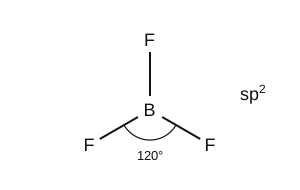
BF3 is planar and electron deficient compound. Hybridization and number of electrons around the central atom, respectively are
BF3 एक समतलीय तथा इलेक्ट्रॉन-न्यून यौगिक है। केन्द्रीय परमाणु का संकरण तथा उसके चारों ओर इलेक्ट्रॉनों की संख्या क्रमशः हैं
  1. Asp2 and 6sp2 और 6
  2. Bsp2 and 8sp2 और 8
  3. Csp3 and 4sp3 और 4
  4. Dsp3 and 6sp3 और 6
Show answer

Concept: Steric number = bond pairs + lone pairs decides hybridisation; electrons around the central atom = 2 × (bond pairs + lone pairs).

  1. B (2s22p1) has 3 valence electrons; each forms one B–F bond → 3 bond pairs, 0 lone pair.
  2. Steric number 3 → sp2, trigonal planar, F–B–F = 120°.
  3. Electrons around B = 3 × 2 = 6 (incomplete octet – that is why BF3 is electron deficient, a Lewis acid).
  4. sp3 would need 4 electron pairs (8 electrons) – not the case here.

Short trick: Electron deficient + planar → sp2 with only a sextet (6 e−). Same for BCl3, AlCl3 (monomer).

Answer: (A) sp2 and 6

अवधारणा: स्टेरिक संख्या = आबंधी युग्म + एकाकी युग्म, इसी से संकरण तय होता है; केन्द्रीय परमाणु के चारों ओर इलेक्ट्रॉन = 2 × (आबंधी युग्म + एकाकी युग्म)।

  1. B (2s22p1) में 3 संयोजी इलेक्ट्रॉन हैं; प्रत्येक एक B–F आबंध बनाता है → 3 आबंधी युग्म, 0 एकाकी युग्म।
  2. स्टेरिक संख्या 3 → sp2, त्रिकोणीय समतलीय, F–B–F = 120°।
  3. B के चारों ओर इलेक्ट्रॉन = 3 × 2 = 6 (अपूर्ण अष्टक – इसी कारण BF3 इलेक्ट्रॉन-न्यून है, एक लुईस अम्ल)।
  4. sp3 के लिए 4 इलेक्ट्रॉन युग्म (8 इलेक्ट्रॉन) चाहिए – यहाँ ऐसा नहीं है।

शॉर्ट ट्रिक: इलेक्ट्रॉन-न्यून + समतलीय → केवल षष्टक (6 e−) वाला sp2। BCl3, AlCl3 (एकलक) में भी यही।

उत्तर: (A) sp2 और 6

NEET UGChemistryChemical bonding – hybridisation
Q101.
During the purification process for recombinant DNA technology, addition of chilled ethanol precipitates out:
पुनर्योगज DNA प्रौद्योगिकी के लिए शोधन (purification) प्रक्रिया के दौरान, द्रुतशीतित (chilled) एथेनॉल मिलाने पर कौन-सा अवक्षेपित होता है?
  1. AHistonesहिस्टोन
  2. BPolysaccharidesपॉलीसैकेराइड
  3. CRNA
  4. DDNA
Show answer

Concept: Isolation of DNA: cells are lysed, RNA is removed by ribonuclease, proteins by protease; finally chilled ethanol is added and purified DNA precipitates out.

  1. Histones (proteins) are removed earlier by protease treatment – (A) wrong.
  2. Polysaccharides/cell wall are broken by lysozyme, cellulase, chitinase – (B) wrong.
  3. RNA is digested by ribonuclease – (C) wrong.
  4. Addition of chilled ethanol → DNA appears as a collection of fine threads in suspension, which can be spooled out – (D) correct.

Short trick: Enzyme order: “L-C-C-R-P” (lysozyme, cellulase, chitinase, RNase, protease) → ethanol last = DNA out (spooling of DNA threads).

Answer: (D) DNA

अवधारणा: DNA का पृथक्करण: कोशिकाओं का लयन किया जाता है, RNA को राइबोन्यूक्लिएज़ द्वारा तथा प्रोटीन को प्रोटिएज़ द्वारा हटाया जाता है; अंत में द्रुतशीतित एथेनॉल मिलाने पर शुद्ध DNA अवक्षेपित हो जाता है।

  1. हिस्टोन (प्रोटीन) पहले ही प्रोटिएज़ उपचार से हटा दिए जाते हैं – (A) गलत।
  2. पॉलीसैकेराइड/कोशिका भित्ति लाइसोज़ाइम, सेल्युलेज़, काइटिनेज़ द्वारा तोड़ी जाती है – (B) गलत।
  3. RNA का पाचन राइबोन्यूक्लिएज़ द्वारा होता है – (C) गलत।
  4. द्रुतशीतित एथेनॉल मिलाने पर DNA निलंबन में महीन धागों के समूह के रूप में दिखाई देता है, जिसे स्पूलिंग द्वारा बाहर निकाला जाता है – (D) सही।

शॉर्ट ट्रिक: एंजाइम क्रम: “L-C-C-R-P” (लाइसोज़ाइम, सेल्युलेज़, काइटिनेज़, RNase, प्रोटिएज़) → अंत में एथेनॉल = DNA बाहर (DNA धागों की स्पूलिंग)।

उत्तर: (D) DNA

NEET UGBotanyBiotechnology – isolation of DNA
Q151.
Read the following statements.
(a) Metagenesis is observed in Helminths.
(b) Echinoderms are triploblastic and coelomate animals.
(c) Round worms have organ-system level of body organization.
(d) Comb plates present in ctenophores help in digestion.
(e) Water vascular system is characteristic of Echinoderms.
Choose the correct answer from the options given below.
निम्नलिखित कथनों को पढ़िए।
(a) हेल्मिन्थ (Helminths) में पीढ़ी-एकांतरण (metagenesis) देखा जाता है।
(b) एकाइनोडर्म त्रिकोरकी (triploblastic) तथा प्रगुहिक (coelomate) प्राणी हैं।
(c) गोलकृमियों में अंग-तंत्र स्तर का शरीर संगठन होता है।
(d) टीनोफोर में उपस्थित कंकत पट्टिकाएँ (comb plates) पाचन में सहायता करती हैं।
(e) जल संवहन तंत्र (water vascular system) एकाइनोडर्म का अभिलाक्षणिक गुण है।
नीचे दिए गए विकल्पों में से सही उत्तर चुनिए।
  1. A(a), (d) and (e) are correct(a), (d) तथा (e) सही हैं
  2. B(b), (c) and (e) are correct(b), (c) तथा (e) सही हैं
  3. C(c), (d) and (e) are correct(c), (d) तथा (e) सही हैं
  4. D(a), (b) and (c) are correct(a), (b) तथा (c) सही हैं
Show answer

Concept: Metagenesis (alternation of polyp and medusa) is a feature of Cnidaria; comb plates of ctenophores are for locomotion.

  1. (a) False – metagenesis occurs in cnidarians such as Obelia, not in helminths.
  2. (b) True – echinoderms are triploblastic and coelomate.
  3. (c) True – aschelminthes (round worms) show organ-system level of organisation.
  4. (d) False – the 8 external rows of ciliated comb plates help in locomotion, not digestion.
  5. (e) True – the water vascular system is the unique feature of echinoderms.
  6. Correct set = (b), (c), (e).

Short trick: (a) and (d) are both false, so reject every option containing (a) or (d) – only (B) remains.

Answer: (B) (b), (c) and (e) are correct

अवधारणा: पीढ़ी-एकांतरण (पॉलिप व मेड्यूसा का एकांतरण) निडेरिया का लक्षण है; टीनोफोर की कंकत पट्टिकाएँ गमन के लिए होती हैं।

  1. (a) असत्य – पीढ़ी-एकांतरण ओबेलिया जैसे निडेरियनों में होता है, हेल्मिन्थ में नहीं।
  2. (b) सत्य – एकाइनोडर्म त्रिकोरकी तथा प्रगुहिक होते हैं।
  3. (c) सत्य – एस्केल्मिन्थीज़ (गोलकृमि) में अंग-तंत्र स्तर का संगठन होता है।
  4. (d) असत्य – पक्ष्माभी कंकत पट्टिकाओं की 8 बाहरी पंक्तियाँ गमन में सहायता करती हैं, पाचन में नहीं।
  5. (e) सत्य – जल संवहन तंत्र एकाइनोडर्म का विशिष्ट लक्षण है।
  6. सही समूह = (b), (c), (e)।

शॉर्ट ट्रिक: (a) और (d) दोनों असत्य हैं, अतः जिन विकल्पों में (a) या (d) है उन्हें हटाइए – केवल (B) बचता है।

उत्तर: (B) (b), (c) तथा (e) सही हैं

NEET UGZoologyAnimal kingdom – features of phyla

See all 200 solutions

More NEET UG papers